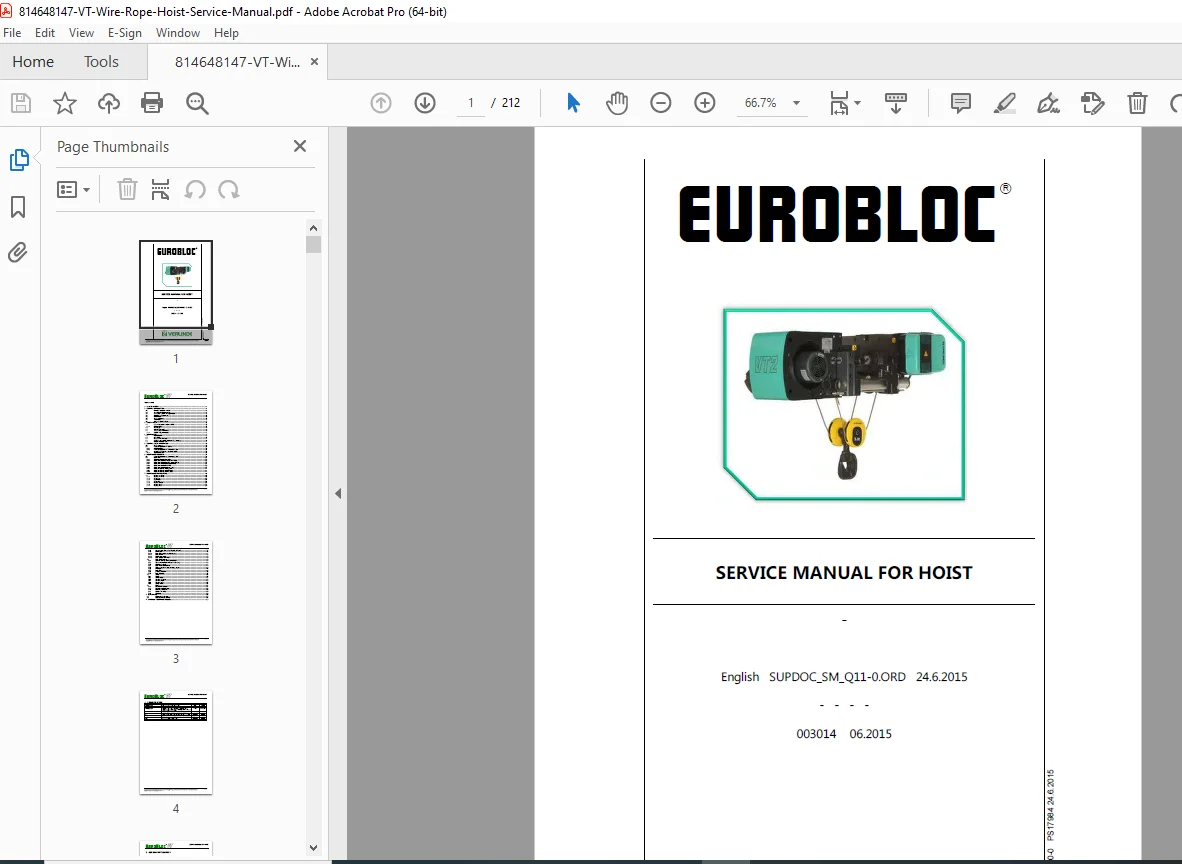
CM Valustar VT Wire Rope Hoist Service Manual PDF DOWNLOAD
Original price was: $95.00.$19.95Current price is: $19.95.
Complete factory service manual for CM Valustar VT electric wire rope hoist. This comprehensive PDF maintenance guide covers specifications, electrical systems, brake adjustments, wire rope replacement, load chain service, and complete troubleshooting procedures. Essential technical documentation for industrial maintenance technicians and crane service personnel. Includes detailed diagrams, wiring schematics, adjustment procedures, and safety protocols. Instant digital download – service hoists immediately!
Description
CM Valustar VT Wire Rope Hoist Service Manual Repair Maintenance Guide PDF Download
FILE DETAILS
- Manual Name: CM Valustar VT Wire Rope Hoist Service Manual
- Models Covered: CM Valustar VT Series Electric Wire Rope Hoists (All capacities)
- Year: Not specified (Covers all production versions)
- PDF Quality: Factory Original – High Resolution
- Total Pages: 212 pages
FULL PRODUCT DESCRIPTION
CM Valustar VT Complete Service Manual – Professional Industrial Hoist Maintenance Guide
This CM Valustar VT service manual provides complete factory specifications and maintenance procedures for industrial maintenance technicians, crane service specialists, and rigging professionals. Whether you’re performing preventive maintenance, brake adjustments, electrical troubleshooting, or wire rope replacement, this comprehensive service guide delivers the critical technical information needed for professional overhead lifting equipment service.
MANUAL COVERAGE – COMPLETE HOIST DOCUMENTATION
Hoist Overview:
- CM Valustar VT electric wire rope hoist specifications
- Various capacity ratings and lift speeds
- Single-phase and three-phase electrical configurations
- Hook suspension and lug suspension models
- Standard and double-reeved configurations
Major Systems Covered:
1. HOIST SPECIFICATIONS & IDENTIFICATION
Model Identification:
- Model number decoding
- Serial number location
- Capacity rating identification
- Lift speed specifications
- Electrical configuration identification
- Duty cycle classification
- Manufacturing date codes
Technical Specifications:
- Load capacity ratings
- Lift speeds and ranges
- Motor specifications (HP, voltage, phase)
- Full load amperage
- Control voltage specifications
- Wire rope diameter and construction
- Reeving configurations
- Hoist dimensions and weights
- Hook approach dimensions
- Headroom requirements
2. ELECTRICAL SYSTEM
Motor Assembly:
- AC induction motor design
- Motor ratings and specifications
- Thermal overload protection
- Motor mounting and alignment
- Bearing service procedures
- Insulation class ratings
- Motor testing procedures
Electrical Controls:
- Control station types (pendant/remote)
- Push-button operation
- Limit switch operation
- Upper and lower limit switches
- Emergency stop function
- Control transformer specifications
- Contactor operation
- Overload relay settings
Wiring Systems:
- Complete wiring diagrams (single and three-phase)
- Terminal block identification
- Wire color codes
- Conduit and cable routing
- Strain relief methods
- Grounding requirements
- Control circuit diagrams
- Power circuit diagrams
Limit Switches:
- Upper limit switch adjustment
- Lower limit switch adjustment
- Geared limit switch operation
- Rotary limit switch types
- Switch testing procedures
- Adjustment procedures
- Replacement procedures
3. MECHANICAL BRAKE SYSTEM
Brake Assembly:
- Electromagnetic brake design
- Brake disc/drum construction
- Friction lining specifications
- Spring pressure specifications
- Brake coil operation
- DC rectifier function (if applicable)
Brake Adjustment Procedures:
- Air gap measurement
- Brake torque specifications
- Spring tension adjustment
- Wear compensation procedures
- Brake disc inspection
- Friction material inspection
- Adjustment frequency
Brake Maintenance:
- Friction material replacement
- Brake disc replacement
- Coil testing procedures
- Rectifier testing
- Lubrication points
- Cleaning procedures
4. WIRE ROPE SYSTEM
Wire Rope Specifications:
- Rope diameter and construction
- Rope grade and strength
- Minimum breaking strength
- Safety factor requirements
- Rope lay (right or left)
- Lubrication requirements
Wire Rope Inspection:
- Visual inspection procedures
- Broken wire criteria
- Wear and abrasion limits
- Corrosion assessment
- Kinking and crushing damage
- Bird-caging detection
- Rope diameter reduction limits
- Replacement criteria per ASME B30.7
Wire Rope Replacement:
- Rope removal procedures
- Drum preparation
- Proper rope attachment to drum
- Reeving procedures (single/double)
- Fleet angle considerations
- Rope tensioning methods
- Break-in procedures
- Initial stretch compensation
Drum Assembly:
- Drum construction and specifications
- Groove inspection
- Drum flange service
- Rope guard installation
- Drum rotation direction
- Layer winding patterns
5. HOOK & LOAD BLOCK
Hook Assembly:
- Hook specifications and ratings
- Hook latch operation
- Swivel bearing service
- Hook nut torque specifications
- Hook inspection criteria
- Crack detection methods
- Hook throat opening limits
- Twist and bend limits
Load Block:
- Sheave bearing service
- Sheave groove inspection
- Sheave replacement
- Block side plate service
- Safety latch inspection
- Lubrication procedures
6. HOIST DRIVE TRAIN
Gear Reducer:
- Reducer type and specifications
- Gear ratio information
- Oil capacity and specifications
- Oil change intervals
- Seal replacement procedures
- Bearing service
- Gear inspection procedures
- Backlash measurement
Drive Components:
- Motor shaft coupling
- Key and keyway inspection
- Shaft alignment procedures
- Bearing replacement
- Seal service
7. TROLLEY SYSTEM (if applicable)
Trolley Components:
- Trolley frame construction
- Wheel specifications
- Wheel bearing service
- Axle inspection
- Bumper installation
- End stops
Trolley Drive:
- Trolley motor specifications
- Gear reducer service
- Drive wheel inspection
- Chain or gear drive maintenance
MAINTENANCE PROCEDURES
Preventive Maintenance Schedule:
Before Each Use (Operator Inspection):
- Visual inspection of wire rope
- Hook and latch inspection
- Control operation check
- Unusual noise or vibration
- Warning labels present and legible
Monthly Service:
- Complete visual inspection
- Wire rope detailed inspection
- Hook and load block inspection
- Brake function test
- Limit switch operation test
- Control pendant inspection
- Lubrication of specified points
Quarterly Service (Frequent Use):
- Electrical connections tightness
- Brake adjustment verification
- Gear reducer oil level check
- Wire rope lubrication
- Trolley wheel inspection
- Bumper condition check
Annual Service:
- Complete disassembly inspection (as needed)
- Gear reducer oil change
- Brake friction material inspection
- Motor insulation testing
- Load test (per ASME requirements)
- Complete electrical system inspection
- All mechanical adjustments verified
- Documentation and record updates
TROUBLESHOOTING PROCEDURES
Comprehensive Diagnostic Guide:
Electrical Problems:
- Hoist won’t run (no power)
- Hoist runs in only one direction
- Motor overheating
- Thermal overload trips
- Erratic operation
- Control buttons don’t respond
- Limit switches not functioning
- Voltage drop issues
- Phase loss problems
- Contactor chatter
Mechanical Issues:
- Slow lifting speed
- Hoist won’t lift rated load
- Wire rope jumping off drum
- Excessive noise during operation
- Vibration problems
- Brake won’t hold load
- Brake dragging
- Hook spinning or rotating
- Trolley won’t move smoothly
- Gear reducer oil leaks
Wire Rope Problems:
- Rope unwinding from drum
- Uneven spooling on drum
- Rapid rope wear
- Rope kinking
- Bird-caging
- Strand breakage
Brake Problems:
- Brake won’t release
- Brake won’t engage
- Load drifting/creeping
- Brake squealing
- Brake overheating
- Excessive brake wear
ADJUSTMENT PROCEDURES
Critical Adjustments:
Brake Adjustment:
- Step-by-step air gap measurement
- Torque wrench settings
- Spring compression specifications
- Verification load tests
- Frequency of adjustment
Limit Switch Adjustment:
- Upper limit positioning
- Lower limit positioning
- Switch actuator alignment
- Gear ratio calculations
- Travel distance settings
- Safety margin settings
Wire Rope Tension:
- Initial tensioning procedures
- Tension equalization (double-reeved)
- Periodic adjustment requirements
SPECIFICATIONS TABLE
| Specification | Details |
|---|---|
| Hoist Type | Electric Wire Rope Hoist |
| Capacity Range | 1/4 ton – 5 tons (model dependent) |
| Lift Speeds | Variable by model |
| Motor Type | AC Induction |
| Voltage Options | 115V, 230V, 460V (single/three-phase) |
| Duty Cycle | H3/H4 (per FEM classification) |
| Brake Type | Electromagnetic, fail-safe |
| Wire Rope | EIPS or IWRC construction |
| Safety Factor | 5:1 minimum (per ASME B30.7) |
PARTS IDENTIFICATION & ORDERING
Exploded View Diagrams:
- Complete hoist assembly breakdown
- Electrical component locations
- Brake assembly components
- Motor assembly parts
- Drum and rope guide details
- Hook and load block assembly
- Control station components
- Part number references
- Hardware specifications
Common Replacement Parts:
- Wire rope (by capacity/length)
- Brake friction discs/linings
- Limit switches
- Motor bearings
- Hook latches
- Control push buttons
- Contactors and relays
- Overload relays
- Pendant control stations
- Wire rope clips and attachments
LUBRICATION REQUIREMENTS
Lubrication Chart:
- Gear reducer oil type and capacity
- Bearing grease specifications
- Wire rope lubricant type
- Hook swivel lubrication
- Trolley wheel bearings
- Lubrication intervals
- Approved lubricant list
SAFETY INFORMATION
Critical Safety Requirements:
ASME B30.7 Compliance:
- Inspection requirements
- Load testing requirements
- Operator training requirements
- Documentation and records
- Warning labels and tags
Operational Safety:
- Rated capacity must not be exceeded
- Side pulling prohibited
- Personnel lifting restrictions
- Proper sling and rigging practices
- Load center requirements
- Environmental limitations
Service Safety:
- Lockout/tagout procedures
- Electrical safety (de-energize before service)
- Suspended load hazards
- Pinch point warnings
- Proper lifting of hoist components
- Personal protective equipment (PPE)
- Arc flash hazards
Warning Labels:
- Required label locations
- Label content requirements
- Replacement procedures
- Capacity rating display
INSTALLATION PROCEDURES
Initial Installation:
- Mounting requirements
- Trolley beam specifications
- Electrical supply requirements
- Grounding requirements
- Clearance requirements
- Load test procedures
- Commissioning checklist
Suspension Methods:
- Hook suspension installation
- Lug suspension mounting
- Trolley mounting procedures
- Beam clamp specifications
LOAD TESTING REQUIREMENTS
Test Procedures:
- Pre-test inspection
- Test load requirements (125% rated capacity)
- Test duration and procedures
- Post-test inspection
- Documentation requirements
- Test frequency per ASME B30.7
- Test weight certification
ELECTRICAL TESTING
Motor Testing:
- Insulation resistance testing (megohmmeter)
- Phase-to-phase resistance
- Phase-to-ground testing
- Running current measurements
- No-load current testing
Control Circuit Testing:
- Continuity testing
- Voltage measurements
- Contact resistance testing
- Insulation testing
WIRE ROPE INSPECTION CRITERIA
Removal Criteria (ASME B30.7):
- Number of broken wires in one lay
- Broken wires at end connections
- Diameter reduction percentages
- Evidence of heat damage
- Rope kinking or crushing
- Core protrusion
- Corrosion severity
Inspection Documentation:
- Inspection forms
- Record keeping requirements
- Date and inspector identification
- Deficiency reporting
COMPLIANCE & STANDARDS
Applicable Standards:
- ASME B30.7 – Winches, hoists and jacks
- ASME HST-4 – Performance standard for electric wire rope hoists
- OSHA 1910.179 – Overhead and gantry cranes
- NEC Article 610 – Cranes and hoists
- ANSI/ASSE A10.33 – Safety and health program
- FEM 9.511 – Classification of mechanisms
WHY INDUSTRIAL MAINTENANCE TECHNICIANS CHOOSE THIS MANUAL
✓ Factory Original – Official CM Hoist service documentation
✓ Complete Coverage – All Valustar VT capacities and configurations
✓ Safety Compliance – ASME B30.7 inspection requirements
✓ Detailed Procedures – Step-by-step maintenance instructions
✓ Wiring Diagrams – Complete electrical schematics
✓ Troubleshooting Guide – Systematic fault diagnosis
✓ Professional Quality – High-resolution diagrams and photos
✓ Searchable PDF – Quickly find technical information
APPLICATIONS & INDUSTRIES
Common Applications:
- Manufacturing facilities
- Warehouses and distribution centers
- Maintenance shops
- Steel mills and foundries
- Paper mills
- Automotive plants
- Aerospace facilities
- Shipyards
- Construction sites
- Mining operations
RECORD KEEPING TEMPLATES
Documentation Included:
- Maintenance log templates
- Inspection checklists
- Repair records
- Load test certificates
- Wire rope replacement records
- Brake adjustment logs
- Annual inspection forms
TORQUE SPECIFICATIONS
Critical Fastener Torques:
- Hook nut torque
- Mounting bolt torques
- Brake assembly bolts
- Motor mounting bolts
- Gear reducer mounting
- Electrical terminal connections
- Trolley wheel axles
- Load block bolts
ENVIRONMENTAL CONSIDERATIONS
Operating Environment:
- Temperature range specifications
- Humidity limitations
- Corrosive atmosphere precautions
- Outdoor installation considerations
- Protective coatings and finishes
- Special environmental options
TRAINING & CERTIFICATION
Operator Training:
- Pre-operation inspection
- Proper operation procedures
- Load handling techniques
- Emergency procedures
- Hand signal recognition
Service Personnel:
- Qualified person requirements
- Technical knowledge requirements
- Service training recommendations
INSTANT DIGITAL DELIVERY
Download immediately after purchase and maintain your CM Valustar VT hoist to the highest safety and performance standards. No shipping delays, no damaged paper manuals, no waiting for technical support. This professional-grade CM Valustar VT service manual provides everything industrial maintenance technicians need for confident troubleshooting, ASME-compliant inspections, and safe hoist operation. Order now and ensure safe, compliant overhead lifting equipment maintenance today!