Ford EControls Engine Service Manual – PDF DOWNLOAD
Original price was: $95.00.$19.95Current price is: $19.95.
Complete factory service manual supplement for Ford engines equipped with EControls electronic fuel control systems covering LPG (propane), gasoline, and bi-fuel applications. Contains 381 pages of comprehensive diagnostic procedures, wiring diagrams, component specifications, maintenance schedules, and 100+ diagnostic trouble codes (DTCs). Essential technical resource for technicians servicing Ford alternative fuel vehicles, fleet maintenance, propane conversions, and bi-fuel systems.
Description
Ford EControls Engine Service Manual LPG Gasoline Fuel System Diagnostic Guide – PDF DOWNLOAD
DESCRIPTION
Official EControls Electronic Fuel System Service Manual for Ford Engines
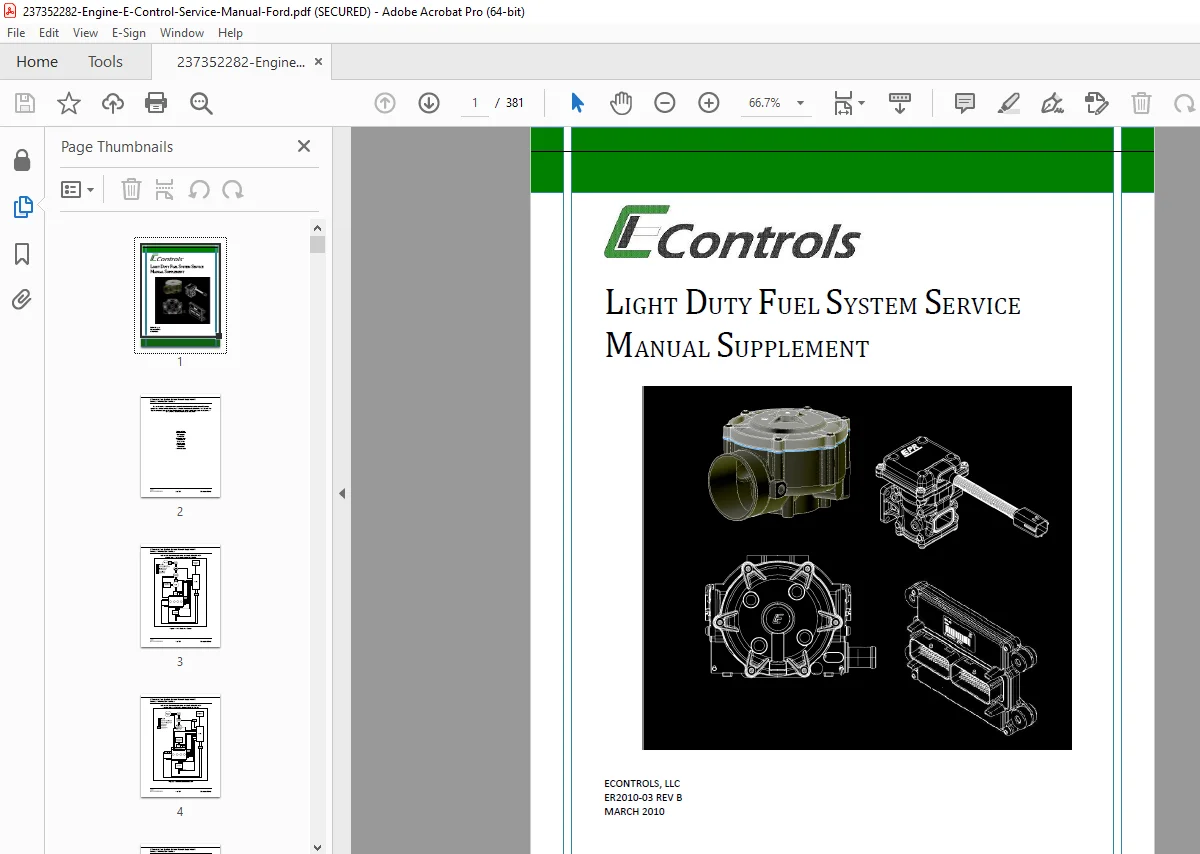
This comprehensive 381-page ford econtrols lpg propane fuel system service manual is the official factory technical documentation for Ford engines equipped with EControls electronic fuel control systems. Published in March 2010 (Revision B), this manual covers complete diagnostic procedures, component testing, maintenance schedules, and repair instructions for LPG (propane), gasoline, and bi-fuel engine control systems.
FILE DETAILS
- Manual Name: Light Duty Fuel System Service Manual Supplement
- Manufacturer: EControls, LLC
- Document Number: ER2010-03 REV B
- Publication Date: March 2010 (Revision B)
- Pages: 381 pages
- Format: High-Resolution Professional PDF
- Quality: Factory Original Scanned Manual with Clear Diagrams
- Language: English
- Compatibility: All PDF Readers, Searchable Text, Printable
FUEL SYSTEM COVERAGE
This ford bi-fuel gasoline lpg diagnostic trouble codes guide provides complete technical information for these EControls fuel system configurations:
LPG (Propane) Dedicated Systems – Closed Loop Emission Certified
- Complete propane-only fuel systems
- Electronic throttle body (ETB) control
- Direct Electronic Pressure Regulator (DEPR)
- Dual Stage Regulator (DSR) with vaporizer
- LPG mixer assembly
- Heated Exhaust Gas Oxygen (HEGO) sensors
- Three-way catalyst systems
- Full OBD-II compliance
Bi-Fuel LPG/Gasoline Systems – Emission Certified
- Switchable fuel systems (propane and gasoline)
- Fuel select switch operation
- Independent fuel delivery systems
- Gasoline fuel pressure manifold
- Port fuel injection for gasoline mode
- Electronic fuel pump control
- Returnless fuel pressure regulation
- Dual oxygen sensor monitoring
Closed Loop Gasoline Systems
- Electronic fuel injection (EFI)
- Sequential port fuel injection
- Gasoline fuel pressure manifold
- Electronic throttle control
- Adaptive fuel trim learning
- Full emissions compliance
Open Loop LPG Systems
- Basic propane fuel systems
- Mechanical/electronic hybrid control
- Simplified sensor configurations
- Cost-effective conversions
- Industrial applications
FORD ENGINE APPLICATIONS
This manual applies to Ford light-duty engines equipped with EControls electronic fuel management systems including:
Ford Gasoline Engine Families:
- Modular V8 engines (4.6L, 5.4L)
- Triton V8 and V10 engines
- Essex V6 engines (3.8L, 4.2L)
- Duratec V6 engines
- Cologne V6 engines
Typical Ford Vehicle Applications:
- F-Series Trucks (F-150, F-250, F-350)
- E-Series Vans (E-150, E-250, E-350)
- Econoline commercial vehicles
- Crown Victoria / Grand Marquis
- Expedition / Navigator
- Mustang (propane conversion)
- Explorer / Mountaineer
- Ranger
Fleet & Commercial Applications:
- Taxi cabs and fleet vehicles
- Delivery vans and trucks
- School buses and shuttle buses
- Government fleet vehicles
- Airport ground support equipment
- Forklift and material handling
- Industrial stationary engines
- Generator applications
COMPLETE TABLE OF CONTENTS
SECTION 1: GENERAL INFORMATION (Pages 8-21)
- Introduction to EControls fuel systems
- Fuel system warnings and safety cautions
- Proper manual and tool usage guidelines
- Complete abbreviations and acronyms dictionary (4+ pages)
- System schematics overview
- Imperial and metric fastener identification
Comprehensive Abbreviation Guide Includes:
- 150+ technical acronyms defined
- OBD terminology
- Sensor abbreviations
- Fuel system components
- Diagnostic terminology
- Measurement units
SECTION 2: MAINTENANCE (Pages 22-27)
General Maintenance Requirements:
- Recommended maintenance schedules by system type
- Environmental condition adjustments
- Operating hour vs. calendar-based service
LPG Fuel Tank Maintenance:
- Daily inspection procedures
- Tank mounting and strap inspection
- Quick-fill valve service
- O-ring inspection and replacement
- Service line coupler maintenance
- Tank positioning verification
- Pressure relief device checks
Fuel Filter Maintenance:
- Filter inspection procedures
- Replacement intervals by application
- LPG system filter service
- Gasoline system filter service
- In-tank pump/filter service
- Contamination prevention
Fuel Supply & Return Line Maintenance:
- Hose and line inspection
- Routing verification
- Leak checking procedures
- Connection torque specifications
- Chafing and wear inspection
LPG Pressure Regulator Service:
- Dual Stage Regulator (DSR) inspection
- Direct Electronic Pressure Regulator (DEPR) checks
- Coolant line inspection
- Oil drainage procedures
- Mounting verification
- Electrical connector inspection
Gasoline Fuel System Maintenance:
- Fuel pressure manifold inspection
- Electric fuel pump checks
- Injector rail mounting verification
- Injector connector inspection
- Pressure sensor checks
- Temperature sensor validation
Electrical System Maintenance:
- Battery and cable inspection
- ECM mounting checks
- Wire harness routing inspection
- Sensor security verification
- Ignition system inspection
- Spark plug replacement intervals
- Miscellaneous electrical checks
SECTION 3: DESCRIPTION AND OPERATION (Pages 28-61)
EControls Fuel System Overview:
- System architecture and design philosophy
- Component interaction diagrams
- Operating mode descriptions
Fuel Metering Systems:
- LPG metering principles
- Gasoline port fuel injection
- Electronic pressure regulation
- Adaptive fuel control
Engine Control Module (ECM):
- ECM hardware description
- Software functionality
- CAN communication protocols
- Diagnostic capabilities
- Data logging features
LPG Dedicated System Components:
- LPG Fuel Tank – Specifications and safety devices
- Service Line – Routing and specifications
- Fuel Filter – Filtration requirements
- LPG Fuel Lock-Off – Safety shutoff solenoid
- Dual Stage Regulator (DSR) – Two-stage pressure reduction with vaporization
- Direct Electronic Pressure Regulator (DEPR) – Precise electronic pressure control
- Mixer Assembly – Air/fuel mixing principles
- Electronic Throttle Body (ETB) – Drive-by-wire throttle control
- Three-Way Catalyst – Emissions control
- Heated Exhaust Gas Oxygen Sensors (HEGO) – Closed-loop feedback
Bi-Fuel LPG/Gasoline System Components:
- Fuel System Select Switch – Driver-selectable fuel mode
- Electric Gasoline Fuel Pump – PWM-controlled pump
- Gasoline Fuel Pressure Manifold – Pressure and temperature monitoring
- Gasoline Injectors and Rail – Port fuel injection hardware
- Gasoline Pressure Sensors (GPS) – Real-time pressure feedback
- Gas Temperature Sensors (GTS) – Fuel temperature monitoring
Complete Engine Sensor Group:
- Temperature Manifold Absolute Pressure (TMAP) – Integrated sensor
- Engine Coolant Temperature (ECT) – Engine thermal management
- Engine Oil Pressure (EOP) – Oil pressure monitoring
- Throttle Position Sensors 1 & 2 (TPS 1&2) – Redundant position sensing
- Foot Pedal Position Sensors (FPP) – Driver demand input
- Crankshaft Position Sensor (CKP) – Engine position and speed
- Camshaft Position Sensor (CMP) – Cylinder identification
- Knock Sensor (KCS) – Detonation detection
SECTION 4: SYMPTOM CHARTS (Pages 63-101)
LPG System Symptom Diagnosis (Pages 63-81):
- Important preliminary checks
- Intermittent Problems – Random issue diagnosis
- No Start Conditions – Complete troubleshooting flowchart
- Hard Start – Extended cranking diagnosis
- Cuts Out, Misses – Driveability problems
- Hesitation, Sag, or Stumble – Acceleration issues
- Backfire – Intake and exhaust backfire causes
- Lack of Power, Sluggishness, Sponginess – Performance degradation
- Poor Fuel Economy – Efficiency troubleshooting
- Rough, Unstable, Incorrect Idle, Stalling – Idle quality issues
- Surge and Chuggles – Cruise and steady-state problems
Gasoline System Symptom Diagnosis (Pages 82-101):
- Important preliminary checks
- Intermittent Problems
- No Start Conditions
- Hard Start
- Cuts Out, Misses
- Hesitation, Sag, or Stumble
- Backfire
- Lacks Power or Sluggishness
- Poor Fuel Economy
- Rough, Unstable, Incorrect Idle, Stalling
- Surge and Chuggles
Each Symptom Chart Includes:
- Systematic diagnostic steps
- Component testing procedures
- Measurement specifications
- Probable cause identification
- Repair recommendations
SECTION 5: FUEL SYSTEM REMOVE AND REPLACE (Pages 102-119)
LPG System Service Procedures:
- Propane Fuel System Pressure Relief – Safe depressurization
- Propane Fuel System Leak Testing – Electronic and soap solution methods
- Fuel Filter Replacement – Complete procedures
- LPG Fuel Lock-Off Replacement and Repair – Solenoid service
- Dual Stage Regulator (DSR) Replacement – Removal and installation
- DSR Closed Loop Rebuild – Complete overhaul procedures
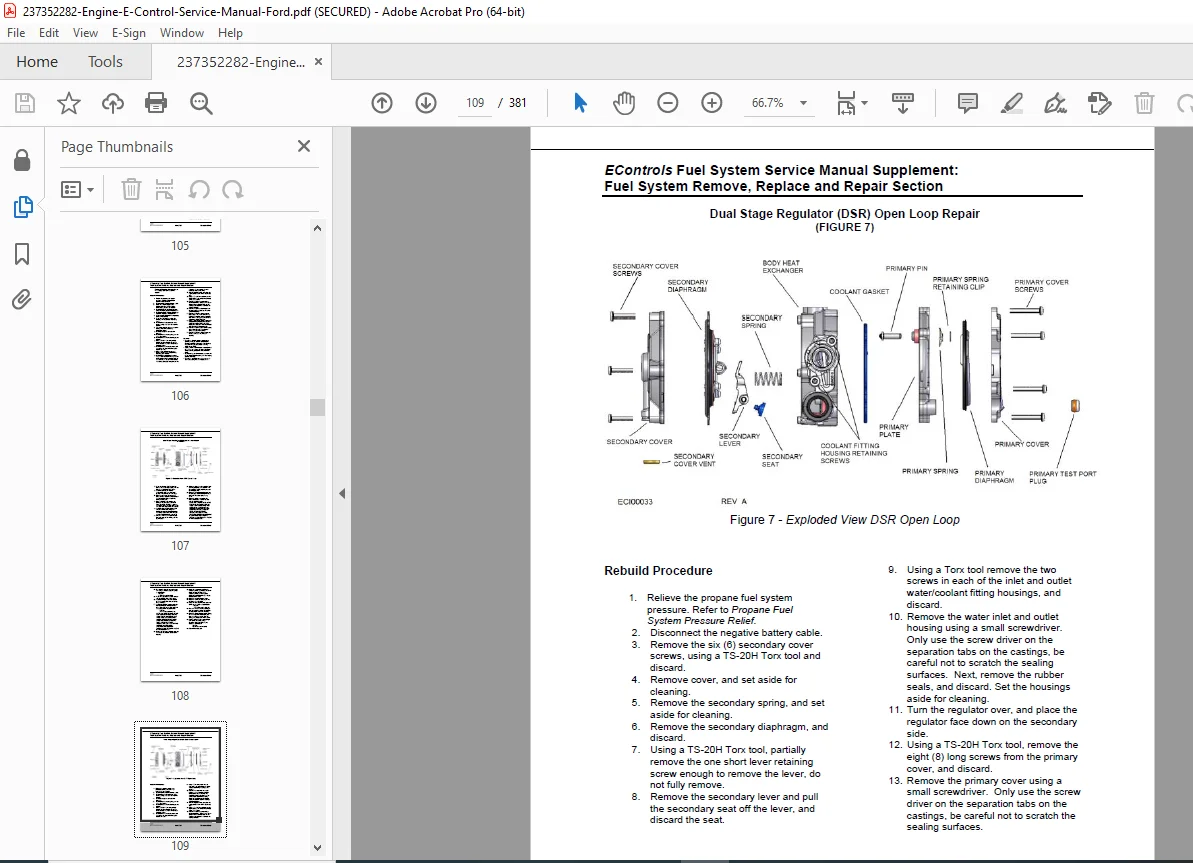
- DSR Open Loop Rebuild – Simplified rebuild
- Electronic Throttle Body (ETB) Assembly – Service procedures
- Mixer Replacement and Repair – E100 Series procedures
- Closed Loop Mixer Replacement
- Open Loop Mixer Replacement
- Mixer Repair Procedures
- Open Loop Mixer Adjustment
- Direct Electronic Pressure Regulator (DEPR) Replacement
- Coolant Hose Replacement
- Vapor Hose Replacement
Common System Components:
- Engine Control Module (ECM) Replacement – Removal, installation, programming
- Heated Exhaust Gas Oxygen Sensor Replacement
- Three-Way Catalytic Converter/Muffler Replacement
SECTION 6: FUEL SYSTEM DIAGNOSIS (Pages 120-134)
LPG Fuel System Diagnosis (Open & Closed Loop):
- Fuel pressure testing procedures
- Regulator performance testing
- Lock-off solenoid verification
- Mixer airflow testing
- DEPR electronic control diagnosis
- Vapor hose inspection
- System leak detection
Gasoline Fuel System Diagnosis:
- Fuel pump performance testing
- Fuel pressure manifold diagnosis
- Injector testing procedures
- Fuel pressure regulation
- Return system diagnosis
- Filter restriction testing
Restricted Exhaust Diagnosis:
- Backpressure testing procedures
- Catalyst efficiency testing
- Exhaust system inspection
- Performance impact analysis
SECTION 7: ELECTRICAL SYSTEM DIAGNOSTICS (Pages 135-159)
Complete Wire Harness Schematics:
- Main engine harness diagrams
- Injector harness schematics
- Sensor harness diagrams
- Power distribution schematics
- Ground distribution diagrams
- CAN bus network layout
Mating Connector Views:
- ECM connector pinouts (multiple views)
- Sensor connector configurations
- Actuator connector pinouts
- Power connector diagrams
- Ground connection locations
Wire Harness Repair Procedures:
- Proper splicing techniques
- Connector repair methods
- Terminal replacement
- Heat shrink application
- Wire routing guidelines
- Harness protection methods
SECTION 8: ONBOARD DIAGNOSTIC SECTION (Pages 160-183)
GCP Diagnostic Display Tool:
- Tool connection procedures
- Software interface overview
- Data parameter identification
- Real-time data monitoring
- Freeze frame data retrieval
- Flight data recorder access
Diagnostic Tests:
- Active component tests
- Sensor validation procedures
- Actuator functional tests
- System integrity verification
- Communication bus testing
- ECM self-test procedures
SECTION 9: DIAGNOSTIC TROUBLE CODES (Pages 184-382)
Complete DTC Coverage – 100+ Codes Detailed:
Each diagnostic trouble code includes:
- Code Description – Detailed fault explanation
- Fault Conditions – What triggers the code
- Possible Causes – Component and system failures
- Diagnostic Steps – Step-by-step troubleshooting
- Test Procedures – Electrical and mechanical tests
- Specifications – Voltage, resistance, pressure values
- Repair Procedures – Component replacement or adjustment
- Verification – Post-repair testing
Major DTC Categories Covered:
Engine Position & Timing Codes:
- DTC-16: Crank and/or Cam Could Not Synchronize During Start
- DTC-336: Crank Input Signal Noise
- DTC-337: Loss of Crankshaft Input Signal
- DTC-341: Camshaft Input Signal Noise
- DTC-342: Loss of Camshaft Input Signal
Fuel System Codes:
- DTC-91: Fuel Pressure (FP) Low Voltage
- DTC-92: Fuel Pressure (FP) High Voltage
- DTC-182: Fuel Temperature (FT) Low Voltage (Gasoline)
- DTC-183: Fuel Temperature (FT) High Voltage (Gasoline)
- DTC-187: Gaseous Fuel Temperature Sender Low Voltage
- DTC-188: Gaseous Fuel Temperature Sender High Voltage
- DTC-1181: Fuel Runout Longer Than Expected
Air/Fuel Management Codes:
- DTC-107: MAP Low Voltage
- DTC-108: MAP High Pressure
- DTC-111: IAT Higher Than Expected Stage 1
- DTC-112: IAT Low Voltage
- DTC-113: IAT High Voltage
- DTC-127: IAT Higher Than Expected Stage 2
- DTC-129: Barometric Pressure (BP) Low Pressure
- DTC-2229: Barometric Pressure (BP) High Pressure
Throttle System Codes:
- DTC-121: TPS1 % Lower Than TPS2 %
- DTC-122: TPS1 Signal Voltage Low
- DTC-123: TPS1 Signal Voltage High
- DTC-221: TPS1 % Higher Than TPS2 %
- DTC-222: TPS2 Signal Voltage Low
- DTC-223: TPS2 Signal Voltage High
- DTC-2111: Unable to Reach Lower TPS
- DTC-2112: Unable to Reach Higher TPS
- DTC-2115: Foot Pedal Position (FPP1) Higher Than IVS
- DTC-2122: FPP1 Voltage High
- DTC-2123: FPP1 Voltage Low
- DTC-2135: TPS1/2 Simultaneous Voltages Out-of-Range
- DTC-2139: FPP1 Lower Than IVS
Engine Temperature Codes:
- DTC-116: ECT Higher Than Expected Stage 1
- DTC-117: ECT/CHT Low Voltage
- DTC-118: ECT/CHT High Voltage
- DTC-217: ECT Higher Than Expected Stage 2
Oxygen Sensor Codes:
- DTC-154: EGO1 Open/Lazy (HO2S1) – Upstream sensor
- DTC-420: Catalyst Inactive on Gasoline (Bank 1)
- DTC-1165: Catalyst Inactive on LPG
Fuel Trim & Adaptive Learning Codes:
- DTC-171: Adaptive Lean Bank 1 High (Gasoline)
- DTC-172: Adaptive Learn Bank 1 Low (Gasoline)
- DTC-1151: Closed Loop High (LPG)
- DTC-1152: Closed Loop Low (LPG)
- DTC-1155: Closed Loop Bank 1 High (Gasoline)
- DTC-1156: Closed Loop Bank 1 Low (Gasoline)
- DTC-1161: Adaptive Learn High (LPG)
- DTC-1162: Adaptive Learn Low (LPG)
Injector Driver Codes:
- DTC-261: Injector Driver #1 Open/Short-To-Ground
- DTC-262: Injector Driver #1 Short-To-Power
- DTC-264: Injector Driver #2 Open/Short-To-Ground
- DTC-265: Injector Driver #2 Short-To-Power
- DTC-267: Injector Driver #3 Open/Short-To-Ground
- DTC-268: Injector Driver #3 Short-To-Power
- DTC-270: Injector Driver #4 Open/Short-To-Ground
- DTC-271: Injector Driver #4 Short-To-Power
Ignition System Codes:
- DTC-326: Knock 1 Excessive or Erratic Signal
- DTC-327: Knock 1 Sensor Open or Not Present
- DTC-2300: Spark Coil #1 Primary Open/Short-to-Ground
- DTC-2301: Spark Coil #1 Primary Short-to-Power
- DTC-2303: Spark Coil #2 Primary Open/Short-to-Ground
- DTC-2304: Spark Coil #2 Primary Short-to-Power
- DTC-2306: Spark Coil #3 Primary Open/Short-to-Ground
- DTC-2307: Spark Coil #3 Primary Short-to-Power
- DTC-2309: Spark Coil #4 Primary Open/Short-to-Ground
- DTC-2310: Spark Coil #4 Primary Short-to-Power
Electronic Pressure Regulator (DEPR) Codes:
- DTC-1171: DEPR Delivery Pressure Higher Than Expected
- DTC-1172: DEPR Delivery Pressure Lower Than Expected
- DTC-1173: DEPR Communication Lost
- DTC-1176: DEPR Internal Actuator Fault Detection
- DTC-1177: DEPR Internal Circuitry Fault Detection
Engine Protection Codes:
- DTC-219: RPM Higher Than Max Allowed Governed Speed
- DTC-524: Oil Pressure Low
- DTC-1111: RPM Above Fuel Rev Limit Level
- DTC-1112: RPM Above Spark Rev Limit Level
Electrical System Codes:
- DTC-562: Battery Voltage (VBAT) Low
- DTC-563: Battery Voltage (VBAT) High
- DTC-627: Fuel Pump Relay Coil Open
- DTC-628: Fuel Pump Relay Ground Short
- DTC-629: Fuel Pump Relay Coil Short-To-Power
- DTC-642: Sensor Supply Voltage 1 Low (5Vext1)
- DTC-643: Sensor Supply Voltage 1 High (5Vext1)
- DTC-685: Power Relay Coil Open
- DTC-686: Power Relay Ground Short
- DTC-687: Power Relay Coil Short-To-Power
ECM Internal Fault Codes:
- DTC-601: Microprocessor Failure – FLASH
- DTC-604: Microprocessor Failure – RAM
- DTC-606: Microprocessor Failure – COP
- DTC-1612: Microprocessor Failure – RTI 1
- DTC-1613: Microprocessor Failure – RTI 2
- DTC-1614: Microprocessor Failure – RTI 3
- DTC-1615: Microprocessor Failure – A/D
- DTC-1616: Microprocessor Failure – Interrupt
- DTC-1628: CAN Address Conflict Failure
KEY FEATURES OF THIS ECONTROLS ELECTRONIC FUEL INJECTION REPAIR MANUAL PDF
✅ Official Factory Documentation – EControls LLC authorized technical manual
✅ Multiple Fuel System Coverage – LPG dedicated, gasoline, and bi-fuel systems
✅ 100+ Diagnostic Trouble Codes – Complete DTC library with detailed troubleshooting
✅ Comprehensive Wiring Diagrams – Full electrical schematics with connector pinouts
✅ Symptom-Based Diagnosis – Organized by actual vehicle symptoms
✅ Component Testing Procedures – Step-by-step sensor and actuator validation
✅ Maintenance Schedules – Recommended service intervals by system type
✅ Professional Quality – 381 pages of detailed technical information
✅ Alternative Fuel Expertise – Specialized propane/LPG system knowledge
✅ Bi-Fuel System Support – Complete dual-fuel system diagnostics
TECHNICAL SPECIFICATIONS INCLUDED
EControls ECM Specifications:
- CAN bus communication protocols
- Diagnostic capabilities and data logging
- Input/output specifications
- Power requirements
- Operating temperature ranges
- Software version information
Fuel System Specifications:
- LPG pressure ranges (high and low pressure)
- Gasoline fuel pressure specifications
- Fuel flow requirements
- Injector specifications
- Regulator operating ranges
- Filter micron ratings
Sensor Specifications:
- Voltage ranges for all sensors
- Resistance values (thermistors)
- Operating frequencies (CKP, CMP)
- Pressure sensor ranges
- Temperature sensor curves
Electrical Specifications:
- Wire gauge and color codes
- Connector terminal specifications
- Ground location diagrams
- Fuse and relay ratings
- Voltage drop specifications
- Resistance specifications
PERFECT FOR THESE PROFESSIONALS
🔧 Ford Dealership Technicians – Essential for alternative fuel vehicle service
🚚 Fleet Maintenance Departments – Critical for propane fleet vehicle support
⛽ Propane Conversion Specialists – Complete installation and service information
🔍 Independent Repair Shops – Professional diagnostic procedures for alt-fuel vehicles
🏫 Technical Training Programs – Comprehensive educational resource
🚑 Government Fleet Services – Support for municipal vehicle programs
🏭 Industrial Equipment Service – Stationary engine and generator support
WHY THIS MANUAL IS ESSENTIAL
This ford alternative fuel engine control system troubleshooting manual contains specialized information unavailable elsewhere:
- Alternative Fuel Expertise – LPG/propane systems require specialized knowledge
- Bi-Fuel System Integration – Understanding dual-fuel switching and control
- EControls-Specific Information – Proprietary system design and operation
- Complete DTC Database – 100+ manufacturer-specific trouble codes
- Wiring Diagrams – Essential for electrical diagnosis
- Component Locations – Save hours finding sensors and actuators
- Proper Test Procedures – Prevent misdiagnosis and unnecessary parts replacement
- Safety Procedures – Critical for working with pressurized LPG systems
DIAGNOSTIC TOOL COMPATIBILITY
This manual covers the use of:
- GCP Diagnostic Display Tool – EControls proprietary scan tool
- EDIS Software – EControls Display and Interface Software
- Generic OBD-II Scan Tools – Standard diagnostic capabilities
- Multimeters – Voltage and resistance testing
- Pressure Gauges – Fuel system testing
- Electronic Leak Detectors – LPG system safety checks
COMMON PROBLEMS COVERED
LPG System Issues:
- Hard starting on propane
- Rough idle in LPG mode
- Lack of power on propane
- Excessive propane consumption
- Regulator freezing problems
- Mixer adjustment issues
- Lock-off solenoid failures
- DEPR control faults
Bi-Fuel System Problems:
- Fuel switching issues
- Performance difference between fuels
- Fuel selection switch failures
- Gasoline system operation while in LPG mode
- ECM fuel mode recognition
Gasoline System Issues:
- Fuel pump control problems
- Injector failures
- Pressure regulation faults
- Fuel pressure sensor issues
- Temperature sensor failures
Electronic Control Problems:
- Throttle position sensor faults
- Crankshaft/camshaft synchronization
- ECM communication errors
- CAN bus failures
- Sensor voltage supply issues
- Ground circuit problems
SAFETY INFORMATION INCLUDED
Critical Safety Procedures:
- Proper LPG system depressurization
- Fuel system leak testing requirements
- Personal protective equipment requirements
- Fire prevention and ventilation
- High-pressure fuel line handling
- Electronic component static protection
- Battery disconnection procedures
- Catalyst hot surface warnings
MAINTENANCE SCHEDULE HIGHLIGHTS
Daily/Pre-Operation Checks:
- LPG tank external inspection
- Fuel leak visual inspection
- Warning light functionality
- Gauge operation verification
Weekly/25-Hour Intervals:
- Wire harness visual inspection
- Connection security checks
- Fluid level verification
Monthly/100-Hour Intervals:
- Fuel filter inspection
- Electrical connector cleaning
- Sensor mounting verification
Annual/1000-Hour Intervals:
- Complete fuel system leak test
- Regulator performance testing
- Injector flow balance test
- Oxygen sensor replacement
- Spark plug replacement
- Complete electrical inspection
ABBREVIATIONS & ACRONYMS GUIDE
The manual includes a comprehensive 4-page reference covering 150+ technical abbreviations including:
- Fuel system terminology
- Sensor acronyms
- Diagnostic abbreviations
- OBD-II terminology
- Measurement units
- Industry standard terms
BONUS: SYSTEM SCHEMATICS
Detailed System Block Diagrams:
- LPG Dedicated System flow diagram
- Bi-Fuel LPG/Gasoline System schematic
- Open Loop LPG System diagram
- Closed Loop Gasoline System diagram
- Component interconnection diagrams
- Signal flow illustrations
Master Alternative Fuel Systems – Download Immediately!
Stop struggling with alternative fuel vehicle diagnosis! This official EControls service manual gives you the exact procedures and specifications needed to confidently diagnose and repair Ford propane, gasoline, and bi-fuel systems. With 100+ diagnostic trouble codes fully explained and complete wiring diagrams, you’ll eliminate guesswork and reduce diagnostic time dramatically.
Instant digital download means you’re diagnosing problems in minutes, not days! No waiting for shipping, no damaged paper manuals. Whether you’re a fleet technician maintaining dozens of propane vehicles or a shop expanding into alternative fuel service, this comprehensive manual is your key to professional-quality repairs. Download now and gain immediate access to this essential technical resource!