Honda Common Service Manual Motorcycles Scooters ATVs PDF Universal Guide – PDF
Original price was: $75.00.$27.95Current price is: $27.95.
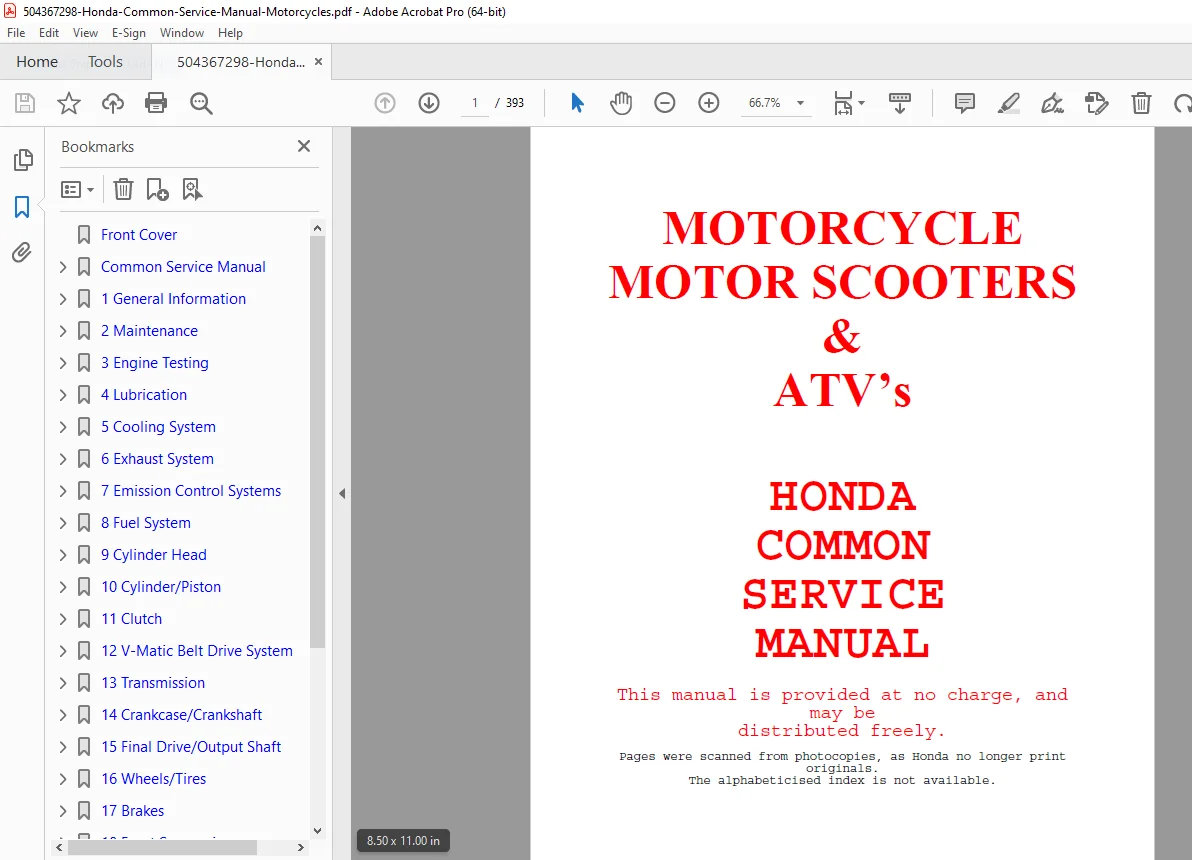
Comprehensive 393-page Honda Common Service Manual covering universal repair procedures for Honda motorcycles, motor scooters, and ATVs. Essential reference guide with detailed technical information on engine systems, transmissions, electrical components, brakes, suspension, and general maintenance applicable across multiple Honda powersports models.
Description
Honda Common Service Manual Motorcycles Scooters ATVs PDF Universal Guide – PDF DOWNLOAD
DESCRIPTION:
This Honda Common Service Manual is an invaluable universal reference guide covering fundamental repair and maintenance procedures applicable to Honda motorcycles, motor scooters, and ATVs. Originally published by Honda Motor Co., Ltd. in September 1988, this 393-page comprehensive manual provides detailed technical information on systems and components common across multiple Honda powersports vehicles, making it an essential complement to model-specific service manuals.
What is a “Common Service Manual”?
Unlike model-specific service manuals that focus on individual motorcycles or ATVs, this Honda Common Service Manual explains the theory of operation and servicing procedures for systems and components that are shared across Honda’s entire powersports lineup. It provides foundational knowledge essential for proper troubleshooting, inspection, and repair of Honda vehicles.
This manual is designed to be used in conjunction with model-specific service manuals, providing the general technical background and common procedures while the model-specific manual addresses unique features of individual machines.
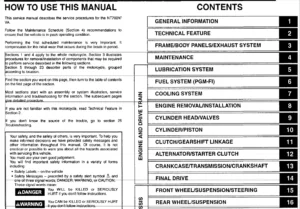
Complete Chapter Listing
SECTION 1: GENERAL INFORMATION
- Introduction and how to use this manual
- Service rules and best practices
- Metric tools requirements and specifications
- Special tools designed for Honda service work
- Proper assembly and disassembly techniques
- Fastener loosening patterns and torque sequences
- Complex assembly storage and organization
- Parts cleaning procedures and solvents
- Critical measurement procedures
- Non-reuseable parts identification
- Control cable maintenance and adjustment
- Rubber parts preservation and replacement
- Safety warnings and cautions
- Coolant and brake fluid handling precautions
SECTION 2: MAINTENANCE
- Regular maintenance schedules and intervals
- Pre-ride inspection procedures
- Periodic service requirements
- Fluid level checks and adjustments
- Filter replacement procedures
- Lubrication point identification
- Chassis lubrication procedures
- Drive chain maintenance and adjustment
- Cable lubrication and adjustment techniques
- General cleaning and preservation
SECTION 3: ENGINE TESTING
- Compression testing procedures
- Cylinder leakage testing
- Valve adjustment procedures
- Cam chain tensioner adjustment
- Engine break-in procedures
- Performance testing and evaluation
- Engine diagnostic techniques
- Troubleshooting engine performance issues
SECTION 4: LUBRICATION SYSTEM
- Oil pump theory and operation
- Lubrication system flow diagrams
- Oil pressure testing procedures
- Oil pump inspection and service
- Oil filter types and replacement
- Crankcase ventilation systems
- Oil cooler service (where applicable)
- Lubrication system troubleshooting
SECTION 5: COOLING SYSTEM
- Liquid cooling system theory
- Radiator service and maintenance
- Thermostat testing and replacement
- Water pump service procedures
- Coolant circulation system diagnosis
- Cooling fan operation and testing
- Temperature sensor testing
- Pressure cap testing
- System bleeding procedures
- Overheating diagnosis and repair
SECTION 6: EXHAUST SYSTEM
- Exhaust system design and operation
- Muffler service and replacement
- Header pipe installation procedures
- Exhaust gasket replacement
- Heat shield maintenance
- Exhaust system leak detection
- Back pressure testing
- Two-stroke expansion chamber theory (applicable models)
SECTION 7: EMISSION CONTROL SYSTEMS
- Evaporative emission control (EVAP)
- Secondary air injection systems
- Exhaust gas recirculation (where applicable)
- Catalytic converter function and service
- Crankcase emission control
- Fuel vapor control systems
- Emission system troubleshooting
- Component testing procedures
SECTION 8: FUEL SYSTEM
- Carburetor theory and operation
- Carburetor types used by Honda
- Float level adjustment procedures
- Jet identification and selection
- Carburetor synchronization (multi-cylinder)
- Air/fuel mixture adjustment
- Choke system operation and testing
- Fuel pump types and testing
- Fuel filter service
- Fuel tank cleaning and repair
- Fuel injection basics (early systems)
- Throttle cable adjustment
SECTION 9: CYLINDER HEAD/VALVES
- Cylinder head removal and installation
- Valve clearance specifications and adjustment
- Valve guide service and replacement
- Valve seat machining procedures
- Valve face grinding
- Valve spring testing and replacement
- Camshaft inspection procedures
- Cam chain and tensioner service
- Rocker arm inspection and replacement
- Cylinder head resurfacing
- Head gasket replacement procedures
SECTION 10: CYLINDER/PISTON
- Cylinder bore measurement and inspection
- Piston clearance specifications
- Piston ring installation procedures
- Ring end gap measurement
- Cylinder honing procedures
- Piston pin clearance inspection
- Piston ring types and identification
- Cylinder wear patterns and diagnosis
- Top-end rebuild procedures
- Break-in procedures after cylinder service
SECTION 11: CLUTCH
- Clutch operation theory
- Wet multi-plate clutch service
- Clutch plate inspection and measurement
- Spring tension testing
- Clutch basket inspection
- Clutch center hub service
- Hydraulic clutch systems
- Cable-operated clutch adjustment
- Clutch slippage diagnosis
- Clutch drag troubleshooting
SECTION 12: V-MATIC BELT DRIVE SYSTEM
- CVT (Continuously Variable Transmission) theory
- V-belt inspection and replacement
- Drive face and driven face service
- Centrifugal clutch operation
- Roller weight inspection
- Belt wear patterns and diagnosis
- Variator cleaning and service
- Drive pulley alignment procedures
- Torque converter service (applicable models)
SECTION 13: TRANSMISSION/GEARSHIFT LINKAGE
- Manual transmission theory
- Gear shifting mechanism operation
- Shift drum and fork inspection
- Detent mechanism service
- Transmission shaft bearing replacement
- Gear inspection for wear and damage
- Shift linkage adjustment
- Neutral switch adjustment
- Transmission troubleshooting
- Gear ratio specifications
SECTION 14: CRANKCASE/CRANKSHAFT
- Crankcase splitting procedures
- Crankshaft runout measurement
- Connecting rod inspection
- Crankshaft bearing service
- Primary drive gear service
- Crankshaft assembly procedures
- Case sealing and gasket installation
- Oil seal replacement
- Crankshaft balancer service
- Main bearing preload specifications
SECTION 15: FINAL DRIVE/OUTPUT SHAFT
- Chain drive maintenance and adjustment
- Shaft drive service procedures
- Bevel gear inspection and adjustment
- Drive sprocket replacement
- Final drive oil changes
- Universal joint service
- Drive shaft inspection
- Final drive bearing replacement
- Output shaft seal replacement
- Drive ratio calculations
SECTION 16: WHEELS/TIRES
- Wheel removal and installation
- Wheel bearing service and replacement
- Bearing race installation procedures
- Wheel runout measurement
- Spoke adjustment and tensioning
- Tubeless tire mounting procedures
- Tube-type tire service
- Tire repair procedures
- Wheel balancing techniques
- Rim inspection for damage
SECTION 17: BRAKES
- Hydraulic brake system theory
- Disc brake operation and service
- Drum brake adjustment and service
- Brake pad/shoe inspection and replacement
- Master cylinder overhaul procedures
- Caliper rebuild procedures
- Brake fluid bleeding techniques
- Brake line inspection and replacement
- Integrated braking systems
- Brake performance testing
- Anti-lock braking system basics (early ABS)
SECTION 18: FRONT SUSPENSION/STEERING
- Telescopic fork operation theory
- Fork oil change procedures
- Fork seal replacement
- Fork spring inspection and replacement
- Steering head bearing adjustment
- Steering head bearing replacement
- Triple clamp alignment
- Fork tube straightness inspection
- Damping rod service
- Cartridge fork basics
- Handlebar alignment and installation
SECTION 19: REAR SUSPENSION
- Swingarm bearing service
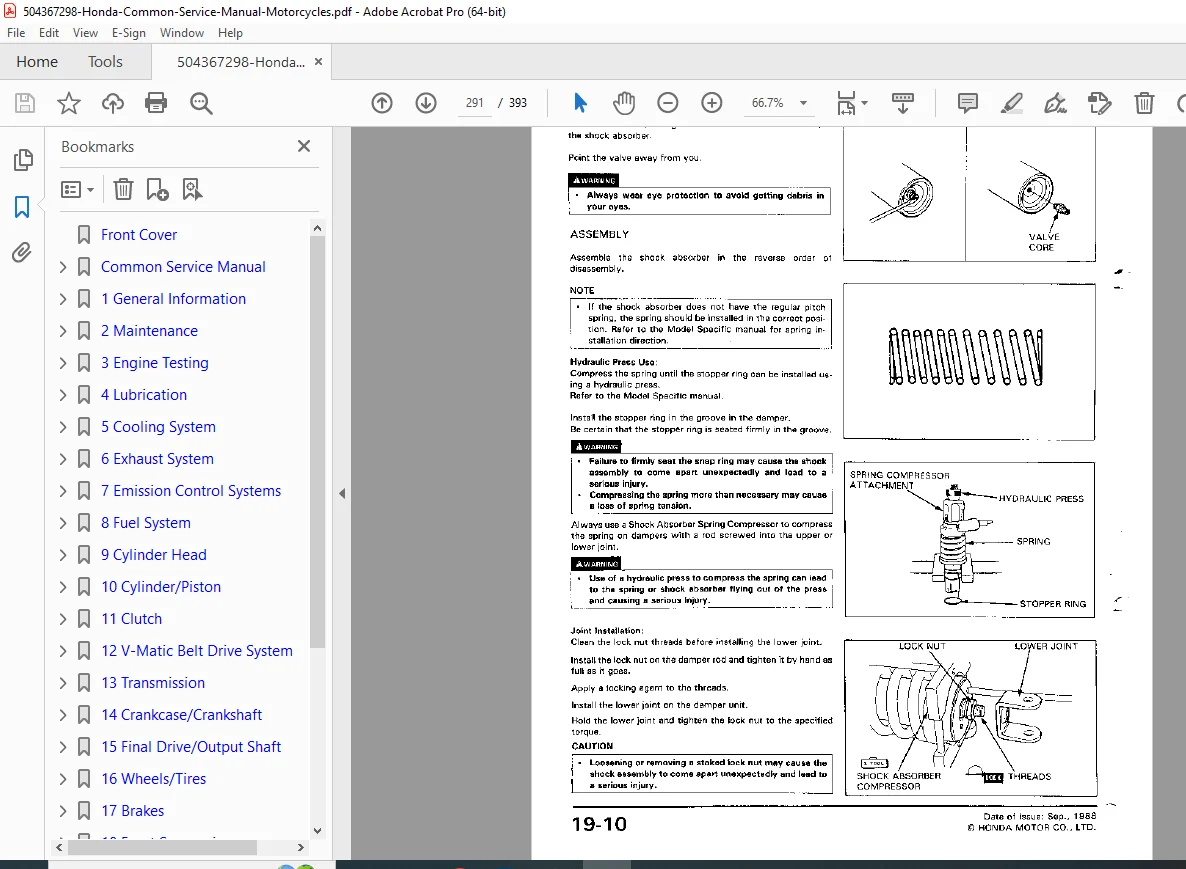
- Shock absorber operation and service
- Spring preload adjustment
- Damping adjustment procedures
- Swingarm removal and installation
- Linkage bearing replacement
- Pro-Link suspension service
- Monoshock installation and adjustment
- Dual shock service
- Suspension troubleshooting
SECTION 20: FRAME/BODY PANELS
- Frame inspection procedures
- Crack detection techniques
- Bodywork removal sequences
- Fastener identification and service
- Side cover installation
- Seat removal and installation
- Fuel tank mounting procedures
- Fender installation
- Frame alignment checking
- VIN location and interpretation
SECTION 21: ELECTRICAL FUNDAMENTALS
- Basic electrical theory
- Ohm’s Law application
- Circuit types (series, parallel, series-parallel)
- Voltage, current, and resistance relationships
- Electrical testing equipment use
- Multimeter operation and readings
- Wiring diagram interpretation
- Wire color codes
- Connector service and repair
- Electrical troubleshooting methodology
SECTION 22: BATTERIES/CHARGING/LIGHTING SYSTEM
- Battery construction and operation
- Battery testing procedures
- Charging system theory
- Alternator types and operation
- Stator testing procedures
- Rotor testing and service
- Voltage regulator/rectifier testing
- Charging system output testing
- Lighting circuit diagnosis
- Headlight aiming procedures
- Bulb specifications
SECTION 23: IGNITION SYSTEMS
- Breaker point ignition systems
- Electronic ignition operation
- CDI (Capacitor Discharge Ignition) theory
- Transistor ignition systems
- Ignition timing procedures
- Spark plug reading and diagnosis
- Ignition coil testing
- Pickup coil testing
- Ignition advance mechanisms
- Troubleshooting no-spark conditions
SECTION 24: ELECTRIC STARTER/STARTER CLUTCH
- Starter motor operation theory
- Starter motor testing procedures
- Brush inspection and replacement
- Starter solenoid testing
- Starter clutch operation
- One-way bearing service
- Starter reduction gears inspection
- Starting system troubleshooting
- Starter relay testing
SECTION 25: LIGHTS/METERS/SWITCHES
- Turn signal operation and service
- Brake light switch adjustment
- Instrument cluster removal
- Speedometer cable service
- Tachometer operation
- Neutral indicator circuit
- Oil pressure light circuit
- Handlebar switch testing
- Ignition switch service
- Fuse and fuse box service
- Horn circuit diagnosis
Key Features of This Manual
✓ Universal reference for Honda motorcycles, scooters, and ATVs ✓ 393 comprehensive pages covering fundamental systems ✓ Detailed illustrations and diagrams for all procedures ✓ Step-by-step instructions with clear explanations ✓ Theory of operation for all major systems ✓ Troubleshooting procedures for common problems ✓ Proper service techniques following Honda standards ✓ Electrical fundamentals with wiring diagram basics ✓ Measurement specifications and tolerance guidelines ✓ Special tool identification with alternatives where possible
Who Should Use This Manual
This Honda common service manual is essential for:
- Professional motorcycle mechanics working on multiple Honda models
- Honda dealership technicians needing reference material
- Independent repair shops servicing Honda powersports vehicles
- Technical schools teaching Honda service procedures
- DIY enthusiasts maintaining their own Honda motorcycles or ATVs
- Mechanics transitioning to Honda products from other brands
- Anyone needing to understand Honda’s approach to common systems
How to Use This Manual Effectively
For Model-Specific Repairs:
- Consult your model-specific service manual first for unique procedures
- Reference this Common Service Manual for general procedures and theory
- Use this manual when your model-specific manual references “common service procedures”
For Learning Honda Systems:
- Start with Section 1 (General Information) to understand Honda’s service philosophy
- Study the theory sections to understand system operation
- Reference troubleshooting sections for diagnostic approaches
- Use electrical fundamentals section before working on any electrical system
For Multiple Model Service:
- This manual provides consistency across Honda’s product line
- Procedures learned from this manual apply to numerous Honda models
- Reduces the need for multiple model-specific manuals for basic procedures
Important Notes
This manual explains procedures common across Honda’s motorcycle, scooter, and ATV lineup. Originally published in September 1988, it covers systems and technologies prevalent in Honda powersports vehicles of that era through the mid-1990s. While modern Honda vehicles have evolved with fuel injection, advanced electronics, and new technologies, the fundamental mechanical principles and many procedures remain relevant.
The manual emphasizes:
- Metric tools only – Honda vehicles use metric fasteners exclusively
- Safety first – Proper procedures to prevent injury and damage
- Proper torque specifications – Critical for reliable assembly
- Honda genuine parts – Recommendations for replacement components
- Environmental responsibility – Proper fluid disposal and handling
Manual Quality and Format
- Format: PDF (Portable Document Format)
- Pages: 393 scanned pages
- Quality: Good – Readable scanned pages from official Honda documentation
- Origin: Honda Motor Co., Ltd. Service Publications Office
- Compatibility: Opens in any PDF reader
- Print-friendly: Can print individual sections as needed
- File size: 7.6 MB – Manageable for storage and email
This Honda Common Service Manual PDF serves as an indispensable reference for anyone working on Honda motorcycles, scooters, or ATVs, providing the foundational knowledge needed for proper service and repair across Honda’s diverse powersports product line.
FILE DETAILS:
| Manual Type | Common Service Manual (Universal Reference) |
|---|---|
| Applicable To | Honda Motorcycles, Motor Scooters, and ATVs (Multi-Model) |
| Year/Edition | September 1988 Edition |
| Pages | 393 pages |
| PDF Quality | Good – Scanned from official Honda documentation |
| File Size | 7.6 MB |
| Language | English |
| Publisher | Honda Motor Co., Ltd. Service Publications Office |
| Document Code | 61CM000 / B1508811 |