KOBELCO SK200-8 SK210LC-8 HYDRAULIC EXCAVATOR SHOP MANUAL- PDF DOWNLOAD
Original price was: $80.00.$31.95Current price is: $31.95.
KOBELCO SK200-8 SK210LC-8 HYDRAULIC EXCAVATOR SHOP MANUAL- PDF DOWNLOAD
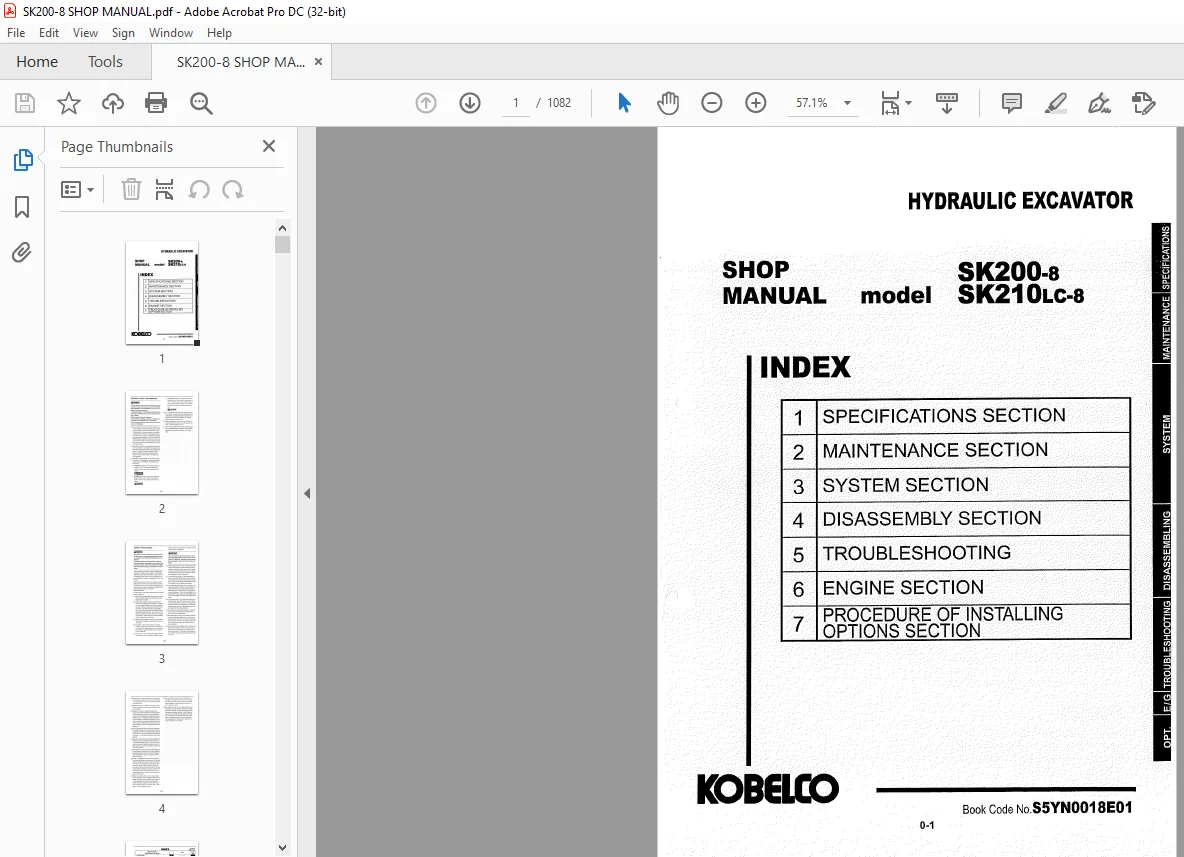
Book Code No.S5YN0018E01
Description
KOBELCO SK200-8 SK210LC-8 HYDRAULIC EXCAVATOR SHOP MANUAL- PDF DOWNLOAD
DESCRIPTION:
KOBELCO SK200-8 SK210LC-8 HYDRAULIC EXCAVATOR SHOP MANUAL- PDF DOWNLOAD
Book Code No.S5YN0018E01
GENERAL SAFETY INFORMATION
WARNING
Do not operate or perform any maintenance on this machine until all instructions found in the OPERATOR’S MANUAL and this MANUAL have been thoroughly read and understood. Improper operation or maintenance of this machine may cause accidents and could result in serious injury or death. Always keep the manual in storage. If it is missing or damaged, place an order with an authorized our Distributor for a replacement. If you have any questions, please consult an authorized our Distributor.
(1) Most accidents, which occur during operation, are due to neglect of precautionary measures and safety rules. Sufficient care should be taken to avoid these accidents. Erroneous operation, lubrication or maintenance services are very dangerous and may cause injury or death of personnel. Therefore all precautionary measures, NOTES, DANGERS, WARNINGS and CAUTIONS contained in the manual and on the machine should be read and understood by all personnel before starting any work with or on the machine.
(2) Operation, inspection, and maintenance should be carefully carried out, and safety must be given the first priority. Messages of safety are indicated with marks. The safety information contained in the manual is intended only to supplement safety codes, insurance requirements, local laws, rules and regulations.
(3) Messages of safety appear in the manual and on the machine : All messages of safety are identified by either word of “DANGER”, “WARNING” and “CAUTION”. 1) DANGER- Indicates an imminently hazardous situation which, if not avoided, will result in death or serious injury and is represented as follows: ADANGER 2) WARNING- Indicates a potentially hazardous situation which, if not avoided, could result in death or serious injury and is represented as follows:
3) CAUTION
Indicates a potentially hazardous situation which, if not avoided, may result in minor or moderate injury. It may also be used to alert against possible damage to the machine and its components and is represented as follows: IA CAUTION I
(4) It is very difficult to forecast every danger that may occur during operation. However, safety can be ensured by fully understanding proper operating procedures for this machine according to methods recommended by Manufacturer.
(5) While operating the machine, be sure to perform work with great care, so as not to damage the machine, or allow accidents to occur.
(6) Continue studying the manual until all Safety, Operation and Maintenance procedures are completely understood by all persons working with the machine.
SAFETY PRECAUTIONS
WARNING
The proper and safe lubrication and maintenance for this machine, recommended by Manufacturer, are outlined in the OPERATOR’S MANUAL for the machine, Improper performance of lubrication or maintenance procedures are dangerous and could result in injury or death. Read and understand the MANUAL before performing any lubrication or maintenance.
The serviceman or mechanic may be unfamiliar with many of the systems on this machine. This makes it important to use caution when performing service work. A knowledge of the system and or components is important before the removal or disassembly of any component. Because of the size of some of the machine components, the serviceman or mechanic should check the weights noted in this manual. Use proper lifting procedures when removing any components. Weight of components table is shown in the section ;
SPECIFICATIONS.
The following is a list of basic precautions that must always be observed.
(1) Read and understand all Warning plates and decal on the machine before Operating, Maintaining or Repairing this machine.
(2) Always wear protective glasses and protective shoes when working around machines. In particular, wear protective glasses when using hammers, punches or drifts on any part of the machine or attachments. Use welders gloves, hood/goggles, apron and the protective clothing appropriate to the welding job being performed. Do not wear loose fitting or torn clothing. Remove all rings from fingers, loose jewelry, confine long hair and loose clothing before working on this machinery
. (3) Disconnect the battery and hang a “Do Not Operate” tag in the Operators Compartment. Remove ignition keys.
(4) If possible, make all repairs with the machine parked on a firm level surface. Block the machine so it does not roll while working on or under the machine. Hang a “Do Not Operate” tag in the Operators Compartment.
(5) Do not work on any machine that is supported only by lift, jacks or a hoist. Always use blocks or jack 0-3 stands, capable of supporting the machine, before performing any disassembly. Do not operate this machine unless you have read and understand the instructions in the OPERATOR’S MANUAL. Improper machine operation is dangerous and could result in injury or death.
(6) Relieve all pressure in air, oil or water systems before any lines, fittings or related items are disconnected or removed. Always make sure all raised components are blocked correctly and be alert for possible pressure when disconnecting any device from a system that utilizes pressure.
(7) Lower the bucket, dozer, or other attachments to the ground before performing any work on the machine. If this cannot be done, make sure the bucket, dozer, ripper or other attachment is blocked correctly to prevent it from dropping unexpectedly.
(8) Use steps and grab handles when mounting or dismounting a machine. Clean any mud or debris from steps, walkways or work platforms before using. Always face to the machine when using steps, ladders and walkways. When it is not possible to use the designed access system, provide ladders, scaffolds, or work platforms to perform safe repair operations.
(9) To avoid back injury, use a hoist when lifting components which weigh 20kg ( 45Ibs) or more. Make sure all chains, hooks, slings, etc., are in good condition and are the correct capacity. Be sure hooks are positioned correctly. Lifting eyes are not to be side loaded during a lifting operation.
(10)To avoid burns, be alert for hot parts on machines which have just been stopped and hot fluids in lines, tubes and compartments.
(11)Be careful when removing cover plates. Gradually back off the last two capscrews or nuts located at opposite ends of the cover or device and carefully pry cover loose to relieve any spring or other pressure, before removing the last two capscrews or nuts completely.
(12)Be careful when removing filler caps, breathers and plugs on the machine. Hold a rag over the cap or plug to prevent being sprayed or splashed by liquids under pressure. The danger is even greater if the machine has just been stopped because fluids can be hot.
(13)Always use the proper tools that are in good condition and that are suited for the job at hand. Be sure you understand how to use them before performing any service work. (14)Reinstall all fasteners with the same part number. Do not use a lesser quality fastener if replacements are necessary.
(15)Repairs which require welding should be performed only with the benefit of the appropriate reference information and by personnel adequately trained and knowledgeable in welding procedures. Determine type of metal being welded and select correct welding procedure and electrodes, rods or wire to provide a weld metal strength equivalent at least to that of the parent metal. Make sure to disconnect battery before any welding procedures are attempted.
(16)Do not damage wiring during removal operations. Reinstall the wiring so it is not damaged nor will be damaged in operation of the machine by contacting sharp corners, or by rubbing against some object or hot surface. Do not connect wiring to a line containing fluid.
( 17)Be sure all protective devices including guards and shields are properly installed and functioning correctly before starting a repair. If a guard or shield must be removed to perform the repair work, use extra caution and replace the guard or shield after repair is completed.
(18)The maintenance and repair work while holding the bucket raised is dangerous due lo the possibility of a falling attachment. Don’t fail to lower the attachment and place the bucket to the ground before starting the work.
(19)Loose or damaged fuel, lubricant and hydraulic lines, tubes and hoses can cause fires. Do not bend or strike high pressure lines or install ones which have been bent or damaged. Inspect lines, tubes and hoses carefully. Do not check for leaks with your hands. Very small (pinhole) leaks can result in a high velocity oil stream that will be invisible close to the hose. This oil can penetrate the skin and cause personal injury. Use card-board or paper to locate pinhole leaks.
(20)Tighten connections to the correct torque. Make sure that all heat shields, clamps and guards are installed correctly to avoid excessive heat, vibration or rubbing against other parts during operation. Shields that protect against oil spray onto hot exhaust components in event of a line, tube or seal failure must be installed correctly. 0-4
(21 )Do not operate a machine if any rotating part is damaged or contacts any other part during operation. Any high speed rotating component that has been damaged or altered should be checked for balance before reusing.
(22)Be careful when servicing or separating the tracks (crawlers). Chips can fly when removing or installing a track (crawlers) pin. Wear safety glasses and long sleeve protective clothing. Tracks (crawlers) can unroll very quickly when separated. Keep away from front and rear of machine. The machine can move unexpectedly when both tracks (crawlers) are disengaged from the sprockets. Block the machine to prevent it from moving.
NOTE:
- This Manual is prepared as a technical material in which the information necessary for the maintenance and repairing services of our hydraulic excavators are collected, and is categorized into 7 Chapters, Specification, Maintenance, System, Disassembly, Troubleshooting, Engine, and Installation Procedures for Optional Attachment. The Chapter “Specification” describes the specifications for entire machine and material, which are instructive for replacement and repairing of attachments.
- The Chapter “Maintenance” describes the material, which is helpful for maintenance service and adjustments for entire machine.
- The Chapter “System” describes the operating system like hydraulic system, electric system, components, and so on. The Chapter “Disassembly” describes the removal and installing of assembly mounted on the upper structure and undercarriage, and the assembling and disassembling of the associated hydraulic equipment.
- The Chapter “Troubleshooting” describes how to find the fault equipment. The Chapter “Engine” describes the engines making use of the “Maintenance Manual” provided by the suppliers.
- The Chapter “Installation Procedures for Optional Attachment” describes the supplements added on request as required. 0-6 This Manual may be properly revised due to the improvement of products, modification of specifications, etc.
- And there are cases where the system on actual machine and a part of the contents of this manual may differ due to the variations of specification by countries. For the section in which the description is hardly understood, contact our distributor.
- The number is assigned to every part handled in this Manual on account of the description, but the parts, which cannot be supplied as service parts are contained. Therefore, the order must be placed with respective formal number with due confirmation on the Parts Manual for applicable machine
1. GENERAL PRECAUTIONS FOR MAKING REPAIRS
1.1 PREPARATION BEFORE DISASSEMBLING
(1) Knowledge of operating procedure Read Operator’s Manual carefully to understand the operating procedure.
(2) Cleaning machines Clean machines of soil, mud, and dust before carrying into the service shop. Carrying a soiled machine into the service shop, causes making less efficient work and damage of parts.
(3) Inspecting machines Confirm the disassembling section before starting work, determine the disassembly procedure taking the conditions in work shop into account, and request to procure necessary parts in advance.
( 4) Recording Record the following items to keep contact and prevent malfunction from recurring.
1) Inspecting date, place
2) Model name, Applicable machine No., Records on hour meter
3) Trouble condition, place, cause
4) Visible oil leakage, water leakage and damage
5) Clogging of filters, etc., oil level, oil quality, oil contamination and looseness which can be inspected.
6) Examine the problems on the basis of operation rate with the last inspection date and records on hour meter.
(5) Arrangement and cleaning in service shop
1) Tools required for repair work.
2) Specify places to put the disassembled parts on in advance.
3) Prepare oil pans for leaking oil, etc. ~
(1) Safety SAFETY WHEN DISASSEMBLING AND ASSEMBLING
1) Wear appropriate clothing, safety shoes, safety helmet, goggles, and clothes with long sleeves
2) Suspend warning tag “Don’t operate” from lever, and begin preliminaries before getting down to work.
3) Before starting inspection and maintenance which contain the danger of being caught in machine, stop the engine. 1
4) Confirm the position of first-aid kit and fire extinguisher, and also where to make contact for emergency measure and ambulance to prepare for accidents and fire.
5) Choose a hard, flat and safe place, and put attachment on the ground without fail.
6) Use crane, etc. to remove parts of heavy weight (20kg [44 lbs] or more).
7) Use proper tools, and change or repair defective tools.
8) Machine and attachment required to work in the lifting condition should be supported with supports or blocks securely. ~
1.3 DISASSEMBLING AND ASSEMBLING HYDRAULIC EQUIPMENT
(1) Removing hydraulic equipment assy
1) Before removing pipes, release the pressure of hydraulic oil tank, or open the cover on the return side to tank, and take out the filter.
2) Put the oil in the removed pipes in reservoir taking care it is not spilled on the ground.
3) Pipes with plugs or caps to prevent oil leaking, entry of dust, etc.
4) Clean the outside surface of equipment, etc. before disassembling, and drain hydraulic oil and gear oil before putting them on working bench.
(2) Disassembling hydraulic equipment
1) Since performance and function of hydraulic equipment after disassembly and assembly results in immunity from responsibility on the manufacture’s side, disassembly, assembly and conversion without permission are strictly prohibited.
2) If it is unavoidably necessary to disassemble and convert, it should be carried out by experts or personnel authorized through service training.
3) Make match mark on parts for reassembling.
4) Before disassembling, read Disassembling Instruction in advance, and determine if the disassembly and assembly are permitted or not.
5) For parts which are required to use jig and tools, don’t fail to use the specified jig and tools.
6) For parts which can not be removed in the specified procedure, never force removal. First check for the cause.
7) The removed parts should be put in order and tagged so as to install on proper places without confusion
. 8) For common parts, pay attention to the quantity and places.
(3) Inspecting parts
1) Check that the disassembled parts are free from adherence, interference and nonuniform working face.
2) Measure the wear of parts and clearance, and record the measured values.
3) If an abnormality is detected, repair or replace the parts.
(4) Reassembling hydraulic equipment
1) Before cleaning, turn the fun on or open doors to ventilate air.
2) Before assembly, clean parts roughly first, and then completely.
3) Remove with oil by compressed air, and apply hydraulic oil or gear oil, and then assemble them.
4) Replace the removed O ring, back-up rings and oil seal with new ones, and apply grease oil on them before assembling.
5) Removes stain and water on the surface on which liquid sealant are applied, decrease them, and apply liquid sealant on them.
6) Before assembling, remove rust preventives on new parts.
7) Use special tools to fit bearings, bushing and oil seal.
8) Assemble parts matching to the marks.
9) After completion, check that there is no omission of parts.
(5) Installing hydraulic equipment
1) Confirm hydraulic oil and lubrication oil.
2) Air release is required in the following cases ;
a. Change of hydraulic oil
b. Replacement of parts on suction pipe side
c. Removing and attaching hydraulic pump
d. Removing and attaching swing motor
e. Removing and attaching travel motor
f. Removing and attaching hydraulic cylinder
If hydraulic oil and lubricating oil are not filled and also air bleed is not performed, the hydraulic equipment may be damaged.
3) For air bleed of hydraulic pump and swmg motor, loosen drain plug on the upper part, start engine, and run in low idling, then bleed air until hydraulic oil is oozed out. After completion of air bleed, tighten plug securely.
4) For air bleed of travel motor and hydraulic cylinder, starts engine and operate it for 10 minutes or more at no-load and low speed. A For cylinder, don’t move it to the stroke end at beginning.
5) Air in pilot circuit can be bleed out by only operating digging, swmg and traveling motions thoroughly.
6) Check hydraulic oil level. Move attachments to hydraulic oil check position, and check hydraulic oil level of tank. Refill oil if the oil level is lower than the minim um level. How to check oil level of hydraulic oil tank Important Information LEVEL
ELECTRICAL EQUIPMENT
(1) The disassembly of electrical equipment is not allowed.
(2) Handle equipment with care so as not to drop it or bump it.
(3) Connector should be removed by unlocking while holding the connector. Never stress in tension to the caulked section by pulling wire.
( 4) Check that connector is connected and locked completely. (5) Starter key off before removing and connecting connector
(6) Starter key off before touching terminals of starter and alternator.
(7) Remove battery grounding terminal before beginning work close to battery and battery relay with tools.
(8) Wash ll?-achine with care so as not to splash water on electrical equipment and connector
(9) When water has entered in the waterproofed connector, the removing of water is not easy. So check the removed waterproofed connector with care to protect it from entry of water. If moisture adheres on it, dry it completely before connecting.
TABLE OF CONTENTS:
KOBELCO SK200-8 SK210LC-8 HYDRAULIC EXCAVATOR SHOP MANUAL- PDF DOWNLOAD
SPECIFICATIONS SECTION
MAINTENANCE SECTION
SYSTEM SECTION
DISASSEMBLY SECTION
TROUBLESHOOTING
ENGINE SECTION
PROCEDURE OF INSTALLING
OPTIONS SECTION
KOBELCO SK200-8 SK210LC-8 HYDRAULIC EXCAVATOR SHOP MANUAL- PDF DOWNLOAD:
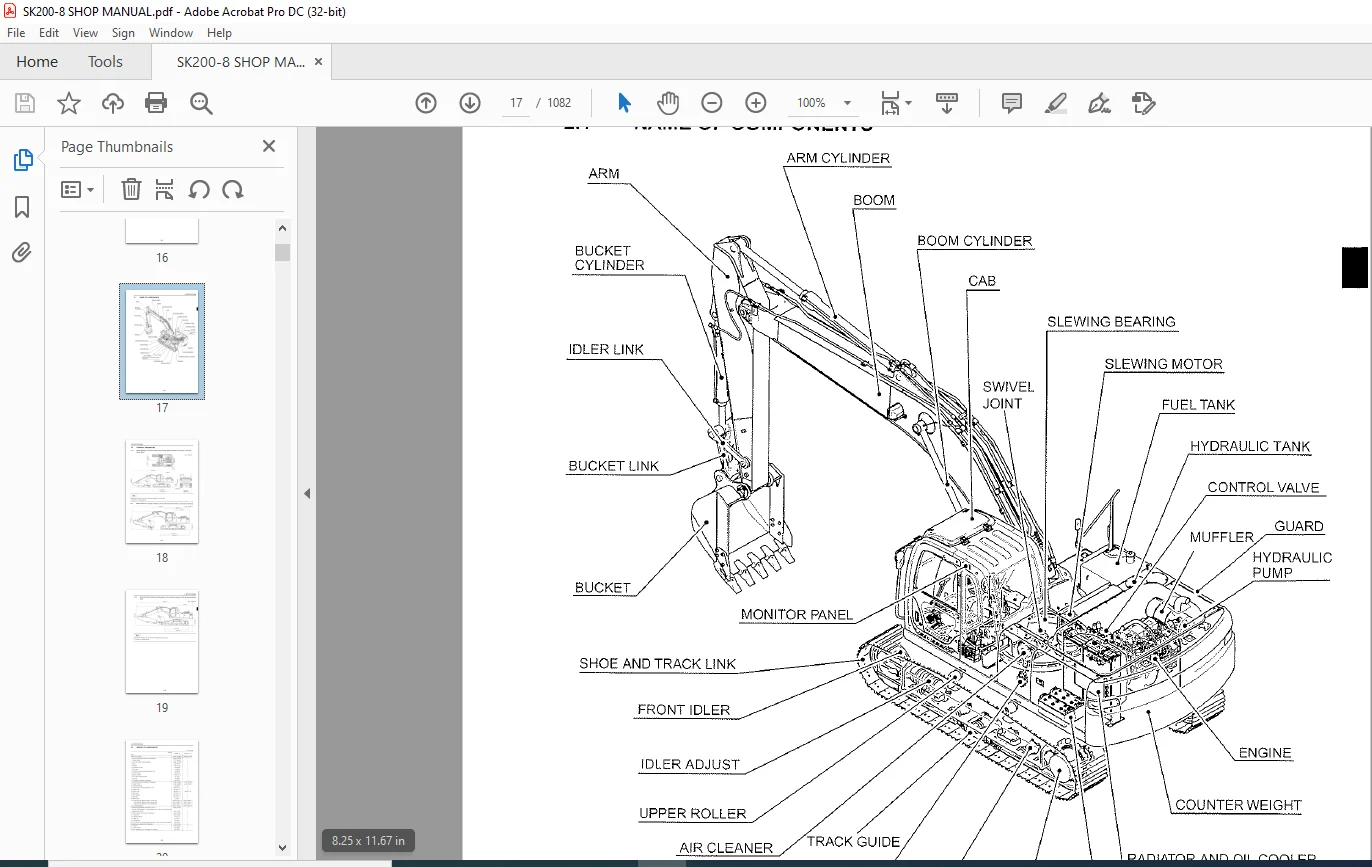
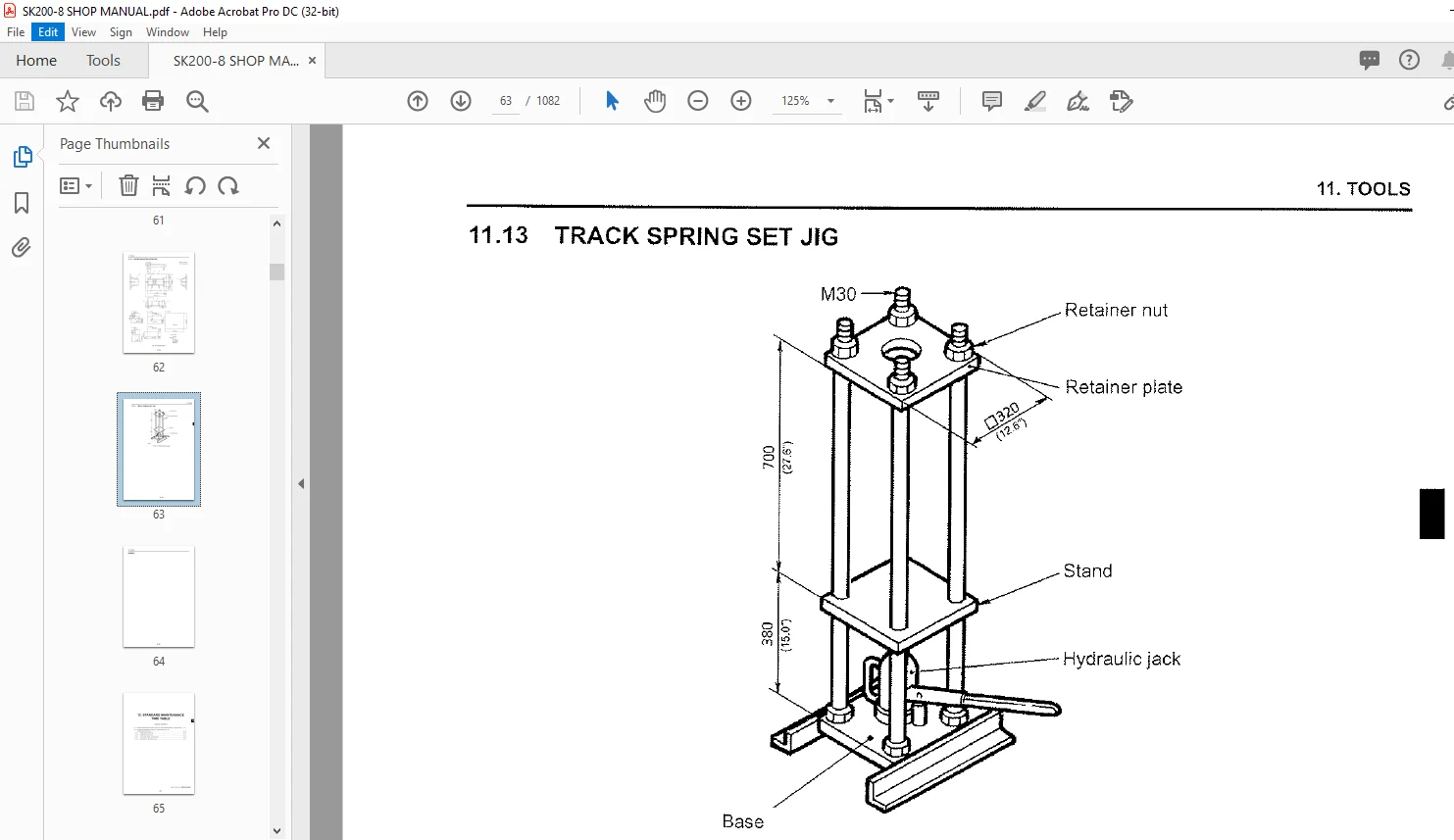
IMAGES PREVIEW OF THE MANUAL:


- This is the SAME MANUAL used by the dealerships to diagnose your vehicle
- No waiting for couriers / posts as this is a PDF manual and you can download it within 2 minutes time once you make the payment.
- Your payment is all safe and the delivery of the manual is INSTANT – You will be taken to the DOWNLOAD PAGE.
- So have no hesitations whatsoever and write to us about any queries you may have : heydownloadss @gmail.com
S.M