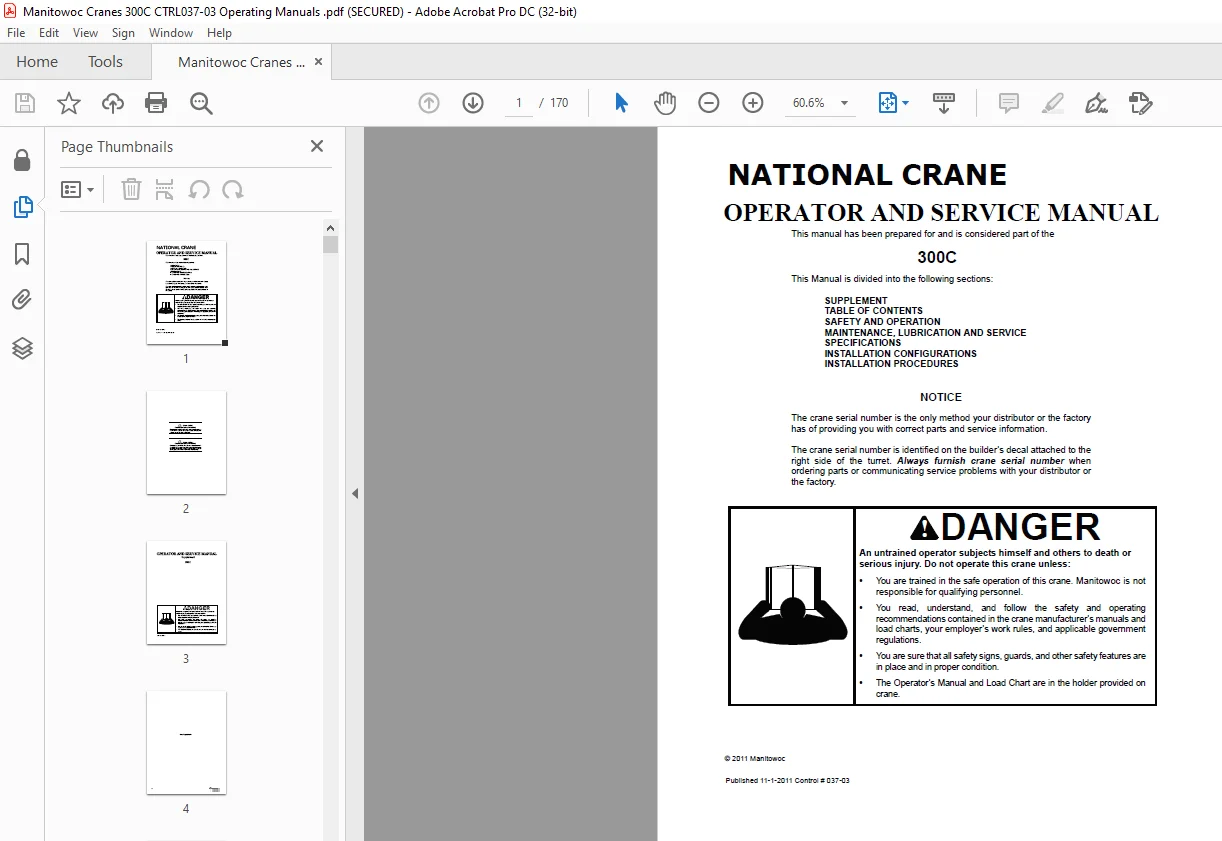
Manitowoc Grove National Crane 300C OPERATOR AND SERVICE MANUAL 037-03 PDF
$26.95
Description
Manitowoc Grove National Crane 300C OPERATOR AND SERVICE MANUAL 037-03 – PDF DOWNLOAD
FILE DETAILS:
Manitowoc Grove National Crane 300C OPERATOR AND SERVICE MANUAL 037-03 – PDF DOWNLOAD
Language : English
Pages : 170
Downloadable : Yes
File Type : PDF
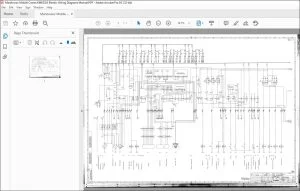
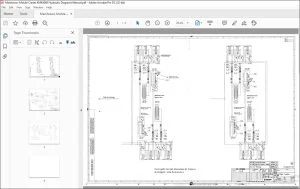
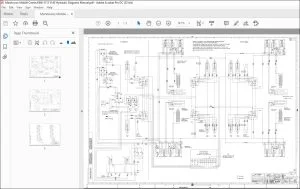
IMAGES PREVIEW OF THE MANUAL:
TABLE OF CONTENTS:
Manitowoc Grove National Crane 300C OPERATOR AND SERVICE MANUAL 037-03 – PDF DOWNLOAD
Supplement a
Outrigger Monitoring System (OMS) (Optional—Standard in North America c
Operation c
Maintenance d
Side Folding Swing-Around Jib Operation e
Safety Information
Safety Messages 1-1
General 1-1
Safety Alert Symbol 1-1
Signal Words 1-1
General 1-1
Accidents 1-1
Operator’s Information 1-2
Operator’s Qualifications 1-2
Operational Aids 1-3
Load Moment Indication (LMI) Systems (If Equipped) 1-3
Anti-Two-Block Device 1-3
Work Area Definition System (WADS) (If Equipped) 1-4
Crane Stability/Structural Strength 1-4
Load Charts 1-5
Work Site 1-5
Wind Forces 1-5
Lifting Operation 1-6
Counterweight 1-7
Outrigger Lift Off 1-7
Multiple Crane Lifts 1-7
Electrocution Hazard 1-8
Set-Up and Operation 1-9
Electrocution Hazard Devices 1-9
Electrical Contact 1-10
Special Operating Conditions and Equipment 1-10
Personnel Handling 1-10
Environmental Protection 1-11
Maintenance 1-11
Service and Repairs 1-12
Lubrication 1-12
Tires 1-13
Wire Rope 1-13
Sheaves 1-14
Batteries 1-15
Engine 1-15
Transporting the Crane 1-15
Travel Operation 1-15
Work Practices 1-17
Personal Considerations 1-17
Crane Access 1-17
Job Preparation 1-17
Working 1-17
Lifting 1-18
Hand Signals 1-19
Boom Extension 1-21
Parking and Securing 1-21
Shut-Down 1-21
Cold Weather Operation 1-21
Temperature Effects on Hydraulic Cylinders 1-22
Overload Inspection 1-23
Boom Inspection 1-24
Superstructure Inspection 1-26
Carrier Inspection 1-28
Operation
Controls 2-1
Truck Cab Controls 2-1
Crane Controls 2-1
Crane Nomenclature 2-3
Operating Procedures 2-4
Equipment Familiarization 2-4
Equipment Checks 2-4
Work Site Position 2-5
Before Leaving the Cab 2-5
Crane Set Up 2-5
Before Making the Lift 2-6
Reading and Understanding the Load Charts 2-6
Winch System Operation 2-12
Using Multiple Part Lines 2-12
General Rules when Operating the Winch 2-12
Lifting the Load 2-12
Shutting Down and Preparing for Road Travel 2-13
Optional Winch Burst of Speed Operation 2-13
Anti-Two-Block System 2-14
Description/Operation 2-14
Hydraulic Capacity Alert System 2-15
System Description 2-15
System Operation 2-15
Jib Safety and Operation 2-17
Safety Tips for Jib Operation 2-18
Side Folding Swing-Around Jib Operation 2-18
Jib Maintenance 2-19
Standard Hand Signals for Controlling Crane Operations 2-20
Maintenance, Lubrication & Service
Maintenance
Inspection and Maintenance 3-1
Inspection 3-1
Daily Inspections 3-1
Weekly Inspections 3-1
Monthly Inspections 3-2
Periodic Inspections 3-2
Other 3-2
Wire Rope Inspection and Maintenance 3-3
Inspection 3-3
Rope Replacement 3-3
Care of the Wire Rope 3-4
Rope Construction 3-4
Adjustments and Repairs 3-4
Tire Load and Inflation Table 3-5
Lubrication
Lubrication Procedures and Charts 4-1
Lubricants 4-1
Hydraulic Oil 4-1
Lubrication Points 4-2
Wire Rope Lubrication 4-2
Lubrication Chart 4-3
Hydraulic Oil Reservoir Level 4-4
Carwell Rust Inhibitor 4-5
Protecting Cranes From Corrosion 4-5
Cleaning Procedures 4-5
Inspection and Repair 4-6
Application 4-6
Areas of Application 4-7
Service
Service and Repair 5-1
Cleanliness 5-1
Hydraulic Systems 5-1
Label Parts When Disassembling 5-2
Welding Precautions 5-2
National Crane Fitting O-Ring Part Numbers 5-2
Fasteners and Torque Values 5-3a
Welded Studs 5-3d
Using Torque Wrench Extensions 5-4
Winch Oil Level 5-5
Rotation Gearbox Oil Level 5-5
Brake Oil Level 5-5
Trouble Diagnosis 5-6
Anti-Two Block Internal Wire System 5-11
Operation 5-11
Maintenance 5-11
Anti-Two Block Trouble Diagnosis – Electrical 5-13
Anti-Two Block Trouble Diagnosis – Hydraulic 5-15
Cylinder Disassembly and Repair 6-1
Extend Cylinder 6-2
Extend Cylinder Disassembly 6-2
Extend Cylinder Reassembly 6-2
Three Section Boom Operation 6-3
Boom Illustrations 6-4
Boom Extended 6-4
Boom Retracted 6-4
Three Section Boom Maintenance 6-5
Internal Cable Sheave Lubrication 6-5
Three Section Cable Tensioning 6-5
Three Section Boom Service 6-6
Boom Removal 6-6
Boom Disassembly 6-6
Additional Maintenance/Disassembled Boom 6-8
Three Section Boom Assembly 6-9
Three Section Top/Bottom Pad Replacement, Assembled Boom 6-11
Top Rear Pad Replacement 6-11
Front Bottom Pad Replacement 6-11
Inner Wear Pad Calibration 7-1
Inner side Pads 7-1
Inner Boom Pad Lubrication 7-3
Jib Installation and Adjustment 7-4
Optional Oil Cooler Service and Maintenance 7-6
Disassembly and Assembly Instructions for Rotation Gearbox 7-7
Brake Section 7-7
Troublshooting 7-7
Brake Reassembly 7-7
Gear Housing Disassembly 7-8
Gear Housing Reassembly 7-8
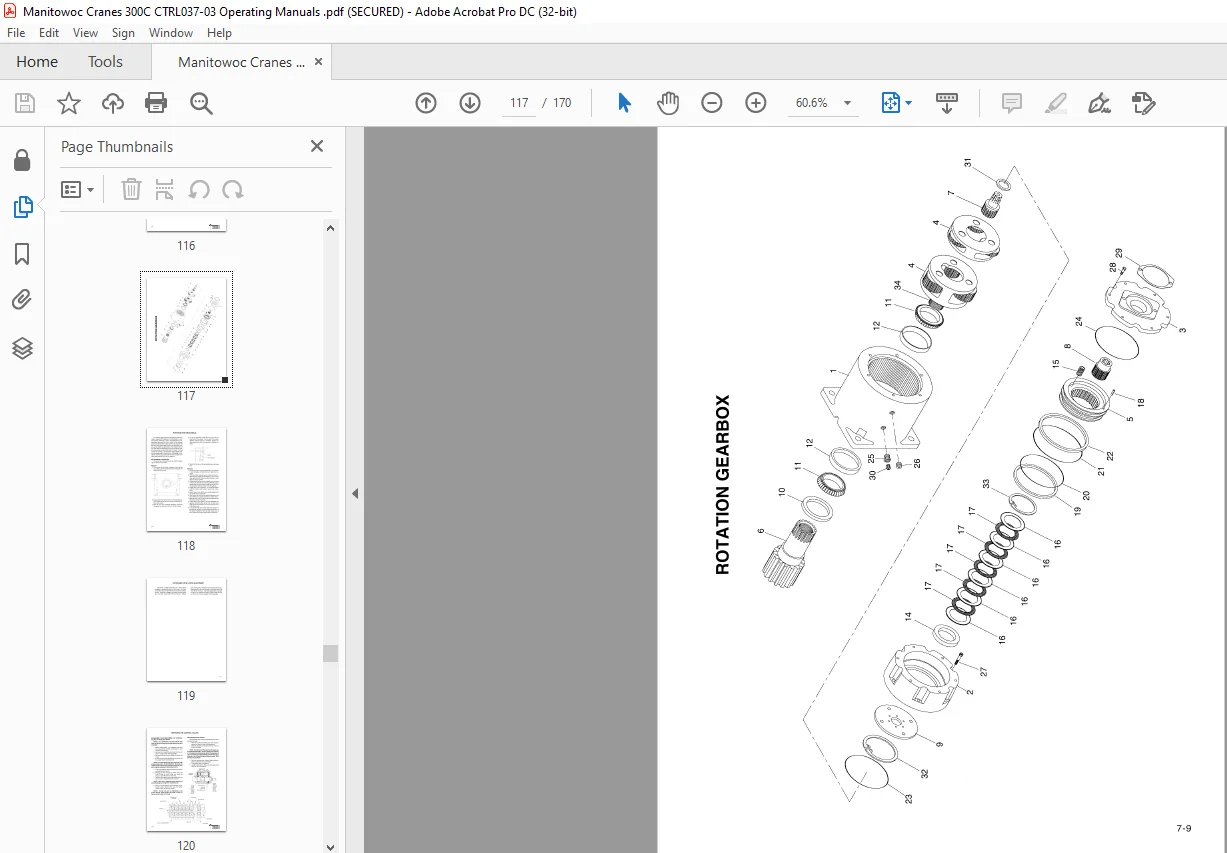
Rotation Gearbox – Breakdown 7-9
Rotation Stop-Mechanical 7-10
Adjustment Procedure 7-10
Outrigger Stow Latch Adjustment 7-11
Servicing the Control Valves 7-12
Disassembly and Reassembly of Control Valves to Replace Seals 7-12
Replacing Spool Seals 7-12
Unloader Dump Valve – Air Purging Instructions 7-13
Control Valve Relief Adjustment 7-14
Hydraulic System Description 7-15
Hydraulic Capacity Alert System 7-16
Specifications
Dimensional Specification 8-1 1
Dimensional Specification – 12’8’’ Narrow Span Outrigger 8-1 2
Specifications 8-3
Installation
Installation 9-1
Typical Locations/Serial Number Identification 9-2
Minimum Truck Requirements 9-3
Mounting Configurations 9-4
Configuration 1 – Without Subbase and Rear Stabilizer 9-4
Configuration 2 – Rear Mount With Heavy Duty Subbase 9-5
Configuration 3 – Non-Standard 152 or 100 inch A-Frame Outriggers 9-5
PTO Horsepower Requirements 9-6
Direct Mount Pump to PTO 9-6
Pump Rotation 9-6
PTO Selection 9-7
Truck Frame Strength 9-8
Section Modulus Tables 9-9
Truck Frame and Mounting for Optional Front Stabilizer 9-12
Section Modulus Tables 9-13
Truck Preparation 9-17
Welding Precautions 9-17
Positioning Crane on Truck 9-17
PTO, Pump, Reservoir 9-17
Reinforcing/After Frame Extension 9-18
After Frame Modification 9-21
Crane Installation with Spacer Subbase 10-1
Crane Installation with Torsion Box Subbase and ASH Stabilizer 10-2
Pin Bearing Inspection and Installation Procedure 10-5
Pin Inspection 10-5
Bearing Inspection 10-5
Trunnion Inspection 10-5
Installation 10-5
Counterweighting 10-6
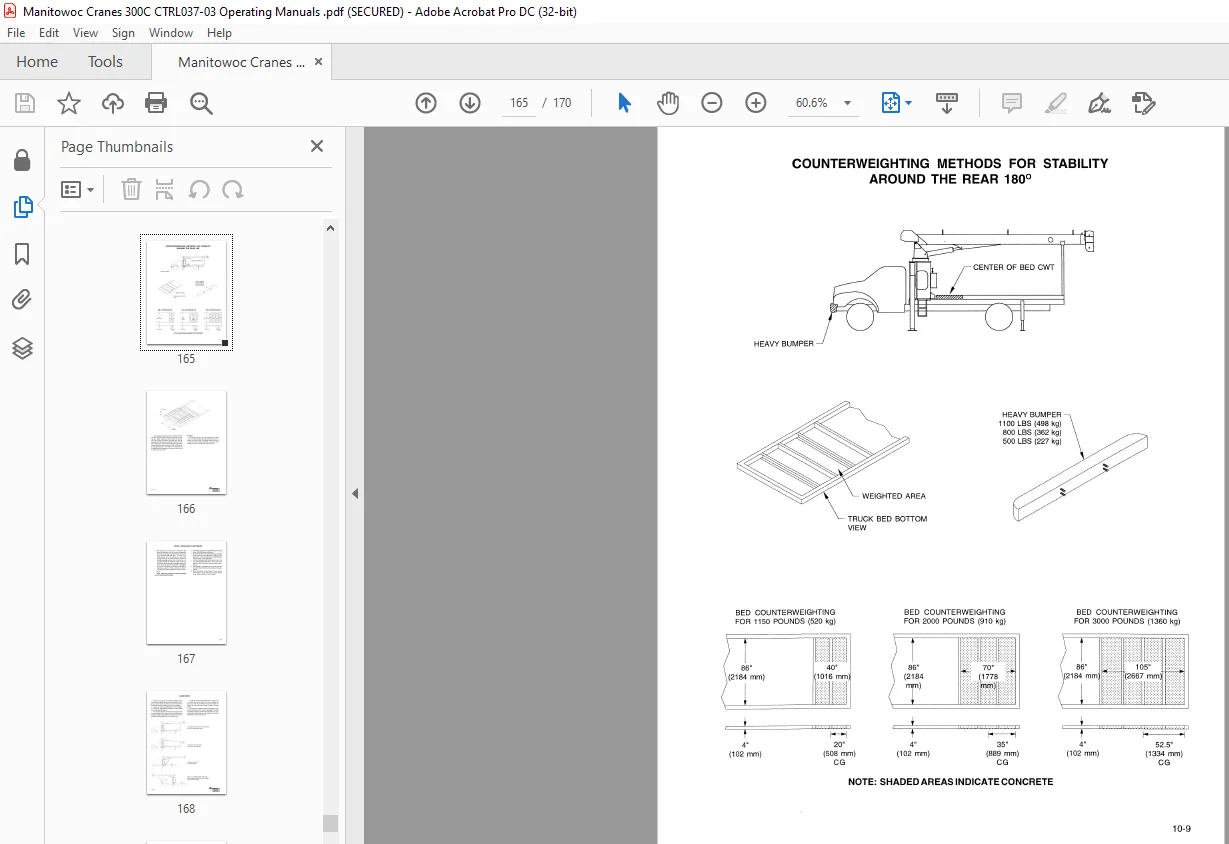
Counterweighting Methods for Stability Around the Rear 180° 10-9
Initial Crane Run-In Procedure 10-11
Boom Rests 10-12
Stability Check 10-13
Optional Cross Frame Outrigger Installation 10-14
Customer Support: [email protected]
S.M