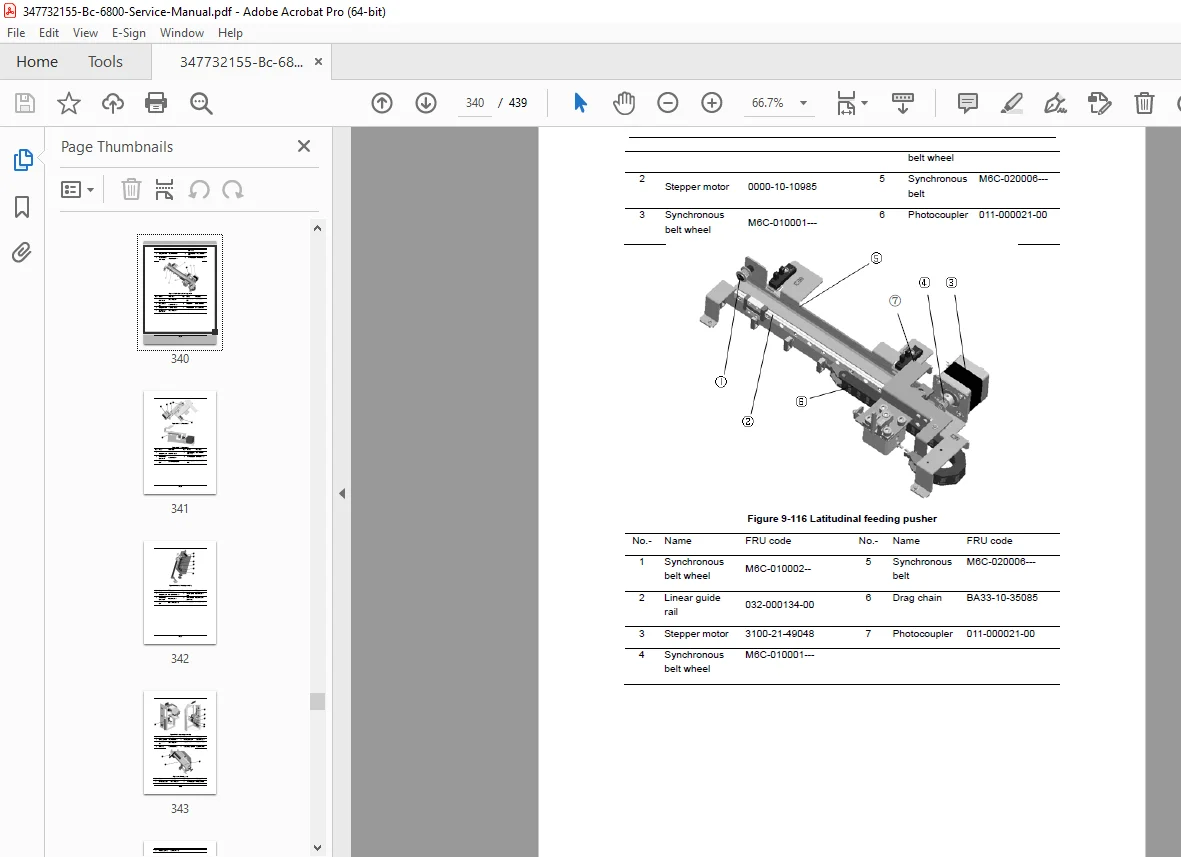
Mindray BC-6800 Hematology Analyzer Service Manual Repair Guide PDF
Original price was: $95.00.$32.95Current price is: $32.95.
Official Mindray BC-6800 hematology analyzer service manual with comprehensive troubleshooting, maintenance procedures, calibration instructions, and component replacement guidelines. Covers complete system diagnostics, preventive maintenance schedules, fluidic system service, optical system repair, and error code resolution. Essential technical reference for biomedical engineers, clinical lab technicians, and medical equipment service professionals servicing Mindray BC-6800 analyzers.
Description
Mindray BC-6800 Hematology Analyzer Service Manual Repair Guide PDF Download
DESCRIPTION
Mindray BC-6800 Hematology Analyzer Service Manual – Complete Technical Repair & Maintenance Guide
This official Mindray BC-6800 service manual provides comprehensive technical documentation for servicing, repairing, and maintaining the Mindray BC-6800 automated hematology analyzer. Designed for qualified biomedical equipment technicians, clinical engineers, and laboratory service professionals, this manual contains detailed troubleshooting procedures, maintenance schedules, calibration instructions, and component-level repair guidance for this advanced hematology testing platform.
📋 FILE DETAILS
- Manual Name: Service Manual – Mindray BC-6800 Auto Hematology Analyzer
- Models Covered: Mindray BC-6800 (all configurations and software versions)
- Year: Factory Original Edition
- PDF Quality: High-Resolution, Professional Technical Documentation
- Total Pages: 524 pages
📑 COMPLETE MANUAL CONTENTS
CHAPTER 1: SYSTEM OVERVIEW (Pages 1-45)
- Product Introduction
- System architecture overview
- CBC (Complete Blood Count) parameters
- 5-part differential capabilities
- Throughput specifications (up to 120 samples/hour)
- Sample volume requirements
- Reagent system overview
- System Components
- Sampling system
- Fluidic system architecture
- Optical detection system
- Electrical system
- Pneumatic system
- Waste management system
- Principle of Operation
- Impedance detection technology
- Flow cytometry method
- Optical scatter measurement
- Hemoglobin measurement method
- WBC differential technology
- Reticulocyte counting
- Technical Specifications
- Measurement parameters (WBC, RBC, HGB, HCT, MCV, MCH, MCHC, PLT)
- Differential parameters (NEU, LYM, MONO, EOS, BASO)
- Linearity ranges
- Accuracy specifications
- Precision (CV%) specifications
- Carryover specifications
- Environmental Requirements
- Operating temperature range
- Humidity specifications
- Altitude limitations
- Power requirements
- Ventilation needs
- Installation clearances
CHAPTER 2: INSTALLATION & SETUP (Pages 46-88)
- Site Preparation
- Space requirements
- Bench specifications
- Electrical requirements
- Grounding requirements
- Water quality specifications
- Drain requirements
- Unpacking & Inspection
- Shipping container removal
- Component verification
- Damage assessment procedures
- Accessory identification
- Documentation checklist
- Physical Installation
- Instrument positioning
- Leveling procedures
- Connection to utilities
- Waste container setup
- Printer connection
- External computer interface
- Reagent Installation
- Reagent bottle placement
- Tubing connections
- Reagent priming procedures
- Diluent installation
- Lyse reagent setup
- Cleaner installation
- Initial System Setup
- Power-on procedures
- Software initialization
- User account setup
- Network configuration
- Laboratory information system (LIS) connection
- Barcode reader setup
- Initial Calibration
- Calibrator preparation
- Background counts
- Calibration procedures
- Verification with controls
- QC setup
CHAPTER 3: PREVENTIVE MAINTENANCE (Pages 89-142)
- Maintenance Schedule Overview
- Daily maintenance tasks
- Weekly maintenance procedures
- Monthly maintenance requirements
- Quarterly service items
- Annual comprehensive maintenance
- Component life expectancy chart
- Daily Maintenance
- Startup procedures
- Background count verification
- Control sample analysis
- Waste level checking
- Reagent level verification
- Shutdown procedures
- Weekly Maintenance
- Exterior cleaning
- Sample probe cleaning
- Waste container emptying
- Reagent bottle inspection
- Printer maintenance
- Monthly Maintenance
- Deep cleaning procedures
- Fluidic system cleaning
- Aperture cleaning
- Optical system inspection
- Filter replacement
- Tubing inspection
- Quarterly Maintenance
- Valve replacement schedule
- Seal inspection
- Pump performance verification
- Pressure system testing
- Comprehensive cleaning cycle
- Annual Maintenance
- Complete system calibration
- Performance verification
- All component inspection
- Software updates
- Safety testing
- PM kit installation
- Cleaning Procedures
- Sample probe cleaning
- Aperture cleaning methods
- Flow cell cleaning
- Tubing system cleaning
- External surface cleaning
- Decontamination procedures
CHAPTER 4: FLUIDIC SYSTEM (Pages 143-198)
- Fluidic System Overview
- System architecture
- Fluid pathways
- Valve configuration
- Pump locations
- Pressure system
- Sampling System
- Sample aspiration mechanism
- Sample probe assembly
- Volume control
- Sample identification (barcode)
- Cap-piercing capability
- Dilution System
- Diluent delivery
- Sample dilution ratios
- Mixing chamber operation
- Temperature control
- Reagent System
- Reagent storage
- Reagent delivery pumps
- Lyse reagent application
- Reagent consumption monitoring
- Aperture System
- Impedance aperture design
- Aperture cleaning mechanism
- Flow rate control
- Pressure regulation
- Waste System
- Waste collection
- Waste level sensing
- Vacuum system
- Liquid waste handling
- Biohazard considerations
- Pneumatic System
- Air pressure generation
- Pressure regulation
- Vacuum generation
- Pneumatic valve control
- Fluidic Maintenance
- Pump replacement procedures
- Valve replacement
- Tubing replacement
- Seal replacement
- Leak detection and repair
CHAPTER 5: OPTICAL SYSTEM (Pages 199-238)
- Optical System Overview
- Flow cytometry principles
- Laser system
- Optical detector configuration
- Signal processing
- Light Source
- Laser specifications
- Laser safety
- Laser alignment
- Laser power monitoring
- Flow Cell
- Flow cell design
- Hydrodynamic focusing
- Flow rate control
- Flow cell cleaning
- Optical Detection
- Forward scatter detector
- Side scatter detector
- Fluorescence detectors
- PMT (photomultiplier tube) systems
- Signal Processing
- Amplification circuits
- A/D conversion
- Threshold settings
- Pulse height analysis
- Optical Maintenance
- Flow cell cleaning
- Detector alignment
- Laser inspection
- Optical path verification
CHAPTER 6: ELECTRICAL SYSTEM (Pages 239-285)
- System Architecture
- Main control board
- Power supply system
- Motor control circuits
- Sensor interface boards
- Control System
- CPU operation
- Memory organization
- I/O control
- Communication interfaces
- Power Supply
- AC input specifications
- DC voltage regulation
- Multiple voltage rails
- Protection circuits
- UPS backup (if applicable)
- Motor Systems
- Stepper motor control
- DC motor control
- Motor driver circuits
- Position feedback
- Sensor System
- Liquid level sensors
- Pressure sensors
- Temperature sensors
- Position sensors
- Optical sensors
- Communication
- RS-232 interfaces
- USB connectivity
- Ethernet connection
- LIS interface protocols
CHAPTER 7: TROUBLESHOOTING (Pages 286-395)
- Systematic Diagnosis
- Error code interpretation
- Alarm message analysis
- LED indicator meanings
- Log file analysis
- Service mode diagnostics
- Startup Problems
- Power failure issues
- Initialization errors
- Self-test failures
- Background count errors
- Reagent detection failures
- Sample Processing Errors
- Aspiration Failures
- Clot detection
- Insufficient sample
- Probe blockage
- Vacuum problems
- Analysis Errors
- High background counts
- Poor CBC results
- Differential failures
- Flagged results
- Out-of-range values
- Aspiration Failures
- Result Quality Problems
- WBC Issues
- Low WBC counts
- High WBC counts
- Poor WBC differential
- Interference problems
- RBC Issues
- Low RBC counts
- High RBC counts
- Ghost cells
- RBC agglutination
- Hemoglobin Problems
- Low HGB readings
- High HGB readings
- Turbidity interference
- Lipemia effects
- Platelet Problems
- Low PLT counts
- High PLT counts
- PLT clumping
- Giant platelets
- WBC Issues
- Fluidic System Problems
- Blockages and clogs
- Leaks in system
- Pump failures
- Valve malfunctions
- Pressure irregularities
- Aperture blockage
- Optical System Problems
- Laser failure
- Detector problems
- Flow cell contamination
- Alignment issues
- PMT voltage errors
- Mechanical Problems
- Sample probe issues
- Motor failures
- Mechanical jam
- Carousel problems
- Door sensor errors
- Communication Errors
- LIS connection failures
- Barcode reader problems
- Printer communication
- Network issues
CHAPTER 8: ERROR CODES & ALARMS (Pages 396-428)
- Error Code Reference
- Complete error code list
- Error descriptions
- Probable causes
- Troubleshooting steps
- Resolution procedures
- System Errors (0000-0999)
- Initialization errors
- Hardware detection failures
- Memory errors
- Communication failures
- Fluidic Errors (1000-1999)
- Reagent errors
- Pressure errors
- Valve errors
- Pump errors
- Leak detection
- Sampling Errors (2000-2999)
- Aspiration failures
- Sample detection
- Barcode errors
- Carousel errors
- Analysis Errors (3000-3999)
- Background count errors
- Analysis timeout
- Quality control failures
- Calibration errors
- Optical Errors (4000-4999)
- Laser errors
- Detector failures
- Flow cell problems
- PMT errors
- Alarm Priority Levels
- Critical alarms
- Warning alarms
- Information messages
- Service required indicators
CHAPTER 9: CALIBRATION PROCEDURES (Pages 429-468)
- Calibration Overview
- Calibration principles
- Frequency requirements
- Required materials
- Environmental conditions
- Background Count Calibration
- Background verification
- Blank analysis
- Acceptance criteria
- Troubleshooting high backgrounds
- Calibrator Preparation
- Calibrator handling
- Mixing procedures
- Temperature equilibration
- Expiration verification
- CBC Calibration
- WBC calibration procedures
- RBC calibration
- HGB calibration
- PLT calibration
- Calibration factor calculation
- Differential Calibration
- 5-part differential setup
- Channel adjustments
- Threshold settings
- Verification procedures
- Quality Control
- QC material preparation
- QC analysis procedures
- Levey-Jennings charts
- Westgard rules
- Out-of-control procedures
- Linearity Verification
- Dilution studies
- Linearity protocols
- Acceptance criteria
- Documentation requirements
- Carryover Testing
- Carryover calculation
- Testing protocols
- Acceptance limits
- Corrective actions
CHAPTER 10: COMPONENT REPLACEMENT (Pages 469-498)
- Disassembly Procedures
- Safety precautions
- Tool requirements
- Cover removal
- Access to internal components
- Fluidic Components
- Pump replacement
- Valve replacement
- Tubing replacement
- Aperture replacement
- Flow cell replacement
- Seal replacement
- Optical Components
- Laser replacement
- PMT replacement
- Detector replacement
- Flow cell replacement
- Optical filter replacement
- Electrical Components
- Circuit board replacement
- Power supply replacement
- Sensor replacement
- Motor replacement
- Cable harness replacement
- Mechanical Components
- Sample probe replacement
- Carousel assembly
- Door mechanism
- Mixing chamber replacement
- Post-Replacement Procedures
- System verification
- Calibration requirements
- Performance testing
- Documentation
CHAPTER 11: CIRCUIT DIAGRAMS (Pages 499-515)
- System Block Diagrams
- Overall system architecture
- Power distribution
- Signal flow
- Communication buses
- Detailed Schematics
- Main controller board
- Power supply circuits
- Motor driver circuits
- Sensor interface circuits
- Optical detection circuits
- Communication interfaces
- PCB Layout Diagrams
- Component locations
- Board interconnections
- Connector pinouts
- Test point locations
CHAPTER 12: PARTS CATALOG (Pages 516-524)
- Consumable Parts
- Tubing
- Seals and O-rings
- Filters
- Reagent bottles
- Sample cups
- Replacement Components
- Pumps and valves
- Sensors
- Motors
- Circuit boards
- Optical components
- Part Numbers & Ordering
- Component part numbers
- Descriptions
- Recommended spare parts
- Ordering procedures
✅ KEY FEATURES OF THIS SERVICE MANUAL
✔ Comprehensive Error Code Reference – 500+ error codes explained
✔ Detailed Fluidic System Diagrams – Complete fluid path documentation
✔ Calibration Procedures – Maintain analytical accuracy
✔ Preventive Maintenance Schedules – Maximize uptime
✔ Component Replacement Procedures – Step-by-step repair guidance
✔ Troubleshooting Flowcharts – Systematic fault diagnosis
✔ Quality Control Guidelines – Ensure result reliability
✔ Circuit-Level Schematics – Advanced repair capability
🔧 WHO NEEDS THIS MANUAL?
- Biomedical Equipment Technicians – Hospital laboratory maintenance
- Clinical Engineers – Healthcare technology management
- Service Engineers – Third-party medical equipment service
- Laboratory Managers – Preventive maintenance oversight
- Field Service Technicians – On-site hematology analyzer service
- Quality Assurance Personnel – Performance verification
- Medical Equipment Training Centers – Technical education programs
💡 WHAT YOU CAN ACCOMPLISH WITH THIS MANUAL
✅ Diagnose and repair analyzer malfunctions quickly
✅ Perform required calibrations to maintain accuracy
✅ Execute preventive maintenance schedules properly
✅ Troubleshoot fluidic system blockages and leaks
✅ Replace worn components correctly
✅ Resolve error codes and restore operation
✅ Maintain quality control and regulatory compliance
✅ Reduce laboratory downtime and improve turnaround time
🏥 CRITICAL FOR LABORATORY OPERATIONS
The Mindray BC-6800 is a high-throughput hematology analyzer used in hospital laboratories, reference labs, and clinical facilities worldwide. Proper maintenance and rapid troubleshooting are essential for continuous patient testing operations. This service manual ensures equipment operates at peak performance, delivering accurate and reliable hematology results for patient care.
📥 INSTANT DIGITAL DELIVERY
Download immediately after purchase – No shipping delays! Get instant access to this comprehensive 524-page service manual and begin servicing your Mindray BC-6800 analyzer immediately. PDF format works on all devices – computers, tablets, and smartphones. Print specific sections for bench reference or search digitally for quick error code lookup.
🎯 WHY THIS MANUAL IS ESSENTIAL
This is the official Mindray factory service documentation used by authorized service centers and biomedical departments worldwide. Don’t risk laboratory downtime or result accuracy with incomplete troubleshooting information. This comprehensive manual provides exact procedures, calibration methods, and component replacement steps required to maintain Mindray BC-6800 analyzers to manufacturer standards. Keep your laboratory running efficiently, ensure result accuracy, and maintain regulatory compliance with this professional-grade service manual!
Pricing Rationale:
- Official Mindray factory service manual
- Comprehensive 524-page technical documentation
- High-throughput hematology analyzer (critical lab equipment)
- Essential for biomedical technicians and clinical engineers
- Includes complete troubleshooting, calibration, and repair procedures
- 500+ error codes with detailed resolution steps
- Critical for laboratory operations and patient care
- Comparable medical analyzer service manuals range $35-$50