Mitsubishi Galant 2006 Workshop Manual – PDF DOWNLOAD
$38.95
Mitsubishi Galant 2006 Workshop Manual – PDF DOWNLOAD
Description
Mitsubishi Galant 2006 Workshop Manual – PDF DOWNLOAD
FILE DETAILS:
Mitsubishi Galant 2006 Workshop Manual – PDF DOWNLOAD
Language : English
Pages : 6793
Downloadable : Yes
File Type : PDF
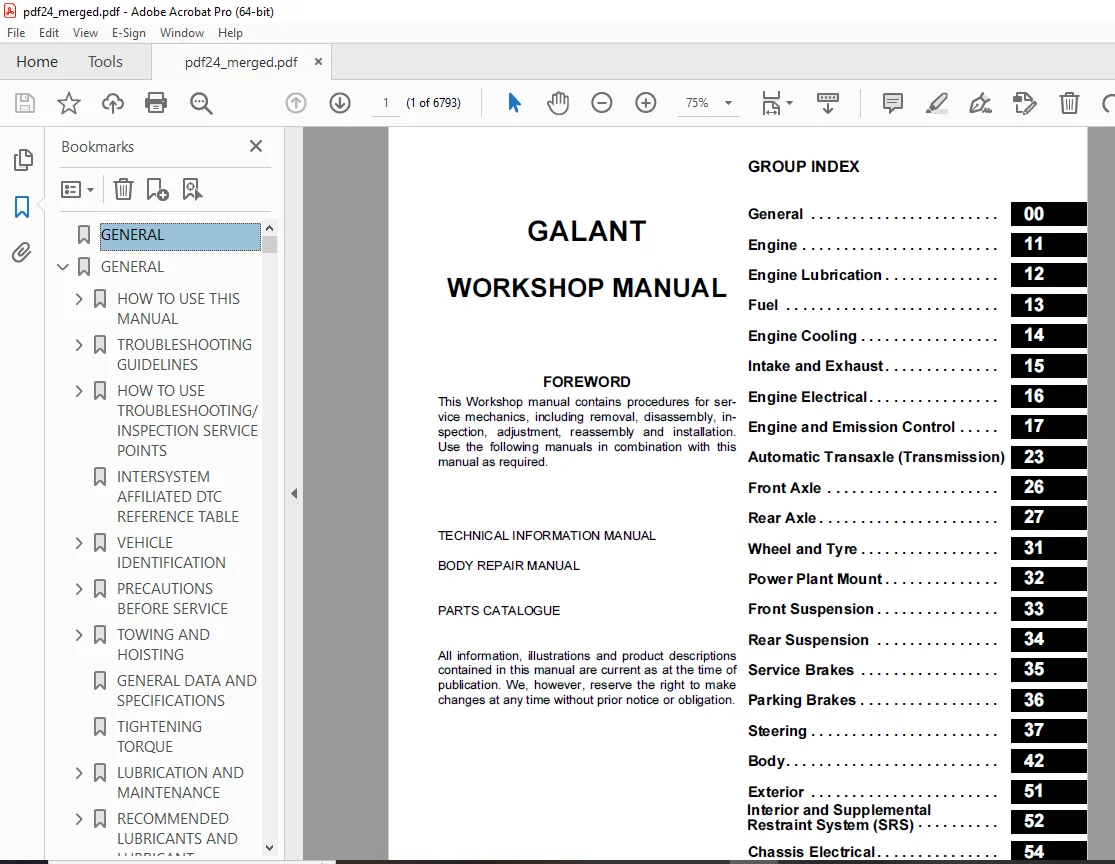
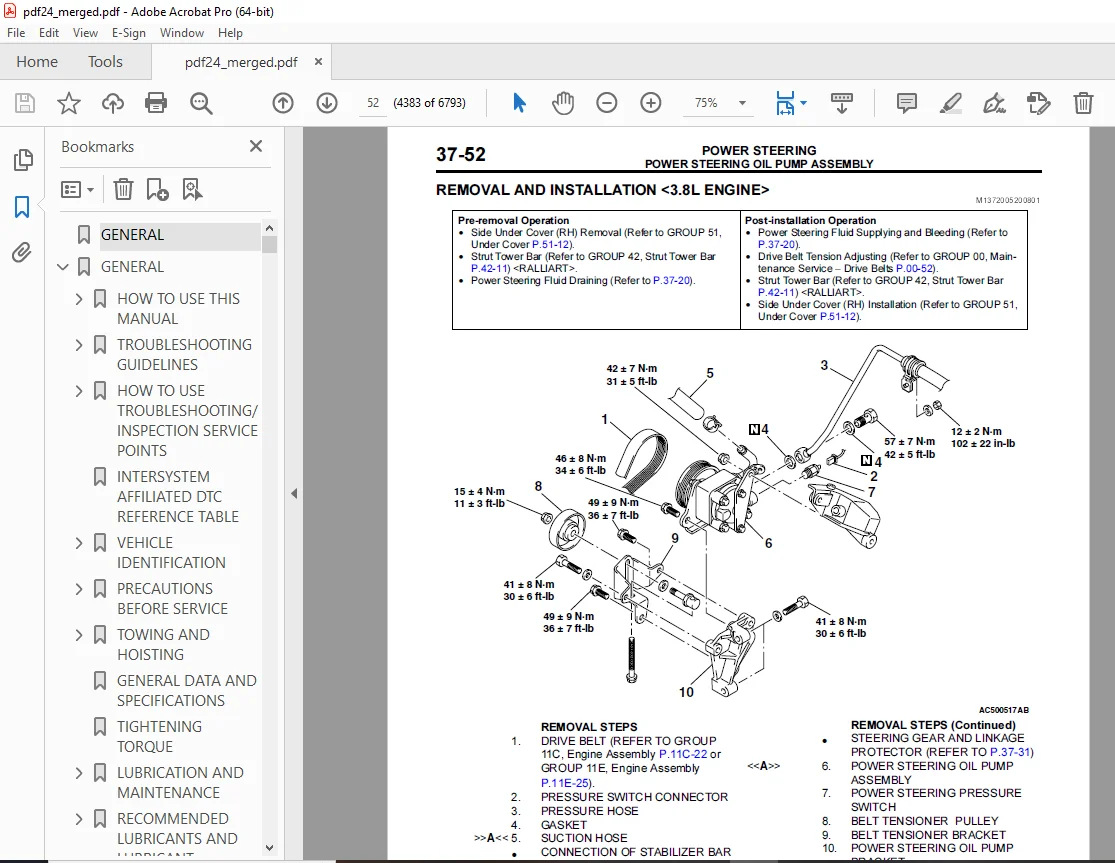
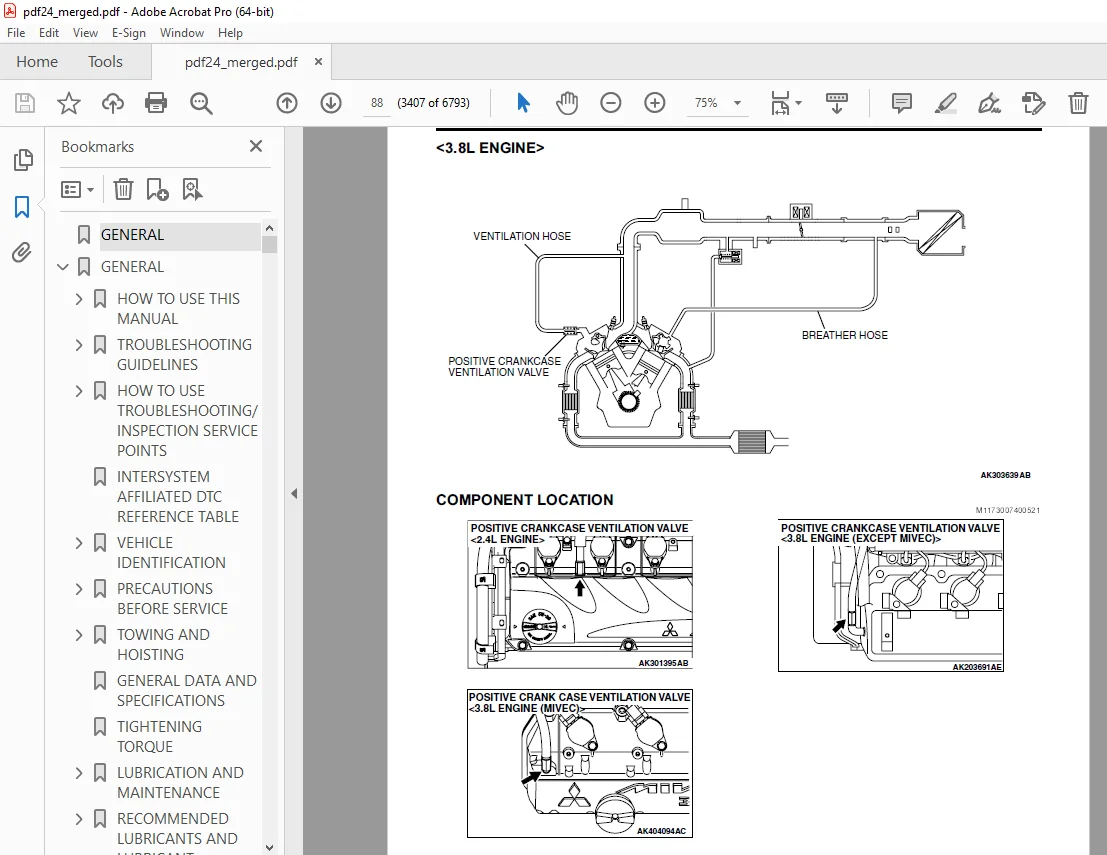
IMAGES PREVIEW OF THE MANUAL:
TABLE OF CONTENTS:
Mitsubishi Galant 2006 Workshop Manual – PDF DOWNLOAD
GENERAL 6660
GENERAL 6660
HOW TO USE THIS MANUAL 3837
MAINTENANCE, REPAIR AND SERVICING EXPLANATIONS 5824
DEFINITION OF TERMS 6291
TIGHTENING TORQUE INDICATION 6
SPECIAL TOOL NOTE 6
ABBREVIATIONS 6615
TROUBLESHOOTING GUIDELINES 424
VERIFY THE COMPLAINT 5146
DETERMINE POSSIBLE CAUSES 6615
FIND THE PROBLEM 6637
REPAIR THE PROBLEM 6582
VERIFY THE REPAIR 9
HOW TO USE TROUBLESHOOTING/INSPECTION SERVICE POINTS 4156
1 STANDARD FLOW OF DIAGNOSTIC TROUBLESHOOTING 5631
2 SYSTEM OPERATION AND SYMPTOM VERIFICATION TESTS 6638
3 DIAGNOSTIC FUNCTION 4486
4 DIAGNOSTIC TROUBLE CODE CHART 6653
5 SYMPTOM CHART 4002
6 DIAGNOSTIC TROUBLE CODE PROCEDURES 6638
7 SYMPTOM PROCEDURES 4047
8 SERVICE DATA REFERENCE TABLE 6653
9 CHECK AT ECU TERMINALS 6292
10 INSPECTION PROCEDURES USING AN OSCILLOSCOPE 6583
CURRENT TROUBLE 6665
PAST TROUBLE 6665
HARNESS INSPECTION 6584
MEASURES TO TAKE AFTER REPLACING THE PCM OR ECU 4225
CONNECTOR MEASUREMENT SERVICE POINTS 5037
IF INSPECTING WITH THE CONNECTOR CONNECTED <WATERPROOF CONNECTORS> 5633
IF INSPECTING WITH THE CONNECTOR CONNECTED <ORDINARY (NON-WATERPROOF) CONNECTORS> 6293
IF INSPECTING WITH THE CONNECTOR DISCONNECTED <WHEN INSPECTING A FEMALE PIN> 6584
IF INSPECTING WITH THE CONNECTOR DISCONNECTED <WHEN INSPECTING A MALE PIN> 4586
CONNECTOR INSPECTION SERVICE POINTS 6585
VISUAL INSPECTION 3494
HOW TO COPE WITH INTERMITTENT MALFUNCTIONS 4039
INSPECTION SERVICE POINTS FOR A BLOWN FUSE 6639
HOW TO TREAT CURRENT TROUBLE 4040
HOW TO TREAT PAST TROUBLE 5638
INTERSYSTEM AFFILIATED DTC REFERENCE TABLE 4545
VEHICLE IDENTIFICATION 6298
VEHICLE IDENTIFICATION NUMBER LOCATION 6628
VEHICLE IDENTIFICATION CODE CHART PLATE 4135
VEHICLE IDENTIFICATION NUMBER LIST 6642
VEHICLE INFORMATION CODE PLATE 6673
TIRE AND LOADING INFORMATION PLACARD 4611
VEHICLE SAFETY CERTIFICATION LABEL 4237
ENGINE MODEL STAMPING 6643
THEFT PROTECTION 6600
PRECAUTIONS BEFORE SERVICE 6675
HOW TO PERFORM VEHICLE IDENTIFICATION NUMBER (VIN) WRITING 4614
VIN CODE REGISTRATION PROCEDURE FOR POWERTRAIN CONTROL MODULE 6601
VIN CODE REGISTERATION PROCEDURE FOR ETACS-ECU 32
INITIALIZATION PROCEDURE FOR LEARNING VALUE IN MFI ENGINE 4015
LEARNING PROCEDURE FOR IDLING IN MFI ENGINE 35
PURPOSE 599
LEARNING PROCEDURE 35
SERVICING ELECTRICAL SYSTEM 4175
VEHICLE WASHING 3243
APPLICATION OF ANTI-CORROSION AGENTS AND UNDERCOATS 3214
SCAN TOOL (M U T -III SUB ASSEMBLY) 6605
TOWING AND HOISTING 6606
WRECKER TOWING RECOMMENDATION 37
LIFTING, JACKING SUPPORT LOCATION 4617
GENERAL DATA AND SPECIFICATIONS 4204
TIGHTENING TORQUE 4153
LUBRICATION AND MAINTENANCE 3302
MAINTENANCE SCHEDULES 45
SEVERE SERVICE 45
ENGINE OIL 4529
LUBRICANTS AND GREASES 3453
FUEL USAGE STATEMENT 4031
MATERIALS ADDED TO FUEL 46
RECOMMENDED LUBRICANTS AND LUBRICANT CAPACITIES TABLE 6338
LUBRICANT SELECTION 192
SCHEDULED MAINTENANCE TABLE 5068
MAINTENANCE SERVICE 4441
1 FUEL SYSTEM (TANK, PIPE LINE AND CONNECTION, AND FUEL TANK FILLER TUBE CAP) (CHECK FOR LEAKS) 279
2 FUEL HOSES (CHECK CONDITION) 51
3 AIR CLEANER ELEMENT (REPLACE) 51
4 EVAPORATIVE EMISSION CONTROL SYSTEM (EXCEPT EVAPORATIVE EMISSION CANISTER) (CHECK FOR CLOGGING) 3389
5 SPARK PLUGS (REPLACE) 52
6 INTAKE AND EXHAUST VALVE CLEARANCE [4G6-MIVEC ENGINE AND 6G7-MIVEC ENGINE (INTAKE SIDE) ONLY] (INSPECT AND ADJUST) 4442
<2 4L ENGINE> 52
<3 8L ENGINE> 53
7 TIMING BELT (REPLACE) 4382
<2 4L ENGINE> 54
<3 8L ENGINE (EXCEPT MIVEC)> 54
<3 8L ENGINE-MIVEC> 55
8 DRIVE BELTS (FOR THE GENERATOR AND POWER STEERING PUMP) (CHECK) 143
DRIVE BELT TENSION CHECK <2 4L ENGINE> 55
GENERATOR DRIVE BELT TENSION CHECK <3 8L ENGINE> 3318
GENERATOR DRIVE BELT TENSION ADJUSTMENT <3 8L ENGINE> 58
POWER STEERING DRIVE BELT TENSION CHECK <3 8L ENGINE> 4446
POWER STEERING DRIVE BELT TENSION ADJUSTMENT <3 8L ENGINE> 408
9 EXHAUST SYSTEM (CONNECTION PORTION OF MUFFLER, MUFFLER PIPES AND CONVERTER HEAT SHIELDS) (CHECK AND SERVICE) 3397
10 ENGINE OIL (CHANGE) 61
11 ENGINE OIL FILTER (REPLACE) 62
12 AUTOMATIC TRANSAXLE FLUID (CHECK FLUID LEVEL AND CONDITION) 481
TRANSMISSION FLUID CHECK 1776
TRANSMISSION FLUID CHANGE 4449
13 ENGINE COOLANT (CHANGE) 4318
14 COOLANT HOSES (RADIATOR HOSE, HEATER HOSE) (INSPECT) 5097
15 DISC BRAKE PADS, ROTORS (INSPECT FOR WEAR) 3902
16 BRAKE HOSES (CHECK FOR DETERIORATION OR LEAKS) 4319
17 BALL JOINT AND STEERING LINKAGE SEALS (INSPECT FOR GREASE LEAKS AND DAMAGE) 1732
18 DRIVE SHAFT BOOTS (INSPECT FOR GREASE LEAKS AND DAMAGE) 548
19 SUSPENSION SYSTEM (INSPECT FOR LOOSENESS AND DAMAGE) 3902
20 TIRES (ROTATE) 5098
MAIN SEALANT AND ADHESIVE TABLE 4392
GENERAL <ELECTRICAL> 6660
HARNESS CONNECTOR INSPECTION 6652
CONNECTOR CONTINUITY AND VOLTAGE TEST 4348
IMPROPER TERMINAL ENGAGEMENT CHECK 4128
CONNECTOR TERMINAL ENGAGEMENT AND DISENGAGEMENT 6290
HOW TO DIAGNOSE 231
INSPECTION 4156
INSPECTION INSTRUMENTS 6653
CHECKING FUSES 5037
CAUTIONS IN EVENT OF BLOWN FUSE 3268
CHECKING SWITCHES 4335
CHECKING RELAYS 6293
CABLES AND WIRES CHECK 6293
BATTERY HANDLING 4132
GENERAL ELECTRICAL SYSTEM CHECK 5635
STEP 1 Remove the blown fuse and connect the test light across the fuse terminals (Circuit switch: OFF) 4226
STEP 2 Turn the switch ON and disconnect the illumination light connector 6619
ENGINE 6660
ENGINE MECHANICAL <2 4L ENGINE> 6660
GENERAL DESCRIPTION 6637
ENGINE DIAGNOSIS 4035
SPECIAL TOOLS 4486
ON-VEHICLE SERVICE 6666
DRIVE BELT TENSION CHECK 4592
AUTO-TENSIONER CHECK 6626
OPERATION CHECK 99
FUNCTION CHECK 4228
VALVE CLEARANCE CHECK AND ADJUSTMENT 1692
ROCKER ARM PISTON OPERATION CHECK 4403
IGNITION TIMING CHECK 4166
CURB IDLE SPEED CHECK 4120
IDLE MIXTURE CHECK 6643
COMPRESSION PRESSURE CHECK 4121
MANIFOLD VACUUM CHECK 3281
ENGINE ASSEMBLY 5051
REMOVAL SERVICE POINTS 5669
INSTALLATION SERVICE POINTS 6716
CRANKSHAFT PULLEY 4074
REMOVAL SERVICE POINT 6648
CAMSHAFT AND VALVE STEM SEAL 3863
REMOVAL SERVICE POINTS 4569
INSTALLATION SERVICE POINTS 5693
OIL PAN 4619
REMOVAL SERVICE POINT 5065
INSTALLATION SERVICE POINTS 264
INSPECTION 3306
CRANKSHAFT OIL SEAL 4219
REMOVAL SERVICE POINT 4289
INSTALLATION SERVICE POINTS 3884
CYLINDER HEAD GASKET 393
REMOVAL SERVICE POINTS 3457
INSTALLATION SERVICE POINTS 137
TIMING BELT 4105
REMOVAL SERVICE POINTS 143
INSTALLATION SERVICE POINTS 3393
INSPECTION 3977
TIMING BELT TENSIONER ADJUSTER CHECK 4639
BALANCER TIMING BELT TENSION CHECK 213
SPECIFICATION(S) 3397
ENGINE OVERHAUL <2 4L ENGINE> 6660
SPECIAL TOOLS 6653
GENERATOR AND IGNITION SYSTEM 6653
REMOVAL SERVICE POINT 6586
INSTALLATION SERVICE POINT 6666
EXHAUST MANIFOLD 4161
REMOVAL SERVICE POINT 238
INSTALLATION SERVICE POINT 3919
TIMING BELT 3141
REMOVAL SERVICE POINTS 6600
INSTALLATION SERVICE POINTS 171
INSPECTION 4616
FUEL AND EMISSION PARTS 4415
INSTALLATION SERVICE POINTS 4071
INTAKE MANIFOLD AND WATER PUMP 4177
REMOVAL SERVICE POINT 3174
INSTALLATION SERVICE POINTS 4418
ROCKER ARMS AND CAMSHAFT 4420
REMOVAL SERVICE POINT 187
INSTALLATION SERVICE POINTS 187
INSPECTION 4427
CYLINDER HEAD AND VALVES 4529
REMOVAL SERVICE POINTS 3257
INSTALLATION SERVICE POINTS 6340
INSPECTION 4522
VALVE SEAT RECONDITIONING PROCEDURE 4578
VALVE SEAT REPLACEMENT PROCEDURE 392
VALVE GUIDE REPLACEMENT PROCEDURE 6346
OIL PAN AND OIL PUMP 196
REMOVAL SERVICE POINTS 6352
INSTALLATION SERVICE POINTS 199
INSPECTION 3969
PISTON AND CONNECTING ROD 208
REMOVAL SERVICE POINTS 4529
INSTALLATION SERVICE POINTS 3459
INSPECTION 3979
CRANKSHAFT AND CYLINDER BLOCK 6381
REMOVAL SERVICE POINTS 3463
INSTALLATION SERVICE POINTS 289
INSPECTION 221
SPECIFICATION(S) 4456
ENGINE MECHANICAL <3 8L ENGINE> 6660
GENERAL DESCRIPTION 6637
ENGINE DIAGNOSIS 6637
SPECIAL TOOLS 6653
ON-VEHICLE SERVICE 5638
DRIVE BELT (FOR GENERATOR, POWER STEERING OIL PUMP AND AIR CONDITIONING) TENSION CHECK AND ADJUSTMENT 4547
GENERATOR DRIVE BELT TENSION CHECK 236
GENERATOR DRIVE BELT TENSION ADJUSTMENT 6592
POWER STEERING DRIVE BELT TENSION CHECK 4331
POWER STEERING DRIVE BELT TENSION ADJUSTMENT 6301
IGNITION TIMING CHECK 4057
CURB IDLE SPEED CHECK 3845
IDLE MIXTURE CHECK 4553
COMPRESSION PRESSURE CHECK 4553
MANIFOLD VACUUM CHECK 4122
LASH ADJUSTER CHECK 4614
ENGINE ASSEMBLY 4554
REMOVAL SERVICE POINTS 4252
INSTALLATION SERVICE POINTS 4355
CAMSHAFT OIL SEAL 5678
REMOVAL SERVICE POINTS 447
INSTALLATION SERVICE POINTS 3293
CAMSHAFT AND VALVE STEM SEAL 6650
REMOVAL SERVICE POINTS 4575
INSTALLATION SERVICE POINTS 3195
OIL PAN AND OIL SCREEN 3260
REMOVAL SERVICE POINT 4100
INSTALLATION SERVICE POINTS 4370
INSPECTION 6349
CRANKSHAFT OIL SEAL 275
INSTALLATION SERVICE POINTS 275
REMOVAL SERVICE POINT 4103
INSTALLATION SERVICE POINTS 6355
CYLINDER HEAD GASKET 3457
REMOVAL SERVICE POINTS 3969
INSTALLATION SERVICE POINTS 5736
TIMING BELT 5737
REMOVAL SERVICE POINTS 283
INSTALLATION SERVICE POINTS 3896
INSPECTION 4067
AUTO-TENSIONER ADJUSTER CHECK 4479
SPECIFICATION(S) 6373
ENGINE OVERHAUL <3 8L ENGINE> 6660
SPECIAL TOOLS 6637
GENERATOR AND DRIVE BELT 4486
REMOVAL SERVICE POINT 6584
INSTALLATION SERVICE POINT 4542
INTAKE MANIFOLD PLENUM AND THROTTLE BODY ASSEMBLY 6585
INSTALLATION SERVICE POINT 5040
IGNITION SYSTEM 4228
REMOVAL SERVICE POINT 3275
INSTALLATION SERVICE POINT 4117
TIMING BELT 367
REMOVAL SERVICE POINTS 302
INSTALLATION SERVICE POINT 4552
INSPECTION 6308
INTAKE MANIFOLD AND FUEL PARTS 5657
INSTALLATION SERVICE POINTS 309
WATER PUMP & WATER HOSE 4174
INSTALLATION SERVICE POINTS 4415
EXHAUST MANIFOLD 6317
INSTALLATION SERVICE POINTS 6648
ROCKER ARMS AND CAMSHAFT 4255
REMOVAL SERVICE POINT 5681
INSTALLATION SERVICE POINTS 3867
INSPECTION 4153
CYLINDER HEAD AND VALVES 6331
REMOVAL SERVICE POINTS 4139
INSTALLATION SERVICE POINTS 322
INSPECTION 3876
OIL PAN AND OIL PUMP 4492
REMOVAL SERVICE POINT 329
INSTALLATION SERVICE POINTS 3884
INSPECTION 3262
PISTON AND CONNECTING ROD 3886
REMOVAL SERVICE POINTS 3968
INSTALLATION SERVICE POINTS 337
INSPECTION 4107
CRANKSHAFT AND CYLINDER BLOCK 344
INSTALLATION SERVICE POINTS 345
INSPECTION 348
SPECIFICATION(S) 481
ENGINE MECHANICAL <3 8L MIVEC ENGINE> 6660
GENERAL DESCRIPTION 6653
ENGINE DIAGNOSIS 4222
SPECIAL TOOLS 6292
ON-VEHICLE SERVICE 6588
DRIVE BELT (FOR GENERATOR, POWER STEERING OIL PUMP AND AIR CONDITIONING) TENSION CHECK AND ADJUSTMENT 6640
GENERATOR DRIVE BELT TENSION CHECK 1812
GENERATOR DRIVE BELT TENSION ADJUSTMENT 366
POWER STEERING DRIVE BELT TENSION CHECK 6671
POWER STEERING DRIVE BELT TENSION ADJUSTMENT 4190
VALVE CLEARANCE CHECK AND ADJUSTMENT 4119
ROCKER ARM PISTON OPERATION CHECK 4552
IGNITION TIMING CHECK 6673
CURB IDLE SPEED CHECK 4012
IDLE MIXTURE CHECK 4243
COMPRESSION PRESSURE CHECK 3432
MANIFOLD VACUUM CHECK 3282
LASH ADJUSTER CHECK 377
ENGINE ASSEMBLY 4557
REMOVAL SERVICE POINTS 5059
INSTALLATION SERVICE POINTS 6743
CAMSHAFT OIL SEAL 449
REMOVAL SERVICE POINTS 3222
INSTALLATION SERVICE POINTS 4087
CAMSHAFT AND VALVE STEM SEAL 6332
REMOVAL SERVICE POINTS 3387
INSTALLATION SERVICE POINTS 396
OIL PAN AND OIL SCREEN 401
REMOVAL SERVICE POINTS 3393
INSTALLATION SERVICE POINTS 4306
INSPECTION 6368
CRANKSHAFT OIL SEAL 3895
INSTALLATION SERVICE POINTS 3319
REMOVAL SERVICE POINT 4312
INSTALLATION SERVICE POINTS 407
CYLINDER HEAD GASKET 408
REMOVAL SERVICE POINTS 410
INSTALLATION SERVICE POINTS 3406
TIMING BELT 4449
REMOVAL SERVICE POINTS 413
INSTALLATION SERVICE POINTS 6388
INSPECTION 417
AUTO-TENSIONER ADJUSTER CHECK 417
SPECIFICATION(S) 4393
ENGINE OVERHAUL <3 8L MIVEC ENGINE> 6660
SPECIAL TOOLS 4034
GENERATOR AND DRIVE BELT 4156
REMOVAL SERVICE POINT 6653
INSTALLATION SERVICE POINT 3915
INTAKE MANIFOLD PLENUM AND THROTTLE BODY ASSEMBLY 4396
INSTALLATION SERVICE POINT 5638
IGNITION SYSTEM 4117
REMOVAL SERVICE POINT 6670
INSTALLATION SERVICE POINT 6593
TIMING BELT 4597
REMOVAL SERVICE POINTS 6673
INSTALLATION SERVICE POINT 4137
INSPECTION 4062
INTAKE MANIFOLD AND FUEL PARTS 5054
INSTALLATION SERVICE POINTS 4348
WATER PUMP & WATER HOSE 4349
INSTALLATION SERVICE POINTS 6607
EXHAUST MANIFOLD 6647
INSTALLATION SERVICE POINTS 446
ENGINE OIL CONTROL VALVE 4178
INSTALLATION SERVICE POINTS 4566
ROCKER ARMS AND CAMSHAFT 526
REMOVAL SERVICE POINT 450
INSTALLATION SERVICE POINTS 528
INSPECTION 4030
CYLINDER HEAD AND VALVES 5064
REMOVAL SERVICE POINTS 4519
INSTALLATION SERVICE POINTS 3258
INSPECTION 460
OIL PAN AND OIL PUMP 4436
REMOVAL SERVICE POINT 3387
INSTALLATION SERVICE POINTS 3457
INSPECTION 470
PISTON AND CONNECTING ROD 471
REMOVAL SERVICE POINTS 472
INSTALLATION SERVICE POINTS 4382
INSPECTION 5748
CRANKSHAFT AND CYLINDER BLOCK 480
INSTALLATION SERVICE POINTS 481
INSPECTION 484
SPECIFICATION(S) 486
ENGINE LUBRICATION 6660
GENERAL DESCRIPTION 494
SPECIAL TOOLS 6653
ON-VEHICLE SERVICE 5630
ENGINE OIL CHECK 6661
ENGINE OIL REPLACEMENT 6581
ENGINE OIL FILTER REPLACEMENT 3150
ENGINE OIL PRESSURE CHECK 4395
SPECIFICATION(S) 6653
FUEL 6660
MULTIPORT FUEL INJECTION (MFI) <2 4L ENGINE> 6660
GENERAL DESCRIPTION 506
MULTIPORT FUEL INJECTION (MFI) DIAGNOSIS 4594
HOW TO CONNECT THE SCAN TOOL (M U T -III) 513
HOW TO READ AND ERASE DIAGNOSTIC TROUBLE CODES 3432
HOW TO READ DATA LIST 3432
HOW TO PERFORM ACTUATOR TEST 4505
HOW TO DIAGNOSE THE CAN BUS LINES 3282
PROVISIONAL DTCs [OBD-II Test Mode – Results (Mode 7)] 3283
DIAGNOSTIC BY DIAGNOSTIC TEST MODE II (INCREASED SENSITIVITY) 4252
SYSTEM READINESS TEST STATUS 3393
DIAGNOSTIC TROUBLE CODE PROCEDURES 5787
DTC P0031: Cylinder 1, 4 Heated Oxygen Sensor Heater (front) Control Circuit Low 554
Logic Flow Chart 3908
DIAGNOSIS 557
STEP 1 Check harness connector B-37 at the cylinder 1, 4 heated oxygen sensor (front) for damage 5111
STEP 2 Check the cylinder 1, 4 heated oxygen sensor (front) 4461
STEP 3 Measure the power supply voltage at cylinder 1, 4 heated oxygen sensor (front) harness side connector B-37 559
STEP 4 Check harness connector B-17X at the MFI relay for damage 559
STEP 5 Measure the power supply voltage at PCM connector B-23 by using power plant ECU check harness special tool MB991923 3471
STEP 6 Check harness connector B-23 at PCM for damage 561
STEP 7 Check for open circuit or short circuit to ground between cylinder 1, 4 heated oxygen sensor (front) connector B-37 (terminal No 3) and PCM connector B-23 (terminal No 126) 3994
STEP 8 Check harness connector B-23 at PCM for damage 6404
STEP 9 Check for harness damage between MFI relay connector B-17X (terminal No 4) and cylinder 1, 4 heated oxygen sensor (front) connector B-37 (terminal No 1) 4466
STEP 10 Check for harness damage between cylinder 1, 4 heated oxygen sensor (front) connector B-37 (terminal No 3) and PCM connector B-23 (terminal No 126) 565
STEP 11 Check the trouble symptoms 566
STEP 12 Test the OBD-II drive cycle 3323
DTC P0032: Cylinder 1, 4 Heated Oxygen Sensor Heater (front) Control Circuit High 567
Logic Flow Chart 569
DIAGNOSIS 1744
STEP 1 Check the cylinder 1, 4 heated oxygen sensor (front) 570
STEP 2 Check the trouble symptoms 5798
STEP 3 Test the OBD-II drive cycle 571
DTC P0037: Cylinder 1, 4 Heated Oxygen Sensor Heater (rear) Control Circuit Low 4469
Logic Flow Chart 4471
DIAGNOSIS 3995
STEP 1 Check harness connector B-38 at the cylinder 1, 4 heated oxygen sensor (rear) for damage 575
STEP 2 Check the cylinder 1, 4 heated oxygen sensor (rear) 576
STEP 3 Measure the power supply voltage at cylinder 1, 4 heated oxygen sensor (rear) harness side connector B-38 577
STEP 4 Check harness connector B-17X at the MFI relay for damage 3479
STEP 5 Measure the power supply voltage at PCM connector B-23 by using power plant ECU check harness special tool MB991923 578
STEP 6 Check harness connector B-23 at PCM for damage 579
STEP 7 Check for open circuit or short circuit to ground between cylinder 1, 4 heated oxygen sensor (rear) connector B-38 (terminal No 3) and PCM connector B-23 (terminal No 138) 580
STEP 8 Check harness connector B-23 at PCM for damage 581
STEP 9 Check for harness damage between MFI relay connector B-17X (terminal No 4) and cylinder 1, 4 heated oxygen sensor (rear) connector B-38 (terminal No 1) 582
STEP 10 Check for harness damage between cylinder 1, 4 heated oxygen sensor (rear) connector B-38 (terminal No 3) and PCM connector B-23 (terminal No 138) 1757
STEP 11 Check the trouble symptoms 584
STEP 12 Test the OBD-II drive cycle 584
DTC P0038: Cylinder 1, 4 Heated Oxygen Sensor Heater (rear) Control Circuit High 5810
Logic Flow Chart 6422
DIAGNOSIS 3485
STEP 1 Check the cylinder 1, 4 heated oxygen sensor (rear) 588
STEP 2 Check the trouble symptoms 589
STEP 3 Test the OBD-II drive cycle 3488
DTC P0051: Cylinder 2, 3 Heated Oxygen Sensor Heater (front) Control Circuit Low 590
Logic Flow Chart 592
DIAGNOSIS 593
STEP 1 Check harness connector B-36 at the cylinder 2, 3 heated oxygen sensor (front) for damage 593
STEP 2 Check the cylinder 2, 3 heated oxygen sensor (front) 594
STEP 3 Measure the power supply voltage at cylinder 2, 3 heated oxygen sensor (front) harness side connector B-36 6428
STEP 4 Check harness connector B-17X at the MFI relay for damage 4640
STEP 5 Measure the power supply voltage at PCM connector B-23 by using power plant ECU check harness special tool MB991923 4479
STEP 6 Check harness connector B-23 at PCM for damage 597
STEP 7 Check for open circuit or short circuit to ground between cylinder 2, 3 heated oxygen sensor (front) connector B-36 (terminal No 3) and PCM connector B-23 (terminal No 125) 598
STEP 8 Check harness connector B-23 at PCM for damage 599
STEP 9 Check for harness damage between MFI relay connector B-17X (terminal No 4) and cylinder 2, 3 heated oxygen sensor (front) connector B-36 (terminal No 1) 600
STEP 10 Check for harness damage between cylinder 2, 3 heated oxygen sensor (front) connector B-36 (terminal No 3) and PCM connector B-23 (terminal No 125) 4479
STEP 11 Check the trouble symptoms 5148
STEP 12 Test the OBD-II drive cycle 602
DTC P0052: Cylinder 2, 3 Heated Oxygen Sensor Heater (front) Control Circuit High 603
Logic Flow Chart 605
DIAGNOSIS 4645
STEP 1 Check the cylinder 2, 3 heated oxygen sensor (front) 606
STEP 2 Check the trouble symptoms 4480
STEP 3 Test the OBD-II drive cycle 4480
DTC P0057: Cylinder 2, 3 Heated Oxygen Sensor Heater (rear) Control Circuit Low 608
Logic Flow Chart 5832
DIAGNOSIS 611
STEP 1 Check harness connector B-35 at the cylinder 2, 3 heated oxygen sensor (rear) for damage 1790
STEP 2 Check the cylinder 2, 3 heated oxygen sensor (rear) 612
STEP 3 Measure the power supply voltage at cylinder 2, 3 heated oxygen sensor (rear) harness side connector B-35 5153
STEP 4 Check harness connector B-17X at the MFI relay for damage 613
STEP 5 Measure the power supply voltage at PCM connector B-23 by using power plant ECU check harness special tool MB991923 614
STEP 6 Check harness connector B-23 at PCM for damage 1794
STEP 7 Check for open circuit or short circuit to ground between cylinder 2, 3 heated oxygen sensor (rear) connector B-35 (terminal No 3) and PCM connector B-23 (terminal No 137) 616
STEP 8 Check harness connector B-23 at PCM for damage 617
STEP 9 Check for harness damage between MFI relay connector B-17X (terminal No 4) and cylinder 2, 3 heated oxygen sensor (rear) connector B-35 (terminal No 1) 618
STEP 10 Check for harness damage between cylinder 2, 3 heated oxygen sensor (rear) connector B-35 (terminal No 3) and PCM connector B-23 (terminal No 137) 619
STEP 11 Check the trouble symptoms 5157
STEP 12 Test the OBD-II drive cycle 3518
DTC P0058: Cylinder 2, 3 Heated Oxygen Sensor Heater (rear) Control Circuit High 621
Logic Flow Chart 623
DIAGNOSIS 624
STEP 1 Check the cylinder 2, 3 heated oxygen sensor (rear) 5159
STEP 2 Check the trouble symptoms 5842
STEP 3 Test the OBD-II drive cycle 625
DTC P0069: Abnormal Correlation Between Manifold Absolute Pressure Sensor And Barometric Pressure Sensor 5161
Logic Flow Chart 6449
DIAGNOSIS 3523
STEP 1 Using scan tool MB991958, read the diagnostic trouble code (DTC) 627
STEP 2 Using scan tool MB991958, check data list item 8: Manifold Absolute Pressure Sensor 5162
STEP 3 Using scan tool MB991958, read the diagnostic trouble code (DTC) 4657
STEP 4 Using scan tool MB991958, read the diagnostic trouble code (DTC) 629
DTC P0101: Mass Airflow Circuit Range/Performance Problem 3526
Logic Flow Chart 4659
Logic Flow Chart 633
DIAGNOSIS 5850
STEP 1 Using scan tool MB991958, check data list item 10: Mass Airflow Sensor 634
STEP 2 Check harness connector B-10 at mass airflow sensor and harness connector B-17X at MFI relay for damage 3532
STEP 3 Check for harness damage between MFI relay connector B-17X (terminal No 4) and mass airflow sensor connector B-10 (terminal No 2) 1818
STEP 4 Check harness connector B-21 at PCM for damage 635
STEP 5 Check the continuity at mass airflow sensor harness side connector B-10 636
STEP 6 Check harness connector B-22 at PCM for damage 636
STEP 7 Check for harness damage between mass airflow sensor connector B-10 (terminal No 3) and PCM connector B-22 (terminal No 108) 4664
STEP 8 Replace the mass airflow sensor 3537
STEP 9 Test the OBD-II drive cycle 638
DTC P0102: Mass Airflow Circuit Low Input 639
Logic Flow Chart 641
DIAGNOSIS 641
STEP 1 Using scan tool MB991958, check data list item 10: Mass Airflow Sensor 5170
STEP 2 Check harness connector B-10 at mass airflow sensor for damage 642
STEP 3 Measure the power supply voltage at mass airflow sensor harness side connector B-10 643
STEP 4 Check harness connector B-17X at MFI relay for damage 643
STEP 5 Check harness connector B-22 at PCM for damage 644
STEP 6 Measure the sensor output voltage at PCM connector B-22 by using power plant ECU check harness special tool MB991923 645
STEP 7 Check for open circuit or short circuit to ground between mass airflow sensor connector B-10 (terminal No 3) and PCM connector B-22 (terminal No 108) 646
STEP 8 Replace the mass airflow sensor 647
STEP 9 Check harness connector B-22 at PCM for damage 647
STEP 10 Using scan tool MB991958, check data list item 10: Mass Airflow Sensor 648
STEP 11 Test the OBD-II drive cycle 648
DTC P0103: Mass Airflow Circuit High Input 1834
Logic Flow Chart 651
DIAGNOSIS 651
STEP 1 Using scan tool MB991958, check data list item 10: Mass Airflow Sensor 3551
STEP 2 Check harness connector B-10 at mass airflow sensor for damage 652
STEP 3 Check the continuity at mass airflow sensor harness side connector B-10 5185
STEP 4 Check harness connector B-21 at PCM for damage 3553
STEP 5 Check for open circuit between mass airflow sensor connector B-10 (terminal No 4) and PCM connector B-21 (terminal No 69) 654
STEP 6 Using scan tool MB991958, check data list item 10: Mass Airflow Sensor 3554
STEP 7 Check harness connector B-21 at PCM for damage 655
STEP 8 Test the OBD-II drive cycle 656
DTC P0106: Manifold Absolute Pressure Circuit Range/Performance Problem 656
Logic Flow Chart 658
Logic Flow Chart 659
DIAGNOSIS 660
STEP 1 Using scan tool MB991958, check data list item 8: Manifold Absolute Pressure Sensor 660
STEP 2 Measure the sensor output voltage at manifold absolute pressure sensor connector B-02 by backprobing 661
STEP 3 Measure the sensor supply voltage at manifold absolute pressure sensor connector B-02 by backprobing 4685
STEP 4 Check harness connector B-02 at the manifold absolute pressure sensor and harness connector B-21 at PCM for damage 5193
STEP 5 Check for harness damage between manifold absolute pressure sensor connector B-02 (terminal No 3) and PCM connector B-21 (terminal No 68) 1849
STEP 6 Measure the ground voltage at manifold absolute pressure sensor connector B-02 by backprobing 4686
STEP 7 Check harness connector B-02 at the manifold absolute pressure sensor and harness connector B-21 at PCM for damage 665
STEP 8 Check for harness damage between manifold absolute pressure sensor connector B-02 (terminal No 2) and PCM connector B-21 (terminal No 69) 666
STEP 9 Check harness connector B-02 at manifold absolute pressure sensor for damage 3565
STEP 10 Check harness connector B-02 at the manifold absolute pressure sensor and harness connector B-22 at PCM for damage 667
STEP 11 Measure the sensor output voltage at PCM connector B-22 by using power plant ECU check harness special tool MB991923 1852
STEP 12 Using scan tool MB991958, check data list item 8: Manifold Absolute Pressure Sensor 5884
STEP 13 Test the OBD-II drive cycle 5886
DTC P0107: Manifold Absolute Pressure Circuit Low Input 5198
Logic Flow Chart 672
DIAGNOSIS 6490
STEP 1 Using scan tool MB991958, check data list item 8: Manifold Absolute Pressure Sensor 1857
STEP 2 Measure the sensor supply voltage at manifold absolute pressure sensor connector B-02 by backprobing 674
STEP 3 Check harness connector B-21 at PCM for damage 3574
STEP 4 Measure the sensor supply voltage at PCM connector B-21 by using power plant ECU check harness special tool MB991923 675
STEP 5 Check harness connector B-02 at the manifold absolute pressure sensor for damage 676
STEP 6 Check for short circuit to ground between manifold absolute pressure sensor connector B-02 (terminal No 3) and PCM connector B-21 (terminal No 68) 677
STEP 7 Check harness connector B-02 at the manifold absolute pressure sensor for damage 677
STEP 8 Check harness connector B-02 at the manifold absolute pressure sensor and connector B-22 at PCM for damage 678
STEP 9 Measure the sensor output voltage at PCM connector B-22 by using power plant ECU check harness special tool MB991923 679
STEP 10 Check for open or short circuit to ground between manifold absolute pressure sensor connector B- 02 (terminal No 1) and PCM connector B-22 (terminal No 102) 5893
STEP 11 Using scan tool MB991958, check data list item 8: Manifold Absolute Pressure Sensor 681
STEP 12 Test the OBD-II drive cycle 681
DTC P0108: Manifold Absolute Pressure Circuit High Input 682
Logic Flow Chart 6499
DIAGNOSIS 1870
STEP 1 Using scan tool MB991958, check data list item 8: Manifold Absolute Pressure Sensor 685
STEP 2 Measure the ground voltage at manifold absolute pressure sensor connector B-02 by backprobing 3586
STEP 3 Check harness connector B-02 at the manifold absolute pressure sensor and harness connector B-21 at PCM for damage 687
STEP 4 Check for open circuit between manifold absolute pressure sensor connector B-02 (terminal No 2) and PCM connector B-21 (terminal No 69) 688
STEP 5 Using scan tool MB991958, check data list item 8: Manifold Absolute Pressure Sensor 4704
STEP 6 Check harness connector B-02 at the manifold absolute pressure sensor and harness connector B-22 at PCM for damage 690
STEP 7 Test the OBD-II drive cycle 3590
DTC P0111: Intake Air Temperature Circuit Range/Performance Problem 691
Logic Flow Chart 6507
DIAGNOSIS 693
STEP 1 Using scan tool MB991958, check data list item 5: Intake Air Temperature Sensor 694
STEP 2 Check the intake air temperature sensor 695
STEP 3 Check harness connector B-10 at the intake air temperature sensor for damage 6512
STEP 4 Check the continuity at intake air temperature sensor harness side connector B-10 696
STEP 5 Check harness connector B-21 at PCM for damage 696
STEP 6 Check for open circuit and harness damage between intake air temperature sensor connector B-10 (terminal No 4) and PCM connector B-21 (terminal No 69) 697
STEP 7 Check harness connector B-22 at PCM for damage 5910
STEP 8 Check for open circuit and harness damage between intake air temperature sensor connector B-10 (terminal No 1) and PCM connector B-22 (terminal No 107) 5219
STEP 9 Test the OBD-II drive cycle 699
DTC P0112: Intake Air Temperature Circuit Low Input 3602
Logic Flow Chart 6519
DIAGNOSIS 702
STEP 1 Using scan tool MB991958, check data list item 5: Intake Air Temperature Sensor 703
STEP 2 Check harness connector B-10 at the intake air temperature sensor for damage 703
STEP 3 Check the intake air temperature sensor 5224
STEP 4 Check for short circuit to ground between intake air temperature sensor connector B-10 (terminal No 1) and PCM connector B-22 (terminal No 107) 705
STEP 5 Check harness connector B-22 at PCM for damage 4719
STEP 6 Test the OBD-II drive cycle 5225
DTC P0113: Intake Air Temperature Circuit High Input 1894
Logic Flow Chart 709
DIAGNOSIS 5227
STEP 1 Using scan tool MB991958, check data list item 5: Intake Air Temperature Sensor 710
STEP 2 Check harness connector B-10 at the intake air temperature sensor for damage 5923
STEP 3 Check the intake air temperature sensor 6527
STEP 4 Measure the sensor supply voltage at intake air temperature sensor harness side connector B-10 711
STEP 5 Measure the sensor supply voltage at PCM connector B-22 by using power plant ECU check harness special tool MB991923 712
STEP 6 Check harness connector B-22 at PCM for damage 1901
STEP 7 Check harness connector B-22 at PCM for damage 5925
STEP 8 Check the continuity at intake air temperature sensor harness side connector B-10 6531
STEP 9 Check harness connector B-21 at PCM for damage 5232
STEP 10 Check for open circuit between intake air temperature sensor connector B-10 (terminal No 4) and PCM connector B-21 (terminal No 69) 716
STEP 11 Test the OBD-II drive cycle 1903
DTC P0116: Engine Coolant Temperature Circuit Range/Performance Problem 717
Logic Flow Chart 6535
DIAGNOSIS 720
STEP 1 Using scan tool MB991958, check data list item 6: Engine Coolant Temperature Sensor 3620
STEP 2 Check the engine coolant temperature sensor 721
STEP 3 Check harness connector B-104 at the engine coolant temperature sensor for damage 721
STEP 4 Check the continuity at engine coolant temperature sensor harness side connector B-104 5931
STEP 5 Check harness connector B-21 at PCM for damage 722
STEP 6 Check for harness damage between engine coolant temperature sensor connector B-104 (terminal No 2) and PCM connector B-21 (terminal No 69) 723
STEP 7 Check harness connector B-22 at PCM for damage 724
STEP 8 Check for harness damage between engine coolant temperature sensor connector B-104 (terminal No 1) and PCM connector B-22 (terminal No 93) 725
STEP 9 Test the OBD-II drive cycle 6539
DTC P0117: Engine Coolant Temperature Circuit Low Input 6540
Logic Flow Chart 6540
DIAGNOSIS 5240
STEP 1 Using scan tool MB991958, check data list item 6: Engine Coolant Temperature Sensor 4738
STEP 2 Check harness connector B-104 at the engine coolant temperature sensor for damage 729
STEP 3 Check for short circuit to ground between engine coolant temperature sensor connector B-104 (terminal No 1) and PCM connector B-22 (terminal No 93) 5938
STEP 4 Check harness connector B-22 at PCM for damage 731
STEP 5 Check the engine coolant temperature sensor 5939
STEP 6 Test the OBD-II drive cycle 5244
DTC P0118: Engine Coolant Temperature Circuit High Input 733
Logic Flow Chart 735
DIAGNOSIS 735
STEP 1 Using scan tool MB991958, check data list item 6: Engine Coolant Temperature Sensor 5943
STEP 2 Check harness connector B-104 at the engine coolant temperature sensor for damage 736
STEP 3 Measure the sensor supply voltage at engine coolant temperature sensor harness side connector B-104 1925
STEP 4 Measure the sensor supply voltage at PCM connector B-22 by using power plant ECU check harness special tool MB991923 5944
STEP 5 Check harness connector B-22 at PCM for damage 739
STEP 6 Check harness connector B-22 at PCM for damage 740
STEP 7 Check the continuity at engine coolant temperature sensor harness side connector B-104 740
STEP 8 Check harness connector B-21 at PCM for damage 741
STEP 9 Check for open circuit between engine coolant sensor connector B-104 (terminal No 2) and PCM connector B-21 (terminal No 69) 742
STEP 10 Check the engine coolant temperature sensor 743
STEP 11 Test the OBD-II drive cycle 743
DTC P0122: Throttle Position Sensor (main) Circuit Low Input 744
Logic Flow Chart 746
DIAGNOSIS 746
STEP 1 Using scan tool MB991958, check data list item 13: Throttle Position Sensor (main) 747
STEP 2 Check harness connector B-06 at throttle position sensor for damage 747
STEP 3 Measure the sensor supply voltage at throttle position sensor harness side connector B-06 3646
STEP 4 Check harness connector B-22 at PCM for damage 748
STEP 5 Check for open circuit and short circuit to ground between throttle position sensor connector B-06 (terminal No 5) and PCM connector B-22 (terminal No 94) 749
STEP 6 Using scan tool MB991958, check data list item 13: Throttle Position Sensor (main) 1937
STEP 7 Check harness connector B-22 at PCM for damage 751
STEP 8 Check for harness damage between throttle position sensor connector B-06 (terminal No 5) and PCM connector B-22 (terminal No 94) 4757
STEP 9 Check for open circuit, short circuit to ground and harness damage between throttle position sensor connector B-06 (terminal No 4) and PCM connector B-22 (terminal No 99) 753
STEP10 Replace the throttle body assembly 753
STEP 11 Using scan tool MB991958, read the diagnostic trouble code (DTC) 5955
DTC P0123: Throttle Position Sensor (main) Circuit High Input 755
Logic Flow Chart 757
DIAGNOSIS 757
STEP 1 Using scan tool MB991958, check data list item 13: Throttle Position Sensor (main) 758
STEP 2 Check harness connector B-06 at throttle position sensor for damage 758
STEP 3 Check the continuity at throttle position sensor harness side connector B-06 759
STEP 4 Check harness connector B-22 at PCM for damage 759
STEP 5 Check for open circuit and harness damage between throttle position sensor connector B-06 (terminal No 3) and PCM connector B-22 (terminal No 95) 6553
STEP 6 Using scan tool MB991958, check data list item 13: Throttle Position Sensor (main) 1947
STEP 7 Replace the throttle body assembly 761
STEP 8 Using scan tool MB991958, read the diagnostic trouble code (DTC) 5271
DTC P0125: Insufficient Coolant Temperature for Closed Loop Fuel Control 763
Logic Flow Chart 765
Logic Flow Chart 766
DIAGNOSIS 767
STEP 1 Using scan tool MB991958, check data list item 6: Engine Coolant Temperature Sensor 767
STEP 2 Measure the sensor output voltage at engine coolant temperature sensor connector B-104 by backprobing 1957
STEP 3 Check harness connector B-104 at the engine coolant temperature sensor for damage 768
STEP 4 Using scan tool MB991958, check data list item 6: Engine Coolant Temperature Sensor 1959
STEP 5 Check harness connector B-104 at engine coolant temperature sensor for damage 769
STEP 6 Measure the sensor supply voltage at engine coolant temperature sensor harness side connector B-104 4772
STEP 7 Check harness connector B-22 at PCM for damage 6557
STEP 8 Check the continuity at engine coolant temperature sensor harness side connector B-104 5971
STEP 9 Check harness connector B-21 at PCM for damage 6558
STEP 10 Check for harness damage between engine coolant temperature sensor connector B-104 (terminal No 2) and PCM connector B-21 (terminal No 69) 772
STEP 11 Check the engine coolant temperature sensor 4775
STEP 12 Check harness connector B-22 at PCM for damage 774
STEP 13 Check for harness damage between engine coolant temperature sensor connector B-104 (terminal No 1) and PCM connector B-22 (terminal No 93) 775
STEP 14 Test the OBD-II drive cycle 775
DTC P0128: Coolant Thermostat (Coolant Temperature Below Thermostat Regulating Temperature) 6559
Logic Flow Chart 776
DIAGNOSIS 777
STEP 1 Check the cooling system 777
STEP 2 Test the OBD-II drive cycle 6561
DTC P0131: Cylinder 1, 4 Heated Oxygen Sensor (front) Circuit Low Voltage 778
Logic Flow Chart 5290
DIAGNOSIS 780
STEP 1 Using scan tool MB991958, check data list item AC: Cylinder 1, 4 Heated Oxygen Sensor (front) 5291
STEP 2 Measure the sensor output voltage at cylinder 1, 4 heated oxygen sensor (front) connector B-37 by backprobing 1973
STEP 3 Measure the sensor output voltage at PCM connector B-22 by using power plant ECU check harness special tool MB991923 783
STEP 4 Check harness connector B-37 at cylinder 1, 4 heated oxygen sensor (front) and harness connector B-22 at PCM for damage 785
STEP 5 Using scan tool MB991958, check data list item AC: Cylinder 1, 4 Heated Oxygen Sensor (front) 5983
STEP 6 Check harness connector B-37 at cylinder 1, 4 heated oxygen sensor (front) and harness connector B-22 at PCM for damage 5983
STEP 7 Check harness connector B-37 at cylinder 1, 4 heated oxygen sensor (front) for damage 788
STEP 8 Measure the sensor offset voltage at PCM connector B-21 by using power plant ECU check harness special tool MB991923 789
STEP 9 Check harness connector B-21 at PCM for damage 791
STEP 10 Check harness connector B-21 at PCM for damage 5987
STEP 11 Check for harness damage between cylinder 1, 4 heated oxygen sensor (front) connector B-37 (terminal No 2) and PCM connector B-21 (terminal No 80) 792
STEP 12 Check for short circuit to ground and harness damage between cylinder 1, 4 heated oxygen sensor (front) connector B-37 (terminal No 4) and PCM connector B-22 (terminal No 92) 793
STEP 13 Check the cylinder 1, 4 heated oxygen sensor (front) 1979
STEP 14 Test the OBD-II drive cycle 3679
DTC P0132: Cylinder 1, 4 Heated Oxygen Sensor (front) Circuit High Voltage 795
Logic Flow Chart 797
DIAGNOSIS 3680
STEP 1 Check harness connector B-37 at cylinder 1, 4 heated oxygen sensor (front) and harness connector B-22 at PCM for damage 3680
STEP 2 Check for short circuit to power supply between cylinder 1, 4 heated oxygen sensor (front) connector B-37 (terminal No 4) and PCM connector B-22 (terminal No 92) 5994
STEP 3 Test the OBD-II drive cycle 6568
DTC P0133: Cylinder 1, 4 Heated Oxygen Sensor (front) Circuit Slow Responce 800
Logic Flow Chart 802
DIAGNOSIS 5302
STEP 1 Using scan tool MB991958, check data list item AC: Cylinder 1, 4 Heated Oxygen Sensor (front) 6569
STEP 2 Check the cylinder 1, 4 heated oxygen sensor (front) 6570
STEP 3 Check harness connector B-37 at cylinder 1, 4 heated oxygen sensor (front) and harness connector B-21, B-22 at PCM for damage 805
STEP 4 Test the OBD-II drive cycle 806
DTC P0134: Cylinder 1, 4 Heated Oxygen Sensor (front) No Activity Detected 806
Logic Flow Chart 807
DIAGNOSIS 5308
STEP 1 Using scan tool MB991958, check data list item AD: Cylinder 1, 4 Heated Oxygen Sensor (rear) 6572
STEP 2 Check for exhaust leak 808
STEP 3 Check for intake system vacuum leak 808
STEP 4 Check harness connector B-37 at the cylinder 1, 4 heated oxygen sensor (front) for damage 809
STEP 5 Check the cylinder 1, 4 heated oxygen sensor (front) 6574
STEP 6 Check harness connector B-01, B-27 at injector for damage 811
STEP 7 Check the cylinder 1, 4 injector 811
STEP 8 Check harness connector B-22, B-23 at PCM for damage 6574
STEP 9 Check for harness damage between cylinder 1, 4 heated oxygen sensor (front) connector B-37 (terminal No 4) and PCM connector B-22 (terminal No 92) 813
STEP 10 Check for harness damage between cylinder 1, 4 injector connector and PCM connector 2006
STEP 11 Check the fuel pressure 6009
STEP 12 Test the OBD-II drive cycle 815
DTC P0137: Cylinder 1, 4 Heated Oxygen Sensor (rear) Circuit Low Voltage 815
Logic Flow Chart 4816
DIAGNOSIS 817
STEP 1 Using scan tool MB991958, check data list item AD: Cylinder 1, 4 Heated Oxygen Sensor (rear) 5318
STEP 2 Measure the sensor output voltage at cylinder 1, 4 heated oxygen sensor (rear) connector B-38 by backprobing 819
STEP 3 Measure the sensor output voltage at PCM connector B-22 by using power plant ECU check harness special tool MB991923 5320
STEP 4 Check harness connector B-38 at cylinder 1, 4 heated oxygen sensor (rear) and harness connector B-22 at PCM for damage 2011
STEP 5 Using scan tool MB991958, check data list item AD: Cylinder 1, 4 Heated Oxygen Sensor (rear) 823
STEP 6 Check harness connector B-38 at cylinder 1, 4 heated oxygen sensor (rear) and harness connector B-22 at PCM for damage 3704
STEP 7 Check harness connector B-38 at cylinder 1, 4 heated oxygen sensor (rear) for damage 825
STEP 8 Measure the sensor offset voltage at PCM connector B-22 by using power plant ECU check harness special tool MB991923 6578
STEP 9 Check harness connector B-22 at PCM for damage 828
STEP 10 Check harness connector B-22 at PCM for damage 6578
STEP 11 Check for harness damage between cylinder 1, 4 heated oxygen sensor (rear) connector B-38 (terminal No 2) and PCM connector B-22 (terminal No 106) 829
STEP 12 Check for short circuit to ground and harness damage between cylinder 1, 4 heated oxygen sensor (rear) connector B-38 (terminal No 4) and PCM connector B-22 (terminal No 97) 830
STEP 13 Check the cylinder 1, 4 heated oxygen sensor (rear) 831
STEP 14 Test the OBD-II drive cycle 6024
DTC P0138: Cylinder 1, 4 Heated Oxygen Sensor (rear) Circuit High Voltage 832
Logic Flow Chart 834
DIAGNOSIS 3708
STEP 1 Check harness connector B-38 at cylinder 1, 4 heated oxygen sensor (rear) and harness connector B-22 at PCM for damage 835
STEP 2 Check for short circuit to power supply between cylinder 1, 4 heated oxygen sensor (rear) connector B-38 (terminal No 4) and PCM connector B-22 (terminal No 97) 2020
STEP 3 Test the OBD-II drive cycle 837
DTC P0139: Cylinder 1, 4 Heated Oxygen Sensor (rear) Circuit Slow Responce 837
Logic Flow Chart 839
DIAGNOSIS 840
STEP 1 Using scan tool MB991958, check data list item AD: Cylinder 1, 4 Heated Oxygen Sensor (rear) 840
STEP 2 Test the OBD-II drive cycle 841
DTC P0140: Cylinder 1, 4 Heated Oxygen Sensor (rear) Circuit No Activity Detected 3711
Logic Flow Chart 843
DIAGNOSIS 4840
STEP 1 Using scan tool MB991958, check data list item AD: Cylinder 1, 4 Heated Oxygen Sensor (rear) 844
STEP 2 Test the OBD-II drive cycle 844
DTC P0151: Cylinder 2, 3 Heated Oxygen Sensor (front) Circuit Low Voltage 6368
Logic Flow Chart 847
DIAGNOSIS 5343
STEP 1 Using scan tool MB991958, check data list item AE: Cylinder 2, 3 Heated Oxygen Sensor (front) 3715
STEP 2 Measure the sensor output voltage at cylinder 2, 3 heated oxygen sensor (front) connector B-36 by backprobing 2040
STEP 3 Measure the sensor output voltage at PCM connector B-22 by using power plant ECU check harness special tool MB991923 850
STEP 4 Check harness connector B-36 at cylinder 2, 3 heated oxygen sensor (front) and harness connector B-22 at PCM for damage 852
STEP 5 Using scan tool MB991958, check data list item AE: Cylinder 2, 3 Heated Oxygen Sensor (front) 853
STEP 6 Check harness connector B-36 at cylinder 2, 3 heated oxygen sensor (front) and harness connector B-22 at PCM for damage 3717
STEP 7 Check harness connector B-36 at cylinder 2, 3 heated oxygen sensor (front) for damage 855
STEP 8 Measure the sensor offset voltage at PCM connector B-21 by using power plant ECU check harness special tool MB991923 856
STEP 9 Check harness connector B-21 at PCM for damage 858
STEP 10 Check harness connector B-21 at PCM for damage 2046
STEP 11 Check for harness damage between cylinder 2, 3 heated oxygen sensor (front) connector B-36 (terminal No 2) and PCM connector B-21 (terminal No 79) 859
STEP 12 Check for short circuit to ground and harness damage between cylinder 2, 3 heated oxygen sensor (front) connector B-36 (terminal No 4) and PCM connector B-22 (terminal No 91) 4852
STEP 13 Check the cylinder 2, 3 heated oxygen sensor (front) 2046
STEP 14 Test the OBD-II drive cycle 862
DTC P0152: Cylinder 2, 3 Heated Oxygen Sensor (front) Circuit High Voltage 4854
Logic Flow Chart 864
DIAGNOSIS 865
STEP 1 Check harness connector B-36 at cylinder 2, 3 heated oxygen sensor (front) and harness connector B-22 at PCM for damage 2050
STEP 2 Check for short circuit to power supply between cylinder 2, 3 heated oxygen sensor (front) connector B-36 (terminal No 4) and PCM connector B-22 (terminal No 91) 866
STEP 3 Test the OBD-II drive cycle 5350
DTC P0153: Cylinder 2, 3 Heated Oxygen Sensor (front) Circuit Slow Responce 867
Logic Flow Chart 869
DIAGNOSIS 870
STEP 1 Using scan tool MB991958, check data list item AE: Cylinder 2, 3 Heated Oxygen Sensor (front) 2056
STEP 2 Check the cylinder 2, 3 heated oxygen sensor (front) 871
STEP 3 Check harness connector B-36 at cylinder 2, 3 heated oxygen sensor (front) and harness connector B-21, B-22 at PCM for damage 4864
STEP 4 Test the OBD-II drive cycle 4864
DTC P0154: Cylinder 2, 3 Heated Oxygen Sensor (front) No Activity Detected 6057
Logic Flow Chart 874
DIAGNOSIS 875
STEP 1 Using scan tool MB991958, check data list item AF: Cylinder 2, 3 Heated Oxygen Sensor (rear) 3726
STEP 2 Check for exhaust leak 2071
STEP 3 Check for intake system vacuum leak 875
STEP 4 Check harness connector B-36 at the cylinder 2, 3 heated oxygen sensor (front) for damage 876
STEP 5 Check the cylinder 2, 3 heated oxygen sensor (front) 877
STEP 6 Check harness connector B-03, B-30 at injector for damage 878
STEP 7 Check the cylinder 2, 3 injector 6067
STEP 8 Check harness connector B-21, B-22 at PCM for damage 879
STEP 9 Check for harness damage between cylinder 2, 3 heated oxygen sensor (front) connector B-36 (terminal No 4) and PCM connector B-22 (terminal No 91) 880
STEP 10 Check for harness damage between cylinder 2, 3 injector connector and PCM connector 881
STEP 11 Check the fuel pressure 881
STEP 12 Test the OBD-II drive cycle 2079
DTC P0157: Cylinder 2, 3 Heated Oxygen Sensor (rear) Circuit Low Voltage 882
Logic Flow Chart 884
DIAGNOSIS 6075
STEP 1 Using scan tool MB991958, check data list item AF: Cylinder 2, 3 Heated Oxygen Sensor (rear) 2082
STEP 2 Measure the sensor output voltage at cylinder 2, 3 heated oxygen sensor (rear) connector B-35 by backprobing 886
STEP 3 Measure the sensor output voltage at PCM connector B-22 by using power plant ECU check harness special tool MB991923 3734
STEP 4 Check harness connector B-35 at cylinder 2, 3 heated oxygen sensor (rear) and harness connector B-22 at PCM for damage 889
STEP 5 Using scan tool MB991958, check data list item AF: Cylinder 2, 3 Heated Oxygen Sensor (rear) 890
STEP 6 Check harness connector B-35 at cylinder 2, 3 heated oxygen sensor (rear) and harness connector B-22 at PCM for damage 4883
STEP 7 Check harness connector B-35 at cylinder 2, 3 heated oxygen sensor (rear) for damage 892
STEP 8 Measure the sensor offset voltage at PCM connector B-22 by using power plant ECU check harness special tool MB991923 893
STEP 9 Check harness connector B-22 at PCM for damage 4884
STEP 10 Check harness connector B-22 at PCM for damage 895
STEP 11 Check for harness damage between cylinder 2, 3 heated oxygen sensor (rear) connector B-35 (terminal No 2) and PCM connector B-22 (terminal No 105) 4885
STEP 12 Check for short circuit to ground between cylinder 2, 3 heated oxygen sensor (rear) connector B-35 (terminal No 4) and PCM connector B-22 (terminal No 96) 897
STEP 13 Check the cylinder 2, 3 heated oxygen sensor (rear) 898
STEP 14 Test the OBD-II drive cycle 5378
DTC P0158: Cylinder 2, 3 Heated Oxygen Sensor (rear) Circuit High Voltage 6088
Logic Flow Chart 2094
DIAGNOSIS 901
STEP 1 Check harness connector B-35 at cylinder 2, 3 heated oxygen sensor (rear) and harness connector B-22 at PCM for damage 902
STEP 2 Check for short circuit to power supply between cylinder 2, 3 heated oxygen sensor (rear) connector B-35 (terminal No 4) and PCM connector B-22 (terminal No 96) 903
STEP 3 Test the OBD-II drive cycle 3744
DTC P0159: Cylinder 2, 3 Heated Oxygen Sensor (rear) Circuit Slow Responce 904
Logic Flow Chart 3744
DIAGNOSIS 907
STEP 1 Using scan tool MB991958, check data list item AF: Cylinder 2, 3 Heated Oxygen Sensor (rear) 907
STEP 2 Test the OBD-II drive cycle 908
DTC P0160: Cylinder 2, 3 Heated Oxygen Sensor (rear) Circuit No Activity Detected 908
Logic Flow Chart 910
DIAGNOSIS 911
STEP 1 Using scan tool MB991958, check data list item AF: Cylinder 2, 3 Heated Oxygen Sensor (rear) 911
STEP 2 Test the OBD-II drive cycle 911
DTC P0171: System too Lean (cylinder 1, 4) 912
Logic Flow Chart 913
DIAGNOSIS 914
STEP 1 Check for exhaust leak 914
STEP 2 Check for intake system vacuum leak 914
STEP 3 Using scan tool MB991958, check data list item 10: Mass Airflow Sensor 915
STEP 4 Using scan tool MB991958, check data list item 5: Intake Air Temperature Sensor 6115
STEP 5 Using scan tool MB991958, check data list item 6: Engine Coolant Temperature Sensor 916
STEP 6 Using scan tool MB991958, check data list item 8: Manifold Absolute Pressure Sensor 916
STEP 7 Check harness connector B-01, B-27 at injector for damage 917
STEP 8 Check the cylinder 1, 4 injector 5401
STEP 9 Check harness connector B-23 at PCM for damage 918
STEP 10 Check for harness damage between cylinder 1, 4 injector connector and PCM connector 919
STEP 11 Check the fuel pressure 919
STEP 12 Check for entry of foreign matter (water, kerosene, etc ) into fuel 3766
STEP 13 Replace the cylinder 1, 4 injector 920
STEP 14 Test the OBD-II drive cycle 920
DTC P0172: System too Rich (cylinder 1, 4) 920
Logic Flow Chart 4915
DIAGNOSIS 4917
STEP 1 Using scan tool MB991958, check data list item 10: Mass Airflow Sensor 6129
STEP 2 Using scan tool MB991958, check data list item 5: Intake Air Temperature Sensor 923
STEP 3 Using scan tool MB991958, check data list item 6: Engine Coolant Temperature Sensor 4918
STEP 4 Using scan tool MB991958, check data list item 8: Manifold Absolute Pressure Sensor 2135
STEP 5 Check the cylinder 1, 4 injector 924
STEP 6 Check the fuel pressure 925
STEP 7 Replace the cylinder 1, 4 injector 3770
STEP 8 Test the OBD-II drive cycle 3770
DTC P0174: System too Lean (cylinder 2, 3) 6137
Logic Flow Chart 926
DIAGNOSIS 5416
STEP 1 Check for exhaust leak 927
STEP 2 Check for intake system vacuum leak 928
STEP 3 Using scan tool MB991958, check data list item 10: Mass Airflow Sensor 2141
STEP 4 Using scan tool MB991958, check data list item 5: Intake Air Temperature Sensor 4930
STEP 5 Using scan tool MB991958, check data list item 6: Engine Coolant Temperature Sensor 929
STEP 6 Using scan tool MB991958, check data list item 8: Manifold Absolute Pressure Sensor 4932
STEP 7 Check harness connector B-03, B-30 at injector for damage 930
STEP 8 Check the cylinder 2, 3 injector 931
STEP 9 Check harness connector B-23 at PCM for damage 6153
STEP 10 Check for harness damage between cylinder 2, 3 injector connector and PCM connector 932
STEP 11 Check the fuel pressure 932
STEP 12 Check for entry of foreign matter (water, kerosene, etc ) into fuel 3773
STEP 13 Replace the cylinder 2, 3 injector 933
STEP 14 Test the OBD-II drive cycle 933
DTC P0175: System too Rich (cylinder 2, 3) 3774
Logic Flow Chart 934
DIAGNOSIS 935
STEP 1 Using scan tool MB991958, check data list item 10: Mass Airflow Sensor 935
STEP 2 Using scan tool MB991958, check data list item 5: Intake Air Temperature Sensor 3776
STEP 3 Using scan tool MB991958, check data list item 6: Engine Coolant Temperature Sensor 936
STEP 4 Using scan tool MB991958, check data list item 8: Manifold Absolute Pressure Sensor 937
STEP 5 Check the cylinder 2, 3 injector 937
STEP 6 Check the fuel pressure 938
STEP 7 Replace the cylinder 2, 3 injector 938
STEP 8 Test the OBD-II drive cycle 938
DTC P0181: Fuel Tank Temperature Sensor Circuit Range/Performance 939
Logic Flow Chart 2150
DIAGNOSIS 4948
STEP 1 Using scan tool MB991958, check data list item 53: Fuel Tank Temperature Sensor 942
STEP 2 Check harness connector D-18 at the fuel tank temperature sensor for damage 943
STEP 3 Check the fuel tank temperature sensor 943
STEP 4 Check the continuity at fuel tank temperature sensor harness side connector D-18 4952
STEP 5 Measure the sensor supply voltage at fuel tank temperature sensor harness side connector D-18 944
STEP 6 Measure the sensor supply voltage at PCM connector B-20 by using power plant ECU check harness special tool MB991923 945
STEP 7 Check harness connector B-20 at PCM for damage 946
STEP 8 Check harness connector B-20 at PCM for damage 947
STEP 9 Check for short circuit to ground between fuel tank temperature sensor connector D-18 (terminal No 3) and PCM connector B-25 (terminal No 41) 2155
STEP 10 Check harness connector B-20 at PCM for damage 5443
STEP 11 Check for harness damage between fuel tank temperature sensor connector D-18 (terminal No 3) and PCM connector B-20 (terminal No 41) 950
STEP 12 Test the OBD-II drive cycle 951
DTC P0182: Fuel Tank Temperature Sensor Circuit Low Input 4956
Logic Flow Chart 953
DIAGNOSIS 2157
STEP 1 Using scan tool MB991958, check data list item 53: Fuel Tank Temperature Sensor 3782
STEP 2 Check the fuel tank temperature sensor 954
STEP 3 Check harness connector D-18 at the fuel tank temperature sensor and harness connector B-20 at PCM for damage 955
STEP 4 Check for short circuit to ground between fuel tank temperature sensor connector D-18 and PCM connector B-20 956
STEP 5 Test the OBD-II drive cycle 957
DTC P0183: Fuel Tank Temperature Sensor Circuit High Input 957
Logic Flow Chart 959
DIAGNOSIS 6193
STEP 1 Using scan tool MB991958, check data list item 53: Fuel Tank Temperature Sensor 5451
STEP 2 Check harness connector D-18 at the fuel tank temperature sensor for damage 960
STEP 3 Check the fuel tank temperature sensor 961
STEP 4 Check the sensor supply voltage at fuel tank temperature sensor harness side connector D-18 961
STEP 5 Check the sensor supply voltage at PCM connector B-20 by using power plant ECU check harness special tool MB991923 962
STEP 6 Check harness connector B-20 at PCM for damage 963
STEP 7 Check harness connector B-20 at PCM for damage 964
STEP 8 Check the continuity at fuel tank temperature sensor harness side connector D-18 6199
STEP 9 Check harness connector B-20 at PCM for damage 965
STEP 10 Check for open circuit and harness damage between fuel tank temperature sensor connector D-18 and PCM connector B-20 966
STEP 11 Test the OBD-II drive cycle 4967
DTC P0201: Injector Circuit-Cylinder 1 968
Logic Flow Chart 970
Logic Flow Chart 6204
DIAGNOSIS 971
STEP 1 Using scan tool MB991958, check actuator test item 1: No 1 Injector 972
STEP 2 Check harness connector B-01 at No 1 cylinder injector for damage 4969
STEP 3 Check the No 1 cylinder injector 973
STEP 4 Measure the power supply voltage at No 1 cylinder injector connector 973
STEP 5 Check harness connector B-17X at MFI relay for damage 974
STEP 6 Check for harness damage between MFI relay connector B-17X (terminal No 4) and No 1 cylinder injector connector B-01 (terminal No 1) 974
STEP 7 Check harness connector B-23 at PCM for damage 975
STEP 8 Check for open circuit and short circuit to ground and harness damage between No 1 cylinder injector connector B-01 (terminal No 2) and PCM connector B-23 (terminal No 153) 976
STEP 9 Using the oscilloscope, check the No 1 cylinder injector 977
STEP 10 Test the OBD-II drive cycle 977
DTC P0202: Injector Circuit-Cylinder 2 5467
Logic Flow Chart 980
Logic Flow Chart 981
DIAGNOSIS 981
STEP 1 Using scan tool MB991958, check actuator test item 2: No 2 Injector 982
STEP 2 Check harness connector B-30 at No 2 cylinder injector for damage 982
STEP 3 Check the No 2 cylinder injector 983
STEP 4 Measure the power supply voltage at No 2 cylinder injector connector 983
STEP 5 Check harness connector B-17X at MFI relay for damage 984
STEP 6 Check for harness damage between MFI relay connector B-17X (terminal No 4) and No 2 cylinder injector connector B-30 (terminal No 1) 984
STEP 7 Check harness connector B-23 at PCM for damage 985
STEP 8 Check for open circuit and short circuit to ground and harness damage between No 2 cylinder injector connector B-30 (terminal No 2) and PCM connector B-23 (terminal No 146) 986
STEP 9 Using the oscilloscope, check the No 2 cylinder injector 2184
STEP 10 Test the OBD-II drive cycle 987
DTC P0203: Injector Circuit-Cylinder 3 988
Logic Flow Chart 990
Logic Flow Chart 2189
DIAGNOSIS 991
STEP 1 Using scan tool MB991958, check actuator test item 3: No 3 Injector 4984
STEP 2 Check harness connector B-03 at No 3 cylinder injector for damage 992
STEP 3 Check the No 3 cylinder injector 6230
STEP 4 Measure the power supply voltage at No 3 cylinder injector connector 993
STEP 5 Check harness connector B-17X at MFI relay for damage 994
STEP 6 Check for harness damage between MFI relay connector B-17X (terminal No 4) and No 3 cylinder injector connector B-03 (terminal No 1) 994
STEP 7 Check harness connector B-23 at PCM for damage 995
STEP 8 Check for open circuit and short circuit to ground and harness damage between No 3 cylinder injector connector B-03 (terminal No 2) and PCM connector B-23 (terminal No 140) 996
STEP 9 Using the oscilloscope, check the No 3 cylinder injector 997
STEP 10 Test the OBD-II drive cycle 997
DTC P0204: Injector Circuit-Cylinder 4 998
Logic Flow Chart 1000
Logic Flow Chart 1001
DIAGNOSIS 5485
STEP 1 Using scan tool MB991958, check actuator test item 4: No 4 Injector 2202
STEP 2 Check harness connector B-27 at No 4 cylinder injector for damage 1002
STEP 3 Check the No 4 cylinder injector 1003
STEP 4 Measure the power supply voltage at No 4 cylinder injector connector 3811
STEP 5 Check harness connector B-17X at MFI relay for damage 5487
STEP 6 Check for harness damage between MFI relay connector B-17X (terminal No 4) and No 4 cylinder injector connector B-27 (terminal No 1) 1004
STEP 7 Check harness connector B-23 at PCM for damage 1005
STEP 8 Check for open circuit and short circuit to ground and harness damage between No 4 cylinder injector connector B-27 (terminal No 2) and PCM connector B-23 (terminal No 139) 1006
STEP 9 Using the oscilloscope, check the No 4 cylinder injector 1007
STEP 10 Test the OBD-II drive cycle 4990
DTC P0222: Throttle Position Sensor (sub) Circuit Low Input 3813
Logic Flow Chart 6253
DIAGNOSIS 1010
STEP 1 Using scan tool MB991958, check data list item 15: Throttle Position Sensor (sub) 2212
STEP 2 Check harness connector B-06 at throttle position sensor for damage 1011
STEP 3 Measure the sensor supply voltage at throttle position sensor harness side connector B-06 1012
STEP 4 Check harness connector B-22 at PCM for damage 5493
STEP 5 Check for open circuit and short circuit to ground between throttle position sensor connector B-06 (terminal No 5) and PCM connector B-22 (terminal No 94) 1013
STEP 6 Using scan tool MB991958, check data list item 15: Throttle Position Sensor (sub) 2215
STEP 7 Check harness connector B-22 at PCM for damage 1015
STEP 8 Check for harness damage between throttle position sensor connector B-06 (terminal No 5) and PCM connector B-22 (terminal No 94) 1016
STEP 9 Check for open circuit, short circuit to ground and harness damage between throttle position sensor connector B-06 (terminal No 6) and PCM connector B-22 (terminal No 98) 1017
STEP 10 Replace the throttle body assembly 4991
STEP 11 Using scan tool MB991958, read the diagnostic trouble code (DTC) 5495
DTC P0223: Throttle Position Sensor (sub) Circuit High Input 1019
Logic Flow Chart 1021
DIAGNOSIS 1021
STEP 1 Using scan tool MB991958, check data list item 15: Throttle Position Sensor (sub) 1022
STEP 2 Check harness connector B-06 at throttle position sensor for damage 1022
STEP 3 Check the continuity at throttle position sensor harness side connector B-06 1023
STEP 4 Check harness connector B-22 at PCM for damage 1023
STEP 5 Check for open circuit and harness damage between throttle position sensor connector B-06 (terminal No 3) and PCM connector B-22 (terminal No 95) 1024
STEP 6 Using scan tool MB991958, check data list item 15: Throttle Position Sensor (sub) 1025
STEP 7 Replace the throttle body assembly 1025
STEP 8 Using scan tool MB991958, read the diagnostic trouble code (DTC) 6277
DTC P0300: Random/Multiple Cylinder Misfire Detected 1026
Logic Flow Chart 4998
DIAGNOSIS 1028
STEP 1 Using scan tool MB991958, check data list item 2: Crankshaft Position Sensor 3821
STEP 2 Using scan tool MB991958, check data list item 26: Cylinder 1, 4 Long-Term Fuel Trim 1029
STEP 3 Using scan tool MB991958, check data list item 27: Cylinder 2, 3 Long-Term Fuel Trim 1029
STEP 4 Using scan tool MB991958, check data list item 28: Cylinder 1, 4 Short-Term Fuel Trim 1030
STEP 5 Using scan tool MB991958, check data list item 29: Cylinder 2, 3 Short-Term Fuel Trim 1030
STEP 6 Visual check of ignition spark 5505
STEP 7 Check the spark plugs 1031
STEP 8 Check the following items 2238
STEP 9 Check the trouble symptoms 6284
STEP 10 Test the OBD-II drive cycle 1032
DTC P0301: Cylinder 1 Misfire Detected 1032
Logic Flow Chart 1033
DIAGNOSIS 5509
STEP 1 Visual check on ignition spark of No 1 cylinder 5509
STEP 2 Check the No 1 cylinder spark plug 1034
STEP 3 Check the compression 1034
STEP 4 Check the trouble symptoms 5513
STEP 5 Test the OBD-II drive cycle 1035
DTC P0302: Cylinder 2 Misfire Detected 1035
Logic Flow Chart 1036
DIAGNOSIS 3829
STEP 1 Visual check on ignition spark of No 2 cylinder 1037
STEP 2 Check the No 2 cylinder spark plug 1037
STEP 3 Check the compression 1037
STEP 4 Check the trouble symptoms 1038
STEP 5 Test the OBD-II drive cycle 1038
DTC P0303: Cylinder 3 Misfire Detected 1038
Logic Flow Chart 6286
DIAGNOSIS 1040
STEP 1 Visual check on ignition spark of No 3 cylinder 1040
STEP 2 Check the No 3 cylinder spark plug 1040
STEP 3 Check the compression 1040
STEP 4 Check the trouble symptoms 6286
STEP 5 Test the OBD-II drive cycle 1041
DTC P0304: Cylinder 4 Misfire Detected 6287
Logic Flow Chart 1042
DIAGNOSIS 1043
STEP 1 Visual check on ignition spark of No 4 cylinder 2260
STEP 2 Check the No 4 cylinder spark plug 1043
STEP 3 Check the compression 1043
STEP 4 Check the trouble symptoms 1044
STEP 5 Test the OBD-II drive cycle 5524
DTC P0325: Knock Sensor Circuit 1045
DIAGNOSIS 5011
STEP 1 Check harness connector B-120 at the knock sensor for damage 1047
STEP 2 Check the continuity at knock sensor harness side connector B-120 1048
STEP 3 Check harness connector B-21 at PCM for damage 5013
STEP 4 Check for open circuit and short circuit to ground and harness damage between knock sensor connector B- 120 (terminal No 1) and PCM connector B-21 (terminal No 59) 3833
STEP 5 Check the knock sensor 5013
STEP 6 Using scan tool MB991958, read the diagnostic trouble code (DTC) 5014
DTC P0335: Crankshaft Position Sensor Circuit 1053
Logic Flow Chart 1055
Logic Flow Chart 1056
DIAGNOSIS 1056
STEP 1 Using scan tool MB991958, check data list item 2: Crankshaft Position Sensor 1057
STEP 2 Using the oscilloscope, check the crankshaft position sensor 5532
STEP 3 Check harness connector B-119 at the crankshaft position sensor intermediate connector for damage 1058
STEP 4 Using scan tool MB991958, check data list item 2: Crankshaft Position Sensor 5533
STEP 5 Check harness connector B-119 at the crankshaft position sensor intermediate connector for damage 1059
STEP 6 Measure the sensor supply voltage at crankshaft position sensor intermediate harness side connector B- 119 5534
STEP 7 Measure the sensor supply voltage at PCM connector B-22 by using power plant ECU check harness special tool MB991923 1061
STEP 8 Check harness connector B-22 at PCM for damage 1062
STEP 9 Check harness connector B-22 at PCM for damage 1063
STEP 10 Check for short circuit to ground between crankshaft position sensor intermediate connector B-119 (terminal No 2) and PCM connector B-22 (terminal No 103) 1064
STEP 11 Measure the power supply voltage at crankshaft position sensor intermediate harness side connector B- 119 1065
STEP 12 Check harness connector B-17X at MFI relay for damage 1065
STEP 13 Check the continuity at crankshaft position sensor intermediate harness side connector B-119 1066
STEP 14 Check harness connector B-22 at PCM for damage 1066
STEP 15 Check for open circuit and harness damage between crankshaft position sensor intermediate connector B-119 (terminal No 3) and PCM connector B-22 (terminal No 113) 5027
STEP 16 Check harness connector B-17X at the MFI relay for damage 1067
STEP 17 Check harness connector B-22 at PCM for damage 1068
STEP 18 Check for harness damage between MFI relay connector B-17X (terminal No 4) and crankshaft position sensor intermediate connector B-119 (terminal No 1) 1068
STEP 19 Check for harness damage between crankshaft position sensor intermediate connector B-119 (terminal No 2) and PCM connector B-22 (terminal No 103) 1069
STEP 20 Check harness connector B-119-1 at crankshaft position sensor for damage 5029
STEP 21 Check for open circuit and short circuit to ground and harness damage between crankshaft position sensor intermediate connector B-119 and crankshaft position sensor connector B-119-1 1070
STEP 22 Test the OBD-II drive cycle 1070
DTC P0340: Camshaft Position Sensor Circuit 1071
Logic Flow Chart 6268
Logic Flow Chart 1074
DIAGNOSIS 1074
STEP 1 Using the oscilloscope, check the camshaft position sensor 1075
STEP 2 Check harness connector B-106 at camshaft position sensor for damage 5543
STEP 3 Check the trouble symptoms 1076
STEP 4 Check harness connector B-106 at camshaft position sensor for damage 1076
STEP 5 Measure the sensor supply voltage at camshaft position sensor connector B-106 1076
STEP 6 Measure the sensor supply voltage at PCM connector B-22 by using power plant ECU check harness special tool MB991923 1077
STEP 7 Check harness connector B-22 at PCM for damage 1078
STEP 8 Check harness connector B-22 at PCM for damage 1079
STEP 9 Check for short circuit to ground between camshaft position sensor connector B-106 (terminal No 2) and PCM connector B-22 (terminal No 104) 1080
STEP 10 Measure the power supply voltage at camshaft position sensor connector B-106 1081
STEP 11 Check harness connector B-17X at MFI relay for damage 3553
STEP 12 Check the continuity at camshaft position sensor connector B-106 3673
STEP 13 Check harness connector B-22 at PCM for damage 1082
STEP 14 Check for open circuit and harness damage between camshaft position sensor connector B-106 (terminal No 1) and PCM connector B-22 (terminal No 113) 1083
STEP 15 Check harness connector B-17X at the MFI relay for damage 1083
STEP 16 Check harness connector B-22 at PCM for damage 2291
STEP 17 Check for harness damage between MFI relay connector B-17X (terminal No 4) and camshaft position sensor connector B-106 (terminal No 3) 1084
STEP 18 Check for harness damage between camshaft position sensor connector B-106 (terminal No 2) and PCM connector B-22 (terminal No 104) 1085
STEP 19 Check the camshaft position sensing cylinder 1085
STEP 20 Test the OBD-II drive cycle 1085
DTC P0401: Exhaust Gas Recirculation Flow Insufficient Detected 1086
Logic Flow Chart 1087
DIAGNOSIS 1088
STEP 1 Check the EGR system 1088
STEP 2 Using scan tool MB991958, check data list item 8: Manifold Absolute Pressure Sensor 1088
STEP 3 Test the OBD-II drive cycle 1089
DTC P0403: Exhaust Gas Recirculation Control Circuit 1090
Logic Flow Chart 1092
DIAGNOSIS 1092
STEP 1 Check harness connector B-105 at EGR valve for damage 1093
STEP 2 Measure the EGR valve motor coil resistance 1093
STEP 3 Measure the power supply voltage at EGR valve harness side connector B-105 1094
STEP 4 Check harness connector B-17X at MFI relay for damage 5560
STEP 5 Measure the power supply voltage at PCM connector B-23 by using power plant ECU check harness special tool MB991923 1095
STEP 6 Check harness connector B-23 at PCM for damage 1096
STEP 7 Check for open circuit and short circuit to ground between EGR valve connector B-105 and PCM connector B-23 1097
STEP 8 Check harness connector B-23 at PCM for damage 4708
STEP 9 Check the EGR valve operation using special tool MB991658 4839
STEP 10 Check for harness damage between MFI relay connector B-17X (terminal No 4) and EGR valve connector B-105 (terminal No 2, No 5) 2300
STEP 11 Check for harness damage between EGR valve connector B-105 and PCM connector B-23 1101
STEP 12 Test the OBD-II drive cycle 1101
DTC P0421: Warm Up Catalyst Efficiency Below Threshold (cylinder 1, 4) 5565
Logic Flow Chart 1102
DIAGNOSIS 1103
STEP 1 Replace the cylinder 1, 4 side catalytic converter 1103
DTC P0431: Warm Up Catalyst Efficiency Below Threshold (cylinder 2, 3) 5569
Logic Flow Chart 2304
DIAGNOSIS 2306
STEP 1 Replace the cylinder 2, 3 side catalytic converter 1105
DTC P0441: Evaporative Emission Control System Incorrect Purge Flow 1105
Logic Flow Chart 1106
DIAGNOSIS 1106
STEP 1 Using scan tool MB991958, read the diagnostic trouble code (DTC) 1107
STEP 2 Using scan tool MB991958, check data list item 52: Fuel Tank Differential Pressure Sensor 1107
STEP 3 Using scan tool MB991958, check actuator test item 10: Evaporative Emission Purge Solenoid 1108
STEP 4 Using scan tool MB991958, check actuator test item 15: Evaporative Emission Ventilation Solenoid 1108
STEP 5 Test the OBD-II drive cycle 1109
DTC P0442: Evaporative Emission System Leak Detected (Small Leak) 1109
DIAGNOSIS 1112
STEP 1 Using scan tool MB991958, check the evaporative emission system monitor test 1113
STEP 2 Check the evaporative emission purge solenoid for leaks 1114
STEP 3 Check for leaks in evaporative emission hoses A through E 5582
STEP 4 Check for leaks in the chamber 1114
STEP 5 Check for leaks in evaporative emission hoses F through H 1115
STEP 6 Using scan tool MB991958, check actuator test item 15: Evaporative emission ventilation solenoid 1116
STEP 7 Pressure test the evaporative emission system lines from hoses I to N 5584
STEP 8 Check for leaks in evaporative emission hoses I through K 1118
STEP 9 Test check valve 1118
STEP 10 Check for leaks in evaporative emission hoses L and M 2336
STEP 11 Check for leaks in evaporative emission hose N 1119
STEP 12 Check for leaks in the fuel tank 1120
STEP 13 Check the evaporative emission canister for vacuum leaks 1122
STEP 14 Using scan tool MB991958, check the evaporative emission system monitor test 2343
STEP 15 Perform the OBD-II drive cycle 1123
DTC P0443: Evaporative Emission Control System Purge Control Valve Circuit 2345
Logic Flow Chart 1126
DIAGNOSIS 1126
STEP 1 Using scan tool MB991958, check actuator test item 10: Evaporative Emission Purge Solenoid 5594
STEP 2 Check harness connector B-05 at the evaporative emission purge solenoid for damage 1127
STEP 3 Check the evaporative emission purge solenoid 1128
STEP 4 Measure the power supply voltage at evaporative emission purge solenoid harness side connector B-05 1128
STEP 5 Check harness connector B-17X at MFI relay for damage 1129
STEP 6 Measure the power supply voltage at PCM connector B-23 by using power plant ECU check harness special tool MB991923 5596
STEP 7 Check harness connector B-23 at PCM for damage 1131
STEP 8 Check for open circuit and short circuit to ground between evaporative emission purge solenoid connector B-05 (terminal No 1) and PCM connector B-23 (terminal No 149) 1132
STEP 9 Check harness connector B-23 at PCM for damage 1133
STEP 10 Check for harness damage between MFI relay connector B-17X (terminal No 4) and evaporative emission purge solenoid connector B-05 (terminal No 2) 1133
STEP 11 Check for harness damage between evaporative emission purge solenoid connector B-05 (terminal No 1) and PCM connector B-23 (terminal No 149) 1134
STEP 12 Test the OBD-II drive cycle 1134
DTC P0446: Evaporative Emission Control System Vent Control Circuit 1135
Logic Flow Chart 1137
DIAGNOSIS 1137
STEP 1 Using scan tool MB991958, check actuator test item 15: Evaporative Emission Ventilation Solenoid 1138
STEP 2 Check harness connector F-08 at the evaporative emission ventilation solenoid for damage 1138
STEP 3 Check the evaporative emission ventilation solenoid 1139
STEP 4 Measure the power supply voltage at evaporative emission ventilation solenoid harness side connector F- 08 1139
STEP 5 Check harness connector B-17X at MFI relay for damage 1140
STEP 6 Measure the power supply voltage at PCM connector B-19 by using power plant ECU check harness special tool MB991923 2365
STEP 7 Check harness connector B-19 at PCM for damage 1142
STEP 8 Check for open circuit and short circuit to ground between evaporative emission ventilation solenoid connector F-08 (terminal No 1) and PCM connector B-19 (terminal No 2) 1143
STEP 9 Check harness connector B-19 at PCM for damage 1144
STEP 10 Check for harness damage between MFI relay connector B-17X (terminal No 4) and evaporative emission ventilation solenoid connector F-08 (terminal No 2) 1144
STEP 11 Check for harness damage between evaporative emission ventilation solenoid connector F-08 (terminal No 1) and PCM connector B-19 (terminal No 2) 1145
STEP 12 Test the OBD-II drive cycle 1146
DTC P0450: Evaporative Emission System Pressure Sensor malfunction 1146
DIAGNOSIS 5613
STEP 1 Using scan tool MB991958, check data list item 52: Fuel Tank Differential Pressure Sensor 1151
STEP 2 Measure the sensor output voltage at PCM connector B-20 by using check harness special tool MB991923 1152
STEP 3 Measure the 5-volt reference signal at PCM connector B-20 by using check harness special tool MB991923 1154
STEP 4 Check PCM connector B-20 for loose, corroded or damaged terminals, or terminals pushed back in the connector 1155
STEP 5 Measure the sensor output voltage at PCM connector B-20 by using check harness special tool MB991923 2380
STEP 6 Measure the signal voltage at intermediate connector D-23 1157
STEP 7 Check PCM connector B-20, intermediate connector C-25 and fuel tank differential pressure sensor connector D-23 for loose, corroded or damaged terminals, or terminals pushed back in the connector 1158
STEP 8 Check the harness wire between PCM connector B-20 terminal 23 and fuel tank differential pressure sensor connector D-23 terminal 1 for damage 1159
STEP 9 Measure the 5-volt reference signal at fuel tank differential pressure sensor connector D-23 1160
STEP 10 Check PCM connector B-20, intermediate connector C-25 and fuel tank differential pressure sensor connector D-23 for loose, corroded or damaged terminals, or terminals pushed back in the connector 1161
STEP 11 Check the harness wire between PCM connector B-20 terminal 21 and fuel tank differential pressure sensor connector D-23 terminal 3 for damage 1162
STEP 12 Measure the fuel tank differential pressure sensor return voltage at fuel tank differential pressure sensor connector D-23 5617
STEP 13 Check PCM connector B-20, intermediate connector C-25 and fuel tank differential pressure sensor connector D-23 for loose, corroded or damaged terminals, or terminals pushed back in the connector 5618
STEP 14 Check the harness wires between PCM connector B-20 terminal 22 and fuel tank differential pressure sensor connector D-23 terminal 2 for damage 1165
STEP 15 Check fuel tank differential pressure sensor connector D-23 for loose, corroded or damaged terminals, or terminals pushed back in the connector 5618
STEP 16 Using scan tool MB991958, check data list item 52: Fuel Tank Differential Pressure Sensor 1166
STEP 17 Perform the OBD-II drive cycle 1167
DTC P0451: Evaporative Emission System Pressure Sensor Range/Performance 1167
DIAGNOSIS 1171
STEP 1 Using scan tool MB991958, check data list item 52: Fuel Tank Differential Pressure Sensor 2388
STEP 2 Measure the sensor output voltage at PCM connector B-20 by using check harness special tool MB991923 1173
STEP 3 Measure the 5-volt reference signal at PCM connector B-20 by using check harness special tool MB991923 1175
STEP 4 Check PCM connector B-20 for loose, corroded or damaged terminals, or terminals pushed back in the connector 5620
STEP 5 Measure the sensor output voltage at PCM connector B-20 by using check harness special tool MB991923 1177
STEP 6 Measure the signal voltage at intermediate connector D-23 1178
STEP 7 Check PCM connector B-20, intermediate connector C-25 and fuel tank differential pressure sensor connector D-23 for loose, corroded or damaged terminals, or terminals pushed back in the connector 1179
STEP 8 Check the harness wire between PCM connector B-20 terminal 23 and fuel tank differential pressure sensor connector D-23 terminal 1 for damage 1180
STEP 9 Measure the 5-volt reference signal at fuel tank differential pressure sensor connector D-23 1181
STEP 10 Check PCM connector B-20, intermediate connector C-25 and fuel tank differential pressure sensor connector D-23 for loose, corroded or damaged terminals, or terminals pushed back in the connector 5623
STEP 11 Check the harness wire between PCM connector B-20 terminal 21 and fuel tank differential pressure sensor connector D-23 terminal 3 for damage 2394
STEP 12 Measure the fuel tank differential pressure sensor return voltage at fuel tank differential pressure sensor connector D-23 1184
STEP 13 Check PCM connector B-20, intermediate connector C-25 and fuel tank differential pressure sensor connector D-23 for loose, corroded or damaged terminals, or terminals pushed back in the connector 1185
STEP 14 Check the harness wires between PCM connector B-20 terminal 22 and fuel tank differential pressure sensor connector D-23 terminal 2 for damage 1186
STEP 15 Check fuel tank differential pressure sensor connector D-23 for loose, corroded or damaged terminals, or terminals pushed back in the connector 1186
STEP 16 Using scan tool MB991958, check data list item 52: Fuel Tank Differential Pressure Sensor 2397
STEP 17 Perform the OBD-II drive cycle 1188
DTC P0452: Evaporative Emission System Pressure Sensor Low Input 1188
DIAGNOSIS 1192
STEP 1 Using scan tool MB991958, check data list item 52: Fuel Tank Differential Pressure Sensor 1193
STEP 2 Measure the sensor output voltage at PCM connector B-20 by using check harness special tool MB991923 1194
STEP 3 Measure the 5-volt reference signal at PCM connector B-20 by using check harness special tool MB991923 1196
STEP 4 Check PCM connector B-20 for loose, corroded or damaged terminals, or terminals pushed back in the connector 1197
STEP 5 Measure the sensor output voltage at PCM connector B-20 by using check harness special tool MB991923 2404
STEP 6 Measure the signal voltage at intermediate connector D-23 1199
STEP 7 Check PCM connector B-20, intermediate connector C-25 and fuel tank differential pressure sensor connector D-23 for loose, corroded or damaged terminals, or terminals pushed back in the connector 1200
STEP 8 Check the harness wire between PCM connector B-20 terminal 23 and fuel tank differential pressure sensor connector D-23 terminal 1 for damage 1201
STEP 9 Measure the 5-volt reference signal at fuel tank differential pressure sensor connector D-23 1202
STEP 10 Check PCM connector B-20, intermediate connector C-25 and fuel tank differential pressure sensor connector D-23 for loose, corroded or damaged terminals, or terminals pushed back in the connector 1203
STEP 11 Check the harness wire between PCM connector B-20 terminal 21 and fuel tank differential pressure sensor connector D-23 terminal 3 for damage 1204
STEP 12 Measure the fuel tank differential pressure sensor return voltage at fuel tank differential pressure sensor connector D-23 1205
STEP 13 Check PCM connector B-20, intermediate connector C-25 and fuel tank differential pressure sensor connector D-23 for loose, corroded or damaged terminals, or terminals pushed back in the connector 1206
STEP 14 Check the harness wires between PCM connector B-20 terminal 22 and fuel tank differential pressure sensor connector D-23 terminal 2 for damage 1207
STEP 15 Check fuel tank differential pressure sensor connector D-23 for loose, corroded or damaged terminals, or terminals pushed back in the connector 1207
STEP 16 Using scan tool MB991958, check data list item 52: Fuel Tank Differential Pressure Sensor 1208
STEP 17 Perform the OBD-II drive cycle 1209
DTC P0453: Evaporative Emission System Pressure Sensor High Input 1209
DIAGNOSIS 1213
STEP 1 Using scan tool MB991958, check data list item 52: Fuel Tank Differential Pressure Sensor 1214
STEP 2 Measure the sensor output voltage at PCM connector B-20 by using check harness special tool MB991923 1215
STEP 3 Measure the 5-volt reference signal at PCM connector B-20 by using check harness special tool MB991923 1217
STEP 4 Check PCM connector B-20 for loose, corroded or damaged terminals, or terminals pushed back in the connector 2416
STEP 5 Measure the sensor output voltage at PCM connector B-20 by using check harness special tool MB991923 1219
STEP 6 Measure the signal voltage at intermediate connector D-23 1220
STEP 7 Check PCM connector B-20, intermediate connector C-25 and fuel tank differential pressure sensor connector D-23 for loose, corroded or damaged terminals, or terminals pushed back in the connector 2419
STEP 8 Check the harness wire between PCM connector B-20 terminal 23 and fuel tank differential pressure sensor connector D-23 terminal 1 for damage 1222
STEP 9 Measure the 5-volt reference signal at fuel tank differential pressure sensor connector D-23 1223
STEP 10 Check PCM connector B-20, intermediate connector C-25 and fuel tank differential pressure sensor connector D-23 for loose, corroded or damaged terminals, or terminals pushed back in the connector 1224
STEP 11 Check the harness wire between PCM connector B-20 terminal 21 and fuel tank differential pressure sensor connector D-23 terminal 3 for damage 1225
STEP 12 Measure the fuel tank differential pressure sensor return voltage at fuel tank differential pressure sensor connector D-23 1226
STEP 13 Check PCM connector B-20, intermediate connector C-25 and fuel tank differential pressure sensor connector D-23 for loose, corroded or damaged terminals, or terminals pushed back in the connector 1227
STEP 14 Check the harness wires between PCM connector B-20 terminal 22 and fuel tank differential pressure sensor connector D-23 terminal 2 for damage 1228
STEP 15 Check fuel tank differential pressure sensor connector D-23 for loose, corroded or damaged terminals, or terminals pushed back in the connector 1228
STEP 16 Using scan tool MB991958, check data list item 52: Fuel Tank Differential Pressure Sensor 1229
STEP 17 Perform the OBD-II drive cycle 1230
DTC P0455: Evaporative Emission System Leak Detected (Gross Leak) 1230
DIAGNOSIS 1233
STEP 1 Using scan tool MB991958, check the evaporative emission system monitor test 1234
STEP 2 Using scan tool MB991958, check actuator test item 10: Evaporative Emission Purge Solenoid Valve 1235
STEP 3 Check for leaks and clogging in evaporative emission hoses A through E 1236
STEP 4 Check for leaks and clogging in the chamber 1236
STEP 5 Check for leaks and clogging in evaporative emission hoses F through H 1236
STEP 6 Using scan tool MB991958, check actuator test item 15: Evaporative emission ventilation solenoid 1237
STEP 7 Pressure test the evaporative emission system lines from hoses I to N 1238
STEP 8 Check for leaks in evaporative emission hoses I through K 1239
STEP 9 Test check valve 1239
STEP 10 Check for leaks in evaporative emission hoses L and M 1240
STEP 11 Check for leaks in evaporative emission hose N 1240
STEP 12 Check for leaks in the fuel tank 1241
STEP 13 Check for clogging in evaporative emission system hoses I through K 1243
STEP 14 Test check valve 1243
STEP 15 Check for clogging in evaporative emission hoses L and M 1244
STEP 16 Check the evaporative emission canister for leaks and clogging 1244
STEP 17 Check for clogging in evaporative emission hose N 1245
STEP 18 Using scan tool MB991958, check the evaporative emission system monitor test 1246
STEP 19 Perform the OBD-II drive cycle 1246
DTC P0456: Evaporative Emission System Leak Detected (Very Small Leak) 2454
DIAGNOSIS 1250
STEP 1 Using scan tool MB991958, check the evaporative emission system monitor test 1251
STEP 2 Check the evaporative emission purge solenoid for leaks 1252
STEP 3 Check for leaks in evaporative emission hoses A through E 1252
STEP 4 Check for leaks in the chamber 1252
STEP 5 Check for leaks in evaporative emission hoses F through H 1253
STEP 6 Using scan tool MB991958, check actuator test item 15: Evaporative emission ventilation solenoid 1254
STEP 7 Pressure test the evaporative emission system lines from hoses I to N 1255
STEP 8 Check for leaks in evaporative emission hoses I through K 1256
STEP 9 Test check valve 1256
STEP 10 Check for leaks in evaporative emission hoses L and M 1257
STEP 11 Check for leaks in evaporative emission hose N 1257
STEP 12 Check for leaks in the fuel tank 1258
STEP 13 Check the evaporative emission canister for vacuum leaks 2470
STEP 14 Using scan tool MB991958, check the evaporative emission system monitor test 1261
STEP 15 Perform the OBD-II drive cycle 1261
DTC P0461: Fuel Level Sensor (main) Circuit Range/Performance 1262
Logic Flow Chart 1264
DIAGNOSIS 1265
STEP 1 Using scan tool MB991958, read the diagnostic trouble code (DTC) 1265
STEP 2 Check fuel gauge 1265
STEP 3 Check the trouble symptoms 1266
STEP 4 Check harness connector D-18 at fuel level sensor (main) and harness connector B-20 at PCM for damage 1266
STEP 5 Check for harness damage between fuel level sensor (main) connector D-18 (terminal No 2) and PCM connector B-20 (terminal No 24) 1267
STEP 6 Check the fuel pump module 1267
STEP 7 Check the trouble symptoms 1268
STEP 8 Check the trouble symptoms 1268
DTC P0462: Fuel Level Sensor Circuit Low Input 1269
Logic Flow Chart 1271
DIAGNOSIS 1271
STEP 1 Check fuel gauge 1272
STEP 2 Check harness connector B-20 at PCM and harness connector D-17 at fuel level sensor (sub) for damage 1272
STEP 3 Check for short circuit to ground between PCM connector B-20 (terminal No 24) and fuel level sensor (sub) connector D-17 (terminal No 1) 1273
STEP 4 Check harness connector D-18 at fuel level sensor (main) for damage 1274
STEP 5 Check for short circuit to ground between fuel level sensor (main) connector D-18 (terminal No 2) and fuel level sensor (sub) connector D-17 (terminal No 1) 1274
STEP 6 Check the trouble symptoms 1275
STEP 7 Test the OBD-II drive cycle 1275
DTC P0463: Fuel Level Sensor Circuit High Input 1276
Logic Flow Chart 1278
DIAGNOSIS 2490
STEP 1 Check fuel gauge 2491
STEP 2 Check harness connector B-20 at PCM and harness connector D-17 at fuel level sensor (sub) for damage 1279
STEP 3 Check for short circuit to ground between PCM connector B-20 (terminal No 24) and fuel level sensor (sub) connector D-17 (terminal No 1) 1280
STEP 4 Check harness connector D-18 at fuel level sensor (main) for damage 1281
STEP 5 Check for open circuit and short circuit to ground between fuel level sensor (main) connector D-18 (terminal No 2) and fuel level sensor (sub) connector D-17 (terminal No 1) 2494
STEP 6 Check the trouble symptoms 1282
STEP 7 Test the OBD-II drive cycle 1282
DTC P0506: Idle Control Sytem RPM Lower Than Expected 1282
Logic Flow Chart 1283
DIAGNOSIS 1283
STEP 1 Using scan tool MB991958, read the diagnostic trouble code (DTC) 1284
STEP 2 Check the throttle body (throttle valve area) 1284
STEP 3 Replace the throttle body assembly 1284
STEP 4 Test the OBD-II drive cycle 1285
DTC P0507: Idle Control Sytem RPM Higher Than Expected 1285
Logic Flow Chart 1286
DIAGNOSIS 1286
STEP 1 Using scan tool MB991958, read the diagnostic trouble code (DTC) 1287
STEP 2 Check the intake system vacuum leak 2505
STEP 3 Replace the throttle body assembly 1287
STEP 4 Test the OBD-II drive cycle 1288
DTC P0513: Immobilizer Malfunction 1288
DIAGNOSIS 1288
STEP 1 Using scan tool MB991958, read the immobilizer diagnostic trouble code (DTC) 1289
DTC P0551: Power Steering Pressure Switch Circuit Range/Performance 1290
Logic Flow Chart 2510
DIAGNOSIS 1292
STEP 1 Using scan tool MB991958, check data list item 83: Power Steering Pressure Switch 1292
STEP 2 Measure the power supply voltage at power steering pressure switch connector B-31 by backprobing 1293
STEP 3 Check harness connector B-31 at power steering pressure switch for damage 1293
STEP 4 Using scan tool MB991958, check data list item 83: Power Steering Pressure Switch 1294
STEP 5 Check harness connector B-31 at power steering pressure switch for damage 1294
STEP 6 Measure the power supply voltage at power steering pressure switch harness side connector B-31 1295
STEP 7 Measure the power supply voltage at PCM connector B-21 by using power plant ECU check harness special tool MB991923 1296
STEP 8 Check harness connector B-21 at PCM for damage 1297
STEP 9 Check harness connector B-21 at PCM for damage 1298
STEP 10 Check for short circuit to ground between power steering pressure switch connector B-31 (terminal No 1) and PCM connector B-21 (terminal No 78) 1299
STEP 11 Replace the power steering pressure switch 1299
STEP 12 Check harness connector B-21 at PCM for damage 1300
STEP 13 Check for harness damage between power steering pressure switch connector B-31 (terminal No 1) and PCM connector B-21 (terminal No 78) 1301
STEP 14 Using scan tool MB991958, check data list item 83: Power Steering Pressure Switch 1302
DTC P0554: Power Steering Pressure Switch Circuit Intermittent 1303
Logic Flow Chart 1304
DIAGNOSIS 1305
STEP 1 Using scan tool MB991958, check data list item 83: Power Steering Pressure Switch 1305
STEP 2 Check the power steering fluid level 1305
STEP 3 Check the power steering pressure switch 1306
STEP 4 Check the oil pump pressure 1306
STEP 5 Check harness connector B-31 at the power steering pressure switch and harness connector B-21 at PCM for damage 1306
STEP 6 Check for harness damage between power steering pressure switch connector B-31 (terminal No 1) and PCM connector B-21 (terminal No 78) 1307
STEP 7 Test the OBD-II drive cycle 1307
DTC P0603: EEPROM Malfunction 1307
Logic Flow Chart 1308
DIAGNOSIS 1309
STEP 1 Using scan tool MB991958, read the diagnostic trouble code (DTC) 1309
DTC P0606: Powertrain Control Module Main Processor Malfunction 1309
DIAGNOSIS 1310
STEP 1 Using scan tool MB991958, read the diagnostic trouble code (DTC) 1310
DTC P0622: Generator FR Terminal Circuit Malfunction 1311
DIAGNOSIS 1312
STEP 1 Check harness connector B-23 at PCM connector for damage 1312
STEP 2 Measure the voltage at PCM connector B-23 by using power plant ECU check harness special tool MB991923 1313
STEP 3 Using scan tool MB991958, read the diagnostic trouble code (DTC) 2539
STEP 4 Check harness connector B-116 at generator connector for damage 1315
STEP 5 Measure the voltage at generator harness side connector B-116 1315
STEP 6 Check for open circuit and short circuit to ground between generator connector B-116 (terminal No 4) and PCM connector B-23 (terminal No 131) 1316
STEP 7 Check for harness damage between generator connector B-116 (terminal No 4) and PCM connector B-23 (terminal No 131) 2542
STEP 8 Using scan tool MB991958, read the diagnostic trouble code (DTC) 1318
DTC P0630: Vehicle Identification Number (VIN) Malfunction 1318
Logic Flow Chart 1319
DIAGNOSIS 1319
STEP 1 Using scan tool MB991958, check VIN Information 1320
STEP 2 Using scan tool MB991958, read the diagnostic trouble code (DTC) 1320
STEP 3 Using scan tool MB991958, read the diagnostic trouble code (DTC) 1321
DTC P0638: Throttle Actuator Control Motor Circuit Range/Performance Problem 1321
DIAGNOSIS 1322
STEP 1 Check the throttle actuator control motor 1322
STEP 2 Check harness connector B-06 at throttle actuator control motor for damage 1323
STEP 3 Check harness connector B-23 at PCM for damage 1323
STEP 4 Check for harness damage between throttle actuator control motor connector B-06 (terminal No 1) and PCM connector B-23 (terminal No 147) 1324
STEP 5 Check for harness damage between throttle actuator control motor connector B-06 (terminal No 2) and PCM connector B-23 (terminal No 141) 1325
STEP 6 Using scan tool MB991958, read the diagnostic trouble code (DTC) 1326
STEP 7 Using scan tool MB991958, read the diagnostic trouble code (DTC) 1326
DTC P0642: Throttle Position Sensor Power Supply 1327
DIAGNOSIS 1327
STEP 1 Using scan tool MB991958, read the diagnostic trouble code (DTC) 1328
DTC P0657: Throttle Actuator Control Motor Relay Circuit Malfunction 1329
DIAGNOSIS 1331
STEP 1 Check harness connector B-14X at throttle actuator control motor relay for damage 1331
STEP 2 Check the throttle actuator control motor relay 1332
STEP 3 Measure the power supply voltage at throttle actuator control motor relay harness side connector B-14X 1333
STEP 4 Measure the power supply voltage at throttle actuator control motor relay harness side connector B- 14X 1334
STEP 5 Check harness connector B-17X at MFI relay for damage 1334
STEP 6 Measure the power supply voltage at PCM harness side connector B-23 1335
STEP 7 Measure the power supply voltage at PCM harness side connector B-23 1336
STEP 8 Check for open circuit and short circuit to ground between throttle actuator control motor relay connector B- 14X (terminal No 4) and PCM connector B-23 (terminal No 122) 1337
STEP 9 Check for harness damage between MFI relay connector B-17X (terminal No 4) and throttle actuator control motor relay connector B-14X (terminal No 2) 1338
STEP 10 Check harness connector B-23 at PCM for damage 1338
STEP 11 Check for harness damage between battery and throttle actuator control motor relay connector B-14X (terminal No 1) 1339
STEP 12 Check for harness damage between throttle actuator control motor relay connector B-14X (terminal No 4) and PCM connector B-23 (terminal No 122) 1339
STEP 13 Using scan tool MB991958, read the diagnostic trouble code (DTC) 1340
STEP 14 Using scan tool MB991958, read the diagnostic trouble code (DTC) 1340
DTC P1020: Mitsubishi Innovative Valve Timing Electronic Control System (MIVEC) Performance Problem 1341
Logic Flow Chart 1343
DIAGNOSIS 1344
STEP 1 Measure the power supply voltage at PCM connector B-22 by using power plant ECU check harness special tool MB991923 1345
STEP 2 Check harness connector B-34 at engine oil pressure switch for damage 1346
STEP 3 Measure the power supply voltage at engine oil pressure switch connector B-34 1346
STEP 4 Check harness connector B-22 at PCM for damage 1347
STEP 5 Check for open or shorted circuit to ground between engine oil pressure switch connector B-34 (terminal No 1) and PCM connector B-22 (terminal No 110) 1348
STEP 6 Check harness connector B-22 at PCM for damage 1349
STEP 7 Check for harness damage between engine oil pressure switch connector B-34 (terminal No 1) and PCM connector B-22 (terminal No 110) 1350
STEP 8 Using scan tool MB991958, check data list item 98: Engine Oil Control Valve 1351
STEP 9 Check the trouble symptoms 1351
STEP 10 Test the OBD-II drive cycle 1351
DTC P1021: Engine Oil Control Valve Circuit 1352
Logic Flow Chart 1354
DIAGNOSIS 1355
STEP 1 Check harness connector B-33 at the engine oil control valve for damage 1355
STEP 2 Check the engine oil control valve 2586
STEP 3 Measure the power supply voltage at engine oil control valve harness side connector B-33 1356
STEP 4 Check harness connector B-17X at MFI relay for damage 1356
STEP 5 Measure the power supply voltage at PCM connector B-23 by using power plant ECU check harness special tool MB991923 1357
STEP 6 Check harness connector B-23 at PCM for damage 1358
STEP 7 Check for open circuit and short circuit to ground between engine oil control valve connector B-33 (terminal No 2) and PCM connector B-23 (terminal No 128) 1359
STEP 8 Check harness connector B-23 at PCM for damage 2590
STEP 9 Check for harness damage between MFI relay connector B-17X (terminal No 4) and engine oil control valve connector B-33 (terminal No 1) 1360
STEP 10 Check for harness damage between engine oil control valve connector B-33 (terminal No 2) and PCM connector B-23 (terminal No 128) 1361
STEP 11 Check the trouble symptoms 1361
STEP 12 Test the OBD-II drive cycle 1362
DTC P1540: LIN Communication Check by PCM (Sending Message to Radiator Sensor)/DTC P1541: LIN Communication Check by PCM (Receiving Message from Radiator Sensor) 1362
Logic Flow Chart 1364
DIAGNOSIS 1364
STEP 1 Measure the battery positive voltage 1365
STEP 2 Check harness connector A-41 at the radiator sensor for damage 1365
STEP 3 Measure the supply voltage at radiator sensor connector A-41 1365
STEP 4 Check intermediate connector A-13 for loose, corroded or damaged terminals, or terminals pushed back in the connector 1365
STEP 5 Check for harness damage between radiator sensor connector A-41 (terminal No 3) and MFI relay connector B-17X (terminal No 4) 1366
STEP 6 Check for continuity at radiator sensor harness side connector A-41 1366
STEP 7 Check for harness damage between radiator sensor connector A-41 (terminal No 1) and PCM connector B-19 (terminal No 3) 1367
STEP 8 Replace the DOR radiator 1367
STEP 9 Perform the OBD-II drive cycle 1367
DTC P1543: DOR Radiator Tampering Monitor (Temperature Check After Thermostat Open) 1368
Logic Flow Chart 1368
DIAGNOSIS 1369
STEP 1 Check the engine coolant 1369
STEP 2 Check the thermostat 1369
STEP 3 Water pump check 1369
STEP 4 DOR radiator sensor installation check 1369
STEP 5 Replace the DOR radiator 1370
STEP 6 Perform the OBD-II drive cycle 1370
DTC P1544: DOR Radiator Tampering Monitor (Temperature Check Before Thermostat Open) 1370
Logic Flow Chart 1371
DIAGNOSIS 2609
STEP 1 Check the thermostat 1372
STEP 2 DOR radiator sensor installation check 1372
STEP 3 Replace the DOR radiator 1372
STEP 4 Perform the OBD-II drive cycle 1372
DTC P1545: DOR Radiator Tampering Monitor (Temperature Change After Thermostat Open) 1372
Logic Flow Chart 1373
DIAGNOSIS 1373
STEP 1 DOR radiator sensor installation check 1374
STEP 2 Replace the DOR radiator 1374
STEP 3 Perform the OBD-II drive cycle 1374
DTC P1546: DOR Radiator Tampering Monitor (Temperature Check at Cold Start) 1374
Logic Flow Chart 1375
DIAGNOSIS 1375
STEP 1 DOR radiator sensor installation check 1376
STEP 2 Replace the DOR radiator 1376
STEP 3 Perform the OBD-II drive cycle 1376
DTC P1547: DOR Radiator Tampering Monitor (Rationality Check) 1376
Logic Flow Chart 1377
DIAGNOSIS 1378
STEP 1 DOR radiator sensor installation check 1378
STEP 2 Replace the DOR radiator 1378
STEP 3 Perform the OBD-II drive cycle 1378
DTC P1580: DOR Radiator Tampering Monitor (Encrypted Message) 1378
Logic Flow Chart 1379
DIAGNOSIS 1379
STEP 1 Replace the DOR radiator 1380
STEP 2 Perform the OBD-II drive cycle 1380
DTC P1602: Communication Malfunction (between PCM Main Processor and System LSI) 1380
DIAGNOSIS 1380
STEP 1 Using scan tool MB991958, read the diagnostic trouble code (DTC) 1381
DTC P1603: Battery Backup Line Malfunction 2624
Logic Flow Chart 1383
DIAGNOSIS 1384
STEP 1 Using scan tool MB991958, read the diagnostic trouble code (DTC) 1384
STEP 2 Measure the backup power supply voltage at PCM connector B-20 by using power plant ECU check harness special tool MB991923 2626
STEP 3 Measure the backup power supply voltage at PCM harness side connector B-20 1386
STEP 4 Check harness connector B-20 at PCM for damage 1387
STEP 5 Check harness connector B-20 at PCM for damage 1387
STEP 6 Using scan tool MB991958, read the diagnostic trouble code (DTC) 1388
DTC P2066: Fuel Level Sensor (sub) Circuit Range/Performance 1389
Logic Flow Chart 1391
DIAGNOSIS 1392
STEP 1 Using scan tool MB991958, read the diagnostic trouble code (DTC) 1392
STEP 2 Check fuel gauge 1392
STEP 3 Check the trouble symptoms 1393
STEP 4 Check the fuel level sensor (sub) 1393
STEP 5 Check the trouble symptoms 1393
STEP 6 Check the trouble symptoms 1393
DTC P2100: Throttle Actuator Control Motor Circuit (open) 1394
DIAGNOSIS 1396
STEP 1 Check harness connector B-06 at throttle actuator control motor for damage 1396
STEP 2 Check the throttle actuator control motor 1396
STEP 3 Check harness connector B-23 at PCM for damage 1397
STEP 4 Check the continuity at PCM harness side connector B-20 1398
STEP 5 Check for open circuit and harness damage between throttle actuator control motor connector B-06 (terminal No 1) and PCM connector B-23 (terminal No 147) 1399
STEP 6 Check for open circuit and harness damage between throttle actuator control motor connector B-06 (terminal No 2) and PCM connector B-23 (terminal No 141) 1400
STEP 7 Using scan tool MB991958, read the diagnostic trouble code (DTC) 1401
STEP 8 Using scan tool MB991958, read the diagnostic trouble code (DTC) 1401
DTC P2101: Throttle Actuator Control Motor Magneto Malfunction 1402
DIAGNOSIS 1403
STEP 1 Check harness connector B-06 at throttle actuator control motor for damage 1403
STEP 2 Check the throttle actuator control motor 2640
STEP 3 Check harness connector B-23 at PCM for damage 1404
STEP 4 Check for short circuit to ground and harness damage between throttle actuator control motor connector B-06 (terminal No 1) and PCM connector B-23 (terminal No 147) 1405
STEP 5 Check for short circuit to ground and harness damage between throttle actuator control motor connector B-06 (terminal No 2) and PCM connector B-23 (terminal No 141) 1406
STEP 6 Using scan tool MB991958, read the diagnostic trouble code (DTC) 2641
STEP 7 Using scan tool MB991958, read the diagnostic trouble code (DTC) 1407
DTC P2122: Accelerator Pedal Position Sensor (main) Circuit Low Input 1408
Logic Flow Chart 1409
DIAGNOSIS 1410
STEP 1 Using scan tool MB991958, check data list item 11: Accelerator Pedal Position Sensor (main) 1410
STEP 2 Check harness connector C-24 at accelerator pedal position sensor for damage 1411
STEP 3 Measure the sensor supply voltage at accelerator pedal position sensor harness side connector C-24 1411
STEP 4 Check harness connector B-20 at PCM for damage 1412
STEP 5 Check for open circuit and short circuit to ground between accelerator pedal position sensor connector C-24 (terminal No 1) and PCM connector B-20 (terminal No 30) 1413
STEP 6 Using scan tool MB991958, check data list item 11: Accelerator Pedal Position Sensor (main) 1414
STEP 7 Check harness connector B-20 at PCM for damage 1414
STEP 8 Check for harness damage between accelerator pedal position sensor connector C-24 (terminal No 1) and PCM connector B-20 (terminal No 30) 1415
STEP 9 Check for harness damage between accelerator pedal position sensor connector C-24 (terminal No 3) and PCM connector B-20 (terminal No 26) 1416
STEP 10 Replace the accelerator pedal position sensor 1416
STEP 11 Using scan tool MB991958, read the diagnostic trouble code (DTC) 1417
DTC P2123: Accelerator Pedal Position Sensor (main) Circuit High Input 1418
Logic Flow Chart 1419
DIAGNOSIS 1420
STEP 1 Using scan tool MB991958, check data list item 11: Accelerator Pedal Position Sensor (main) 1420
STEP 2 Check harness connector C-24 at accelerator pedal position sensor for damage 1421
STEP 3 Check the continuity at accelerator pedal position sensor harness side connector C-24 1421
STEP 4 Check harness connector B-20 at PCM for damage 1422
STEP 5 Check for open circuit and harness damage between accelerator pedal position sensor connector C-24 (terminal No 2) and PCM connector B-20 (terminal No 31) 1423
STEP 6 Replace the accelerator pedal position sensor 1423
STEP 7 Using scan tool MB991958, check data list item 11: Accelerator Pedal Position Sensor (main) 1424
STEP 8 Using scan tool MB991958, read the diagnostic trouble code (DTC) 1424
DTC P2127: Accelerator Pedal Position Sensor (sub) Circuit Low Input 1425
Logic Flow Chart 1426
DIAGNOSIS 1427
STEP 1 Using scan tool MB991958, check data list item 12: Accelerator Pedal Position Sensor (sub) 1427
STEP 2 Check harness connector C-24 at accelerator pedal position sensor for damage 1428
STEP 3 Measure the sensor supply voltage at accelerator pedal position sensor harness side connector C-24 1428
STEP 4 Check harness connector B-20 at PCM for damage 1429
STEP 5 Check for open circuit and short circuit to ground between accelerator pedal position sensor connector C-24 (terminal No 4) and PCM connector B-20 (terminal No 21) 1430
STEP 6 Using scan tool MB991958, check data list item 12: Accelerator Pedal Position Sensor (sub) 1431
STEP 7 Check harness connector B-20 at PCM for damage 1431
STEP 8 Check for harness damage between accelerator pedal position sensor connector C-24 (terminal No 4) and PCM connector B-20 (terminal No 21) 1432
STEP 9 Check for harness damage between accelerator pedal position sensor connector C-24 (terminal No 6) and PCM connector B-20 (terminal No 27) 1433
STEP 10 Replace the accelerator pedal position sensor 1433
STEP 11 Using scan tool MB991958, read the diagnostic trouble code (DTC) 1434
DTC P2128: Accelerator Pedal Position Sensor (sub) Circuit High Input 1435
Logic Flow Chart 1436
DIAGNOSIS 1437
STEP 1 Using scan tool MB991958, check data list item 12: Accelerator Pedal Position Sensor (sub) 1437
STEP 2 Check harness connector C-24 at accelerator pedal position sensor for damage 1437
STEP 3 Check the continuity at accelerator pedal position sensor harness side connector C-24 1438
STEP 4 Check harness connector B-20 at PCM for damage 1438
STEP 5 Check for open circuit and harness damage between accelerator pedal position sensor connector C-24 (terminal No 5) and PCM connector B-20 (terminal No 22) 1439
STEP 6 Replace the accelerator pedal position sensor 1439
STEP 7 Using scan tool MB991958, check data list item 12: Accelerator Pedal Position Sensor (sub) 1440
STEP 8 Using scan tool MB991958, read the diagnostic trouble code (DTC) 1440
DTC P2135: Throttle Position Sensor (main and sub) Range/Performance Problem 1441
Logic Flow Chart 2670
Logic Flow Chart 1443
DIAGNOSIS 1443
STEP 1 Check harness connector B-06 at throttle position sensor and harness connector B-22 at PCM for damage 1444
STEP 2 Check for short circuit to ground between throttle position sensor connector B-06 (terminal No 6) and PCM connector B-22 (terminal No 98) 1445
STEP 3 Check for short circuit to ground between throttle position sensor connector B-06 (terminal No 4) and PCM connector B-22 (terminal No 99) 1446
STEP 4 Replace the throttle body assembly 1446
STEP 5 Using scan tool MB991958, read the diagnostic trouble code (DTC) 1447
DTC P2138: Accelerator Pedal Position Sensor (main and sub) Circuit Range/Performance Problem 1447
Logic Flow Chart 1448
DIAGNOSIS 1449
STEP 1 Check harness connector C-24 at accelerator pedal position sensor for damage 1450
STEP 2 Check the continuity at accelerator pedal position sensor harness side connector C-24 1450
STEP 3 Check harness connector B-20 at PCM for damage 1451
STEP 4 Check for harness damage between accelerator pedal position sensor connector C-24 (terminal No 2) and PCM connector B-20 (terminal No 31) 1452
STEP 5 Using scan tool MB991958, read the diagnostic trouble code (DTC) 2680
STEP 6 Check the continuity at accelerator pedal position sensor harness side connector C-24 1453
STEP 7 Check harness connector B-20 at PCM for damage 1454
STEP 8 Check for harness damage between accelerator pedal position sensor connector C-24 (terminal No 5) and PCM connector B-20 (terminal No 22) 1455
STEP 9 Using scan tool MB991958, read the diagnostic trouble code (DTC) 1456
STEP 10 Check harness connector B-20 at PCM for damage 1456
STEP 11 Check for harness damage between accelerator pedal position sensor connector C-24 (terminal No 1) and PCM connector B-20 (terminal No 30) 1457
STEP 12 Check for harness damage between accelerator pedal position sensor connector C-24 (terminal No 4) and PCM connector B-20 (terminal No 21) 1458
STEP 13 Check for harness damage between accelerator pedal position sensor connector C-24 (terminal No 3) and PCM connector B-20 (terminal No 26) 1459
STEP 14 Check for harness damage between accelerator pedal position sensor connector C-24 (terminal No 6) and PCM connector B-20 (terminal No 27) 1460
STEP 15 Replace the accelerator pedal position sensor 1460
STEP 16 Using scan tool MB991958, read the diagnostic trouble code (DTC) 1461
DTC P2195: Cylinder 1, 4 Heated Oxygen Sensor (front) Inactive 1461
Logic Flow Chart 1462
DIAGNOSIS 1462
STEP 1 Check the cylinder 1, 4 heated oxygen sensor (front) 1463
STEP 2 Test the OBD-II drive cycle 1464
STEP 3 Test the OBD-II drive cycle 1464
DTC P2197: Cylinder 2, 3 Heated Oxygen Sensor (front) Inactive 1464
Logic Flow Chart 1465
DIAGNOSIS 1465
STEP 1 Check the cylinder 2, 3 heated oxygen sensor (front) 1466
STEP 2 Test the OBD-II drive cycle 1467
STEP 3 Test the OBD-II drive cycle 1467
DTC P2228: Barometric Pressure Circuit Low Input 1467
Logic Flow Chart 1468
DIAGNOSIS 2694
STEP 1 Test the OBD-II drive cycle 1469
DTC P2229: Barometric Pressure Circuit High Input 1469
Logic Flow Chart 1470
DIAGNOSIS 1470
STEP 1 Test the OBD-II drive cycle 1471
DTC P2252: Heated Oxygen Sensor Offset Circuit Low Voltage 1471
Logic Flow Chart 1472
DIAGNOSIS 1472
STEP 1 Test the OBD-II drive cycle 1473
DTC P2253: Heated Oxygen Sensor Offset Circuit High Voltage 1473
Logic Flow Chart 1474
DIAGNOSIS 1475
STEP 1 Test the OBD-II drive cycle 1475
DTC P2567: LIN Communication Check by Radiator Sensor (Thermistor Error) 1475
Logic Flow Chart 1476
DIAGNOSIS 1476
STEP 1 Replace the DOR radiator 1477
STEP 2 Perform the OBD-II drive cycle 1477
DTC U1073: Bus Off 2707
DIAGNOSIS 1477
STEP 1 Using scan tool MB991958, diagnose CAN bus line 1478
STEP 2 Recheck for diagnostic trouble code 1478
STEP 3 Recheck for diagnostic trouble code 1479
DTC U1102: ABS-ECU TIME-OUT 1479
DIAGNOSIS 1480
STEP 1 Using scan tool MB991958, diagnose CAN bus line 1481
STEP 2 Using scan tool MB991958, read the diagnostic trouble code (DTC) 2711
STEP 3 Using scan tool MB991958, read the diagnostic trouble code (DTC) 1482
STEP 4 Using scan tool MB991958, read the diagnostic trouble code (DTC) 1482
STEP 5 Using scan tool MB991958, read the diagnostic trouble code (DTC) 1483
STEP 6 Using scan tool MB991958, read the diagnostic trouble code (DTC) 2713
DTC U1108: COMBINATION METER TIME-OUT 1484
Lgic Flow Chart 1484
DIAGNOSIS 1485
STEP 1 Using scan tool MB991958, diagnose CAN bus line 1485
STEP 2 Using scan tool MB991958, read the diagnostic trouble code (DTC) 1486
STEP 3 Using scan tool MB991958, read the diagnostic trouble code (DTC) 1486
STEP 4 Using scan tool MB991958, read the diagnostic trouble code (DTC) 1487
STEP 5 Using scan tool MB991958, read the diagnostic trouble code (DTC) 1487
STEP 6 Using scan tool MB991958, read the diagnostic trouble code (DTC) 1488
DTC U1109: ETACS-ECU TIME-OUT 1488
DIAGNOSIS 1489
STEP 1 Using scan tool MB991958, diagnose CAN bus line 1490
STEP 2 Using scan tool MB991958, read the diagnostic trouble code (DTC) 1490
STEP 3 Using scan tool MB991958, read the diagnostic trouble code (DTC) 1491
STEP 4 Using scan tool MB991958, read the diagnostic trouble code (DTC) 1491
STEP 5 Using scan tool MB991958, read the diagnostic trouble code (DTC) 1492
STEP 6 Using scan tool MB991958, read the diagnostic trouble code (DTC) 1492
DTC U1110: A/C-ECU TIME-OUT 1493
DIAGNOSIS 1493
STEP 1 Using scan tool MB991958, diagnose CAN bus line 1494
STEP 2 Using scan tool MB991958, read the diagnostic trouble code (DTC) 1494
STEP 3 Using scan tool MB991958, read the diagnostic trouble code (DTC) 1495
STEP 4 Using scan tool MB991958, read the diagnostic trouble code (DTC) 1495
STEP 5 Using scan tool MB991958, read the diagnostic trouble code (DTC) 1496
STEP 6 Using scan tool MB991958, read the diagnostic trouble code (DTC) 2728
DTC U1117: IMMOBILIZER-ECU TIME-OUT 1497
DIAGNOSIS 1497
STEP 1 Using scan tool MB991958, diagnose CAN bus line 2731
STEP 2 Using scan tool MB991958, read the diagnostic trouble code (DTC) 1498
STEP 3 Using scan tool MB991958, read the diagnostic trouble code (DTC) 1499
SYMPTOM PROCEDURES 1500
INSPECTION PROCEDURE 1: Communication with Scan Tool Is Not Possible (Comunication with All Systems Is Not Possible ) 1500
DIAGNOSIS 1501
STEP 1 Measure the power supply voltage at data link connector C-125 1501
STEP 2 Check the continuity at data link connector C-125 1502
INSPECTION PROCEDURE 2: Scan Tool Communication with PCM Is Not Possible 1503
DIAGNOSIS 1504
STEP 1 Check harness connector B-19 at PCM for damage 1504
STEP2 Check for open circuit, short circuit to ground and harness damage between data link connector C-125 (terminal No 7) and PCM connector B-19 (terminal No 15) 1505
INSPECTION PROCEDURE 3: The Malfunction Indicator Lamp (SERVICE ENGINE SOON or Check Engine Lamp) Does Not Illuminate Right after the Ignition Switch Is Turned to the “ON” Position 1506
DIAGNOSIS 1506
STEP 1 Using scan tool MB991958, read the diagnostic trouble code (DTC) 1506
STEP 2 Check the trouble symptoms 1507
INSPECTION PROCEDURE 4: The Malfunction Indicator Lamp (SERVICE ENGINE SOON or Check Engine Lamp) Remains Illuminated and Never Goes Out 1507
DIAGNOSIS 2740
STEP 1 Using scan tool MB991958, read the diagnostic trouble code (DTC) 1508
STEP 2 Check the trouble symptoms 1508
INSPECTION PROCEDURE 5: Cranks, Won’t Start 1508
DIAGNOSIS 1509
STEP 1 Measure the battery positive voltage 1509
STEP 2 Check the timing belt for breaks 1509
STEP 3 Using scan tool MB991958, read the diagnostic trouble code (DTC) 2746
STEP 4 Using scan tool MB991958, check data list 1510
STEP 5 Using scan tool MB991958, check actuator test 2747
STEP 6 Check the ignition system 1511
STEP 7 Check the ignition timing 1511
STEP 8 Check harness connector B-01 or B-03 or B-27 or B-30 at injector for damage 1512
STEP 9 Check the injector 1512
STEP 10 Check harness connector B-23 at PCM for damage 2750
STEP 11 Check for harness damage between injector connector and PCM connector 1514
INSPECTION PROCEDURE 6: Starts Up and Dies 1514
DIAGNOSIS 1515
STEP 1 Check the fuse number 23 (junction block) 1515
STEP 2 Measure the battery positive voltage 1515
STEP 3 Using scan tool MB991958, read the diagnostic trouble code (DTC) 1515
STEP 4 Using scan tool MB991958, check actuator test 2754
STEP 5 Using scan tool MB991958, check data list 1516
STEP 6 Inspection of throttle body (throttle valve area) for dirtiness 1517
STEP 7 Check the ignition timing 1517
STEP 8 Check harness connector B-01 or B-03 or B-26 or B-29 at injector for damage 1517
STEP 9 Check the injector 1517
STEP 10 Check harness connector B-23 at PCM for damage 1518
STEP 11 Check for harness damage between injector connector and PCM connector 1519
INSPECTION PROCEDURE 7: Hard Starting 1519
DIAGNOSIS 1519
STEP 1 Measure the battery positive voltage 1520
STEP 2 Using scan tool MB991958, read the diagnostic trouble code (DTC) 1520
STEP 3 Using scan tool MB991958, check actuator test 1521
STEP 4 Using scan tool MB991958, check data list 1521
STEP 5 Check the ignition timing 1522
STEP 6 Check harness connector B-01 or B-03 or B-27 or B-30 at injector for damage 1522
STEP 7 Check the injector 1522
STEP 8 Check harness connector B-23 at PCM for damage 1523
STEP 9 Check for harness damage between injector connector and PCM connector 1524
INSPECTION PROCEDURE 8: Unstable Idle (rough idle, hunting) 1524
DIAGNOSIS 1525
STEP 1 Check if the battery terminal is disconnected 1525
STEP 2 Using scan tool MB991958, read the diagnostic trouble code (DTC) 1525
STEP 3 Check the engine idling state 2772
STEP 4 Check the following items 2773
STEP 5 Using scan tool MB991958, check actuator test items 1, 2, 3, 4: Injector 1526
STEP 6 Using scan tool MB991958, check data list 1527
STEP 7 Using scan tool MB991958, check actuator test 1527
STEP 8 Using scan tool MB991958, check data list 1528
STEP 9 Check the fuel pressure 1528
STEP 10 Check the ignition timing 1529
INSPECTION PROCEDURE 9: Idle speed is high (improper idle speed) 1529
DIAGNOSIS 1529
STEP 1 Using scan tool MB991958, read the diagnostic trouble code (DTC) 1530
STEP 2 Using scan tool MB991958, check data list 2782
STEP 3 Using scan tool MB991958, check actuator test 1531
INSPECTION PROCEDURE 10: Idle Speed Is Low (Improper Idle Speed) 1531
DIAGNOSIS 1531
STEP 1 Using scan tool MB991958, read the diagnostic trouble code (DTC) 1532
STEP 2 Using scan tool MB991958, check data list 1532
INSPECTION PROCEDURE 11: When the engine is cold, it stalls at idle (die out) 1533
DIAGNOSIS 1533
STEP 1 Check if the battery terminal is disconnected 1533
STEP 2 Using scan tool MB991958, read the diagnostic trouble code (DTC) 1533
STEP 3 Checking by depressing and releasing the accelerator pedal 1534
STEP 4 Check the engine idling 1534
STEP 5 Using scan tool MB991958, check actuator test items 1, 2, 3, 4: Injector 1534
STEP 6 Using scan tool MB991958, check data list 1535
STEP 7 Check the fuel pressure 1535
STEP 8 Check the ignition timing 1535
INSPECTION PROCEDURE 12: When the Engine Is Hot, It Stalls at Idle (die out) 1536
DIAGNOSIS 1536
STEP 1 Check if the battery terminal is disconnected 1536
STEP 2 Using scan tool MB991958, read the diagnostic trouble code (DTC) 1536
STEP 3 Using scan tool MB991958, check actuator test items 1, 2, 3, 4: Injector 1537
STEP 4 Checking by depressing and releasing the accelerator pedal 1537
STEP 5 Engine stall reproduction test 1537
STEP 6 Using scan tool MB991958, check data list 1538
STEP 7 Using scan tool MB991958, check data list 1538
STEP 8 Check the fuel pressure 1539
STEP 9 Check the ignition timing 1539
INSPECTION PROCEDURE 13: The Engine Stalls when Accelerating (Pass Out) 1539
DIAGNOSIS 1539
STEP 1 Using scan tool MB991958, read the diagnostic trouble code (DTC) 1540
STEP 2 Using scan tool MB991958, check actuator test 1540
INSPECTION PROCEDURE 14: The engine stalls when decelerating 1541
DIAGNOSIS 1541
STEP 1 Check if the battery terminal is disconnected 1541
STEP 2 Using scan tool MB991958, read the diagnostic trouble code (DTC) 1541
STEP 3 Using scan tool MB991958, check data list 1542
STEP 4 Inspection of throttle body (throttle valve area) for dirtiness 1542
INSPECTION PROCEDURE 15: Hesitation, sag or stumble 1542
DIAGNOSIS 1543
STEP 1 Using scan tool MB991958, read the diagnostic trouble code (DTC) 1543
STEP 2 Using scan tool MB991958, check actuator test items 1, 2, 3, 4: Injector 1544
STEP 3 Check the ignition timing 2809
STEP 4 Using scan tool MB991958, check data list 1545
STEP 5 Using scan tool MB991958, check data list 1545
STEP 6 Check the fuel pressure 1546
STEP 7 Check the fuel pressure 1546
INSPECTION PROCEDURE 16: Acceleration shock 1546
DIAGNOSIS 1546
STEP 1 Using scan tool MB991958, read the diagnostic trouble code (DTC) 1547
INSPECTION PROCEDURE 17: Deceleration Shock 1547
DIAGNOSIS 1547
STEP 1 Using scan tool MB991958, read the diagnostic trouble code (DTC) 1548
INSPECTION PROCEDURE 18: Poor acceleration 1548
DIAGNOSIS 1548
STEP 1 Using scan tool MB991958, read the diagnostic trouble code (DTC) 1549
STEP 2 Using scan tool MB991958, check actuator test items 1, 2, 3, 4: Injector 1549
STEP 3 Check the ignition timing 1550
STEP 4 Using scan tool MB991958, check data list 1550
STEP 5 Using scan tool MB991958, check data list 1551
STEP 6 Check the fuel pressure 1551
STEP 7 Check the fuel pressure 1552
INSPECTION PROCEDURE 19: Surge 1552
DIAGNOSIS 1552
STEP 1 Using scan tool MB991958, read the diagnostic trouble code (DTC) 1553
STEP 2 Using scan tool MB991958, check actuator test items 1, 2, 3, 4: Injector 1553
STEP 3 Check the ignition timing 1554
STEP 4 Using scan tool MB991958, check data list 1554
STEP 5 Using scan tool MB991958, check data list 1555
STEP 6 Check the fuel pressure 1555
STEP 7 Check the fuel pressure 2825
INSPECTION PROCEDURE 20: Knocking 1556
DIAGNOSIS 2827
STEP 1 Using the scan tool MB991958, read the diagnostic trouble code (DTC) 1556
STEP 2 Check the ignition timing 1557
INSPECTION PROCEDURE 21: Dieseling (Run-on) 1557
DIAGNOSIS 1557
INSPECTION PROCEDURE 22: Too high CO and HC concentration when idling 1557
DIAGNOSIS 1557
STEP 1 Using scan tool MB991958, read the diagnostic trouble code (DTC) 1558
STEP 2 Check the ignition timing 1558
STEP 3 Using scan tool MB991958, check data list 1559
STEP 4 Using scan tool MB991958, check data list 1559
STEP 5 Check the fuel pressure 1560
STEP 6 Check the following items 1560
INSPECTION PROCEDURE 23: Transient, Mass Emission Tailpipe Test Failure 1560
DIAGNOSIS 1560
STEP 1 Check the exhaust gas with the engine at normal operating temperature 2836
STEP 2 Check the following items 1561
STEP 3 Check the driveability 1561
STEP 4 Using scan tool MB991958, read the diagnostic trouble code (DTC) 1561
STEP 5 Check the ignition timing 1561
STEP 6 Using scan tool MB991958, check data list 1562
STEP 7 Using scan tool MB991958, check data list item AC: Cylinder 1, 4 Heated oxygen sensor (front) 1562
STEP 8 Using scan tool MB991958, check data list item AE: Cylinder 2, 3 Heated oxygen sensor (front) 1563
STEP 9 Using scan tool MB991958, check data list item AD: Cylinder 1, 4 Heated oxygen sensor (rear) 1563
STEP 10 Using scan tool MB991958, check data list item AF: Cylinder 2, 3 Heated oxygen sensor (rear) 1564
STEP 11 Check the EGR system 2845
STEP 12 Check the fuel pressure 1564
STEP 13 Check the following items 1565
INSPECTION PROCEDURE 24: Purge Flow Test of the Evaporative Emission Canister Failure 1565
DIAGNOSIS 1565
STEP 1 Using scan tool MB991958, read the diagnostic trouble code (DTC) 1566
INSPECTION PROCEDURE 25: Pressure Test of the Evaporative System Failure 1566
DIAGNOSIS 1566
STEP 1 Check the evaporative emission purge solenoid 1566
STEP 2 Check the evaporative emission ventilation solenoid 1567
INSPECTION PROCEDURE 26: Generator output voltage is low (approximately 12 3 volts) 2849
DIAGNOSIS 1568
STEP 1 Measure the voltage at PCM connector B-23 by using check harness special tool MB991923 1569
STEP 2 Check harness connector B-23 at PCM connector and harness connector B-116 at generator connector for damage 1570
STEP 3 Check for open circuit and short circuit to ground and harness damage between generator connector B-116 (terminal No 1) and PCM connector B-23 (terminal No 132) 2852
INSPECTION PROCEDURE 27: Fans (radiator fan, A/C condenser fan) are inoperative 1572
DIAGNOSIS 1572
STEP 1 Check harness connector B-19 at PCM for damage 1573
STEP 2 Check the fan condition 1573
STEP 3 Using scan tool MB991958, check data list item 6: Engine Coolant Temperature Sensor 1574
STEP 4 Check the cooling system 1574
INSPECTION PROCEDURE 28: Power supply system and ignition switch-IG system 1575
DIAGNOSIS 1577
STEP 1 Check harness connector B-17X at MFI relay for damage 1577
STEP 2 Check the MFI relay 1578
STEP 3 Measure the power supply voltage at MFI relay harness side connector B-17X 1579
STEP 4 Check harness connector B-20 and B-21 at PCM for damage 1580
STEP 5 Measure the ignition switch-IG signal voltage at PCM harness side connector B-20 2860
STEP 6 Measure the backup power supply voltage at PCM harness side connector B-20 2860
STEP 7 Check for continuity at PCM harness side connector B-20 1583
STEP 8 Measure the power supply voltage at PCM harness side connector B-21 1584
STEP 9 Measure the power supply voltage at PCM harness side connector B-21 1585
INSPECTION PROCEDURE 29: Fuel pump system 2862
DIAGNOSIS 1588
STEP 1 Using scan tool MB991958, check actuator test item 9: Fuel Pump 1589
STEP 2 Check harness connector C-210 at fuel pump relay 1 and harness connector C-208 at fuel pump relay 2 for damage 1589
STEP 3 Check the fuel pump relay 1 and 2 1590
STEP 4 Measure the power supply voltage at fuel pump relay 1 harness side connector C-210 1591
STEP 5 Measure the power supply voltage at fuel pump relay 1 harness side connector C-210 2869
STEP 6 Check for continuity at fuel pump relay 1 harness side connector C-210 1593
STEP 7 Measure the power supply voltage at fuel pump relay 2 harness side connector C-208 1594
STEP 8 Measure the power supply voltage at fuel pump relay 2 harness side connector C-208 1595
STEP 9 Check connector D-18 at fuel pump for damage 1595
STEP 10 Check the fuel pump operation 1596
STEP 11 Check for continuity at fuel pump harness side connector D-18 1596
STEP 12 Check for open circuit and short circuit to ground and harness damage between fuel pump relay 2 connector C-208 (terminal No 4) and fuel pump connector D-18 (terminal No 5) 1597
STEP 13 Check connector B-19 at PCM for damage 1598
STEP 14 Measure the power supply voltage at PCM connector B-19 1599
INSPECTION PROCEDURE 30: Ignition Switch-ST System and Transmission Range Switch System 1600
DIAGNOSIS 1602
STEP 1 Check connector B-110 at transmission range switch for damage 1602
STEP 2 Check the transmission range switch 1602
STEP 3 Measure the power supply voltage at transmission range switch connector B-110 2876
STEP 4 Check connector B-21 at PCM for damage 1603
STEP 5 Check for open circuit and short circuit to ground and harness damage between transmission range switch connector B-110 (terminal No 9) and PCM connector B-21 (terminal No 83) 1604
INSPECTION PROCEDURE 31: Ignition Circuit System 1605
DIAGNOSIS 1607
STEP 1 Check the ignition coil 1607
STEP 2 Check harness connector B-101, B-102, B-117 and B-118 at ignition coil for damage 1607
STEP 3 Measure the power supply voltage at ignition coil connectors B-101, B-102, B-117 and B-118 1608
STEP 4 Check for open circuit between ignition switch connector C-308 (terminal No 2) and ignition coil connectors B-101, B-102, B-117 and B-118 (terminal No 1) 1608
STEP 5 Check the circuit at ignition coil harness side connector B-101, B-102, B-117 and B-118 1609
STEP 6 Check harness connector B-23 at PCM for damage 1610
STEP 7 Check for open circuit and short circuit to ground between ignition coil connector and PCM connector 1611
STEP 8 Check for harness damage between ignition coil connector and PCM connector 1612
INSPECTION PROCEDURE 32: A/C system 1613
DIAGNOSIS 1614
STEP 1 Check harness connector B-21 at PCM for damage 1614
STEP 2 Check the circuit at PCM connector B-21 1615
INSPECTION PROCEDURE USING AN OSCILLOSCOPE 1646
CAMSHAFT POSITION SENSOR AND CRANKSHAFT POSITION SENSOR 1646
INJECTOR 1648
EGR VALVE (STEPPER MOTOR) 1650
IGNITION COIL AND IGNITION POWER TRANSISTOR 1652
SPECIAL TOOLS 1655
ON-VEHICLE SERVICE 1657
THROTTLE BODY (THROTTLE VALVE AREA) CLEANING 1662
FUEL PRESSURE TEST 1663
FUEL PUMP CONNECTOR DISCONNECTION (HOW TO REDUCE PRESSURIZED FUEL LINES) 1666
FUEL PUMP OPERATION CHECK 3007
MULTIPORT FUEL INJECTION (MFI) RELAY AND THROTTLE ACTUATOR CONTROL MOTOR RELAY CONTINUITY CHECK 1668
FUEL PUMP RELAY CONTINUITY CHECK 1669
INTAKE AIR TEMPERATURE SENSOR CHECK 1669
ENGINE COOLANT TEMPERATURE SENSOR CHECK 1670
HEATED OXYGEN SENSOR CHECK 1670
INJECTOR CHECK 1672
Measurement of Resistance between Terminals 1672
Checking operation sound 1673
THROTTLE ACTUATOR CONTROL MOTOR CHECK 1673
ENGINE OIL CONTROL VALVE CHECK 3028
EVAPORATIVE EMISSION PURGE SOLENOID CHECK 1674
EVAPORATVE EMISSION VENTILATION SOLENOID CHECK 1674
EGR VALVE CHECK 1674
INJECTOR 1675
REMOVAL SERVICE POINTS 1676
INSTALLATION SERVICE POINTS 1676
THROTTLE BODY ASSEMBLY 1678
INSTALLATION SERVICE POINTS 1679
POWERTRAIN CONTROL MODULE (PCM) 1680
INSTALLATION SERVICE POINT 1680
SPECIFICATIONS 1681
MULTIPORT FUEL INJECTION (MFI) <3 8L ENGINE> 6660
GENERAL DESCRIPTION 6666
<Except MIVEC> 1690
<MIVEC> 1691
MULTIPORT FUEL INJECTION (MFI) DIAGNOSIS 1692
HOW TO CONNECT THE SCAN TOOL (M U T -III) 3282
HOW TO READ AND ERASE DIAGNOSTIC TROUBLE CODES 1697
HOW TO READ DATA LIST 3243
HOW TO PERFORM ACTUATOR TEST 3436
HOW TO DIAGNOSE THE CAN BUS LINES 1700
PROVISIONAL DTCs [OBD-II Test Mode – Results (Mode 7)] 4248
DIAGNOSTIC BY DIAGNOSTIC TEST MODE II (INCREASED SENSITIVITY) 5675
SYSTEM READINESS TEST STATUS 1726
DIAGNOSTIC TROUBLE CODE PROCEDURES 3471
DTC P0031: Heated Oxygen Sensor Heater Control Circuit Low (bank 1, sensor 1) 1737
Logic Flow Chart 5795
DIAGNOSIS 5795
STEP 1 Check harness connector B-09 at the right bank heated oxygen sensor (front) for damage 5796
STEP 2 Check the right bank heated oxygen sensor (front) 4580
STEP 3 Measure the power supply voltage at right bank heated oxygen sensor (front) harness side connector B-09 1742
STEP 4 Check harness connector B-17X at the MFI relay for damage 5797
STEP 5 Measure the power supply voltage at PCM connector B-23 by using power plant ECU check harness special tool MB991923 1744
STEP 6 Check harness connector B-23 at PCM for damage 6409
STEP 7 Check for open circuit or short circuit to ground between right bank heated oxygen sensor (front) connector B-09 (terminal No 3) and PCM connector B-23 (terminal No 126) 1746
STEP 8 Check harness connector B-23 at PCM for damage 5799
STEP 9 Check for harness damage between MFI relay connector B-17X (terminal No 4) and right bank heated oxygen sensor (front) connector B-09 (terminal No 1) 1748
STEP 10 Check for harness damage between right bank heated oxygen sensor (front) connector B-09 (terminal No 3) and PCM connector B-23 (terminal No 126) 5800
STEP 11 Check the trouble symptoms 1750
STEP 12 Test the OBD-II drive cycle 3910
DTC P0032: Heated Oxygen Sensor Heater Control Circuit High (bank 1, sensor 1) 5127
Logic Flow Chart 5128
DIAGNOSIS 3479
STEP 1 Check the right bank heated oxygen sensor (front) 1754
STEP 2 Check the trouble symptoms 3479
STEP 3 Test the OBD-II drive cycle 1755
DTC P0037: Heated Oxygen Sensor Heater Control Circuit Low (bank 1, sensor 2) 1755
Logic Flow Chart 1757
DIAGNOSIS 1758
STEP 1 Check harness connector B-08 at the right bank heated oxygen sensor (rear) for damage 5133
STEP 2 Check the right bank heated oxygen sensor (rear) 6421
STEP 3 Measure the power supply voltage at right bank heated oxygen sensor (rear) harness side connector B-08 1760
STEP 4 Check harness connector B-17X at the MFI relay for damage 3996
STEP 5 Measure the power supply voltage at PCM connector B-23 by using power plant ECU check harness special tool MB991923 1762
STEP 6 Check harness connector B-23 at PCM for damage 1763
STEP 7 Check for open circuit or short circuit to ground between right bank heated oxygen sensor (rear) connector B-08 (terminal No 3) and PCM connector B-23 (terminal No 138) 6423
STEP 8 Check harness connector B-23 at PCM for damage 1765
STEP 9 Check for harness damage between MFI relay connector B-17X (terminal No 4) and right bank heated oxygen sensor (rear) connector B-08 (terminal No 1) 3997
STEP 10 Check for harness damage between right bank heated oxygen sensor (rear) connector B-08 (terminal No 3) and PCM connector B-23 (terminal No 138) 4636
STEP 11 Check the trouble symptoms 3997
STEP 12 Test the OBD-II drive cycle 1768
DTC P0038: Heated Oxygen Sensor Heater Control Circuit High (bank 1, sensor 2) 1769
Logic Flow Chart 4477
DIAGNOSIS 1772
STEP 1 Check the right bank heated oxygen sensor (rear) 6428
STEP 2 Check the trouble symptoms 5823
STEP 3 Test the OBD-II drive cycle 1773
DTC P0051: Heated Oxygen Sensor Heater Control Circuit Low (bank 2, sensor 1) 1773
Logic Flow Chart 4335
DIAGNOSIS 1776
STEP 1 Check harness connector B-25 at the left bank heated oxygen sensor (front) for damage 1777
STEP 2 Check the left bank heated oxygen sensor (front) 1778
STEP 3 Measure the power supply voltage at left bank heated oxygen sensor (front) harness side connector B-25 1779
STEP 4 Check harness connector B-17X at the MFI relay for damage 1780
STEP 5 Measure the power supply voltage at PCM connector B-23 by using power plant ECU check harness special tool MB991923 1781
STEP 6 Check harness connector B-23 at PCM for damage 1782
STEP 7 Check for open circuit or short circuit to ground between left bank heated oxygen sensor (front) connector B-25 (terminal No 3) and PCM connector B-23 (terminal No 125) 1783
STEP 8 Check harness connector B-23 at PCM for damage 1784
STEP 9 Check for harness damage between MFI relay connector B-17X (terminal No 4) and left bank heated oxygen sensor (front) connector B-25 (terminal No 1) 1785
STEP 10 Check for harness damage between left bank heated oxygen sensor (front) connector B-25 (terminal No 3) and PCM connector B-23 (terminal No 125) 1787
STEP 11 Check the trouble symptoms 1788
STEP 12 Test the OBD-II drive cycle 6439
DTC P0052: Heated Oxygen Sensor Heater Control Circuit High (bank 2, sensor 1) 1789
Logic Flow Chart 1791
DIAGNOSIS 1792
STEP 1 Check the left bank heated oxygen sensor (front) 1793
STEP 2 Check the trouble symptoms 5155
STEP 3 Test the OBD-II drive cycle 1794
DTC P0057: Heated Oxygen Sensor Heater Control Circuit Low (bank 2, sensor 2) 5156
Logic Flow Chart 1797
DIAGNOSIS 4651
STEP 1 Check harness connector B-24 at the left bank heated oxygen sensor (rear) for damage 4482
STEP 2 Check the left bank heated oxygen sensor (rear) 1800
STEP 3 Measure the power supply voltage at left bank heated oxygen sensor (rear) harness side connector B-24 1801
STEP 4 Check harness connector B-17X at the MFI relay for damage 1802
STEP 5 Measure the power supply voltage at PCM connector B-23 by using power plant ECU check harness special tool MB991923 1803
STEP 6 Check harness connector B-23 at PCM for damage 1804
STEP 7 Check for open circuit or short circuit to ground between left bank heated oxygen sensor (rear) connector B-24 (terminal No 3) and PCM connector B-23 (terminal No 137) 5161
STEP 8 Check harness connector B-23 at PCM for damage 5843
STEP 9 Check for harness damage between MFI relay connector B-17X (terminal No 4) and left bank heated oxygen sensor (rear) connector B-24 (terminal No 1) 1807
STEP 10 Check for harness damage between left bank heated oxygen sensor (rear) connector B-24 (terminal No 3) and PCM connector B-23 (terminal No 137) 1809
STEP 11 Check the trouble symptoms 1810
STEP 12 Test the OBD-II drive cycle 1810
DTC P0058: Heated Oxygen Sensor Heater Control Circuit High (bank 2, sensor 2) 1811
Logic Flow Chart 1813
DIAGNOSIS 1814
STEP 1 Check the left bank heated oxygen sensor (rear) 4658
STEP 2 Check the trouble symptoms 1816
STEP 3 Test the OBD-II drive cycle 1816
DTC P0069: Abnormal Correlation Between Manifold Absolute Pressure Sensor And Barometric Pressure Sensor 1816
Logic Flow Chart 1817
DIAGNOSIS 5167
STEP 1 Using scan tool MB991958, read the diagnostic trouble code (DTC) 1818
STEP 2 Using scan tool MB991958, check data list item 8: Manifold Absolute Pressure Sensor 1819
STEP 3 Using scan tool MB991958, read the diagnostic trouble code (DTC) 1819
STEP 4 Using scan tool MB991958, read the diagnostic trouble code (DTC) 4665
DTC P0101: Mass Airflow Circuit Range/Performance Problem 1821
Logic Flow Chart 6463
Logic Flow Chart 5858
DIAGNOSIS 1824
STEP 1 Using scan tool MB991958, check data list item 10: Mass Airflow Sensor 1825
STEP 2 Check harness connector B-10 at mass airflow sensor and harness connector B-17X at MFI relay for damage 1826
STEP 3 Check for harness damage between MFI relay connector B-17X (terminal No 4) and mass airflow sensor connector B-10 (terminal No 2) 5862
STEP 4 Check harness connector B-21 at PCM for damage 5172
STEP 5 Check the continuity at mass airflow sensor harness side connector B-10 5865
STEP 6 Check harness connector B-22 at PCM for damage 1830
STEP 7 Check for harness damage between mass airflow sensor connector B-10 (terminal No 3) and PCM connector B-22 (terminal No 108) 1831
STEP 8 Replace the mass airflow sensor 1832
STEP 9 Test the OBD-II drive cycle 1832
DTC P0102: Mass Airflow Circuit Low Input 1833
Logic Flow Chart 4673
DIAGNOSIS 1835
STEP 1 Using scan tool MB991958, check data list item 10: Mass Airflow Sensor 1836
STEP 2 Check harness connector B-10 at mass airflow sensor for damage 1836
STEP 3 Measure the power supply voltage at mass airflow sensor harness side connector B-10 1837
STEP 4 Check harness connector B-17X at MFI relay for damage 1838
STEP 5 Check harness connector B-22 at PCM for damage 1838
STEP 6 Measure the sensor output voltage at PCM connector B-22 by using power plant ECU check harness special tool MB991923 4678
STEP 7 Check for open circuit or short circuit to ground between mass airflow sensor connector B-10 (terminal No 3) and PCM connector B-22 (terminal No 108) 1841
STEP 8 Replace the mass airflow sensor 1842
STEP 9 Check harness connector B-22 at PCM for damage 1842
STEP 10 Using scan tool MB991958, check data list item 10: Mass Airflow Sensor 4679
STEP 11 Test the OBD-II drive cycle 1843
DTC P0103: Mass Airflow Circuit High Input 1844
Logic Flow Chart 5877
DIAGNOSIS 1846
STEP 1 Using scan tool MB991958, check data list item 10: Mass Airflow Sensor 1847
STEP 2 Check harness connector B-10 at mass airflow sensor for damage 1847
STEP 3 Check the continuity at mass airflow sensor harness side connector B-10 1848
STEP 4 Check harness connector B-21 at PCM for damage 1849
STEP 5 Check for open circuit between mass airflow sensor connector B-10 (terminal No 4) and PCM connector B-21 (terminal No 69) 1849
STEP 6 Using scan tool MB991958, check data list item 10: Mass Airflow Sensor 1850
STEP 7 Check harness connector B-21 at PCM for damage 1850
STEP 8 Test the OBD-II drive cycle 1851
DTC P0106: Manifold Absolute Pressure Circuit Range/Performance Problem 1851
Logic Flow Chart 1853
Logic Flow Chart 1854
DIAGNOSIS 5886
STEP 1 Using scan tool MB991958, check data list item 8: Manifold Absolute Pressure Sensor 1855
STEP 2 Measure the sensor output voltage at Manifold Absolute pressure sensor connector B-02 by backprobing 1856
STEP 3 Measure the sensor supply voltage at manifold absolute pressure sensor connector B-02 by backprobing 1857
STEP 4 Check harness connector B-02 at the manifold absolute pressure sensor and harness connector B-21 at PCM for damage 6491
STEP 5 Check for harness damage between manifold absolute pressure sensor connector B-02 (terminal No 3) and PCM connector B-21 (terminal No 68) 1859
STEP 6 Measure the ground voltage at manifold absolute pressure sensor connector B-02 by backprobing 1860
STEP 7 Check harness connector B-02 at the manifold absolute pressure sensor and harness connector B-22 at PCM for damage 1861
STEP 8 Check for harness damage between manifold absolute pressure sensor connector B-02 (terminal No 2) and PCM connector B-21 (terminal No 69) 1862
STEP 9 Check harness connector B-02 at manifold absolute pressure sensor for damage 1863
STEP 10 Check harness connector B-02 at the manifold absolute pressure sensor and harness connector B-22 at PCM for damage 1864
STEP 11 Measure the sensor output voltage at PCM connector B-22 by using power plant ECU check harness special tool MB991923 1865
STEP 12 Using scan tool MB991958, check data list item 8: Manifold Absolute Pressure Sensor 1866
STEP 13 Test the OBD-II drive cycle 1866
DTC P0107: Manifold Absolute Pressure Circuit Low Input 1867
Logic Flow Chart 1869
DIAGNOSIS 6501
STEP 1 Using scan tool MB991958, check data list item 8: Manifold Absolute Pressure Sensor 1870
STEP 2 Measure the sensor supply voltage at manifold absolute pressure sensor connector B-02 by backprobing 3585
STEP 3 Check harness connector B-21 at PCM for damage 6503
STEP 4 Measure the sensor supply voltage at PCM connector B-21 by using power plant ECU check harness special tool MB991923 1873
STEP 5 Check harness connector B-02 at the manifold absolute pressure sensor for damage 1874
STEP 6 Check for short circuit to ground between manifold absolute pressure sensor connector B-02 (terminal No 3) and PCM connector B-21 (terminal No 68) 1875
STEP 7 Check harness connector B-02 at the manifold absolute pressure sensor for damage 1876
STEP 8 Check harness connector B-02 at the manifold absolute pressure sensor and connector B-22 at PCM for damage 1877
STEP 9 Measure the sensor output voltage at PCM connector B-22 by using power plant ECU check harness special tool MB991923 1878
STEP 10 Check for open or short circuit to ground between manifold absolute pressure sensor connector B- 02 (terminal No 1) and PCM connector B-22 (terminal No 102) 6507
STEP 11 Using scan tool MB991958, check data list item 8: Manifold Absolute Pressure Sensor 1881
STEP 12 Test the OBD-II drive cycle 5214
DTC P0108: Manifold Absolute Pressure Circuit High Input 1882
Logic Flow Chart 4710
DIAGNOSIS 5907
STEP 1 Using scan tool MB991958, check data list item 8: Manifold Absolute Pressure Sensor 1885
STEP 2 Measure the ground voltage at manifold absolute pressure sensor connector B-02 by backprobing 1886
STEP 3 Check harness connector B-02 at the manifold absolute pressure sensor and harness connector B-21 at PCM for damage 1887
STEP 4 Check for open circuit between manifold absolute pressure sensor connector B-02 (terminal No 2) and PCM connector B-21 (terminal No 69) 5911
STEP 5 Using scan tool MB991958, check data list item 8: Manifold Absolute Pressure Sensor 4714
STEP 6 Check harness connector B-02 at the manifold absolute pressure sensor and harness connector B-22 at PCM for damage 1890
STEP 7 Test the OBD-II drive cycle 1891
DTC P0111: Intake Air Temperature Circuit Range/Performance Problem 5917
Logic Flow Chart 1893
DIAGNOSIS 5920
STEP 1 Using scan tool MB991958, check data list item 5: Intake Air Temperature Sensor 1894
STEP 2 Check the intake air temperature sensor 1895
STEP 3 Check harness connector B-10 at the intake air temperature sensor for damage 1895
STEP 4 Check the continuity at intake air temperature sensor harness side connector B-10 1896
STEP 5 Check harness connector B-21 at PCM for damage 6527
STEP 6 Check for open circuit and harness damage between intake air temperature sensor connector B-10 (terminal No 4) and PCM connector B-21 (terminal No 69) 3611
STEP 7 Check harness connector B-22 at PCM for damage 1898
STEP 8 Check for open circuit and harness damage between intake air temperature sensor connector B-10 (terminal No 1) and PCM connector B-22 (terminal No 107) 1899
STEP 9 Test the OBD-II drive cycle 1899
DTC P0112: Intake Air Temperature Circuit Low Input 5231
Logic Flow Chart 1902
DIAGNOSIS 5232
STEP 1 Using scan tool MB991958, check data list item 5: Intake Air Temperature Sensor 5232
STEP 2 Check harness connector B-10 at the intake air temperature sensor for damage 1903
STEP 3 Check the intake air temperature sensor 1904
STEP 4 Check for short circuit to ground between intake air temperature sensor connector B-10 (terminal No 1) and PCM connector B-22 (terminal No 107) 1905
STEP 5 Check harness connector B-22 at PCM for damage 1906
STEP 6 Test the OBD-II drive cycle 1906
DTC P0113: Intake Air Temperature Circuit High Input 1907
Logic Flow Chart 1909
DIAGNOSIS 1909
STEP 1 Using scan tool MB991958, check data list item 5: Intake Air Temperature Sensor 1910
STEP 2 Check harness connector B-10 at the intake air temperature sensor for damage 6539
STEP 3 Check the intake air temperature sensor 1911
STEP 4 Measure the sensor supply voltage at intake air temperature sensor harness side connector B-10 1911
STEP 5 Measure the sensor supply voltage at PCM connector B-22 by using power plant ECU check harness special tool MB991923 1912
STEP 6 Check harness connector B-22 at PCM for damage 1913
STEP 7 Check harness connector B-22 at PCM for damage 1914
STEP 8 Check the continuity at intake air temperature sensor harness side connector B-10 1914
STEP 9 Check harness connector B-21 at PCM for damage 5239
STEP 10 Check for open circuit between intake air temperature sensor connector B-10 (terminal No 4) and PCM connector B-21 (terminal No 69) 6540
STEP 11 Test the OBD-II drive cycle 5240
DTC P0116: Engine Coolant Temperature Circuit Range/Performance Problem 1917
Logic Flow Chart 1919
DIAGNOSIS 1920
STEP 1 Using scan tool MB991958, check data list item 6: Engine Coolant Temperature Sensor 1920
STEP 2 Check the engine coolant temperature sensor 1921
STEP 3 Check harness connector B-104 at the engine coolant temperature sensor for damage 5942
STEP 4 Check for continuity at engine coolant temperature sensor harness side connector B-104 4743
STEP 5 Check harness connector B-21 at PCM for damage 5247
STEP 6 Check for harness damage between engine coolant temperature sensor connector B-104 (terminal No 2) and PCM connector B-21 (terminal No 69) 1923
STEP 7 Check harness connector B-22 at PCM for damage 1924
STEP 8 Check for harness damage between engine coolant temperature sensor connector B-104 (terminal No 1) and PCM connector B-22 (terminal No 93) 5250
STEP 9 Test the OBD-II drive cycle 1925
DTC P0117: Engine Coolant Temperature Circuit Low Input 1926
Logic Flow Chart 1928
DIAGNOSIS 1928
STEP 1 Using scan tool MB991958, check data list item 6: Engine Coolant Temperature Sensor 4748
STEP 2 Check harness connector B-104 at the engine coolant temperature sensor for damage 1929
STEP 3 Check for short circuit to ground between engine coolant temperature sensor connector B-104 (terminal No 1) and PCM connector B-22 (terminal No 93) 1930
STEP 4 Check harness connector B-22 at PCM for damage 1931
STEP 5 Check the engine coolant temperature sensor 6544
STEP 6 Test the OBD-II drive cycle 1932
DTC P0118: Engine Coolant Temperature Circuit High Input 6545
Logic Flow Chart 5260
DIAGNOSIS 1935
STEP 1 Using scan tool MB991958, check data list item 6: Engine Coolant Temperature Sensor 6547
STEP 2 Check harness connector B-104 at the engine coolant temperature sensor for damage 1936
STEP 3 Measure the sensor supply voltage at engine coolant temperature sensor harness side connector B-104 1937
STEP 4 Measure the sensor supply voltage at PCM connector B-22 by using power plant ECU check harness special tool MB991923 5262
STEP 5 Check harness connector B-22 at PCM for damage 6549
STEP 6 Check harness connector B-22 at PCM for damage 1940
STEP 7 Check the continuity at engine coolant temperature sensor harness side connector B-104 1940
STEP 8 Check harness connector B-21 at PCM for damage 1941
STEP 9 Check for open circuit between engine coolant sensor connector B-104 (terminal No 2) and PCM connector B-21 (terminal No 69) 1942
STEP 10 Check the engine coolant temperature sensor 6550
STEP 11 Test the OBD-II drive cycle 1943
DTC P0122: Throttle Position Sensor (Main) Circuit Low Input 1944
Logic Flow Chart 6552
DIAGNOSIS 5961
STEP 1 Using scan tool MB991958, check data list item 13: Throttle Position Sensor (main) 3656
STEP 2 Check harness connector B-06 at throttle position sensor for damage 1948
STEP 3 Measure the sensor supply voltage at throttle position sensor harness side connector B-06 1949
STEP 4 Check harness connector B-22 at PCM for damage 1950
STEP 5 Check for open circuit and short circuit to ground between throttle position sensor connector B-06 (terminal No 5) and PCM connector B-22 (terminal No 94) 1951
STEP 6 Using scan tool MB991958, check data list item 13: Throttle Position Sensor (main) 1952
STEP 7 Check harness connector B-22 at PCM for damage 5273
STEP 8 Check for harness damage between throttle position sensor connector B-06 (terminal No 5) and PCM connector B-22 (terminal No 94) 3661
STEP 9 Check for open circuit, short circuit to ground and harness damage between throttle position sensor connector B-06 (terminal No 4) and PCM connector B-22 (terminal No 99) 1955
STEP 10 Replace the throttle body assembly 1956
STEP 11 Using scan tool MB991958, read the diagnostic trouble code (DTC) 1956
DTC P0123: Throttle Position Sensor (main) Circuit High Input 1957
Logic Flow Chart 6557
DIAGNOSIS 5969
STEP 1 Using scan tool MB991958, check data list item 13: Throttle Position Sensor (main) 1960
STEP 2 Check harness connector B-06 at throttle position sensor for damage 1960
STEP 3 Check the continuity at throttle position sensor harness side connector B-06 1961
STEP 4 Check harness connector B-22 at PCM for damage 1962
STEP 5 Check for open circuit and harness damage between throttle position sensor connector B-06 (terminal No 3) and PCM connector B-22 (terminal No 95) 5283
STEP 6 Using scan tool MB991958, check data list item 13: Throttle Position Sensor (main) 1964
STEP 7 Replace the throttle body assembly 1965
STEP 8 Using scan tool MB991958, read the diagnostic trouble code (DTC) 1965
DTC P0125: Insufficient Coolant Temperature for Closed Loop Fuel Control 1966
Logic Flow Chart 1968
Logic Flow Chart 4780
DIAGNOSIS 1969
STEP 1 Using scan tool MB991958, check data list item 6: Engine Coolant Temperature Sensor 1970
STEP 2 Measure the sensor output voltage at engine coolant temperature sensor connector B-104 by backprobing 5289
STEP 3 Check harness connector B-104 at the engine coolant temperature sensor for damage 1971
STEP 4 Using scan tool MB991958, check data list item 6: Engine Coolant Temperature Sensor 1972
STEP 5 Check harness connector B-104 at engine coolant temperature sensor for damage 1972
STEP 6 Measure the sensor supply voltage at engine coolant temperature sensor harness side connector B-104 1973
STEP 7 Check harness connector B-22 at PCM for damage 1973
STEP 8 Check the continuity at engine coolant temperature sensor harness side connector B-106 1974
STEP 9 Check harness connector B-21 at PCM for damage 1974
STEP 10 Check for harness damage between engine coolant temperature sensor connector B-104 (terminal No 2) and PCM connector B-21 (terminal No 69) 6563
STEP 11 Check the engine coolant temperature sensor 1976
STEP 12 Check harness connector B-22 at PCM for damage 1977
STEP 13 Check for harness damage between engine coolant temperature sensor connector B-104 (terminal No 1) and PCM connector B-22 (terminal No 93) 1978
STEP 14 Test the OBD-II drive cycle 1978
DTC P0128: Coolant Thermostat (Coolant Temperature Below Thermostat Regulating Temperature) 1978
Logic Flow Chart 1979
DIAGNOSIS 1980
STEP 1 Check the cooling system 1980
STEP 2 Test the OBD-II drive cycle 1980
DTC P0131: Heated Oxygen Sensor Circuit Low Voltage (bank 1, sensor 1) 1981
Logic Flow Chart 1983
DIAGNOSIS 1983
STEP 1 Using scan tool MB991958, check data list item AC: Heated Oxygen Sensor Bank 1, Sensor 1 (right front) 1984
STEP 2 Measure the sensor output voltage at right bank heated oxygen sensor (front) connector B-09 by backprobing 1985
STEP 3 Measure the sensor output voltage at PCM connector B-22 by using power plant ECU check harness special tool MB991923 1986
STEP 4 Check harness connector B-09 at right bank heated oxygen sensor (front) and harness connector B-22 at PCM for damage 1988
STEP 5 Using scan tool MB991958, check data list item AC: Heated Oxygen Sensor Bank 1, Sensor 1 (right front) 1989
STEP 6 Check harness connector B-09 at right bank heated oxygen sensor (front) and harness connector B-22 at PCM for damage 1990
STEP 7 Check harness connector B-09 at right bank heated oxygen sensor (front) for damage 5303
STEP 8 Measure the sensor offset voltage at PCM connector B-21 by using power plant ECU check harness special tool MB991923 1992
STEP 9 Check harness connector B-21 at PCM for damage 1994
STEP 10 Check harness connector B-21 at PCM for damage 6000
STEP 11 Check for harness damage between right bank heated oxygen sensor (front) connector B-09 (terminal No 2) and PCM connector B-21 (terminal No 80) 1995
STEP 12 Check for short circuit to ground and harness damage between right bank heated oxygen sensor (front) connector B-09 (terminal No 4) and PCM connector B-22 (terminal No 92) 1996
STEP 13 Check the right bank heated oxygen sensor (front) 3685
STEP 14 Test the OBD-II drive cycle 6572
DTC P0132: Heated Oxygen Sensor Circuit High Voltage (bank 1, sensor 1) 1998
Logic Flow Chart 2000
DIAGNOSIS 2001
STEP 1 Check harness connector B-09 at right bank heated oxygen sensor (front) and harness connector B-22 at PCM for damage 6572
STEP 2 Check for short circuit to power supply between right bank heated oxygen sensor (front) connector B-09 (terminal No 4) and PCM connector B-22 (terminal No 92) 2002
STEP 3 Test the OBD-II drive cycle 2003
DTC P0133: Heated Oxygen Sensor Circuit Slow Response (bank 1, sensor 1) 6006
Logic Flow Chart 5313
DIAGNOSIS 2006
STEP 1 Using scan tool MB991958, check data list item AC: Heated Oxygen Sensor Bank 1, Sensor 1 (right front) 2006
STEP 2 Check the right bank heated oxygen sensor (front) 2007
STEP 3 Check harness connector B-09 at right bank heated oxygen sensor (front) and harness connector B-21, B-22 at PCM for damage 3695
STEP 4 Test the OBD-II drive cycle 2009
DTC P0134: Heated Oxygen Sensor Circuit No Activity Detected (bank 1, sensor 1) 4817
Logic Flow Chart 2010
DIAGNOSIS 5320
STEP 1 Using scan tool MB991958, check data list item AD: Heated Oxygen Sensor Bank 1, Sensor 2 (right rear) 2011
STEP 2 Check for exhaust leaks 2011
STEP 3 Check for intake system vacuum leak 6578
STEP 4 Check harness connector B-09 at the right bank heated oxygen sensor (front) for damage 2012
STEP 5 Check the right bank heated oxygen sensor (front) 6018
STEP 6 Check harness connector B-32 at intermediate connector for damage 2014
STEP 7 Measure the right bank injector resistance at intermediate connector B-32 2014
STEP 8 Check harness connector B-01, B-03, B-04 at right bank injector for damage 4826
STEP 9 Check the right bank injector 2015
STEP 10 Check harness connector B-22, B-23 at PCM for damage 2016
STEP 11 Check for harness damage between right bank heated oxygen sensor (front) connector B-09 (terminal No 4) and PCM connector B-22 (terminal No 92) 2017
STEP 12 Check for harness damage between right bank injector connector and PCM connector 2018
STEP 13 Check the fuel pressure 2018
STEP 14 Test the OBD-II drive cycle 5326
DTC P0137: Heated Oxygen Sensor Circuit Low Voltage (bank 1, sensor 2) 6026
Logic Flow Chart 2021
DIAGNOSIS 5328
STEP 1 Using scan tool MB991958, check data list item AD: Heated Oxygen Sensor Bank 1, Sensor 2 (right rear) 2022
STEP 2 Measure the sensor output voltage at right bank heated oxygen sensor (rear) connector B-08 by backprobing 2023
STEP 3 Measure the sensor output voltage at PCM connector B-22 by using power plant ECU check harness special tool MB991923 3710
STEP 4 Check harness connector B-08 at right bank heated oxygen sensor (rear) and harness connector B-22 at PCM for damage 2026
STEP 5 Using scan tool MB991958, check data list item AD: Heated Oxygen Sensor Bank 1, Sensor 2 (right rear) 4836
STEP 6 Check harness connector B-08 at right bank heated oxygen sensor (rear) and harness connector B-22 at PCM for damage 2028
STEP 7 Check harness connector B-08 at right bank heated oxygen sensor (rear) for damage 2029
STEP 8 Measure the sensor offset voltage at PCM connector B-22 by using power plant ECU check harness special tool MB991923 2030
STEP 9 Check harness connector B-22 at PCM for damage 2032
STEP 10 Check harness connector B-22 at PCM for damage 2032
STEP 11 Check for harness damage between right bank heated oxygen sensor (rear) connector B-08 (terminal No 2) and PCM connector B-22 (terminal No 106) 2033
STEP 12 Check for short circuit to ground and harness damage between right bank heated oxygen sensor (rear) connector B-08 (terminal No 4) and PCM connector B-22 (terminal No 97) 2034
STEP 13 Check the right bank heated oxygen sensor (rear) 2035
STEP 14 Test the OBD-II drive cycle 6337
DTC P0138: Heated Oxygen Sensor Circuit High Voltage (bank 1, sensor 2) 6486
Logic Flow Chart 3715
DIAGNOSIS 3715
STEP 1 Check harness connector B-08 at right bank heated oxygen sensor (rear) and harness connector B-22 at PCM for damage 2039
STEP 2 Check for short circuit to power supply between right bank heated oxygen sensor (rear) connector B-08 (terminal No 4) and PCM connector B-22 (terminal No 97) 2040
STEP 3 Test the OBD-II drive cycle 6038
DTC P0139: Heated Oxygen Sensor Circuit Slow Response (bank 1, sensor 2) 2041
Logic Flow Chart 2043
DIAGNOSIS 2044
STEP 1 Using scan tool MB991958, check data list item AD: Heated Oxygen Sensor Bank 1, Sensor 2 (right rear) 2044
STEP 2 Test the OBD-II drive cycle 2045
DTC P0140: Heated Oxygen Sensor Circuit No Activity Detected (bank 1, sensor 2) 5347
Logic Flow Chart 2047
DIAGNOSIS 2048
STEP 1 Using scan tool MB991958, check data list item AD: Heated Oxygen Sensor Bank 1, Sensor 2 (right rear) 2048
STEP 2 Test the OBD-II drive cycle 2048
DTC P0151: Heated Oxygen Sensor Circuit Low Voltage (bank 2, sensor 1) 2049
Logic Flow Chart 2051
DIAGNOSIS 2051
STEP 1 Using scan tool MB991958, check data list item AE: Heated Oxygen Sensor Bank 2, sensor 1 (left front) 2052
STEP 2 Measure the sensor output voltage at left bank heated oxygen sensor (front) connector B-25 by backprobing 2053
STEP 3 Measure the sensor output voltage at PCM connector B-22 by using power plant ECU check harness special tool MB991923 5354
STEP 4 Check harness connector B-25 at left bank heated oxygen sensor (front) and harness connector B-22 at PCM for damage 3723
STEP 5 Using scan tool MB991958, check data list item AE: Heated Oxygen Sensor Bank 2, Sensor 1 (left front) 2058
STEP 6 Check harness connector B-25 at left bank heated oxygen sensor (front) and harness connector B-22 at PCM for damage 6056
STEP 7 Check harness connector B-25 at left bank heated oxygen sensor (front) for damage 2061
STEP 8 Measure the sensor offset voltage at PCM connector B-21 by using power plant ECU check harness special tool MB991923 2062
STEP 9 Check harness connector B-21 at PCM for damage 2063
STEP 10 Check harness connector B-21 at PCM for damage 2064
STEP 11 Check for harness damage between left bank heated oxygen sensor (front) connector B-25 (terminal No 2) and PCM connector B-21 (terminal No 79) 2065
STEP 12 Check for short circuit to ground and harness damage between left bank heated oxygen sensor (front) connector B-25 (terminal No 4) and PCM connector B-22 (terminal No 91) 5359
STEP 13 Check the left bank heated oxygen sensor (front) 2068
STEP 14 Test the OBD-II drive cycle 2069
DTC P0152: Heated Oxygen Sensor Circuit High Voltage (bank 2, sensor 1) 2070
Logic Flow Chart 3727
DIAGNOSIS 2074
STEP 1 Check harness connector B-25 at left bank heated oxygen sensor (front) and harness connector B-22 at PCM for damage 6066
STEP 2 Check for short circuit to power supply between left bank heated oxygen sensor (front) connector B-25 (terminal No 4) and PCM connector B-22 (terminal No 91) 2076
STEP 3 Test the OBD-II drive cycle 2077
DTC P0153: Heated Oxygen Sensor Circuit Slow Response (bank 2, sensor 1) 2078
Logic Flow Chart 4875
DIAGNOSIS 2081
STEP 1 Using scan tool MB991958, check data list item AE: Heated Oxygen Sensor Bank 2, Sensor 1 (left front) 2081
STEP 2 Check the left bank heated oxygen sensor (front) 2082
STEP 3 Check harness connector B-25 at left bank heated oxygen sensor (front) and harness connector B-21, B-22 at PCM for damage 4878
STEP 4 Test the OBD-II drive cycle 2085
DTC P0154: Heated Oxygen Sensor Circuit No Activity Detected (bank 2, sensor 1) 2085
Logic Flow Chart 2086
DIAGNOSIS 2087
STEP 1 Using scan tool MB991958, check data list item AF: Heated Oxygen Sensor Bank 2, Sensor 2 (left rear) 4884
STEP 2 Check for exhaust leak 2088
STEP 3 Check for intake system vacuum leak 3738
STEP 4 Check harness connector B-25 at the left bank heated oxygen sensor (front) for damage 4885
STEP 5 Check the left bank heated oxygen sensor (front) 2090
STEP 6 Check harness connector B-26, B-27, B-30 at left bank injector for damage 2091
STEP 7 Check the left bank injector 2091
STEP 8 Check harness connector B-22, B-23 at PCM for damage 2092
STEP 9 Check for harness damage between left bank heated oxygen sensor (front) connector B-25 (terminal No 4) and PCM connector B-22 (terminal No 91) 3741
STEP 10 Check for harness damage between left bank injector connector and PCM connector 3742
STEP 11 Check the fuel pressure 2095
STEP 12 Test the OBD-II drive cycle 2096
DTC P0157: Heated Oxygen Sensor Circuit Low Voltage (bank 2, sensor 2) 2096
Logic Flow Chart 2098
DIAGNOSIS 2099
STEP 1 Using scan tool MB991958, check data list item AF: Heated Oxygen Sensor Bank 2, Sensor 2 (left rear) 3745
STEP 2 Measure the sensor output voltage at left bank heated oxygen sensor (rear) connector B-24 by backprobing 4894
STEP 3 Measure the sensor output voltage at PCM connector B-22 by using power plant ECU check harness special tool MB991923 2102
STEP 4 Check harness connector B-24 at left bank heated oxygen sensor (rear) and harness connector B-22 at PCM for damage 2104
STEP 5 Using scan tool MB991958, check data list item AF: Heated Oxygen Sensor Bank 2, Sensor 2 (left rear) 2105
STEP 6 Check harness connector B-24 at left bank heated oxygen sensor (rear) and harness connector B-22 at PCM for damage 3748
STEP 7 Check harness connector B-24 at left bank heated oxygen sensor (rear) for damage 2108
STEP 8 Measure the sensor offset voltage at PCM connector B-22 by using power plant ECU check harness special tool MB991923 5391
STEP 9 Check harness connector B-22 at PCM for damage 6104
STEP 10 Check harness connector B-22 at PCM for damage 6105
STEP 11 Check for harness damage between left bank heated oxygen sensor (rear) connector B-24 (terminal No 2) and PCM connector B-22 (terminal No 105) 2112
STEP 12 Check for short circuit to ground and harness damage between left bank heated oxygen sensor (rear) connector B-24 (terminal No 4) and PCM connector B-22 (terminal No 96) 2114
STEP 13 Check the left bank heated oxygen sensor (rear) 2116
STEP 14 Test the OBD-II drive cycle 2117
DTC P0158: Heated Oxygen Sensor Circuit High Voltage (bank 2, sensor 2) 2117
Logic Flow Chart 2119
DIAGNOSIS 5396
STEP 1 Check harness connector B-24 at left bank heated oxygen sensor (rear) and harness connector B-22 at PCM for damage 2121
STEP 2 Check for short circuit to power supply between left bank heated oxygen sensor (rear) connector B-24 (terminal No 4) and PCM connector B-22 (terminal No 96) 6113
STEP 3 Test the OBD-II drive cycle 2124
DTC P0159: Heated Oxygen Sensor Circuit Slow Response (bank 2, sensor 2) 2125
Logic Flow Chart 2127
DIAGNOSIS 2128
STEP 1 Using scan tool MB991958, check data list item AF: Heated Oxygen Sensor Bank 2, Sensor 2 (left rear) 2128
STEP 2 Test the OBD-II drive cycle 5401
DTC P0160: Heated Oxygen Sensor Circuit No Activity Detected (bank 2, sensor 2) 2129
Logic Flow Chart 6121
DIAGNOSIS 2132
STEP 1 Using scan tool MB991958, check data list item AF: Heated Oxygen Sensor Bank 2, Sensor 2 (left rear) 2132
STEP 2 Test the OBD-II drive cycle 2133
DTC P0171: System too Lean (bank 1) 2133
Logic Flow Chart 2134
DIAGNOSIS 3769
STEP 1 Check for exhaust leak 2135
STEP 2 Check for intake system vacuum leak 2135
STEP 3 Using scan tool MB991958, check data list item 10: Mass Airflow Sensor 2136
STEP 4 Using scan tool MB991958, check data list item 5: Intake Air Temperature Sensor 2136
STEP 5 Using scan tool MB991958, check data list item 6: Engine Coolant Temperature Sensor 5413
STEP 6 Using scan tool MB991958, check data list item 8: Manifold Absolute Pressure Sensor 2137
STEP 7 Check harness connector B-32 at intermediate connector for damage 2138
STEP 8 Check the right bank injector resistance at intermediate connector B-32 2138
STEP 9 Check harness connector B-01, B-03, B-04 at right bank injector for damage 2139
STEP 10 Check the right bank injector 5415
STEP 11 Check harness connector B-23 at PCM for damage 2140
STEP 12 Check for harness damage between right bank injector connector and PCM connector 3772
STEP 13 Check the fuel pressure 2141
STEP 14 Check for entry of foreign matter (water, kerosene, etc ) into fuel 2141
STEP 15 Replace the right bank injector 2142
STEP 16 Test the OBD-II drive cycle 5417
DTC P0172: System too Rich (bank 1) 3772
Logic Flow Chart 2143
DIAGNOSIS 2144
STEP 1 Using scan tool MB991958, check data list item 10: Mass Airflow Sensor 2144
STEP 2 Using scan tool MB991958, check data list item 5: Intake Air Temperature Sensor 2145
STEP 3 Using scan tool MB991958, check data list item 6: Engine Coolant Temperature Sensor 2145
STEP 4 Using scan tool MB991958, check data list item 8: Manifold Absolute Pressure Sensor 2146
STEP 5 Check harness connector B-32 at intermediate connector for damage 2146
STEP 6 Check the right bank injector resistance at intermediate connector B-32 2147
STEP 7 Check the right bank injector 2147
STEP 8 Check the fuel pressure 2148
STEP 9 Replace the right bank injector 2148
STEP 10 Test the OBD-II drive cycle 2148
DTC P0174: System too Lean (bank 2) 2148
Logic Flow Chart 2149
DIAGNOSIS 2150
STEP 1 Check for exhaust leak 2150
STEP 2 Check for intake system vacuum leak 2151
STEP 3 Using scan tool MB991958, check data list item 10: Mass Airflow Sensor 2151
STEP 4 Using scan tool MB991958, check data list item 5: Intake Air Temperature Sensor 3779
STEP 5 Using scan tool MB991958, check data list item 6: Engine Coolant Temperature Sensor 2152
STEP 6 Using scan tool MB991958, check data list item 8: Manifold Absolute Pressure Sensor 2153
STEP 7 Check harness connector B-26, B-27, B-30 at left bank injector for damage 2153
STEP 8 Check the left bank injector 5441
STEP 9 Check harness connector B-23 at PCM for damage 2154
STEP 10 Check for harness damage between left bank injector connector and PCM connector 2155
STEP 11 Check the fuel pressure 2155
STEP 12 Check for entry of foreign matter (water, kerosene, etc ) into fuel 5443
STEP 13 Replace the left bank injector 2156
STEP 14 Test the OBD-II drive cycle 2156
DTC P0175: System too Rich (bank 2) 2156
Logic Flow Chart 2157
DIAGNOSIS 2158
STEP 1 Using scan tool MB991958, check data list item 10: Mass Airflow Sensor 2158
STEP 2 Using scan tool MB991958, check data list item 5: Intake Air Temperature Sensor 4960
STEP 3 Using scan tool MB991958, check data list item 6: Engine Coolant Temperature Sensor 6191
STEP 4 Using scan tool MB991958, check data list item 8: Manifold Absolute Pressure Sensor 3785
STEP 5 Check the left bank injector 2160
STEP 6 Check the fuel pressure 6194
STEP 7 Replace the left bank injector 2161
STEP 8 Test the OBD-II drive cycle 2161
DTC P0181: Fuel Tank Temperature Sensor Circuit Range/Performance 4966
Logic Flow Chart 3787
DIAGNOSIS 4967
STEP 1 Using scan tool MB991958, check data list item 53: Fuel Tank Temperature Sensor 2165
STEP 2 Check harness connector D-18 at the fuel tank temperature sensor for damage 2166
STEP 3 Check the fuel tank temperature sensor 6202
STEP 4 Check the continuity at fuel tank temperature sensor harness side connector D-18 2167
STEP 5 Measure the sensor supply voltage at fuel tank temperature sensor harness side connector D-18 2167
STEP 6 Measure the sensor supply voltage at PCM connector B-20 by using power plant ECU check harness special tool MB991923 2168
STEP 7 Check harness connector B-20 at PCM for damage 2169
STEP 8 Check harness connector B-20 at PCM for damage 2170
STEP 9 Check for short circuit to ground between fuel tank temperature sensor connector D-18 (terminal No 3) and PCM connector B-20 (terminal No 41) 3795
STEP 10 Check harness connector B-20 at PCM for damage 2172
STEP 11 Check for harness damage between fuel tank temperature sensor connector D-18 (terminal No 3) and PCM connector B-20 (terminal No 41) 3796
STEP 12 Test the OBD-II drive cycle 2174
DTC P0182: Fuel Tank Temperature Sensor Circuit Low Input 2174
Logic Flow Chart 2176
DIAGNOSIS 2176
STEP 1 Using scan tool MB991958, check data list item 53: Fuel Tank Temperature Sensor 2177
STEP 2 Check the fuel tank temperature sensor 2177
STEP 3 Check harness connector D-18 at the fuel tank temperature sensor and harness connector B-20 at PCM for damage 2178
STEP 4 Check for short circuit to ground between fuel tank temperature sensor connector D-18 and PCM connector B-20 2179
STEP 5 Test the OBD-II drive cycle 5470
DTC P0183: Fuel Tank Temperature Sensor Circuit High Input 2180
Logic Flow Chart 2182
DIAGNOSIS 2182
STEP 1 Using scan tool MB991958, check data list item 53: Fuel Tank Temperature Sensor 2183
STEP 2 Check harness connector D-18 at the fuel tank temperature sensor for damage 2183
STEP 3 Check the fuel tank temperature sensor 2184
STEP 4 Check the sensor supply voltage at fuel tank temperature sensor harness side connector D-18 2184
STEP 5 Check the sensor supply voltage at PCM connector B-20 by using power plant ECU check harness special tool MB991923 2185
STEP 6 Check harness connector B-20 at PCM for damage 2186
STEP 7 Check harness connector B-20 at PCM for damage 2187
STEP 8 Check the continuity at fuel tank temperature sensor harness side connector D-18 2187
STEP 9 Check harness connector B-20 at PCM for damage 2188
STEP 10 Check for open circuit and harness damage between fuel tank temperature sensor connector D-18 (terminal No 3) and PCM connector B-20 (terminal No 41) 6226
STEP 11 Test the OBD-II drive cycle 2190
DTC P0201: Injector Circuit Malfunction – Cylinder 1 3804
Logic Flow Chart 2193
Logic Flow Chart 2194
DIAGNOSIS 2194
STEP 1 Using scan tool MB991958, check actuator test item 1: No 1 Injector 2195
STEP 2 Check harness connector B- 32 at intermediate connector for damage 2195
STEP 3 Check the No 1 cylinder injector resistance at intermediate connector B-32 6234
STEP 4 Check the harness connector B-01 at No 1 cylinder injector for damage 6236
STEP 5 Check the No 1 cylinder injector B-01 5483
STEP 6 Measure the power supply voltage at intermediate connector B-32 2197
STEP 7 Check harness connector B-17X at MFI relay for damage 2198
STEP 8 Check for harness damage between MFI relay connector B-17X (terminal No 4) and intermediate connector B-32 (terminal No 9) 2199
STEP 9 Check harness connector B-23 at PCM for damage 2200
STEP 10 Check for open circuit and short circuit to ground and harness damage between intermediate connector B-32 (terminal No 5) and PCM connector B-23 (terminal No 153) 2201
STEP 11 Using the oscilloscope, check the No 1 cylinder injector 5485
STEP 12 Test the OBD-II drive cycle 2202
DTC P0202: Injector Circuit Malfunction – Cylinder 2 2203
Logic Flow Chart 6244
Logic Flow Chart 2206
DIAGNOSIS 2206
STEP 1 Using scan tool MB991958, check actuator test item 2: No 2 injector 6247
STEP 2 Check the harness connector B-30 at No 2 cylinder injector for damage 2207
STEP 3 Check the No 2 cylinder injector 2208
STEP 4 Measure the power supply voltage at No 2 cylinder injector connector B-30 2208
STEP 5 Check harness connector B-17X at MFI relay for damage 2209
STEP 6 Check for harness damage between MFI relay connector B-17X (terminal No 4) and No 2 cylinder injector connector B-30 (terminal No 1) 2210
STEP 7 Check harness connector B-23 at PCM for damage 2211
STEP 8 Check for open circuit and short circuit to ground and harness damage between No 2 cylinder injector connector B-30 (terminal No 2) and PCM connector B-23 (terminal No 146) 2212
STEP 9 Using the oscilloscope, check the No 2 cylinder injector 6255
STEP 10 Test the OBD-II drive cycle 5492
DTC P0203: Injector Circuit Malfunction – Cylinder 3 4991
Logic Flow Chart 2216
Logic Flow Chart 4991
DIAGNOSIS 5495
STEP 1 Using scan tool MB991958, check actuator test item 3: No 3 injector 3814
STEP 2 Check harness connector B-32 at intermediate connector for damage 2218
STEP 3 Check the No 3 cylinder injector resistance at intermediate connector B-32 2219
STEP 4 Check the connector B-03 at No 3 cylinder injector for damage 2219
STEP 5 Check the No 3 cylinder injector 6265
STEP 6 Measure the power supply voltage at intermediate connector B-32 2220
STEP 7 Check harness connector B-17X at MFI relay for damage 2221
STEP 8 Check for harness damage between MFI relay connector B-17X (terminal No 4) and intermediate connector B-32 (terminal No 9) 6270
STEP 9 Check harness connector B-23 at PCM for damage 2223
STEP 10 Check for open circuit and short circuit to ground and harness damage between intermediate connector B-32 (terminal No 10) and PCM connector B-23 (terminal No 140) 3818
STEP 11 Using the oscilloscope, check the No 3 cylinder injector 2225
STEP 12 Test the OBD-II drive cycle 3820
DTC P0204: Injector Circuit Malfunction – Cylinder 4 2226
Logic Flow Chart 2228
Logic Flow Chart 2229
DIAGNOSIS 2229
STEP 1 Using scan tool MB991958, check actuator test item 4: No 4 injector 2230
STEP 2 Check the harness connector B-27 at No 4 cylinder injector for damage 6282
STEP 3 Check the No 4 cylinder injector 2231
STEP 4 Measure the power supply voltage at No 4 cylinder injector connector B-27 5503
STEP 5 Check harness connector B-17X at MFI relay for damage 2232
STEP 6 Check for harness damage between MFI relay connector B-17X (terminal No 4) and No 4 cylinder injector connector B-27 (terminal No 1) 2233
STEP 7 Check harness connector B-23 at PCM for damage 2234
STEP 8 Check for open circuit and short circuit to ground and harness damage between No 4 cylinder injector connector B-27 (terminal No 2) and PCM connector B-23 (terminal No 139) 2235
STEP 9 Using the oscilloscope, check the No 4 cylinder injector 4999
STEP 10 Test the OBD-II drive cycle 3822
DTC P0205: Injector Circuit Malfunction – Cylinder 5 2237
Logic Flow Chart 2239
Logic Flow Chart 2240
DIAGNOSIS 2240
STEP 1 Using scan tool MB991958, check actuator test item 5: No 5 injector 2241
STEP 2 Check harness connector B-32 at intermediate connector for damage 5509
STEP 3 Check the No 5 cylinder injector resistance at intermediate connector B-32 2242
STEP 4 Check the harness connector B-04 at No 5 cylinder injector for damage 5509
STEP 5 Check the No 5 cylinder injector 2243
STEP 6 Measure the power supply voltage at intermediate connector B-32 2243
STEP 7 Check harness connector B-17X at MFI relay for damage 3827
STEP 8 Check for harness damage between MFI relay connector B-17X (terminal No 4) and intermediate connector B-32 (terminal No 9) 2245
STEP 9 Check harness connector B-23 at PCM for damage 2246
STEP 10 Check for open circuit and short circuit to ground and harness damage between intermediate connector B-32 (terminal No 4) and PCM connector B-23 (terminal No 133) 2247
STEP 11 Using the oscilloscope, check the No 5 cylinder injector 2248
STEP 12 Test the OBD-II drive cycle 2248
DTC P0206: Injector Circuit Malfunction – Cylinder 6 3829
Logic Flow Chart 2251
Logic Flow Chart 2252
DIAGNOSIS 5006
STEP 1 Using scan tool MB991958, check actuator test item 6: No 6 injector 2253
STEP 2 Check the harness connector B-26 at No 6 cylinder injector for damage 2253
STEP 3 Check the No 6 cylinder injector 2254
STEP 4 Measure the power supply voltage at No 6 cylinder injector connector B-26 2254
STEP 5 Check harness connector B-17X at MFI relay for damage 2255
STEP 6 Check for harness damage between MFI relay connector B-17X (terminal No 4) and No 6 cylinder injector connector B-26 (terminal No 1) 2256
STEP 7 Check harness connector B-23 at PCM for damage 2257
STEP 8 Check for open circuit and short circuit to ground and harness damage between No 6 cylinder injector connector B-26 (terminal No 2) and PCM connector B-23 (terminal No 127) 2258
STEP 9 Using the oscilloscope, check the No 6 cylinder injector 2259
STEP 10 Test the OBD-II drive cycle 2259
DTC P0222: Throttle Position Sensor (Sub) Circuit Low Input 2260
Logic Flow Chart 2262
DIAGNOSIS 2262
STEP 1 Using scan tool MB991958, check data list item 15: Throttle Position Sensor (sub) 3833
STEP 2 Check harness connector B-06 at throttle position sensor for damage 5525
STEP 3 Measure the sensor supply voltage at throttle position sensor harness side connector B-06 2264
STEP 4 Check harness connector B-22 at PCM for damage 2265
STEP 5 Check for open circuit and short circuit to ground between throttle position sensor connector B-06 (terminal No 5) and PCM connector B-22 (terminal No 94) 2266
STEP 6 Using scan tool MB991958, check data list item 15: Throttle Position Sensor (sub) 2267
STEP 7 Check harness connector B-22 at PCM for damage 3833
STEP 8 Check for harness damage between throttle position sensor connector B-06 (terminal No 5) and PCM connector B-22 (terminal No 94) 2269
STEP 9 Check for open circuit, short circuit to ground and harness damage between throttle position sensor connector B-06 (terminal No 6) and PCM connector B-22 (terminal No 98) 5015
STEP 10 Replace the throttle body assembly 2271
STEP 11 Using scan tool MB991958, read the diagnostic trouble code (DTC) 2271
DTC P0223: Throttle Position Sensor (Sub) Circuit High Input 2272
Logic Flow Chart 2274
DIAGNOSIS 2274
STEP 1 Using scan tool MB991958, check data list item 15: Throttle Position Sensor (sub) 2275
STEP 2 Check harness connector B-06 at throttle position sensor for damage 2275
STEP 3 Check the continuity at throttle position sensor harness side connector B-06 5533
STEP 4 Check harness connector B-22 at PCM for damage 2277
STEP 5 Check for open circuit and harness damage between throttle position sensor connector B-06 (terminal No 3) and PCM connector B-22 (terminal No 95) 2278
STEP 6 Using scan tool MB991958, check data list item 15: Throttle Position Sensor (sub) 2279
STEP 7 Replace the throttle body assembly 5535
STEP 8 Using scan tool MB991958, read the diagnostic trouble code (DTC) 2280
DTC P0300: Random/Multiple Cylinder Misfire Detected 2281
Logic Flow Chart 2282
DIAGNOSIS 2283
STEP 1 Using scan tool MB991958, check data list item 2: Crankshaft Position Sensor 2283
STEP 2 Using scan tool MB991958, check data list item 26 <bank 1> and 27 <bank2>: Long-Term Fuel Trim 2284
STEP 3 Using scan tool MB991958, check data list item 28 <bank 1> and 29 <bank2>: Short-Term Fuel Trim 2284
STEP 4 Visual check of ignition spark 2285
STEP 5 Check the spark plugs 2285
STEP 6 Check the following items 2285
STEP 7 Check the trouble symptoms 6261
STEP 8 Test the OBD-II drive cycle 2286
DTC P0301: Cylinder 1 Misfire Detected 2286
Logic Flow Chart 2287
DIAGNOSIS 2288
STEP 1 Visual check on ignition spark of No 1 cylinder 5545
STEP 2 Check the No 1 cylinder spark plug 2288
STEP 3 Check the compression 2288
STEP 4 Check the trouble symptoms 2289
STEP 5 Test the OBD-II drive cycle 2289
DTC P0302: Cylinder 2 Misfire Detected 2289
Logic Flow Chart 3478
DIAGNOSIS 2291
STEP 1 Visual check on ignition spark of No 2 cylinder 2291
STEP 2 Check the No 2 cylinder spark plug 2291
STEP 3 Check the compression 2291
STEP 4 Check the trouble symptoms 2292
STEP 5 Test the OBD-II drive cycle 2292
DTC P0303: Cylinder 3 Misfire Detected 2292
Logic Flow Chart 2293
DIAGNOSIS 2294
STEP 1 Visual check on ignition spark of No 3 cylinder 2294
STEP 2 Check the No 3 cylinder spark plug 2294
STEP 3 Check the compression 2294
STEP 4 Check the trouble symptoms 2295
STEP 5 Test the OBD-II drive cycle 2295
DTC P0304: Cylinder 4 Misfire Detected 5554
Logic Flow Chart 2296
DIAGNOSIS 2297
STEP 1 Visual check on ignition spark of No 4 cylinder 2297
STEP 2 Check the No 4 cylinder spark plug 2297
STEP 3 Check the compression 2297
STEP 4 Check the trouble symptoms 2298
STEP 5 Test the OBD-II drive cycle 5560
DTC P0305: Cylinder 5 Misfire Detected 2298
Logic Flow Chart 5561
DIAGNOSIS 4903
STEP 1 Visual check on ignition spark of No 5 cylinder 4909
STEP 2 Check the No 5 cylinder spark plugs 2300
STEP 3 Check the compression 2300
STEP 4 Check the trouble symptoms 2301
STEP 5 Test the OBD-II drive cycle 2301
DTC P0306: Cylinder 6 Misfire Detected 2301
Logic Flow Chart 5565
DIAGNOSIS 2303
STEP 1 Visual check on ignition spark of No 6 cylinder 5567
STEP 2 Check the No 6 cylinder spark plugs 2303
STEP 3 Check the compression 5569
STEP 4 Check the trouble symptoms 2304
STEP 5 Test the OBD-II drive cycle 2304
DTC P0325: Knock Sensor Circuit 5569
DIAGNOSIS 2307
STEP 1 Check harness connector B-120 at the knock sensor for damage 2307
STEP 2 Check the continuity at knock sensor harness side connector B-120 2308
STEP 3 Check harness connector B-21 at PCM for damage 2309
STEP 4 Check for open circuit, short circuit to ground and harness damage between knock sensor connector B-120 (terminal No 1) and PCM connector B-21 (terminal No 59) 2310
STEP 5 Check the knock sensor 2312
STEP 6 Using scan tool MB991958, read the diagnostic trouble code (DTC) 2313
DTC P0335: Crankshaft Position Sensor Circuit 2314
Logic Flow Chart 2316
Logic Flow Chart 2317
DIAGNOSIS 2317
STEP 1 Using scan tool MB991958, check data list item 2: Crankshaft Position Sensor 2318
STEP 2 Using the oscilloscope, check the crankshaft position sensor 2319
STEP 3 Check harness connector B-119 at the crankshaft position sensor for damage 2321
STEP 4 Using scan tool MB991958, check data list item 2: Crankshaft Position Sensor 2322
STEP 5 Check harness connector B-119 at the crankshaft position sensor for damage 2323
STEP 6 Measure the sensor supply voltage at crankshaft position sensor harness side connector B-119 2324
STEP 7 Measure the sensor supply voltage at PCM connector B-22 by using power plant ECU check harness special tool MB991923 2326
STEP 8 Check harness connector B-22 at PCM for damage 5582
STEP 9 Check harness connector B-22 at PCM for damage 2328
STEP 10 Check for short circuit to ground between crankshaft position sensor connector B-119 (terminal No 2) and PCM connector B-22 (terminal No 103) 2329
STEP 11 Measure the power supply voltage at crankshaft position sensor harness side connector B-119 2331
STEP 12 Check harness connector B-17X at MFI relay for damage 2332
STEP 13 Check for continuity at crankshaft position sensor harness side connector B-119 2333
STEP 14 Check harness connector B-22 at PCM for damage 2334
STEP 15 Check for open circuit and harness damage between crankshaft position sensor connector B-119 (terminal No 1) and PCM connector B-22 (terminal No 113) 5585
STEP 16 Check harness connector B-17X at the MFI relay for damage 2336
STEP 17 Check harness connector B-22 at PCM for damage 2337
STEP 18 Check for harness damage between MFI relay connector B-17X (terminal No 4) and crankshaft position sensor connector B-119 (terminal No 3) 5586
STEP 19 Check for harness damage between crankshaft position sensor connector B-119 (terminal No 2) and PCM connector B-22 (terminal No 103) 2340
STEP 20 Test the OBD-II drive cycle 2341
DTC P0340: Camshaft Position Sensor Circuit 2342
Logic Flow Chart 2344
Logic Flow Chart 2345
DIAGNOSIS 2345
STEP 1 Using the oscilloscope, check the camshaft position sensor 2346
STEP 2 Check harness connector B-106 at camshaft position sensor for damage 2347
STEP 3 Check the trouble symptoms 2347
STEP 4 Check harness connector B-106 at camshaft position sensor for damage 2348
STEP 5 Measure the sensor supply voltage at camshaft position sensor connector B-106 5594
STEP 6 Measure the sensor supply voltage at PCM connector B-22 by using power plant ECU check harness special tool MB991923 2350
STEP 7 Check harness connector B-22 at PCM for damage 5594
STEP 8 Check harness connector B-22 at PCM for damage 2352
STEP 9 Check for short circuit to ground between camshaft position sensor connector B-106 (terminal No 2) and PCM connector B-22 (terminal No 104) 5595
STEP 10 Measure the power supply voltage at camshaft position sensor connector B-106 5596
STEP 11 Check harness connector B-17X at MFI relay for damage 2355
STEP 12 Check the continuity at camshaft position sensor connector B-106 2356
STEP 13 Check harness connector B-22 at PCM for damage 2357
STEP 14 Check for open circuit and harness damage between camshaft position sensor connector B-106 (terminal No 1) and PCM connector B-22 (terminal No 113) 2358
STEP 15 Check harness connector B-17X at MFI relay for damage 2359
STEP 16 Check harness connector B-22 at PCM for damage 2359
STEP 17 Check for harness damage between MFI relay connector B-17X (terminal No 4) and camshaft position sensor connector B-106 (terminal No 3) 2360
STEP 18 Check for harness damage between camshaft position sensor connector B-106 (terminal No 2) and PCM connector B-22 (terminal No 104) 2361
STEP 19 Check the camshaft position sensing cylinder 5601
STEP 20 Test the OBD-II drive cycle 5601
DTC P0401: Exhaust Gas Recirculation Flow Insufficient Detected 2362
Logic Flow Chart 2363
DIAGNOSIS 2364
STEP 1 Check the EGR system 2364
STEP 2 Using scan tool MB991958, check data list item 8: Manifold Absolute Pressure Sensor 2364
STEP 3 Test the OBD-II drive cycle 2365
DTC P0403: Exhaust Gas Recirculation Control Circuit 2366
Logic Flow Chart 2368
DIAGNOSIS 2368
STEP 1 Check harness connector B-105 at EGR valve for damage 2369
STEP 2 Measure the EGR valve motor coil resistance 2370
STEP 3 Measure the power supply voltage at EGR valve motor harness side connector B-105 2371
STEP 4 Check harness connector B-17X at MFI relay for damage 2372
STEP 5 Measure the power supply voltage at PCM connector B-23 by using power plant ECU check harness special tool MB991923 2373
STEP 6 Check harness connector B-23 at PCM for damage 2374
STEP 7 Check for open circuit and short circuit to ground between EGR valve connector B-105 and PCM connector B-23 2375
STEP 8 Check harness connector B-23 at PCM for damage 2376
STEP 9 Check the EGR valve operation using special tool MB991658 2377
STEP 10 Check for harness damage between MFI relay connector B-17X (terminal No 4) and EGR valve connector B-105 (terminal No 2, No 5) 2378
STEP 11 Check for harness damage between EGR valve connector B-105 and PCM connector B-23 2379
STEP 12 Test the OBD-II drive cycle 2380
DTC P0421: Warm Up Catalyst Efficiency Below Threshold (bank 1) 2380
Logic Flow Chart 2381
DIAGNOSIS 2381
STEP 1 Replace the right bank side catalytic converter 2382
DTC P0431: Warm Up Catalyst Efficiency Below Threshold (bank 2) 2382
Logic Flow Chart 2383
DIAGNOSIS 2383
STEP 1 Replace the left bank side catalytic converter 2384
DTC P0441: Evaporative Emission Control System Incorrect Purge Flow 5618
Logic Flow Chart 2385
DIAGNOSIS 2385
STEP 1 Using scan tool MB991958, read the diagnostic trouble code (DTC) 2386
STEP 2 Using scan tool MB991958, check data list item 52: Fuel Tank Differential Pressure Sensor 2386
STEP 3 Using scan tool MB991958, check actuator test item 10: Evaporative Emission Purge Solenoid 2387
STEP 4 Using scan tool MB991958, check actuator test item 15: Evaporative Emission Ventilation Solenoid 2387
STEP 5 Test the OBD-II drive cycle 2388
DTC P0442: Evaporative Emission System Leak Detected (Small Leak) 5619
DIAGNOSIS 2391
STEP 1 Using scan tool MB991958, check the evaporative emission system monitor test 2392
STEP 2 Check the evaporative emission purge solenoid for leaks 2393
STEP 3 Check for leaks in evaporative emission hoses A through D 2393
STEP 4 Check for leaks in the chamber 2393
STEP 5 Check for leaks in evaporative emission hoses E through G 2394
STEP 6 Using scan tool MB991958, check actuator test item 15: Evaporative emission ventilation solenoid 2395
STEP 7 Pressure test the evaporative emission system lines from hoses H to M 2396
STEP 8 Check for leaks in evaporative emission hoses H through J 2397
STEP 9 Test check valve 2397
STEP 10 Check for leaks in evaporative emission hoses K and L 2398
STEP 11 Check for leaks in evaporative emission hose M 2398
STEP 12 Check for leaks in the fuel tank 2398
STEP 13 Check the evaporative emission canister for vacuum leaks 2399
STEP 14 Using scan tool MB991958, check the evaporative emission system monitor test 2400
STEP 15 Perform the OBD-II drive cycle 2400
DTC P0442: Evaporative Emission System Leak Detected (Small Leak) 2401
DIAGNOSIS 2404
STEP 1 Using scan tool MB991958, check the evaporative emission system monitor test 2405
STEP 2 Check the evaporative emission purge solenoid for leaks 2406
STEP 3 Check for leaks in evaporative emission hoses A and B 2406
STEP 4 Check for leaks in the chamber 2406
STEP 5 Check for leaks in evaporative emission hoses C through E 2407
STEP 6 Using scan tool MB991958, check actuator test item 15: Evaporative emission ventilation solenoid 2408
STEP 7 Pressure test the evaporative emission system lines from hoses F to K 2409
STEP 8 Check for leaks in evaporative emission hoses F through H 2410
STEP 9 Test check valve 2410
STEP 10 Check for leaks in evaporative emission hoses I and J 2411
STEP 11 Check for leaks in evaporative emission hose K 2411
STEP 12 Check for leaks in the fuel tank 2411
STEP 13 Check the evaporative emission canister for vacuum leaks 2412
STEP 14 Using scan tool MB991958, check the evaporative emission system monitor test 2413
STEP 15 Perform the OBD-II drive cycle 2413
DTC P0443: Evaporative Emission Control System Purge Control Valve Circuit 2414
Logic Flow Chart 2416
DIAGNOSIS 2416
STEP 1 Using scan tool MB991958, check actuator test item 10: Evaporative Emission Purge Solenoid 2417
STEP 2 Check harness connector B-05 at the evaporative emission purge solenoid for damage 2418
STEP 3 Check the evaporative emission purge solenoid 2419
STEP 4 Measure the power supply voltage at evaporative emission purge solenoid harness side connector B-05 2420
STEP 5 Check harness connector B-17X at MFI relay for damage 2421
STEP 6 Measure the power supply voltage at PCM connector B-23 by using power plant ECU check harness special tool MB991923 2422
STEP 7 Check harness connector B-23 at PCM for damage 2423
STEP 8 Check for open circuit and short circuit to ground between evaporative emission purge solenoid connector B-05 (terminal No 1) and PCM connector B-23 (terminal No 149) 2424
STEP 9 Check harness connector B-23 at PCM for damage 2425
STEP 10 Check for harness damage between MFI relay connector B-17X (terminal No 4) and evaporative emission purge solenoid connector B-05 (terminal No 2) 2426
STEP 11 Check for harness damage between evaporative emission purge solenoid connector B-05 (terminal No 1) and PCM connector B-23 (terminal No 149) 2427
STEP 12 Test the OBD-II drive cycle 2428
DTC P0446: Evaporative Emission Control System Vent Control Circuit 2429
Logic Flow Chart 2431
DIAGNOSIS 5105
STEP 1 Using scan tool MB991958, check actuator test item 15: Evaporative Emission Ventilation Solenoid 5194
STEP 2 Check harness connector F-08 at the evaporative emission ventilation solenoid for damage 5451
STEP 3 Check the evaporative emission ventilation solenoid 5549
STEP 4 Measure the power supply voltage at evaporative emission ventilation solenoid harness side connector F- 08 2434
STEP 5 Check harness connector B-17X at MFI relay for damage 2434
STEP 6 Measure the power supply voltage at PCM connector B-19 by using power plant ECU check harness special tool MB991923 2435
STEP 7 Check harness connector B-19 at PCM for damage 2436
STEP 8 Check for open circuit and short circuit to ground between evaporative emission ventilation solenoid connector F-08 (terminal No 1) and PCM connector B-19 (terminal No 2) 2437
STEP 9 Check harness connector B-19 at PCM for damage 2438
STEP 10 Check for harness damage between MFI relay connector B-17X (terminal No 4) and evaporative emission ventilation solenoid connector F-08 (terminal No 2) 2439
STEP 11 Check for harness damage between evaporative emission ventilation solenoid connector F-08 (terminal No 1) and PCM connector B-19 (terminal No 2) 2440
STEP 12 Test the OBD-II drive cycle 2441
DTC P0450: Evaporative Emission System Pressure Sensor malfunction 2441
DIAGNOSIS 2445
STEP 1 Using scan tool MB991958, check data list item 52: Fuel Tank Differential Pressure Sensor 2446
STEP 2 Measure the sensor output voltage at PCM connector B-20 by using check harness special tool MB991923 2447
STEP 3 Measure the 5-volt reference signal at PCM connector B-20 by using check harness special tool MB991923 2449
STEP 4 Check PCM connector B-20 for loose, corroded or damaged terminals, or terminals pushed back in the connector 2450
STEP 5 Measure the sensor output voltage at PCM connector B-20 by using check harness special tool MB991923 2451
STEP 6 Measure the signal voltage at intermediate connector D-23 2452
STEP 7 Check PCM connector B-20, intermediate connector C-25 and fuel tank differential pressure sensor connector D-23 for loose, corroded or damaged terminals, or terminals pushed back in the connector 2453
STEP 8 Check the harness wire between PCM connector B-20 terminal 23 and fuel tank differential pressure sensor connector D-23 terminal 1 for damage 2454
STEP 9 Measure the 5-volt reference signal at fuel tank differential pressure sensor connector D-23 2455
STEP 10 Check PCM connector B-20, intermediate connector C-25 and fuel tank differential pressure sensor connector D-23 for loose, corroded or damaged terminals, or terminals pushed back in the connector 2456
STEP 11 Check the harness wire between PCM connector B-20 terminal 21 and fuel tank differential pressure sensor connector D-23 terminal 3 for damage 2457
STEP 12 Measure the fuel tank differential pressure sensor return voltage at fuel tank differential pressure sensor connector D-23 2458
STEP 13 Check PCM connector B-20, intermediate connector C-25 and fuel tank differential pressure sensor connector D-23 for loose, corroded or damaged terminals, or terminals pushed back in the connector 2459
STEP 14 Check the harness wires between PCM connector B-20 terminal 22 and fuel tank differential pressure sensor connector D-23 terminal 2 for damage 2460
STEP 15 Check fuel tank differential pressure sensor connector D-23 for loose, corroded or damaged terminals, or terminals pushed back in the connector 2460
STEP 16 Using scan tool MB991958, check data list item 52: Fuel Tank Differential Pressure Sensor 2461
STEP 17 Perform the OBD-II drive cycle 2462
DTC P0450: Evaporative Emission System Pressure Sensor malfunction 2462
DIAGNOSIS 2466
STEP 1 Using scan tool MB991958, check data list item 52: Fuel Tank Differential Pressure Sensor 2467
STEP 2 Measure the sensor output voltage at PCM connector B-20 by using check harness special tool MB991923 2468
STEP 3 Measure the 5-volt reference signal at PCM connector B-20 by using check harness special tool MB991923 2470
STEP 4 Check PCM connector B-20 for loose, corroded or damaged terminals, or terminals pushed back in the connector 2471
STEP 5 Measure the sensor output voltage at PCM connector B-20 by using check harness special tool MB991923 2472
STEP 6 Measure the signal voltage at intermediate connector D-23 2473
STEP 7 Check PCM connector B-20, intermediate connector C-25 and fuel tank differential pressure sensor connector D-23 for loose, corroded or damaged terminals, or terminals pushed back in the connector 2474
STEP 8 Check the harness wire between PCM connector B-20 terminal 23 and fuel tank differential pressure sensor connector D-23 terminal 1 for damage 2475
STEP 9 Measure the 5-volt reference signal at fuel tank differential pressure sensor connector D-23 2476
STEP 10 Check PCM connector B-20, intermediate connector C-25 and fuel tank differential pressure sensor connector D-23 for loose, corroded or damaged terminals, or terminals pushed back in the connector 2477
STEP 11 Check the harness wire between PCM connector B-20 terminal 21 and fuel tank differential pressure sensor connector D-23 terminal 3 for damage 2478
STEP 12 Measure the fuel tank differential pressure sensor return voltage at fuel tank differential pressure sensor connector D-23 2479
STEP 13 Check PCM connector B-20, intermediate connector C-25 and fuel tank differential pressure sensor connector D-23 for loose, corroded or damaged terminals, or terminals pushed back in the connector 2480
STEP 14 Check the harness wires between PCM connector B-20 terminal 22 and fuel tank differential pressure sensor connector D-23 terminal 2 for damage 2481
STEP 15 Check fuel tank differential pressure sensor connector D-23 for loose, corroded or damaged terminals, or terminals pushed back in the connector 2481
STEP 16 Using scan tool MB991958, check data list item 52: Fuel Tank Differential Pressure Sensor 2482
STEP 17 Perform the OBD-II drive cycle 2483
DTC P0451: Evaporative Emission System Pressure Sensor Range/Performance 2483
DIAGNOSIS 2487
STEP 1 Using scan tool MB991958, check data list item 52: Fuel Tank Differential Pressure Sensor 2488
STEP 2 Measure the sensor output voltage at PCM connector B-20 by using check harness special tool MB991923 2489
STEP 3 Measure the 5-volt reference signal at PCM connector B-20 by using check harness special tool MB991923 2491
STEP 4 Check PCM connector B-20 for loose, corroded or damaged terminals, or terminals pushed back in the connector 2492
STEP 5 Measure the sensor output voltage at PCM connector B-20 by using check harness special tool MB991923 2493
STEP 6 Measure the signal voltage at intermediate connector D-23 2494
STEP 7 Check PCM connector B-20, intermediate connector C-25 and fuel tank differential pressure sensor connector D-23 for loose, corroded or damaged terminals, or terminals pushed back in the connector 2495
STEP 8 Check the harness wire between PCM connector B-20 terminal 23 and fuel tank differential pressure sensor connector D-23 terminal 1 for damage 2496
STEP 9 Measure the 5-volt reference signal at fuel tank differential pressure sensor connector D-23 2497
STEP 10 Check PCM connector B-20, intermediate connector C-25 and fuel tank differential pressure sensor connector D-23 for loose, corroded or damaged terminals, or terminals pushed back in the connector 2498
STEP 11 Check the harness wire between PCM connector B-20 terminal 21 and fuel tank differential pressure sensor connector D-23 terminal 3 for damage 2499
STEP 12 Measure the fuel tank differential pressure sensor return voltage at fuel tank differential pressure sensor connector D-23 2500
STEP 13 Check PCM connector B-20, intermediate connector C-25 and fuel tank differential pressure sensor connector D-23 for loose, corroded or damaged terminals, or terminals pushed back in the connector 2501
STEP 14 Check the harness wires between PCM connector B-20 terminal 22 and fuel tank differential pressure sensor connector D-23 terminal 2 for damage 2502
STEP 15 Check fuel tank differential pressure sensor connector D-23 for loose, corroded or damaged terminals, or terminals pushed back in the connector 2502
STEP 16 Using scan tool MB991958, check data list item 52: Fuel Tank Differential Pressure Sensor 2503
STEP 17 Perform the OBD-II drive cycle 2504
DTC P0451: Evaporative Emission System Pressure Sensor Range/Performance 2504
DIAGNOSIS 2508
STEP 1 Using scan tool MB991958, check data list item 52: Fuel Tank Differential Pressure Sensor 2509
STEP 2 Measure the sensor output voltage at PCM connector B-20 by using check harness special tool MB991923 2510
STEP 3 Measure the 5-volt reference signal at PCM connector B-20 by using check harness special tool MB991923 2512
STEP 4 Check PCM connector B-20 for loose, corroded or damaged terminals, or terminals pushed back in the connector 2513
STEP 5 Measure the sensor output voltage at PCM connector B-20 by using check harness special tool MB991923 2514
STEP 6 Measure the signal voltage at intermediate connector D-23 2515
STEP 7 Check PCM connector B-20, intermediate connector C-25 and fuel tank differential pressure sensor connector D-23 for loose, corroded or damaged terminals, or terminals pushed back in the connector 2516
STEP 8 Check the harness wire between PCM connector B-20 terminal 23 and fuel tank differential pressure sensor connector D-23 terminal 1 for damage 2517
STEP 9 Measure the 5-volt reference signal at fuel tank differential pressure sensor connector D-23 2518
STEP 10 Check PCM connector B-20, intermediate connector C-25 and fuel tank differential pressure sensor connector D-23 for loose, corroded or damaged terminals, or terminals pushed back in the connector 2519
STEP 11 Check the harness wire between PCM connector B-20 terminal 21 and fuel tank differential pressure sensor connector D-23 terminal 3 for damage 2520
STEP 12 Measure the fuel tank differential pressure sensor return voltage at fuel tank differential pressure sensor connector D-23 2521
STEP 13 Check PCM connector B-20, intermediate connector C-25 and fuel tank differential pressure sensor connector D-23 for loose, corroded or damaged terminals, or terminals pushed back in the connector 2522
STEP 14 Check the harness wires between PCM connector B-20 terminal 22 and fuel tank differential pressure sensor connector D-23 terminal 2 for damage 2523
STEP 15 Check fuel tank differential pressure sensor connector D-23 for loose, corroded or damaged terminals, or terminals pushed back in the connector 2523
STEP 16 Using scan tool MB991958, check data list item 52: Fuel Tank Differential Pressure Sensor 2524
STEP 17 Perform the OBD-II drive cycle 2525
DTC P0452: Evaporative Emission System Pressure Sensor Low Input 2525
DIAGNOSIS 2529
STEP 1 Using scan tool MB991958, check data list item 52: Fuel Tank Differential Pressure Sensor 2530
STEP 2 Measure the sensor output voltage at PCM connector B-20 by using check harness special tool MB991923 2531
STEP 3 Measure the 5-volt reference signal at PCM connector B-20 by using check harness special tool MB991923 2533
STEP 4 Check PCM connector B-20 for loose, corroded or damaged terminals, or terminals pushed back in the connector 2534
STEP 5 Measure the sensor output voltage at PCM connector B-20 by using check harness special tool MB991923 2535
STEP 6 Measure the signal voltage at intermediate connector D-23 2536
STEP 7 Check PCM connector B-20, intermediate connector C-25 and fuel tank differential pressure sensor connector D-23 for loose, corroded or damaged terminals, or terminals pushed back in the connector 2537
STEP 8 Check the harness wire between PCM connector B-20 terminal 23 and fuel tank differential pressure sensor connector D-23 terminal 1 for damage 2538
STEP 9 Measure the 5-volt reference signal at fuel tank differential pressure sensor connector D-23 2539
STEP 10 Check PCM connector B-20, intermediate connector C-25 and fuel tank differential pressure sensor connector D-23 for loose, corroded or damaged terminals, or terminals pushed back in the connector 2540
STEP 11 Check the harness wire between PCM connector B-20 terminal 21 and fuel tank differential pressure sensor connector D-23 terminal 3 for damage 2541
STEP 12 Measure the fuel tank differential pressure sensor return voltage at fuel tank differential pressure sensor connector D-23 2542
STEP 13 Check PCM connector B-20, intermediate connector C-25 and fuel tank differential pressure sensor connector D-23 for loose, corroded or damaged terminals, or terminals pushed back in the connector 2543
STEP 14 Check the harness wires between PCM connector B-20 terminal 22 and fuel tank differential pressure sensor connector D-23 terminal 2 for damage 2544
STEP 15 Check fuel tank differential pressure sensor connector D-23 for loose, corroded or damaged terminals, or terminals pushed back in the connector 2544
STEP 16 Using scan tool MB991958, check data list item 52: Fuel Tank Differential Pressure Sensor 2545
STEP 17 Perform the OBD-II drive cycle 2546
DTC P0452: Evaporative Emission System Pressure Sensor Low Input 2546
DIAGNOSIS 2550
STEP 1 Using scan tool MB991958, check data list item 52: Fuel Tank Differential Pressure Sensor 2551
STEP 2 Measure the sensor output voltage at PCM connector B-20 by using check harness special tool MB991923 2552
STEP 3 Measure the 5-volt reference signal at PCM connector B-20 by using check harness special tool MB991923 2554
STEP 4 Check PCM connector B-20 for loose, corroded or damaged terminals, or terminals pushed back in the connector 2555
STEP 5 Measure the sensor output voltage at PCM connector B-20 by using check harness special tool MB991923 2556
STEP 6 Measure the signal voltage at intermediate connector D-23 2557
STEP 7 Check PCM connector B-20, intermediate connector C-25 and fuel tank differential pressure sensor connector D-23 for loose, corroded or damaged terminals, or terminals pushed back in the connector 2558
STEP 8 Check the harness wire between PCM connector B-20 terminal 23 and fuel tank differential pressure sensor connector D-23 terminal 1 for damage 2559
STEP 9 Measure the 5-volt reference signal at fuel tank differential pressure sensor connector D-23 2560
STEP 10 Check PCM connector B-20, intermediate connector C-25 and fuel tank differential pressure sensor connector D-23 for loose, corroded or damaged terminals, or terminals pushed back in the connector 2561
STEP 11 Check the harness wire between PCM connector B-20 terminal 21 and fuel tank differential pressure sensor connector D-23 terminal 3 for damage 2562
STEP 12 Measure the fuel tank differential pressure sensor return voltage at fuel tank differential pressure sensor connector D-23 2563
STEP 13 Check PCM connector B-20, intermediate connector C-25 and fuel tank differential pressure sensor connector D-23 for loose, corroded or damaged terminals, or terminals pushed back in the connector 2564
STEP 14 Check the harness wires between PCM connector B-20 terminal 22 and fuel tank differential pressure sensor connector D-23 terminal 2 for damage 2565
STEP 15 Check fuel tank differential pressure sensor connector D-23 for loose, corroded or damaged terminals, or terminals pushed back in the connector 2565
STEP 16 Using scan tool MB991958, check data list item 52: Fuel Tank Differential Pressure Sensor 2566
STEP 17 Perform the OBD-II drive cycle 2567
DTC P0453: Evaporative Emission System Pressure Sensor High Input 2567
DIAGNOSIS 2571
STEP 1 Using scan tool MB991958, check data list item 52: Fuel Tank Differential Pressure Sensor 2572
STEP 2 Measure the sensor output voltage at PCM connector B-20 by using check harness special tool MB991923 2573
STEP 3 Measure the 5-volt reference signal at PCM connector B-20 by using check harness special tool MB991923 2575
STEP 4 Check PCM connector B-20 for loose, corroded or damaged terminals, or terminals pushed back in the connector 2576
STEP 5 Measure the sensor output voltage at PCM connector B-20 by using check harness special tool MB991923 2577
STEP 6 Measure the signal voltage at intermediate connector D-23 2578
STEP 7 Check PCM connector B-20, intermediate connector C-25 and fuel tank differential pressure sensor connector D-23 for loose, corroded or damaged terminals, or terminals pushed back in the connector 2579
STEP 8 Check the harness wire between PCM connector B-20 terminal 23 and fuel tank differential pressure sensor connector D-23 terminal 1 for damage 2580
STEP 9 Measure the 5-volt reference signal at fuel tank differential pressure sensor connector D-23 2581
STEP 10 Check PCM connector B-20, intermediate connector C-25 and fuel tank differential pressure sensor connector D-23 for loose, corroded or damaged terminals, or terminals pushed back in the connector 2582
STEP 11 Check the harness wire between PCM connector B-20 terminal 21 and fuel tank differential pressure sensor connector D-23 terminal 3 for damage 2583
STEP 12 Measure the fuel tank differential pressure sensor return voltage at fuel tank differential pressure sensor connector D-23 2584
STEP 13 Check PCM connector B-20, intermediate connector C-25 and fuel tank differential pressure sensor connector D-23 for loose, corroded or damaged terminals, or terminals pushed back in the connector 2585
STEP 14 Check the harness wires between PCM connector B-20 terminal 22 and fuel tank differential pressure sensor connector D-23 terminal 2 for damage 2586
STEP 15 Check fuel tank differential pressure sensor connector D-23 for loose, corroded or damaged terminals, or terminals pushed back in the connector 2586
STEP 16 Using scan tool MB991958, check data list item 52: Fuel Tank Differential Pressure Sensor 2587
STEP 17 Perform the OBD-II drive cycle 2588
DTC P0453: Evaporative Emission System Pressure Sensor High Input 2588
DIAGNOSIS 2592
STEP 1 Using scan tool MB991958, check data list item 52: Fuel Tank Differential Pressure Sensor 2593
STEP 2 Measure the sensor output voltage at PCM connector B-20 by using check harness special tool MB991923 2594
STEP 3 Measure the 5-volt reference signal at PCM connector B-20 by using check harness special tool MB991923 2596
STEP 4 Check PCM connector B-20 for loose, corroded or damaged terminals, or terminals pushed back in the connector 2597
STEP 5 Measure the sensor output voltage at PCM connector B-20 by using check harness special tool MB991923 2598
STEP 6 Measure the signal voltage at intermediate connector D-23 2599
STEP 7 Check PCM connector B-20, intermediate connector C-25 and fuel tank differential pressure sensor connector D-23 for loose, corroded or damaged terminals, or terminals pushed back in the connector 2600
STEP 8 Check the harness wire between PCM connector B-20 terminal 23 and fuel tank differential pressure sensor connector D-23 terminal 1 for damage 2601
STEP 9 Measure the 5-volt reference signal at fuel tank differential pressure sensor connector D-23 2602
STEP 10 Check PCM connector B-20, intermediate connector C-25 and fuel tank differential pressure sensor connector D-23 for loose, corroded or damaged terminals, or terminals pushed back in the connector 2603
STEP 11 Check the harness wire between PCM connector B-20 terminal 21 and fuel tank differential pressure sensor connector D-23 terminal 3 for damage 2604
STEP 12 Measure the fuel tank differential pressure sensor return voltage at fuel tank differential pressure sensor connector D-23 2605
STEP 13 Check PCM connector B-20, intermediate connector C-25 and fuel tank differential pressure sensor connector D-23 for loose, corroded or damaged terminals, or terminals pushed back in the connector 2606
STEP 14 Check the harness wires between PCM connector B-20 terminal 22 and fuel tank differential pressure sensor connector D-23 terminal 2 for damage 2607
STEP 15 Check fuel tank differential pressure sensor connector D-23 for loose, corroded or damaged terminals, or terminals pushed back in the connector 2607
STEP 16 Using scan tool MB991958, check data list item 52: Fuel Tank Differential Pressure Sensor 2608
STEP 17 Perform the OBD-II drive cycle 2609
DTC P0455: Evaporative Emission System Leak Detected (Gross Leak) 2609
DIAGNOSIS 2612
STEP 1 Using scan tool MB991958, check the evaporative emission system monitor test 2613
STEP 2 Using scan tool MB991958, check actuator test item 10: Evaporative Emission Purge Solenoid Valve 2614
STEP 3 Check for leaks and clogging in evaporative emission hoses A through D 2615
STEP 4 Check for leaks and clogging in the chamber 2615
STEP 5 Check for leaks and clogging in evaporative emission hoses E through G 2616
STEP 6 Using scan tool MB991958, check actuator test item 15: Evaporative emission ventilation solenoid 2617
STEP 7 Pressure test the evaporative emission system lines from hoses H to M 2618
STEP 8 Check for leaks in evaporative emission hoses H through J 2619
STEP 9 Test check valve 2619
STEP 10 Check for leaks in evaporative emission hoses K and L 2620
STEP 11 Check for leaks in evaporative emission hose M 2620
STEP 12 Check for leaks in the fuel tank 2620
STEP 13 Check for clogging in evaporative emission system hoses H through J 2622
STEP 14 Test check valve 2622
STEP 15 Check for clogging in evaporative emission hoses K and L 2623
STEP 16 Check the evaporative emission canister for leaks and clogging 2623
STEP 17 Check for clogging in evaporative emission hose M 2623
STEP 18 Using scan tool MB991958, check the evaporative emission system monitor test 2624
STEP 19 Perform the OBD-II drive cycle 2624
DTC P0455: Evaporative Emission System Leak Detected (Gross Leak) 2625
DIAGNOSIS 2628
STEP 1 Using scan tool MB991958, check the evaporative emission system monitor test 2629
STEP 2 Using scan tool MB991958, check actuator test item 10: Evaporative Emission Purge Solenoid Valve 2630
STEP 3 Check for leaks and clogging in evaporative emission hoses A through B 2631
STEP 4 Check for leaks and clogging in the chamber 2631
STEP 5 Check for leaks and clogging in evaporative emission hoses C through E 2632
STEP 6 Using scan tool MB991958, check actuator test item 15: Evaporative emission ventilation solenoid 2633
STEP 7 Pressure test the evaporative emission system lines from hoses F to K 2634
STEP 8 Check for leaks in evaporative emission hoses F through H 2635
STEP 9 Test check valve 2635
STEP 10 Check for leaks in evaporative emission hoses I and J 2636
STEP 11 Check for leaks in evaporative emission hose K 2636
STEP 12 Check for leaks in the fuel tank 2636
STEP 13 Check for clogging in evaporative emission system hoses F through H 2638
STEP 14 Test check valve 2638
STEP 15 Check for clogging in evaporative emission hoses I and J 2639
STEP 16 Check the evaporative emission canister for leaks and clogging 2639
STEP 17 Check for clogging in evaporative emission hose K 2639
STEP 18 Using scan tool MB991958, check the evaporative emission system monitor test 2640
STEP 19 Perform the OBD-II drive cycle 2640
DTC P0456: Evaporative Emission System Leak Detected (Very Small Leak) 2641
DIAGNOSIS 2644
STEP 1 Using scan tool MB991958, check the evaporative emission system monitor test 2645
STEP 2 Check the evaporative emission purge solenoid for leaks 2646
STEP 3 Check for leaks in evaporative emission hoses A through D 2646
STEP 4 Check for leaks in the chamber 2646
STEP 5 Check for leaks in evaporative emission hoses E through G 2647
STEP 6 Using scan tool MB991958, check actuator test item 15: Evaporative emission ventilation solenoid 2648
STEP 7 Pressure test the evaporative emission system lines from hoses H to M 2649
STEP 8 Check for leaks in evaporative emission hoses H through J 2650
STEP 9 Test check valve 2650
STEP 10 Check for leaks in evaporative emission hoses K and L 2651
STEP 11 Check for leaks in evaporative emission hose M 2651
STEP 12 Check for leaks in the fuel tank 2651
STEP 13 Check the evaporative emission canister for vacuum leaks 2652
STEP 14 Using scan tool MB991958, check the evaporative emission system monitor test 2653
STEP 15 Perform the OBD-II drive cycle 2653
DTC P0456: Evaporative Emission System Leak Detected (Very Small Leak) 2654
DIAGNOSIS 2657
STEP 1 Using scan tool MB991958, check the evaporative emission system monitor test 2658
STEP 2 Check the evaporative emission purge solenoid for leaks 2659
STEP 3 Check for leaks in evaporative emission hoses A through B 2659
STEP 4 Check for leaks in the chamber 2659
STEP 5 Check for leaks in evaporative emission hoses C through E 2660
STEP 6 Using scan tool MB991958, check actuator test item 15: Evaporative emission ventilation solenoid 2661
STEP 7 Pressure test the evaporative emission system lines from hoses F to K 2662
STEP 8 Check for leaks in evaporative emission hoses F through H 2663
STEP 9 Test check valve 2663
STEP 10 Check for leaks in evaporative emission hoses I and J 2664
STEP 11 Check for leaks in evaporative emission hose K 2664
STEP 12 Check for leaks in the fuel tank 2664
STEP 13 Check the evaporative emission canister for vacuum leaks 2665
STEP 14 Using scan tool MB991958, check the evaporative emission system monitor test 2666
STEP 15 Perform the OBD-II drive cycle 2666
DTC P0461: Fuel Level Sensor (main) Circuit Range/Performance 2667
Logic Flow Chart 2669
DIAGNOSIS 2670
STEP 1 Using scan tool MB991958, read the diagnostic trouble code (DTC) 2670
STEP 2 Check fuel gauge 2670
STEP 3 Check the trouble symptoms 2671
STEP 4 Check harness connector D-18 at fuel level sensor (main) and harness connector B-20 at PCM for damage 2671
STEP 5 Check for harness damage between fuel level sensor (main) connector D-18 (terminal No 2) and or PCM connector B-20 (terminal No 24) 2672
STEP 6 Check the fuel pump module 2672
STEP 7 Check the trouble symptoms 2673
STEP 8 Check the trouble symptoms 2673
DTC P0462: Fuel Level Sensor Circuit Low Input 2674
Logic Flow Chart 2676
DIAGNOSIS 2676
STEP 1 Check fuel gauge 2677
STEP 2 Check harness connector B-20 at PCM and harness connector D-17 at fuel level sensor (sub) for damage 2677
STEP 3 Check for short circuit to ground between or PCM connector B-20 (terminal No 24) and fuel level sensor (sub) connector D-17 (terminal No 1) 2678
STEP 4 Check harness connector D-18 at fuel level sensor (main) for damage 2679
STEP 5 Check for short circuit to ground between fuel level sensor (main) connector D-18 (terminal No 2) and fuel level sensor (sub) connector D-17 (terminal No 1) 2679
STEP 6 Check the trouble symptoms 2680
STEP 7 Test the OBD-II drive cycle 2680
DTC P0463: Fuel Level Sensor Circuit High Input 2681
Logic Flow Chart 2683
DIAGNOSIS 2683
STEP 1 Check fuel gauge 2684
STEP 2 Check harness connector B-20 at PCM and harness connector D-17 at fuel level sensor (sub) for damage 2684
STEP 3 Check for short circuit to ground between or PCM connector B-20 (terminal No 24) and fuel level sensor (sub) connector D-17 (terminal No 1) 2685
STEP 4 Check harness connector D-18 at fuel level sensor (main) for damage 2686
STEP 5 Check for open circuit and short circuit to ground between fuel level sensor (main) connector D-18 (terminal No 2) and fuel level sensor (sub) connector D-17 (terminal No 1) 2686
STEP 6 Check the trouble symptoms 2687
STEP 7 Test the OBD-II drive cycle 2687
DTC P0506: Idle Control Sytem RPM Lower Than Expected 2687
Logic Flow Chart 2688
DIAGNOSIS 2688
STEP 1 Using scan tool MB991958, read the diagnostic trouble code (DTC) 2689
STEP 2 Check the throttle body (throttle valve area) 2689
STEP 3 Replace the throttle body assembly 2689
STEP 4 Test the OBD-II drive cycle 2690
DTC P0507: Idle Control Sytem RPM Higher Than Expected 2690
Logic Flow Chart 2691
DIAGNOSIS 2692
STEP 1 Using scan tool MB991958, read the diagnostic trouble code (DTC) 2692
STEP 2 Check the intake system vacuum leak 2692
STEP 3 Replace the throttle body assembly 2692
STEP 4 Test the OBD-II drive cycle 2693
DTC P0513: Immobilizer Malfunction 2693
DIAGNOSIS 2693
STEP 1 Using scan tool MB991958, read the immobilizer diagnostic trouble code (DTC) 2694
DTC P0551: Power Steering Pressure Switch Circuit Range/Performance 2695
Logic Flow Chart 2696
DIAGNOSIS 2697
STEP 1 Using scan tool MB991958, check data list item 83: Power Steering Pressure Switch 2697
STEP 2 Measure the power supply voltage at power steering pressure switch connector B-31 by backprobing 2698
STEP 3 Check harness connector B-31 at power steering pressure switch for damage 2698
STEP 4 Using scan tool MB991958, check data list item 83: Power Steering Pressure Switch 2699
STEP 5 Check harness connector B-31 at power steering pressure switch for damage 2699
STEP 6 Measure the power supply voltage at power steering pressure switch harness side connector B-31 2700
STEP 7 Measure the power supply voltage at PCM connector B-21 by using power plant ECU check harness special tool MB991923 2701
STEP 8 Check harness connector B-21 at PCM for damage 2702
STEP 9 Check harness connector B-21 at PCM for damage 2703
STEP 10 Check for short circuit to ground between power steering pressure switch connector B-31 (terminal No 1) and PCM connector B-21 (terminal No 78) 2704
STEP 11 Replace the power steering pressure switch 2704
STEP 12 Check harness connector B-21 at PCM for damage 2705
STEP 13 Check for harness damage between power steering pressure switch connector B-31 (terminal No 1) and PCM connector B-21 (terminal No 78) 2706
STEP 14 Using scan tool MB991958, check data list item 83: Power Steering Pressure Switch 2707
DTC P0554: Power Steering Pressure Switch Circuit Intermittent 2708
Logic Flow Chart 2709
DIAGNOSIS 2710
STEP 1 Using scan tool MB991958, check data list item 83: Power Steering Pressure Switch 2710
STEP 2 Check the power steering fluid level 2710
STEP 3 Check the power steering pressure switch 2710
STEP 4 Check the oil pump pressure 2711
STEP 5 Check harness connector B-31 at the power steering pressure switch and harness connector B-21 at PCM for damage 2711
STEP 6 Check for harness damage between power steering pressure switch connector B-31 (terminal No 1) and PCM connector B-21 (terminal No 78) 2712
STEP 7 Test the OBD-II Drive Cycle 2712
DTC P0603: EEPROM Malfunction 2712
Logic Flow Chart 2713
DIAGNOSIS 2714
STEP 1 Using scan tool MB991958, read the diagnostic trouble code (DTC) 2714
DTC P0606: Powertrain Control Module Main Processor Malfunction 2714
DIAGNOSIS 2715
STEP 1 Using scan tool MB991958, read the diagnostic trouble code (DTC) 2715
DTC P0622: Generator FR Terminal Circuit Malfunction 2716
DIAGNOSIS 2717
STEP 1 Check harness connector B-23 at PCM connector for damage 2717
STEP 2 Measure the voltage at PCM connector B-23 by using power plant ECU check harness special tool MB991923 2718
STEP 3 Using scan tool MB991958, read the diagnostic trouble code (DTC) 2719
STEP 4 Check harness connector B-116 at generator connector for damage 2720
STEP 5 Measure the voltage at generator harness side connector B-116 2720
STEP 6 Check for open circuit and short circuit to ground between generator connector B-116 (terminal No 4) and PCM connector B-23 (terminal No 131) 2721
STEP 7 Check for harness damage between generator connector B-116 (terminal No 4) and PCM connector B-23 (terminal No 131) 2722
STEP 8 Using scan tool MB991958, read the diagnostic trouble code (DTC) 2723
DTC P0630: Vehicle Identification Number (VIN) Malfunction 2723
Logic Flow Chart 2724
DIAGNOSIS 2724
STEP 1 Using scan tool MB991958, check VIN Information 2725
STEP 2 Using scan tool MB991958, read the diagnostic trouble code (DTC) 2725
STEP 3 Using scan tool MB991958, read the diagnostic trouble code (DTC) 2726
DTC P0638: Throttle Actuator Control Motor Circuit Range/Performance Problem 2726
DIAGNOSIS 2727
STEP 1 Check the throttle actuator control motor 2727
STEP 2 Check harness connector B-06 at throttle actuator control motor for damage 2728
STEP 3 Check harness connector B-23 at PCM for damage 2728
STEP 4 Check for harness damage between throttle actuator control motor connector B-06 (terminal No 1) and PCM connector B-23 (terminal No 147) 2729
STEP 5 Check for harness damage between throttle actuator control motor connector B-06 (terminal No 2) and PCM connector B-23 (terminal No 141) 2730
STEP 6 Using scan tool MB991958, read the diagnostic trouble code (DTC) 2731
STEP 7 Using scan tool MB991958, read the diagnostic trouble code (DTC) 2731
DTC P0642: Throttle Position Sensor Power Supply 2732
DIAGNOSIS 2732
STEP 1 Using scan tool MB991958, read the diagnostic trouble code (DTC) 2733
DTC P0657 Throttle Actuator Control Motor Relay Circuit Malfunction 2733
DIAGNOSIS 2736
STEP 1 Check harness connector B-14X at throttle actuator control motor relay for damage 2736
STEP 2 Check the throttle actuator control motor relay 2737
STEP 3 Measure the power supply voltage at throttle actuator control motor relay harness side connector B-14X 2738
STEP 4 Measure the power supply voltage at throttle actuator control motor relay harness side connector B- 14X 2739
STEP 5 Check harness connector B-17X at MFI relay for damage 2740
STEP 6 Measure the power supply voltage at PCM harness side connector B-23 2741
STEP 7 Measure the power supply voltage at PCM harness side connector B-23 2742
STEP 8 Check for open circuit and short circuit to ground between throttle actuator control motor relay connector B- 14X (terminal No 4) and PCM connector B-23 (terminal No 122) 2743
STEP 9 Check for harness damage between MFI relay connector B-17X (terminal No 4) and throttle actuator control motor relay connector B-14X (terminal No 2) 2744
STEP 10 Check harness connector B-23 at PCM for damage 2745
STEP 11 Check for harness damage between battery and throttle actuator control motor relay connector B-14X (terminal No 1) 2745
STEP 12 Check for harness damage between throttle actuator control motor relay connector B-14X (terminal No 4) and PCM connector B-23 (terminal No 122) 2746
STEP 13 Using scan tool MB991502, read the diagnostic trouble code (DTC) 2747
STEP 14 Using scan tool MB991502, read the diagnostic trouble code (DTC) 2747
DTC P0660: Variavle Intake Air Solenoid Circuit <MIVEC> 2748
DIAGNOSIS 2749
STEP 1 Using scan tool MB991958, check actuator test item 21: Variable Intake Air Solenoid 2750
STEP 2 Check connector B-123 at the variable intake air solenoid for damage 2750
STEP 3 Check the variable intake air solenoid 2751
STEP 4 Measure the power supply voltage at variable intake air solenoid harness side connector B-123 2751
STEP 5 Check connector B-17X at MFI relay for damage 2752
STEP 6 Measure the power supply voltage at PCM connector B-23 by using power plant ECU check harness special tool MB991923 2753
STEP 7 Check connector B-23 at PCM for damage 2754
STEP 8 Check for open circuit and short circuit to ground between variable intake air solenoid connector B-123 (terminal No 1) and PCM connector B-23 (terminal No 145) 2755
STEP 9 Check connector B-23 at PCM for damage 2756
STEP 10 Check for harness damage between MFI relay connector B-17X (terminal No 4) and variable intake air solenoid connector B-123 (terminal No 2) 2757
STEP 11 Check for harness damage between variable intake air solenoid connector B-123 (terminal No 1) and PCM connector B-23 (terminal No 145) 2758
STEP 12 Using scan tool MB991958, check actuator test item 21: Variable intake air Solenoid 2759
DTC P1020: Mitsubishi Innovative Valve Timing Electronic Control System (MIVEC) Performance Problem (bank 1) <MIVEC> 2760
Logic Flow Chart 2762
DIAGNOSIS 2763
STEP 1 Measure the power supply voltage at PCM connector B-22 by using power plant ECU check harness special tool MB991923 2764
STEP 2 Check harness connector B-122 at right bank engine oil pressure switch for damage 2765
STEP 3 Measure the power supply voltage at engine oil pressure switch connector B-122 2765
STEP 4 Check harness connector B-22 at PCM for damage 2766
STEP 5 Check for open or shorted circuit to ground between right bank engine oil pressure switch connector B-122 (terminal No 1) and PCM connector B-22 (terminal No 109) 2767
STEP 6 Check harness connector B-22 at PCM for damage 2768
STEP 7 Check for harness damage between right bank engine oil pressure switch connector B-122 (terminal No 1) and PCM connector B-22 (terminal No 109) 2769
STEP 8 Using scan tool MB991958, check data item 98: Oil control valve (bank 1) 2770
STEP 9 Test the OBD-II Drive Cycle 2770
STEP 10 Test the OBD-II Drive Cycle 2770
DTC P1021: Engine Oil Control Valve Circuit (bank 1) <MIVEC> 2771
Logic Flow Chart 2773
DIAGNOSIS 2773
STEP 1 Check harness connector B-121 at the right bank engine oil control valve for damage 2774
STEP 2 Check the right bank engine oil control valve 2774
STEP 3 Measure the power supply voltage at right bank engine oil control valve harness side connector B-121 2775
STEP 4 Check harness connector B-17X at MFI relay for damage 2775
STEP 5 Measure the power supply voltage at PCM connector B-23 by using power plant ECU check harness special tool MB991923 2776
STEP 6 Check harness connector B-23 at PCM for damage 2777
STEP 7 Check for open circuit and short circuit to ground between right bank engine oil control valve connector B- 121 (terminal No 2) and PCM connector B-23 (terminal No 135) 2778
STEP 8 Check harness connector B-23 at PCM for damage 2779
STEP 9 Check for harness damage between MFI relay connector B-17X (terminal No 4) and right bank engine oil control valve connector B-121 (terminal No 1) 2780
STEP 10 Check for harness damage between right bank engine oil control valve connector B-121 (terminal No 2) and PCM connector B-23 (terminal No 135) 2781
STEP 11 Test the OBD-II Drive Cycle 2782
STEP 12 Test the OBD-II Drive Cycle 2782
DTC P1022: Mitsubishi Innovative Valve Timing Electronic Control System (MIVEC) Performance Problem (bank 2) <MIVEC> 2783
Logic Flow Chart 2785
DIAGNOSIS 2786
STEP 1 Measure the power supply voltage at PCM connector B-22 by using power plant ECU check harness special tool MB991923 2787
STEP 2 Check harness connector B-124 at left bank engine oil pressure switch for damage 2788
STEP 3 Measure the power supply voltage at left bank engine oil pressure switch connector B-124 2788
STEP 4 Check harness connector B-22 at PCM for damage 2789
STEP 5 Check for open or shorted circuit to ground between left bank engine oil pressure switch connector B- 124 (terminal No 1) and PCM connector B-22 (terminal No 110) 2790
STEP 6 Check harness connector B-22 at PCM for damage 2791
STEP 7 Check for harness damage between left bank engine oil pressure switch connector B-124 (terminal No 1) and PCM connector B-22 (terminal No 110) 2792
STEP 8 Using scan tool MB991958, check data list item 99: Oil control valve (bank 2) 2793
STEP 9 Test the OBD-II Drive Cycle 2793
STEP 10 Test the OBD-II Drive Cycle 2793
DTC P1023: Engine Oil Control Valve Circuit (bank 2) <MIVEC> 2794
Logic Flow Chart 2796
DIAGNOSIS 2796
STEP 1 Check harness connector B-123 at the left bank engine oil control valve for damage 2797
STEP 2 Check the left bank engine oil control valve 2797
STEP 3 Measure the power supply voltage at left bank engine oil control valve harness side connector B-123 2798
STEP 4 Check harness connector B-17X at MFI relay for damage 2798
STEP 5 Measure the power supply voltage at PCM connector B-23 by using power plant ECU check harness special tool MB991923 2799
STEP 6 Check harness connector B-23 at PCM for damage 2800
STEP 7 Check for open circuit and short circuit to ground between left bank engine oil control valve connector B-123 (terminal No 2) and PCM connector B-23 (terminal No 128) 2801
STEP 8 Check harness connector B-23 at PCM for damage 2802
STEP 9 Check for harness damage between MFI relay connector B-17X (terminal No 4) and left bank engine oil control valve connector B-123 (terminal No 1) 2803
STEP 10 Check for harness damage between left bank engine oil control valve connector B-123 (terminal No 2) and PCM connector B-23 (terminal No 128) 2804
STEP 11 Test the OBD-II Drive Cycle 2805
STEP 12 Test the OBD-II Drive Cycle 2805
DTC P1506: Idle Control System RPM Lower Than Expected at Low Temperature 2806
Logic Flow Chart 2807
DIAGNOSIS 2807
STEP 1 Using scan tool MB991958, read the diagnostic trouble code (DTC) 2808
STEP 2 Check the throttle body (throttle valve area) 2808
STEP 3 Replace the throttle body assembly 2808
STEP 4 Test the OBD-II drive cycle 2809
DTC P1507: Idle Control System RPM Higher Than Expected at Low Temperature 2809
Logic Flow Chart 2810
DIAGNOSIS 2811
STEP 1 Using scan tool MB991958, read the diagnostic trouble code (DTC) 2811
STEP 2 Check the intake system vacuum leak 2811
STEP 3 Replace the throttle body assembly 2811
STEP 4 Test the OBD-II drive cycle 2812
DTC P1602: Communication Malfunction (between PCM Main Processor and System LSI) 2812
DIAGNOSIS 2812
STEP 1 Using scan tool MB991958, read the diagnostic trouble code (DTC) 2813
DTC P1603: Battery Backup Line Malfunction 2814
Logic Flow Chart 2815
DIAGNOSIS 2816
STEP 1 Using scan tool MB991958, read the diagnostic trouble code (DTC) 2816
STEP 2 Measure the backup power supply voltage at PCM connector B-20 by using power plant ECU check harness special tool MB991923 2817
STEP 3 Measure the backup power supply voltage at PCM harness side connector B-20 2818
STEP 4 Check harness connector B-20 at PCM for damage 2819
STEP 5 Check harness connector B-20 at PCM for damage 2819
STEP 6 Using scan tool MB991958, read the diagnostic trouble code (DTC) 2820
DTC P2066: Fuel Level Sensor (sub) Circuit Range/Performance 2821
Logic Flow Chart 2823
DIAGNOSIS 2824
STEP 1 Using scan tool MB991958, read the diagnostic trouble code (DTC) 2824
STEP 2 Check fuel gauge 2824
STEP 3 Check the trouble symptoms 2825
STEP 4 Check the fuel level sensor (sub) 2825
STEP 5 Check the trouble symptoms 2825
STEP 6 Check the trouble symptoms 2825
DTC P2100: Throttle Actuator Control Motor Circuit (Open) 2826
DIAGNOSIS 2827
STEP 1 Check harness connector B-06 at throttle actuator control motor for damage 2828
STEP 2 Check the throttle actuator control motor 2829
STEP 3 Check harness connector B-23 at PCM for damage 2830
STEP 4 Check the continuity at PCM harness side connector B-20 2831
STEP 5 Check for open circuit and harness damage between throttle actuator control motor connector B-06 (terminal No 1) and PCM connector B-23 (terminal No 147) 2832
STEP 6 Check for open circuit and harness damage between throttle actuator control motor connector B-06 (terminal No 2) and PCM connector B-23 (terminal No 141) 2833
STEP 7 Using scan tool MB991958, read the diagnostic trouble code (DTC) 2834
STEP 8 Using scan tool MB991958, read the diagnostic trouble code (DTC) 2834
DTC P2101: Throttle Actuator Control Motor Magneto Malfunction 2835
DIAGNOSIS 2836
STEP 1 Check harness connector B-06 at throttle actuator control motor for damage 2837
STEP 2 Check the throttle actuator control motor 2838
STEP 3 Check harness connector B-23 at PCM for damage 2839
STEP 4 Check for short circuit to ground and harness damage between throttle actuator control motor connector B-06 (terminal No 1) and PCM connector B-23 (terminal No 147) 2840
STEP 5 Check for short circuit to ground and harness damage between throttle actuator control motor connector B-06 (terminal No 2) and PCM connector B-23 (terminal No 141) 2841
STEP 6 Using scan tool MB991958, read the diagnostic trouble code (DTC) 2842
STEP 7 Using scan tool MB991958, read the diagnostic trouble code (DTC) 2842
DTC P2122: Accelerator Pedal Position Sensor (main) Circuit Low Input 2843
Logic Flow Chart 2844
DIAGNOSIS 2845
STEP 1 Using scan tool MB991958, check data list item 11: Accelerator Pedal Position Sensor (main) 2845
STEP 2 Check harness connector C-24 at accelerator pedal position sensor for damage 2846
STEP 3 Measure the sensor supply voltage at accelerator pedal position sensor harness side connector C-24 2846
STEP 4 Check harness connector B-20 at PCM for damage 2847
STEP 5 Check for open circuit and short circuit to ground between accelerator pedal position sensor connector C-24 (terminal No 1) and PCM connector B-20 (terminal No 30) 2848
STEP 6 Using scan tool MB991958, check data list item 11: Accelerator Pedal Position Sensor (main) 2849
STEP 7 Check harness connector B-20 at PCM for damage 2849
STEP 8 Check for harness damage between accelerator pedal position sensor connector C-24 (terminal No 1) and PCM connector B-20 (terminal No 30) 2850
STEP 9 Check for harness damage between accelerator pedal position sensor connector C-24 (terminal No 3) and PCM connector B-20 (terminal No 26) 2851
STEP 10 Replace the accelerator pedal position sensor 2851
STEP 11 Using scan tool MB991958, read the diagnostic trouble code (DTC) 2852
DTC P2123: Accelerator Pedal Position Sensor (main) Circuit High Input 2852
Logic Flow Chart 2854
DIAGNOSIS 2855
STEP 1 Using scan tool MB991958, check data list item 11: Accelerator Pedal Position Sensor (main) 2855
STEP 2 Check harness connector C-24 at accelerator pedal position sensor for damage 2855
STEP 3 Check the continuity at accelerator pedal position sensor harness side connector C-24 2856
STEP 4 Check harness connector B-20 at PCM for damage 2856
STEP 5 Check for open circuit and harness damage between accelerator pedal position sensor connector C-24 (terminal No 2) and PCM connector B-20 (terminal No 31) 2857
STEP 6 Replace the accelerator pedal position sensor 2857
STEP 7 Using scan tool MB991958, check data list item 11: Accelerator Pedal Position Sensor (main) 2858
STEP 8 Using scan tool MB991958, read the diagnostic trouble code (DTC) 2858
DTC P2127: Accelerator Pedal Position Sensor (sub) Circuit Low Input 2859
Logic Flow Chart 2860
DIAGNOSIS 2861
STEP 1 Using scan tool MB991958, check data list item 12: Accelerator Pedal Position Sensor (sub) 2861
STEP 2 Check harness connector C-24 at accelerator pedal position sensor for damage 2862
STEP 3 Measure the sensor supply voltage at accelerator pedal position sensor harness side connector C-24 2862
STEP 4 Check harness connector B-20 at PCM for damage 2863
STEP 5 Check for open circuit and short circuit to ground between accelerator pedal position sensor connector C-24 (terminal No 4) and PCM connector B-20 (terminal No 21) 2864
STEP 6 Using scan tool MB991958, check data list item 12: Accelerator Pedal Position Sensor (sub) 2865
STEP 7 Check harness connector B-20 at PCM for damage 2865
STEP 8 Check for harness damage between accelerator pedal position sensor connector C-24 (terminal No 4) and PCM connector B-20 (terminal No 21) 2866
STEP 9 Check for harness damage between accelerator pedal position sensor connector C-24 (terminal No 6) and PCM connector B-20 (terminal No 27) 2867
STEP 10 Replace the accelerator pedal position sensor 2867
STEP 11 Using scan tool MB991958, read the diagnostic trouble code (DTC) 2868
DTC P2128: Accelerator Pedal Position Sensor (Sub) Circuit High Input 2868
Logic Flow Chart 2870
DIAGNOSIS 2871
STEP 1 Using scan tool MB991958, check data list item 12: Accelerator Pedal Position Sensor (sub) 2871
STEP 2 Check harness connector C-24 at accelerator pedal position sensor for damage 2871
STEP 3 Check the continuity at accelerator pedal position sensor harness side connector C-24 2872
STEP 4 Check harness connector B-20 at PCM for damage 2872
STEP 5 Check for open circuit and harness damage between accelerator pedal position sensor connector C-24 (terminal No 5) and PCM connector B-20 (terminal No 22) 2873
STEP 6 Replace the accelerator pedal position sensor 2873
STEP 7 Using scan tool MB991958, check data list item 12: Accelerator Pedal Position Sensor (sub) 2874
STEP 8 Using scan tool MB991958, read the diagnostic trouble code (DTC) 2874
DTC P2135: Throttle Position Sensor (Main and Sub) Range/Performance Problem 2875
Logic Flow Chart 2876
Logic Flow Chart 2877
DIAGNOSIS 2877
STEP 1 Check harness connector B-06 at throttle position sensor and harness connector B-22 at PCM for damage 2878
STEP 2 Check for short circuit to ground between throttle position sensor connector B-06 (terminal No 6) and PCM connector B-22 (terminal No 98) 2879
STEP 3 Check for short circuit to ground between throttle position sensor connector B-06 (terminal No 4) and PCM connector B-22 (terminal No 99) 2880
STEP 4 Replace the throttle body assembly 2881
STEP 5 Using scan tool MB991958, read the diagnostic trouble code (DTC) 2881
DTC P2138: Accelerator Pedal Position Sensor (main and sub) Circuit Range/Performance Problem 2882
Logic Flow Chart 2883
Logic Flow Chart 2884
DIAGNOSIS 2884
STEP 1 Check harness connector C-24 at accelerator pedal position sensor for damage 2885
STEP 2 Check the continuity at accelerator pedal position sensor harness side connector C-24 2885
STEP 3 Check harness connector B-20 at PCM for damage 2886
STEP 4 Check for harness damage between accelerator pedal position sensor connector C-24 (terminal No 2) and PCM connector B-20 (terminal No 31) 2887
STEP 5 Using scan tool MB991958, read the diagnostic trouble code (DTC) 2888
STEP 6 Check the continuity at accelerator pedal position sensor harness side connector C-24 2888
STEP 7 Check harness connector B-20 at PCM for damage 2889
STEP 8 Check for harness damage between accelerator pedal position sensor connector C-24 (terminal No 5) and PCM connector B-20 (terminal No 22) 2890
STEP 9 Using scan tool MB991958, read the diagnostic trouble code (DTC) 2891
STEP 10 Check harness connector B-20 at PCM for damage 2891
STEP 11 Check for harness damage between accelerator pedal position sensor connector C-24 (terminal No 1) and PCM connector B-20 (terminal No 30) 2892
STEP 12 Check for harness damage between accelerator pedal position sensor connector C-24 (terminal No 4) and PCM connector B-20 (terminal No 21) 2893
STEP 13 Check for harness damage between accelerator pedal position sensor connector C-24 (terminal No 3) and PCM connector B-20 (terminal No 26) 2894
STEP 14 Check for harness damage between accelerator pedal position sensor connector C-24 (terminal No 6) and PCM connector B-20 (terminal No 27) 2895
STEP 15 Replace the accelerator pedal position sensor 2895
STEP 16 Using scan tool MB991958, read the diagnostic trouble code (DTC) 2896
DTC P2195: Heated Oxygen Sensor Inactive (bank 1, sensor 1) 2896
Logic Flow Chart 2897
DIAGNOSIS 2897
STEP 1 Check the right bank heated oxygen sensor (front) 2898
STEP 2 Test the OBD-II drive cycle 2899
STEP 3 Test the OBD-II drive cycle 2899
DTC P2197: Heated Oxygen Sensor Inactive (bank 2, sensor 1) 2899
Logic Flow Chart 2900
DIAGNOSIS 2900
STEP 1 Check the left bank heated oxygen sensor (front) 2901
STEP 2 Test the OBD-II drive cycle 2902
STEP 3 Test the OBD-II drive cycle 2902
DTC P2228: Barometric Pressure Circuit Low Input 2902
Logic Flow Chart 2903
DIAGNOSIS 2904
STEP 1 Test the OBD-II drive cycle 2904
DTC P2229: Barometric Pressure Circuit High Input 2904
Logic Flow Chart 2905
DIAGNOSIS 2905
STEP 1 Test the OBD-II drive cycle 2906
DTC P2252: Heated Oxygen Sensor Offset Circuit Low Voltage 2906
Logic Flow Chart 2907
DIAGNOSIS 2908
STEP 1 Test the OBD-II drive cycle 2908
DTC P2253: Heated Oxygen Sensor Offset Circuit High Voltage 2908
Logic Flow Chart 2909
DIAGNOSIS 2910
STEP 1 Test the OBD-II drive cycle 2910
DTC U1073: Bus Off 2910
DIAGNOSIS 2910
STEP 1 Using scan tool MB991958, diagnose CAN bus line 2911
STEP 2 Recheck for diagnostic trouble code 2911
STEP 3 Recheck for diagnostic trouble code 2912
DTC U1102: ABS-ECU TIME-OUT 2912
DIAGNOSIS 2913
STEP 1 Using scan tool MB991958, diagnose CAN bus line 2914
STEP 2 Using scan tool MB991958, read the diagnostic trouble code (DTC) 2914
STEP 3 Using scan tool MB991958, read the diagnostic trouble code (DTC) 2915
STEP 4 Using scan tool MB991958, read the diagnostic trouble code (DTC) 2915
STEP 5 Using scan tool MB991958, read the diagnostic trouble code (DTC) 2916
STEP 6 Using scan tool MB991958, read the diagnostic trouble code (DTC) 2916
DTC U1108: COMBINATION METER TIME-OUT 2917
Logic Flow Chart 2917
DIAGNOSIS 2918
STEP 1 Using scan tool MB991958, diagnose CAN bus line 2918
STEP 2 Using scan tool MB991958, read the diagnostic trouble code (DTC) 2919
STEP 3 Using scan tool MB991958, read the diagnostic trouble code (DTC) 2919
STEP 4 Using scan tool MB991958, read the diagnostic trouble code (DTC) 2920
STEP 5 Using scan tool MB991958, read the diagnostic trouble code (DTC) 2920
STEP 6 Using scan tool MB991958, read the diagnostic trouble code (DTC) 2921
DTC U1109: ETACS-ECU TIME-OUT 2921
DIAGNOSIS 2922
STEP 1 Using scan tool MB991958, diagnose CAN bus line 2923
STEP 2 Using scan tool MB991958, read the diagnostic trouble code (DTC) 2923
STEP 3 Using scan tool MB991958, read the diagnostic trouble code (DTC) 2924
STEP 4 Using scan tool MB991958, read the diagnostic trouble code (DTC) 2924
STEP 5 Using scan tool MB991958, read the diagnostic trouble code (DTC) 2925
STEP 6 Using scan tool MB991958, read the diagnostic trouble code (DTC) 2925
DTC U1110: A/C-ECU TIME-OUT 2926
DIAGNOSIS 2926
STEP 1 Using scan tool MB991958, diagnose CAN bus line 2927
STEP 2 Using scan tool MB991958, read the diagnostic trouble code (DTC) 2927
STEP 3 Using scan tool MB991958, read the diagnostic trouble code (DTC) 2928
STEP 4 Using scan tool MB991958, read the diagnostic trouble code (DTC) 2928
STEP 5 Using scan tool MB991958, read the diagnostic trouble code (DTC) 2929
STEP 6 Using scan tool MB991958, read the diagnostic trouble code (DTC) 2929
DTC U1117: IMMOBILIZER-ECU TIME-OUT 2930
DIAGNOSIS 2930
STEP 1 Using scan tool MB991958, diagnose CAN bus line 2931
STEP 2 Using scan tool MB991958, read the diagnostic trouble code (DTC) 2931
STEP 3 Using scan tool MB991958, read the diagnostic trouble code (DTC) 2932
SYMPTOM PROCEDURES 2933
INSPECTION PROCEDURE 1: Communication with scan tool is not possible (Comunication with all systems is not possible ) 2933
DIAGNOSIS 2934
STEP 1 Measure the power supply voltage at data link connector C-125 2934
STEP 2 Check the continuity at data link connector C-125 2935
INSPECTION PROCEDURE 2: Scan tool communication with PCM is not possible 2936
DIAGNOSIS 2937
STEP 1 Check harness connector B-19 at PCM for damage 2937
STEP 2 Check for open circuit, short circuit to ground and harness damage between data link connector C-125 (terminal No 7) and PCM connector B-19 (terminal No 15) 2938
INSPECTION PROCEDURE 3: The Malfunction Indicator Lamp (SERVICE ENGINE SOON or Check Engine Lamp) Does Not Illuminate Right after the Ignition Switch Is Turned to the “ON” Position 2938
DIAGNOSIS 2939
STEP 1 Using scan tool MB991958, read the diagnostic trouble code (DTC) 2939
STEP 2 Check the trouble symptoms 2940
INSPECTION PROCEDURE 4: The Malfunction Indicator Lamp (SERVICE ENGINE SOON or Check Engine Lamp) Remains Illuminated and Never Goes Out 2940
DIAGNOSIS 2940
STEP 1 Using scan tool MB991958, read the diagnostic trouble code (DTC) 2941
STEP 2 Check the trouble symptoms 2941
INSPECTION PROCEDURE 5: Cranks, won’t start 2941
DIAGNOSIS 2942
STEP 1 Measure the battery positive voltage 2942
STEP 2 Check the timing belt for breaks 2942
STEP 3 Using scan tool MB991958, read the diagnostic trouble code (DTC) 2942
STEP 4 Using scan tool MB991958, check data list 2943
STEP 5 Using scan tool MB991958, check actuator test 2943
STEP 6 Check the ignition system 2944
STEP 7 Check the ignition timing 2944
STEP 8 Check the left bank injector 2944
STEP 9 Check the right bank injector resistance at intermediate connector B-32 2945
STEP 10 Check the right bank injector 2945
STEP 11 Check harness connector B-01 or B-03 or B-04 at right bank injector for damage 2946
STEP 12 Check harness connector B-32 at intermediate connector for damage 2946
STEP 13 Check harness connector B-26, B-27, B-30 at left bank injector for damage 2946
STEP 14 Check harness connector B-23 at PCM for damage 2947
STEP 15 Check for harness damage between injector connector and PCM connector 2948
INSPECTION PROCEDURE 6: Starts up and dies 2948
DIAGNOSIS 2948
STEP 1 Check the fuse No 23 (junction block) 2949
STEP 2 Measure the battery positive voltage 2949
STEP 3 Using scan tool MB991958, read the diagnostic trouble code (DTC) 2949
STEP 4 Using scan tool MB991958, check actuator test 2950
STEP 5 Using scan tool MB991958, check data list 2950
STEP 6 Inspection of throttle body (throttle valve area) for dirtiness 2951
STEP 7 Check the ignition timing 2951
STEP 8 Check the left bank injector 2951
STEP 9 Check the right bank injector resistance at intermediate connector B-32 2952
STEP 10 Check the right bank injector 2952
STEP 11 Check harness connector B-01 or B-03 or B-04 at right bank injector for damage 2953
STEP 12 Check harness connector B-32 at intermediate connector for damage 2953
STEP 13 Check harness connector B-26, B-27, B-30 at left bank injector for damage 2953
STEP 14 Check harness connector B-23 at PCM for damage 2954
STEP 15 Check for harness damage between injector connector and PCM connector 2955
INSPECTION PROCEDURE 7: Hard Starting 2955
DIAGNOSIS 2955
STEP 1 Measure the battery positive voltage 2956
STEP 2 Using scan tool MB991958, read the diagnostic trouble code (DTC) 2956
STEP 3 Using scan tool MB991958, check actuator test 2957
STEP 4 Using scan tool MB991958, check data list 2957
STEP 5 Inspection of throttle body (throttle valve area) for dirtiness 2958
STEP 6 Check the ignition timing 2958
STEP 7 Check the left bank injector 2958
STEP 8 Check the right bank injector resistance at intermediate connector B-32 2959
STEP 9 Check the right bank injector 2959
STEP 10 Check harness connector B-01 or B-03 or B-04 at right bank injector for damage 2960
STEP 11 Check harness connector B-32 at the intermediate connector for damage 2960
STEP 12 Check harness connector B-26, B-27, B-30 at the left bank injector for damage 2960
STEP 13 Check the harness connector B-23 at the PCM for damage 2961
STEP 14 Check for harness damage between injector connector and PCM connector 2962
INSPECTION PROCEDURE 8: Unstable Idle (Rough idle, hunting) 2962
DIAGNOSIS 2963
STEP 1 Check if the battery terminal is disconnected 2963
STEP 2 Using scan tool MB991958, read the diagnostic trouble code (DTC) 2963
STEP 3 Check the engine idling state 2963
STEP 4 Check the following items 2964
STEP 5 Using scan tool MB991958, check actuator test items 1, 2, 3, 4, 5, 6: Injector 2964
STEP 6 Using scan tool MB991958, check data list 2965
STEP 7 Using scan tool MB991958, check actuator test 2965
STEP 8 Using scan tool MB991502, check data list 2966
STEP 9 Check the fuel pressure 2966
STEP 10 Check the ignition timing 2967
INSPECTION PROCEDURE 9: Idle speed is high (Improper idle speed) 2967
DIAGNOSIS 2967
STEP 1 Using scan tool MB991958, read the diagnostic trouble code (DTC) 2968
STEP 2 Using scan tool MB991958, check data list 2968
STEP 3 Using scan tool MB991958, check actuator test 2969
INSPECTION PROCEDURE 10: Idle speed is low (Improper idle speed) 2969
DIAGNOSIS 2969
STEP 1 Using scan tool MB991958, read the diagnostic trouble code (DTC) 2970
STEP 2 Using scan tool MB991958, check data list 2970
INSPECTION PROCEDURE 11: When the engine is cold, it stalls at idle (die out) 2971
DIAGNOSIS 2971
STEP 1 Check if the battery terminal is disconnected 2971
STEP 2 Using scan tool MB991958, read the diagnostic trouble code (DTC) 2971
STEP 3 Checking by operating the accelerator pedal 2972
STEP 4 Check the engine idling 2972
STEP 5 Using scan tool MB991958, check actuator test items 1, 2, 3, 4, 5, 6: Injector 2972
STEP 6 Using scan tool MB991958, check data list 2973
STEP 7 Check the fuel pressure 2973
STEP 8 Check the ignition timing 2973
INSPECTION PROCEDURE 12: When the engine is hot, it stalls at idle (die out) 2973
DIAGNOSIS 2974
STEP 1 Check if the battery terminal is disconnected 2974
STEP 2 Using scan tool MB991958, read the diagnostic trouble code (DTC) 2974
STEP 3 Using scan tool MB991958, check actuator test items 1, 2, 3, 4, 5, 6: Injector 2975
STEP 4 Checking by depressing and releasing the accelerator pedal 2975
STEP 5 Engine stall reproduction test 2975
STEP 6 Using scan tool MB991958, check data list 2976
STEP 7 Using scan tool MB991958, check data list 2976
STEP 8 Check the fuel pressure 2977
STEP 9 Check the ignition timing 2977
INSPECTION PROCEDURE 13: The engine stalls when accelerating (pass out) 2977
DIAGNOSIS 2977
STEP 1 Using scan tool MB991958, read the diagnostic trouble code (DTC) 2978
STEP 2 Using scan tool MB991958, check actuator test 2978
INSPECTION PROCEDURE 14: The engine stalls when decelerating 2979
DIAGNOSIS 2979
STEP 1 Check if the battery terminal is disconnected 2979
STEP 2 Using scan tool MB991958, read the diagnostic trouble code (DTC) 2979
STEP 3 Using scan tool MB991958, check data list 2980
STEP 4 Inspection of throttle body (throttle valve area) for dirtiness 2980
INSPECTION PROCEDURE 15: Hesitation, sag or stumble 2980
DIAGNOSIS 2980
STEP 1 Using scan tool MB991958, read the diagnostic trouble code (DTC) 2981
STEP 2 Using scan tool MB991958, check actuator test items 1, 2, 3, 4, 5, 6: Injector 2981
STEP 3 Check the ignition timing 2982
STEP 4 Using scan tool MB991958, check data list and actuator test 2982
STEP 5 Using scan tool MB991958, check data list 2983
STEP 6 Check the fuel pressure 2983
STEP 7 Check the fuel pressure 2984
INSPECTION PROCEDURE 16: Acceleration shock 2984
DIAGNOSIS 2984
STEP 1 Using scan tool MB991958, read the diagnostic trouble code (DTC) 2985
INSPECTION PROCEDURE 17: Deceleration Shock 2985
DIAGNOSIS 2985
STEP 1 Using scan tool MB991958, read the diagnostic trouble code (DTC) 2986
INSPECTION PROCEDURE 18: Poor Acceleration 2986
DIAGNOSIS 2986
STEP 1 Using scan tool MB991958, read the diagnostic trouble code (DTC) 2987
STEP 2 Using scan tool MB991958, check actuator test items 1, 2, 3, 4, 5, 6: Injector 2987
STEP 3 Check the ignition timing 2988
STEP 4 Using scan tool MB991958, check data list 2988
STEP 5 Using scan tool MB991958, check data list 2989
STEP 6 Check the fuel pressure 2989
STEP 7 Check the fuel pressure 2990
INSPECTION PROCEDURE 19: Surge 2990
DIAGNOSIS 2990
STEP 1 Using scan tool MB991958, read the diagnostic trouble code (DTC) 2991
STEP 2 Using scan tool MB991958, check actuator test items 1, 2, 3, 4, 5, 6: Injector 2991
STEP 3 Check the ignition timing 2992
STEP 4 Using scan tool MB991958, check data list 2992
STEP 5 Using scan tool MB991958, check data list 2993
STEP 6 Check the fuel pressure 2993
STEP 7 Check the fuel pressure 2993
INSPECTION PROCEDURE 20: Knocking 2994
DIAGNOSIS 2994
STEP 1 Using the scan tool MB991958, read the diagnostic trouble code (DTC) 2994
STEP 2 Check the ignition timing 2995
INSPECTION PROCEDURE 21: Dieseling (Run-on) 2995
DIAGNOSIS 2996
INSPECTION PROCEDURE 22: Too high CO and HC concentration when idling 2996
DIAGNOSIS 2996
STEP 1 Using scan tool MB991958, read the diagnostic trouble code (DTC) 2996
STEP 2 Check the ignition timing 2997
STEP 3 Using scan tool MB991958, check data list 2997
STEP 4 Using scan tool MB991958, check data list 2998
STEP 5 Check the fuel pressure 2998
STEP 6 Check the following items 2998
INSPECTION PROCEDURE 23: Transient, mass emission tailpipe test failure 2998
DIAGNOSIS 2999
STEP 1 Check the exhaust gas with the engine at normal operating temperature 2999
STEP 2 Check the following items 2999
STEP 3 Check the driveability 2999
STEP 4 Using scan tool MB991958, read the diagnostic trouble code (DTC) 3000
STEP 5 Check the ignition timing 3000
STEP 6 Using scan tool MB991958, check data list 3001
STEP 7 Using scan tool MB991958, check data list item AC: Heated oxygen sensor bank 1, sensor 1 (right front) 3001
STEP 8 Using scan tool MB991958, check data list item AE: Heated oxygen sensor bank 2, sensor 1 (left front) 3002
STEP 9 Using scan tool MB991958, check data list item AD: Heated oxygen sensor bank 1, sensor 2 (right rear) 3002
STEP 10 Using scan tool MB991958, check data list item AF: Heated oxygen sensor bank 2, sensor 2 (left rear) 3003
STEP 11 Check the EGR system 3003
STEP 12 Check the fuel pressure 3003
STEP 13 Check the following items 3004
INSPECTION PROCEDURE 24: Purge Flow Test of the Evaporative Emission Canister Failure 3004
DIAGNOSIS 3004
STEP 1 Using scan tool MB991958, read the diagnostic trouble code (DTC) 3005
INSPECTION PROCEDURE 25: Pressure Test of the Evaporative System Failure 3005
DIAGNOSIS 3005
STEP 1 Check the evaporative emission purge solenoid 3005
STEP 2 Check the evaporative emission ventilation solenoid 3006
INSPECTION PROCEDURE 26: Generator output voltage is low (approximately 12 3 volts) 3006
DIAGNOSIS 3007
STEP 1 Measure the voltage at PCM connector B-23 by using check harness special tool MB991923 3008
STEP 2 Check harness connector B-23 at PCM connector and harness connector B-116 at generator connector for damage 3010
STEP 3 Check for open circuit and short circuit to ground and harness damage between generator connector B-116 (terminal No 1) and PCM connector B-23 (terminal No 132) 3011
INSPECTION PROCEDURE 27: Fans (radiator fan, A/C condenser fan) are inoperative 3012
DIAGNOSIS 3012
STEP 1 Check harness connector B-19 at PCM for damage 3013
STEP 2 Check the fan condition 3013
STEP 3 Using scan tool MB991958, check data list item 6: Engine Coolant Temperature Sensor 3014
STEP 4 Check the cooling system 3014
INSPECTION PROCEDURE 28: Power supply system and ignition switch – IG system 3015
DIAGNOSIS 3017
STEP 1 Check harness connector B-17X at MFI relay for damage 3017
STEP 2 Check the MFI relay 3018
STEP 3 Measure the power supply voltage at MFI relay harness side connector B-17X 3019
STEP 4 Check harness connector B-20 and B-21 at PCM for damage 3020
STEP 5 Measure the ignition switch-IG signal voltage at PCM harness side connector B-20 3021
STEP 6 Measure the backup power supply voltage at PCM harness side connector B-20 3022
STEP 7 Check for continuity at PCM harness side connector B-20 3023
STEP 8 Measure the power supply voltage at PCM harness side connector B-21 3024
STEP 9 Measure the power supply voltage at PCM harness side connector B-21 3025
INSPECTION PROCEDURE 29: Fuel pump system 3026
DIAGNOSIS 3028
STEP 1 Using scan tool MB991958, check actuator test item 07: Fuel Pump 3029
STEP 2 Check harness connector C-210 at fuel pump relay 1 and harness connector C-208 at fuel pump relay 2 for damage 3029
STEP 3 Check the fuel pump relay 1 and 2 3030
STEP 4 Measure the power supply voltage at fuel pump relay 1 harness side connector C-210 3031
STEP 5 Measure the power supply voltage at fuel pump relay 1 harness side connector C-210 3032
STEP 6 Check for continuity at fuel pump relay 1 harness side connector C-210 3033
STEP 7 Measure the power supply voltage at fuel pump relay 2 harness side connector C-208 3034
STEP 8 Measure the power supply voltage at fuel pump relay 2 harness side connector C-208 3035
STEP 9 Check connector D-18 at fuel pump for damage 3035
STEP 10 Check the fuel pump operation 3036
STEP 11 Check for continuity at fuel pump harness side connector D-18 3036
STEP 12 Check for open circuit and short circuit to ground and harness damage between fuel pump relay 2 connector C-208 (terminal No 4) and fuel pump connector D-18 (terminal No 5) 3037
STEP 13 Check connector B-19 at PCM for damage 3038
STEP 14 Measure the power supply voltage at PCM connector B-19 3039
INSPECTION PROCEDURE 30: Ignition Switch-ST System and Transmission Range Switch System 3040
DIAGNOSIS 3042
STEP 1 Check connector B-110 at transmission range switch for damage 3042
STEP 2 Check the transmission range switch 3042
STEP 3 Measure the power supply voltage at transmission range switch connector B-110 3042
STEP 4 Check connector B-21 at PCM for damage 3043
STEP 5 Check for open circuit and short circuit to ground and harness damage between transmission range switch connector B-110 (terminal No 9) and PCM connector B-21 (terminal No 83) 3044
INSPECTION PROCEDURE 31: Ignition Circuit System 3045
DIAGNOSIS 3047
STEP 1 Check the ignition coil 3047
STEP 2 Check harness connectors B-101, B-102, B-103, B- 114, B-117, B-118 at ignition coil for damage 3047
STEP 3 Measure the power supply voltage at ignition coil connectors B-101, B-102, B-103, B-114, B-117, B-118 3048
STEP 4 Check the circuit at ignition coil harness side connectors B-101, B-102, B-103, B-114, B-117, B-118 3049
STEP 5 Check connector B-23 at PCM for damage 3049
STEP 6 Check for open circuit and short circuit to ground between ignition coil connector and PCM connector 3050
STEP 7 Check for harness damage between ignition coil connector and PCM connector 3052
INSPECTION PROCEDURE 32: A/C system 3054
DIAGNOSIS 3055
STEP 1 Check harness connector B-21 at PCM for damage 3055
STEP 2 Check the circuit at PCM connector B-20 3056
INSPECTION PROCEDURE USING AN OSCILLOSCOPE 3089
CAMSHAFT POSITION SENSOR AND CRANKSHAFT POSITION SENSOR 3089
INJECTOR 3091
EGR VALVE (STEPPER MOTOR) 3093
IGNITION COIL AND IGNITION POWER TRANSISTOR 3096
SPECIAL TOOL(S) 3099
ON-VEHICLE SERVICE 3102
THROTTLE BODY (THROTTLE VALVE AREA) CLEANING 3109
FUEL PRESSURE TEST 3109
FUEL PUMP CONNECTOR DISCONNECTION (HOW TO REDUCE PRESSURIZED FUEL LINES) 3112
FUEL PUMP OPERATION CHECK 3113
MULTIPORT FUEL INJECTION (MFI) RELAY AND THROTTLE ACTUATOR CONTROL MOTOR RELAY CONTINUITY CHECK 3113
FUEL PUMP RELAY CONTINUITY CHECK 3114
INTAKE AIR TEMPERATURE SENSOR CHECK 3114
ENGINE COOLANT TEMPERATURE SENSOR CHECK 3115
HEATED OXYGEN SENSOR CHECK 3115
INJECTOR CHECK 3117
THROTTLE ACTUATOR CONTROL MOTOR CHECK 3118
ENGINE OIL CONTROL VALVE CHECK <MIVEC> 3118
EVAPORATIVE EMISSION PURGE SOLENOID CHECK 3119
EVAPORATVE EMISSION VENTILATION SOLENOID CHECK 3119
INJECTOR 3120
REMOVAL SERVICE POINTS 3121
INSTALLATION SERVICE POINTS 3121
REMOVAL SERVICE POINTS 3124
INSTALLATION SERVICE POINTS 3124
THROTTLE BODY ASSEMBLY 3126
INSTALLATION SERVICE POINT 3127
INSTALLATION SERVICE POINTS 3129
POWERTRAIN CONTROL MODULE (PCM) 3129
SPECIFICATION(S) 3130
FUEL SUPPLY 6660
GENERAL DESCRIPTION 3320
CONSTRUCTION DIAGRAM 6580
FUEL SUPPLY DIAGNOSIS 5035
INSPECTION PROCEDURE 1 : Engine Malfunctions Due to Insufficient Fuel Supply 4144
DIAGNOSIS 3999
STEP 1 Using scan tool MB991958, read the diagnostic trouble code (DTC) 4483
STEP 2 Check the fuel pressure 3913
STEP 3 Check for bending, twisting or clogging of the fuel pipe or hose 6581
STEP 4 Check the fuel pump module operation 4322
STEP 5 Check the inside of the fuel tank for contamination and rust 4584
STEP 6 Retest the system 6664
SPECIAL TOOLS 6653
ON-VEHICLE SERVICE 6638
FUEL LEVEL SENSOR CHECK 4585
FUEL LEVEL SENSOR REPLACEMENT 5632
FUEL PUMP OPERATION CHECK 6617
FUEL PUMP MODULE REPLACEMENT 4486
LEVELING VALVE CHECK 6638
FUEL TANK 6294
REMOVAL SERVICE POINTS 6641
INSTALLATION SERVICE POINS 4496
INSPECTION 4191
SPECIFICATION(S) 4611
TRACTION CONTROL SYSTEM (TCL) 6660
GENERAL DESCRIPTION 4034
CONSTRUCTION DIAGRAM 3148
TRACTION CONTROL SYSTEM (TCL) DIAGNOSIS 5628
TCL Diagnostic Trouble Code Detection Conditions 3148
DIAGNOSIS FUNCTION 3265
HOW TO CONNECT THE SCAN TOOL (M U T -III) 3416
HOW TO READ AND ERASE DIAGNOSTIC TROUBLE CODES 4484
HOW TO READ DATA LIST 4485
HOW TO PERFORM ACTUATOR TEST 6653
HOW TO DIAGNOSE THE CAN BUS LINE 6638
DIAGNOSTIC TROUBLE CODE PROCEDURES 4054
C1396 Engine Torque Intervention Refusal 3155
DIAGNOSIS 6670
STEP 1 Using scan tool MB991958, read the diagnostic trouble code 5641
STEP 2 Using scan tool MB991958, diagnose the CAN bus line 6628
STEP 3 Using scan tool MB991958, read the diagnostic trouble code 6671
STEP 4 Using scan tool MB991958, read the diagnostic trouble code 4597
C1397 Transmission Range Switch Failure 6595
DIAGNOSIS 4549
STEP 1 Using scan tool MB991958, read the diagnostic trouble code 4189
STEP 2 Using scan tool MB991958, read the diagnostic trouble code 6301
STEP 3 Using scan tool MB991958, read the diagnostic trouble code 6597
U1100 CAN Communications System Time Out Error Engine Related Data 3210
DIAGNOSIS 4343
STEP 1 Using scan tool MB991958, diagnose the CAN bus line 6599
STEP 2 Using scan tool MB991958, read the diagnostic trouble code 6643
STEP 3 Using scan tool MB991958, read the diagnostic trouble code 4193
STEP 4 Using scan tool MB991958, read the diagnostic trouble code 3339
STEP 5 Using scan tool MB991958, read the diagnostic trouble code 6308
STEP 6 Using scan tool MB991958, read the diagnostic trouble code 6601
U1101 CAN Communications System Time Out Error A/T Related Data 3163
DIAGNOSIS 4015
STEP 1 Using scan tool MB991958, diagnose the CAN bus line 6601
STEP 2 Using scan tool MB991958, read the diagnostic trouble code 3164
STEP 3 Using scan tool MB991958, read the diagnostic trouble code 4616
STEP 4 Using scan tool MB991958, read the diagnostic trouble code 3347
STEP 5 Using scan tool MB991958, read the diagnostic trouble code 4349
STEP 6 Using scan tool MB991958, read the diagnostic trouble code 3167
U1120 CAN Communications System TCL Uncontrollable by Engine Malfunction 3167
DIAGNOSIS 6607
STEP 1 Using scan tool MB991958, read the diagnostic trouble code 4558
STEP 2 Using scan tool MB991958, diagnose the CAN bus line 4416
STEP 3 Using scan tool MB991958, read the diagnostic trouble code 6607
STEP 4 Using scan tool MB991958, read the diagnostic trouble code 3169
STEP 5 Using scan tool MB991958, read the diagnostic trouble code 4561
STEP 6 Using scan tool MB991958, read the diagnostic trouble code 3217
U1400 Dynamic range error APS1 6648
DIAGNOSIS 3171
SYMPTOM PROCEDURES 6733
INSPECTION PROCEDURE 1: When the Ignition Switch is Turned to the “ON” Position (Engine Stopped), the “TCL OFF” Indicator Light 5059
DIAGNOSIS 6736
STEP 1 Using scan tool MB991958, diagnose the CAN bus line 3175
STEP 2 Using scan tool MB991958, read the diagnostic trouble code 4356
STEP 3 Using scan tool MB991958, read the diagnostic trouble code 4209
STEP 4 Retest the system 6328
INSPECTION PROCEDURE 5: When the TCL Switch is Push On, TCL dose not Cancelled 4357
DIAGNOSIS 6751
STEP 1 Measure the terminal voltage at ABS/TCL-ECU connector A-02 4210
STEP 2 Check the TCL switch 3181
STEP 3 Check ABS/TCL-ECU connector A-02, intermediate connector C-29 and TCL switch connectors C-131 for loose, corroded or damaged terminals, or terminals pushed back in the connector 4567
STEP 4 Check the harness wire between ABS/TCL-ECU connector A-02 terminal 6 and TCL switch connector C-131 terminal 1 for damage 5687
STEP 5 Check the harness wire between TCL switch connector C-131 terminal 2 and ground for damage 3450
STEP 6 Retest the system 6332
STEP 7 Retest the system 3451
INSPECTION PROCEDURE 6: TCL does not Operate 4087
DIAGNOSIS 5690
STEP 1 Using scan tool MB991958, read the diagnostic trouble code 3185
STEP 2 Using scan tool MB991958, check actuator test item09: Engine TCL Drive 6334
STEP 3 Retest the system 6335
STEP 4 Retest the system 3186
CHECK AT ABS/TCL-ECU TERMINAL VOLTAGE 4158
TERMINAL VOLTAGE CHECK CHART 3904
RESISTANCE AND CONTINUITY BETWEEN HARNESS-SIDE CONNECTOR TERMINALS 3228
SPECIAL TOOLS 3192
ON-VEHICLE SERVICE 4284
TCL INDICATOR LIGHT CHECK 3194
TCL OPERATION CHECK 3881
TCL SWITCH CHECK 5067
WHEEL SPEED SENSOR CHECK 4578
TCL SWITCH 6345
WHEEL SPEED SENSOR 3196
ABS/TCL-ECU 6346
ENGINE COOLING 6660
GENERAL DESCRIPTION 3836
CONSTRUCTION DIAGRAM 3321
SPECIAL TOOL 4155
ENGINE COOLING DIAGNOSIS 6637
SYMPTOM PROCEDURES 4485
INSPECTION PROCEDURE 1: Coolant Leak 3200
DIAGNOSIS 4045
STEP 1 Check for coolant leaks 6664
STEP 2 Retest the system 4130
INSPECTION PROCEDURE 2: Engine Overheating 4046
DIAGNOSIS 4002
STEP 1 Remove the radiator cap and check for coolant contamination 4002
STEP 2 Check the radiator cap valve opening pressure 6616
STEP 3 Check thermostat operation 4486
STEP 4 Check the drive belt for slippage or damage 6292
STEP 5 Retest the system 6653
ON-VEHICLE SERVICE 4585
ENGINE COOLANT LEAK CHECK 3324
RADIATOR CAP PRESSURE CHECK 4158
ENGINE COOLANT REPLACEMENT 4541
ENGINE COOLANT CONCENTRATION TEST 4051
FAN CONTROL RELAY CONTINUITY CHECK 3325
RADIATOR FAN RELAY CHECK 3206
RADIATOR FAN MOTOR CHECK 4116
RADIATOR 3429
REMOVAL SERVICE POINTS 4244
INSTALLATION SERVICE POINT 6601
THERMOSTAT 5054
REMOVAL SERVICE POINT 3216
INSTALLATION SERVICE POINTS 4561
INSPECTION 3216
WATER PUMP 6648
INSTALLATION SERVICE POINT 3219
INSTALLATION SERVICE POINT 4618
INSTALLATION SERVICE POINT 6748
WATER HOSE AND WATER PIPE 3946
REMOVAL SERVICE POINT 3223
INSTALLATION SERVICE POINTS 3296
REMOVAL SERVICE POINT 3225
INSTALLATION SERVICE POINTS 3225
REMOVAL SERVICE POINT 6338
INSTALLATION SERVICE POINTS 4619
INSPECTION 3228
SPECIFICATION(S) 3957
INTAKE AND EXHAUST 6660
GENERAL DESCRIPTION 6653
INTAKE AND EXHAUST DIAGNOSIS 6660
SYMPTOM PROCEDURES 4333
INSPECTION PROCEDURE 1: Exhaust Leakage 4535
DIAGNOSIS 5630
STEP 1 Start the engine Have an assistant stay in the driver’s seat Raise the vehicle on a hoist Have the assistant rev th 3837
STEP 2 Check the gasket for cracks, damage 4156
STEP 3 Check for loosening in each coupling section 6661
INSPECTION PROCEDURE 2: Abnormal Noise 4395
DIAGNOSIS 5036
STEP 1 Start the engine Have an assistant stay in the drivers seat Raise the vehicle on a hoist Have the assistant rev the engine while searching for exhaust leaks 3232
STEP 2 Check for missing parts in the muffler Tap the muffler lightly to check for loose baffles, etc 4045
STEP 3 Check the hanger for cracks 4156
STEP 4 Check for interference of the pipes and muffler with the body 6663
STEP 5 Check the heat protectors 4156
STEP 6 Check the pipes and muffler for damage 6653
SPECIAL TOOLS 5037
AIR CLEANER 4184
INSPECTION 3236
VARIABLE AIR INTAKE SOLENOID CHECK 4318
INTAKE MANIFOLD PLENUM 6670
INSTALLATION SERVICE POINT 5048
INSTALLATION SERVICE POINTS 3240
INTAKE MANIFOLD 4196
REMOVAL SERVICE POINT 4017
INSTALLATION SERVICE POINTS 5056
REMOVAL SERVICE POINTS 4206
INSTALLATION SERVICE POINTS 3862
REMOVAL SERVICE POINTS 4357
INSTALLATION SERVICE POINTS 3867
INSPECTION 6329
EXHAUST MANIFOLD 5685
REMOVAL SERVICE POINT 4211
INSTALLATION SERVICE POINT 5061
REMOVAL SERVICE POINTS 4529
INSTALLATION SERVICE POINTS 3255
REMOVAL SERVICE POINTS 3259
INSTALLATION SERVICE POINTS 5713
INSPECTION 3455
EXHAUST PIPE AND MAIN MUFFLER 5069
REMOVAL SERVICE POINT 5720
INSTALLATION SERVICE POINT 6349
SPECIFICATION(S) 3262
ENGINE ELECTRICAL 6660
CHARGING SYSTEM 3267
CHARGING SYSTEM DIAGNOSIS 4536
TROUBLESHOOTING HINTS 6398
TROUBLESHOOTING GUIDE 6653
STEP 1 3268
STEP 2 4485
STEP 3 3268
STEP 4 4156
STEP 5 4336
STEP 6 4539
STEP 7 4539
STEP 8 3269
STEP 9 6653
STEP 10 4185
ON-VEHICLE SERVICE 6653
WAVE PATTERN CHECK USING AN OSCILLOSCOPE 6671
GENERATOR ASSEMBLY 6301
REMOVAL SERVICE POINT 6673
REMOVAL SERVICE POINT 3279
REMOVAL SERVICE POINTS 6675
INSTALLATION SERVICE POINT 4122
DISASSEMBLY SERVICE POINTS 6695
ASSEMBLY SERVICE POINTS 6646
INSPECTION 4558
STARTING SYSTEM 4251
OPERATION 4416
STARTING SYSTEM DIAGNOSIS 3938
TROUBLESHOOTING HINTS 5110
TROUBLESHOOTING GUIDE 3289
STEP 1 5057
STEP 2 5057
STEP 3 4353
STEP 4 4206
STEP 5 3290
STARTER MOTOR ASSEMBLY 5674
REMOVAL SERVICE POINTS 3291
REMOVAL SERVICE POINT 3448
REMOVAL SERVICE POINT 6740
INSPECTION 3293
DISASSEMBLY SERVICE POINTS 3297
STARTER MOTOR PART CLEANING 6332
ASSEMBLY SERVICE POINT 3297
INSPECTION 5062
IGNITION SYSTEM 3300
<2 4L ENGINE> 3300
<3 8L ENGINE> 4569
ON-VEHICLE SERVICE 4571
KNOCK CONTROL SYSTEM CHECK 3370
<2 4L ENGINE> 3301
<3 8L ENGINE> 4275
IGNITION COIL CHECK 3302
SPARK PLUG TEST 4364
SPARK PLUG CHECK AND CLEANING 3303
SPARK PLUG GAP CHECK 3303
SPARK PLUG INSULATION RESISTANCE CHECK 5698
CAMSHAFT POSITION SENSOR CHECK 5698
<2 4L ENGINE> 3991
<3 8L ENGINE> 3304
CRANKSHAFT POSITION SENSOR CHECK 3304
<2 4L ENGINE> 3471
<3 8L ENGINE> 6339
IGNITION COIL 5064
CAMSHAFT POSITION SENSOR 3307
CRANKSHAFT POSITION SENSOR 3308
INSTALLATION SERVICE POINTS 6348
KNOCK SENSOR 3966
REMOVAL SERVICE POINT 4437
INSTALLATION SERVICE POINT 3313
REMOVAL SERVICE POINT 3314
INSTALLATION SERVICE POINT 5725
REMOVAL SERVICE POINT 3315
INSTALLATION SERVICE POINTS 3315
SPECIFICATION(S) 3316
ENGINE AND EMISSION CONTROL 6660
ENGINE CONTROL 4036
CONSTRUCTION DIAGRAM 4335
ENGINE CONTROL SYSTEM DIAGNOSIS 6653
SYMPTOM PROCEDURES 3323
INSPECTION PROCEDURE 1: Throttle Valve will not Fully Open or Close 4184
DIAGNOSIS 4585
STEP 1 Using scan tool MB991958, read the diagnostic trouble code (DTC) 3428
STEP 2 Retest the system 6584
INSPECTION PROCEDURE 2: Accelerator Pedal Operation not Smooth (Over Acceleration) 3324
DIAGNOSIS 6653
STEP 1 Check if the accelerator pedal is installed correctly 6294
STEP 2 Using scan tool MB991958, read the diagnostic trouble code (DTC) 4396
STEP 3 Retest the system 6654
ACCELERATOR PEDAL 6588
INSTALLATION SERVICE POINT 4401
AUTO-CRUISE CONTROL 6297
CONSTRUCTION DIAGRAM 6626
AUTO-CRUISE CONTROL SYSTEM DIAGNOSIS 3843
Auto-cruise control system diagnostic trouble codes 3328
DIAGNOSTIC FUNCTION 6592
HOW TO CONNECT THE SCAN TOOL (M U T -III) 3329
HOW TO READ AND ERASE DIAGNOSTIC TROUBLE CODES 5044
HOW TO READ DATA LIST 4055
HOW TO DIAGNOSE THE CAN BUS LINE 4597
DIAGNOSTIC TROUBLE CODE PROCEDURES 4403
DTC P1564: Auto-cruise Control Switch System 4234
DIAGNOSIS 4343
STEP 1 Using scan tool MB991958, check data list item 86: Main Switch, list item 92: Set Switch, item 91: Resume Switch and list item 57: Cancel Switch 4192
STEP 2 Measure the power supply voltage at auto-cruise control switch connector C-302 by backprobing 5652
STEP 3 Measure the power supply voltage at PCM connector B-19 5653
STEP 4 Check PCM connector B-19 for loose, corroded or damaged terminals, or terminals pushed back in the connector 6308
STEP 5 Check the harness for short circuit to ground between the PCM connector B-19 terminal 12 and the auto- cruise control switch connector C-302 terminal 2 3340
STEP 6 Check intermediate connector C-29, auto-cruise control switch connector C-302 and clock spring connectors C-303 and C-306 for loose, corroded or damaged terminals, or terminals pushed back in the connector 4614
STEP 7 Check the harness wire between PCM connector B-19 terminal 12 and auto-cruise control switch connector C-302 terminal 2 for damage 3432
STEP 8 Check the clock spring 6601
STEP 9 Measure the ground voltage at auto-cruise control switch connector C-302 by backprobing 6601
STEP 10 Measure the ground voltage at PCM connector B- 20 3344
STEP 11 Check PCM connector B-20 for loose, corroded or damaged terminals, or terminals pushed back in the connector 3345
STEP 12 Check PCM connector B-20, intermediate connector C-29, auto-cruise control switch connector C- 302 and clock spring connectors C-303 and C-306 for loose, corroded or damaged terminals, or terminals pushed back in the connector 6313
STEP 13 Check the harness wire between PCM connector B-20 terminal 28 and auto-cruise control switch connector C-302 terminal 3 for damage 4247
STEP 14 Check the clock spring 5056
STEP 15 Check auto-cruise control switch connector C- 302 for loose, corroded or damaged terminals, or terminals pushed back in the connector 6314
STEP 16 Check the auto-cruise control switch 3348
STEP 17 Using scan tool MB991958, read the diagnostic trouble code 3442
STEP 18 Using scan tool MB991958, read the diagnostic trouble code 6607
DIAGNOSIS 3351
STEP 1 Using scan tool MB991958, check data list item 74: Brakelight Switch 5057
STEP 2 Check the stoplight operation 3352
STEP 3 Measure the terminal voltage at PCM connector B- 19 6320
STEP 4 Check PCM connector B-19 and joint connector (1) C-01 for loose, corroded or damaged terminals, or terminals pushed back in the connector 6321
STEP 5 Check the harness wire between PCM connector B-19 terminal 9 and joint connector (1) C-01 terminal 14 for damage 4019
STEP 6 Measure the power supply voltage at stoplight switch connector C-30 by backprobing 3357
STEP 7 Check stoplight switch connector C-30 for loose, corroded or damaged terminals, or terminals pushed back in the connector 4257
STEP 8 Check the harness wire between stoplight switch connector C-30 terminal 2 and fuse number 11 at the relay box at engine compartment for damage 6730
STEP 9 Check the fuse number 11 at the relay box at engine compartment 5678
STEP 10 Check the stoplight switch 5678
STEP 11 Check stoplight switch connector C-30 and joint connector (1) C-01 for loose, corroded or damaged terminals, or terminals pushed back in the connector 4152
STEP 12 Check the harness wire between stoplight switch connector C-30 terminal 1 and joint connector (1) C-01 terminal 12 for damage 5059
STEP 13 Using scan tool MB991958, check data list item 74: Brakelight Switch 6737
STEP 14 Using scan tool MB991958, check data list item 89: Normally Closed Brake Switch 6649
STEP 15 Measure the terminal voltage at PCM connector B-20 3867
STEP 16 Check the stoplight switch 3363
STEP 17 Check PCM connector B-20 and stoplight switch connector C-30 for loose, corroded or damaged terminals, or terminals pushed back in the connector 3364
STEP 18 Check the harness wire between PCM connector B-20 terminal 33 and stoplight switch connector C-30 terminal 3 for damage 3946
STEP 19 Check the harness wire between stoplight switch connector C-30 terminal 4 and ground for damage 3946
STEP 20 Using scan tool MB991958, check data list item 89: Normally Closed Brake Switch 4526
STEP 21 Using scan tool MB991958, read the diagnostic trouble codes 5687
STEP 22 Using scan tool MB991958, read the diagnostic trouble codes 6332
DTC P1574: PCM and Its Related Component 3368
DIAGNOSIS 3368
STEP 1 Using scan tool MB991958, read the MFI system diagnostic trouble code 5062
STEP 2 Using scan tool MB991958, read the A/T system diagnostic trouble code 3369
STEP 3 Using scan tool MB991958, read the auto-cruise control system diagnostic trouble code 3369
STEP 4 Using scan tool MB991958, read the auto-cruise control system diagnostic trouble code 3370
DTC P1575: Cancel Latch System 4363
DIAGNOSIS 3370
SYMPTOM PROCEDURES 3372
INSPECTION PROCEDURE 1: When the Brake Pedal is Depressed, Auto-cruise Control System is not Cancelled 3372
DIAGNOSIS 3956
INSPECTION PROCEDURE 2: When the Selector Lever is Moved to “N” Position, Auto-cruise Control System is not Cancelled 3373
DIAGNOSIS 4572
STEP 1 Using scan tool MB991958, check data list item 88: Neutral switch 3375
STEP 2 Using scan tool MB991958, read the A/T system diagnostic trouble code 4574
STEP 3 Check the symptoms 4282
STEP 4 Check the symptoms 4574
INSPECTION PROCEDURE 3: When the Auto-cruise Control “CANCEL” Switch is Set to ON, Auto- cruise Control System is not Cancelled 5065
DIAGNOSIS 4432
INSPECTION PROCEDURE 4: Auto-cruise Control System cannot be Set 5702
DIAGNOSIS 4519
STEP 1 Using scan tool MB991958, read the diagnostic trouble code 4094
STEP 2 Using scan tool MB991958, check data list item 75: Cancel Switch 3378
STEP 3 Using scan tool MB991958, check data list item 74: Brakelight Switch and data list item 89: Normally Closed Brake Switch 5707
STEP 4 Using scan tool MB991958, check data list item 88: Neutral Switch 3379
STEP 5 Check the symptoms 3379
STEP 6 Check the symptoms 3379
INSPECTION PROCEDURE 5: Hunting (Repeated Acceleration and Deceleration) Occurs at the Set Vehicle Speed 3379
DIAGNOSIS 3380
STEP 1 Using scan tool MB991958, read the diagnostic trouble code 4369
STEP 2 Using scan tool MB991958, read the diagnostic trouble code 3381
STEP 3 Retest the system 6347
STEP 4 Retest the system 3886
INSPECTION PROCEDURE 6: When “CRUISE” (MAIN) Switch is Turned “ON”, “CRUISE” Indicator Light Inside Combination Meter does not Illuminate (However, Auto-cruise Control System is Normal) 4201
DIAGNOSIS 3385
STEP 1 Using scan tool MB991958, diagnose the CAN bus line 6349
STEP 2 Using scan tool MB991958, read the MFI diagnostic trouble code 4293
STEP 3 Retest the system 3386
STEP 4 Retest the system 5074
ON-VEHICLE SERVICE 3393
AUTO-CRUISE CONTROL SWITCH CHECK 3393
AUTO-CRUISE CONTROL MAIN SWITCH CHECK 3632
AUTO-CRUISE CONTROL SETTING 3973
SPEED-INCREASE SETTING 3394
SPEED-REDUCTION SETTING 6369
RETURN TO THE SET SPEED BEFORE CANCELLATION AND AUTO-CRUISE CONTROL CANCELLATION 3395
AUTO-CRUISE CONTROL SYSTEM COMPONENT CHECK 5744
AUTO-CRUISE CONTROL SWITCH CHECK 6761
STOPLIGHT SWITCH 3396
THROTTLE POSITION SENSOR 4056
TRANSMISSION RANGE SWITCH (“N” POSITIN) 4087
AUTO-CRUISE CONTROL 4106
EMISSION CONTROL 5751
VACUUM HOSES 5756
<2 4L ENGINE> 3400
<3 8L ENGINE (EXCEPT MIVEC) > 3401
<3 8L ENGINE (MIVEC) > 4315
<2 4L ENGINE> 3403
<3 8L ENGINE (EXCEPT MIVEC) > 4391
<3 8L ENGINE (MIVEC) > 3405
VACUUM HOSE INSTALLATION 4391
VACUUM HOSE CHECK 6382
POSITIVE CRANKCASE VENTILATION SYSTEM 3406
<2 4L ENGINE> 3406
<3 8L ENGINE> 3901
POSITIVE CRANKCASE VENTILATION SYSTEM CHECK 3407
POSITIVE CRANKCASE VENTILATION VALVE CHECK 4449
EVAPORATIVE EMISSION CONTROL SYSTEM 4449
<2 4L ENGINE> 3409
<3 8L ENGINE> 3410
EVAPORATIVE EMISSION PURGE SOLENOID CHECK 3412
MASS AIRFLOW SENSOR CHECK 3413
<2 4L ENGINE> 3413
<3 8L ENGINE> 3413
BAROMETRIC PRESSURE SENSOR CHECK 5098
<2 4L ENGINE> 3413
<3 8L ENGINE> 3413
ENGINE COOLANT TEMPERATURE SENSOR CHECK 3985
<2 4L ENGINE> 3414
<3 8L ENGINE> 3414
INTAKE AIR TEMPERATURE SENSOR CHECK 3414
<2 4L ENGINE> 5943
<3 8L ENGINE> 3414
FUEL TANK DIFFERENTIAL PRESSURE SENSOR CHECK 6388
EVAPORATIVE EMISSION VENTILATION SOLENOID CHECK 3985
EXHAUST GAS RECIRCULATION (EGR) SYSTEM 3414
OPERATION 3414
<2 4L ENGINE> 3415
<3 8L ENGINE> 4455
EGR VALVE (STEPPER MOTOR) CHECK 3903
EGR VALVE (STEPPER MOTOR) CLEANING 3417
MASS AIRFLOW SENSOR CHECK 5099
<2 4L ENGINE> 6542
<3 8L ENGINE> 4456
ENGINE COOLANT TEMPERATURE SENSOR CHECK 3418
<2 4L ENGINE> 3418
<3 8L ENGINE> 3418
CRANKSHAFT POSITION SENSOR CHECK 3418
<2 4L ENGINE> 3418
<3 8L ENGINE> 4393
INSTAIIATION SERVICE POINT 4456
INSTAIIATION SERVICE POINT 3420
INSTALLATION SERVICE POINT 6395
EVAPORATIVE EMISSION CANISTER AND FUEL TANK PRESSURE RELIEF VALVE 4457
INSPECTION 3422
EVAPORATIVE EMISSION VENTILATION SOLENOID CHECK 4746
CATALYTIC CONVERTER 5785
SPECIFICATION(S) 4350
AUTOMATIC TRANSAXLE(TRAN SMISSION) 6660
AUTOMATIC TRANSAXLE 6660
GENERAL DESCRIPTION 6638
ELECTRONICALLY-CONTROLLED SYSTEM 5658
AUTOMATIC TRANSAXLE DIAGNOSIS 6645
CHECK “N” RANGE LIGHT 3441
ON-BOARD DIAGNOSTICS 4126
HOW TO CONNECT THE SCAN TOOL (M U T -III) 3442
HOW TO READ AND ERASE DIAGNOSTIC TROUBLE CODES 6646
HOW TO READ DATA LIST 4204
HOW TO PERFORM ACTUATOR TEST 6647
HOW TO DIAGNOSE THE CAN BUS LINES 4416
AIM 3445
INITIALIZATION PROCEDURE 6718
TORQUE CONVERTER STALL TEST 3460
TORQUE CONVERTER STALL TEST JUDGMENT RESULTS 3460
HYDRAULIC PRESSURE TESTS 4314
LINE PRESSURE ADJUSTMENT 3471
DIAGNOSTIC TROUBLE CODE PROCEDURES 4623
DTC P1606: EEPROM Malfunction 3473
DIAGNOSIS 3473
STEP 1 Using scan tool MB991958, read the diagnostic trouble code (DTC) 5799
DTC P1763 (P0713): Transmission Fluid Temperature Sensor System (Open Circuit) 3475
DIAGNOSIS 3478
STEP 1 Using scan tool MB991958, check data list item 7: Transmission Fluid Temperature Sensor 3478
STEP 2 Measure the sensor output voltage at the A/T control solenoid valve assembly connector B-108 by backprobing 3479
STEP 3 Measure the ground voltage at the A/T control solenoid valve assembly connector B-108 by backprobing 3479
STEP 4 Check the sensor output voltage at A/T control solenoid valve assembly connector B-108 3480
STEP 5 Check the transmission fluid temperature sensor at A/T control solenoid valve assembly connector B-108 6417
STEP 6 Using scan tool MB991958, check data list item 7: Transmission Fluid Temperature Sensor 3482
STEP 7 Check A/T control solenoid valve assembly connector B-108 for loose, corroded or damaged terminals, or terminals pushed back in the connector 3482
STEP 8 Measure the resistance of the ground circuit at A/T control solenoid valve assembly connector B-108 4633
STEP 9 Measure the sensor output voltage at PCM connector B-21 by using check harness special tool MB991923 5136
STEP 10 Check PCM connector B-21 for loose, corroded or damaged terminals, or terminals pushed back in the connector 5137
STEP 11 Check the harness for open circuit or short circuit to ground between PCM connector B-21 terminal 74 and A/T control solenoid valve connector B-108 terminal 1 4634
STEP 12 Measure the ground voltage at PCM connector B- 21 by using check harness special tool MB991923 3997
STEP 13 Check the harness for open circuit or damage between PCM connector B-21 terminal 69 and A/T control solenoid valve connector B-108 terminal 2 4475
STEP 14 Check PCM connector B-21 for loose, corroded or damaged terminals, or terminals pushed back in the connector 3489
DTC P1764 (P0712): Transmission Fluid Temperature Sensor System (Short Circuit) 3489
DIAGNOSIS 5820
STEP 1 Using scan tool MB991958, check data list item 7: Transmission Fluid Temperature Sensor 3491
STEP 2 Measure the sensor output voltage at the A/T control solenoid valve assembly connector B-108 by backprobing 3492
STEP 3 Check A/T control solenoid valve assembly connector B-108 for loose, corroded or damaged terminals, or terminals pushed back in the connector 3492
STEP 4 Check the sensor output voltage at A/T control solenoid valve assembly connector B-108 5146
STEP 5 Check the transmission fluid temperature sensor at A/T control solenoid valve assembly connector B-108 5146
STEP 6 Using scan tool MB991958, check data list item 7: Transmission Fluid Temperature Sensor 6430
STEP 7 Measure the sensor output voltage at PCM connector B-21 by using check harness special tool MB991923 3496
STEP 8 Check PCM connector B-21 for loose, corroded or damaged terminals, or terminals pushed back in the connector 3497
STEP 9 Check the harness for a short circuit to ground between PCM connector B-21 terminal 74 and A/T control solenoid valve connector B-108 terminal 1 3498
DTC P1766 (P0715): Input Shaft Speed Sensor System 5827
DIAGNOSIS 3503
STEP 1 Using scan tool MB991958, check data list item 5: Input Shaft Speed Sensor 4646
STEP 2 Measure the power supply voltage at the input shaft speed sensor connector B-109 3504
STEP 3 Check intermediate connector A-13, joint connector (1) C-01 and junction block connector C-214 for loose, corroded or damaged terminals, or terminals pushed back in the connector 6439
STEP 4 Check the harness for open circuit or short circuit to ground between the input shaft speed sensor connector B-109 terminal 3 and the junction block connector C-214 terminal 12 3506
STEP 5 Measure the PCM to speed sensor output voltage at the input shaft speed sensor connector B-109 3506
STEP 6 Measure the PCM output voltage to the speed sensor at the PCM connector B-22 by using check harness special tool MB991923 3507
STEP 7 Check PCM connector B-22 and input shaft speed sensor connector B-109 for loose, corroded or damaged terminals, or terminals pushed back in the connector 3508
STEP 8 Check the harness for open circuit or damage between PCM connector B-22 terminal 111 and input shaft speed sensor connector B-109 terminal 2 3509
STEP 9 Check PCM connector B-22 and input shaft speed sensor connector B-109 for loose, corroded or damaged terminals, or terminals pushed back in the connector 3510
STEP 10 Check the harness for short circuit to ground between PCM connector B-22 terminal 111 and input shaft speed sensor connector B-109 terminal 2 3511
STEP 11 Measure the ground circuit for resistance at the input shaft speed sensor connector B-109 3512
STEP 12 Measure the resistance at the PCM connector B- 22 by using check harness special tool 3513
STEP 13 Check PCM connector B-22 and input shaft speed sensor connector B-109 for loose, corroded or damaged terminals, or terminals pushed back in the connector 5837
STEP 14 Check the harness for open circuit or damage between PCM connector B-22 terminal 113 and input shaft speed sensor connector B-109 terminal 1 5157
STEP 15 Check PCM connector B-22 for loose, corroded or damaged terminals, or terminals pushed back in the connector 3516
STEP 16 Using the oscilloscope, check the input shaft speed sensor waveform at PCM connectors B-22 by using check harness special tool MB991923 5157
STEP 17 Replace the input shaft speed sensor 3518
STEP 18 Replace the underdrive clutch retainer 6445
STEP 19 Using scan tool MB991958, check data list item 5: Input Shaft Speed Sensor 5841
DTC P1767 (P0720): Output Shaft Speed Sensor System 4652
DIAGNOSIS 3524
STEP 1 Using scan tool MB991958, check data list item 6: Output Shaft Speed Sensor 5163
STEP 2 Measure the power supply voltage at the output shaft speed sensor connector B-107 5163
STEP 3 Check intermediate connector A-13, joint connector (1) C-01 and junction block connector C-214 for loose, corroded or damaged terminals, or terminals pushed back in the connector 3526
STEP 4 Check the harness for open circuit or short circuit to ground between the output shaft speed sensor connector B-107 terminal 3 and the junction block connector C-214 terminal 12 3527
STEP 5 Measure the PCM to speed sensor output voltage at the output shaft speed sensor connector B-107 3527
STEP 6 Measure the PCM output voltage to the speed sensor at the PCM connector B-22 by using check harness special tool MB991923 5165
STEP 7 Check PCM connector B-22 and output shaft speed sensor connector B-107 for loose, corroded or damaged terminals, or terminals pushed back in the connector 3529
STEP 8 Check the harness for open circuit or damage between PCM connector B-22 terminal 112 and output shaft speed sensor connector B-107 terminal 2 6456
STEP 9 Check PCM connector B-22 and output shaft speed sensor connector B-107 for loose, corroded or damaged terminals, or terminals pushed back in the connector 5167
STEP 10 Check the harness for short circuit to ground between PCM connector B-22 terminal 112 and output shaft speed sensor connector B-107 terminal 2 3532
STEP 11 Measure the ground circuit for resistance at the output shaft speed sensor connector B-107 5167
STEP 12 Measure the resistance at the PCM connector B- 22 by using check harness special tool MB991923 3534
STEP 13 Check PCM connector B-22 and output shaft speed sensor connector B-107 for loose, corroded or damaged terminals, or terminals pushed back in the connector 3535
STEP 14 Check the harness for open circuit or damage between PCM connector B-22 terminal 113 and output shaft speed sensor connector B-107 terminal 1 3536
STEP 15 Check PCM connector B-22 for loose, corroded or damaged terminals, or terminals pushed back in the connector 5853
STEP 16 Using the oscilloscope, check the output shaft speed sensor waveform at PCM connectors B-22 by using check harness special tool MB991923 3538
STEP 17 Replace the output shaft speed sensor 6462
STEP 18 Replace the transfer drive gear, driven gear <4A/ T> or direct planetary carrier <5A/T> 3540
STEP 19 Using scan tool MB991958, check data list item 6: Output Shaft Speed Sensor 3540
DTC P1769: Stoplight Switch System 3541
DIAGNOSIS 3542
STEP 1 Check the brake pedal height 3542
STEP 2 Check the stoplight valve 4669
STEP 3 Using scan tool MB991958, check data list item 19: Stoplight Switch 6467
STEP 4 Measure the stoplight switch power supply voltage at connector C-30 by backprobing 3544
STEP 5 Check stoplight switch connector C-30 for loose, corroded or damaged terminals, or terminals pushed back in the connector 5177
STEP 6 Check the harness for damage between stoplight switch connector C-30 terminal 2 and the power supply fuse 5177
STEP 7 Measure the stoplight switch output voltage to the PCM at connector C-30 by backprobing 3545
STEP 8 Check the stoplight switch 3545
STEP 9 Measure the stoplight switch output voltage at the PCM connector B-19 by using check harness special tool MB991923 3546
STEP10 Check PCM connector B-19 and joint connector (1) C-01 for loose, corroded or damaged terminals, or terminals pushed back in the connector 3547
STEP 11 Check the harness for damage between PCM connector B-19 terminal 9 and stoplight switch connector C-30 terminal 1 3548
STEP 12 Using scan tool MB991958, check data list item 19: Stoplight Switch 3549
DTC P1770 (P0705): Transmission Range Switch System (Open Circuit) 6471
DIAGNOSIS 5872
STEP 1 Using scan tool MB991958, check data list item 34: Transmission Range Switch 6473
STEP 2 Check the transmission range switch 5187
STEP 3 Check intermediate connector A-13, transmission range switch connector B-110, joint connector (1) C-01 and junction block connector C-214 for loose, corroded or damaged terminals, or terminals pushed back in the connector 5188
STEP 4 Check harness for open or short circuit to ground between transmission range switch connector B-110 terminal 8 and junction block connector C-214 terminal 12 3557
STEP 5 Using scan tool MB991958, check data list item 34:Transmission Range Switch 3557
STEP 6 Check the transmission range switch 3558
STEP 7 Check transmission range switch connector B-110 for loose, corroded or damaged terminals, or terminals pushed back in the connector 3559
STEP 8 Measure the transmission range switch output voltage at PCM connector B-21 by using check harness special tool MB991923 5879
STEP 9 Check PCM connector B-21 for loose, corroded or damaged terminals, or terminals pushed back in the connector 3561
STEP 10 Check harness for open circuit or short circuit to ground between PCM connector B-21 terminal 67 and transmission range switch connector B-110 terminal 3 3562
STEP 11 Check PCM connector B-21 for loose, corroded or damaged terminals, or terminals pushed back in the connector 3563
STEP 12 Check the transmission range switch 3564
STEP 13 Check transmission range switch connector B- 110 for loose, corroded or damaged terminals, or terminals pushed back in the connector 3565
STEP 14 Measure the transmission range switch output voltage at PCM connector B-21 by using check harness special tool MB991923 5195
STEP 15 Check PCM connector B-21 for loose, corroded or damaged terminals, or terminals pushed back in the connector 5196
STEP 16 Check harness for open circuit or short circuit to ground between PCM connector B-21 terminal 61 and transmission range switch connector B-110 terminal 7 3568
STEP 17 Check the transmission range switch 3569
STEP 18 Check transmission range switch connector B- 110 for loose, corroded or damaged terminals, or terminals pushed back in the connector 3570
STEP 19 Measure the transmission range switch output voltage at PCM connector B-21 by using check harness special tool MB991923 3571
STEP 20 Check PCM connector B-21 for loose, corroded or damaged terminals, or terminals pushed back in the connector 3572
STEP 21 Check harness for open circuit or short circuit to ground between PCM connector B-21 terminal 77 and transmission range switch connector B-110 terminal 4 3573
STEP 22 Check the transmission range switch 5200
STEP 23 Check transmission range switch connector B- 110 for loose, corroded or damaged terminals, or terminals pushed back in the connector 3575
STEP 24 Measure the transmission range switch output voltage at PCM connector B-21 by using check harness special tool MB991923 5202
STEP 25 Check PCM connector B-21 for loose, corroded or damaged terminals, or terminals pushed back in the connector 3577
STEP 26 Check harness for open circuit or short circuit to ground between PCM connector B-21 terminal 73 and transmission range switch connector B-110 terminal 1 3578
STEP 27 Check intermediate connector A-13 and shift switch assembly connector C-20 for loose, corroded or damaged terminals, or terminals pushed back in the connector 3579
STEP 28 Check harness for short circuit to ground between transmission range switch connector B-110 terminal 1 and shift switch assembly connector C-20 terminal 1 3579
STEP 29 Check the shift switch assembly Refer to P 23A- 380, Transaxle Control 3580
STEP 30 Check PCM connector B-20 and shift switch assembly connector C-20 for loose, corroded or damaged terminals, or terminals pushed back in the connector 3580
STEP 31 Check harness for short circuit to ground between PCM connector B-20 terminal 39 and shift switch assembly connector C-20 terminal 6 4698
DTC P1771 (P0705): Transmission Range Switch System (Short Circuit) 3581
DIAGNOSIS 3583
STEP 1 Check the transmission range switch 3583
STEP 2 Check transmission range switch connector B-110 for loose, corroded or damaged terminals, or terminals pushed back in the connector 3584
STEP 3 Check PCM connector B-21 for loose, corroded or damaged terminals, or terminals pushed back in the connector 3584
STEP 4 Measure the transmission range switch output voltage at PCM connector B-21 by using check harness special tool MB991923 (“P” position) 3585
STEP 5 Check harness for damage between PCM connector B-21 terminal 67 and transmission range switch connector B-110 terminal 3 4703
STEP 6 Measure the transmission range switch output voltage at PCM connector B-21 by using check harness special tool MB991923 (“R” position) 3587
STEP 7 Check the harness for damage between PCM connector B-21 terminal 61 and transmission range switch connector B-110 terminal 7 3588
STEP 8 Measure the transmission range switch output voltage at PCM connector B-21 by using check harness special tool MB991923 (“N” position) 3589
STEP 9 Check the harness for damage between PCM connector B-21 terminal 77 and transmission range switch connector B-110 terminal 4 3590
STEP 10 Measure the transmission range switch output voltage at PCM connector B-21 by using check harness special tool MB991923 (“D” position) 3591
STEP 11 Check the harness for damage between PCM connector B-21 terminal 73 and transmission range switch connector B-110 terminal 1 3592
STEP 12 Check intermediate connector A-13, PCM connector B-20 and shift switch assembly connector C-20 for loose, corroded or damaged terminals, or terminals pushed back in the connector 3593
STEP 13 Check the harness for damage between PCM connector B-20 terminal 39 and transmission range switch connector B-110 terminal 1 3987
STEP 14 Using scan tool MB991958, check data list item 34: Transmission Range Switch 3595
DTC P1773 (P0753): Low-Reverse Solenoid Valve System 3596
DIAGNOSIS 3600
STEP 1 Using scan tool MB991958, check actuator test item 1: Low-Reverse Solenoid Valve 3600
STEP 2 Using scan tool MB991958, read the A/T diagnostic trouble code 3601
STEP 3 Using scan tool MB991958, read the A/T diagnostic trouble code 3601
STEP 4 Measure the low-reverse solenoid valve resistance at A/T control solenoid valve assembly connector B-108 4714
STEP 5 Measure the solenoid valve resistance at the low- reverse solenoid valve assembly inside the transaxle 3602
STEP 6 Check PCM connector B-21 and A/T control solenoid valve assembly connector B-108 for loose, corroded or damaged terminals, or terminals pushed back in the connector 6519
STEP 7 Check the harness for an open or short circuit to ground between PCM connector B-21 terminal 56 and A/T control solenoid valve assembly connector B-108 terminal 6 3604
STEP 8 Measure the supply voltage at A/T control solenoid valve assembly connector B-108 3605
STEP 9 Check A/T control relay connector B-16X in the engine component relay box and A/T control solenoid valve assembly connector B-108 for loose, corroded or damaged terminals, or terminals pushed back in the connector 3605
STEP 10 Check the harness for an open circuit or short circuit to ground between A/T control relay connector B- 16X terminal 4 in the engine component relay box and A/T control solenoid valve assembly connector B-108 terminal 10 3606
STEP 11 Check PCM connector B-21 and A/T control solenoid valve assembly connector B-108 for loose, corroded or damaged terminals, or terminals pushed back in the connector 6521
STEP 12 Check the harness for an open or short circuit to ground between PCM connector B-21 (terminals 54, 56 and 53 <5A/T>) and A/T control solenoid valve assembly connector B-108 (terminals 6, 7 and 8 <5A/T>) 5224
STEP 13 Check the harness for an open or short circuit to ground between A/T control solenoid valve assembly connector B-108 (terminals 6, 7, 8 <5A/T> and 10) and solenoid valve connectors B-108-4, B-108-5 and B-108-6 <5A/T> 3609
DTC P1774 (P0758): Underdrive Solenoid Valve System 3609
DIAGNOSIS 3611
STEP 1 Using scan tool MB991958, check actuator test item 2: Underdrive Solenoid Valve 3611
STEP 2 Using scan tool MB991958, read the A/T diagnostic trouble code 3612
STEP 3 Using scan tool MB991958, read the A/T diagnostic trouble code 3612
STEP 4 Measure the underdrive solenoid valve resistance at A/T control solenoid valve assembly connector B-108 3613
STEP 5 Measure the solenoid valve resistance at the underdrive solenoid valve assembly inside the transaxle 3613
STEP 6 Check PCM connector B-21 and A/T control solenoid valve assembly connector B-108 for loose, corroded or damaged terminals, or terminals pushed back in the connector 3614
STEP 7 Check the harness for an open or short circuit to ground between PCM connector B-21 terminal 65 and A/T control solenoid valve assembly connector B-108 terminal 3 4726
STEP 8 Measure the supply voltage at A/T control solenoid valve assembly connector B-108 3616
STEP 9 Check A/T control relay connector B-16X in the engine component relay box and A/T control solenoid valve assembly connector B-108 for loose, corroded or damaged terminals, or terminals pushed back in the connector 3616
STEP 10 Check the harness for an open circuit or short circuit to ground between A/T control relay connector B- 16X terminal 4 in the engine component relay box and A/T control solenoid valve assembly connector B-108 terminal 9 3617
STEP 11 Check PCM connector B-21 and A/T control solenoid valve assembly connector B-108 for loose, corroded or damaged terminals, or terminals pushed back in the connector 3618
STEP 12 Check the harness for an open or short circuit to ground between PCM connector B-21 (terminals 65, 66 and 55) and A/T control solenoid valve assembly connector B- 108 (terminals 3, 4 and 5) 3619
STEP 13 Check the harness for an open or short circuit to ground between A/T control solenoid valve assembly connector B-108 (terminals 3, 4, 5, and 9) and solenoid valve connectors B-108-1, B-108-2 and B-108-3 5928
DTC P1775 (P0763): Second Solenoid Valve System 3620
DIAGNOSIS 5236
STEP 1 Using scan tool MB991958, check actuator test item 3: Second Solenoid Valve 3622
STEP 2 Using scan tool MB991958, read the A/T diagnostic trouble code 5237
STEP 3 Using scan tool MB991958, read the A/T diagnostic trouble code 3623
STEP 4 Measure the Second solenoid valve resistance at A/T control solenoid valve assembly connector B-108 4734
STEP 5 Measure the solenoid valve resistance at the second solenoid valve assembly inside the transaxle 3624
STEP 6 Check PCM connector B-21 and A/T control solenoid valve assembly connector B-108 for loose, corroded or damaged terminals, or terminals pushed back in the connector 3625
STEP 7 Check the harness for an open or short circuit to ground between PCM connector B-21 terminal 66 and A/T control solenoid valve assembly connector B-108 terminal 4 3626
STEP 8 Measure the supply voltage at A/T control solenoid valve assembly connector B-108 3627
STEP 9 Check A/T control relay connector B-16X in the engine component relay box and A/T control solenoid valve assembly connector B-108 for loose, corroded or damaged terminals, or terminals pushed back in the connector 3627
STEP 10 Check the harness for an open circuit or short circuit to ground between A/T control relay connector B- 16X terminal 4 in the engine component relay box and A/T control solenoid valve assembly connector B-108 terminal 9 3628
STEP 11 Check PCM connector B-21 and A/T control solenoid valve assembly connector B-108 for loose, corroded or damaged terminals, or terminals pushed back in the connector 3629
STEP 12 Check the harness for an open or short circuit to ground between PCM connector B-21 (terminals 65, 66 and 55) and A/T control solenoid valve assembly connector B- 108 (terminals 3, 4 and 5) 3630
STEP 13 Check the harness for an open or short circuit to ground between A/T control solenoid valve assembly connector B-108 (terminals 3, 4, 5, and 9) and solenoid valve connectors B-108-1, B-108-2 and B-108-3 5938
DTC P1776 (P0768): Overdrive Solenoid Valve System 3631
DIAGNOSIS 3633
STEP 1 Using scan tool MB991958, check actuator test item 4: Overdrive Solenoid Valve 4741
STEP 2 Using scan tool MB991958, read the A/T diagnostic trouble code 6542
STEP 3 Using scan tool MB991958, read the A/T diagnostic trouble code 3634
STEP 4 Measure the Overdrive solenoid valve resistance at A/T control solenoid valve assembly connector B-108 3635
STEP 5 Measure the solenoid valve resistance at the overdrive solenoid valve assembly inside the transaxle 3635
STEP 6 Check PCM connector B-21 and A/T control solenoid valve assembly connector B-108 for loose, corroded or damaged terminals, or terminals pushed back in the connector 3636
STEP 7 Check the harness for an open or short circuit to ground between PCM connector B-20 terminal 55 and A/T control solenoid valve assembly connector B-108 terminal 5 6543
STEP 8 Measure the supply voltage at A/T control solenoid valve assembly connector B-108 6543
STEP 9 Check A/T control relay connector B-16X in the engine component relay box and A/T control solenoid valve assembly connector B-108 for loose, corroded or damaged terminals, or terminals pushed back in the connector 3638
STEP 10 Check the harness for an open circuit or short circuit to ground between A/T control relay connector B- 16X terminal 4 in the engine component relay box and A/T control solenoid valve assembly connector B-108 terminal 9 3639
STEP 11 Check PCM connector B-21 and A/T control solenoid valve assembly connector B-108 for loose, corroded or damaged terminals, or terminals pushed back in the connector 4748
STEP 12 Check the harness for an open or short circuit to ground between PCM connector B-21 (terminals 65, 66 and 55) and A/T control solenoid valve assembly connector B- 108 (terminals 3, 4 and 5) 3641
STEP 13 Check the harness for an open or short circuit to ground between A/T control solenoid valve assembly connector B-108 (terminals 3, 4, 5, and 9) and solenoid valve connectors B-108-1, B-108-2 and B-108-3 3642
DTC P1777 (P0773): Reduction solenoid valve system <5A/T> 6544
DIAGNOSIS 3644
STEP 1 Using scan tool MB991958, check actuator test item 5: Reduction Solenoid Valve 3644
STEP 2 Using scan tool MB991958, read the A/T diagnostic trouble code 3645
STEP 3 Using scan tool MB991958, read the A/T diagnostic trouble code 3645
STEP 4 Measure the Reduction solenoid valve resistance at A/T control solenoid valve assembly connector B-108 3646
STEP 5 Measure the solenoid valve resistance at the reduction solenoid valve assembly inside the transaxle 3646
STEP 6 Check PCM connector B-21 and A/T control solenoid valve assembly connector B-108 for loose, corroded or damaged terminals, or terminals pushed back in the connector 3647
STEP 7 Check the harness for an open or short circuit to ground between PCM connector B-21 terminal 55 and A/T control solenoid valve assembly connector B-108 terminal 5 3648
STEP 8 Measure the supply voltage at A/T control solenoid valve assembly connector B-108 3649
STEP 9 Check A/T control relay connector B-16X in the engine component relay box and A/T control solenoid valve assembly connector B-108 for loose, corroded or damaged terminals, or terminals pushed back in the connector 5263
STEP 10 Check the harness for an open circuit or short circuit to ground between A/T control relay connector B- 16X terminal 4 in the engine component relay box and A/T control solenoid valve assembly connector B-108 terminal 10 6550
STEP 11 Check PCM connector B-21 and A/T control solenoid valve assembly connector B-108 for loose, corroded or damaged terminals, or terminals pushed back in the connector 3651
STEP 12 Check the harness for an open or short circuit to ground between PCM connector B-21 (terminals 54, 56 and 53) and A/T control solenoid valve assembly connector B- 108 (terminals 7, 6 and 8) 3652
STEP 13 Check the harness for an open or short circuit to ground between A/T control solenoid valve assembly connector B-108 (terminals 7, 6, 8, and 10) and solenoid valve connectors B-108-4, B-108-5 and B-108-6 3653
DTC P1778 (P0743): Torque Converter Clutch Solenoid Valve System 3653
DIAGNOSIS 3655
STEP 1 Using scan tool MB991958, check actuator test item 6: Torque Converter Clutch Solenoid Valve 3655
STEP 2 Using scan tool MB991958, read the A/T diagnostic trouble code 3656
STEP 3 Using scan tool MB991958, read the A/T diagnostic trouble code 3656
STEP 4 Measure the torque converter clutch solenoid valve resistance at A/T control solenoid valve assembly connector B-108 3657
STEP 5 Measure the solenoid valve resistance at the torque converter clutch solenoid valve assembly inside the transaxle 3657
STEP 6 Check PCM connector B-21 and A/T control solenoid valve assembly connector B-108 for loose, corroded or damaged terminals, or terminals pushed back in the connector 3658
STEP 7 Check the harness for an open or short circuit to ground between PCM connector B-21 terminal 54 and A/T control solenoid valve assembly connector B-108 terminal 7 3659
STEP 8 Measure the supply voltage at A/T control solenoid valve assembly connector B-108 3660
STEP 9 Check A/T control relay connector B-16X in the engine component relay box and A/T control solenoid valve assembly connector B-108 for loose, corroded or damaged terminals, or terminals pushed back in the connector 3660
STEP 10 Check the harness for an open circuit or short circuit to ground between A/T control relay connector B- 16X terminal 4 in the engine component relay box and A/T control solenoid valve assembly connector B-108 terminal 10 5273
STEP 11 Check PCM connector B-21 and A/T control solenoid valve assembly connector B-108 for loose, corroded or damaged terminals, or terminals pushed back in the connector 3662
STEP 12 Check the harness for an open or short circuit to ground between PCM connector B-21 (terminals 54, 56 and 53 <5A/T>) and A/T control solenoid valve assembly connector B-108 (terminals 6, 7 and 8 <5A/T>) 3663
STEP 13 Check the harness for an open or short circuit to ground between A/T control solenoid valve assembly connector B-108 (terminals 6, 7, 8 <5A/T> and 10) and solenoid valve connectors B-108-4 and B-108-5 and B-108- 6 <5A/T> 3664
DTC P1779 (P0731): 1st Gear Incorrect Ratio DTC P1780 (P0732): 2nd Gear Incorrect Ratio DTC P1781 (P0733): 3rd Gear Incorrect Ra 3664
DIAGNOSIS 3677
STEP 1 Using scan tool MB991958, read the A/T diagnostic trouble code 3677
STEP 2 Check the hydraulic pressure 3678
STEP 3 Adjust the line pressure 4791
STEP 4 Disassemble and clean the valve body 3678
STEP 5 Replace the PCM 3678
STEP 6 Overhaul the A/T 5990
DTC P1786 (P0741): Torque Converter Clutch System (Stuck Off) 3680
DIAGNOSIS 3682
STEP 1 Using scan tool MB991958, read the A/T diagnostic trouble code 5300
STEP 2 Using scan tool MB991958, check data list item 17: Torque Converter Clutch Solenoid Valve Duty% 5996
STEP 3 Using scan tool MB991958, check data list item 10: Torque Converter Clutch Amount of Slippage 3683
STEP 4 Using scan tool MB991958, read the A/T diagnostic trouble code 3684
STEP 5 Check the hydraulic pressure (for torque converter) 5998
STEP 6 Adjust line pressure 3684
STEP 7 Replace the PCM 3684
STEP 8 Replace the valve body 4803
DTC P1787 (P0742): Torque Converter Clutch System (Stuck On) 3685
DIAGNOSIS 3687
STEP 1 Using scan tool MB991958, read the A/T diagnostic trouble code 4807
STEP 2 Using scan tool MB991958, check data list item 10: Amount of Torque Converter Clutch Slippage 3688
STEP 3 Replace the PCM 3688
STEP 4 Replace the valve body 3688
DTC P1788 (P1751): A/T Control Relay System 3689
DIAGNOSIS 6008
STEP 1 Using scan tool MB991958, check data list item 8: A/T Control Relay Output Voltage 3693
STEP 2 Check the A/T control relay 3694
STEP 3 Check A/T control relay socket B-16X in the engine compartment relay box for loose, corroded or damaged terminals, or terminals pushed back in the socket 3694
STEP 4 Measure the supply voltage at A/T control relay connector B-16X in the engine component relay box 6576
STEP 5 Check intermediate connector A-13 for loose, corroded or damaged terminals, or terminals pushed back in the connector 3695
STEP 6 Check the harness for open circuit or short circuit to ground between A/T control relay connector B-16X terminal 1 in the engine component relay box and battery 5318
STEP 7 Measure the supply voltage at A/T control relay connector B-16X in the engine component relay box 3696
STEP 8 Check intermediate connector A-13, joint connector (1) C-01 and junction block connector C-214 for loose, corroded or damaged terminals, or terminals pushed back in the connector 3697
STEP 9 Check the harness for open circuit or short circuit to ground between A/T control relay connector B-16X terminal 2 in the engine component relay box and junction block connector C-214 terminal 12 3698
STEP 10 Measure the A/T control relay output voltage at PCM connector B-21 by using check harness special tool MB991923 3699
STEP 11 Check PCM connector B-21 for loose, corroded or damaged terminals, or terminals pushed back in the connector 4821
STEP 12 Check harness for open circuit or short circuit to ground between A/T control relay connector B-16X (terminal 4) in the engine component relay box and PCM connector B-21 (terminals 57 and 70) 3701
STEP 13 Check PCM connector B-21 for loose, corroded or damaged terminals, or terminals pushed back in the connector 3702
STEP 14 Check harness for open circuit or short circuit to ground between A/T control relay connector B-16X terminal 3 in the engine component relay box and PCM connector B-21 terminal 82 3703
STEP 15 Using scan tool MB991958, check data list item 8: A/T control relay output Voltage 6017
SYMPTOM PROCEDURES 3704
INSPECTION PROCEDURE 1: Engine does not Crank 3704
DIAGNOSIS 3704
STEP 1 Using scan tool MB991958, read the A/T diagnostic trouble code 5323
STEP 2 Check the transaxle control cable assembly 6021
STEP 3 Check the engine 5324
STEP 4 Check the torque converter 3706
STEP 5 Repair or replace the starter 4826
STEP 6 Check the oil pump 5325
STEP 7 Replace the PCM 3707
INSPECTION PROCEDURE 2: Does not Move Forward 3707
DIAGNOSIS 3707
STEP 1 Using scan tool MB991958, check actuator test item 2: Underdrive Solenoid Valve 3708
STEP 2 Check the hydraulic pressure 3708
STEP 3 Check the underdrive clutch system 3708
STEP 4 Disassemble and clean the valve body 3709
STEP 5 Check the oil pump 3709
STEP 6 Check the underdrive clutch 3709
STEP 7 Replace the PCM 5328
INSPECTION PROCEDURE 3: Does not Move Backward 3709
DIAGNOSIS 3710
STEP 1 Using scan tool MB991958, check actuator test item 1: Low-Reverse Solenoid Valve 3710
STEP 2 Check the hydraulic pressure (for reverse clutch) 3710
STEP 3 Check the hydraulic pressure (for low-reverse brake) 3711
STEP 4 Check the reverse clutch system and low-reverse brake system 3711
STEP 5 Disassemble and clean the valve body 3711
STEP 6 Check the reverse clutch, low-reverse brake or both Remove the transaxle 3711
STEP 7 Replace the PCM 3712
INSPECTION PROCEDURE 4: Does not Move (Forward or Backward) 6032
DIAGNOSIS 3712
STEP 1 Check the hydraulic pressure 3712
STEP 2 Disassemble and clean the valve body 3712
STEP 3 Check the transaxle powertrain components 3713
STEP 4 Check the oil pump 3713
STEP 5 Replace the PCM 3713
INSPECTION PROCEDURE 5: Engine Stalls when Moving Selector Lever from “N” to “D” or “N” to “R” 3713
DIAGNOSIS 6034
STEP 1 Check the engine system 3714
STEP 2 Replace the torque converter clutch solenoid valve 6341
STEP 3 Disassemble and clean the valve body 6526
STEP 4 Replace the torque converter assembly 3714
STEP 5 Replace the PCM 3715
INSPECTION PROCEDURE 6: Shift Shock when Shifting from “N” to “D” and Long Delay 3715
DIAGNOSIS 3715
STEP 1 Using scan tool MB991958, check actuator test item 2: Underdrive Solenoid Valve 3715
STEP 2 Check when shift shock occurs 3716
STEP 3 Check the hydraulic pressure (for underdrive clutch) 3716
STEP 4 Check the underdrive clutch system 3716
STEP 5 Check the underdrive clutch 3716
STEP 6 Check shift shock 3716
STEP 7 Using scan tool MB991958, check data list item 2: TP Sensor 5345
STEP 8 Disassemble and clean the valve body 5346
STEP 9 Replace the PCM 4849
INSPECTION PROCEDURE 7: Shift Shock when Shifting from “N” to “R” and Long Delay 5346
DIAGNOSIS 3718
STEP 1 Using scan tool MB991958, check actuator test item 1: Low-Reverse Solenoid Valve 3718
STEP 2 Check when shift shock occurs 3718
STEP 3 Check the hydraulic pressure (for reverse clutch) 4852
STEP 4 Check the hydraulic pressure (for low-reverse brake) 5348
STEP 5 Check the reverse clutch system and low-reverse brake system 3719
STEP 6 Check the reverse clutch and low-reverse brake 3719
STEP 7 Check shift shock 3720
STEP 8 Using scan tool MB991958, check data list item 2: TP Sensor 3720
STEP 9 Disassemble and clean the valve body 3720
STEP 10 Replace the PCM 3720
INSPECTION PROCEDURE 8: Shift Shock when Shifting from “N” to “D,” “N” to “R” and Long Delay 3721
DIAGNOSIS 3721
STEP 1 Check the hydraulic pressure 4857
STEP 2 Adjust line pressure 3721
STEP 3 Check when shift shock occurs 3721
STEP 4 Check the oil pump 3721
STEP 5 Disassemble and clean the valve body 3722
STEP 6 Replace the PCM 3722
INSPECTION PROCEDURE 9: Shift Shock and Slipping 6051
DIAGNOSIS 3722
STEP 1 Using scan tool MB991958, check actuator test 3723
STEP 2 Check the hydraulic pressure 3723
STEP 3 Adjust the line pressure 3723
STEP 4 Disassemble and clean the valve body 3724
STEP 5 Check the oil pump 5355
STEP 6 Check each brake and clutch 5355
STEP 7 Replace the PCM 6056
INSPECTION PROCEDURE 10: Early or Late Shifting in All Gears 3725
DIAGNOSIS 3725
STEP 1 Using scan tool MB991958, check data list item 6: Output Shaft Speed Sensor 3725
STEP 2 Using scan tool MB991958, check data list item 2: TP Sensor 3726
STEP 3 Using scan tool MB991958, check data list 3726
STEP 4 Adjust the line pressure 3727
STEP 5 Disassemble and clean the valve body 3727
STEP 6 Replace each solenoid valve 3727
STEP 7 Replace the PCM 3728
INSPECTION PROCEDURE 11: Early or Late Shifting in Some Gears 3728
DIAGNOSIS 3728
STEP 1 Using scan tool MB991958, check special function: INVECS-II Control Stop 3728
STEP 2 Check the shift points 5367
STEP 3 Disassemble and clean the valve body 3729
STEP 4 Replace the PCM 3729
INSPECTION PROCEDURE 12: No Diagnostic Trouble Codes (Does not Shift) 3730
DIAGNOSIS 3731
STEP 1 Check the vehicle acceleration 3731
STEP 2 Measure the backup power supply voltage at PCM connector B-20 by using check harness special tool MB991923 4877
STEP 3 Check PCM connector B-20 for loose, corroded or damaged terminals, or terminals pushed back in the connector 3733
STEP 4 Check the harness for open circuit between PCM connector B-20 terminal 42 and battery 3734
STEP 5 Using scan tool MB991958, check data list item 34: Transmission Range Switch 3734
INSPECTION PROCEDURE 13: Poor Acceleration 3735
DIAGNOSIS 3735
STEP 1 Check the engine system 3735
STEP 2 Check each brake and clutch 3735
STEP 3 Perform the hydraulic pressure test 3735
STEP 4 Check each brake system and each clutch system 3736
STEP 5 Check each brake system and clutch system 3736
STEP 6 Replace the PCM 3737
INSPECTION PROCEDURE 14: Vibration 3737
DIAGNOSIS 5377
STEP 1 Using scan tool MB991958, check actuator test item 6: Torque Converter Clutch Solenoid Valve 3738
STEP 2 Check the vibration 3738
STEP 3 Check the torque converter hydraulic pressure 3738
STEP 4 Replace the torque converter assembly 3739
STEP 5 Disassemble and clean the valve body 3739
STEP 6 Replace the PCM 3739
INSPECTION PROCEDURE 15: Shift Switch Assembly System 3740
DIAGNOSIS 3742
STEP 1 Using scan tool MB991958, read the A/T diagnostic trouble code 3743
STEP 2 Using scan tool MB991958, check data list item 27: Select Switch, item 28: Shift Switch (Up), item 29: Shift Switch (Down) 5382
STEP 3 Check PCM connector B-20 and shift switch assembly connector C-20 for loose, corroded or damaged terminals, or terminals pushed back in the connector 6095
STEP 4 Using scan tool MB991958, check data list item 27: Select Switch, item 28: Shift Switch (Up), item 29: Shift Switch (Down) 3746
STEP 5 Check the shift switch assembly 3746
STEP 6 Measure the power supply voltage at shift switch assembly connector C-20 3747
STEP 7 Check joint connector (1) C-01 and shift switch assembly connector C-20 for loose, corroded or damaged terminals, or terminals pushed back in the connector 3747
STEP 8 Check the harness for open circuit or short circuit to ground between joint connector (1) C-01 terminal 24 and shift switch assembly connector C-20 terminal 2 3748
STEP 9 Measure the power supply voltage at shift switch assembly connector C-20 3748
STEP 10 Check intermediate connector A-13 and shift switch assembly connector C-20 for loose, corroded or damaged terminals, or terminals pushed back in the connector 3749
STEP 11 Check harness for open circuit or short circuit to ground between transmission range switch connector B- 110 terminal 1 and shift switch assembly connector C-20 terminal 1 3749
STEP 12 Check the shift switch assembly 3750
STEP 13 Measure the switch output voltage at PCM connector B-20 by using check harness special tool MB991923 3751
STEP 14 Check PCM connector B-20 and shift switch assembly connector C-20 for loose, corroded or damaged terminals, or terminals pushed back in the connector 3752
STEP 15 Check the harness for open circuit or short circuit to ground between PCM connector B-20 terminal 39 and shift switch assembly connector C-20 terminal 6 3753
STEP 16 Check PCM connector B-20 for loose, corroded or damaged terminals, or terminals pushed back in the connector 3754
STEP 17 Check the shift switch assembly 6108
STEP 18 Measure the switch output voltage at PCM connector B-20 by using check harness special tool MB991923 4902
STEP 19 Check PCM connector B-20 and shift switch assembly connector C-20 for loose, corroded or damaged terminals, or terminals pushed back in the connector 4903
STEP 20 Check the harness for open circuit or short circuit to ground between PCM connector B-20 terminal 32 and shift switch assembly connector C-20 terminal 7 3757
STEP 21 Check PCM connector B-20 for loose, corroded or damaged terminals, or terminals pushed back in the connector 3758
STEP 22 Check the shift switch assembly 3758
STEP 23 Measure the switch output voltage at PCM connector B-20 by using check harness special tool MB991923 3759
STEP 24 Check PCM connector B-20 and shift switch assembly connector C-20 for loose, corroded or damaged terminals, or terminals pushed back in the connector 3760
STEP 25 Check the harness for open circuit or short circuit to ground between PCM connector B-20 terminal 36 and shift switch assembly connector C-20 terminal 3 5396
STEP 26 Check PCM connector B-20 for loose, corroded or damaged terminals, or terminals pushed back in the connector 4906
INSPECTION PROCEDURE 16: Shift Position Indicator Light System 3763
DIAGNOSIS 3764
STEP 1 Using scan tool MB991958, diagnose the CAN bus line 3764
STEP 2 Using scan tool MB991958, read the MFI diagnostic trouble code 3765
A/T FAULTY OPERATION PREVENTION MECHANISM DIAGNOSIS 3775
SYMPTOM PROCEDURES 5432
INSPECTION PROCEDURE 1: Selector Lever can be Moved from “P” to “R” Position without Depressing Brake Pedal when Ignition Key is at any Position Other than “LOCK” (OFF) Position 5432
DIAGNOSIS 3776
STEP 1 Check the fit of the lock cam 3776
STEP 2 Check the lock cam 3776
STEP 3 Check the fit of the shift lock cable 6166
STEP 4 Check the shift lock cable 3777
INSPECTION PROCEDURE 2: Selector Lever cannot be Moved from “P” to “R” Position with Brake Pedal Depressed when Ignition Key is at any Position Other than “LOCK” (OFF) Position 4944
DIAGNOSIS 3777
STEP 1 Check the connection of lock cam and key interlock cable 3777
STEP 2 Check the connection of selector lever assembly and transaxle control cable 3777
STEP 3 Check the fit of the shift lock cable 3777
STEP 4 Check the shift lock cable 3777
STEP 5 Check the fit of the key interlock cable 3778
STEP 6 Check the key interlock cable 4946
STEP 7 Check the fit of the transaxle control cable 3778
STEP 8 Check the transaxle control cable 3778
INSPECTION PROCEDURE 3: Selector Lever can be Moved from “P” to “R” Position with Brake Pedal Depressed when Ignition Key is at “LOCK” (OFF) Position 5436
DIAGNOSIS 3778
STEP 1 Check the connection of lock cam and key interlock cable 3778
STEP 2 Check the fit of the lock cam 6171
STEP 3 Check the lock cam 4948
STEP 4 Check the fit of the key interlock cable 3779
STEP 5 Check the key interlock cable 3779
INSPECTION PROCEDURE 4: Selector Lever cannot be Moved from “P” to “R” Position Smoothly 3779
DIAGNOSIS 3779
STEP 1 Check the connection of lock cam and key interlock cable 3779
STEP 2 Check the connection of selector lever assembly and transaxle control cable 3779
STEP 3 Check the fit of the lock cam 3779
STEP 4 Check the lock cam 6174
STEP 5 Check the fit of the shift lock cable 3779
STEP 6 Check the shift lock cable 3779
STEP 7 Check the fit of the key interlock cable 3780
STEP 8 Check the key interlock cable 3780
STEP 9 Check the fit of the transaxle control cable 3780
STEP 10 Check the transaxle control cable 3780
INSPECTION PROCEDURE 5: Selector Lever cannot be Moved from “R” to “P” Position 3780
DIAGNOSIS 3780
STEP 1 Check the connection of selector lever assembly and transaxle control cable 3780
STEP 2 Check the fit of the lock cam 3780
STEP 3 Check the lock cam 3780
STEP 4 Check the fit of the transaxle control cable 3780
STEP 5 Check the transaxle control cable 3781
INSPECTION PROCEDURE 6: Ignition Key cannot be Turned to the “LOCK” (OFF) Position when Selector Lever is at “P” Position 3781
DIAGNOSIS 3781
STEP 1 Check the connection of lock cam and key interlock cable 3781
STEP 2 Check the fit of the lock cam 3781
STEP 3 Check the lock cam 3781
STEP 4 Check the fit of the key interlock cable 3781
STEP 5 Check the key interlock cable 3781
STEP 6 Check the fit of the transaxle control cable 3782
INSPECTION PROCEDURE 7: Ignition Key can be Turned to the “LOCK” (OFF) Position when Selector Lever is at any Position Other than “P” Position 3782
DIAGNOSIS 3782
STEP 1 Check the connection of lock cam and key interlock cable 3782
STEP 2 Check the fit of the lock cam 3782
STEP 3 Check the lock cam 6184
STEP 4 Check the fit of the key interlock cable 6185
STEP 5 Check the key interlock cable 3782
STEP 6 Check the fit of the transaxle control cable 3783
SPECIAL TOOLS 4958
ON-VEHICLE SERVICE 3787
ESSENTIAL SERVICE 3789
TRANSMISSION FLUID CHECK 6200
TRANSMISSION FLUID CHANGE 3791
FLUSHING COOLERS AND TUBES 3793
OIL COOLER FLOW CHECK 3794
TRANSMISSION RANGE SWITCH CHECK 3796
TRANSMISSION RANGE SWITCH AND CONTROL CABLE ADJUSTMENT 3796
AUTOMATIC TRANSAXLE CONTROL COMPONENT CHECK 3798
CRANKSHAFT POSITION SENSOR CHECK 4970
TRANSMISSION FLUID TEMPERATURE SENSOR CHECK 3798
TRANSMISSION RANGE SWITCH CHECK 4971
STOPLIGHT SWITCH CHECK 3799
A/T CONTROL RELAY CHECK 3799
SOLENOID VALVE CHECK 6213
SELECTOR LEVER OPERATION CHECK 3801
KEY INTERLOCK AND SHIFT LOCK MECHANISM CHECK 3801
TRANSAXLE CONTROL CABLE ADJUSTMENT 5474
TRANSAXLE CONTROL 5474
INSTALLATION SERVICE POINTS 3805
INSPECTION 3805
INSPECTION 3807
A/T KEY INTERLOCK AND SHIFT LOCK MECHANISMS 3808
REMOVAL SERVICE POINTS 3810
INSTALLATION SERVICE POINTS 3810
INSPECTION 3811
TRANSAXLE ASSEMBLY 3812
REMOVAL SERVICE POINTS 3815
INSTALLATION SERVICE POINT 3818
REMOVAL SERVICE POINTS 3823
INSTALLATION SERVICE POINT 3827
TRANSMISSION FLUID COOLER, HOSE AND PIPE 3829
REMOVAL SERVICE POINTS 3830
REMOVAL SERVICE POINTS 3832
SPECIFICATIONS 3832
AUTOMATIC TRANSAXLE OVERHAUL <F4A4B> 6660
GENERAL DESCRIPTION 4332
SPECIAL TOOLS 4323
TRANSAXLE 6654
DISASSEMBLY 4169
ASSEMBLY 4557
IDENTIFICATION OF THRUST BEARING, THRUST RACES, AND THRUST WASHERS 6326
ADJUSTMENT OF TRANSAXLE 5700
THRUST WASHER SELECTION FOR ADJUSTMENT OF INPUT SHAFT END PLAY 3879
SPACER SELECTION FOR ADJUSTMENT OF DIFFERENTIAL CASE PRELOAD 4096
OIL PUMP 3884
ASSEMBLY SERVICE POINTS 6347
UNDERDRIVE CLUTCH AND INPUT SHAFT 4290
DISASSEMBLY SERVICE POINT 3886
ASSEMBLY SERVICE POINTS 6350
REVERSE AND OVERDRIVE CLUTCH 3966
DISASSEMBLY SERVICE POINT 3889
ASSEMBLY SERVICE POINTS 3889
PLANETARY GEAR 4381
ASSEMBLY SERVICE POINTS 3893
LOW-REVERSE BRAKE 3894
ASSEMBLY SERVICE POINT 3894
SECOND BRAKE 3895
ASSEMBLY SERVICE POINT 4383
OUTPUT SHAFT 3896
DISASSEMBLY SERVICE POINTS 4445
ASSEMBLY SERVICE POINTS 3897
DIFFERENTIAL 4312
DISASSEMBLY SERVICE POINT 3899
ASSEMBLY SERVICE POINTS 3899
VALVE BODY 6379
DISASSEMBLY SERVICE POINT 3903
ASSEMBLY SERVICE POINTS 3904
DRIVE SHAFT OIL SEAL 6391
ASSEMBLY SERVICE POINTS 3906
SPECIFICATION(S) 5100
AUTOMATIC TRANSAXLE OVERHAUL <F5A5A> 6660
GENERAL DESCRIPTION 6653
SPECIAL TOOL(S) 4538
TRANSAXLE 4338
DISASSEMBLY 6601
ASSEMBLY 6646
IDENTIFICATION OF THRUST BEARING, THRUST RACES, AND THRUST WASHERS 6325
ADJUSTMENT OF TRANSAXLE 6342
THRUST WASHER SELECTION FOR ADJUSTMENT OF INPUT SHAFT END PLAY 4706
SPACER SELECTION FOR ADJUSTMENT OF DIFFERENTIAL CASE PRELOAD 5069
OIL PUMP 3965
ASSEMBLY SERVICE POINTS 4370
UNDERDRIVE CLUTCH AND INPUT SHAFT 5072
DISASSEMBLY SERVICE POINT 4297
ASSEMBLY SERVICE POINTS 6353
REVERSE AND OVERDRIVE CLUTCH 5077
DISASSEMBLY SERVICE POINT 4195
ASSEMBLY SERVICE POINTS 3970
DIRECT CLUTCH 5085
DISASSEMBLY SERVICE POINT 3974
ASSEMBLY SERVICE POINTS 3974
PLANETARY GEAR 3976
ASSEMBLY SERVICE POINTS 3977
LOW-REVERSE BRAKE 3978
ASSEMBLY SERVICE POINT 3978
SECOND BRAKE 3979
ASSEMBLY SERVICE POINT 3979
DIRECT PLANETARY CARRIER 3980
DISASSEMBLY SERVICE POINTS 4391
ASSEMBLY SERVICE POINTS 5763
DIFFERENTIAL 3984
DISASSEMBLY SERVICE POINT 4392
ASSEMBLY SERVICE POINTS 3985
VALVE BODY 3987
DISASSEMBLY SERVICE POINT 4380
ASSEMBLY SERVICE POINTS 5109
REDUCTION BRAKE PISTON 3991
DRIVE SHAFT OIL SEAL 3992
ASSEMBLY SERVICE POINTS 3993
SPECIFICATION(S) 5793
FRONT AXLE 6660
GENERAL DESCRIPTION 6290
CONSTRUCTION DIAGRAM 4394
FRONT AXLE DIAGNOSIS 6291
SYMPTOM PROCEDURES 5036
INSPECTION PROCEDURE 1: Noise during Wheel Rotation 4130
DIAGNOSIS 4395
STEP 1 Check the wheel bearing end play 5630
STEP 2 Check the driveshaft and inner shaft for bending 4484
STEP 3 Check the center bearing for wear 6653
STEP4 Check the driveshaft assembly for wear or damage 4001
STEP 5 Retest the system 4112
INSPECTION PROCEDURE 2: Noise Due to Excessive Play of Wheel in Turning Direction 6664
DIAGNOSIS 6637
STEP 1 Check for play in the inner shaft and side gear serration, the drive shaft and side gear serration, or the drive shaft and front hub serration 4002
STEP 2 Retest the system 4002
SPECIAL TOOLS 6638
ON-VEHICLE SERVICE 4160
WHEEL BEARING END PLAY CHECK 4546
HUB BOLT REPLACEMENT 6640
FRONT AXLE HUB ASSEMBLY 4006
REMOVAL SERVICE POINTS 4007
INSTALLATION SERVICE POINT 6671
INSPECTION 6672
WHEEL BEARING ROTATION STARTING TORQUE AND END PLAY CHECK 6349
DRIVESHAFT ASSEMBLY 4403
REMOVAL SERVICE POINTS 4553
INSTALLATION SERVICE POINTS 4014
DISASSEMBLY SERVICE POINTS 4616
ASSEMBLY SERVICE POINTS 4349
DISASSEMBLY SERVICE POINTS 4022
ASSEMBLY SERVICE POINTS 6736
INSPECTION 5060
BJ/EBJ BOOT REPLACEMENT 4027
SPECIFICATION(S) 4528
REAR AXLE 6660
GENERAL DESCRIPTION 4033
CONSTRUCTION DIAGRAM 4033
REAR AXLE DIAGNOSIS 4033
INSPECTION PROCEDURE 1: Abnormal Noise 4190
STEP 1 Check the rear hub assembly installation bolts for looseness 4332
STEP 2 Check the wheel bearing end play 4034
STEP 3 Check the rear hub rotary-sliding resistance 6637
STEP 4 Retest the systems 5630
SPECIAL TOOLS 6291
ON-VEHICLE SERVICE 4035
WHEEL BEARING END PLAY CHECK 4035
REAR HUB ROTARY-SLIDING RESISTANCE CHECK 4485
HUB BOLT REPLACEMENT 6653
REAR AXLE HUB ASSEMBLY 4037
REMOVAL SERVICE POINTS 4037
INSPECTION 4038
KNUCKLE 6638
REMOVAL SERVICE POINT 4545
INSPECTION 4040
SPECIFICATION(S) 4040
WHEEL AND TIRE 6660
GENERAL DESCRIPTION 4484
FEATURE 4044
TPMS OPERATIONAL CHARACTERISTICS 6614
TIRE PRESSURE MONITORING SYSTEM (TPMS) SERVICE PRECAUTIONS 4156
WHEEL AND TIRE DIAGNOSIS 4046
PURPOSE 6409
PROCEDURE <BALANCING TIPS> 4114
<CONFIRMING PROPER BALANCE> 4048
<WHEEL BALANCER CALIBRATION CHECKS> 4185
TIRE PRESSURE MONITORING SYSTEM (TPMS) DIAGNOSIS 6639
TPMS MAY NOT WORK NORMALLY IN THE FOLLOWING CIRCUMSTANCES: 4051
WHEN THE TPMS WARNING LIGHT IS ON 4185
AFTER REPLACING TPMS COMPONENTS 4185
TPMS DIAGNOSTIC FUNCTION 4051
HOW TO CONNECT THE SCAN TOOL (M U T -III) 4051
HOW TO READ AND ERASE DIAGNOSTIC TROUBLE CODES 6296
HOW TO READ DATA LIST 4592
HOW TO PERFORM ACTUATOR TEST 4054
TPMS WARNING LIGHT CHECK 4117
TPMS DIAGNOSTIC TROUBLE CODE PROCEDURES 4055
DTC C1900: TPMS Abnormality (ID Code Not Registered) 4055
STEP 1 Execute “Tire Pressure Sensor ID Registration” on scan tool MB991958 “Special Function ” 4056
STEP 2 Check the diagnostic trouble code 4056
STEP 3 Execute “Tire Pressure Sensor ID Check” on scan tool MB991958 “Special Function ” 6672
STEP 4 Execute “Tire Pressure Sensor Check” on scan tool MB991958 “Special Function ” 4166
DTC C1608: TPMS Abnormality (EEPROM Failure) 6596
STEP 1 Check the illumination condition of the TPMS warning light after the following procedures 4058
STEP 2 Recheck for diagnostic trouble code 4611
DTC C1901: TPMS Abnormality (Vehicle Speed Signal) 4551
STEP 1 Using scan tool MB991958, read the MFI system diagnostic trouble code 4059
STEP 2 Using scan tool MB991958, diagnose the CAN bus line 4168
STEP 3 Using scan tool MB991958, read the TPMS diagnostic trouble code 6673
STEP 4 Recheck for diagnostic trouble code 4061
DTC C1910/C1920/C1930/C1940: TPMS Transmitter Abnormality (Transmitter Battery Voltage) 4121
STEP 1 Execute “Tire Pressure Sensor Check” on scan tool MB991958 “Special Function ” 4062
STEP 2 Recheck for the diagnostic trouble code 5050
DTC C1911/C1921/C1931/C1941: TPMS Transmitter Abnormality (Tire Pressure Sensor ID Reception Failure) 6675
STEP 1 Visually check whether the wheels contain the TPMS transmitter 4063
STEP 2 Check each tire pressure sensor ID by executing “Tire Pressure Sensor Check” on scan tool MB991958 “Special Function ” 5051
STEP 3 Execute “Tire Pressure Sensor ID Registration” on scan tool MB991958 “Special Function ” 6601
STEP 4 Execute “Tire Pressure Sensor ID Registration” on scan tool MB991958 “Special Function ” 4615
STEP 5 Execute “Tire Pressure Sensor ID Registration” on scan tool MB991958 “Special Function ” 4554
STEP 6 Recheck for diagnostic trouble code 4554
DTC C1912/C1922/C1932/C1942: TPMS Transmitter Abnormality (Tire Air Pressure Low) 4065
STEP 1 Use a tire pressure gauge to measure the tire inflation pressure of the TPMS transmitter-fitted tires Then execute “Tire Pressure Sensor Check” on scan tool MB991958 “Special Function ” 5747
STEP 2 Recheck for the diagnostic trouble code 6692
STEP 3 Recheck for diagnostic trouble code 4066
TPMS SYMPTOM PROCEDURES 4617
INSPECTION PROCEDURE 1: The TPMS Warning Light Stays On 4068
STEP 1 Inspect the all tires 4069
STEP 2 After the tire inflation pressure is adjusted and the TPMS transmitter sends inflation pressure information on it, check the TPMS warning light 4070
STEP 3 Check the tire inflation pressure again 4070
STEP 4 Check the TPMS warning light 4071
STEP 5 Using scan tool MB991958, read the diagnostic trouble code 4071
STEP 6 Check TPMS receiver connector C-133 and combination meter connector C-101 for loose, corroded or damaged terminals, or terminals pushed back in the connector 4072
STEP 7 Check the wiring harness between TPMS receiver connector C-133 (terminal 1 and 2) and combination meter connector C-101 (terminal 14 and 15) 4072
STEP 8 Check the combination meter 4073
STEP 9 Retest the system 4354
INSPECTION PROCEDURE 2: The TPMS Warning Light Flashes 6648
STEP 1 Using scan tool MB991958, read the diagnostic trouble code 4075
STEP 2 Check TPMS receiver connector C-133 and combination meter connector C-101 for loose, corroded or damaged terminals, or terminals pushed back in the connector 4356
STEP 3 Check the wiring harness between TPMS receiver connector C-133 (terminal 1 and 2) and combination meter connector C-101 (terminal 14 and 15) 6648
STEP 4 Check the combination meter 4077
STEP 5 Retest the system 4520
INSPECTION PROCEDURE 3: The TPMS Warning Light does not Illuminate as a Bulb Check for Three Seconds when the Ignition Switch is Turned to the “ON” Position 4078
STEP 1 Measure the voltage at C-133 TPMS receiver connector 4080
STEP 2 Check TPMS receiver connector C-133 for loose, corroded or damaged terminals, or terminals pushed back in the connector 4081
STEP 3 Check the wiring harness between TPMS receiver connector C-133 (terminal 5) and the battery 4081
STEP 4 Check TPMS receiver connector C-133 and junction block connector C-211 for loose, corroded or damaged terminals, or terminals pushed back in the connector 4566
STEP 5 Check the wiring harness between TPMS receiver connector C-133 (terminal 10) and junction block connector C-211 (terminal 25) 4083
STEP 6 Check the wiring harness for open circuit 6650
STEP 7 Check TPMS receiver connector C-133 for loose, corroded or damaged terminals, or terminals pushed back in the connector 4084
STEP 8 Check the wiring harness between TPMS receiver connector C-133 (terminal 6) and ground 4085
STEP 9 Check the TPMS warning light circuit at TPMS receiver connector C-133 6330
STEP 10 Check TPMS receiver connector C-133 and combination meter connector C-101 for loose, corroded or damaged terminals, or terminals pushed back in the connector 4086
STEP 11 Check the wiring harness between TPMS receiver connector C-133 (terminal 10) and combination meter connector C-101 (terminal 12) 4422
STEP 12 Retest the system 4422
INSPECTION PROCEDURE 4: In Spite of Abnormally Low Tire Pressure at a Road Wheel, the TPMS Warning Light does not Illuminate 4087
STEP 1 Check the TPMS warning light 4087
STEP 2 Using scan tool MB991958, read the diagnostic trouble code 4088
STEP 3 Execute “Tire Pressure Sensor ID Check” and “Tire Pressure Sensor Check” on scan tool MB991958 “Special Function ” 6773
STEP 4 Check the tire pressure sensor ID, which is shown on scan tool MB991958 display 5062
STEP 5 Check the tire pressure, which is shown on scan tool MB991958 display 5062
STEP 6 Use an accurate tire pressure gauge to measure the relevant tire inflation pressure 6335
STEP 7 Check the illumination condition of the TPMS warning light 5692
STEP 8 Check the relevant tire for improper inflation pressure or any other problems, and make necessary repairs Then drive the vehicle and check if the TPMS warning light comes on 6784
STEP 9 Using scan tool MB991958, read the diagnostic trouble code 4090
STEP 10 Tire pressure sensor ID registration and TPMS check 4215
INSPECTION PROCEDURE 5: Communication between the Scan Tool and the TPMS is not Possible 4091
STEP 1 Using scan tool MB991958, diagnose the CAN bus line 5090
STEP 2 Check that the TPMS receiver communicates with the scan tool 4529
CHECK AT TPMS RECEIVER 4093
SPECIAL TOOLS 5066
ON-VEHICLE SERVICE 4578
TIRE INFLATION PRESSURE CHECK 4097
TIRE WEAR CHECK 5068
WHEEL RUNOUT CHECK 4369
TPMS SPECIAL FUNCTION 4435
TIRE PRESSURE SENSOR ID REGISTRATION 4098
TIRE PRESSURE SENSOR ID CHECK 4579
TIRE PRESSURE SENSOR CHECK 4100
WHEEL AND TIRE 4101
INSTALLATION SERVICE POINT 4101
WHEEL AND TIRE REPLACEMENT <TPMS> 4102
TIRE PRESSURE MONITORING SYSTEM (TPMS) 5721
TPMS RECEIVER 5073
TPMS TRANSMITTER 4103
REMOVAL SERVICE POINTS 5728
INSTALLATION SERVICE POINTS 4104
SPECIFICATIONS 4106
POWER PLANT MOUNT 6660
GENERAL DESCRIPTION 6635
<2 4L ENGINE> 4109
<3 8L ENGINE> 6660
SPECIAL TOOL 6290
ENGINE MOUNTING 4111
REMOVAL SERVICE POINT 4111
TRANSAXLE (TRANSMISSION) MOUNTING 4112
INSTALLATION SERVICE POINT 6653
ENGINE ROLL STOPPER AND CENTERMEMBER 5632
REMOVAL AND INSTALLATION 6653
INSTALLATION SERVICE POINTS 6640
CROSSMEMBER 4117
REMOVAL SERVICE POINTS 4122
INSTALLATION SERVICE POINTS 5661
INSPECTION 4126
SPECIFICATION(S) 4126
FRONT SUSPENSION 6660
GENERAL DESCRIPTION 4394
FRONT SUSPENSION DIAGNOSIS 6653
SYMPTOM PROCEDURES 4130
INSPECTION PROCEDURE 1: Steering Wheel is Heavy, Vibrates or Pulls to One Side 6291
STEP 1 Check the tires 4130
STEP 2 Check the wheel alignment 5630
STEP 3 Check the lower arm ball joint 6653
STEP 4 Check the coil spring 4536
STEP 5 Retest the system 4130
INSPECTION PROCEDURE 2: Excessive Body Rolling 6664
STEP 1 Check for broken or deteriorated stabilizer bar 4323
STEP 2 Check the strut assembly for damage 4183
STEP 3 Retest the system 4130
INSPECTION PROCEDURE 3: Poor Ride 4131
STEP 1 Check for improper tire inflation pressure 4131
STEP 2 Check for broken or deteriorated coil spring(s) 4131
STEP 3 Check for strut assembly damage 6583
STEP 4 Retest the system 6653
INSPECTION PROCEDURE 4: Unequal Ride Height 6665
STEP 1 Check for broken or deteriorated coil spring(s) 4131
STEP 2 Retest the system 6653
INSPECTION PROCEDURE 5: Noise 4131
STEP 1 Check for lack of lubrication 4486
STEP 2 Check the tightened parts for looseness and check the bushings for wear 4131
STEP 3 Check for broken coil springs 6293
STEP 4 Check for strut assembly damage 6638
STEP 5 Retest the system 4131
SPECIAL TOOLS 4132
ON-VEHICLE SERVICE 4133
FRONT WHEEL ALIGNMENT CHECK AND ADJUSTMENT 4490
LOWER ARM BALL JOINT END PLAY CHECK 4135
BALL JOINT DUST COVER CHECK 4135
STRUT ASSEMBLY 4136
INSPECTION 6673
DISASSEMBLY SERVICE POINTS 6674
ASSEMBLY SERVICE POINTS 6601
INSPECTION 6601
LOWER ARM 4142
REMOVAL SERVICE POINT 6681
INSPECTION 4616
LOWER ARM BALL JOINT DUST COVER REPLACEMENT 4144
LOWER ARM BUSHING (REAR) REPLACEMENT 4144
STABILIZER BAR 6605
REMOVAL SERVICE POINTS 4149
INSTALLATION SERVICE POINTS 4178
INSPECTION 5678
SPECIFICATIONS 5059
REAR SUSPENSION 6660
GENERAL DESCRIPTION 6613
REAR SUSPENSION DIAGNOSIS 4155
SYMPTOM PROCEDURES 6581
INSPECTION PROCEDURE 1: Squeaks or other Abnormal Noise 4584
STEP 1 Check for loose rear suspension installation bolts and nuts 4156
STEP 2 Check the condition of the shock absorbers (worn bushings) 5630
STEP 3 Check the upper arms and/or lower arms and/or toe control arms for deformity or damage 6662
STEP 4 Check the trailing arms for deformity or damage 6653
STEP 5 Retest the system 5631
INSPECTION PROCEDURE 2: Poor Ride 4223
STEP 1 Check for excessive tire inflation pressure 4156
STEP 2 Check the condition of the shock absorbers (weak or broken springs) 5037
STEP 3 Check the stabilizer bar and/or stabilizer bar links for deformity or damage 6616
STEP 4 Retest the system 4336
INSPECTION PROCEDURE 3: Body Tilting 6292
STEP 1 Check for weak or deteriorated bushings 4486
STEP 2 Check for weak or broken coil springs 6665
STEP 3 Check the upper arms and/or lower arms and/or toe control arms for deformity or damage 6293
STEP 4 Check the trailing arms for deformity or damage 4157
STEP 5 Retest the system 6617
SPECIAL TOOLS 6293
ON-VEHICLE SERVICE 6639
REAR WHEEL ALIGNMENT CHECK AND ADJUSTMENT 4158
LOWER ARM PILLOW BALL BUSHING END PLAY CHECK 4160
TOE CONTROL ARM BALL JOINT END PLAY CHECK 4160
BALL JOINT DUST COVER INSPECTION 4160
UPPER ARM ASSEMBLY 4591
INSPECTION 4162
LOWER ARM 4162
REMOVAL SERVICE POINT 4229
INSPECTION 5043
TRAILING ARM 4164
INSPECTION 4164
TOE CONTROL ARM 6671
REMOVAL SERVICE POINTS 4549
INSPECTION 4549
TOE CONTROL ARM BALL JOINT TURNING TORQUE CHECK 6302
TOE CONTROL ARM BALL JOINT DUST COVER CHECK 4167
TOE CONTROL ARM BALL JOINT DUST COVER REPLACEMENT 5048
SHOCK ABSORBER ASSEMBLY 6599
INSPECTION 4168
DISASSEMBLY SERVICE POINT 6601
ASSEMBLY SERVICE POINTS 4171
SHOCK ABSORBER DISPOSAL 4615
INSPECTION 6644
STABILIZER BAR <RALLIART> 5658
INSTALLATION SERVICE POINT 4173
INSPECTION 4505
REAR SUSPENSION CROSSMEMBER 4557
REMOVAL SERVICE POINTS 4560
INSTALLATION SERVICE POINTS 4513
INSPECTION 4178
SPECIFICATIONS 4178
SERVICE BRAKES 6660
BASIC BRAKE SYSTEM 6660
GENERAL DESCRIPTION 6612
FEATURES 6580
BASIC BRAKE SYSTEM DIAGNOSIS 6581
SYMPTOM PROCEDURES 4184
INSPECTION PROCEDURE 1: Vehicle Pulls to One Side when Brakes are Applied 4395
STEP 1 Check for oil, water, etc , on the pad contact surface of all brakes 6616
STEP 2 Check disc brake pistons for smooth operation 4184
STEP 3 Check brake disc(s) for runout 4539
STEP 4 Check brake discs for correct thickness 5037
STEP 5 Retest the system 4325
INSPECTION PROCEDURE 2: Insufficient Braking Power 5037
STEP 1 Check that the specified brake fluid is used, its level is correct, and no contamination is found 4585
STEP 2 Check for spongy (not firm) brakes 6617
STEP 3 Check the brake booster function 4185
STEP 4 Check for pinched or restricted brake tube or hose 4185
STEP 5 Check for oil, water, etc , on the pad contact surfaces of all brakes 6617
STEP 6 Check the proportioning valve operation <Vehicles without ABS> 4185
STEP 7 Recheck symptom 4185
INSPECTION PROCEDURE 3: Increased Pedal Stroke (Reduced Pedal-to-Floor Board Clearance) 4185
STEP 1 Check for spongy (not firm) brakes 4185
STEP 2 Check the pad for wear 4185
STEP 3 Check the vacuum hose and check valve for damage 4185
STEP 4 Check the master cylinder function 6586
STEP 5 Check for brake fluid leaks 6666
STEP 6 Check for excessive clearance between the push rod and primary piston 6666
STEP 7 Recheck symptom 6666
INSPECTION PROCEDURE 4: Brake Drag 4186
STEP 1 Check the parking brake operating lever return 6640
STEP 2 Check the brake shoe springs for breakage 4227
STEP 3 Check the amount of grease at each sliding section 4339
STEP 4 Check the parking brake pull amount 6640
STEP 5 Check for insufficient clearance between the push rod and primary piston 4592
STEP 6 Check the master cylinder piston return spring for damage and return port for clogging 4592
STEP 7 Check port for clogging 6658
STEP 8 Check disc brake pistons for sticking 4592
STEP 9 Recheck symptom 4187
INSPECTION PROCEDURE 5: Scraping or Grinding Noise when Brakes are Applied 4187
STEP 1 Check the front brakes, then rear brakes, for metal-to-metal condition 4340
STEP 2 Check for interference between the caliper and wheel 4340
STEP 3 Check for interference between the dust cover and brake disc 4188
STEP 4 Check the brake drums or discs for cracks 5043
STEP 5 Check for bent backing plate(s) 6670
STEP 6 Recheck symptom 4188
INSPECTION PROCEDURE6: Squealing, Groaning or Chattering Noise when Brakes are Applied 6641
STEP 1 Check the brake disc and pads for wear or cutting 6594
STEP 2 Check the calipers for rust 6671
STEP 3 Adjust the brake pedal or brake booster pushrod 4189
STEP 4 Recheck symptom 6299
INSPECTION PROCEDURE 7: Squealing Noise when Brakes are not Applied 4597
DIAGNOSIS 4189
STEP 1 Check whether the backing plate is bent or loose and interfering with the drum 4189
STEP 2 Check whether the drum is damaged due to interference with the backing plate or shoe 4597
STEP 3 Check the brake drum for wear and the shoe spring for damage 6671
STEP 4 Check the brake discs for rust 4189
STEP 5 Check the brake pads for correct installation 4189
STEP 6 Check the calipers for correct installation 4496
STEP 7 Check the wheel bearings for end play 5645
STEP 8 Check whether the brake booster or master cylinder return is insufficient 6672
STEP 9 Adjust the brake pedal or brake booster pushrod 6596
STEP 10 Recheck symptom 5647
INSPECTION PROCEDURE 8: Groaning, Clicking or Rattling Noise when Brakes are not Applied 6673
DIAGNOSIS 6302
STEP 1 Check whether foreign material has entered the wheel covers 4580
STEP 2 Check for looseness of the wheel nuts 4610
STEP 3 Check for looseness of the caliper installation bolt 6673
STEP 4 Check the wheel bearings for end play 4192
STEP 5 Recheck symptom 4404
SPECIAL TOOLS 6673
ON-VEHICLE SERVICE 4192
BRAKE PEDAL CHECK AND ADJUSTMENT 6643
BRAKE PEDAL HEIGHT 4192
BRAKE PEDAL FREE PLAY 5653
CLEARANCE BETWEEN BRAKE PEDAL AND DASH PANEL 4194
BRAKE BOOSTER OPERATING TEST 5050
CHECK VALVE OPERATION CHECK 4195
PROPORTIONING VALVE FUNCTION TEST <VEHICLES WITHOUT ABS> 6309
BLEEDING 6644
BRAKE FLUID LEVEL SENSOR CHECK 6645
DISC BRAKE PAD CHECK AND REPLACEMENT 4198
MASTER CYLINDER FUNCTION CHECK 6696
BRAKE PEDAL 5056
INSPECTION 6607
MASTER CYLINDER ASSEMBLY AND BRAKE BOOSTER 4617
INSTALLATION SERVICE POINTS 6649
DISC BRAKE ASSEMBLY 4208
INSTALLATION SERVICE POINT 5060
INSPECTION 4210
DISASSEMBLY SERVICE POINTS 4212
DISASSEMBLY SERVICE POINTS 4429
ASSEMBLY SERVICE POINT 4216
INSPECTION 4619
SPECIFICATIONS 4572
ANTI-LOCK BRAKING SYSTEM (ABS) 6660
GENERAL DESCRIPTION 5628
FEATURES 6511
EBD CONTROL 4221
SYSTEM CHECK SOUND 4223
ABS OPERATION SOUNDS AND SENSATIONS 4584
LONG STOPPING DISTANCES ON LOOSE ROAD SURFACES 4485
SHOCK AT STARTING CHECK 5631
ABS DIAGNOSIS 4223
ABS Diagnostic Trouble Code Detection Conditions 6637
ON-BOARD DIAGNOSTICS 4224
HOW TO CONNECT THE SCAN TOOL (M U T -III) 4224
HOW TO READ AND ERASE DIAGNOSTIC TROUBLE CODES 4225
HOW TO READ DATA LIST 4488
HOW TO PERFORM ACTUATOR TEST 4226
HOW TO DIAGNOSE THE CAN BUS LINE 6585
DIAGNOSTIC TROUBLE CODE PROCEDURES 4340
DTC C1200/C1205/C1210/1215 Wheel Speed Sensor (Open circuit or short circuit) 4229
STEP 1 Using scan tool MB991958, diagnose the CAN bus line 4393
STEP 2 Recheck for diagnostic trouble code 6299
STEP 3 Using scan tool MB991958, check data list 4331
STEP 4 Measure the voltage at ABS-ECU connector A-02 6642
STEP 5 Measure the resistance at ABS-ECU connector A- 02 5647
STEP 6 Measure the resistance at the ABS-ECU connector A-02 4235
STEP 7 Check ABS-ECU connector A-02 and wheel speed sensor <front: RH> connector A-01 for loose, corroded or damaged terminals, or terminals pushed back in the connector 6643
STEP 8 Check the harness wires between ABS-ECU connector A-02 (terminal 9, 10) and wheel speed sensor <front: RH> connector A-01 (terminal 2, 1) 4237
STEP 9 Check ABS-ECU connector A-02 and wheel speed sensor <front: LH> connector A-04 for loose, corroded or damaged terminals, or terminals pushed back in the connector 5651
STEP 10 Check the harness wires between ABS-ECU connector A-02 (terminal 16, 26) and wheel speed sensor <front: LH> connector A-04 (terminal 1, 2) 4239
STEP 11 Check ABS-ECU connector A-02, intermediate connector C-25 and wheel speed sensor <rear: RH> connector F-04 for loose, corroded or damaged terminals, or terminals pushed back in the connector 5049
STEP 12 Check the harness wires between ABS-ECU connector A-02 (terminal 11, 17) and wheel speed sensor <rear: RH> connector F-04 (terminal 1, 2) 4241
STEP 13 Check ABS-ECU connector A-02, intermediate connector C-25 and wheel speed sensor <rear: LH> connector F-07 for loose, corroded or damaged terminals, or terminals pushed back in the connector 4242
STEP 14 Check the harness wires between ABS-ECU connector A-02 (terminal 28, 27) and wheel speed sensor <rear: LH> connector F-07 (terminal 1, 2) 6675
STEP 15 Inspect the wheel speed sensor 4243
STEP 16 Recheck for diagnostic trouble code 4244
STEP 17 Recheck for diagnostic trouble code 4244
DTC C1201/C1206/C1211/1216 Wheel Speed Sensor (Abnormal Output Signal) 6601
STEP 1 Using scan tool MB991958, diagnose the CAN bus line 4247
STEP 2 Recheck for diagnostic trouble code 4247
STEP 3 Using scan tool MB991958, read the diagnostic trouble code 5056
STEP 4 Check the installation condition of the wheel speed sensors 4349
STEP 5 Check the wheel speed sensor after it is removed from the vehicle 6645
STEP 6 Check the wheel bearing for looseness 4617
STEP 7 Check the wheel speed rotor 4617
STEP 8 Measure the voltage at ABS-ECU connector A-02 4250
STEP 9 Measure the resistance at ABS-ECU connector A- 02 4416
STEP 10 Measure the resistance at ABS-ECU connector A- 02 6647
STEP 11 Check ABS-ECU connector A-02 and wheel speed sensor <front: RH> connector A-01 for loose, corroded or damaged terminals, or terminals pushed back in the connector 5057
STEP 12 Check ABS-ECU connector A-02 and wheel speed sensor <front: RH> connector A-04 for loose, corroded or damaged terminals, or terminals pushed back in the connector 4254
STEP 13 Check ABS-ECU connector A-02, intermediate connector C-25 and wheel speed sensor <Rear: RH> connector F-04 for loose, corroded or damaged terminals, or terminals pushed back in the connector 4255
STEP 14 Check ABS-ECU connector A-02, intermediate connector C-25 and wheel speed sensor <rear: LH> connector F-07 for loose, corroded or damaged terminals, or terminals pushed back in the connector 6618
STEP 15 Recheck for diagnostic trouble code 4257
STEP 16 Recheck for diagnostic trouble code 4257
DTC C1226/C1231/C1236/C1241/C1246/C1251/C1256/C1261: ABS Solenoid Valve 5059
STEP 1 Using scan tool MB991958, diagnose the CAN bus line 6325
STEP 2 Recheck for diagnostic trouble code 6326
STEP 3 Measure the voltage at ABS-ECU connector A-02 4261
STEP 4 Check ABS-ECU connector A-02 for loose, corroded or damaged terminals, or terminals pushed back in the connector 4262
STEP 5 Measure the resistance at ABS-ECU connector A- 02 6747
STEP 6 Check ABS-ECU connector A-02 for loose, corroded or damaged terminals, or terminals pushed back in the connector 4264
STEP 7 Recheck for diagnostic trouble code 5683
STEP 8 Recheck for diagnostic trouble code 5061
DTC C1266/C1273/C1274: Motor system 6330
STEP 1 Using scan tool MB991958, diagnose the CAN bus line 4267
STEP 2 Recheck for diagnostic trouble code 4527
STEP 3 Measure the voltage at ABS-ECU connector A-02 6769
STEP 4 Check ABS-ECU connector A-02 for loose, corroded or damaged terminals, or terminals pushed back in the connector 4568
STEP 5 Measure the resistance at ABS-ECU connector A- 02 4362
STEP 6 Check ABS-ECU connector A-02 for loose, corroded or damaged terminals, or terminals pushed back in the connector 4272
STEP 7 Recheck for diagnostic trouble code 4425
STEP 8 Recheck for diagnostic trouble code 4569
DTC C1278/C1279 Valve Relay System 5063
STEP 1 Using scan tool MB991958, diagnose the CAN bus line 4275
STEP 2 Recheck for diagnostic trouble code 4276
STEP 3 Measure the voltage at ABS-ECU connector A-02 4572
STEP 4 Check ABS-ECU connector A-02 for loose, corroded or damaged terminals, or terminals pushed back in the connector 4430
STEP 5 Measure the resistance at ABS-ECU connector A- 02 4572
STEP 6 Check ABS-ECU connector A-02 for loose, corroded or damaged terminals, or terminals pushed back in the connector 4430
STEP 7 Recheck for diagnostic trouble code 4280
STEP 8 Recheck for diagnostic trouble code 4281
DTC C1607: Trouble in ABS-ECU 4431
STEP 1 Using scan tool MB991958, diagnose the CAN bus line 4282
STEP 2 Recheck for diagnostic trouble code 4282
DTC C1860/C1861: Power supply system (abnormal decrease or increase in voltage) 4432
STEP 1 Using scan tool MB991958, diagnose the CAN bus line 4369
STEP 2 Recheck for diagnostic trouble code 4285
STEP 3 Check the battery 4285
STEP 4 Check the charging system 4619
STEP 5 Measure the voltage at ABS-ECU connector A-02 4576
STEP 6 Check ABS-ECU connector A-02, junction block connectors C-214, C-215 and ignition switch connector C- 318 for loose, corroded or damaged terminals, or terminals pushed back in the connector 4287
STEP 7 Recheck for diagnostic trouble code 4288
STEP 8 Recheck for diagnostic trouble code 4289
DTC U1073: Bus off 4289
STEP 1 Using scan tool MB991958, diagnose the CAN bus line 4290
STEP 2 Recheck for diagnostic trouble code 4290
STEP 3 Recheck for diagnostic trouble code 4291
SYMPTOM PROCEDURES 4370
INSPECTION PROCEDURE 1: Communication between Scan Tool and the ABS-ECU is not possible 4292
STEP 1 Using scan tool MB991958, diagnose the CAN bus line 4293
INSPECTION PROCEDURE 2: Power Supply Circuit System 4294
STEP 1 Measure the voltage at ABS-ECU connector A-02 4295
STEP 2 Check ABS-ECU connector A-02, junction block connectors C-214, C-215 and ignition switch connector C- 308 for loose, corroded or damaged terminals, or terminals pushed back in the connector 4296
STEP 3 Measure the resistance at ABS-ECU connector A- 02 4297
STEP 4 Check ABS-ECU connector A-02 for loose, corroded or damaged terminals, or terminals pushed back in the connector 4298
STEP 5 Check the battery 4298
STEP 6 Check the charging system 4298
STEP 7 Retest the system 4439
STEP 8 Retest the system 4299
INSPECTION PROCEDURE 3: When the Ignition Key is Turned to “ON” (Engine Stopped), the BRAKE/ ABS Warning Light does not Illuminate INSPECTION PROCEDURE 4: The BRAKE/ABS Warning Light Remains Illuminated after the Engine is Started 4300
STEP 1 Using scan tool MB991958, diagnose the CAN bus line 4302
STEP 2 Using scan tool MB991958, read the combination meter diagnostic trouble code 4302
INSPECTION PROCEDURE 5: Faulty ABS Operation 4303
STEP 1 Hydraulic unit check 4440
STEP 2 Verify that the condition described by the customer exists 4303
CHECK AT ABS-ECU 5082
SPECIAL TOOLS 4383
ON-VEHICLE SERVICE 5743
WHEEL SPEED SENSOR OUTPUT VOLTAGE MEASUREMENT 4309
HYDRAULIC UNIT CHECK 6372
IN THE EVENT OF A DISCHARGED BATTERY 4314
HYDRAULIC UNIT 6377
REMOVAL SERVICE POINTS 4316
INSTALLATION SERVICE POINT 4317
WHEEL SPEED SENSOR 4317
REMOVAL SERVICE POINT 4318
INSPECTION 4318
WHEEL SPEED SENSOR CHECK 4318
TOOTHED WHEEL SPEED ROTOR CHECK 4319
SPECIFICATIONS 4319
PARKING BRAKES 6660
GENERAL DESCRIPTION 6580
PARKING BRAKE DIAGNOSIS 6653
SYMPTOM PROCEDURES 4322
INSPECTION PROCEDURE 1: Insufficient Parking Brake Function 4322
STEP 1 Check the excessive parking brake lever stroke 4322
STEP 2 Check the parking brake cable for sticking 6291
STEP 3 Check the brake lining and brake drum for wear 4322
STEP 4 Check for oil, water, etc , on the lining contact surfaces 6637
STEP 5 Retest the system 4536
ON-VEHICLE SERVICE 6661
PARKING BRAKE LEVER STROKE CHECK AND ADJUSTMENT 6615
PARKING BRAKE SWITCH CHECK 6653
PARKING BRAKE LINING SEATING PROCEDURE 5631
PARKING BRAKE LEVER 6292
PARKING BRAKE CABLE 4326
PARKING BRAKE LINING AND DRUM 4327
REMOVAL SERVICE POINTS 6640
INSTALLATION SERVICE POINTS 4596
INSPECTION 4597
PARKING BRAKE LINING AND BRAKE DRUM CHECK 4330
SPECIFICATION(S) 5643
POWER STEERING 6660
GENERAL DESCRIPTION 5631
POWER STEERING DIAGNOSIS 6637
SYMPTOM PROCEDURES 4486
INSPECTION PROCEDURE 1: Excessive Play of Steering Wheel 4336
STEP 1 Check for looseness at the steering shaft coupling section and at the steering wheel linkage 6653
STEP 2 Check the steering wheel free play 6638
STEP 3 Check the steering wheel play 6638
INSPECTION PROCEDURE 2: Difficult Steering Wheel Operation (Insufficient Power Assist) 4336
STEP 1 Check the drive belt for damage 4396
STEP 2 Check the power steering oil pump drive belt tension 6617
STEP 3 Check the fluid level 6638
STEP 4 Check each hose for crushing or twisting 6638
STEP 5 Check for oil leaks 6666
STEP 6 Check the wheel alignment (camber and caster) 4337
STEP 7 Check the gear box rack piston seal for damage 6639
STEP 8 Check for excessive tie rod end ball joint breakaway torque 4338
STEP 9 Check the steering wheel operation 4397
INSPECTION PROCEDURE 3: Rattling Noise 4587
STEP 1 Check for proper oil pump and steering gear installation 4338
STEP 2 Check for interference of other parts with the steering column and the power steering hoses 5039
STEP 3 Check for noise from inside the oil pump or the steering gear 4338
STEP 4 Check for rattling noise 5637
INSPECTION PROCEDURE 4: Shrill Noise 4339
STEP 1 Check the fluid level 5040
STEP 2 Check for seizure in the oil pump 4546
STEP 3 Retest the system 4547
INSPECTION PROCEDURE 5: Squealing Noise 4339
STEP 1 Check the drive belt tension 6296
STEP 2 Check for seizure in the oil pump 6296
STEP 3 Retest the system 6640
INSPECTION PROCEDURE 6: Hissing Noise 6666
STEP 1 Check the fluid level 6666
STEP 2 Check each hose for crushing or twisting 5042
STEP 3 Check the steering gear for damage 4340
STEP 4 Retest the system 4340
INSPECTION PROCEDURE 7: Droning Noise 4340
STEP 1 Check the oil pump or oil pump bracket installation 5641
STEP 2 Check the oil pump for damage 6298
STEP 3 Retest the system 4341
INSPECTION PROCEDURE 8: Squeaking Noise 4494
STEP 1 Check for interference of the wheel and the vehicle body 4341
STEP 2 Check the steering gear for damage 6299
STEP 3 Retest the system 4342
INSPECTION PROCEDURE 9: Vibration 4342
STEP1 Check the tires for out-of-balance 6642
STEP 2 Check the fluid level 4342
STEP 3 Check the steering gear for damage 4342
STEP 4 Retest the system 4343
INSPECTION PROCEDURE 10: Oil Leakage from Hose Connection 4343
STEP 1 Check for loosening of the pressure/ return tube flare nut 4343
STEP 2 Check the hose connection and the clamp installation 4403
STEP 3 Retest the system 4343
INSPECTION PROCEDURE 11: Oil Leakage from Hose Assembly 6673
STEP 1 Check the hose for damage or clogging 6673
STEP 2 Retest the system 6303
INSPECTION PROCEDURE 12: Oil Leakage from Oil Reservoir 4343
STEP 1 Check the oil reservoir for damage 4343
STEP 2 Check for overflowing 4552
STEP 3 Retest the system 4343
INSPECTION PROCEDURE 13: Oil Leakage from Oil Pump 4499
STEP 1 Check the oil pump body for damage 6673
STEP 2 Check the O-ring or oil seal for damage 6643
STEP 3 Retest the system 4499
INSPECTION PROCEDURE 14: Oil Leakage from Steering Gear 4344
STEP 1 Check the steering gear housing for damage 4344
STEP 2 Retest the system 4344
SPECIAL TOOLS 4344
ON-VEHICLE SERVICE 4347
STEERING WHEEL FREE PLAY CHECK 6312
STEERING ANGLE CHECK 4554
TIE ROD END BALL JOINT BREAKAWAY TORQUE CHECK 4412
STATIONARY STEERING EFFORT CHECK 4507
STEERING WHEEL RETURN TO CENTER CHECK 4508
DRIVE BELT TENSION CHECK 5668
FLUID LEVEL CHECK 6646
FLUID REPLACEMENT 4351
POWER STEERING SYSTEM AIR BLEEDING 4351
OIL PUMP PRESSURE TEST 4352
POWER STEERING PRESSURE SWITCH CHECK 4353
TIE ROD END BALL JOINT DUST COVER CHECK 4353
STEERING COLUMN SHAFT ASSEMBLY SHOCK ABSORBING MECHANISM CHECK 4354
Inspection Procedure 4417
STEERING WHEEL 5058
REMOVAL SERVICE POINTS 6325
STEERING COLUMN SHAFT ASSEMBLY 4357
REMOVAL SERVICE POINT 5684
INSTALLATION SERVICE POINT 6330
DISASSEMBLY SERVICE POINT 6764
ASSEMBLY SERVICE POINT 4361
POWER STEERING GEAR BOX AND LINKAGE 5689
REMOVAL SERVICE POINTS 5063
INSTALLATION SERVICE POINTS 4366
INSPECTION 4367
DISASSEMBLY SERVICE POINTS 4372
ASSEMBLY SERVICE POINTS 4375
INSPECTION 4381
POWER STEERING OIL PUMP ASSEMBLY 4382
INSTALLATION SERVICE POINT 4382
REMOVAL SERVICE POINT 4384
INSTALLATION SERVICE POINT 4384
POWER STEERING PRESSURE SWITCH REPLACEMENT 5745
INSPECTION 4384
POWER STEERING HOSES 5088
INSTALLATION SERVICE POINTS 4446
SPECIFICATIONS 4390
BODY 6660
HOOD 4396
BODY DIAGNOSIS 6583
SYMPTOM PROCEDURES 4585
INSPECTION PROCEDURE 1: Difficult Locking and Unlocking 6617
STEP 1 Check that the release cable is routed correctly 6653
STEP 2 Check the engagement of the hood latch and hood striker 6653
STEP 3 Check for proper lubrication of release cable 6294
STEP 4 Retest the system 4396
INSPECTION PROCEDURE 2: Uneven Body Clearance 4489
STEP 1 Check the clearance around the hood 4397
STEP 2 Retest the system 4397
INSPECTION PROCEDURE 3: Uneven Height 4397
STEP 1 Check the hood damper height 6586
STEP 2 Retest the system 4545
ON-VEHICLE SERVICE 4397
ADJUSTMENT OF CLEARANCE AROUND HOOD 4397
ALIGNMENT OF HOOD LATCH AND STRIKER 4398
ADJUSTMENT OF HOOD HEIGHT 6622
HOOD 4400
REMOVAL SERVICE POINT 4401
INSPECTION 4402
HOOD SWITCH CHECK 4402
FENDER 6671
FUEL FILLER LID 4403
STRUT TOWER BAR 4404
WINDOW GLASS 5048
WINDOW GLASS INSTALLATION 4405
WINDOW GLASS DIAGNOSIS 4405
SYMPTOM PROCEDURES 4406
INSPECTION PROCEDURE 1: Water Leak Through Windshield/Rear Window Glass 4406
STEP 1 Check if the seal is faulty 4553
STEP 2 Check if the body flange is deformed 4502
STEP 3 Retest the system 4406
WINDSHIELD 6308
REMOVAL SERVICE POINT 5052
INSTALLATION SERVICE POINTS 5659
REAR WINDOW GLASS 6645
REMOVAL SERVICE POINT 4413
INSTALLATION SERVICE POINTS 5668
DOOR 5056
OPERATION 4717
DOOR DIAGNOSIS 4415
SYMPTOM PROCEDURES 4560
INSPECTION PROCEDURE 1: Water Leak Through Door Window Glass 4416
STEP 1 Check the window glass runchannel 4416
STEP 2 Check the door window glass installation 5057
STEP 3 Check the clearance at the top of the door window glass 4416
STEP 4 Retest the system 4513
INSPECTION PROCEDURE 2: Door Window Glass Malfunction 4416
STEP 1 Check the door window glass installation condition 4561
STEP 2 Check the door sash 5674
STEP 3 Inspect the window regulator assembly 6648
STEP 4 Retest the system 5674
INSPECTION PROCEDURE 3: Water Leak Through Door Edge 4417
STEP 1 Check the weatherstrip 4417
STEP 2 Check the door fit (alignment) 4417
STEP 3 Retest the system 4562
INSPECTION PROCEDURE 4: Water Leak from Door Center 4417
STEP 1 Check the drain hole 6592
STEP 2 Check the weatherstrip 6728
STEP 3 Retest the system 4563
INSPECTION PROCEDURE 5: Door Hard to Open 4417
STEP 1 Adjust the latch and striker engagement 4417
STEP 2 Check for lock cable damage 4417
STEP 3 Check the door handle flexibility (amount of movement of handle required to open door) 4418
STEP 4 Retest the system 5059
INSPECTION PROCEDURE 6: Door Does Not Open or Close Completely 4418
STEP 1 Check the door hinge position 4418
STEP 2 Check the door for damage 4418
STEP 3 Check lubrication 4418
STEP 4 Retest the system 4418
INSPECTION PROCEDURE 7: Uneven Gap Between Body 4418
INSPECTION PROCEDURE 8: Wind Noise Around Door 4418
STEP 1 Check the weatherstrip for holding condition 4418
STEP 2 Check the weatherstrip for installation condition 4418
STEP 3 Check the clearance 4418
STEP 4 Check the door for deformation 4419
STEP 5 Retest the system 4419
HOW TO LOCATE WIND NOISE 4419
ON-VEHICLE SERVICE 5061
DOOR FIT ADJUSTMENT 4421
DOOR WINDOW GLASS ADJUSTMENT 5061
GLASS SLIDING MECHANISM CHECK AND ADJUSTMENT 4423
POWER WINDOW TIMER FUNCTION CHECK 5062
POWER WINDOW OPERATING CURRENT CHECK 4528
POWER WINDOW RELAY CHECK 4425
CIRCUIT BREAKER (INCORPORATED IN THE POWER WINDOW MOTOR) INSPECTION 4425
POWER WINDOW CHECK 4425
CENTRAL DOOR LOCKING SYSTEM INSPECTION 4425
DOOR OUTSIDE HANDLE PLAY CHECK 6335
DOOR INSIDE HANDLE PLAY CHECK 5063
DOOR INSIDE HANDLE KNOB PLAY CHECK 4427
DOOR INSIDE HANDLE LOCK KNOB STROKE CHECK 4427
DOOR ASSEMBLY 4429
INSTALLATION SERVICE POINTS 5698
INSPECTION 6339
DOOR SWITCH CHECK 4431
DOOR GLASS AND REGULATOR 4431
REMOVAL SERVICE POINTS 4434
INSPECTION 4435
POWER WINDOW SWITCH CONTINUITY CHECK 4435
DOOR WINDOW REGULATOR CHECK 5721
DOOR HANDLE AND LATCH 4438
REMOVAL SERVICE POINT 4441
INSTALLATION SERVICE POINTS 5732
INSPECTION 4442
FRONT DOOR LATCH CHECK 4442
REAR DOOR LOCK ACTUATOR CHECK 4443
DOOR LOCK KEY CYLINDER SWITCH CHECK 4444
CENTRAL DOOR LOCK SWITCH CONTINUITY CHECK 4444
WINDOW GLASS RUNCHANNEL AND DOOR OPENING WEATHERSTRIP 5745
DOUBLE-SIDED TAPE POSITION 4447
DOUBLE-SIDED TAPE POSITION 4449
INSTALLATION SERVICE POINTS 4450
TRUNK LID 4452
TRUNK LID DIAGNOSIS 4452
SYMPTOM PROCEDURES 4453
INSPECTION PROCEDURE 1: Difficult Locking and Unlocking 4453
STEP 1 Check the release cable routing condition 4453
STEP 2 Check the engagement of the trunk lid latch and trunk lid striker 4453
STEP 3 Retest the system 4453
INSPECTION PROCEDURE 2: Uneven Body Clearance 4453
STEP 1 Check the clearance around the trunk lid 6387
STEP 2 Retest the system 4453
INSPECTION PROCEDURE 3: Uneven Height 4453
STEP 1 Check the trunk lid bumper height 4453
STEP 2 Retest the system 4453
ON-VEHICLE SERVICE 4454
ADJUSTMENT OF CLEARANCE AROUND TRUNK LID 6388
TRUNK LID LATCH ADJUSTMENT 5098
TRUNK LID HEIGHT ADJUSTMENT 4454
TRUNK LID 4455
REMOVAL SERVICE POINT 4457
INSTALLATION SERVICE POINT 4457
INSPECTION 6395
TRUNK LID LATCH ASSEMBLY CHECK 5922
KEYLESS ENTRY SYSTEM 4458
ON-VEHICLE SERVICE 5111
KEYLESS ENTRY SYSTEM INSPECTION 4460
KEYLESS ENTRY SYSTEM TIMER LOCK FUNCTION INSPECTION 5791
ENABLING/DISABLING THE ANSWERBACK FUNCTION 4462
ENABLING/DISABLING THE HAZARD ANSWERBACK FUNCTION 4462
ENABLING/DISABLING THE HORN ANSWERBACK FUNCTION 5792
HOW TO REGISTER SECRET CODE 6403
WHEN SPECIAL TOOL MB991824 (V C I ) IS USED 4465
TRANSMITTER 4467
DISASSEMBLY SERVICE POINTS 5796
ASSEMBLY SERVICE POINT 5797
INSPECTION 4468
TRANSMITTER BATTERY CHECK 4721
SUNROOF ASSEMBLY 6409
ON-VEHICLE SERVICE 4469
WATER TEST 5125
SUNROOF TIMER FUNCTION CHECK 4470
SUNROOF FIT ADJUSTMENT 4470
SUNROOF CHECK 4470
ROOF LID GLASS OPERATION CURRENT CHECK 4471
SUNROOF INITIALIZATION 4471
Sunroof timer mechanism 4473
SUNROOF ASSEMBLY 5805
INSTALLATION SERVICE POINT 4475
INSPECTION 4476
SUNROOF SWITCH CONTINUITY CHECK 4722
DISASSEMBLY SERVICE POINT 6428
LOOSE PANEL 4478
SPECIFICATION(S) 4479
EXTERIOR 6660
FRONT BUMPER ASSEMBLY 4484
REAR BUMPER ASSEMBLY 4486
RADIATOR GRILLE 4488
GARNISHES AND MOLDINGS 6617
MOLDINGS 6585
REMOVAL SERVICE POINTS 4490
INSTALLATION SERVICE POINT 4491
REAR SPOILER 6588
MUD GUARD 4547
SIDE AIR DAM 4493
UNDER COVER 4596
WINDSHIELD WIPER AND WASHER 6641
WINDSHIELD WIPER AND WASHER OPERATION 4494
ON-VEHICLE SERVICE 4496
WINDSHIELD INTERMITTENT WIPER VOLUME CHECK 4496
WINDSHIELD WASHER FLUID EJECTION CHECK 4497
WINDSHIELD WIPER 4498
INSTALLATION SERVICE POINTS 4552
INSPECTION 6600
WINDSHIELD WIPER MOTOR CHECK 4501
WINDSHIELD WIPER SWITCH CHECK 6674
WINDSHIELD INTERMITTENT WIPER INTERVAL CHECK 6308
WINDSHIELD WASHER 4504
INSPECTION 6645
WINDSHIELD WASHER MOTOR CHECK 4505
WINDSHIELD WASHER SWITCH CHECK 4505
MARK 5055
INSTALLATION SERVICE POINT 4506
DOOR MIRROR 5056
OPERATION DOOR MIRROR 4508
HEATED DOOR MIRROR DIAGNOSIS 6606
SYMPTOM PROCEDURES 5056
INSPECTION PROCEDURE 1: All Heated Door Mirrors do not Operate 6317
DIAGNOSIS 4510
STEP 1 Check the rear window defogger 4510
STEP 2 Check the remote controlled mirror (RH) connector E-01 and junction block connector C-211 for loose, corroded or damaged terminals, or terminals pushed back in the connector 5672
STEP 3 Check the wiring harness between the remote controlled mirror (RH) connector E-01 (terminal 1) and junction block connector C-211 (terminal 3) 4560
STEP 4 Check remote controlled mirror (LH) connector E- 09 4513
STEP 5 Check the wiring harness between remote controlled mirror (LH) connector E-09 (terminal 1) and junction block connector C-211 (terminal 3) 4513
INSPECTION PROCEDURE 2: Right or Left Heated Door Mirror does not Operate 4514
DIAGNOSIS 4515
STEP 1 Verify the operation of each heated door mirror 6648
STEP 2 Check remote controlled mirror (LH) connector E- 09 for loose, corroded or damaged terminals, or terminals pushed back in the connector 4516
STEP 3 Check the heater of the door mirror (LH) 4516
STEP 4 Check the ground circuit to between remote controlled mirror (LH) connector E-09 and ground for open circuit Measure the resistance at remote controlled mirror (LH) connector E-09 4517
STEP 5 Check the wiring harness between remote controlled mirror (LH) connector E-09 (terminal 3) and ground 4563
STEP 6 Check junction block C-211 for loose, corroded damaged terminal, or terminals pushed back in the connector 6648
STEP 7 Check the wiring harness between remote controlled mirror (LH) connector E-09 (terminal 1) and junction block connector C-211 (terminal 3) 6324
STEP 8 Check the remote controlled mirror (RH) connector E-01 for loose, corroded or damaged terminals, or terminals pushed back in the connector 4520
STEP 9 Check the heater function of the door mirror (RH) 6648
STEP 10 Check the ground circuit between remote controlled mirror (RH) connector E-01 and ground for open circuit Measure the resistance at remote controlled mirror (RH) connector E-01 5059
STEP 11 Check the wiring harness between remote controlled mirror (RH) connector E-01 (terminal 3) and ground 4521
STEP 12 Check junction block C-211 for loose, corroded damaged terminal, or terminals pushed back in the connector 4522
STEP 13 Check the wiring harness between remote controlled mirror (RH) connector E-01 (terminal 1) and junction block connector C-211 (terminal 3) 4523
DOOR MIRROR 6328
REMOVAL SERVICE POINT 4526
DISASSEMBLY SERVICE POINT 6638
INSPECTION 4527
ELECTRIC REMOTE CONTROL MIRROR OPERATION CHECK 4527
DOOR MIRROR CONTROL SWITCH CONTINUITY CHECK 4528
HEATED DOOR MIRROR CHECK 5693
SPECIFICATION(S) 4529
INTERIOR AND SUPPLEMENTAL RESTRAINT SYSTEM(SRS) 6660
INTERIOR 6660
GENERAL DESCRIPTION 6653
OPERATION 4533
SEAT BELT DIAGNOSIS 5035
INSIDE REAR VIEW MIRROR DIAGNOSIS 6580
SYMPTOM PROCEDURES 4534
The Inside Rear View Mirror can’t be Set to Night Mode 5036
DIAGNOSIS 6661
STEP 1 Check inside rear view mirror assembly connector D-48 for loose, corroded or damaged terminals, or terminals pushed back in the connector 4536
STEP 2 Measure the voltage at inside rear view mirror assembly connector D-48 6637
STEP 3 Check the wiring harness between inside rear view mirror assembly connector D-48 (terminal 10) and the ignition switch (IG2) 4537
STEP 4 Measure the resistance at inside rear view mirror assembly connector D-48 5631
STEP 5 Check the wiring harness between inside rear view mirror assembly connector D-48 (terminal 3) and ground 4538
STEP 6 Measure the voltage at inside rear view mirror assembly connector D-48 4539
STEP 7 Check transmission range switch connector B-110 for loose, corroded or damaged terminals, or terminals pushed back in the connector 4539
STEP 8 Check the transmission range switch 6653
STEP 9 Check the ignition switch (IG1) circuit to the backup light switch Measure the voltage at transmission range switch connector B-110 4541
STEP 10 Check the wiring harness between transmission range switch connector B-110 (terminal 8) and the ignition switch (IG1) 4541
STEP 11 Check the wiring harness between inside rear view mirror assembly connector D-48 (terminal 9) and transmission range switch connector B-110 (terminal 7) 4543
STEP 12 Check the inside rear view mirror assembly 6586
ON-VEHICLE SERVICE 4544
AUTO-DIMMING FEATURE TEST 4544
SPECIAL TOOLS 4545
INSTRUMENT PANEL ASSEMBLY 4546
REMOVAL SERVICE POINT 4551
FLOOR CONSOLE ASSEMBLY 4553
TRIMS 5050
REMOVAL SERVICE POINT 4556
DOOR TRIM 6313
REMOVAL SERVICE POINTS 4559
HEADLINING 4562
REMOVAL SERVICE POINT 6734
INSIDE REAR VIEW MIRROR 4563
REMOVAL SERVICE POINT 6739
FRONT SEAT ASSEMBLY 6649
INSTALLATION SERCIVE POINT 4567
INSPECTION 4567
HEATED SEAT SWITCH CHECK 4567
HEATED SEAT RELAY CONTINUITY CHECK 4568
POWER SEAT MANUAL SWITCH CONTINUITY CHECK 4569
OPERATION CHECK OF POWER SEAT MOTOR 4569
REMOVAL SERVICE POINT 5066
REAR SEAT ASSEMBLY 4576
INSTALLATION SERVICE POINTS 4619
FRONT SEAT BELT 4579
INSPECTION 6348
REAR SEAT BELT 4580
SPECIFICATIONS 4581
SUPPLEMENTAL RESTRAINT SYSTEM (SRS) 6660
GENERAL DESCRIPTION 4586
WARNING/CAUTION LABELS 4589
SRS AIR BAG SPECIAL CONNECTOR 4594
SERVICE PRECAUTIONS 4610
SRS AIR BAG DIAGNOSIS 4613
DIAGNOSTIC FUNCTION 4614
HOW TO CONNECT THE SCAN TOOL (M U T -III) 4614
HOW TO READ AND ERASE DIAGNOSTIC TROUBLE CODES 4614
SRS WARNING LIGHT CHECK 5055
PASSENGER SEAT BELT WARNING LIGHT CHECK 4615
PASSENGER AIR BAG OFF INDICATOR LIGHT CHECK 4616
DIAGNOSTIC TROUBLE CODE PROCEDURES 6408
DTC B1400: Driver’s Air Bag Module (1st Squib) System Fault 1 (Short Circuit between Terminals of the Squib Circuit) DTC B1480 4622
STEP 1 Using scan tool MB991958, diagnose the CAN bus line 4624
STEP 2 Recheck for diagnostic trouble code 4624
STEP 3 Using scan tool MB991958, read the diagnostic trouble code 5125
STEP 4 Check SRS-ECU connector C-121 4625
STEP 5 Check SRS-ECU connector C-121, clock spring connector C-307 and driver’s air bag module connector C- 305 (Using scan 4626
STEP 6 Check the driver’s air bag module (Using scan tool MB991958, read the diagnostic trouble code ) 4627
STEP 7 Check the clock spring (Using scan tool MB991958, read the diagnostic trouble code ) 4628
STEP 8 Check the driver’s air bag module circuit Measure the resistance at SRS-ECU connector C-121 5129
STEP 9 Check the harness for short circuit between SRS- ECU connector C-121 (terminal No 36 and 37 <1st squib> or No 33 and 34 <2nd squib>) and clock spring connector C-307 (terminal No 13 and 14 <1st squib> or No 11 and 12 <2nd squib>) 5806
STEP 10 Recheck for diagnostic trouble code 4631
DTC B1401: Driver’s Air Bag Module (1st Squib) System Fault 2 (Open in the Squib Circuit) DTC B1481: Driver’s Air Bag Module (2nd Squib) System Fault 2 (Open in the Squib Circuit) 5133
STEP 1 Using scan tool MB991958, diagnose the CAN bus line 4633
STEP 2 Recheck for diagnostic trouble code 4634
STEP 3 Check the driver’s air bag module (Using scan tool MB991958, read the diagnostic trouble code ) 4634
STEP 4 Check the clock spring (Using scan tool MB991958, read the diagnostic trouble code ) 4635
STEP 5 Check the harness between the SRS-ECU connector C-121 (terminal No 36 and 37 <1st squib> or terminal No 33 and 34 <2nd s 5818
STEP 6 Recheck for diagnostic trouble code 4637
DTC B1402: Driver’s Air Bag Module (1st Squib) System Fault for Ground Circuit (Short-Circuited to Ground) DTC 1482: Driver’s 4638
STEP 1 Using scan tool MB991958, diagnose the CAN bus line 4639
STEP 2 Recheck for diagnostic trouble code 4640
STEP 3 Check the driver’s air bag module (Using scan tool MB991958, read the diagnostic trouble code ) 4640
STEP 4 Check the clock spring (Using scan tool MB991958, read the diagnostic trouble code ) 6430
STEP 5 Check the driver’s air bag module circuit Measure the resistance at the SRS-ECU connector C-121 4642
STEP 6 Check the harness for short circuit to ground between SRS-ECU connector C-121 (terminal No 36 and 37 <1st squib> or terminal No 33 and 34 <2nd squib>) and clock spring connector C-307 (terminal No 13 and 14 or terminal No 11 and 12 <2nd squib>) 4643
STEP 7 Recheck for diagnostic trouble code 4643
DTC 1403: Driver’s Air Bag Module (1st Squib) System Fault for Power Supply Circuit (Short-Circuited to Power Supply) DTC 1483: Driver’s Air Bag Module (2nd Squib) System Fault for Power Supply Circuit (Short- Circuited to Power Supply) 4644
STEP 1 Using scan tool MB991958, diagnose the CAN bus line 4645
STEP 2 Recheck for diagnostic trouble code 4646
STEP 3 Check the driver’s air bag module (Using scan tool MB991958, read the diagnostic trouble code ) 4646
STEP 4 Check the clock spring (Using scan tool MB991958, read the diagnostic trouble code ) 4647
STEP 5 Check the driver’s air bag module circuit Measure the voltage at the SRS-ECU connector C-121 4648
STEP 6 Check the harness for short circuit to power supply between SRS-ECU connector C-121 (terminal No 36 and 37 <1st squib> o 4649
STEP 7 Recheck for diagnostic trouble code 5153
DTC B1404: Driver’s Air Bag Module (1st Squib Ignition Drive Circuit) System Detected Short Circuit DTC B1405: Driver’s Air Bag 4650
STEP 1 Using scan tool MB991958, diagnose the CAN bus line 4652
STEP 2 Recheck for diagnostic trouble code 4653
DTC B1406: Front Impact Sensor (RH) System for Fault 1 DTC B1416: Front Impact Sensor (LH) System for Fault 1 4653
STEP 1 Using scan tool MB991958, diagnose the CAN bus line 4654
STEP 2 Recheck for diagnostic trouble code 4654
STEP 3 Check the front impact sensor (Using scan tool MB991958, read the diagnostic trouble code ) 4655
DTC B1407: Front Impact Sensor (RH) Power Supply Circuit System 6450
STEP 1 Using scan tool MB991958, diagnose the CAN bus line 6451
STEP 2 Recheck for diagnostic trouble code 4657
STEP 3 Check the front impact sensor (RH) power supply circuit Measure the voltage at the front impact sensor (RH) connector A-27 4658
STEP 4 Check the harness wires for open circuit or short circuit between SRS-ECU connector C-121 (terminal No 47 and 48) and front impact sensor (RH) connector A-27 (terminal No 1 and 2) 4658
STEP 5 Recheck for diagnostic trouble code 4659
DTC B1408: Front Impact Sensor (RH) (Squib) for Power Supply Circuit DTC B1409: Front Impact Sensor (RH) (Squib) for Communication System 5166
STEP 1 Using scan tool MB991958, diagnose the CAN bus line 5850
STEP 2 Recheck for diagnostic trouble code 4662
STEP 3 Check for any diagnostic trouble code (Using scan tool MB991958, read the diagnostic trouble code ) 4662
STEP 4 Check the harness wires for open circuit or short circuit between SRS-ECU connector C-121 (terminal No 47 and 48) and front impact sensor (RH) connector A-27 (terminal No 1 and 2) 5852
STEP 5 Recheck for diagnostic trouble code 4664
DTC B1410: Passenger’s (Front) Air Bag Module (1st Squib) System Fault 1 (Short Circuit between Terminals of the Squib Circuit 4664
STEP 1 Using scan tool MB991958, diagnose the CAN bus line 4666
STEP 2 Recheck for diagnostic trouble code 4666
STEP 3 Using scan tool MB991958, read the diagnostic trouble code 5170
STEP 4 Check SRS-ECU connector C-121 4667
STEP 5 Check SRS-ECU connector C-121 and passenger’s (front) air bag module connector C-110 (Using scan tool MB991958, read 4668
STEP 6 Check the passenger’s (front) air bag (Using scan tool MB991958, read the diagnostic trouble code ) 4669
STEP 7 Check the passenger’s (front) air bag circuit at SRS-ECU connector C-121 5172
STEP 8 Check the harness for short circuit between SRS- ECU connector C-121 (terminal No 27 and 28 <1st squib> or terminal No 3 4672
STEP 9 Check for diagnostic trouble code 4672
DTC B1411: Passenger’s (Front) Air Bag Module (1st Squib) System Fault 2 (Open in the Squib Circuit) DTC B1491: Passenger’s (F 4673
STEP 1 Using scan tool MB991958, diagnose the CAN bus line 6470
STEP 2 Recheck for diagnostic trouble code 5870
STEP 3 Check the passenger’s (front) air bag (Using scan tool MB991958, read the diagnostic trouble code ) 4676
STEP 4 Check the harness for open circuit between SRS- ECU connector C-121 (terminal No 27 and 28 <1st squib> or terminal No 30 4677
STEP 5 Recheck for diagnostic trouble code 5186
DTC B1412: Passenger’s (Front) Air Bag Module (1st Squib) System Fault for Ground Circuit (Short- Circuited to Ground) DTC B14 5874
STEP 1 Using scan tool MB991958, diagnose the CAN bus line 4680
STEP 2 Recheck for diagnostic trouble code 4681
STEP 3 Check the passenger’s (front) air bag (Using scan tool MB991958, read the diagnostic trouble code ) 4682
STEP 4 Check the passenger’s (front) air bag circuit Measure the resistance at the SRS-ECU connector C-121 4683
STEP 5 Check the harness wires for short circuit to ground between SRS-ECU connector C-121 (terminal No 27 and 28 <1st squib> o 4684
STEP 6 Recheck for diagnostic trouble code 4685
DTC B1413: Passenger’s (Front) Air Bag Module (1st Squib) System Fault for Power Supply Circuit (Short-Circuited to Power Supp 4685
STEP 1 Using scan tool MB991958, diagnose the CAN bus line 4687
STEP 2 Recheck for diagnostic trouble code 4687
STEP 3 Check the passenger’s (front) air bag (Using scan tool MB991958, read the diagnostic trouble code ) 5883
STEP 4 Check the passenger’s (front) air bag circuit Measure the voltage at the SRS-ECU connector C-121 4689
STEP 5 Check the harness wires for short circuit to power supply between SRS-ECU connector C-121 (terminal No 27 and 28 <1st sq 4690
STEP 6 Recheck for diagnostic trouble code 4691
DTC B1417: Front Impact Sensor (LH) Power Supply Circuit System 4691
STEP 1 Using scan tool MB991958, diagnose the CAN bus line 4693
STEP 2 Recheck for diagnostic trouble code 4693
STEP 3 Check the front impact sensor (LH) power supply circuit Measure the voltage at the front impact sensor (LH) connector A-23 4694
STEP 4 Check the harness wires for open circuit or short circuit between SRS-ECU connector C-121 (terminal No 38 and 39) and front impact sensor (LH) connector A-23 (terminal No 1 and 2) 4694
STEP 5 Recheck for diagnostic trouble code 4695
DTC B1418: Front Impact Sensor (LH) (Squib) for Power Supply Circuit DTC B1419: Front Impact Sensor (LH) (Squib) for Communication System 4696
STEP 1 Using scan tool MB991958, diagnose the CAN bus line 4697
STEP 2 Recheck for diagnostic trouble code 4698
STEP 3 Check for any diagnostic trouble code (Using scan tool MB991958, read the diagnostic trouble code ) 4698
STEP 4 Check the harness wires for open circuit or short circuit between SRS-ECU connector C-121 (terminal No 38 and 39) and front impact sensor (LH) connector A-23 (terminal No 1 and 2) 4699
STEP 5 Recheck for diagnostic trouble code 4700
DTC B1420: Side-Airbag Module (RH) (Squib) System Fault 1 (Short Circuit between Terminals of the Squib Circuit) 6498
STEP 1 Using scan tool MB991958, diagnose the CAN bus line 4702
STEP 2 Recheck for diagnostic trouble code 4702
STEP 3 Using scan tool MB991958, read the diagnostic trouble code 6502
STEP 4 Check SRS-ECU connector C-120 4703
STEP 5 Check SRS-ECU connector C-120 and side-airbag module (RH) connector D-32 (Using scan tool MB991958, read the diagnostic trouble code ) 5208
STEP 6 Check the side-airbag module (RH) (Using scan tool MB991958, read the diagnostic trouble code ) 4705
STEP 7 Check the side-airbag module (RH) circuit Measure the resistance at the SRS-ECU connector C-120 4706
STEP 8 Check the harness wires for short circuit between SRS-ECU connector C-120 (terminal No 57 and 58) and side-airbag module (RH) connector D-32 (terminal No 1 and 2) 6506
STEP 9 Recheck for diagnostic trouble code 4707
DTC B1421: Side-Airbag Module (RH) (Squib) System Fault 2 (Open in the Squib Circuit) 4708
STEP 1 Using scan tool MB991958, diagnose the CAN bus line 4709
STEP 2 Recheck for diagnostic trouble code 4710
STEP 3 Check the side-airbag module (RH) (Using scan tool MB991958, read the diagnostic trouble code ) 4710
STEP 4 Check the harness for open circuit between SRS- ECU connector C-120 (terminal No 57 and 58) and the side- airbag module (RH) connector D-32 (terminal No 1 and 2) 4711
STEP 5 Recheck for diagnostic trouble code 4712
DTC B1422: Side-Airbag Module (RH) (Squib) System Fault Ground Circuit (Short-Circuited to Ground) 4712
STEP 1 Using scan tool MB991958, diagnose the CAN bus line 4714
STEP 2 Recheck for diagnostic trouble code 4714
STEP 3 Check the side-airbag module (RH) (Using scan tool MB991958, read the diagnostic trouble code ) 4715
STEP 4 Check the side-airbag module (RH) circuit Measure the resistance at the SRS-ECU connector C-120 6519
STEP 5 Check the harness wires for short circuit to ground between SRS-ECU connector C-120 (terminal No 57 and 58) and side-airbag module (RH) connector D-32 (terminal No 1 and 2) 4717
STEP 6 Recheck for diagnostic trouble code 4717
DTC B1423: Side-Airbag Module (RH) (Squib) System Fault Power Supply Circuit (Short-Circuited to Power Supply) 4718
STEP 1 Using scan tool MB991958, diagnose the CAN bus line 6521
STEP 2 Recheck for diagnostic trouble code 4720
STEP 3 Check the side-airbag module (RH) (Using scan tool MB991958, read the diagnostic trouble code ) 4720
STEP 4 Check the side-airbag module (RH) circuit Measure the voltage at the SRS-ECU connector C-120 4721
STEP 5 Check the harness wires for short circuit to power supply between SRS-ECU connector C-120 (terminal No 57 and 58) and side-airbag module (RH) connector D-32 (terminal No 1 and 2) 4722
STEP 6 Recheck for diagnostic trouble code 4722
DTC B1426: Side Impact Sensor (RH) System for Fault 1 DTC B1436: Side Impact Sensor (LH) System for Fault 1 5230
STEP 1 Using scan tool MB991958, diagnose the CAN bus line 6528
STEP 2 Recheck for diagnostic trouble code 4724
STEP 3 Check the side impact sensor (Using scan tool MB991958, read the diagnostic trouble code ) 4724
DTC B1427: Side Impact Sensor (RH) Power Supply Circuit System 6530
STEP 1 Using scan tool MB991958, diagnose the CAN bus line 4726
STEP 2 Recheck for diagnostic trouble code 4726
STEP 3 Check the side impact sensor (Front RH) power supply circuit Measure the voltage at the side impact sensor (front RH) connector D-35 6533
STEP 4 Check the harness wires for open circuit or short circuit between SRS-ECU connector C-120 (terminal No 63 and 64) and side impact sensor (front RH) connector D-35 (terminal No 1 and 2) 4727
STEP 5 Recheck for diagnostic trouble code 4728
DTC B1428: Side-Impact sensor (RH) (Squib) for Power Supply Circuit DTC B1429: Side-Impact sensor (RH) (Squib) for Communication System 4728
STEP 1 Using scan tool MB991958, diagnose the CAN bus line 4730
STEP 2 Recheck for diagnostic trouble code 4730
STEP 3 Check any diagnostic trouble code (Using scan tool MB991958, read the diagnostic trouble code ) 5930
STEP 4 Check the harness wires for open circuit or short circuit between SRS-ECU connector C-120 (terminal No 63 and 64) and side impact sensor (front RH) connector D-35 (terminal No 1 and 2) 4732
STEP 5 Recheck for diagnostic trouble code 4732
DTC B1430: Side-Airbag Module (LH) (Squib) System Fault 1 (Short Circuit between Terminals of the Squib Circuit) 4733
STEP 1 Using scan tool MB991958, diagnose the CAN bus line 5932
STEP 2 Recheck for diagnostic trouble code 4735
STEP 3 Using scan tool MB991958, read the diagnostic trouble code 4735
STEP 4 Check SRS-ECU connector C-122 4736
STEP 5 Check SRS-ECU connector C-122 and side-airbag module (LH) connector D-24 (Using scan tool MB991958, read the diagnostic trouble code ) 6540
STEP 6 Check the side-airbag module (LH) (Using scan tool MB991958, read the diagnostic trouble code ) 4737
STEP 7 Check the side-airbag module (LH) circuit Measure the resistance at the SRS-ECU connector C-122 6540
STEP 8 Check the harness wires for short circuit between SRS-ECU connector C-122 (terminal No 9 and 10) and side- airbag module (LH) connector D-24 (terminal No 1 and 2) 6541
STEP 9 Recheck for diagnostic trouble code 4739
DTC B1431: Side-Airbag Module (LH) (Squib) System Fault 2 (Open in the Squib Circuit) 4740
STEP 1 Using scan tool MB991958, diagnose the CAN bus line 4741
STEP 2 Recheck for diagnostic trouble code 6541
STEP 3 Check the side-airbag module (LH) (Using scan tool MB991958, read the diagnostic trouble code ) 6541
STEP 4 Check the harness for open circuit between the SRS-ECU connector C-122 (terminal No 9 and 10) and the side-airbag module (LH) connector D-24 (terminal No 1 and 2) 4743
STEP 5 Recheck for diagnostic trouble code 6542
DTC B1432: Side-Airbag Module (LH) (Squib) System Fault Ground Circuit (Short-Circuited to Ground) 5248
STEP 1 Using scan tool MB991958, diagnose the CAN bus line 4746
STEP 2 Recheck for diagnostic trouble code 4746
STEP 3 Check the side-airbag module (LH) (Using scan tool MB991958, read the diagnostic trouble code ) 4747
STEP 4 Check the side-airbag module (LH) circuit Measure the resistance at the SRS-ECU connector C-122 4748
STEP 5 Check the harness wires for short circuit to ground between SRS-ECU connector C-122 (terminal No 9 and 10) and side-airbag module (LH) connector D-24 (terminal No 1 and 2) 4749
STEP 6 Recheck for diagnostic trouble code 6544
DTC B1433: Side-Airbag Module (LH) (Squib) System Fault Power Supply Circuit (Short-Circuited to Power Supply) 4750
STEP 1 Using scan tool MB991958, diagnose the CAN bus line 4751
STEP 2 Recheck for diagnostic trouble code 4752
STEP 3 Check the side-airbag module (LH) (Using scan tool MB991958, read the diagnostic trouble code ) 4752
STEP 4 Check the side-airbag module (RH) circuit Measure the voltage at the SRS-ECU connector C-122 4753
STEP 5 Check the harness wires for short circuit to power supply between SRS-ECU connector C-122 (terminal No 9 and 10) and side-airbag module (LH) connector D-24 (terminal No 1 and 2) 4754
STEP 6 Recheck for diagnostic trouble code 4754
DTC B1437: Side Impact Sensor (LH) Power Supply Circuit System 4755
STEP 1 Using scan tool MB991958, diagnose the CAN bus line 4756
STEP 2 Recheck for diagnostic trouble code 4756
STEP 3 Check the side impact sensor (front LH) power supply circuit Measure the voltage at the side impact sensor (front LH) connector D-20 4757
STEP 4 Check the harness wires for open circuit or short circuit between SRS-ECU connector C-122 (terminal No 19 and 20) and side impact sensor (front LH) connector D-20 (terminal No 1 and 2) 4757
STEP 5 Recheck for diagnostic trouble code 4758
DTC B1438: Side Impact Sensor (LH) (Squib) for Power Supply Circuit DTC B1439: Side Impact Sensor (LH) (Squib) for Communication System 5265
STEP 1 Using scan tool MB991958, diagnose the CAN bus line 4760
STEP 2 Recheck for diagnostic trouble code 4760
STEP 3 Check for any diagnostic trouble code (Using scan tool MB991958, read the diagnostic trouble code ) 4761
STEP 4 Check the harness wires for open circuit or short circuit between SRS-ECU connector C-122 (terminal No 19 and 20) and side impact sensor (front LH) connector D-20 (terminal No 1 and 2) 4762
STEP 5 Recheck for diagnostic trouble code 5269
DTC B1440: Curtain Air Bag Module (RH) (Squib) System Fault 1 (Short Circuit between Terminals of the Squib Circuit) 4763
DIAGNOSIS 5269
STEP 1 Using scan tool MB991958, diagnose the CAN bus line 4764
STEP 2 Recheck for diagnostic trouble code 4765
STEP 3 Using scan tool MB991958, read the diagnostic trouble code 4765
STEP 4 Check the SRS-ECU connector C-120 4766
STEP 5 Check SRS-ECU connector C-120 and curtain air bag module (RH) connector D-42 (Using scan tool MB991958, read the diagnostic trouble code ) 4766
STEP 6 Check the curtain air bag module (RH) (Using scan tool MB991958, read the diagnostic trouble code ) 4767
STEP 7 Check the curtain air bag module (RH) circuit Measure the resistance at the SRS-ECU connector C-120 4768
STEP 8 Check the harness for short circuit between SRS- ECU connector C-120 (terminal No 61 and 62) and curtain air bag module (RH) connector D-42 (terminal No 1 and 2) 4769
STEP 9 Recheck for diagnostic trouble code 4770
DTC B1441: Curtain Air Bag Module (RH) (Squib) System Fault 2 (Open in the Squib Circuit) 4770
DIAGNOSIS 4771
STEP 1 Using scan tool MB991958, diagnose the CAN bus line 4772
STEP 2 Recheck for diagnostic trouble code 4772
STEP 3 Check the curtain air bag module (RH) (Using scan tool MB991958, read the diagnostic trouble code ) 4773
STEP 4 Check the harness for open circuit between SRS- ECU connector C-120 (terminal No61 and 62) and the curtain air bag module (RH) connector D-42 (terminal No 1 and 2) 6557
STEP 5 Recheck for diagnostic trouble code 4775
DTC B1442: Curtain Air Bag Module (RH) (Squib) System Fault Ground Circuit (Short-Circuited to Ground) 4776
DIAGNOSIS 5974
STEP 1 Using scan tool MB991958, diagnose the CAN bus line 4777
STEP 2 Recheck for diagnostic trouble code 4778
STEP 3 Check the curtain air bag module (RH) (Using scan tool MB991958, read the diagnostic trouble code ) 4779
STEP 4 Check the curtain air bag module (RH) circuit Measure the resistance at the SRS-ECU connector C-120 4780
STEP 5 Check harness wires for short circuit to ground between SRS-ECU connector C-120 (terminal No 61 and 62) and curtain air bag module (RH) connector D-42 (terminal No 1 and 2) 4781
STEP 6 Recheck for diagnostic trouble code 6560
DTC B1443: Curtain Air Bag Module (RH) (Squib) System Fault Power Supply Circuit (Short-Circuited to Power Supply) 4782
DIAGNOSIS 4783
STEP 1 Using scan tool MB991958, diagnose the CAN bus line 5289
STEP 2 Recheck for diagnostic trouble code 4784
STEP 3 Check the curtain air bag module (RH) (Using scan tool MB991958, read the diagnostic trouble code ) 5290
STEP 4 Check the curtain air bag module (RH) circuit Measure the voltage at the SRS-ECU connector C-120 4786
STEP 5 Check the harness wires for short circuit to power supply between SRS-ECU connector C-120 (terminal No 61 and 62) and curtain air bag module (RH) connector D-42 (terminal No 1 and 2) 5981
STEP 6 Recheck for diagnostic trouble code 4787
DTC B1450: Curtain Air Bag Module (LH) (Squib) System Fault 1 (Short Circuit between Terminals of the Squib Circuit) 4788
DIAGNOSIS 4789
STEP 1 Using scan tool MB991958, diagnose the CAN bus line 4789
STEP 2 Recheck for diagnostic trouble code 4790
STEP 3 Using scan tool MB991958, read the diagnostic trouble code 4790
STEP 4 Check the SRS-ECU connector C-122 4791
STEP 5 Check SRS-ECU connector C-122 and curtain air bag module (LH) connector D-45 (Using scan tool MB991958, read the diagnostic trouble code ) 4791
STEP 6 Check the curtain air bag module (LH) (Using scan tool MB991958, read the diagnostic trouble code ) 4792
STEP 7 Check the curtain air bag module (LH) circuit Measure the resistance at the SRS-ECU connector C-122 4793
STEP 8 Check the harness for short circuit between SRS- ECU connector C-122 (terminal No 5 and 6) and curtain air bag module (LH) connector D-45 (terminal No 1 and 2) 4794
STEP 9 Recheck for diagnostic trouble code 4795
DTC B1451: Curtain Air Bag Module (LH) (Squib) System Fault 2 (Open in the Squib Circuit) 4795
DIAGNOSIS 4796
STEP 1 Using scan tool MB991958, diagnose the CAN bus line 4797
STEP 2 Recheck for diagnostic trouble code 4797
STEP 3 Check the curtain air bag module (LH) (Using scan tool MB991958, read the diagnostic trouble code ) 4798
STEP 4 Check the harness for open circuit between SRS- ECU connector C-122 (terminal No 5 and 6) and the curtain air bag module (LH) D-45 (terminal No 1 and 2) 4799
STEP 5 Check for diagnostic trouble code 5997
DTC B1452: Curtain Air Bag Module (LH) (Squib) System Fault Ground Circuit (Short-Circuited to Ground) 4801
DIAGNOSIS 5998
STEP 1 Using scan tool MB991958, diagnose the CAN bus line 4802
STEP 2 Recheck for diagnostic trouble code 4803
STEP 3 Check the curtain air bag module (LH) (Using scan tool MB991958, read the diagnostic trouble code ) 4804
STEP 4 Check the curtain air bag module (LH) circuit Measure the voltage at the SRS-ECU connector C-122 6571
STEP 5 Check the harness wires for short circuit to ground between SRS-ECU connector C-122 (terminal No 5 and 6) and curtain air bag module (LH) connector D-45 (terminal No 1 and 2) 4806
STEP 6 Recheck for diagnostic trouble code 4806
DTC: B1453 Curtain Air Bag Module (LH) (squib) System Fault Power Supply Circuit (short-circuited to Power Supply) 5307
DIAGNOSIS 4808
STEP 1 Using scan tool MB991958, diagnose the CAN bus line 4808
STEP 2 Recheck for diagnostic trouble code 4809
STEP 3 Check the curtain air bag module (LH) (Using scan tool MB991958, read the diagnostic trouble code ) 4810
STEP 4 Check the curtain air bag module (LH) circuit Measure the resistance at the SRS-ECU connector C-122 4811
STEP 5 Check harness wires for short circuit to power supply between SRS-ECU connector C-122 (terminal No 5 and 6) and curtain air bag module (LH) connector D-45 (terminal No 1 and 2) 4812
STEP 6 Recheck for diagnostic trouble code 4812
DTC B1460: Seat Belt Pre-Tensioner (RH) (Squib) System Fault 1 (Short Circuit between Terminals of the Squib Circuit) 4813
STEP 1 Using scan tool MB991958, diagnose the CAN bus line 4814
STEP 2 Recheck for diagnostic trouble code 4815
STEP 3 Using scan tool MB991958, read the diagnostic trouble code 4815
STEP 4 Check the SRS-ECU connector C-120 4816
STEP 5 Check SRS-ECU connector C-120 and seat belt pre-tensioner (RH) connector D-33 (Using scan tool MB991958, read the diagnostic trouble code ) 4816
STEP 6 Check the seat belt pre-tensioner (RH) (Using scan tool MB991958, read the diagnostic trouble code ) 4817
STEP 7 Check the passenger’s seat belt pre-tensioner (RH) circuit Measure the resistance at the SRS-ECU connector C-120 4818
STEP 8 Check the harness for short circuit between SRS- ECU connector C-120 (terminal No 59 and 60) and seat belt pre-tensioner (RH) connector D-33 (terminal No 1 and 2) 6014
STEP 9 Recheck for diagnostic trouble code 5320
DTC B1461: Seat Belt Pre-Tensioner (RH) (Squib) System Fault 2 (Open in the Squib Circuit) 4820
STEP 1 Using scan tool MB991958, diagnose the CAN bus line 4822
STEP 2 Recheck for diagnostic trouble code 4822
STEP 3 Check the seat belt pre-tensioner (RH) (Using scan tool MB991958, read the diagnostic trouble code ) 6018
STEP 4 Check the harness for open circuit between SRS- ECU connector C-120 (terminal No 59 and 60) and the seat belt pre-tensioner (RH) connector D-33 (terminal No 1 and 2) 4824
STEP 5 Recheck for diagnostic trouble code 4825
DTC B1462: Seat Belt pre-tensioner (RH) (Squib) System Fault for Ground Circuit (Short-Circuit to Ground) 4826
STEP 1 Using scan tool MB991958, diagnose the CAN bus line 6023
STEP 2 Recheck for diagnostic trouble code 4828
STEP 3 Check the seat belt pre-tensioner (RH) (Using scan tool MB991958, read the diagnostic trouble code ) 4829
STEP 4 Check the seat belt pre-tensioner (RH) circuit Measure the resistance at the SRS-ECU connector C-120 4830
STEP 5 Check harness wires for short circuit to ground between SRS-ECU connector C-120 (terminal No 59 and 60) and seat belt pre-tensioner (RH) connector D-33 (terminal No 1 and 2) 4831
STEP 6 Recheck for diagnostic trouble code 4831
DTC B1463: Seat Belt pre-tensioner (RH) (Squib) System Fault for Power Supply Circuit (Short- Circuited to Power Supply) 4832
STEP 1 Using scan tool MB991958, diagnose the CAN bus line 5329
STEP 2 Recheck for diagnostic trouble code 4834
STEP 3 Check the seat belt pre-tensioner (RH) (Using scan tool MB991958, read the diagnostic trouble code ) 4835
STEP 4 Check the seat belt pre-tensioner (RH) circuit Measure the voltage at the SRS-ECU connector C-120 4836
STEP 5 Check the harness wires for short circuit to power supply between SRS-ECU connector C-120 (terminal No 59 and 60) and seat belt pre-tensioner (RH) connector D-33 (terminal No 1 and 2) 4837
STEP 6 Recheck for diagnostic trouble code 4837
DTC B1470: Seat Belt Pre-Tensioner (LH) (Squib) System Fault 1 (Short Circuit between Terminals of the Squib Circuit) 4838
STEP 1 Using scan tool MB991958, diagnose the CAN bus line 4839
STEP 2 Recheck for diagnostic trouble code 4840
STEP 3 Using scan tool MB991958, read the diagnostic trouble code 4840
STEP 4 Check the SRS-ECU connector C-122 4841
STEP 5 Check SRS-ECU connector C-122 and seat belt pre-tensioner (LH) connector D-21 (Using scan tool MB991958, read the diagnostic trouble code ) 4841
STEP 6 Check the seat belt pre-tensioner (LH) (Using scan tool MB991958, read the diagnostic trouble code ) 6418
STEP 7 Check the seat belt pre-tensioner (LH) circuit Measure the resistance at the SRS-ECU connector C-122 4843
STEP 8 Check the harness for short circuit between SRS- ECU connector C-122 (terminal No 7 and 8) and seat belt pre-tensioner (LH) connector D-21 (terminal No 1 and 2) 4844
STEP 9 Recheck for diagnostic trouble code 6037
DTC B1471: Seat Belt Pre-Tensioner (LH) (Squib) System Fault 2 (Open in the Squib Circuit) 4845
STEP 1 Using scan tool MB991958, diagnose the CAN bus line 4847
STEP 2 Recheck for diagnostic trouble code 4847
STEP 3 Check the seat belt pre-tensioner (LH) (Using scan tool MB991958, read the diagnostic trouble code ) 4848
STEP 4 Check the harness for open circuit between SRS- ECU connector C-122 (terminal No 7 and 8) and the seat belt pre-tensioner (LH) connector D-21 (terminal No 1 and 2) 6042
STEP 5 Check for diagnostic trouble code 5347
DTC B1472: Seat Belt Pre-Tensioner (LH) (Squib) System Fault for Ground Circuit (Short-Circuited to Ground) 4851
STEP 1 Using scan tool MB991958, diagnose the CAN bus line 4852
STEP 2 Recheck for diagnostic trouble code 4853
STEP 3 Check the dseat belt pre-tensioner (LH) (Using scan tool MB991958, read the diagnostic trouble code ) 4854
STEP 4 Check the seat belt pre-tensioner (LH) circuit Measure the resistance at the SRS-ECU connector C-122 4855
STEP 5 Check harness wires for short circuit to ground between SRS-ECU connector C-122 (terminal No 7 and 8) and seat belt pre-tensioner (LH) connector D-21 (terminal No 1 and 2) 4856
STEP 6 Recheck for diagnostic trouble code 4856
DTC B1473: Seat Belt Pre-Tensioner (LH) (Squib) System Fault for Power Supply Circuit (Short-Circuit to Power Supply) 4857
STEP 1 Using scan tool MB991958, diagnose the CAN bus line 4858
STEP 2 Recheck for diagnostic trouble code 5351
STEP 3 Check the seat belt pre-tensioner (LH) (Using scan tool MB991958, read the diagnostic trouble code ) 4860
STEP 4 Check the seat belt pre-tensioner (LH) circuit Measure the voltage at the SRS-ECU connector C-122 4861
STEP 5 Check the harness wires for short circuit to power supply between SRS-ECU connector C-122 (terminal No 7 and 8) and seat belt pre-tensioner (LH) connector D-21 (terminal No 1 and 2) 6053
STEP 6 Recheck for diagnostic trouble code 4862
DTC B1476: IG1 Power Supply Circuit System (Fuse No 22 Circuit) DTC B1477: IG1 Power Supply Circuit System (Fuse No 23 Circuit) 4863
STEP 1 Using scan tool MB991958, diagnose the CAN bus line 4864
STEP 2 Recheck for diagnostic trouble code 4865
STEP 3 Check junction block fuse number 22 <DTC B1476> or 23 <DTC B1477> 4865
STEP 4 Check the power supply circuit for open circuit Measure the voltage at SRS-ECU connector C-121 4866
STEP 5 Check the harness for open circuit between SRS- ECU connector C-121 (terminal No 23 <DTC B1476> or terminal No 24 <DTC B1477>) and the ignition switch connector C-308 (terminal No 2) 4867
STEP 6 Check a burned-out fuse 5359
STEP 7 Check the SRS-ECU power supply circuit for short circuit to ground Measure the resistance at the junction block connector C-211 6062
STEP 8 Check the power supply circuit for short circuit to ground Measure the resistance at the SRS-ECU connector C-121 4869
STEP 9 Check the harness for short circuit to ground between SRS-ECU connector C-121 (terminal No 23 <DTC B1476> or terminal No 24 <DTC B1477>) and junction block connector C-211 (terminal No 7 <DTC B1476> or terminal No 24 <DTC B1477>) 4870
STEP 10 Recheck for diagnostic trouble code 4870
DTC B1486: Passenger seat belt warning Light Drive Circuit System Fault 2 4871
STEP 1 Using scan tool MB991958, diagnose the CAN bus line 5364
STEP 2 Recheck for diagnostic trouble code 4873
DTC B1487: Passenger seat belt warning Light Drive Circuit System Fault 1 (Light does not Illuminate) 4874
STEP 1 Using scan tool MB991958, diagnose the CAN bus line 4876
STEP 2 Recheck for diagnostic trouble code 4876
STEP 3 Using scan tool MB991958, read the diagnostic trouble code 4877
STEP 4 Check the passenger seat belt warning light connector C-07 5370
STEP 5 Measure the voltage at passenger seat belt warning light connector C-07 4878
STEP 6 Check the harness for short circuit between ignition switch connector C-308 (terminal No 2) and passenger seat belt warning light C-07 (terminal No 1) 4878
STEP 7 Check SRS-ECU connector C-121 4879
STEP 8 Check the harness for short circuit between passenger seat belt warning light C-07 (terminal No 3) and SRS-ECU connector C-121 (terminal No 42) 4880
STEP 9 Check the passenger seat belt warning light 4881
STEP 10 Recheck for diagnostic trouble code 4881
DTC B1487: Passenger seat belt warning Light Drive Circuit System Fault 1 (Light does not Switch Off) 4882
STEP 1 Using scan tool MB991958, diagnose the CAN bus line 4884
STEP 2 Recheck for diagnostic trouble code 4884
STEP 3 Using scan tool MB991958, read the diagnostic trouble code 4885
STEP 4 Using scan tool MB991958, check actuator test 5378
STEP 5 Check the harness between SRS-ECU connector C-121 (terminal No 42) and passenger seat belt warning light C-07 (terminal No 3) 4886
STEP 6 Recheck for diagnostic trouble code 5378
DTC B1488: Passenger Air Bag OFF Indicator Light Drive Circuit System Fault 2 4887
STEP 1 Using scan tool MB991958, diagnose the CAN bus line 4888
STEP 2 Recheck for diagnostic trouble code 4889
DTC B1489: Passenger Air Bag OFF Indicator Light Drive Circuit System Fault 1 (Light does not Illuminate) 4890
STEP 1 Using scan tool MB991958, diagnose the CAN bus line 4892
STEP 2 Recheck for diagnostic trouble code 4892
STEP 3 Using scan tool MB991958, read the diagnostic trouble code 4893
STEP 4 Check the passenger air bag OFF indicator light connector C-06 4893
STEP 5 Measure the voltage at passenger air bag OFF indicator light connector C-06 4894
STEP 6 Check the harness for short circuit between ignition switch connector C-308 (terminal No 2) and passenger air bag OFF indicator light C-06 (terminal No 1) 4894
STEP 7 Check SRS-ECU connector C-121 4895
STEP 8 Check the harness for short circuit between passenger air bag OFF indicator light C-06 (terminal No 3) and SRS-ECU connector C-121 (terminal No 21) 4896
STEP 9 Check the passenger air bag OFF indicator light 4896
STEP 10 Recheck for diagnostic trouble code 4897
DTC B1489: Passenger Air Bag OFF Indicator Light Drive Circuit System Fault 1 (Light does not Switch Off) 4898
STEP 1 Using scan tool MB991958, diagnose the CAN bus line 4900
STEP 2 Recheck for diagnostic trouble code 4900
STEP 3 Using scan tool MB991958, read the diagnostic trouble code 4901
STEP 4 Using scan tool MB991958, check actuator test 4901
STEP 5 Check the harness between SRS-ECU connector C-121 (terminal No 21) and passenger air bag OFF indicator light C-06 (terminal No 3) 4902
STEP 6 Recheck for diagnostic trouble code 5393
DTC B1499: SRS-ECU Air Bag Condition Monitor Detects Deployed Air Bag 4903
STEP 1 Using scan tool MB991958, diagnose the CAN bus line 5394
STEP 2 Recheck for diagnostic trouble code 5395
DTC B1506: Seat Slide Sensor System Fault 1 (Open in the Seat Slide Sensor Circuit) 4904
STEP 1 Using scan tool MB991958, diagnose the CAN bus line 5397
STEP 2 Recheck for diagnostic trouble code 4906
STEP 3 Check the harness for open circuit between SRS- ECU connector C-122 (terminal No 1 and 2) and the seat slide sensor connector D-27 (terminal No 1 and 2) 4907
STEP 4 Recheck for diagnostic trouble code 4908
DTC B1507: Seat Slide Sensor System Fault Ground Circuit (Short-Circuited to Ground) 4908
STEP 1 Using scan tool MB991958, diagnose the CAN bus line 4910
STEP 2 Recheck for diagnostic trouble code 4910
STEP 3 Check the seat slide sensor circuit Measure the resistance at the SRS-ECU connector C-122 4911
STEP 4 Check the harness wires for short circuit to ground between SRS-ECU connector C-122 (terminal No 1 and 2) and seat slide sensor connector D-27 (terminal No 2 and 1) 4912
STEP 5 Recheck for diagnostic trouble code 4912
DTC B1508: Seat Slide Sensor System Fault Power Supply Circuit (Short-Circuited to Power Supply) 4913
STEP 1 Using scan tool MB991958, diagnose the CAN bus line 4914
STEP 2 Recheck for diagnostic trouble code 4914
STEP 3 Check the seat slide sensor circuit Measure the voltage at the SRS-ECU connector C-122 4915
STEP 4 Check the harness wires for short circuit to power supply between SRS-ECU connector C-122 (terminal No 1 and 2) and seat slide sensor connector D-27 (terminal No 2 and 1) 4916
STEP 5 Recheck for diagnostic trouble code 4916
DTC B1509: Improper installation of SRS-ECU 4917
STEP 1 Using scan tool MB991958, diagnose the CAN bus line 4917
STEP 2 Recheck for diagnostic trouble code 4918
DTC B1519: Connector Lock System Detects Connector Unlocked 4918
STEP 1 Using scan tool MB991958, diagnose the CAN bus line 4919
STEP 2 Recheck for diagnostic trouble code 4919
STEP 3 Check the SRS-ECU connector C-120, C-121 and C-122 4920
STEP 4 Check SRS-ECU connector C-120, C-121 and C- 122 for damage 4921
STEP 5 Recheck for diagnostic trouble code 5411
DTC B1520: Seat belt switch (LH) malfunction DTC B1521: Seat belt switch (LH) circuit open (for Normal/Close terminal) DTC B1522 4923
DIAGNOSIS 4924
STEP 1 Using scan tool MB991958, diagnose the CAN bus line 4925
STEP 2 Recheck for diagnostic trouble code 4925
STEP 3 Check the driver’s seat belt switch 4926
STEP 4 Check the driver’s seat belt switch circuit D-28 Measure the resistance at SRS-ECU connector C-122 4929
STEP 5 Check the harness wires between SRS-ECU connector C-122 (terminal No 3, 18 and 4) and driver’s seat belt switch connec 4931
STEP 6 Recheck for diagnostic trouble code 5420
DTC B1530: Seat belt switch (RH) malfunction DTC B1531: Seat belt switch (RH) circuit open (for Normal/Close terminal) DTC B1532 6150
DIAGNOSIS 4934
STEP 1 Using scan tool MB991958, diagnose the CAN bus line 4935
STEP 2 Recheck for diagnostic trouble code 5424
STEP 3 Check the passenger’s seat belt switch 4936
STEP 4 Check the passenger’s seat belt switch circuit D- 29 Measure the resistance at SRS-ECU connector C-120 4939
STEP 5 Check the harness wires between SRS-ECU connector C-120 (terminal No 52, 65 and 51) and passenger’s seat belt switch c 4942
STEP 6 Recheck for diagnostic trouble code 4942
DTC B1540: Occupant classification-ECU malfunction DTC B1541: Occupant classification-ECU calibration malfunction DTC B1542: Occ 4943
DIAGNOSIS 4943
STEP 1 Using scan tool MB991958, diagnose the CAN bus line 4944
STEP 2 Recheck for diagnostic trouble code 4944
DTC B1545: Occupant classification-ECU for Power Supply Circuit DTC B1546: Occupant classification-ECU for Communication System 4945
STEP 1 Using scan tool MB991958, diagnose the CAN bus line 4947
STEP 2 Recheck for diagnostic trouble code 4947
STEP 3 Measure the resistance at occupant classification- ECU connector D-30 4948
STEP 4 Measure the voltage at occupant classification- ECU connector D-30 4948
STEP 5 Check the harness wires for open circuit or short circuit between occcupant classification-ECU connector D-30 (terminal No 2) and ignition switch connector C-308 (terminal No 2) 4949
STEP 6 Check the harness wires for open circuit or short circuit between SRS-ECU connector C-120 (terminal No 66) and occupant classification-ECU connector D-30 (terminal No 3) 4951
STEP 7 Recheck for diagnostic trouble code 4951
STEP 8 Recheck for diagnostic trouble code 4952
DTC B1548: CAN Communication Impossible DTC B1549: CAN Communication Error 5441
DIAGNOSIS 4952
STEP 1 Using scan tool , diagnose the CAN bus line 4953
DTC B1556: Seat Slide Sensor System for Fault 2 (Malfunction of Seat Slide Sensor) 4953
STEP 1 Using scan tool MB991958, diagnose the CAN bus line 4954
STEP 2 Recheck for diagnostic trouble code 4954
STEP 3 Check the seat slide sensor (Using scan tool MB991958, read the diagnostic trouble code ) 4955
DTC U1073: Bus Off 4955
DIAGNOSIS 5444
STEP 1 Using scan tool MB991958, diagnose the CAN bus line 4956
STEP 2 Recheck for diagnostic trouble code 4956
SYMPTOM PROCEDURES 4958
INSPECTION PROCEDURE 1: Communication between Scan Tool and the SRS-ECU is not possible 4958
STEP 1 Using scan tool MB991958, diagnose the CAN bus line 4959
INSPECTION PROCEDURE 2: Power Supply Circuit System 4960
STEP 1 Measure the resistance at SRS-ECU connector C- 121 4961
STEP 2 Check the harness wires for short circuit to ground between SRS-ECU connector C-121 (terminal No 23 and 24) and ignition switch connector C-308 (terminal No 2) 4962
STEP 3 Check the battery 5450
STEP 4 Check the charging system 4963
STEP 5 Retest the system 4963
STEP 6 Retest the system 4963
INSPECTION PROCEDURE 3: When the Ignition Switch is Turned to the “ON” position (Engine Stopped), the SRS Warning Light does not 5451
STEP 1 Using scan tool MB991958, diagnose the CAN bus line 4965
STEP 2 Using scan tool MB991958, read the combination meter diagnostic trouble code 4966
SPECIAL TOOLS 4968
TEST EQUIPMENT 4969
POST-COLLISION DIAGNOSIS 4970
SRS-ECU MEMORY CHECK 4970
REPAIR PROCEDURE 4970
INDIVIDUAL COMPONENT SERVICE 6219
ON-VEHICLE SERVICE 4977
ACCURACY CHECK OF OCCUPANT CLASSIFICATION SENSOR 4977
FRONT IMPACT SENSORS 4983
REMOVAL SERVICE POINT 4984
INSTALLATION SERVICE POINTS 4985
INSPECTION 4985
SRS CONTROL UNIT (SRS-ECU) 5481
REMOVAL SERVICE POINTS 4987
INSTALLATION SERVICE POINTS 4988
INSPECTION 4988
AIR BAG MODULE(S) AND CLOCK SPRING 4989
REMOVAL SERVICE POINTS 4992
INSTALLATION SERVICE POINTS 4993
INSPECTION 4995
SIDE IMPACT SENSOR 4997
REMOVAL SERVICE POINT 4999
INSTALLATION SERVICE POINTS 5000
INSPECTION 5001
CURTAIN AIR BAG MODULE(S) 5507
REMOVAL SERVICE POINTS 6284
INSTALLATION SERVICE POINTS 5003
INSPECTION 5005
SEAT BELTS WITH PRE-TENSIONER 5005
REMOVAL SERVICE POINTS 5007
INSTALLATION SERVICE POINTS 5007
INSPECTION 5008
SEAT SLIDE SENSOR 5010
REMOVAL SERVICE POINT 5011
INSTALLATION SERVICE POINTS 5011
INSPECTION 5012
OCCUPANT CLASSIFICATION SENSOR 5012
INSPECTION 5012
AIR BAG MODULE AND SEAT BELT PRE-TENSIONER DISPOSAL PROCEDURES 5013
UNDEPLOYED AIR BAG MODULE DISPOSAL 5013
DEPLOYED AIR BAG MODULE AND OPERATED SEAT BELT PRE-TENSIONER DISPOSAL 5032
SPECIFICATION(S) 5543
CHASSIS ELECTRICAL 6660
SIMPLIFIED WIRING SYSTEM (SWS) 6660
GENERAL INFORMATION 5039
TONE ALARM FUNCTION 5039
CENTRAL DOOR LOCKING SYSTEM 5040
POWER WINDOW RELAY CONTROL 6640
KEYLESS ENTRY SYSTEM 6588
SUNROOF CONTROL 6626
WINDSHIELD WIPERS AND WASHERS 6640
HEADLIGHT 5042
FLASHER TIMER 6670
FOG LIGHT 5042
INTERIOR LIGHT 5043
INTERIOR LIGHT AUTOMATIC SHUTDOUN FUNCTION 6670
SEAT BELT INDICATOR 6628
DOOR-AJAR INDICATOR LIGHT 5044
THEFT-ALARM SYSTEM 6671
CONFIGURATION FUNCTION 5044
SPECIAL TOOL 5045
SWS DIAGNOSIS 6598
GENERAL INFORMATION 5048
ON-BOARD DIAGNOSTICS 5048
HOW TO CONNECT THE SCAN TOOL (M U T -III) 5048
HOW TO READ AND ERASE DIAGNOSTIC TROUBLE CODES 6306
HOW TO DIAGNOSE THE CAN BUS LINES 6600
HOW TO CONNECT SWS MONITOR 5051
<DATA LIST REFERENCE TABLE> 6604
<FUNCTION DIAGNOSIS> 5058
DIAGNOSTIC TROUBLE CODE CHART 5064
DIAGNOSTIC TROUBLE CODE PROCEDURES 5065
DTC U1700: Malfunction in the SWS communication line 5065
DIAGNOSIS 5065
STEP 1 Using scan tool MB991958, diagnose the CAN bus line 5703
STEP 2 Recheck for diagnostic trouble code 5066
STEP 3 Use scan tool MB991958 to select “ECU COMM Check” on the SWS monitor display 5067
DTC U1701: Communication error in the column switch 5067
DIAGNOSIS 5068
STEP 1 Using scan tool MB991958, diagnose the CAN bus line 5714
STEP 2 Recheck for diagnostic trouble code 5069
STEP 3 Use scan tool MB991958 to select “ECU COMM Check” on the SWS monitor display 5070
DTC U1702: Communication error in the front-ECU 5070
DIAGNOSIS 5071
STEP 1 Using scan tool MB991958, diagnose the CAN bus line 5072
STEP 2 Recheck for diagnostic trouble code 5072
STEP 3 Use scan tool MB991958 to select “ECU COMM Check” on the SWS monitor display 5073
DTC U1703: Communication error in the sunroof-ECU or the sunroof not installed 5073
DIAGNOSIS 5074
STEP 1 Using scan tool MB991958, diagnose the CAN bus line 5075
STEP 2 Recheck for diagnostic trouble code 5075
STEP 3 Use scan tool MB991958 to select “ECU COMM Check” on the SWS monitor display 5076
DTC U1073: Bus off 5076
DIAGNOSIS 5077
STEP 1 Using scan tool MB991958, diagnose the CAN bus line 6355
STEP 2 Recheck for diagnostic trouble code 5078
DTC U1100: Powertrain Control Module Time-out (Related to Engine) DTC U1101: Powertrain Control Module Time-out (related to A/T) 5078
DIAGNOSIS 5079
STEP 1 Using scan tool MB991958, diagnose the CAN bus line 5079
STEP 2 Using scan tool MB991958, read the MFI system diagnostic trouble code 5080
STEP 3 Using scan tool MB991958, read the for any diagnostic trouble code 5080
STEP 4 Recheck for diagnostic trouble code 5081
STEP 5 Recheck for diagnostic trouble code 5081
DTC U1108: Combination meter time-out 5081
DIAGNOSIS 5082
STEP 1 Using scan tool MB991958, diagnose the CAN bus line 5083
STEP 2 Using scan tool MB991958, read the combination meter diagnostic trouble code 5083
STEP 3 Using scan tool MB991958, read the for any diagnostic trouble code 5084
STEP 4 Recheck for diagnostic trouble code 5084
STEP 5 Recheck for diagnostic trouble code 5085
DTC U1110: A/C-ECU time-out 5085
DIAGNOSIS 5086
STEP 1 Using scan tool MB991958, diagnose the CAN bus line 5086
STEP 2 Using scan tool MB991958, read the A/C diagnostic trouble code 5087
STEP 3 Using scan tool MB991958, read the for any diagnostic trouble code 5087
STEP 4 Recheck for diagnostic trouble code 5088
STEP 5 Recheck for diagnostic trouble code 5088
DTC U1111: Multi-Center Display Unit (Middle-Grade Type or Vehicles with Mitsubishi Multi Communication system) Time-out 5088
DIAGNOSIS 5089
STEP 1 Using scan tool MB991958, diagnose the CAN bus line 5090
STEP 2 Using scan tool MB991958, read the multi-center display (middle-grade type or vehicles with mitsubishi multi communication system) diagnostic trouble code 5090
STEP 3 Using scan tool MB991958, check for any diagnostic trouble code 5091
STEP 4 Recheck for diagnostic trouble code 5091
STEP 5 Recheck for diagnostic trouble code 5092
DTC U1128: Failure information on combination meter 5750
DIAGNOSIS 5093
STEP 1 Using scan tool MB991958, diagnose the CAN bus line 5093
STEP 2 Using scan tool MB991958, read the MFI system diagnostic trouble code 5094
STEP 3 Using scan tool MB991958, read the combination meter diagnostic trouble code 5094
STEP 4 Recheck for diagnostic trouble code 5095
SYMPTOM CHART 5095
INPUT SIGNAL CHART 5099
SWS MONITOR 5099
SCAN TOOL OR VOLTMETER 5100
SYMPTOM PROCEDURES 5101
INSPECTION PROCEDURE A-1: Communication with the SWS Monitor Kit is not Possible 5101
DIAGNOSIS 5102
STEP 1 Verify SWS monitor kit MB991813 for proper connection 5102
STEP 2 Verify the power supply circuit to the ETACS-ECU 5103
STEP 3 Check ETACS-ECU connectors C-218 and C-219 for loose, corroded or damaged terminals, or terminals pushed back in the connector 6396
STEP 4 Check the ground circuit to the ETACS-ECU Measure the resistance at ETACS-ECU connectors C-218 and C-219 5782
STEP 5 Check the wiring harness between ETACS-ECU connector C-218 (terminal 56) or ETACS-ECU connector C- 219 (terminal 3) and ground 5105
STEP 6 Check data link connector C-125 for loose, corroded or damaged terminals, or terminals pushed back in the connector 5106
STEP 7 Check the wiring harness between ETACS-ECU connector C-218 (terminals 51, 59 and 67) and data link connector C-125 (terminals 9, 3 and 1) 5106
INSPECTION PROCEDURE A-2: Communication with the Column Switch (column-ECU) is not Possible 5107
DIAGNOSIS 6398
STEP 1 Use scan tool MB991958 to select “ECU COMM Check” on the SWS monitor display 5110
STEP 2 Check column switch connector C-309 for loose, corroded or damaged terminals, or terminals pushed back in the connector 5111
STEP 3 Check the power supply circuit to the column switch Measure the voltage at column switch connector C-309 5789
STEP 4 Check the wiring harness between column switch connector C-309 (terminal 1) and the battery 5111
STEP 5 Check the ground circuit to the column switch Measure the resistance at column switch connector C-309 5112
STEP 6 Check the wiring harness between column switch connector C-309 (terminal 4) and ground 5113
STEP 7 Check ETACS-ECU connector C-218 for loose, corroded or damaged terminals, or terminals pushed back in the connector 5113
STEP 8 Check the wiring harness between column switch connector C-309 (terminal 3) and ETACS-ECU connector C- 218 (terminal 59) 5113
STEP 9 Check the wiring harness between column switch connector C-309 (terminal 2) and ETACS-ECU connector C- 218 (terminal 68) 6403
STEP 10 Replace the column switch 5115
INSPECTION PROCEDURE A-3: Communication with the ETACS-ECU is not Possible 5116
DIAGNOSIS 5117
STEP 1 Check ETACS-ECU connectors C-218 and C-219 for loose, corroded or damaged terminals, or terminals pushed back in the connector 5118
STEP 2 Check the battery power supply circuit to the ETACS-ECU Measure the voltage at ETACS-ECU connector C-219 5118
STEP 3 Check the wiring harness between ETACS-ECU connector C-219 (terminal 20) and the battery 5119
STEP 4 Check the ground circuit to the ETACS-ECU Measure the resistance at ETACS-ECU connector C-219 5120
STEP 5 Check the wiring harness between ETACS-ECU connector C-218 (terminal 56), C-219 (terminal 3) and ground 5120
STEP 6 Check column switch connector C-309 for loose, corroded or damaged terminals, or terminals pushed back in the connector 6408
STEP 7 Check the wiring harness between column switch connector C-309 (terminal 2) and ETACS-ECU connector C- 218 (terminal 68) 5122
STEP 8 Check the wiring harness between column switch connector C-309 (terminal 3) and ETACS-ECU connector C- 218 (terminal 59) 5122
INSPECTION PROCEDURE A-4: Communication with the Front-ECU is not Possible 5123
DIAGNOSIS 6410
STEP 1 Use scan tool MB991958 to select “ECU COMM Check” on the SWS monitor display 5126
STEP 2 Check front-ECU connector A-11X for loose, corroded or damaged terminals, or terminals pushed back in the connector 5127
STEP 3 Check the battery power supply circuit to the front-ECU Measure the voltage at front-ECU connector A- 11X 5127
STEP 4 Check the wiring harness between front-ECU connector A-11X (terminal 5) and the battery 5128
STEP 5 Check front-ECU connector A-12X for loose, corroded or damaged terminals, or terminals pushed back in the connector 5128
STEP 6 Check the ground circuit to the front-ECU Measure the resistance at front-ECU connector A-12X 5128
STEP 7 Check the wiring harness between front-ECU connector A-12X (terminal 21) and ground 5129
STEP 8 Check ETACS-ECU connector C-218 for loose, corroded or damaged terminals, or terminals pushed back in the connector 5129
STEP 9 Check the wiring harness between front-ECU connector A-12X (terminal 30) and ETACS-ECU connector C-218 (terminal 59) 5129
STEP 10 Replace the front-ECU 5130
INSPECTION PROCEDURE A-5: Communication with the Sunroof-ECU is not Possible 5131
DIAGNOSIS 5132
STEP 1 Check sunroof motor assembly connector D-04 for loose, corroded or damaged terminals, or terminals pushed back in the connector 5133
STEP 2 Check the fusible link (5) line of power supply circuit to the sunroof motor assembly Measure the voltage at sunroof motor assembly connector D-04 5133
STEP 3 Check the wiring harness between sunroof motor assembly connector D-04 (terminal 1) and fusible link (5) 5134
STEP 4 Check the ignition switch (IG2) circuit to the sunroof motor assembly Measure the voltage at sunroof motor assembly connector D-04 5136
STEP 5 Check the wiring harness between sunroof motor assembly connector D-04 (terminal 2) and ignition switch (IG2) 5136
STEP 6 Check the ground circuit to the sunroof motor assembly Measure the resistance at sunroof motor assembly connector D-04 5137
STEP 7 Check the wiring harness between sunroof motor assembly connector D-04 (terminal 5) and ground 5138
STEP 8 Check ETACS-ECU connector C-218 for loose, corroded or damaged terminals, or terminals pushed back in the connector 5814
STEP 9 Check the wiring harness between sunroof motor assembly connector D-04 (terminal 10) and ETACS-ECU connector C-218 (terminal 59) 5138
STEP 10 Replace the sunroof motor assembly 5139
TONE ALARM 5139
INSPECTION PROCEDURE B-1: Tone Alarm: Ignition Key Reminder Tone Alarm Function does not Work Normally 5822
DIAGNOSIS 5823
STEP 1 Use scan tool MB991958 to select “ECU COMM Check” on the SWS monitor display 6429
STEP 2 Check the input signal by using “FUNCTION DIAG ” menu of the SWS monitor 5148
STEP 3 Check the input signal (by using the pulse check mode of the monitor) 5149
INSPECTION PROCEDURE B-2: Tone Alarm: Light Reminder Tone Alarm Function does not Work Normally 5149
DIAGNOSIS 6434
STEP 1 Use scan tool MB991958 to select “ECU COMM Check” on the SWS monitor display 5151
STEP 2 Check the input signal by using “FUNCTION DIAG ” menu of the SWS monitor 6437
INSPECTION PROCEDURE B-3: Tone Alarm: Seat Belt Tone Alarm Function does not Work Normally 5153
DIAGNOSIS 5154
STEP 1 Using scan tool MB991958, diagnose the CAN bus line 5154
STEP 2 Using scan tool MB991958, read the combination meter diagnostic trouble code 6441
STEP 3 Use scan tool MB991958 to select “ECU COMM Check” on the SWS monitor display 5156
STEP 4 Check the input signal by using “FUNCTION DIAG ” menu of the SWS monitor 5157
INSPECTION PROCEDURE B-4: Tone Alarm: Door ajar Warning Buzzer Function does not Work Normally 5158
DIAGNOSIS 5158
STEP 1 Check the adjustment function 5159
STEP 2 Using scan tool MB991958, diagnose the CAN bus line 5159
STEP 3 Using scan tool MB991958, read the combination meter diagnostic trouble code 5160
STEP 4 Use scan tool MB991958 to select “ECU COMM Check” on the SWS monitor display 5161
STEP 5 Check the input signal by using “FUNCTION DIAG ” menu of the SWS monitor 5162
STEP 6 Check the input signal (by using the pulse check mode of the monitor) 5163
INSPECTION PROCEDURE B-5: Tone Alarm: The Multi-center Display does not Sound Normally When it is Operated <Multi-center Display (Middle-grade Type) or Vehicles With Mitsubishi Multi Communication system> 5163
DIAGNOSIS 5164
STEP 1 Check the operation of the multi-center display (middle-grade type or vehicles with mitsubishi multi communication system) 5847
STEP 2 Using scan tool MB991958, diagnose the CAN bus line 5165
STEP 3 Using scan tool MB991958, read the multi-center display (middle-grade type or vehicles with mitsubishi multi communication system) diagnostic trouble code 5165
STEP 4 Use scan tool MB991958 to select “ECU COMM Check” on the SWS monitor display 5166
STEP 5 Check the input signal by using “FUNCTION DIAG ” menu of the SWS monitor 6456
INSPECTION PROCEDURE B-6: Tone Alarm: Turn-signal Light Buzzer Function does not Work Normally 5167
DIAGNOSIS 5852
STEP 1 Check the adjustment function 5168
STEP 2 Check whether the turn-signal lights illuminate 5168
STEP 3 Use scan tool MB991958 to select “ECU COMM Check” on the SWS monitor display 5169
STEP 4 Check the input signal by using “FUNCTION DIAG ” menu of the SWS monitor 5170
CENTRAL DOOR LOCKING SYSTEM 5170
CENTRAL DOOR LOCKING SYSTEM 5171
INSPECTION PROCEDURE C-1: Central Door Locking System: The Central Door Locking System does not Work at all 5175
DIAGNOSIS 5177
STEP 1 Use scan tool MB991958 to select “ECU COMM Check” on the SWS monitor display 5178
STEP 2 Check ETACS-ECU connector C-219 for loose, corroded or damaged terminals, or terminals pushed back in the connector 5868
STEP 3 Check the battery power supply circuit to the ETACS-ECU Measure the voltage at ETACS-ECU connector C-219 5179
STEP 4 Check the wiring harness between ETACS-ECU connector C-219 (terminal 2) and fusible link (1) 5180
STEP 5 Check ETACS-ECU connectors C-217 and front door lock actuator (LH) connector E-15 for loose, corroded or damaged terminals, or terminals pushed back in the connector 5181
STEP 6 Check the wiring harness between ETACS-ECU connector C-217 (terminal 22) and front door lock actuator (LH) connector E-15 (terminal 4) 5181
STEP 7 Check the wiring harness between ETACS-ECU connector C-219 (terminal 12) and front door lock actuator (LH) connector E-15 (terminal 6) 5182
INSPECTION PROCEDURE C-2: Central Door Locking System: Some Doors do not Lock or Unlock 5184
DIAGNOSIS 6473
STEP 1 Check which door lock is defective 5186
STEP 2 Check front door lock actuator (LH) connector E- 15 for loose, corroded or damaged terminals, or terminals pushed back in the connector 5186
STEP 3 Check the front door lock actuator (LH) 6475
STEP 4 Check ETACS-ECU connectors C-217 and C-219 for loose, corroded or damaged terminals, or terminals pushed back in the connector 5187
STEP 5 Check the wiring harness between ETACS-ECU connector C-217 (terminal 22) and front door lock actuator (LH) connector E-15 (terminal 4) 5188
STEP 6 Check the wiring harness between ETACS-ECU connector C-219 (terminal 12) and front door lock actuator (LH) connector E-15 (terminal 6) 5189
STEP 7 Check front door lock actuator (RH) connector E- 05 for loose, corroded or damaged terminals, or terminals pushed back in the connector 5190
STEP 8 Check the front door lock actuator (RH) 5190
STEP 9 Check ETACS-ECU connector C-219 for loose, corroded or damaged terminals, or terminals pushed back in the connector 5191
STEP 10 Check the wiring harness between ETACS-ECU connector C-219 (terminals 12 and 13) and front door lock actuator (RH) connector E-05 (terminals 4 and 6) 5191
STEP 11 Check rear door lock actuator (LH) connector E- 18 for loose, corroded or damaged terminals, or terminals pushed back in the connector 5192
STEP 12 Check the rear door lock actuator (LH) 5193
STEP 13 Check ETACS-ECU connector C-219 for loose, corroded or damaged terminals, or terminals pushed back in the connector 5193
STEP 14 Check the wiring harness between ETACS-ECU connector C-219 (terminals 12 and 13) and rear door lock actuator (LH) connector E-18 (terminals 4 and 6) 5194
STEP 15 Check rear door lock actuator (RH) connector E- 08 for loose, corroded or damaged terminals, or terminals pushed back in the connector 5195
STEP 16 Check the rear door lock actuator (RH) 5195
STEP 17 Check ETACS-ECU connector C-219 for loose, corroded or damaged terminals, or terminals pushed back in the connector 5196
STEP 18 Check the wiring harness between ETACS-ECU connector C-219 (terminals 12 and 13) and rear door lock actuator (RH) connector E-08 (terminals 6 and 4) 5196
INSPECTION PROCEDURE C-3: Central Door Locking System: All the Doors do not Lock or Unlock with just the Door Lock Switch Operation 6487
DIAGNOSIS 5198
Check the input signal (by using the pulse check mode of the monitor) 5198
INSPECTION PROCEDURE C-4: Central Door Locking System: All the Doors do not Lock or Unlock with just the Door Lock Key Cylinder Key Operation 6490
DIAGNOSIS 5199
Check the input signal (by using the pulse check mode of the monitor) 5200
INSPECTION PROCEDURE C-5: Central Door Locking System: All the Doors do not Lock or Unlock with just the Driver’s or Front Passenger’s inside Lock Knob Operation 5201
DIAGNOSIS 5201
Check the input signal (by using the pulse check mode of the monitor) 5202
INSPECTION PROCEDURE C-6: Central Door Locking System: Forgotten Key Prevention Function does not Work Normally 5202
DIAGNOSIS 5203
STEP 1 Use scan tool MB991958 to select “ECU COMM Check” on the SWS monitor display 6495
STEP 2 Check the input signal by using “DATA LIST” menu of the SWS monitor 5205
STEP 3 Check the input signal (by using the pulse check mode of the monitor) 5206
POWER WINDOWS 5206
POWER WINDOW MAIN SWITCH FUNCTION 5207
POWER WINDOW SUB SWITCH FUNCTION 6503
INSPECTION PROCEDURE D-1: Power Windows: Power windows do not work at all 5209
DIAGNOSIS 5211
STEP 1 Use scan tool MB991958 to select “ECU COMM Check” on the SWS monitor display 5212
STEP 2 Check the input signal by using “DATA LIST” menu of the SWS monitor 5213
STEP 3 Check power window relay connector C-203 for loose, corroded or damaged terminals, or terminals pushed back in the connector 5213
STEP 4 Check the power window relay 5214
STEP 5 Check the battery power supply circuit to the power window relay Measure the voltage at power window relay connector C-203 5214
STEP 6 Check the wiring harness between power window relay connector C-203 (terminal 5) and fusible link (5) 6511
STEP 7 Check the ground circuit to the power window relay Measure the resistance at power window relay connector C-203 5216
STEP 8 Check the wiring harness between power window relay connector C-203 (terminal 3) and ground 5216
STEP 9 Check power window main switch connector E-12 for loose, corroded or damaged terminals, or terminals pushed back in the connector 5217
STEP 10 Check the ground circuit to the power window main switch Measure the resistance at power window main switch connector E-12 5218
STEP 11 Check the wiring harness between power window main switch E-12 (terminal 8) and ground 6514
STEP 12 Check the battery power supply circuit to the power window main switch Measure the voltage at power window main switch connector E-12 5219
STEP 13 Check ETACS-ECU connector C-219 for loose, corroded or damaged terminals, or terminals pushed back in the connector 5219
STEP 14 Check the wiring harness between power window relay connector C-203 (terminal 4) and power window main switch connector E-12 (terminal 10) 5220
INSPECTION PROCEDURE D-2: Power Window: The power window timer function does not work normally 5221
DIAGNOSIS 5222
STEP 1 Use scan tool MB991958 to select “ECU COMM Check” on the SWS monitor display 6520
STEP 2 Check the input signal by using “DATA LIST” menu of the SWS monitor 5224
INSPECTION PROCEDURE D-3: Power Window: Only the front door window (LH) does not work by operating power window main switch 5225
DIAGNOSIS 5226
STEP 1 Check power window main switch connector E-12 and front power window regulator motor (LH) connector E- 13 for loose, corroded or damaged terminals, or terminals pushed back in the connector 5226
STEP 2 Check the front power window regulator motor (LH) 5227
STEP 3 Check the wiring harness between power window main switch connector E-12 (terminals 7 and 9) and front power window regulator motor (LH) connector E-13 (terminals 2 and 1) 6525
INSPECTION PROCEDURE D-4: Power Window: Power windows do not work normally by operating the front passenger’s or rear passenger’s sub switches 5922
DIAGNOSIS 5230
STEP 1 Check power window main switch connector E-12 for loose, corroded or damaged terminals, or terminals pushed back in the connector 6528
STEP 2 Check each switch on the power window main switch for continuity 5231
STEP 3 Check the power window lock switch 5232
STEP 4 Check which door window does not move 5232
STEP 5 Check front power window sub switch connector E-04 and front power window regulator motor (RH) connector E-03 for loose, corroded or damaged terminals, or terminals pushed back in the connector 5232
STEP 6 Check the front power window sub switch for continuity 5232
STEP 7 Check the front power window regulator motor (RH) 5233
STEP 8 Check the battery power supply circuit to the front power window sub switch Measure the voltage at front power window sub switch connector E-04 5233
STEP 9 Check power window relay connector C-203 for loose, corroded or damaged terminals, or terminals pushed back in the connector 5234
STEP 10 Check the wiring harness between power window relay connector C-203 (terminal 4) and front power window sub switch connector E-04 (terminal 6) 5234
STEP 11 Check the ground circuit to the front power window sub switch Measure the resistance at front power window sub switch connector E-04 5235
STEP 12 Check the wiring harness between power window main switch connector E-12 (terminals 12 and 14) and front power window sub switch connector E-04 (terminals 8 and 5) 5236
STEP 13 Check the wiring harness between front power window sub switch connector E-04 (terminals 4 and 7) and front power window regulator motor (RH) connector E-03 (terminals 1 and 2) 6539
STEP 14 Check rear power window sub switch (LH) connector E-17 and rear power window regulator motor (LH) connector E-16 for loose, corroded or damaged terminals, or terminals pushed back in the connector 5237
STEP 15 Check the rear power window sub switch (LH) for continuity 5237
STEP 16 Check the rear power window regulator motor (LH) 6539
STEP 17 Check the battery power supply circuit to the rear power window sub switch (LH) Measure the voltage at rear power window sub switch (LH) connector E-17 5238
STEP 18 Check power window relay connector C-203 for loose, corroded or damaged terminals, or terminals pushed back in the connector 5239
STEP 19 Check the wiring harness between power window relay connector C-203 (terminal 4) and rear power window sub switch (LH) connector E-17 (terminal 6) 5239
STEP 20 Check the ground circuit to the rear power window sub switch (LH) Measure the resistance at rear power window sub switch (LH) connector E-17 5240
STEP 21 Check the wiring harness between power window main switch connector E-12 (terminals 1 and 3) and rear power window sub switch (LH) connector E-17 (terminals 8 and 5) 5241
STEP 22 Check the wiring harness between rear power window sub switch (LH) connector E-17 (terminals 4 and 7) and rear power window regulator motor (LH) connector E- 16 (terminals 1 and 2) 5242
STEP 23 Check rear power window sub switch (RH) connector E-06 and rear power window regulator motor (RH) connector E-07 for loose, corroded or damaged terminals, or terminals pushed back in the connector 5243
STEP 24 Check the rear power window sub switch (RH) for continuity 5243
STEP 25 Check the rear power window regulator motor (RH) 5244
STEP 26 Check the battery power supply circuit to the rear power window sub switch (RH) Measure the voltage at rear power window sub switch (RH) connector E-06 5244
STEP 27 Check power window relay connector C-203 for loose, corroded or damaged terminals, or terminals pushed back in the connector 5245
STEP 28 Check the wiring harness between power window relay connector C-203 (terminal 4) and rear power window sub switch (RH) connector E-06 (terminal 6) 6541
STEP 29 Check the ground circuit to the rear power window sub switch (RH) Measure the resistance at rear power window sub switch (RH) connector E-06 6542
STEP 30 Check the wiring harness between power window main switch connector E-12 (terminals 6 and 4) and rear power window sub switch (RH) connector E-06 (terminals 5 and 8) 5247
STEP 31 Check the wiring harness between rear power window sub switch (RH) connector E-06 (terminals 4 and 7) and rear power window regulator motor (RH) connector E-07 (terminals 1 and 2) 5248
INSPECTION PROCEDURE D-5: Power Window: Front or rear passenger’s power windows do not work at all by operating the power window main switch 5249
DIAGNOSIS 5251
Check that power window sub switches operate normally 5251
KEYLESS ENTRY SYSTEM 5251
ALL DOOR LOCK FUNCTION 5251
DRIVER’S DOOR UNLOCK FUNCTION 5251
ALL DOOR UNLOCK FUNCTION 5252
TRUNK UNLOCK FUNCTION 5252
KEYLESS ENTRY HAZARD ANSWERBACK AND HORN ANSWERBACK FUNCTION 5253
TIMED LOCKING MECHANISM 6544
INSPECTION PROCEDURE E-1: Keyless Entry System: Keyless entry system does not operate 5256
DIAGNOSIS 5256
STEP 1 Verify the central door locking system 5256
STEP 2 Check the input signal (by using the pulse check mode of the monitor) 5257
INSPECTION PROCEDURE E-2: Keyless Entry System: The dome light, the turn-signal lights and the horn do not operate through the answerback function 5258
DIAGNOSIS 5259
STEP 1 Verify the keyless entry system 6545
STEP 2 Check the configuration function 6546
STEP 3 Verify trouble symptom 5260
STEP 4 Verify the dome light 5260
STEP 5 Verify the hazard warning light 6546
STEP 6 Verify which horn is defective 5260
STEP 7 Check horn connector A-39 (HIGH) for loose, corroded or damaged terminals, or terminals pushed back in the connector 5261
STEP 8 Check the horn (HIGH) 5261
STEP 9 Check horn relay connector A-06X for loose, corroded or damaged terminals, or terminals pushed back in the connector 5261
STEP 10 Check the wiring harness between horn relay connector A-06X (terminal 4) and horn (HIGH) connector A- 39 (terminal 1) 5262
STEP 11 Check horn connector A-38 (LOW) for loose, corroded or damaged terminals, or terminals pushed back in the connector 5262
STEP 12 Check the horn (LOW) 5262
STEP 13 Check horn relay connector A-06X for loose, corroded or damaged terminals, or terminals pushed back in the connector 5263
STEP 14 Check the wiring harness between horn relay connector A-06X (terminal 4) and horn (LOW) connector A- 38 (terminal 1) 5263
STEP 15 Check horn relay connector A-06X for loose, corroded or damaged terminals, or terminals pushed back in the connector 6550
STEP 16 Check the horn relay 5264
STEP 17 Check the battery power supply circuit to the horn relay Measure the voltage at horn relay connector A- 06X 5265
STEP 18 Check the wiring harness between horn relay connector A-06X (terminals 1 and 2) and the battery 5265
STEP 19 Check ETACS-ECU connector C-217 for loose, corroded or damaged terminals, or terminals pushed back in the connector 5265
STEP 20 Check the wiring harness between horn relay connector A-06X (terminal 3) and ETACS-ECU connector C-217 (terminal 44) 5266
STEP 21 Check the wiring harness between horn relay connector A-06X (terminal 4) and horn (HIGH) connector A- 39 (terminal 1) 6551
INSPECTION PROCEDURE E-3: Keyless Entry System: Encrypted code cannot be registered 5267
DIAGNOSIS 5268
STEP 1 Verify trouble symptom 5268
STEP 2 Check the input signal (by using the pulse check mode of the monitor) 5269
STEP 3 Check the transmitter 5270
INSPECTION PROCEDURE E-4: Keyless Entry System: The trunk is not opened when the keyless entry transmitter “TRUNK” button is operated 5270
DIAGNOSIS 5271
STEP 1 Check that the doors can be locked and unlocked by using the keyless entry transmitter 5271
STEP 2 Check the input signal (by using the pulse check mode of the monitor) 5964
STEP 3 Check trunk lid latch assembly connector F-05 and ETACS-ECU connector C-217 for loose, corroded or damaged terminals, or terminals pushed back in the connector 5273
STEP 4 Check the trunk lid latch assembly 5273
STEP 5 Check the wiring harness between trunk lid latch assembly connector F-05 (terminal 1) and ETACS-ECU connector C-217 5274
SUNROOF 5966
INSPECTION PROCEDURE F-1: Sunroof: Sunroof does not operate 6557
DIAGNOSIS 5278
STEP 1 Check sunroof motor assembly connector D-04 for loose, corroded or damaged terminals, or terminals pushed back in the connector 6557
STEP 2 Check the fusible link (5) line of power supply circuit to the sunroof motor assembly Measure the voltage at sunroof motor assembly connector D-04 5279
STEP 3 Check the wiring harness between sunroof motor assembly connector D-04 (terminal 1) and fusible link (5) 5280
STEP 4 Check the ignition switch (IG2) circuit to the sunroof motor assembly Measure the voltage at sunroof motor assembly connector D-04 5282
STEP 5 Check the wiring harness between sunroof motor assembly connector D-04 (terminal 2) and ignition switch (IG2) 6557
STEP 6 Check the ground circuit to the sunroof motor assembly Measure the resistance at sunroof motor assembly connector D-04 5283
STEP 7 Check the wiring harness between sunroof motor assembly connector D-04 (terminal 5) and ground 5284
STEP 8 Check the sunroof switch connector D-03-1 for loose, corroded or damaged terminals, or terminals pushed back in the connector 5284
STEP 9 Check the sunroof switch 5285
STEP 10 Check the ground circuit to the sunroof switch Measure the resistance at sunroof switch connector D-03- 1 6559
STEP 11 Check overhead console assembly connector D- 03 for loose, corroded or damaged terminals, or terminals pushed back in the connector 5286
STEP 12 Check the wiring harness between sunroof switch connector D-03-1 (terminal 4) and overhead console assembly connector D-03 (terminal 6) 5286
STEP 13 Check the wiring harness between overhead console assembly connector D-03 (terminal 6) and ground 5286
STEP 14 Check the wiring harness between sunroof switch connector D-03-1 (terminals 3, 5 and 6) and overhead console assembly connector D-03 (terminals 7, 5 and 4) 5287
STEP 15 Check the wiring harness between sunroof motor assembly connector D-04 (terminals 6, 7 and 8) and overhead console assembly connector D-03 (terminals 4, 7 and 5) 5287
STEP 16 Replace the sunroof switch 5287
INSPECTION PROCEDURE F-2: Sunroof: Any of the sunroof switch positions is defective 5288
DIAGNOSIS 5288
Check the input signal (by using the pulse check mode of the monitor) 5289
INSPECTION PROCEDURE F-3: Sunroof: Sunroof Timer Function does not Work Normally 5289
DIAGNOSIS 5290
STEP 1 Use scan tool MB991958 to select “ECU COMM Check” on the SWS monitor display 5291
STEP 2 Check the input signal by using “FUNCTION DIAG ” menu of the SWS monitor 5981
WINDSHIELD WIPER AND WASHER 5983
INSPECTION PROCEDURE G-1: Windshield Wiper and Washer: The windshield wiper do not work at all 5297
DIAGNOSIS 5298
STEP 1 Use scan tool MB991958 to select “ECU COMM Check” on the SWS monitor display 5299
STEP 2 Check the input signal by using “FUNCTION DIAG ” menu of the SWS monitor 5300
STEP 3 Check windshield wiper motor connector A-03 for loose, corroded or damaged terminals, or terminals pushed back in the connector 5300
STEP 4 Check the windshield wiper motor 5301
STEP 5 Check the ground circuit to the windshield wiper motor Measure the resistance at the windshield wiper motor connector A-03 5302
STEP 6 Check the wiring harness between windshield wiper motor connector A-03 (terminal 5) and ground 5302
STEP 7 Check front-ECU connector A-12X for loose, corroded or damaged terminals, or terminals pushed back in the connector 5997
STEP 8 Check the ignition switch (ACC) circuit to the front-ECU Measure the voltage at front-ECU connector A- 12X 5303
STEP 9 Check the wiring harness between front-ECU connector A-12X (terminal 28) and the ignition switch (ACC) 5303
INSPECTION PROCEDURE G-2: Windshield Wiper and Washer: The windshield wipers do not work when the windshield wiper switch is at 5304
DIAGNOSIS 5305
Use scan tool MB991958 to select “ECU COMM Check” on the SWS monitor display 5306
INSPECTION PROCEDURE G-3: Windshield Wiper and Washer: All of the windshield wiper switch positions are defective 5306
DIAGNOSIS 5307
STEP 1 Check the input signal by using “DATA LIST” menu of the SWS monitor 6572
STEP 2 Check windshield wiper motor connector A-03 for loose, corroded or damaged terminals, or terminals pushed back in the connector 5309
STEP 3 Check the windshield wiper motor 5309
STEP 4 Check front-ECU connector A-12X for loose, corroded or damaged terminals, or terminals pushed back in the connector 6006
STEP 5 Check the wiring harness between windshield wiper motor connector A-03 (terminals 1 and 2) and front- ECU connector A-12X (terminals 25 and 24) 5310
INSPECTION PROCEDURE G-4: Windshield Wiper and Washer: Windshield wipers does not stop at the predetermined park position 5311
DIAGNOSIS 5312
STEP1 Check windshield wiper motor connector A-03 for loose, corroded or damaged terminals, or terminals pushed back in the connector 5312
STEP 2 Check the windshield wiper motor 5313
STEP 3 Check the ignition switch (ACC) circuit to the windshield wiper motor Measure the voltage at windshield wiper motor connector A-03 5314
STEP 4 Check the wiring harness between windshield wiper motor connector A-03 (terminal 3) and the ignition switch (ACC) 5314
STEP 5 Check front-ECU connector A-12X for loose, corroded or damaged terminals, or terminals pushed back in the connector 5315
STEP 6 Check the wiring harness between windshield wiper motor connector A-03 (terminal 4) and front-ECU connector A-12X (terminal 29) 5316
INSPECTION PROCEDURE G-5: Windshield Wiper and Washer: The windshield intermittent wiper interval cannot be adjusted by using the variable intermittent wiper control switch 6575
DIAGNOSIS 5317
Check the input signal by using “DATA LIST” menu of the SWS monitor 6576
INSPECTION PROCEDURE G-6: Windshield Wiper and Washer: The windshield intermittent wiper interval is not changed according to the vehicle speed 5318
DIAGNOSIS 5319
STEP 1 Using scan tool MB991958, diagnose the CAN bus line 5320
STEP 2 Using scan tool MB991958, read the combination meter diagnostic trouble code 5320
STEP 3 Check the input signal by using “DATA LIST” menu of the SWS monitor 5321
INSPECTION PROCEDURE G-7: Windshield Wiper and Washer: The windshield washer does not work 6018
DIAGNOSIS 5323
STEP 1 Verify the windshield wiper operation 5323
STEP 2 Use scan tool MB991958 to select “ECU COMM Check” on the SWS monitor display 5324
STEP 3 Check the input signal by using “FUNCTION DIAG ” menu of the SWS monitor 6023
STEP 4 Check windshield washer motor connector A-29 for loose, corroded or damaged terminals, or terminals pushed back in the connector 5325
STEP 5 Check the windshield washer motor 5326
STEP 6 Check the ground circuit to the windshield washer motor Measure the resistance at the windshield washer motor connector A-29 5327
STEP 7 Check the wiring harness between windshield washer motor connector A-29 (terminal 1) and ground 5327
STEP 8 Check front-ECU connector A-12X for loose, corroded or damaged terminals, or terminals pushed back in the connector 5327
STEP 9 Check the wiring harness between windshield washer motor connector A-29 (terminal 2) and front-ECU connector A-12X (terminal 31) 5328
HEADLIGHT AND TAILLIGHT 5328
INSPECTION PROCEDURE H-1: Headlight and Taillight: The taillights do not illuminate normally 5335
DIAGNOSIS 5337
STEP 1 Use scan tool MB991958 to select “ECU COMM Check” on the SWS monitor display 5338
STEP 2 Check the input signal by using “FUNCTION DIAG ” menu of the SWS monitor 5339
STEP 3 Check front-ECU connector A-11X for loose, corroded or damaged terminals, or terminals pushed back in the connector 5340
STEP 4 Check the battery power supply circuit to the front-ECU Measure the voltage at front-ECU connector A- 11X 5340
STEP 5 Check the wiring harness between front-ECU connector A-11X (terminal 7) and the battery 5341
INSPECTION PROCEDURE H-2: Headlight and Taillight: The headlights (low-beam) do not illuminate normally 6381
DIAGNOSIS 5342
STEP 1 Use scan tool MB991958 to select “ECU COMM Check” on the SWS monitor display 5343
STEP 2 Check the input signal by using “FUNCTION DIAG ” menu of the SWS monitor 5344
STEP 3 Check front-ECU connector A-11X for loose, corroded or damaged terminals, or terminals pushed back in the connector 5345
STEP 4 Check the battery power supply circuit to the front-ECU Measure the voltage at front-ECU connector A- 11X 5345
STEP 5 Check the wiring harness between front-ECU connector A-11X (terminals 8 and 9) and the battery 5345
INSPECTION PROCEDURE H-3: Headlight and Taillight: The headlights (high-beam) do not Illuminate normally 5346
DIAGNOSIS 5346
STEP 1 Use scan tool MB991958 to select “ECU COMM Check” on the SWS monitor display 5347
STEP 2 Check the input signal by using “FUNCTION DIAG ” menu of the SWS monitor 5348
INSPECTION PROCEDURE H-4: Headlight and Taillight: When the passing switch is turned “ON,” the headlights (low-beam or high-beam) do not illuminate 5349
DIAGNOSIS 5349
STEP 1 Check the headlights 5349
STEP 2 Check the input signal by using “DATA LIST” menu of the SWS monitor 5350
INSPECTION PROCEDURE H-5: Headlight and Taillight: Headlights do not illuminate when the lighting switch is at “TAIL,” and “PASS 5350
DIAGNOSIS 5351
Use scan tool MB991958 to select “ECU COMM Check” on the SWS monitor display 5352
INSPECTION PROCEDURE H-6: Headlight and Taillight: The taillights, the front parking lights, the front side marker lights or the license plate light do not illuminate 5353
STEP 1 Check the operation of each light 5355
STEP 2 Check joint connector C-01 and front-ECU connector A-11X for loose, corroded or damaged terminals, or terminals pushed back in the connector 6056
STEP 3 Check the wiring harness between joint connector C-01 (terminal 1) and front-ECU connector A-11X (terminal 4) 5356
STEP 4 Check joint connector C-01 and front-ECU connector A-11X for loose, corroded or damaged terminals, or terminals pushed back in the connector 5356
STEP 5 Check the wiring harness between joint connector C-01 (terminal 18) and front-ECU connector A-11X (terminal 4) 5357
STEP 6 Check joint connector C-01 for loose, corroded or damaged terminals, or terminals pushed back in the connector 5357
STEP 7 Check the wiring harness between joint connector C-01 (terminal 4) and rear combination light (LH) connector F-09 (terminal 4) 5358
STEP 8 Check rear combination light (LH) connector F-09 for loose, corroded or damaged terminals, or terminals pushed back in the connector 5359
STEP 9 Check the stop/taillight bulb (LH) 5359
STEP 10 Check the ground circuit to the rear combination light (LH) Measure the resistance at rear combination light (LH) connector F-09 5359
STEP 11 Check the wiring harness between rear combination light (LH) connector F-09 (terminal 2) and ground 5360
STEP 12 Check the wiring harness between rear combination light (LH) connector F-09 (terminal 4) and intermediate connector C-25 (terminal 10) 6062
STEP 13 Check rear combination light (RH) connector F- 03 for loose, corroded or damaged terminals, or terminals pushed back in the connector 5361
STEP 14 Check the stop/taillight bulb (RH) 6062
STEP 15 Check the ground circuit to the rear combination light (RH) Measure the resistance at rear combination light (RH) connector F-03 5361
STEP 16 Check the wiring harness between rear combination light (RH) connector F-03 (terminal 2) and ground 5362
STEP 17 Check joint connector C-01 for loose, corroded or damaged terminals, or terminals pushed back in the connector 5362
STEP 18 Check the wiring harness between rear combination light (RH) connector F-03 (terminal 4) and joint connector C-01 (terminal 22) 5363
STEP 19 Check front combination light (LH) connector A- 18 for loose, corroded or damaged terminals, or terminals pushed back in the connector 5364
STEP 20 Check the front parking light bulb (LH) 5364
STEP 21 Check the ground circuit to the front parking light (LH) Measure the resistance at front combination light (LH) connector A-18 5364
STEP 22 Check the wiring harness between front combination light (LH) connector A-18 (terminal 2) and ground 5365
STEP 23 Check joint connector C-01 for loose, corroded or damaged terminals, or terminals pushed back in the connector 5365
STEP 24 Check the wiring harness between front combination light (LH) connector A-18 (terminal 3) and joint connector C-01 (terminal 15) 5366
STEP 25 Check front combination light (RH) connector A- 34 for loose, corroded or damaged terminals, or terminals pushed back in the connector 5366
STEP 26 Check the front parking light bulb (RH) 5366
STEP 27 Check the ground circuit to the front parking light (RH) Measure the resistance at front combination light (RH) connector A-34 5367
STEP 28 Check the wiring harness between front combination light (RH) connector A-34 (terminal 2) and ground 5367
STEP 29 Check joint connector C-01 for loose, corroded or damaged terminals, or terminals pushed back in the connector 5368
STEP 30 Check the wiring harness between front combination light (RH) connector A-34 (terminal 3) and joint connector C-01 (terminal 19) 5368
STEP 31 Check license plate light connector F-06 for loose, corroded or damaged terminals, or terminals pushed back in the connector 6073
STEP 32 Check the license plate light bulb 5369
STEP 33 Check the ground circuit to the license plate light Measure the resistance at license plate light connector F-06 5369
STEP 34 Check the wiring harness between license plate light connector F-06 (terminal 2) and ground 5370
STEP 35 Check intermediate connector C-25 for loose, corroded or damaged terminals, or terminals pushed back in the connector 5370
STEP 36 Check the wiring harness between license plate light connector F-06 (terminal 1) and intermediate connector C-25 (terminal 10) 6076
STEP 37 Check the wiring harness between front side marker light (LH) connector A-17 (terminal 2) and ground 6077
STEP 38 Check front side marker light (LH) connector A- 17 for loose, corroded or damaged terminals, or terminals pushed back in the connector 5371
STEP 39 Check the front side marker light bulb (LH) 5371
STEP 40 Check the ground circuit to the front side marker light (LH) Measure the resistance at front side marker light (LH) connector A-17 5372
STEP 41 Check the wiring harness between front side marker light (LH) connector A-17 (terminal 2) and ground 5372
STEP 42 Check joint connector C-01 for loose, corroded or damaged terminals, or terminals pushed back in the connector 5373
STEP 43 Check the wiring harness between front side marker light (LH) connector A-17 (terminal 1) and joint connector C-01 (terminal 3) 5373
STEP 44 Check front side marker light (RH) connector A- 35 for loose, corroded or damaged terminals, or terminals pushed back in the connector 6080
STEP 45 Check the front side marker light bulb (RH) 5374
STEP 46 Check the ground circuit to the front side marker light (RH) Measure the resistance at front side marker light (RH) connector A-35 5374
STEP 47 Check the wiring harness between front side marker light (RH) connector A-35 (terminal 2) and ground 5375
STEP 48 Check joint connector C-01 for loose, corroded or damaged terminals, or terminals pushed back in the connector 5375
STEP 49 Check the wiring harness between front side marker light (RH) connector A-35 (terminal 1) and joint connector C-01 (terminal 3) 5376
INSPECTION PROCEDURE H-7: Headlight and Taillight: One of the headlights does not illuminate <2- bulb type> 6083
STEP 1 Check the headlight operation 5378
STEP 2 Check headlight (LH) connector A-19 for loose, corroded or damaged terminals, or terminals pushed back in the connector 5378
STEP 3 Check headlight (LH) bulb 6087
STEP 4 Check the wiring harness between headlight (LH) connector A-19 (terminal 2) and ground 5379
STEP 5 Check headlight (RH) connector A-33 for loose, corroded or damaged terminals, or terminals pushed back in the connector 5379
STEP 6 Check the headlight (RH) bulb 5379
STEP 7 Check the wiring harness between headlight (RH) connector A-33 (terminal 2) and ground 5379
STEP 8 Check headlight (LH) connector A-19 and front- ECU connector A-11X for loose, corroded or damaged terminals, or terminals pushed back in the connector 5380
STEP 9 Check headlight (LH) bulb 5380
STEP 10 Check the wiring harness between headlight (LH) connector A-19 (terminal 1) and front-ECU connector A- 11X (terminal 6) 5381
STEP 11 Check headlight (RH) connector A-33 and front- ECU connector A-11X for loose, corroded or damaged terminals, or terminals pushed back in the connector 5381
STEP 12 Check the headlight (RH) bulb 5382
STEP 13 Check the wiring harness between headlight (RH) connector A-33 (terminal 1) and front-ECU connector A- 11X (terminal 6) 5382
STEP 14 Check headlight (LH) connector A-19 and front- ECU connector A-11X for loose, corroded or damaged terminals, or terminals pushed back in the connector 5383
STEP 15 Check headlight (LH) bulb 5383
STEP 16 Check the wiring harness between headlight (LH) connector A-19 (terminal 3) and front-ECU connector A- 11X (terminal 10) 5384
STEP 17 Check headlight (RH) connector A-33 and front- ECU connector A-11X for loose, corroded or damaged terminals, or terminals pushed back in the connector 6093
STEP 18 Check the headlight (RH) bulb 5385
STEP 19 Check the wiring harness between headlight (RH) connector A-33 (terminal 3) and front-ECU connector A- 11X (terminal 10) 5385
INSPECTION PROCEDURE H-7: Headlight and Taillight: One of the headlights does not illuminate <4- bulb type> 5386
STEP 1 Check the headlight operation 5387
STEP 2 Check headlight (LOW: LH) connector A-20 for loose, corroded or damaged terminals, or terminals pushed back in the connector 5387
STEP 3 Check the headlight bulb (LOW: LH) 5388
STEP 4 Check the ground circuit to the headlight (LOW: LH) Measure the resistance at headlight (LOW: LH) connector A-20 5388
STEP 5 Check the wiring harness between headlight (LOW: LH) connector A-20 (terminal 2) and ground 5388
STEP 6 Check front-ECU connector A-11X for loose, corroded or damaged terminals, or terminals pushed back in the connector 5389
STEP 7 Check the wiring harness between headlight (LOW: LH) connector A-20 (terminal 1) and front-ECU connector A-11X (terminal 6) 5389
STEP 8 Check headlight (LOW: RH) connector A-32 for loose, corroded or damaged terminals, or terminals pushed back in the connector 5390
STEP 9 Check the headlight bulb (LOW: RH) 5390
STEP 10 Check the ground circuit to the headlight (LOW: RH) Measure the resistance at headlight (LOW: RH) connector A-32 5390
STEP 11 Check the wiring harness between headlight (LOW: RH) connector A-32 (terminal 2) and ground 5391
STEP 12 Check front-ECU connector A-11X for loose, corroded or damaged terminals, or terminals pushed back in the connector 5391
STEP 13 Check the wiring harness between headlight (LOW: RH) connector A-32 (terminal 1) and front-ECU connector A-11X (terminal 6) 5391
STEP 14 Check headlight (HIGH: LH) connector A-21 for loose, corroded or damaged terminals, or terminals pushed back in the connector 6105
STEP 15 Check the headlight bulb (HIGH: LH) 5392
STEP 16 Check the ground circuit to the headlight (HIGH: LH) Measure the resistance at headlight (HIGH: LH) connector A-21 5392
STEP 17 Check the wiring harness between headlight (HIGH: LH) connector A-21 (terminal 2) and ground 5393
STEP 18 Check front-ECU connector A-11X for loose, corroded or damaged terminals, or terminals pushed back in the connector 6107
STEP 19 Check the wiring harness between headlight (HIGH: LH) connector A-21 (terminal 1) and front-ECU connector A-11X (terminal 10) 5393
STEP 20 Check headlight (HIGH: RH) connector A-31 for loose, corroded or damaged terminals, or terminals pushed back in the connector 6108
STEP 21 Check the headlight bulb (HIGH: RH) 5394
STEP 22 Check the ground circuit to the headlight (HIGH: RH) Measure the resistance at headlight (HIGH: RH) connector A-31 5394
STEP 23 Check the wiring harness between headlight (HIGH: RH) connector A-31 (terminal 2) and ground 5395
STEP 24 Check front-ECU connector A-11X for loose, corroded or damaged terminals, or terminals pushed back in the connector 5395
STEP 25 Check the wiring harness between headlight (LOW: RH) connector A-32 (terminal 1) and front-ECU connector A-11X (terminal 10) 5395
INSPECTION PROCEDURE H-8: Headlight and Taillight: The High-beam indicator light does not illuminate 5396
STEP 1 Check the headlights 5397
STEP 2 Using scan tool MB991958, diagnose the CAN bus line 5397
STEP 3 Using scan tool MB991958, read the combination meter diagnostic trouble code 5398
STEP 4 Use scan tool MB991958 to select “ECU COMM Check” on the SWS monitor display 5399
STEP 5 Replace the combination meter 5399
INSPECTION PROCEDURE H-9: Headlight and Taillight: Headlight automatic shutoff function does not work normally 5400
DIAGNOSIS 5400
STEP 1 Check the adjustment function 5401
STEP 2 Check the input signal by using “DATA LIST” menu of the SWS monitor 5402
INSPECTION PROCEDURE H-10: Headlight and Taillight: Headlight dimmer switch automatic resetting function does not work normally 5403
DIAGNOSIS 5403
INSPECTION PROCEDURE H-11: Headlight and Taillight: Daytime running light function does not work normally 5404
DIAGNOSIS 5404
STEP 1 Verify the headlight (low-beam) operation 5404
STEP 2 Using scan tool MB991958, diagnose the CAN bus line 5405
STEP 3 Using scan tool MB991958, read the MFI system diagnostic trouble code 5405
STEP 4 Using scan tool MB991958, read the combination meter diagnostic trouble code 5406
STEP 5 Check the input signal (by using the pulse check mode of the monitor) 5406
FLASHER TIMER 5406
INSPECTION PROCEDURE I-1: Flasher Timer: Turn-signal lights do not flash when the turn-signal light switch is turned on 5409
DIAGNOSIS 5411
STEP 1 Check the hazard warning light 6134
STEP 2 Check the turn-signal lights 5411
STEP 3 Check ETACS-ECU connector C-219, junction block connectors C-214 and C-204 for loose, corroded or damaged terminals, or terminals pushed back in the connector 5412
STEP 4 Check ETACS-ECU connector C-219 for loose, corroded or damaged terminals, or terminals pushed back in the connector 6136
STEP 5 Check the battery power supply circuit to the ETACS-ECU Measure the voltage at ETACS-ECU connector C-219 5413
STEP 6 Check the wiring harness between ETACS-ECU connector C-219 (terminal 11) and the battery 5413
STEP 7 Check the input signal by using “FUNCTION DIAG ” menu of the SWS monitor 5414
STEP 8 Check the input signal by using “FUNCTION DIAG ” menu of the SWS monitor 5415
INSPECTION PROCEDURE I-2: Flasher Timer: Hazard warning lights do not flash when the hazard warning light switch is turned on 6143
DIAGNOSIS 5416
STEP 1 Check the turn-signal lights 5417
STEP 2 Check the input signal (by using the pulse check mode of the monitor) 5417
INSPECTION PROCEDURE I-3: Flasher Timer: One of the turn-signal lights does not illuminate 5418
DIAGNOSIS 5419
STEP 1 Check the hazard warning light 5420
STEP 2 Check front combination light (LH) connector A-18 for loose, corroded or damaged terminals, or terminals pushed back in the connector 5420
STEP 3 Check the front turn-signal light bulb (LH) 5420
STEP 4 Check the ground circuit to the ETACS-ECU Measure the resistance at front combination light (LH) connector A-18 6153
STEP 5 Check the wiring harness between front combination light (LH) connector A-18 (terminal 2) and ground 5421
STEP 6 Check ETACS-ECU connector C-219 for loose, corroded or damaged terminals, or terminals pushed back in the connector 5422
STEP 7 Check the wiring harness between front combination light (LH) connector A-18 (terminal 1) and ETACS-ECU connector C-219 (terminal 14) 5422
STEP 8 Check front combination light (RH) connector A- 34 for loose, corroded or damaged terminals, or terminals pushed back in the connector 5423
STEP 9 Check the front turn-signal light bulb (RH) 5423
STEP 10 Check the ground circuit to the front combination light (RH) Measure the resistance at front combination light (RH) connector A-34 5424
STEP 11 Check the wiring harness between front combination light (RH) connector A-34 (terminal 2) and ground 5424
STEP 12 Check ETACS-ECU connector C-219 for loose, corroded or damaged terminals, or terminals pushed back in the connector 5425
STEP 13 Check the wiring harness between front combination light (RH) connector A-34 (terminal 1) and ETACS-ECU connector C-219 (terminal 9) 6157
STEP 14 Check rear combination light (LH) connector F-09 for loose, corroded or damaged terminals, or terminals pushed back in the connector 5426
STEP 15 Check the rear turn-signal light bulb (LH) 5426
STEP 16 Check the ground circuit to the rear combination light (LH) Measure the resistance at rear combination light (LH) connector F-09 5427
STEP 17 Check the wiring harness between rear combination light (LH) connector F-09 (terminal 2) and ground 5427
STEP 18 Check ETACS-ECU connector C-219 for loose, corroded or damaged terminals, or terminals pushed back in the connector 5428
STEP 19 Check the wiring harness between rear combination light (LH) connector F-09 (terminal 5) and ETACS-ECU connector C-219 (terminal 14) 5428
STEP 20 Check rear combination light (RH) connector F- 03 for loose, corroded or damaged terminals, or terminals pushed back in the connector 5429
STEP 21 Check the rear turn-signal light bulb (RH) 5429
STEP 22 Check the ground circuit to the rear turn-signal light (RH) Measure the resistance at rear combination light (RH) connector F-03 5430
STEP 23 Check the wiring harness between rear combination light (RH) connector F-03 (terminal 2) and ground 6163
STEP 24 Check ETACS-ECU connector C-219 for loose, corroded or damaged terminals, or terminals pushed back in the connector 5431
STEP 25 Check the wiring harness between rear combination light (RH) connector F-03 (terminal 5) and ETACS-ECU connector C-219 (terminal 9) 5431
INSPECTION PROCEDURE I-4: The turn-signal light indicator does not illuminate normally 5432
DIAGNOSIS 5433
STEP 1 Check the turn-signal lights 5433
STEP 2 Using scan tool MB991958, diagnose the CAN bus line 5433
STEP 3 Using scan tool MB991958, read the combination meter diagnostic trouble code 5434
STEP 4 Use scan tool MB991958 to select “ECU COMM Check” on the SWS monitor display 5435
STEP 5 Replace the combination meter 5435
FOG LIGHT 5436
INSPECTION PROCEDURE J-1: Fog Light: Fog lights do not illuminate when the fog light switch is turned on 5438
DIAGNOSIS 5440
STEP 1 Check the headlight (low-beam) operation 5440
STEP 2 Check the input signal by using “FUNCTION DIAG ” menu of the SWS monitor 5441
STEP 3 Check fog light relay connector A-05X for loose, corroded or damaged terminals, or terminals pushed back in the connector 5442
STEP 4 Check the fog light relay 6178
STEP 5 Check the battery power supply circuit to the fog light relay Measure the voltage at fog light relay connector A-05X 5443
STEP 6 Check the wiring harness between fog light relay connector A-05X (terminals 1 and 2) and the battery 5443
STEP 7 Check front-ECU connector A-11X for loose, corroded or damaged terminals, or terminals pushed back in the connector 5444
STEP 8 Check the wiring harness between fog light relay connector A-05X (terminal 3) and front-ECU connector A- 11X (terminal 11) 5444
STEP 9 Replace the ECU 5444
INSPECTION PROCEDURE J-2: Fog Light: Fog lights do not go out when the headlights (low-beam) are turned off while the fog lights are on 5445
DIAGNOSIS 5445
INSPECTION PROCEDURE J-3: Fog Light: One of the fog lights does not illuminate 5445
STEP 1 Verify that the fog lights and the fog light indicator light illuminate 5446
STEP 2 Check fog light (LH) connector A-22 for loose, corroded or damaged terminals, or terminals pushed back in the connector 5447
STEP 3 Check the fog light bulb (LH) 5447
STEP 4 Check the ground circuit to the fog light (LH) Measure the resistance at fog light (LH) connector A-22 5447
STEP 5 Check the wiring harness between fog light (LH) connector A-22 (terminal 2) and ground 5448
STEP 6 Check fog light relay connector A-05X for loose, corroded or damaged terminals, or terminals pushed back in the connector 5448
STEP 7 Check the wiring harness between fog light relay connector A-05X (terminal 4) and fog light (LH) connector A-22 (terminal 1) 5448
STEP 8 Check fog light (RH) connector A-28 for loose, corroded or damaged terminals, or terminals pushed back in the connector 5449
STEP 9 Check the fog light bulb (RH) 5449
STEP 10 Check the ground circuit to the fog light (RH) Measure the resistance at fog light (RH) connector A-28 5449
STEP 11 Check the wiring harness between fog light (RH) connector A-28 (terminal 2) and ground 5450
STEP 12 Check fog light relay connector A-05X for loose, corroded or damaged terminals, or terminals pushed back in the connector 5450
STEP 13 Check the wiring harness between fog light relay connector A-05X (terminal 4) and fog light (RH) connector A-28 (terminal 1) 5450
INSPECTION PROCEDURE J-4: The fog light indicator does not illuminate normally 5451
STEP 1 Check the fog lights 5452
STEP 2 Using scan tool MB991958, diagnose the CAN bus line 5452
STEP 3 Using scan tool MB991958, read the combination meter diagnostic trouble code 5453
STEP 4 Use scan tool MB991958 to select “ECU COMM Check” on the SWS monitor display 5454
STEP 5 Replace the combination meter 5454
INTERIOR LIGHT 5455
INSPECTION PROCEDURE K-1: Interior Light: The dome light do not illuminate and go out normally 5460
DIAGNOSIS 5463
STEP 1 Use scan tool MB991958 to select “ECU COMM Check” on the SWS monitor display 5464
STEP 2 Check the input signal by using “DATA LIST” menu of the SWS monitor 5465
STEP 3 Check the input signal (by using the pulse check mode of the monitor) 5466
STEP 4 Check ETACS-ECU connector C-219 for loose, corroded or damaged terminals, or terminals pushed back in the connector 5466
STEP 5 Check the wiring harness between map light assembly connector D-02 (terminal 1) <without sunroof> or overhead console assembly connector D-03 (terminal 1) <with sunroof> and ETACS-ECU connector C-219 (terminal 6) 5467
INSPECTION PROCEDURE K-2: Interior Light: The map light, rear dome light or trunk light do not illuminate or go out normally 5468
DIAGNOSIS 5469
STEP 1 Check which of the map light, rear dome light or trunk light do not illuminate normally 5470
STEP 2 Check map light assembly connector D-02 <without sunroof>, overhead console assembly connector D-03 <with sunroof> and ETACS-ECU connector C-219 for loose, corroded or damaged terminals, or terminals pushed back in the connector 5470
STEP 3 Check the wiring harness between map light assembly connector D-02 (terminals 1 and 2) <without sunroof> or overhead console assembly connector D-03 (terminals 1 and 2) <with sunroof> and ETACS-ECU connector C-219 (terminals 6 and 5) 5471
STEP 4 Check map light assembly connector D-02 <without sunroof> or overhead console assembly connector D-03 <with sunroof> for loose, corroded or damaged terminals, or terminals pushed back in the connector 5471
STEP 5 Check the map light bulb 5471
STEP 6 Check the ground circuit to the map light Measure the resistance at map light assembly connector D-02 <without sunroof> or overhead console assembly connector D-03 <with sunroof> 5472
STEP 7 Check the wiring harness between map light assembly connector D-02 (terminal 3) <without sunroof> or overhead console assembly connector D-03 (terminal 3) <with sunroof> and ground 5472
STEP 8 Check the wiring harness between map light assembly connector D-02 (terminals 1 and 2) <without sunroof> or overhead console assembly connector D-03 (terminals 1 and 2) <with sunroof> and ETACS-ECU connector C-219 (terminals 6 and 5) 5473
STEP 9 Check rear dome light connector D-07 for loose, corroded or damaged terminals, or terminals pushed back in the connector 5473
STEP 10 Check the rear dome light bulb 5473
STEP 11 Check the ground circuit to the rear dome light Measure the resistance at rear dome light connector D-07 5474
STEP 12 Check the wiring harness between rear dome light connector D-07 and ground 5474
STEP 13 Check the wiring harness between rear dome light connector D-07 (terminals 1 and 2) and ETACS-ECU connector C-219 (terminals 6 and 5) 6223
STEP 14 Check the input signal (by using the pulse check mode of the monitor) 5476
STEP 15 Check trunk light connector D-10, ETACS-ECU connectors C-218 and C-219 for loose, corroded or damaged terminals, or terminals pushed back in the connector 5477
STEP 16 Check the trunk light bulb 5477
STEP 17 Check the wiring harness between trunk light connector D-10 (terminals 1 and 2) and ETACS-ECU connector C-219 (terminal 6) or C-218 (terminal 52) 5478
INSPECTION PROCEDURE K-3: Interior light: Dome light dimming function does not work normally 5479
DIAGNOSIS 5480
STEP 1 Check the dome light 5480
STEP 2 Check the adjustment function 5480
STEP 3 Use scan tool MB991958 to select “ECU COMM Check” on the SWS monitor display 5481
STEP 4 Check the input signal by using “DATA LIST” menu of the SWS monitor 5482
STEP 5 Check the input signal (by using the pulse check mode of the monitor) 5483
INSPECTION PROCEDURE K-4: Interior Light: The ignition key hole illumination light does not illuminate or go out normally 5483
DIAGNOSIS 5485
STEP 1 Use scan tool MB991958 to select “ECU COMM Check” on the SWS monitor display 5486
STEP 2 Check the input signal by using “DATA LIST” menu of the SWS monitor 5487
STEP 3 Check the input signal (by using the pulse check mode of the monitor) 5488
STEP 4 Check ETACS-ECU connector C-218 for loose, corroded or damaged terminals, or terminals pushed back in the connector 5488
STEP 5 Check at ETACS-ECU connector C-218 in order to check the ignition key hole illumination light circuit 5489
STEP 6 Check key reminder switch connector C-310 for loose, corroded or damaged terminals, or terminals pushed back in the connector 5489
STEP 7 Check the ignition key hole illumination light bulb 5489
STEP 8 Check the key reminder switch (ignition key hole illumination) 5490
STEP 9 Check the battery power supply circuit to the key reminder switch circuit Measure the voltage at key reminder switch connector C-310 5490
STEP 10 Check the wiring harness between key reminder switch connector C-310 (terminal 2) and battery 6254
STEP 11 Check the wiring harness between key reminder switch connector C-310 (terminal 1) and ETACS-ECU connector C-218 (terminal 69) 5491
INSPECTION PROCEDURE K-5: Interior Light: The interior light automatic shutoff function does not work normally 5492
DIAGNOSIS 5492
STEP 1 Check the interior lights 5493
STEP 2 Check the adjustment function 5493
STEP 3 Use scan tool MB991958 to select “ECU COMM Check” on the SWS monitor display 5494
STEP 4 Check the input signal by using “DATA LIST” menu of the SWS monitor 5495
STEP 5 Check the input signal (by using the pulse check mode of the monitor) 6263
INSPECTION PROCEDURE K-6: Interior Light: The door ajar indicator lights do not illuminate or go out normally 5496
DIAGNOSIS 5497
STEP 1 Using scan tool MB991958, diagnose the CAN bus line 5498
STEP 2 Using scan tool MB991958, read the combination meter diagnostic trouble code 6271
STEP 3 Use scan tool MB991958 to select “ECU COMM Check” on the SWS monitor display 5499
STEP 4 Check the input signal (by using the pulse check mode of the monitor) 5500
STEP 5 Replace the combination meter 5500
INSPECTION PROCEDURE K-7: Interior Light: The seat belt warning light do not illuminate or go out normally 5500
DIAGNOSIS 5501
STEP 1 Using scan tool MB991958, diagnose the CAN bus line 5502
STEP 2 Using scan tool MB991958, read the combination meter diagnostic trouble code 5502
STEP 3 Use scan tool MB991958 to select “ECU COMM Check” on the SWS monitor display 5503
STEP 4 Check the input signal by using “DATA LIST” menu of the SWS monitor 5504
STEP 5 Replace the combination meter 5504
INSPECTION PROCEDURE L-1: Can not customize the functions by operating the multi-center display (middle-grade type) or Mitsubishi Multi Communication system 5504
STEP 1 Using scan tool MB991958, diagnose the CAN bus line 5506
STEP 2 Using scan tool MB991958, read the multi-center display (middle-grade type) or mitsubishi multi communication system diagnostic trouble code 5506
STEP 3 Use scan tool MB991958 to select “ECU COMM Check” on the SWS monitor display 6284
STEP 4 Replace the multi-center display 5508
THEFT-ALARM SYSTEM 5508
THEFT-ALARM SYSTEM 5508
INSPECTION PROCEDURE O-1: Theft-alarm System: Theft-alarm system is not armed (theft-alarm indicator does not illuminate) 6284
DIAGNOSIS 5514
STEP 1 Use scan tool MB991958 to select “ECU COMM Check” on the SWS monitor display 5515
STEP 2 Check the input signal by using “DATA LIST” menu of the SWS monitor 6285
STEP 3 Check the input signal (by using the pulse check mode of the monitor) 5517
STEP 4 Check ETACS-ECU connector C-218 for loose, corroded or damaged terminals, or terminals pushed back in the connector 5518
STEP 5 Check at ETACS-ECU connector C-218 in order to check the theft-alarm indicator circuit 5518
STEP 6 Check theft-alarm indicator connector C-04 for loose, corroded or damaged terminals, or terminals pushed back in the connector 6286
STEP 7 Check the theft-alarm indicator 5519
STEP 8 Check the battery line of power supply circuit to the theft-alarm indicator circuit Test at theft-alarm indicator connector C-04 5520
STEP 9 Check the wiring harness between theft-alarm indicator connector C-04 (terminal 1) and the battery 5520
STEP 10 Check the wiring harness between theft-alarm indicator connector C-04 (terminal 2) and ETACS-ECU connector C-218 (terminal 74) 5521
INSPECTION PROCEDURE O-2: Theft-alarm System: The theft-alarm system is not armed 5521
DIAGNOSIS 5522
STEP 1 Use scan tool MB991958 to select “ECU COMM Check” on the SWS monitor display 5523
STEP 2 Check the ETACS-ECU connector C-217 for loose, corroded or damaged terminals, or terminals pushed back in the connector 5524
STEP 3 Check the wiring harness between ETACS-ECU connector C-217 (terminal 38) and body erath 5524
INSPECTION PROCEDURE O-3: Theft-alarm System: Horn does not sound when the theft-alarm is triggered 5524
DIAGNOSIS 5525
Verify the keyless entry hazard answerback and horn answerback function 5525
INSPECTION PROCEDURE O-4: Theft-alarm System: Headlights (high-beam) do not flash when the theft-alarm system is triggered 5525
DIAGNOSIS 5525
STEP 1 Check the headlight (high-beam) operation 5525
STEP 2 Replace the ECU 5526
INSPECTION PROCEDURE O-5: Theft-alarm System: Panic alarm function does not work 5526
DIAGNOSIS 5526
STEP 1 Check the keyless entry system 5526
STEP 2 Check the input signal (by using the pulse check mode of the monitor) 5527
INPUT SIGNAL PROCEDURES 5528
INSPECTION PROCEDURE M-1: ETACS-ECU does not receive any signal from the ignition switch (ACC) 5528
DIAGNOSIS 5529
STEP 1 Check ETACS-ECU connector C-219 for loose, corroded or damaged terminals, or terminals pushed back in the connector 5529
STEP 2 Check the ignition switch (ACC) line of the power supply circuit to the ETACS-ECU Measure the voltage at ETACS-ECU connector C-219 5530
STEP 3 Check the wiring harness between ETACS-ECU connector C-219 (terminal 4) and the ignition switch (ACC) 5530
INSPECTION PROCEDURE M-2: ETACS-ECU does not receive any signal from the ignition switch (IG1) 5531
DIAGNOSIS 5532
STEP 1 Check ETACS-ECU connector C-219 for loose, corroded or damaged terminals, or terminals pushed back in the connector 5532
STEP 2 Check the ignition switch (IG1) line of the power supply circuit to the ETACS-ECU Measure the voltage at ETACS-ECU connector C-219 5533
STEP 3 Check the wiring harness between ETACS-ECU connector C-219 (terminal 8) and the ignition switch (IG1) 5533
INSPECTION PROCEDURE M-3: ETACS-ECU does not receive any signal from the fog light switch 5534
DIAGNOSIS 5535
STEP 1 Check fog light switch connector C-128 for loose, corroded or damaged terminals, or terminals pushed back in the connector 5535
STEP 2 Check the fog light switch 5535
STEP 3 Check the ground circuit to the fog light switch Measure the resistance at fog light switch connector C- 128 5536
STEP 4 Check the wiring harness between fog light switch connector C-128 (terminal 2) and ground 5536
STEP 5 Check ETACS-ECU connector C-218 for loose, corroded or damaged terminals, or terminals pushed back in the connector 5536
STEP 6 Check the wiring harness between fog light switch connector C-128 (terminal 1) and ETACS-ECU connector C- 218 (terminal 54) 5537
INSPECTION PROCEDURE M-4: ETACS-ECU does not receive any signal from the front door switches 5538
DIAGNOSIS 5539
STEP 1 Check the input signal (by using the pulse check mode of the monitor) 5540
STEP 2 Check front door switch (LH) connector D-22 for loose, corroded or damaged terminals, or terminals pushed back in the connector 5540
STEP 3 Check the front door switch (LH) 5541
STEP 4 Measure resistance at the lower metal part of the front door switch (LH) in order to check the ground circuit to the front door switch (LH) 5541
STEP 5 Check ETACS-ECU connector C-219 for loose, corroded or damaged terminals, or terminals pushed back in the connector 5541
STEP 6 Check the wiring harness between front door switch (LH) connector D-22 (terminal 1) and ETACS-ECU connector C-219 (terminal 10) 5910
STEP 7 Check front door switch (RH) connector D-34 for loose, corroded or damaged terminals, or terminals pushed back in the connector 5543
STEP 8 Check the front door switch (RH) 5543
STEP 9 Measure resistance at the lower metal part of the front door switch (RH) in order to check the ground circuit to the front door switch (RH) 5543
STEP 10 Check ETACS-ECU connector C-218 for loose, corroded or damaged terminals, or terminals pushed back in the connector 5544
STEP 11 Check the wiring harness between front door switch (RH) connector D-34 (terminal 1) and ETACS-ECU connector C-218 (terminal 65) 5544
INSPECTION PROCEDURE M-5: Column Switch: ETACS-ECU does not receive any signal from the taillight switch, the headlight switch, the passing light switch, the dimmer switch or the turn-signal light switch 5545
DIAGNOSIS 5546
STEP 1 Use scan tool MB991958 to select “ECU COMM Check” on the SWS monitor display 5547
STEP 2 Check the turn-signal light and lighting switch 5548
STEP 3 Replace the column switch 5548
INSPECTION PROCEDURE M-6: Column switch: ETACS-ECU does not receive any signal from the windshield mist wiper switch, the windsh 5549
DIAGNOSIS 5549
STEP 1 Use scan tool MB991958 to select “ECU COMM Check” on the SWS monitor display 5550
STEP 2 Check the windshield wiper and washer switch 5551
STEP 3 Replace the column switch 5551
INSPECTION PROCEDURE M-7: Column Switch: ETACS-ECU does not receive any signal from the variable intermittent wiper control switch 5552
DIAGNOSIS 5553
STEP 1 Check column switch connector C-309 for loose, corroded or damaged terminals, or terminals pushed back in the connector 5553
STEP 2 Check the variable intermittent wiper control switch 5553
STEP 3 Check ETACS-ECU connector C-218 for loose, corroded or damaged terminals, or terminals pushed back in the connector 5553
STEP 4 Check the wiring harness between column switch connector C-309 (terminal 6) and ETACS-ECU connector C- 218 (terminal 66) 5554
STEP 5 Replace the column switch 5554
INSPECTION PROCEDURE M-8: Sunroof Switch: ETACS-ECU does not receive any signal from the up, open or close/down switch 5555
DIAGNOSIS 5556
STEP 1 Check the sunroof operation 5556
STEP 2 Check sunroof motor assembly connector D-04 and ETACS-ECU connector C-218 for loose, corroded or damaged terminals, or terminals pushed back in the connector 5557
STEP 3 Check the wiring harness between sunroof motor assembly connector D-04 (terminal 10) and ETACS-ECU connector C-218 (terminal 59) 5557
STEP 4 Replace the sunroof motor assembly 5558
INSPECTION PROCEDURE N-1: ETACS-ECU does not receive any signal from the key reminder switch 5559
DIAGNOSIS 5559
STEP 1 Check key reminder switch connector C-310 for loose, corroded or damaged terminals, or terminals pushed back in the connector 5560
STEP 2 Check the key reminder switch 5560
STEP 3 Check the ground circuit to the key reminder switch Measure the resistance at key reminder switch connector C-310 5561
STEP 4 Check the wiring harness between key reminder switch connector C-310 (terminal 4) and ground 5561
STEP 5 Check ETACS-ECU connector C-217 for loose, corroded or damaged terminals, or terminals pushed back in the connector 5562
STEP 6 Check the wiring harness between key reminder switch connector C-310 (terminal 6) and ETACS-ECU connector C-217 (terminal 30) 5562
STEP 7 Check for continuity between key reminder switch connector C-310 terminal 4 and each of the other terminals as well as terminal 6 and each of the other terminals 5563
INSPECTION PROCEDURE N-2: ETACS-ECU does not receive any signal from the hazard warning light switch 5563
DIAGNOSIS 5564
STEP 1 Check hazard warning light switch connector C-08 for loose, corroded or damaged terminals, or terminals pushed back in the connector 5564
STEP 2 Check the hazard warning light switch 5565
STEP 3 Check the ground circuit to the hazard warning light switch Measure the resistance at hazard warning light switch connector C-08 5565
STEP 4 Check the wiring harness between hazard warning light switch connector C-08 (terminal 2) and ground 5566
STEP 5 Check ETACS-ECU connector C-218 for loose, corroded or damaged terminals, or terminals pushed back in the connector 5566
STEP 6 Check the wiring harness between hazard warning light switch connector C-08 (terminal 1) and ETACS-ECU connector C-218 (terminal 55) 5567
INSPECTION PROCEDURE N-3: ETACS-ECU does not receive any signal from any of the door switches 5568
DIAGNOSIS 5569
STEP 1 Check the input signal (by using the pulse check mode of the monitor) 5570
STEP 2 Check rear door switch (LH) connector D-16 for loose, corroded or damaged terminals, or terminals pushed back in the connector 5570
STEP 3 Check the rear door switch (LH) 5571
STEP 4 Measure resistance at the lower metal part of the rear door switch (LH) in order to check the ground circuit to the rear door switch (LH) 5571
STEP 5 Check ETACS-ECU connector C-219 for loose, corroded or damaged terminals, or terminals pushed back in the connector 5571
STEP 6 Check the wiring harness between rear door switch (LH) connector D-16 (terminal 1) and ETACS-ECU connector C-219 (terminal 7) 5572
STEP 7 Check rear door switch (RH) connector D-06 for loose, corroded or damaged terminals, or terminals pushed back in the connector 5573
STEP 8 Check the rear door switch (RH) 5573
STEP 9 Measure resistance at the lower metal part of the rear door switch (RH) in order to check the ground circuit to the rear door switch (RH) 5573
STEP 10 Check ETACS-ECU connector C-217 for loose, corroded or damaged terminals, or terminals pushed back in the connector 5574
STEP 11 Check the wiring harness between rear door switch (RH) connector D-06 (terminal 1) and ETACS-ECU connector C-217 (terminal 35) 5574
INSPECTION PROCEDURE N-4: ETACS-ECU does not receive any signal from the door lock key cylinder switch 5576
DIAGNOSIS 5577
STEP 1 Check door lock key cylinder switch connector E- 14 for loose, corroded or damaged terminals, or terminals pushed back in the connector 5577
STEP 2 Check the door lock key cylinder switch 5577
STEP 3 Check the ground circuit to the door lock key cylinder switch Measure the resistance at door lock key cylinder switch connector E-14 5578
STEP 4 Check the wiring harness between door lock key cylinder switch connector E-14 (terminal 2) and ground 5578
STEP 5 Check ETACS-ECU connector C-217 for loose, corroded or damaged terminals, or terminals pushed back in the connector 5579
STEP 6 Check the wiring harness between door lock key cylinder switch connector E-14 (terminals 1 and 3) and ETACS-ECU connector C-217 (terminals 25 and 42) 5580
INSPECTION PROCEDURE N-5: ETACS-ECU does not receive any signal from the front door lock actuator 5581
DIAGNOSIS 5582
STEP 1 Check the input signal (by using the pulse check mode of the monitor) 5583
STEP 2 Check front door lock actuator (LH) connector E- 15 for loose, corroded or damaged terminals, or terminals pushed back in the connector 5583
STEP 3 Check the front door lock actuator (LH) 5584
STEP 4 Check the ground circuit to the front door lock actuator (LH) Measure the resistance at front door lock actuator (LH) connector E-15 5584
STEP 5 Check the wiring harness between front door lock actuator (LH) connector E-15 (terminal 1) and ground 5585
STEP 6 Check ETACS-ECU connector C-217 for loose, corroded or damaged terminals, or terminals pushed back in the connector 5585
STEP 7 Check the wiring harness between front door lock actuator (LH) connector E-15 (terminal 2) and ETACS-ECU connector C-217 (terminal 36) 5586
STEP 8 Check front door lock actuator (RH) connector E- 05 for loose, corroded or damaged terminals, or terminals pushed back in the connector 5587
STEP 9 Check the front door lock actuator (RH) 5587
STEP 10 Check the ground circuit to the front door lock actuator (RH) Measure the resistance at front door lock actuator (RH) connector E-05 5588
STEP 11 Check the wiring harness between front door lock actuator (RH) connector E-05 (terminal 3) and ground 5588
STEP 12 Check ETACS-ECU connector C-217 for loose, corroded or damaged terminals, or terminals pushed back in the connector 5589
STEP 13 Check the wiring harness between front door lock actuator (RH) connector E-05 (terminal 2) and ETACS- ECU connector C-217 (terminal 43) 5590
INSPECTION PROCEDURE N-6: ETACS-ECU does not receive any signal from the door lock switch (incorporated in the power window main switch and front power window sub switch) 5591
DIAGNOSIS 5592
STEP 1 Check the input signal (by using the pulse check mode of the monitor) 5593
STEP 2 Check power window main switch connector E-12 for loose, corroded or damaged terminals, or terminals pushed back in the connector 5593
STEP 3 Check the door lock switch (power window main switch) 5594
STEP 4 Check the ground circuit to the power window main switch Measure the resistance at power window main switch connector E-12 5594
STEP 5 Check the wiring harness between power window main switch E-12 (terminal 8) and ground 5595
STEP 6 Check ETACS-ECU connector C-217 for loose, corroded or damaged terminals, or terminals pushed back in the connector 5595
STEP 7 Check the wiring harness between power window main switch connector E-12 (terminals 5 and 13) and ETACS-ECU connector C-217 (terminals 33 and 34) 5596
STEP 8 Check front power window sub switch connector E-19 for loose, corroded or damaged terminals, or terminals pushed back in the connector 5597
STEP 9 Check the door lock switch (front power window sub switch) 5597
STEP 10 Check the ground circuit to the front power window sub switch Measure the resistance at front power window sub switch connector E-19 5598
STEP 11 Check the wiring harness between front power window sub switch E-19 (terminal 4) and ground 5598
STEP 12 Check ETACS-ECU connector C-217 for loose, corroded or damaged terminals, or terminals pushed back in the connector 5599
STEP 13 Check the wiring harness between front power window sub switch connector E-19 (terminals 2 and 3) and ETACS-ECU connector C-217 (terminals 34 and 33) 5600
INSPECTION PROCEDURE N-7: ETACS-ECU does not receive any signal from the trunk lid latch assembly 5601
DIAGNOSIS 5602
STEP 1 Check trunk lid latch assembly connector F-05 for loose, corroded or damaged terminals, or terminals pushed back in the connector 5602
STEP 2 Check the trunk lid latch assembly 5602
STEP 3 Check ETACS-ECU connector C-217 for loose, corroded or damaged terminals, or terminals pushed back in the connector 5602
STEP 4 Check the wiring harness between trunk lid latch assembly connector F-05 (terminal 2) and ETACS-ECU connector C-217 (terminal 37) 5603
INSPECTION PROCEDURE N-8: Transmitter: ETACS-ECU does not receive any signal from the lock, unlock, trunk or panic switch 5604
DIAGNOSIS 5604
STEP 1 Register the transmitter 5604
STEP 2 Check the transmitter battery 5604
STEP 3 Check the transmitter 5605
INSPECTION PROCEDURE N-9: ETACS-ECU does not receive any interior light loaded signal 5606
DIAGNOSIS 5607
STEP 1 Check ETACS-ECU connector C-219 for loose, corroded or damaged terminals, or terminals pushed back in the connector 5607
STEP 2 Check the battery line of power supply circuit to the ETACS-ECU Measure the voltage at ETACS-ECU connector C-219 5608
STEP 3 Check the wiring harness between ETACS-ECU connector C-219 (terminal 20) and battery 5608
STEP 4 Check the ignition switch (IG1) line of the power supply circuit to the ETACS-ECU Measure the voltage at ETACS-ECU connector C-219 5609
STEP 5 Check the wiring harness between ETACS-ECU connector C-219 (terminal 8) and the ignition switch (IG1) 5610
STEP 6 Check the ignition switch (ACC) line of the power supply circuit to the ETACS-ECU Measure the voltage at ETACS-ECU connector C-219 5611
STEP 7 Check the wiring harness between ETACS-ECU connector C-219 (terminal 18) and the ignition switch (ACC) 5611
INSPECTION PROCEDURE N-10: ETACS-ECU does not receive any signal from hood switch 5612
DIAGNOSIS 5613
STEP 1 Check hood switch connector A-40 for loose, corroded or damaged terminals, or terminals pushed back in the connector 5613
STEP 2 Check the hood switch 5614
STEP 3 Check the ground circuit to the hood switch Test at hood switch connector A-40 5614
STEP 4 Check the wiring harness between hood switch connector A-40 (terminal 2) and ground 5614
STEP 5 Check hood switch connector A-40 and ETACS- ECU connector C-217 for loose, corroded or damaged terminals, or terminals pushed back in the connector 5615
STEP 6 Check the wiring harness between hood switch connector A-40 (terminal 1) and ETACS-ECU connector C- 217 (terminal 24) 5615
CHECK AT ECU TERMINAL 5616
ON-VEHICLE SERVICE 5621
ADJUSTMENT BY OPERATING THE MULTI-CENTER DISPLAY <VEHICLES WITH MIDDLE-GRADE MULTI-CENTER DISPLAY ONLY> 5621
ADJUSTMENT BY OPERATING THE MULTI-CENTER DISPLAY <VEHICLES WITH MITSUBISHI MULTI COMMUNICATION SYSTEM> 5623
CONTROLLER AREA NETWORK (CAN) 6660
SPECIAL TOOL 5629
TEST EQUIPMENT 6616
SERVICE PRECAUTIONS 6583
PRECAUTIONS ON HOW TO REPAIR THE CAN BUS LINES 6583
EXPLANATION ABOUT THE SCAN TOOL (M U T -III) CAN BUS DIAGNOSTICS 5634
DIAGNOSTIC TROUBLE CODE DIAGNOSIS 6640
ON-BOARD DIAGNOSTICS 5640
HOW TO CONNECT THE SCAN TOOL (M U T -III) 5641
HOW TO DIAGNOSE THE CAN BUS LINE 6641
DIAGNOSIS 6641
CAN BUS DIAGNOSTICS 6645
DIAGNOSTIC ITEM 1: Diagnose shorts in the power supply to CAN bus line <Vehicles without ABS and vehicles without multi-center display (middle-grade type or Vehicles With Mitsubishi Multi Communication system)> 5660
DIAGNOSIS 5661
STEP 1 Check powertrain control module connector B-19, combination meter connector C-101 and data link connector C-125 for loose, corroded or damaged terminals, or terminals pushed back in the connector 5662
STEP 2 Check the CAN_H-side bus line (communication line including ECUs) for a short to the power supply Measure the voltage at data link connector C-125 5663
STEP 3 Check the CAN_L-side bus line (communication line including ECUs) for a short to the power supply Measure the voltage at data link connector C-125 5666
STEP 4 Check intermediate connector C-29 for loose, corroded or damaged terminals, or terminals pushed back in the connector 5668
STEP 5 Check the CAN_H-side bus line (communication line including ECUs) of the front wiring harness for a short to the power supply Measure the voltage at intermediate connector C-29 6316
STEP 6 Check joint connector (3) C-02 for loose, corroded or damaged terminals, or terminals pushed back in the connector 5670
STEP 7 Check the CAN_H line (communication line including the combination meter) between joint connector (3) and the combination meter for a short to the power supply Measure the voltage at joint connector (3) C-02 5671
STEP 8 Check the CAN_H line (communication line only) between joint connector (3) and the combination meter connector for a short to the power supply Measure the voltage at joint connector (3) C-02 5672
STEP 9 Check the CAN_H line (communication line including the ETACS-ECU) between joint connector (3) and the ETACS-ECU connector for a short to the power supply Measure the voltage at joint connector (3) C-02 5673
STEP 10 Check ETACS-ECU connector C-218 for loose, corroded or damaged terminals, or terminals pushed back in the connector 5673
STEP 11 Check the CAN_H line (communication line only) between joint connector (3) and ETACS-ECU connector for a short to the power supply Measure the voltage at joint connector (3) C-02 5674
STEP 12 Check the CAN_H line (communication line including the A/C-ECU) between joint connector (3) and the A/C-ECU connector for a short to the power supply Measure the voltage at joint connector (3) C-02 5675
STEP 13 Check A/C-ECU connector C-10 <manual air conditioning system (low)> or C-15 <manual air conditioning system (middle) or automatic air conditioning system> for loose, corroded or damaged terminals, or terminals pushed back in the connector 6725
STEP 14 Check the CAN_H line (communication line only) between joint connector (3) and A/C-ECU connector for a short to the power supply Measure the voltage at joint connector (3) C-02 5677
STEP 15 Check the CAN_H line (communication line including the SRS-ECU) between joint connector (3) and the SRS-ECU connector for short to the power supply Measure the voltage at joint connector (3) C-02 5678
STEP 16 Check SRS-ECU connector C-121 for loose, corroded or damaged terminals, or terminals pushed back in the connector 6734
STEP 17 Check the CAN_H line (communication line only) between joint connector (3) and SRS-ECU connector for a short to the power supply Measure the voltage at joint connector (3) C-02 5680
STEP 18 Check the CAN_H line (communication line including the TPMS reciver) between joint connector (3) and the TPMS reciver connector for short to the power supply Measure the voltage at joint connector (3) C-02 6739
STEP 19 Check TPMS reciver connector C-133 for loose, corroded or damaged terminals, or terminals pushed back in the connector 5681
STEP 20 Check the CAN_H line (communication line only) between joint connector (3) and TPMS reciver connector for a short to the power supply Measure the voltage at joint connector (3) C-02 6743
STEP 21 Check the CAN_H line (communication line only) between joint connector (3) and the data link connector for a short to the power supply Measure the voltage at joint connector (3) C-02 5683
STEP 22 Check the CAN_H line (communication line only) between intermediate connector C-29 and joint connector (3) C-02 for a short to the power supply Measure the voltage at joint connector (3) C-02 6751
STEP 23 Check the CAN_H line (communication line only) between intermediate connector and the powertrain control module connector for a short circuit Measure the voltage at intermediate connector C-29 5685
STEP 24 Check intermediate connector C-29 for loose, corroded or damaged terminals, or terminals pushed back in the connector 5686
STEP 25 Check the CAN_L-side bus line (communication line including) of the front wiring harness for a short to the power supply Measure the voltage at intermediate connector C-29 5687
STEP 26 Check joint connector (3) C-02 for loose, corroded or damaged terminals, or terminals pushed back in the connector 6764
STEP 27 Check the CAN_L line (communication line including the combination meter) between joint connector (3) and the combination meter connector for a short to the power supply Measure the voltage at joint connector (3) C- 02 5689
STEP 28 Check the CAN_L line (communication line only) between joint connector (3) and the combination meter connector for a short to the power supply Measure the voltage at joint connector (3) C-02 5690
STEP 29 Check the CAN_L line (communication line including the ETACS-ECU) between joint connector (3) and the ETACS-ECU connector for a short to the power supply Measure the voltage at joint connector (3) C-02 5691
STEP 30 Check ETACS-ECU connector C-218 for loose, corroded or damaged terminals, or terminals pushed back in the connector 5691
STEP 31 Check the CAN_L line (communication line only) between joint connector (3) and ETACS-ECU connector for a short to the power supply Measure the voltage at joint connector (3) C-02 6335
STEP 32 Check the CAN_L line (communication line including the A/C-ECU) between joint connector (3) and the A/C-ECU connector for a short to the power supply Measure the voltage at joint connector (3) C-02 5693
STEP 33 Check A/C-ECU connector C-10 <manual air conditioning system (low)> or C-15 <manual air conditioning system (middle) or automatic air conditioning system> for loose, corroded or damaged terminals, or terminals pushed back in the connector 5694
STEP 34 Check the CAN_L line (communication line only) between joint connector (3) and A/C-ECU connector for a short to the power supply Measure the voltage at joint connector (3) C-02 5695
STEP 35 Check the CAN_L line (communication line including the SRS-ECU) between joint connector (3) and the SRS-ECU connector for short to the power supply Measure the voltage at joint connector (3) C-02 5696
STEP 36 Check SRS-ECU connector C-121 for loose, corroded or damaged terminals, or terminals pushed back in the connector 5697
STEP 37 Check the CAN_L line (communication line only) between joint connector (3) and SRS-ECU connector for a short to the power supply Measure the voltage at joint connector (3) C-02 6338
STEP 38 Check the CAN_L line (communication line including the TPMS reciver) between joint connector (3) and the TPMS reciver connector for short to the power supply Measure the voltage at joint connector (3) C-02 5699
STEP 39 Check TPMS reciver connector C-133 for loose, corroded or damaged terminals, or terminals pushed back in the connector 6340
STEP 40 Check the CAN_L line (communication line only) between joint connector (3) and TPMS reciver connector for a short to the power supply Measure the voltage at joint connector (3) C-02 5700
STEP 41 Check the CAN_L line (communication line only) between joint connector (3) and the data link connector for a short to the power supply Measure the voltage at joint connector (3) C-02 5701
STEP 42 Check the CAN_L line (communication line only) between intermediate connector C-29 and joint connector (3) for a short to the power supply Measure the voltage at joint connector (3) C-02 6341
STEP 43 Check the CAN_L line (communication line only) between intermediate connector and the powertrain control module connector for short to ground Measure the voltage at intermediate connector C-29 5703
DIAGNOSTIC ITEM 2: Diagnose shorts in the power supply to CAN bus line <Vehicles with ABS and vehicles without multi-center display (middle-grade type or Vehicles With Mitsubishi Multi Communication system)> 5705
DIAGNOSIS 5707
STEP 1 Check powertrain control module connector B-19, combination meter connector C-101 and data link connector C-125 for loose, corroded or damaged terminals, or terminals pushed back in the connector 5708
STEP 2 Check the CAN_H-side bus line (communication line including ECUs) for a short to the power supply Measure the voltage at data link connector C-125 5709
STEP 3 Check the CAN_L-side bus line (communication line including ECUs) for a short to the power supply Measure the voltage at data link connector C-125 5712
STEP 4 Check intermediate connector C-29 for loose, corroded or damaged terminals, or terminals pushed back in the connector 5714
STEP 5 Check the CAN_H-side bus line (communication line including ECUs) of the front wiring harness for a short to the power supply Measure the voltage at intermediate connector C-29 5715
STEP 6 Check joint connector (3) C-02 for loose, corroded or damaged terminals, or terminals pushed back in the connector 5716
STEP 7 Check the CAN_H line (communication line including the combination meter) between joint connector (3) and the combination meter for a short to the power supply Measure the voltage at joint connector (3) C-02 5717
STEP 8 Check the CAN_H line (communication line only) between joint connector (3) and the combination meter connector for a short to the power supply Measure the voltage at joint connector (3) C-02 5718
STEP 9 Check the CAN_H line (communication line including the ETACS-ECU) between joint connector (3) and the ETACS-ECU connector for a short to the power supply Measure the voltage at joint connector (3) C-02 5719
STEP 10 Check ETACS-ECU connector C-218 for loose, corroded or damaged terminals, or terminals pushed back in the connector 5719
STEP 11 Check the CAN_H line (communication line only) between joint connector (3) and ETACS-ECU connector for a short to the power supply Measure the voltage at joint connector (3) C-02 6349
STEP 12 Check the CAN_H line (communication line including the A/C-ECU) between joint connector (3) and the A/C-ECU connector for a short to the power supply Measure the voltage at joint connector (3) C-02 5721
STEP 13 Check A/C-ECU connector C-10 <manual air conditioning system (low)> or C-15 <manual air conditioning system (middle) or automatic air conditioning system> for loose, corroded or damaged terminals, or terminals pushed back in the connector 5722
STEP 14 Check the CAN_H line (communication line only) between joint connector (3) and A/C-ECU connector for a short to the power supply Measure the voltage at joint connector (3) C-02 5723
STEP 15 Check the CAN_H line (communication line including the SRS-ECU) between joint connector (3) and the SRS-ECU connector for short to the power supply Measure the voltage at joint connector (3) C-02 5724
STEP 16 Check SRS-ECU connector C-121 for loose, corroded or damaged terminals, or terminals pushed back in the connector 5725
STEP 17 Check the CAN_H line (communication line only) between joint connector (3) and SRS-ECU connector for a short to the power supply Measure the voltage at joint connector (3) C-02 5726
STEP 18 Check the CAN_H line (communication line including the TPMS reciver) between joint connector (3) and the TPMS reciver connector for short to the power supply Measure the voltage at joint connector (3) C-02 5727
STEP 19 Check TPMS reciver connector C-133 for loose, corroded or damaged terminals, or terminals pushed back in the connector 6355
STEP 20 Check the CAN_H line (communication line only) between joint connector (3) and TPMS reciver connector for a short to the power supply Measure the voltage at joint connector (3) C-02 5728
STEP 21 Check the CAN_H line (communication line only) between joint connector (3) and the data link connector for a short to the power supply Measure the voltage at joint connector (3) C-02 5729
STEP 22 Check the CAN_H line (communication line only) between intermediate connector C-29 and joint connector (3) for a short to the power supply Measure the voltage at joint connector (3) C-02 5730
STEP 23 Check ABS-ECU connector A-02 for loose, corroded or damaged terminals, or terminals pushed back in the connector 6359
STEP 24 Check the CAN_H line (communication line only) between intermediate connector C-29 and ABS-ECU connector for a short to the power supply Measure the voltage at intermediate connector C-29 5732
STEP 25 Check the CAN_H line (communication line only) between the powertrain control module connector and ABS-ECU connector for a short to the power supply Measure voltage at powertrain control module connector B-19 6361
STEP 26 Check the CAN_H line inside the ABS-ECU for a short to the power supply Measure the voltage at ABS- ECU connector A-02 5735
STEP 27 Check intermediate connector C-29 for loose, corroded or damaged terminals, or terminals pushed back in the connector 5736
STEP 28 Check the CAN_L-side bus line (communication line including) of the front wiring harness for a short to the power supply Measure the voltage at intermediate connector C-29 6363
STEP 29 Check joint connector (3) C-02 for loose, corroded or damaged terminals, or terminals pushed back in the connector 5737
STEP 30 Check the CAN_L line (communication line including the combination meter) between joint connector (3) and the combination meter connector for a short to the power supply Measure the voltage at joint connector (3) C- 02 5738
STEP 31 Check the CAN_L line (communication line only) between joint connector (3) and the combination meter connector for a short to the power supply Measure the voltage at joint connector (3) C-02 5739
STEP 32 Check the CAN_L line (communication line including the ETACS-ECU) between joint connector (3) and the ETACS-ECU connector for a short to the power supply Measure the voltage at joint connector (3) C-02 5740
STEP 33 Check ETACS-ECU connector C-218 for loose, corroded or damaged terminals, or terminals pushed back in the connector 5740
STEP 34 Check the CAN_L line (communication line only) between joint connector (3) and ETACS-ECU connector for a short to the power supply Measure the voltage at joint connector (3) C-02 5741
STEP 35 Check the CAN_L line (communication line including the A/C-ECU) between joint connector (3) and the A/C-ECU connector for a short to the power supply Measure the voltage at joint connector (3) C-02 5742
STEP 36 Check A/C-ECU connector C-10 <manual air conditioning system (low)> or C-15 <manual air conditioning system (middle) or automatic air conditioning system> for loose, corroded or damaged terminals, or terminals pushed back in the connector 5743
STEP 37 Check the CAN_L line (communication line only) between joint connector (3) and A/C-ECU connector for a short to the power supply Measure the voltage at joint connector (3) C-02 6370
STEP 38 Check the CAN_L line (communication line including the SRS-ECU) between joint connector (3) and the SRS-ECU connector for short to the power supply Measure the voltage at joint connector (3) C-02 5745
STEP 39 Check SRS-ECU connector C-121 for loose, corroded or damaged terminals, or terminals pushed back in the connector 6372
STEP 40 Check the CAN_L line (communication line only) between joint connector (3) and SRS-ECU connector for a short to the power supply Measure the voltage at joint connector (3) C-02 5747
STEP 41 Check the CAN_L line (communication line including the TPMS reciver) between joint connector (3) and the TPMS reciver connector for short to the power supply Measure the voltage at joint connector (3) C-02 5748
STEP 42 Check TPMS reciver connector C-133 for loose, corroded or damaged terminals, or terminals pushed back in the connector 5748
STEP 43 Check the CAN_L line (communication line only) between joint connector (3) and TPMS reciver connector for a short to the power supply Measure the voltage at joint connector (3) C-02 5749
STEP 44 Check the CAN_L line (communication line only) between joint connector (3) and the data link connector for a short to the power supply Measure the voltage at joint connector (3) C-02 5750
STEP 45 Check the CAN_L line (communication line only) between intermediate connector C-29 and joint connector (3) for a short to the power supply Measure the voltage at joint connector (3) C-02 5751
STEP 46 Check ABS-ECU connector A-02 for loose, corroded or damaged terminals, or terminals pushed back in the connector 5752
STEP 47 Check the CAN_L line (communication line only) between intermediate connector C-29 and ABS-ECU connector for a short to the power supply Measure the voltage at intermediate connector C-29 5753
STEP 48 Check the CAN_L line (communication line only) between the powertrain control module connector and ABS-ECU connector for a short to the power supply Measure voltage at powertrain control module connector B-19 5754
STEP 49 Check the CAN_L line inside the ABS-ECU for a short to the power supply Measure the voltage at ABS- ECU connector A-02 for loose, corroded or damaged terminals, or terminals pushed back in the connector 5756
DIAGNOSTIC ITEM 3: Diagnose shorts in the power supply to CAN bus line <Vehicles with ABS and vehicles with multi-center display (middle-grade type or Vehicles With Mitsubishi Multi Communication system)> 5757
DIAGNOSIS 5759
STEP 1 Check powertrain control module connector B-19, combination meter connector C-101 and data link connector C-125 for loose, corroded or damaged terminals, or terminals pushed back in the connector 5760
STEP 2 Check the CAN_H-side bus line (communication line including ECUs) for a short to the power supply Measure the voltage at data link connector C-125 5761
STEP 3 Check the CAN_L-side bus line (communication line including ECUs) for a short to the power supply Measure the voltage at data link connector C-125 5764
STEP 4 Check intermediate connector C-29 for loose, corroded or damaged terminals, or terminals pushed back in the connector 5766
STEP 5 Check the CAN_H-side bus line (communication line including ECUs) of the front wiring harness for a short to the power supply Measure the voltage at intermediate connector C-29 6385
STEP 6 Check joint connector (3) C-02 for loose, corroded or damaged terminals, or terminals pushed back in the connector 5768
STEP 7 Check the CAN_H line (communication line including the combination meter) between joint connector (3) and the combination meter for a short to the power supply Measure the voltage at joint connector (3) C-02 5769
STEP 8 Check the CAN_H line (communication line only) between joint connector (3) and the combination meter connector for a short to the power supply Measure the voltage at joint connector (3) C-02 5770
STEP 9 Check the CAN_H line (communication line including the ETACS-ECU) between joint connector (3) and the ETACS-ECU connector for a short to the power supply Measure the voltage at joint connector (3) C-02 5771
STEP 10 Check ETACS-ECU connector C-218 for loose, corroded or damaged terminals, or terminals pushed back in the connector 5771
STEP 11 Check the CAN_H line (communication line only) between joint connector (3) and ETACS-ECU connector for a short to the power supply Measure the voltage at joint connector (3) C-02 5772
STEP 12 Check the CAN_H line (communication line including the A/C-ECU) between joint connector (3) and the A/C-ECU connector for a short to the power supply Measure the voltage at joint connector (3) C-02 5773
STEP 13 Check A/C-ECU connector C-15 for loose, corroded or damaged terminals, or terminals pushed back in the connector 5773
STEP 14 Check the CAN_H line (communication line only) between joint connector (3) and A/C-ECU connector for a short to the power supply Measure the voltage at joint connector (3) C-02 5774
STEP 15 Check the CAN_H line (communication line including the SRS-ECU) between joint connector (3) and the SRS-ECU connector for short to the power supply Measure the voltage at joint connector (3) C-02 5775
STEP 16 Check SRS-ECU connector C-121 for loose, corroded or damaged terminals, or terminals pushed back in the connector 5775
STEP 17 Check the CAN_H line (communication line only) between joint connector (3) and SRS-ECU connector for a short to the power supply Measure the voltage at joint connector (3) C-02 5776
STEP 18 Check the CAN_H line (communication line including the TPMS reciver) between joint connector (3) and the TPMS reciver connector for short to the power supply Measure the voltage at joint connector (3) C-02 5777
STEP 19 Check TPMS reciver connector C-133 for loose, corroded or damaged terminals, or terminals pushed back in the connector 6393
STEP 20 Check the CAN_H line (communication line only) between joint connector (3) and TPMS reciver connector for a short to the power supply Measure the voltage at joint connector (3) C-02 5778
STEP 21 Check the CAN_H line (communication line including the multi-center display unit (middle-grade type or vehicles with mi 5779
STEP 22 Check multi-center display unit (middle-grade type or vehicles with mitsubishi multi communication system) connector C- 5780
STEP 23 Check the CAN_H line (communication line only) between joint connector (3) and multi-center display unit (middle-grade 5781
STEP 24 Check the CAN_H line (communication line only) between joint connector (3) and the data link connector for a short to the power supply Measure the voltage at joint connector (3) C-02 6396
STEP 25 Check the CAN_H line (communication line only) between intermediate connector C-29 and joint connector (3) for a short to the power supply Measure the voltage at joint connector (3) C-02 5783
STEP 26 Check ABS-ECU connector A-02 for loose, corroded or damaged terminals, or terminals pushed back in the connector 6397
STEP 27 Check the CAN_H line (communication line only) between intermediate connector C-29 and ABS-ECU connector for a short to the power supply Measure the voltage at intermediate connector C-29 5785
STEP 28 Check the CAN_H line (communication line only) between the powertrain control module connector and ABS-ECU connector for a short to the power supply Measure voltage at powertrain control module connector B-19 5786
STEP 29 Check the CAN_H line inside the ABS-ECU for a short to the power supply Measure the voltage at ABS- ECU connector A-02 6398
STEP 30 Check intermediate connector C-29 for loose, corroded or damaged terminals, or terminals pushed back in the connector 5789
STEP 31 Check the CAN_L-side bus line (communication line including ) of the front wiring harness for a short to the power supply Measure the voltage at intermediate connector C-29 5789
STEP 32 Check joint connector (3) C-02 for loose, corroded or damaged terminals, or terminals pushed back in the connector 6399
STEP 33 Check the CAN_L line (communication line including the combination meter) between joint connector (3) and the combination meter connector for a short to the power supply Measure the voltage at joint connector (3) C- 02 5791
STEP 34 Check the CAN_L line (communication line only) between joint connector (3) and the combination meter connector for a short to the power supply Measure the voltage at joint connector (3) C-02 5792
STEP 35 Check the CAN_L line (communication line including the ETACS-ECU) between joint connector (3) and the ETACS-ECU connector for a short to the power supply Measure the voltage at joint connector (3) C-02 5793
STEP 36 Check ETACS-ECU connector C-218 for loose, corroded or damaged terminals, or terminals pushed back in the connector 5793
STEP 37 Check the CAN_L line (communication line only) between joint connector (3) and ETACS-ECU connector for a short to the power supply Measure the voltage at joint connector (3) C-02 5794
STEP 38 Check the CAN_L line (communication line including the A/C-ECU) between joint connector (3) and the A/C-ECU connector for a short to the power supply Measure the voltage at joint connector (3) C-02 5795
STEP 39 Check A/C-ECU connector C-15 for loose, corroded or damaged terminals, or terminals pushed back in the connector 5795
STEP 40 Check the CAN_L line (communication line only) between joint connector (3) and A/C-ECU connector for a short to the power supply Measure the voltage at joint connector (3) C-02 5796
STEP 41 Check the CAN_L line (communication line including the SRS-ECU) between joint connector (3) and the SRS-ECU connector for short to the power supply Measure the voltage at joint connector (3) C-02 5797
STEP 42 Check SRS-ECU connector C-121 for loose, corroded or damaged terminals, or terminals pushed back in the connector 5797
STEP 43 Check the CAN_L line (communication line only) between joint connector (3) and SRS-ECU connector for a short to the power supply Measure the voltage at joint connector (3) C-02 5798
STEP 44 Check the CAN_L line (communication line including the TPMS reciver) between joint connector (3) and the TPMS reciver connector for short to the power supply Measure the voltage at joint connector (3) C-02 6409
STEP 45 Check TPMS reciver connector C-133 for loose, corroded or damaged terminals, or terminals pushed back in the connector 5799
STEP 46 Check the CAN_L line (communication line only) between joint connector (3) and TPMS reciver connector for a short to the power supply Measure the voltage at joint connector (3) C-02 5800
STEP 47 Check the CAN_L line (communication line including the multi-center display unit (middle-grade type or vehicles with mi 5801
STEP 48 Check multi-center display unit (middle-grade type or vehicles with mitsubishi multi communication system) connector C- 6412
STEP 49 Check the CAN_L line (communication line only) between joint connector (3) and multi-center display unit (middle-grade 5803
STEP 50 Check the CAN_L line (communication line only) between joint connector (3) and the data link connector for a short to the power supply Measure the voltage at joint connector (3) C-02 5804
STEP 51 Check the CAN_L line (communication line only) between intermediate connector C-29 and joint connector (3) for a short to the power supply Measure the voltage at joint connector (3) C-02 5805
STEP 52 Check ABS-ECU connector A-02 for loose, corroded or damaged terminals, or terminals pushed back in the connector 5806
STEP 53 Check the CAN_L line (communication line only) between intermediate connector C-29 and ABS-ECU connector for a short to the power supply Measure the voltage at intermediate connector C-29 5807
STEP 54 Check the CAN_L line (communication line only) between the powertrain control module connector and ABS-ECU connector for a short to the power supply Measure voltage at powertrain control module connector B-19 5808
STEP 55 Check the CAN_L line inside the ABS-ECU for a short to the power supply Measure the voltage at ABS- ECU connector A-02 for loose, corroded or damaged terminals, or terminals pushed back in the connector 5810
DIAGNOSTIC ITEM 4: Diagnose shorts in the ground to CAN bus line <Vehicles without ABS and vehicles without multi-center display (middle-grade type or Vehicles With Mitsubishi Multi Communication system)> 5811
DIAGNOSIS 5812
STEP 1 Check powertrain control module connector B-19, combination meter connector C-101 and data link connector C-125 for loose, corroded or damaged terminals, or terminals pushed back in the connector 5813
STEP 2 Check the CAN_H-side bus line (communication line including ECUs) for short to ground Measure the resistance at data link connector C-125 5814
STEP 3 Check the CAN_L-side bus line (communication line including ECUs) for short to ground Measure the resistance at data link connector C-125 5817
STEP 4 Check intermediate connector C-29 for loose, corroded or damaged terminals, or terminals pushed back in the connector 6425
STEP 5 Check the CAN_H-side bus line (communication line including ECUs) of the front wiring harness for short to ground Measure the resistance at intermediate connector C-29 5820
STEP 6 Check joint connector (3) C-02 for loose, corroded or damaged terminals, or terminals pushed back in the connector 5821
STEP 7 Check the CAN_H line (communication line including the combination meter) between joint connector (3) and the combination meter for short to ground Measure the resistance at joint connector (3) C-02 5822
STEP 8 Check the CAN_H line (communication line only) between joint connector (3) and the combination meter connector for short to ground Measure the resistance at joint connector (3) C-02 5823
STEP 9 Check the CAN_H line (communication line including the ETACS-ECU) between joint connector (3) and the ETACS-ECU connector for short to ground Measure the resistance at joint connector (3) C-02 5824
STEP 10 Check ETACS-ECU connector C-218 for loose, corroded or damaged terminals, or terminals pushed back in the connector 5824
STEP 11 Check the CAN_H line (communication line only) between joint connector (3) and ETACS-ECU connector for short to ground Measure the resistance at joint connector (3) C-02 5825
STEP 12 Check the CAN_H line (communication line including the A/C-ECU) between joint connector (3) and the A/C-ECU connector for short to ground Measure the resistance at joint connector (3) C-02 5826
STEP 13 Check A/C-ECU connector C-10 <manual air conditioning system (low)> or C-15 <manual air conditioning system (middle) or automatic air conditioning system> for loose, corroded or damaged terminals, or terminals pushed back in the connector 5827
STEP 14 Check the CAN_H line (communication line only) between joint connector (3) and A/C-ECU connector for short to ground Measure the resistance at joint connector (3) C-02 6434
STEP 15 Check the CAN_H line (communication line including the SRS-ECU) between joint connector (3) and the SRS-ECU connector for short to ground Measure the resistance at joint connector (3) C-02 5829
STEP 16 Check SRS-ECU connector C-121 for loose, corroded or damaged terminals, or terminals pushed back in the connector 5830
STEP 17 Check the CAN_ H line (communication line only) between joint connector (3) and SRS-ECU connector for short to ground Measure the resistance at joint connector (3) C-02 5831
STEP 18 Check the CAN_H line (communication line including the TPMS reciver) between joint connector (3) and the TPMS reciver connector for short to ground Measure the resistance at joint connector (3) C-02 5832
STEP 19 Check TPMS reciver connector C-133 for loose, corroded or damaged terminals, or terminals pushed back in the connector 5832
STEP 20 Check the CAN_ H line (communication line only) between joint connector (3) and TPMS reciver connector for short to ground Measure the resistance at joint connector (3) C-02 5833
STEP 21 Check the CAN_H line (communication line only) between joint connector (3) and the data link connector for short to ground Measure the resistance at joint connector (3) C-02 5834
STEP 22 Check the CAN_H line (communication line only) between intermediate connector C-29 and joint connector (3) for short to ground Measure the resistance at joint connector (3) C-02 5835
STEP 23 Check the CAN_H line (communication line only) between intermediate connector and the powertrain control module connector for short to ground Measure the resistance at intermediate connector C-29 5836
STEP 24 Check intermediate connector C-29 for loose, corroded or damaged terminals, or terminals pushed back in the connector 5837
STEP 25 Check the CAN_L-side bus line (communication line including ECUs) of the front wiring harness for short to ground Measure the resistance at intermediate connector C-29 5838
STEP 26 Check joint connector (3) C-02 for loose, corroded or damaged terminals, or terminals pushed back in the connector 5839
STEP 27 Check the CAN_L line (communication line including the combination meter) between joint connector (3) and the combination meter connector for short to ground Measure the resistance at joint connector (3) C-02 5840
STEP 28 Check the CAN_L line (communication line only) between joint connector (3) and the combination meter connector for short to ground Measure the resistance at joint connector (3) C-02 5841
STEP 29 Check the CAN_L line (communication line including the ETACS-ECU) between joint connector (3) and the ETACS-ECU connector for short to ground Measure the resistance at joint connector (3) C-02 6446
STEP 30 Check ETACS-ECU connector C-218 for loose, corroded or damaged terminals, or terminals pushed back in the connector 5842
STEP 31 Check the CAN_L line (communication line only) between joint connector (3) and ETACS-ECU connector for short to ground Measure the resistance at joint connector (3) C-02 5843
STEP 32 Check the CAN_L line (communication line including the A/C-ECU) between joint connector (3) and the A/C-ECU connector for short to ground Measure the resistance at joint connector (3) C-02 5844
STEP 33 Check A/C-ECU connector C-10 <manual air conditioning system (low)> or C-15 <manual air conditioning system (middle) or automatic air conditioning system> for loose, corroded or damaged terminals, or terminals pushed back in the connector 5845
STEP 34 Check the CAN_L line (communication line only) between joint connector (3) and A/C-ECU connector for short to ground Measure the resistance at joint connector (3) C-02 5846
STEP 35 Check the CAN_L line (communication line including the SRS-ECU) between joint connector (3) and the SRS-ECU connector for short to ground Measure the resistance at joint connector (3) C-02 5847
STEP 36 Check SRS-ECU connector C-121 for loose, corroded or damaged terminals, or terminals pushed back in the connector 5848
STEP 37 Check the CAN_L line (communication line only) between joint connector (3) and SRS-ECU connector for short to ground Measure the resistance at joint connector (3) C-02 5849
STEP 38 Check the CAN_L line (communication line including the TPMS reciver) between joint connector (3) and the TPMS reciver connector for short to ground Measure the resistance at joint connector (3) C-02 5850
STEP 39 Check TPMS reciver connector C-133 for loose, corroded or damaged terminals, or terminals pushed back in the connector 5850
STEP 40 Check the CAN_L line (communication line only) between joint connector (3) and TPMS reciver connector for short to ground Measure the resistance at joint connector (3) C-02 5851
STEP 41 Check the CAN_L line (communication line only) between joint connector (3) and the data link connector for short to ground Measure the resistance at joint connector (3) C-02 5852
STEP 42 Check the CAN_L line (communication line only) between intermediate connector C-29 and joint connector (3) for short to ground Measure the resistance at joint connector (3) C-02 5853
STEP 43 Check the CAN_L line (communication line only) between intermediate connector and the powertrain control module connector for short to ground Measure the resistance at intermediate connector C-29 6461
DIAGNOSTIC ITEM 5: Diagnose shorts in the ground to CAN bus line <Vehicles with ABS and vehicles without multi-center display (middle-grade type or Vehicles With Mitsubishi Multi Communication system)> 5856
DIAGNOSIS 5858
STEP 1 Check powertrain control module connector B-19, combination meter connector C-101 and data link connector C-125 for loose, corroded or damaged terminals, or terminals pushed back in the connector 6465
STEP 2 Check the CAN_H-side bus line (communication line including ECUs) for short to ground Measure the resistance at data link connector C-125 5860
STEP 3 Check the CAN_L-side bus line (communication line including ECUs) for short to ground Measure the resistance at data link connector C-125 6467
STEP 4 Check intermediate connector C-29 for loose, corroded or damaged terminals, or terminals pushed back in the connector 5865
STEP 5 Check the CAN_H-side bus line (communication line including ECUs) of the front wiring harness for short to ground Measure the resistance at intermediate connector C-29 6467
STEP 6 Check joint connector (3) C-02 for loose, corroded or damaged terminals, or terminals pushed back in the connector 5867
STEP 7 Check the CAN_H line (communication line including the combination meter) between joint connector (3) and the combination meter for short to ground Measure the resistance at joint connector (3) C-02 6468
STEP 8 Check the CAN_H line (communication line only) between joint connector (3) and the combination meter connector for short to ground Measure the resistance at joint connector (3) C-02 5869
STEP 9 Check the CAN_H line (communication line including the ETACS-ECU) between joint connector (3) and the ETACS-ECU connector for short to ground Measure the resistance at joint connector (3) C-02 5870
STEP 10 Check ETACS-ECU connector C-218 for loose, corroded or damaged terminals, or terminals pushed back in the connector 5870
STEP 11 Check the CAN_H line (communication line only) between joint connector (3) and ETACS-ECU connector for short to ground Measure the resistance at joint connector (3) C-02 5871
STEP 12 Check the CAN_H line (communication line including the A/C-ECU) between joint connector (3) and the A/C-ECU connector for short to ground Measure the resistance at joint connector (3) C-02 5872
STEP 13 Check A/C-ECU connector C-10 <manual air conditioning system (low)> or C-15 <manual air conditioning system (middle) or automatic air conditioning system> for loose, corroded or damaged terminals, or terminals pushed back in the connector 5873
STEP 14 Check the CAN_H line (communication line only) between joint connector (3) and A/C-ECU connector for short to ground Measure the resistance at joint connector (3) C-02 5874
STEP 15 Check the CAN_H line (communication line including the SRS-ECU) between joint connector (3) and the SRS-ECU connector for short to ground Measure the resistance at joint connector (3) C-02 6477
STEP 16 Check SRS-ECU connector C-121 for loose, corroded or damaged terminals, or terminals pushed back in the connector 5876
STEP 17 Check the CAN_ H line (communication line only) between joint connector (3) and SRS-ECU connector for short to ground Measure the resistance at joint connector (3) C-02 5877
STEP 18 Check the CAN_H line (communication line including the TPMS reciver) between joint connector (3) and the TPMS reciver connector for short to ground Measure the resistance at joint connector (3) C-02 5878
STEP 19 Check TPMS reciver connector C-133 for loose, corroded or damaged terminals, or terminals pushed back in the connector 5878
STEP 20 Check the CAN_ H line (communication line only) between joint connector (3) and TPMS reciver connector for short to ground Measure the resistance at joint connector (3) C-02 5879
STEP 21 Check the CAN_H line (communication line only) between joint connector (3) and the data link connector for short to ground Measure the resistance at joint connector (3) C-02 5880
STEP 22 Check the CAN_H line (communication line only) between intermediate connector C-29 and joint connector (3) for short to ground Measure the resistance at joint connector (3) C-02 5881
STEP 23 Check ABS-ECU connector A-02 for loose, corroded or damaged terminals, or terminals pushed back in the connector 5882
STEP 24 Check the CAN_H line (communication line only) between intermediate connector C-29 and ABS-ECU connector for short to ground Measure the resistance at intermediate connector C-29 6485
STEP 25 Check the CAN_H line (communication line only) between the powertrain control module connector and ABS-ECU connector for short to ground Measure the resistance at powertrain control module connector B-19 5884
STEP 26 Check the CAN_H line inside the ABS-ECU for short to ground Measure the resistance at ABS-ECU connector A-02 5886
STEP 27 Check intermediate connector C-29 for loose, corroded or damaged terminals, or terminals pushed back in the connector 5887
STEP 28 Check the CAN_L-side bus line (communication line including ECUs) of the front wiring harness for short to ground Measure the resistance at intermediate connector C-29 5887
STEP 29 Check joint connector (3) C-02 for loose, corroded or damaged terminals, or terminals pushed back in the connector 5888
STEP 30 Check the CAN_L line (communication line including the combination meter) between joint connector (3) and the combination meter connector for short to ground Measure the resistance at joint connector (3) C-02 5889
STEP 31 Check the CAN_L line (communication line only) between joint connector (3) and the combination meter connector for short to ground Measure the resistance at joint connector (3) C-02 5890
STEP 32 Check the CAN_L line (communication line including the ETACS-ECU) between joint connector (3) and the ETACS-ECU connector for short to ground Measure the resistance at joint connector (3) C-02 5891
STEP 33 Check ETACS-ECU connector C-218 for loose, corroded or damaged terminals, or terminals pushed back in the connector 5891
STEP 34 Check the CAN_L line (communication line only) between joint connector (3) and ETACS-ECU connector for short to ground Measure the resistance at joint connector (3) C-02 6494
STEP 35 Check the CAN_L line (communication line including the A/C-ECU) between joint connector (3) and the A/C-ECU connector for short to ground Measure the resistance at joint connector (3) C-02 5893
STEP 36 Check A/C-ECU connector C-10 <manual air conditioning system (low)> or C-15 <manual air conditioning system (middle) or automatic air conditioning system> for loose, corroded or damaged terminals, or terminals pushed back in the connector 6497
STEP 37 Check the CAN_L line (communication line only) between joint connector (3) and A/C-ECU connector for short to ground Measure the resistance at joint connector (3) C-02 6497
STEP 38 Check the CAN_L line (communication line including the SRS-ECU) between joint connector (3) and the SRS-ECU connector for short to ground Measure the resistance at joint connector (3) C-02 5896
STEP 39 Check SRS-ECU connector C-121 for loose, corroded or damaged terminals, or terminals pushed back in the connector 5897
STEP 40 Check the CAN_L line (communication line only) between joint connector (3) and SRS-ECU connector for short to ground Measure the resistance at joint connector (3) C-02 5898
STEP 41 Check the CAN_L line (communication line including the TPMS reciver) between joint connector (3) and the TPMS reciver connector for short to ground Measure the resistance at joint connector (3) C-02 6503
STEP 42 Check TPMS reciver connector C-133 for loose, corroded or damaged terminals, or terminals pushed back in the connector 5899
STEP 43 Check the CAN_L line (communication line only) between joint connector (3) and TPMS reciver connector for short to ground Measure the resistance at joint connector (3) C-02 5900
STEP 44 Check the CAN_L line (communication line only) between joint connector (3) and the data link connector for short to ground Measure the resistance at joint connector (3) C-02 5901
STEP 45 Check the CAN_L line (communication line only) between intermediate connector C-29 and joint connector (3) for short to ground Measure the resistance at joint connector (3) C-02 5902
STEP 46 Check ABS-ECU connector A-02 for loose, corroded or damaged terminals, or terminals pushed back in the connector 5903
STEP 47 Check the CAN_L line (communication line only) between intermediate connector C-29 and ABS-ECU connector for short to ground Measure the resistance at intermediate connector C-29 5904
STEP 48 Check the CAN_L line (communication line only) between the powertrain control module connector and ABS-ECU connector for short to ground Measure the resistance at powertrain control module connector B-19 5905
STEP 49 Check the CAN_L line inside the ABS-ECU for short to ground Measure the resistance at ABS-ECU connector A-02 5907
DIAGNOSTIC ITEM 6: Diagnose shorts in the ground to CAN bus line <Vehicles with ABS and vehicles with multi-center display (middle-grade type or Vehicles With Mitsubishi Multi Communication system)> 6513
DIAGNOSIS 5910
STEP 1 Check powertrain control module connector B-19, combination meter connector C-101 and data link connector C-125 for loose, corroded or damaged terminals, or terminals pushed back in the connector 5911
STEP 2 Check the CAN_H-side bus line (communication line including ECUs) for short to ground Measure the resistance at data link connector C-125 5912
STEP 3 Check the CAN_L-side bus line (communication line including ECUs) for short to ground Measure the resistance at data link connector C-125 5915
STEP 4 Check intermediate connector C-29 for loose, corroded or damaged terminals, or terminals pushed back in the connector 5917
STEP 5 Check the CAN_H-side bus line (communication line including ECUs) of the front wiring harness for short to ground Measure the resistance at intermediate connector C-29 5918
STEP 6 Check joint connector (3) C-02 for loose, corroded or damaged terminals, or terminals pushed back in the connector 5919
STEP 7 Check the CAN_H line (communication line including the combination meter) between joint connector (3) and the combination meter for short to ground Measure the resistance at joint connector (3) C-02 5920
STEP 8 Check the CAN_H line (communication line only) between joint connector (3) and the combination meter connector for short to ground Measure the resistance at joint connector (3) C-02 5921
STEP 9 Check the CAN_H line (communication line including the ETACS-ECU) between joint connector (3) and the ETACS-ECU connector for short to ground Measure the resistance at joint connector (3) C-02 5922
STEP 10 Check ETACS-ECU connector C-218 for loose, corroded or damaged terminals, or terminals pushed back in the connector 5922
STEP 11 Check the CAN_H line (communication line only) between joint connector (3) and ETACS-ECU connector for short to ground Measure the resistance at joint connector (3) C-02 6526
STEP 12 Check the CAN_H line (communication line including the A/C-ECU) between joint connector (3) and the A/C-ECU connector for short to ground Measure the resistance at joint connector (3) C-02 5924
STEP 13 Check A/C-ECU connector C-15 for loose, corroded or damaged terminals, or terminals pushed back in the connector 5924
STEP 14 Check the CAN_H line (communication line only) between joint connector (3) and A/C-ECU connector for short to ground Measure the resistance at joint connector (3) C-02 5925
STEP 15 Check the CAN_H line (communication line including the SRS-ECU) between joint connector (3) and the SRS-ECU connector for short to ground Measure the resistance at joint connector (3) C-02 5926
STEP 16 Check SRS-ECU connector C-121 for loose, corroded or damaged terminals, or terminals pushed back in the connector 5926
STEP 17 Check the CAN_ H line (communication line only) between joint connector (3) and SRS-ECU connector for short to ground Measure the resistance at joint connector (3) C-02 5927
STEP 18 Check the CAN_H line (communication line including the TPMS reciver) between joint connector (3) and the TPMS reciver connector for short to ground Measure the resistance at joint connector (3) C-02 5928
STEP 19 Check TPMS reciver connector C-133 for loose, corroded or damaged terminals, or terminals pushed back in the connector 5928
STEP 20 Check the CAN_ H line (communication line only) between joint connector (3) and TPMS reciver connector for short to ground Measure the resistance at joint connector (3) C-02 5929
STEP 21 Check the CAN_H line (communication line including the multi-center display unit (middle-grade type or vehicles with mi 5930
STEP 22 Check multi-center display unit (middle-grade type or vehicles with mitsubishi multi communication system) connector C- 5930
STEP 23 Check the CAN_H line (communication line only) between joint connector (3) and multi-center display unit (middle-grade 5931
STEP 24 Check the CAN_H line (communication line only) between joint connector (3) and the data link connector for short to ground Measure the resistance at joint connector (3) C-02 5932
STEP 25 Check the CAN_H line (communication line only) between intermediate connector C-29 and joint connector (3) for short to ground Measure the resistance at joint connector (3) C-02 5933
STEP 26 Check ABS-ECU connector A-02 for loose, corroded or damaged terminals, or terminals pushed back in the connector 5934
STEP 27 Check the CAN_H line (communication line only) between intermediate connector C-29 and ABS-ECU connector for short to ground Measure the resistance at intermediate connector C-29 5935
STEP 28 Check the CAN_H line (communication line only) between the powertrain control module connector and ABS-ECU connector for short to ground Measure the resistance at powertrain control module connector B-19 5936
STEP 29 Check the CAN_H line inside the ABS-ECU for short to ground Measure the resistance at ABS-ECU connector A-02 5938
STEP 30 Check intermediate connector C-29 for loose, corroded or damaged terminals, or terminals pushed back in the connector 5939
STEP 31 Check the CAN_L-side bus line (communication line including ECUs) of the front wiring harness for short to ground Measure the resistance at intermediate connector C-29 5939
STEP 32 Check joint connector (3) C-02 for loose, corroded or damaged terminals, or terminals pushed back in the connector 5940
STEP 33 Check the CAN_L line (communication line including the combination meter) between joint connector (3) and the combination meter connector for short to ground Measure the resistance at joint connector (3) C-02 5941
STEP 34 Check the CAN_L line (communication line only) between joint connector (3) and the combination meter connector for short to ground Measure the resistance at joint connector (3) C-02 5942
STEP 35 Check the CAN_L line (communication line including the ETACS-ECU) between joint connector (3) and the ETACS-ECU connector for short to ground Measure the resistance at joint connector (3) C-02 5943
STEP 36 Check ETACS-ECU connector C-218 for loose, corroded or damaged terminals, or terminals pushed back in the connector 5943
STEP 37 Check the CAN_L line (communication line only) between joint connector (3) and ETACS-ECU connector for short to ground Measure the resistance at joint connector (3) C-02 5944
STEP 38 Check the CAN_L line (communication line including the A/C-ECU) between joint connector (3) and the A/C-ECU connector for short to ground Measure the resistance at joint connector (3) C-02 5945
STEP 39 Check A/C-ECU connector C-15 for loose, corroded or damaged terminals, or terminals pushed back in the connector 5945
STEP 40 Check the CAN_L line (communication line only) between joint connector (3) and A/C-ECU connector for short to ground Measure the resistance at joint connector (3) C-02 5946
STEP 41 Check the CAN_L line (communication line including the SRS-ECU) between joint connector (3) and the SRS-ECU connector for short to ground Measure the resistance at joint connector (3) C-02 5947
STEP 42 Check SRS-ECU connector C-121 for loose, corroded or damaged terminals, or terminals pushed back in the connector 5947
STEP 43 Check the CAN_L line (communication line only) between joint connector (3) and SRS-ECU connector for short to ground Measure the resistance at joint connector (3) C-02 5948
STEP 44 Check the CAN_L line (communication line including the TPMS reciver) between joint connector (3) and the TPMS reciver connector for short to ground Measure the resistance at joint connector (3) C-02 5949
STEP 45 Check TPMS reciver connector C-133 for loose, corroded or damaged terminals, or terminals pushed back in the connector 5949
STEP 46 Check the CAN_L line (communication line only) between joint connector (3) and TPMS reciver connector for short to ground Measure the resistance at joint connector (3) C-02 5950
STEP 47 Check the CAN_L line (communication line including the multi-center display unit (middle-grade type or vehicles with mi 6546
STEP 48 Check multi-center display unit (middle-grade type or vehicles with mitsubishi multi communication system) connector C- 5952
STEP 49 Check the CAN_L line (communication line only) between joint connector (3) and multi-center display unit (middle-grade 5953
STEP 50 Check the CAN_L line (communication line only) between joint connector (3) and the data link connector for short to ground Measure the resistance at joint connector (3) C-02 5954
STEP 51 Check the CAN_L line (communication line only) between intermediate connector C-29 and joint connector (3) for short to ground Measure the resistance at joint connector (3) C-02 5955
STEP 52 Check ABS-ECU connector A-02 for loose, corroded or damaged terminals, or terminals pushed back in the connector 5956
STEP 53 Check the CAN_L line (communication line only) between intermediate connector C-29 and ABS-ECU connector for short to ground Measure the resistance at intermediate connector C-29 5957
STEP 54 Check the CAN_L line (communication line only) between the powertrain control module connector and ABS-ECU connector for short to ground Measure the resistance at powertrain control module connector B-19 5958
STEP 55 Check the CAN_L line inside the ABS-ECU for short to ground Measure the resistance at ABS-ECU connector A-02 5960
DIAGNOSTIC ITEM 7: Diagnose shorts between CAN_L and H lines <Vehicles without ABS and vehicles without multi-center display (middle-grade type or Vehicles With Mitsubishi Multi Communication system)> 5961
DIAGNOSIS 5962
STEP 1 Check intermediate connector C-29 for loose, corroded or damaged terminals, or terminals pushed back in the connector 5962
STEP 2 Check the lines between the CAN_L and H lines (communication line including ECUs) of the front wiring harness for a short circuit Measure the resistance at intermediate connector C-29 5963
STEP 3 Check joint connector (3) C-02 for loose, corroded or damaged terminals, or terminals pushed back in the connector 5964
STEP 4 Check the CAN_L and H lines (communication lines including the combination meter) between joint connector (3) and the combination meter for a short circuit Measure the resistance at joint connector (3) C-02 5965
STEP 5 Check combination meter connector C-101 for loose, corroded or damaged terminals, or terminals pushed back in the connector 5965
STEP 6 Check the CAN_L and H lines (communication lines only) between joint connector (3) and the combination meter for a short circuit Measure the resistance at joint connector (3) C-02 5966
STEP 7 Check the combination meter for a short circuit Measure the resistance at combination meter connector C- 101 5967
STEP 8 Check the CAN_L and H lines (communication lines including the ETACS-ECU) between joint connector (3) and the ETACS-ECU for a short circuit Measure the resistance at joint connector (3) C-02 5968
STEP 9 Check ETACS-ECU connector C-218 for loose, corroded or damaged terminals, or terminals pushed back in the connector 6557
STEP 10 Check the CAN_L and H lines (communication lines only) between joint connector (3) and the ETACS- ECU for a short circuit Measure the resistance at joint connector (3) C-02 5969
STEP 11 Check the ETACS-ECU for short circuit Measure the resistance at ETACS-ECU connector C-218 5970
STEP 12 Check the CAN_L and H lines (communication lines including the A/C-ECU) between joint connector (3) and the A/C-ECU for a short circuit Measure the resistance at joint connector (3) C-02 5971
STEP 13 Check A/C-ECU connector C-10 <manual air conditioning system (low)> or C-15 <manual air conditioning system (middle) or automatic air conditioning system> for loose, corroded or damaged terminals, or terminals pushed back in the connector 5972
STEP 14 Check the CAN_L and H lines (communication lines only) between joint connector (3) and the A/C-ECU for a short circuit Measure the resistance at joint connector (3) C-02 5973
STEP 15 Check the A/C-ECU for short circuit Measure the resistance at A/C-ECU connector C-10 <manual air conditioning system (low)> or C-15 <manual air conditioning system (middle) or automatic air conditioning system> 5975
STEP 16 Check the CAN_L and H lines (communication lines including the SRS-ECU) between joint connector (3) and the SRS-ECU for a short circuit Measure the resistance at joint connector (3) C-02 5976
STEP 17 Check SRS-ECU connector C-121 for loose, corroded or damaged terminals, or terminals pushed back in the connector 5976
STEP 18 Check the CAN_L and H lines (communication lines only) between joint connector (3) and the SRS-ECU for a short circuit Measure the resistance at joint connector (3) C-02 5977
STEP 19 Check the SRS-ECU for short circuit Measure the resistance at SRS-ECU connector C-121 5978
STEP 20 Check the CAN_L and H lines (communication lines including the TPMS reciver) between joint connector (3) and the TPMS reciver for a short circuit Measure the resistance at joint connector (3) C-02 5979
STEP 21 Check TPMS reciver connector C-133 for loose, corroded or damaged terminals, or terminals pushed back in the connector 5979
STEP 22 Check the CAN_L and H lines (communication lines only) between joint connector (3) and the TPMS reciver for a short circuit Measure the resistance at joint connector (3) C-02 5980
STEP 23 Check the TPMS reciver for short circuit Measure the resistance at TPMS reciver connector C-133 5981
STEP 24 Check data link connector C-125 for loose, corroded or damaged terminals, or terminals pushed back in the connector 5981
STEP 25 Check the CAN_L and H lines (communication lines only) between joint connector (3) and the data link connector for a short circuit Measure the resistance at joint connector (3) C-02 5982
STEP 26 Check the CAN_L and H lines (communication lines only) between joint connector (3) and the intermediate connector for a short circuit Measure the resistance at joint connector (3) C-02 5983
STEP 27 Check powertrain control module connector B-19 for loose, corroded or damaged terminals, or terminals pushed back in the connector 5984
STEP 28 Check the CAN_L and H lines (communication lines only) between the powertrain control module connector for a short circuit Measure the resistance at powertrain control module connector B-19 5985
STEP 29 Check the powertrain control module for short circuit Measure the resistance at powertrain control module connector B-19 5987
DIAGNOSTIC ITEM 8: Diagnose shorts between CAN_L and H lines <Vehicles with ABS and vehicles without multi-center display (middle-grade type or Vehicles With Mitsubishi Multi Communication system)> 5988
DIAGNOSIS 5990
STEP 1 Check intermediate connector C-29 for loose, corroded or damaged terminals, or terminals pushed back in the connector 5991
STEP 2 Check the lines between the CAN_L and H lines (communication line including ECUs) of the front wiring harness for a short circuit Measure the resistance at intermediate connector C-29 5992
STEP 3 Check joint connector (3) C-02 for loose, corroded or damaged terminals, or terminals pushed back in the connector 5993
STEP 4 Check the CAN_L and H lines (communication lines including the combination meter) between joint connector (3) and the combination meter for a short circuit Measure the resistance at joint connector (3) C-02 5994
STEP 5 Check combination meter connector C-101 for loose, corroded or damaged terminals, or terminals pushed back in the connector 5994
STEP 6 Check the CAN_L and H lines (communication lines only) between joint connector (3) and the combination meter for a short circuit Measure the resistance at joint connector (3) C-02 5995
STEP 7 Check the combination meter for short circuit Measure the resistance at combination meter connector C- 101 5996
STEP 8 Check the CAN_L and H lines (communication lines including the ETACS-ECU) between joint connector (3) and the ETACS-ECU for a short circuit Measure the resistance at joint connector (3) C-02 5997
STEP 9 Check ETACS-ECU connector C-218 for loose, corroded or damaged terminals, or terminals pushed back in the connector 5997
STEP 10 Check the CAN_L and H lines (communication lines only) between joint connector (3) and the ETACS- ECU for a short circuit Measure the resistance at joint connector (3) C-02 5998
STEP 11 Check the ETACS-ECU for short circuit Measure the resistance at ETACS-ECU connector C-218 5999
STEP 12 Check the CAN_L and H lines (communication lines including the A/C-ECU) between joint connector (3) and the A/C-ECU for a short circuit Measure the resistance at joint connector (3) C-02 6000
STEP 13 Check A/C-ECU connector C-10 <manual air conditioning system (low)> or C-15 <manual air conditioning system (middle) or automatic air conditioning system> for loose, corroded or damaged terminals, or terminals pushed back in the connector 6001
STEP 14 Check the CAN_L and H lines (communication lines only) between joint connector (3) and the A/C-ECU for a short circuit Measure the resistance at joint connector (3) C-02 6002
STEP 15 Check the A/C-ECU for short circuit Measure the resistance at A/C-ECU connector C-10 <manual air conditioning system (low)> or C-15 <manual air conditioning system (middle) or automatic air conditioning system> 6004
STEP 16 Check the CAN_L and H lines (communication lines including the SRS-ECU) between joint connector (3) and the SRS-ECU for a short circuit Measure the resistance at joint connector (3) C-02 6005
STEP 17 Check SRS-ECU connector C-121 for loose, corroded or damaged terminals, or terminals pushed back in the connector 6005
STEP 18 Check the CAN_L and H lines (communication lines only) between joint connector (3) and the SRS-ECU for a short circuit Measure the resistance at joint connector (3) C-02 6006
STEP 19 Check the SRS-ECU for short circuit Measure the resistance at SRS-ECU connector C-121 6007
STEP 20 Check the CAN_L and H lines (communication lines including the TPMS reciver) between joint connector (3) and the TPMS reciver for a short circuit Measure the resistance at joint connector (3) C-02 6008
STEP 21 Check TPMS reciver connector C-133 for loose, corroded or damaged terminals, or terminals pushed back in the connector 6008
STEP 22 Check the CAN_L and H lines (communication lines only) between joint connector (3) and the TPMS reciver for a short circuit Measure the resistance at joint connector (3) C-02 6009
STEP 23 Check the TPMS reciver for short circuit Measure the resistance at TPMS reciver connector C-133 6010
STEP 24 Check data link connector C-125 for loose, corroded or damaged terminals, or terminals pushed back in the connector 6010
STEP 25 Check the CAN_L and H lines (communication lines only) between joint connector (3) and the data link connector for a short circuit Measure the resistance at joint connector (3) C-02 6011
STEP 26 Check the CAN_L and H lines (communication lines only) between joint connector (3) and the intermediate connector for a short circuit Measure the resistance at joint connector (3) C-02 6012
STEP 27 Check ABS-ECU connector A-02 for loose, corroded or damaged terminals, or terminals pushed back in the connector 6013
STEP 28 Check the CAN_L and H lines (communication lines only) between the ABS-ECU connector and the intermediate connector for a short circuit Measure the resistance at intermediate connector C-29 6014
STEP 29 Check powertrain control module connector B-19 for loose, corroded or damaged terminals, or terminals pushed back in the connector 6015
STEP 30 Check the CAN_L and H lines (communication lines only) between the powertrain control module connector and the ABS-ECU connector for a short circuit Measure the resistance at powertrain control module connector B-19 6016
STEP 31 Check the ABS-ECU for short circuit Measure the resistance at ABS-ECU connector A-02 6017
STEP 32 Check the powertrain control module for short circuit Measure the resistance at powertrain control module connector B-19 6018
DIAGNOSTIC ITEM 9: Diagnose shorts between CAN_L and H lines <Vehicles with ABS and vehicles with multi-center display (middle-grade type or Vehicles With Mitsubishi Multi Communication system)> 6019
DIAGNOSIS 6578
STEP 1 Check intermediate connector C-29 for loose, corroded or damaged terminals, or terminals pushed back in the connector 6022
STEP 2 Check the lines between the CAN_L and H lines (communication line including ECUs) of the front wiring harness for a short circuit Measure the resistance at intermediate connector C-29 6023
STEP 3 Check joint connector (3) C-02 for loose, corroded or damaged terminals, or terminals pushed back in the connector 6024
STEP 4 Check the CAN_L and H lines (communication lines including the combination meter) between joint connector (3) and the combination meter for a short circuit Measure the resistance at joint connector (3) C-02 6025
STEP 5 Check combination meter connector C-101 for loose, corroded or damaged terminals, or terminals pushed back in the connector 6025
STEP 6 Check the CAN_L and H lines (communication lines only) between joint connector (3) and the combination meter for a short circuit Measure the resistance at joint connector (3) C-02 6026
STEP 7 Check the combination meter for short circuit Measure the resistance at combination meter connector C- 101 6027
STEP 8 Check the CAN_L and H lines (communication lines including the ETACS-ECU) between joint connector (3) and the ETACS-ECU for a short circuit Measure the resistance at joint connector (3) C-02 6028
STEP 9 Check ETACS-ECU connector C-218 for loose, corroded or damaged terminals, or terminals pushed back in the connector 6028
STEP 10 Check the CAN_L and H lines (communication lines only) between joint connector (3) and the ETACS- ECU for short circuit Measure the resistance at joint connector (3) C-02 6029
STEP 11 Check the ETACS-ECU for short circuit Measure the resistance at ETACS-ECU connector C-218 6030
STEP 12 Check the CAN_L and H lines (communication lines including the A/C-ECU) between joint connector (3) and the A/C-ECU for a short circuit Measure the resistance at joint connector (3) C-02 6031
STEP 13 Check A/C-ECU connector C-15 for loose, corroded or damaged terminals, or terminals pushed back in the connector 6031
STEP 14 Check the CAN_L and H lines (communication lines only) between joint connector (3) and the A/C-ECU for a short circuit Measure the resistance at joint connector (3) C-02 6032
STEP 15 Check the A/C-ECU for short circuit Measure the resistance at A/C-ECU connector C-15 6033
STEP 16 Check the CAN_L and H lines (communication lines including the SRS-ECU) between joint connector (3) and the SRS-ECU for a short circuit Measure the resistance at joint connector (3) C-02 6034
STEP 17 Check SRS-ECU connector C-121 for loose, corroded or damaged terminals, or terminals pushed back in the connector 6034
STEP 18 Check the CAN_L and H lines (communication lines only) between joint connector (3) and the SRS-ECU for a short circuit Measure the resistance at joint connector (3) C-02 6035
STEP 19 Check the SRS-ECU for short circuit Measure the resistance at SRS-ECU connector C-121 6569
STEP 20 Check the CAN_L and H lines (communication lines including the TPMS reciver) between joint connector (3) and the TPMS reciver for a short circuit Measure the resistance at joint connector (3) C-02 6037
STEP 21 Check TPMS reciver connector C-133 for loose, corroded or damaged terminals, or terminals pushed back in the connector 6037
STEP 22 Check the CAN_L and H lines (communication lines only) between joint connector (3) and the TPMS reciver for a short circuit Measure the resistance at joint connector (3) C-02 6038
STEP 23 Check the TPMS reciver for short circuit Measure the resistance at TPMS reciver connector C-133 6039
STEP 24 Check the CAN_L and H lines (communication lines including the multi-center display unit (middle-grade type or vehicles 6040
STEP 25 Check multi-center display unit (middle-grade type or vehicles with mitsubishi multi communication system) connector C- 6041
STEP 26 Check the CAN_L and H lines (communication lines only) between joint connector (3) and the multi-center display unit (m 6042
STEP 27 Check the multi-center display unit (middle- grade type or vehicles with mitsubishi multi communication system) for sho 6043
STEP 28 Check data link connector C-125 for loose, corroded or damaged terminals, or terminals pushed back in the connector 6044
STEP 29 Check the CAN_L and H lines (communication lines only) between joint connector (3) and the data link connector for a short circuit Measure the resistance at joint connector (3) C-02 6044
STEP 30 Check the CAN_L and H lines (communication lines only) between joint connector (3) and the intermediate connector for a short circuit Measure the resistance at joint connector (3) C-02 6045
STEP 31 Check ABS-ECU connector A-02 for loose, corroded or damaged terminals, or terminals pushed back in the connector 6046
STEP 32 Check the CAN_L and H lines (communication lines only) between the ABS-ECU connector and the intermediate connector for a short circuit Measure the resistance at intermediate connector C-29 6047
STEP 33 Check powertrain control module connector B-19 for loose, corroded or damaged terminals, or terminals pushed back in the connector 6048
STEP 34 Check the CAN_L and H lines (communication lines only) between the powertrain control module connector and the ABS-ECU connector for a short circuit Measure the resistance at powertrain control module connector B-19 6049
STEP 35 Check the ABS-ECU for short circuit Measure the resistance at ABS-ECU connector A-02 6050
STEP 36 Check the powertrain control module for short circuit Measure the resistance at powertrain control module connector B-19 6051
DIAGNOSTIC ITEM 10: Diagnose terminator resistors at both ends <Vehicles without ABS> 6052
DIAGNOSIS 6053
STEP 1 Check intermediate connector C-29 for loose, corroded or damaged terminals, or terminals pushed back in the connector 6053
STEP 2 Check the instrument panel wiring harness side CAN bus lines (communication line including the combination meter) Measure the resistance at intermediate connector C-29 6054
STEP 3 Check joint connector (3) C-02 and combination meter connector C-101 for loose, corroded or damaged terminals, or terminals pushed back in the connector 6055
STEP 4 Check the CAN bus lines (communication line including the combination meter) between joint connector (3) and the combination meter Measure the resistance at joint connector (3) C-02 6056
STEP 5 Check the CAN bus lines (communication line only) between joint connector (3) and the combination meter Measure the resistance at joint connector (3) C-02 and combination meter connector C-101 6057
STEP 6 Check the terminator resistor inside the combination meter Measure the resistance at combination meter connector C-101 6059
STEP 7 Check the CAN bus lines (communication line only) between intermediate connector C-29 and joint connector (3) Measure the resistance at intermediate connector C-29 and joint connector (3) C-02 6060
STEP 8 Check the front wiring harness side CAN bus lines (communication line including the powertrain control module) Measure the resistance at intermediate connector C-29 6062
STEP 9 Check powertrain control module connector B-19 for loose, corroded or damaged terminals, or terminals pushed back in the connector 6063
STEP 10 Check the CAN bus lines (communication line only) between intermediate connector C-29 and the powertrain control module Measure the resistance at intermediate connector C-29 and powertrain control module connector B-19 6064
STEP 11 Check the terminator resistor inside the powertrain control module Measure the resistance at powertrain control module connector B-19 6066
STEP 12 Check the CAN bus lines (communication line only) between joint connector (3) and the data link connector Measure the resistance at joint connector (3) C- 02 and data link connector C-125 6067
DIAGNOSTIC ITEM 11: Diagnose terminator resistors at both ends <Vehicles with ABS> 6069
DIAGNOSIS 6070
STEP 1 Check intermediate connector C-29 for loose, corroded or damaged terminals, or terminals pushed back in the connector 6071
STEP 2 Check the instrument panel wiring harness side CAN bus lines (communication line including the combination meter) Measure the resistance at intermediate connector C-29 6072
STEP 3 Check joint connector (3) C-02 and combination meter connector C-101 for loose, corroded or damaged terminals, or terminals pushed back in the connector 6073
STEP 4 Check the CAN bus lines (communication line including the combination meter) between joint connector (3) and the combination meter Measure the resistance at joint connector (3) C-02 6074
STEP 5 Check the CAN bus lines (communication line only) between joint connector (3) and the combination meter Measure the resistance at joint connector (3) C-02 and combination meter connector C-101 6075
STEP 6 Check the terminator resistor inside the combination meter Measure the resistance at combination meter connector C-101 6077
STEP 7 Check the CAN bus lines (communication line only) between intermediate connector C-29 and joint connector (3) Measure the resistance at intermediate connector C-29 and joint connector (3) C-02 6078
STEP 8 Check the front wiring harness side CAN bus lines (communication line including the powertrain control module and the ABS-ECU) Measure the resistance at intermediate connector C-29 6080
STEP 9 Check ABS-ECU connector A-02 and powertrain control module connector B-19 for loose, corroded or damaged terminals, or terminals pushed back in the connector 6081
STEP 10 Check the CAN bus lines between the ABS-ECU and the powertrain control module (communication line including the powertrain control module) Measure the resistance at ABS-ECU connector A-02 6082
STEP 11 Check the CAN bus lines (communication line only) between ABS-ECU and the powertrain control module Measure the resistance at ABS-ECU connector A- 02 and powertrain control module connector B-19 6083
STEP 12 Check the terminator resistor inside the powertrain control module Measure the resistance at powertrain control module connector B-19 6085
STEP 13 Check the CAN bus lines (communication line only) between intermediate connector C-29 and the ABS- ECU Measure the resistance at intermediate connector C- 29 and ABS-ECU connector A-02 6086
STEP 14 Check the ABS-ECU for open circuit Measure the resistance at ABS-ECU connector A-02 6088
Step 15 Check the CAN bus lines (communication line only) between joint connector (3) and the data link connector Measure the resistance at joint connector (3) C- 02 and data link connector C-125 6089
DIAGNOSTIC ITEM 12: Diagnose a terminator resistor at either end <Vehicles without ABS> 6091
DIAGNOSIS 6092
STEP 1 Check intermediate connector C-29 for loose, corroded or damaged terminals, or terminals pushed back in the connector 6092
STEP 2 Check the front wiring harness side CAN bus lines (communication line including the powertrain control module) Measure the resistance at intermediate connector C-29 6093
STEP 3 Check joint connector (3) C-02 and combination meter connector C-101 for loose, corroded or damaged terminals, or terminals pushed back in the connector 6094
STEP 4 Check the CAN bus lines (communication line including the combination meter) between joint connector (3) and the combination meter Measure the resistance at joint connector (3) C-02 6095
STEP 5 Check the CAN bus lines (communication line only) between joint connector (3) and the combination meter Measure the resistance at joint connector (3) C-02 and combination meter connector C-101 6096
STEP 6 Check the terminator resistor inside the combination meter Measure the resistance at combination meter connector C-101 6098
STEP 7 Check powertrain control module connector B-19 for loose, corroded or damaged terminals, or terminals pushed back in the connector 6099
STEP 8 Check the CAN bus lines (communication line only) between intermediate connector C-29 and the powertrain control module Measure the resistance between intermediate connector C-29 and powertrain control module connector B-19 6100
STEP 9 Check the terminator resistor inside the powertrain control module Measure the resistance at powertrain control module connector B-19 6102
DIAGNOSTIC ITEM 13: Diagnose a terminator resistor at either end <Vehicles with ABS> 6103
DIAGNOSIS 6104
STEP 1 Check intermediate connector C-29 for loose, corroded or damaged terminals, or terminals pushed back in the connector 6105
STEP 2 Check the front wiring harness side CAN bus lines (communication line including the powertrain control module) Measure the resistance at intermediate connector C-29 6106
STEP 3 Check joint connector (3) C-02 and combination meter connector C-101 for loose, corroded or damaged terminals, or terminals pushed back in the connector 6107
STEP 4 Check the CAN bus lines (communication line including the combination meter) between joint connector (3) and the combination meter Measure the resistance at joint connector (3) C-02 6108
STEP 5 Check the CAN bus lines (communication line only) between joint connector (3) and the combination meter Measure the resistance at joint connector (3) C-02 and combination meter connector C-101 6109
STEP 6 Check the terminator resistor inside the combination meter Measure the resistance at combination meter connector C-101 6111
STEP 7 Check powertrain control module connector B-19 and ABS-ECU connector A-02 for loose, corroded or damaged terminals, or terminals pushed back in the connector 6112
STEP 8 Check the CAN bus lines between the ABS-ECU and the powertrain control module (communication line including the powertrain control module) Measure the resistance at ABS-ECU connector A-02 6113
STEP 9 Check the CAN bus lines (communication line only) between ABS-ECU and the powertrain control module Measure the resistance between ABS-ECU connector A-02 and powertrain control module connector B-19 6114
STEP 10 Check the terminator resistor inside the powertrain control module Measure the resistance at powertrain control module connector B-19 6116
STEP 11 Check the CAN bus lines inside the ABS-ECU Measure the resistance at ABS-ECU connector A-02 6117
DIAGNOSTIC ITEM 14: Diagnose CAN bus lines thoroughly <Vehicles without ABS and vehicles without multi-center display (middle-grade type or Vehicles With Mitsubishi Multi Communication system)> 6118
DIAGNOSIS 6119
STEP 1 Check data link connector C-125 for loose, corroded or damaged terminals, or terminals pushed back in the connector 6120
STEP 2 Check the CAN bus lines at the data link connector Measure the resistance at the data link connector C-125 6121
STEP 3 Check intermediate connector C-29 for loose, corroded or damaged terminals, or terminals pushed back in the connector 6122
STEP 4 Using scan tool MB991958, diagnose the CAN bus line (Disconnect intermediate connector C-29, and then determine that a failure is present at either the front wiring harness side or the instrument panel wiring harness side) 6123
STEP 5 Check joint connector (3) C-02 and combination meter connector C-101 for loose, corroded or damaged terminals, or terminals pushed back in the connector 6124
STEP 6 Using scan tool MB991958, diagnose the CAN bus line (Disconnect combination meter connector C-101, and check the combination meter system) 6125
STEP 7 Check the CAN bus lines between joint connector (3) and the combination meter Measure the resistance between joint connector (3) C-02 and combination meter connector C-101 6126
STEP 8 Check ETACS-ECU connector C-218 for loose, corroded or damaged terminals, or terminals pushed back in the connector 6128
STEP 9 Using scan tool MB991958, diagnose the CAN bus line (Disconnect ETACS-ECU connector C-218, and check the ETACS-ECU system) 6129
STEP 10 Check the CAN bus lines between joint connector (3) and the ETACS-ECU Measure the resistance between joint connector (3) C-02 and ETACS-ECU connector C-218 6130
STEP 11 Check A/C-ECU connector C-10 <manual air conditioning system (low)> or C-15 <manual air conditioning system (middle) or automatic air conditioning system> for loose, corroded or damaged terminals, or terminals pushed back in the connector 6132
STEP 12 Using scan tool MB991958, diagnose the CAN bus line (Disconnect A/C-ECU connector C-10 <manual air conditioning system (low)> or C-15 <manual air conditioning system (middle) or automatic air conditioning system>, and check the A/C-ECU system) 6133
STEP 13 Check the CAN bus lines between joint connector (3) and the A/C-ECU Measure the resistance between joint connector (3) 6134
STEP 14 Check SRS-ECU connector C-121 for loose, corroded or damaged terminals, or terminals pushed back in the connector 6137
STEP 15 Using scan tool MB991958, diagnose the CAN bus line (Disconnect SRS-ECU connector C-121, and check the supplemental restraint system) 6137
STEP 16 Check the CAN bus lines between joint connector (3) and the SRS-ECU Measure the resistance between joint connector (3) C-02 and SRS-ECU connector C-121 6138
STEP 17 Check TPMS reciver connector C-133 for loose, corroded or damaged terminals, or terminals pushed back in the connector 6140
STEP 18 Using scan tool MB991958, diagnose the CAN bus line (Disconnect TPMS reciver connector C-133, and check the supplemental restraint system) 6140
STEP 19 Check the CAN bus lines between joint connector (3) and the TPMS reciver Measure the resistance between joint connector (3) C-02 and TPMS reciver connector C-133 6141
STEP 20 Check the CAN bus lines between joint connector (3) and the data link connector Measure the resistance between joint connector (3) C-02 and data link connector C-125 6143
STEP 21 Check powertrain control module connector B-19 for loose, corroded or damaged terminals, or terminals pushed back in the connector 6145
STEP 22 Using scan tool MB991958, diagnose the CAN bus line (Disconnect powertrain control module connector B-19, and check the powertrain control module system) 6146
STEP 23 Check the CAN bus lines between intermediate connector C-29 and the powertrain control module Measure the resistance between intermediate connector C- 29 and powertrain control module connector B-19 6147
STEP 24 Check the CAN bus lines between intermediate connector C-29 and the joint connector (3) Measure the resistance between intermediate connector C-29 and joint connector (3) C-02 6149
DIAGNOSTIC ITEM 15: Diagnose CAN bus lines thoroughly <Vehicles with ABS and vehicles without multi-center display (middle-grade type or Vehicles With Mitsubishi Multi Communication system)> 6151
DIAGNOSIS 6153
STEP 1 Check data link connector C-125 for loose, corroded or damaged terminals, or terminals pushed back in the connector 6154
STEP 2 Check the CAN bus lines at the data link connector Measure the resistance at the data link connector C-125 6155
STEP 3 Check intermediate connector C-29 for loose, corroded or damaged terminals, or terminals pushed back in the connector 6156
STEP 4 Using scan tool MB991958, diagnose the CAN bus line (Disconnect intermediate connector C-29, and then determine that a failure is present at either the front wiring harness side or the instrument panel wiring harness side) 6157
STEP 5 Check joint connector (3) C-02 and combination meter connector C-101 for loose, corroded or damaged terminals, or terminals pushed back in the connector 6158
STEP 6 Using scan tool MB991958, diagnose the CAN bus line (Disconnect combination meter connector C-101, and check the combination meter system) 6159
STEP 7 Check the CAN bus lines between joint connector (3) and the combination meter Measure the resistance between joint connector (3) C-02 and combination meter connector C-101 6160
STEP 8 Check ETACS-ECU connector C-218 for loose, corroded or damaged terminals, or terminals pushed back in the connector 6162
STEP 9 Using scan tool MB991958, diagnose the CAN bus line (Disconnect ETACS-ECU connector C-218, and check the ETACS-ECU system) 6162
STEP 10 Check the CAN bus lines between joint connector (3) and the ETACS-ECU Measure the resistance between joint connector (3) C-02 and ETACS-ECU connector C-218 6163
STEP 11 Check A/C-ECU connector C-10 <manual air conditioning system (low)> or C-15 <manual air conditioning system (middle) or automatic air conditioning system> for loose, corroded or damaged terminals, or terminals pushed back in the connector 6165
STEP 12 Using scan tool MB991958, diagnose the CAN bus line (Disconnect A/C-ECU connector C-10 <manual air conditioning system (low)> or C-15 <manual air conditioning system (middle) or automatic air conditioning system>, and check the A/C-ECU system) 6166
STEP 13 Check the CAN bus lines between joint connector (3) and the A/C-ECU Measure the resistance between joint connector (3) 6167
STEP 14 Check SRS-ECU connector C-121 for loose, corroded or damaged terminals, or terminals pushed back in the connector 6170
STEP 15 Using scan tool MB991958, diagnose the CAN bus line (Disconnect SRS-ECU connector C-121, and check the supplemental restraint system) 6170
STEP 16 Check the CAN bus lines between joint connector (3) and the SRS-ECU Measure the resistance between joint connector (3) C-02 and SRS-ECU connector C-121 6171
STEP 17 Check TPMS reciver connector C-133 for loose, corroded or damaged terminals, or terminals pushed back in the connector 6173
STEP 18 Using scan tool MB991958, diagnose the CAN bus line (Disconnect TPMS reciver connector C-133, and check the supplemental restraint system) 6173
STEP 19 Check the CAN bus lines between joint connector (3) and the TPMS reciver Measure the resistance between joint connector (3) C-02 and TPMS reciver connector C-133 6174
STEP 20 Check the CAN bus lines between joint connector (3) and the data link connector Measure the resistance between joint connector (3) C-02 and data link connector C-125 6176
STEP 21 Check ABS-ECU connector A-02 and powertrain control module connector B-19 for loose, corroded or damaged terminals, or terminals pushed back in the connector 6178
STEP 22 Using scan tool MB991958, diagnose the CAN bus line (Disconnect powertrain control module connector B-19, and check the powertrain control module system) 6179
STEP 23 Check the CAN bus lines between the ABS-ECU and the powertrain control module Measure the resistance between ABS-ECU connector A-02 and powertrain control module connector B-19 6180
STEP 24 Check the CAN bus lines inside the ABS-ECU Measure the resistance at ABS-ECU connector A-02 6182
STEP 25 Using scan tool MB991958, diagnose the CAN bus line (Disconnect ABS-ECU connector A-02, and check the ABS-ECU system) 6183
STEP 26 Check the CAN bus lines between intermediate connector C-29 and the ABS-ECU Measure the resistance between intermediate connector C-29 and ABS-ECU connector A-02 6184
STEP 27 Check the CAN bus lines between intermediate connector C-29 and the joint connector (3) Measure the resistance between intermediate connector C-29 and joint connector (3) C-02 6186
DIAGNOSTIC ITEM 16: Diagnose CAN bus lines thoroughly <Vehicles with ABS and vehicles with multi-center display (middle-grade type or Vehicles With Mitsubishi Multi Communication system)> 6188
DIAGNOSIS 6190
STEP 1 Check data link connector C-125 for loose, corroded or damaged terminals, or terminals pushed back in the connector 6191
STEP 2 Check the CAN bus lines at the data link connector Measure the resistance at the data link connector C-125 6192
STEP 3 Check intermediate connector C-29 for loose, corroded or damaged terminals, or terminals pushed back in the connector 6193
STEP 4 Using scan tool MB991958, diagnose the CAN bus line (Disconnect intermediate connector C-29, and then determine that a failure is present at either the front wiring harness side or the instrument panel wiring harness side) 6194
STEP 5 Check joint connector (3) C-02 and combination meter connector C-101 for loose, corroded or damaged terminals, or terminals pushed back in the connector 6195
STEP 6 Using scan tool MB991958, diagnose the CAN bus line (Disconnect combination meter connector C-101, and check the combination meter system) 6196
STEP 7 Check the CAN bus lines between joint connector (3) and the combination meter Measure the resistance between joint connector (3) C-02 and combination meter connector C-101 6197
STEP 8 Check ETACS-ECU connector C-218 for loose, corroded or damaged terminals, or terminals pushed back in the connector 6199
STEP 9 Using scan tool MB991958, diagnose the CAN bus line (Disconnect ETACS-ECU connector C-218, and check the ETACS-ECU system) 6199
STEP 10 Check the CAN bus lines between joint connector (3) and the ETACS-ECU Measure the resistance between joint connector (3) C-02 and ETACS-ECU connector C-218 6200
STEP 11 Check A/C-ECU connector C-15 for loose, corroded or damaged terminals, or terminals pushed back in the connector 6202
STEP 12 Using scan tool MB991958, diagnose the CAN bus line (Disconnect A/C-ECU connector C-15, and check the A/C-ECU system) 6202
STEP 13 Check the CAN bus lines between joint connector (3) and the A/C-ECU Measure the resistance between joint connector (3) C-02 and A/C-ECU connector C-15 6203
STEP 14 Check SRS-ECU connector C-121 for loose, corroded or damaged terminals, or terminals pushed back in the connector 6205
STEP 15 Using scan tool MB991958, diagnose the CAN bus line (Disconnect SRS-ECU connector C-121, and check the supplemental restraint system) 6205
STEP 16 Check the CAN bus lines between joint connector (3) and the SRS-ECU Measure the resistance between joint connector (3) C-02 and SRS-ECU connector C-121 6206
STEP 17 Check TPMS reciver connector C-133 for loose, corroded or damaged terminals, or terminals pushed back in the connector 6208
STEP 18 Using scan tool MB991958, diagnose the CAN bus line (Disconnect TPMS reciver connector C-133, and check the supplemental restraint system) 6208
STEP 19 Check the CAN bus lines between joint connector (3) and the TPMS reciver Measure the resistance between joint connector (3) C-02 and TPMS reciver connector C-133 6209
STEP 20 Check multi-center display unit (middle-grade type or vehicles with mitsubishi multi communication system) connector C- 6211
STEP 21 Using scan tool MB991958, diagnose the CAN bus line (Disconnect multi-center display unit (middle- grade type or vehicl 6212
STEP 22 Check the CAN bus lines between joint connector (3) and the multi-center display unit (middle- grade type or vehicles w 6213
STEP 23 Check the CAN bus lines between joint connector (3) and the data link connector Measure the resistance between joint connector (3) C-02 and data link connector C-125 6216
STEP 24 Check ABS-ECU connector A-02 and powertrain control module connector B-19 for loose, corroded or damaged terminals, or terminals pushed back in the connector 6218
STEP 25 Using scan tool MB991958, diagnose the CAN bus line (Disconnect powertrain control module connector B-19, and check the powertrain control module system) 6219
STEP 26 Check the CAN bus lines between the ABS-ECU and the powertrain control module Measure the resistance between ABS-ECU connector A-02 and powertrain control module connector B-19 6220
STEP 27 Check the CAN bus lines inside the ABS-ECU Measure the resistance at ABS-ECU connector A-02 6222
STEP 28 Using scan tool MB991958, diagnose the CAN bus line (Disconnect ABS-ECU connector A-02, and check the ABS-ECU system) 6223
STEP 29 Check the CAN bus lines between intermediate connector C-29 and the ABS-ECU Measure the resistance between intermediate connector C-29 and ABS-ECU connector A-02 6224
STEP 30 Check the CAN bus lines between intermediate connector C-29 and the joint connector (3) Measure the resistance between intermediate connector C-29 and joint connector (3) C-02 6226
DIAGNOSTIC ITEM 17: Diagnose the lines between CAN main bus line and the powertrain control module <Vehicles without ABS> 6228
DIAGNOSIS 6229
STEP 1 Check intermediate connector C-29 and powertrain control module connector B-19 for loose, corroded or damaged terminals, or terminals pushed back in the connector 6229
STEP 2 Check the CAN bus lines between intermediate connector C-29 and the powertrain control module Measure the resistance between intermediate connector C- 29 and powertrain control module connector B-19 6230
STEP 3 Check joint connector (3) C-02 for loose, corroded or damaged terminals, or terminals pushed back in the connector 6232
STEP 4 Check the CAN bus lines between intermediate connector C-29 and the joint connector (3) Measure the resistance between intermediate connector C-29 and joint connector (3) C-02 6233
DIAGNOSTIC ITEM 18: Diagnose the lines between CAN main bus line and the powertrain control module <Vehicles with ABS> 6235
DIAGNOSIS 6236
STEP 1 Check ABS-ECU connector A-02 and powertrain control module connector B-19 for loose, corroded or damaged terminals, or terminals pushed back in the connector 6237
STEP 2 Check the CAN bus lines between the ABS-ECU and the powertrain control module Measure the resistance between ABS-ECU connector A-02 and powertrain control module connector B-19 6238
STEP 3 Check the CAN bus lines inside the ABS-ECU Measure the resistance at ABS-ECU connector A-02 6240
DIAGNOSTIC ITEM 19: Diagnose the lines between CAN main bus line and the ABS-ECU 6241
DIAGNOSIS 6242
STEP 1 Check intermediate connector C-29 and ABS-ECU connector A-02 for loose, corroded or damaged terminals, or terminals pushed back in the connector 6242
STEP 2 Check the CAN bus lines between intermediate connector C-29 and the ABS-ECU Measure the resistance between intermediate connector C-29 and ABS-ECU connector A-02 6243
STEP 3 Check joint connector (3) C-02 for loose, corroded or damaged terminals, or terminals pushed back in the connector 6245
STEP 4 Check the CAN bus lines between intermediate connector C-29 and the joint connector (3) Measure the resistance between intermediate connector C-29 and joint connector (3) C-02 6246
DIAGNOSTIC ITEM 20: Failure in the lines between CAN main bus line and the ETACS-ECU 6248
DIAGNOSIS 6250
STEP 1 Check joint connector (3) C-02 and ETACS-ECU connector C-218 for loose, corroded or damaged terminals, or terminals pushed back in the connector 6250
STEP 2 Check the CAN bus lines between joint connector (3) and the ETACS-ECU Measure the resistance between joint connector (3) C-02 and ETACS-ECU connector C-218 6251
DIAGNOSTIC ITEM 21: Diagnose the lines between CAN main bus line and the multi-center display (Middle-grade type or Vehicles With Mitsubishi Multi Communication System) 6253
DIAGNOSIS 6254
STEP 1 Check joint connector (3) C-02 and multi-center display unit (middle-grade type or vehicles with mitsubishi multi commun 6255
STEP 2 Check the CAN bus lines between joint connector (3) and the multi-center display unit (middle-grade type or vehicles wit 6256
DIAGNOSTIC ITEM 22: Diagnose the lines between CAN main bus line and the A/C-ECU 6259
DIAGNOSIS 6261
STEP 1 Check joint connector (3) C-02 and A/C-ECU connector C-10 <manual air conditioning system (low)> or C-15 <manual air con 6262
STEP 2 Check the CAN bus lines between joint connector (3) and the A/C-ECU Measure the resistance between joint connector (3) 6263
DIAGNOSTIC ITEM 23: Diagnose the lines between CAN main bus line and the SRS-ECU 6266
DIAGNOSIS 6268
STEP 1 Check joint connector (3) C-02 and SRS-ECU connector C-121 for loose, corroded or damaged terminals, or terminals pushed back in the connector 6269
STEP 2 Check the CAN bus lines between joint connector (3) and the SRS-ECU Measure the resistance between joint connector (3) C-02 and SRS-ECU connector C-121 6270
DIAGNOSTIC ITEM 24: Failure in the lines between CAN main bus line and the combination meter 6272
DIAGNOSIS 6274
STEP 1 Check joint connector (3) C-02 and combination meter connector C-101 for loose, corroded or damaged terminals, or terminals pushed back in the connector 6274
STEP 2 Check the CAN bus lines between joint connector (3) and the combination meter Measure the resistance between joint connector (3) C-02 and combination meter connector C-101 6275
DIAGNOSTIC ITEM 25: Failure in the lines between CAN main bus line and the TPMS reciver 6277
DIAGNOSIS 6279
STEP 1 Check joint connector (3) C-02 and TPMS reciver connector C-133 for loose, corroded or damaged terminals, or terminals pushed back in the connector 6280
STEP 2 Check the CAN bus lines between joint connector (3) and the TPMS reciver Measure the resistance between joint connector (3) C-02 and TPMS reciver connector C- 133 6281
CAN COMMUNICATION SIGNAL TABLE 6283
CAN COMMUNICATION-RELATED DTC CODE (U CODE) TABLE 6286
HEATER, AIR CONDITIONING AND VENTILATION 6660
HEATER, AIR CONDITIONING AND VENTILATION 6660
GENERAL DESCRIPTION 6653
SAFETY PRECAUTIONS 6584
OPERATION 6293
SERVICE PRECAUTIONS 6666
CAUTION LABELS 6621
MANUAL A/C DIAGNOSIS 6295
DIAGNOSTIC FUNCTION 6623
HOW TO CONNECT THE SCAN TOOL (M U T -III) 6295
HOW TO READ AND ERASE DIAGNOSTIC TROUBLE CODES 6296
HOW TO READ DATA LIST 6297
HOW TO PERFORM ACTUATOR TEST 6297
HOW TO DIAGNOSE THE CAN BUS LINE 6298
DIAGNOSTIC TROUBLE CODE PROCEDURES <LOW TYPE> 6300
DTC B1011, B1012: Ambient Air Temperature Sensor System 6300
TROUBLESHOOTING HINT 6642
DIAGNOSIS 6301
STEP 1 Using scan tool MB991958, diagnose the CAN bus line 6302
STEP 2 Recheck for diagnostic trouble code 6302
STEP 3 Using scan tool MB991958, check data list 6673
STEP 4 Check ambient air temperature sensor connector A-25 for loose, corroded or damaged terminals, or terminals pushed back in the connector 6303
STEP 5 Check the ambient air temperature sensor 6304
STEP 6 Check A/C-ECU connector C-10 for loose, corroded or damaged terminals, or terminals pushed back in the connector 6643
STEP 7 Check the wiring harness between A/C-ECU connector C-10 (terminals 10 and 14) and ambient air temperature sensor connector A-25 (terminals 1 and 2) 6305
STEP 8 Recheck for diagnostic trouble code 6306
DTC B1021, B1022: Air Thermo Sensor System 6674
TROUBLESHOOTING HINT 6307
DIAGNOSIS 6307
STEP 1 Using scan tool MB991958, diagnose the CAN bus line 6308
STEP 2 Recheck for diagnostic trouble code 6308
STEP 3 Using scan tool MB991958, check data list 6309
STEP 4 Check A/C-ECU connector C-10 and air thermo sensor connector C-126 for loose, corroded or damaged terminals, or terminals pushed back in the connector 6309
STEP 5 Check the wiring harness between A/C-ECU connector C-10 (terminal 10 and 13) and air thermo sensor connector C-126 (terminals 2 and 1) 6310
STEP 6 Check the air thermo sensor 6311
STEP 7 Recheck for diagnostic trouble code 6311
DTC B1041, B1042: Air Mixing Damper Control Motor and Potentiometer (Potentiometer system) 6312
TROUBLESHOOTING HINT 6312
DIAGNOSIS 6313
STEP 1 Using scan tool MB991958, diagnose the CAN bus line 6313
STEP 2 Recheck for diagnostic trouble code 6313
STEP 3 Using scan tool MB991958, check data list 6314
STEP 4 Check A/C-ECU connector C-10 and air mixing damper control motor and potentiometer connector C-105 for loose, corroded or damaged terminals, or terminals pushed back in the connector 6314
STEP 5 Check the wiring harness between A/C-ECU connectors C-10 (terminals 15, 12 and 10) and air mixing damper control motor and potentiometer connector C-105 (terminals 5, 3 and 7) 6315
STEP 6 Check the air mixing damper control motor and potentiometer 6316
STEP 7 Recheck for diagnostic trouble code 6317
DTC B1045: Air mixing damper control motor and potentiometer (activating system failure) 6317
TROUBLESHOOTING HINT 6318
DIAGNOSIS 6707
STEP 1 Using scan tool MB991958, diagnose the CAN bus line 6319
STEP 2 Recheck for diagnostic trouble code 6648
STEP 3 Using scan tool MB991958, check actuator test 6320
STEP 4 Check A/C-ECU connectors C-09, C-10 and air mixing damper control motor and potentiometer connector C-105 for loose, corroded or damaged terminals, or terminals pushed back in the connector 6320
STEP 5 Check the wiring harness between A/C-ECU connectors C-09 (terminal 32), C-10 (terminal 9) and air mixing damper control motor and potentiometer connector C-105 (terminals 2 and 1) 6321
STEP 6 Check the air mixing damper control motor and potentiometer 6322
STEP 7 Recheck for diagnostic trouble code 6323
DTC B1061, B1062: Mode Selection Damper Control Motor and Potentiometer 6648
TROUBLESHOOTING HINT 6324
DIAGNOSIS 6648
STEP 1 Using scan tool MB991958, diagnose the CAN bus line 6325
STEP 2 Recheck for diagnostic trouble code 6325
STEP 3 Using scan tool MB991958, check data list 6326
STEP 4 Check A/C-ECU connector C-10 and mode selection damper control motor and potentiometer connector C-102 for loose, corroded or damaged terminals, or terminals pushed back in the connector 6326
STEP 5 Check the wiring harness between A/C-ECU connectors C-10 (terminals 15, 11 and 10) and mode selection damper control motor and potentiometer connector C-102 (terminals 5, 7 and 3) 6327
STEP 6 Check the mode selection damper control motor and potentiometer 6328
STEP 7 Recheck for diagnostic trouble code 6650
DTC B1065: Mode Selection Damper Control Motor and Potentiometer 6329
TROUBLESHOOTING HINT 6330
DIAGNOSIS 6330
STEP 1 Using scan tool MB991958, diagnose the CAN bus line 6331
STEP 2 Recheck for diagnostic trouble code 6331
STEP 3 Using scan tool MB991958, check actuator test 6332
STEP 4 Check A/C-ECU connector C-09 and mode selection damper control motor and potentiometer connector C-102 for loose, corroded or damaged terminals, or terminals pushed back in the connector 6332
STEP 5 Check the wiring harness between A/C-ECU connector C-09 (terminals 31 and 30) and mode selection damper control motor and potentiometer connector C-102 (terminals 1 and 2) 6333
STEP 6 Check the mode selection damper control motor 6334
STEP 7 Recheck for diagnostic trouble code 6335
DTC U1073: Bus Off 6335
DIAGNOSIS 6335
STEP 1 Using scan tool MB991958, diagnose the CAN bus line 6336
STEP 2 Recheck for diagnostic trouble code 6336
DTC U1100: Powertrain Control Module Time-out (Related to Engine) 6337
DIAGNOSIS 6337
STEP 1 Using scan tool MB991958, diagnose the CAN bus line 6338
STEP 2 Using scan tool MB991958 read the powertrain control module diagnostic trouble code 6338
STEP 3 Using scan tool MB991958, check for any diagnostic trouble code 6339
STEP 4 Recheck for diagnostic trouble code 6339
STEP 5 Recheck for diagnostic trouble code 6340
DTC U1111: Multi-Center Display Unit (Middle Grade Type) Time-out 6340
DIAGNOSIS 6341
STEP 1 Using scan tool MB991958, diagnose the CAN bus line 6341
STEP 2 Using scan tool MB991958, read the powertrain control module diagnostic trouble code 6342
STEP 3 Using scan tool MB991958, check for any diagnostic trouble code 6342
STEP 4 Recheck for diagnostic trouble code 6343
STEP 5 Recheck for diagnostic trouble code 6343
DTC U1120: Failure Information on Powertrain Control Module (Related to Engine) 6344
DIAGNOSIS 6344
STEP 1 Using scan tool MB991958, diagnose the CAN bus line 6345
STEP 2 Using scan tool MB991958, read the powertrain control module diagnostic trouble code 6345
STEP 3 Using scan tool MB991958, check for any diagnostic trouble code 6346
STEP 4 Recheck for diagnostic trouble code 6346
STEP 5 Recheck for diagnostic trouble code 6347
DIAGNOSTIC TROUBLE CODE PROCEDURES <MIDDLE TYPE> 6348
DTC B1011, B1012: Ambient Air Temperature Sensor System 6348
TROUBLESHOOTING HINT 6349
DIAGNOSIS 6349
STEP 1 Using scan tool MB991958, diagnose the CAN bus line 6350
STEP 2 Recheck for diagnostic trouble code 6350
STEP 3 Using scan tool MB991958, check data list 6351
STEP 4 Check ambient air temperature sensor connector A-25 for loose, corroded or damaged terminals, or terminals pushed back in the connector 6351
STEP 5 Check the ambient air temperature sensor 6352
STEP 6 Check A/C-ECU connectors C-15 and C-16 for loose, corroded or damaged terminals, or terminals pushed back in the connector 6352
STEP 7 Check the wiring harness between A/C-ECU connector C-15 (terminal 20), C-16 (terminal 23) and ambient air temperature sensor connector A-25 (terminals 1 and 2) 6353
STEP 8 Recheck for diagnostic trouble code 6354
DTC B1021, B1022: Air Thermo Sensor System 6354
TROUBLESHOOTING HINT 6355
DIAGNOSIS 6355
STEP 1 Using scan tool MB991958, diagnose the CAN bus line 6356
STEP 2 Recheck for diagnostic trouble code 6356
STEP 3 Using scan tool MB991958, check data list 6357
STEP 4 Check A/C-ECU connectors C-15, C-16 and air thermo sensor connector C-126 for loose, corroded or damaged terminals, or terminals pushed back in the connector 6358
STEP 5 Check the wiring harness between A/C-ECU connector C-15 (terminal 20), C-16 (terminal 24) and air thermo sensor connector C-126 (terminals 1 and 2) 6359
STEP 6 Check the air thermo sensor 6360
STEP 7 Recheck for diagnostic trouble code 6361
DTC B1041, B1042: Air Mixing Damper Control Motor and Potentiometer (Potentiometer system) 6361
TROUBLESHOOTING HINT 6362
DIAGNOSIS 6362
STEP 1 Using scan tool MB991958, diagnose the CAN bus line 6363
STEP 2 Recheck for diagnostic trouble code 6363
STEP 3 Using scan tool MB991958, check data list 6364
STEP 4 Check A/C-ECU connectors C-15, C-16 and air mixing damper control motor and potentiometer connector C-105 for loose, corroded or damaged terminals, or terminals pushed back in the connector 6364
STEP 5 Check the wiring harness between A/C-ECU connectors C-15 (terminals 16 and 20), C-16 (terminal 29) and air mixing damper control motor and potentiometer connector C-105 (terminals 5, 7 and 3) 6365
STEP 6 Check the air mixing damper control motor and potentiometer 6366
STEP 7 Recheck for diagnostic trouble code 6367
DTC B1045: Air mixing damper control motor and potentiometer (activating system failure) 6367
TROUBLESHOOTING HINT 6368
DIAGNOSIS 6368
STEP 1 Using scan tool MB991958, diagnose the CAN bus line 6369
STEP 2 Recheck for diagnostic trouble code 6369
STEP 3 Using scan tool MB991958, check actuator test 6370
STEP 4 Check A/C-ECU connector C-15 and air mixing damper control motor and potentiometer connector C-105 for loose, corroded or damaged terminals, or terminals pushed back in the connector 6370
STEP 5 Check the wiring harness between A/C-ECU connector C-15 (terminals 1 and 2) and air mixing damper control motor and potentiometer connector C-105 (terminals 1 and 2) 6668
STEP 6 Check the air mixing damper control motor and potentiometer 6372
STEP 7 Recheck for diagnostic trouble code 6373
DTC B1061, B1062: Mode Selection Damper Control Motor and Potentiometer 6373
TROUBLESHOOTING HINT 6374
DIAGNOSIS 6374
STEP 1 Using scan tool MB991958, diagnose the CAN bus line 6375
STEP 2 Recheck for diagnostic trouble code 6375
STEP 3 Using scan tool MB991958, check data list 6376
STEP 4 Check A/C-ECU connectors C-15, C-16 and mode selection damper control motor and potentiometer connector C-102 for loose, corroded or damaged terminals, or terminals pushed back in the connector 6377
STEP 5 Check the wiring harness between A/C-ECU connectors C-15 (terminals 16 and 20), C-16 (terminal 21) and mode selection damper control motor and potentiometer connector C-102 (terminals 5, 7 and 3) 6378
STEP 6 Check the mode selection damper control motor and potentiometer 6379
STEP 7 Recheck for diagnostic trouble code 6380
DTC B1065: Mode Selection Damper Control Motor and Potentiometer 6380
TROUBLESHOOTING HINT 6381
DIAGNOSIS 6381
STEP 1 Using scan tool MB991958, diagnose the CAN bus line 6382
STEP 2 Recheck for diagnostic trouble code 6382
STEP 3 Using scan tool MB991958, check actuator test 6383
STEP 4 Check A/C-ECU connector C-15 and mode selection damper control motor and potentiometer connector C-102 for loose, corroded or damaged terminals, or terminals pushed back in the connector 6383
STEP 5 Check the wiring harness between A/C-ECU connector C-15 (terminals 11 and 4) and mode selection damper control motor and potentiometer connector C-102 (terminals 1 and 2) 6384
STEP 6 Check the mode selection damper control motor 6385
STEP 7 Recheck for diagnostic trouble code 6386
DTC U1073: Bus Off 6386
DIAGNOSIS 6386
STEP 1 Using scan tool MB991958, diagnose the CAN bus line 6387
STEP 2 Recheck for diagnostic trouble code 6387
DTC U1100: Powertrain Control Module Time-out (Related to Engine) 6388
DIAGNOSIS 6388
STEP 1 Using scan tool MB991958, diagnose the CAN bus line 6389
STEP 2 Using scan tool MB991958 read the powertrain control module diagnostic trouble code 6389
STEP 3 Using scan tool MB991958, check for any diagnostic trouble code 6390
STEP 4 Recheck for diagnostic trouble code 6390
STEP 5 Recheck for diagnostic trouble code 6391
DTC U1111: Multi-Center Display Unit (Middle Grade Type) Time-out 6391
DIAGNOSIS 6392
STEP 1 Using scan tool MB991958, diagnose the CAN bus line 6392
STEP 2 Using scan tool MB991958, read the powertrain control module diagnostic trouble code 6393
STEP 3 Using scan tool MB991958, check for any diagnostic trouble code 6393
STEP 4 Recheck for diagnostic trouble code 6394
STEP 5 Recheck for diagnostic trouble code 6394
DTC U1120: Failure Information on Powertrain Control Module (Related to Engine) 6395
DIAGNOSIS 6395
STEP 1 Using scan tool MB991958, diagnose the CAN bus line 6396
STEP 2 Using scan tool MB991958, read the powertrain control module diagnostic trouble code 6396
STEP 3 Using scan tool MB991958, check for any diagnostic trouble code 6397
STEP 4 Recheck for diagnostic trouble code 6397
STEP 5 Recheck for diagnostic trouble code 6398
SYMPTOM PROCEDURES <LOW TYPE> 6399
INSPECTION PROCEDURE 1: When the Ignition Switch is “ON”, the A/C does not Operate 6399
DIAGNOSIS 6399
Check that the blower motor operation when the blower switch is moved to the “HI” position 6399
INSPECTION PROCEDURE 2: When the Air Outlet Changeover Control Knob is Moved to DEFROSTER or DEFROSTER/FOOT Position, the A/C or the Outside/Inside Air Selection Damper Control Motor does not operate 6399
DIAGNOSIS 6400
Check operation of the outside/inside air selection damper control motor 6400
INSPECTION PROCEDURE 3: Outside/Inside Air Changeover is not possible 6401
DIAGNOSIS 6402
STEP 1 Check the defogger and A/C operations 6402
STEP 2 Check outside/inside air selection damper control motor connector C-106 for loose, corroded or damaged terminals, or terminals pushed back in the connector 6402
STEP 3 Measure the voltage at outside/inside air selection damper control motor connector C-106 6403
STEP 4 Check the wiring harness between outside/inside air selection damper control motor connector C-106 (terminal 1) and the ignition switch (IG2) 6403
STEP 5 Check the outside/inside air selection damper control motor 6405
STEP 6 Check A/C-ECU C-09 for loose, corroded or damaged terminals, or terminals pushed back in the connector 6405
STEP 7 Check the wiring harness between outside/inside air selection damper control motor connector C-106 (terminals 4 and 5) and A/C-ECU C-09 (terminals 28 and 29) 6406
STEP 8 Retest the system 6406
INSPECTION PROCEDURE 4: When the A/C is Operating, Temperature Inside the Passenger Compartment does not Decrease (Cool Air is not Emitted) 6407
DIAGNOSIS 6409
STEP 1 Check the defogger and outside/inside air selection damper control motor operation 6409
STEP 2 Check the blower motor operation 6409
STEP 3 Check the A/C compressor 6409
STEP 4 Using scan tool MB991958, read the diagnostic trouble code 6410
STEP 5 Check A/C compressor clutch relay connector B- 18X for loose, corroded or damaged terminals, or terminals pushed back in the connector 6410
STEP 6 Check the A/C compressor clutch relay continuity 6411
STEP 7 Check powertrain control module connector B-21 and A/C compressor assembly B-28 for loose, corroded or damaged terminals, or terminals pushed back in the connector 6412
STEP 8 Measure the voltage at A/C compressor assembly connector B-28 6413
STEP 9 Measure the voltage at A/C compressor clutch relay connector B-18X 6415
STEP 10 Check the wiring harness between A/C compressor clutch relay connector B-18X (terminal 2) and the ignition switch (IG2) 6415
STEP 11 Measure the voltage at A/C compressor clutch relay connector B-18X 6417
STEP 12 Check the wiring harness between A/C compressor clutch relay connector B-18X (terminal 1) and the battery 6417
STEP 13 Check the wiring harness between A/C compressor clutch relay connector B-18X (terminal 4) and A/C compressor assembly connector B-28 (terminal 1) 6418
STEP 14 Check the wiring harness between powertrain control module connector B-21 (terminal 81) and A/C compressor clutch relay connector B-18X (terminal 3) 6419
STEP 15 Check A/C-ECU connector C-09 for loose, corroded or damaged terminals, or terminals pushed back in the connector 6419
STEP 16 Measure the voltage at A/C-ECU connector C-09 6420
STEP 17 Check the wiring harness between A/C compressor clutch relay connector B-18X (terminal 4) and A/C-ECU connector C-09 (terminal 23) 6421
STEP 18 Check the refrigerant temperature switch 6423
STEP 19 Check the A/C compressor clutch operation 6423
STEP 20 Check the air thermo sensor 6424
STEP 21 Check the ambient air temperature sensor 6424
STEP 22 Check the A/C pressure sensor operation 6425
STEP 23 Check the refrigerant level 6425
STEP 24 Replace the A/C-ECU 6425
INSPECTION PROCEDURE 5: Blower Fan and Motor do not Turn 6426
DIAGNOSIS 6427
STEP 1 Check blower motor connector C-115 for loose, corroded or damaged terminals, or terminals pushed back in the connector 6427
STEP 2 Measure the voltage at blower motor connector C- 115 6428
STEP 3 Check blower relay connector C-202 for loose, corroded or damaged terminals, or terminals pushed back in the connector 6428
STEP 4 Check the blower relay continuity 6429
STEP 5 Measure the voltage at blower relay connector C- 202 6429
STEP 6 Check the wiring harness between blower relay connector C-202 (terminal 1) and the ignition switch (IG2) 6430
STEP 7 Measure the voltage at blower relay connector C- 202 6431
STEP 8 Check the wiring harness between blower relay connector C-202 (terminal 5) and fusible link (1) 6432
STEP 9 Measure the resistance at blower relay connector C-202 6433
STEP 10 Check the wiring harness between blower relay connector C-202 (terminal 3) and ground 6433
STEP 11 Check blower switch connector C-14 for loose, corroded or damaged terminals, or terminals pushed back in the connector 6434
STEP 12 Check the blower switch continuity 6434
STEP 13 Check the wiring harness between blower motor connector C-115 (terminal 1) and blower switch connector C-14 (terminal 5) 6435
STEP 14 Check the wiring harness between blower switch connector C-14 (terminal 4) and blower relay connector C- 202 (terminal 4) 6436
STEP 15 Measure the resistance at blower motor connector C-115 in order to the ground circuit to the blower motor 6437
STEP 16 Check the wiring harness between blower motor connector C-115 (terminal 2) and ground 6437
STEP 17 Check the blower fan and motor operation 6437
INSPECTION PROCEDURE 6: Blower Air Amount cannot be Changed 6438
DIAGNOSIS 6439
STEP 1 Check resistor connector C-103 for loose, corroded or damaged terminals, or terminals pushed back in the connector 6439
STEP 2 Check the resistor resistance value 6439
STEP 3 Check blower motor connector C-115 for loose, corroded or damaged terminals, or terminals pushed back in the connector 6439
STEP 4 Check the wiring harness blower switch connector C-115 (terminal 1) and resistor connector C-103 (terminal 2) 6440
STEP 5 Check blower switch connector C-14 for loose, corroded or damaged terminals, or terminals pushed back in the connector 6440
STEP 6 Check the blower switch continuity 6441
STEP 7 Check the wiring harness blower switch connector C-14 (terminals 1, 6 and 2) and resistor connector C-103 (terminals 3, 1 and 4) 6441
INSPECTION PROCEDURE 7: The A/C Indicator Flashes 6442
DIAGNOSIS 6443
STEP 1 Using scan tool MB991958, read the diagnostic trouble code 6443
STEP 2 Using scan tool MB991958, check data list 6444
STEP 3 Check A/C pressure sensor connector A-30 for loose, corroded or damaged terminals, or terminals pushed back in the connector 6444
STEP 4 Check the A/C pressure sensor 6445
STEP 5 Check A/C-ECU connector C-10 for loose, corroded or damaged terminals, or terminals pushed back in the connector 6445
STEP 6 Check the wiring harness between A/C-ECU connector C-10 (terminals 4, 1 and 3) and A/C pressure sensor connector A-30 (terminals 2, 1 and 3) 6446
STEP 7 Check the refrigerant level 6446
INSPECTION PROCEDURE 8: Defogger Function Does Not Operate 6447
DIAGNOSIS 6448
STEP 1 Check the A/C and outside/inside air selection damper control motor operation 6448
STEP 2 Check rear window defogger relay connector C- 201 for loose, corroded or damaged terminals, or terminals pushed back in the connector 6449
STEP 3 Check the rear window defogger relay continuity 6449
STEP 4 Check rear window defogger relay connector D-39 for loose, corroded or damaged terminals, or terminals pushed back in the connector 6449
STEP 5 Measure the voltage at rear window defogger connector D-39 6450
STEP 6 Measure the voltage at rear window defogger relay connector C-201 6451
STEP 7 Check the wiring harness between rear window defogger relay connector C-201 (terminal 5) and the fusible link (1) 6451
STEP 8 Measure the voltage at rear window defogger relay connector C-201 6452
STEP 9 Check the wiring harness between defogger relay connector C-201 (terminal 1) and ignition switch (IG2) 6453
STEP 10 Check A/C-ECU connector C-09 for loose, corroded or damaged terminals, or terminals pushed back in the connector 6453
STEP 11 Check the wiring harness between rear window defogger relay connector C-201 (terminal 3) and A/C-ECU connector C-09 (terminal 27) 6454
STEP 12 Check the wiring harness between rear window defogger relay connector C-201 (terminal 4) and rear window defogger connector D-39 (terminal 1) 6455
STEP 13 Check defogger connector D-38 for loose, corroded or damaged terminals, or terminals pushed back in the connector 6456
STEP 14 Measure the resistance at defogger connector D- 38 6456
STEP 15 Check the wiring harness between defogger connector D-38 (terminal 1) and the ground 6456
STEP 16 Check capacitor connector D-40 for loose, corroded or damaged terminals, or terminals pushed back in the connector 6457
STEP 17 Check the wiring harness between capacitor connector D-40 (terminal 1) and junction block connector C-204 (terminal 1) 6457
STEP 18 Check the defogger 6458
INSPECTION PROCEDURE 9: Rear Window Defogger Timer Function does not Operate 6458
DIAGNOSIS 6458
INSPECTION PROCEDURE 10: Malfunction of the A/C-ECU Power Supply System 6459
DIAGNOSIS 6460
STEP 1 Check A/C-ECU connector C-10 for loose, corroded or damaged terminals, or terminals pushed back in the connector 6460
STEP 2 Measure the voltage at A/C-ECU connector C-10 6461
STEP 3 Check the wiring harness between A/C-ECU connector C-10 (terminal 16) and the ignition switch (IG2) 6461
STEP 4 Measure the voltage at A/C-ECU connector C-10 6463
STEP 5 Check the wiring harness between A/C-ECU connector C-10 (terminal 7) and the ignition switch (ACC) 6463
STEP 6 Measure the voltage at A/C-ECU connector C-10 6464
STEP 7 Check the wiring harness between A/C-ECU connector C-10 (terminal 8) and the battery 6465
STEP 8 Measure the resistance at A/C-ECU connector C- 10 6466
STEP 9 Check the wiring harness between A/C-ECU connector C-10 (terminal 2) and the ground 6466
SYMPTOM PROCEDURES <MIDDLE TYPE> 6467
INSPECTION PROCEDURE 1: When the Ignition Switch is “ON”, the A/C does not Operate 6467
DIAGNOSIS 6468
Check that the blower motor operation when the blower switch is moved to the “HI” position 6468
INSPECTION PROCEDURE 2: When the Air Outlet Changeover Control Knob is Moved to DEFROSTER or DEFROSTER/FOOT Position, the A/C or the Outside/Inside Air Selection Damper Control Motor does not operate 6468
DIAGNOSIS 6468
Check operation of the outside/inside air selection damper control motor 6468
INSPECTION PROCEDURE 3: Outside/Inside Air Changeover is not possible 6469
DIAGNOSIS 6470
STEP 1 Check the defogger and A/C operations 6470
STEP 2 Check outside/inside air selection damper control motor connector C-106 for loose, corroded or damaged terminals, or terminals pushed back in the connector 6470
STEP 3 Measure the voltage at outside/inside air selection damper control motor connector C-106 6471
STEP 4 Check the wiring harness between outside/inside air selection damper control motor connector C-106 (terminal 1) and the ignition switch (IG2) 6471
STEP 5 Check the outside/inside air selection damper control motor 6473
STEP 6 Check A/C-ECU connector C-15 for loose, corroded or damaged terminals, or terminals pushed back in the connector 6473
STEP 7 Check the wiring harness between outside/inside air selection damper control motor connector C-106 (terminals 4 and 5) and A/C-ECU C-15 (terminals 5 and 6) 6474
STEP 8 Retest the system 6474
INSPECTION PROCEDURE 4: When the A/C is Operating, Temperature Inside the Passenger Compartment does not Decrease (Cool Air is not Emitted) 6475
DIAGNOSIS 6477
STEP 1 Check the defogger and outside/inside air selection damper control motor operation 6477
STEP 2 Check the blower motor operation 6477
STEP 3 Check the A/C compressor 6477
STEP 4 Using scan tool MB991958, read the A/C diagnostic trouble code 6478
STEP 5 Check A/C compressor clutch relay connector B- 18X for loose, corroded or damaged terminals, or terminals pushed back in the connector 6478
STEP 6 Check the A/C compressor clutch relay continuity 6479
STEP 7 Check powertrain control module connector B-21 and A/C compressor assembly B-28 for loose, corroded or damaged terminals, or terminals pushed back in the connector 6480
STEP 8 Measure the voltage at A/C compressor assembly connector B-28 6481
STEP 9 Measure the voltage at A/C compressor clutch relay connector B-18X 6483
STEP 10 Check the wiring harness between A/C compressor clutch relay connector B-18X (terminal 2) and the ignition switch (IG2) 6483
STEP 11 Measure the voltage at A/C compressor clutch relay connector B-18X 6485
STEP 12 Check the wiring harness between A/C compressor clutch relay connector B-18X (terminal 1) and the battery 6485
STEP 13 Check the wiring harness between A/C compressor clutch relay connector B-18X (terminal 4) and A/C compressor assembly connector B-28 (terminal 1) 6486
STEP 14 Check the wiring harness between powertrain control module connector B-21 (terminal 81) and A/C compressor clutch relay connector B-18X (terminal 3) 6487
STEP 15 Check A/C-ECU connector C-15 for loose, corroded or damaged terminals, or terminals pushed back in the connector 6487
STEP 16 Measure the voltage at A/C-ECU connector C-15 6488
STEP 17 Check the wiring harness between A/C compressor clutch relay connector B-18X (terminal 4) and A/C-ECU connector C-15 (terminal 10) 6489
STEP 18 Check the refrigerant temperature switch 6490
STEP 19 Check the A/C compressor clutch operation 6491
STEP 20 Check the air thermo sensor 6491
STEP 21 Check the ambient air temperature sensor 6491
STEP 22 Check the A/C pressure sensor operation 6492
STEP 23 Check the refrigerant level 6492
STEP 24 Replace the A/C-ECU 6492
INSPECTION PROCEDURE 5: Front Blower Fan and Motor do not Turn 6493
DIAGNOSIS 6494
STEP 1 Check blower motor connector C-115 and A/C- ECU connector C-15 for loose, corroded or damaged terminals, or terminals pushed back in the connector 6495
STEP 2 Measure the voltage at blower motor connector C- 115 6496
STEP 3 Check blower relay connector C-202 for loose, corroded or damaged terminals, or terminals pushed back in the connector 6496
STEP 4 Check the blower relay continuity 6497
STEP 5 Measure the voltage at blower relay connector C- 202 6497
STEP 6 Check the wiring harness between blower relay connector C-202 (terminal 1) and the ignition switch (IG2) 6498
STEP 7 Measure the voltage at blower relay connector C- 202 6499
STEP 8 Check the wiring harness between blower relay connector C-202 (terminal 5) and fusible link (1) 6500
STEP 9 Check the wiring harness between blower relay connector C-202 (terminal 3) and A/C-ECU connector C-15 (terminal 9) 6501
STEP 10 Check the wiring harness between blower motor connector C-115 (terminal 1) and blower relay connector C- 202 (terminal 4) 6502
STEP 11 Check the blower fan and motor operation 6502
STEP 12 Check blower power transistor connector C-104 for loose, corroded or damaged terminals, or terminals pushed back in the connector 6503
STEP 13 Measure the resistance at power transistor connector C-104 6503
STEP 14 Check the wiring harness between power transistor connector C-104 (terminal 2) and ground 6503
STEP 15 Check the wiring harness between power transistor connector C-104 (terminal 4) and blower motor connector C-115 (terminal 2) 6504
STEP 16 Check the wiring harness between power transistor connector C-104 (terminals 1 and 3) and A/C- ECU connector C-15 (terminals 17 and 18) 6504
STEP 17 Replace the power transistor 6505
INSPECTION PROCEDURE 6: Front Blower Air Amount cannot be Changed 6505
DIAGNOSIS 6506
STEP 1 Check blower power transistor connector C-104 for loose, corroded or damaged terminals, or terminals pushed back in the connector 6506
STEP 2 Measure the resistance at power transistor connector C-104 6506
STEP 3 Check the wiring harness between power transistor connector C-104 (terminal 2) and ground 6507
STEP 4 Check blower motor connector C-115 for loose, corroded or damaged terminals, or terminals pushed back in the connector 6507
STEP 5 Check the wiring harness between power transistor connector C-104 (terminal 4) and blower motor connector C-115 (terminal 2) 6508
STEP 6 Check A/C-ECU connector C-15 for loose, corroded or damaged terminals, or terminals pushed back in the connector 6508
STEP 7 Check the wiring harness between power transistor connector C-104 (terminals 1 and 3) and A/C- ECU connector C-15 (terminals 17 and 18) 6509
STEP 8 Replace the power transistor 6509
INSPECTION PROCEDURE 7: The A/C Indicator Flashes 6510
DIAGNOSIS 6511
STEP 1 Using scan tool MB991958, read the diagnostic trouble code 6511
STEP 2 Using scan tool MB991958, check data list 6512
STEP 3 Check A/C pressure sensor connector A-30 for loose, corroded or damaged terminals, or terminals pushed back in the connector 6513
STEP 4 Check the A/C pressure sensor 6514
STEP 5 Check A/C-ECU C-15 and C-16 for loose, corroded or damaged terminals, or terminals pushed back in the connector 6515
STEP 6 Check the wiring harness between A/C-ECU connector C-15 (terminal 12), C-16 (terminals 34 and 26) and A/C pressure sensor connector A-30 (terminals 3, 1 and 2) 6516
STEP 7 Check the refrigerant level 6517
INSPECTION PROCEDURE 8: Defogger Function Does Not Operate 6518
DIAGNOSIS 6519
STEP 1 Check the A/C and outside/inside air selection damper control motor operation 6519
STEP 2 Check rear window defogger relay connector C- 201 for loose, corroded or damaged terminals, or terminals pushed back in the connector 6520
STEP 3 Check the rear window defogger relay continuity 6520
STEP 4 Check rear window defogger connector D-39 for loose, corroded or damaged terminals, or terminals pushed back in the connector 6520
STEP 5 Measure the voltage at rear window defogger connector D-39 6521
STEP 6 Measure the voltage at rear window defogger relay connector C-201 6522
STEP 7 Check the wiring harness between rear window defogger relay connector C-201 (terminal 5) and the fusible link (1) 6522
STEP 8 Measure the voltage at rear window defogger relay connector C-201 6523
STEP 9 Check the wiring harness between rear window defogger relay connector C-201 (terminal 1) and ignition switch (IG2) 6524
STEP 10 Check A/C-ECU connector C-15 for loose, corroded or damaged terminals, or terminals pushed back in the connector 6525
STEP 11 Check the wiring harness between rear window defogger relay connector C-201 (terminal 3) and A/C-ECU connector C-15 (terminal 8) 6525
STEP 12 Check the wiring harness between rear window defogger relay connector C-201 (terminal 4) and rear window defogger connector D-39 (terminal 1) 6526
STEP 13 Check rear window defogger connector D-38 for loose, corroded or damaged terminals, or terminals pushed back in the connector 6527
STEP 14 Measure the resistance at rear window rear window defogger connector D-38 6528
STEP 15 Check the wiring harness between rear window defogger connector D-38 (terminal 1) and the ground 6528
STEP 16 Check capacitor connector D-40 for loose, corroded or damaged terminals, or terminals pushed back in the connector 6528
STEP 17 Check the wiring harness between capacitor connector D-40 (terminal 1) and junction block connector C-204 (terminal 1) 6529
STEP 18 Check the rear window defogger 6530
INSPECTION PROCEDURE 9: Defogger Timer Function does not Operate 6530
DIAGNOSIS 6530
INSPECTION PROCEDURE 10: Malfunction of the A/C-ECU Power Supply System 6531
DIAGNOSIS 6532
STEP 1 Check A/C-ECU connector C-16 for loose, corroded or damaged terminals, or terminals pushed back in the connector 6532
STEP 2 Measure the voltage at A/C-ECU connector C-16 6533
STEP 3 Check the wiring harness between A/C-ECU connector C-16 (terminal 28) and the ignition switch (IG2) 6533
STEP 4 Measure the voltage at A/C-ECU connector C-16 6535
STEP 5 Check the wiring harness between A/C-ECU connector C-16 (terminal 36) and the ignition switch (ACC) 6535
STEP 6 Measure the voltage at A/C-ECU connector C-16 6536
STEP 7 Check the wiring harness between A/C-ECU connector C-16 (terminal 3) and the battery 6537
STEP 8 Measure the resistance at A/C-ECU connector C- 16 6538
STEP 9 Check the wiring harness between A/C-ECU connector C-16 (terminal 27) and the ground 6538
SPECIAL TOOLS 6545
ON-VEHICLE SERVICE 6547
REFRIGERANT LEVEL TEST 6547
A/C COMPRESSOR CLUTCH TEST 6548
SIMPLE INSPECTION OF THE A/C PRESSURE SENSOR 6548
COMPRESSOR DRIVE BELT ADJUSTMENT 6549
CHARGING 6549
METHOD BY USING REFRIGERANT RECOVERY AND RECYCLING UNIT 6549
DISCHARGING SYSTEM 6549
REFILLING OF OIL IN THE A/C SYSTEM 6549
PERFORMANCE TEST 6549
LOST CHARGE 6550
LOW CHARGE 6551
HANDLING TUBING AND FITTINGS 6551
ADJUSTMENT 6551
POWER RELAY CHECK 6552
BLOWER RELAY CONTINUITY CHECK 6552
A/C COMPRESSOR CLUTCH RELAY CONTINUITY CHECK 6552
FAN CONTROL RELAY CONTINUITY CHECK 6553
IDLE-UP OPERATION CHECK 6553
<2 4 L engine> 6553
<3 8 L engine> 6553
HEATER CONTROL ASSEMBLY AND A/C SWITCH 6554
BLOWER SWITCH CONTINUITY CHECK 6555
HEATER UNIT, HEATER CORE, BLOWER ASSEMBLY AND EVAPORATOR UNIT 6556
REMOVAL SERVICE POINTS 6557
AIR THERMO SENSOR INSPECTION 6560
MOTORS AND TRANSISTOR 6562
INSPECTION 6562
AMBIENT TEMPERATURE SENSOR 6565
REMOVAL SERVICE POINT 6565
INSPECTION 6565
COMPRESSOR ASSEMBLY AND TENSION PULLEY 6566
REMOVAL SERVICE POINTS 6567
INSTALLATION SERVICE POINT 6567
INSPECTION 6568
COMPRESSOR A/C COMPRESSOR CLUTCH OPERATION CHECK 6568
DISASSEMBLY SERVICE POINT 6569
ASSEMBLY SERVICE POINTS 6570
INSPECTION 6571
COOLING TEMPRATURE SWITCH 6571
CONDENSER AND CONDENSER FAN MOTOR 6572
REMOVAL SERVICE POINTS 6573
INSTALLATION SERVICE POINT 6573
INSPECTION 6573
CONDENSER FAN MOTOR CHECK 6573
REFRIGERANT LINE 6574
REMOVAL SERVICE POINT 6574
INSTALLATION SERVICE POINT 6575
DUCTS 6576
VENTILATORS 6577
SPECIFICATIONS 6578
AUTOMATIC AIR CONDITIONING 6660
GENERAL DESCRIPTION 6580
SAFETY PRECAUTIONS 6580
OPERATION 6580
AUTOMATIC A/C DIAGNOSIS 6581
DIAGNOSTIC FUNCTION 6582
HOW TO CONNECT THE SCAN TOOL (M U T -III) 6582
HOW TO READ AND ERASE DIAGNOSTIC TROUBLE CODES 6616
HOW TO READ DATA LIST 6616
HOW TO PERFORM ACTUATOR TEST 6584
HOW TO DIAGNOSE THE CAN BUS LINE 6584
DIAGNOSTIC TROUBLE CODE PROCEDURES 6639
DTC B1001, B1002: Interior Temperature Sensor System 6654
DTC SET CONDITION 6587
DIAGNOSIS 6588
STEP 1 Using scan tool MB991958, diagnose the CAN bus line 6588
STEP 2 Recheck for diagnostic trouble code 6655
STEP 3 Using scan tool MB991958, check data list 6589
STEP 4 Check A/C-ECU connector C-15, C-16 and interior temperature sensor connector C-123 for loose, corroded or damaged terminals, or terminals pushed back in the connector 6590
STEP 5 Check the wiring harness between A/C-ECU connector C-15 (terminals 20), C-16 (terminals 22) and interior temperature sensor connector C-123 (terminals 1 and 2) 6591
STEP 6 Check the interior temperature sensor 6592
STEP 7 Recheck for diagnostic trouble code 6593
SYMPTOM PROCEDURES 6595
INSPECTION PROCEDURE 12: When Sunlight Intensity Changes, Air Outlet Temperature Does Not Change 6595
DIAGNOSIS 6595
STEP 1 Check the defogger and outside/inside air selection damper control motor operation 6596
STEP 2 Using scan tool MB991958, read diagnostic trouble code 6642
STEP 3 Using scan tool MB991958, check data list item 06: Photo sensor 6597
STEP 4 Check A/C-ECU connectors C-15, C-16 and photo sensor connector C-04 for loose, corroded or damaged terminals, or terminals pushed back in the connector 6598
STEP 5 Check the wiring harness between photo sensor connector C-04 (terminal 1, 2) and A/C-ECU connector C- 15 (terminal 19), C-16 (terminal 25) 6643
STEP 6 Replace the photo sensor 6599
STEP 7 Check the refrigerant level 6599
SPECIAL TOOLS 6602
SENSORS 6605
INSPECTION 6605
OTHER PARTS 6606
COMPONENT LOCATIONS 6660
FUSIBLE LINK, FUSE AND IOD OR STORAGE CONNECTOR 6651
GROUNDING CABLE 6653
GROUNDING 6653
RELAY 6615
INSPECTION TERMINAL 6637
SENSOR 6616
CONTROL UNIT 6626
OTHER DEVICES 6628
SOLENOID AND SOLENOID VALVE 6641
CONFIGURATION DIAGRAMS 6660
CONFIGURATION DIAGRAMS 6660
OVERALL CONFIGURATION DIAGRAM 6635
HOW TO READ CONFIGURATION DIAGRAMS 6635
ENGINE COMPARTMENT 6637
ENGINE AND TRANSAXLE <2 4L ENGINE> 6638
ENGINE AND TRANSAXLE <3 8L ENGINE (EXCEPT MIVEC)> 6640
ENGINE AND TRANSAXLE <3 8L ENGINE-MIVEC> 6642
DASH PANEL 6644
FLOOR AND ROOF 6648
DOOR 6736
LUGGAGE COMPARTMENT 6650
SPLICE LOCATIONS 6660
HOW TO READ SPLICE LOCATIONS 6652
INDEX 6653
ENGINE COMPARTMENT 6654
ENGINE AND TRANSAXLE <2 4L ENGINE> 6655
ENGINE AND TRANSAXLE <3 8L ENGINE (EXCEPT MIVEC)> 6655
ENGINE AND TRANSAXLE <3 8L ENGINE-MIVEC> 6656
DASH PANEL 6657
FLOOR AND ROOF 6658
DOOR 6658
LUGGAGE COMPARTMENT 6659
CIRCUIT DIAGRAMS 6660
HOW TO READ CIRCUIT DIAGRAMS 6662
WIRE COLOR CODES 6666
JUNCTION BLOCK 6667
JOINT CONNECTOR 6669
CENTRALIZED JUNCTION 6670
FUSIBLE LINK AND FUSE 6670
POWER DISTRIBUTION SYSTEM 6677
STARTING SYSTEM 6679
IGNITION SYSTEM <2 4L ENGINE> 6680
IGNITION SYSTEM <3 8L ENGINE> 6681
CHARGING SYSTEM 6682
MULTIPORT FUEL INJECTION (MFI) SYSTEM <2 4L ENGINE> 6683
MULTIPORT FUEL INJECTION (MFI) SYSTEM <3 8L ENGINE (EXCEPT MIVEC)> 6686
MULTIPORT FUEL INJECTION (MFI) SYSTEM <3 8L ENGINE-MIVEC> 6689
COOLING SYSTEM <2 4L ENGINE> 6692
COOLING SYSTEM <3 8L ENGINE> 6693
INVECS-II 4A/T <2 4L ENGINE> 6694
INVECS-II 5A/T <3 8L ENGINE> 6697
HEADLIGHT <2-BULB TYPE> 6700
HEADLIGHT <4-BULB TYPE> 6702
TAILLIGHT, POSITION LIGHT, FRONT SIDE MARKER LIGHT AND LICENSE PLATE LIGHT 6704
FOG LIGHT 6707
FRONT DOME LIGHT, REAR DOME LIGHT, TRUNK LIGHT AND IGNITION KEY HOLE ILLUMINATION LIGHT 6709
GLOVE BOX LIGHT 6713
VANITY MIRROR LIGHT 6714
TURN-SIGNAL LIGHT AND HAZARD WARNING LIGHT 6715
BACKUP LIGHT 6718
STOPLIGHT 6719
HORN 6720
METER AND GAUGE 6721
BRAKE WARNING LIGHT, OIL PRESSURE WARNING LIGHT, FUEL WARNING LIGHT 6723
POWER WINDOWS 6725
CENTRAL DOOR LOCKING SYSTEM 6727
MANUAL AIR CONDITIONING SYSTEM <LOW> 6732
MANUAL AIR CONDITIONING SYSTEM <MIDDLE> 6735
AUTOMATIC AIR CONDITIONING SYSTEM 6738
WINDSHIELD WIPER AND WASHER 6741
REAR WINDOW DEFOGGER AND DOOR MIRROR HEATER 6743
REMOTE CONTROLLED MIRROR 6745
AUTOMATIC ANTI-DAZZLING MIRROR 6746
AUDIO SYSTEM <VEHICLES WITHOUT AUDIO AMPLIFIER> 6747
AUDIO SYSTEM <VEHICLES WITH AUDIO AMPLIFIER> 6749
ACCESSORY SOCKET 6753
MULTI-CENTER DISPLAY <LOW> 6754
MULTI-CENTER DISPLAY <MIDDLE> 6755
MITSUBISHI MULTI-COMMUNICATION SYSTEM (MMCS) 6757
SUNROOF 6759
AUTO-CRUISE CONTROL SYSTEM 6761
ELECTRONIC BRAKE-FORCE DISTRIBUTION (EBD) AND ANTI-LOCK BRAKING SYSTEM (ABS) <VEHICLES WITHOUT TRACTION CONTROL (TCL)> 6764
ELECTRONIC BRAKE-FORCE DISTRIBUTION (EBD) AND ANTI-LOCK BRAKING SYSTEM (ABS) <VEHICLES WITH TRACTION CONTROL (TCL)> 6767
SUPPLEMENTAL RESTRAINT SYSTEM (SRS) 6770
ENGINE IMMOBILIZER SYSTEM 6773
TIRE PRESSURE MONITORING SYSTEM (TPMS) 6775
POWER SEAT 6777
HEATED SEAT 6778
FORGOTTEN KEY PREVENTION FUNCTION 6780
LIGHTING MONITOR TONE ALARM 6782
IGNITION KEY REMINDER TONE ALARM 6783
SEAT BELT WARNING TONE ALARM 6784
DOOR AJAR WARNING TONE ALARM 6786
RHEOSTAT 6788
CONTROLLER AREA NETWORK (CAN) 6789
UNIVERSAL GARAGE DOOR OPENER 6793
Contact us: [email protected]
S.V 08/24