Valleylab Force Triad Service Manual PDF Electrosurgical Generator ESU Covidien PDF
Original price was: $65.00.$15.95Current price is: $15.95.
Official Valleylab Force Triad electrosurgical generator service manual covering the complete ForceTriad Energy Platform with Instant Response technology. This comprehensive 282-page technical manual provides installation procedures, calibration protocols, troubleshooting guides, system diagnostics, circuit descriptions, preventive maintenance schedules, component replacement procedures, and complete service information for qualified biomedical technicians servicing ForceTriad ESU systems used in surgical procedures worldwide.
Description
Valleylab Force Triad Service Manual PDF Electrosurgical Generator ESU Covidien – PDF DOWNLOAD
DESCRIPTION
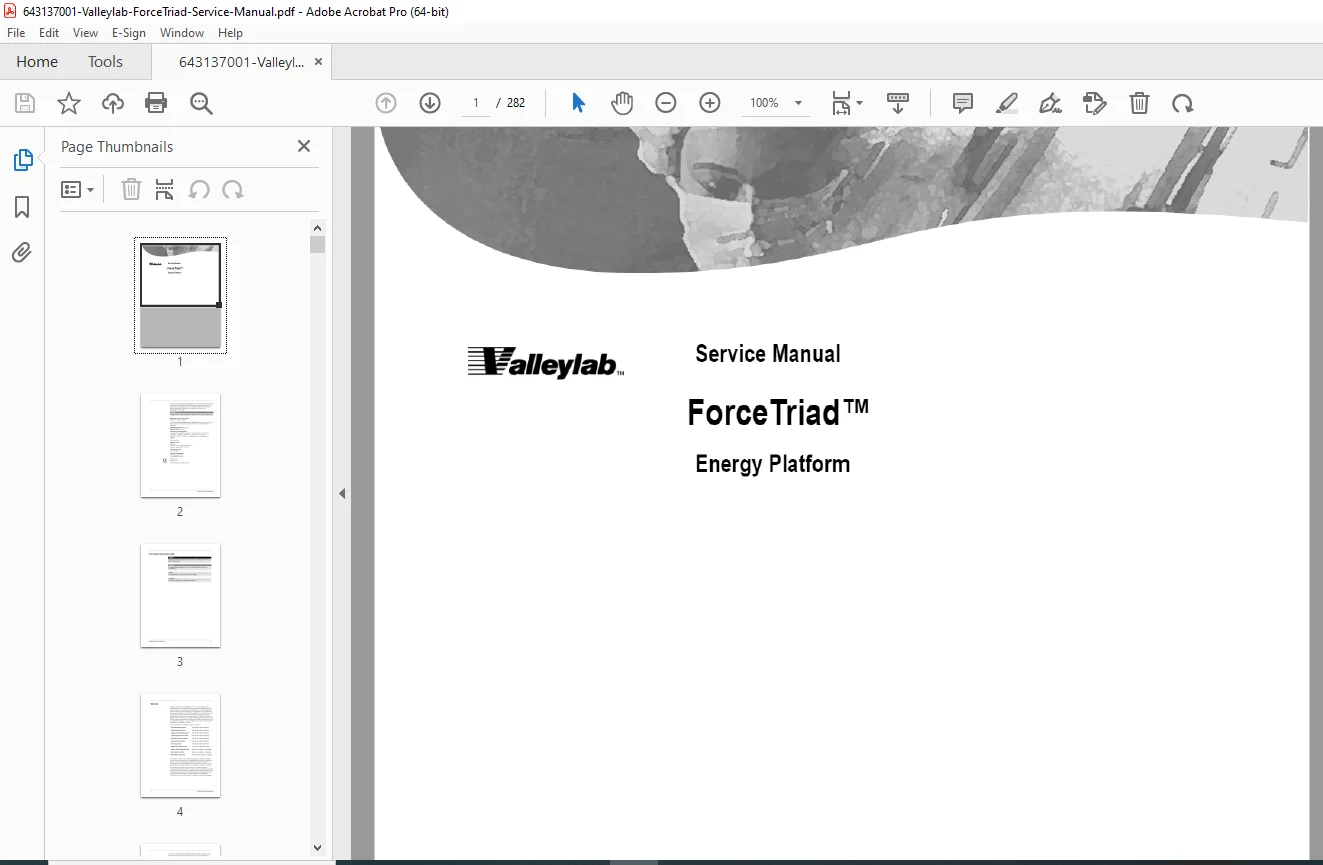
This is the official Valleylab Force Triad Electrosurgical Generator Service Manual – a comprehensive 282-page technical document for the ForceTriad™ Energy Platform with Instant Response™ technology. Manufactured by Covidien (now Medtronic), this manual provides complete service information for qualified biomedical engineers and technicians to install, calibrate, troubleshoot, maintain, and repair these advanced electrosurgical units used in operating rooms, surgical centers, and healthcare facilities worldwide.
Product Overview
Valleylab Force Triad Electrosurgical Generator:
The Force Triad represents an advanced electrosurgical energy platform designed to deliver precise RF (radio frequency) energy for cutting, coagulation, desiccation, and vessel sealing during surgical procedures. This sophisticated system combines multiple energy modalities, integrated bipolar technology, advanced vessel sealing capabilities (LigaSure™), and comprehensive safety features in a single platform for modern surgical applications.
Key Applications:
- General surgery
- Laparoscopic procedures
- Gynecological surgery
- Urological procedures
- Thoracic surgery
- Cardiovascular surgery
- Plastic and reconstructive surgery
- ENT (ear, nose, throat) surgery
- Orthopedic surgery
- Neurosurgery
- Bariatric surgery
- Colorectal surgery
Force Triad System Features
Advanced Electrosurgical Technology:
- Instant Response™ Technology – Rapid tissue impedance adaptation
- Multiple RF output modes
- Integrated bipolar capability
- Monopolar electrosurgery
- Advanced vessel sealing (LigaSure)
- Precision tissue fusion
- Low lateral thermal spread
Operating Modes:
Monopolar Modes:
- Cut Modes: Pure cut, Blend 1, Blend 2, Blend 3
- Coag Modes: Spray, Fulgurate, Soft coag, Standard coag
- Power range: Variable settings
- Multiple waveform options
Bipolar Modes:
- Standard bipolar
- Macro bipolar
- Micro bipolar
- Precision control
- Adjustable power settings
Vessel Sealing (LigaSure):
- LigaSure vessel sealing technology
- Tissue fusion capability
- Vessels up to 7mm
- Integrated cutting
- Minimal thermal damage
Safety Systems:
- REM™ (Return Electrode Monitoring) – Patient return electrode monitoring
- Contact quality assessment
- Real-time impedance monitoring
- Comprehensive alarm system
- Safety interlocks
- Audible/visual indicators
- Automatic power shutoff
User Interface:
- Large color touchscreen display
- Intuitive menu navigation
- Real-time parameter display
- Preset programs
- User customization
- Help screens
- Multilingual support
Technical Specifications
Power Requirements:
- Input voltage: 100-240 VAC (auto-ranging)
- Frequency: 50/60 Hz
- Power consumption specifications
- Circuit protection
- Ground fault protection
RF Output:
- High frequency RF energy
- Multiple output channels
- Isolated output circuitry
- Adjustable power levels
- Waveform control
- Output monitoring
Physical Specifications:
- Dimensions (W × H × D)
- Weight specifications
- Cart-mounted or tabletop
- Accessory storage
- Cable management
Environmental:
- Operating temperature range
- Storage temperature range
- Humidity specifications
- Altitude compensation
- EMC compliance
Comprehensive Manual Contents
DOCUMENT INFORMATION:
- Creation Date: March 5, 2021
- Pages: 282 pages
- File Size: 31.1 MB
- Format: Color image-based PDF
- Resolution: 144 DPI
- Page Size: Letter (612 x 792 pts)
- PDF Version: 1.4
TYPICAL CONTENT STRUCTURE
(Based on standard Valleylab/Covidien service manual organization)
SECTION 1: INTRODUCTION
General Information:
- Manual purpose and scope
- Model coverage
- Product identification
- Serial number location
- Regulatory information
- Warranty information
Safety Information:
- Warnings and Cautions:
- High voltage hazards
- RF energy hazards
- Burn hazards
- Electrical safety
- Fire/explosion hazards
- Service personnel safety
- Servicing Precautions:
- Qualified personnel only
- ESD precautions
- Component handling
- Test equipment safety
- Patient safety considerations
Regulatory Compliance:
- IEC 60601-1 medical electrical equipment
- IEC 60601-2-2 electrosurgical equipment
- FCC compliance
- CE marking
- Safety standards
- EMC requirements
SECTION 2: SYSTEM DESCRIPTION
Force Triad Platform Overview:
- System architecture
- Major components
- Energy delivery modes
- Technology features
- System capabilities
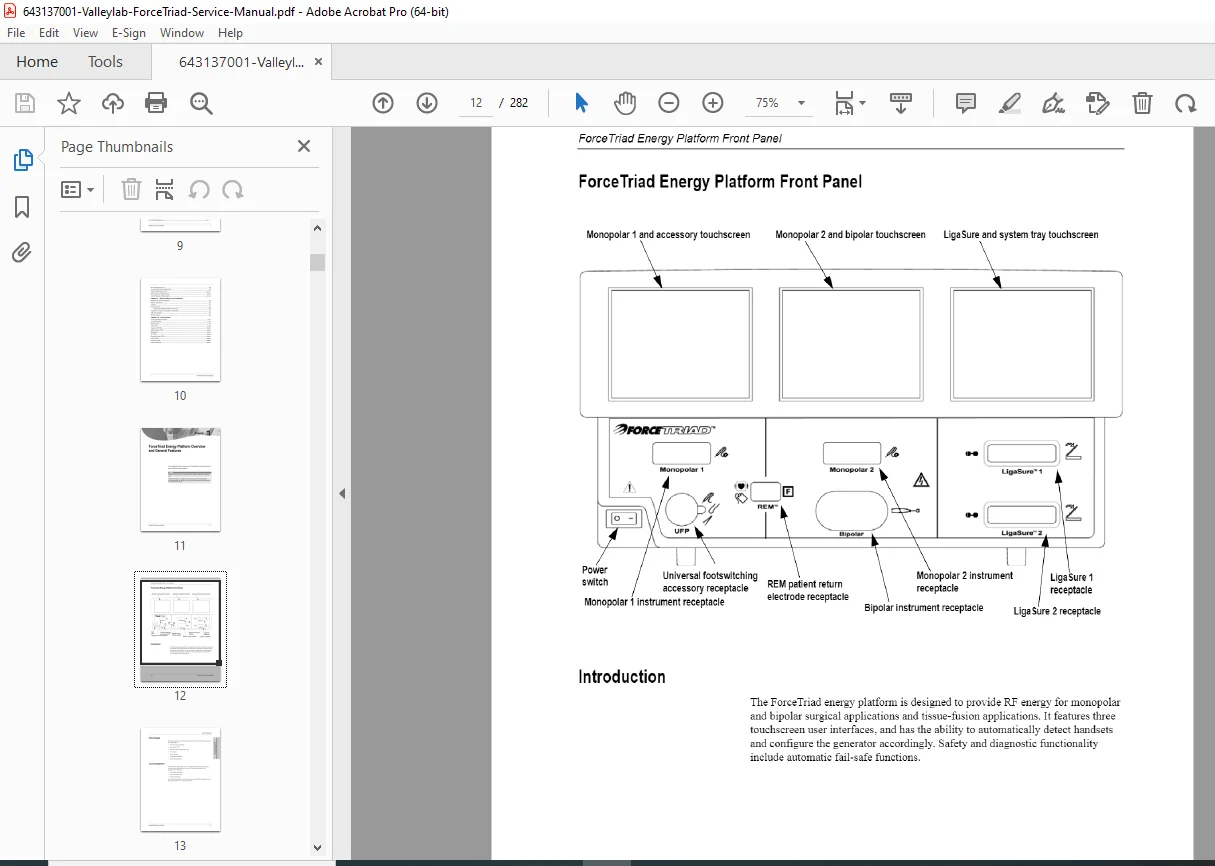
Front Panel:
- Touchscreen display
- Power button
- Monopolar outputs
- Bipolar outputs
- LigaSure outputs
- Footswitch connections
- Indicator lights
Rear Panel:
- AC power input
- Circuit breakers
- Equipotential grounding
- REM connection
- Analog outputs
- Service port
- Cooling vents
Internal Components:
- Main control board
- Power supply modules
- RF generator boards
- Display assembly
- Cooling system
- Sensor systems
- Interface boards
SECTION 3: THEORY OF OPERATION
System Architecture:
- Block diagram
- Signal flow
- Control hierarchy
- Communication buses
Power Supply:
- AC input processing
- DC power generation
- Voltage regulation
- Power distribution
- Protection circuits
RF Generation:
- RF oscillator
- Power amplification
- Waveform synthesis
- Output control
- Impedance matching
Instant Response Technology:
- Tissue impedance sensing
- Real-time adaptation
- Power modulation
- Algorithm description
REM System:
- Return electrode monitoring
- Contact quality measurement
- Impedance analysis
- Alarm generation
- Safety logic
Vessel Sealing Technology:
- LigaSure principles
- Tissue fusion process
- Energy delivery control
- Feedback systems
- Seal cycle management
Control System:
- Microprocessor operation
- Software architecture
- User interface control
- Mode selection
- Parameter management
SECTION 4: INSTALLATION
Unpacking and Inspection:
- Shipping container contents
- Component verification
- Damage inspection
- Serial number recording
Site Preparation:
- Environmental requirements
- Space requirements
- Power requirements
- Grounding requirements
Physical Installation:
- Cart assembly (if applicable)
- Generator mounting
- Cable routing
- Accessory installation
Electrical Installation:
- Power connection
- Ground verification
- REM connection
- Footswitch connection
- Accessory connections
Initial Setup:
- Power-up sequence
- Self-test verification
- Configuration settings
- User preferences
- Date/time setup
Installation Verification:
- Function testing
- Output verification
- Safety system checks
- Documentation
SECTION 5: PREVENTIVE MAINTENANCE
Maintenance Schedule:
- Daily checks
- Monthly inspections
- Quarterly maintenance
- Annual service
- Component replacement intervals
Cleaning and Disinfection:
- Approved cleaning agents
- Cleaning procedures
- Disinfection protocols
- Exterior cleaning
- Display cleaning
Visual Inspection:
- Exterior condition
- Cable condition
- Connector inspection
- Display inspection
- Control check
Functional Testing:
- Power-up test
- Mode selection
- Output testing
- Alarm testing
- User interface test
Performance Verification:
- Output power verification
- Impedance monitoring test
- REM function test
- Safety system verification
SECTION 6: CALIBRATION
Calibration Overview:
- Calibration requirements
- Test equipment needed
- Calibration intervals
- Environmental conditions
Required Test Equipment:
- ESU analyzer (e.g., BC Biomedical ESA615)
- Digital multimeter
- Oscilloscope
- Calibration loads
- Simulation devices
Calibration Procedures:
Output Power Calibration:
- Monopolar cut calibration
- Monopolar coag calibration
- Bipolar calibration
- LigaSure calibration
- Power accuracy verification
- All power settings
- All modes
REM Calibration:
- REM oscillator frequency
- Contact quality thresholds
- Alarm set points
- Response verification
Display Calibration:
- Touchscreen alignment
- Display brightness
- Color calibration (if applicable)
Software Calibration:
- Parameter adjustment
- Algorithm tuning
- Preset verification
- Data logging
SECTION 7: TROUBLESHOOTING
Troubleshooting Overview:
- Systematic approach
- Safety precautions
- Required tools
- Error code interpretation
System Diagnostics:
- Service mode access
- Diagnostic tests
- Error log access
- System status
- Component testing
Common Problems:
Power Issues:
- Unit won’t power on
- Intermittent power
- Display issues
- Power supply failures
- Circuit breaker trips
Output Problems:
- No RF output
- Low power output
- Inconsistent output
- Waveform distortion
- Mode-specific failures
REM Problems:
- REM alarms
- False alarms
- No REM function
- Contact quality errors
- Electrode detection issues
LigaSure Problems:
- Seal failures
- Incomplete seals
- Tissue sticking
- Handpiece errors
- Energy delivery issues
User Interface Problems:
- Touchscreen unresponsive
- Display errors
- Button failures
- Menu navigation issues
- Software glitches
Alarm Conditions:
- Complete alarm table
- Alarm descriptions
- Probable causes
- Corrective actions
- Reset procedures
Troubleshooting Flowcharts:
- Symptom-based diagnosis
- Decision trees
- Test procedures
- Measurement points
- Component isolation
SECTION 8: REPAIR PROCEDURES
Component Replacement:
Main Control Board:
- Board removal
- Connector identification
- Installation procedures
- Configuration transfer
- Testing
Power Supply Modules:
- Module identification
- Removal procedures
- Installation
- Voltage verification
- Load testing
RF Generator Boards:
- Board location
- Removal procedures
- Installation
- Calibration requirements
- Output verification
Display Assembly:
- Display removal
- Cable routing
- Installation
- Touchscreen calibration
- Function testing
Cooling System:
- Fan replacement
- Filter replacement
- Airflow verification
- Temperature monitoring
Sensors and Switches:
- Sensor replacement
- Switch replacement
- Adjustment procedures
- Verification testing
Cables and Connectors:
- Cable identification
- Connector types
- Replacement procedures
- Continuity testing
- Insulation testing
SECTION 9: ELECTRICAL SAFETY TESTING
Safety Test Requirements:
- IEC 60601-1 compliance
- Test frequency
- Test equipment specifications
- Pass/fail criteria
Ground Resistance Test:
- Test procedures
- Measurement points
- Acceptance limits
- Documentation
Leakage Current Tests:
- Chassis leakage
- Patient leakage (normal condition)
- Patient leakage (single fault)
- Patient auxiliary current
- Applied part leakage
- Acceptance criteria
Dielectric Strength Test:
- Test voltage
- Test duration
- Test points
- Safety precautions
Functional Earth Test:
- Continuity verification
- Resistance measurement
- Visual inspection
SECTION 10: PARTS LIST AND SCHEMATICS
Parts Information:
- Part numbers
- Descriptions
- Quantities
- Replacement procedures
- Ordering information
Exploded Views:
- Mechanical assemblies
- Component locations
- Assembly procedures
- Hardware identification
Circuit Diagrams:
- Block diagrams
- Schematic diagrams
- PCB layouts
- Wiring diagrams
- Signal flow diagrams
Board Layout Diagrams:
- Component locations
- Test points
- Connector pinouts
- Jumper settings
SECTION 11: SPECIFICATIONS
Technical Specifications:
- Output specifications (all modes)
- Power specifications
- Frequency specifications
- Impedance ranges
- Timing specifications
- Safety specifications
Performance Specifications:
- Output accuracy
- Power stability
- Response time
- Repeatability
- Drift specifications
Environmental Specifications:
- Temperature ranges
- Humidity ranges
- Altitude specifications
- Storage conditions
- EMC specifications
APPENDICES
Appendix A: Error Codes
- Complete error code listing
- Error descriptions
- Troubleshooting references
Appendix B: Accessories
- Compatible accessories
- Handpiece specifications
- Footswitch options
- Cable specifications
- Return electrode options
Appendix C: Software
- Software versions
- Update procedures
- Configuration backup
- Parameter restoration
Appendix D: Regulatory Information
- Standards compliance
- Safety certifications
- EMC declarations
- Country-specific requirements
Who Needs This Manual?
This Valleylab Force Triad service manual is essential for:
- Certified biomedical equipment technicians (CBET)
- Hospital clinical engineering departments
- Covidien/Medtronic authorized service centers
- Medical equipment service companies
- Surgical equipment specialists
- Operating room technical staff
- Anyone performing authorized service on Force Triad systems
Prerequisites:
✓ Valleylab/Covidien service training
✓ Electrosurgical equipment experience
✓ High voltage and RF safety training
✓ IEC 60601-1 and 60601-2-2 knowledge
✓ Electronic troubleshooting skills
✓ Biomedical equipment service experience
✓ ESD handling procedures
✓ Understanding of electrosurgical principles
FILE DETAILS
| Detail | Specification |
|---|---|
| Manual Title | Valleylab Force Triad Electrosurgical Generator Service Manual |
| Product | ForceTriad™ Energy Platform with Instant Response™ Technology |
| Manufacturer | Covidien (now Medtronic) |
| Brand | Valleylab |
| Creation Date | March 5, 2021 |
| Pages | 282 pages |
| PDF Quality | High-quality color image-based PDF with detailed diagrams |
| File Size | 31.1 MB |
| Page Size | Letter (612 x 792 pts) |
| Resolution | 144 DPI |
| Language | English (assumed) |
| PDF Version | 1.4 |
| Coverage | Complete service information for Force Triad ESU systems |