
1993-1998 Citroën Xantia Service Repair Manual Petrol Diesel PDF
Original price was: $39.95.$24.95Current price is: $24.95.
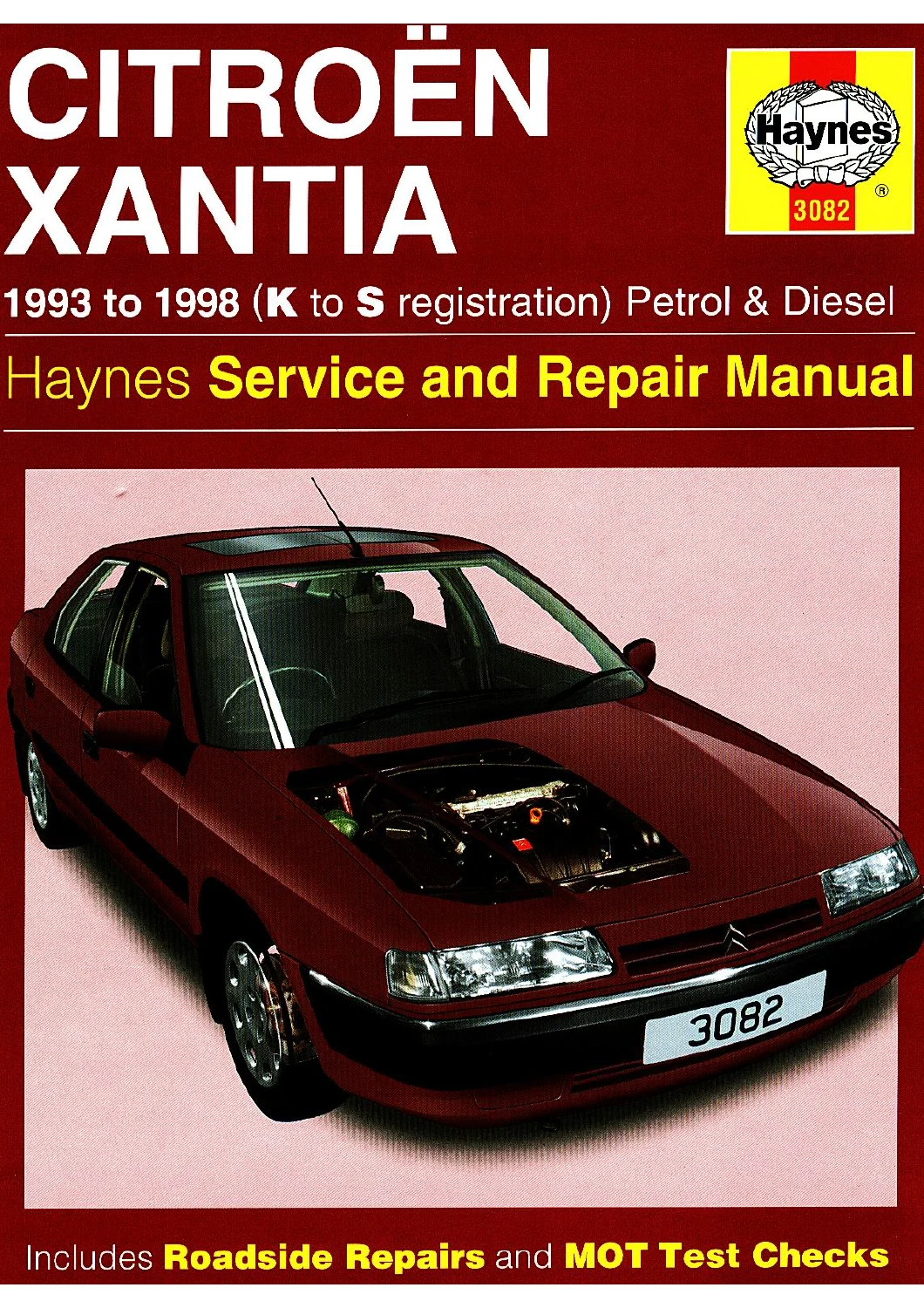
369-page Citroën Xantia Service and Repair Manual for 1993-1998 Hatchback and Estate models with covered 1.6, 1.8, 2.0 petrol and 1.9, 2.1 diesel engines, including maintenance, hydraulic system, repairs, wiring and fault finding.
Description
Citroën Xantia 1993-1998 Service and Repair Manual
This manual is written for Citroën Xantia Hatchback and Estate models from 1993 to 1998 and covers both petrol and diesel versions within the engine range stated by the book. It is designed to follow the car from weekly owner checks and roadside emergencies through scheduled servicing, engine and transmission work, hydraulic-system repair, suspension, brakes, body equipment, electrical diagnosis and wiring diagrams. The manual is especially useful because the Xantia combines conventional mechanical systems with the vehicle’s hydraulic system, so correct fluid, pressure, suspension and brake procedures need to be followed together.
File Details
- Manual type: Service and Repair Manual
- Brand/model: Citroën Xantia Hatchback and Estate
- Model years: 1993 to 1998 (K to S registration)
- Engines: 1.6, 1.8 and 2.0 litre petrol; 1.9 and 2.1 litre diesel
- Language: English
- Pages: 369
- File format: PDF
- manual number: 3082
- Publication: Publishing, 1999
- ISBN: 1 85960 550 0
Check the exact Xantia before buying
The model statement is precise. It covers Xantia Hatchback and Estate models, including special and limited editions, fitted with 1.6 litre (1580 cc), 1.8 litre (1761 cc) or 2.0 litre (1998 cc) petrol engines, and 1.9 litre (1905 cc) or 2.1 litre (2088 cc) diesel engines. The book explicitly says it does not cover V6 or petrol turbo engines, and it does not cover the 2.0 litre engine fitted to the VSX 16-Valve model. That limitation should be checked against the car before relying on the procedures or specifications.
Chapters Covered
- Living with your Citroën Xantia – introduction and safety first.
- Roadside repairs – if the car will not start, jump starting, wheel changing, identifying leaks and towing.
- Weekly checks – underbonnet checkpoints, engine oil, coolant, screen washer, tyre condition and pressure, hydraulic fluid level, wiper blades, electrical system and battery.
- Lubricants and fluids – specified engine, cooling, transmission and hydraulic fluids.
- Tyre pressures – Hatchback and Estate pressure tables for the listed tyre sizes and loading conditions.
- Routine maintenance and servicing – petrol models – maintenance schedule and detailed maintenance procedures.
- Routine maintenance and servicing – diesel models – diesel maintenance schedule and procedures.
- Engine in-car repair procedures – petrol engines – repair work that can be carried out with the engine in the vehicle.
- Engine in-car repair procedures – diesel engines – diesel-specific in-car engine repair.
- Engine removal and overhaul procedures – removal, dismantling and overhaul work beyond in-car procedures.
- Cooling, heating and ventilation systems – cooling circuit and cabin heating/ventilation service.
- Fuel system – petrol models – petrol fuel-system service.
- Fuel system – diesel models – diesel fuel-system service.
- Emission control and exhaust systems – emissions-related components and exhaust service.
- Starting and charging systems – starter, battery and charging-system diagnosis and repair.
- Ignition system – petrol models – petrol ignition-system service.
- Preheating system – diesel models – diesel preheating equipment.
- Transmission – clutch, manual transmission, automatic transmission and driveshafts.
- Brakes and suspension – hydraulic system, braking system, suspension and steering.
- Body equipment – bodywork and fittings plus body electrical system.
- Wiring diagrams – electrical circuit diagrams.
- Reference – dimensions and weights, conversion factors, spare-parts and vehicle identification, general repair procedures, jacking and support, radio/cassette anti-theft system, tools, MOT test checks, fault finding, glossary and index.
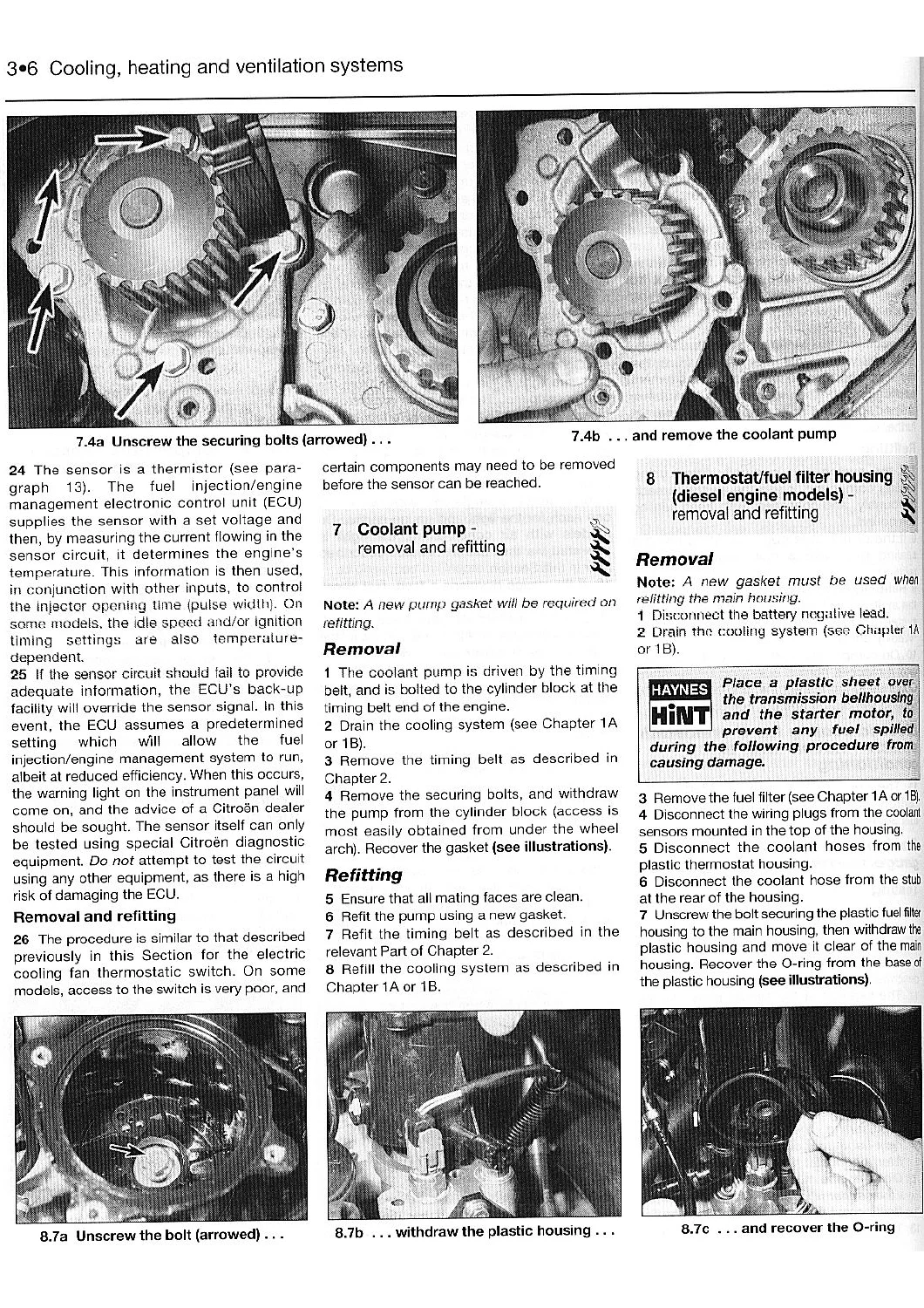
The contents make this more than an engine manual. It starts with the things an owner meets on the road, separates petrol and diesel maintenance and repair where the procedures differ, then carries the reader through powertrain, hydraulic, chassis, body and electrical work. The reference section adds the practical workshop information needed around the repair itself, including jacking, tools, vehicle identification and fault-finding guidance.
Maintenance data for petrol and diesel models
Petrol and diesel servicing each have their own schedules and specification pages. For petrol engines, the manual lists engine-oil capacities by engine and air-conditioning fitment, coolant capacities, transmission capacities, LHM hydraulic-fluid capacity and a 65 litre fuel tank. Examples include 4.75 litres of engine oil including filter for the 1.6 and 1.8 litre 8-valve engines, while other petrol versions have their own values. The petrol maintenance chapter also includes timing-belt work, spark plugs, idle speed and mixture checks, emissions, brake inspection, driveshaft gaiters, suspension and steering, clutch adjustment, filters and coolant renewal.
Diesel maintenance is treated separately rather than mixed into petrol procedures. The manual gives oil capacities for early and later 1.9 litre versions and the 2.1 litre engine, plus cooling capacities, transmission data and the same 5.4 litre LHM system capacity. Diesel-specific routine items include fuel-filter water draining, fast-idle and anti-stall checks and preheating-system coverage. The published schedules identify weekly checks and mileage/time intervals, allowing routine work to be planned before it turns into a repair.
Hydraulic system, suspension and brake coverage
A dedicated hydraulic-system chapter is grouped with braking, suspension and steering. The weekly-check section also shows hydraulic fluid level as one of the routine items, and the fluids table specifies LHM mineral fluid for the hydraulic system. That continuity is important on a Xantia: the manual provides a path from checking the fluid and identifying a leak to carrying out system-level service and then working on suspension or braking components that depend on the hydraulic arrangement.
Tyre-pressure data is split by Hatchback and Estate and by tyre size. For example, Hatchback models on the common tyre group other than 195/55 R15 and 205/60 R15 are listed at 2.3 bar (33 psi) front and 2.1 bar (30 psi) rear, while other fitments have their own figures. Estate tables also distinguish Enterprise and fully laden/towing conditions. The manual therefore gives the actual pressure table rather than a single generic figure for every Xantia.
Roadside diagnosis, fault finding and electrical reference
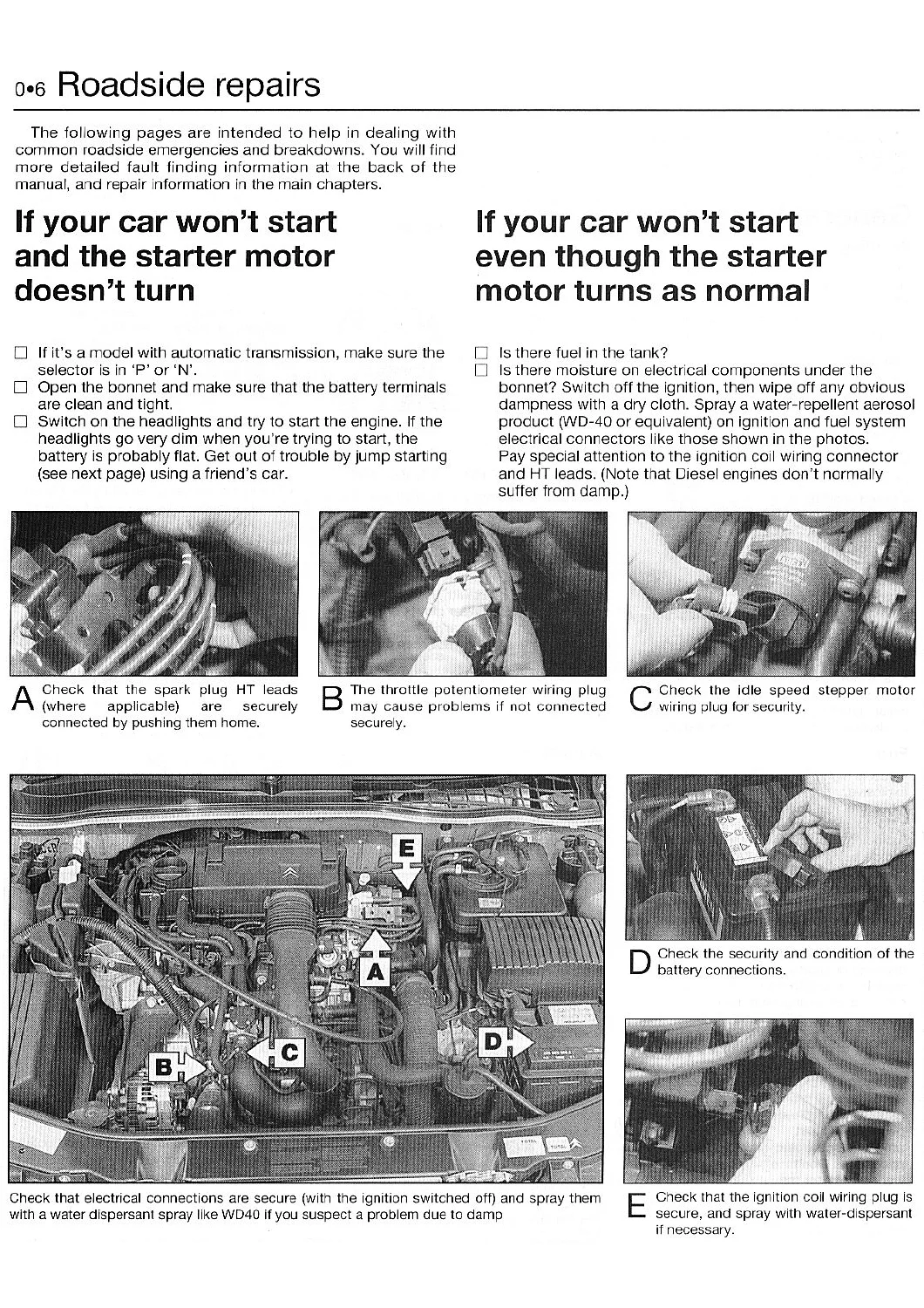
The opening roadside-repair pages are highly illustrated. They cover a starter that does not turn, an engine that cranks but does not start, jump starting, wheel changing, identifying common fluid leaks and towing. Later chapters then provide the deeper repair path for starting and charging, petrol ignition, diesel preheating and body electrical systems. A separate wiring-diagram section and a fault-finding reference section support circuit diagnosis once the simple checks do not resolve the problem.
Keep the correct Xantia procedures close to the car
This manual supports routine servicing, timing-belt and engine work, clutch and transmission repairs, hydraulic-system service, suspension and steering work, braking repairs, electrical diagnosis, wiring checks and roadside fault finding for the covered Xantia models. Using the engine-specific capacities, schedules, adjustments and repair sequences helps avoid applying the wrong data to a petrol, diesel, Hatchback or Estate variant. After payment, the 369-page manual is delivered instantly as a PDF with no shipping; it can be read on a phone, tablet or computer and printed for garage use.
Reviews
There are no reviews yet.