
Airbus Helicopters EC135 Training Manual 2014 – Complete Systems Course PDF
Original price was: $39.95.$23.95Current price is: $23.95.
The June 2014 Airbus Helicopters EC135 training manual, covering every major airframe and systems chapter for P1, T1, P2, T2, P2+, T2+, P3, and T3 helicopters in a single 628-page PDF.
Description
The Airbus Helicopters EC135 Training Manual 2014 is the June 2014 systems course document that takes a pilot, mechanic, or technical instructor through every major airframe and avionics chapter of the EC135 light twin. It is the training material Airbus Helicopters produced for its own type courses, organised by ATA chapter and written around the Pratt & Whitney PW 206 and Turbomeca ARRIUS 2B engine families that power the P1, T1, P2, T2, P2+, T2+, P3, and T3 versions of the helicopter. Anyone who flies, maintains, or teaches on the EC135 will find the cockpit, flight control, hydraulic, tail unit, lifting system, and inspection chapters here in full, without the padding of a generic rotary-wing textbook.
File Details
- Manual type: Airbus Helicopters training manual (systems course)
- Brand / manufacturer: Airbus Helicopters (former Eurocopter, former MBB, former Bölkow)
- Model: EC135
- Engine families covered: Pratt & Whitney PW 206 B, B2, and B3; Turbomeca ARRIUS 2B1, 2B1A, 2B1A_1, 2B2, and 2B2 plus
- Language: English
- Page count: 628 pages
- File format: PDF
- Publication date: June 2014
Chapters Covered
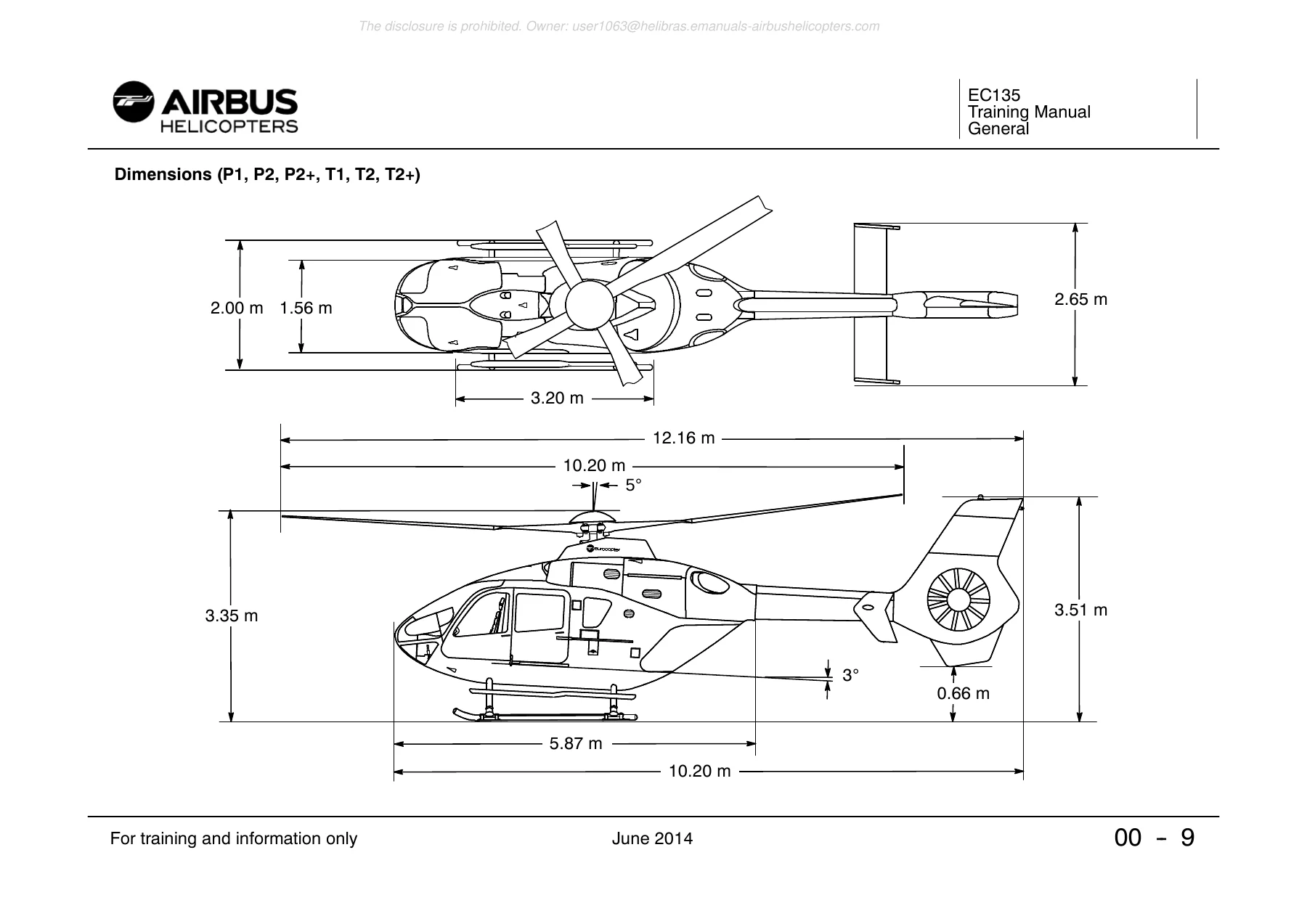
- General Description of the EC135 (ATA 06) – development history, engine versions, cockpit versions, dimensions, fuselage, fuel system, electrical system, landing gear
- Maintenance Concept (ATA 05/12) – organizational, intermediate, and depot levels
- Documentation of the EC135 – AMM, SDS, MSM, WDM, IPC, CECG, AVM, MTC, SRM, operator and pilot documentation
- Illustrated Parts Catalog and Detailed Parts List – manual structure, figure numbering, item numbering, part number column, breakdown sequence
- Cockpit Arrangement (ATA 31)
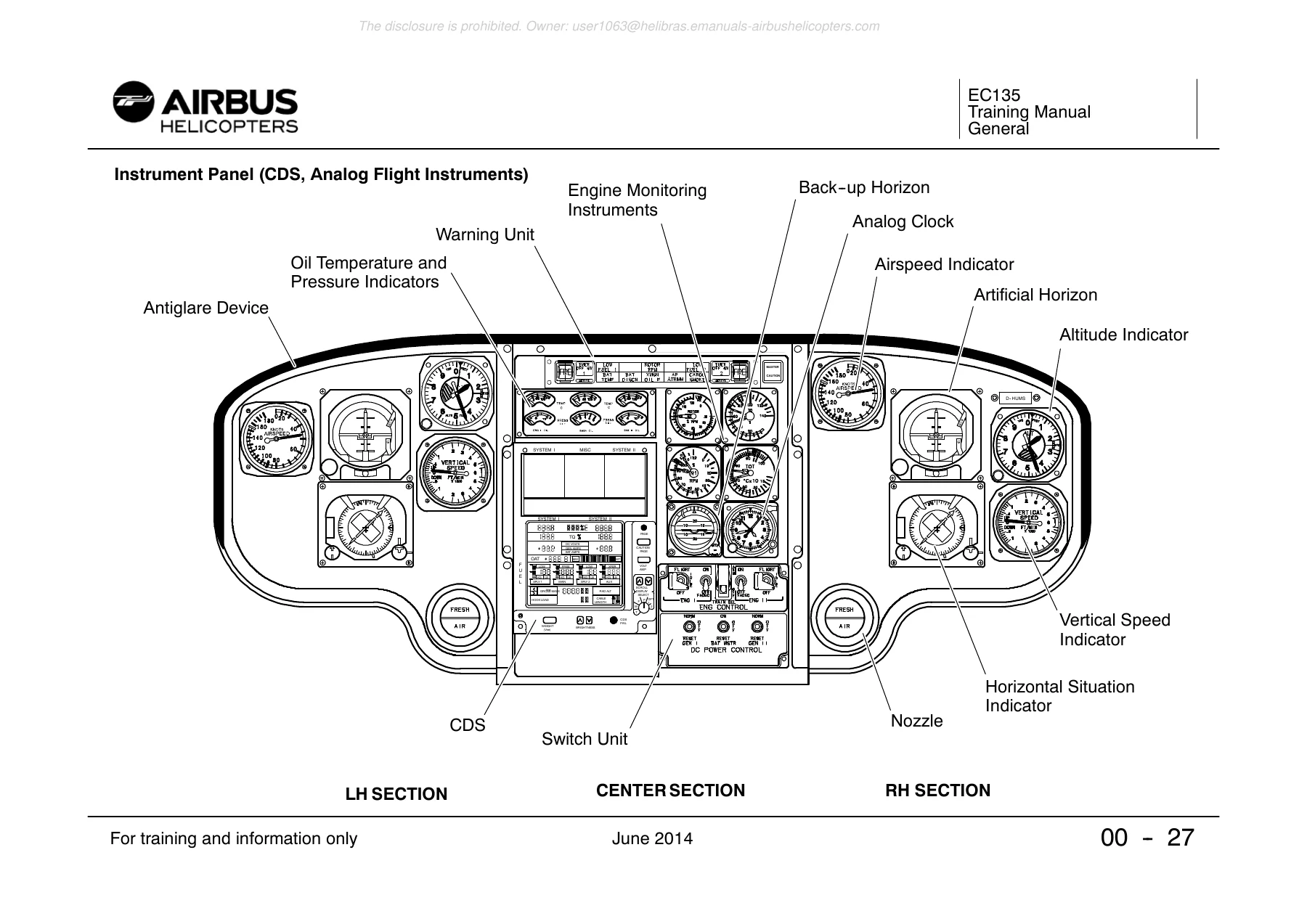
- Instrument Panel with CDS (ATA 31) – triple rotor RPM, torque, dual TOT, dual Δn1, dual n1, oil temperature and pressure
- Cockpit Display System (CDS) – operation, caution display, advisory display, display select and scroll, engine parameter, torque, electrical, mast moment, fuel, VNE
- Instrument Panel with CPDS (ATA 31) – CAD, VEMD, test switch, circuit breakers, maintenance connectors
- Function and Modes of the CPDS – CAUTION/FUEL page, FLI pages for P1/T1 and P2/T2/P2+/T2+, ELEC/VEH, VNE, System Status, Inflight Engine Power Check, CAUTION/FUEL FAIL, CAUTION/BACKUP, FLIGHT REPORT, switch-over functions, normal, derivative and backup modes
- Maintenance Menu – flight report, failure, overlimit, inflight EPC, transfer data, functional times, data loading
- A/C CONFIG Page and CPDS software version overview
- H/C serial number changes overview
- Warning Unit and Switch Unit (ATA 31)
- Overhead Console (ATA 24/80)
- Pitot-Static System (ATA 34/30)
- Handling of the EC135 (ATA 07/08/09/10) – lifting, jacking, shoring, weighing, towing and pushing, parking and mooring
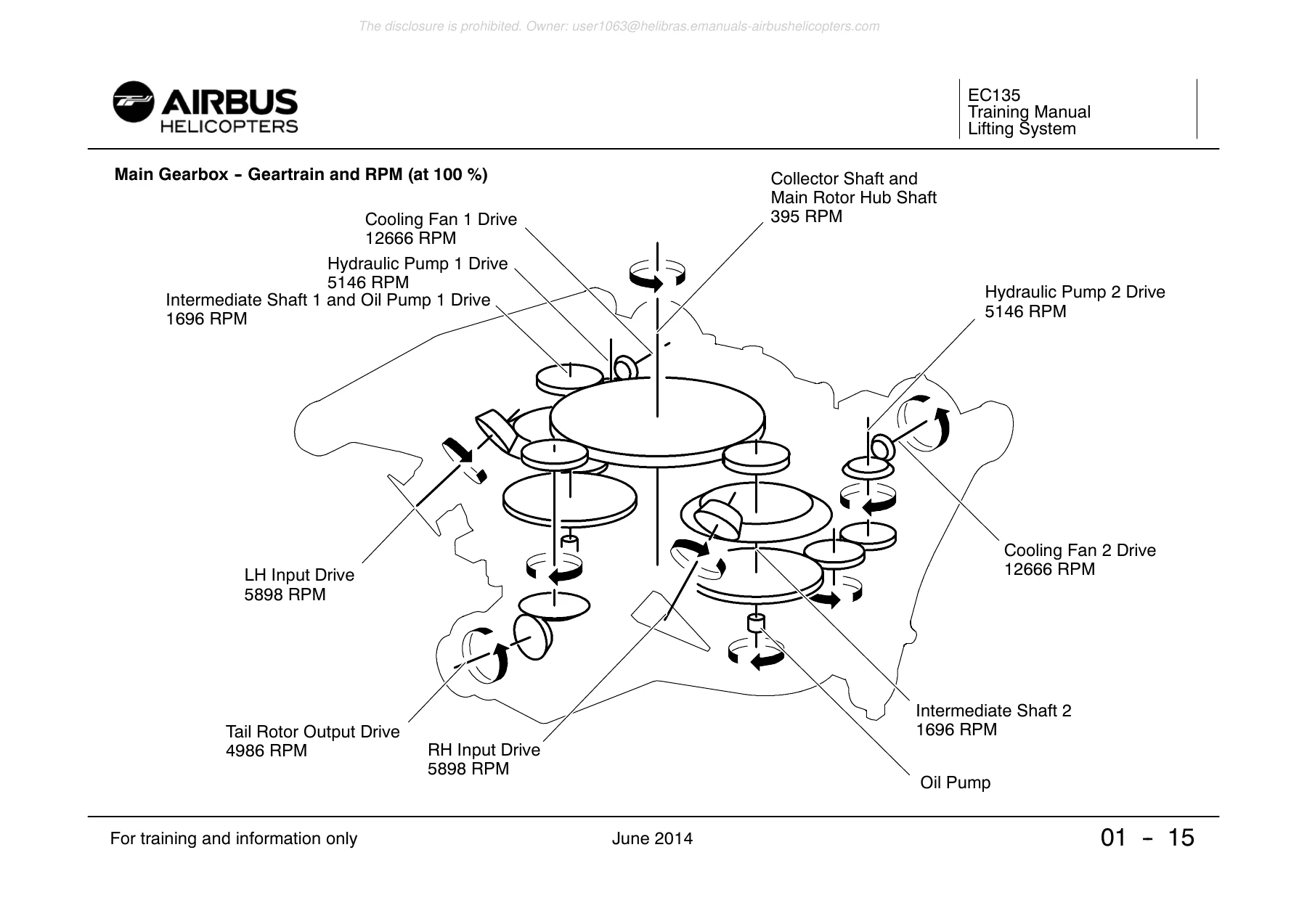
- Lifting System (ATA 63/62/18) – main rotor drive, driveshafts, main transmission, oil system, accessory gearbox, oil cooling, rotor hub shaft, mast moment, rotor brake, transmission mounts, ARIS, oscillation damper, main rotor system and blades
- Fuselage (ATA 53/52/56/71) – reference planes, leveling, cabin structure, main fuselage structure, doors, service covers, windows, cowling
- Tail Unit (ATA 53/65/64) – Fenestron principle, horizontal stabilizer with end plates, tail boom, tail rotor drive, Fenestron structure, tail rotor gearbox, tail rotor
- Flight Control (ATA 67/29/22/62) – collective, cyclic, mixing lever assembly, swash plate, rotating control rods, scissors assembly, trim system, tail rotor control, hydraulic system, actuators (MHA, EHA, Fenestron), 3-axis SAS, autopilot
- Landing Gear (ATA 32)
- Standard Equipment (ATA 30/25/21/33/26) – windshield wiper, emergency equipment, interior paneling, passenger seats, crew seats, heating and ventilation, lighting
- Optional Equipment (ATA 24/23/34/22) – avionics, intercom, VHF AM, ELT, ADF, VHF NAV, transponder, DME, GPS, radar altimeter, FCDS, AFCS
- Electrical System (ATA 24) – DC power generation, starter/generator, electrical master boxes, battery system, external power, DC distribution, AC power system
- Inspections (ATA 05/18/67) – types of inspections, scheduled checks, CMP, tail rotor inspection, balancing, track and balance, rigging of flight controls, boosted and non-boosted section adjustments
Across its 628 pages the EC135 Training Manual moves from the general description and maintenance philosophy of the type, through every major airframe and system chapter, and closes with the inspection and rigging procedures that determine whether the helicopter leaves the hangar in a flyable condition. Because the chapters follow the same ATA numbering scheme used by the EC135 AMM, the document works as a structured syllabus: read a chapter, then jump to the matching AMM task number when it is time to do the work. The result is a single PDF that lets a technician understand why a procedure exists before turning to the maintenance manual to perform it.
EC135 Variants and Engines Covered
The training manual covers the full EC135 family as it stood in June 2014. The Pratt & Whitney side includes the P1 with PW 206 B engines, the P2 and P2+ with PW 206 B2 engines, and the P3 with PW 206 B3 engines. The Turbomeca side includes the T1 with ARRIUS 2B1, 2B1A, and 2B1A_1 engines, the T2 and T2+ with ARRIUS 2B2 engines, and the T3 with the ARRIUS 2B2 plus. Both engine families sit in the 450 kW class. The manual also documents the differences in maximum take-off mass across the range, from the 2720 kg of the original versions, through the 2900 kg external-load figure, up to the 2910 kg certification of the P2+ and T2+, the 2950 kg P2e and T2e upgrade, and the 2980 kg ceiling of the P3 and T3. CPDS software versions, H/C serial number changes, and the switch from the CDS cockpit to the CPDS cockpit at S/N 169 and up are all covered so the reader can match the systems description to the aircraft in front of them.
How the Display Systems Are Explained
Two generations of cockpit display system are described in parallel. The Cockpit Display System chapter covers the self-test, caution and advisory pages, mast moment bar graph, fuel indication, and display select switch of the earlier aircraft, including the FADEC parameter pages reachable through the display select and scroll buttons. The Central Panel Display System chapter picks up from there and walks through the Caution and Advisory Display, the Vehicle and Engine Monitoring Display, the First Limit Indicator pages for both the P1/T1 and the P2/T2/P2+/T2+ installations, the ELEC/VEH page, VNE calculation, SYSTEM STATUS pages for TM and PW engines, the Inflight Engine Power Check, the degraded CAUTION/FUEL FAIL and CAUTION/BACKUP pages, and the FLIGHT REPORT. The maintenance menu section then explains how to enter and read flight history, stored failures, overlimit records, inflight EPC results, transfer data, and functional times, which is often the part of the aircraft operators end up needing outside of scheduled maintenance.
Flight Controls, Hydraulics, and the Tail Unit
The Flight Control chapter is unusually complete for a training document. It follows the collective and cyclic signal paths from the cockpit levers and stick through the non-boosted linkage, the trim actuators, the upper and lower guidance units, the mixing lever assembly, the swash plate, the rotating control rods, and the scissors assembly. On the hydraulic side it explains the two independent pressure supply systems, the reservoir and valve block, the Mechano-Hydraulic Actuator, the Electro-Hydraulic Actuator, the Fenestron actuator, and the mechanical override in the event of a jammed control spool. The tail rotor control chain, the Yaw SAS actuator, the Flexball control cable, and the 3-axis Stability Augmentation System are treated in the same level of detail, followed by the optional Autopilot System, its APM and APMS, and the AFCS pre-flight test. The Tail Unit chapter continues with the Fenestron structure, the tail rotor gearbox, the ten-bladed tail rotor, the horizontal stabilizer and end plates, and the tail rotor drive train, so the reader sees the whole rear end of the aircraft as one system rather than a set of isolated parts.
Lifting System and Main Transmission
The Lifting System chapter is where the training manual becomes a genuine reference for anyone working on the EC135 transmission deck. It covers the two driveshafts, the main transmission modules and gear stages, the freewheel units, the tail rotor output drive, the lubrication system with its two oil pumps, the oil filter and bypass valve, the oil coolers, and the oil distribution system. The main rotor hub shaft, the mast moment indication system with its strain gauge bridge and induction transmitter, the rotor brake system and its indication, the four ARIS anti-resonance isolators, the mechanical emergency stops, the side load and torque struts, and the lateral oscillation damper are all described with the same care. The chapter closes with the bearingless, hingeless four-blade main rotor system, the blade root structure, the pitch control cuff, the lead-lag dampers, the erosion protection, the balance chamber, and the P3/T3 blade changes, giving the reader the full picture from the mast down to the blade tip.
Inspection and Rigging Content
The Inspections chapter is the operational payoff of the training manual. It lays out the different inspection types, the scheduled check and inspection intervals, the Continuous Maintenance Program for helicopters operating above and below 400 flight hours per year, the tail rotor clearance check, the dynamic balancing procedure for the tail rotor, the track and dynamic balancing of the main rotor system, and the flight control rigging sequence for the boosted and non-boosted sections of both the main rotor and the tail rotor controls. For anyone who needs to understand why a rigging value is what it is before opening the AMM task, this chapter is the bridge between the training syllabus and the maintenance floor.
Get the Airbus Helicopters EC135 Training Manual Today
This EC135 Training Manual gives you the systems knowledge that sits behind every scheduled inspection, every rigging adjustment, and every in-flight caution on the aircraft. It explains the hydraulic and flight control architecture, the display logic, the transmission and rotor systems, the electrical distribution, and the optional avionics, so you can diagnose a fault, plan a repair, or prepare for type training with real understanding rather than guesswork. The PDF is delivered instantly after payment, there is no shipping and no waiting, it opens on any laptop, tablet, or phone, and you can print the pages you need for the hangar floor. Add it to your technical library today and keep the complete Airbus Helicopters EC135 systems course within reach.
IMAGES PREVIEW
Reviews
There are no reviews yet.