
Boeing 767 Fueling Manual – ATI B767 Pressure Refueling & Fuel System Procedures Guide
Original price was: $34.95.$20.95Current price is: $20.95.
Complete Air Transport International B767 fueling manual covering pressure and overwing refueling, defueling, tank-to-tank transfer, fuel substitution, safety, sump draining, and magnastic stick measurement tables for the Boeing 767-200.
Description
Boeing 767 Fueling Manual – ATI B767 Pressure Refueling & Fuel System Procedures Guide
This is the Air Transport International B767 Fueling Manual – the working document issued to ATI fueling contractors, loaded aboard the aircraft, and required to be strictly adhered to under FAR 121.135 and 121.137. It covers every part of the ground fuel servicing operation on the Boeing 767-200: pressure refueling through the underwing adapters, automatic and manual fueling panel operation, fueling without electrical power, overwing fueling, defueling, tank-to-tank transfer, fuel measuring stick tables, turbine engine fuel substitutions, and the safety and personnel requirements that surround all of it.
File Details
- Manual Type: Aircraft Fueling Manual (Fuel Servicing Procedures)
- Issued By: Air Transport International, Limited Liability Company
- Aircraft: Boeing 767-200
- Language: English
- Page Count: 462
- File Format: PDF
- Revision Number: 1
- Revision Date: 07-29-09
- Original Issue: 07-14-08
- FAA Status: FAA Accepted (signed by Curtis L. Weedman, Jr., Principal Maintenance Inspector, LIT, FSDO)
Chapters Covered
The manual is divided into eight top-level chapters, each broken down into numbered subsections:
- 01 – General Procedures
- General Fueling Procedures
- Contract Fuel Facilities
- Non-Contract (AD Hoc) Fuel Facilities
- Contaminated Fuel
- Turbine Aircraft Fueling Unit
- Fuel Quantity Measurement and Verification
- Refueling Policy
- Use of Fuel Truck Meter and Fueling Tolerance
- Using Fuel Measuring Sticks (Magnastick)
- Draining of Aircraft Sumps
- Minimum Fuel Requirement
- Who To Contact For Problems Relating To Fuel Servicing
- Hydrometer
- Glossary of Terms
- 02 – Personnel Requirements for Fueling
- Pressure Fueling
- Overwing Fueling
- Ground Personnel Responsibilities
- Maintenance Personnel
- 03 – Turbine Engine Fuel Substitutions
- General (Approved Fuel and Engine Types Table)
- Fueling with JP-4/Jet B or When Aircraft Contains Residual JP-4/Jet B Fuel
- Slow Rate Pressure Fueling
- Overwing Fueling Procedure
- Placards
- 04 – Safety Requirements
- General Precautions
- Bonding Instructions – All Airplanes
- Fueling with Passengers or Employees Aboard
- Precautions for the Operation of Equipment During Refueling
- Precautions During Inclement Weather
- Photographs
- Fueling with an Engine Running
- 05 – Biocide Treatment of Fuel Tanks
- General (Reference to Boeing B767 AMM 28-10-00)
- 06 – Reserved for Future Use
- 07 – B767 Fueling Procedures
- B767 Fuel System General
- Fuel Loading Requirements and Limitations
- Automatic Fueling Operation
- Fueling with One Inoperative Indicator
- Fueling with Inoperative Gauge
- Manual Fueling Operation
- Fueling Without Electrical Power
- Overwing Fueling
- Defueling and Tank-to-Tank Transfer
- Fuel Sump Draining
- Standard Fuel Distribution
- 08 – Fuel Measuring Stick Tables
- Fuel Measuring Stick Tables for Off-Attitude Conditions (Inches to Pounds)
- Tables for Sticks 1 through 8 across pitch attitudes from -2.00 to +2.00 degrees and roll attitudes from -2.00 to +2.00 degrees
What This Fueling Manual Gives You
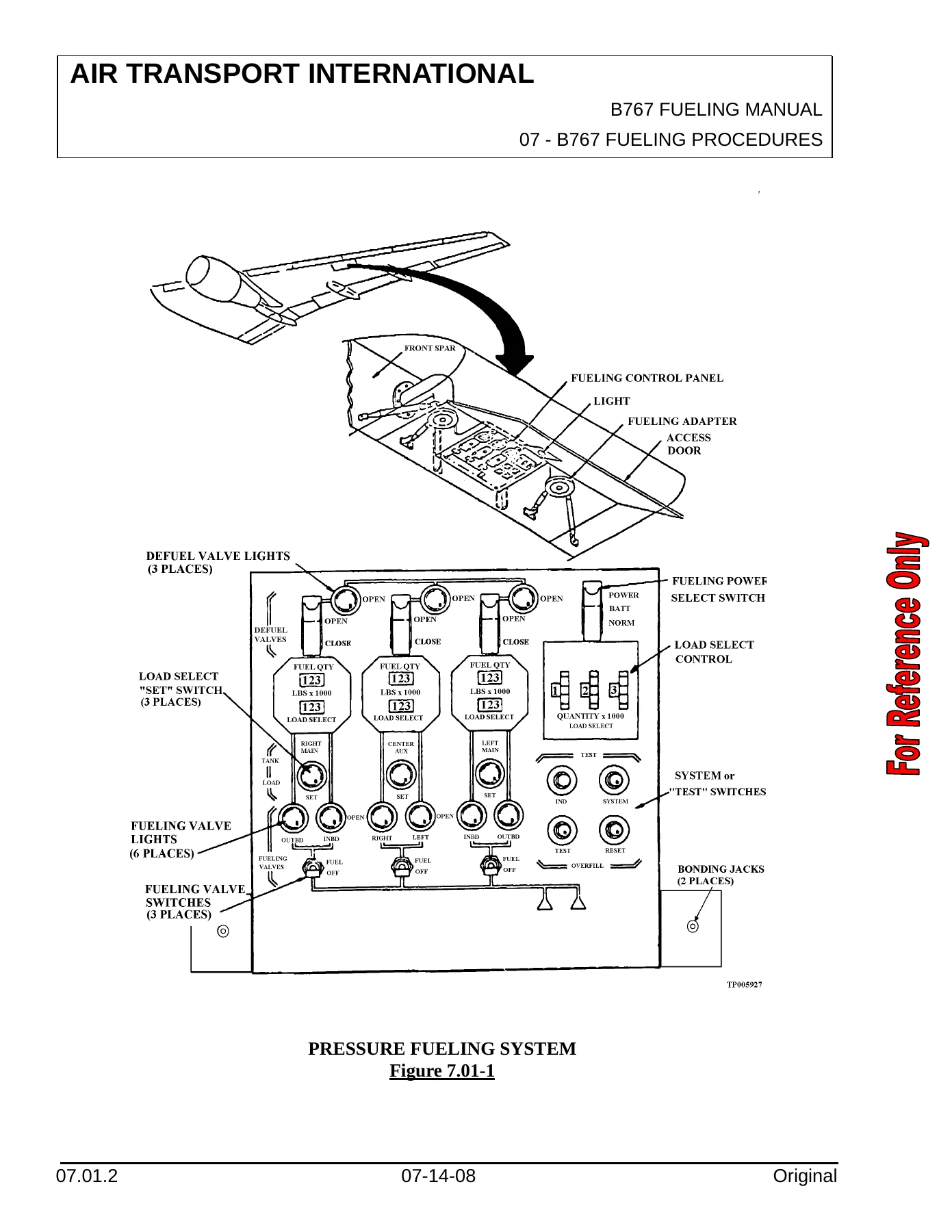
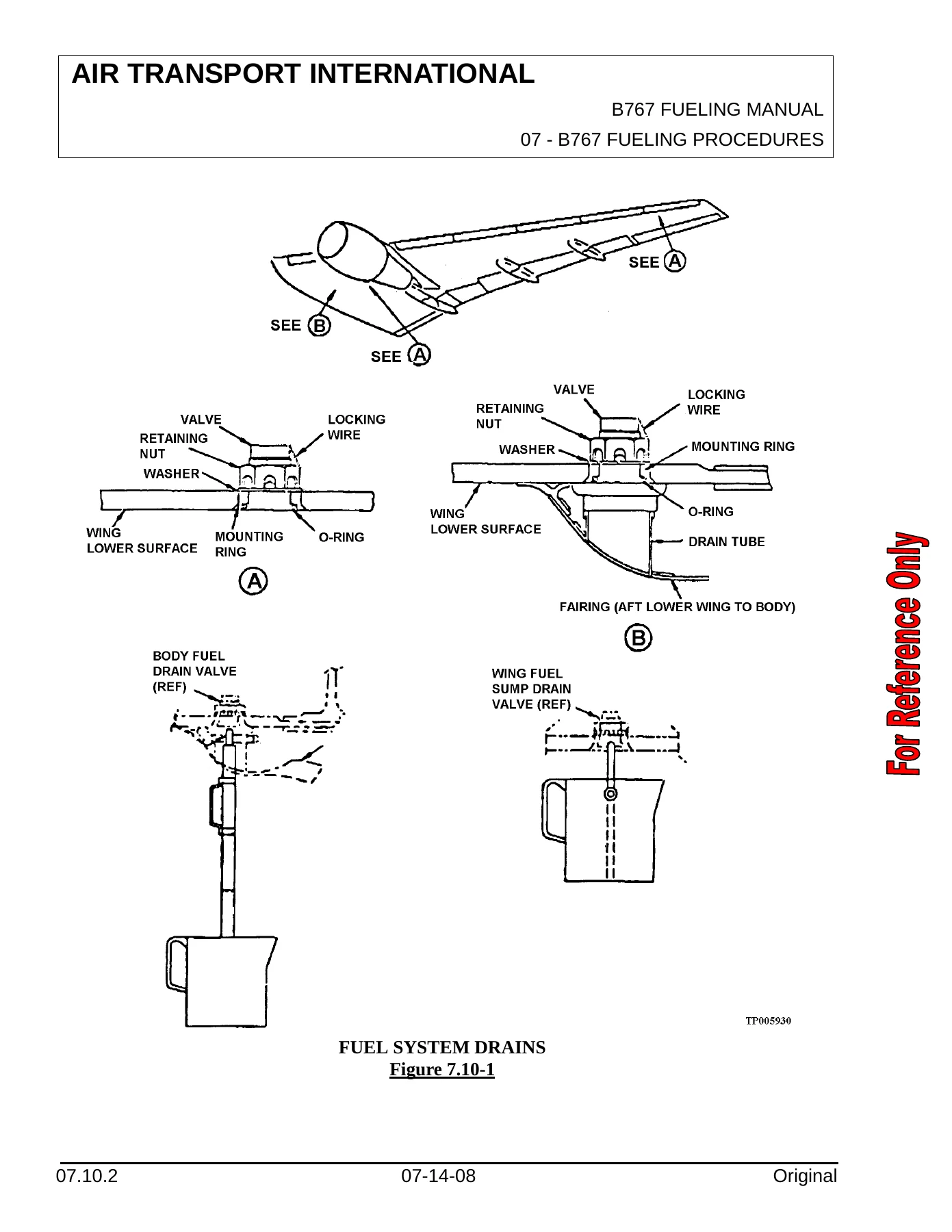
The Boeing 767 Fueling Manual is written for the person standing at the fueling panel, not for a classroom. Every procedure is tied to a physical location on the aircraft: the fueling control station under the left wing leading edge, the underwing adapters, the ground jacks, the sump drain valves under the wing lower surface, the defuel valves reachable through the wing access panels behind the trailing edge spar. The illustrations show the panel layout, the fuel system drains, the overwing filler cap assembly and adapter, the fuel measuring stick housings, and the stick mounting locations across the wing.
Chapter 07 walks through each method of getting fuel into and out of the aircraft step by step. Automatic fueling covers load select thumbwheels, SET switches, IND test, valve open lights, and the processor-driven auto-close. Manual fueling covers setting valve switches to FUEL and stopping on gauge indication. Fueling with one inoperative indicator shows the cockpit-observer method using both the working gauge and a measuring stick. Fueling with inoperative gauge covers both the magnastick method and the transfer method. Fueling without electrical power shows the manual override screw procedure at the fueling valve actuator (inboard and outboard actuators at 551 TB, 561 GB, 651 TB, 661 GB) and the depressurization cautions around it. Defueling covers both pressure and suction methods, plus the center tank ground defuel/transfer procedure tied to AD 2001-15-08. Tank-to-tank transfer shows the exact valve and boost pump combinations needed to move fuel between tanks on the ground.
Chapter 08 is the reference heart of the document. It provides the fuel measuring stick tables that convert observed stick readings in inches to usable fuel in pounds, broken out by stick number (1 through 8) and by airplane pitch and roll. Because the float-type magnetic sticks read differently depending on how the aircraft sits on the ramp, the tables let the refueler confirm quantity without relying on cockpit gauges. The manual also gives the stick minimum and maximum measurable loads, the usable range in pounds at nominal attitude for each of the eight sticks on each side, and a worked example showing how to determine which sticks to read for a desired total fuel load and how to correct for a non-standard fuel density.
Chapters 01 through 05 cover the surrounding discipline. Chapter 01 sets out contract and non-contract fuel facility rules, contaminated fuel identification terms (clear, slight particulate matter, particulate matter, dirty; bright, hazy, cloudy, wet), truck meter and gauge tolerance checks, magnastick use, sump draining intervals and temperature cut-offs, minimum fuel requirement distribution, conversion factors between U.S. gallons, imperial gallons and litres, and the density/gravity/API relationship tables. Chapter 02 spells out how many qualified personnel are required for pressure and overwing fueling and what ground and maintenance personnel are responsible for. Chapter 03 handles the JP-4/Jet B substitution rules, including the slow rate fueling requirement for 20 flying hours after the last JP-4/Jet B addition, the placarding wording, and the full fueling situation vs. rate table. Chapter 04 covers bonding, fueling with passengers or employees aboard, what may and may not be operated during refueling, weather precautions, and fueling with an engine running. Chapter 05 points to the biocide treatment procedures in the Boeing B767 AMM.
Fuel System and Tank Data Included
The B767 Fueling Manual documents the aircraft fuel system configuration in detail: three fuel tanks (left main, right main, and center auxiliary) in the interspar area outboard of the fuselage, plus a surge tank at the top of each wing to contain overflow and prevent spillage. Tank capacities are given at a 6.7 lb/gallon reference density – 6,070 U.S. gallons / 40,700 lb for each main tank, 4,560 U.S. gallons / 30,500 lb for the center auxiliary tank, for a total of 16,700 U.S. gallons / 111,900 lb. The manual calls out the 1,500 lb lateral imbalance limit between main tanks, the center tank loading rule tied to main tank capacity and Maximum Zero Fuel Weight, and the standard fuel distribution sequence (mains first, center tank only after the mains are full).
Jobs and Procedures This Manual Supports
- Pressure refueling a B767-200 through the underwing adapters using the automatic load select processor
- Manual fueling with the panel valve switches when processor-controlled fueling is not used
- Fueling with one inoperative indicator, using a cockpit observer in interphone contact with the refueler
- Fueling with a completely inoperative gauge, using either the magnastick method or the tank transfer method
- Fueling without any electrical power, using the manual override screws on the fueling valve actuators
- Overwing fueling when pressure fueling equipment or electrical power is unavailable
- Pressure defueling, suction defueling, and center tank ground defuel/transfer under AD 2001-15-08
- Tank-to-tank fuel transfer on the ground with boost pumps and defuel valves
- Sump draining with the integral water scavenging system and the primary poppet drain valves
- Verifying fuel quantity with cockpit gauges, truck meters, and fuel measuring sticks
- Identifying contaminated fuel and classifying solid contaminant and moisture content levels
- Determining minimum fuel requirement distribution between main tanks
- Handling JP-4/Jet B substitutions, slow rate fueling, and 20-hour placard tracking
- Complying with bonding, grounding, and electrostatic discharge precautions
- Operating the fuel truck, hydrant cart, and sensing line connections safely
- Fueling with passengers or employees aboard and with an engine running
- Reading stick tables across pitch and roll attitudes from -2.00 to +2.00 degrees
- Correcting stick table pound values for actual fuel density and specific gravity
Why This Manual Matters
Fueling a transport-category aircraft is not a task where approximate numbers are acceptable. The wrong grade of fuel, a missed bond, an unverified tank quantity, a residual JP-4 vapor mixture, or a center tank loaded outside the Maximum Zero Fuel Weight allowance can all put the aircraft and crew in a hazardous condition. This manual defines the accepted procedures so that the person at the panel has the correct valve settings, the correct pressure limits, the correct tank sequence, and the correct verification method for every situation they will face.
Because it is a working document rather than a general textbook, the Boeing 767 Fueling Manual is tightly tied to the specific airplane – which fill valves exist, which circuit breakers must be closed, which actuator access panels to open, which stick to read for a given load, and which valve combinations produce transfer. Anyone supporting B767 ground operations, whether as a contract fueler, a station supervisor, a maintenance technician, or a flight crew member, can follow the manual’s procedures and know they are working to the standard ATI requires.
Get Instant Access
IMAGES PREVIEW
This ATI B767 fueling manual is delivered as an instant PDF download after purchase – no waiting on shipping, no physical binder to chase down. You can open it on a laptop, tablet, or phone in the fuel pit, print the pages you need for the truck or the panel, or store it with the rest of your station documentation. Whether you are training a new refueler, verifying a tank quantity on the ramp, or checking a procedure before you move a valve, the manual is available the moment your payment clears.
Reviews
There are no reviews yet.