
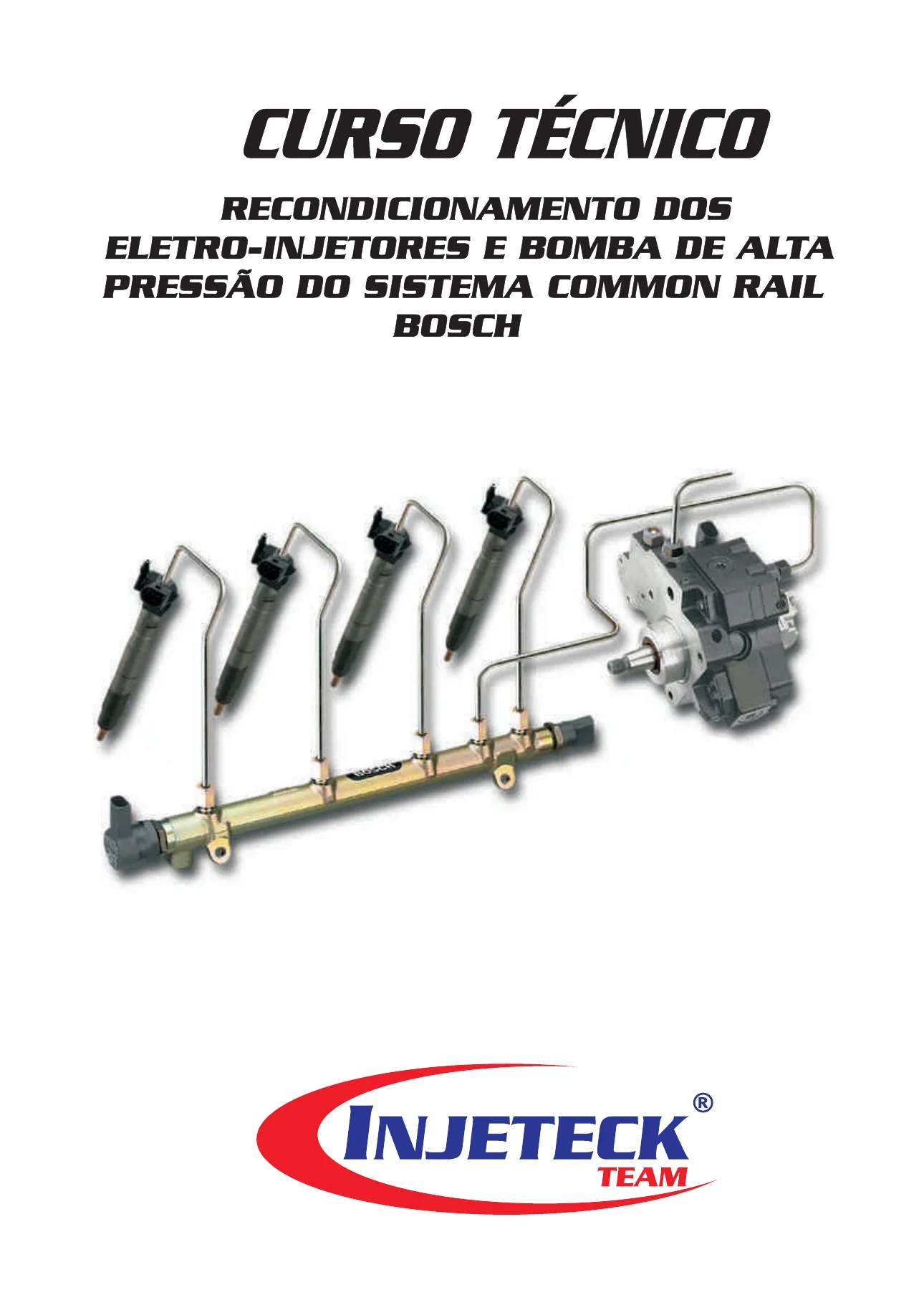
Bosch Common Rail System Technical Training Manual – CP1 CP2 CP3 Injector and High Pressure Pump Reconditioning
Original price was: $34.95.$21.95Current price is: $21.95.
Technical training manual for the Bosch Common Rail system covering CP1, CP2 and CP3 high pressure pumps, rail, pressure regulating valve, solenoid injectors, sensors, actuators and the EDC control unit, with reconditioning and bench-testing guidance for electro-injectors and high pressure pumps.
Description
Bosch Common Rail System Technical Training Manual
This Bosch Common Rail System Technical Training Manual is a complete course document for technicians working on CR diesel fuel injection. It walks through the full high pressure circuit – the CP1, CP2 and CP3 high pressure pumps, the pressure accumulator rail, the pressure regulating valve, the solenoid injectors, the sensors and actuators, and the EDC command unit – and then moves into the practical work of reconditioning electro-injectors and high pressure pumps, including bench testing procedures and acceptance values.
The material is written as a training course rather than a single-vehicle repair guide, so it is suited to diesel injection specialists, workshop trainers and technicians who service Common Rail equipment across light, heavy and maritime applications.
File Details
- Manual type: Technical training course manual (reconditioning and system presentation)
- Brand / system: Bosch Common Rail System (CRS)
- Compiled / presented by: Injeteck Team
- Language: English and Portuguese
- Page count: 148 pages
- File format: PDF
- Pump families covered: CP1, CP2, CP3 (CP 3.1, CP 3.2, CP 3.3, CP 3.4, CP 3.5)
Chapters Covered
- Course presentation and scope of Common Rail reconditioning
- Pump family overview – CP1 light vehicles, CP2 maritime and heavy work, CP3 heavy and light, transmission ratios and drive speeds
- Circuit and operating diagram – electric feed pump, low pressure circuit, filter head heating, feed pump pressure, cascade valve, disconnection valve
- Pressure examples for CP1, CP2 and CP3 applications, pressure regulating valve operation, rail pressure sensor, injector voltage and current
- Pre-injection and main injection strategy, cetane, sulphur content, multiple injection capability
- EDC 15, EDC 6 and EDC 7 control unit models, capacitor banks, control unit cooling, return line radiator
- Bosch pump designation decoding – CR/CP3 S3/L70/20-789S and CR/CP1K3/L60/10-6S examples
- CP3 construction – radial three-piston pump, gear feed pump, MPROP (AZME) proportional valve, AKUV valve, lubrication and flow pressures
- CP1 pump adjustment procedures
- Disassembly notes – pressure valve controller removal and handling precautions
- Wear inspection – shaft seal seating and component wear points
- System presentation and component layout of the complete Common Rail circuit
- Fuel tank, suction pump, low pressure delivery and fuel division at the pump head
- Gear type feed pump construction and operation
- High pressure pump construction, three elements at 120 degrees, eccentric drive shaft, flange and gear drive
- Inlet valve and outlet valve operation, compression chamber, pressure chamber and high pressure circuit
- Pressure accumulator rail construction, safety valve, pressure sensor and rail operation
- Pressure regulating valve construction and operation
- Injector rest position – solenoid valve, control chamber, inlet restriction, needle and spring
- Injection start sequence and needle lift
- End of injection and return to rest position
- Sensors – crankshaft rotation position sensor, camshaft position sensor, air mass sensor, brake light switch, clutch pedal switch, pedal sensor, altitude sensor, oil sensor, intake pressure and temperature sensor
- Additional signals – road speed, cruise control, auxiliary outputs, air conditioning compressor, work power adjustment
- Actuators – load pressure electromagnetic control valve, intake tube butterfly valve actuator, fuel pressure regulator
- Command unit – CAN stations, memory, send and receive selection, diagnostic connection
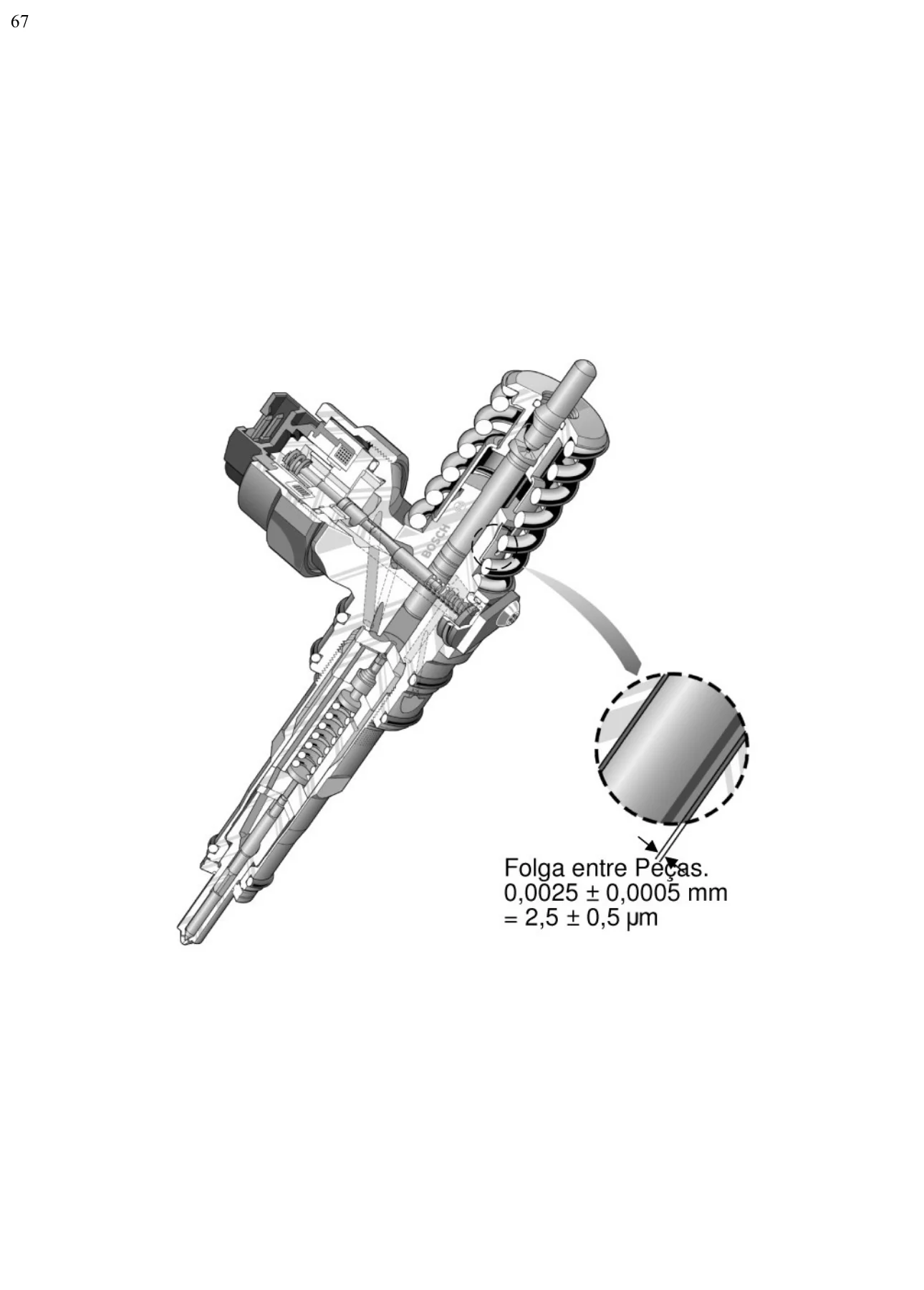
- Injector component clearances – 0.0025 +/- 0.0005 mm (2.5 +/- 0.5 um) between parts
- Manufacturing regions for CP pump and rail components
- Comparative table of magnitudes – pressure, injection time, injected quantity, component dimensions
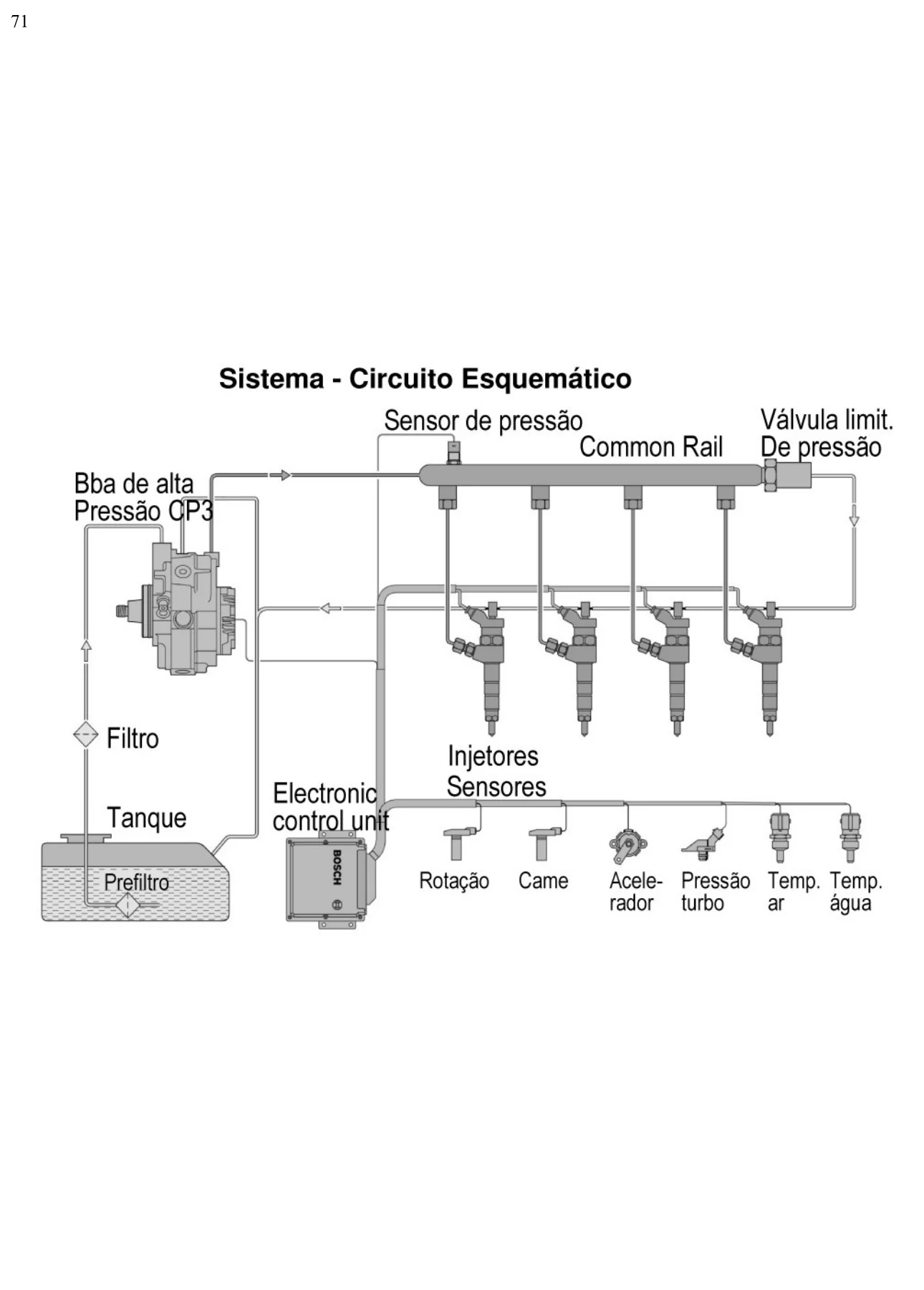
- Schematic circuit of the complete Common Rail system
- CP3 pump section with element disconnection valve, outlet valve, safety valve and high pressure regulator valve
- Pressure regulating valve identification and layout
- New pressure regulating valve description
- CP 3.2 and CP 3.4 with measuring unit and gear pump
- Types, piston diameters and lifts for CP 3.1 through CP 3.5
- Low pressure circuit with pre-filter, manual lift pump, gear pump, relief valve, filter with water separator and cascade overload valve
- Testing and measuring notes – inductance values, shim adjustment, sphere and bore dimensions, spring settings and surface roughness
- Euro emission standards comparison
- Injector verification tolerance of +/- 5 mm3 difference
Read together, these chapters give a technician the full working picture of a Bosch Common Rail system: how low pressure fuel is drawn, filtered and delivered to the high pressure pump; how the three-piston radial pump generates flow that becomes pressure only when restricted; how the rail stores and stabilises that pressure; how the regulating valve and pressure sensor keep the system inside its window; and how the solenoid injector uses a control chamber, restrictions and a spring-loaded needle to deliver a pre-injection and a main injection at the right moment. The reconditioning side of the course covers the practical bench work – removing and refitting the pressure valve, checking shaft seal seats for wear, testing injector sets with gradual valve excitation, measuring coil inductance with an inductance meter, using a vacuum gauge for injector tightness, and respecting the correct polarity on piezo injectors.
Specific values are carried through the text so the training can be put to use at the bench: feed pump pressure around 2.5 bar, lubrication and flow thresholds at 3 bar and 5 bar in the AKUV circuit, regulating valve limiting the rail about 100 bar above working pressure, CP1 and CP3 applications running 1350 to 1400 bar, CP2 at 1600 bar, injectors operating at approximately 80 V and 20 A, MPROP valve resistance around 3.2 ohm, and the injector verification tolerance of +/- 5 mm3. Pump designation examples are decoded element by element so a technician can read rotation direction, flow rate, element size and auxiliary component suffix straight off the nameplate.
What This Manual Lets You Do
With this Bosch Common Rail System technical training manual you can follow the fuel path from tank to injector and understand what each component is doing at each stage, diagnose pressure-related faults by reasoning through the regulating valve, rail sensor and MPROP interaction, carry out injector set assessment on a test bench using the documented excitation and pressure approach, measure coil condition with an inductance meter against the stated tolerance, inspect a high pressure pump for the wear points the course identifies, and correctly identify CP1, CP2, CP3 and CP 3.1 to CP 3.5 pump variants by their piston diameter and lift.
Getting the procedures and the values right is what separates a repair that holds from a comeback. A regulating valve fitted without attention to its sealing components, an injector tested without respecting the specified pressure, or a piezo injector connected with reversed polarity will all produce results that look like a different fault entirely. This course lays out the sequence, the pressures and the tolerances so the diagnosis points where the problem actually is.
IMAGES PREVIEW
Delivery is instant. The file is a downloadable PDF that opens on any computer, laptop, tablet or phone, needs no special software beyond a PDF reader, and can be printed page by page for the workshop bench or kept on a device for quick reference during a job. No shipping, no waiting for a parcel – the download link is available as soon as payment is confirmed.
Reviews
There are no reviews yet.