
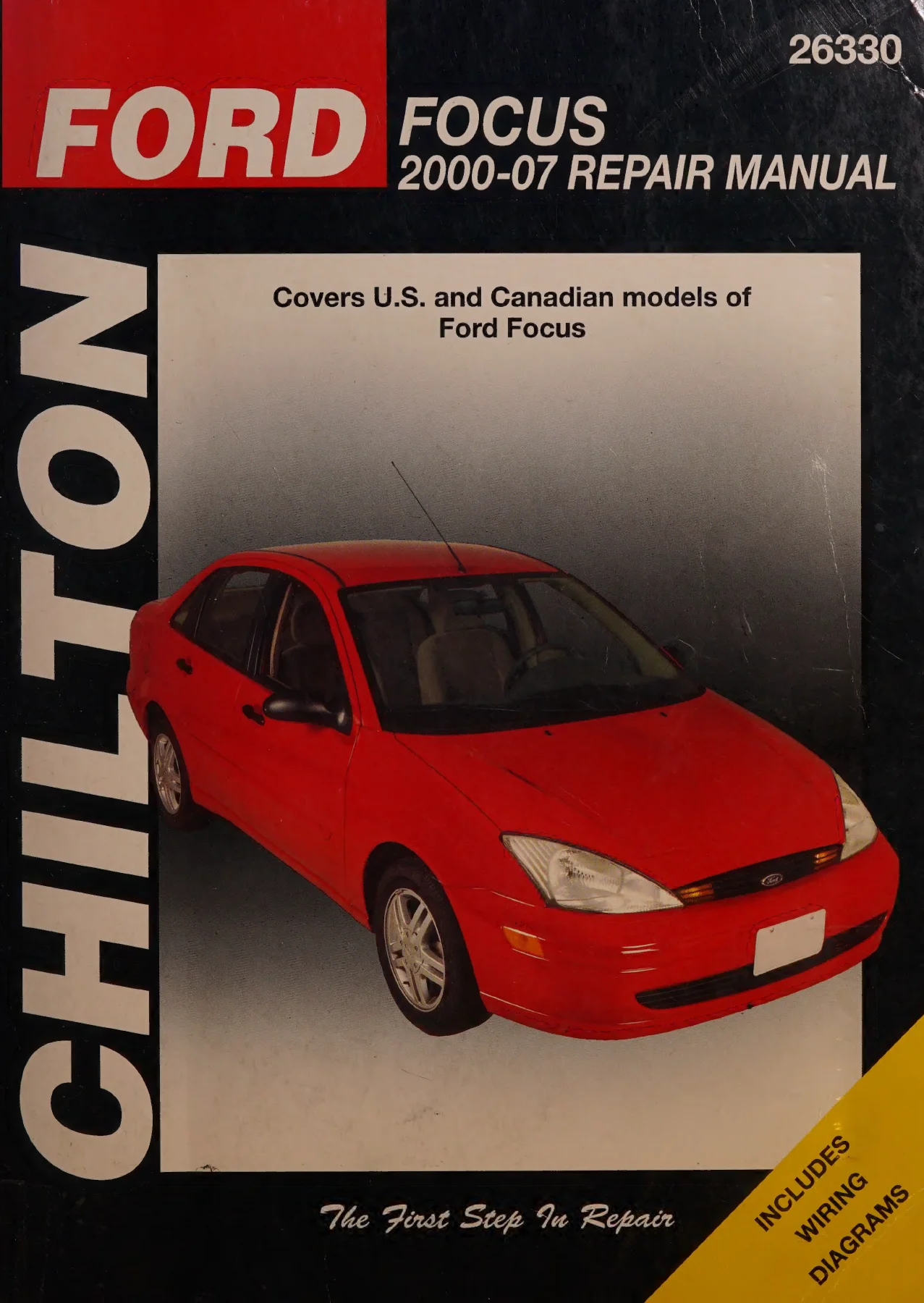
Ford Focus Repair Manual 2000-2007 for U.S. and Canadian Models
Original price was: $26.95.$15.95Current price is: $15.95.
repair manual for U.S. and Canadian Ford Focus models from 2000 through 2007, covering routine service, engine work, driveline, brakes, body, and chassis electrical systems, with wiring diagrams included.
Description
File Details
- Manual type: repair manual
- Brand / model: Ford Focus, U.S. and Canadian models
- Coverage years: 2000-07
- Author: Jay Storer
- Publisher: Automotive Books / North America, Inc.
- Publication number: 26330
- Copyright: 2002, 2005, 2010 North America, Inc.
- ISBN-10: 1-56392-785-3
- Library of Congress Control No.: 2010929266
- Language: English
- Page count: 468
- File format: PDF
What This Manual Covers
The Ford Focus Repair Manual 2000-2007 for U.S. and Canadian Models is written for owners and independent technicians working on first-generation Focus cars sold in the United States and Canada. The book describes a front-drive, unitized platform with four-wheel independent suspension and a transversely mounted four-cylinder engine driving the front wheels through unequal-length driveaxles. Body styles listed in the introduction include 2-door, 3-door, 4-door, 5-door, and station wagon. Steering is rack-and-pinion, mounted behind the engine, and available with power assist. Service brakes are discs at the front and drum-type at the rear with vacuum assist.
VIN engine codes printed in the identification chapter are P for the 2.0L SPI, 3 for the 2.0L Zetec, N for the 2005 and later 2.0L, and Z for the 2.3L. Model-year VIN digits run from 2 through 7 for 2002 through 2007. Transaxles treated in later chapters include the five-speed iB5 and MTX 75 manuals, the six-speed MT285, and the electronically controlled 4F27E four-speed automatic. The title page states plainly that the book does not include information specific to SVT and rear disc brake models, even though rear discs are noted as available on ZX5 and ST cars.
Chapters Covered
- Introductory pages: about this manual; introduction to the Ford Focus; vehicle identification numbers; booster battery (jump) starting; buying parts; maintenance techniques, tools and working facilities; jacking and towing; conversion factors; fraction/decimal/millimeter equivalents; automotive chemicals and lubricants; safety first; troubleshooting
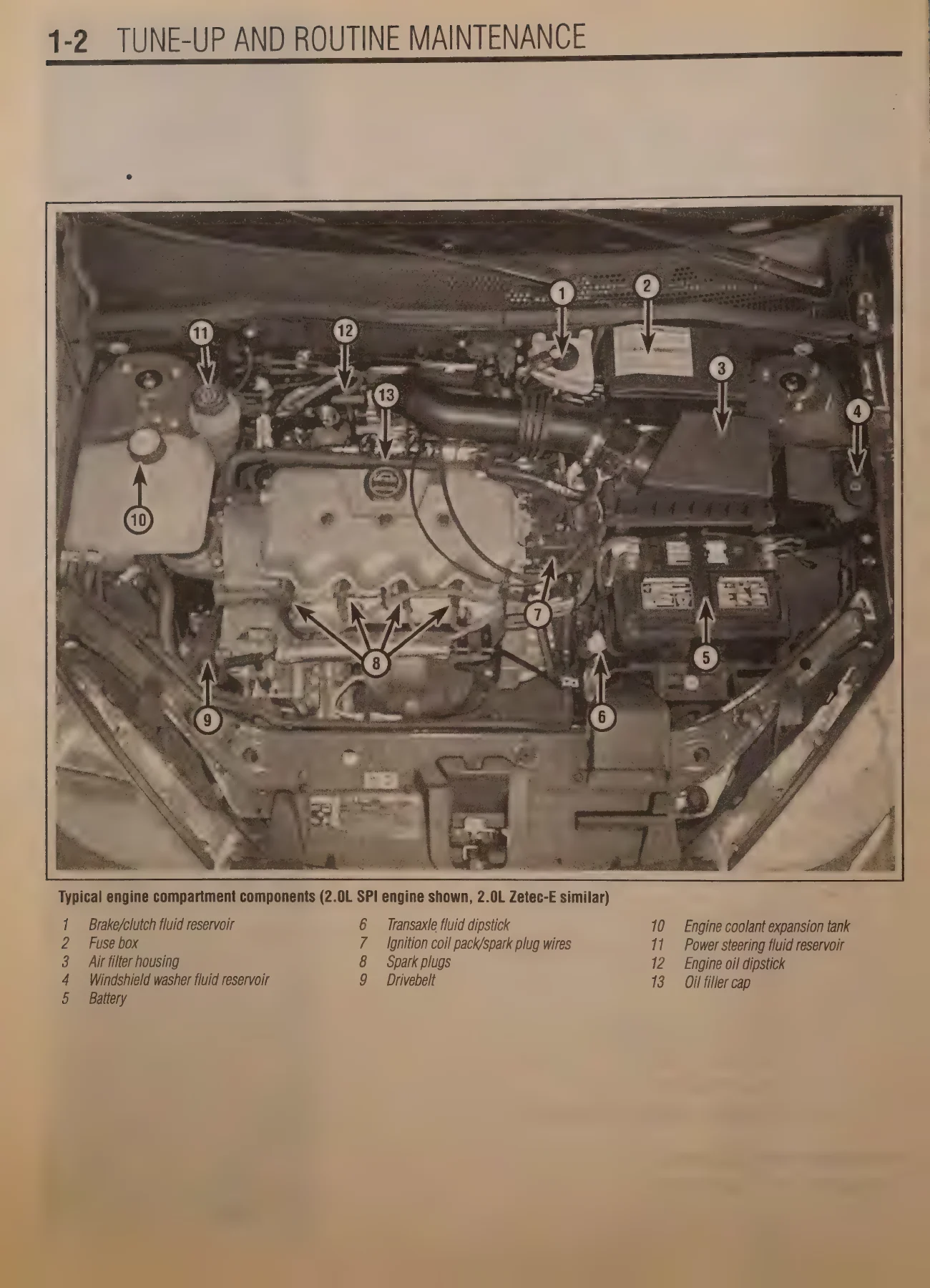
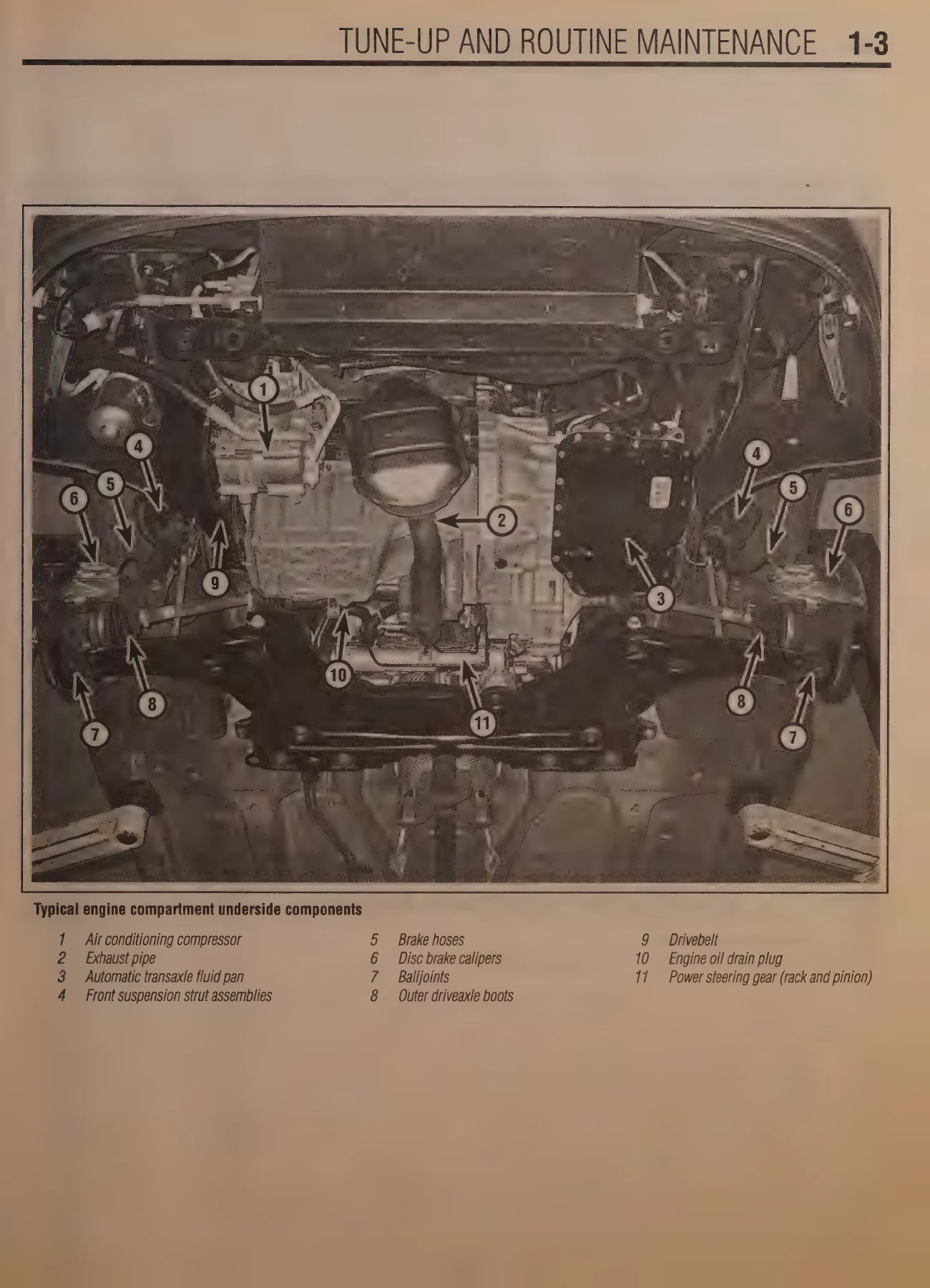
- Chapter 1 Tune-up and routine maintenance: maintenance schedule; fluid checks; tires; power steering and automatic transaxle fluid; oil and filter; clutch pedal travel; hoses and drivebelts; battery; wiper blades; air filter and crankcase emission filter; PCV valve; fuel, cooling and exhaust inspections; tire rotation; steering, suspension and brakes; cabin filter; spark plugs and wires; cooling system service; automatic transaxle fluid and filter; fuel filter
- Chapter 2A 2.0L SPI engine
- Chapter 2B 2.0L Zetec-E engine
- Chapter 2C 2.3L and 2005 2.0L engines
- Chapter 2D General engine overhaul procedures
- Chapter 3 Cooling, heating and air-conditioning systems
- Chapter 4A Fuel and exhaust systems
- Chapter 4B Emissions and engine control systems
- Chapter 5A Starting and charging systems
- Chapter 5B Ignition system
- Chapter 6 Clutch
- Chapter 7A Manual transaxle
- Chapter 7B Automatic transaxle
- Chapter 8 Driveaxles
- Chapter 9 Brakes
- Chapter 10 Suspension and steering systems
- Chapter 11 Body
- Chapter 12 Chassis electrical systems; wiring diagrams from 12-37
- Glossary and master index
Taken together, those chapters give a working map of the car rather than a single-system pamphlet. Identification data sit up front so parts and procedures can be matched to the VIN plate, certification label, and engine pad. Chapter 1 turns that map into a mileage-and-time plan. Engine Parts A through C isolate in-vehicle work for each four-cylinder family, while Part D gathers block and head overhaul steps that apply once the engine is on the stand. Later chapters walk the same car through climate control, sequential fuel injection, emissions hardware, starting and charging, distributorless ignition, clutch hydraulics, both manual and automatic gearboxes, CV joints, foundation brakes, strut and trailing-arm suspension, body panels and trim, and chassis electrical diagnosis ending in the wiring diagrams.
IMAGES PREVIEW


Maintenance Schedule and Capacities
Chapter 1 of the Ford Focus Repair Manual 2000-2007 for U.S. and Canadian Models prints a Focus-specific schedule that shortens many factory intervals so home mechanics change fluids before they are worn out. Weekly or 250-mile checks cover engine oil, coolant, washer fluid, brake fluid, and tire condition and pressure. At 3,000 miles or 3 months the list adds power steering fluid, automatic transaxle fluid, and an oil-and-filter change. Six-month work brings clutch pedal travel, underhood hoses, drivebelts, and battery service. The 12,000-mile visit expands to wiper blades, air filter, crankcase emission filter where fitted, PCV, fuel system, cooling and exhaust inspections, tire rotation, steering and suspension, brakes, parking-brake linkage, clutch hydraulics, and manual transaxle lubricant. Cabin filters on models through 2004 are called out at 15,000 miles. Thirty-thousand-mile service includes non-platinum spark plugs, plug wires if equipped, a cooling-system drain and refill, and automatic transaxle fluid and filter. At 60,000 miles the schedule points to timing-belt inspection or replacement in Chapter 2, PCV replacement, platinum spark plugs, and the underbody fuel filter.
The same chapter lists lubricant types and fill quantities current when the book was compiled. Engine oil is API certified for gasoline engines, 5W-30 on Zetec-E 2.0L models through 2003 and 5W-20 on the remaining engines. Capacity with filter is 4.0 quarts on the 2.0L SPI and 4.5 quarts on the 2.0L Zetec-E, SVT, and 2.3L engines. Brake fluid is DOT 3 or DOT 4. Power steering uses MERCON automatic transmission fluid. The automatic transaxle takes MERCON V, about 3.1 quarts on a drain-and-refill and 6.7 to 6.9 quarts dry. Manual boxes use synthetic manual transaxle fluid in the iB5 and MT285 and, depending on year, MERCON V or synthetic fluid in the MTX-75, at about 2.1 quarts except 1.8 quarts in the MT285. Coolant is a 50/50 ethylene glycol mix: 6.1 quarts on 2000-2004 2.0L cars, 7.2 quarts on 2005-and-later 2.0L cars, and 7.6 quarts on all 2.3L engines. Spark-plug applications and gaps, firing order 1-3-4-2, wheel-lug torques (63 ft-lbs for 2000, 94 ft-lbs from 2001 on), and drain-plug torques sit on the same specification pages.
Engines, Cooling and Fuel
Chapter 2A treats the inline four-cylinder SOHC 2.0L SPI (VIN P) as a 2.0-liter, 121-cubic-inch engine with a 3.34-inch bore and 3.46-inch stroke. Camshaft, lifter, and head figures are tabulated, and torque-to-yield head-bolt stages are spelled out so a reused bolt is not mistaken for a new one. Chapter 2B covers the four-cylinder in-line DOHC 2.0L Zetec-E (VIN 3) and records Duratec SVT VIN 5 in the specification block while reminding readers that SVT-specific content is outside the book’s stated scope. Displacement is 1989 cc, with cold valve clearances of 0.004 to 0.007 inch intake and 0.011 to 0.013 inch exhaust and oil-pressure bands at idle and 4000 rpm. Chapter 2C handles the later chain-driven family: 2.0L VIN N at 1989 cc and 2.3L VIN Z at 2300 cc (140 cubic inches), both with a 3.445-inch bore and different strokes. Overhaul Part D adds piston and bore class sizes for 2.0L engines through 2004, valve-guide play, gasket-surface distortion limits, Plastigage bearing checks, and the first-start and break-in sequence after a rebuild, including disable steps for ignition and fuel-pump fuse 12.
Cooling and A/C work in Chapter 3 includes thermostat opening temperatures by engine family, an 18 psi pressure-test target, R134a refrigerant, and 200 cc of refrigerant oil when refilling. Fuel and exhaust Chapter 4A describes Sequential Electronic Fuel Injection, an 87-octane minimum, idle speed held by the engine-management system at 700 ± 30 rpm with no adjustment, key-on fuel pressure of 35 to 65 psi, and typical sensor and injector resistances used as diagnostic guides. Emissions and engine-control material in Chapter 4B supports CHECK ENGINE diagnosis referenced from the front troubleshooting list.
Driveline, Brakes, Suspension and Electrical
Clutch Chapter 6 separates iB5 cars from MTX 75 cars, lists a 0.275-inch lining wear limit and a non-adjustable 5.25-inch pedal stroke, and gives cover-to-flywheel torque. Manual transaxle Chapter 7A prints gear and final-drive ratios for iB5, MTX 75, and MTX 285 boxes and covers drain-and-fill plus unit removal. Automatic Chapter 7B identifies the 4F27E four-speed with lock-up in 3rd and 4th and typical ratios from 2.816:1 in first to 0.726:1 in fourth; internal overhaul is directed to a specialist. Driveaxle Chapter 8 includes CV-joint grease quantities and hub-nut torques that change by model year. Brake Chapter 9 documents ventilated front discs with a sliding single-piston caliper, rear drum hardware, lining and disc limits, and bleeding practice. Suspension and steering Chapter 10 covers struts, stabilizer bars, trailing-arm layout, power-steering fluid service, and alignment-related fasteners, with tire size and pressure referred to the door-jamb decal.
Body Chapter 11 addresses panels, glass, interior, seats, and seat belts. Chassis electrical Chapter 12 walks through battery, lighting, wipers, fuses and relays, and component removal, then explains how to use the wiring diagrams that begin at page 12-37. The book notes that not every year-by-year diagram could be printed, so the included sheets are used together with the fuse and relay information in the chapter specifications. Front-matter troubleshooting charts point from no-start and charging complaints through clutch, transaxle, driveaxle, brake, and steering symptoms back to the matching chapter.
How the Book Is Organized for Shop Use
Each numbered section refers to the illustrations that belong to that procedure. Caption numbers such as 3.2 mean Section 3, Step 2. Left and right are from the driver’s seat. Notes, Cautions, and Warnings flag extra information, parts that can be damaged, and steps that can cause injury. Fastener grades, torque sequences, gasket-surface care, hose removal, thread repair, and jacking points (rocker-panel flange for the supplied jack; front or rear crossmember for a floor jack, center-only at the rear) are collected in the introductory pages so they do not have to be restated in every chapter. Safety pages cover jackstands, airbags, asbestos-containing friction materials, fuel fire risk, exhaust fumes, battery hydrogen, and ignition secondary voltage.
Use This Manual on the Car You Have
The Ford Focus Repair Manual 2000-2007 for U.S. and Canadian Models supports the jobs a Focus owner actually faces: weekly fluid and tire checks, oil and filter service, spark plugs and filters, timing-belt work on the belt-driven engines, cooling-system flushes, fuel-filter replacement, clutch and driveaxle service, pad and shoe replacement, strut and steering repairs, and electrical tracing with the included diagrams. Matching torque values, valve clearances, oil-pressure bands, fuel-pressure ranges, and fluid capacities to the engine and transaxle actually in the car is what keeps a head from warping, a belt from jumping time, or a gearbox from running dry. This listing is an instant PDF download after payment. There is no printed book to ship. Open the file on a phone, tablet, or shop computer and print the pages you need for the lift or the driveway.
Reviews
There are no reviews yet.