
Continental S-20 & S-200 Series High Tension Magneto Service Support Manual – Bendix S6LSC-204T PDF
Original price was: $39.95.$23.95Current price is: $23.95.
The complete Continental Ignition Systems service, testing, overhaul and illustrated parts manual for S-20 and S-200 Series high tension magnetos, covering four and six cylinder aircraft engine magnetos including the short cover (SC) models such as the S6LSC-204T.
Description
Continental S-20 & S-200 Series High Tension Magneto Service Support Manual
The Continental S-20 & S-200 Series High Tension Magneto Service Support Manual is the full service, testing, overhaul and illustrated parts reference for Continental Ignition Systems S-20 and S-200 Series high tension magnetos. It covers four and six cylinder aircraft engine magnetos in single and dual contact assembly configurations, including the short cover (SC) versions, and the technical portions of the document are approved by the FAA. The manual is laid out so it can be inserted as Chapter 74-10 of applicable GAMA format publications, and every maintenance procedure inside it has been shop verified by the manufacturer. Whether you are setting magneto-to-engine timing, inspecting an impulse coupling, rebuilding a distributor block, testing a pressurized magneto for leakage or tracking down a superseded part number, this is the document the job gets worked from.
File Details
- Manual type: Aircraft magneto service support manual covering maintenance, testing, troubleshooting, overhaul, repair, assembly and illustrated parts
- Brand: Continental Motors, Inc. – Continental Ignition Systems
- Equipment covered: S-20 and S-200 Series high tension magnetos, including short cover (SC) models
- Language: English
- Page count: 140 pages
- File format: PDF
- Publication date: 31 August 2011
- Approval: Technical portions approved by the FAA
Chapters Covered
- 1. Introduction and Specifications – General; Specifications
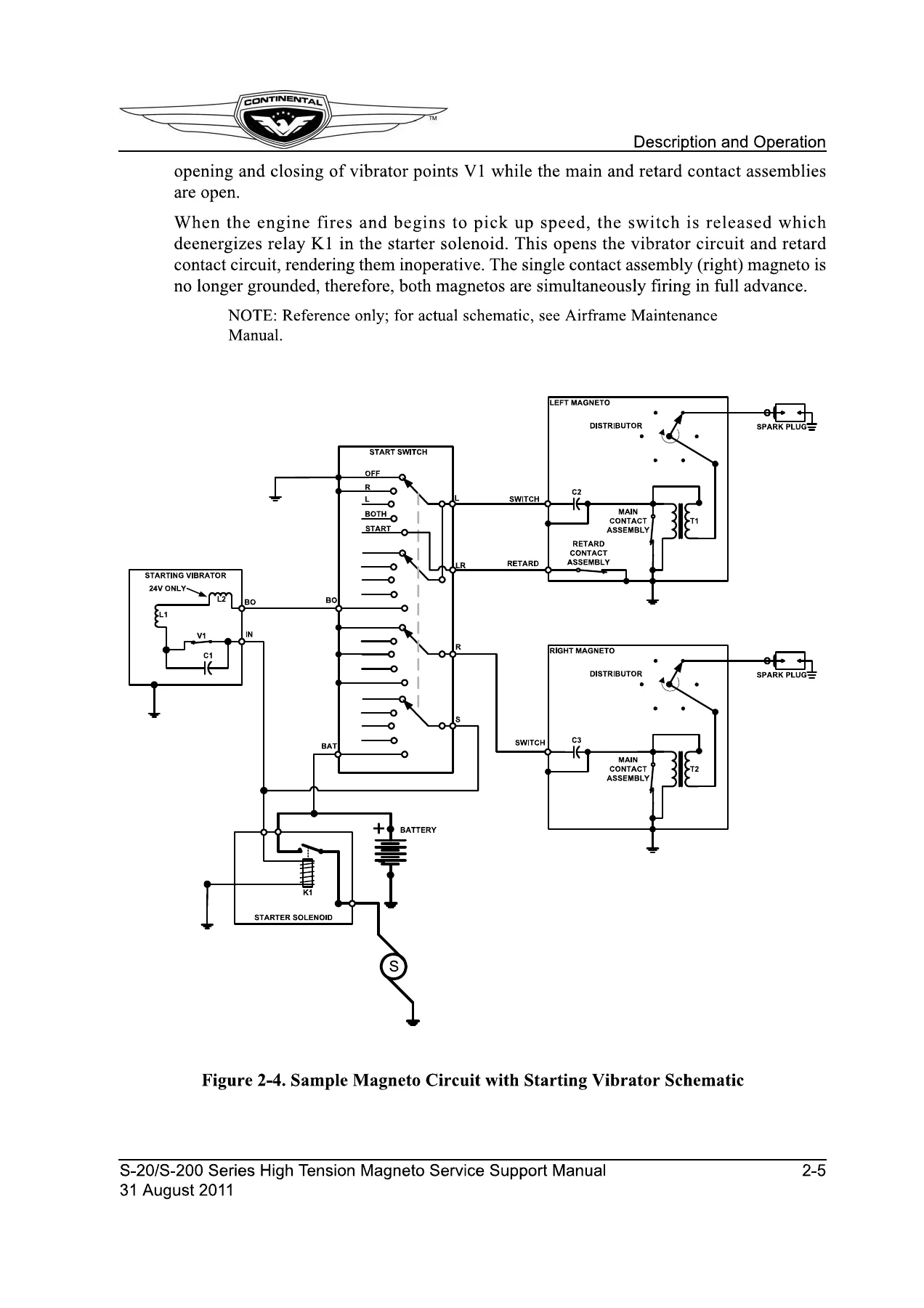
- 2. Description and Operation – General; Detailed Description; Maintenance and Overhaul Periods; S-20 and S-200 Magneto Operation; General Theory; Operation of S-200 Magneto System with Starting Vibrator; Serial Numbers; Storage
- 3. Testing & Troubleshooting – General; Post Overhaul Testing; Hot Magneto Test; Troubleshooting
- 4. Disassembly – General; Initial Inspection Disassembly; General Overhaul Disassembly; Drive Plate and Front End Hardware Disassembly; Impulse Coupling Disassembly; Rotating Magnet (Rotor) Disassembly; Housing Disassembly
- 5. Cleaning – General; Detailed Magneto Cleaning Procedures
- 6. Periodic Maintenance – General; Contact Assemblies; Impulse Couplings; 500 Hour Inspection
- 7. General Overhaul – Magneto Disassembly; Distributor Gear Inspection; Cam, Washer and Pinion Gear Inspection; Distributor Block Inspection; Capacitor Inspection; Coil and Clamp Inspection; Impulse Coupling and Related Component Inspection; Magneto Housing and Cover Inspection; Rotating Magnet Inspection; Sleeve Bearing Inspection; Contact Assembly Inspection
- 8. Repair – General; Coil Pad Repair
- 9. Assembly – Bearing, Pinion Gear and Cam Assembly; Magneto Coil Installation; Distributor Block and Gear Assembly; Rotor Installation; Contact Assembly Installation; Capacitor Installation; Oil Seal and Oil Slinger Installation; Impulse Coupling Assembly and Installation; Magneto Internal Timing; Cover Installation; Plug Installation; Data Plate Installation; Final Assembly; Post-Overhaul Test; Magneto Installation on Engine
- 10. Special Tools, Equipment and Supplies – Special Tool and Consumable Supply List; Illustrated Special Tools and Fixtures
- 11. Illustrated Parts List – Equipment Covered; Superseded, Discontinued and Interchangeable Magneto; Illustrated Parts Lists by Magneto Series; Switch Terminal Kits; Short Cover Conversion Kits; Numerical Parts List
Read together, those eleven chapters walk a technician from identifying which magneto is on the bench right through to signing off the installation. The manual explains how the rotating magnet, coil, cam, contact assemblies and distributor gear work together to produce a sequenced high voltage pulse, then hands over the actual measurements, cleaning rules, inspection criteria, torque values and part numbers needed to bring a unit back to specification. It is not a general theory book – it is a bench manual, with the drawings and index numbers referenced throughout the procedures.
Specifications and Limits You Work To
The Table of Leading Particulars on the specification pages gives the numbers a magneto job hinges on, and the maintenance chapters repeat them at the point of use:
- Coming-in speed: 150 RPM
- Spark gap setting: 0.157 in. (4 mm)
- Contact point clearance, main, retard and uninsulated contacts: 0.018 +/- 0.006 in.
- Tachometer insulated contacts: 0.019 +/- 0.003 in.
- “E” gap: 10 degrees +/- 4 degrees
- Pressurized magneto leakage: 2.4 to 11.8 SCFH at 2.9 to 3.1 psig
- Capacitor: 0.375 microfarads +/- 10%, 1.0 ohm feed through maximum, 0.4 microampere leakage maximum at 400 VDC
- Coil resistance: primary 0.2 to 0.6 ohms, secondary 12,000 to 16,000 ohms
- Cam washer thickness: 0.095 +/- 0.010 in.
- Rotor bearing end play: 0.0005 to 0.0015 in., no perceptible radial play
- Torque values for cover screws, cam screw, coil core clamps, contact assembly screws, drive shaft nut, distributor block screws and housing screws
- Specified lubricants by part number, including Magneto Grease 10-400550-1, Breaker Felt Lubricant 10-86527, Distributor Block Lubricant 10-391200 and Distributor Block Coating 10-391400
Periodic Maintenance, Impulse Couplings and the Hot Magneto Test
The periodic maintenance chapter sets out the inspection rhythm the magneto lives by. Magnetos fitted with snap-ring impulse couplings are inspected at the first 500 hours in service and every 500 hours after that; units with riveted impulse couplings are inspected at the first 100 hours and every 100 hours. All magnetos get the full 500 hour inspection, and the manual states plainly that a magneto must be overhauled or replaced five years after the date of manufacture or last overhaul, or four years after the date placed in service, whichever comes first, regardless of accumulated operating hours.
The 500 hour inspection procedure itself runs through distributor block treatment, distributor gear and carbon brush measurement, coil and coil outlet tab inspection, contact assembly checks, magneto internal timing with the rotor holding tool and timing kit, and cover and capacitor inspection before the unit goes back on the engine. Impulse coupling inspection is equally detailed, with flyweight-to-axle wear checks, the heel inspection that signals immediate rejection of a cam assembly, drive lug and trip dog wear limits, and the soft flyweight file test used to confirm proper heat treatment.
The testing chapter covers the post overhaul test on the magneto test stand, including the coming-in speed check, high speed run, impulse coupling engagement and disengagement speeds, rotor end play measurement and the flow rate test for pressurized magnetos. Alongside it sits the Hot Magneto Test procedure, which describes the magneto RPM drop-off check performed before shutdown and before any maintenance, and explains what it means when a magneto is selected and no RPM drop appears. A troubleshooting chart ties symptoms such as hard starting, no output from the vibrator-magneto combination, retard points opening too late and improper magneto-to-engine timing back to their probable causes and the test that confirms each one.
Service Documents Referenced
The manual states that the relevant technical content of the service documents applying to S-20 and S-200 Series magneto ignition systems has been incorporated into it, and it lists the bulletin numbers and titles it draws on. That list runs from the early shouldered magneto drive shaft bushing and ignition switch bulletins through inspection of impulse coupling cam assemblies, replacement of breaker assemblies with specific batch codes, Gold Seal harness bulletins, capacitor replacement and inspection bulletins, the two wire magneto tachometer breaker contact assembly bulletin, and inspection of the ignition harness attachment plate. Any service bulletin issued after this manual supplements or supersedes the information inside it, so the document tells you exactly where it stands in the chain of Continental Motors publications.
Illustrated Parts, Superseded Numbers and Short Cover Conversions
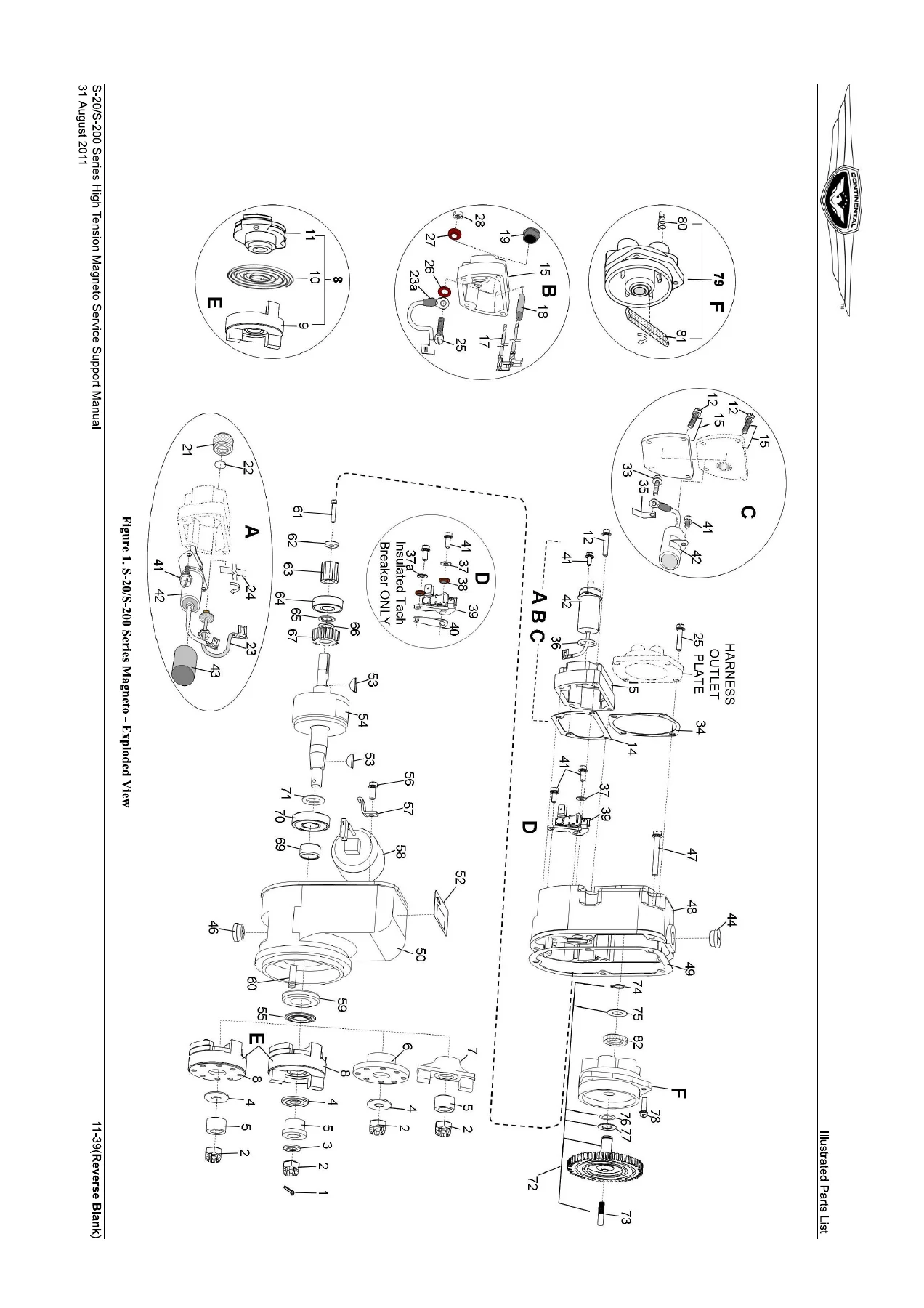
The illustrated parts section is where this manual earns its keep on older airframes. It lists the equipment covered by magneto part number and model number with the degrees of lag or retard and the applicable terminal kit, then gives a superseded, discontinued and interchangeable magneto table so an obsolete part number can be matched to its current replacement or to the correct parts list for maintenance. Separate illustrated parts lists are provided for the S4LN, S4RN-20 and -21, the S6LN, S6RN-20, -21 and -23, the S6LN, S6RN-25 and -25P, the S4LN, S4RN-200, -201, -204 and -205, the S4LSC and S4RSC short cover family and the S6LSC and S6RSC short cover family. Short cover conversion kits are tabulated with the original magneto part number, the kit part number and the converted magneto part number, and the numerical parts list at the back indexes every part number to its description and figure index. Field notes for magnetized components, cotter pin installation, anti-seize application on the magneto shaft taper and the crack inspection that follows nut torque are all carried in the assembly procedures.
Put This Magneto Manual to Work
This is the reference that lets a technician service, test, time and overhaul an S-20 or S-200 Series magneto without guessing. It supports the jobs that matter most on these ignition systems: verifying magneto-to-engine timing, running the magneto drop check and hot magneto test, inspecting and rejecting impulse couplings and flyweights, servicing distributor blocks and bushings, testing capacitors and coils against published values, repairing a worn coil pad, shimming rotor bearings to correct end play, setting main, retard and tachometer contact clearances, performing the internal timing procedure with the rotor holding tool and timing kit, testing pressurized magnetos for leakage, and installing the finished magneto back on the engine.
Correct procedures and correct specifications are what separate a magneto that fires reliably through its operating range from one that quits at altitude. The torque values, clearances, acceptance criteria and replacement rules in this manual are the difference between a repair that holds and a repair that comes back. Once you have the PDF, the information is on hand the moment the cowling comes off – no shipping, no waiting on a paper copy to arrive, and the file opens on a laptop, tablet or phone in the hangar and prints cleanly for the bench. Add it to your library and work from the same document the procedures were verified against.
IMAGES PREVIEW
Reviews
There are no reviews yet.