
John Deere 240D LCR Hydraulic Excavator Operator Manual TM 5-3805-294-10
Original price was: $49.95.$29.95Current price is: $29.95.
Complete 534-page operator-level technical manual for the John Deere 240D LCR Hydraulic Excavator Type 1 (HYEX), covering controls, operating procedures, attachments, troubleshooting, PMCS, operator maintenance, cold-weather operation, and transportability.
Description
John Deere 240D LCR Hydraulic Excavator Operator Manual TM 5-3805-294-10
The John Deere 240D LCR Hydraulic Excavator Operator Manual TM 5-3805-294-10 is a detailed operator-level technical reference for the Hydraulic Excavator Type 1 (HYEX), NSN 3805-01-573-0677. Issued by the Department of the Army on 07 March 2011, this manual covers safe operation, machine controls, attachment use, troubleshooting, preventive maintenance checks and services, operator-performed maintenance, and transportability. It is especially useful where the machine is configured with the hydraulic thumb, quick latch, deep-dig equipment, breaker, compactor, Crush-All, barrier grapple, and hydraulic hose reel described in the manual.
This is not a generic excavator overview. The content is written around the military HYEX Type 1 configuration of the John Deere 240D LCR, including Army-specific equipment and procedures such as the rifle mount, vandal protection kit, Components of End Item and Basic Issue Items, special purpose kits, military transportability, and mission-oriented PMCS criteria. Buyers working with a civilian machine should compare their machine configuration with the systems and attachments shown in the manual.
File Details
- Manual type: Operator’s Manual / Technical Manual
- Brand and model: John Deere 240D LCR; Hydraulic Excavator Type 1 (HYEX)
- Document number: TM 5-3805-294-10
- NSN: 3805-01-573-0677
- Issue: Original
- Date: 07 March 2011
- Language: English
- Pages: 534
- File format: PDF
Machine and System Coverage
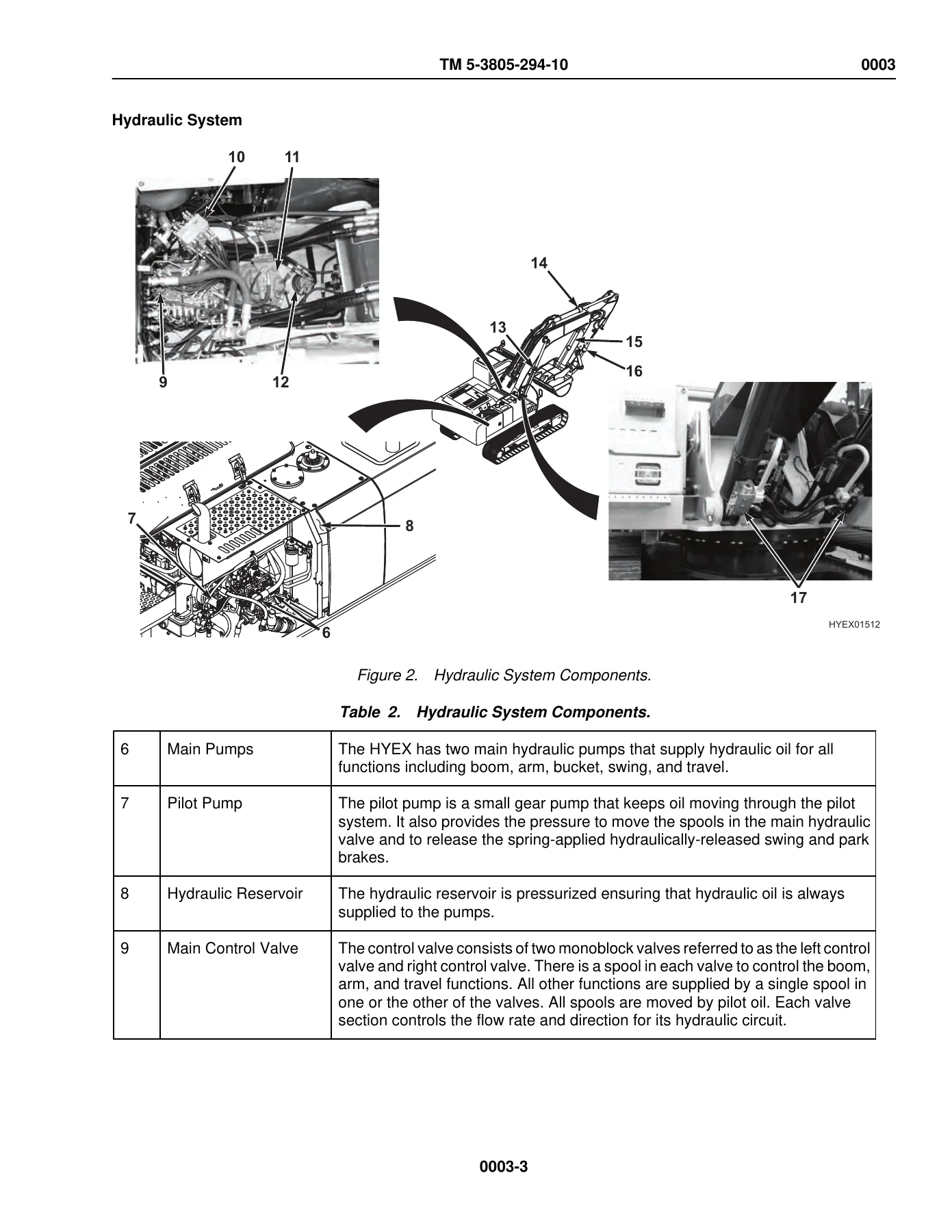
The manual identifies the HYEX as a diesel-powered, crawler-mounted hydraulic excavator and explains the major systems that make the machine work. Its theory-of-operation material covers the John Deere 6068H PowerTech Plus 6.8L six-cylinder diesel engine, electronic control unit, high-pressure common-rail fuel system, cooling package, electrical system, hydraulic pumps, pilot system, main control valve, swing system, travel motors, cylinders, and load-holding valves. It also explains the two 12-volt batteries used in series for 24-volt starting power and the 28-volt, 80-amp alternator.
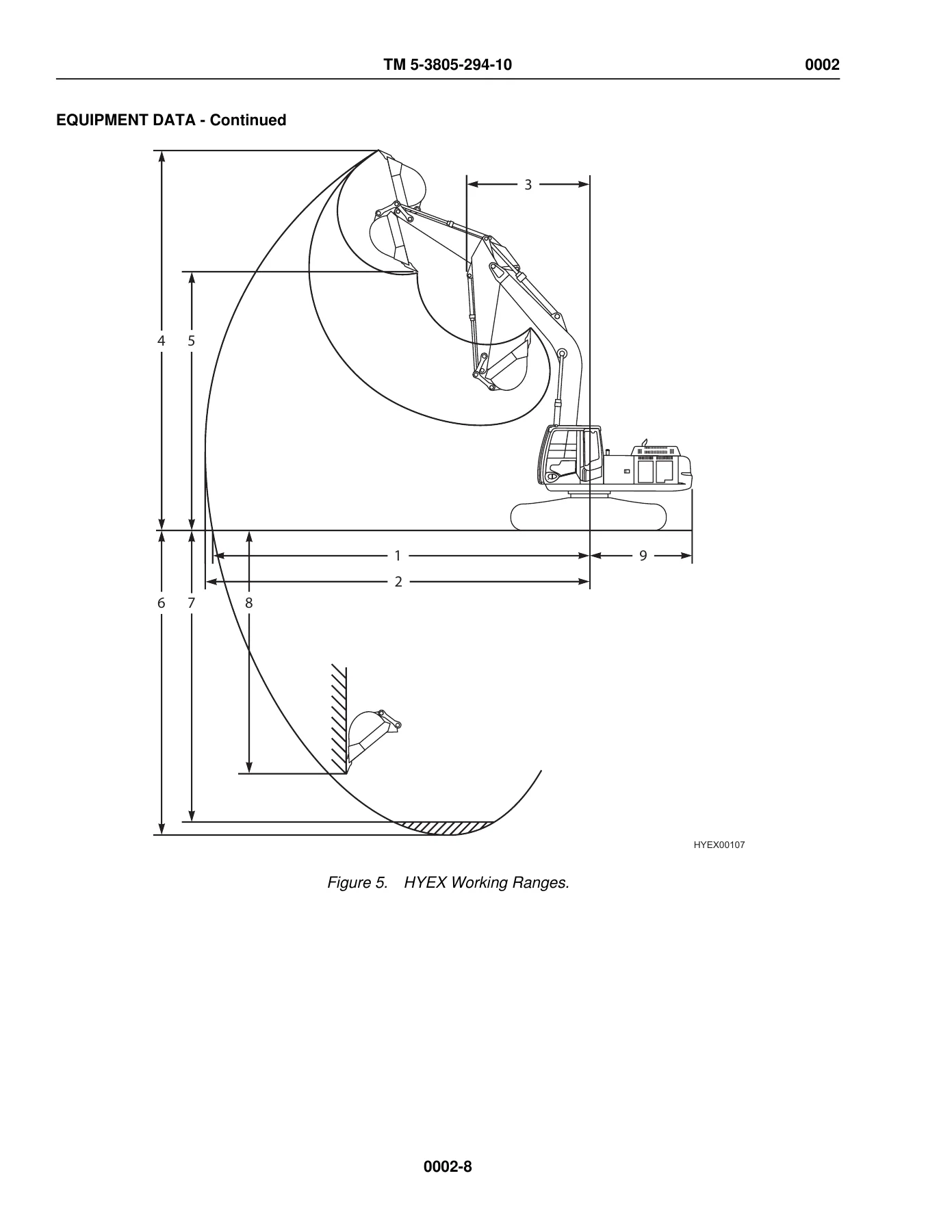
Equipment data is included for capacities, dimensions, operating ranges, lift capacities, attachment weights, and machine configuration. Examples include a 132 gal (500 L) fuel tank, 64.2 gal (243 L) hydraulic reservoir, 74 gal (280 L) hydraulic system, 66,000 lb (29937 kg) listed machine shipping weight in the equipment-data section, maximum digging reach of 35 ft 6 in. (10810 mm), and maximum digging depth of 24 ft 7 in. (7490 mm). The deep digging attachment arm is described as a 20 ft (6.09 m) attachment that enables digging to a depth of 40 ft (12.19 m) when used with the specified configuration.
Attachment Operation and Work Techniques
A major strength of this John Deere 240D LCR operator manual is its extensive attachment coverage. The manual describes the heavy-duty and ditch-cleaning buckets, hydraulic thumb, deep-dig arm, hydraulic impact breaker, hydraulic driven plate compactor, Crush-All hydraulic crushing attachment, barrier grapple, and hydraulic hose reel. Procedures show how to select attachment modes on the monitor, use the quick latch, connect auxiliary hydraulic lines, install and remove supported attachments, and operate them within the stated limitations.
The operating-techniques material goes well beyond basic controls. It covers machine leveling, arm digging, bucket digging, spoil-pile planning, trenching, cleaning a cave-in, trenching on a slope, straight-line trenching, backfilling, and truck loading. Separate procedures address lifting with the HYEX, moving on and off an embankment, steep or slippery slopes, fording, cold-weather operation, and emergency or disabled-machine conditions.
Chapters Covered
- Chapter 1 – Operator General Information
- General information and scope
- Equipment description and data
- Machine characteristics, capabilities, specifications, working ranges, lift capacities, and weights
- Theory of operation for engine, ECU, electrical, hydraulic, powertrain, fuel, and cooling systems
- Chapter 2 – Operator Instructions
- Operator controls and indicators
- Monitor, warning indicators, and alarms
- Operator seat adjustment, engine starting, machine travel, steering, parking, and shutdown
- Windows, secondary and emergency exits, rifle mount, and monitor operation
- Bucket removal and installation and quick-latch procedures
- Lifting procedures and excavating techniques
- Hydraulic thumb operation
- Attachment selection on the monitor
- Crush-All installation, operation, jam clearing, and removal
- Impact breaker installation, tool installation, operation, tool removal, and attachment removal
- Compactor installation, operation, and removal
- Barrier grapple operation
- Deep dig arm operation
- Moving on and off embankments
- Vandal protection kit installation and removal
- Hydraulic hose reel and hydraulic tool connection
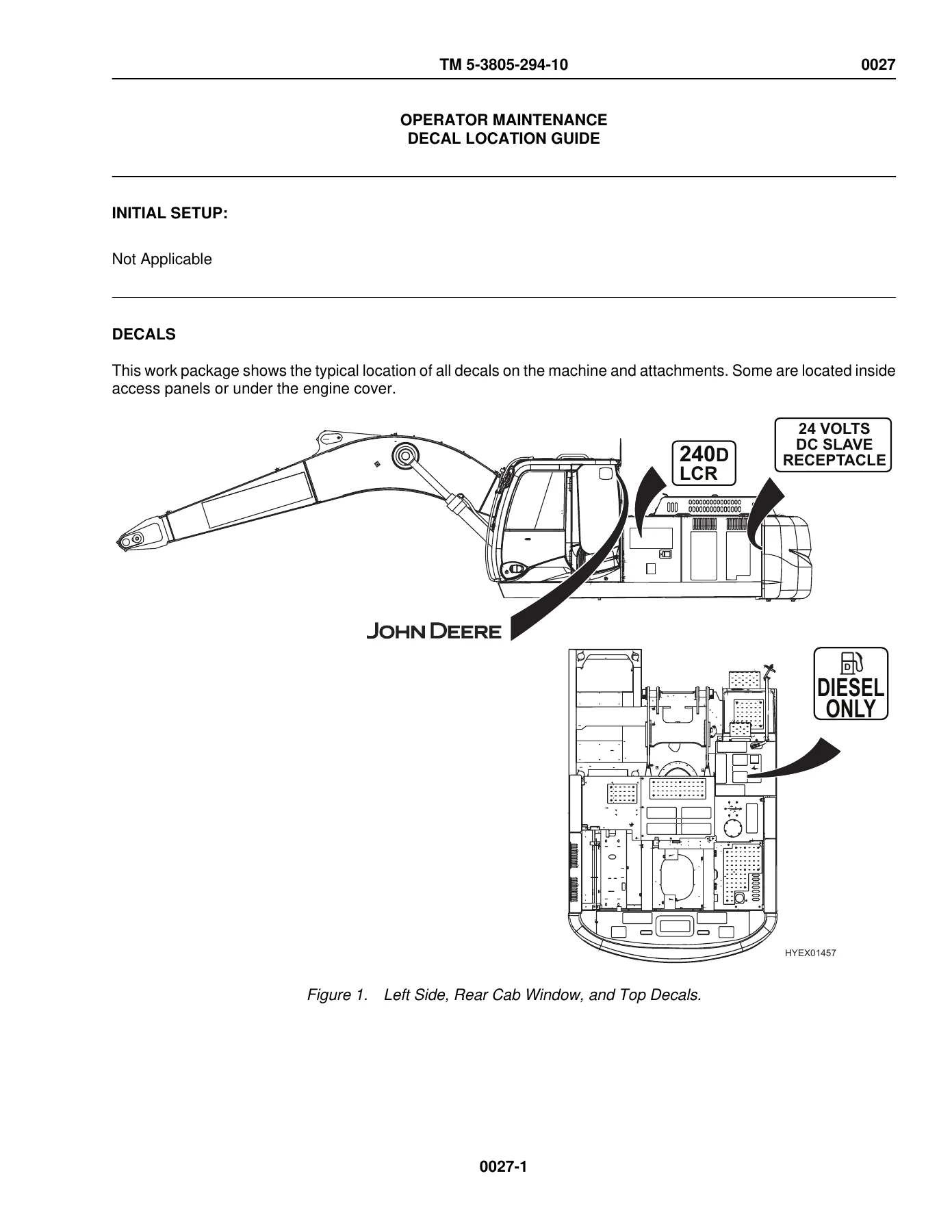
- Decal location guide
- Towing and lowering the boom without hydraulic pressure
- Cold-weather operation from 32°F to 5°F (0°C to -15°C) and at 5°F (-15°C) or colder
- Slave starting, coolant heater operation, steep/slippery slope operation, and fording
- Chapter 3 – Operator Troubleshooting Procedures
- Troubleshooting symptom index
- Travel alarm, wiper/washer, lighting, horn, and air-conditioning faults
- Engine starting, cranking, performance, fuel/oil consumption, idle, power, oil-pressure, temperature, and exhaust-smoke faults
- Hydraulic function, power-dig, hydraulic-oil temperature/foaming, swing, and travel faults
- Quick latch, compactor, breaker, Crush-All, barrier grapple, deep dig, and hydraulic hose reel faults
- Chapter 4 – Operator Preventive Maintenance Checks and Services
- PMCS introduction and readiness criteria
- Before, during, after-operation, and scheduled operator checks and services
- Inspection points for fluids, filters, tracks, attachments, belts, cooling components, controls, and safety-related items
- Chapter 5 – Operator Maintenance Instructions
- General operator-level maintenance practices
- Engine oil and hydraulic oil sampling
- Track sag check and track tension adjustment
- Cab fuse replacement and bucket teeth replacement
- Fuel filter and water-separator service
- Primary and secondary air-cleaner service
- Hydraulic reservoir service
- Fresh-air and air-conditioner/heater filter service
- Fuel-tank water and sediment draining
- Crush-All discharge-size adjustment
- Maintenance after fording
- Chapter 6 – Operator Supporting Information
- References
- Components of End Item and Basic Issue Items
- Additional Authorization List
- Expendable and durable items
- Special Purpose Kits
- Troubleshooting notes
- HYEX transportability instructions for highway, rail, marine, C-5, and C-17 transport
IMAGES PREVIEW

Taken together, these chapters give an operator or crew member a single reference for understanding the machine, preparing it for operation, using standard and special-purpose attachments, recognizing abnormal conditions, carrying out prescribed checks, and completing the operator-level service tasks assigned in the manual. The work-package structure also makes it practical to move from a symptom or task to the corresponding procedure, setup requirements, warnings, illustrations, and corrective actions.
Maintenance and Troubleshooting Depth
The troubleshooting section is organized around real operating symptoms rather than only component descriptions. It addresses issues such as an engine that cranks but does not start, an engine that will not crank, poor running, excessive fuel or oil consumption, low engine oil pressure, high coolant temperature, excessive exhaust smoke, loss or weakness of hydraulic functions, hydraulic oil overheating or foaming, swing and travel problems, and attachment malfunctions. The attachment troubleshooting coverage includes the quick latch, compactor, breaker, Crush-All, barrier grapple, deep dig system, and hydraulic hose reel.
The PMCS and operator-maintenance portions support routine inspection and service work with procedures for checking machine condition, track sag, filters, belts, fluids, attachment condition, and other readiness items. Operator procedures include fuel-system draining and filter service, air-cleaner service, hydraulic-reservoir service, cab fuse replacement, bucket-tooth replacement, oil sampling, track-tension adjustment, and post-fording maintenance. This helps keep operation, fault isolation, and operator-level upkeep tied to the same machine-specific reference.
Get the John Deere 240D LCR Operator Manual Instantly
The John Deere 240D LCR Hydraulic Excavator Operator Manual TM 5-3805-294-10 supports day-to-day machine operation, digging and lifting tasks, attachment setup and use, operator troubleshooting, PMCS inspections, and the operator maintenance procedures documented for the HYEX Type 1 configuration. Having the specified operating sequences, warnings, capacities, working ranges, control descriptions, attachment instructions, and troubleshooting steps available together helps operators and technicians follow the procedures and limits published for this machine rather than relying on memory or generic excavator information.
Your purchase is delivered as an instant PDF download after payment. There is no physical book and no shipping delay. The manual can be opened on compatible phones, tablets, laptops, and desktop computers, and pages can be printed when a paper reference is more convenient at the machine or in the workshop.
Reviews
There are no reviews yet.