
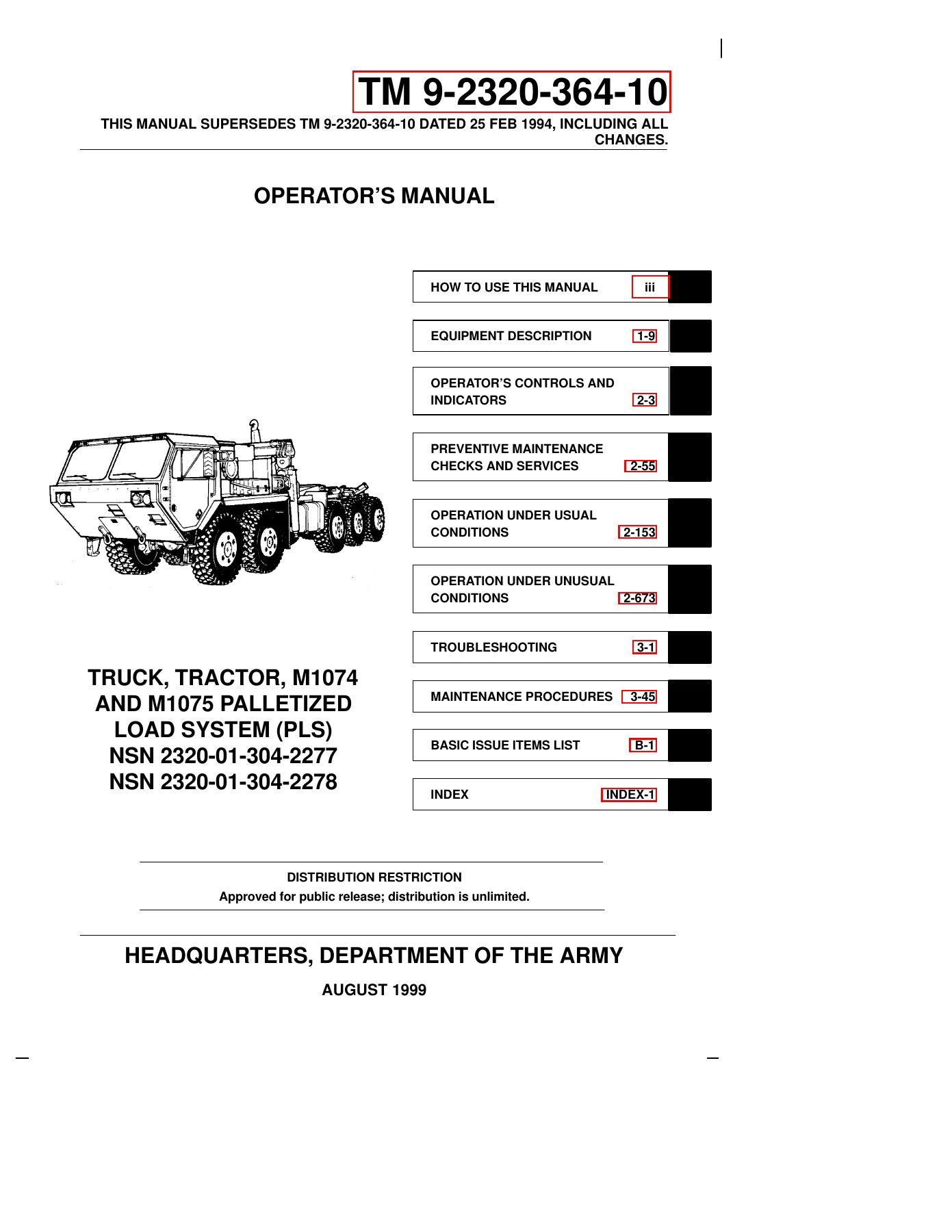
M1074 & M1075 Palletized Load System (PLS) Truck Operator Manual – TM 9-2320-364-10 August 1999
Original price was: $39.95.$24.95Current price is: $24.95.
Complete 1,102-page U.S. Army operator manual for the M1074 and M1075 Palletized Load System trucks – covers cab controls, PMCS, LHS flatrack loading, Grove MHC crane operation, CTIS, towing and troubleshooting. TM 9-2320-364-10, August 1999 edition.
Description
M1074 & M1075 Palletized Load System (PLS) Truck Operator Manual – TM 9-2320-364-10
This is the full U.S. Army operator manual for the M1074 and M1075 Palletized Load System (PLS) trucks – the ten-wheel-drive tactical cargo trucks built by Oshkosh Truck Corporation for ammunition hauling and self-loading flatrack work. Published August 1999 under document number TM 9-2320-364-10 and superseding the February 1994 edition, it runs 1,102 pages across three chapters and seven appendices. The manual covers NSN 2320-01-304-2277 and NSN 2320-01-304-2278 and is written for the operator, not the depot mechanic – every procedure in it is something you perform from the cab, the crane control panel, the remote control unit, or at the roadside during a mission.
If you operate, maintain, inspect or recover a PLS truck, this TM 9-2320-364-10 operator manual is the reference the Army issues to the crew. It carries the operator-level portion of the system: what each switch does, what a warning light means, how to load a flatrack without damaging the LHS, how to set outriggers before swinging the crane, and what to do when the air pressure drops or the transmission quits shifting.
File Details
- Manual type: Operator Manual (Technical Manual, operator/crew level)
- Document number: TM 9-2320-364-10
- Publication date: August 1999 (supersedes TM 9-2320-364-10 dated 25 February 1994, including all changes)
- Issuing authority: Headquarters, Department of the Army
- Manufacturer: Oshkosh Truck Corporation
- Models covered: M1074, M1075 (also describes M1076 trailer and M1077 flatrack)
- NSN: 2320-01-304-2277 (M1074); 2320-01-304-2278 (M1075)
- Language: English
- Page count: 1,102 pages
- File format: PDF
Chapters Covered
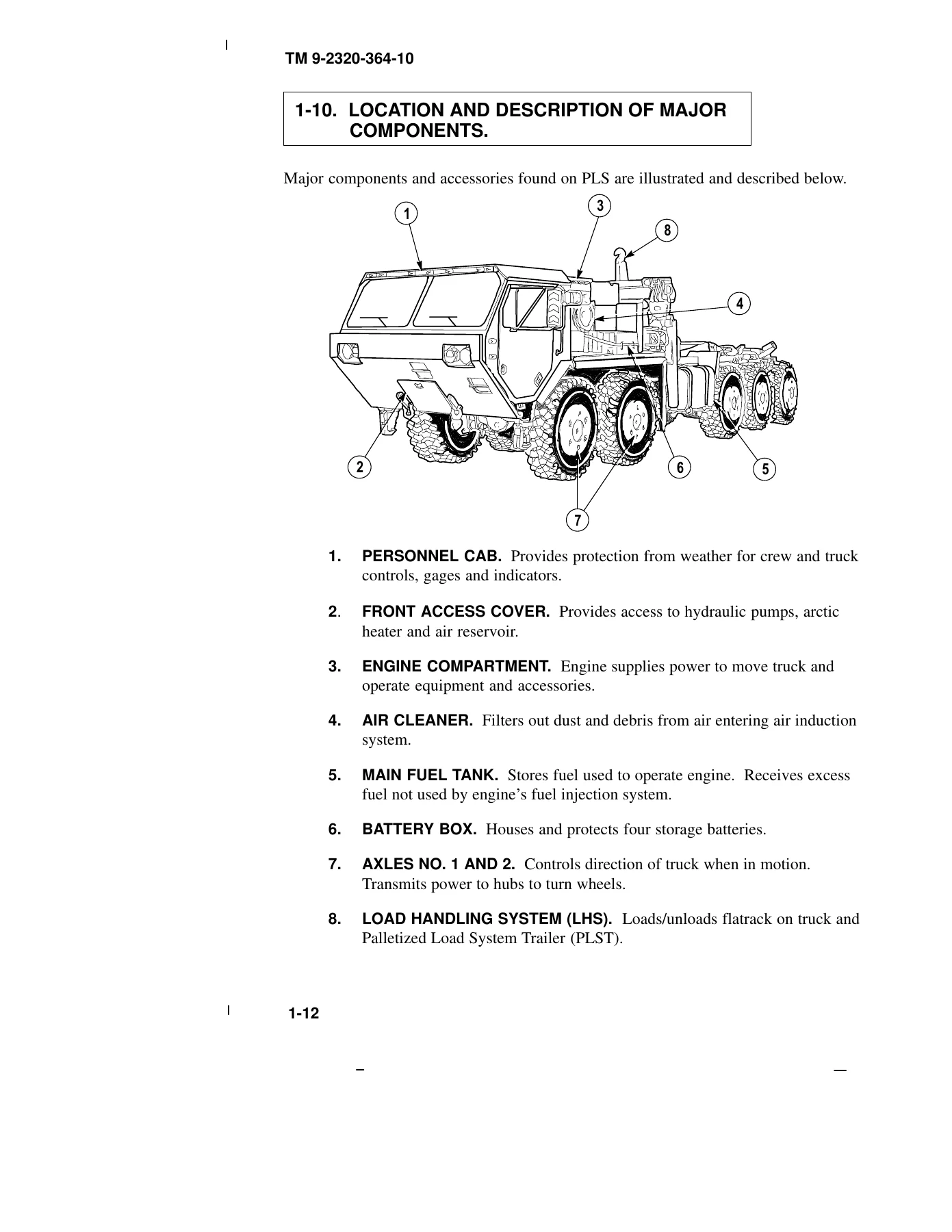
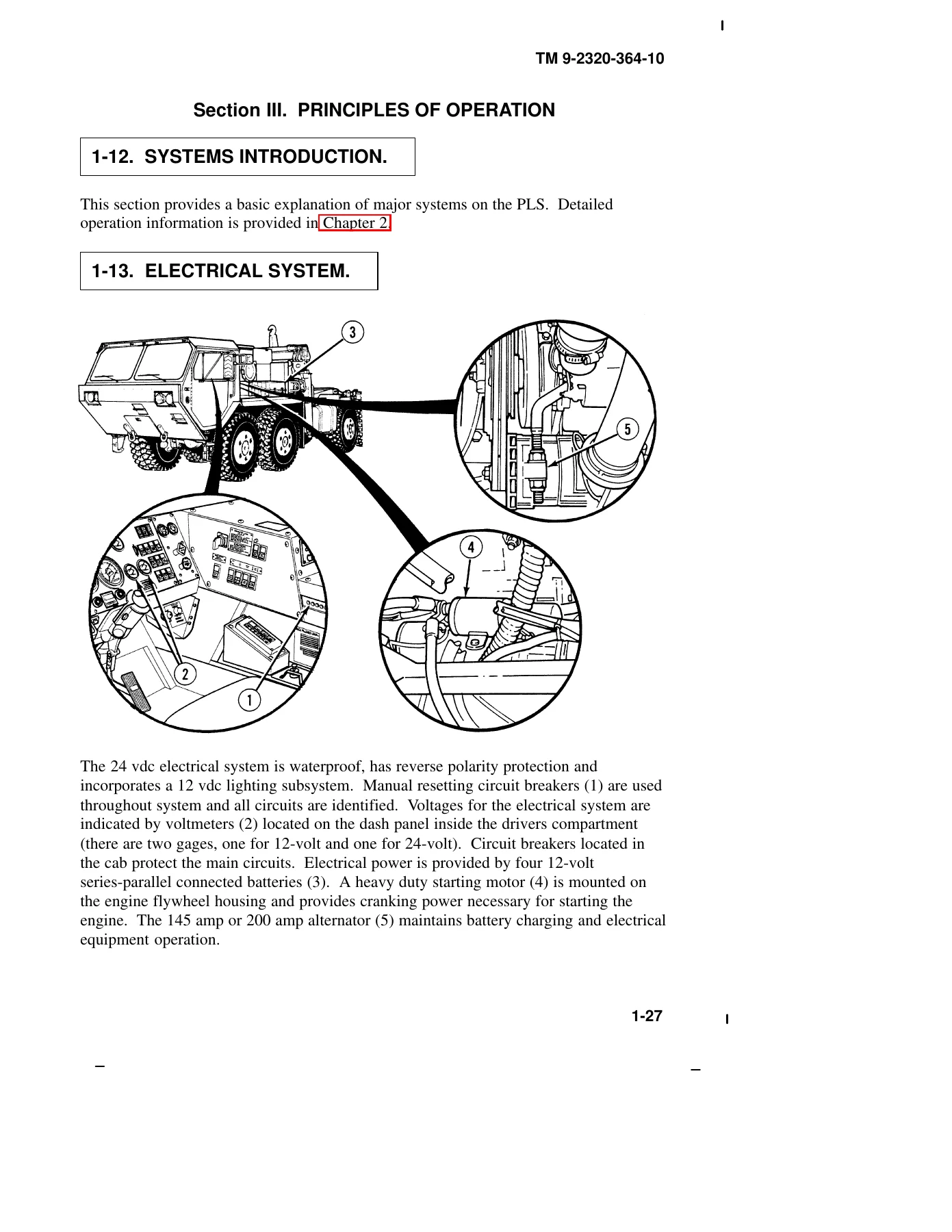
- Chapter 1 – Introduction: Section I General Information (scope, maintenance forms, corrosion prevention, destruction to prevent enemy use, EIR reporting, warranty, nomenclature cross-reference, abbreviations); Section II Equipment Description (characteristics, capabilities and features, location and description of major components, equipment data tables); Section III Principles of Operation (electrical system, engine and drivetrain, hydraulic system, air system, cooling system, fuel system, Material Handling Crane, Container Handling Unit, flatrack, PLS trailer, Load Handling System, Self-Recovery Winch kit)
- Chapter 2 – Operating Instructions: Section I Descriptions and Use of Operator’s Controls and Indicators (cab-mounted foot controls, steering column controls, instrument panel switches and indicators, CTIS controller, air panel, transmission range selector, tunnel panel, side panel assembly, circuit breakers, heater controls, seat adjustment, crane and outrigger jack control panels, crane remote control unit, CHU controls, GPFU kit, exterior-mounted controls, machine gun mount kit, Power Interface Kit, decals and instruction plates); Section II Preventive Maintenance Checks and Services (Before, During, After, Weekly and Monthly PMCS tables with walkaround routing diagram, leakage classification, shortened maintenance intervals); Section III Operation Under Usual Conditions (preparation for operation, filling main fuel tank with auxiliary tank, operating lights, normal starting, brakes, transmission and transfer case, engine brake, on-road driving, off-road driving, steep grades, parking, shutting off engine, CTIS, windshield wipers, heater, fire extinguisher, auxiliary equipment, Load Handling System, Material Handling Crane manual and remote operation, container mode preparation, loading and unloading containers of 82 in., 72 in., 51 in. and 48 in. height, transporting the lifting frame, returning to flatrack mode, lifting a container out of mud, rail transport, air transport preparation, lifting frame removal and installation, simplified CHU operation, Self-Recovery Winch); Section IV Operation Under Unusual Conditions (extreme heat, extreme dust, mud/sand/snow, desert, cold environment +45 F to -25 F, extreme cold -26 F to -50 F, tire chains, deep water fording, highway emergency marker kit, preparing the truck for towing, tow hookup procedures, emergency procedures, truck preparation for transport, securing the truck)
- Chapter 3 – Maintenance Instructions: Section I Lubrication Instructions; Section II Troubleshooting Procedures (malfunction index with engine, transmission, transfer case, wheels, steering, air system, electrical, Self-Recovery Winch, Material Handling Crane, Load Handling System, special purpose kits, and Container Handling Unit fault tables); Section III Maintenance Procedures (cleaning fuel tank strainer, tire replacement, stow and use ladder, draining air system pressure to zero, air wrench operation, beacon light installation and removal)
- Appendix A – References (forms, technical manuals, field manuals, miscellaneous publications)
- Appendix B – Components of End Item (COEI) and Basic Issue Items (BII) Lists
- Appendix C – Additional Authorization List (AAL)
- Appendix D – Expendable and Durable Supplies and Materials List
- Appendix E – Stowage and Sign Guide
- Appendix F – On-Truck Equipment Loading Plan
- Appendix G – Lubrication Instructions
IMAGES PREVIEW
Together these chapters give the operator a single reference for the whole truck. The operating chapter is the heart of it – the controls section walks through every switch on the instrument panel, the air panel, the CTIS controller and the transmission selector, then breaks out the crane and outrigger jack panels, the crane remote control unit and the CHU air control valves on both sides of the truck. The PMCS tables take the operator around the vehicle on a defined walkaround path, listing what to look at, what a pass looks like, and the criteria that make the truck Not Fully Mission Capable. The operation sections then step through starting, driving on and off road, fording, cold-weather and desert use, towing another PLS truck with the tow bar, and emergency procedures for air loss, crane failure, hydraulic failure and CTIS failure.
For load handling, the manual lays out the full LHS cycle in both AUTO and MANUAL modes – picking up and off-loading a flatrack, transferring a flatrack to and from a PLS trailer, loading and unloading flatracks with or without rollers from a dock, and the four container heights the CHU lifting frame supports with the correct hook fitted. The Material Handling Crane section covers setting the outriggers, raising and operating the crane from the fixed controls or the remote control unit, load range diagram use, and proper shutdown and stowage. The troubleshooting chapter is written for the operator: symptom, test, corrective action, with the operator-level checks that can be done in the field before calling maintenance.
What You Can Do With This Operator Manual
With TM 9-2320-364-10 open, an operator or crew member can:
- Learn the location and function of every cab control, indicator and warning light before the first drive
- Perform the full Before, During, After, Weekly and Monthly PMCS using the walkaround routing diagram
- Start the truck correctly in normal, cold and extreme cold conditions, including ether start and arctic heater use
- Drive on road, off road, on steep grades, in mud, sand, snow, desert heat, deep water and extreme cold
- Set the CTIS correctly for highway, cross-country, mud/sand/snow and emergency traction, and know the matching speed limits
- Run the full Load Handling System cycle to self-load and off-load an M1077 flatrack in AUTO or MANUAL mode
- Transfer a flatrack between the truck and an M1076 PLS trailer
- Convert the truck to container mode and load or unload an ISO container of 82 in., 72 in., 51 in. or 48 in. height using the lifting frame
- Set up the outriggers and operate the Grove MHC crane from the fixed control panel or the remote control unit within safe load radius
- Operate, pay out, reel in and stow the Self-Recovery Winch, including snatch block use
- Prepare the truck for towing and hook up a tow bar, safety chains, air lines and trailer light cable to recover another PLS truck
- Work through the operator troubleshooting tables for engine, transmission, transfer case, air system, electrical, crane, LHS and CHU faults
- Carry out operator-level maintenance tasks such as cleaning the fuel tank strainer, changing a tire with the on-board davit and air wrench, and installing or removing the beacon light
Why This Manual Matters
The PLS is a specialised machine. Loading a flatrack with the LHS or swinging a 3,900 lb. load with the MHC is not something to improvise – the manual gives the exact sequence, the required engine speed for each phase, the hydraulic selector position, and the overload and NO TRANS warnings that tell the operator when something is wrong. Getting those wrong can bend the hook arm, drop a container, tip the truck on its outriggers or land a load on the crew. The same applies to the CTIS, the transfer case lockup and the engine brake – each has a correct use case and a speed or traction limit that the manual spells out.
For the daily PMCS, this manual is what tells the operator which leak class is acceptable, which cracked lens or missing nut stops a mission, and where a light hydraulic weep becomes a Class III leak that has to be reported. That level of detail is what keeps a 50,000 lb. tactical truck mission-capable and keeps the crew out of the failure cycle.
Instant PDF Delivery
The manual is delivered as an instant PDF download after checkout – no shipping, no waiting on a disc or a printed copy. It opens on any device that reads PDFs: desktop, laptop, tablet or phone, and every page can be printed for the cab or the shop binder. Whether you need the whole 1,102 pages or just the LHS load cycle, the CTIS pressure chart or the operator troubleshooting tables, this M1074 and M1075 PLS operator manual puts the procedure in your hands the moment you buy it.
Reviews
There are no reviews yet.