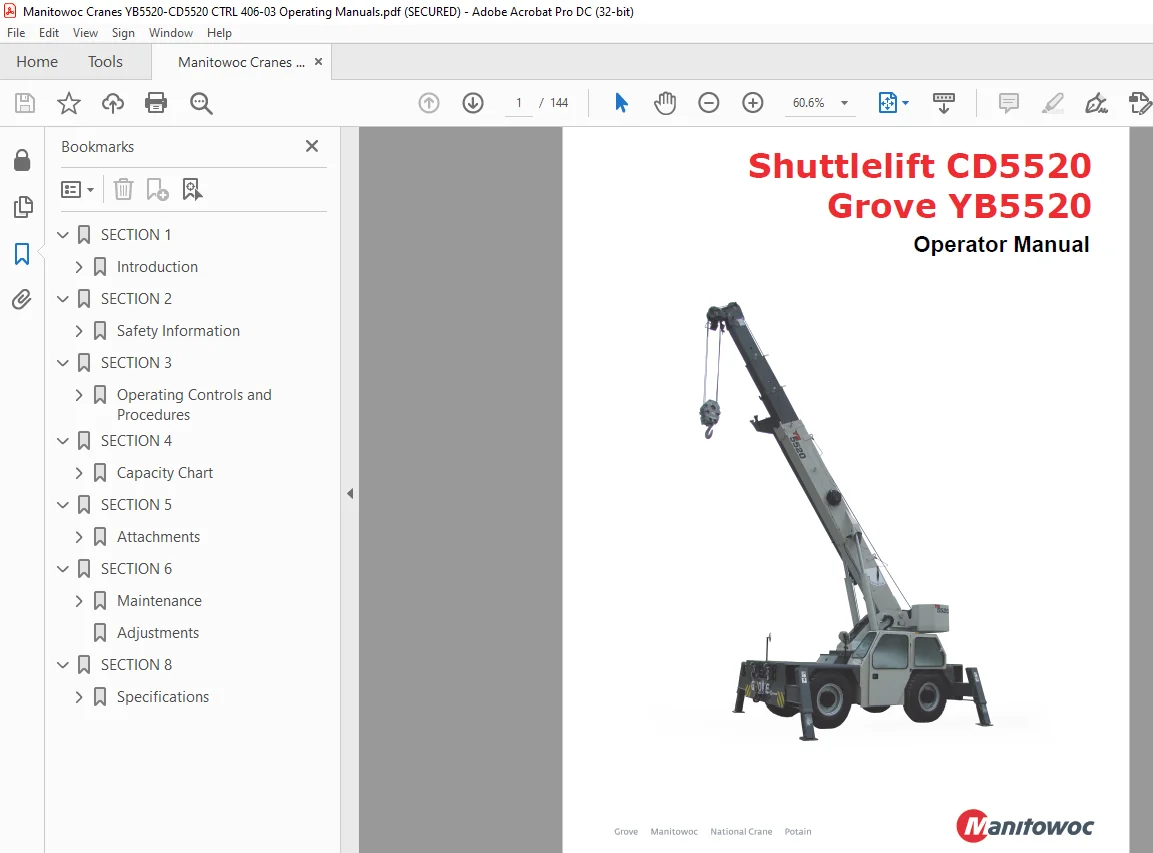
Manitowoc Crane Shuttlelift CD5520 Grove YB5520 Operator Manual
$28.95
The Manitowoc Crane Shuttlelift CD5520 Grove YB5520 Operator Manual, in PDF format, is an essential guide for operating the YB5520 model crane. Download for comprehensive operational insights and safety protocols
Description
Manitowoc Crane Shuttlelift CD5520 Grove YB5520 Operator Manual – PDF DOWNLOAD
FILE DETAILS:
Manitowoc Crane Shuttlelift CD5520 Grove YB5520 Operator Manual – PDF DOWNLOAD
Language : English
Pages :144
Downloadable : Yes
File Type : PDF
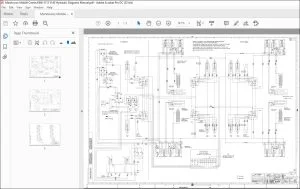
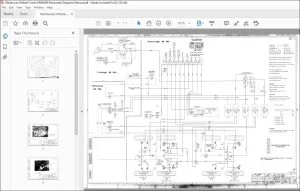
IMAGES PREVIEW OF THE MANUAL:
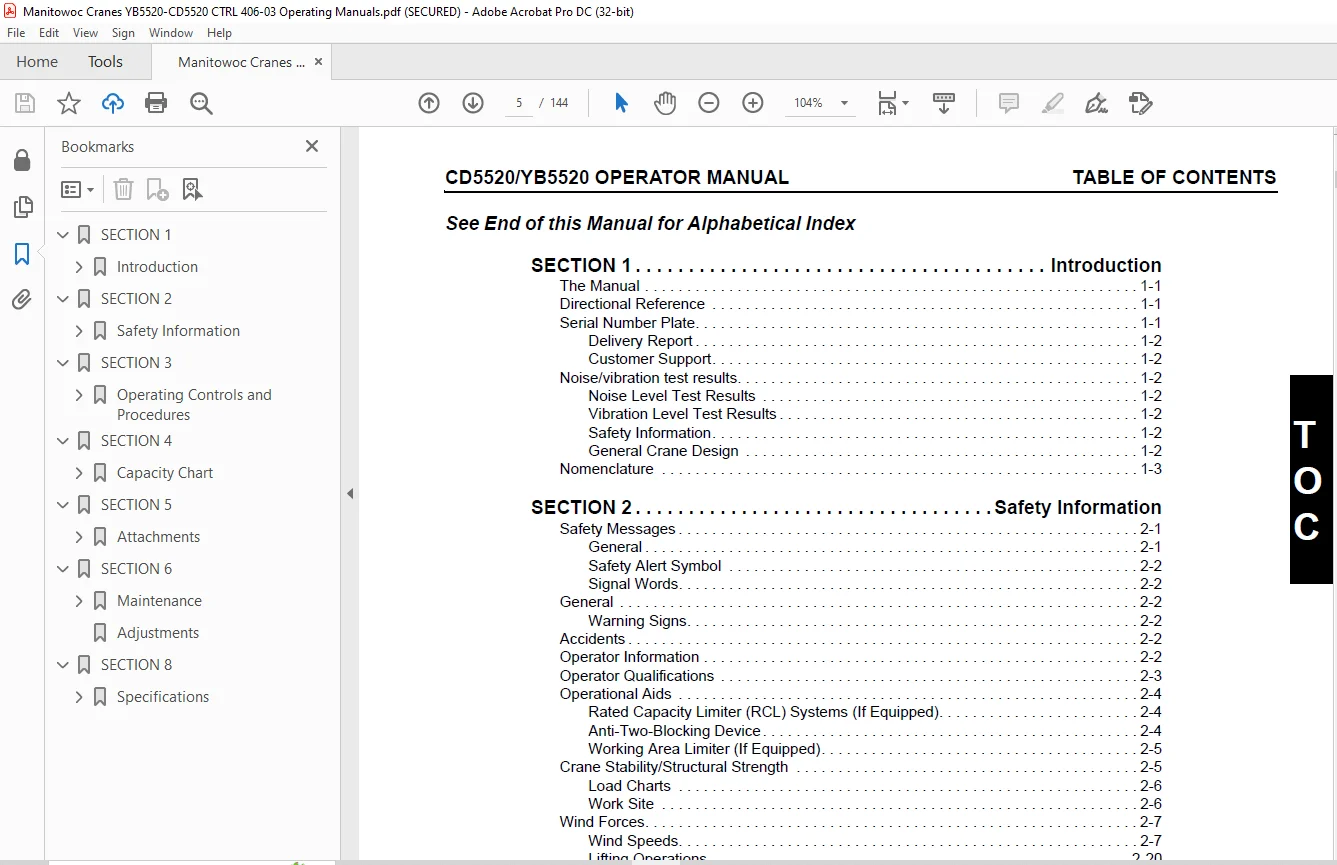
TABLE OF CONTENTS:
Manitowoc Crane Shuttlelift CD5520 Grove YB5520 Operator Manual – PDF DOWNLOAD
SECTION 1 9
Introduction 9
The Manual 9
Directional Reference 9
Serial Number Plate 9
Delivery Report 10
Customer Support 10
New Owners 10
Noise/vibration test results 10
Noise Level Test Results 10
Vibration Level Test Results 10
Safety Information 10
General Crane Design 10
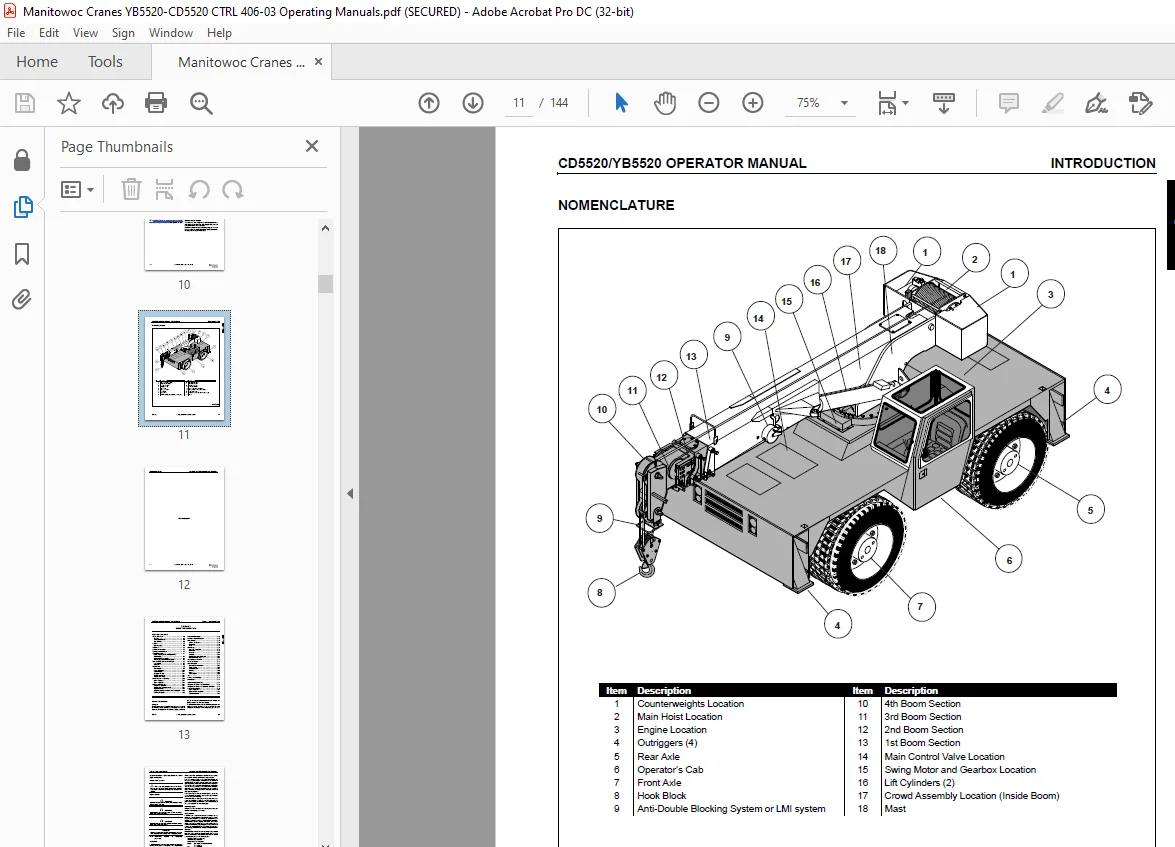
Nomenclature 11
SECTION 2 13
Safety Information 13
Safety Messages 13
General 13
Safety Alert Symbol 14
Signal Words 14
General 14
Warning Signs 14
Accidents 14
Operator Information 14
Operator Qualifications 15
Operational Aids 16
Rated Capacity Limiter (RCL) Systems (If Equipped) 16
Anti-Two-Blocking Device 16
Working Area Limiter (If Equipped) 17
Crane Stability/Structural Strength 17
Load Charts 18
Work Site 18
Wind Forces 19
Wind Speeds 19
Determination of 3-second wind gust speed at boom tip height: 22
Size and Shape of the load: 22
Determining Wind Drag Coefficient (Cd) 23
Maximum Permissible Wind Speed 24
Example and Sample Calculations (metric) 26
Example 1: Crane Configuration: 26
Load example 1 1: 27
Load example 1 2: 27
Load example 1 3a: 27
Load example 1 3b: 27
Example and Sample Calculations (Non-metric) 30
Example 2: 30
Load example 2 1: 31
Load example 2 2: 31
Load example 2 3a: 31
Load example 2 3b: 31
Lifting Operations 32
Counterweight 33
Outrigger Lift Off 33
Multiple Crane Lifts 33
Tilt-Up Panel Lifting 33
Pile Driving and Extracting 34
Crane Equipment 34
Crane Inspection 34
Electrocution Hazard 35
Set-Up and Operation 36
Electrocution Hazard Devices 36
Electrical Contact 37
Special Operating Conditions and Equipment 37
Earthing the Crane 37
Personnel Handling 38
Environmental Protection 39
Maintenance 39
Service and Repairs 39
Lubrication 40
Tires 41
Hoist Rope 41
Synthetic Hoist Rope 41
Wire Rope 41
Sheaves 42
Batteries 43
Super Capacitor (If Equipped) 43
General Maintenance 43
Transporting the Crane 44
Travel Operation 44
Work Practices 45
Personal Considerations 45
Crane Access 45
Job Preparation 45
Working 46
Lifting 47
Hand Signals 48
Jib 50
Parking and Securing 50
Shut-Down 50
Cold Weather Operation 50
Temperature Effects on Hook Blocks 51
Temperature Effects on Hydraulic Cylinders 51
Overload Inspection 52
Boom Inspection 54
Superstructure Inspection 56
Carrier Inspection 58
SECTION 3 61
Operating Controls and Procedures 61
Controls, Switches, and Gauges 61
Cab Controls 61
Swing Control 61
Telescope Control 61
Hoist Control 61
Boom Lift Control 61
Accelerator Pedal 62
Brake Pedal 62
Steering Wheel 62
Turn Signal/Windshield Wiper Lever 62
Left Dash Controls 63
Defroster Switch 63
Error Code Screen Toggle Switch 63
Steering Select Switch 63
Two-Wheel/Four-Wheel Drive Select Switch 63
Headlights/Work Lights Switch 63
Outrigger Extend/Retract Switch 63
Hoist Speed Select Switch 63
Right Dash Controls 64
Rated Capacity Limiter (RCL) Override Switch 64
Outrigger/Jack Select Switches 64
Hazard Lights Switch 64
Crane Function Switch 64
Parking Brake Switch 64
Ignition Switch 64
Winch Switch (Optional) 64
360° Swing Lock Switch 65
Indicator and Gauge Display 66
Fuel Gauge 67
Left Turn Signal Indicator 67
Voltmeter 67
Hourmeter 67
Diagnostic Fault Codes 67
Tachometer 67
Right Turn Signal Indicator 67
Engine Coolant Temperature Gauge 67
Crane Function Enabled Indicator 67
Outrigger Monitoring Indicator 67
Minimum Wrap Indicator 67
Headlights Indicator 67
Work Lights Indicator 67
Axle Lockout Indicator (Not Used) 67
Hydraulic Oil High Temperature Indicator 67
Engine Wait to Start Indicator 67
Engine Stop Indicator 67
Engine Warning Indicator 67
Parking Brake Engaged Indicator 67
Low Brake Pressure Indicator 68
Low Engine Oil Pressure Indicator 68
Battery Charge Indicator 68
Transmission Oil Temperature Indicator 68
Low Transmission Oil Pressure Indicator 68
Crane Level Indicator 68
Engine Warning and Stop Lights 68
Rated Capacity Limiter (RCL) 68
Air Conditioning/Heater Controls 69
Boom Angle Indicator 69
Outrigger Controls 69
Steering Controls 70
Two-Wheel Steer Mode 70
Four-Wheel Steer Mode 70
Crab Steer Mode 70
Operator’s Cab 71
Heater/Air Conditioner 71
Defroster 71
Seat Adjustment 72
Seat Belt 72
Cab Door (Enclosed Cab) 72
Opening the Cab Door from Outside 72
Opening the Door from Inside 72
Locking the Cab Door 72
Opening Side Window 72
Fire Extinguisher 72
Crane Operation 73
Starting the Engine 73
Normal Engine Starting 73
Towing or Pushing the Crane to Start the Engine 74
Jump Starting the Engine 74
Cold Climate Engine Operation 75
Crane Warm-up Procedures 75
Engine 75
Transmission 75
Hoist 76
Swing Drive and Turntable Bearing 76
Axles 76
Hydraulic Oil System 76
Traveling with the Crane 77
Changing Travel Direction 78
Shifting Gears 78
Stopping Travel 78
Operating the Outrigger Controls 78
Proper Leveling of the Crane 78
Bubble Level Adjustment 79
To Extend and Lower the Outriggers 79
Extending the outriggers 79
Lowering the Jacks 79
Outrigger Monitoring System (OMS) (Optional—Standard in North America) 80
Raising the Jacks 80
Retracting the Outriggers 80
Operating the Boom Controls 81
Boom Swing Operation 81
To Rotate the Mast to the Left (Counterclockwise) 81
To Stop Rotation 81
To Rotate the Mast Right (Clockwise) 81
Boom Telescope Operation 82
To Extend the Boom 82
To Stop Extension/Retraction 82
To Retract the Boom 82
Boom Lift Operation 83
To Raise the Boom 83
To Stop Boom Movement 83
To Lower the Boom 84
Hoist Operation 85
To Raise the Hookblock 85
To Stop Hoist Rotation 85
To Lower the Hookblock 85
Hoist Rotation Indicator 86
Optional Controls Operation 87
Under Deck Winch 87
To Extend the Wire Rope 87
To Stop the Winch 87
To Retract the Wire Rope 87
Operating Practices 88
Handling a Load 88
Attaching the Load 88
Holding the Load 88
Moving the Load 88
Travel on Slopes 88
Traveling with a Load (Pick and Carry) 89
Elevating Personnel 89
Preparation and Setup 89
Lifting Personnel 89
Capacity Limitations 90
Turning Clearances 90
Crane Shutdown 90
Battery Disconnect 90
Unattended Crane 90
Towing a Disabled Crane 90
SECTION 4 91
Capacity Chart 91
Using the Capacity Chart 91
Operating Boom Radius 91
Locating the Lift Capacity 91
Things to Observe When Using the Capacity Chart 91
Lifting with the Boom Extension Installed 92
Pick and Carry Ranges 92
SECTION 5 95
Attachments 95
Pivoting Boom Head 95
Boom Head Positions 95
Positions When No Boom Extension Is Attached 95
Positions When Boom Extension Is Attached 95
Changing the Boom Head Position (No Boom Extension) 97
Adjusting the Boom Extension Offset 98
Hoist Block 99
Removing The Hoist Block 99
Installing the Hook Block 99
Boom Extension 99
Attaching the Boom Extension 99
Manually Extendable Jib (Optional) 104
Stowing the Boom Extension 105
Searcher Hook Assembly 107
Installation 107
Removal 107
Down Haul Weight 108
Installing the Down Haul Weight 108
Removing the Down Haul Weight 108
Installing Cable On The Hoist 109
Wire Rope Wedge Socket 110
Reeving 112
Reeving for 4-part Line 112
SECTION 6 113
Maintenance 113
Introduction 113
Spark Arresting Mufflers 113
Safety List 114
Lubricants 114
Maintenance Records 114
Special Maintenance 114
Delivery Inspection 114
After First 50 Hours Of Operation (New Cranes) 115
Cranes Not In Regular Use 115
Preventive Maintenance 115
Maintenance Schedule and Checklist 115
Lubrication Points 118
Scheduled Maintenance 121
Daily (Walk-around) Inspection 121
Inspections 121
Inspecting the Anti-Two-Blocking System 121
Inspect the Wire Rope 121
Inspecting Reeving, Clamps and Connections 121
Inspecting the Lifting Hook 121
Inspecting All Safety Devices 121
Checking Controls Operation 121
Component/System Checks 121
Checking Fuel Level 121
Checking the Engine Crankcase Oil Level 122
Checking the Transmission Oil Level 122
Checking Engine Coolant Level 123
Drain Water From Engine Fuel Filter 123
Checking Hydraulic Oil Level 123
Checking the Air Cleaner Restriction Indicator 124
Removing the Element 124
Installing the Element 124
Checking Tire Pressure 124
50 Hours Of Operation 124
Clean the Air Cleaner Dust Cup 124
Wire Rope Inspection 124
Inspection 124
Grease Fittings 125
Internal Cable Sheave Lubrication 125
The lubrication points on the sheaves are not equipped with grease fittings (zerks) and will require a grease gun adapter to accomplish the task 125
Special Tools: 125
Inner Boom Pad Lubrication 125
Side and Bottom Boom Wear Pad Lubrication 126
Lubricate Parking Brake 126
Heater/Air Conditioner Filter 126
100 Hours Of Operation and Over 126
Carwell® Rust Inhibitor 126
Protecting Cranes From Rusting 126
Cleaning Procedures 127
Inspection and Repair 127
Application 128
Areas of Application 128
Adjustments 133
SECTION 8 135
Specifications 135
Lubricants and Capacities 135
Engine Oil Specifications 136
Cummins Oil Registration List 136
Oil Performance Recommendations 136
Oil Viscosity Recommendations 136
Viscosity Grades—Arctic Operation 136
API, SAE ASTM Classification 137
Diesel Fuel 137
General Specifications 138
TIRES 139
WEIGHT 139
TRAVEL SPEEDS 139
TWO-WHEEL STEER 139
OPERATING DIMENSIONS 140
TWO-WHEEL STEER 140
FOUR-WHEEL STEER 140
Questions? Email us: [email protected]
S.M