
Mitsubishi MELDAS 300-V 320L-V 330L-V 320HL-V 330HL-V Programming Manual – PDF
Original price was: $39.95.$24.95Current price is: $24.95.
Programming manual for Mitsubishi MELDAS 320L-V, 330L-V, 320HL-V and 330HL-V CNC systems, covering lathe programming, interpolation, feed functions, tool compensation, canned cycles and macro programming.
Description
File Details
- Manual type: Programming Manual
- Brand: Mitsubishi
- CNC systems covered: MELDAS 300-V, 320L-V, 330L-V, 320HL-V, 330HL-V
- Language: English
- Page count: 352 pages
- File format: PDF
Chapters Covered
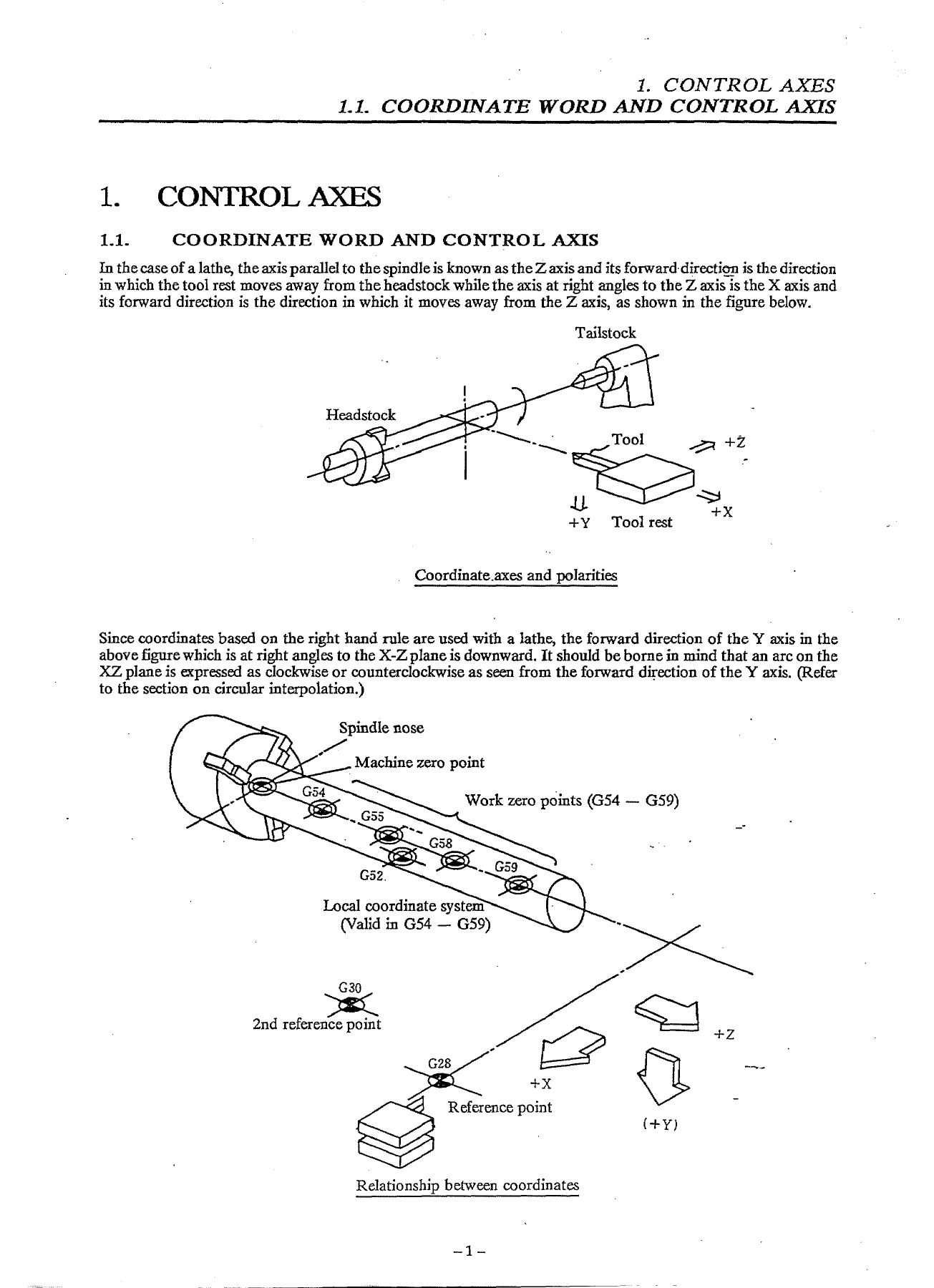
- Control Axes – coordinate words, control axes, coordinate systems and coordinate zero point symbols
- Input Command Units – input command units, input setting units and command unit x10
- Data Formats – tape codes, program formats, tape memory format, optional block skip, program/sequence/block numbers, parity H/V and G code system
- Buffer Register – pre-read buffers
- Position Commands – incremental/absolute value commands, radial/diametrical commands, inch/metric conversion G20/G21 and decimal point input
- Interpolation Functions – positioning G00, linear interpolation G01, circular interpolation G02/G03, R-specified circular interpolation, plane selection G17/G18/G19, thread cutting and milling interpolation
- Feed Functions – rapid traverse rate, cutting feed rate, synchronous/asynchronous feed G94/G95, feed rate designation, thread cutting leads, automatic acceleration/deceleration, speed clamp and exact stop check G09
- Dwell – per-second dwell G94/G04 and per-revolution dwell G95/G04
- Miscellaneous Functions – M2-digit BCD, M8-digit and secondary miscellaneous functions A8/B8/C8
- Spindle Functions – S2-digit BCD, S5-digit analog, S8-digit, constant peripheral speed control G96/G97, spindle clamp speed setting G92 and multi-spindle functions
- Tool Functions – T4-digit and T8-digit tool functions
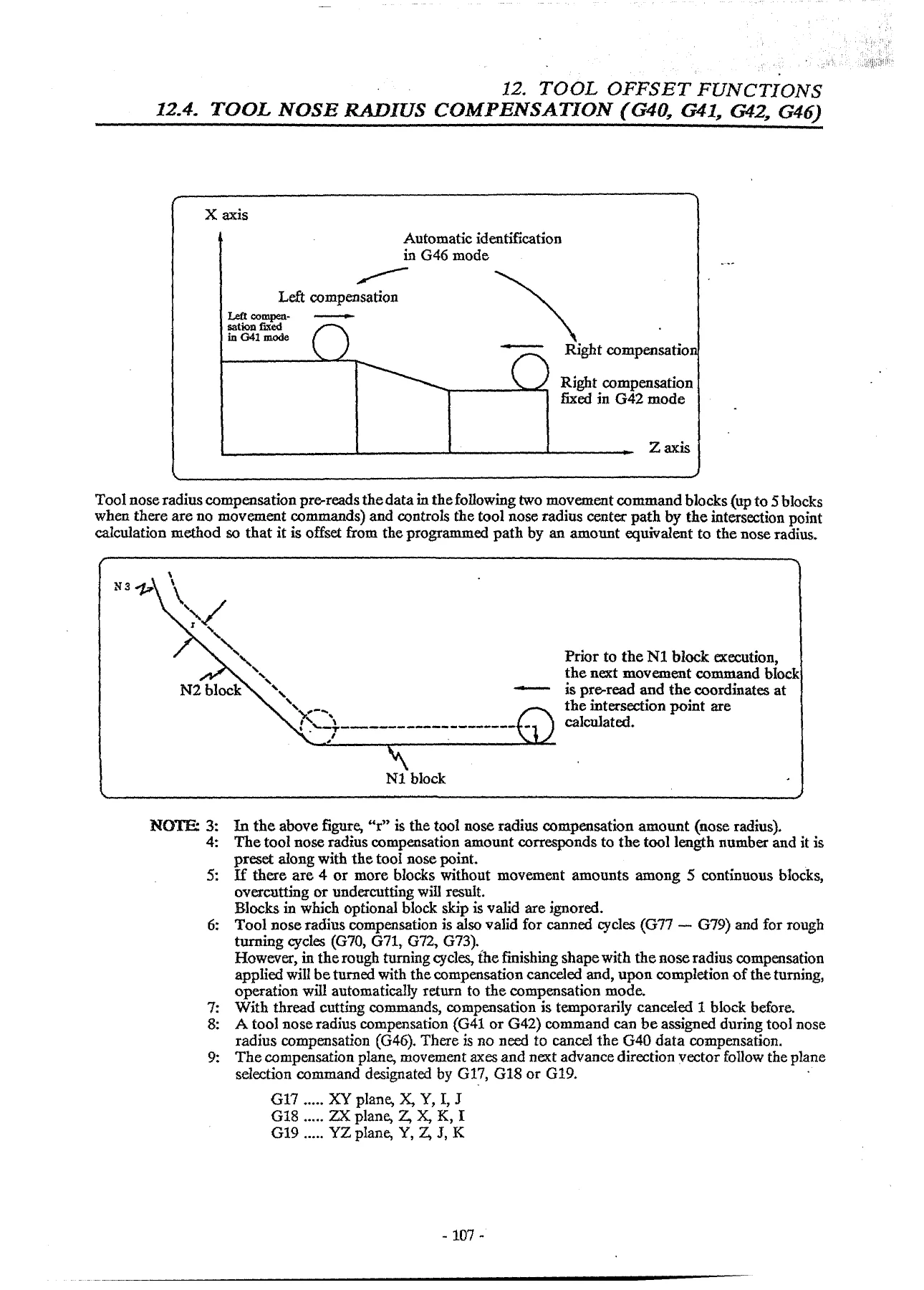
- Tool Offset Functions – tool offset, tool length offset, tool nose wear offset, tool nose radius compensation G40/G41/G42/G46 and programmed tool offset input G10
- Program Support Functions – turning canned cycles G77/G78/G79, multiple repetitive canned cycles G70 through G76, hole machining canned cycles G80 through G89, deep hole drilling cycle 2 G83.2, subprogram control M98/M99, variable commands, user macro specifications, facing tool rest mirror image G68/G69, corner chamfering and rounding functions I and II, linear angle commands, geometric commands and data setting G10/G11
- Coordinate System Setting Functions – coordinate words, basic machining/work/local coordinate systems, machine zero point and 2nd reference point, automatic coordinate system setting, machine coordinate system selection G53, coordinate system setting G92, reference point return G28/G29, 2nd reference point return G30, reference point check G27, work coordinate systems G54 through G59 and local coordinate system G52
- Protection Functions – chuck barriers and tailstock barriers
- Measurement Support Functions – skip function G31
- Appendices – command values and setting ranges, circular cutting radius error, standard canned cycle subprograms, variable numbers, data setting N number correspondence tables, incomplete thread areas and alarm list
This Mitsubishi MELDAS 300-V 320L-V 330L-V 320HL-V 330HL-V Programming Manual is written for the software-fixed MELDAS 320L-V, 330L-V, 320HL-V and 330HL-V CNC systems used for high-performance contouring control mainly on lathes. It explains how programs are written for these controls, from basic coordinate and feed commands through circular interpolation, thread cutting, tool nose radius compensation, canned cycles, subprograms, variables and user macro programming. The manual is written from the NC system standpoint; for individual machine tools, restrictions, usable states and special handling, the machine builder manuals take precedence.
Programming Coverage for Lathe CNC Work
The manual opens with the coordinate and axis conventions used on lathes, then moves into input command units, tape and program formats, optional block skip, sequence and block numbers, parity checks and the G code system. It describes three G code systems, with G code system 2 serving as the standard description, and notes that system 3 is an optional specification. From there it covers position commands, including incremental and absolute programming, radial and diametrical commands, inch/metric conversion with G20 and G21, and decimal point input.
Interpolation is treated in practical detail: rapid traverse G00, linear interpolation G01, circular interpolation G02 and G03, R-specified circular interpolation, plane selection with G17, G18 and G19, constant lead thread cutting with G33, inch thread cutting, continuous thread cutting, variable lead thread cutting with G34, and milling interpolation with G12.1 and G13.1. Feed functions cover rapid traverse and cutting feed rates, per-minute and per-revolution feed with G94 and G95, feed rate effects on linear and rotary axes, thread cutting leads, automatic acceleration and deceleration, speed clamp and exact stop check G09.
Tool-related programming receives substantial coverage. The manual explains tool functions for T4-digit and T8-digit formats, tool length offset, tool nose wear offset, tool nose radius compensation with G40, G41, G42 and G46, tool nose point selection, compensation start and cancel operations, interference check, and programmed tool offset input with G10. This is the material a programmer needs when matching the programmed path to the actual rounded tool nose and when controlling offset data from the program.
Canned Cycles, Subprograms and Macro Programming
The program support chapters cover turning canned cycles G77, G78 and G79; multiple repetitive canned cycles G70 through G76, including longitudinal rough turning, face rough turning, stock removal, finishing, cut-off and thread cutting cycles; and hole machining canned cycles G80 through G89 for drilling, tapping and boring on the face or along the longitudinal axis. Deep hole drilling cycle 2 G83.2 is also described. Subprogram control with M98 and M99 is explained alongside variable commands and user macro specifications, including macro call instructions, variables, arithmetic commands, control commands and external output commands.
Additional program support topics include facing tool rest mirror image G68 and G69, corner chamfering and corner rounding functions I and II, linear angle commands, geometric commands and data setting with G10 and G11. The coordinate system chapter explains basic machine, work and local coordinate systems, machine zero point and 2nd reference point, automatic coordinate system setting, machine coordinate system selection G53, coordinate system setting G92, reference point return G28 and G29, 2nd reference point return G30, reference point check G27, work coordinate systems G54 through G59 and local coordinate system G52.
Later chapters cover protection functions such as chuck barriers and tailstock barriers, and measurement support through the skip function G31. The appendices add command value and setting range lists, circular cutting radius error information, standard canned cycle subprograms, variable number lists, data setting N number correspondence tables, notes on incomplete thread areas during thread cutting, and a list of alarms.
Who This Manual Supports
This Mitsubishi MELDAS 300-V 320L-V 330L-V 320HL-V 330HL-V Programming Manual is suited to CNC programmers, lathe setup personnel, maintenance technicians and advanced operators who need to write, read or modify programs for these MELDAS controls. It supports work such as setting coordinate systems, building interpolation and thread cutting paths, applying tool nose radius compensation, using canned cycles to shorten turning programs, calling subprograms, and developing macro-based routines. It also gives reference material for checking G code behavior, command formats, decimal point input, offset input and alarm conditions.
Because the manual is organized by programming function rather than by a single machine model, it can be used across the covered MELDAS 320L-V, 330L-V, 320HL-V and 330HL-V systems while the machine builder documentation supplies the machine-specific restrictions and usable states. The result is a practical programming reference for technicians who need to understand how the control interprets commands before applying them to a particular lathe.
Put the Mitsubishi MELDAS 300-V Programming Manual to Work
With this programming manual, a technician can work through coordinate and feed commands, circular and thread cutting paths, tool nose radius compensation, canned cycles, subprograms and macro programming for the MELDAS 320L-V, 330L-V, 320HL-V and 330HL-V systems. Correct procedures and command formats matter because lathe programming errors can affect part geometry, thread lead, tool clearance and offset behavior. The PDF is delivered instantly after payment, with no shipping, and can be viewed on any device or printed for workshop use.
IMAGES PREVIEW
Reviews
There are no reviews yet.