
Nalco Clean Water RO System GM Operation Manual – 100 GPM Reverse Osmosis Skid
Original price was: $39.95.$23.95Current price is: $23.95.
Complete Nalco operation and maintenance manual for the 100 GPM Reverse Osmosis Skid installed at the General Motors Fort Wayne Assembly Plant. Covers theory, installation, startup, operating modes, CIP cleaning, troubleshooting, technical data, wiring diagrams, and P&ID.
Description
Nalco Clean Water RO System GM Operation Manual – 100 GPM Reverse Osmosis Skid
This is the complete operation and maintenance manual for the Nalco Clean Water Reverse Osmosis System, a 100 GPM RO skid built for the General Motors Fort Wayne Assembly Plant. Revision 1 of this document covers the full lifecycle of the RO unit — from initial installation and membrane loading through daily operation, clean-in-place maintenance, and long-term storage. It is written for the operators, technicians, and maintenance personnel who run and service this specific RO skid.
File Details
- Manual Type: Operation & Maintenance Manual
- Brand / Manufacturer: Nalco Company (An Ecolab Company)
- Equipment: 100 GPM Reverse Osmosis Skid
- Customer / Site: General Motors, Fort Wayne Assembly Plant
- Project Number: 1200374
- Revision: Revision 1
- Language: English
- File Format: PDF
- Page Count: Approximately 200 pages
Chapters Covered
- Introduction — General Description and Theory of Operation, Reverse Osmosis, Functional Description of RO Skid, Piping Connections, Power Connection, RO System Control Panels, RO Skid Control System, RO Feed Pump Skid, RO System, Instruments/Sensors/Gauges, Water Quality and Quantity Measurement, MRT Components
- Installation — Equipment Handling Guidelines, Unpacking and Receipt Inspection, Foundation Requirements, Equipment Assembly, Mechanical Installation, Electrical Installation, RO Feed Pump Lubrication, Installing RO Membrane Elements, Removing RO Membrane Elements, Membrane Cleaning
- Startup — Prerequisites, RO System Startup, RO Feed Pump Setup and Starting, RO Unit Start-Up, Pre-Service Flush, Peripheral Equipment, Gauges/Instruments/Controls, Clean-in-Place
- Operation — Operating Guidelines, Operating Modes (Offline, Standby, Pre-Service Flush, VFD Ramp Up, Service, VFD Ramp Down, Post-Service Flush), Alarms and Interlocks, Loss of Power, Data Collection and Trending
- Shutdown — General System Shutdown, RO System Shutdown, Storage
- Troubleshooting and Maintenance — Maintenance Schedule, Lubrication Points, Clean In Place (CIP) RO Membranes, Cleaning Frequency, Cleaning Procedure (1st and 2nd Stage), RO Troubleshooting
- Technical Data — Equipment Lists, RO Skid Schedule of Components, Electrical Schedule of Components, Electrical Components, Recommended Spare Parts List, Mechanical Drawings, Electrical Drawings, Control Documentation
- Quick Reference — Reverse Osmosis Element Loading, Start-Up Checklist, Shutdown Checklist, Data Collection Form
- Manufacturer’s Literature — Cross-Reference to Vendor Literature
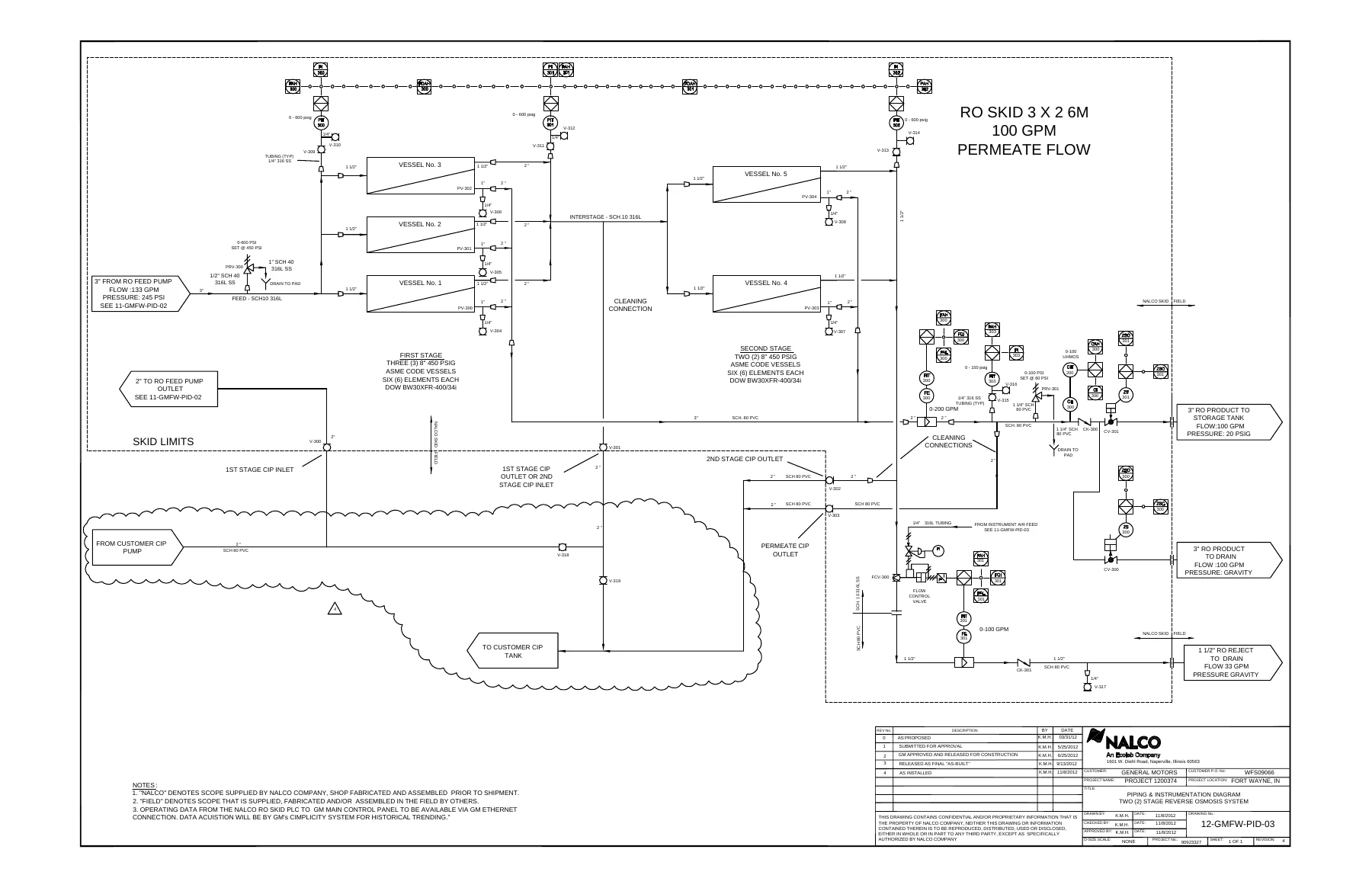
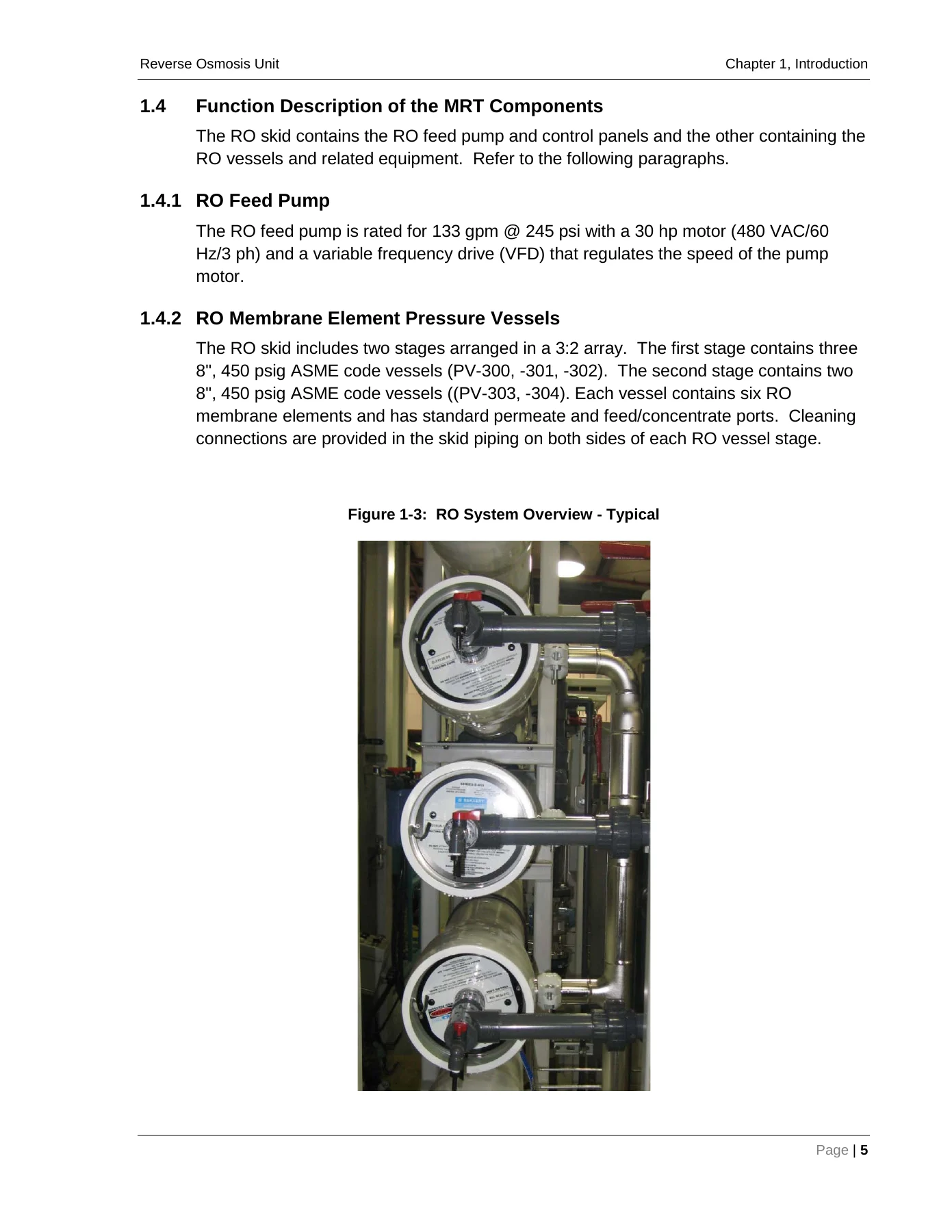
The manual opens with a clear explanation of osmosis and reverse osmosis theory, including a table of approximate osmotic pressures for sodium chloride concentrations from 100 ppm to 35,000 ppm. From there it walks through the physical layout of the skid: the 3:2 array of pressure vessels, the Grundfos BM30-17 booster pump, the Allen Bradley PowerFlex VFD, the CompactLogix PLC, and the Panelview 1500 HMI. Piping connections, power requirements, instrument air supply, and the four CIP connections are all documented so a technician can understand how the unit integrates with the plant’s existing water treatment system.
Installation chapters cover rigging and lifting the skid safely, verifying the foundation, anchoring, and making the mechanical, electrical, and plumbing connections. There is detailed, step-by-step guidance on loading and removing DOW Filmtec BW30XFR-400/34i membrane elements into the Protec 8-inch pressure vessels, including shimming to prevent element movement during start and stop cycles. The startup chapter includes prerequisites, pre-service flush procedures, and VFD ramp-up checks.
Operation is broken down into seven distinct modes — Offline, Standby, Pre-Service Flush, VFD Ramp Up, Service, VFD Ramp Down, and Post-Service Flush — each with its own valve positions, pump states, and flow control valve settings. The HAND/OFF/AUTO selector switch logic, Request For Water (RFW) signal from the GM Main Control Panel, alarm and interlock behaviour, and loss-of-power recovery are all described. The Clean-In-Place chapter gives separate procedures for first-stage and second-stage membrane cleaning, with valve line-ups and lockout/tagout notes.
The troubleshooting section addresses common RO problems such as unit not starting, automatic feedwater valve not opening, low productivity, low rejection, and improper flow readings, with causes and corrective actions in easy-to-read tables. The technical data chapter lists every tagged component on the skid — valves, pressure transmitters, flow meters, conductivity sensors, gauges, and the VFD — along with manufacturer, model, and description. Mechanical drawings, electrical drawings, and control documentation references are included.
Quick reference material includes a start-up checklist, a shutdown checklist, and an RO unit data collection form for tracking pressures, flows, temperatures, and VFD speed. The manual ends with a cross-reference to vendor literature for the OEM components used on the skid.
This Nalco Clean Water RO System GM Operation Manual is the document that keeps the 100 GPM Reverse Osmosis Skid running correctly at the Fort Wayne Assembly Plant. It supports the full range of tasks a technician or operator needs to perform: understanding how the RO process works, installing and loading membranes, starting up and shutting down the unit, switching between operating modes, performing clean-in-place maintenance, troubleshooting faults, and recording performance data. The correct procedures and specifications in this manual matter because RO membranes are sensitive to pressure, flow, temperature, and fouling — running the skid outside its design parameters can damage elements, reduce water quality, and shorten membrane life. Having the right valve line-ups, alarm setpoints, and maintenance intervals on hand prevents guesswork and costly downtime.
IMAGES PREVIEW
This is an instant PDF download. No shipping, no waiting. The file can be viewed on any device and printed if a paper copy is needed in the control room or maintenance shop.
Reviews
There are no reviews yet.