
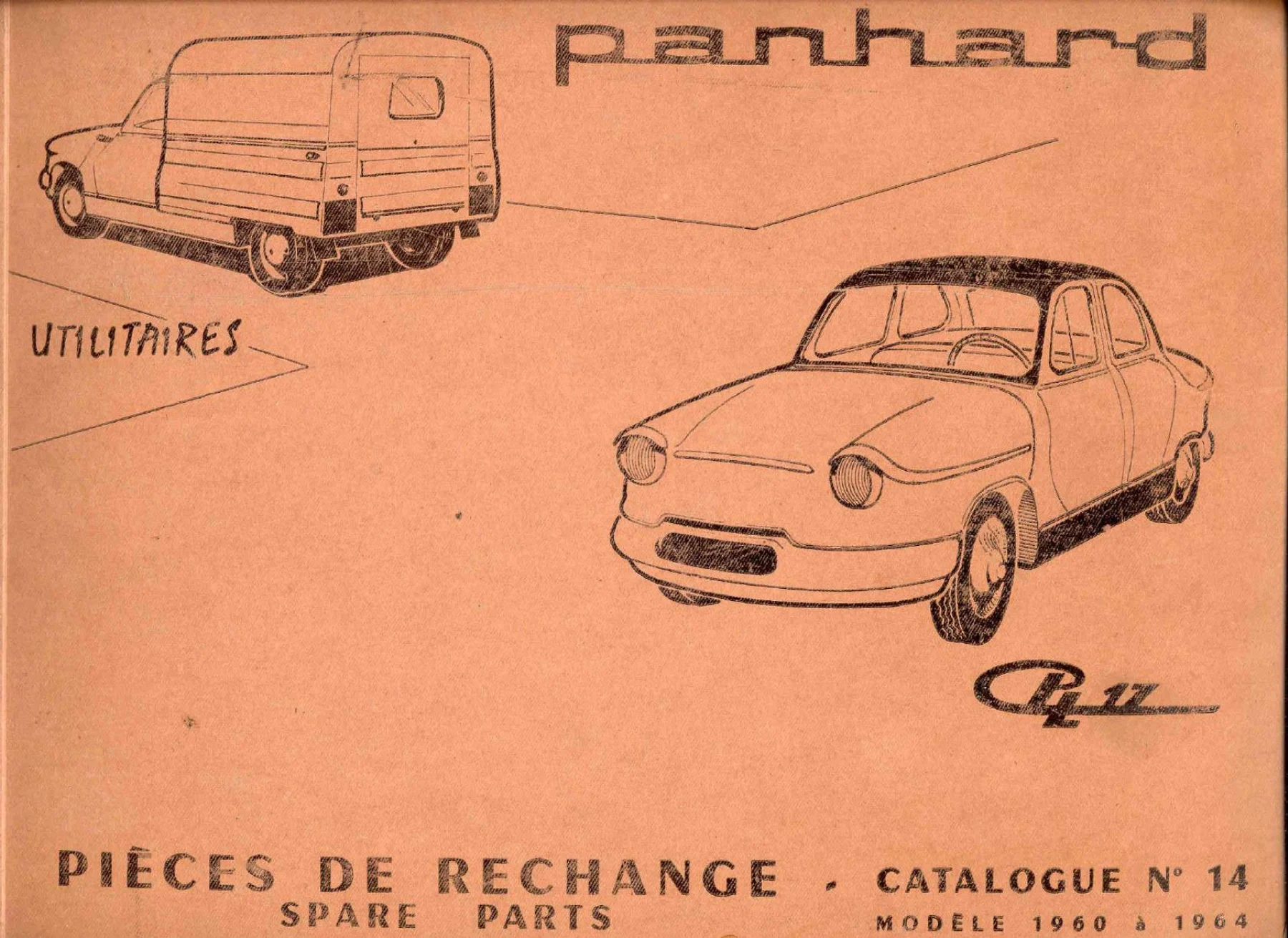
Panhard PL17 Spare Parts Catalogue No. 14 – 1960 to 1964 Parts Book PDF
Original price was: $39.95.$24.95Current price is: $24.95.
The complete Panhard PL17 Spare Parts Catalogue No. 14 covering the 1960-1964 PL17 saloons, the PL17 L8 Cabriolet and the WL1-WL6 utilitaires. 238 pages of exploded parts plates, factory part numbers and chassis-number identification tables – downloadable instantly as a PDF.
Description
Panhard PL17 Spare Parts Catalogue No. 14 – 1960 to 1964
The Panhard PL17 Spare Parts Catalogue No. 14 is the illustrated factory parts book issued by the Societe Anonyme des Anciens Etablissements Panhard & Levassor for the 1960 to 1964 model years. It covers the PL17 saloon in its L1 to L8 forms, the WL1 to WL6 utilitaires, the PL17 L8 Cabriolet and the Dyna Z / Dyna D 65 references that appear in the shared tables, listing every component by the part number Panhard used when the cars were current. Across 238 pages the catalogue works through eight groups – engine, clutch and transmission, suspension, steering, braking, fuel and air, electrical equipment and body – presenting each assembly as an exploded plate with the numbered parts listed beside it and, where a part changed during production, a table that ties the change to a chassis number or a mine type code. For anyone maintaining or restoring a Panhard PL17, that pairing of illustration and identification is what makes this catalogue worth having.
File Details
- Manual type: Illustrated spare parts catalogue (parts book)
- Manufacturer: Societe Anonyme des Anciens Etablissements Panhard & Levassor, 19 Avenue d’Ivry, Paris 13e
- Catalogue number: No. 14
- Models covered: Panhard PL17 (L1-L8), PL17 L8 Cabriolet, utilitaires WL1-WL6, Dyna Z and Dyna D 65 references
- Model years: 1960 to 1964
- Language: French, with English section headings in the front matter
- Page count: 238 pages
- File format: PDF
- Issue and revision dates: Covers the 1960-1964 models; contents updated through December 1962, with later revisions dated June 1963, November 1963 and February 1964
- Contents: General sale conditions, vehicle identification, how to use the catalogue, how to fill out orders, then groups 1 to 8 of parts plates and tables
What the Panhard PL17 Spare Parts Catalogue No. 14 Contains
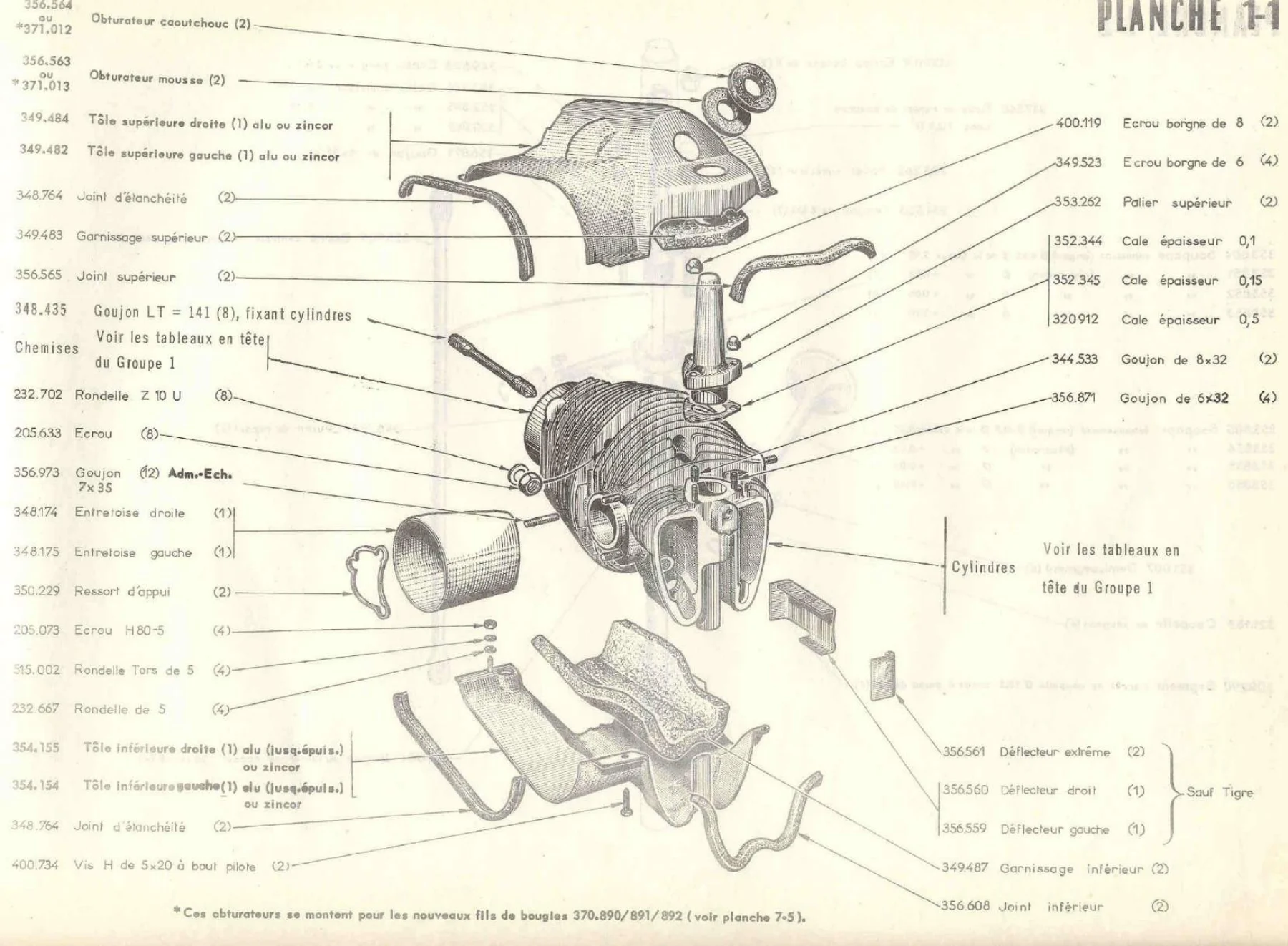
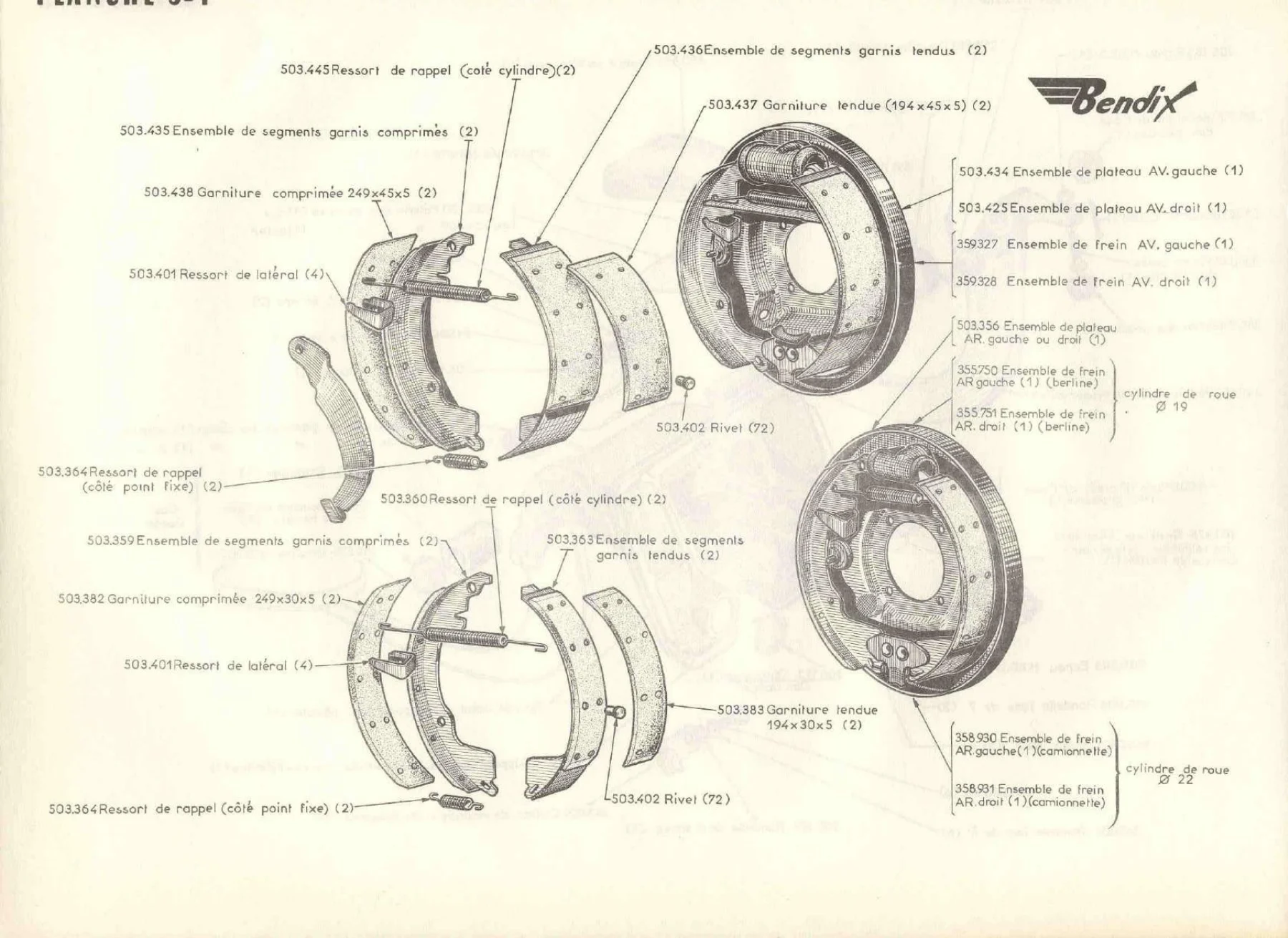
This is not a workshop manual that tells you how to rebuild an engine. It is the document you reach for once you already know which component you need and now have to find the correct part number, confirm that the number suits your particular car and describe it accurately enough to order. Every group opens with a plate: a numbered exploded drawing of the assembly, cylinder head, gear train, brake plate, wiring layout or door frame, with the numbers keyed to a list of part numbers and descriptions. Alongside the plates sit the tables that make the catalogue usable on a car built anywhere between 1959 and 1964.
Chapters and Assemblies Covered
- General sale conditions – ordering, model parts, despatch, returns, payment and delivery terms, plus the warranty clause and the conditions attached to it
- Identification of vehicles – the codes and indices stamped on the mine plate, the first chassis number of each type and the production changes they mark
- Group 1 – Engine: cylinders and liners; pistons, rings and gudgeon pins; crankshaft and journals; valves and valve gear; rocker assemblies and covers; camshafts, timing and distribution; bearings, seals and gaskets; auxiliary drive housing and distributor plate; oil pump, filter, gauge and pipework; fan and front cooling; engine and gearbox mountings; inlet and exhaust manifolds; heating ducts
- Group 2 – Clutch, gearbox and transmission: clutch mechanism and disc; Jaeger clutch; gearbox type CS and type C; gear trains, synchromesh cones and shafts; gear selector and gearchange linkage for left and right hand drive; transmission
- Group 3 – Suspension, shock absorbers and hubs: front and rear springs with leaf-by-leaf detail; pivots and suspension arms; telescopic shock absorbers; torsion bars; rear axle; hubs, drums, rims, balance weights and wheel studs
- Group 4 – Steering: steering wheel and column; steering box and slide; rack and pinion detail; track rods, ball joints and levers
- Group 5 – Braking: handbrake lever, cables and supports; hydraulic pipework and flexible hoses; master cylinder and reservoir; Bendix drum brake plates, shoes and springs; disc brake calipers, pads and repair kits
- Group 6 – Air filters, carburettors, fuel lines and tank: Tecalemit and Wilman air filters; Zenith carburettors; SEV, Guiot and AC Delco fuel pumps; fuel pipes and filter; fuel tank, filler and sender
- Group 7 – Electrical equipment and engine accessories: dashboard instruments and combined gauges; wiring harnesses for engine, body, dashboard and utility rear; dynamo and regulator; starter motor; distributor and ignition; headlamps, fog lamps, indicator and rear lamps; battery and cables; horns, wipers and switches
- Group 8 – Body: front end panels, traverse and bumper; bonnet and hinges; doors, locks, handles and check straps; glass, window regulators and quarter lights; interior trim, seats and runners; heating and demisting ducts; rear body panels and boot; utility bodywork, tarpaulins and tailgates
- Cabriolet supplement – the parts specific to the PL17 L8 Cabriolet are listed at the end of the document
Read end to end, the eight groups cover a complete PL17 or utilitaire from crankshaft to tailgate. The detail is what you would expect from a factory parts book of the period: not just a single number for an assembly, but the bolts, washers, joints, seals, springs and clips that hold it together, each with its own reference. Where a component was revised during production, the catalogue does not simply print the latest number and leave you to work it out. It prints both, and gives you the chassis number or engine sequence number at which the change took effect.
Identifying the Right Parts by Chassis Number and Mine Type
Panhard built the PL17 and the utilitaires across a series of production types, and the catalogue is organised around them. Early pages reproduce the identification table for the codes and indices stamped on the mine plate, listing the first chassis number of each type and the month from which it was built. Saloon types L1 through L8 and utility types WL1 through WL6 each have their own column, and the parts plates carry footnotes telling you which type or which chassis number a given plate applies to. Engine parts add a further layer: the engines are identified as M5 or M6, with separate tables for the M5-848, M5-850 and M6-040 assemblies and sequence numbers for tourism, Grand Standing, Tigre, Jaeger and Taxi versions. Cylinders, liners and pistons are grouped by class and by the number of piston grooves, and the catalogue prints the measurement ranges you use to decide which liner class to fit.
Because of this, a buyer can take a chassis number, an engine number or a mine plate code and work back to the exact part that left the factory on that car – rather than fitting whatever is currently being sold as a generic PL17 part.
How the Factory Wanted Orders Filled Out
The front of the catalogue devotes a full page to ordering instructions, and it is worth reading before you use the rest of the book. Panhard asked dealers to order monthly rather than on demand, to state on every order whether it was a monthly stock order or a breakdown order, and to quote the part number, the exact and complete description as printed on the catalogue plate, the vehicle type and the chassis number. Orders were to be placed in numerical order of part numbers, and kept separate for Dyna Z, Dyna D 65, PL17 and utilitaires, for older cars, for trucks and for trim. Telephone orders were accepted for a maximum of six lines only. For any fabric or trim request, a sample large enough to identify the colour had to be enclosed along with the chassis number. Anyone ordering parts for a Panhard today can follow the same discipline: this catalogue gives you every field the factory needed.
Who This Panhard PL17 Parts Book Is For
Owners of a running PL17 who need to replace a worn or broken component will use it to identify what they are looking at and what it is called. Restorers of a dismantled car will use it to work out what is missing and what the correct fasteners, seals and clips look like. Parts specialists and club members who keep a stock of Panhard components will use it to catalogue what they hold and to answer enquiries from other owners. Workshops that occasionally see a PL17 or a utility Panhard will use it to quote a job accurately instead of pricing from guesswork. The exploded plates are also useful on their own as assembly references when a component has to come apart and go back together in the right order.
Download the Panhard PL17 Spare Parts Catalogue No. 14
IMAGES PREVIEW
The Panhard PL17 Spare Parts Catalogue No. 14 puts the factory part numbering, the production change tables and the illustrated breakdown of every major assembly into your hands in one document. With it you can identify the correct part for a specific chassis number, confirm that a number you have been offered genuinely belongs to a 1960-1964 PL17 or utilitaire, and order or cross-reference components with the same information Panhard’s own parts department worked from. Nothing has to be guessed from a photograph or a vague description. The catalogue is delivered as an instant PDF download after payment – no shipping, no waiting for a parcel, and no risk of a paper original being damaged in the post. Read it on a laptop or tablet in the garage, or print the plate you are working from and take it to the bench. Buy the Panhard PL17 Spare Parts Catalogue No. 14 today and give your project the reference it deserves.

Reviews
There are no reviews yet.