
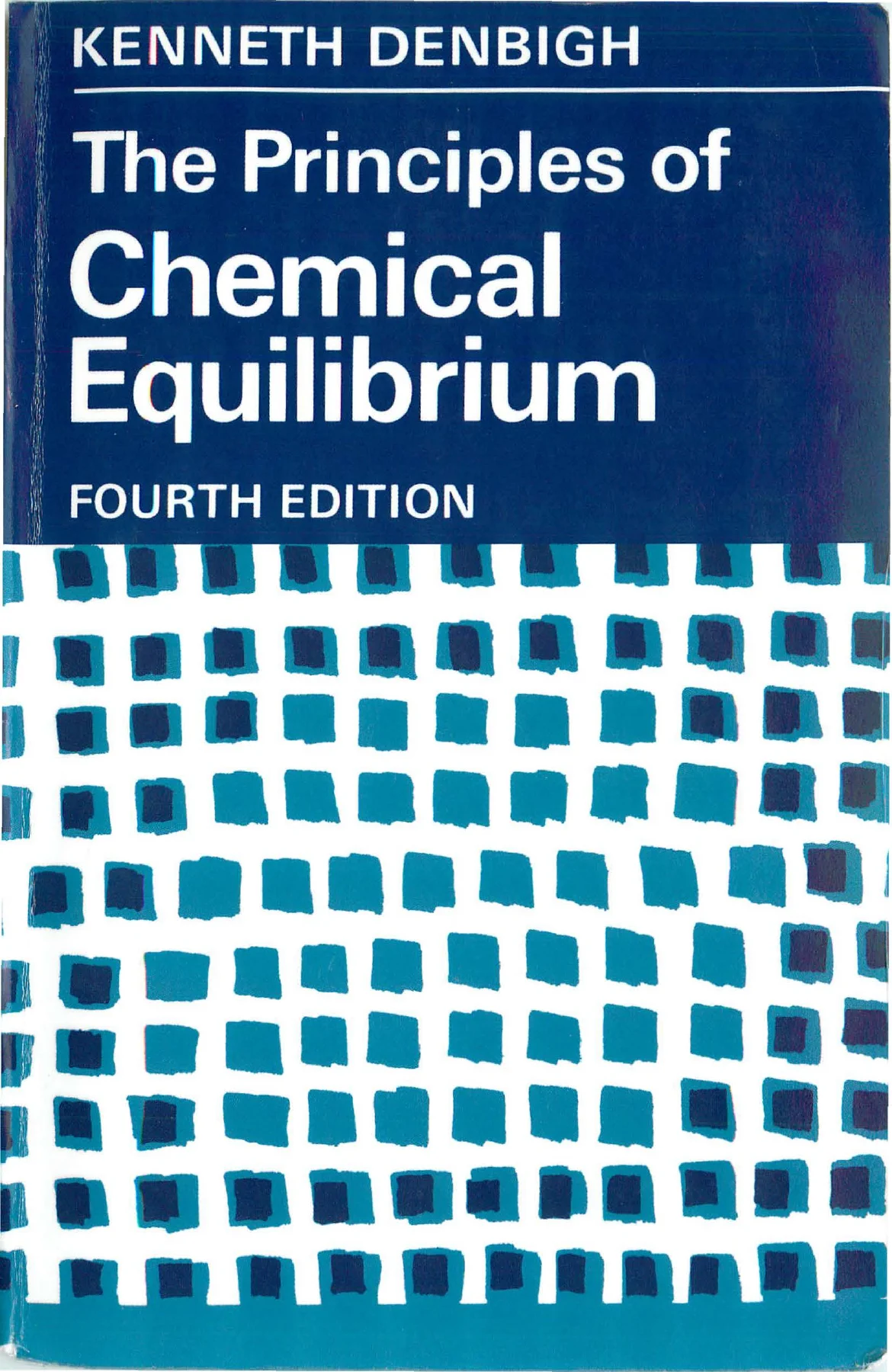
Principles of Chemical Equilibrium Fourth Edition – Denbigh Thermodynamics PDF
Original price was: $39.95.$24.95Current price is: $24.95.
Fourth-edition textbook PDF by Kenneth Denbigh covering classical thermodynamics, reaction and phase equilibria, solutions, electrolytes, statistical mechanics, perfect gases, crystals, the third law, and chemical kinetics.
Description
File Details
- Manual type: Thermodynamics textbook
- Author: Kenneth Denbigh, F.R.S.
- Edition: Fourth edition
- Publisher: Cambridge University Press
- Language: English
- Page count: 514 PDF pages; printed pagination runs through p. 487, with front matter and end matter included in the PDF
- File format: PDF
- Publication history shown: Fourth edition 1981; transferred to digital printing 2002
Chapters Covered
- Part I: The Principles of Thermodynamics
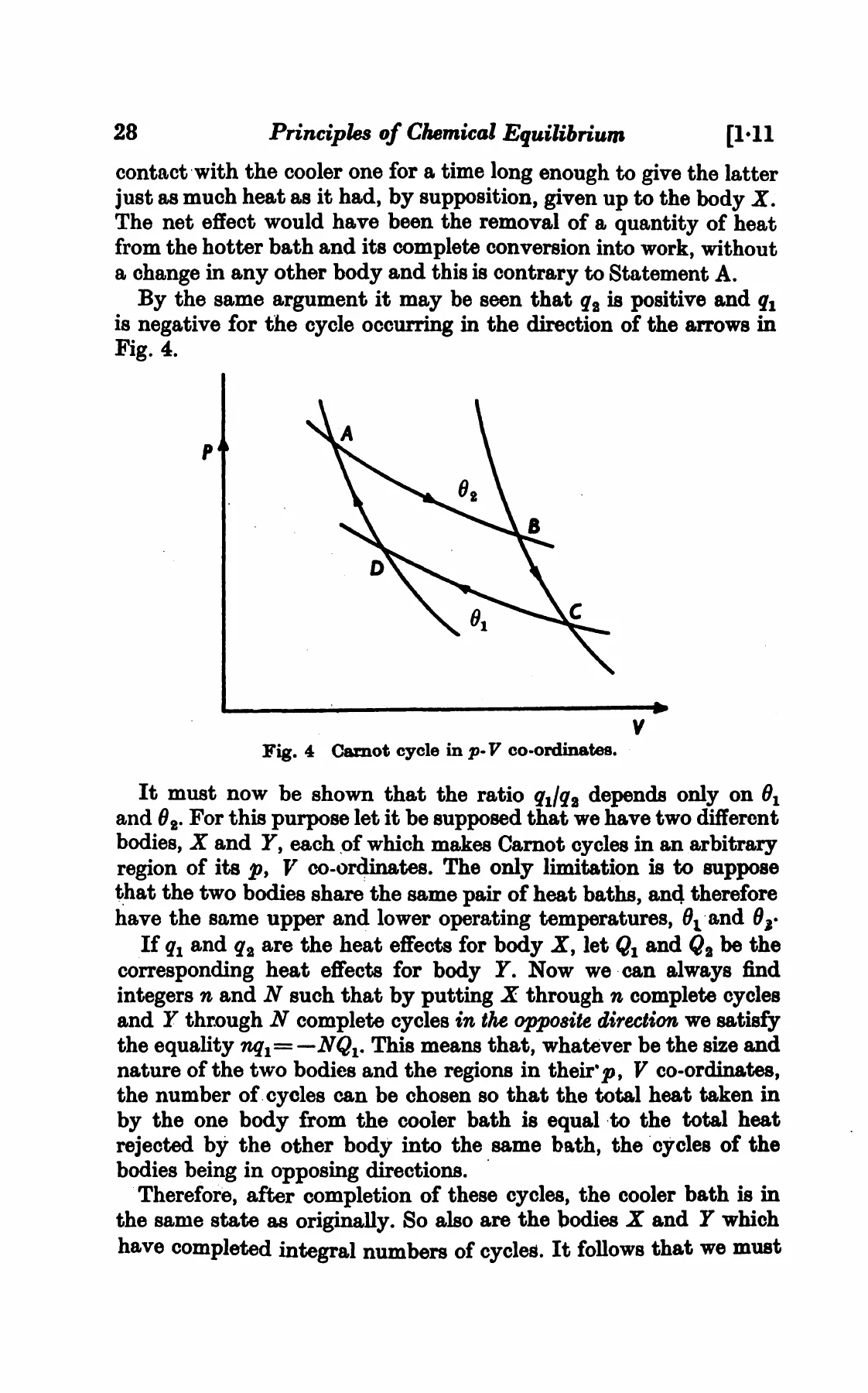
- Chapter 1: First and Second Laws – thermodynamic systems, variables, temperature and the zeroth law, work, internal energy, heat, reversible processes, entropy, maximum work, molecular interpretation of the second law
- Chapter 2: Auxiliary Functions and Conditions of Equilibrium – enthalpy, Helmholtz free energy, Gibbs function, availability, chemical potential, equilibrium criteria, Maxwell relations, partial molar quantities
- Part II: Reaction and Phase Equilibria
- Chapter 3: Thermodynamics of Gases – perfect gas, perfect gas mixtures, imperfect gases, Joule-Thomson effect, fugacity, Lewis and Randall rule
- Chapter 4: Equilibria of Reactions Involving Gases – stoichiometry, equilibrium constants, temperature dependence, free energies of formation, galvanic cells, simultaneous reactions, maximum attainable yield
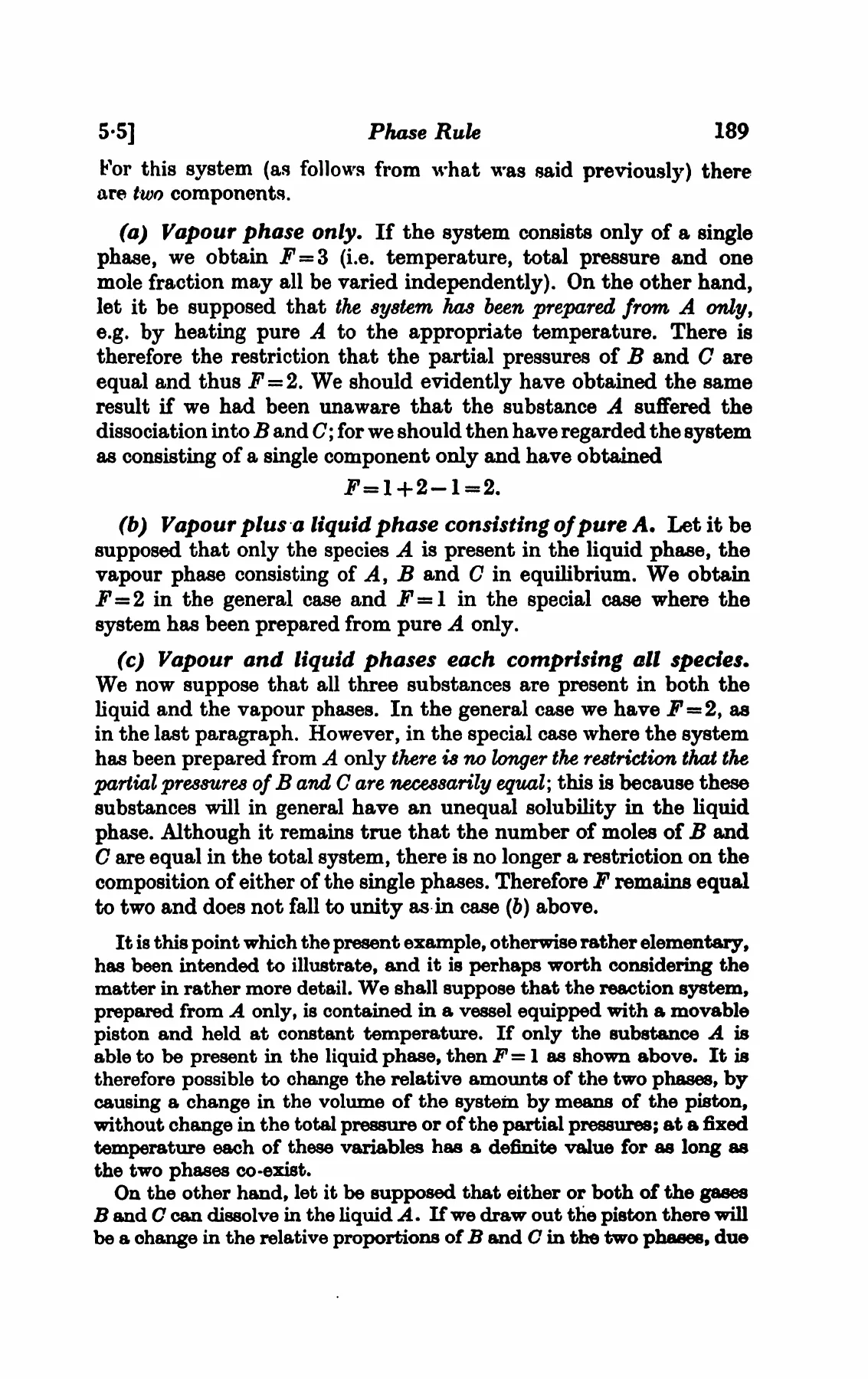
- Chapter 5: Phase Rule – non-reactive and reactive components, additional restrictions, examples from zinc smelting
- Chapter 6: Phase Equilibria in Single Component Systems – Clausius-Clapeyron equation, enthalpy of vaporization, lambda transitions
- Chapter 7: General Properties of Solutions and the Gibbs-Duhem Equation – pressure-temperature relations, partial pressure curves, Raoult and Henry laws, Margules and van Laar equations
- Chapter 8: Ideal Solutions – molecular aspects, Raoult and Henry laws, freezing-point depression, boiling-point elevation, osmotic pressure, ideal solubility of gases and solids
- Chapter 9: Non-Ideal Solutions – activity coefficient conventions, molality and concentration scales, excess functions, osmotic coefficient
- Chapter 10: Reaction Equilibrium in Solution. Electrolytes – free energies in solution, electrolyte notation, dissociation equilibrium, activity coefficients, solubility product, hydrogen ion convention, galvanic cell measurements
- Part III: Thermodynamics in Relation to the Existence of Molecules
- Chapter 11: Statistical Analogues of Entropy and Free Energy – quantum states, ensembles, canonical distribution, statistical analogues, thermal and configurational entropy
- Chapter 12: Partition Function of a Perfect Gas – molecular partition function, Schrödinger equation, translational and internal partition functions, thermodynamic properties, Maxwell-Boltzmann distribution, equipartition
- Chapter 13: Perfect Crystals and the Third Law – normal co-ordinates, harmonic oscillator, Einstein and Debye approximations, vapour pressure, third law tests and applications
- Chapter 14: Configurational Energy and Entropy – lattice model of mixtures, Langmuir isotherm
- Chapter 15: Chemical Equilibrium in Relation to Chemical Kinetics – kinetic species, forward and backward processes, thermodynamic restrictions, transition-state theory, reaction rate
- Appendix: Answers to Problems and Comments
- Index
This fourth-edition textbook develops chemical thermodynamics from the first and second laws through reaction and phase equilibria, then extends the treatment into statistical mechanics and chemical kinetics. It is organized for students in chemistry and chemical engineering who need a quantitative grounding in equilibrium theory, with worked problems, numerical answers, and applications drawn from laboratory and industrial practice. The text includes treatments of gases, solutions, electrolytes, galvanic cells, phase rule applications, partition functions, perfect crystals, the third law, and the relationship between equilibrium and reaction rates. It is a reference-oriented PDF for readers who want the full theoretical development and the problem sets in one document.
What This Denbigh Thermodynamics PDF Supports
The book supports study and reference work across classical thermodynamics and chemical equilibrium. Readers can follow the derivation of the fundamental equations for closed and open systems, examine criteria of equilibrium in terms of entropy, Helmholtz free energy, and Gibbs function, and work through the thermodynamic relations that connect measurable quantities such as heat capacities, expansivities, compressibilities, and partial molar properties.
For reaction equilibria, the text covers equilibrium constants for gas reactions, the temperature dependence of equilibrium constants, standard free energies and enthalpies of formation, and the use of galvanic cells to measure free-energy changes. It also treats reactions involving gases together with immiscible liquids and solids, the phase rule for reactive and non-reactive systems, single-component phase equilibria, and the Clausius-Clapeyron equation.
For solutions and electrolytes, the manual covers ideal and non-ideal solutions, Raoult and Henry laws, activity coefficients on mole fraction and molality scales, Gibbs-Duhem applications, excess functions, electrolyte dissociation, mean ion activity coefficients, solubility products, and the hydrogen ion convention. The statistical mechanics portion introduces quantum states, ensembles, the canonical distribution, partition functions for perfect gases, perfect crystals, the Einstein and Debye approximations, and the third law.
Who This Fourth Edition Is For
This PDF is suited to advanced undergraduate or graduate study in chemistry and chemical engineering, and to technical reference where a rigorous thermodynamic treatment of chemical equilibrium is required. It is also useful for readers who want the original problem sets and answers alongside the theoretical development. The text assumes familiarity with calculus and with the basic concepts of temperature, heat, and work, and it builds the subject in a logical sequence rather than as a formula sheet.
IMAGES PREVIEW
Instant PDF Delivery and Practical Use
The Principles of Chemical Equilibrium Fourth Edition – Denbigh Thermodynamics PDF is delivered as an instant PDF download after payment, with no shipping and no waiting for a physical book. It can be read on a laptop, tablet, or phone, and pages can be printed for study groups, problem sessions, or desk reference. The combination of classical thermodynamics, reaction and phase equilibria, solution thermodynamics, electrolyte treatment, statistical mechanics, and chemical kinetics makes this a practical single-file reference for coursework, exam preparation, and quantitative equilibrium work.
Reviews
There are no reviews yet.