
Valtra N Series Versu Tractor Operator Manual 2015 – N134 V, N154e V, N174 V PDF
Original price was: $55.95.$34.95Current price is: $34.95.
518-page PDF operator manual for Valtra N Series Versu tractors N134 V, N154e V and N174 V, covering operation, maintenance, troubleshooting and technical specifications.
Description
Valtra N Series Versu Tractor Operator Manual 2015
This Valtra N Series Versu Tractor Operator Manual 2015 is the 518-page PDF operator manual for the N Series Versu models N134 V, N154e V and N174 V. It carries reference number 39 893 21 3 and the date 08/2015. The manual is written for agricultural tractors, and it sets out the operating, servicing and maintenance instructions the owner and operator need to use the tractor properly. The introduction states plainly that the instructions must be read and understood before the tractor is used, and that all valid laws and regulations must be followed even where they are not specifically pointed out.
File Details
- Manual type: Operator’s manual
- Brand: Valtra
- Model: N Series Versu
- Covered models: N134 V, N154e V, N174 V
- Language: English
- Page count: 518
- File format: PDF
- Reference number: 39 893 21 3
- Date: 08/2015
Chapters Covered
- Safety precautions
- Instruments and controls
- Operation
- Maintenance
- Troubleshooting
- Technical specifications
Safety precautions
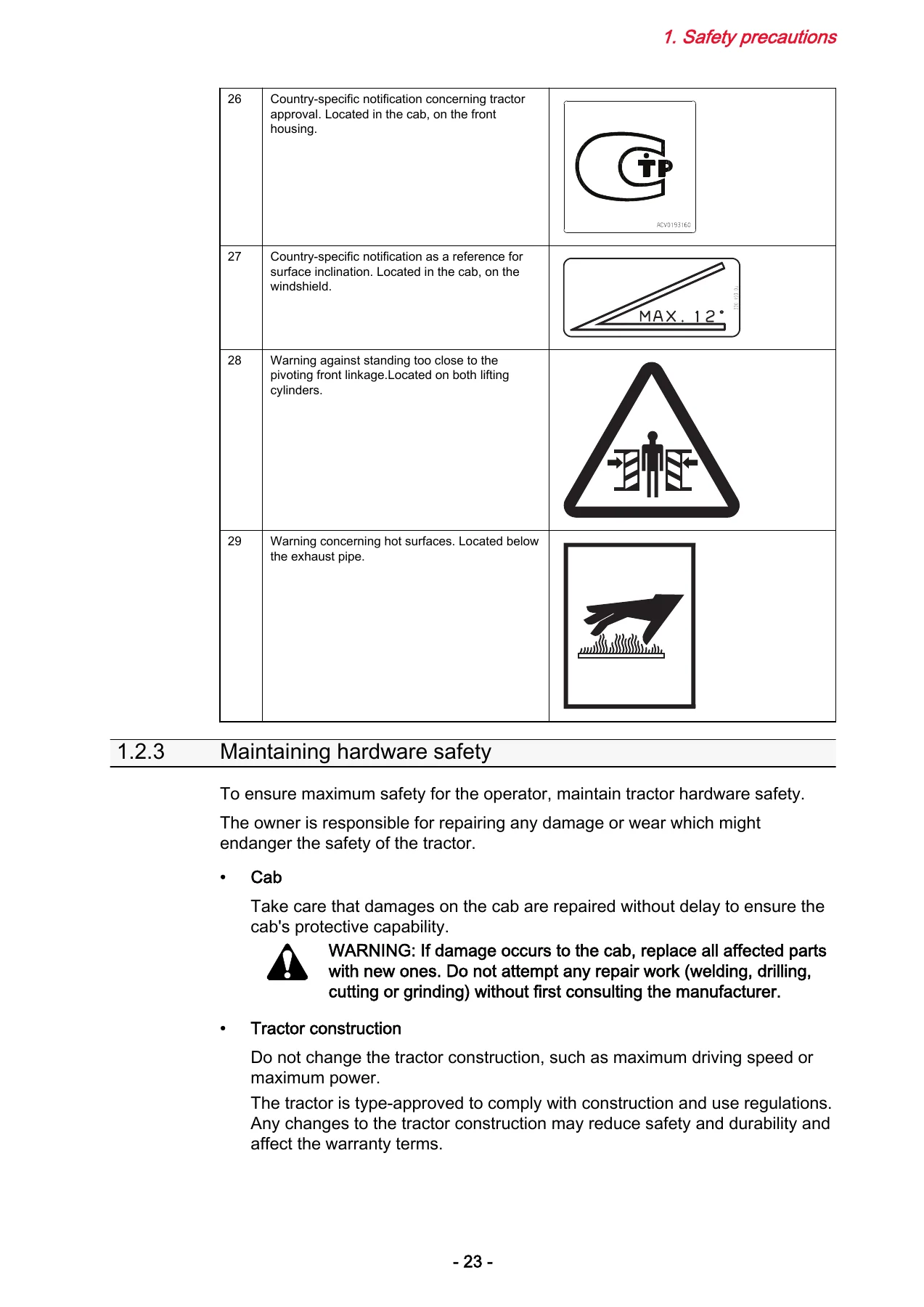
The safety chapter opens with hazard statement definitions and then works through the practical safety rules for this tractor. It covers replacing safety and information signs, the meaning and location of the safety signs fitted to the tractor, maintaining hardware safety, and using the safety features provided. The safe operation section addresses following safe operating practices, getting into and out of the cab, driving on public roads, controlling driving speed, driving downhill, permitted driving inclinations, operating with implements, running PTO-driven implements or machines, using ballast weights, towing, personal safety of other people, fire hazards, handling viton seals subjected to high temperatures, the aftertreatment system, working with the front loader, and repair and maintenance safety. This is where the operator finds the warnings that matter before starting work, including the permitted slope angles and the precautions for front linkage, front loader and trailer use.
Instruments and controls
This chapter identifies the controls and instruments by location and function. It covers the one-key locking system, pedals, dashboard, the control panel for the A-pillar display and Proline, the Proline instrument panel and its symbols and indicator lights, and the controls on the right-hand side including the tractor terminal, driving controls, linkage, power take-off, auxiliary hydraulics and other controls. It also covers controls on the rear side, left-hand side, right-hand side roof console, Skyview equipment roof console, working light controls, air conditioning controls, operator’s seat, rear mudguard controls, front end controls and connections, and rear controls and connections outside the cab. The illustrations and callouts help the operator locate the correct switch, lever or socket before using the tractor.
Operation
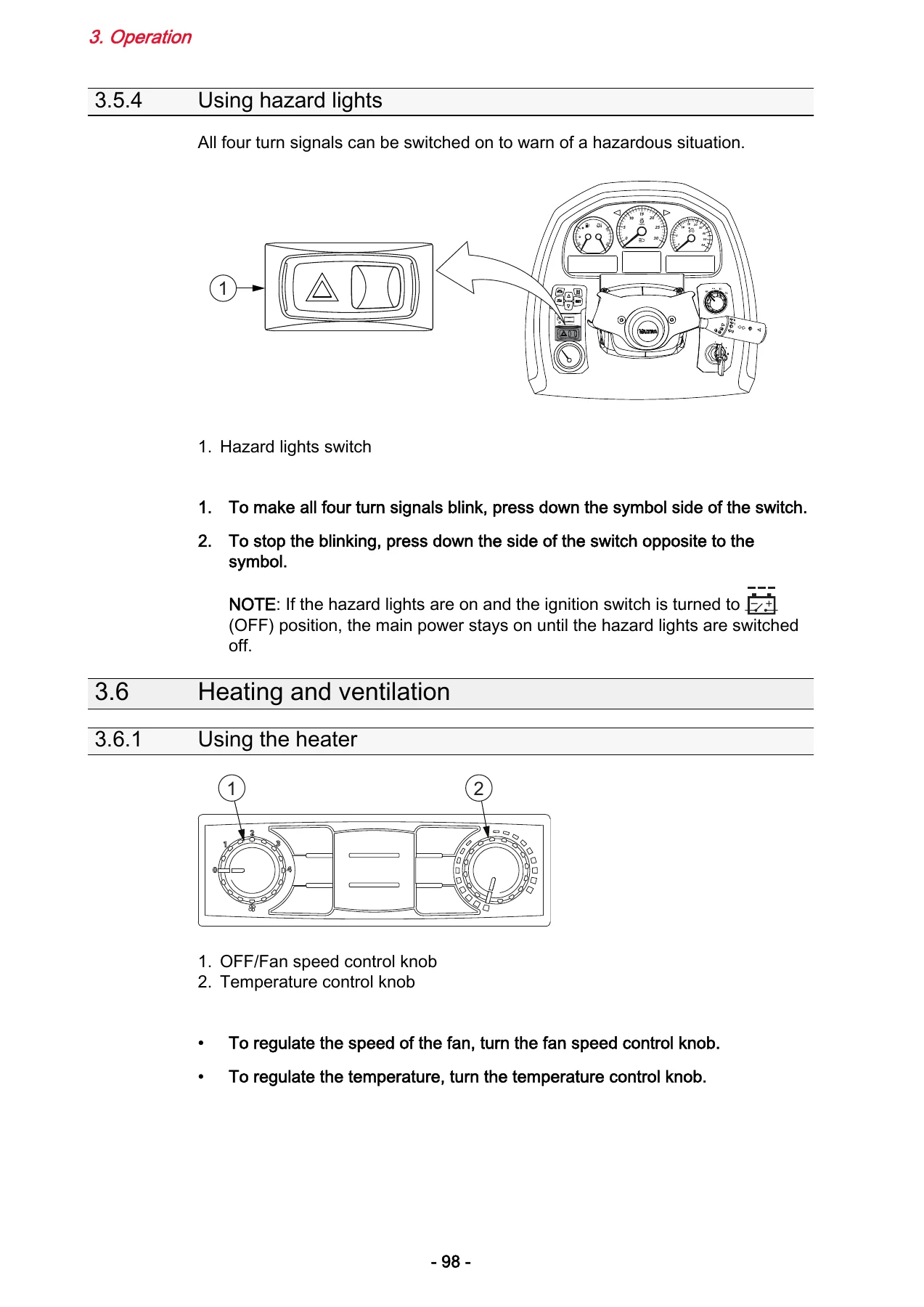
The operation chapter is the largest part of the manual and follows the tractor through preparation, starting, driving and work. It begins with running the tractor in and preparing for use, including seat adjustment, armrest and steering wheel adjustment, mirrors, wipers, window heaters, the power shuttle lever, control stop, ignition switch, main power, main power emergency button and roof hatch. Starting instructions are given for normal conditions, cold conditions and auxiliary battery starting. The chapter then covers lights, notification devices, heating and ventilation, power outlets, driving the tractor, power shuttle, parking brake, clutch pedal, braking, emergency brake button and lever, starting to drive, the transmission system, speed matching, speed range selection, creeper speed range, Powershift, preprogramming gear for direction changes, shifting automatics, the Powershift limiter, automatic shifting between speed ranges C and D, EcoPower mode, parking, refuelling, cruise control, automatic traction control, front axle and cab suspension, differential lock, four-wheel drive, driving start automatics, anti-slip regulation, QuickSteer, TwinTrac reverse drive system, HillHold, displays, the Proline instrument panel display, A-pillar display, tractor terminal, rear linkage, three-point linkage, auxiliary hydraulics, front linkage, pivoting front linkage, Valtra LHLink, Valtra front loader, power take-off, U-Pilot headland automatics, implement signal connection, ISOBUS implement control system, Auto-Guide Readiness, towing devices, air pressure system and trailer. The procedures are written for the operator who needs to set up, drive and control the tractor and its implements correctly.
Maintenance
The maintenance chapter sets out the maintenance schedule, service inspection and the tasks that keep the tractor reliable. It covers cleaning the tractor and engine compartment, cleaning polycarbonate windows, cleaning the fuel-operated heater and exhaust pipe, greasing lubricating points, supporting the tractor, recommended fuel and lubricants, storing the tractor, running the tractor in after storage, periodical maintenance, the periodical maintenance chart, daily maintenance, weekly maintenance, maintenance every 600 hours, maintenance every 1200 hours or yearly, maintenance every 2400 hours or every other year, and checks and adjustments. The daily and weekly checks include engine oil level, coolant level, radiator cleaning, transmission and hydraulic oil levels, greasing the rear linkage and pick-up hitch, front linkage checks, belt tension, tyre pressure, emergency brake, windscreen washer fluid and air pressure system antifreeze. The larger intervals cover oil and filter changes, air filters, fuel filters, brake checks, front axle oil, PTO housing oil, hydraulic breather, transmission breather, suction strainer, brake bleeding, cooling system cleaning and air conditioning maintenance. There are also checks and adjustments for tyres, track widths, chains, twin-mounted wheels, engine fuel bleeding, electrical system, fuses and relays, headlights, power transmission, steering angle, cab and shields, Valtra LHLink and towing devices.
Troubleshooting
The troubleshooting chapter helps the operator handle error situations. It covers warnings on the Proline instrument panel display, identifying a blocked transmission or hydraulic system filter, viewing service codes, viewing the IO list, Valtra LHLink fault codes, steering system malfunctions, and towing the tractor when the engine is running or not running. The warnings section lists messages such as low fuel pressure, high hydraulic oil temperature, low hydraulic oil level, slow down, PTO speed too high, secondary brake and parking brake faults, and fuel level sensor circuit faults. This chapter is useful when an indicator light or message appears and the operator needs to decide whether to stop, check a level, clean a cooler or contact a workshop.
Technical specifications
The technical specifications chapter provides the reference data for the tractor. It covers dimensions, masses, maximum permissible axle loading, technically permissible towable masses, tyres, wheel nut tightening torques, wheel stud dimensions, flange distance for axles, track widths, engine, engine lubrication system, fuel system, selective catalytic reduction system, air cleaner, cooling system, electrical system, power transmission, power shuttle, clutch, gearbox, rear axle differential lock, rear power take-off, front power take-off, brake system, steering system, front axle, turning circle, front axle suspension, cab and shields, cab filter capacity, windscreen washer, air conditioning system, noise level, exposure to vibration, hydraulic system, low-pressure circuit, steering hydraulic circuit, working hydraulic circuit, valves for auxiliary hydraulics, counter pressure when using the return connection, rear linkage, front linkage and towing devices. The tables give the operator and service personnel a single place to check capacities, pressures, torques, speeds, ratios and other published values for the N Series Versu tractors.
A Practical Reference for N Series Versu Work
The Valtra N Series Versu Tractor Operator Manual is not limited to one task. It supports the daily routine of checking oil and coolant, adjusting the seat and mirrors, selecting the right speed range, engaging four-wheel drive or the differential lock, setting the rear linkage, connecting auxiliary hydraulics, running the PTO and using the front loader. It also supports the jobs that need more care: cold starting, hill starts with HillHold, trailer braking checks, U-Pilot programme recording, ISOBUS connections, Auto-Guide readiness, transmission settings and maintenance intervals. When a warning appears, the troubleshooting chapter gives the operator a structured way to identify the message and decide what to do next. When a repair or adjustment is needed, the maintenance chapter and technical specifications give the published procedures and values rather than guesswork.
For anyone running a N134 V, N154e V or N174 V, the value of this manual is in the detail. It shows the correct controls, the correct sequence and the correct limits. It helps avoid damage to the transmission, linkage, PTO, hydraulics and aftertreatment system by using the procedures the manufacturer set out. It also helps the operator get consistent results from implements, whether the task is field work, loader work, transport or headland turns. The manual is a PDF, so it can be kept on a phone, tablet or laptop in the workshop or cab, printed for the office, and used without waiting for shipping.
Delivery is instant after payment. The PDF can be viewed on any device that reads PDF files and can be printed for a paper copy. Keep it with the tractor as a working reference for operation, maintenance and troubleshooting, and use the technical specifications when a value or capacity needs to be confirmed.
IMAGES PREVIEW
Reviews
There are no reviews yet.