Yamaha EK40G EK40J Outboard Motor Service Manual 40HP 2-Stroke PDF
Original price was: $95.00.$19.95Current price is: $19.95.
Official Yamaha factory service manual for EK40G and EK40J 40HP 2-stroke outboard motors. Complete 200-page technical documentation covering the 669cc twin-cylinder engine, fuel system, power unit, lower unit, bracket assembly, electrical systems, CDI ignition, carburetor setup, propeller selection, and troubleshooting procedures. Essential workshop manual for marine mechanics, boat owners, and technicians servicing Yamaha outboard engines.
Description
Yamaha EK40G EK40J Outboard Motor Service Manual 40HP 2-Stroke- PDF DOWNLOAD
DESCRIPTION
Yamaha EK40G / EK40J Outboard Motor Official Factory Service Manual
This is the complete, official Yamaha factory service manual for the EK40G and EK40J 40 horsepower 2-stroke outboard motors. With 200 comprehensive pages of detailed technical information, this manual provides everything needed for professional maintenance, repair, and troubleshooting of these reliable Yamaha marine engines.
FILE DETAILS
- Manual Name: Yamaha EK40G/EK40J Service Manual
- Model Numbers: EK40GMH, EK40JMH, EK40JW
- Engine Type: 2-Stroke, Water-Cooled Outboard
- Power Output: 29.4 kW (40 HP) @ 5,000 RPM
- Publication Date: August 2004
- Manual Code: 6H9-28197-5G-11
- PDF Quality: High-quality original factory documentation
- Total Pages: 200 Pages
- File Size: 9 MB
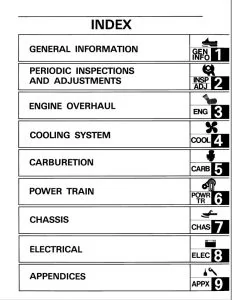
COMPLETE CHAPTER BREAKDOWN
Chapter 1: General Information
- How to use this service manual effectively
- Safety precautions while working
- Fire prevention and ventilation requirements
- Self-protection equipment guidelines
- Parts, lubricants, and sealant specifications
- Good working practices and procedures
- Disassembly and assembly techniques
- Model identification and serial number location
- Propeller selection guide (diameter and pitch)
- Comprehensive predelivery check procedures:
- Fuel system inspection
- Gear oil level verification
- Battery capacity and electrolyte checks
- Outboard motor mounting height adjustment
- Remote control cable setup
- Steering system verification
- Gear shift and throttle operation testing
- Safety switch testing procedures
- Cooling water pilot hole inspection
- Test run procedures
- Break-in operation guidelines (5-stage process)
- Post-test run inspections
Chapter 2: Specifications
- Complete general specifications table
- Maintenance specification charts
- Power unit detailed specifications:
- Engine type: 2-stroke, L configuration
- Cylinder quantity: 2 cylinders
- Total displacement: 669 cc (40.82 cu. in)
- Bore × Stroke: 78.0 × 70.0 mm (3.07 × 2.76 in)
- Compression ratio: 5.00:1
- Intake system: Reed valve
- Scavenging system: Loop charge
- Full throttle operating range: 4,500–5,500 RPM
- Engine idle speed: 1,050–1,150 RPM
- Maximum fuel consumption specifications
- Starting system: Manual / Manual and Electric
- Fuel system: Carburetor with pre-mixed fuel
- Ignition: CDI (Capacitor Discharge Ignition)
- Spark plug: B7HS (NGK)
- Cooling system: Water-cooled
- Exhaust: Underwater exhaust
- Lubrication: Propeller boss, pre-mixed fuel system
- Lower unit specifications and gear ratios
- Electrical system specifications:
- Generator output: 12V, 6A (80W)
- Battery requirements: CCA/EN 347A, 20HR/IEC 40Ah
- Starting enrichment: Choke valve system
- Dimension specifications (overall length, width, height, weight)
- Transom height specifications (S and L models)
- Comprehensive tightening torque specifications
- General torque specifications for all fasteners
Chapter 3: Periodic Checks and Adjustments
- Scheduled maintenance intervals
- Oil and fuel mixing ratios (30:1 normal, 25:1 break-in)
- Spark plug inspection and replacement
- Carburetor adjustment procedures
- Idle speed adjustment
- Timing verification
- Fuel system inspection
- Cooling system maintenance
- Gear oil change procedures
- Propeller inspection and maintenance
- Anode replacement schedule
- Lubrication points and procedures
- Control cable adjustments
- Steering friction adjustment
- Throttle linkage synchronization
Chapter 4: Fuel System
- Carburetor disassembly and assembly procedures
- Carburetor component identification
- Float level adjustment specifications
- Main jet and pilot jet specifications
- Needle valve settings
- Air-fuel mixture adjustment
- Choke valve operation and testing
- Fuel pump service procedures
- Fuel filter replacement
- Fuel hose inspection and replacement
- Reed valve inspection and specifications
- Intake manifold service
- Pre-mixed fuel preparation guidelines
- Fuel system troubleshooting
Chapter 5: Power Unit
- Complete engine disassembly procedures
- Cylinder head removal and installation
- Piston and connecting rod service:
- Piston ring end gap specifications
- Piston-to-cylinder clearance measurements
- Piston pin specifications
- Connecting rod big-end clearance
- Bearing replacement procedures
- Crankshaft service and inspection:
- Crankshaft runout specifications
- Main bearing replacement
- Seal replacement procedures
- Cylinder bore measurement and honing
- Compression testing procedures
- Valve timing verification
- Reed valve inspection and replacement
- Exhaust system service
- Water pump impeller replacement
- Thermostat testing and replacement
- Cooling passage inspection and cleaning
- Power head mounting procedures
- Gasket and seal replacement
- Torque specifications for all engine components
Chapter 6: Lower Unit
- Lower unit removal and installation
- Drive shaft disassembly and assembly procedures
- Propeller shaft service and seal replacement
- Forward gear inspection and replacement
- Reverse gear maintenance
- Bearing separator tool usage (Tool #90890-06534)
- Clutch dog inspection and specifications
- Shift mechanism adjustment
- Water pump housing service
- Water intake screen cleaning
- Gear oil capacity and specifications
- Oil seal replacement procedures
- Bearing pre-load adjustment
- Shimming procedures for proper gear mesh
- Lower unit alignment verification
- Anti-cavitation plate inspection
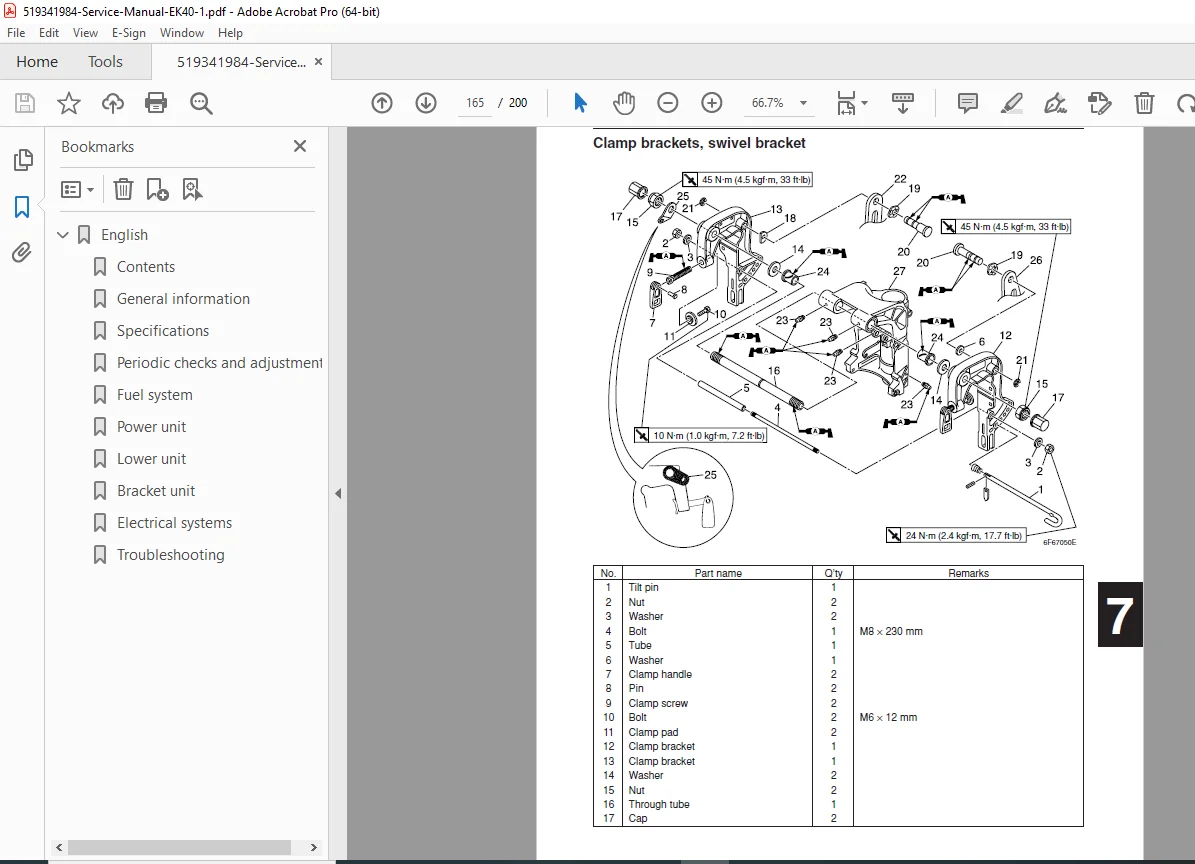
Chapter 7: Bracket Unit
- Transom bracket mounting procedures
- Clamp screw tightening specifications
- Tilt/trim system operation (if equipped)
- Steering friction adjustment
- Swivel bracket service
- Tilt pin maintenance
- Steering cable routing and adjustment
- Remote control cable installation
- Shift/throttle cable synchronization
- Cable minimum engagement specifications (8.0mm)
- Mounting height optimization
- Transom height selection (S vs L models)
Chapter 8: Electrical Systems
- Complete wiring diagrams for all models
- CDI ignition system operation and testing
- Pulser coil testing procedures
- Charge coil specifications and testing
- Generator/alternator output testing
- Voltage regulator/rectifier testing
- Battery charging system diagnostics
- Electric start system troubleshooting (EK40JMH, EK40JW)
- Starter motor service and testing
- Engine start switch testing
- Engine stop lanyard switch operation
- Neutral start safety switch
- Spark plug cap resistance testing
- Ignition timing verification
- Kill switch circuit testing
- Lighting system (if equipped)
- Fuse and circuit protection
- Wire color codes and connector identification
- Resistance and voltage specifications for all components
Chapter 9: Troubleshooting
- Comprehensive troubleshooting charts
- Starting problems diagnosis
- Running problems analysis
- Overheating issues
- Poor acceleration troubleshooting
- Excessive vibration diagnosis
- Fuel system problems
- Ignition system failures
- Charging system issues
- Shift problems
- Water pump failure symptoms
- Oil leak diagnosis
- Abnormal noise identification
- Performance issues
- Systematic diagnostic procedures
TECHNICAL SPECIFICATIONS SUMMARY
Engine Details
- Type: 2-Stroke, L-Type Twin Cylinder
- Displacement: 669 cc (40.82 cubic inches)
- Bore × Stroke: 78.0 × 70.0 mm (3.07 × 2.76 inches)
- Compression Ratio: 5.00:1
- Maximum Output: 29.4 kW (40 HP) @ 5,000 RPM
- Full Throttle Range: 4,500–5,500 RPM
- Idle Speed: 1,050–1,150 RPM
- Fuel Consumption: 19.5 L/hr (5.2 US gal, 4.3 Imp gal) @ 5,500 RPM
Fuel & Lubrication
- Fuel System: Carburetor with pre-mixed fuel
- Fuel/Oil Ratio: 30:1 (normal operation)
- Break-in Ratio: 25:1 (gasoline), 30:1 (kerosene)
- Ignition: CDI (Capacitor Discharge Ignition)
- Spark Plug: NGK B7HS
- Cooling: Water-cooled with thermostat
Electrical System
- Generator Output: 12V, 6A (80W)
- Battery: 12V, 40 Ah (CCA/EN 347A)
- Starting: Manual (EK40GMH) / Manual & Electric (EK40JMH, EK40JW)
Dimensions & Weight
- Overall Length: 997 mm (39.3 in) – EK40G/J
- Overall Width: 484 mm (19.1 in) – EK40G/J
- Overall Height (S): 1,215 mm (47.8 in) – EK40G
- Overall Height (L): 1,342 mm (52.8 in) – EK40G
- Transom Height (S): 381 mm (15.0 in)
- Transom Height (L): 508 mm (20.2 in)
- Dry Weight (S): 65-70 kg (143-154 lb)
- Dry Weight (L): 68-72 kg (150-159 lb)
Propeller Options
- EK40G: 7 sizes available (11 3/4″ to 11 1/2″ diameter, various pitches)
- EK40J: 13 sizes available (10 1/4″ to 12 1/4″ diameter, various pitches)
- Material: Aluminum
- Type designation: H-series (EK40G), G-series (EK40J)
KEY FEATURES OF THIS SERVICE MANUAL
✓ Factory-Authorized Procedures – Official Yamaha service information
✓ Detailed Exploded Diagrams – Clear component identification
✓ Comprehensive Torque Specifications – All fastener torque values
✓ Complete Wiring Diagrams – Full electrical system schematics
✓ Special Tool Requirements – Specific Yamaha tool part numbers
✓ Troubleshooting Charts – Systematic diagnostic procedures
✓ Maintenance Schedules – Proper service intervals
✓ Break-In Procedures – 5-stage break-in operation guidelines
✓ Safety Information – Important warnings and cautions throughout
✓ Propeller Selection Guide – Optimal propeller sizing
SPECIAL TOOLS REFERENCED
- Bearing Separator: 90890-06534
- Additional Yamaha special service tools listed throughout
IDEAL FOR:
- Professional marine mechanics and technicians
- Yamaha authorized service centers
- Boat dealerships and repair facilities
- Marina maintenance departments
- Boat owners performing DIY maintenance
- Marine technical training programs
- Fishing guide services maintaining their equipment
- Commercial fishermen
- Rental boat fleet operators
- Anyone rebuilding or restoring EK40 outboard motors
WHY THIS MANUAL IS ESSENTIAL:
Yamaha EK40 outboard motors are known for their reliability and performance in marine applications. Proper maintenance using factory procedures ensures:
✓ Optimal Performance – Keep your outboard running at peak efficiency
✓ Extended Engine Life – Follow proper maintenance intervals
✓ Safety – Ensure all safety systems function correctly
✓ Fuel Efficiency – Proper tuning saves fuel costs
✓ Warranty Compliance – Use factory-approved procedures
✓ Resale Value – Documented service history increases value
✓ Troubleshooting – Quickly diagnose and repair issues
Get your Yamaha EK40G/EK40J service manual today and maintain your outboard motor like a factory-trained technician! Instant PDF download means you can start servicing immediately. Whether you’re performing routine maintenance or complete engine rebuilds, this factory manual provides the accurate information you need for reliable, professional results.