
Yamaha XTZ750 Service Manual 3LD 3SC 3TD Workshop Repair Manual PDF
Original price was: $34.95.$21.95Current price is: $21.95.
425-page Yamaha XTZ750 service manual PDF covering 3LD, 3SC (E) and 3TD (CH) models. Full engine overhaul, valve clearance, carburetor synchronization, cooling system, chassis, brakes, wiring and troubleshooting procedures with factory specs.
Description
Yamaha XTZ750 Service Manual — 3LD, 3SC and 3TD Workshop Repair Manual
This Yamaha XTZ750 Service Manual is the full workshop repair guide for the XTZ750, covering the 3LD, 3SC (E) and 3TD (CH) model codes. It is the manual you reach for when the valve clearance needs checking, when the carburetors need synchronizing, when the clutch starts slipping, when the cooling system needs draining and refilling, or when a fault in the T.C.I. ignition system has to be traced. Every procedure in this Yamaha XTZ750 workshop manual is written around the machine as built, with the factory torque figures, service limits and measurement points printed alongside the steps.
File Details
- Manual type: Service / Workshop Manual
- Brand: Yamaha
- Model: XTZ750
- Model codes: 3LD, 3SC (E), 3TD (CH)
- Language: English
- Page count: 425
- File format: PDF
Chapters Covered in This Yamaha XTZ750 Repair Manual
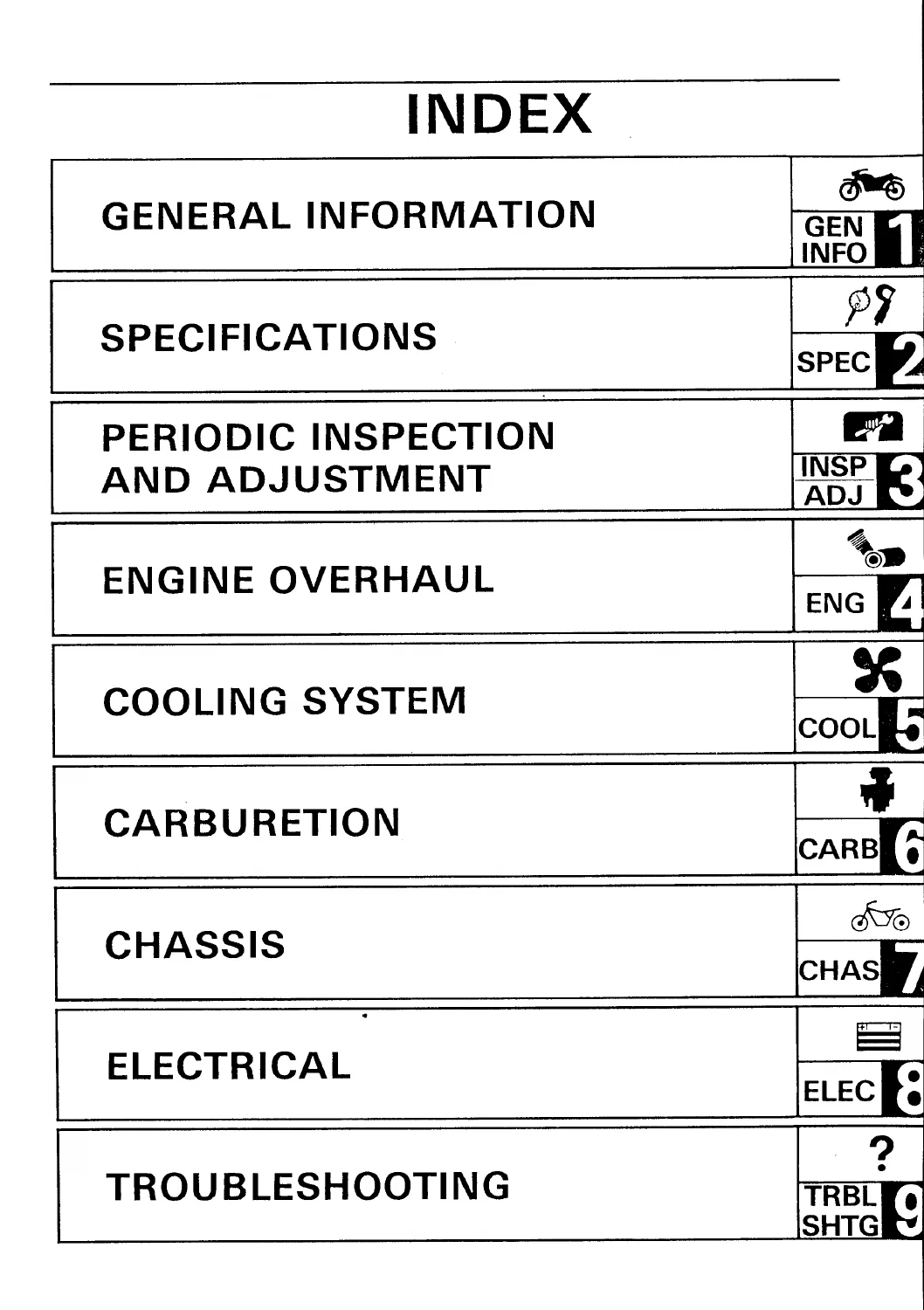
- General Information — frame serial number, engine serial number, important information, preparation for removal, replacement parts, gaskets, oil seals and O-rings, lock washers and cotter pins, bearings and oil seals, circlips, and the complete special tool listing for tune-up, engine service, chassis service and electrical components.
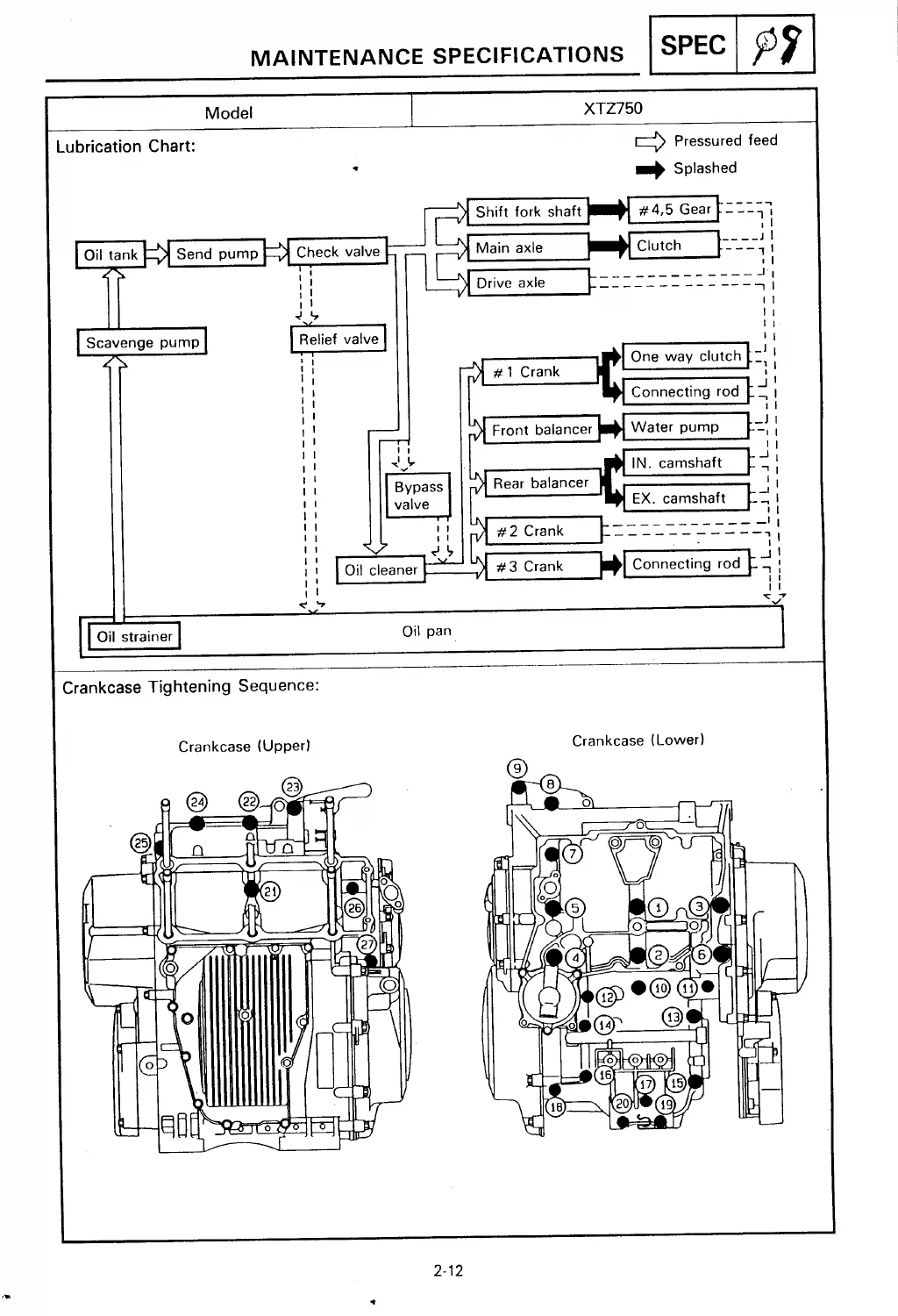
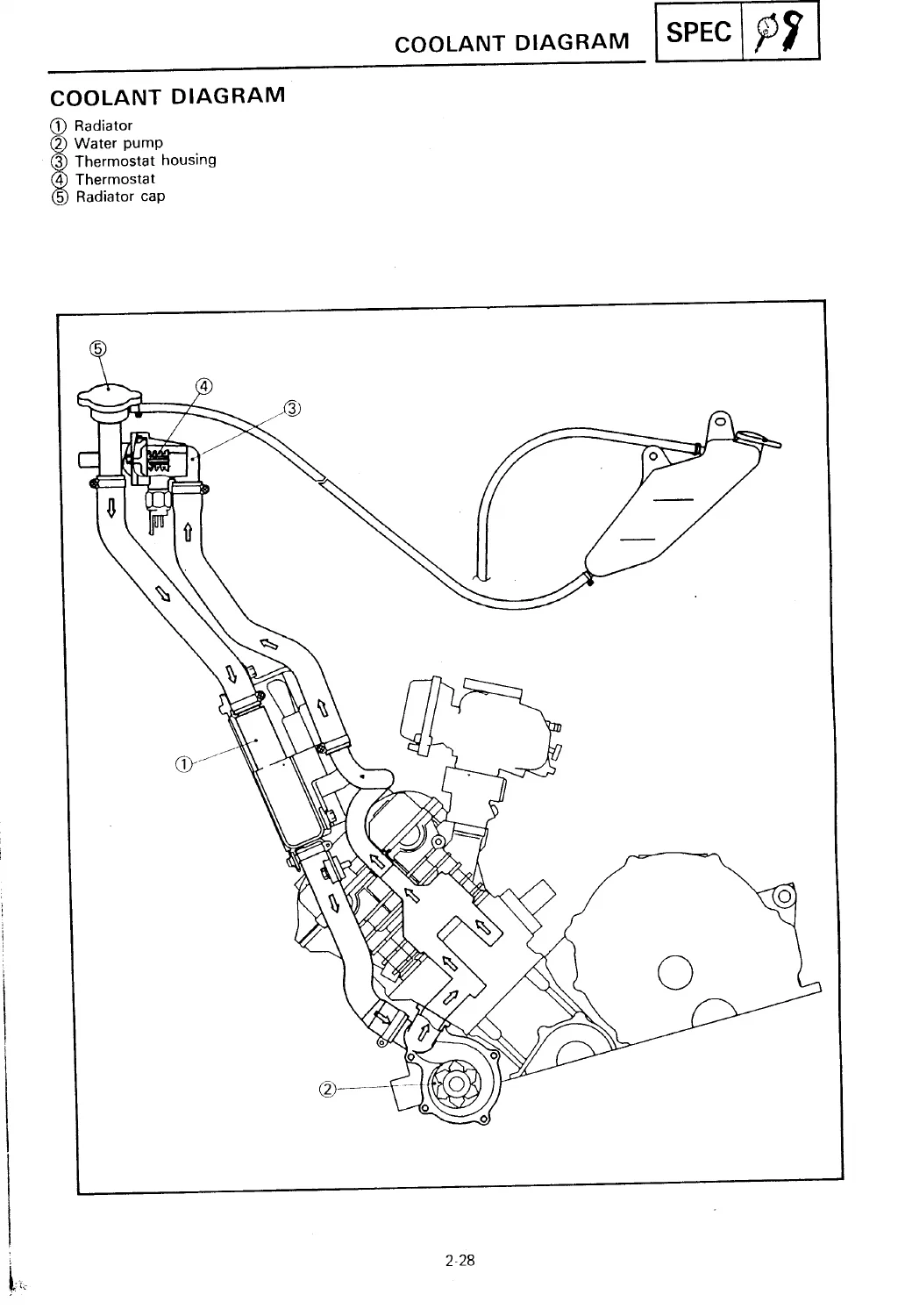
- Specifications — general specifications, maintenance specifications for engine, chassis and electrical systems, general torque specifications, definition of units, lubrication points and lubricant grades, the lubrication diagram, the coolant diagram, and the full cable routing section.
- Periodic Inspection and Adjustment — valve clearance adjustment, carburetor synchronization, timing chain adjustment, idle speed adjustment, throttle cable free play, spark plug inspection, ignition timing check, compression pressure measurement, engine oil level and replacement, clutch adjustment, air filter cleaning, carburetor joint inspection, fuel line inspection, exhaust system inspection, coolant level and replacement, cooling system inspection, front and rear brake adjustment, brake fluid level inspection, brake pad inspection, brake light switch adjustment, air bleeding of the hydraulic brake system, change pedal adjustment, drive chain slack adjustment and lubrication, steering head adjustment, front fork inspection, rear shock absorber adjustment, tire inspection, wheel inspection, spoke inspection and tightening, cable inspection and lubrication, lever and pedal lubrication, sidestand lubrication, and rear suspension lubrication.
- Engine Overhaul — engine removal, engine disassembly, pipes and hoses, cylinder head, cylinder and pistons, rotor and starter drives, clutch, oil pan, oil filter and oil strainer, oil pumps and timing chain, balancer weights, water pump, crankcase (lower), transmission and shifter, crankshaft, valves and camshafts, connecting rods, then the full inspection and repair chapter covering cylinder head, valve seat, valve and valve guide, valve spring, camshaft, valve lifter, timing chain and sprocket, cylinder and piston, piston ring, piston pin, crankshaft and connecting rod, electric starter drive, primary drive, clutch, transmission and shifter, oil pump and strainer, oil delivery pipes, crankcase, bearings and oil seals, circlips and washers, and finally engine reassembly.
- Cooling System
- Carburetion
- Chassis
- Electrical System
- Troubleshooting
What the Yamaha XTZ750 Workshop Manual Covers in Depth
The XTZ750 runs a liquid-cooled four-stroke DOHC parallel twin displacing 749 cm³ from an 87 × 63 mm bore and stroke, with a 9.5:1 compression ratio, dry-sump lubrication, and a T.C.I. digital ignition feeding from an A.C. magneto generator. The engine is mounted forward-inclined and carries front and rear balancer weights to control vibration. Everything specific to that architecture is documented here.
For the top end, this Yamaha XTZ750 repair manual lays out the valve clearance measurement sequence across both cylinders, with the intake and exhaust clearance values stated for a cold engine, the TDC alignment procedure using the T mark on the crankshaft web and the stationary pointer, and the shim-and-pad adjustment method. A pad selection chart is included so the correct replacement pad can be identified from the measured clearance, and the camshaft caps are torqued in the specified crisscross pattern from the innermost cap outward.
For the bottom end, the manual covers crankshaft runout limits, connecting rod oil clearance and bearing color codes, crank width and big end side clearance, main journal bearing identification so each bearing goes back in its original position, transmission main axle and drive axle runout limits, and shift fork and shift cam service. The lower crankcase bolt loosening and tightening sequence is shown as an embossed numbering diagram, and the balancer weights are removed and installed with their holders and Torx fasteners.
For the cooling system, this Yamaha XTZ750 service manual covers coolant draining from the water pump and cylinder drain bolts, radiator cap removal with the correct depressurizing procedure, coolant refilling to the specified quantity, reservoir tank capacity, and the thermostat, radiator, hose and pipe inspection points.
For fuel and carburetion, the manual covers carburetor synchronization using a vacuum gauge set, with the target vacuum pressure and the maximum permitted difference between the two carburetors stated, the synchronization screw adjustment procedure, and the throttle cable free play adjustment at both the carburetor and the throttle grip end.
For the chassis, the Yamaha XTZ750 workshop manual documents the telescopic front fork with its oil capacity, oil level measured from the top of a fully compressed inner tube, spring free length limit, and standard enclosed air pressure. The rear link suspension is covered with spring preload adjustment measured against the installed spring length, shock absorber travel and spring rate data, and the standard enclosed gas pressure. Front and rear disc brake specifications include disc diameter and thickness, pad thickness limits, master cylinder and caliper cylinder bore sizes, and the specified brake fluid type. The steering head adjustment is set out as an initial ring nut tightening, a one-turn loosening, and a final retightening to a much lower torque, followed by a lock-to-lock check of the steering.
For the electrical system, the Yamaha XTZ750 repair manual lists pickup coil resistance, ignition coil primary and secondary winding resistance, spark plug cap resistance, stator coil resistance, rectifier/regulator no-load regulated voltage and capacity, battery specific gravity, starter motor brush and commutator wear limits, starter relay amperage rating, flasher relay frequency and wattage, starting circuit cut-off relay coil resistance, headlight relay coil resistance, thermostat switch on and off temperatures, thermo unit resistance at four temperature points, and the main and reserve fuse ratings.
The cable routing section is unusually thorough. Separate diagrams cover the handlebar switches, clutch and brake switches, throttle and clutch cables, headlight and front flasher leads, speedometer cable and brake hose routing at the front; the wire harness path along the frame, the fuel pump and vacuum hose routing, the rear flasher and tail/brake light leads, and the rear brake master cylinder and reservoir hose routing at the rear. Each diagram carries callouts for clamp positions and the order in which leads and hoses should be grouped.
Why This Yamaha XTZ750 Service Manual Matters
A twin-cylinder motorcycle with a dry-sump lubrication system, liquid cooling, twin balancer shafts and a digital ignition is not a machine to service on guesswork. The torque figures on a crankcase split, the bearing colour codes on the crankshaft and connecting rods, the pad-selection arithmetic on the valve train, the vacuum balance between the two carburetors, and the sequence in which the camshaft caps and cylinder head nuts are tightened all affect whether the engine runs correctly afterwards — or whether it comes apart again.
Having the Yamaha XTZ750 workshop manual on hand means every one of those decisions is made against the specification Yamaha printed for the 3LD, 3SC and 3TD models, rather than against a generic figure or a forum guess. It is equally useful for a scheduled service, a top-end rebuild, a clutch replacement, a cooling system refresh, or diagnosing an electrical fault that only appears at a specific engine speed.
IMAGES PREVIEW
Instant PDF Delivery
The Yamaha XTZ750 service manual is delivered as a PDF download immediately after payment. There is no shipping, no waiting, and no physical book to keep track of in the workshop. The file opens on a phone, tablet, laptop or desktop, pages can be printed for the bench, and the whole manual can be searched on screen while you work. Whether the job in front of you is an oil change or a full engine overhaul, the manual is on the device you already have with you.

Reviews
There are no reviews yet.