
Airbus A319/A320/A321 Trouble Shooting Manual TSM – TACA International Airlines Revision 54 PDF Download
$71.95 Original price was: $71.95.$44.95Current price is: $44.95.
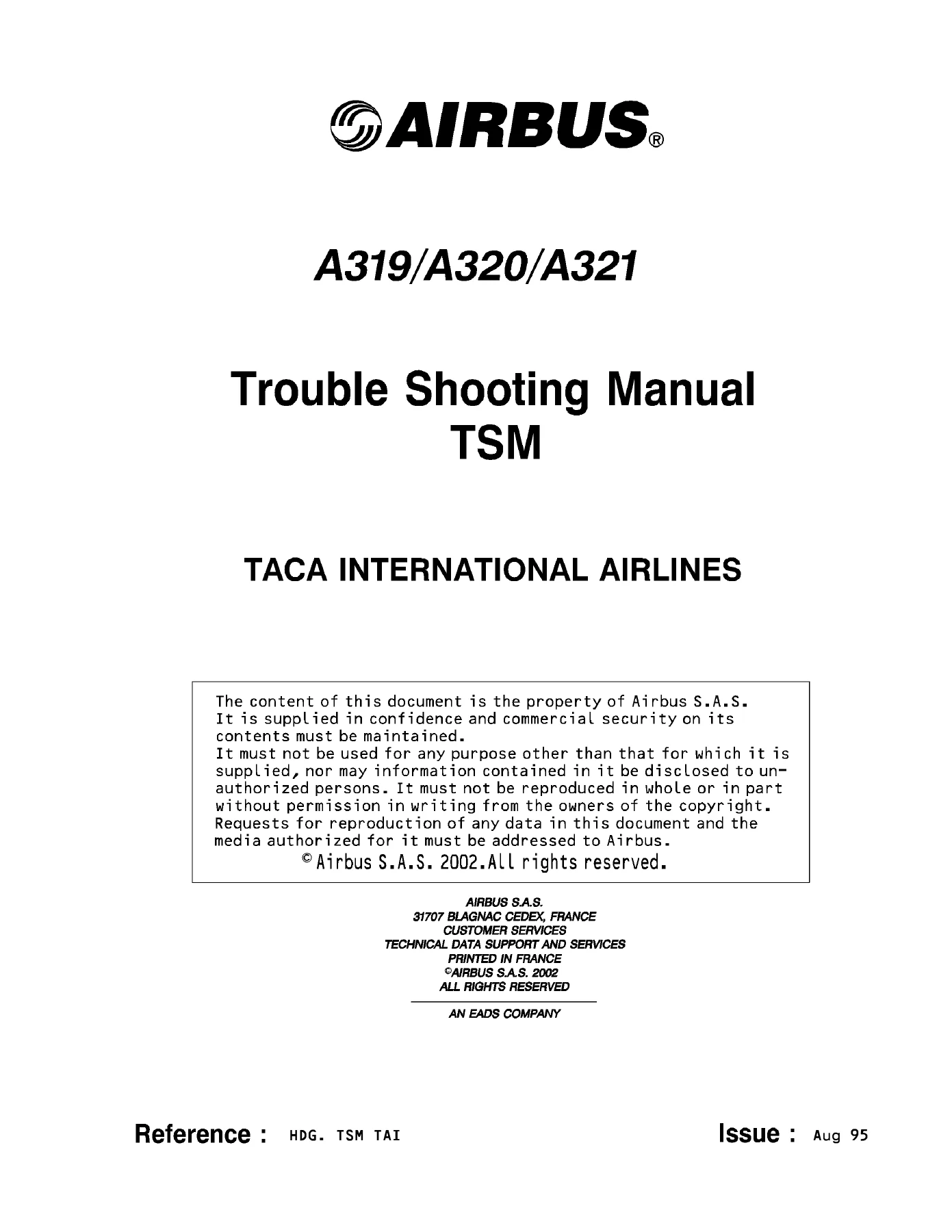
The Airbus A319/A320/A321 Trouble Shooting Manual (TSM) issued to TACA International Airlines, Revision No. 54 dated May 01/09. 355 pages covering the Airbus Service Bulletin List, the Customer Originated Changes list, the complete Index of Warnings/Malfunctions for ECAM, EFIS, LOCAL and OBSV indications, and the full Index of CFDS Fault Messages for the A319, A320 and A321.
Description
This Airbus A319/A320/A321 Trouble Shooting Manual is the complete index and reference set issued to TACA International Airlines, carrying Revision No. 54 dated May 01/09. Across 355 pages it gives the maintenance technician the cross-reference structure used to move from an aircraft warning or a CFDS fault message directly to the correct ATA chapter and task: the Airbus Service Bulletin List compiled at manual level, the Customer Originated Changes list, the full Index of Warnings/Malfunctions for ECAM, EFIS, LOCAL and OBSV indications, and the complete Index of CFDS Fault Messages.
Airbus A319/A320/A321 TSM – How This Trouble Shooting Manual Is Built
The A319/A320/A321 TSM is organised the way an Airbus line or base technician actually works. When an ECAM warning appears on the upper or lower display unit, or when the CFDS reports a fault message during a BITE test, you need to know which ATA chapter owns that indication before you can open the correct task. This manual supplies exactly that mapping, and it does it in four linked reference sets that run from the front cover to the last page of the CFDS index.
The document opens with the aircraft-level chapter breakdown for the A319, A320 and A321, then moves into the manual-level Service Bulletin List. That list is presented with six columns – movement code, incorporation code, SB number, SB revision, status/incorporation date and remarks – so you can see at a glance whether a given Airbus Service Bulletin has been fully incorporated, partially incorporated, recorded as having no effect on the manual content, or rejected by the operator. The list runs from ATA 00 through the ATA 92 range, including the V2500 engine service bulletins.
Index of Warnings/Malfunctions
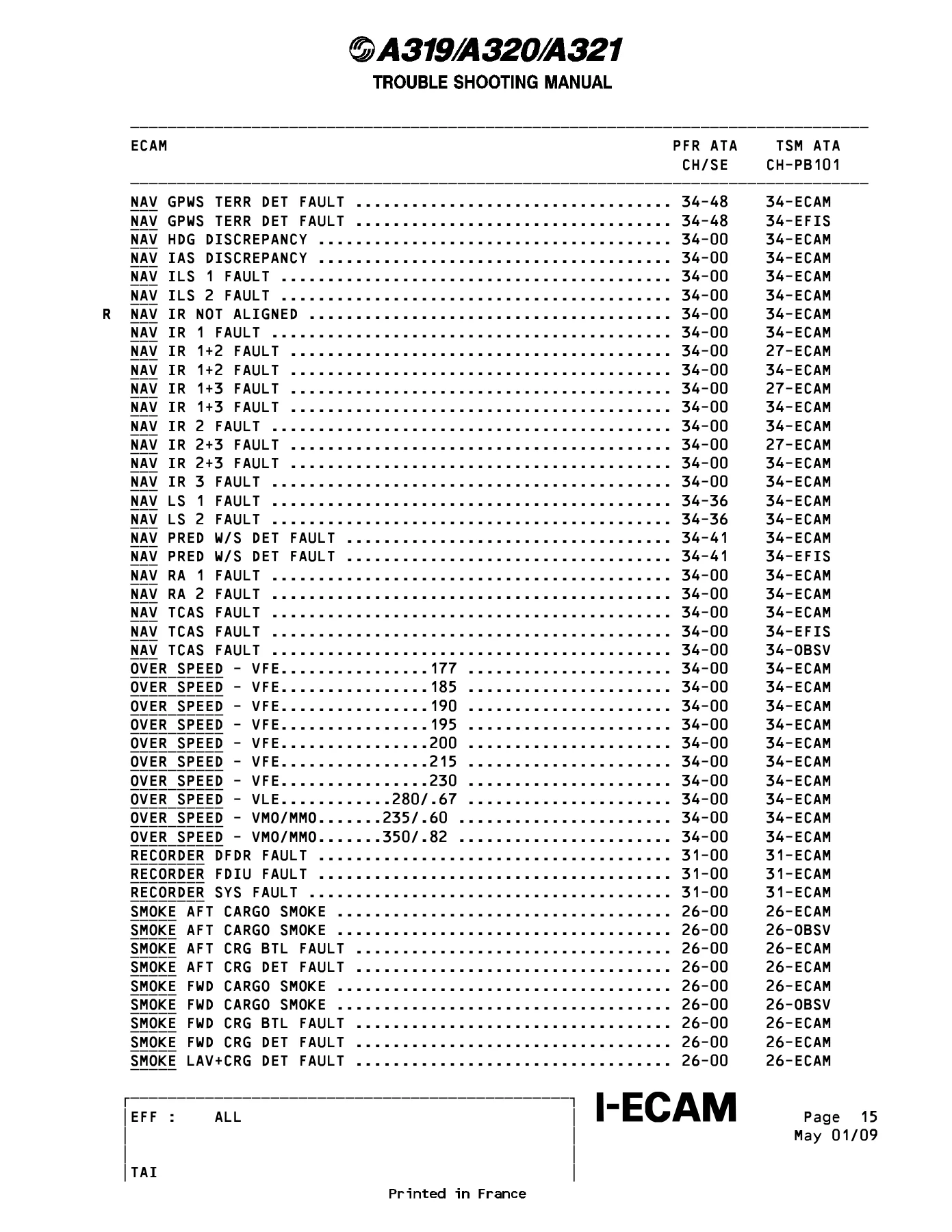
The largest working section of this Airbus A320 troubleshooting manual is the Index of Warnings/Malfunctions. Every entry is presented against an ECAM/PFR ATA CH/SET column and a TSM ATA CH-PB101 column, so the warning you are looking at on the flight deck can be traced straight into the TSM chapter that resolves it.
The index is broken into clearly separated blocks:
- Upper ECAM DU warnings – AIR, APU, AUTO FLT, BRAKES, C/B TRIPPED, CAB PR, COM, COND, CONFIG, DOOR, EIS, ELEC, ENG 1 and ENG 2, F/CTL, FUEL, FWS, HYD, L/G, NAV, OVER SPEED, RECORDER, SMOKE, VENT, WHEEL, WINDSHEAR and WING A.ICE entries.
- Lower ECAM DU flags – split by system page: BLEED, CRUISE, DOOR/OXY, ENGINE, F/CTL, STATUS, WHEEL, APU, CAB PRESS, COND, ELEC, FUEL and HYD. Typical rows cover amber XX replacement indications, bleed pressure and temperature faults, pack control faults, IDG temperature and pressure flags, fuel quantity and transfer indications, and landing gear uplock and downlock flags.
- Lower ECAM DU advisories – APU low fuel pressure, cruise indications such as green-flashing oil quantity, door/oxygen REGUL LO PR, ELEC IDG oil temperature pulsing green, engine vibration and nacelle temperature advisories, F/CTL aileron and rudder advisories, and HYD blue, green and yellow system quantity and pressure advisories.
- EFIS – PFD flags and ND flags: ADIRS airspeed and altitude discrepancies, red SPD and ALT flags, HDG flag in view, AFS flight director and speed limit problems, DME, ILS localizer and glide slope red flags, GPWS terrain range flag, RA radio altimeter faults, TCAS and VOR indications, and the full set of INDG/RCDG DMC and display unit version inconsistency messages.
- LOCAL – panel-level indications on the air conditioning panel, anti-ice panel, APU panel, cabin press panel, centre pedestal, cockpit door panel, ELEC panel, emergency electrical power panel, external power panel, FAP, fire panel, forward attendant panel, fuel panel, glareshield panels, HYD panel, maintenance panel, MCDU, PAX/crew doors, refuel/defuel panel, ADIRS CDU, avionics compartment and more.
- OBSV – observations that do not raise an ECAM warning but still need a maintenance response, covering A.ICE, abnormal RAT and emergency generator behaviour, AC and DC distribution losses, ADF, ADIRS and ADR faults, AFS autoland and autothrottle behaviour, air conditioning pack and cabin temperature control faults, bleed pressure fluctuation, brakes and braking, cabin pressure, CFDS link failures, CIDS faults, cargo compartment doors, engine and fuel system behaviour, F/CTL test results, fire detection, fuel leaks and transfer behaviour, HYD pump and PTU behaviour, IDG oil consumption, ILS, IR alignment, landing gear extension and retraction, lighting, navigation, oxygen crew and passenger systems, parking brake, radio altimeter, RMI, seat and cockpit equipment faults, and vibration reports.
Index of CFDS Fault Messages
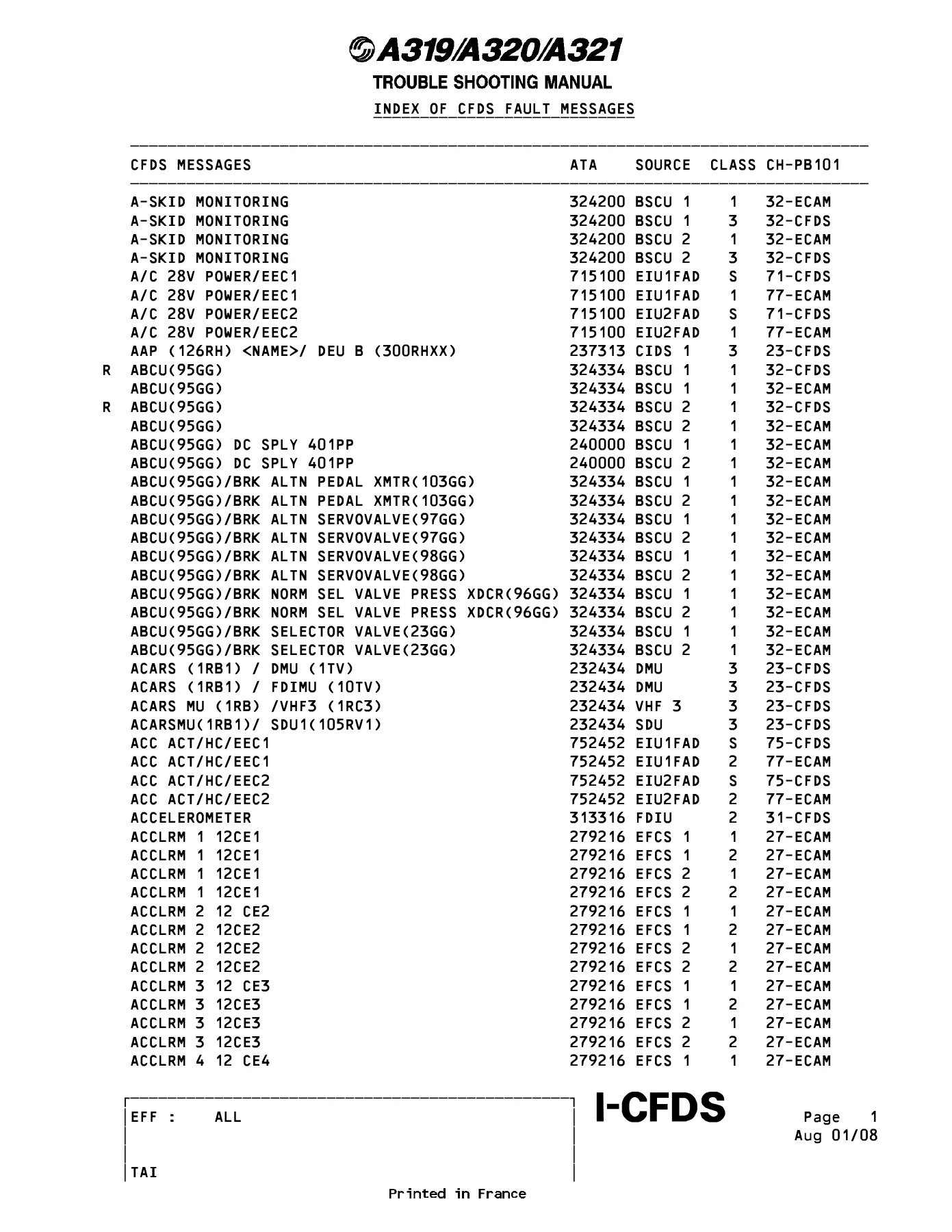
The second half of this A319/A320/A321 Trouble Shooting Manual is devoted to the Centralised Fault Display System. Hundreds of fault messages are listed with four working columns – ATA, SOURCE, CLASS and CH-PB101 – giving the ATA reference, the reporting source (BSCU, EIU1FAD, EFCS, ADR, IR, DMC, FWC, SDAC, BMC, LGCIU, CIDS, APU, TEMPCTL, FUEL, TOILET, AC GEN, AFS, EIS and many more), the fault class, and the TSM channel or page that addresses it.
Entries include A-SKID MONITORING, ABCU, ACARS, ACCELEROMETER, ACCLRM, ACSC lane and 28VDC supply interrupts, ACP, ADF, ADIRS control panel and ADIRU bus faults, AOA sensor disagreements, APU control relay, APU loop and oil heater, ATC transponder and antenna faults, ATHR disconnect line faults, BCL and battery faults, BMC1 and BMC2 bleed monitoring faults, brake pedal transmitter, brake selector valve, brake temperature sensor and BSCU brake loss messages, CADENSICON and fuel quantity probe faults, CAM download and mismatch faults, DMC and DU link faults, DME interrogator and transceiver faults, ECB and EEC faults, ELAC and SEC computer and wiring faults, engine fire loop and FDU faults, flap and slat APPU, FPPU, WTB solenoid and PCU valveblock faults, GCU and GAPCU generator control faults, GPWC faults, IDG oil level and thermal disconnect faults, LGCIU proximity sensor and selector valve faults, N1 and N2 sensor faults, oil pressure, oil quantity and oil temperature transmitter faults, park brake selector valve faults, RA transceiver faults, RMP faults, SFCC faults, smoke detector and SDCU faults, THS actuator faults, TAT sensor faults, VHF and HF transceiver faults, and WXR radar faults.
Airbus A319/A320/A321 Chapter Coverage
The manual opens with the TSM ATA chapter list applied throughout this revision:
- 00 Introduction
- 05 Time Limits/Maintenance Checks
- 21 Air Conditioning
- 22 Auto Flight
- 23 Communications
- 24 Electrical Power
- 25 Equipment/Furnishings
- 26 Fire Protection
- 27 Flight Controls
- 28 Fuel
- 29 Hydraulic Power
- 30 Ice and Rain Protection
- 31 Indicating/Recording Systems
- 32 Landing Gear
- 33 Lights
- 34 Navigation
- 35 Oxygen
- 36 Pneumatic
- 38 Water/Waste
- 46 Information Systems
- 49 Airborne Auxiliary Power
- 51 Standard Practices and Structures – General
- 52 Doors
- 53 Fuselage
- 57 Wings
- 70 Standard Practices – Engines
- 71 Power Plant
- 73 Engine Fuel and Control
- 74 Ignition
- 75 Air
- 76 Engine Controls
- 77 Engine Indicating
- 78 Exhaust
- 79 Oil
- 80 Starting
Air Conditioning and Pneumatic (ATA 21, 36)
Entries for pack 1 and pack 2 faults, pack off and overheat, pack regulation faults, cabin and cockpit duct overheat, forward and aft cargo heat, hot air faults, trim air system faults, zone regulation faults, bleed monitoring faults, engine bleed faults and leaks, APU bleed faults and leaks, cross-bleed faults, HP valve faults and wing leak detection.
Auto Flight (ATA 22)
Autopilot and autothrottle indications, FAC 1 and FAC 2 faults, FCU faults, rudder trim system and trim fault indications, rudder travel limiting, and yaw damper system faults including the FAC-related yaw damper messages.
Communications (ATA 23)
ACARS and SATCOM faults, CIDS director faults, HF1 and HF2 emitting indications, VHF1, VHF2 and VHF3 emitting and data faults, AMU audio switching faults, cockpit call faults and SELCAL-related entries.
Electrical Power (ATA 24)
AC bus, AC essential bus, APU generator, battery, BCL, DC bus, DC essential bus, emergency configuration, emergency generator, generator, IDG oil pressure and overheat, static inverter and transformer rectifier indications, plus the associated LOCAL and OBSV observations.
Equipment, Furnishings, Doors, Lights, Water/Waste (ATA 25, 33, 38, 52)
Passenger seat power faults, galley equipment faults, escape slide and slide bottle indications, cabin and emergency lighting faults, logo and navigation light faults, lavatory and toilet vacuum system faults, and door indications for forward, aft, emergency exit, avionics and cargo doors.
Fire Protection and Oxygen (ATA 26, 35)
APU fire, engine 1 and engine 2 fire and fire detection faults, avionics smoke, cargo smoke and lavatory smoke detection, cargo bottle squib and low pressure faults, plus crew oxygen regulator, pressure and stowage observations and passenger oxygen mask release observations.
Flight Controls and Landing Gear (ATA 27, 32)
ADR and IR disagree, aileron servo faults, alternate and direct law, ELAC 1 and ELAC 2 faults and pitch faults, elevator servo faults, FCDC faults, flap and slat system faults, flap and slat tip brake faults, ground spoiler faults, sidestick faults and priority, speedbrake faults, stabilizer jam, and the full landing gear set covering LGCIU faults, gear not down, not downlocked and not uplocked, shock absorber faults, system disagree, wheels, brakes, anti-skid, auto brake, parking brake, nose wheel steering and normal braking observations.
Fuel and Hydraulic Power (ATA 28, 29)
Actuator pump low pressure, actuator transfer faults, APU LP valve faults, auto feed faults, auto transfer faults, centre tank pump low pressure and off indications, engine LP valve open, fuel used and FOB disagreement, FQI channel faults, inner and outer tank high and low temperature, wing tank low level and overflow, crossfeed and transfer valve faults, plus hydraulic blue, green and yellow electric pump, reservoir and system pressure faults and PTU indications.
Ice and Rain Protection, Indicating/Recording, Navigation (ATA 30, 31, 34)
Anti-ice indications for captain and first officer AOA, pitot, static, TAT, engine valves and windows, wing anti-ice high pressure and valve open indications, EIS DMC faults, FWC faults, SDAC faults, FWS OEB/FWC discrepancy, CFDS link faults and data loading faults, and the complete NAV group covering ADR and IR faults, altitude, attitude and heading discrepancies, FM/GPS position disagreement, GPS faults, GPWS faults, ILS faults, TCAS faults, radio altimeter faults and VOR faults.
Auxiliary Power, Information Systems and Engines (ATA 46, 49, 70-80)
APU auto shutdown, emergency shutdown, fire, fire detection and loop faults, datalink and ATSU observations, and the engine group covering dual failure, flex temp not set, reverser set, thrust lever not set, thrust locked, engine type disagree, vibration system fault, FADEC A and B faults, EGT and EPR discrepancies and exceedances, fuel control, fuel filter clog, hot fuel, ignition faults, N1 and N2 discrepancies and over limits, oil filter clog, oil high temperature and low pressure, reverser faults and unlock, sensor faults, shutdown, stall, start faults and start valve faults for both engines.
Why This Airbus A320 TSM Revision 54 Belongs in Your Technical Library
If you maintain, dispatch or troubleshoot the A319, A320 or A321, the value of this document is in the cross-reference. An ECAM warning on the flight deck, a local panel legend, a CFDS fault message read out during a BITE test – each one has to be turned into an ATA chapter and a task before any spanner moves. This Airbus A319/A320/A321 Trouble Shooting Manual does that conversion for you, with the PFR ATA channel and the TSM ATA CH-PB101 reference sitting side by side on the same row.
It also tells you what has already been done to the aircraft. The Service Bulletin List shows the incorporation status of each selected Airbus SB, the movement and incorporation codes, and the revision level, while the Customer Originated Changes list records the operator-originated references that affect manual content. That is the difference between working from a generic description of the system and working from the configuration actually fitted.
The CFDS fault message index is the other half of that capability. Fault sources, ATA references and fault classes are all listed, so a reported message can be matched to the reporting computer – BSCU, EIS, EFIS, ELAC, SEC, SFCC, FWC, SDAC, LGCIU, BMC, CIDS, EVMU and the rest – and then routed to the correct TSM channel. For intermittent faults, that routing is often the difference between a repeat write-up and a closed defect.
IMAGES PREVIEW
Delivery is immediate. This is a downloadable PDF, so there is no shipping, no waiting and no courier. Open it on a laptop, tablet or phone at the gate, in the hangar or on the ramp, print the index pages you need for the job card, or keep the whole revision on a maintenance workstation for reference. Once payment clears, the file is yours.
What Our Customers Say
🌟 Related Products
Discover more professional manuals for your equipment
Garrett TPE331-10 Turboprop Aircraft Engine Maintenance Manual - TPE331-10U-503G & 10U-513G
Airbus A319 A320 A321 Illustrated Parts Catalog Chapter 73 Engine Fuel and Control PDF
Piper Apache PA-23-150 PA-23-160 Airplane Service Manual 752-422 - PDF
Reviews
There are no reviews yet.