
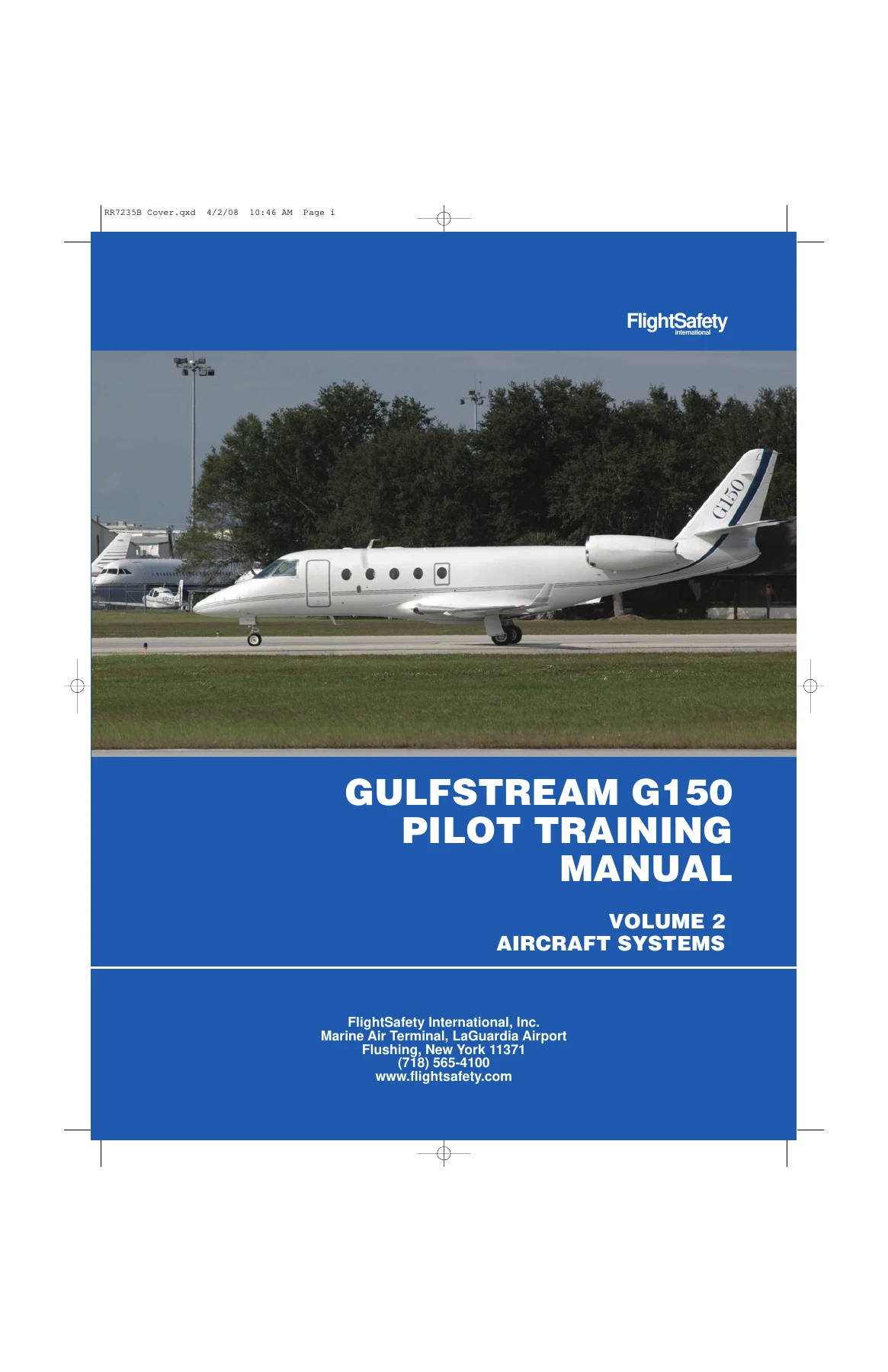
Gulfstream G150 Pilot Training Manual Volume 2 Aircraft Systems – Revision 2 PDF
Original price was: $89.95.$59.95Current price is: $59.95.
474-page Gulfstream G150 Pilot Training Manual, Volume 2 Aircraft Systems, covering aircraft systems, Honeywell TFE731-40AR-200G powerplants, electrical power, fuel, hydraulics, landing gear, flight controls, ice protection, pressurization, oxygen, fire protection, operating limitations, EICAS messages, and maneuvers and procedures. Revision 2, March 2008.
Description
Gulfstream G150 Pilot Training Manual – Volume 2 Aircraft Systems
This comprehensive Gulfstream G150 Pilot Training Manual Volume 2 Aircraft Systems provides detailed training coverage of the G150 aircraft, its major systems, system controls and indications, normal operation, limitations, and many emergency or abnormal conditions. Published by FlightSafety International for familiarization and training, this Revision 2 manual brings together the technical material a G150 pilot or aviation professional needs to understand how the aircraft’s systems interact in normal and non-normal operation.
Across 473 PDF pages, the manual progresses from a general aircraft overview through electrical power, fuel, powerplant, fire protection, pneumatics, air conditioning, pressurization, hydraulics, landing gear, flight controls, oxygen, ice protection and other systems. It also includes extensive system schematics, control-panel illustrations, EICAS examples, component diagrams, operating limits, review questions and a separate maneuvers and procedures section.
An important point for buyers is that this is a pilot training manual. The publication itself states that its material is based on information from the aircraft manufacturer’s Airplane Flight Manual, Pilot Manual and Maintenance Manuals and is intended for familiarization and training purposes. Where any conflict exists, manufacturer or FAA publications take precedence.
File Details
- Manual type: Pilot Training Manual – Volume 2 Aircraft Systems
- Aircraft: Gulfstream G150
- Language: English
- Page count: 474 pages
- File format: PDF
- Revision: Revision 2
- Revision date: March 2008
Aircraft and System Detail
The opening material establishes the G150 configuration and operating context before the individual systems are studied. Aircraft dimensions, cabin and baggage information, system summaries and operating limitations are included. The manual identifies the aircraft as a swept-wing, twin-engine transport-category airplane and describes the Honeywell TFE731-40AR-200G turbofan installation, fuel capacity, hydraulic architecture, electrical sources, flight controls and pressurization arrangement.
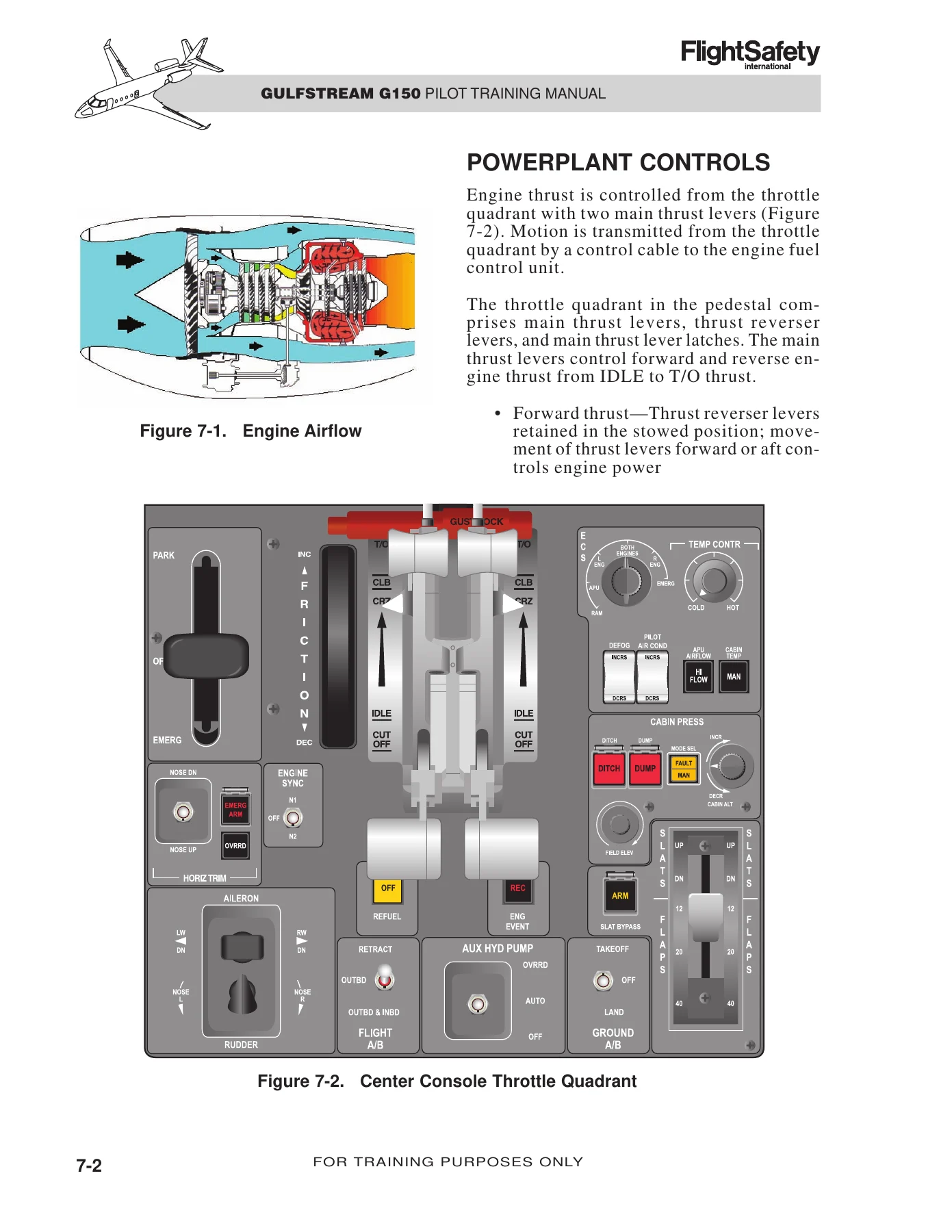
The powerplant material is particularly useful for understanding the two-spool geared turbofan arrangement, digital electronic engine control, engine starting and ignition, engine fuel and oil systems, automatic power reserve, engine indications and thrust reversers. Detailed illustrations show airflow through the engine, throttle quadrant controls, fuel routing, lubrication circuits and cockpit indications rather than limiting the discussion to high-level descriptions.
Chapters Covered
- AIRCRAFT GENERAL
- ELECTRICAL POWER SYSTEMS
- LIGHTING
- MASTER WARNING SYSTEM
- FUEL SYSTEM
- AUXILIARY POWER UNIT
- POWERPLANT
- FIRE PROTECTION
- PNEUMATICS
- ICE AND RAIN PROTECTION
- AIR CONDITIONING
- PRESSURIZATION
- HYDRAULIC POWER SYSTEM
- LANDING GEAR AND BRAKES
- FLIGHT CONTROLS
- AVIONICS
- OXYGEN SYSTEM
- MANEUVERS AND PROCEDURES
- APPENDIX
Aircraft General
The Aircraft General chapter gives an integrated overview of the Gulfstream G150, including dimensions and introductory descriptions of air conditioning, the APU, EICAS, electrical power, fire protection, flight controls, fuel, hydraulics, ice and rain protection, landing gear and brakes, lighting, oxygen, pneumatics, powerplant and pressurization. It also provides performance and operating limitation information to establish the aircraft-level picture before the individual systems are examined.
Electrical Power Systems
The electrical chapter explains the 28-VDC primary electrical system, batteries, starter-generators, APU generator, external DC power, buses, distribution architecture and the 115-VAC convenience supply. It follows battery charging, engine and APU start power paths, generator control, automatic load shedding, circuit breakers, operating limits and electrical EICAS messages. Schematics show DC power distribution and different starting configurations, making this chapter valuable for tracing what remains powered after a source or feeder failure.
Lighting and Master Warning System
Lighting coverage includes cockpit, passenger-cabin, baggage, exterior and emergency lighting, together with switches, dimming controls and emergency-light distribution units. The Master Warning System chapter explains how warning, caution, advisory and status messages are presented through the multifunction display and EICAS architecture. Extensive message tables identify conditions such as fire, configuration warnings, hydraulic faults, fuel-system alerts, pressurization problems and engine or electrical abnormalities.
Fuel System
The fuel chapter follows storage, transfer, engine and APU feed, venting, quantity measurement, pressure and gravity refueling, defueling and fuel jettison. Diagrams illustrate the fuselage tank, center tank, wing tanks and collector boxes as well as boost and transfer jet-pump operation. The manual explains the fuel-use sequence used to manage center of gravity, interconnect-valve operation for lateral balancing, standby pump logic, refueling sequence, jettison control and fuel-related EICAS indications.
Auxiliary Power Unit
The G150’s Honeywell RE100 auxiliary power unit is covered as a self-contained source of electrical and pneumatic power. The chapter identifies the APU enclosure, inlet, cooling and exhaust arrangements, starter-generator, air system and electronic control unit. Starting logic, ECS airflow selection, normal operating modes, shutdown, operating limits and APU EICAS messages are explained in practical cockpit terms.
Powerplant and Thrust Reversers
The Powerplant chapter focuses on the Honeywell TFE731-40AR-200G engines. Topics include throttle-quadrant control, DEEC operation, ignition, starting, fuel delivery, the dry-sump oil system, engine synchronization, interstage turbine temperature, automatic power reserve and engine indication. The thrust-reverser section explains its hydraulic actuation and electrical control, arming logic, cockpit indications, deploy and stow cycles, overstow and autostow protection. Engine operating limitations include rotor speeds, ITT, start times, oil temperatures and pressures, approved oils and approved fuels.
Fire Protection
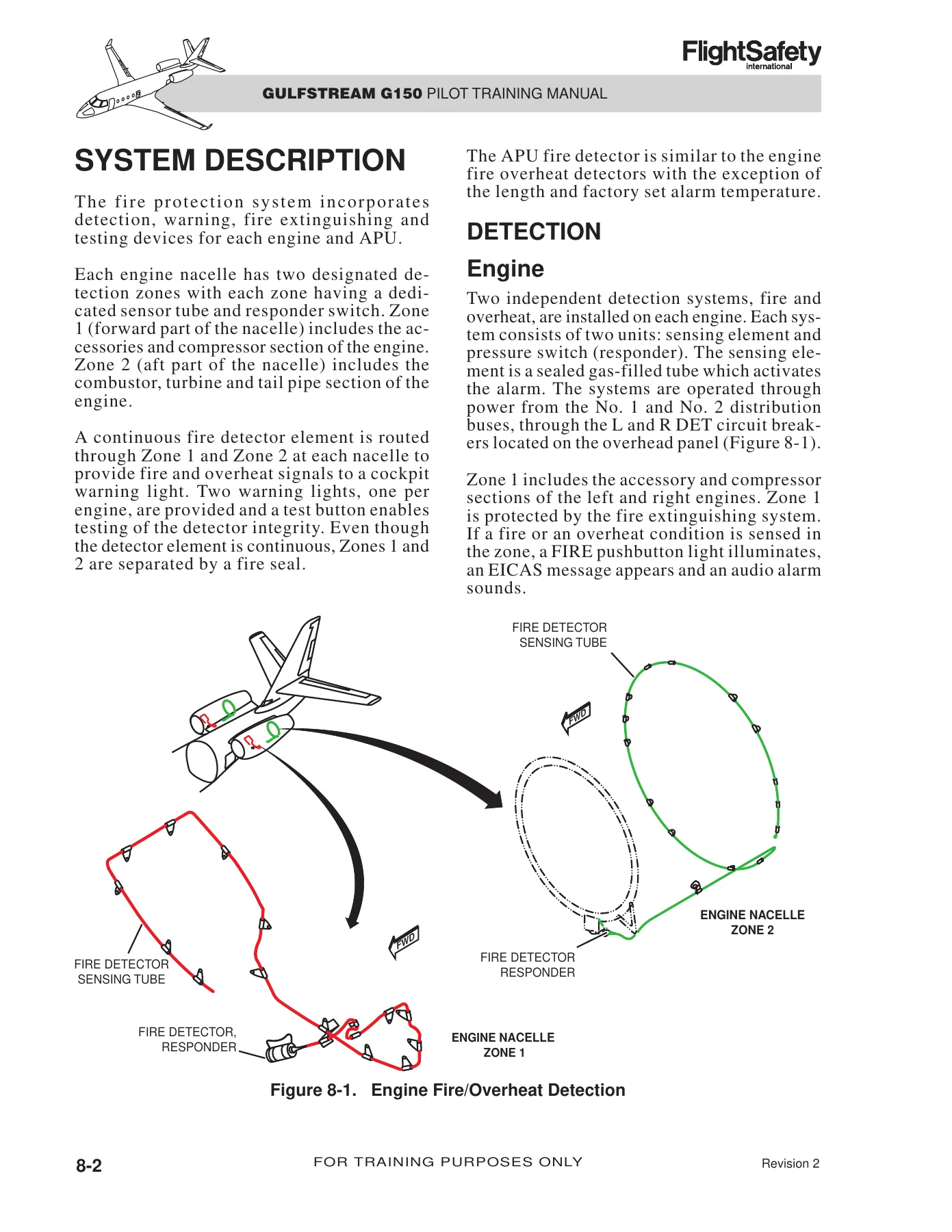
The fire-protection material describes separate engine fire and overheat zones, APU detection, gas-filled sensing elements, warning logic and the fire-extinguishing system. Bottle construction, Halon agent, discharge paths, thermal relief protection, two-way check valves and portable extinguishers are addressed. Operational sections explain FIRE/OVERHT, ARM/EMPTY and PRESS TO TEST controls as well as the indications and system responses associated with engine and APU fire conditions.
Pneumatics, Air Conditioning and Pressurization
These chapters explain how engine and APU bleed air supports several G150 functions. Pneumatics coverage includes bleed-air sources, switching valves, APU bleed supply, system operating modes, overpressure and overtemperature protection, high-pressure ducting and ram-air operation. Air-conditioning material follows conditioned-air distribution, gasper and emergency air, ozone conversion, bleed-air precooling, the air-cycle machine, water separator, trim-air valve, automatic temperature control and nose-compartment cooling.
The pressurization chapter then covers the cabin-pressure control architecture, components, controls, indications and operating sequence. Diagrams include the system schematic, component locations, cabin-altitude profile, EICAS display and cabin-pressure controls, together with limitations and pressurization-related EICAS messages.
Ice and Rain Protection
The Ice and Rain Protection chapter separates deicing from anti-icing. It explains pneumatic deice protection for the airfoils and anti-ice heating for engine nacelles, probes, static sources and windshields. System descriptions, controls, indications, limitations and abnormal-operation material are accompanied by schematics of the airfoil deicing system, nacelle protection, heated sensors and windshield heating controls.
Hydraulic Power System
The hydraulic chapter describes both the main and auxiliary hydraulic systems, the approved fluid, system components and their operating logic. It traces pressure distribution and explains the hydraulic support provided to systems including landing gear, brakes, nosewheel steering, airbrakes, aileron assistance and thrust reversers. Main and auxiliary operation, limitations, indications and abnormal conditions are included.
Landing Gear and Brakes
This substantial chapter covers nose and main landing gear construction, uplocks and downlocks, doors, emergency extension, position and warning logic, wheels, normal brakes, parking and emergency braking, antiskid and nosewheel steering. It then walks through normal gear operation, emergency extension, gear indications, braking with and without antiskid and parking/emergency brake operation. Numerous component and system illustrations help relate cockpit commands to the mechanical and hydraulic equipment.
Flight Controls
The flight-control chapter examines primary and secondary controls, including ailerons, rudder, elevators, trim, flaps, slats and airbrakes. Illustrations cover control linkages, servoactuation, flap and slat drive arrangements, the flap/slat electronic control unit, power-drive components, gust lock and cockpit controls. Normal operation, limitations and flight-control EICAS indications are also covered.
Avionics
The avionics section provides a cockpit instruments and displays layout identifying the display control panels, flight control panel, control and compensation units, communication panels, flight management systems, cursor control panels, reversionary switch panel, primary flight displays and multifunction displays. The manual directs detailed avionics study to the Pro Line 21 and FMS 6100 manuals.
Oxygen System
Oxygen-system material covers the crew oxygen system, mask stowage, passenger oxygen, therapeutic oxygen, cylinders, pressure-reducing and relief components, filler and shutoff hardware, pressure indication and passenger-oxygen control. Limitations, warning messages and diagrams support understanding of both normal use and decompression-related operation.
Maneuvers and Procedures
Beyond aircraft systems, the manual includes a dedicated maneuvers and procedures section covering flight planning, weight and balance, preflight inspection, normal takeoff, takeoff with engine failure at or above V1, steep turns, stall approaches, slow flight, maneuvering with an engine failure, unusual attitudes, holding, two-engine and single-engine ILS approaches, nonprecision approaches, circling, normal landing, no-flap or partial-flap visual approaches, crosswind takeoffs and landings, simulated-engine-failure landing, missed approaches and aborted takeoff. Special considerations address runaway pitch trim, emergency descent, adverse weather, bird strike and black-hole phenomena.
Appendix and Training Reference Material
The appendix supplies a broad list of abbreviations used throughout the aircraft-systems material, a Centigrade-to-Fahrenheit conversion table and answers to the chapter review questions. Individual chapters also contain review questions, giving the PDF value not only as a technical reference but as a structured study resource.
A Detailed G150 Systems Reference for Training and Review
The Gulfstream G150 Pilot Training Manual Volume 2 Aircraft Systems is particularly useful when you need to understand why a system behaves the way it does rather than simply identify a switch or memorise a limitation. Electrical distribution diagrams help trace power sources and buses; fuel schematics show transfer and feed paths; engine pages connect DEEC logic with cockpit indications; hydraulic and landing-gear material links components to operating sequences; and EICAS examples help associate aircraft conditions with the messages presented to the crew.
For pilots, instructors, aviation students and technical personnel working with the Gulfstream G150 aircraft systems, this manual provides a concentrated systems-training reference with diagrams, component descriptions, controls, limitations, abnormal indications and practical maneuver material in one volume. Accurate system knowledge is especially important when interpreting warnings, understanding system redundancy, reviewing operating limitations or preparing for recurrent systems study.
IMAGES PREVIEW
Your purchase is supplied as an instant PDF download, so there is no printed book to ship and no waiting for delivery. Open the manual on a computer, tablet or compatible mobile device, keep a copy available for reference, and print the pages you need for personal study. With 474 pages of aircraft-system and pilot-training material, this G150 Volume 2 manual provides an extensive technical reference for serious Gulfstream G150 systems familiarization and training.
Reviews
There are no reviews yet.