
Hyundai D4BH DSL2.5 Fuel System Workshop Manual – PDF Download
Original price was: $24.95.$14.95Current price is: $14.95.
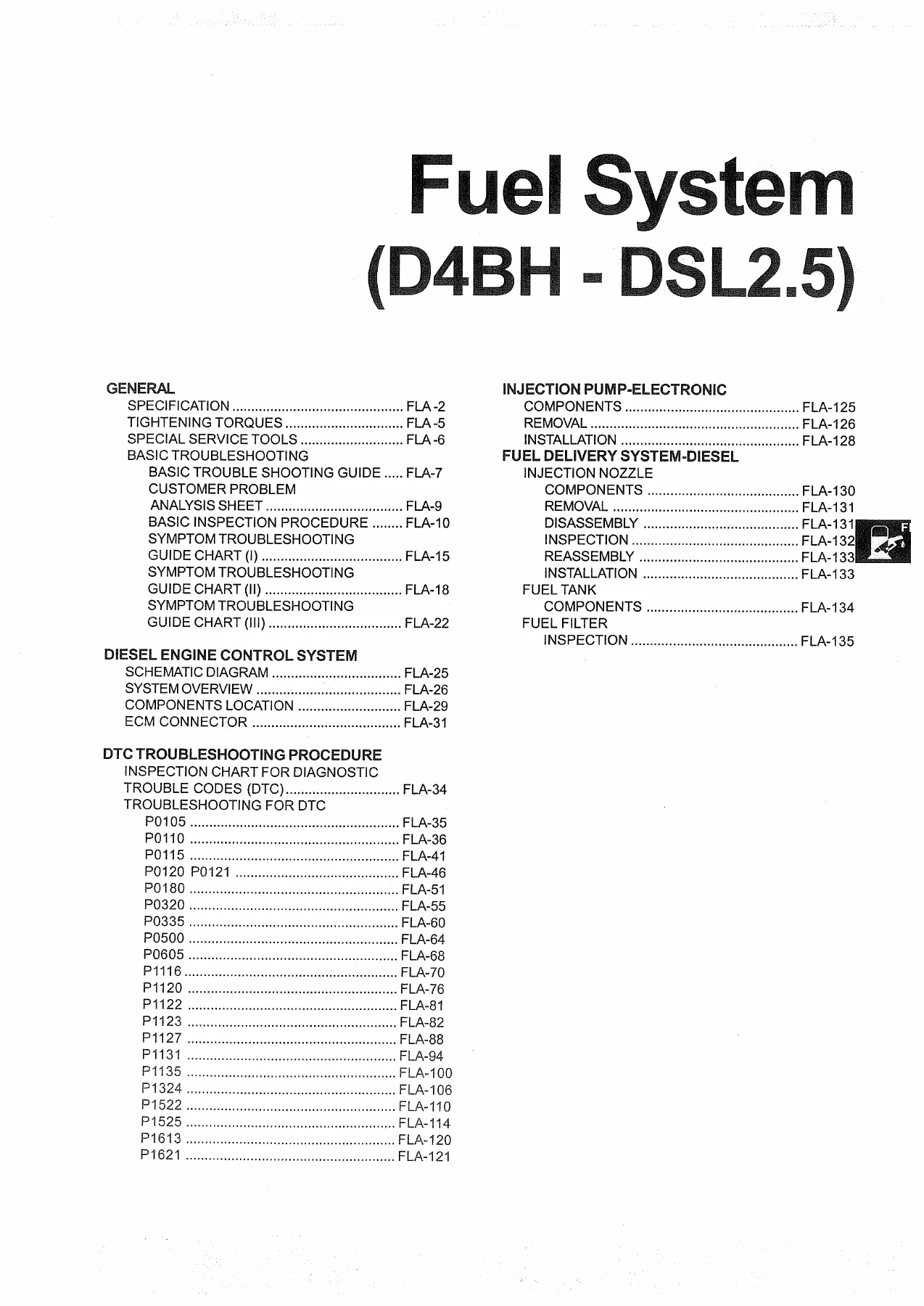
Workshop manual section for the Hyundai D4BH DSL2.5 diesel fuel system, covering electronic diesel control, fuel injection pump operation, diagnostic trouble codes, sensor and actuator testing, injection timing, fuel nozzles, fuel tank and fuel filter service. Includes specifications, tightening torques, circuit diagrams, component locations and detailed inspection procedures.
Description
Hyundai D4BH DSL2.5 Fuel System Workshop Manual – PDF Download
This Hyundai D4BH DSL2.5 Fuel System Workshop Manual is a detailed workshop reference devoted to the D4BH diesel engine fuel and electronic injection-control systems. Across 135 pages it combines service specifications, tightening torques, component descriptions, electrical diagrams, diagnostic trouble-code procedures and mechanical removal, installation, inspection and adjustment instructions.
The manual identifies the D4BH as a 2476 cc, four-cylinder in-line SOHC diesel engine and documents the electronically governed COVEC-F injection system used in this fuel-system section. It is particularly useful when diagnosis goes beyond routine fuel-system checks, because the material connects the injection pump with the ECM, sensors, actuators, wiring and diagnostic logic controlling fuel quantity and injection timing.
File Details
- Manual type: Fuel System Workshop Manual Section
- Brand / model: Hyundai D4BH – DSL2.5
- Language: English
- Pages: 135
- File format: PDF
Fuel System Specifications and Service Data
The opening section gives core engine and fuel-system data before moving into diagnosis. The D4BH engine is listed with 2476 cc displacement, four in-line cylinders and SOHC valve mechanism. Fuel-system specifications include the electronic COVEC-F injection pump, fuel-tank capacity, injector/nozzle data and sensor or actuator reference values.
Service information includes tightening torques for injection-pipe clamps and union nuts, injection-pump mounting fasteners, pump brackets, injection nozzles, nozzle retaining nuts, fuel-filter mounting hardware and related components. Special service tools illustrated in the manual include a prestroke measuring adapter for injection timing adjustment, an injection-pump sprocket puller and a nozzle-holder socket.
Electronic Diesel Control and ECM Diagnosis
A major part of the Hyundai D4BH DSL2.5 fuel system manual is devoted to the diesel electronic-control system. A schematic overview shows input signals reaching the ECM and output control of the injection pump, fuel quantity, injection timing, EGR, glow control and self-diagnosis functions. The manual explains the COVEC-F system, including the electronic governor arrangement, control-sleeve operation, timing control and the way the ECM uses sensor information to manage the injection pump.
Component-location drawings identify items such as the manifold absolute pressure sensor, intake-air temperature sensor, engine coolant temperature sensor, NP sensor, crankshaft position sensor, GE actuator, control sleeve position sensor, timing position sensor, compensation resistor, timing control valve, fuel cut valve, accelerator position sensor, EGR solenoids and vehicle speed sensor. ECM connector pages then identify individual pins, their functions and the components connected to them.
Troubleshooting and Electrical Testing
The diagnostic material starts with a basic troubleshooting procedure and customer-problem analysis process. It covers intermittent-problem inspection, connector handling, terminal checks, wire-harness inspection, continuity testing, voltage checks, open circuits, shorts to ground and ECM-related checks. Symptom charts address conditions such as an engine that will not start, incorrect or rough idle, smoke, poor power, slow acceleration, excessive fuel consumption, abnormal accelerator operation and an engine that will not stop.
For electronic faults, the manual provides dedicated DTC troubleshooting procedures with detecting conditions, limp-home behavior, suspect areas, circuit diagrams, connector views, specifications and step-by-step inspection sequences. The procedures cover barometric pressure, intake-air temperature, engine coolant temperature, accelerator position, fuel temperature, NP sensor, crankshaft position, vehicle speed, ECM memory, manifold absolute pressure, GE actuator, timing position, control sleeve position, compensation resistor, injection timing control, glow relay, battery voltage, sensor supply voltage, ECM conversion errors and fuel cut valve control.
Many of these diagnostic sections go beyond simply listing a code. They show where the component is located, explain how it works, provide expected resistance or voltage values and then guide the technician through connector inspection, harness continuity, short-circuit testing and component verification. Circuit and waveform illustrations are supplied for several sensors and actuators, including the NP sensor, crankshaft position sensor, timing control valve and GE actuator.
Chapters Covered
- General
- Specification
- Tightening torques
- Special service tool
- Basic troubleshooting
- Basic trouble-shooting guide
- Customer problem analysis sheet
- Basic inspection procedure
- Symptom troubleshooting
- Diesel Control System
- Schematic diagram
- System overview
- Components location
- ECM connector
- DTC Troubleshooting Procedure
- Inspection chart for diagnostic trouble codes
- P0105 barometric pressure sensor
- P0110 intake air temperature sensor
- P0115 engine coolant temperature sensor
- P0120 / P0121 accelerator position sensor
- P0180 fuel temperature sensor
- P0320 NP sensor
- P0335 crankshaft position sensor
- P0500 vehicle speed sensor
- P0605 internal control module ROM error
- P1116 manifold absolute pressure sensor
- P1120 GE actuator circuit malfunction
- P1122 manifold absolute pressure too high
- P1123 timing position sensor
- P1127 control sleeve position sensor
- P1131 compensation resistor
- P1135 injection timing control system
- P1324 glow relay circuit
- P1522 battery voltage
- P1525 sensor supply voltage (+5V)
- P1613 ECM error
- P1621 fuel cut valve circuit
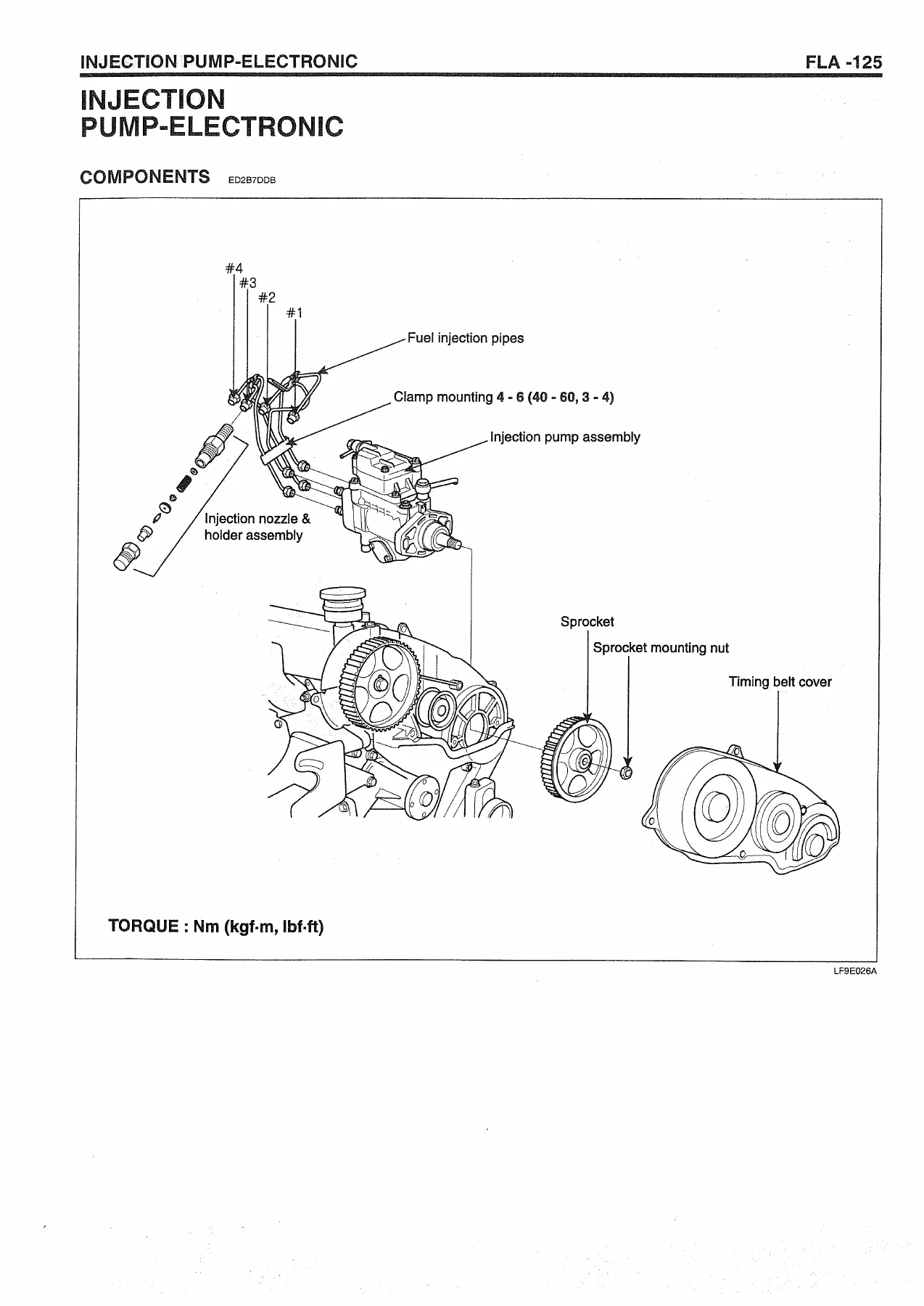
- Injection Pump-Electronic
- Components
- Removal
- Installation
- Fuel Delivery System-Diesel
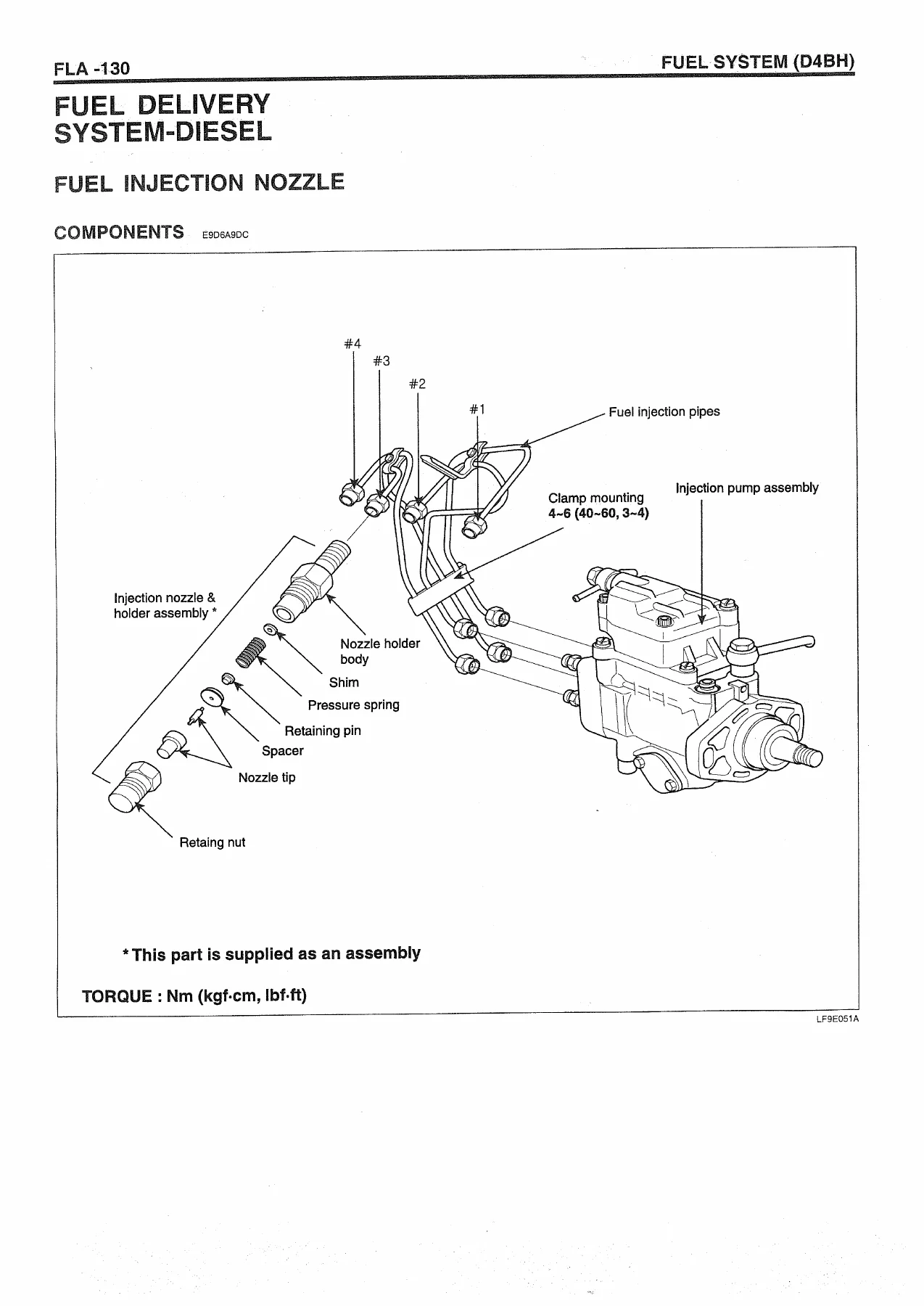
- Fuel injection nozzle
- Components
- Removal and disassembly
- Inspection and reassembly
- Installation
- Fuel Tank
- Components
- Fuel Filter
- Inspection
- Air bleeding
- Draining water
- Detector inspection
Taken together, these sections provide a focused service reference for diagnosing both mechanical and electronically controlled faults in the D4BH fuel system. The technician can move from symptoms and DTCs through sensor or wiring checks, then into injection-pump, nozzle or fuel-delivery work when mechanical service is required.
IMAGES PREVIEW
Injection Pump Removal, Installation and Timing
The mechanical repair section contains illustrated procedures for removing and reinstalling the electronic injection pump. Removal includes access preparation, sensor-wire and pump-connector disconnection, fuel hose and injection-pipe removal, timing-belt and sprocket work, injection-pump mounting-bolt removal and use of the specified sprocket puller.
Installation includes positioning the pump, fitting the sprocket, installing the prestroke measuring adapter and setting injection-pump timing with a dial indicator. The procedure gives the standard prestroke value and shows how the pump is tilted to obtain the specified reading before final tightening. Fastener torque values and injection-pipe installation steps are included as part of the reassembly procedure.
Injection Nozzle, Fuel Tank and Filter Service
The fuel-delivery section illustrates the injector/nozzle assembly and explains removal of injection pipes, the fuel-return pipe and the injection nozzle. Nozzle servicing includes disassembly, injection-start pressure testing, spray-pattern inspection, nozzle oil-seal checks, nozzle-tip inspection, piston-piece movement and pressure-spring inspection. Reassembly and installation instructions include tightening information and precautions intended to keep contamination from entering the nozzle and combustion chamber.
The final pages cover the fuel tank and filter. A fuel-tank component drawing identifies the tank, fuel sender, pipes, filler hose, breather hose and related hoses. Fuel-filter procedures explain air bleeding, draining water from the sedimenter and checking the detector circuit.
Get the D4BH Fuel System Repair Information You Need
The Hyundai D4BH DSL2.5 Fuel System Workshop Manual – PDF Download is designed for work that requires more than a basic maintenance guide. It supports diagnosis of starting, idle, power, smoke and fuel-consumption complaints; DTC investigation; wiring and sensor testing; injection-pump removal and timing; nozzle inspection and servicing; and fuel-filter or delivery-system work using the procedures and specifications provided in the manual.
Using the correct diagnostic sequence, resistance and voltage specifications, tightening torques and mechanical adjustment values matters when working on an electronically controlled diesel injection system. This manual puts those procedures together in one focused D4BH fuel-system reference. Your manual is supplied as an instant PDF download after payment, with no physical shipping required. It can be viewed on compatible phones, tablets and computers and printed when you need workshop pages beside the vehicle.
Reviews
There are no reviews yet.