
Kawasaki Z900 Z900 ABS Motorcycle Service Manual – ZR900A ZR900B Workshop Repair Guide PDF
Original price was: $39.95.$23.95Current price is: $23.95.
Complete 764-page Kawasaki service manual for the Z900 and Z900 ABS (ZR900A / ZR900B), including ZR900BH Special Edition Models. Full DFI diagnostics, engine, transmission, brakes, suspension, electrical and wiring coverage with torque specs, exploded views and the factory maintenance chart.
Description
The Kawasaki Z900 Z900 ABS Motorcycle Service Manual is the complete workshop reference for the ZR900A and ZR900B platform, covering the standard Z900, the ABS-equipped machine, and the ZR900BH Special Edition Models. Across more than 760 pages of procedures, exploded views, wiring diagrams and specification tables, it documents every major system on the motorcycle: DFI fuel injection with dual throttle valves, the cooling circuit, engine top end, clutch, lubrication, crankshaft and transmission, wheels and tires, final drive, brakes, suspension, steering, frame and the full electrical system. Each chapter opens with its own table of contents and a component illustration marked with the torque values, sealants, greases and locking agents required at reassembly.
File Details
- Manual type: Motorcycle Service Manual
- Brand / manufacturer: Kawasaki
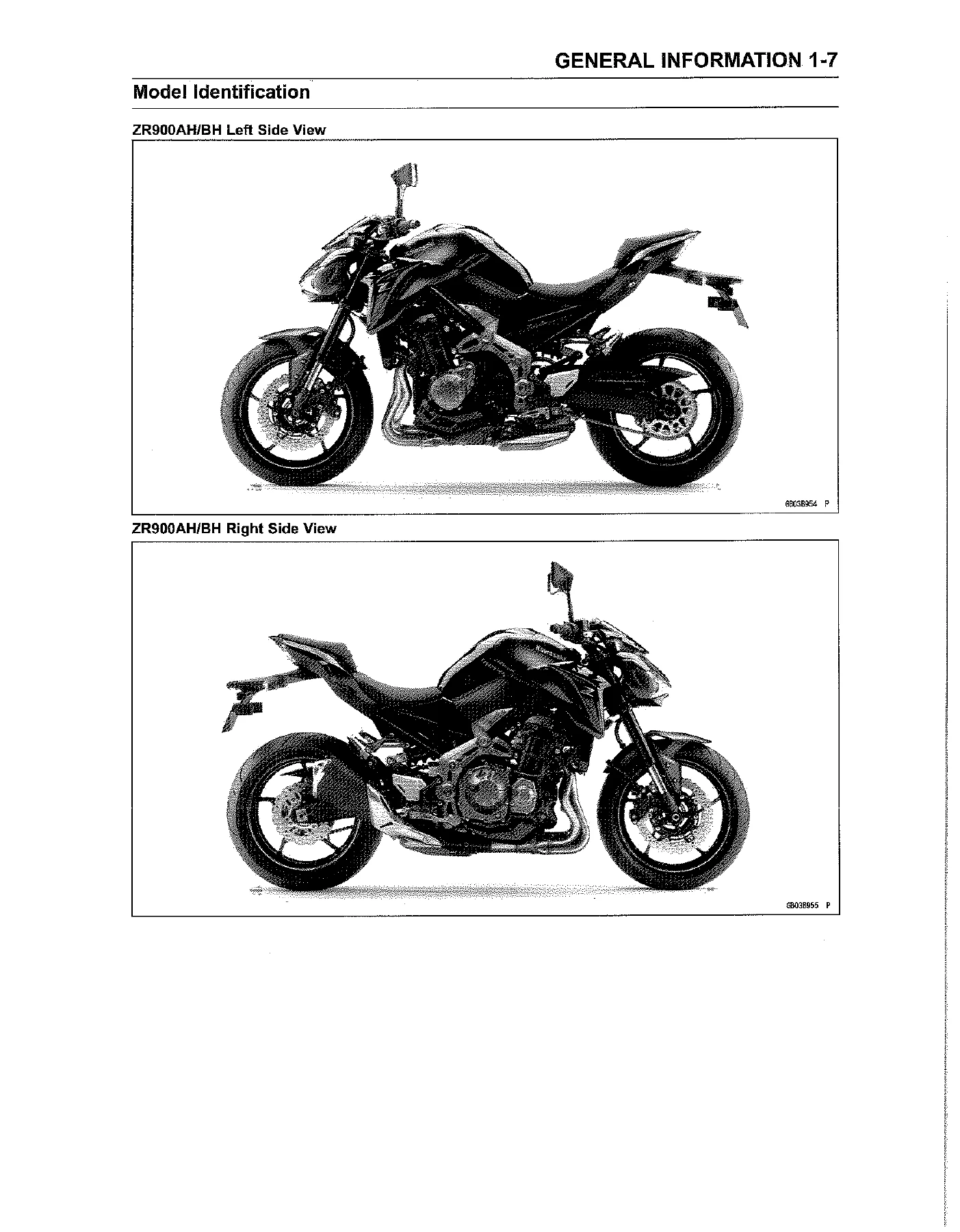
- Models covered: Z900, Z900 ABS — ZR900AH / ZR900BH, including ZR900BH Special Edition Models
- Language: English
- Page count: 764 pages
- File format: PDF
Chapters Covered
- General Information — before servicing, model identification, general specifications, unit conversion table
- Periodic Maintenance — torque and locking agent tables, specifications, special tools, scheduled maintenance chart, procedures for every service interval
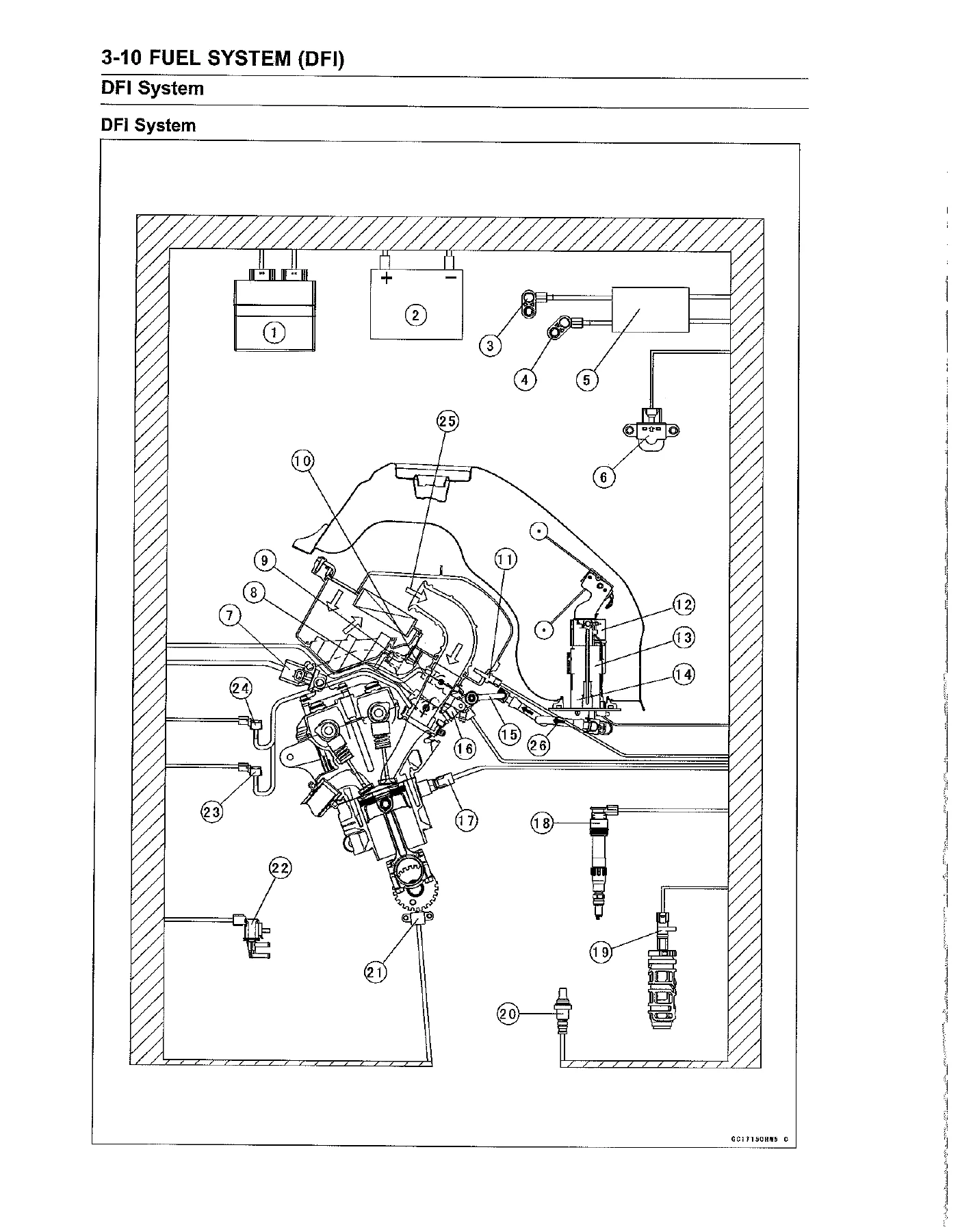
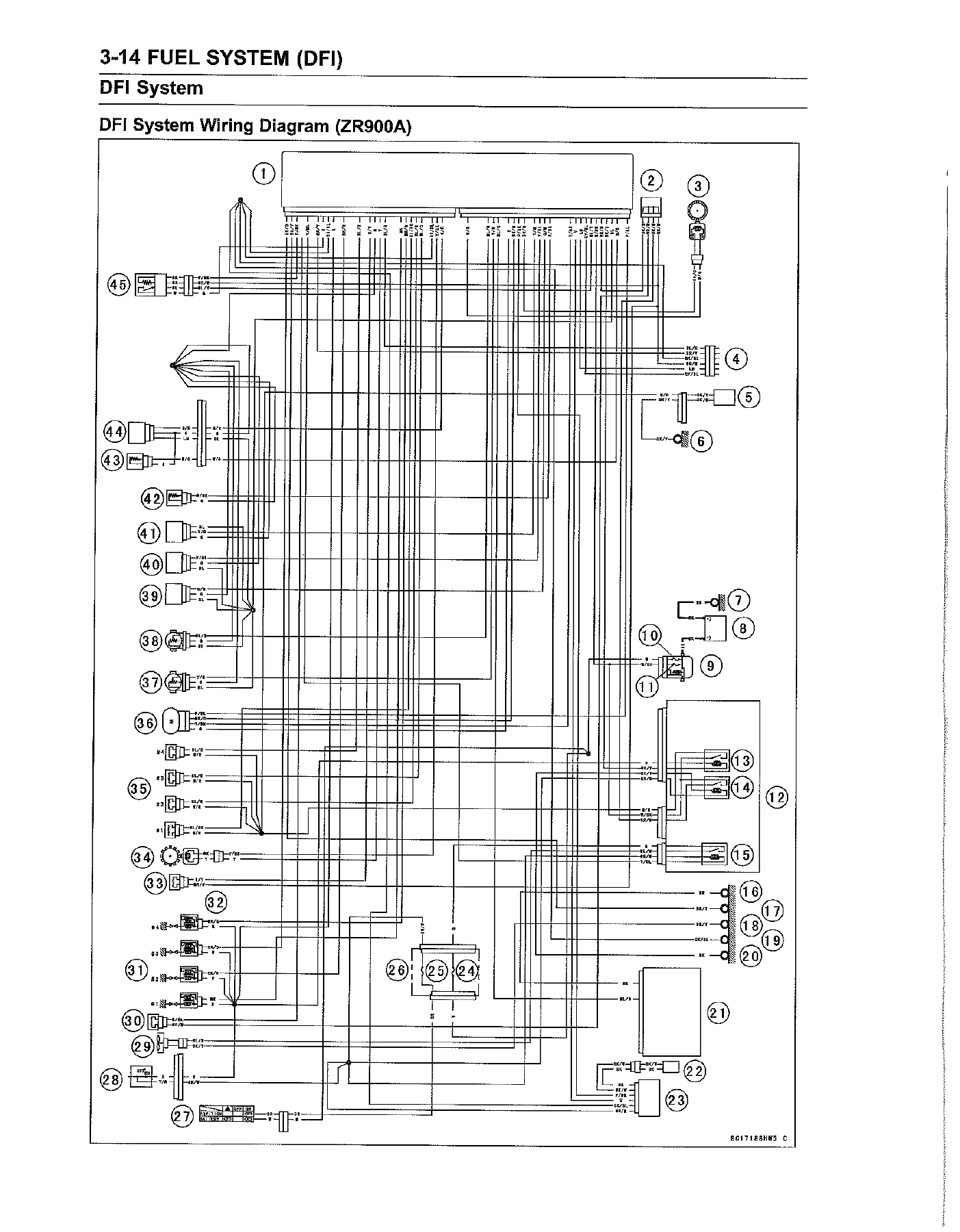
- Fuel System (DFI) — DFI system layout, wiring diagrams, ECU terminal data, self-diagnosis, service codes, sensor testing and every DFI component
- Cooling System — coolant level and change, water hose and O-ring replacement, thermostat and water pump
- Engine Top End — valve clearance inspection and adjustment with shim charts, camshafts, cylinder head, air suction system
- Clutch — clutch operation, release mechanism, clutch plates and springs
- Engine Lubrication System — engine oil change, oil filter replacement, oil pressure and oil passage components
- Engine Removal/Installation — engine mounting brackets, bolts and the complete removal sequence
- Crankshaft/Transmission — crankcase, balancer shaft, connecting rods, gear positioning, shift drum and transmission internals
- Wheels/Tires — tire pressure, tread depth, wheel bearing inspection, tire removal and installation
- Final Drive — drive chain lubrication, slack inspection and adjustment, wheel alignment, chain wear limits, chain guide
- Brakes — brake system inspection, fluid change, hose and pipe replacement, master cylinder and caliper rubber parts, pad wear, brake light switch, ABS hydraulic unit components
- Suspension — front fork and rear shock absorber inspection, oil leak checks, rocker arm and tie-rod service
- Steering — steering play inspection and adjustment, stem bearing lubrication
- Frame — covers, fairings, footpeg brackets, side stand and bodywork
- Electrical System — lights and switches operation checks, headlight aiming, side stand switch, engine stop switch, spark plugs, charging and starting
- Appendix — cable, wire and hose routing diagrams
What the Kawasaki Z900 Service Manual Actually Lets You Do
This is not a generic motorcycle guide with a chapter or two borrowed from a larger model range. It is written around the ZR900A and ZR900B machines specifically, and it assumes you are going to take the bike apart. The General Information chapter alone sets the tone: battery ground disconnection order, safe handling of sharp engine components, high flash-point solvent use, arrangement and cleaning of removed parts, tightening sequences, correct torque application, press-fit bearing and oil seal installation, circlip and cotter pin replacement, lubrication points, engine rotation direction and the colour-coding rules for the wiring harness. Those rules then carry through every later chapter.
Because the manual is divided into systems with their own dedicated tables of contents and exploded views, the Kawasaki Z900 ABS workshop manual works equally well for a single job and for a full rebuild. You can jump straight to the valve clearance charts in the Engine Top End chapter, or work through the entire Crankshaft/Transmission section when the cases come apart. The exploded illustrations at the start of each chapter show exactly which fasteners need a non-permanent locking agent, which need liquid gasket, which are replacement-only parts, and where engine oil, molybdenum disulfide oil solution or silicone grease belongs.
Periodic Maintenance and the Factory Service Chart
The Periodic Maintenance chapter reproduces the scheduled maintenance chart that governs the whole service life of the motorcycle, with intervals expressed in both years and odometer readings so you can see exactly what falls due at each service. Alongside the chart sits a complete torque and locking agent table covering the major fasteners across the fuel system, cooling system, engine top end, clutch, lubrication system, engine removal, crankshaft and transmission, rear sprocket, brakes, suspension, steering, frame and electrical system — each with the N·m, kgf·m and ft·lb figures and the correct remark code.
Step-by-step procedures in this section include air cleaner element replacement, idle speed inspection and adjustment, throttle control system inspection and cable free play, engine vacuum synchronization using a vacuum gauge and pilot screw adjuster, fuel system and fuel hose inspection, fuel filter and fuel hose replacement, evaporative emission control system inspection, coolant level and coolant change, water hose and O-ring replacement, valve clearance inspection and adjustment with both the intake and exhaust shim charts, air suction system damage inspection, clutch operation inspection, engine oil and oil filter change, tire air pressure and tread wear inspection, wheel bearing damage inspection, drive chain lubrication, slack, wear and chain guide inspection, wheel alignment, the full brake system inspection set including fluid change and master cylinder and caliper rubber parts replacement, brake pad wear and brake light switch operation, suspension system inspection, steering play inspection and adjustment, steering stem bearing lubrication, and the lights and switches operation inspection sequence.
DFI, Electrical and Diagnostic Coverage
The Fuel System (DFI) chapter is the deepest section of the manual and covers the digital fuel injection system end to end, including the self-diagnosis function that reports faults through the yellow engine warning indicator light and the meter display. It explains the user mode and dealer mode, how to read the two-digit service codes on the LCD, the full service code table with the matching diagnostic trouble codes, and the backup behaviour the ECU applies when each sensor or circuit fails.
Individual service code sections walk through input voltage, output voltage and resistance testing for the main throttle sensor, both intake air pressure sensors, the intake air temperature sensor, the water temperature sensor, the crankshaft sensor, the gear position sensor, the vehicle-down sensor, the subthrottle sensor and the subthrottle valve actuator, plus the oxygen sensor and its heater, the fuel injectors, the stick coils, the radiator fan relay, the air switching valve and the purge valve on equipped models. Wiring continuity inspection diagrams show the exact ECU terminal and component terminal to test between. There is also a DFI diagnosis flow chart, a sample diagnosis sheet for gathering information from the rider, and a full troubleshooting guide organised by symptom — engine won’t turn over, poor running at low speed, poor running or no power at high speed, unstable idling, engine stalls, poor acceleration, stumble, surge, backfiring and after fire.
Specifications, Torque Values and Service Limits
Specification tables appear throughout the manual with standard values and, where relevant, service limits. They cover the fuel system, cooling system, engine top end, clutch, engine lubrication system, wheels and tires, final drive, brakes and electrical system, plus general specifications for the ignition system, firing order, valve timing, lubrication system, engine oil, drive train, gear ratios, final drive ratio, frame geometry, tires, suspension, brakes, battery, headlight and alternator. The Electrical System chapter also includes the spark plug type and gap. Torque values are given in three units throughout, and the manual also carries a basic torque table for general fasteners by thread diameter so you are not left guessing on bolts that have no specific figure listed.
Who This Kawasaki Z900 Repair Guide Is For
The manual is written primarily for trained mechanics working in a properly equipped shop, but it contains enough detail and basic information to be genuinely useful to an owner carrying out their own maintenance and repair work. It states plainly that a basic knowledge of mechanics, correct tool use and workshop procedures is required to carry out the work satisfactorily, and that where experience is lacking or ability is in doubt, adjustments, maintenance and repair should be handled by a qualified mechanic. For anyone doing their own servicing, the manual recommends following the periodic maintenance chart, watching for non-scheduled problems, using genuine Kawasaki parts, and keeping complete records of maintenance and repair with dates and any new parts installed.
Torque values are stated for dry, solvent-cleaned threads unless noted otherwise, and the manual warns that a fastener which should have dry threads can be damaged if it is contaminated with lubricant and then tightened to the specified figure. It also covers handling of electronic components, including the caution that severe impacts can damage the ECU, sensors and relays, and that static electricity must be discharged before inspecting or replacing electrical parts. Throughout, the manual uses standard safety callouts — danger, warning and notice — so the risk level of each step is clear before you start.
Get the Complete Kawasaki Z900 ABS Service Manual
With the full Kawasaki Z900 Z900 ABS Motorcycle Service Manual on hand you can service the machine to the published intervals, diagnose DFI faults by service code instead of guessing, torque every fastener to the correct figure, measure valve clearance and select the right shim, rebuild the crankshaft and transmission, bleed and replace brake fluid, set drive chain slack and wheel alignment correctly, and trace electrical faults through the wiring diagrams. Correct procedures and the right specifications are what keep a modern fuel-injected, ABS-equipped motorcycle reliable — and they are what stop a routine job turning into an expensive one.
IMAGES PREVIEW
The manual is delivered as an instant PDF download after payment. There is no shipping and nothing to wait for. It opens on any device — laptop, tablet or phone — and you can print the pages you need for the workshop and keep the rest on file. Whether you are a dealer technician, an independent workshop or a Z900 owner who prefers to do the work personally, this is the reference that covers the whole motorcycle rather than a slice of it.



Reviews
There are no reviews yet.