
Kobelco SK200-10 and SK210LC-10 Excavator Operation Manual (2021) PDF
Original price was: $39.95.$24.95Current price is: $24.95.
Complete 383-page Kobelco operation and maintenance manual for the SK200-10 and SK210LC-10 hydraulic excavators, document S2YN00068ZE07, 2021 edition. Covers daily checks, safe operation, DPF and SCR/DEF systems, and scheduled servicing to 5,000 hours.
Description
Kobelco SK200-10 and SK210LC-10 Excavator Operation Manual (2021) PDF
The Kobelco SK200-10 and SK210LC-10 Excavator Operation Manual (2021) PDF is the 383-page operator’s guide issued for the SK200-10 and SK210LC-10 hydraulic excavators. Published by Kobelco Construction Machinery under document number S2YN00068ZE07 for the 2021 model year, ANZ destination, it follows these machines through their entire working life, from the first pre-start walkaround to routine greasing, emissions system care, and the full scheduled servicing programme out to 5,000 hours. For anyone who operates, maintains, or owns either of these Hino J05E-TA powered excavators, this Kobelco SK200-10 and SK210LC-10 operation manual is the reference that explains how the machine is meant to be run and looked after.
File Details
- Manual type: Operation Manual (operation and maintenance)
- Brand: Kobelco Construction Machinery
- Models covered: SK200-10, SK210LC-10
- Engine: Hino J05E-TA diesel engine
- Document number: S2YN00068ZE07
- Publication date: 2021.04
- Destination: ANZ
- Language: English
- Page count: 383 pages
- File format: PDF
Chapters Covered
The manual is organised into eight top-level chapters, each with its own sub-sections:
- 1. Safety Instructions — Safety Labels and Decals; Pre-Start Safety; Secure Visibility; Precautions for Operation; At the End of Each Shift; Precautions of Inspection and Maintenance; Precautions for Battery; Handling of the Accumulator or Gas Spring; Towing the Machine
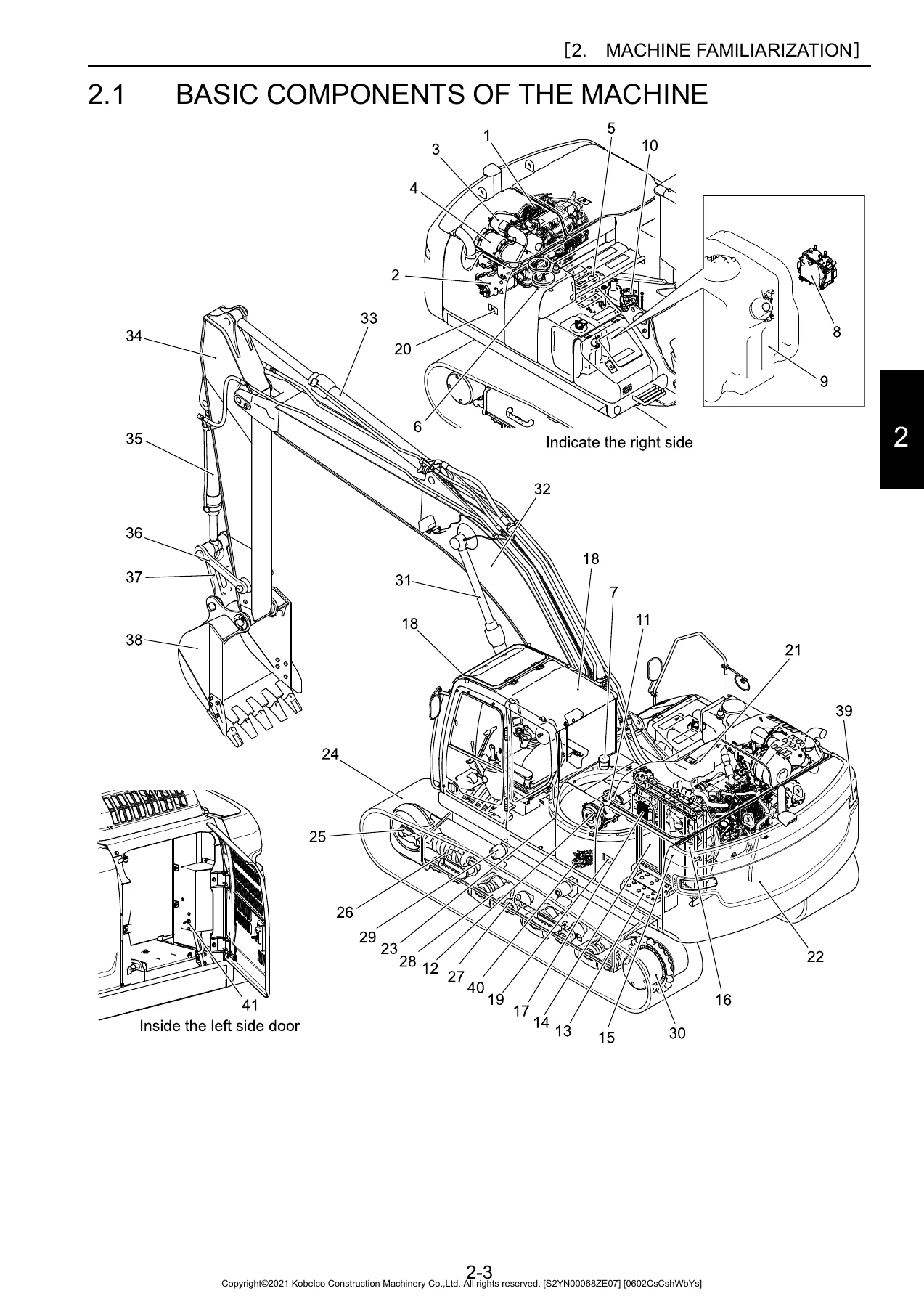
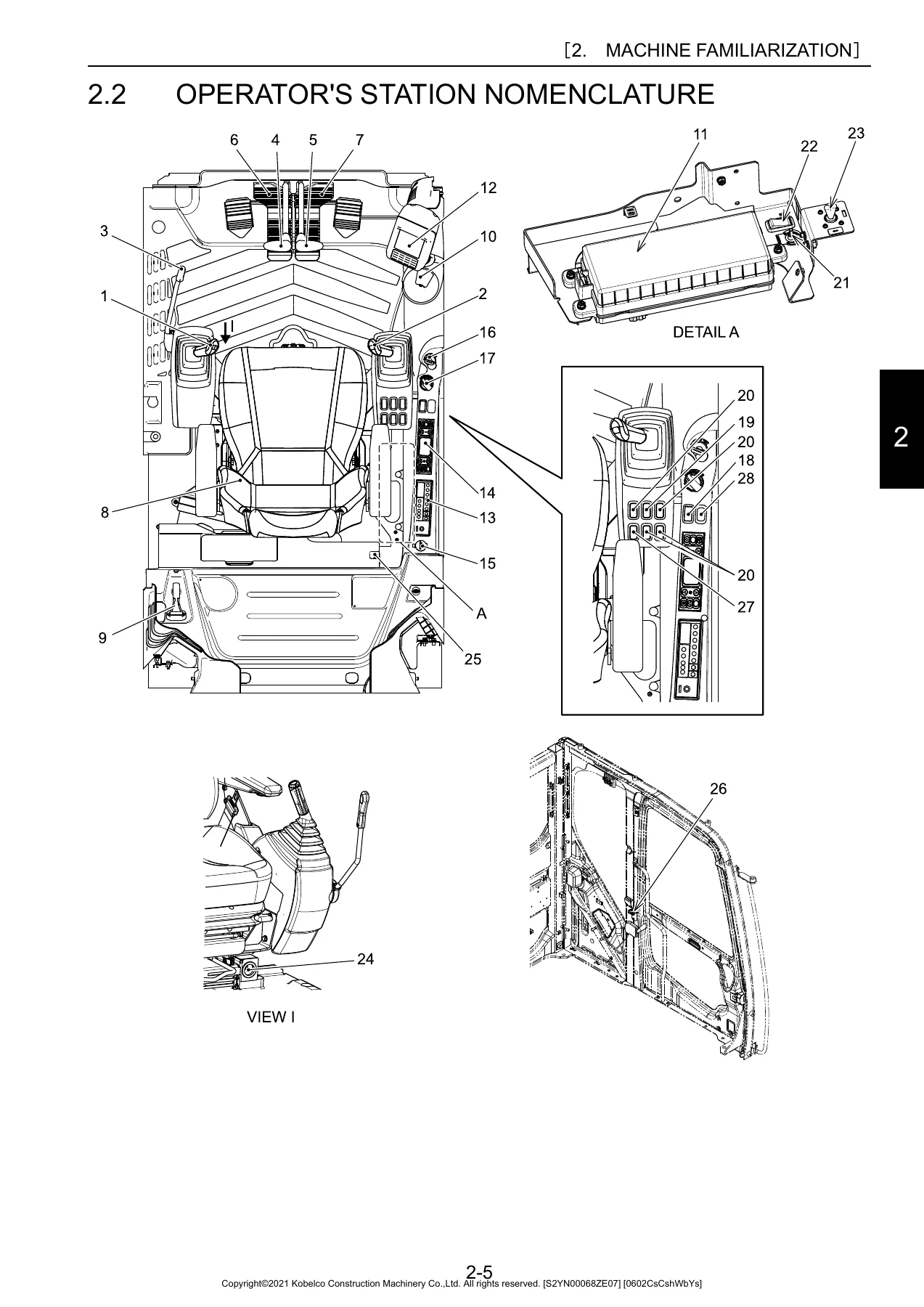
- 2. Machine Familiarization — Basic Components of the Machine; Operator’s Station Nomenclature; Gauge Cluster; Handling of Switches and Meters; Handling of Levers and Pedals; Fuses, Relays and Controller; Radio and Air Conditioner; Seat, Cab Accessories and Emergency Escape
- 3. Machine Operation — Everyday Check-Up; Check Before Starting Engine; Starting and Stopping the Engine; Check After Starting Engine; Warming-Up; Auto Idling Stop Function; Selection of Work Mode; Switching Attachment Mode; Machine Operation; Work Procedures of Machine; Parking and Post-Operation Checks; Operation in Adverse Conditions and Long-Term Storage
- 4. Inspection and Maintenance — Inspecting and Maintaining Machine; Diesel Particulate Filter (DPF); SCR System and DEF/AdBlue; Lubricant, Fuel and Coolant Specifications; Bio-Oil; Maintenance Parts; Tightening Torques for Bolts, Nuts and Hydraulic Connections; Inspection and Maintenance Chart; Maintenance When Required; 8 Hour (Daily); 50 Hour; 120 Hour; 250 Hour (3-Month); 500 Hour (6-Month); 1000 Hour (12-Month); 2000 Hour; 5000 Hour
- 5. Transportation — Transportation; Loading/Unloading the Machine; Machine Lifting; Installing and Removing Mirror
- 6. Specification — General Specifications; Shoe Types and Uses; Working Ranges; Attachment Type and Combination
- 7. Machine Operation Management System — Machine Operation Management System; Remote Download System
- 8. Optional Equipment — Hydraulic Nibbler (Crusher) and Breaker; Attachment Mode and Selector Valve; Stop Valve and Flow Rate Adjustment; Pedal and Proportional Hand Control Operation; Multi-Control Valve; Quick Hitch; Working Light Switch; Dual Monitor; Side Camera
Read as a whole, this document gives a technician or operator a single continuous reference for the SK200-10 and SK210LC-10 rather than a scattered set of job notes. It begins with the safety labelling scheme and the pre-start routines, moves into the cab layout and every switch, dial, lever and pedal, and then carries that familiarisation straight into real operating procedure — how to start in normal and cold conditions, how to warm the engine and hydraulic oil, which work mode to select, how to travel on slopes and soft ground, and how to park the machine safely. From there the second half of the book turns to upkeep, laying out the DPF regeneration logic, the SCR and DEF/AdBlue system, the lubricant and coolant specifications, the torque tables, and the complete hour-based service chart with a step-by-step procedure for every interval.
Operating Systems and Procedures Covered
The machine-operation chapters go well beyond a simple control list. They explain the difference between the S, E and H work modes and when each is appropriate, how the attachment mode switch changes the hydraulic circuit for bucket, nibbler and breaker work, how the auto idling stop function behaves, and how the auto acceleration system responds to lever movement. Travel procedure is covered in detail, including pivot turns, spin turns, switching between first and second travel speed, working in water up to the permitted depth, and the correct technique for pulling a stuck machine out of soft ground. Digging, trenching and loading technique are described with the recommended boom-to-arm angles, and the manual is explicit about the operations that are prohibited — using swing force or travel force to dig, hammering with the bucket, undercutting a cliff, or working under overhead power lines.
Emissions Systems: DPF and SCR
Because the SK200-10 and SK210LC-10 are Tier 4 / Stage IV era machines, a substantial portion of the manual is devoted to after-treatment. The Diesel Particulate Filter chapter explains how soot accumulates, how automatic regeneration works, when the soot deposition meter moves through its green, yellow and red levels, and exactly how to carry out a manual regeneration with the DPF switch — including how long it takes and what to do if it is interrupted. The SCR chapter covers DEF/AdBlue handling from top to bottom: the correct ISO 22241-1 or JIS K2247-1 specification, storage life at different ambient temperatures, how to read the DEF/AdBlue level gauge, how to drain and refill the tank, and what each power-limitation warning level means. An emergency evacuation mode is also documented for getting a restricted machine to a safe location.
Maintenance Intervals and Procedures
The inspection and maintenance half of the book is built around a single chart that maps every service item to its interval, then supports that chart with detailed walkthroughs. Intervals are broken out at 8 hours (daily), 50 hours, 120 hours, 250 hours (3-month), 500 hours (6-month), 1,000 hours (12-month), 2,000 hours and 5,000 hours, with first-time intervals noted for a new machine. The procedures themselves are fully written out — greasing points around the attachment, engine oil and filter replacement, fuel pre-filter and fuel filter replacement, air cleaner element cleaning and replacement, radiator and oil cooler cleaning, fan belt and air conditioning compressor belt tensioning, crawler tension adjustment, battery electrolyte level and specific gravity checks, swing and travel reduction unit oil changes, return filter, air breather element, suction strainer and pilot line filter servicing, and hydraulic oil replacement. Tightening torque tables for specific positions, for general capscrews and nuts, and for hydraulic joints and hoses are included so fasteners are returned to the correct values.
Specifications, Transport and Optional Equipment
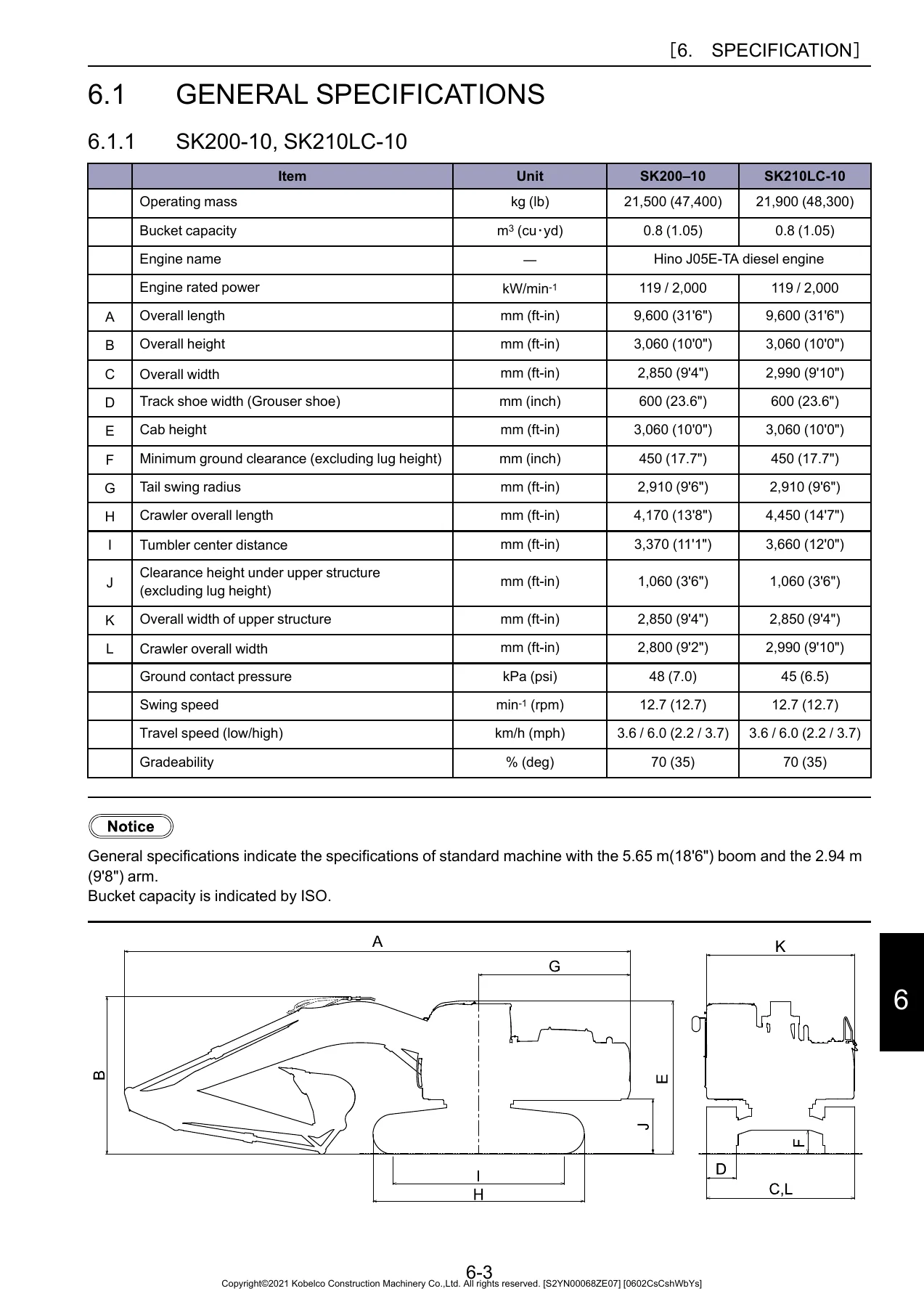
A dedicated specification chapter gives the general dimensions, operating masses, bucket capacities, travel speeds, gradeability and working ranges for both models, along with the shoe type options and the recommended bucket and arm combinations. The transportation chapter covers ramp loading and unloading angles, how to chock and tie down the machine, and the correct wire rope routing for lifting. Finally, the optional equipment chapter addresses hydraulic breaker and nibbler (crusher) installation and use, flow rate adjustment, selector and stop valves, proportional hand control layouts, the rotary multi-control valve pattern options, the quick hitch with its lock and unlock procedure, the dual monitor with its picture, camera and dimmer settings, and the right-side camera view.
Why This Manual Matters
Hydraulic excavators of this size are expensive assets, and most of the damage they suffer comes from small things done wrong over a long period — the wrong work mode, an overdue filter, an improperly tensioned crawler, a regeneration deferred until the engine derates. The Kobelco SK200-10 and SK210LC-10 Excavator Operation Manual (2021) PDF removes the guesswork. It tells you the correct engine oil and coolant specification, the correct tightening torque, the correct interval, and the correct procedure for the machine in front of you rather than a generic diesel engine. It is equally useful as a training aid for new operators, a reference for experienced ones who need to confirm a procedure, and a shop-floor document for maintenance planning and record keeping.
What You Get
Buying this Kobelco SK200-10 and SK210LC-10 operation manual gives you the complete 383-page document as a PDF, delivered instantly after payment. There is no shipping, no waiting for a courier, and no physical book to lose. The file can be opened on a laptop, tablet or smartphone, printed page by page for the workshop, or kept on a memory stick in the cab so the servicing chart and torque tables are always within reach. Whether you are carrying out a 500-hour service, setting up a breaker for the first time, or simply trying to work out why a warning has appeared on the multi-display, the answer is in this manual.
IMAGES PREVIEW



Reviews
There are no reviews yet.