
Komatsu PC400-7 PC400LC-7 PC450-7 PC450LC-7 Hydraulic Excavator Operation & Maintenance Manual
Original price was: $34.95.$20.95Current price is: $20.95.
Complete Operation and Maintenance Manual for Komatsu PC400-7, PC400LC-7, PC450-7, and PC450LC-7 hydraulic excavators. Covers safety, operation, controls, monitoring system, maintenance schedules, troubleshooting, specifications, and more. Instant PDF download.
Description
Komatsu PC400-7 PC400LC-7 PC450-7 PC450LC-7 Hydraulic Excavator Operation & Maintenance Manual
This Komatsu PC400-7 PC400LC-7 PC450-7 PC450LC-7 Hydraulic Excavator Operation & Maintenance Manual is the complete guide for operating, maintaining, and servicing these heavy-duty excavators. Whether you run a PC400-7 in a quarry, a PC450LC-7 on a demolition site, or a PC400LC-7 on a pipeline job, this manual gives you the procedures, specifications, and safety information needed to keep the machine productive and in good condition. It is written for operators, maintenance personnel, and technicians who need accurate, model-specific information directly from the manufacturer.
File Details
- Manual Type: Operation and Maintenance Manual
- Brand: Komatsu
- Models Covered: PC400-7, PC400LC-7, PC450-7, PC450LC-7
- Engine: Komatsu SAA6D125E-3 diesel engine
- Language: English
- File Format: PDF
- Page Count: Approximately 308 pages
- Document Number: SEAM056601P
- Publication Date: October 2003
Chapters Covered
- Foreword — warranty information, emission control warranty (Canada), and manual storage
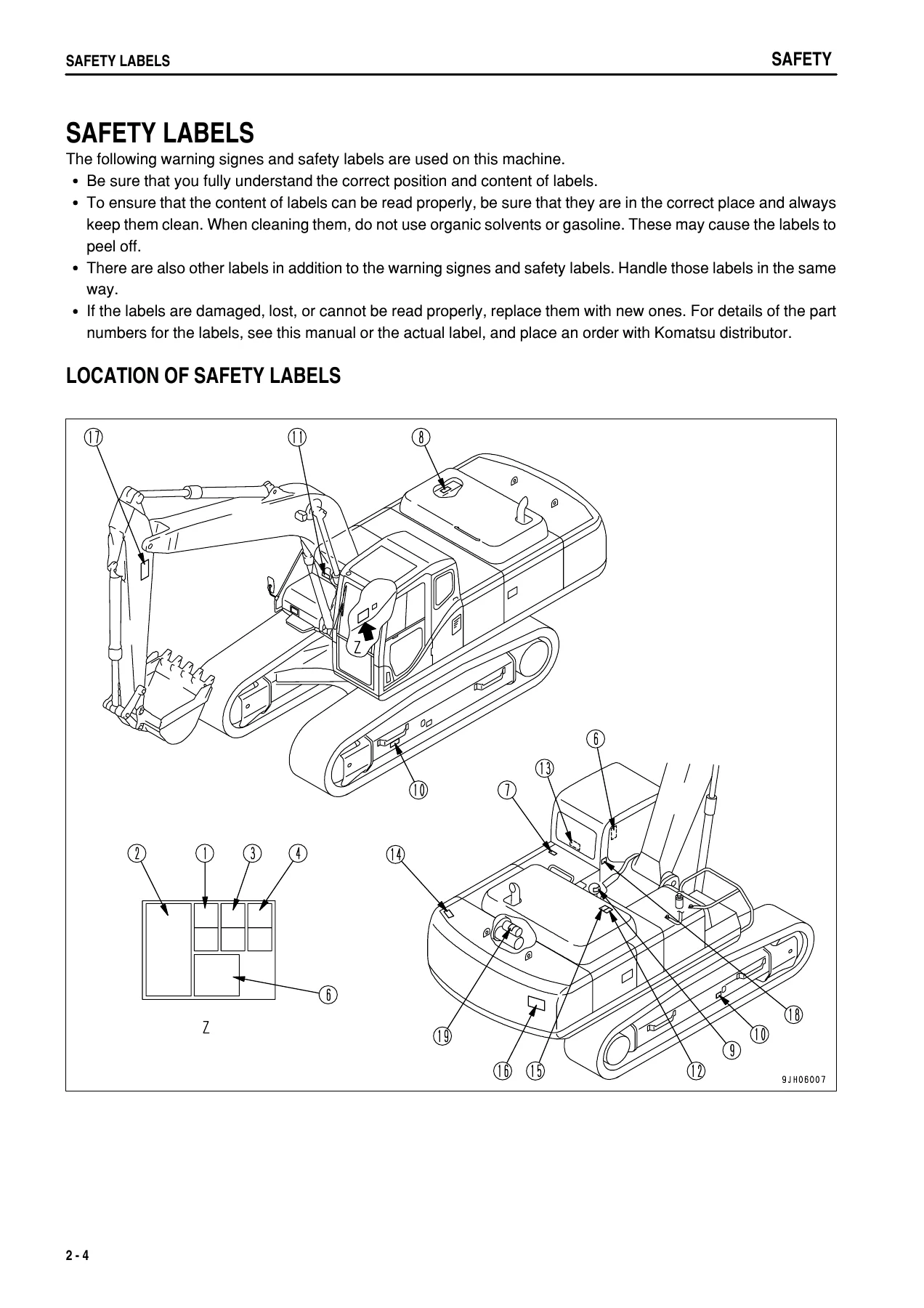
- Safety Information — signal words, safety labels, pictograms, and general safety rules
- Safety Labels — location of all safety decals and their part numbers
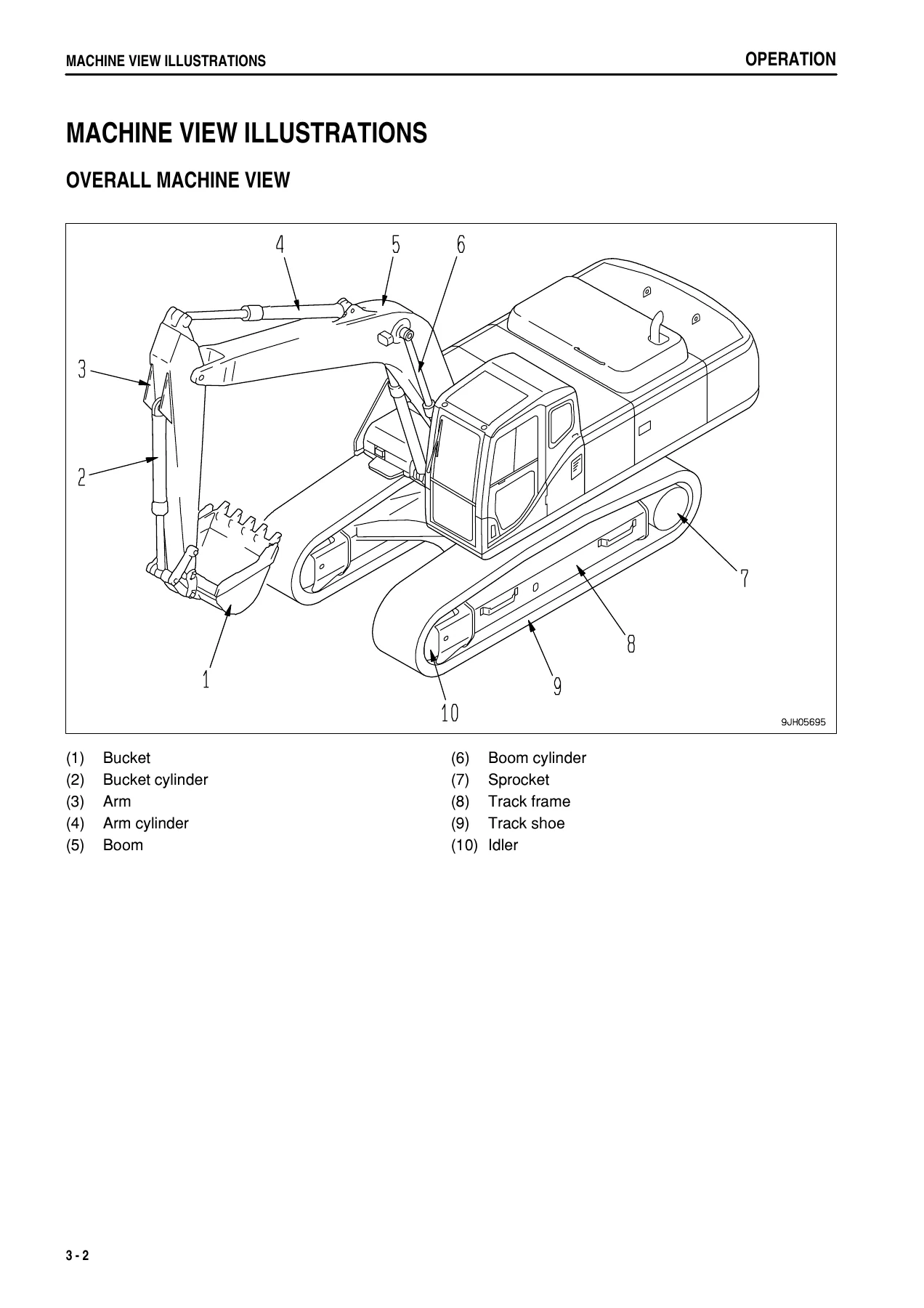
- Introduction — directions of machine, breaking-in the new machine, service meter location
- Specifications — operating weights, dimensions, working ranges, engine ratings
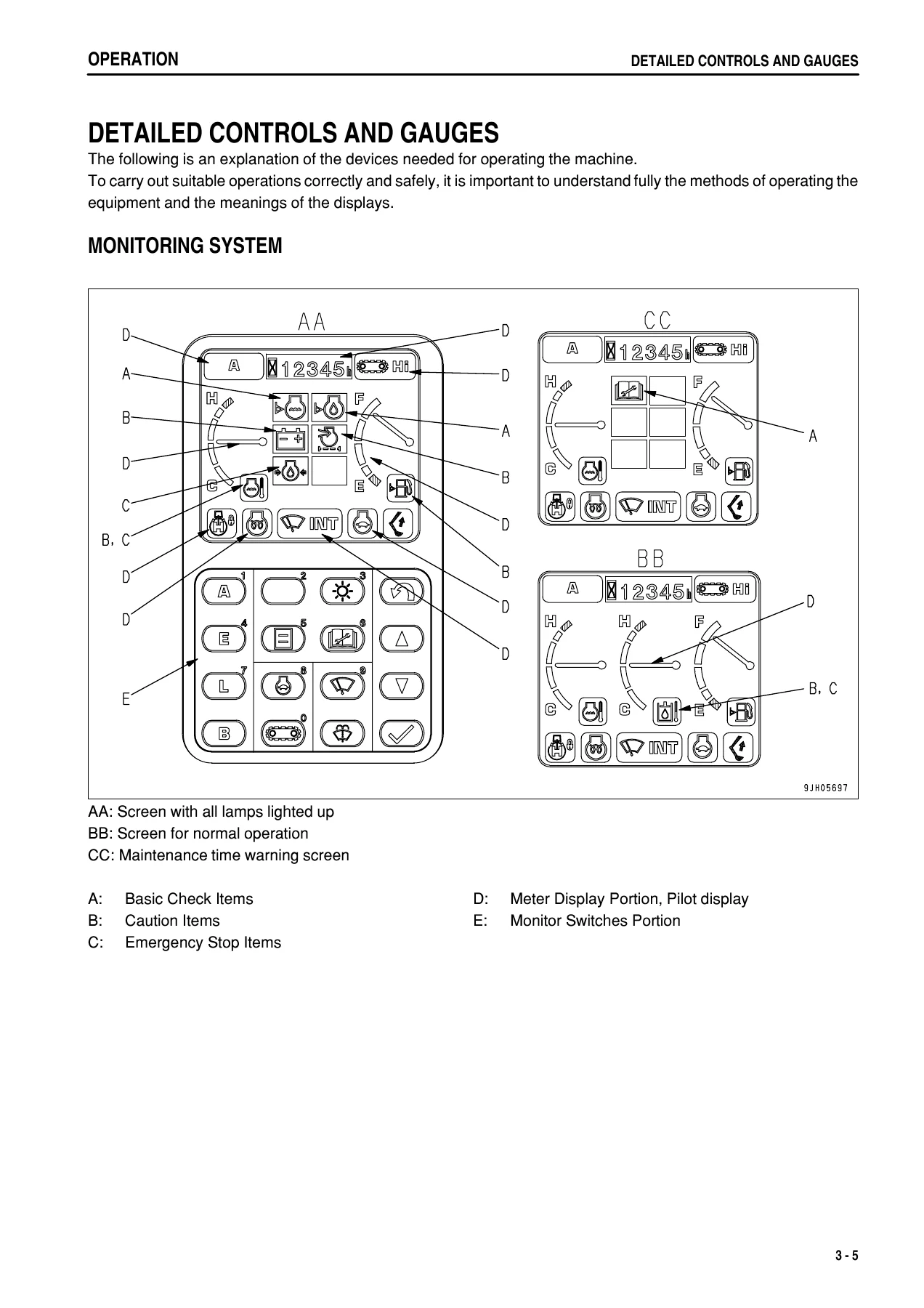
- Detailed Controls and Gauges — monitoring system, switches, levers, pedals, air conditioner controls, radio, fuses, auxiliary power
- Operation — checks before starting, starting engine (normal and cold weather), warming-up, stopping engine, machine operation, traveling, steering, swinging, working mode, parking, transportation, cold weather operation, long-term storage
- Maintenance — maintenance schedule, lubricants and fuel specifications, tightening torques, wear parts, safety-critical parts, every 250/500/1000/2000/4000/5000/8000 hours service procedures
- Troubleshooting — running out of fuel, battery discharge, towing, error codes, electrical system, chassis, engine trouble
- Attachments and Options — hydraulic breaker setup, machine ready for attachment, attachment guide, recommended attachment operations
- Index — comprehensive alphabetical reference
This manual opens with the safety information every operator must read before touching the machine. The safety section explains signal words (DANGER, WARNING, CAUTION, NOTICE, REMARKS), shows examples of safety labels using words and pictograms, and then lists every safety label on the machine with its location and part number. The introduction covers the directions of the machine (front, rear, left, right), breaking-in procedures for the first 100 hours, and where to find the service meter. From there, the operator’s section walks through the monitoring system — every gauge, warning lamp, and monitor on the machine monitor panel — followed by detailed explanations of every switch, lever, pedal, and control in the cab, including the air conditioner, radio, fuse box, and auxiliary power outlets.
The operation chapter is where the manual becomes a working tool. It covers daily checks before starting the engine, safety rules for starting, cold-weather starting with the pre-heating system, warming-up procedures, and the correct way to stop the engine. Machine operation is covered in detail: moving off, stopping, steering (including counter-rotation turns), swinging, and working modes. There are dedicated sections on prohibited operations, traveling on slopes, operations on slopes, operations on snow, parking on slopes, and towing. Transportation procedures explain loading and unloading on a trailer, shipping the machine, and lifting with wire ropes.
The maintenance chapter is the largest part of the manual. It starts with the maintenance schedule chart — initial 250-hour service, initial 1000-hour service, then every 250, 500, 1000, 2000, 4000, 5000, and 8000 hours. Each interval tells you exactly what to check, clean, replace, or adjust. The lubricants, fuel, and coolant specifications section lists the specified and refill capacities for the engine oil pan, swing machinery case, final drive cases, hydraulic tank, fuel tank, and cooling system. There is a full tightening torque list for metric bolts and hydraulic hoses, a wear parts list with part numbers and change intervals, and a safety-critical parts list with mandatory replacement intervals for hoses, seat belts, and other components that deteriorate over time.
The maintenance procedures themselves are step-by-step. You get instructions for checking and cleaning the air cleaner element, cleaning the cooling system, checking and tightening track shoe bolts, checking and adjusting track tension, replacing bucket teeth (both vertical-pin and horizontal-pin types), replacing bucket side cutters and shrouds, adjusting bucket clearance, checking window washer fluid, checking and adjusting the air conditioner, washing the washable floor, bleeding air from the hydraulic system, releasing internal pressure in the hydraulic circuit, checking nitrogen gas charge pressure in the accumulator, lubricating all grease points, checking the swing machinery case oil level, checking final drive case oil level, checking battery electrolyte, lubricating the swing circle, checking fan belt and alternator belt tension, checking air conditioner compressor belt tension, replacing fuel filter cartridges, checking and washing the fuel strainer, checking swing pinion grease level, changing engine oil and replacing the engine oil filter, cleaning radiator and oil cooler fins, cleaning air conditioner filters, replacing the hydraulic tank breather element, replacing the additional fuel filter cartridge, replacing the hydraulic oil filter element, changing swing machinery case oil, checking damper case oil level, checking turbocharger tightening and rotor play, replacing the corrosion resistor cartridge, replacing the hydraulic tank additional breather element, changing final drive case oil, checking injectors, cleaning the hydraulic tank strainer, cleaning the engine breather, cleaning and checking the turbocharger, checking the alternator and starting motor, checking engine valve clearance, checking the vibration damper, checking the water pump, checking high-pressure clamps, checking fuel spray prevention caps, replacing injector nozzle assemblies, changing hydraulic tank oil, replacing high-pressure piping clamps, and more.
The troubleshooting chapter covers running out of fuel (including the full air-bleeding procedure for the fuel system), battery discharge and booster cable starting, towing the machine with wire rope, using the lightweight towing hole, and error codes displayed on the machine monitor (E02 pump control system, E03 swing brake system, E10/E11/E14/E15 electronic governor and throttle issues, E04 network abnormalities). There are troubleshooting tables for the electrical system, chassis, and engine, listing symptoms, probable causes, and remedies. The manual also explains phenomena that are not failures, so you do not waste time chasing normal machine behavior.
The attachments and options chapter covers machines ready for attachment — stop valve, selector valve, attachment control pedal, lock pin, breaker circuit additional oil filter, and accumulator. It explains the hydraulic circuit switching between breaker mode (B mode) and general attachment mode (A or E mode), how to adjust oil flow, how to connect the hydraulic circuit, how to replace the additional breaker filter element, and how to remove and install attachments. The attachment guide provides a combination table showing which buckets and attachments can be used with different boom and arm configurations on the PC400 and PC450 models, along with recommended attachment operations for hydraulic breakers.
What This Manual Enables You to Do
With this Komatsu PC400-7 PC400LC-7 PC450-7 PC450LC-7 Hydraulic Excavator Operation & Maintenance Manual, you can safely operate the machine, perform all scheduled maintenance, diagnose and troubleshoot common problems, and understand the machine’s systems in depth. The manual gives you the correct procedures and specifications so you do not have to guess. If you are a technician, you can use it to service the engine, hydraulic system, undercarriage, electrical system, and air conditioner. If you are an owner-operator, you can use it to keep your machine running reliably and avoid costly breakdowns. If you are a fleet manager, you can use it to standardize maintenance across your PC400-7 and PC450-7 fleet.
IMAGES PREVIEW
This manual is delivered as an instant PDF download. There is no shipping, no waiting, and no physical book to keep track of. You can open it on any device — laptop, tablet, or smartphone — and print the pages you need for the shop or the field. The PDF format makes it easy to search for specific procedures, specifications, or part numbers. Whether you are doing a daily check, a 500-hour service, or a major repair, this manual is the reference you need.

Reviews
There are no reviews yet.