
Komatsu WA320-3 Wheel Loader Operation and Maintenance Manual – GSAM011603
Original price was: $34.95.$21.95Current price is: $21.95.
Complete Komatsu WA320-3 wheel loader operation and maintenance manual covering safety, operating procedures, periodic servicing, specifications, and troubleshooting for the SA6D102E-1 diesel engine.
Description
Komatsu WA320-3 Wheel Loader Operation and Maintenance Manual
This Komatsu WA320-3 Operation and Maintenance Manual is the complete guide for operating, servicing, and maintaining the WA320-3 wheel loader. It covers everything from daily pre-start checks and safe operating procedures through to full periodic maintenance schedules, specifications, and fault diagnosis. Whether you run a WA320-3 in a quarry, on a construction site, or in a materials yard, this manual gives you the exact procedures, torque values, capacities, and safety requirements that Komatsu specifies for this machine.
File Details
- Manual type: Operation and Maintenance Manual
- Brand: Komatsu
- Model: WA320-3
- Document number: GSAM011603
- Publication date: January 2000
- Publisher: Komatsu Latin America Corp., Miami, FL USA
- Language: English
- Page count: 209
- File format: PDF
Chapters Covered
- Prologue and Introduction
- Safety Information
- Location of Identification Plates, Chart for Recording Serial Numbers and Distributor Name
- Safety – General Precautions
- Precautions During Operation (Before Starting Engine, After Starting Engine, Transportation, Battery, Trailer)
- Maintenance Precautions (Before Performing Maintenance, During Maintenance, Tires)
- Position to Attach Safety Labels
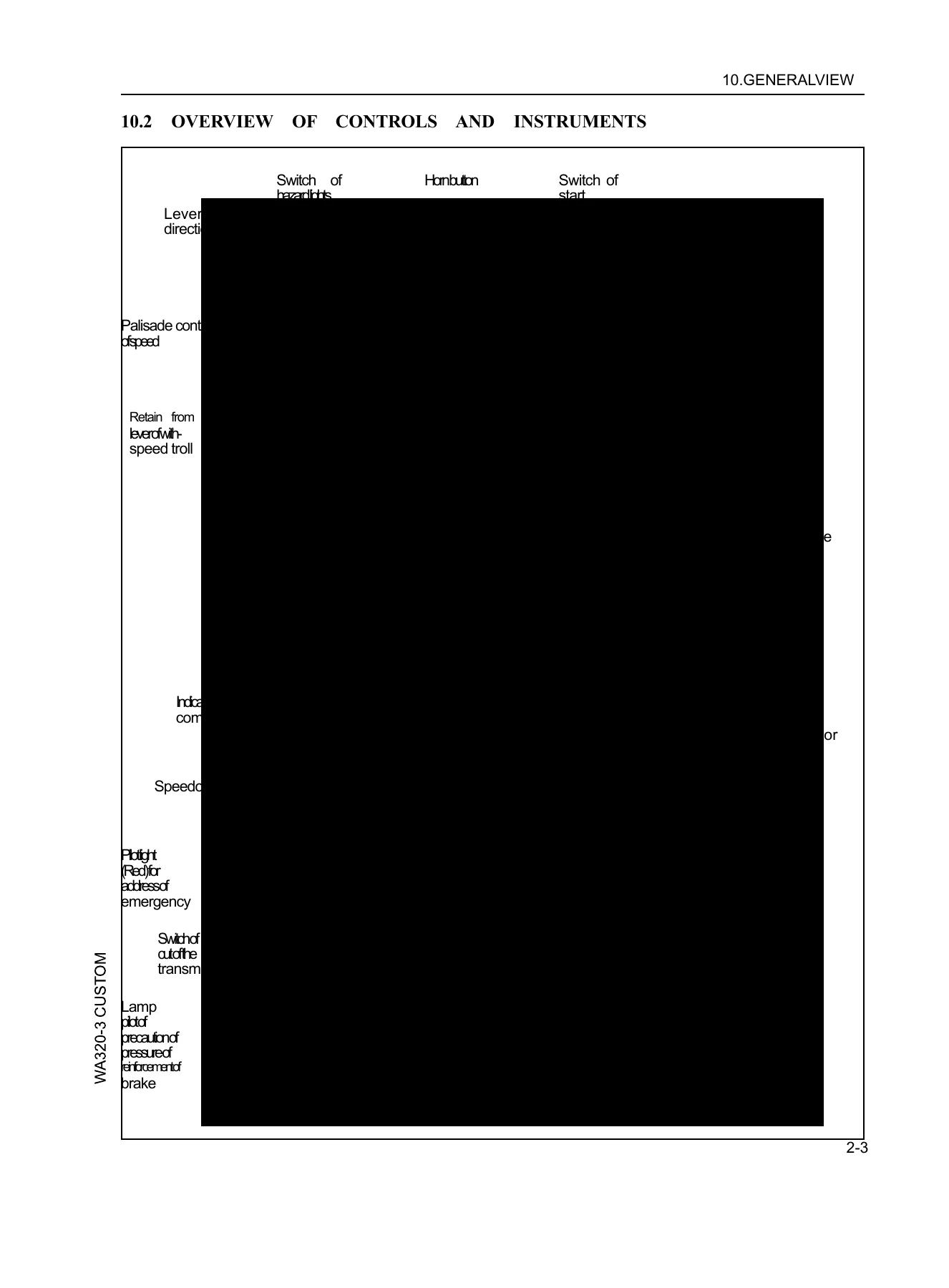
- Operation – Overview of Machine, Controls and Instruments
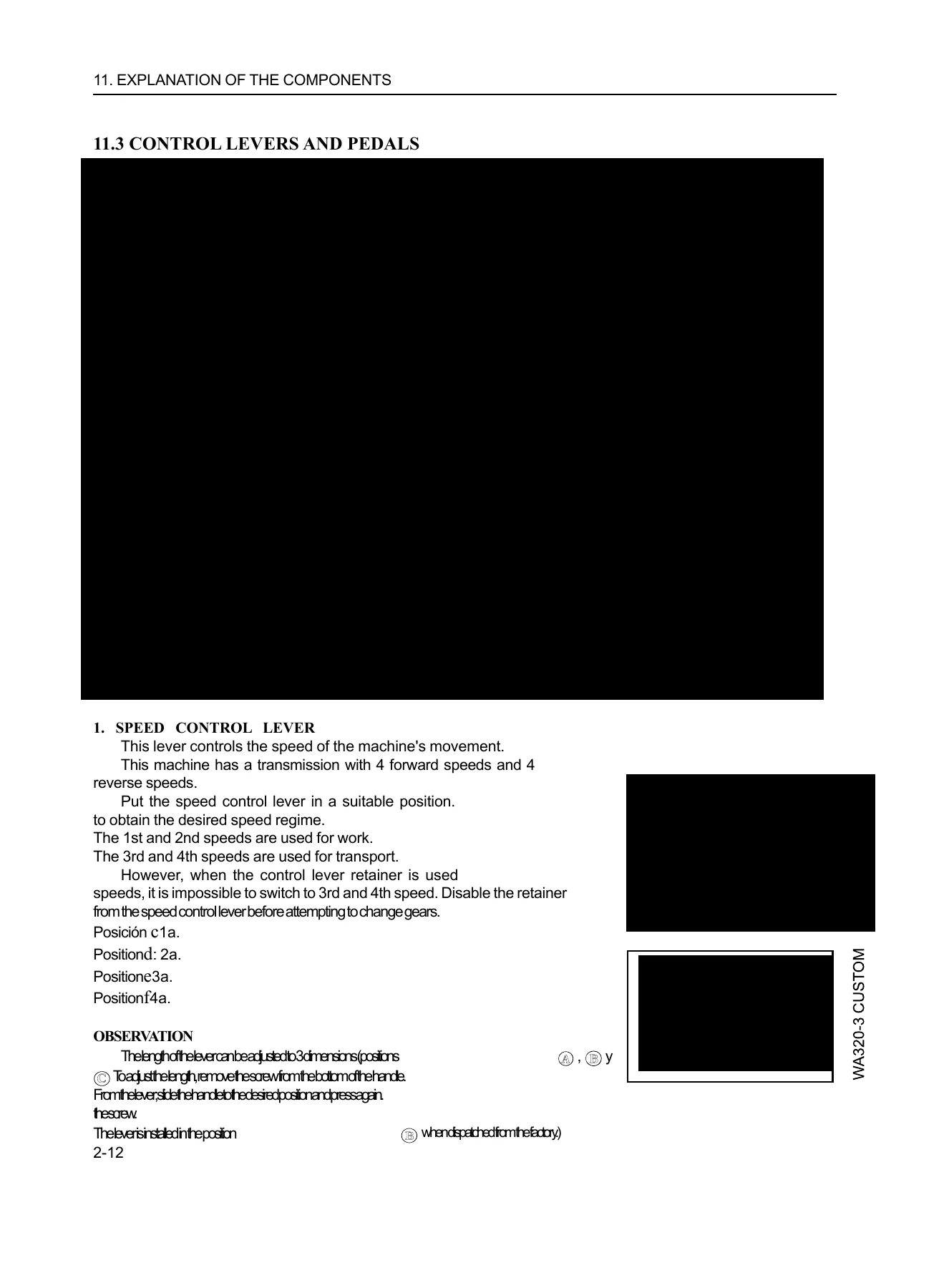
- Explanation of Components (Meters and Lamps, Switches, Control Levers and Pedals, Locking Lid, Safety Bar, Trailer Hitch, Grease Pump, Reverse Alarm, Fuses)
- Checks Before Starting Engine
- Engine Start, Operation and Checks After Starting Engine
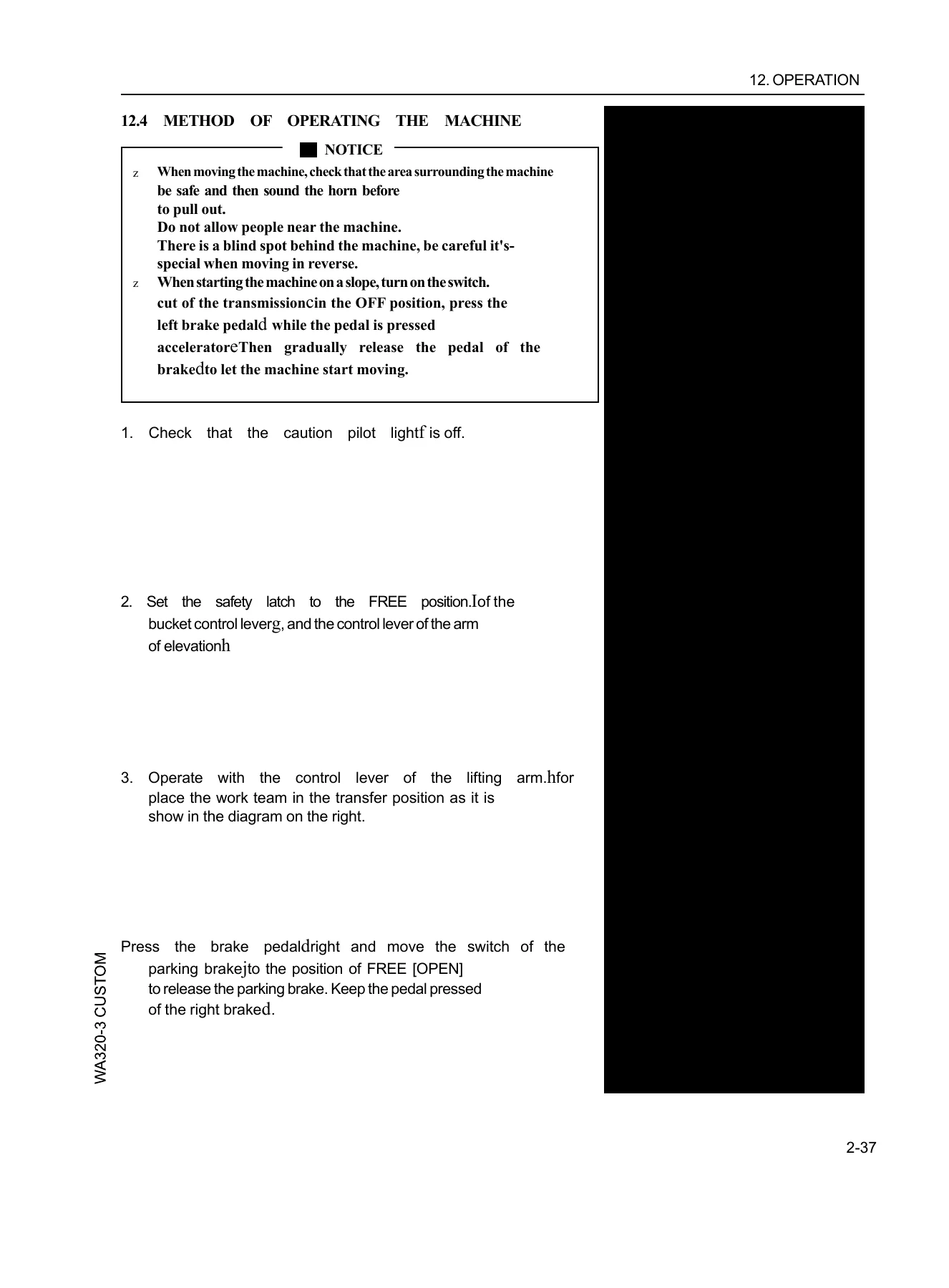
- Way to Move the Machine, How to Change Gears, Method of Changing Direction, Turns, How to Stop
- Operation of the Work Equipment
- Work That Can Be Done with the Wheel Loader
- Precautions During Operations, Adjustments to Work Equipment Posture, Parking
- Reviews After Completing Work, How to Stop the Engine, Machine Shutdown, Tire Handling
- Transport – Loading and Unloading, Precautions, Tractor Lifting Method
- Operation in Cold Weather
- Long-Term Storage
- Diagnosing – After Running Out of Fuel, Towing, If the Battery is Discharged, Other Problems
- Maintenance Guidelines
- Other Technical Information for the Service
- Replacement Parts List for Wear Items
- Fuel, Coolant and Lubricants by Ambient Temperature
- Standard Torque and Tightening for Screws and Nuts
- Periodic Replacement of Critical Safety Parts
- Maintenance Program and Schedule
- Service Procedures (Initial 250 hours, When Required, Pre-start, Every 50/100/250/500/1,000/2,000/4,000 hours)
- Specifications
- Optional Parts and Attachments
- Selection of Buckets and Tires
- Automotive Radio
- Air Conditioner
This manual is structured so that a technician or operator can move logically from a safety briefing through to the correct procedure for any routine task. The safety chapter opens with general precautions and then works through every phase of the machine’s working life: what to check before the engine starts, what to watch after it starts, how to handle the battery, how to load and unload the machine on a trailer, and how to work safely near slopes, high-voltage lines, and unstable loads. The operation chapter explains the dashboard – every gauge, lamp, and switch – then walks through cold starting, gear selection, direction changes, steering geometry, braking, parking, and the correct way to work the bucket and lift arm. The maintenance section is where the real value sits: it lays out a full periodic maintenance program with service intervals from the first 250-hour initial service all the way to 4,000 hours, and it includes detailed procedures for engine oil and filter changes, transmission and hydraulic system servicing, axle oil changes, air filter cleaning and replacement, radiator fin cleaning, cooling system flushing, parking brake adjustment, grease points, and tire inspection.
What This Manual Gives You
The Komatsu WA320-3 is a wheel loader built around the Komatsu SA6D102E-1 diesel engine, rated at 121 kW (165 HP) at 2,350 rpm with maximum torque of 607 Nm at 1,600 rpm. This manual covers the standard machine specification and the service requirements for that engine, the transmission, the axles, the hydraulic system, and the brake system. It is not a generic guide – it is the document that tells you exactly what oil to use at what ambient temperature, what torque to apply to the wheel hub nuts, how much coolant the system holds, what the correct tire inflation pressure is, and how to diagnose a problem when the machine will not move or the lift arm behaves abnormally.
The troubleshooting chapter alone is worth the download. It walks through electrical system faults, transmission and axle complaints, brake problems, steering issues, hydraulic system symptoms, and engine faults. For each problem it lists the likely causes and the corrective action, from checking for a loose terminal or a lack of oil through to when to call a Komatsu distributor for a component replacement. The periodic replacement schedule for critical safety parts is also included, so you know which hoses, seals, and the seatbelt must be changed on a fixed interval regardless of visible condition.
Detailed Service Coverage
The service procedures chapter is the largest part of the document. The initial 250-hour service covers the first fuel filter, transmission oil filter, and hydraulic tank filter element changes, plus engine valve clearance inspection. The “when necessary” procedures explain how to check, clean, and replace the air filter element, flush the cooling system, check and top up transmission oil, check axle oil level, clean the axle box breathers, clean the radiator fins, replace bucket blades and teeth, check the air conditioner, clean the condenser, top up window washer fluid, lubricate the control valve joints, adjust the parking brake, and drain the water separator. The interval-based services are then broken down into 50, 100, 250, 500, 1,000, 2,000, and 4,000-hour tasks. At 50 hours you check tire pressure and drain the fuel tank. At 100 hours you check hydraulic oil level, clean the fresh air filter, and grease the rear axle pivot pin. At 250 hours the engine oil and filter are changed, wheel hub nut torque is checked, the air conditioning compressor belt is checked and adjusted, the battery electrolyte is checked, and a full lubrication round is performed on the bucket, cylinders, and steering pins. At 500 hours the fuel filter and transmission oil filter are replaced and the central transmission shaft grooves are greased. At 1,000 hours the transmission oil is changed, the strainer is cleaned, the transmission breather is cleaned, the central hinge and axle pins are greased, and the turbocharger mounting and rotor play are checked. At 2,000 hours the hydraulic tank oil and filter element are changed, the hydraulic tank breather is replaced, the axle oil is changed, the brake disc wear is checked, the alternator and starter are checked, the engine valve clearance is adjusted, and the vibration damper is inspected. At 4,000 hours the water pump is checked. The specifications chapter at the back gives you performance figures, weight, engine data, and the tire and bucket selection charts.
Why This Manual Matters
Getting the maintenance intervals and procedures right on a WA320-3 is the difference between a machine that runs reliably for thousands of hours and one that suffers premature transmission, hydraulic, or engine failure. This manual provides the exact steps that Komatsu specifies, including the safety precautions that protect the operator during each task. The safety chapter explains how to place the safety bar, where to put blocks, how to handle hot oil and coolant, how to work around the battery, and how to park and shut down the machine correctly. Those are not optional details – they are the procedures that prevent injury and machine damage.
The operation chapters also help an operator get more from the machine and avoid unnecessary wear. The manual explains the correct way to approach a pile, how to load the bucket without spinning the tires, how to level ground in reverse, how to handle slopes, and how to load a dump truck efficiently. The tire handling and loading/transport sections explain how to avoid tire overheating and how to secure the machine on a trailer. The cold weather chapter covers the fuel, oil, and coolant changes needed when temperatures drop, plus battery care and parking precautions to prevent freezing.
Get It Now
IMAGES PREVIEW
This Komatsu WA320-3 Operation and Maintenance Manual is delivered as an instant PDF download. There is no shipping and no waiting – the file is available immediately after payment and can be opened on any device, from a workshop laptop to a phone on the job site. You can print the pages you need for the task at hand, keep the full manual on a tablet for reference, or store it on a USB stick in the cab. Whether you are performing a routine 250-hour service, diagnosing a transmission fault, or looking up a torque value before tightening a wheel hub, having the manual at hand means you can work to the correct specification the first time.

Reviews
There are no reviews yet.