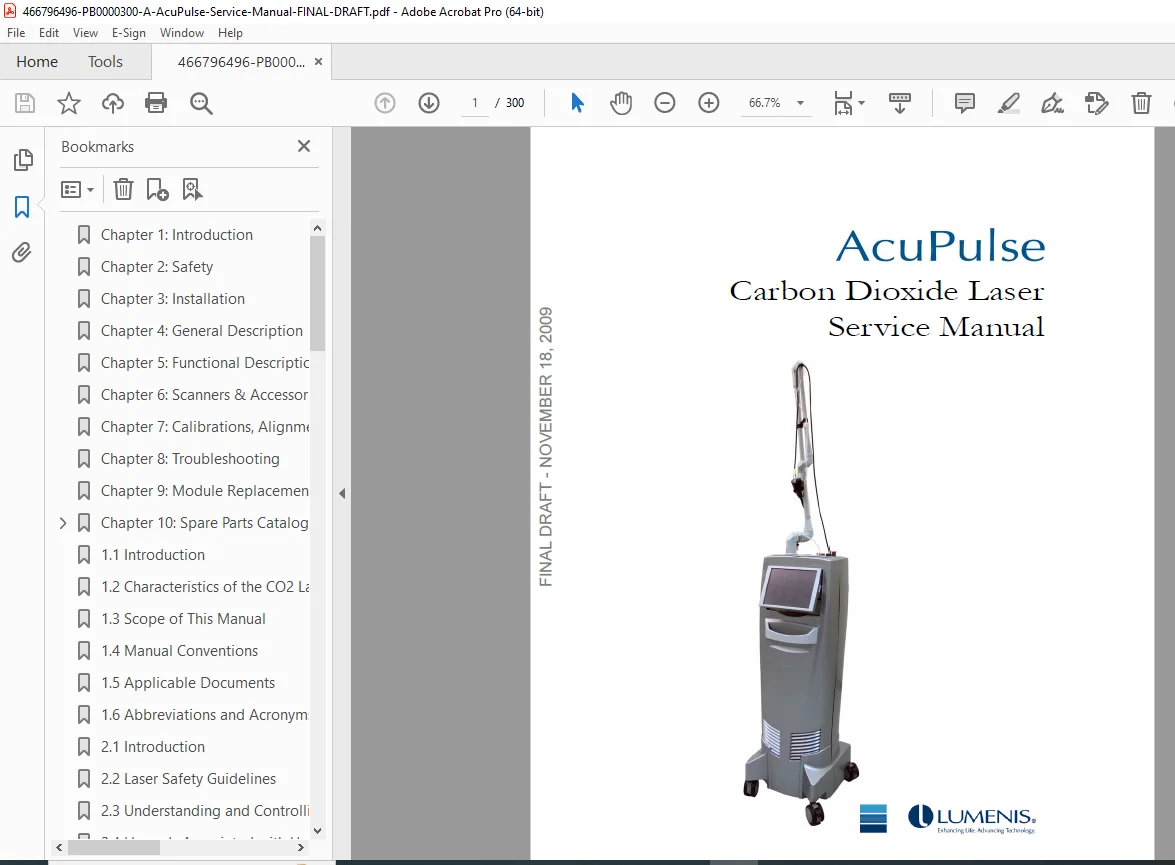
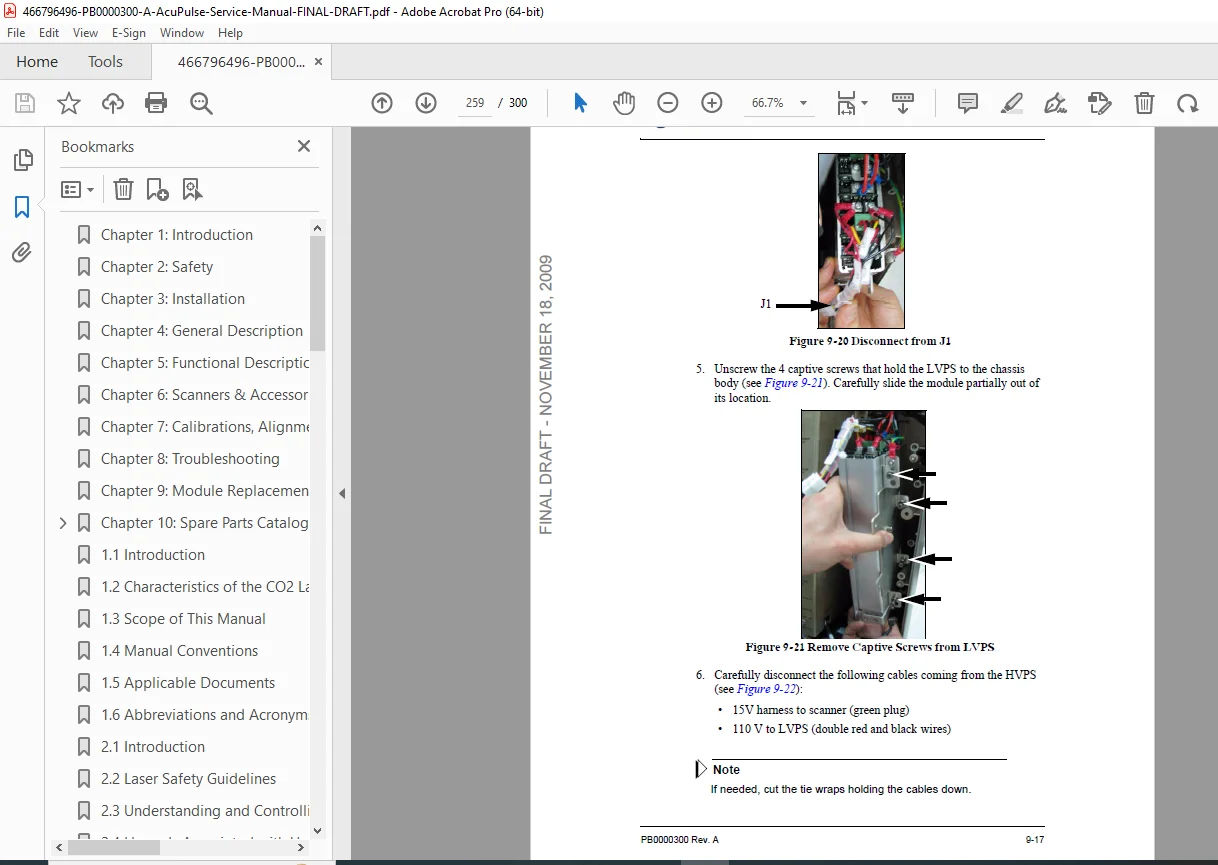
Lumenis AcuPulse Laser System Service Manual Repair Guide PDF Download
Original price was: $95.00.$32.95Current price is: $32.95.
Official Lumenis AcuPulse CO2 laser system service manual with comprehensive troubleshooting, maintenance procedures, optical alignment, and safety protocols. Covers complete system diagnostics, preventive maintenance schedules, laser calibration, component replacement, and error code resolution. Essential technical reference for biomedical engineers, laser service technicians, and medical equipment professionals servicing Lumenis AcuPulse surgical laser systems.
Description
Lumenis AcuPulse Laser System Service Manual Repair Guide Final PDF Download
FULL PRODUCT DESCRIPTION
Lumenis AcuPulse CO2 Laser System Service Manual – Complete Technical Repair & Maintenance Guide
This official Lumenis AcuPulse service manual (Final Draft – Document PB0000300-A) provides comprehensive technical documentation for servicing, repairing, and maintaining the Lumenis AcuPulse fractional CO2 laser system. Designed for qualified biomedical equipment technicians, laser service specialists, and clinical engineers, this manual contains detailed troubleshooting procedures, laser safety protocols, optical alignment procedures, and component-level repair guidance for this advanced surgical laser platform.
📋 FILE DETAILS
- Manual Name: Service Manual – Lumenis AcuPulse CO2 Laser System (Final Draft)
- Document Number: PB0000300-A
- Models Covered: Lumenis AcuPulse (all configurations and software versions)
- Year: Factory Original Edition
- PDF Quality: High-Resolution, Professional Technical Documentation
- Total Pages: 300 pages
📑 COMPLETE MANUAL CONTENTS
CHAPTER 1: INTRODUCTION & SAFETY (Pages 1-42)
- System Overview
- AcuPulse platform introduction
- Fractional CO2 laser technology
- System architecture overview
- Clinical applications
- Treatment modalities
- System configurations
- Laser Safety Fundamentals
- Laser Classification
- Class 4 laser warnings
- Hazard classifications
- Regulatory compliance
- FDA requirements
- Safety Precautions
- Eye protection requirements
- Skin exposure hazards
- Fire hazards
- Electrical safety
- Service personnel qualifications
- Laser safety officer requirements
- Laser Classification
- Service Safety Guidelines
- Lockout/tagout procedures
- High voltage precautions
- Optical alignment safety
- Protective equipment requirements
- Emergency shutdown procedures
- Accident reporting protocols
- Environmental Requirements
- Operating temperature range
- Humidity specifications
- Altitude limitations
- Power requirements
- Ventilation needs
- Smoke evacuation requirements
- Required Service Tools
- Specialized tools list
- Optical power meters
- Beam profilers
- Alignment targets
- Safety equipment
- Test equipment specifications
CHAPTER 2: SYSTEM DESCRIPTION (Pages 43-98)
- System Architecture
- Main console unit
- CO2 laser source
- Beam delivery system
- Scanner head assembly
- Control electronics
- Cooling system
- Touch screen interface
- CO2 Laser Source
- Radio frequency (RF) excited laser
- Laser tube specifications
- Gas mixture composition
- Resonator design
- Output power specifications
- Wavelength: 10.6 µm
- Pulse duration capabilities
- Beam quality (M² factor)
- Beam Delivery System
- Optical Path Components
- Beam expander
- Articulated arm assembly
- Mirror assemblies
- ZnSe lenses
- Protective windows
- Beam splitter
- Scanner System
- Galvanometer scanners
- Scanning patterns
- Spot size control
- Pattern generation
- CPG (Computer Pattern Generator)
- Optical Path Components
- Handpiece/Scanner Head
- Optical assembly
- Distance gauge system
- Aiming beam system
- Smoke evacuation port
- Treatment tips
- Alignment mechanisms
- Control System
- Main controller board
- User interface processor
- Scanner control electronics
- Safety interlock system
- Treatment parameter control
- Data logging system
- Cooling System
- Water cooling circuit
- Chiller specifications
- Flow rate monitoring
- Temperature control
- Coolant specifications
- Filter system
- Power Supply System
- AC input processing
- Multiple voltage rails
- RF power supply for laser
- High voltage generation
- Protection circuits
- UPS integration
CHAPTER 3: INSTALLATION & SETUP (Pages 99-138)
- Site Preparation
- Space requirements
- Installation clearances
- Environmental conditions
- Electrical power requirements
- Ground requirements
- Water supply (if applicable)
- Ventilation requirements
- Unpacking Procedures
- Shipping container handling
- Component verification
- Accessory identification
- Protective materials removal
- Damage assessment
- Documentation checklist
- Physical Installation
- Console positioning
- Articulated arm mounting
- Scanner head connection
- Chiller installation
- Smoke evacuator connection
- Footswitch connection
- Electrical Installation
- Power cord connection
- Voltage verification
- Ground continuity testing
- Circuit breaker requirements
- Safety interlock connections
- Initial System Configuration
- Power-on procedures
- Self-test execution
- Software initialization
- User settings configuration
- Treatment preset setup
- Network configuration (if applicable)
- Optical Alignment Verification
- Beam path alignment check
- Scanner calibration
- Spot size verification
- Distance gauge calibration
- Aiming beam alignment
- Initial Performance Testing
- Output power verification
- Pulse duration testing
- Pattern accuracy testing
- Safety interlock testing
- Emergency stop verification
- Documentation requirements
CHAPTER 4: THEORY OF OPERATION (Pages 139-188)
- CO2 Laser Physics
- CO2 laser principles
- Energy level transitions
- Population inversion
- Stimulated emission
- RF excitation method
- Gas discharge characteristics
- Laser Resonator
- Optical cavity design
- Mirror specifications
- Output coupler
- Beam mode structure
- Q-switching operation
- Pulse formation
- Beam Delivery
- Beam steering mechanisms
- Articulated arm operation
- Mirror alignment principles
- Beam expansion optics
- Focus optics
- Spot size control
- Scanner Technology
- Galvanometer operation
- Position feedback
- Scanning algorithms
- Pattern generation
- Speed control
- Accuracy specifications
- Power Control
- RF power modulation
- Pulse width modulation
- Energy per pulse control
- Fluence calculation
- Duty cycle management
- Safety Interlocks
- Door interlocks
- Emergency stop circuit
- Key switch
- Footswitch safety
- Laser ready indicators
- Fault detection
- Cooling System Operation
- Heat dissipation requirements
- Water flow monitoring
- Temperature regulation
- Chiller control
- Low flow detection
- Overheat protection
CHAPTER 5: PREVENTIVE MAINTENANCE (Pages 189-228)
- Maintenance Schedule Overview
- Daily maintenance tasks
- Weekly maintenance items
- Monthly maintenance procedures
- Quarterly service requirements
- Annual comprehensive maintenance
- Component life expectancy
- Daily Maintenance
- Visual inspection checklist
- External cleaning
- Smoke evacuation check
- Consumable inspection
- Safety interlock verification
- Logbook entries
- Weekly Maintenance
- Optics cleaning procedures
- Mirror inspection
- Lens cleaning
- Protective window cleaning
- Scanner head inspection
- Articulated arm inspection
- Monthly Maintenance
- Optical System
- Thorough optics cleaning
- Mirror replacement assessment
- Lens inspection
- Window replacement check
- Beam alignment verification
- Cooling System
- Coolant level check
- Filter inspection/replacement
- Flow rate verification
- Temperature monitoring
- Leak inspection
- Mechanical Systems
- Articulated arm lubrication
- Tension adjustment
- Cable inspection
- Connector tightness
- Optical System
- Quarterly Maintenance
- Complete optical alignment
- Power output calibration
- Scanner calibration
- Distance gauge calibration
- Safety system testing
- Electrical safety testing
- Annual Maintenance
- Comprehensive performance verification
- Laser tube inspection
- Gas analysis (if applicable)
- Complete disassembly inspection
- All safety testing
- Regulatory compliance verification
- PM kit installation
- Optics Cleaning Procedures
- Approved cleaning materials
- Cleaning techniques for mirrors
- Lens cleaning methods
- Window cleaning
- Inspection for damage
- Contamination assessment
- Cooling System Maintenance
- Coolant replacement procedures
- Filter replacement
- System flushing
- Leak testing
- Flow sensor calibration
CHAPTER 6: TROUBLESHOOTING (Pages 229-298)
- Systematic Diagnosis
- Error message interpretation
- LED indicator meanings
- Alarm analysis
- Log file review
- Service mode diagnostics
- Component isolation techniques
- Startup Problems
- No Power
- Main power supply failures
- Fuse locations and testing
- Circuit breaker issues
- Power cord problems
- Initialization Failures
- POST errors
- Software boot problems
- Controller communication errors
- Scanner initialization failures
- No Power
- Laser Output Problems
- No Laser Output
- RF power supply failure
- Laser tube issues
- Gas mixture problems
- High voltage problems
- Resonator misalignment
- Low Laser Power
- Optical losses
- Dirty optics
- Laser tube degradation
- RF power insufficient
- Mirror damage
- Unstable Power Output
- Thermal drift
- Power supply instability
- Cooling system problems
- Laser tube issues
- No Laser Output
- Beam Delivery Problems
- Beam Alignment Issues
- Mirror misalignment
- Articulated arm problems
- Scanner misalignment
- Beam walk
- Optical Component Failures
- Cracked mirrors
- Damaged lenses
- Contaminated optics
- Window damage
- Beam Alignment Issues
- Scanner System Problems
- Galvanometer failures
- Position sensor errors
- Pattern distortion
- Scanning speed errors
- Calibration drift
- Controller communication
- Control System Problems
- Touch screen not responding
- Parameter changes not accepted
- Memory errors
- Software crashes
- Communication failures
- Database errors
- Cooling System Problems
- Low Flow Alarms
- Pump failures
- Flow sensor problems
- Blockages in system
- Leak detection
- Temperature Alarms
- Chiller failures
- Coolant contamination
- Inadequate heat exchange
- Sensor failures
- Low Flow Alarms
- Safety Interlock Problems
- Door interlock failures
- Emergency stop malfunction
- Key switch issues
- Footswitch problems
- Indicator light failures
- Treatment Delivery Issues
- Incorrect spot size
- Pattern inaccuracy
- Distance gauge errors
- Aiming beam problems
- Energy inconsistency
CHAPTER 7: ERROR CODES & ALARMS (Pages 299-318)
- Error Code Reference
- Complete error code listing
- Error descriptions
- Probable causes
- Troubleshooting procedures
- Resolution steps
- Reset procedures
- System Errors (000-099)
- Power supply errors
- Controller errors
- Communication failures
- Memory errors
- Laser Errors (100-199)
- Laser tube errors
- RF power supply errors
- High voltage errors
- Output power errors
- Optical Errors (200-299)
- Scanner errors
- Alignment errors
- Calibration errors
- Optical component failures
- Cooling Errors (300-399)
- Flow rate errors
- Temperature errors
- Chiller communication errors
- Leak detection errors
- Safety Errors (400-499)
- Interlock errors
- Emergency stop activation
- Key switch errors
- Safety system failures
- Treatment Errors (500-599)
- Parameter errors
- Pattern generation errors
- Distance gauge errors
- Footswitch errors
CHAPTER 8: CALIBRATION & ALIGNMENT (Pages 319-338)
- Optical Alignment Procedures
- Resonator Alignment
- Mirror alignment technique
- Maximum power procedure
- Beam mode optimization
- Beam Path Alignment
- Articulated arm alignment
- Mirror centering
- Alignment target usage
- Beam height verification
- Scanner Alignment
- Scanner head alignment
- Focus spot centering
- Pattern calibration
- Field calibration
- Resonator Alignment
- Power Calibration
- Power meter setup
- Power measurement procedures
- Calibration factor adjustment
- Multi-point calibration
- Verification testing
- Scanner Calibration
- Position calibration
- Gain adjustment
- Offset correction
- Linearity verification
- Pattern accuracy testing
- Distance Gauge Calibration
- Calibration targets
- Distance measurement verification
- Offset adjustment
- Accuracy testing
- Energy Calibration
- Energy per pulse measurement
- Fluence calculation
- Dose verification
- Treatment parameter validation
CHAPTER 9: COMPONENT REPLACEMENT (Pages 339-348)
- Disassembly Procedures
- Safety precautions
- Tool requirements
- Panel removal sequences
- Component access procedures
- Cable disconnection
- Laser Source Components
- Laser tube replacement
- RF power supply replacement
- High voltage transformer
- Resonator mirror replacement
- Output coupler replacement
- Optical Components
- Mirror replacement procedures
- Lens replacement
- Protective window replacement
- Beam splitter replacement
- Scanner replacement
- Electrical Components
- Controller board replacement
- Power supply modules
- Scanner driver boards
- Sensor replacements
- Cable harness replacement
- Mechanical Components
- Articulated arm assembly
- Scanner head replacement
- Cooling pump replacement
- Fan replacements
- Post-Replacement Procedures
- Optical alignment required
- Calibration procedures
- Performance verification
- Safety testing
- Documentation
CHAPTER 10: SCHEMATICS & PARTS (Pages 349-358)
- System Block Diagrams
- Overall system architecture
- Power distribution
- Signal flow diagrams
- Optical path diagram
- Circuit Schematics
- Main controller circuits
- Power supply schematics
- RF power supply circuits
- Scanner driver circuits
- Safety interlock circuits
- Optical Diagrams
- Beam path layouts
- Mirror arrangements
- Scanner optics
- Handpiece optics
- Parts Catalog
- Consumable parts list
- Replacement component list
- Part numbers and descriptions
- Recommended spare parts
- Ordering procedures
✅ KEY FEATURES OF THIS SERVICE MANUAL
✔ Comprehensive Laser Safety Information – Class 4 laser protocols
✔ Detailed Optical Alignment Procedures – Beam path optimization
✔ Complete Error Code Reference – Rapid fault diagnosis
✔ CO2 Laser Technology Theory – Understanding system operation
✔ Preventive Maintenance Schedules – Daily to annual protocols
✔ Calibration Procedures – Power and scanner accuracy
✔ Component Replacement Guide – Step-by-step procedures
✔ Troubleshooting Flowcharts – Systematic problem resolution
🔧 WHO NEEDS THIS MANUAL?
- Biomedical Equipment Technicians – Hospital laser service specialists
- Laser Service Engineers – Specialized medical laser repair
- Clinical Engineers – Healthcare technology management
- Field Service Technicians – On-site surgical laser service
- Medical Equipment Service Companies – Third-party laser service
- Laser Safety Officers – Equipment safety verification
- Technical Training Centers – Medical laser service education
💡 WHAT YOU CAN ACCOMPLISH WITH THIS MANUAL
✅ Perform optical alignment and beam path verification
✅ Diagnose and repair laser output problems
✅ Execute preventive maintenance protocols safely
✅ Calibrate power output and scanner systems
✅ Troubleshoot cooling system failures
✅ Replace optical and electrical components
✅ Conduct safety interlock testing
✅ Maintain regulatory compliance
⚕️ CRITICAL FOR SURGICAL APPLICATIONS
The Lumenis AcuPulse is a fractional CO2 laser used in dermatology, plastic surgery, and aesthetic medicine for skin resurfacing, scar treatment, and various surgical procedures. Proper maintenance and accurate calibration are essential for safe and effective treatments. This service manual ensures equipment operates within manufacturer specifications and safety standards.
⚠️ LASER SAFETY NOTICE
This manual is for qualified service personnel only. The AcuPulse is a Class 4 laser device requiring specialized training and safety protocols. Service must be performed by trained technicians following laser safety guidelines and using appropriate protective equipment.
📥 INSTANT DIGITAL DELIVERY
Download immediately after purchase – No shipping delays! Get instant access to this comprehensive 358-page service manual and begin servicing your Lumenis AcuPulse laser system immediately. PDF format works on all devices – computers, tablets, and smartphones. Print specific sections for service reference or search digitally for quick troubleshooting.
🎯 WHY THIS MANUAL IS ESSENTIAL
This is the official Lumenis factory service documentation (Final Draft) used by authorized service centers and biomedical laser specialists worldwide. Don’t risk patient safety or equipment damage with incomplete troubleshooting information. This comprehensive manual provides exact procedures, optical alignment techniques, and safety protocols required to maintain Lumenis AcuPulse systems to manufacturer standards. Ensure safe operation, maintain treatment efficacy, and comply with laser safety regulations with this professional-grade service manual!
Pricing Rationale:
- Official Lumenis factory service manual (Final Draft)
- Comprehensive 358-page technical documentation
- Class 4 surgical laser system (safety-critical)
- Essential for biomedical laser service specialists
- Includes complete optical alignment and calibration procedures
- Detailed laser safety protocols and troubleshooting
- Critical for maintaining treatment safety and efficacy
- Comparable medical laser service manuals typically range $40-$55