
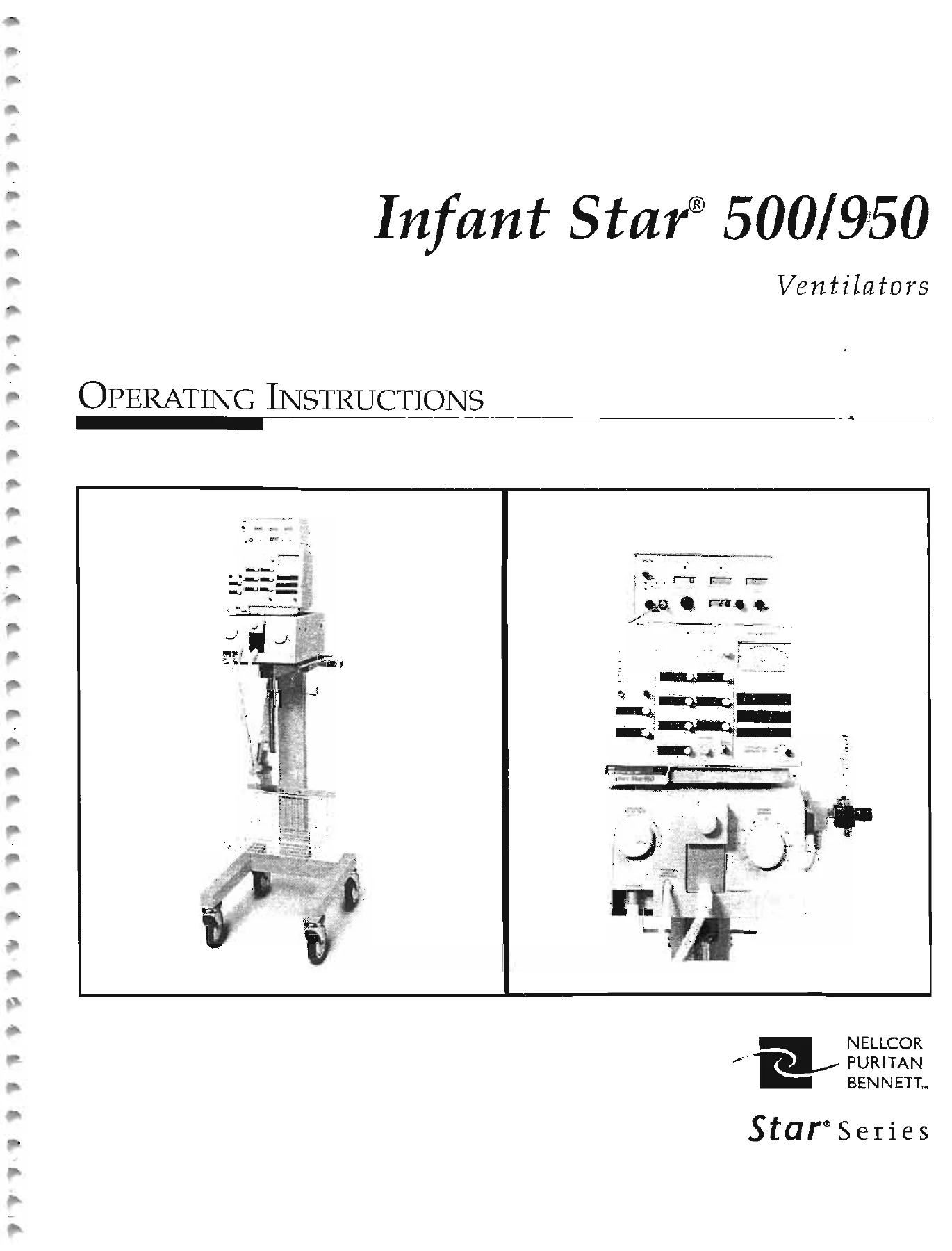
Nellcor Puritan Bennett Infant Star 500 950 Ventilator Operating Instructions Manual
Original price was: $34.95.$19.95Current price is: $19.95.
Complete operating instructions for the Nellcor Puritan Bennett Infant Star 500 and 950 neonatal/pediatric ventilators. Covers conventional IMV and CPAP modes, High Frequency Ventilation (HFV) for the 950, alarm systems, troubleshooting, maintenance, and the Star Sync Patient Triggered Interface. This is the essential reference for anyone operating, maintaining, or repairing these ventilators.
Description
Nellcor Puritan Bennett Infant Star 500 and 950 Ventilator Operating Instructions Manual
This comprehensive operating instructions manual covers the Nellcor Puritan Bennett Infant Star 500 and Infant Star 950 neonatal and pediatric ventilators. It is the primary reference document for clinicians, biomedical engineers, and respiratory therapists who operate, maintain, or service these ventilator systems. The manual spans conventional ventilation modes including IMV and CPAP, as well as the High Frequency Ventilation (HFV) modes available exclusively on the Infant Star 950. It also includes the complete operating instructions for the Star Sync Patient Triggered Interface.
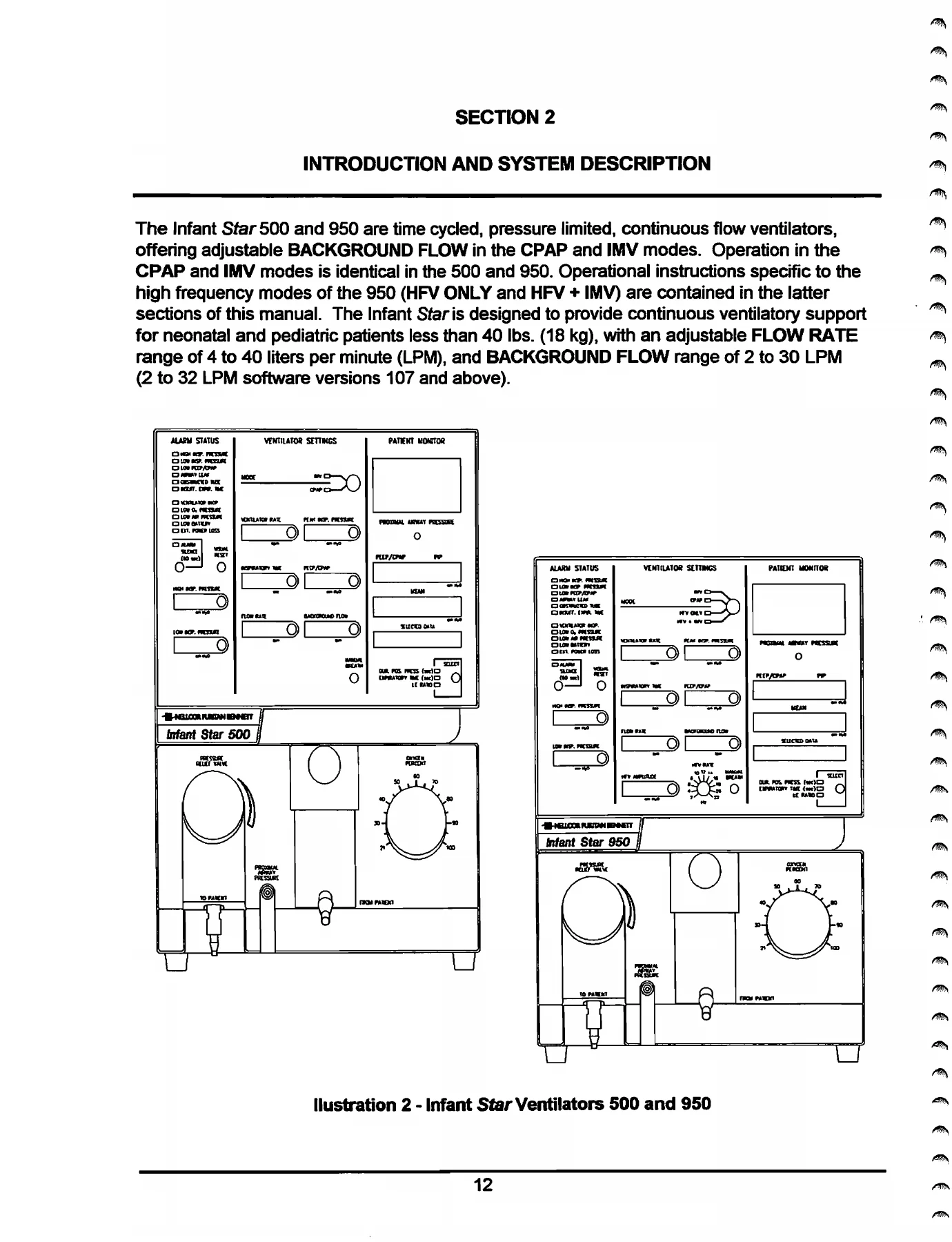
The Infant Star 500/950 Ventilator Operating Instructions Manual begins with a detailed summary of warnings, cautions, and notes that establish the safety framework for using the device. From there, it walks through unpacking and assembly procedures for both the pedestal stand and the Star Cart, followed by a thorough system description covering the dual-microprocessor architecture, pneumatic components, electronic controls, and patient monitoring functions. The functional description section explains how the ventilator generates and regulates breath delivery, including the flow proportioning valves, exhalation block, jet venturi system, and the servo-controlled PEEP/CPAP regulation.
Operation of the Infant Star 500 and 950 is covered in extensive detail. The manual explains the IMV (Intermittent Mandatory Ventilation) mode, where the ventilator rate establishes the number of mandatory breaths, the inspiratory time sets breath duration, and the flow rate shapes the inspiratory pressure slope. The CPAP (Continuous Positive Airway Pressure) mode is also fully described, including how the background flow provides continuous flow for spontaneous breathing and how the demand system supplies additional flow up to 40 LPM when the patient’s inspiratory effort exceeds the available flow. For the Infant Star 950, the manual covers HFV ONLY and HFV + IMV modes, with detailed operating instructions in Sections 10 through 17.
The Infant Star 500/950 Operating Instructions Manual also provides a complete clinical troubleshooting chart that maps symptoms to possible causes and corrective actions. This section alone is invaluable for quickly diagnosing and resolving ventilation issues in a clinical setting. Topics include inability to achieve set peak inspiratory pressure, inability to maintain set PEEP, high inspiratory pressure alarms, prolonged active exhalation, high CPAP readings, and ventilator inoperative conditions.
Cleaning and disinfecting procedures are detailed for the patient breathing circuit, exhalation block, exhalation diaphragm, and outer surfaces of the ventilator. The preventative maintenance section outlines a program of cleaning, operational checking, and scheduled maintenance at six-month or 1,500-hour intervals, with a major overhaul recommended every 10,000 hours or seven years. The manual also includes ordering information for accessories and replacement parts, a definition of symbols used on the equipment, and a selected reading bibliography for HFV theory.
For the Infant Star 950, the HFV addendum provides indications for use, a summary of warnings and cautions specific to high frequency ventilation, HFV theory, and detailed operating instructions for the HFV ONLY and HFV + IMV modes. It explains how the HFV pulses are generated, how PEEP and mean airway pressure are controlled, how the active jet venturi assists exhalation, and how to initiate and manage high frequency ventilation in clinical practice. The manual also includes quick checkout procedures for both the 500 and 950 models.
The Star Sync Patient Triggered Interface manual is also included in this document. Star Sync is a microprocessor-controlled device that connects to the Infant Star Ventilator to provide Patient Triggered Ventilation (PTV). It covers the Monitor, SIMV, Assist Control, CPAP/Backup, and Test modes, along with detailed instructions for abdominal sensor placement, quick check procedures, cleaning and decontamination, ordering information, and a troubleshooting chart. The Star Sync section explains how the abdominal sensor detects diaphragm movement to synchronize mechanical breaths with the patient’s spontaneous efforts, reducing asynchrony and improving gas exchange.
Chapters Covered
- Summary of Warnings, Cautions and Notes
- Section 1: Unpacking / Assembly Instructions — Pedestal and Star Cart assembly, breathing circuit setup, high pressure hose connection
- Section 2: Introduction and System Description — System specifications, physical characteristics, shipping characteristics
- Section 3: Functional Description — Dual microprocessors, electronic module, pneumatics module, exhalation block and diaphragm housing
- Section 4: Operation — Modes of ventilation (IMV, CPAP), ventilator settings (rate, peak inspiratory pressure, inspiratory time, PEEP/CPAP, flow rate, background flow), manual breath, patient monitor, alarms, pressure relief valve adjustment, suction procedure, inadvertent PEEP, transport, synchronized ventilation
- Section 5: Infant Star 500 Quick Checkout Procedure
- Section 6: Cleaning and Disinfecting — Exhalation diaphragm, exhalation block, outer surface
- Section 7: Preventative Maintenance — Routine cleaning and inspection, preventative maintenance intervals, overhaul schedule
- Section 8: Clinical Troubleshooting Chart
- Section 9: Ordering Information — Accessories, replacement parts, miscellaneous
- Definition of Symbols
- Section 10: Indications for Use (HFV)
- Section 11: Summary of Warnings, Cautions and Notes (HFV)
- Section 12: HFV Theory and Indications for Use
- Section 13: System Description — Infant Star 950 HFV Modes
- Section 14: Limitations / Warnings — Uses of the Device
- Section 15: 950 HFV Modes Operating Instructions
- Section 16: Associated Components — Circuit, humidifier
- Section 17: Infant Star 950 Quick Checkout Procedure
- Star Sync Patient Triggered Interface — Introduction and system description, modes of operation (Monitor, SIMV, Assist Control, CPAP/Backup, Test), controls and displays, connectors and switches, patient interface placement protocol, quick check procedure, cleaning and decontamination, ordering information, troubleshooting chart
This Infant Star 500/950 Ventilator Operating Instructions Manual gives biomedical equipment technicians, respiratory therapists, and clinical engineers the complete picture of how these ventilators operate, how to configure them for different patient needs, how to interpret and respond to alarms, and how to maintain them for reliable long-term performance. The troubleshooting chart alone can save hours of diagnostic time by pointing directly to the likely cause of a ventilation problem. The HFV section provides the theory and practical operating instructions needed to safely initiate and manage high frequency ventilation on the Infant Star 950.
What This Manual Enables You to Do
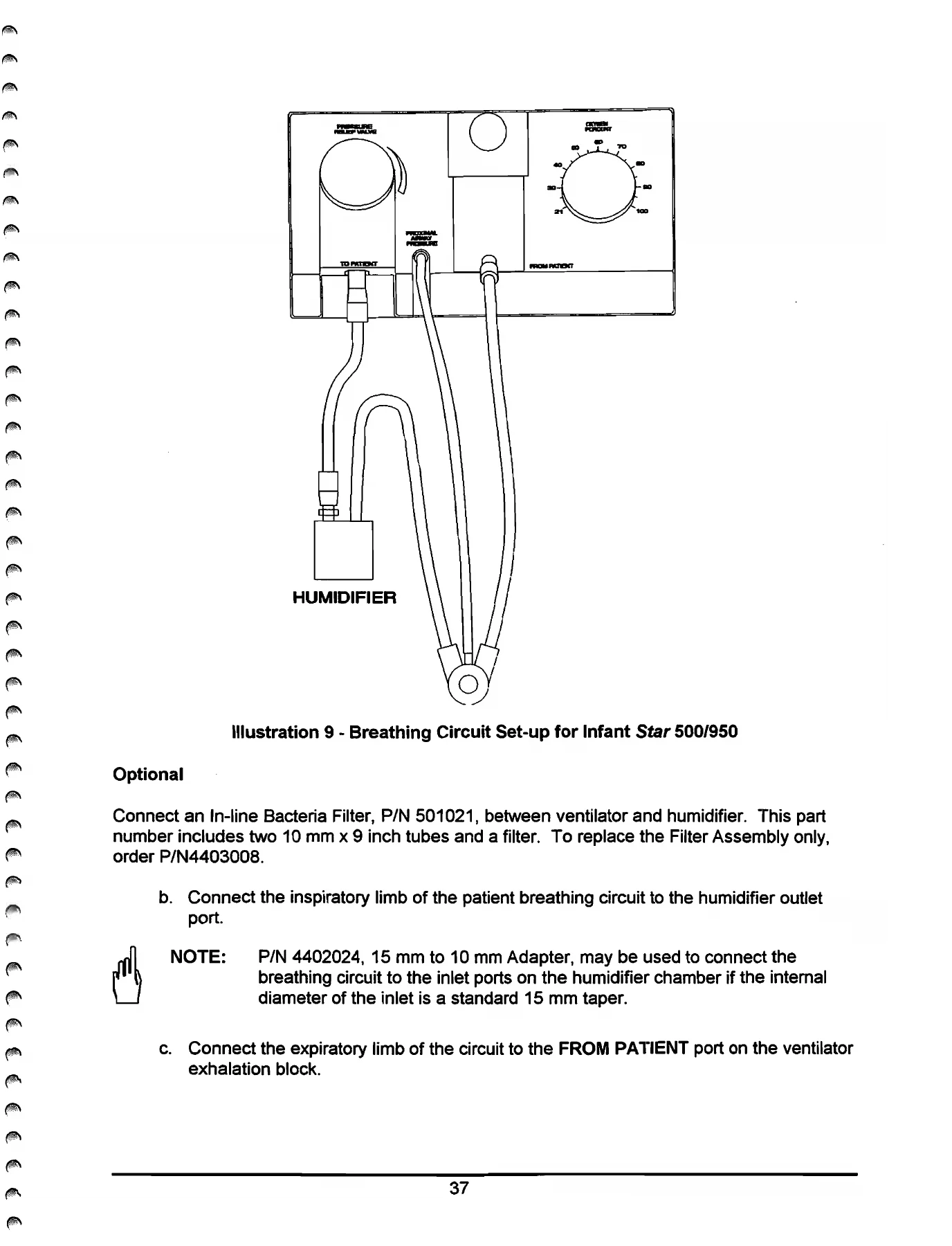
With this manual, you can confidently set up the Infant Star 500 or 950 from unpacking through to patient connection. You can assemble the pedestal stand or Star Cart, connect the breathing circuit and humidifier, attach high pressure gas hoses, and run the quick checkout procedure to verify proper function before use. You can navigate the front panel controls, set ventilation modes and parameters, adjust alarm limits, and respond appropriately when alarms activate. You can perform routine cleaning and disinfection of the exhalation block and diaphragm, and you can follow the preventative maintenance schedule to keep the ventilator in peak condition.
For the Infant Star 950, this manual enables you to initiate HFV ONLY or HFV + IMV modes, set the HFV rate and amplitude, adjust PEEP/CPAP to control mean airway pressure, and understand the unique physiology and monitoring considerations of high frequency ventilation. For the Star Sync interface, the manual shows you how to place the abdominal sensor, select the appropriate mode, set the apnea alarm, and verify synchronization between the patient’s spontaneous breaths and the mechanical breaths.
Having the correct procedures and specifications on hand matters in neonatal and pediatric ventilation, where precise pressure, flow, and timing settings directly affect patient safety. This Infant Star 500/950 Ventilator manual provides the authoritative reference for every setting, alarm, and procedure, helping you avoid guesswork and maintain consistent, protocol-driven care.
IMAGES PREVIEW
Delivered as an instant PDF download, this manual is available immediately after payment. There is no shipping, no waiting, and no physical media to keep track of. You can access it on any device — laptop, tablet, or smartphone — and print specific pages or sections as needed for bedside reference or bench work.
Reviews
There are no reviews yet.