
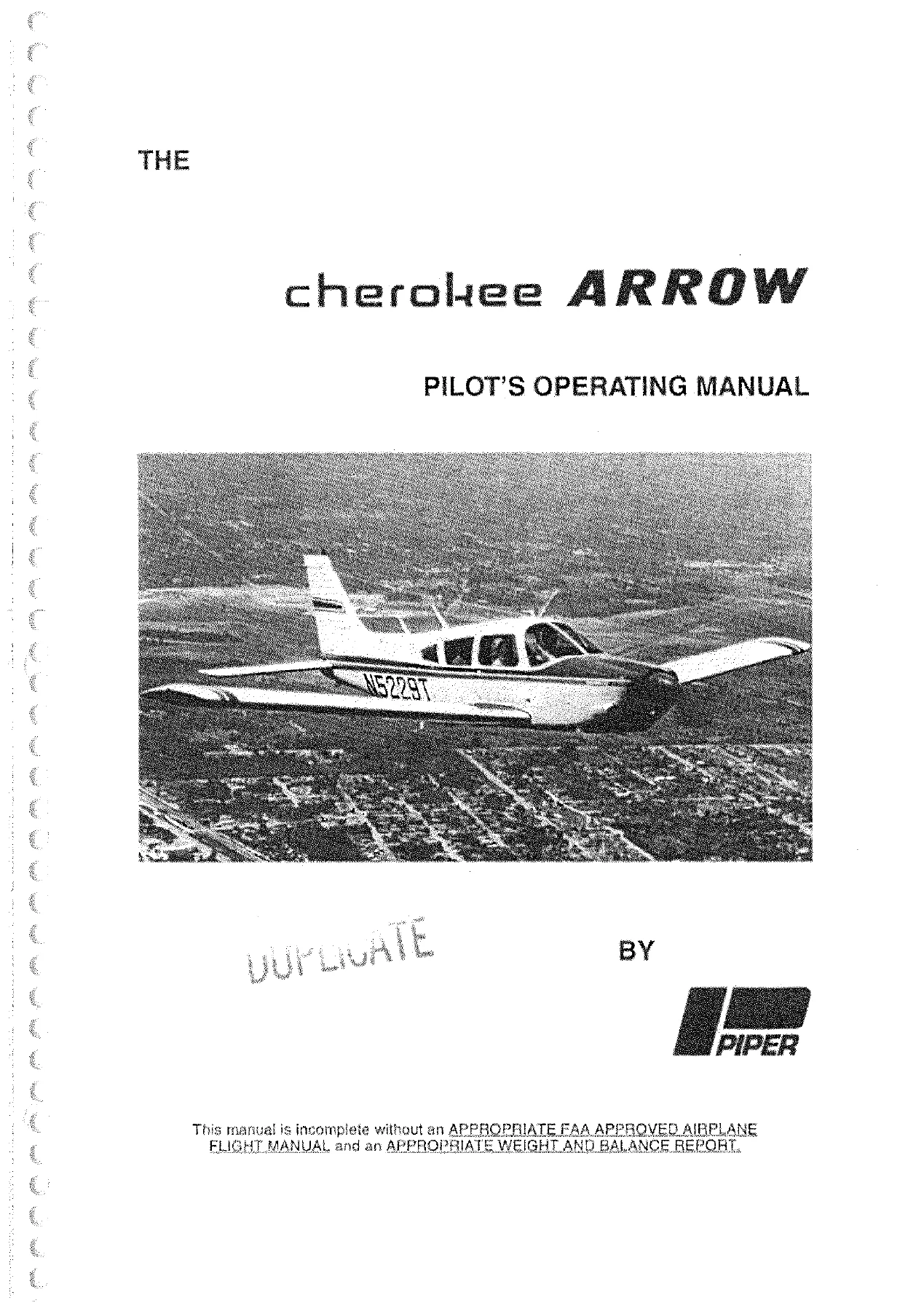
Piper Cherokee Arrow PA-28R-200 Pilot’s Operating Manual – 1973 Arrow II PDF
Original price was: $29.95.$18.95Current price is: $18.95.
Complete Piper PA-28R-200 Cherokee Arrow II Pilot’s Operating Manual (Part 761 578, Revision 14, July 1973). Covers serials 28R-7435001 through 28R-7635545, both Lycoming IO-360 engine variants, FAA limitations and procedures, emergency checklists, weight and balance, performance charts, and handling and servicing.
Description
Piper Cherokee Arrow PA-28R-200 Pilot’s Operating Manual
This Piper Cherokee Arrow PA-28R-200 Pilot’s Operating Manual is the complete operating document for the Cherokee Arrow II, issued by Piper Aircraft Corporation in July 1973 as Part Number 761 578, Revision 14. It applies to aircraft serial numbers 28R-7435001 through 28R-7635545 and covers both the Lycoming IO-360-C1C and IO-360-C1C6 engine installations. Whether you fly, maintain, or restore an Arrow II, this is the operating manual the manufacturer intended to travel with the airplane.
File Details
- Manual Type: Pilot’s Operating Manual
- Brand: Piper
- Model: PA-28R-200 Cherokee Arrow II
- Document Number: 761 578
- Revision: 14
- Issue Date: July 1973
- Language: English
- Page Count: 175
- File Format: PDF
Chapters Covered
- General Specifications — Performance, Weights, Power Plant, Fuel and Oil, Baggage, Dimensions, Landing Gear
- Description — Airplane and Systems — Airframe, Engine and Propeller, Landing Gear, Flight Controls, Fuel System, Electrical System, Vacuum System, Instrument Panel, Pitot-Static System, Heating/Ventilating/Defrosting, Cabin Features, Baggage Area, Stall Warning, Finish, Air Conditioning, Piper External Power
- Airplane Flight Manual (FAA Approved) — Limitations — Engine limits, fuel, propeller, instrument markings, airspeed limitations, flight load factors, maximum weight, baggage capacity, C.G. range, maneuvers, placards
- Airplane Flight Manual (FAA Approved) — Procedures — Preflight, starting engine, warm-up and ground check, take-off, climb, stalls, cruising, landing, stopping engine
- Emergency Procedures — Engine failure, power off landing, gear down and gear up landing, emergency landing gear extension, spin recovery, open door, fire, loss of oil pressure, high oil temperature, alternator failure
- Weight and Balance — Weighing procedures, empty weight C.G., loading instructions, sample loading problem, C.G. range and weight graph
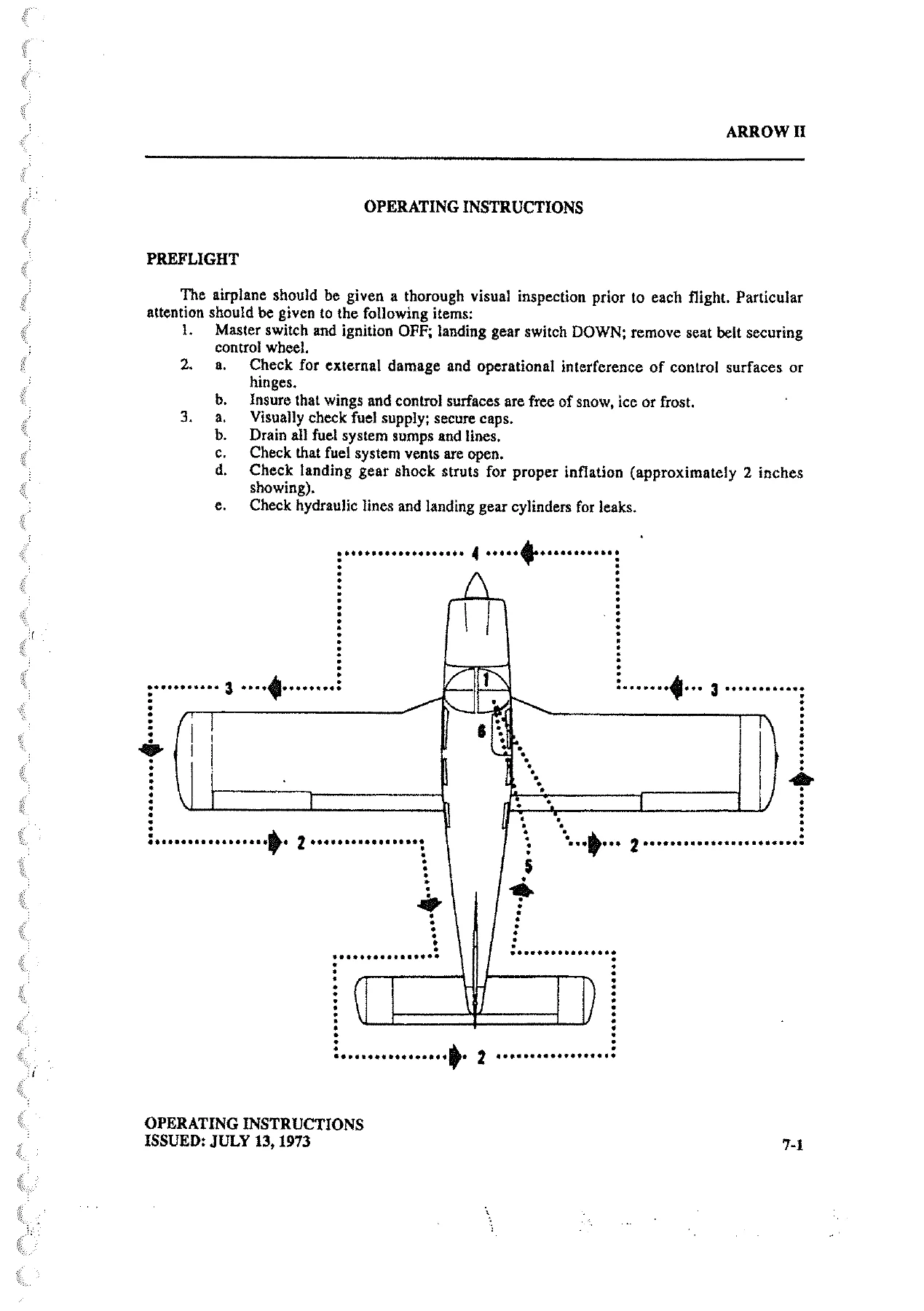
- Operating Instructions — Preflight inspection, starting, ground check, take-off, climb, cruising, landing, stopping engine, airspeed data, moorings
- Operating Tips — Practical guidance for takeoff, landing, circuit breakers, vacuum gauge, fuel management, safety
- Performance Charts — Takeoff, climb, cruise true airspeed and range, stalling speed, glide, landing, power setting table
- Handling and Servicing — Towing, taxiing, parking, mooring, cleaning, air filter service, brake and landing gear service, propeller service, oil and fuel requirements, tire inflation, battery, winterization, preventive maintenance, required service and inspection periods
Taken together, these sections carry a technician or owner from the specifications and system descriptions through FAA-approved limitations, normal and emergency procedures, weight-and-balance calculations, operating instructions, practical operating tips, performance charts, and full handling and servicing guidance. It is the same material Piper shipped with each new Cherokee Arrow II, and it remains the primary reference for understanding how the aircraft is meant to be operated and maintained.
Systems and Components Documented
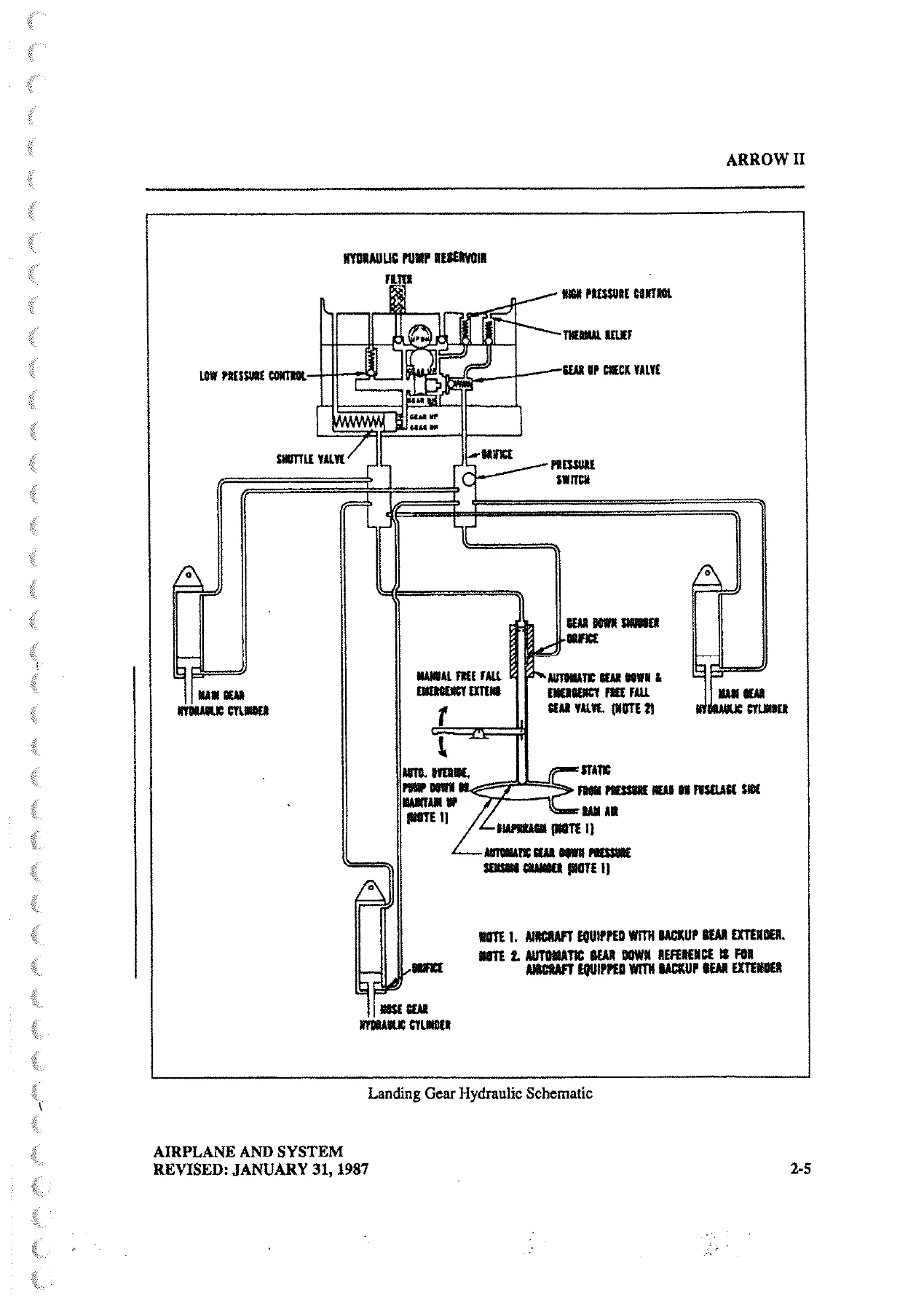
The manual documents every major system on the Cherokee Arrow II: the all-metal semi-monocoque airframe with a laminar-flow NACA 652-415 wing; the 200-horsepower Lycoming IO-360 fuel-injected engine driving either a Hartzell constant-speed propeller or, on later serials, a McCauley propeller; the hydraulically actuated retractable tricycle landing gear with its backup gear extender logic on equipped aircraft; the stabilator-based flight control system with trim tab and servo plus rudder trim; the two-tank fuel system holding 48 usable gallons with an electric auxiliary pump and left/right/off selector; the 14-volt 60-amp alternator electrical system with 12-volt battery, annunciator panel, and circuit breakers; the engine-driven vacuum system for the gyro instruments; the pitot-static system; the heating, ventilating, and defrosting system; and the optional air conditioning and Piper External Power installations.
Performance and Operating Data Included
Performance charts cover takeoff run and takeoff distance over a 50-foot obstacle, best rate and best angle of climb speeds, service and absolute ceilings, maximum and cruising speeds, range at best-power and best-economy mixtures, stalling speeds with flaps and gear up or down, landing roll, and landing distance over 50 feet. The power setting table ties manifold pressure and RPM to percent power and fuel flow from sea level up to 14,000 feet, and the airspeed correction table maps indicated to calibrated airspeed. Specifications include gross weight, standard empty weight, maximum useful load, baggage limit, wing span and area, wheel base and tread, and tire pressures.
Flight and Ground Procedures Covered
Normal procedures walk through the preflight inspection, cold, hot, and flooded engine starting, external-power starting, warm-up and magneto check, takeoff techniques for normal, short-field, and soft-field conditions, climb, stall handling, cruise leaning, descent, landing, and engine shutdown. Emergency procedures cover engine failure in flight and on the ground, power-off landing, gear-down and gear-up landing, emergency landing gear extension, spin recovery, open door, engine and electrical fire, loss of oil pressure, high oil temperature, and alternator failure. The handling and servicing chapter adds towing, taxiing, parking, mooring, cleaning, induction filter service, brake and landing gear servicing, propeller care, oil and fuel requirements, winterization, preventive maintenance, and the required service and inspection periods.
Why This Piper Cherokee Arrow PA-28R-200 Manual Matters
IMAGES PREVIEW
With this Piper Cherokee Arrow PA-28R-200 Pilot’s Operating Manual in hand, an owner or shop can run the preflight, start, takeoff, cruise, and landing flows exactly as Piper specified; look up the right airspeeds and limitations before every flight; diagnose and respond to engine, electrical, landing gear, and fire emergencies; compute weight and balance correctly for any load; and follow the correct servicing and inspection routines. Having the real numbers instead of guesses matters on a retractable-gear, constant-speed-propeller airplane with a 2,650-lb gross weight and a 200-hp fuel-injected engine. Delivery is instant: pay once, download the PDF, and open it on any device — laptop, tablet, or phone — or print the pages you want for the hangar.

Reviews
There are no reviews yet.