
1998 Ford Ranger 2WD 2.5L SOHC VIN C Factory Workshop Manual
Original price was: $49.95.$29.95Current price is: $29.95.
Comprehensive factory workshop manual for the 1998 Ford Ranger 2WD equipped with the L4-153 2.5L SOHC VIN C SFI engine. Covers maintenance, engine service, fuel and electronic engine controls, diagnostics, transmissions, brakes, steering and suspension, starting and charging, HVAC, lighting, accessories, wiring diagrams, specifications, component locations, testing and repair procedures.
Description
1998 Ford Ranger 2WD 2.5L SOHC VIN C Factory Workshop Manual
This 1998 Ford Ranger 2WD 2.5L SOHC VIN C Factory Workshop Manual is a very extensive repair and diagnostic reference for the Ranger 2wd fitted with the L4-153 2.5L SOHC VIN C SFI engine. At 14,535 PDF pages, the manual brings together detailed component information, specifications, system descriptions, testing procedures, diagnostic trouble-code information, pinpoint tests, electrical diagrams, component locations, adjustments and step-by-step service procedures covering the vehicle from routine maintenance through major mechanical and electrical work.
The coverage is especially useful when a repair requires more than a basic removal procedure. Individual components are commonly supported by specifications, location information, description and operation, testing and inspection, wiring or connector information, special-tool references and removal/installation instructions. Numerous sections also contain technical service bulletins and service information relevant to problems encountered on the Ranger.
File Details
- Manual type: Factory Workshop Manual
- Brand: Ford
- Model: Ranger 2wd
- Engine: L4-153 2.5L SOHC VIN C SFI (1998)
- Language: English
- Page count: 14,535 pages
- File format: PDF
Detailed Repair and Diagnostic Coverage
The 1998 Ford Ranger 2WD 2.5L SOHC VIN C Factory Workshop Manual is structured around individual vehicle systems and components, allowing a technician to move from a symptom or diagnostic code to the applicable test, specification and repair procedure. Engine-related material includes mechanical components, seals and gaskets, timing components, sensors, lubrication-related items, cooling-system components and associated service specifications. Maintenance information includes tune-up and engine-performance checks, firing order, ignition components, spark plug specifications and timing-belt inspection and replacement procedures.
Powertrain management coverage extends well beyond basic engine tune-up work. The manual includes PCM information, diagnostic and reset procedures, connector information, programming-related service material, emission-control components, fuel delivery and air induction, fuel pressure, fuel pressure release, idle specifications, relays, sensors and system diagnostics. Diagnostic material uses trouble codes, symptom-based checks and pinpoint testing to isolate faults rather than relying only on component replacement.
The transmission and drivetrain content includes both automatic and manual transmission-related information present in the compilation. Automatic transmission sections provide service data for internal components, clutches, servos, solenoids, valve-body related work, shift linkage and control systems. Procedures include specifications, adjustments, disassembly and assembly sequences, transmission electrical components and fluid-related service information. The manual also contains drivetrain and noise, vibration and harshness diagnostic material to help distinguish concerns caused by tires, driveline components, engine speed or transmission operation.
Electrical diagnosis is a major part of this Ranger workshop manual. Circuit information includes power-distribution diagrams, system diagrams and grounds diagrams together with electrical-symbol references, wire color identification, connector views and component-location illustrations. Modules and controlled systems such as the GEM/CTM, PCM, anti-lock brake controls, anti-theft-related modules and various relays are supported by detailed diagnostic and service information. This makes the manual useful not only for mechanical repairs but also for tracing circuits, checking inputs and outputs and following system-specific diagnostic routines.
Chapters Covered
- Diagnostic Trouble Codes
- Codes by number and system diagnosis
- Diagnostic references and pinpoint-test routing
- Maintenance
- Tune-up and engine performance checks
- Firing order, ignition components and spark plugs
- Timing belt inspection and service procedures
- Engine, Cooling and Exhaust
- Engine mechanical components and service procedures
- Seals, gaskets and timing components
- Engine sensors and cooling-system components
- Specifications, inspection and repair information
- Powertrain Management
- Powertrain Control Module and computer control systems
- Fuel delivery and air induction
- Emission control systems
- Transmission control systems
- Testing, diagnostics, DTCs and service procedures
- Transmission and Drivetrain
- Automatic transmission and transaxle components
- Manual transmission and transaxle information
- Shift linkage, solenoids, clutches and servos
- Specifications, adjustments, diagrams and overhaul-related procedures
- Brakes and Traction Control
- Rear anti-lock and four-wheel anti-lock brake information
- Electronic brake control modules
- Wheel speed sensors and related diagnostics
- Component locations, specifications and service procedures
- Steering and Suspension
- Alignment and diagnostic information
- Noise, vibration and harshness troubleshooting
- Tire, wheel and related symptom diagnosis
- Starting and Charging
- Battery and starting-system components
- Starter relays and related switches
- Power and ground distribution
- Fuse and fuse-block circuit information
- Heating and Air Conditioning
- HVAC air doors and actuators
- Blower and A/C-related components
- Registers, controls, specifications and repair procedures
- Lighting and Horns
- Headlamp and lighting circuits
- Relays, switches and component locations
- Flow-of-diagnosis and pinpoint tests
- Wiper and Washer Systems
- Wiper and washer switches
- Relays, motors, reservoir and washer components
- Component tests and symptom-based diagnostics
- Accessories and Optional Equipment
- Anti-theft and electronic accessory systems
- Towing and trailer electrical systems
- Trailer connector and trailer lamp diagrams
- Relays and Modules
- GEM/CTM and electronic control modules
- Brake, powertrain, lighting, HVAC and accessory relays
- Specifications, locations, connector views and electrical diagrams
- Sensors and Switches
- Engine and cooling-system sensors
- Brake and wheel-speed sensors
- Cruise-control, body and accessory switches
- Testing, specifications, locations and replacement procedures
Taken as a whole, these sections give the technician a connected reference for diagnosing a fault, identifying the component and its location, checking wiring or sensor values, finding required specifications and then carrying out the relevant service procedure. The manual includes both mechanical repair information and the electrical diagnostic material needed for systems that depend on the PCM, GEM/CTM, ABS modules, relays, switches and sensors.
Testing, Wiring and Component Information
A notable part of the 1998 Ford Ranger 2WD 2.5L workshop coverage is the amount of testing information. The manual contains visual inspection routines, diagnostic trouble-code indexes, symptom charts, expected values and sequential pinpoint tests. Examples include GEM/CTM diagnostics, warning and chime systems, anti-lock braking, wheel-speed sensors, lighting and wiper circuits, and powertrain controls. Component tests frequently provide measurable resistance, voltage, current or operating criteria to determine whether a circuit or component should be repaired or replaced.
IMAGES PREVIEW
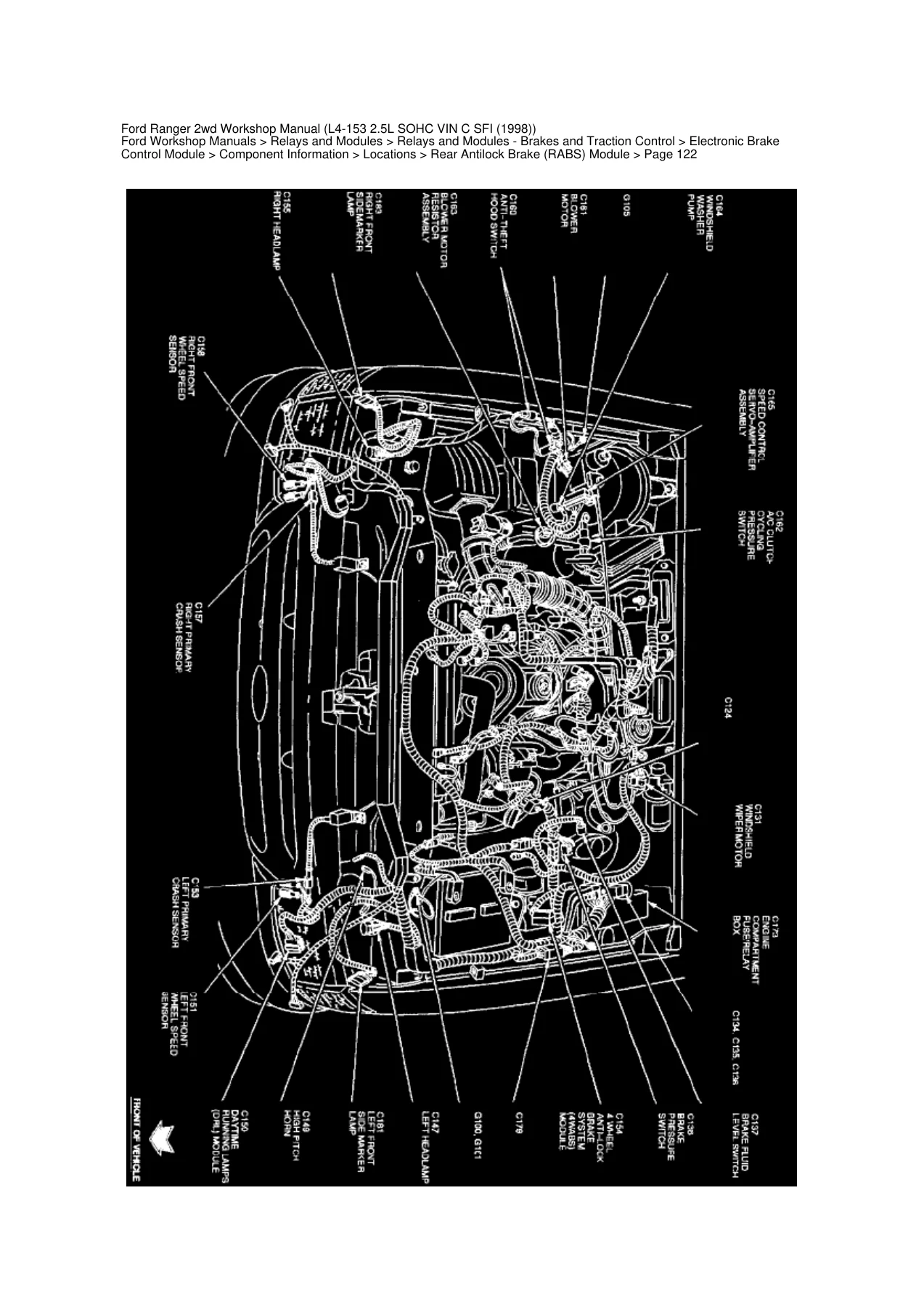
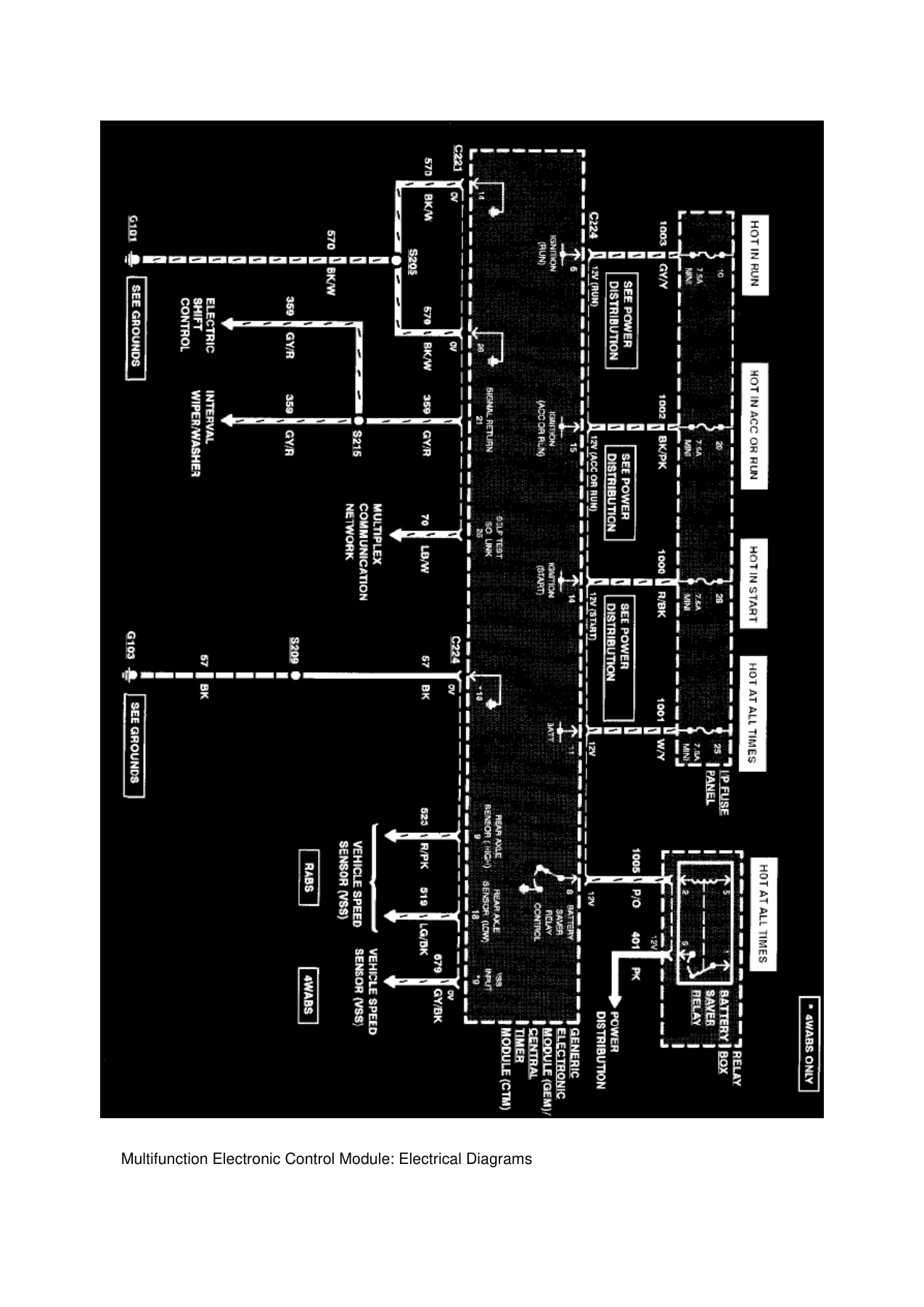
Electrical pages show circuit relationships using power distribution, system and ground diagrams. Connector illustrations identify pins and circuit functions, while component-location drawings help locate modules, sensors, relays and connectors in the cab, engine compartment and chassis. The manual also explains electrical symbols and wire-color identification used throughout its diagrams. These resources are particularly valuable when a fault cannot be solved by replacing an obvious mechanical part.
Specifications, Adjustments and Service Procedures
Throughout the manual, specifications are placed alongside the systems they support. These include tightening torques, sensor test values, fuel-system data, ignition and maintenance specifications, transmission adjustments and electrical test criteria. For example, the maintenance material provides the four-cylinder firing order and spark plug data, while powertrain sections include fuel pressure and idle-speed specifications. Transmission chapters contain torque specifications, linkage adjustments and detailed internal-component procedures.
Removal and installation instructions range from individual switches and relays to engine, brake, transmission and electronic control components. Many procedures include cautions, installation notes, tightening values and illustrations showing fasteners, connectors or component orientation. Where special equipment is required, the manual identifies tools used for diagnosis, adjustment or disassembly. Technical service bulletin and recall information appearing within relevant system sections adds further problem-specific service material to the workshop coverage.
For 1998 Ranger 2WD 2.5L VIN C Repair and Diagnosis
The 1998 Ford Ranger 2WD 2.5L SOHC VIN C Factory Workshop Manual supports a wide range of work, from scheduled maintenance and tune-up tasks to engine repairs, timing-belt service, fuel-system diagnosis, PCM and electronic control troubleshooting, transmission service, brake and ABS diagnosis, steering and suspension checks, HVAC repairs, starting and charging work, lighting faults and detailed wiring diagnosis. Instead of relying on generic repair information, you can work from procedures, diagrams, test sequences and specifications written around the Ranger systems contained in this manual.
Correct procedures and specifications matter when diagnosing intermittent electrical problems, setting or checking components, tightening critical fasteners or deciding whether a measured value is within limits. This manual gives the repair information needed to approach those jobs systematically. Purchase provides instant PDF delivery with no physical shipping required. The PDF can be viewed on compatible computers, tablets or phones and pages can be printed when a paper reference is more convenient at the vehicle or workbench.
Reviews
There are no reviews yet.