
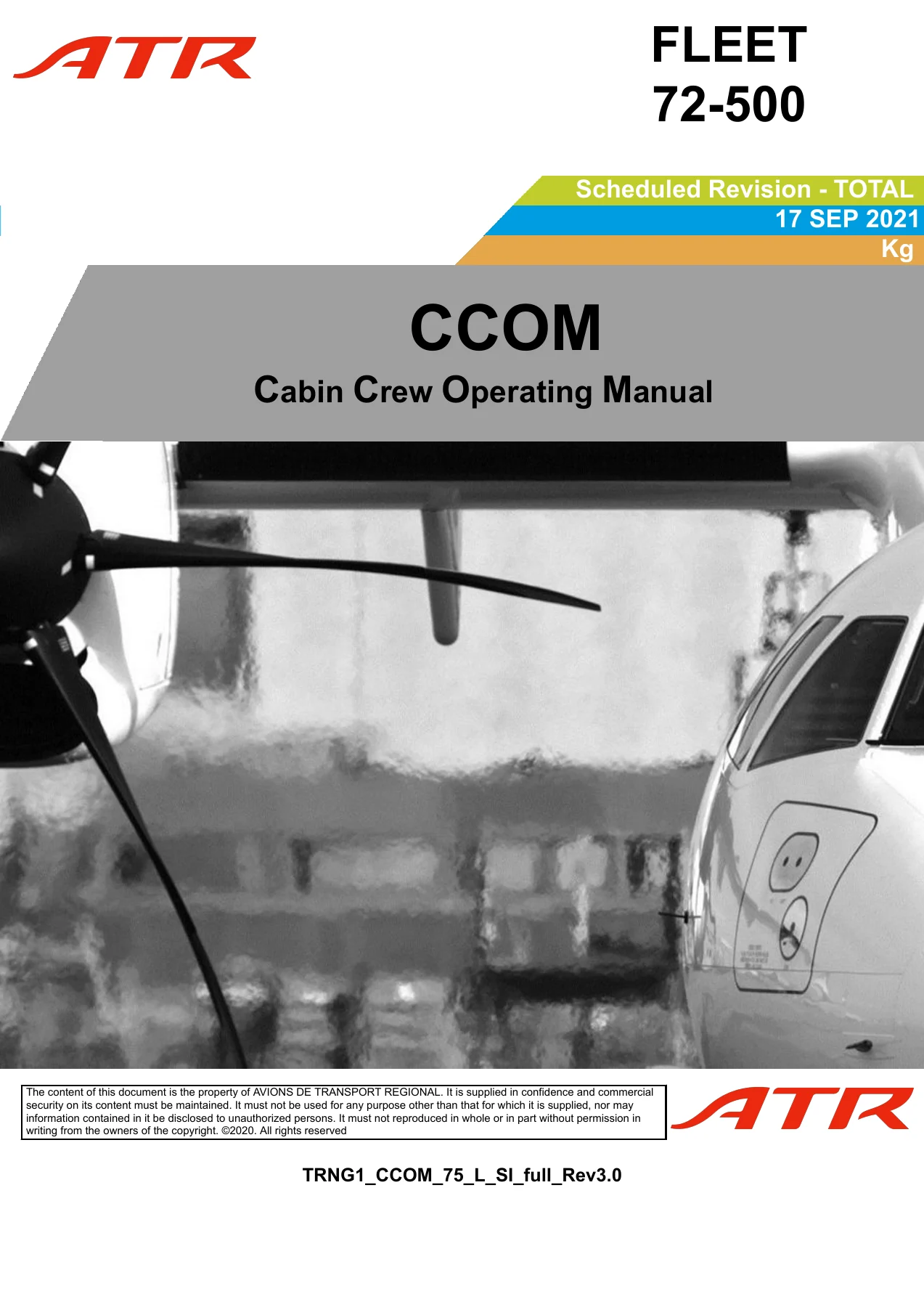
ATR 72-500 Cabin Crew Operating Manual (CCOM) 17 SEP 2021 Revision 17
Original price was: $39.95.$24.95Current price is: $24.95.
ATR Cabin Crew Operating Manual (CCOM) for the ATR 72-500 and the wider ATR family, Scheduled Revision 17 dated 17 SEP 2021. 302 pages covering cabin systems, doors and exits, emergency equipment, normal procedures and emergency procedures.
Description
ATR 72-500 Cabin Crew Operating Manual (CCOM) — Scheduled Revision 17, 17 SEP 2021
This is the ATR Cabin Crew Operating Manual (CCOM) covering the ATR 72-500 together with the rest of the ATR family, issued at Scheduled Revision 17 with an issue date of 17 SEP 2021. It is the working reference used by cabin crew to understand the aircraft they operate, the equipment they are responsible for, and the procedures they must be able to perform without hesitation. Across 302 pages the manual moves from aircraft general information and cabin familiarization through to normal procedures and, in detail, emergency procedures.
The ATR 72-500 Cabin Crew Operating Manual is written for cabin crew training and for line operations. It is deliberately practical: descriptions of systems are followed by the way those systems behave, the way the cabin crew interacts with them, and what to do when something goes wrong. Revision 17 of 17 SEP 2021 reflects the current state of the CCOM at that date, including the updated wording, illustrations and procedures recorded in the reason-for-update tables at the front of the document.
Scope Note Worth Knowing Before You Buy
The manual states plainly that the CCOM covers all the models of a given type, and that ATR operators are responsible for checking the specificities of their own cabin customization. In other words, this is the ATR fleet-level cabin crew operating manual — the technical description, procedures and performance characteristics are common across the type, while individual operators may have cabin layouts, galleys, seat fits and optional equipment that differ from the standard configuration shown here. The manual is intended to be usable as a cabin crew manual for training purposes and for flight operations, and it is structured so that operators build their own customized procedures on top of it.
File Details
- Manual type: Cabin Crew Operating Manual (CCOM)
- Brand / Publisher: ATR
- Fleet designation: F2 / 75
- Revision: 17 (Scheduled Revision)
- Issue date: 17 SEP 2021
- Language: English
- File format: PDF
- Length: 302 pages
Chapters Covered
- Preliminary Pages — Organization of the Manual, Glossary of Standard Nomenclature
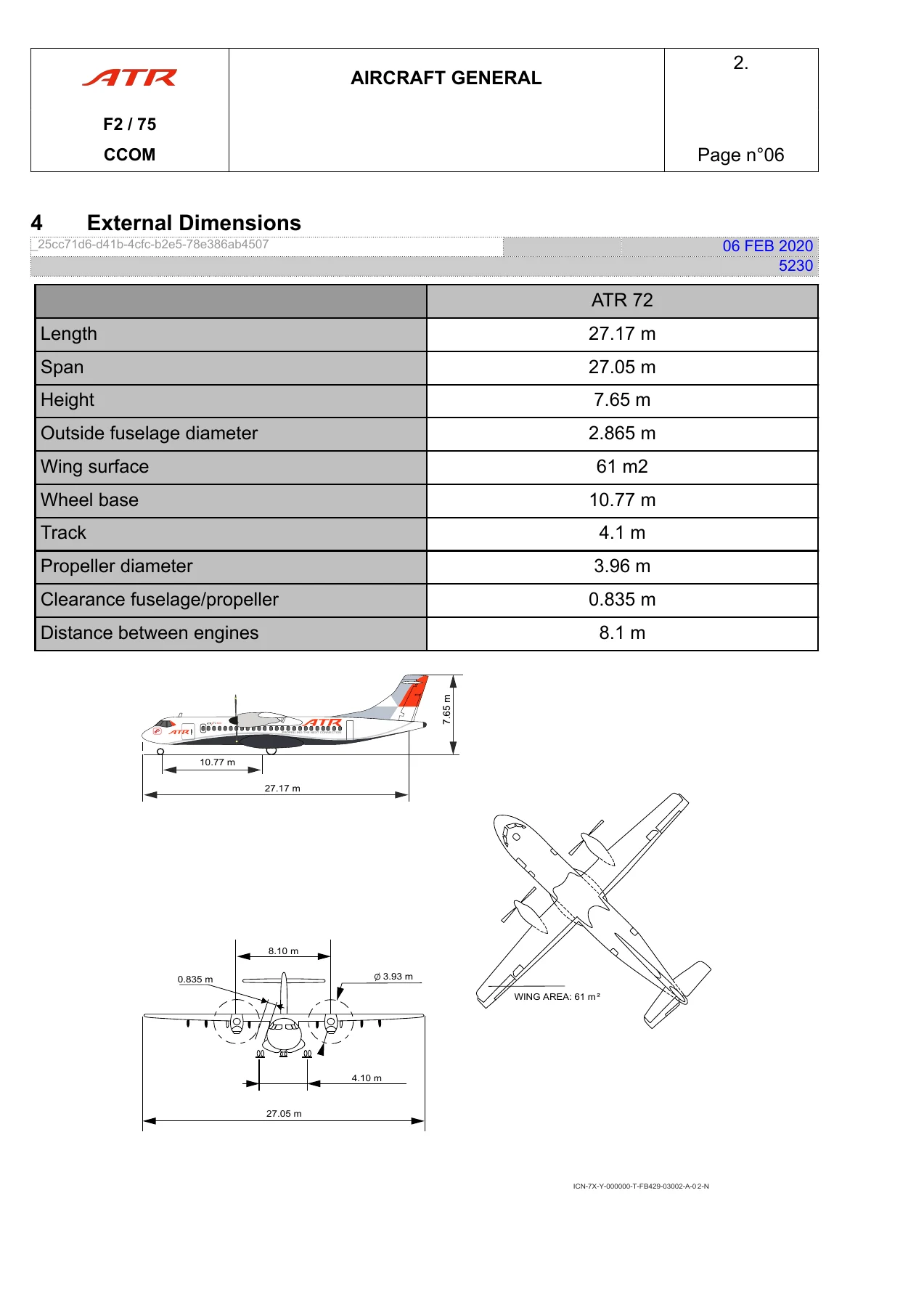
- Aircraft General — Introduction, Range of Operation, Performance, External Dimensions, Doors and Exits (Unpressurized Areas), Location of Cargo / Baggage Compartments, Danger Areas, Hotel Mode, Electrical Power, Flight Controls, Ice Contamination
- Flight Crew Compartment — General Location, Flight Crew Seats, Observer Seat, Flight Crew Compartment Door (Description, Locking System, Call Panel Description, Normal Operation, Emergency Operation, Other Emergency Procedures, Procedure to Access the Flight Crew Compartment)
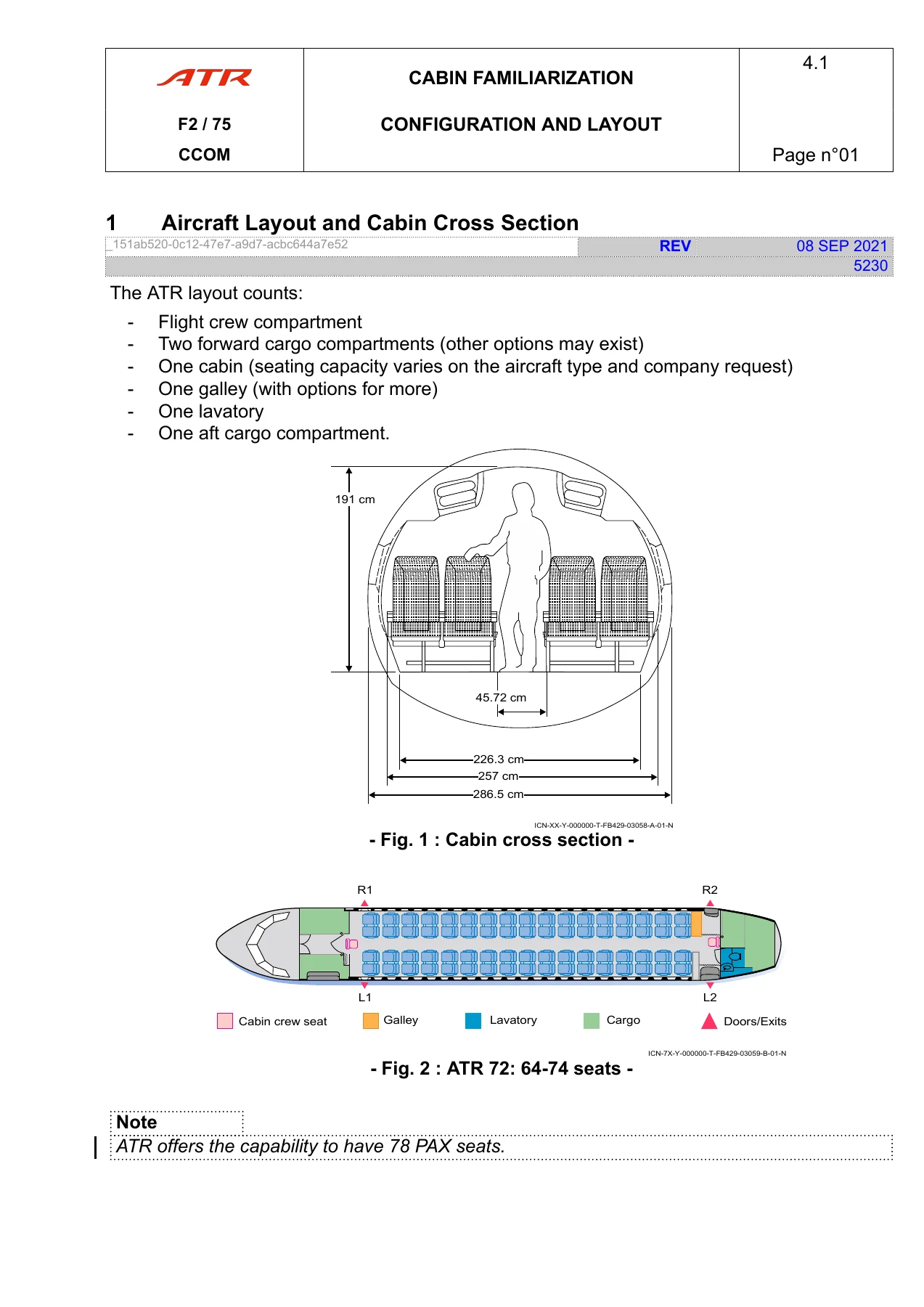
- Cabin Familiarization — Aircraft Layout and Cabin Cross Section, Passenger Seats and Row Identification, Seat Description, Overhead Compartments, Aft Cargo Compartment, Forward Cargo Compartment, Passenger Service Units (PSU), Galley (Location, Power), Lavatory (Location and Layout, Lavatory Service Unit, Lavatory Door, Lavatory Water and Waste System), Cabin Crew Seats (Location, Description, Equipment, Crew Rest Area), Flight Attendant Panel / Cabin Management System, Tail Prop
- Aircraft Systems — Air Conditioning System and Temperature Control, Smoke Warning System (Description and Location, Activation), Lavatory Automatic Fire Extinguisher (Description and Location, Activation), Emergency Lighting System (Description, Location, Activation, Preflight Check), Oxygen System (Description, Activation)
- Communication — Cabin Signs (Description, Activation), Interphone and Public Address System (Introduction, Cabin Interphone Handset Description, Interphone System, PA System), Passenger Calls (from the Cabin, from the Lavatory), Pilot Communication Hatch
- Doors and Exits — General (Type and Location, Flight Crew Compartment Doors Control Panel), Flight Crew Compartment Exit, Entrance Door (Description, Normal Mode Operation, Emergency Mode Operation), Service Door (Description, Normal Mode Operation, Emergency Mode Operation), Forward Emergency Exits Type III (Description, Operation), Cabin Pressure not Equalized on the Ground
- Emergency Equipment — MMEL / MEL, Manual Release Tool (MRT), Portable Oxygen Bottle (or Therapeutic Bottle), Oxygen Mask, Halon Extinguisher, Water Extinguisher, Protective Breathing Equipment (PBE), Protective Gloves, Crash Axe, Flashlight, Megaphone, Adult Life Jacket, First Aid Kit, Portable Emergency Locator Transmitter (ELT), Fixed Emergency Locator Transmitter
- Emergency Equipment Diagrams — STD Flight Crew Compartment, STD Cabin
- Normal Procedures — Introduction (Crew Resource Management, Preflight Briefing), Cabin Preflight Checks (General, Safety Preflight Checks, Aircraft Systems Preflight Checks, Safety and Emergency Equipment Pre-Flight Checks), Phases of the Flight (General, Sterile Flight Crew Compartment Policy, Phase 1 Preflight Pushback and Taxiing, Phase 2 Takeoff and Climbing, Phase 3 Cruising, Phase 4 Descent and Approach, Phase 5 Landing, Phase 6 Taxiing and Arrival), Specific Procedures (Re-Defueling with Passenger Embarking or Disembarking, Transit with Passenger on Board, Luggage Identification)
- Emergency Procedures — Crew Communication and Coordination, Turbulence (General, Light–Moderate, Severe Anticipated, Severe Un-anticipated), Fire (General, Chemistry of Fire, Classes of Fire, Fire Prevention, Fire Fighting Team on ATR, Passenger Management, Fire Fighting Procedures, Cabin Smoke Contamination, Galley Smoke, Emergency Equipment, Flight Crew Procedure for Smoke Removal), Decompression (General, Slow Decompression, Rapid or Explosive Decompression, Hypoxia, Time of Useful Consciousness, Initial Crew Procedure, Post Decompression Procedures, Emergency Equipment), Flight Crew Incapacitation (General, Flight Crew Call, Cabin Crew Procedure), Emergency Evacuation (General Information, Unplanned Emergency Evacuation, Planned Emergency Evacuation, Emergency Evacuation on Water / Ditching, Exits to Use in Case of Evacuation)
Read as a whole, the ATR 72-500 Cabin Crew Operating Manual gives a cabin crew member the complete picture of the aircraft from the inside out. The early chapters establish the aircraft itself — its dimensions, its power sources, the way the cabin is laid out, where the cargo compartments sit and where the danger areas are — so that everything that follows has a physical context. The middle chapters describe the systems the cabin crew actually touches: the air conditioning and temperature control that the flight crew manage from the overhead panel, the smoke warning system and its detectors, the lavatory automatic fire extinguisher, the emergency lighting system, and the oxygen system including the difference between the standard configuration and the optional 100% oxygen installation. Communication follows, covering the cabin signs, the interphone handsets, the public address system and its priority order, passenger calls from both the PSU and the lavatory, and the pilot communication hatch.
The doors and exits chapter is particularly detailed because it is the chapter cabin crew are most likely to need under pressure. The entrance door and the service door are each described, then walked through in normal mode from outside and from inside, and then in emergency mode. The forward Type III emergency exits are covered in the same way, and the chapter closes with the ground case where cabin pressure is not equalized — why the door can be stiff, what the signs are, and how to equalize pressure safely before forcing a handle.
Emergency equipment is treated item by item: what each item is, where it is stowed, how it is activated, and what the pre-flight check looks like. The MRT, the portable oxygen bottle and its sterile mask, the Halon and water extinguishers, the Protective Breathing Equipment and its donning sequence, protective gloves, the crash axe, flashlights including the optional DME type, the megaphone, adult life jackets and the child adaptation, the first aid kit, and both the portable and fixed Emergency Locator Transmitters all have their own description, activation and pre-flight check. The emergency equipment diagrams for the standard flight crew compartment and the standard cabin show how that equipment is distributed in a typical layout.
What This Manual Lets You Do
Owning the ATR 72-500 CCOM gives you the full cabin-side operating picture for the aircraft. You can prepare a cabin correctly before departure, brief passengers on the signs and equipment in the cabin, run through the pre-flight checks of the safety and emergency equipment, and understand exactly what each normal phase of flight requires from the cabin crew. More importantly, it prepares you for the abnormal and emergency cases that cabin crew are actually trained to handle: a fire in an overhead bin, a seat fire, a portable electronic device battery fire and the cooling and submersion procedure that follows it, a galley or oven fire, a lavatory fire with the door hot or cold, a fire in a hidden area, and an aft cargo compartment fire where the extinguisher must be discharged through the connector next to the FAP because the compartment is loaded and the source cannot be reached directly. It covers cabin smoke contamination and galley smoke, decompression including the time of useful consciousness figures at the altitudes the ATR operates, the crew actions during slow, rapid and explosive decompression, and the post-decompression walk-around.
It also covers the situations cabin crew practice but hope never to use: flight crew incapacitation and the sequence for securing an incapacitated pilot, turbulence in its light, anticipated severe and unanticipated severe forms with the crew actions for each, and emergency evacuation in both its unplanned and planned forms, on land and on water. The evacuation chapters are unusually complete — the NITS briefing, cabin preparation, the selection and briefing of able-bodied passengers, the brace positions for forward-facing seats, aft-facing seats, passengers with restrictive flexibility, passengers travelling with an infant and for cabin crew themselves, the crew commands at 2 000 ft and 200 ft, and which exits to use in a ground evacuation versus a ditching. Aircraft positions following a forced landing with landing gear collapsed, and the aircraft position on water with one wing immersed, are shown so that the exit choice can be reasoned about rather than guessed.
Every one of those procedures depends on doing the right thing in the right order. That is what a controlled manual gives you: the actual sequence, the actual equipment location, the actual command wording, and the actual pre-flight check — not a reconstruction from memory.
The file is delivered instantly as a PDF after payment. There is no shipping and nothing to wait for. It opens on a laptop, a tablet or a phone, it can be searched and navigated on screen, and it can be printed if you prefer a paper copy in the training room or the crew room. Whether you are a cabin crew member studying for a type rating, an instructor building a training syllabus, or an operator maintaining a reference copy of Revision 17, the ATR 72-500 Cabin Crew Operating Manual is the document the cabin side of the operation is built on.
Reviews
There are no reviews yet.