Description
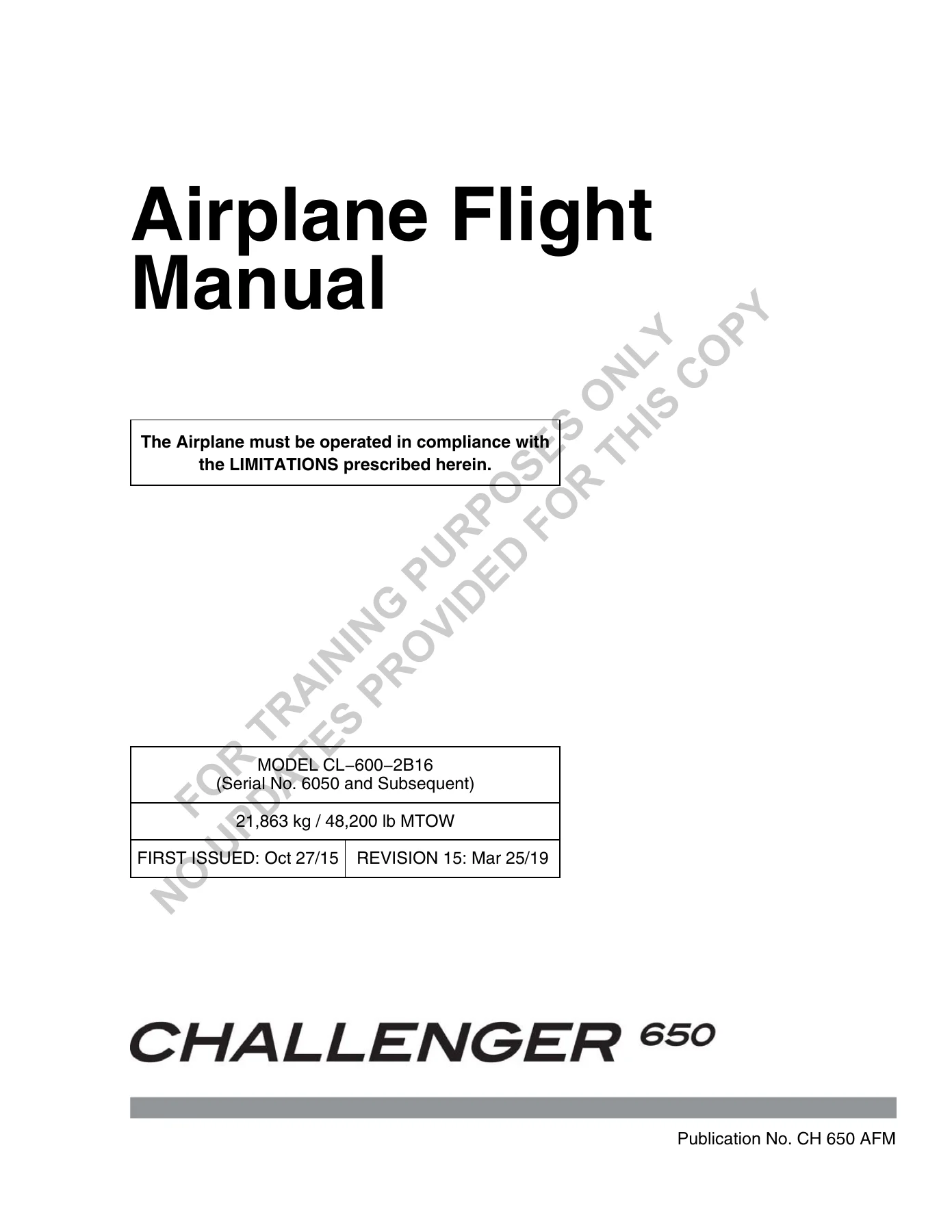
Bombardier Challenger 650 Airplane Flight Manual CL-600-2B16 – Training Edition
This is the complete Airplane Flight Manual for the Bombardier Challenger 650, model CL-600-2B16, applicable to serial number 6050 and subsequent. Published under document number PSP 650-1 and issued as a Training Edition, this 945-page manual is the operational reference covering limitations, emergency procedures, normal procedures, abnormal procedures, and performance data for the Challenger 650. The document carries the watermark “FOR TRAINING PURPOSES ONLY / NO UPDATES PROVIDED FOR THIS COPY” and is intended for familiarization and training rather than as a current, updated operational AFM.
File Details
- Manual Type: Airplane Flight Manual (AFM) – Training Edition
- Manufacturer: Bombardier Inc.
- Model: CL-600-2B16 Challenger 650
- Serial Applicability: Serial No. 6050 and subsequent
- Document Number: PSP 650-1
- Revision: 15 (March 25, 2019)
- First Issued: October 27, 2015
- Maximum Take-Off Weight: 21,863 kg / 48,200 lb
- Language: English
- Page Count: 945
- File Format: PDF
Chapters Covered
The Bombardier Challenger 650 Airplane Flight Manual is organized into eight chapters, each addressing a distinct area of aircraft operation and systems knowledge.
Complete PDF Bookmark Tree
Complete Bookmarks
The complete bookmarks in the “Bombardier Challenger 650 Airplane Flight Manual CL-600-2B16 – Training Edition PDF” are as follows:
Title Pagep. 1
Transmittal Letter
TC Approval Page
FAA Approval Page
EASA Approval Page
Record of Revisions
Record of Temporary Revisions
List of Effective Pages
Chapter 01 – Introduction – CONTENTSp. 2
+01-01 – Generalp. 4
Introductionp. 4
Scope of the CL600–2B16 Challenger Airplane Flight Manualp. 4
Paginationp. 5
Definitionsp. 6
Abbreviationsp. 11
Registry Codesp. 21
Service Bulletinsp. 21
Chapter 02 – Limitations – CONTENTSp. 22
+02-01 – Introductionp. 26
Generalp. 26
Kinds of Airplane Operationp. 26
+02-02 – Structural Weightp. 28
Structural Weight Limitationp. 28
+02-03 – Centre of Gravityp. 30
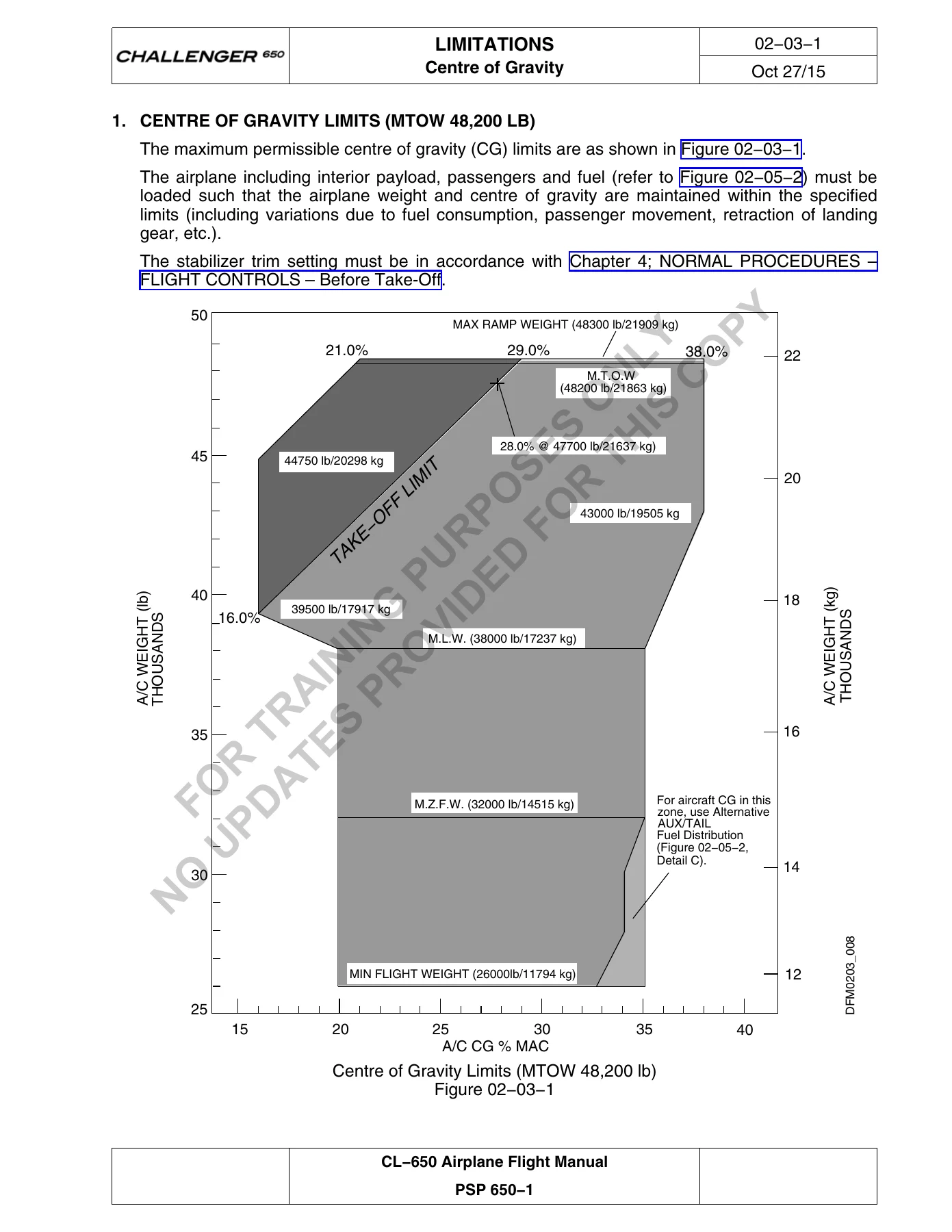
Centre of Gravity Limits (MTOW 48,200 LB)p. 30
+02-04 – Operating Limitationsp. 32
Altitude and Temperature Operating Limitp. 32
Take-Offp. 33
Cold Weather Operationsp. 34
Operation in Icing Conditionsp. 35
Enhanced Take-Off Procedures and Winter Operations Trainingp. 38
Runway Slopesp. 38
Tailwind Conditionsp. 38
Approachesp. 38
Minimum Flight Crewp. 38
Maximum Occupantsp. 38
Maximum Crosswind Componentp. 39
+02-05 – Power Plantp. 40
Enginesp. 40
Engine Indicationsp. 40
Engine Operating Limitsp. 41
Continuous Engine Ignitionp. 42
Autothrottle (ATS)p. 42
Automatic Performance Reserve (APR)p. 43
Starter Cranking Limits (Ground and Air)p. 43
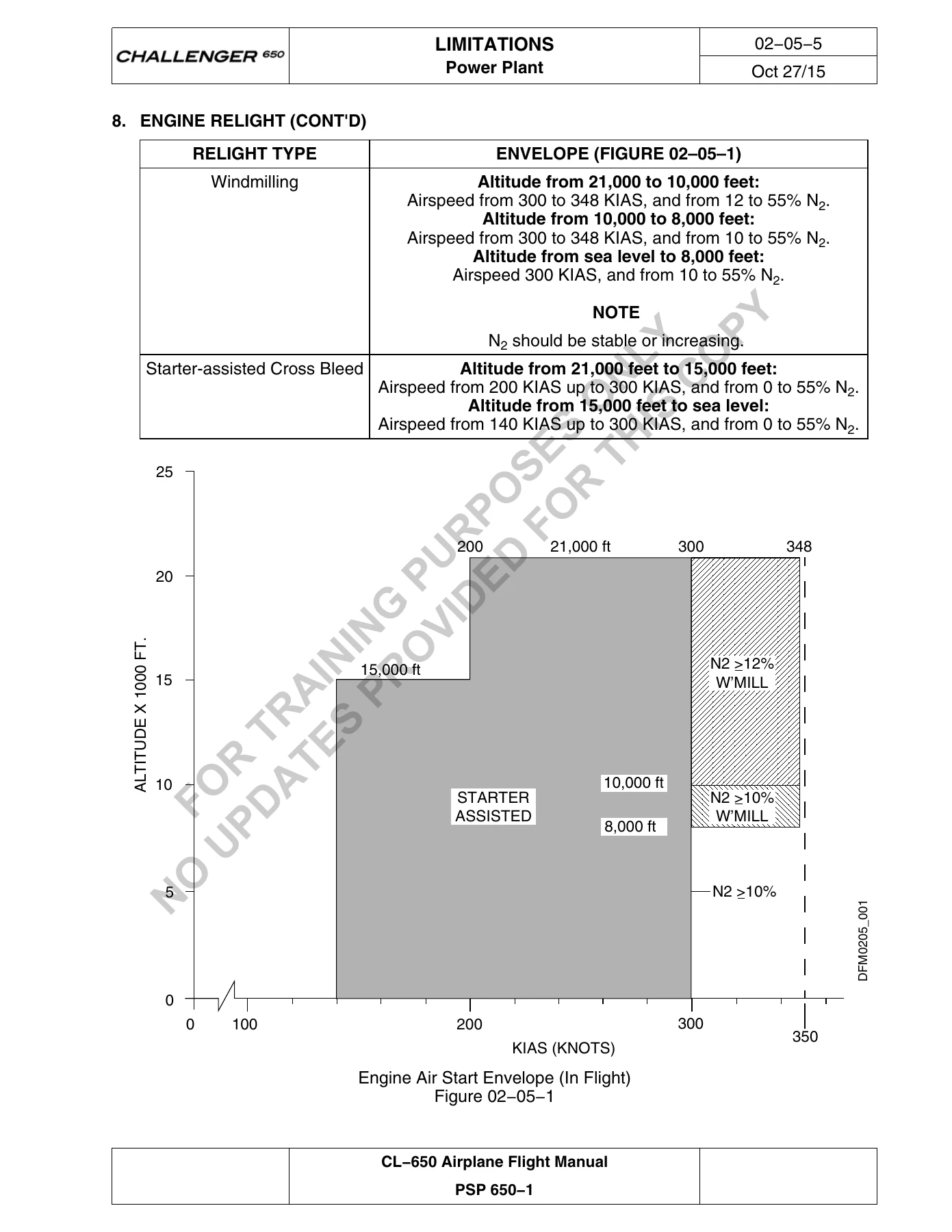
Engine Relightp. 43
Fuelp. 45
Oil Gradesp. 55
Oil Consumptionp. 55
Oil Levelp. 55
Oil Replenishment Systemp. 55
Auxiliary Power Unitp. 55
+02-06 – Operating Speedsp. 60
Maximum Operating Speed and Mach Numberp. 60
RVSM Maximum Operating Speedp. 61
Flaps Extended Speedp. 61
Maximum Landing Gear Operating Speedp. 61
Maximum Landing Gear Extended Speedp. 61
Tire Limit Speedp. 61
Turbulence Penetration Speedp. 61
Minimum Operating Limit Speedp. 61
Design Maneuvering Speedp. 62
+02-07 – Maneuvering Loadsp. 64
Maneuvering Limit Load Factorsp. 64
Side Slip Maneuversp. 64
+02-08 – Systems Limitationsp. 66
Air-Conditioning and Pressurizationp. 66
Automatic Flight Control Systemp. 66
Bleed Air Systemsp. 66
Electrical Systemsp. 67
Flight Controls – Lift/Drag Devicesp. 67
Stall Protection Systemp. 67
Thrust Reversersp. 68
Taxi and Landing Lightsp. 68
Wheel Brake Cooling Limitationsp. 68
Configuration Deviation Listp. 68
Electrical/Avionics Equipmentp. 68
+02-09 – Navigation Systems Limitationsp. 70
Flight Management Systemp. 70
Navigation Receiverp. 74
Terrain Awareness and Warning System (TAWS)p. 75
Runway Awareness and Advisory System (RAAS)p. 75
Integrated Flight Information Systemp. 75
Synthetic Vision System (SVS)p. 76
Datalinkp. 77
Chapter 03 – Emergency Procedures – CONTENTSp. 78
+03-01 – Introductionp. 82
Generalp. 82
Landing Distance Factorsp. 82
+03-02 – Rejected Take-Offp. 84
+Rejected Take-Offp. 84
Rejected Take-Off Before Achieving V1p. 84
+03-03 – Power Plantp. 86
+Power Plantp. 86
Engine Fire/Severe Engine Damage (In Flight)p. 86
Engine Fire/Severe Engine Damage (On Ground)p. 89
Double Engine Failurep. 90
Jet Pipe Overheatp. 98
Engine Oil Pressure Lowp. 99
Uncommanded Thrust Reverser Deploymentp. 100
Post-Shutdown Engine Tail Pipe Firep. 105
N1/N2 Overspeedp. 106
Engine Overtemperaturep. 107
Engine Starter Fails to Cutoutp. 108
Uncommanded Accelerationp. 110
+03-04 – Smoke or Firep. 112
+Smoke/Fire/Fumesp. 112
Smoke/Fire/Fumes Procedurep. 112
Smoke or Fumes Removal Procedurep. 118
+03-05 – Air-Conditioning and Pressurizationp. 120
+Air-Conditioning and Pressurizationp. 120
Emergency Descent Procedurep. 120
Uncontrollable Loss of Cabin Pressurep. 121
High Rate of Cabin Pressurization or Over-Pressurizationp. 123
+03-06 – Automatic Flight Control Systemp. 126
+Automatic Flight Control Systemp. 126
Autopilot Failurep. 126
AFCS Messages Failurep. 127
Uncommanded Yaw Motionp. 128
+03-07 – Auxiliary Power Plantp. 130
+Auxiliary Power Plantp. 130
APU Firep. 130
APU Overspeedp. 131
APU Overtemperaturep. 132
+03-08 – Bleed Air Leaksp. 134
+Bleed Air Leaksp. 134
10TH Stage, Left Bleed Duct Failurep. 134
10TH Stage, Right Bleed Duct Failurep. 136
14TH Stage, Left/Right Bleed Duct Failurep. 137
+03-09 – Ditching and Forced Landingp. 138
+Ditching and Forced Landingp. 138
Ditching or Forced Landing Imminentp. 138
Planned Ditchingp. 139
Forced Landingp. 143
+03-10 – Emergency Evacuationp. 146
+Emergency Evacuationp. 146
Emergency Evacuation Procedurep. 146
+03-11 – Electricalp. 148
+Electricalp. 148
Loss of All Normal Electrical Powerp. 148
+03-12 – Flight Controlsp. 152
+Flight Controlsp. 152
Aileron System Jammedp. 152
Elevator System Jammedp. 154
Rudder System Jammedp. 156
Stabilizer Trim Runawayp. 158
Stall Recoveryp. 161
Overspeed Warningp. 162
+03-13 – Fuel Systemp. 164
+03-14 – Ice and Rain Protectionp. 166
+Ice and Rain Protectionp. 166
Wing Leading Edge Overheatp. 166
Fuselage/Wing Anti-Ice Duct Failurep. 169
+03-15 – Instruments Systemp. 174
+Instruments Systemp. 174
Unreliable Airspeedp. 174
+03-16 – Landing Gear, Wheel and Brake Systemp. 186
+Landing Gear, Wheel and Brake Systemp. 186
Gear UP Disagreep. 186
Gear DN Disagreep. 187
Landing Gear Lever Jammed in the UP Positionp. 189
Landing Gear Up/Unsafe Landing Procedurep. 190
Main Landing Gear Bay Overheat Warningp. 193
Nose Door Fails Openp. 194
Parking Brake Onp. 195
Excessive Asymmetry or Loss of Brakingp. 196
+03-17 – Passenger Doorp. 198
+Passenger Doorp. 198
Passenger Door Failurep. 198
+03-18 – Aural/Visual Warning Systemp. 200
+Aural/Visual Warning Systemp. 200
Configuration Warningp. 200
Chapter 04 – Normal Procedures – CONTENTSp. 202
+04-01 Introductionp. 210
+04-02 Power Plantp. 212
+Power Plantp. 212
Power Plant – First Flight of the Dayp. 212
Engine Vibration Test – First Flight of the Dayp. 212
Before Starting Engines (On Ground)p. 212
Starting Engine(s) Using APU Air Supplyp. 213
Starting Engine Using External Air Supplyp. 215
Starting Engine Using Engine Cross Bleed Airp. 217
Failure to Startp. 219
After Starting Enginesp. 220
ATS Checkp. 220
APR Checkp. 221
Anti-Ice Cowl Check – First Flight of the Dayp. 222
Thrust Reverser Check – First Flight of the Dayp. 223
Before Take-Offp. 224
High Crosswind Take-Offp. 226
After Take-Offp. 226
Climbp. 226
Cruisep. 226
Descentp. 227
Approachp. 227
Before Landingp. 227
Go-Aroundp. 228
After Landingp. 228
Engine Shutdownp. 229
+04-03 Air-Conditioning and Pressurizationp. 230
+Flight Compartment and Cabinp. 230
Bleed Leak Detection Test – First Flight of the Dayp. 230
Air-Conditioning on Ground Using APUp. 231
Before Take-Offp. 231
After Take-Offp. 233
Descentp. 233
+Unpressurized Take-Off and Landingp. 235
Before Take-Offp. 235
After Take-Offp. 235
Landingp. 236
+04-04 Auxiliary Power Unitp. 238
+Auxiliary Power Unitp. 238
External Walkaroundp. 238
Starting the APU on Ground or in Flight – First Start of the Dayp. 239
Starting the APU on Ground or in Flight – Subsequent Startsp. 240
Stopping the APUp. 241
+04-05 Automatic Flight Control Systemp. 242
+Automatic Flight Control Systemp. 242
Yaw Dampers – Before Take-Offp. 242
Autopilot – After Take-Offp. 242
Autopilot – During Flightp. 242
AFCS – Before Landingp. 242
+04-06 Doorsp. 244
+Doorsp. 244
Passenger Doorp. 244
Emergency Exits and Hatches (During Walkaround Inspection)p. 244
+04-07 Electricalp. 246
+Electricalp. 246
Before Normal APU Startp. 246
Before Normal Engine Startp. 246
After Starting Enginesp. 246
Before Normal Engine Shutdownp. 247
Before Normal APU Shutdownp. 247
+04-08 Electronic Flight Instrumentsp. 248
+Electronic Flight Instrumentsp. 248
Clock – Before Starting Enginesp. 248
Altimeters – Before Starting Enginesp. 248
Altimeters – Before Landingp. 248
+04-09 Fire Protection Systemp. 250
+Fire Protection Systemp. 250
Engine, Jetpipe and APU Fire Detection Systems Test – First Flight of the Dayp. 250
Engine and APU Firex Monitor System Test – First Flight of the Dayp. 251
+04-10 Flight Controlsp. 252
+Flight Controlsp. 252
Ground and Flight Spoilers, Before Take-Off – First Flight of the Dayp. 252
Flight Controls Trim Systems, Before Flight – First Flight of the Dayp. 252
Before Take-Offp. 254
During Flightp. 255
+04-11 Navigation Systemsp. 256
+Flight Management System (FMS)p. 256
Prior to FMS Usep. 256
After Periods of Dead Reckoning (DR) Navigationp. 256
Go-Aroundp. 256
+Inertial Reference System (IRS)p. 257
Before Starting Enginesp. 257
+Global Positioning System (GPS)p. 257
Before Starting Enginesp. 257
+04-12 Fuelp. 258
+Fuelp. 258
External Walkaroundp. 258
Before Starting Enginesp. 258
After Starting One Engine – First Flight of the Dayp. 260
Before Take-Offp. 261
During Cruisep. 261
Before Engine Shutdown – First Flight of the Dayp. 262
After Engine Shutdown – Last Flight of the Dayp. 263
Refueling/Defueling (Flight Compartment Panel) (If installed)p. 263
+04-13 Hydraulic Powerp. 264
+Hydraulic Powerp. 264
Before Startp. 264
Before Take-Offp. 264
After Take-Offp. 265
Before Landingp. 265
+04-14 Ice and Rain Protectionp. 266
+Ice and Rain Protectionp. 266
External Walkaroundp. 266
Wing Anti-Ice Switch Test – First Flight of the Dayp. 266
Ice Detector Test – First Flight of the Dayp. 266
Windshield/Window Heat Test – Before Each Flightp. 267
Wing Overheat Detection System – Before Each Flightp. 267
14TH Stage Valve Check – Before Each Flight (Engines Running)p. 267
Wing Anti-Ice Check – Before Each Flight (Engines Running)p. 268
Wing Anti-Ice/Isolation Valve – First Flight of the Day (Engines Running)p. 269
Supplemental Ground Wing Anti-Ice Check (if installed) – First Flight of the Day (Engines Running)p. 270
Cowl Anti-Ice – Before Flight (Engines Running)p. 271
Wing Anti-Ice – Before Flight (Engines Running)p. 272
Supplemental Ground Wing Anti-Ice Check (if installed) – Before Take-Offp. 273
Icing Conditions During Flightp. 274
Before Landingp. 277
After Landingp. 277
During Engine Shutdownp. 277
+04-15 Landing Gear, Wheels and Brakesp. 278
+Landing Gear, Wheels and Brakesp. 278
Main Landing Gear Bay Overheat Detection – First Flight of the Dayp. 278
Brakes and Anti-Skid System – Before Each Flightp. 278
Brakes and Anti-Skid System – Before Landingp. 279
Procedures for Operating from Wet, Snow Covered or Slush Covered Surfacesp. 280
Cooling of Wheels, Brakes and Tiresp. 281
Nose Wheel Steering – On Groundp. 281
+04-16 Lightingp. 282
+Lightingp. 282
Emergency Lighting System – First Flight of the Dayp. 282
Before Take-Offp. 282
+04-17 Oxygen Systemp. 284
+04-18 Stall Protectionp. 286
+Stall Protectionp. 286
Stall Protection System – First Flight of the Dayp. 286
+04-19 Aural/Visual Warning Systemp. 288
+Aural/Visual Warning Systemp. 288
Lamp Test – First Flight of the Dayp. 288
Aural Warning System – First Flight of the Dayp. 288
Before Take-Offp. 288
Before Landingp. 288
+Terrain Awareness and Warning System, and Windshear Detection and Alerting Systemp. 289
Before Flightp. 289
During Climbp. 289
During Descentp. 289
TAWS Warning During Flightp. 290
TAWS Caution During Flightp. 290
Windshear Warningp. 291
Windshear Cautionp. 292
+Traffic Alert and Collision Avoidance System (TCAS)p. 292
Resolution Advisory During Flightp. 292
Traffic Advisory During Flightp. 294
+04-20 Consolidated Checklistsp. 296
+Consolidated Checklistsp. 296
Introductionp. 296
Normal Power-Up Checkp. 296
External Walkaroundp. 297
Systems Checkp. 298
Before Start Checkp. 300
Start Checkp. 300
APU Assisted Engine Start Procedurep. 301
Engine Start Procedure using Battery and External Airp. 302
Engine Start Procedure using External Air (with AC electrical power)p. 303
Cross-Bleed Engine Start Procedurep. 303
Failure to Start Procedurep. 304
After Engine Start Checkp. 304
Taxi Checkp. 305
Take-Off Checkp. 305
After Take-Off Checkp. 305
Climb Checkp. 306
Cruise Checkp. 306
Descent Checkp. 306
In Range Checkp. 307
Before Landing Checkp. 307
Go-Around Procedurep. 307
After Landing Checkp. 308
Shutdown Checkp. 308
Securing Checkp. 309
+04-21 Severe Turbulence Penetrationp. 310
+Severe Turbulence Penetrationp. 310
Autopilotp. 310
Airspeedp. 310
Attitudep. 310
Stabilizerp. 310
Altitudep. 310
Thrustp. 310
Thunderstormsp. 310
Maneuvering Capabilityp. 310
Chapter 05 – Abnormal Procedures – CONTENTSp. 312
+05-01 – Introductionp. 320
Generalp. 320
Landing Distance Factorsp. 320
+05-02 – Power Plantp. 322
+Power Plantp. 322
Reverser Unsafe to Armp. 322
In-Flight Engine Failure/Shutdownp. 323
APR Failurep. 326
Inadvertent APR Commandp. 327
Uncommanded Deceleration or Abnormal Engine Oscillation/Fluctuationp. 328
N1 Fan Vibrationp. 329
N2 Core Vibrationp. 331
Engine Hot Startp. 332
Engine DCU Parameter Disagreementp. 332
Thrust Lever Inoperativep. 333
Fluctuating Engine Oil Pressurep. 334
ATS Failurep. 335
Dual ATS MSD Failurep. 335
ATS Uncommanded Disengagep. 336
ATS Overspeedp. 336
ATS Thrust Limitedp. 336
ATS Low Speedp. 336
ATS Radio Altimeter Input Failurep. 337
+05-03 – Single Engine Proceduresp. 338
+Single Engine Proceduresp. 338
Engine Failure During Take-Off After Achieving V1p. 338
Engine Failure in Climb During ALTS CAPp. 339
Engine Failure During Approachp. 339
Single Engine Approach and Landingp. 341
Single Engine Go-Aroundp. 343
+05-04 – Air Startp. 346
+Air Startp. 346
Engine Cross Bleed – Air Start Procedurep. 346
Windmilling Air Start Procedurep. 350
+05-05 – Air-Conditioning and Pressurizationp. 354
+Air-Conditioning and Pressurizationp. 354
Air-Conditioning Pack High Pressurep. 354
Air-Conditioning Pack High Temperaturep. 355
Automatic Pressurization System Malfunctionp. 356
Air-Conditioning Pack Pressure/Regulating Valve Failurep. 357
Cabin Altitude Too Highp. 358
Unpressurized Flight Procedurep. 359
Manual Cabin Pressurization Control Procedurep. 360
Cabin Pressure Acquisition Module Failurep. 361
+05-06 – Automatic Flight Control Systemp. 362
+Automatic Flight Control Systemp. 362
Autopilot Mistrimp. 362
Autopilot Pitch Trim Failurep. 363
Double Yaw Damper Failurep. 364
Single Flight Director Failedp. 366
+05-07 – Auxiliary Power Unitp. 368
+Auxiliary Power Unitp. 368
APU Load Control Valve Fails to Closep. 368
APU Low Oil Pressurep. 368
APU High Oil Temperaturep. 369
APU Shut-Off Valve Failed to Close, After APU Shutdown Due to Firep. 369
APU Fuel Shut-Off Valve not in the Selected Positionp. 370
APU Negative-G Shut-Off Valve Failed to Close After APU Shutdown Due to Firep. 370
APU Pump Failurep. 371
+05-08 – Doorsp. 372
+Doorsp. 372
Passenger Door – Outer Handle not Stowedp. 372
Passenger Door – Inner Handle not Stowedp. 374
Passenger Door – Not Latchedp. 376
Baggage Door – Not Closed/Lockedp. 378
+05-09 – Electricalp. 380
+Electricalp. 380
AC Bus 1 Transfer Failurep. 380
AC Bus 2 Transfer Failurep. 380
AC Bus 1 Failurep. 380
AC Bus 2 Failurep. 381
AC Essential Bus Failurep. 382
ADG Inadvertent Deploymentp. 382
APU Battery Failurep. 383
APU Generator Failurep. 383
APU Generator Overloadp. 383
Battery Bus Failurep. 383
DC Bus 1 Failurep. 384
DC Bus 2 Failurep. 385
DC Essential Bus Failurep. 386
AC Generator 1 Failurep. 387
AC Generator 2 Failurep. 388
AC Generator Overloadp. 388
Main Battery Failurep. 389
DC Emergency Bus Failurep. 389
+05-10 – Fire Protectionp. 390
+Fire Protectionp. 390
APU Fire Detector Loop Failurep. 390
Engine Fire Detector Loop Failurep. 390
Jetpipe Overheat Detector Failurep. 390
APU Firex Bottle Dischargedp. 390
Engine Firex Bottle Dischargedp. 391
+05-11 – Flight Controlsp. 392
+Flight Controlsp. 392
Lightning Strikep. 392
Stall Protection System Failurep. 393
Stall Protection System Altitude Compensation Failurep. 393
Flight Spoilers Deployed During Flightp. 394
Flight Spoilers Lever Jamp. 394
Flight Spoilers Failure to Deployp. 394
Flight Spoiler Asymmetric Extensionp. 394
Flight Spoiler Asymmetric Retractionp. 395
Flight Spoilers Failurep. 395
Flaps Failurep. 396
Ground Spoilers Failurep. 399
Ground Spoilers Unsafep. 399
Ground Spoilers Deployed During Flightp. 401
Stabilizer Trim Failurep. 402
Stabilizer Trim Malfunctionp. 405
Mach Trim Failurep. 405
Aileron PCU Malfunctionp. 406
Elevator System Malfunctionp. 408
+05-12 – Fuelp. 410
+Fuelp. 410
Fuel Imbalancep. 410
Engine Shut-Off Valve Failed Closedp. 412
Engine Shut-Off Valve Failed to Close After Engine Shutdown Due to Firep. 412
Fuel Filter Impending Bypassp. 412
Low Fuel Pressurep. 413
Bulk Fuel Temperature is Less than –37°Cp. 414
Fuel Temperature Less than 5°Cp. 415
Fuel Boost Pump Failurep. 415
Motive Flow Failurep. 416
Scavenge Ejector Failurep. 417
Primary Tail Tank Pump Failure (Manual Mode)p. 418
Secondary Tail Tank Pump Failure (Manual Mode)p. 419
Tail Tank to Aux Tank Automatic Transfer Failurep. 421
Tail Tank Transfer is Inhibitedp. 422
Excessive Fuel Load – Aux Tankp. 423
Excessive Fuel Load – Tail Tankp. 425
Tail Dump SOV Failed (SOV not in commanded position)p. 426
Tail Transfer SOV Failed Closedp. 427
Tail Transfer SOV Failed Openp. 429
Tail Transfer SOV Failed in Middle Positionp. 430
L/R TO AUX Crossflow Valve Openp. 431
L/R TO AUX Crossflow Valve Fails to Closep. 431
Auxiliary Tank Contents Increasing (abnormally) During L/R TO AUX Crossflowp. 432
Dump Valve Open for More than 5 Minutesp. 432
Loss of Auxiliary Tank Fuel Quantity Indicationp. 433
Loss of Wing Tank Fuel Quantity Indicationp. 434
Loss of Tail Tank Fuel Quantity Indicationp. 435
Loss of Total Fuel Quantity Indicationp. 435
Fuel Leak Procedurep. 436
+05-13 – Hydraulic Powerp. 442
+Hydraulic Powerp. 442
System No. 1 Failurep. 442
System No. 2 Failurep. 444
System No. 3 Failurep. 445
System No. 1 High Temperaturep. 446
System No. 2 High Temperaturep. 447
System No. 3 High Temperaturep. 448
Engine-Driven Pump Failurep. 448
Electric Pump 1B Failurep. 449
Electric Pump 2B Failurep. 449
Electric Pump 3A Failurep. 449
Electric Pump 3B Failurep. 450
Hydraulic Shut-Off Valve Failure After Engine Shutdown Due to Firep. 450
System No. 1 and No. 2 Failurep. 451
System No. 2 and No. 3 Failurep. 453
System No. 1 and No. 3 Failurep. 456
+05-14 – Ice and Rain Protectionp. 458
+Ice and Rain Protectionp. 458
Ice Dispersal Procedurep. 458
Ice Detectedp. 460
One Ice Detector Failedp. 461
Both Ice Detectors Failedp. 463
Wing Anti-Ice Sensor Failurep. 464
Cowl Anti-Ice Failurep. 465
Wing Leading Edge Temperature and Pressure Lowp. 466
Insufficient Heat for Wing Anti-Icingp. 467
Insufficient Heat for Supplemental Ground Wing Anti-Icingp. 468
Supplemental Ground Wing Anti-Icing Overheatp. 468
Probe Heater Failuresp. 469
Windshield Heat Failurep. 470
Window Heat Failurep. 470
Windshield Outer Face Ply Failurep. 471
+05-15 – Instruments Systemp. 472
+Instruments Systemp. 472
Primary Flight Display Failurep. 472
Display Control Panel Failurep. 472
EFIS Comparator Failurep. 472
Multifunction Display Failurep. 473
Cursor Control Panel Failurep. 473
PFD Cross-Talk Failurep. 473
EFIS Parameter Miscomparep. 474
FMS V Speed Failurep. 475
Air Data Computer Failurep. 476
Radio Altimeter Failurep. 477
Inertial Reference System Failurep. 478
Total Inertial Reference System Failurep. 478
+05-16 – Landing Gear, Wheel and Brake Systemp. 480
+Landing Gear, Wheel and Brake Systemp. 480
Inboard Anti-Skid Failurep. 480
Outboard Anti-Skid Failurep. 481
Anti-Skid (Inboard and Outboard) Failurep. 481
Inboard/Outboard Brake Pressure Lowp. 482
Parking Brake Shut-Off Valve Failurep. 482
Main Landing Gear Overheat Detector Failurep. 483
Nose Wheel Steering System Failurep. 483
Weight-on-Wheels Input Faultp. 484
Weight-on-Wheels Output Faultp. 485
Proximity Sensing System Failure (Total System Shutdown)p. 487
Landing Gear Manual Extensionp. 489
+05-17 – Miscellaneous Systemsp. 490
+Miscellaneous Systemsp. 490
Emergency Lighting System Selected Offp. 490
Crew Oxygen Low Pressurep. 490
Passenger Oxygen Deployed and Activated (If Installed)p. 490
Radio Tuning Failurep. 491
Dual HF Transmission Failurep. 492
Transponder Failurep. 492
Dual Transponder Failurep. 492
ADS-B Out Faultp. 493
ADS-B Out Failurep. 493
Dual GPS Failure During Oceanic and Remote Operationsp. 493
Flight Management System CDU/FMC Failurep. 494
FSU Failurep. 494
RAAS Advisories In Air or During High Speed Operationsp. 495
RAAS Advisories On Ground During Low Speed Operationsp. 495
RAAS Inoperativep. 495
RAAS Not Availablep. 495
EVS Heater Failurep. 496
EVS Heater Overheatp. 496
Synthetic Vision System Runway Failurep. 496
Synthetic Vision System Failurep. 496
+05-18 – Aural/Visual Warning Systemp. 498
+Aural/Visual Warning Systemp. 498
Loss of EICASp. 498
Data Concentrator Unit Failurep. 498
Data Concentrator Unit Aural Failurep. 498
EICAS Comparator Inoperativep. 498
TCAS System Failurep. 498
TCAS VSI Resolution Advisory Failurep. 499
+05-19 – Other Proceduresp. 500
Chapter 06 – Performance – CONTENTSp. 502
+06-01 – Generalp. 508
Introductionp. 508
Conversion Datap. 509
Calibrationp. 513
Flight Capabilitiesp. 521
Performance Conditions and Configurationsp. 531
+06-02 – Thrust Settingsp. 534
+06-03 – Take-Off Performancep. 554
Introductionp. 554
Maximum Allowable Take-Off Weightp. 554
Take-Off Distancep. 563
Take-Off Speedsp. 569
Maximum Allowable Brake Temperature For Take-Offp. 581
Adjustments for Extended Second Segment Climbp. 581
+06-04 – Obstacle Clearancep. 584
Introductionp. 584
Take-Off Flight Pathp. 584
Maximum Take-Off Weight Limited by Obstacle Clearance Requirementsp. 587
Gradient Loss in a Steady Turnp. 601
+06-05 – Enroute Performancep. 602
Introductionp. 602
Final Segment and Enroute Climb Speedp. 603
Final Segment and Enroute Climb Gradientp. 605
+06-06 – Approach and Landing Climbp. 610
Introductionp. 610
Approach Climb Speedp. 611
Approach Climb Gradientp. 613
Landing Climb Speedp. 621
Landing Climb Gradientp. 623
+06-07 – Landing Performancep. 628
Introductionp. 628
Maximum Allowable Landing Weightp. 629
Landing Field Length and Speedp. 633
Maximum Permissible Quick Turn-Around Landing Weightp. 635
+06-08 – Turn-Around Timep. 638
Cooling of Wheels, Brakes and Tiresp. 638
Supplements – Table of Contentsp. 644
Supplement 1 – CONTENTSp. 646
+Supplement 1 – Noise Characteristicsp. 648
Introductionp. 648
Certificate Airplane Configurationp. 649
Certificate Noise Levelsp. 649
Supplement 1A – CONTENTSp. 650
+Supplement 1A – Noise Characteristicsp. 652
Introductionp. 652
Certificate Airplane Configurationp. 653
Certificate Noise Levelsp. 654
Supplement 2 – CONTENTSp. 656
+Supplement 2 – Operation on Wet and Contaminated Runwaysp. 660
Introductionp. 660
Wet Runway Take-Off Performancep. 662
Contaminated Runway Take-Off Performancep. 674
Landing on Contaminated Runwaysp. 702
Supplement 3 – CONTENTSp. 708
+Supplement 3 – Operation at Airport Elevations up to 14,000 ft.p. 710
Introductionp. 710
Generalp. 710
Limitationsp. 710
Emergency Proceduresp. 711
Normal Proceduresp. 712
Abnormal Proceduresp. 714
Performancep. 720
Supplementsp. 720
Supplement 4 – CONTENTSp. 722
+Supplement 4 – Category II Operationsp. 724
Generalp. 724
Introductionp. 724
Limitationsp. 725
+Emergency Proceduresp. 726
Normal Proceduresp. 727
+Abnormal Proceduresp. 728
Single Engine Approach and Landingp. 728
Engine Failure During Final Approachp. 728
System Failures:p. 729
Performancep. 735
Supplement 4A – CONTENTSp. 736
+Supplement 4A – Category II Operationsp. 738
Generalp. 738
Introductionp. 738
Limitationsp. 739
+Emergency Proceduresp. 740
Normal Proceduresp. 741
+Abnormal Proceduresp. 742
Single Engine Approach and Landingp. 742
Engine Failure During Final Approachp. 742
System Failures:p. 743
Performancep. 749
Supplement 6 – CONTENTSp. 752
+Supplement 6 – Flight With Landing Gear Downp. 754
Generalp. 754
Introductionp. 754
Limitationsp. 754
Emergency Proceduresp. 754
Normal Proceduresp. 754
Abnormal Proceduresp. 754
Performancep. 755
Supplement 8 – CONTENTSp. 756
+Supplement 8 – Operation With Airplane Systems Inoperativep. 758
Generalp. 758
Introductionp. 758
Limitationsp. 758
Emergency Proceduresp. 758
Normal Proceduresp. 758
Abnormal Proceduresp. 758
Performancep. 758
Supplementsp. 778
Supplement 11 – CONTENTSp. 782
+Supplement 11 – Approaches below 4.5 Degreesp. 784
Generalp. 784
Introductionp. 784
Limitationsp. 784
Emergency Proceduresp. 786
Normal Proceduresp. 786
+Abnormal Proceduresp. 786
Performancep. 787
Supplement 12 – CONTENTSp. 788
+Supplement 12 – Steep Approaches up to 5.5 Degreesp. 790
Generalp. 790
Introductionp. 790
Limitationsp. 790
Emergency Proceduresp. 792
Normal Proceduresp. 792
+Abnormal Proceduresp. 793
Engine Failure During Approachp. 793
Single Engine Go-Aroundp. 794
Performancep. 795
Supplementsp. 799
Supplement 13 – CONTENTSp. 806
+Supplement 13 – Additional Take-Off Performance Informationp. 808
Generalp. 808
Introductionp. 810
Limitationsp. 810
Emergency Proceduresp. 810
Normal Proceduresp. 810
Abnormal Proceduresp. 810
Performancep. 811
Supplementsp. 842
Supplement 14 – CONTENTSp. 850
+Supplement 14 – Operational Capabilitiesp. 852
Generalp. 852
Navigationp. 853
Surveillancep. 857
Communicationsp. 858
Supplement 15 – CONTENTSp. 860
+Supplement 15 – Operation with Cracked Windshield Faceplyp. 862
Generalp. 862
Introductionp. 862
Limitationsp. 862
Emergency Proceduresp. 862
Normal Proceduresp. 862
Abnormal Proceduresp. 862
Performancep. 863
Supplementsp. 863
Supplement 17 – CONTENTSp. 864
+Supplement 17 – Runway Awareness and Advisory Systemp. 866
Generalp. 866
Introductionp. 869
Limitationsp. 869
Emergency Proceduresp. 869
Normal Proceduresp. 869
Abnormal Proceduresp. 869
Performancep. 869
Supplementsp. 869
Supplement 18 – CONTENTSp. 870
+Supplement 18 – RNP Authorization Required Approach Operationsp. 872
Generalp. 872
Introductionp. 872
Limitationsp. 873
Emergency Proceduresp. 874
+Normal Proceduresp. 874
+Abnormal Proceduresp. 875
Loss of GNSSp. 875
Excessive Lateral or Vertical Deviationp. 875
EFIS Parameter Miscomparep. 875
Performancep. 875
Supplementsp. 875
Supplement 19 – CONTENTSp. 876
+Supplement 19 – Operation on Wet Grooved Runwaysp. 878
GENERALp. 878
INTRODUCTIONp. 879
LIMITATIONSp. 879
EMERGENCY PROCEDURESp. 880
NORMAL PROCEDURESp. 880
ABNORMAL PROCEDURESp. 880
PERFORMANCEp. 881
Supplementsp. 897
Supplement 20 – CONTENTSp. 898
+Supplement 20 – FAA Steep Approach into London City Airportp. 900
Generalp. 900
Introductionp. 900
Limitationsp. 900
Emergency Proceduresp. 901
Normal Proceduresp. 902
+Abnormal Proceduresp. 904
Engine Failure During Approachp. 904
Single Engine Go-Aroundp. 904
Performancep. 906
Supplementsp. 908
+Appendices Table of Contentsp. 912
Appendix 1 – Configuration Deviation Listp. 914
+08-01-01 – Configuration Deviation Listp. 916
General Limitationsp. 916
CDL 23 Communicationsp. 918
CDL 32 Landing Gearp. 920
CDL 33 Lightsp. 922
CDL 51 Structures – Generalp. 924
CDL 52 Doorsp. 928
CDL 53 Fuselagep. 932
CDL 55 Stabilizersp. 934
CDL 56 Windowsp. 938
CDL 57 Wingsp. 940
- Chapter 1 – Introduction: general information, scope of the AFM, limitations, status of AFM information, emergency procedures, normal procedures, abnormal procedures, performance, supplements, appendices, pagination, definitions, abbreviations, registry codes, service bulletins
- Chapter 2 – Limitations: kinds of airplane operation, structural weight, centre of gravity limits, altitude and temperature operating limits, take-off limitations, rotation rate and pitch attitude, pitch trim, cold weather operations, operation in icing conditions, cowl anti-ice system, wing anti-ice system, super-cooled large droplet icing, enhanced take-off procedures, runway slopes, tailwind conditions, approaches, minimum flight crew, maximum occupants, maximum crosswind component, engines, engine indications, engine operating limits, oil temperature, oil pressure, continuous engine ignition, autothrottle, automatic performance reserve, starter cranking limits, engine relight, fuel, fuel temperature, fuel grades, fuel additives, fuel jettison, fuel transfer, oil grades, oil consumption, oil level, oil replenishment, auxiliary power unit, APU indications, maximum operating speed and Mach number, RVSM maximum operating speed, flaps extended speed, landing gear operating and extended speeds, tire limit speed, turbulence penetration speed, minimum operating limit speed, design maneuvering speed, maneuvering limit load factors, side slip maneuvers, air-conditioning and pressurization, automatic flight control system, bleed air systems, electrical systems, flight controls, flaps, flight spoilers, stall protection system, thrust reversers, taxi and landing lights, wheel brake cooling limitations, configuration deviation list, electrical/avionics equipment, flight management system, navigation receivers, TAWS, RAAS, integrated flight information system, synthetic vision system, datalink
- Chapter 3 – Emergency Procedures: rejected take-off, engine fire/severe engine damage (in flight and on ground), double engine failure, jet pipe overheat, engine oil pressure low, uncommanded thrust reverser deployment, post-shutdown engine tail pipe fire, N1/N2 overspeed, engine overtemperature, engine starter fails to cutout, uncommanded acceleration, smoke/fire/fumes, smoke or fumes removal, emergency descent, uncontrollable loss of cabin pressure, high rate of cabin pressurization or over-pressurization, autopilot failure, AFCS messages failure, uncommanded yaw motion, APU fire, APU overspeed, APU overtemperature, bleed air leaks, ditching and forced landing, emergency evacuation, loss of all normal electrical power, aileron/elevator/rudder system jammed, stabilizer trim runaway, stall recovery, overspeed warning, low fuel, wing leading edge overheat, fuselage/wing anti-ice duct failure, unreliable airspeed, gear up disagree, gear down disagree, landing gear lever jammed, landing gear up/unsafe landing, main landing gear bay overheat, nose door fails open, parking brake on, excessive asymmetry or loss of braking, passenger door failure, configuration warning
- Chapter 4 – Normal Procedures: power plant first flight of the day, engine vibration test, before starting engines, starting engines using APU air supply, starting engine using external air supply, starting engine using engine cross bleed air, failure to start, after starting engines, ATS check, APR check, anti-ice cowl check, thrust reverser check, before take-off, high crosswind take-off, after take-off, climb, cruise, descent, approach, before landing, go-around, after landing, engine shutdown, air-conditioning and pressurization, bleed leak detection test, air-conditioning on ground using APU, unpressurized take-off and landing, auxiliary power unit, automatic flight control system, doors, electrical, electronic flight instruments, fire protection system, flight controls, navigation systems, fuel, hydraulic power, ice and rain protection, landing gear wheels and brakes, lighting, oxygen system, stall protection, aural/visual warning system, consolidated checklists, severe turbulence penetration
- Chapter 5 – Abnormal Procedures: power plant, single engine procedures, air start, air-conditioning and pressurization, automatic flight control system, auxiliary power unit, doors, electrical, fire protection, flight controls, fuel, hydraulic power, ice and rain protection, instruments system, landing gear wheel and brake system, miscellaneous systems, aural/visual warning system
- Chapter 6 – Performance: general, conversion data, calibration, flight capabilities, thrust settings, take-off performance, obstacle clearance, enroute performance, approach and landing climb, landing performance, turn-around time
- Chapter 7 – Supplements: noise characteristics, operation on wet and contaminated runways, operation at airport elevations up to 14,000 feet, Category II operations, flight with landing gear down, operation with airplane systems inoperative, approaches below 4.5 degrees, steep approaches up to 5.5 degrees, additional take-off performance information, operational capabilities, operation with cracked windshield faceply, runway awareness and advisory system, RNP authorization required approach operations, operation on wet grooved runways, FAA steep approach into London City Airport
- Chapter 8 – Appendices: configuration deviation list covering communications, landing gear, lights, structures, doors, fuselage, stabilizers, windows, and wings
Together, these chapters give a Challenger 650 pilot or maintenance technician the full operational framework for the aircraft: from pre-flight checks and normal procedures through emergency and abnormal situations, and on to the precise performance data needed for flight planning and obstacle clearance. The manual goes well beyond surface-level information, detailing engine operating limits for the CF34-3B, fuel system management including auxiliary and tail tank transfer logic, hydraulic system architecture, flight control system behavior, ice and rain protection logic, and a comprehensive set of performance charts for take-off, climb, and landing. The emergency and abnormal procedures chapters cover everything from rejected take-off and engine fire to unreliable airspeed, jammed flight controls, and loss of electrical power, with boxed immediate-action steps and expanded checklists. The normal procedures chapter includes consolidated checklists covering every phase of flight from pre-start through securing the aircraft.
Why This Manual Matters
Operating a Challenger 650 demands exact adherence to limitations and procedures. This Airplane Flight Manual is the reference that defines the approved flight envelope, the correct crew actions for abnormal and emergency situations, and the performance data that determines whether a given take-off or landing is safe. Having the complete manual available in PDF form means you can search the content, print the pages you need, and keep the full reference on any device – laptop, tablet, or phone – wherever maintenance or flight planning is happening. The performance chapter alone contains take-off distance charts, obstacle clearance calculations, climb gradients, and landing field length data that are essential for safe flight planning, all presented with worked examples that show exactly how to apply the corrections for temperature, altitude, wind, runway slope, and anti-ice configuration.
The Training Edition of this manual is intended for familiarization and training purposes, providing a comprehensive study reference for the Challenger 650 systems, procedures, and performance. It is a substantial technical document – 945 pages – that covers the aircraft in thorough detail and includes the full range of supplements covering special operations such as wet and contaminated runways, steep approaches, Category II operations, and RNP AR approach procedures.
Get Instant Access
This Bombardier Challenger 650 Airplane Flight Manual is delivered as an instant PDF download. There is no shipping, no waiting, and no physical media. You receive the complete manual immediately after purchase, ready to view on any device and to print if you prefer a paper reference. Whether you are studying the aircraft, preparing for a type rating, or maintaining a Challenger 650, this manual gives you the complete operational and technical reference in one file.
Reviews
There are no reviews yet.