
AMX Series Aircraft Flight Manual – Aeritalia Aermacchi Embraer 1989 PDF
Original price was: $39.95.$24.95Current price is: $24.95.
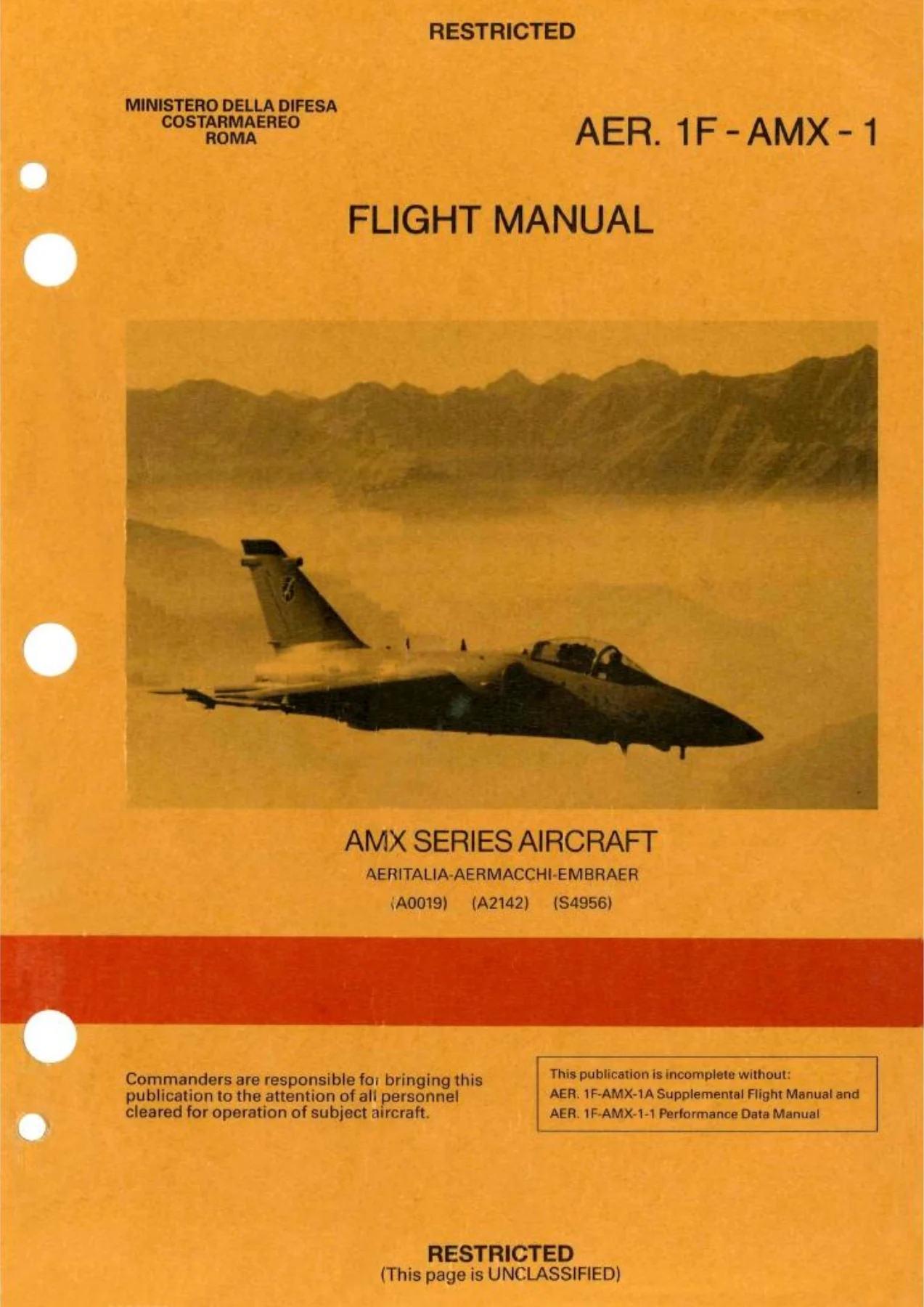
Complete AMX Series Aircraft Flight Manual (AER.1F-AMX-1 / FAB T.O.1A-1-1, 1 August 1989) covering the Italian AMI and Brazilian FAB first-batch AMX, with full Section I description and operation of the airframe, Rolls-Royce RB168-807 engine, fuel, hydraulic, flight control, avionic and emergency systems.
Description
AMX Series Aircraft Flight Manual – Aeritalia Aermacchi Embraer 1989 PDF
The AMX Series Aircraft Flight Manual is the operating and systems reference issued for the AMX single-seat, subsonic light tactical fighter produced by the Aeritalia-Aermacchi-Embraer consortium. Carrying document number AER.1F-AMX-1 / (FAB)T.O.1A-1-1 and dated 1 August 1989, it covers the first-batch aircraft in both the Italian (AMI) and Brazilian (FAB) configurations. It was prepared for the aircrew and ground personnel cleared to operate the type, and it follows a positive-approach format that states what may be done and requires clearance before any operation not specifically permitted.
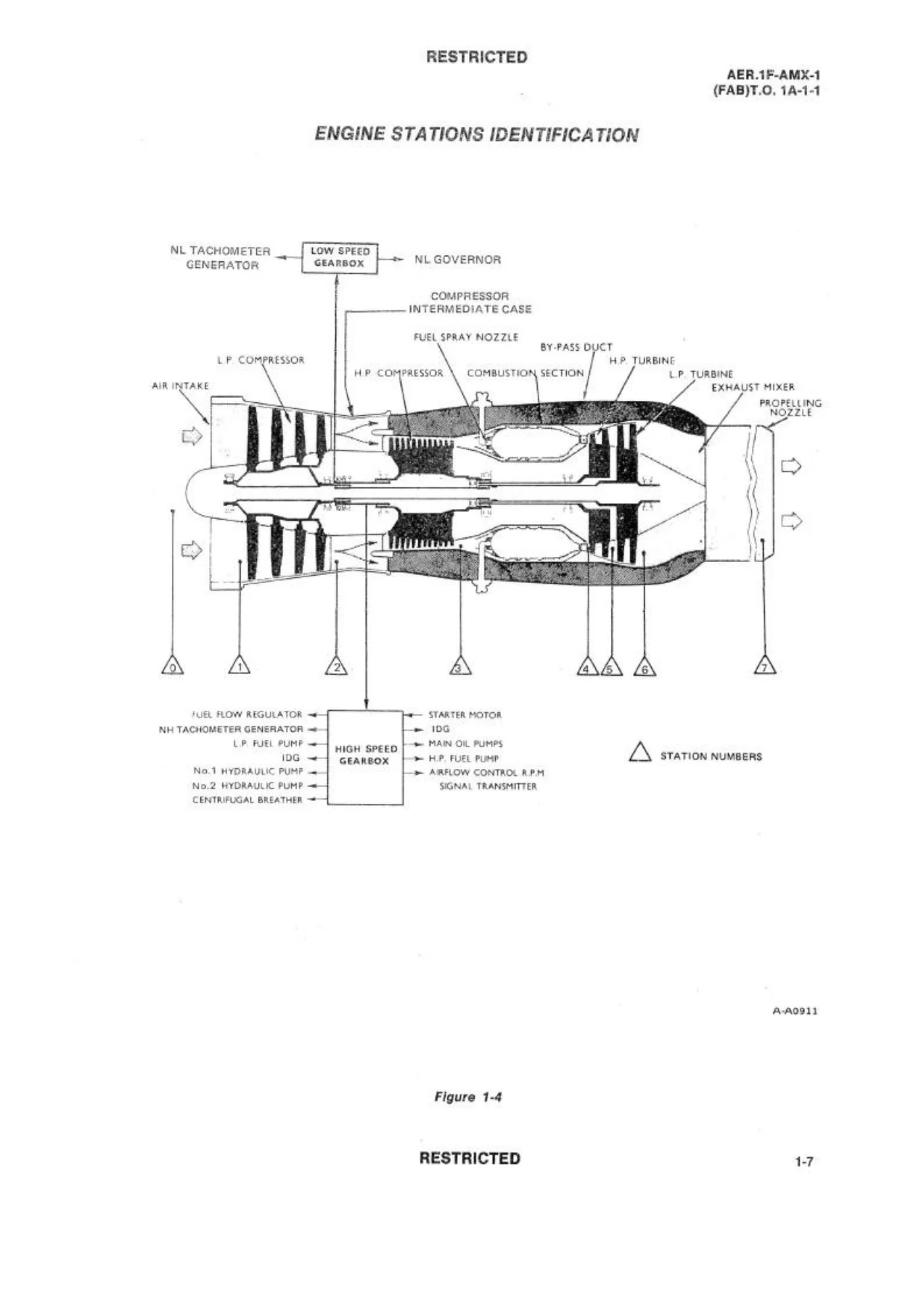
Inside, the AMX Series Aircraft Flight Manual works through the aircraft system by system, from the Rolls-Royce RB168-807 twin-spool turbofan and its fuel, oil, ignition, starting and airflow-control systems, through hydraulics, landing gear, primary and secondary flight controls, to the ejection seat, oxygen system, environmental control and warning system. This is the document a pilot or maintainer reaches for when the description, controls and indicators of a specific system are needed.
File Details
- Manual type: Flight Manual
- Document numbers: AER.1F-AMX-1 and (FAB)T.O.1A-1-1
- Aircraft: AMX Series Aircraft
- Manufacturers: Aeritalia, Aermacchi, Embraer
- Engine covered: Rolls-Royce RB168-807 twin-spool turbofan
- Configurations: Italian (AMI) and Brazilian (FAB), first batch
- Publication date: 1 August 1989
- Language: English
- Format: PDF
Chapters Covered
- Section I – Description and Operation
- The Aircraft
- Engine
- Engine and APU Fire Detection System
- Overheat Detection System
- Auxiliary Power Unit (APU)
- Fuel Supply System
- Electrical Power Supply System
- Hydraulic Power Supply System
- Landing Gear System
- Steering System
- Wheel Brakes System
- Arresting Hook System
- Primary Flight Control System
- Secondary Flight Control System
- Pitot Static System
- Instruments
- Canopy
- Ejection Seat
- Environmental Control System
- Anti-Ice System
- Communication Equipment
- Audio System
- V/UHF System
- Central Suppression Unit
- Warning System
- Lighting System
- Oxygen System
- Avionic System
- Air Data Computer (ADC)
- Horizontal Situation Indicator (HSI)
- Stand-by Attitude and Heading Reference (SAHR)
- Inertial Navigation System (INS)
- Radar Altimeter
- TACAN System (IX)
- DME System (BX)
- ADF System (BX)
- Marker Beacon System (BX)
- VOR/ILS System (BX)
- TV/IR and Map Display System
- Navigation System
- Section II – Normal Procedures
- Section III – Emergency Procedures
- Section IV – Crew Duties
- Section V – Operating Limitations
- Section VI – Flight Characteristics
- Section VII – Adverse Weather Operation
- Alphabetical Index
What the AMX Series Aircraft Flight Manual gives a technician is a complete structural and functional walk-through of the aircraft, paired with the controls and indicators that sit in the cockpit for each system. Every chapter identifies the system components, explains how they work together, lists the relevant switches, levers, lamps and gauges, and states the operating conditions and limits that apply. Because the coverage is arranged by aircraft system rather than by component part number, the manual can be used both for pre-flight study and for on-aircraft troubleshooting, letting the reader trace a warning lamp back through its sensor, control and actuator chain without leaving the book. The description and operation of the IFF system, inertial navigation system, head-up display system, weapon system, weapon aiming system and ranging radar system is held in the separate supplemental manual referenced on the cover page.
Aircraft, Engine and Configurations Covered
The AMX is a single-seat, subsonic, light tactical fighter whose primary missions are close air support and battle area interdiction. Power comes from one Rolls-Royce RB168-807 twin-spool turbofan with a four-stage low-pressure compressor and a twelve-stage high-pressure compressor, rated at 11,030 lb thrust (sea level, standard day, uninstalled). The airframe carries a 20 mm high-rate rotary-barrel gun or two 30 mm guns, and a variety of stores on four wing pylons plus an under-fuselage pylon, with Sidewinder missiles normally fitted at the wing tips. Overall dimensions are 13.55 m length, 9.97 m wing span, 5.18 m horizontal tail span and 4.55 m height to the top of the fin; operating mass is approximately 9,300 kg (20,500 lb) or 9,600 kg (21,150 lb) depending on configuration.
This manual is applicable to the first-batch AMX aircraft in the Italian (AMI) and Brazilian (FAB) configurations. The Italian aircraft are identified as IX001 to IX019 (MM 7089 to MM 7107) and the Brazilian aircraft as BX001 to BX008 (A-1 5500 to A-1 5507). Effectivity symbols are used throughout to separate material that applies to only one of the two configurations.
Systems and Equipment Documented
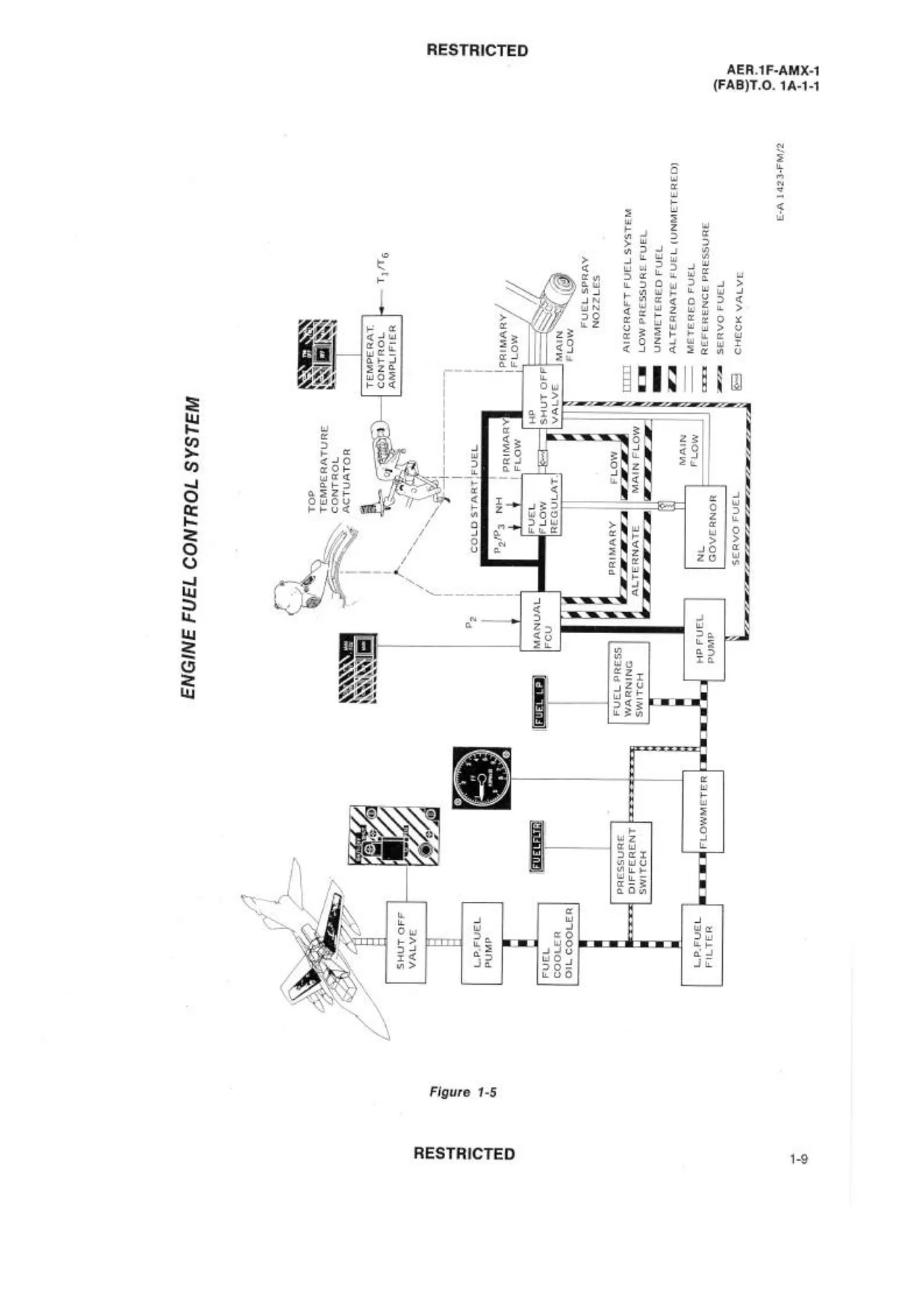
Fuel handling is covered in depth, from the fuselage tank group and wing tanks through external underwing tanks, the automatic and manual transfer sequences, single-point ground refuelling and defuelling, tank pressurisation and venting, and in-flight refuelling. The engine chapters explain the fuel flow regulator, high-pressure shut-off valve, manual fuel control unit, NL governor, turbine gas temperature control and the high-pressure compressor airflow control system with variable inlet guide vanes and the seventh-stage bleed-off valve. Hydraulic coverage describes the two independent 207 bar (3,000 psi) systems and the equipment each one drives, while the landing gear, steering and wheel brake chapters set out normal and emergency operation, the anti-skid system, the brake test circuit and the emergency brake accumulator.
Flight control coverage spans the electronic flight control system, the two flight control computers, pitch, roll and yaw control, the airbrake and lift-dumper functions of the spoilers, and the manual reversionary behaviour available after hydraulic or electrical failures. Avionics chapters describe the pitot static system, air data computer, horizontal situation indicator, stand-by attitude and heading reference, radar altimeter, TACAN, DME, ADF, marker beacon and VOR/ILS systems, together with the TV/IR and map display and the integrated navigation system. Life support and safety equipment are also covered, including the environmental control system, anti-ice system, oxygen system, canopy and canopy severance system, ejection seat with its strapping-in and ejection sequence, and the warning system with the central warning panel.
Why This Flight Manual Matters
For anyone studying, operating or maintaining an AMX, the value of the AMX Series Aircraft Flight Manual lies in having the manufacturer-level description and the cockpit control mapping in one place. System limits, unit capacities, operating ranges and failure behaviour are stated in the text rather than left to interpretation, which matters when a warning caption appears in flight or a system is being inspected on the ground. The chapter order follows the aircraft itself, so a reader can move from a warning lamp to its sensor, then to the controlling unit and the actuator, in a logical sequence. Because both the Italian and Brazilian configurations are addressed, the manual also makes the differences between the two first-batch variants visible rather than assumed.
Get the AMX Series Aircraft Flight Manual
IMAGES PREVIEW
This AMX Series Aircraft Flight Manual supports the practical work of understanding and operating the aircraft: identifying how each system functions, recognising what the cockpit controls and indicators mean, tracing faults through the fuel, hydraulic, flight control, electrical and avionic chains, and studying the emergency and life-support equipment in detail. Having the correct descriptions and stated limits to hand is what separates informed troubleshooting from guesswork, particularly on a type where the two hydraulic systems, the electronic flight control system and the fuel transfer logic all interact. The manual is delivered as an instant PDF download after purchase, with no shipping and no waiting, readable on any device and printable for the workshop, flight line or study desk.
Reviews
There are no reviews yet.