
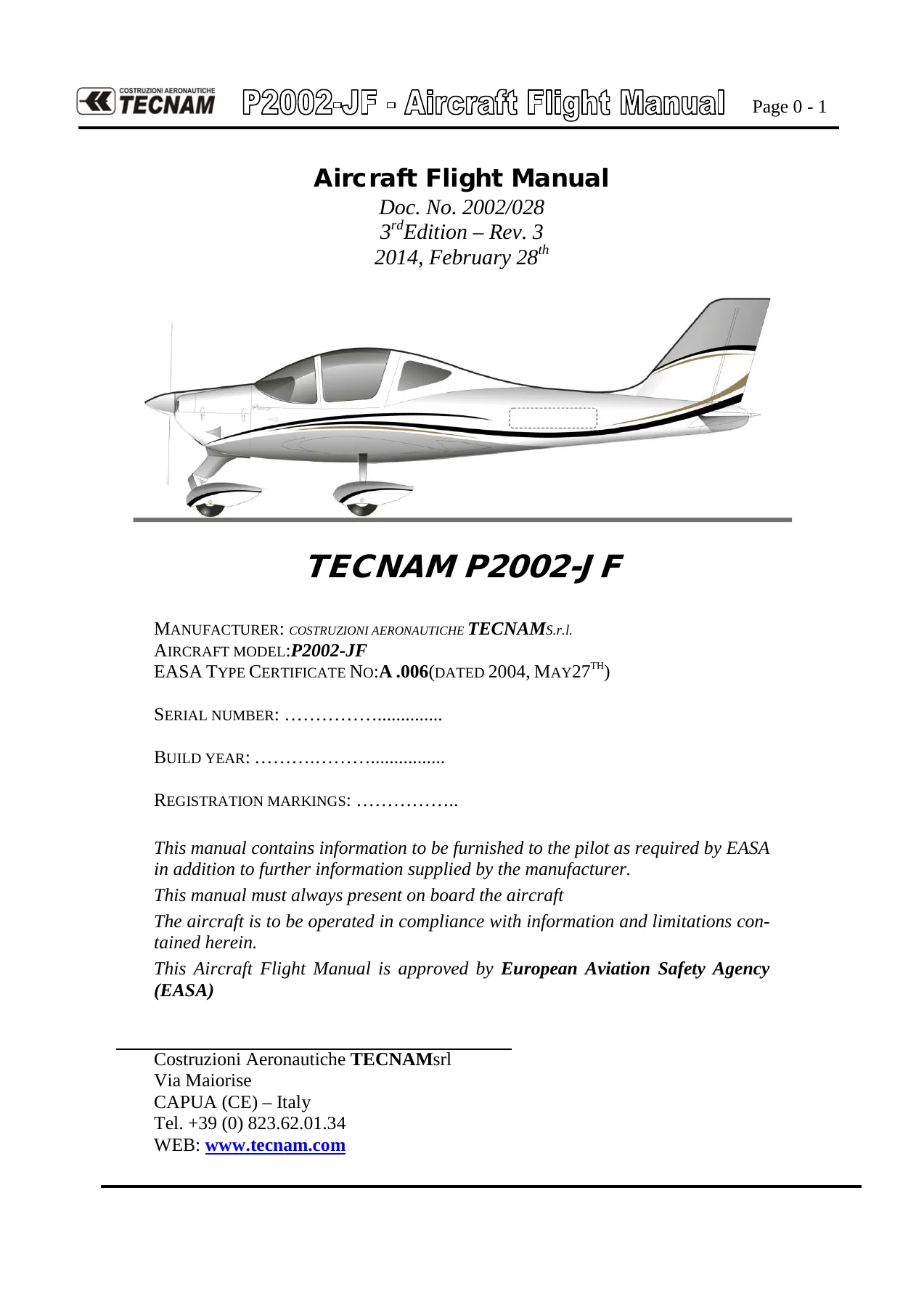
Tecnam P2002-JF Aircraft Flight Manual – EASA Approved AFM 3rd Edition Rev. 3
Original price was: $39.95.$24.95Current price is: $24.95.
Complete EASA-approved Aircraft Flight Manual for the Tecnam P2002-JF, covering limitations, emergency procedures, normal operations, performance data, weight and balance, systems, and all supplements including Garmin avionics and increased MTOW configurations.
Description
File Details
- Manual Type: Aircraft Flight Manual (AFM)
- Manufacturer: Costruzioni Aeronautiche Tecnam S.r.l.
- Aircraft Model: P2002-JF
- Document Number: 2002/028
- Edition: 3rd Edition – Rev. 3
- Date: February 28th, 2014
- EASA Type Certificate No: A.006 (dated 2004, May 27th)
- Certification Basis: CS-VLA dated 14 November 2003
- Language: English
- Page Count: 435 pages
- File Format: PDF
Chapters Covered
- Section 0 – Index, Record of Revisions, List of Effective Pages, Foreword, Sections List
- Section 1 – General: Introduction, Certification Basis, Warning-Caution-Note, Three-View and Dimensions, General Features, Control Surfaces Travel Limits, Engine, Propeller, Fuel, Lubrication, Cooling, Weights, Standard Weights, Specific Loadings, Acronyms and Terminology, Unit Conversion Chart, Litres/US Gallons Conversion Chart
- Section 2 – Limitations: Introduction, Speed Limitations, Airspeed Indicator Markings, Powerplant Limitations, Lubricant, Coolant Liquid, Propeller, Maximum Operating Altitude, Ambient Temperature, Powerplant Instruments Markings, Other Instruments Markings, Weights, Center of Gravity Range, Approved Maneuvers, Maneuvers Load Factor Limits, Flight Crew, Maximum Passenger Seating, Kinds of Operation Equipment List, Fuel, Demonstrated Cross Wind Safe Operations, Limitation Placards
- Section 3 – Emergency Procedures: Introduction, Airplane Alerts, Electric Power System Malfunction, Electrical Fuel Pump Failure, Trim System Failure, Airplane Evacuation, Engine Securing, Engine Failure During Take-Off Run, Engine Failure Immediately After Take-off, Engine Failures During Flight, In-Flight Engine Restart, Smoke and Fire, Landing Emergency, Recovery From Unintentional Spin, Other Emergencies
- Section 4 – Normal Procedures: Introduction, Airspeeds for Normal Operations, Pre-Flight Inspections, Cabin Inspection, Aircraft Walk-Around, Checklists, Before Engine Starting, Engine Starting, Before Taxiing, Taxiing, Prior To Take-Off, Take-off And Climb, Cruise, Before Landing, Balked Landing, After Landing, Engine Shut Down, Postflight Check
- Section 5 – Performances: Introduction, Use of Performances Charts, Airspeed Indicator System Calibration, ICAO Standard Atmosphere, Stall Speed, Crosswind, Take-off Performances, Take-off Rate of Climb, En-Route Rate of Climb, Cruise Performances, Landing Performances, Balked Landing Climb, Noise Data
- Section 6 – Weight and Balance: Introduction, Weighing Procedures, Preparation, Levelling, Weighing, Determination of C.G. Location, Weighing Report (I), Weighing Report (II), Weight and Balance Chart, Luggage, Equipment List
- Section 7 – Systems: Introduction, Airframe, Wing, Fuselage, Empennages, Flight Controls, Instrument Panel, Carburettor Heat, Cabin Heat, Throttle Friction Lock, Seats and Safety Harness, Canopy, Luggage Compartment, Powerplant, Engine, Propeller, Fuel System, Electrical System, Generator Light, Voltmeter and Ammeter, Oil and Cylinder Heads Temp, O.A.T. Indicator, Stall Warning System, Avionics, External Power Supply, Pitot and Static Pressure Systems, Brakes
- Section 8 – Ground Handling, Servicing and Maintenance: Introduction, Aircraft Inspection Intervals, Aircraft Changes or Repairs, Ground Handling, Towing, Parking and Tie-Down, Jacking, Leveling, Road Transport, Cleaning and Care, Engine Cowling Check, Upper Cowling, Lower Cowling
- Section 9 – Supplements: Garmin GNS 430 GPS/VHF COMM/NAV, Garmin GNS 530 GPS/VHF COMM/NAV, New Analogical Instrument Panel, Differential Brake System, Central Throttle Control System, AFM Supplement for CIS Countries Operators, Garmin G500 Avionics Display System, VFR Night Equipment, VFR Night Equipment – Analogical Version, AFMS for Malaysia Registered Aircraft, Increased MTOW (600 kg), Increased MTOW (620 kg), Variable Pitch Propeller, Rudder and Throttle Additional Controls, Garmin GTN 750 GPS/VHF COMM/NAV
What This Tecnam P2002-JF Aircraft Flight Manual Provides
The Tecnam P2002-JF Aircraft Flight Manual is the complete, EASA-approved operating document for this twin-seat, single-engine light aircraft. This 435-page PDF covers every aspect of operating, flying, and maintaining the P2002-JF, from pre-flight walk-around inspections through emergency procedures, performance planning, weight and balance calculations, and full system descriptions. It is the manual that must always be present on board the aircraft.
Whether you are a pilot, flight instructor, owner, or maintenance technician, this Tecnam P2002-JF flight manual gives you the exact limitations, procedures, and performance data you need. The document is structured into ten distinct sections plus fifteen supplements, each addressing a specific operational area. The supplements cover optional equipment installations including Garmin avionics, VFR night equipment, increased MTOW configurations, variable pitch propeller, and additional hand controls for disabled pilots.
Key Specifications Covered
The manual details the P2002-JF powered by the Bombardier-Rotax 912 S2 engine, a 4-cylinder horizontally-opposed twin with 1352 c.c. displacement, mixed cooling, twin carburetors, and integrated reduction gear. Maximum power is listed as 73.5 kW (98.5 hp) at 5800 rpm for up to 5 minutes, with continuous power of 69.0 kW (92.5 hp) at 5500 rpm.
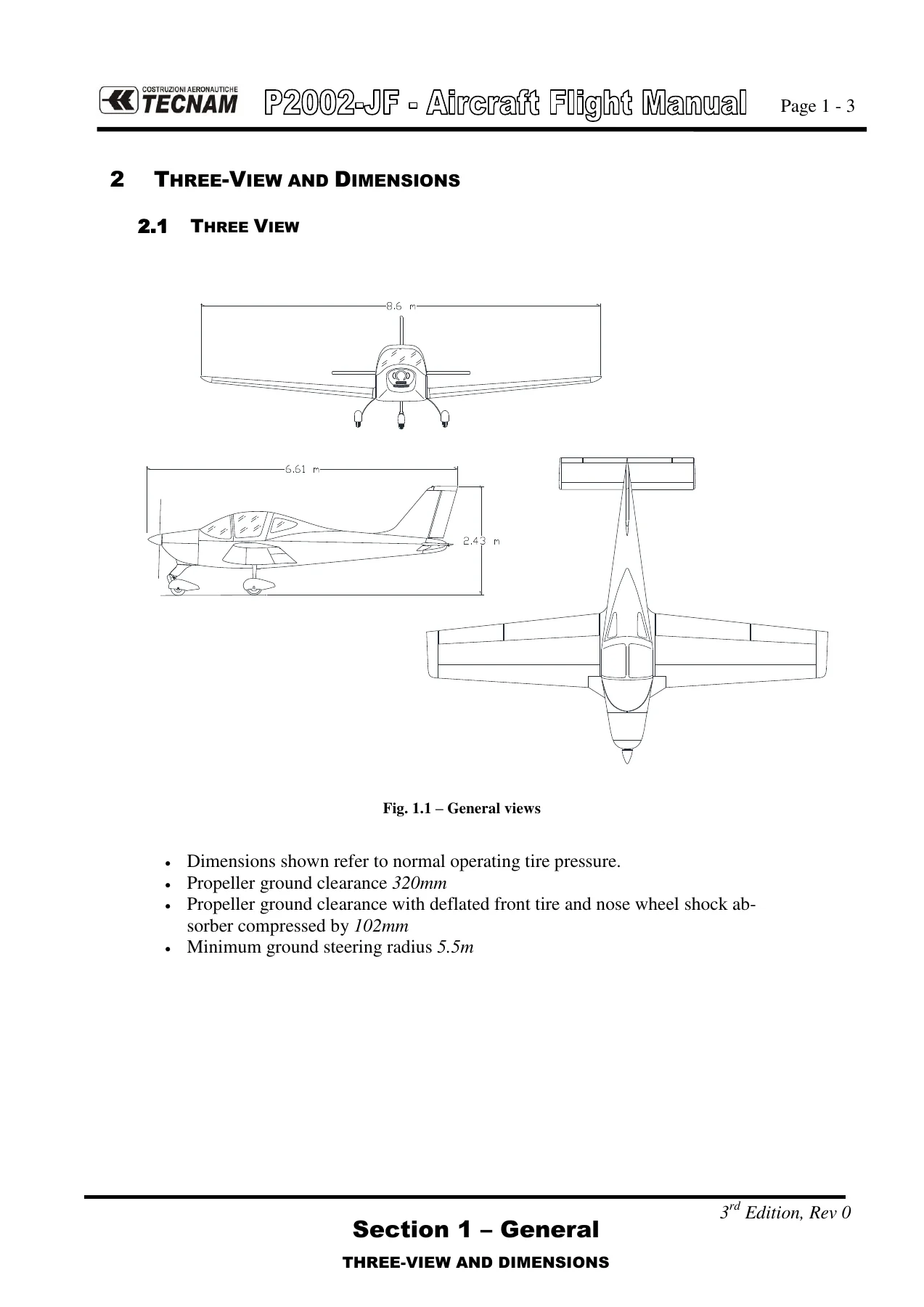
The aircraft features a Hoffmann HO17GHM A 174 177 C two-blade fixed-pitch wood propeller with a diameter of 1740 mm. The airframe measures 8.6 m wingspan, 6.61 m length, and 2.43 m overall height, with a wing surface of 11.5 m² and an aspect ratio of 6.4. Fuel capacity is 100 litres total across two wing tanks (99 litres usable, 1 litre unusable), with approved fuels including MOGAS ASTM D4814, MOGAS EN 228 Super/Super Plus (min RON 95), and AVGAS 100LL.
Maximum take-off weight is 580 kg as standard, with supplements available for 600 kg and 620 kg MTOW configurations. The center of gravity range spans 1.693 m to 1.782 m aft of datum. Speed limitations include VNE of 138 KIAS, VNO of 110 KIAS, and VA of 96 KIAS for the 580 kg configuration.
Emergency and Normal Procedures
The emergency procedures section provides both bold-face memory items and checklist-based procedures for engine failure during take-off run, immediately after take-off, and during flight. It covers low fuel pressure, oil pressure limit exceedance, high oil temperature, CHT limit exceedance, in-flight engine restart, engine fire on the ground and in-flight, cabin fire, forced landing with and without engine power, landing with flat tires, and recovery from unintentional spin.
Normal procedures include detailed pre-flight inspection checklists, engine starting, taxiing, prior-to-take-off checks, take-off and climb profiles, cruise settings, before-landing checks, balked landing, after-landing, and engine shut-down procedures. Each checklist specifies exact airspeeds, instrument readings, and control positions for the P2002-JF.
Performance Data
The performance section provides approved data for take-off distances, take-off rate of climb, en-route rate of climb, cruise performances, landing distances, and balked landing climb. Data is presented in tables and graphs covering pressure altitudes from sea level to 10,000 feet and temperatures from ISA-25°C to ISA+50°C. Corrections for headwind, tailwind, runway slope, and paved versus grass surfaces are included. The manual also provides stall speeds, crosswind data, and the ICAO standard atmosphere chart.
Weight and Balance
The weight and balance section explains the weighing procedure, including aircraft preparation, levelling, and C.G. location determination. Weighing report templates and a comprehensive equipment list with weights and datum arms allow precise loading calculations. The luggage compartment is limited to 20 kg maximum weight with specific size constraints.
Systems Description
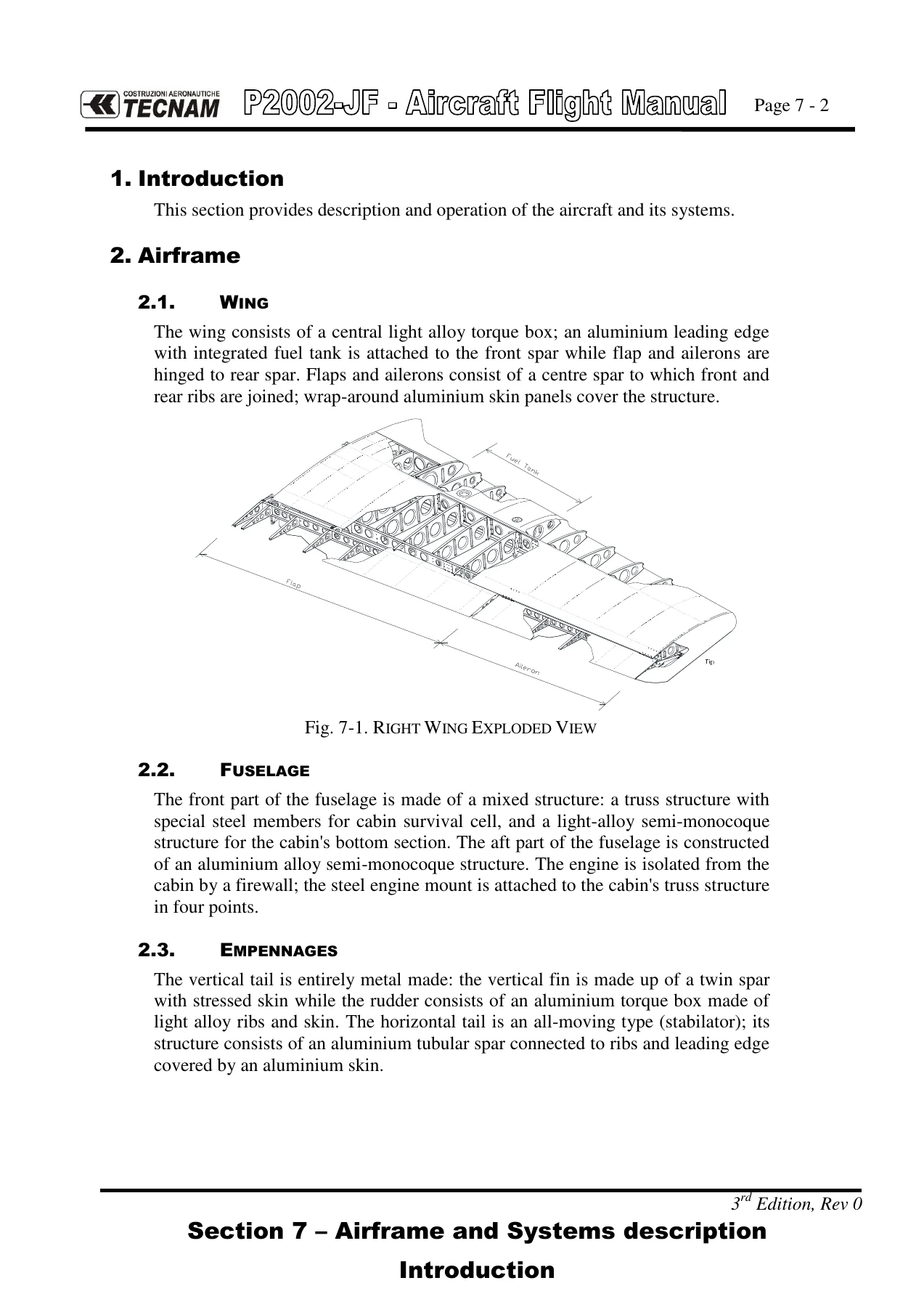
The systems section describes the airframe structure, flight controls, instrument panel layout, fuel system schematic, electrical system schematic, pitot and static pressure systems, and brake system. Detailed diagrams show the wing structure, fuel system layout, electrical bus bar arrangement, and brake system components. The manual covers the Rotax 912 S2 engine operation, propeller, and all aircraft systems.
Supplements
Fifteen supplements cover optional and variant equipment: Garmin GNS 430, Garmin GNS 530, new analogical instrument panel, differential brake system, central throttle control system, AFM supplement for CIS countries operators, Garmin G500 avionics display system, VFR night equipment (both digital and analogical versions), AFMS for Malaysia registered aircraft, increased MTOW (600 kg and 620 kg), variable pitch propeller, rudder and throttle additional controls, and Garmin GTN 750 GPS/VHF COMM/NAV. Each supplement provides the specific limitations, procedures, performance data, and system descriptions for that configuration.
Get the Complete Tecnam P2002-JF AFM
This Tecnam P2002-JF Aircraft Flight Manual gives you the full EASA-approved documentation for operating and maintaining the aircraft. From pre-flight checks to emergency procedures, performance planning to weight and balance, this manual contains the exact procedures and specifications required for safe operation. Maintenance technicians can reference the system descriptions, equipment lists, and inspection intervals, while pilots can study the limitations, normal procedures, and emergency checklists.
IMAGES PREVIEW
Having the correct flight manual matters because the P2002-JF must be operated in compliance with the information and limitations it contains. This manual is required to be on board the aircraft at all times. The PDF format delivers the complete document instantly after purchase, readable on any device, and printable for cockpit or hangar use. No shipping delays, no waiting for a physical copy — download the Tecnam P2002-JF Aircraft Flight Manual immediately and have the full reference at your fingertips.
Reviews
There are no reviews yet.