
Grumman American Light Aircraft Standard Repair Manual PDF Download
Original price was: $34.95.$20.95Current price is: $20.95.
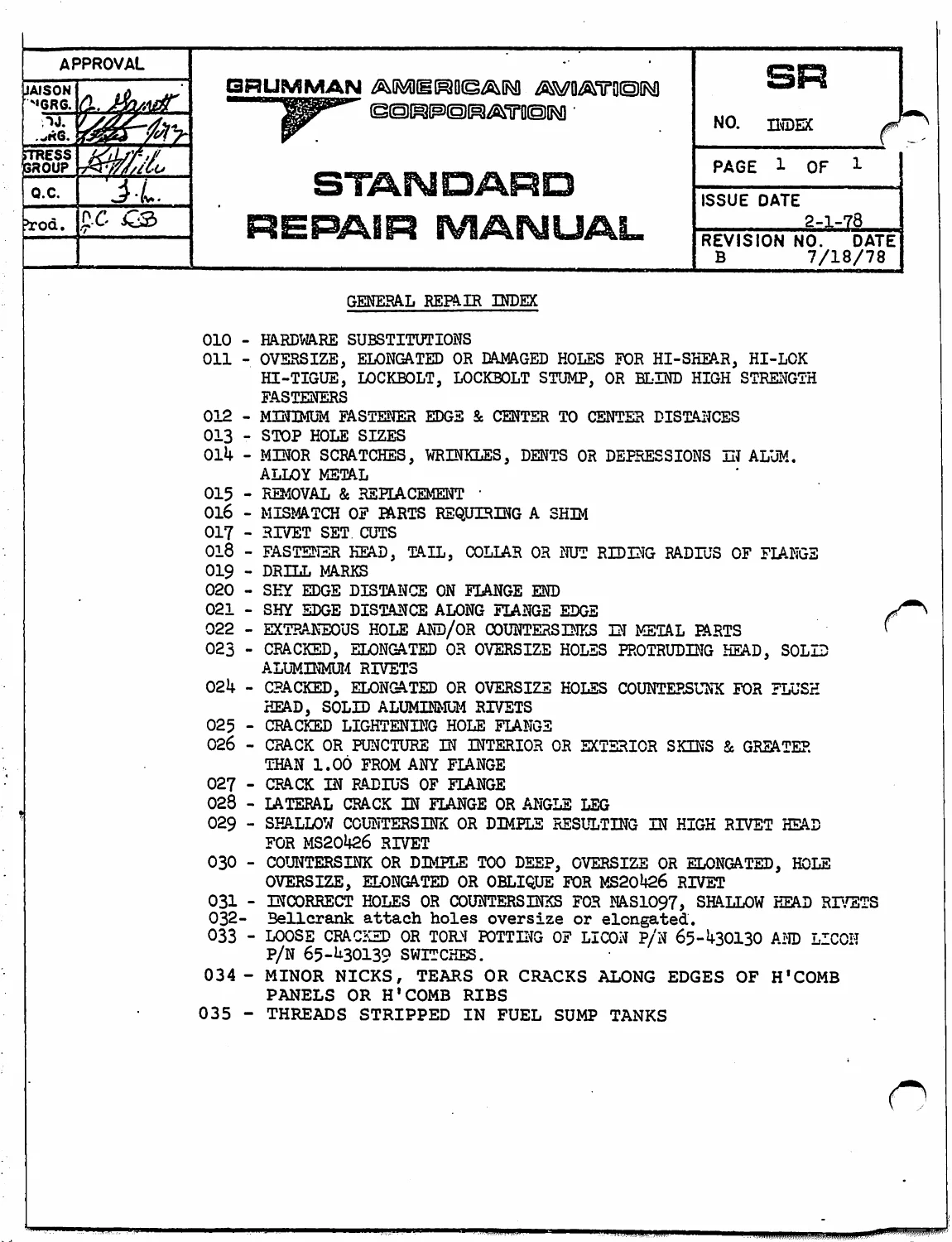
Grumman american light aircraft standard repair manual covering All Light A/C, AA-1, AA-1A. 188-page PDF with Introduction and general notes, General Repair Index — SR 010 through SR 035, Wing repair standards and indexed SR procedures, Empennage repair standards and indexed SR procedures and detailed service/reference material.
Description
Standard Repairs for Grumman American Light Aircraft
Grumman American Aviation’s Standard Repair Manual is a numbered structural-repair system for light aircraft, not a narrative maintenance handbook. Its General Repair Index starts at SR 010 and covers recurring discrepancies such as damaged fastener holes, rivet conditions, aluminum skin damage, honeycomb defects and bonded-structure repairs, with restrictions and limitations stated inside each applicable SR.
How the SR System Is Organised
The document identifies the following applicability or named equipment:
- All Light A/C
- AA-1
- AA-1A
- AA-1B
- AA-5
- AA-5A
- AA-5B
- GA-7
Structural Conditions Covered
The manual is organised around these top-level sections and repair groups:
- Introduction and general notes
- General Repair Index — SR 010 through SR 035
- Wing repair standards and indexed SR procedures
- Empennage repair standards and indexed SR procedures
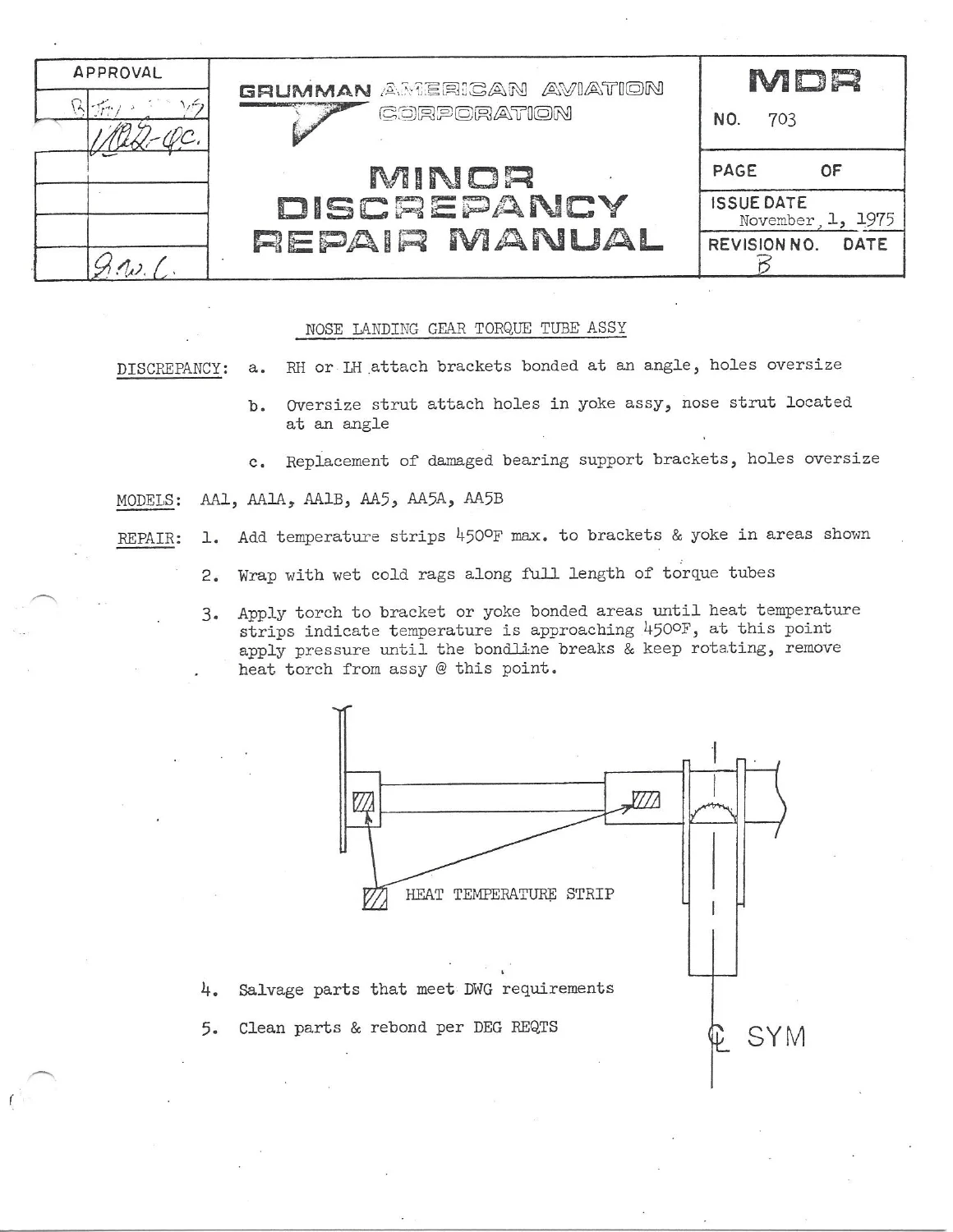
- Minor discrepancy repair procedures
Repair Methods, Materials and Restrictions
Across those sections, the work is centred on the following systems and service subjects:
- hardware and rivet substitutions
- oversize, elongated and damaged fastener holes
- minimum fastener edge and center-to-center distances
- stop-hole sizes
- minor scratches, wrinkles, dents and depressions in aluminum alloy
- removal and replacement
- shim requirements for mismatched parts
- rivet-set cuts and fastener-head defects
- drill marks and edge-distance conditions
- extraneous holes and countersinks
- cracked or elongated holes for solid aluminum rivets
- cracked lightening-hole flanges
- skin cracks and punctures
- flange cracks
- high-rivet-head conditions
- bellcrank attach-hole repairs
- switch potting repairs
- honeycomb panel and rib damage
- threads stripped in fuel sump tanks
- wing-skin and fuel-bay repairs
- stabilizer, trim-tab and empennage bond-line repairs
Practical tasks supported by the procedures include:
- identify a discrepancy by its SR number and apply the stated restrictions, limitations and repair sequence
- select authorized rivet substitutions from the hierarchy in SR 010
- repair specified fastener-hole conditions using the listed hole sizes, bushings, rivets and edge-distance rules
- stop-drill and reinforce defined cracks or tears where the applicable SR permits
- repair honeycomb face-sheet and core damage with specified plugs, adhesives and fasteners
- apply bond-line repair methods with thermosetting or room-temperature curing adhesive where called out
- use model-specific restrictions such as repairs that do not apply to GA-7 or AA-1 series
- follow wing and empennage structural-repair sketches, dimensions and fastener patterns
Representative Limits and References
Among the measurable values and reference points printed in the manual are:
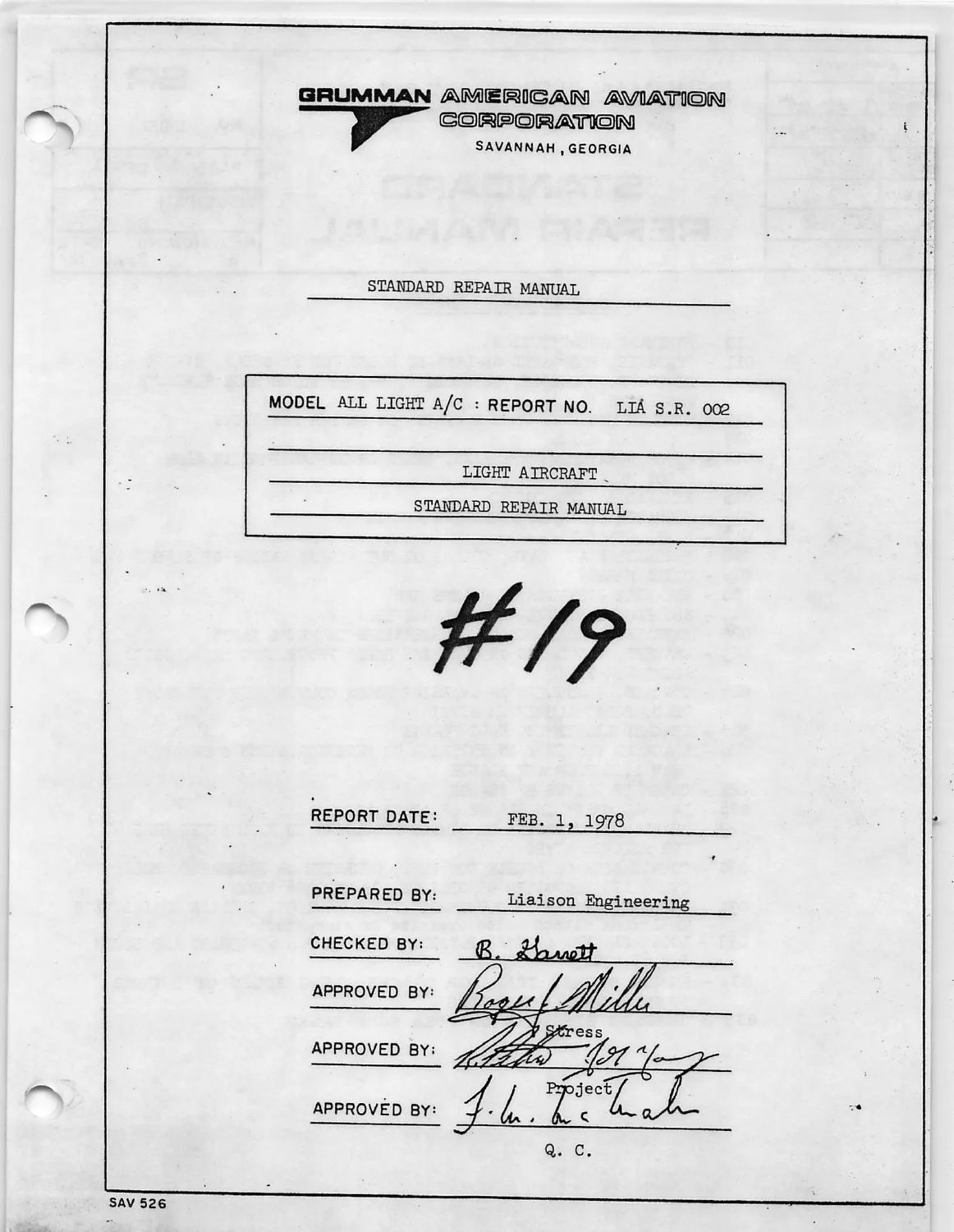
- Cover identifies model applicability as ALL LIGHT A/C
- Report No. LIA S.R. 002
- Report date Feb. 1, 1978
- SR 010 rivet-substitution table is arranged in ascending strength
- Fastener centerline-to-edge guidance includes two times nominal fastener-shank diameter for specified dimple-hole fasteners
- Adjacent-fastener spacing guidance includes three times nominal fastener-shank diameter for specified dimple-hole fasteners
- Example wing access-hole tear repair limits include 0.50 in maximum tear length
- Example stabilizer/trim-tab bond repair identifies 0.030 in maximum gap
- Example honeycomb face-sheet extraneous-hole repair limits maximum diameter to 0.25 in
- Nose landing gear torque-tube repair page names AA1, AA1A, AA1B, AA5, AA5A and AA5B
For buyers comparing this manual with a shorter overview, the depth comes from the way its named sections connect to real workshop subjects. Introduction and general notes is part of the documented coverage, alongside hardware and rivet substitutions. General Repair Index — SR 010 through SR 035 is part of the documented coverage, alongside oversize, elongated and damaged fastener holes. Wing repair standards and indexed SR procedures is part of the documented coverage, alongside minimum fastener edge and center-to-center distances. Empennage repair standards and indexed SR procedures is part of the documented coverage, alongside stop-hole sizes. Minor discrepancy repair procedures is part of the documented coverage, alongside minor scratches, wrinkles, dents and depressions in aluminum alloy. The coverage is therefore not limited to a single repair operation; it follows the document’s own section structure and keeps related inspection, adjustment and reference material in the same PDF.
The procedures also show the kinds of jobs for which the manual can be kept open beside the equipment. A technician can use the manual for identify a discrepancy by its SR number and apply the stated restrictions, limitations and repair sequence. A technician can use the manual for select authorized rivet substitutions from the hierarchy in SR 010. A technician can use the manual for repair specified fastener-hole conditions using the listed hole sizes, bushings, rivets and edge-distance rules. A technician can use the manual for stop-drill and reinforce defined cracks or tears where the applicable SR permits. A technician can use the manual for repair honeycomb face-sheet and core damage with specified plugs, adhesives and fasteners. A technician can use the manual for apply bond-line repair methods with thermosetting or room-temperature curing adhesive where called out. A technician can use the manual for use model-specific restrictions such as repairs that do not apply to GA-7 or AA-1 series. A technician can use the manual for follow wing and empennage structural-repair sketches, dimensions and fastener patterns. These are the actual work areas represented in the document, so the buyer can use the manual to move from component identification into the relevant removal, inspection, adjustment, test or installation material without substituting an unrelated model reference.
Reference values matter most when a repair reaches the checking stage. The reference data includes Cover identifies model applicability as ALL LIGHT A/C. The reference data includes Report No. LIA S.R. 002. The reference data includes Report date Feb. 1, 1978. The reference data includes SR 010 rivet-substitution table is arranged in ascending strength. The reference data includes Fastener centerline-to-edge guidance includes two times nominal fastener-shank diameter for specified dimple-hole fasteners. The reference data includes Adjacent-fastener spacing guidance includes three times nominal fastener-shank diameter for specified dimple-hole fasteners. The reference data includes Example wing access-hole tear repair limits include 0.50 in maximum tear length. The reference data includes Example stabilizer/trim-tab bond repair identifies 0.030 in maximum gap. The reference data includes Example honeycomb face-sheet extraneous-hole repair limits maximum diameter to 0.25 in. The reference data includes Nose landing gear torque-tube repair page names AA1, AA1A, AA1B, AA5, AA5A and AA5B. The figures belong to the same manual as the procedures above, which makes them useful for verifying the documented setup, limit, clearance, pressure, dimension, torque or operating condition where that type of value is supplied.
Manual Details
- Manual type: Structural Repair / Standard Repair
- Brand / model: Grumman American Aviation — Light Aircraft
- Language: English
- Page count: 188
- File format: PDF
- Document number: Report No. LIA S.R. 002
- Publication / issue: Report date: Feb. 1, 1978
Use the Applicable SR Before Committing to a Repair
Structural discrepancies such as damaged holes, skin tears, honeycomb defects and bond-line voids have limits and repair details that must be matched to the applicable SR. Keeping this manual beside the work gives you the numbered repair condition, restrictions, materials, fastener pattern and inspection references before metal or bonded structure is altered. Delivery is an instant PDF download immediately after payment, with no shipping or waiting; view it on phone, tablet, laptop or workshop PC and print the relevant SR pages for bench use.
Reviews
There are no reviews yet.