
Hino A09C Engine Workshop Manual – Structures, Features, Inspection and Repair (S5-MA09E02B)
Original price was: $44.95.$26.95Current price is: $26.95.
Hino Motors workshop manual S5-MA09E02B for the A09C in-line six-cylinder diesel used in FM cab-over-engine trucks. Covers engine structures and features plus complete inspection and maintenance procedures, overhaul, specifications and Hino-DX diagnostics.
Description
Published by Hino Motors, Ltd. under publication number S5-MA09E02B, this Hino A09C Engine Workshop Manual is the two-part engine reference for the A09C in-line six-cylinder diesel fitted to the FM cab-over-engine truck range. The first part explains how the engine and its US04-compliant emission hardware are built and why they were designed that way; the second part delivers the complete inspection and maintenance procedures, from dismounting the engine assembly through to valve clearance adjustment, injector replacement and full component overhaul.
File Details
- Manual type: Engine Structures, Features and Workshop (Inspection and Maintenance) Manual
- Manufacturer: Hino Motors, Ltd.
- Publication number: S5-MA09E02B
- Applicable engine: A09C
- Language: English
- Page count: 847 pages
- File format: PDF
Chapters Covered
- Structures and Features
- Model Code and List of Applicable Vehicle Models
- Objective of Development and Outline of Vehicle (Change)
- Laws and Regulations – Automobile Emission Regulations
- Failure Diagnosis with Computer (Hino-DX)
- Glossary and List of Abbreviations
- Engine – Engine Control, Fuel System, Exhaust System, Cooling System, Emission Control, Intake, Engine Mechanical, Lubrication System, Starting and Charging, Turbocharger, Air Compressor
- Inspection and Maintenance
- General Introduction
- Engine Introduction
- Engine Mechanical
- Air Intake System
- Exhaust System
- Lubricating System
- Cooling System
- Fuel System
- Turbocharger
- Emission Control
- Alternator
- Starter
- Air Compressor
- Engine P.T.O. (Power Take-Off)
- Engine Retarder
- Engine Control
- Fuel Control
The manual opens by placing the A09C in context: the FM model range it powers, the vehicle model code designation, the payload and drive-system characteristics, and the emission regulation framework the engine was developed to satisfy. The keyword behind that development work is stated plainly – more user-friendly, more powerful – and the Structures and Features chapters go on to explain the specific hardware that delivers it. A dedicated glossary of abbreviations (CAN, ECU, EGR, MPROP, VNT and many more) closes the introductory section, so the rest of the book can be read without guesswork.
How the A09C Engine Is Built
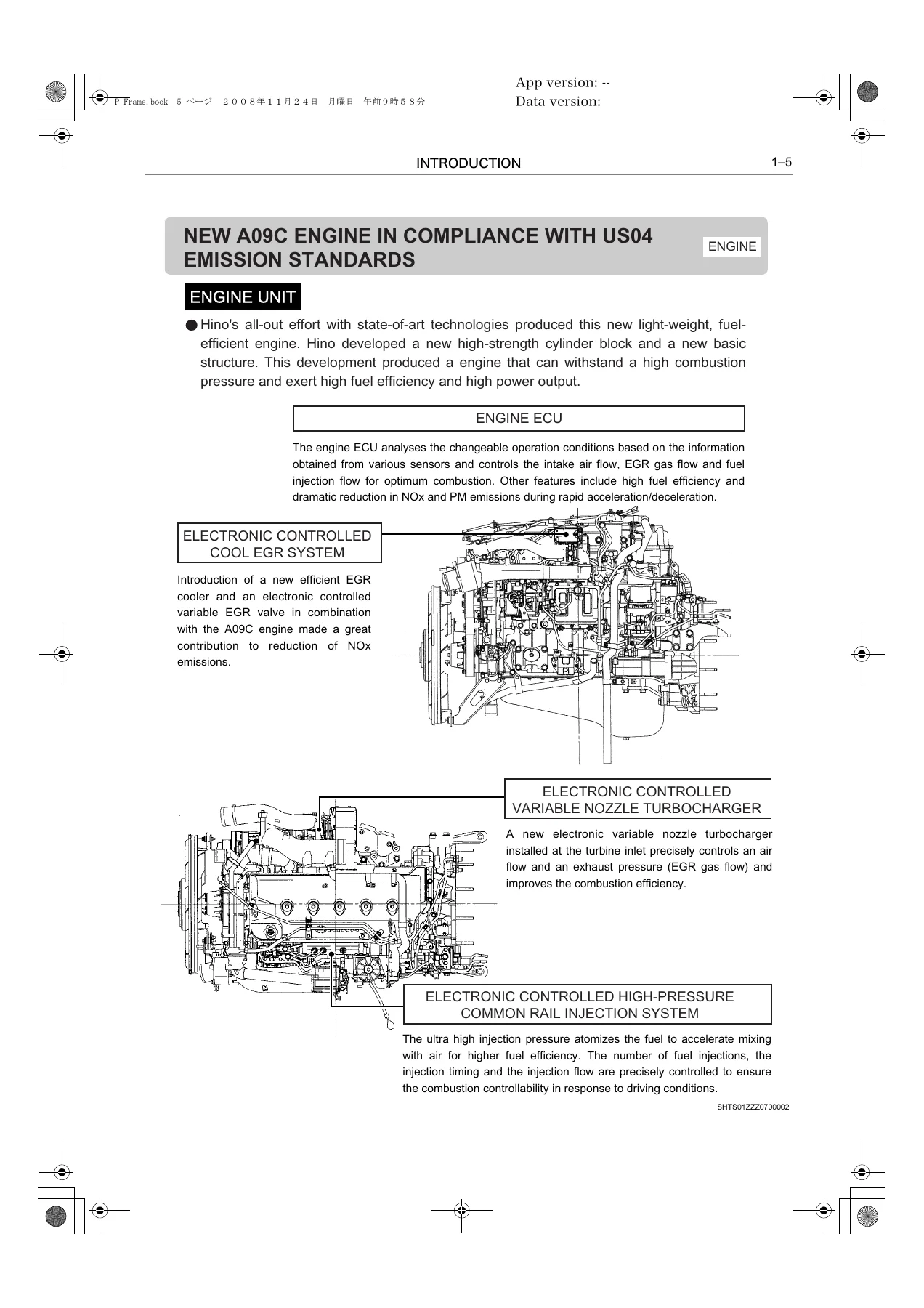
Because this A09C engine workshop manual is written for the technician rather than the sales floor, the Structures and Features chapters spend their space on architecture. The engine ECU chapter describes how the unit reads its sensor inputs and controls intake air flow, EGR gas flow and fuel injection flow for optimum combustion, and how it talks to the vehicle control ECU over CAN. The electronic controlled cool EGR system, the electronic controlled variable nozzle turbocharger and the electronic controlled high-pressure common rail injection system are each illustrated and explained as complete systems rather than as isolated parts.
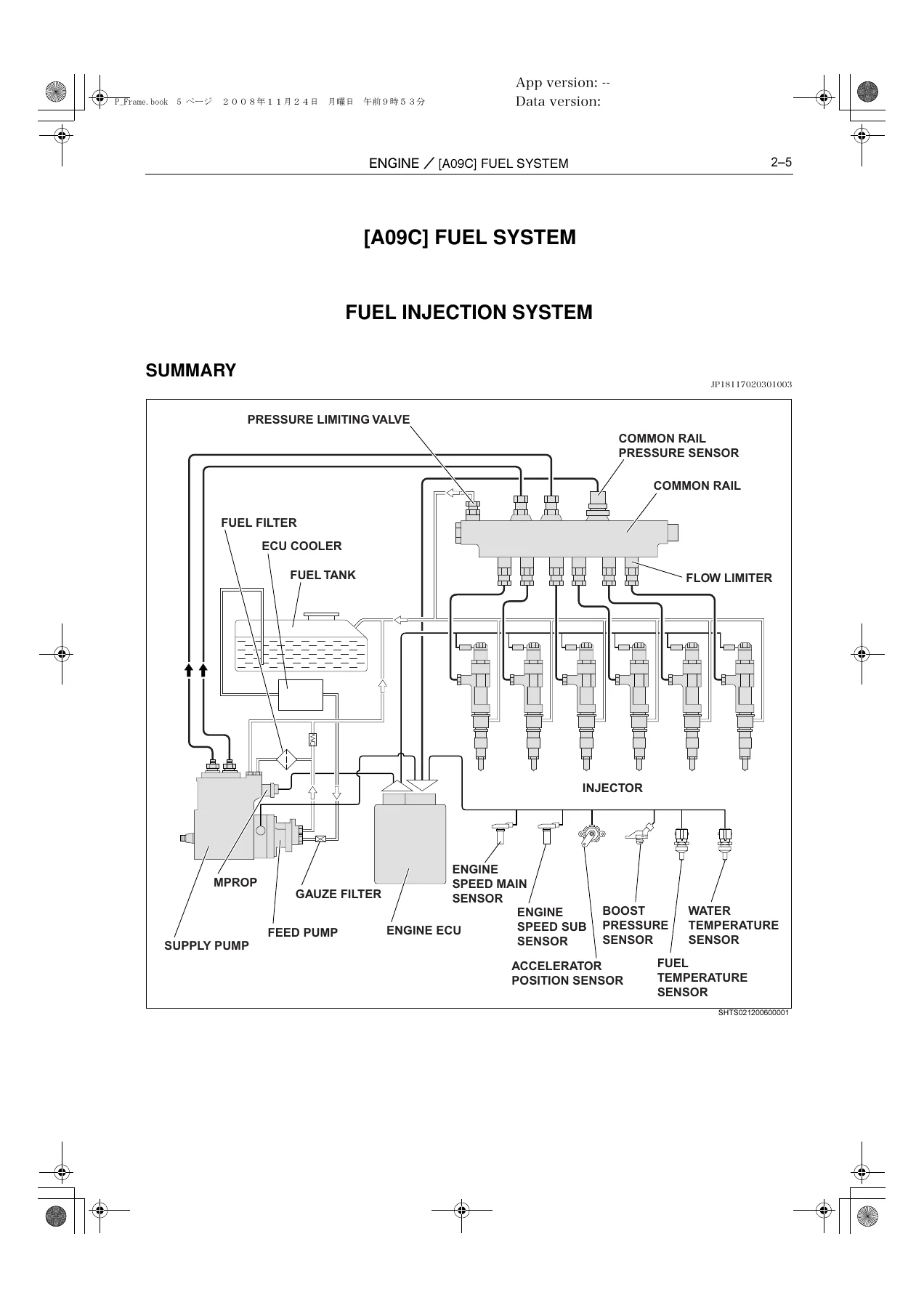
The Fuel System chapter works through the common rail injection system from the tank forward – supply pump assembly, MPROP metering valve and its duty-ratio control, overflow valve, feed pump, zero-delivery pipe, common rail with flow limiter and pressure limiting valve, and the injector itself with its control chamber, A-orifice and Z-orifice. Injection flow control, injection flow offset control, injection pressure control, injection timing control, injection rate control and fuel balance control are each described in turn, along with the sensors that feed them.
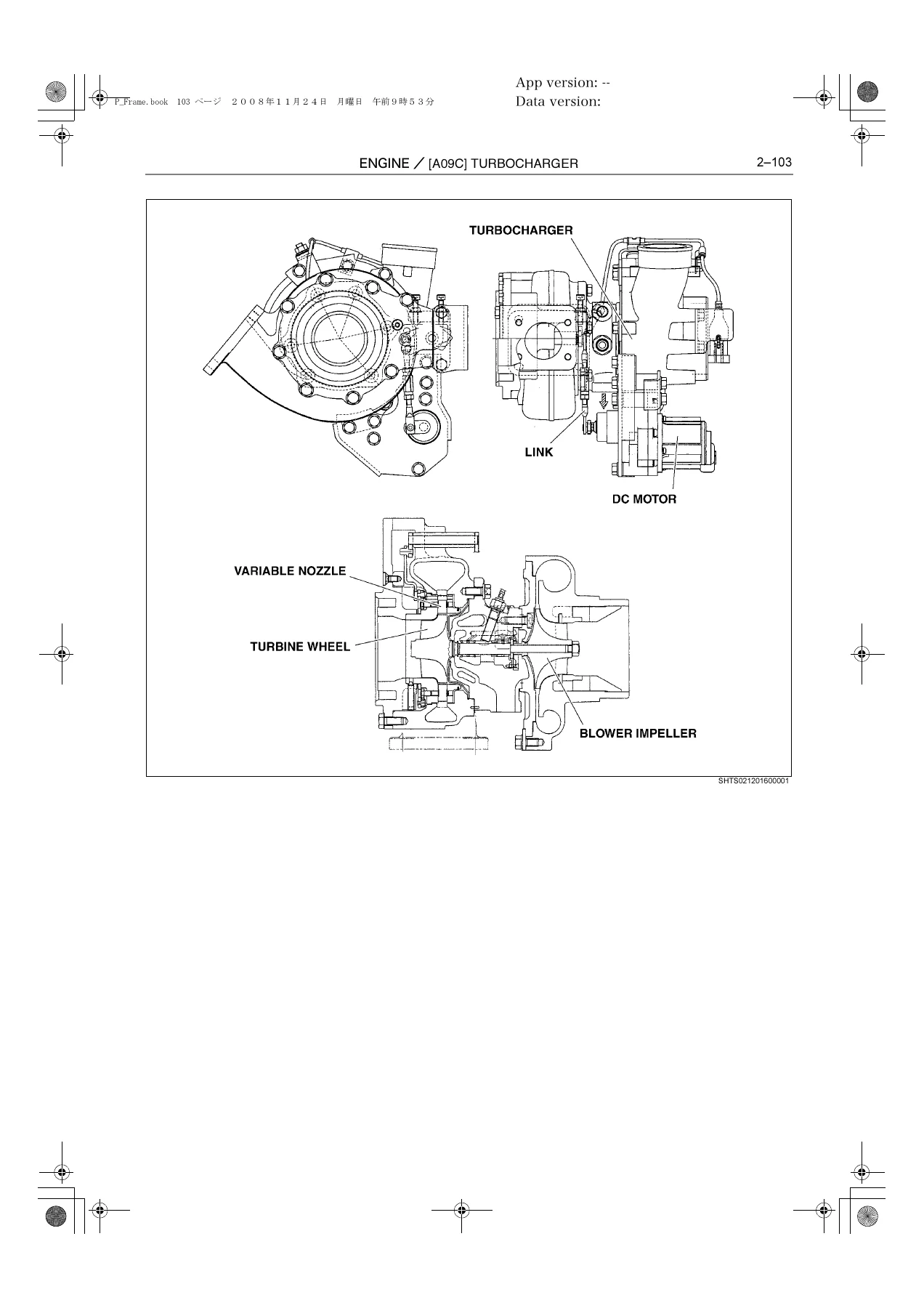
Around that core, the manual covers the intake system with its air cleaner, dust indicator, air flow sensor and intake pipe; the exhaust manifold and exhaust pipe layout; the cooling system with coolant pump, wax-type thermostat with bottom bypass, cooling fan and fan clutch, radiator unit, header tank and coolant level warning; the lubricating system with oil cooler, full-flow and bypass oil filters, oil pump and oil pressure switch; the starting and charging system; the variable nozzle turbocharger with its DC motor controller; and the water-cooled air compressor.
Inspection and Maintenance Procedures
The second half of this Hino A09C service manual is where the hands-on work lives. Each group follows the same disciplined pattern: component locator with an exploded view and a numbered part table, removal, installation, overhaul, and inspection and repair with standard values and service limits set out in tables. The General Introduction lays down the ground rules first – safety terms, unit conversions, tightening torque tables for general standard bolts and pre-coated bolts, the plastic-region angular torquing method used on connecting rod bolts, head bolts, main bearing cap bolts and camshaft gear mounting bolts, pipe flare nut and hose torque values, sealant application on tapered pipe threads, liquid gasket application, and how to work with the one-touch connector joints and sleeve nut joints on nylon tubing.
Engine Introduction provides the assembly data, a troubleshooting table organised by symptom and probable cause, compression pressure measurement and valve clearance adjustment. From there the manual proceeds through head cover and rocker arm assembly, camshaft assembly, cylinder head assembly, valve system, crankshaft damper and front oil seal, front timing gear cover and timing gear, flywheel assembly, crankshaft rear oil seal, flywheel housing, rear timing gear and cam idle gear, piston and connecting rod, crankshaft, cylinder liner, cylinder block, and engine mounting and bracket. Fuel system coverage extends to fuel pipe, fuel tank, fuel sender gauge, fuel filter and case, water level warning switch, supply pump, priming pump, injector, common rail, common rail pressure sensor, fuel temperature sensor and fuel strainer.
Torque values, clearances, service limits and measurement procedures are given numerically throughout – valve clearance, compression pressure, cylinder head bolt length, cam height and cam lift, rocker shaft and bushing clearance, piston and cylinder liner clearance, piston ring end gap, crank pin and crank journal diameters, crankshaft end play and deflection, timing gear backlash, and much more.
Diagnostics and Reprogramming
Diagnosis is treated as a first-class subject. The manual explains the Hino-DX (Hino Diagnostic eXplorer) with the Hino-Bowie interface box, the signal check harness and its contact boxes, computer ECU pin assignment, diagnosis monitor codes and diagnosis trouble codes, and the full troubleshooting sequences for each code. Reprogramming is covered in detail too – user customization, rewriting control software, updating engine data after engine replacement, and updating data when the engine ECU or vehicle control ECU is replaced, plus the engine ECU flash ROM and EEPROM memory layout and the injector flow offset data recorded per cylinder.
This is what makes the S5-MA09E02B volume genuinely useful rather than decorative: it tells you not only which component to replace, but which reading to expect, which limit is acceptable, and which code will appear if the fault lies elsewhere.
What This Manual Lets You Do
With this Hino A09C engine repair manual on the bench you can pull compression figures and decide whether an overhaul is due, set valve clearance correctly on both the intake and exhaust sides, remove and refit the cylinder head in the specified bolt order at the specified seating torque and angular sequence, replace cylinder liners and match them to the block’s liner identification mark, overhaul the rocker arm assembly and camshaft, service the common rail system from supply pump through to injector, diagnose faults through the engine ECU rather than by substitution, and reprogram a replacement ECU so the vehicle recognises it.
IMAGES PREVIEW
Working without the correct torque, clearance and adjustment values on a modern high-pressure common rail engine is expensive guesswork. The values in this book are the difference between a repair that holds and one that comes back. Delivered as an instant PDF download – no shipping, no waiting, printable for the workshop and readable on a laptop, tablet or phone at the vehicle.
Reviews
There are no reviews yet.