
Komatsu WA200-6 Wheel Loader Operation & Maintenance Manual – PEN00235-05 PDF
Original price was: $39.95.$24.95Current price is: $24.95.
Complete Operation & Maintenance Manual for the Komatsu WA200-6 Wheel Loader (Serial Numbers 70001 and up). Covers operation, maintenance, specifications, safety, troubleshooting, and service procedures. Form No. PEN00235-05. Instant PDF download.
Description
Komatsu WA200-6 Wheel Loader Operation & Maintenance Manual
This is the complete Operation & Maintenance Manual for the Komatsu WA200-6 wheel loader, covering machines with serial numbers 70001 and up. Published under Form No. PEN00235-05, this manual is the definitive guide for operating, maintaining, and servicing the WA200-6 in the field. Whether you are a machine owner, fleet manager, operator, or technician, this document gives you the procedures, specifications, and safety information needed to keep the machine running correctly and safely.
The manual is written for the Komatsu SAA4D107E-1 diesel engine and covers every major system on the WA200-6, from the HST drive and hydraulic circuits to the brake system, electrical components, and work equipment. It is the same type of documentation that would be kept near the machine for reference and periodic review.
File Details
- Manual Type: Operation & Maintenance Manual
- Brand: Komatsu
- Model: WA200-6 Wheel Loader
- Serial Numbers: 70001 and up
- Document Number: PEN00235-05
- Language: English
- Pages: 319
- File Format: PDF
- Publication Date: 10-09 (October 2009)
Chapters Covered
The manual is organized into clear sections that guide you from initial safety information through operation, maintenance, and troubleshooting. The actual contents include:
- Before Reading This Manual
- Safety Information
- Introduction
- Position of Service Meter
- Table to Enter Serial No. and Distributor
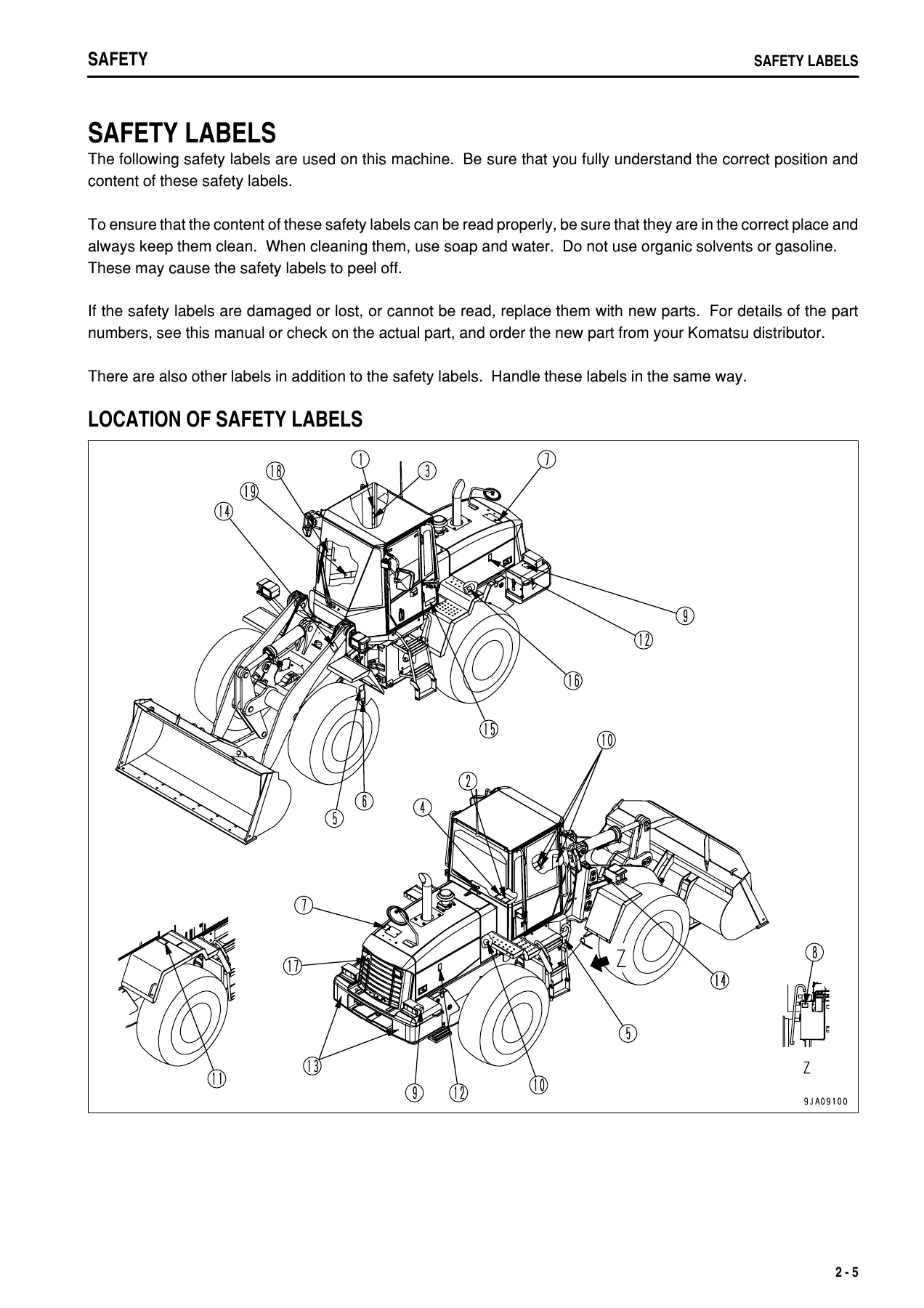
- Safety Labels (location and meaning of all machine safety decals)
- General Precautions Common to Operation and Maintenance
- Precautions for Operation
- Precautions for Maintenance
- Tires (handling, storage, and safety)
- Operation: General View of Machine and Controls
- Machine Monitor (warning types, action codes, failure codes, filter/oil replacement display, pilot lamps, gauges)
- Switches (starting switch, speed range selector, variable shift, quick coupler, cooling fan reverse, traction control, wiper, lamps, horn, E.C.S.S., and more)
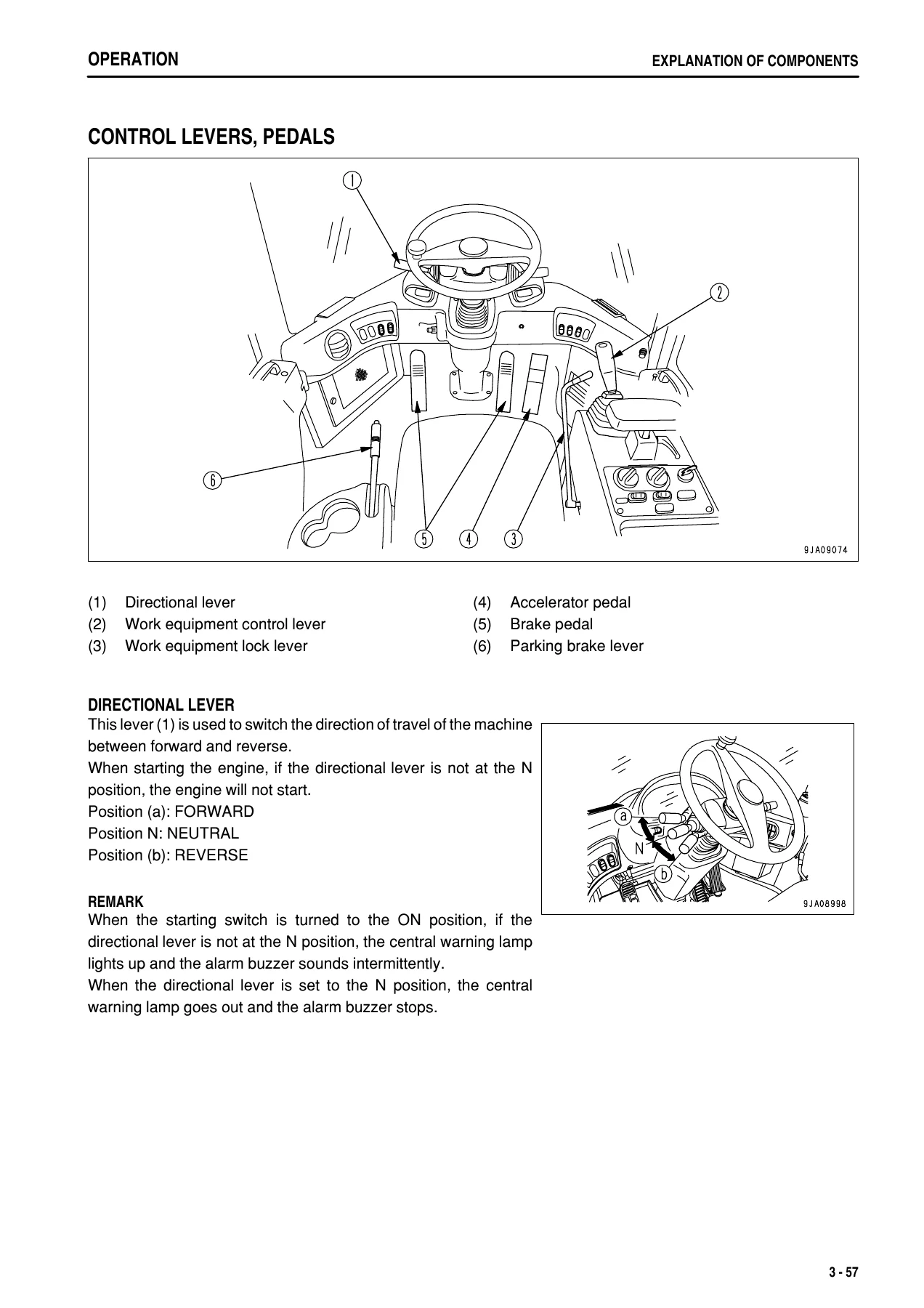
- Control Levers and Pedals (directional lever, work equipment control, lock lever, accelerator, brake, parking brake)
- Steering Tilt Lock Lever
- Caps and Covers with Lock
- Frame Lock Bar
- Grease Pump
- Opening, Closing Cab Doors and Windows
- Fuses and Slow Blow Fuse
- Power Outlet
- Storage Box
- Radio and Air Conditioner Controls
- Handling Cab Wiper
- Check Before Starting Engine, Adjust
- Walk-Around Check
- Check Machine Monitor
- Check Coolant Level, Add Coolant
- Check Oil Level in Engine Oil Pan, Add Oil
- Drain Water and Sediment from Fuel Tank
- Check Water Separator, Drain Water
- Check Air Cleaner
- Check Fuel Level, Add Fuel
- Check Electric Wiring
- Check Inflation Pressure of Tires
- Check Window Washer Spray, Wiper, Horn, Defroster, Locks, Emergency Exit
- Adjust Operator’s Seat and Seat Belt
- Adjust Rear View Mirrors
- Starting Engine (Normal and Cold Weather)
- Checks After Starting Engine
- Breaking-In the Machine
- Normal Operation and Warming-Up
- Stopping Engine
- Moving the Machine (Directional, Speed, Stopping)
- Turning and Steering (including Emergency Steering)
- Operation of Work Equipment (Lift Arm, Bucket, Boom Kickout, Bucket Positioner)
- Work Possible Using Wheel Loader (Digging, Loading, Leveling, Load and Carry, Cross Drive Loading, V-Shape Loading)
- Precautions for Operation (Water Depth, Brake Failure, Slopes, Engine Stops)
- Parking Machine
- Checks After Completion of Operation
- Locking
- Handling the Tires
- Tire Pressure
- Transportation (Loading, Unloading, Lifting)
- Cold Weather Operation
- Long-Term Storage
- Troubleshooting (Electrical System, Chassis, HST, Axle, Brake, Steering, Hydraulic System, Engine)
- Maintenance: Guides to Maintenance
- Outlines of Service
- Wear Parts List
- Recommended Fuel, Coolant, and Lubricant
- Standard Tightening Torques for Bolts and Nuts
- Periodic Replacement of Safety Critical Parts
- Maintenance Schedule Chart
- Service Procedures (Air Cleaner, Cooling System, Transfer Case, Axle, Air Conditioner, Radiator, Cutting Edge, Bucket Teeth, Fuses, Accumulator, Tires, Fuel Filters, HST Filters, Hydraulic Tank, Brake System, and more)
- Specifications
- Attachments and Options (Bucket and Tire Selection, Hydraulic Quick Coupler, 2-Lever Operation, KOMTRAX)
- Index
This manual gives you the full operational and maintenance picture for the WA200-6. It is not just a list of procedures — it explains the machine monitor warning system, how to interpret action codes and failure codes, how to perform everything from daily checks to 8000-hour service, and how to troubleshoot common problems across the engine, HST, axles, brakes, steering, and hydraulic system. The specifications section provides machine dimensions, weight, bucket capacity, travel speeds, engine output, and permissible towing load, while the maintenance schedule chart lays out every service interval from initial 10 hours through every 8000 hours.
Key Systems and Components Covered
The WA200-6 is a wheel loader built around the Komatsu SAA4D107E-1 diesel engine, producing 94 kW (128 HP) at 2000 rpm. The manual covers the HST (Hydrostatic Transmission) system, including the HST oil filter, HST drain filter, and HST oil temperature monitoring. It covers the transfer case, front and rear axles, service brakes, parking brake, steering system (including emergency steering), and the complete hydraulic system for the lift arm and bucket.
The electrical system coverage includes the machine monitor, all caution lamps and pilot lamps, the starting system, battery charging circuit, alternator, starting motor, preheating system, and the various switches that control traction, fan rotation, and work equipment. The manual also covers the air conditioner system, radio, and the KOMTRAX machine management system (for machines so equipped).
Safety content is extensive, covering safety labels and their locations, precautions for operation and maintenance, handling of high-temperature coolant and oil, high-pressure fuel and hydraulic oil, battery safety, accumulator handling, and tire safety. The manual also includes the location of the service meter, the table for entering serial numbers and distributor details, and a full index.
Maintenance and Service Coverage
The maintenance section of this Komatsu WA200-6 manual is built around a detailed schedule chart that runs from the initial 10-hour service through every 50, 100, 250, 500, 1000, 2000, 4000, and 8000-hour intervals. Each interval lists the specific procedures required, and the service procedure section gives step-by-step instructions for carrying them out.
Covered maintenance procedures include:
- Cleaning and replacing the air cleaner element (outer and inner)
- Checking and cleaning the additional water separator (poor fuel arrangement specification)
- Cleaning the cooling system and changing coolant
- Checking oil level in the transfer case and adding oil
- Checking axle oil level and adding oil
- Cleaning axle case breathers
- Cleaning the air conditioner condenser
- Checking window washer fluid level
- Cleaning radiator fins and cooler fins (including fan reverse rotation methods)
- Turning or replacing bolt-on cutting edges
- Replacing bucket teeth (one-piece and tip tooth types)
- Checking the air conditioner refrigerant level
- Replacing the slow blow fuse
- Checking accumulator function (travel damper, brake damper, PPC accumulator)
- Selecting and inspecting tires
- Cleaning and replacing the fuel breather filter
- Lubricating all grease points (bucket pins, link pins, cylinder pins, steering cylinder pins, drive shafts, center hinge pin)
- Changing engine oil and replacing the engine oil filter cartridge
- Replacing fuel pre-filter and fuel main filter cartridges (standard and poor fuel arrangement specifications)
- Changing transfer case oil and cleaning the breather
- Replacing HST oil filter element and HST drain filter
- Changing hydraulic tank oil and replacing the hydraulic filter element
- Replacing the hydraulic tank breather element
- Changing axle oil
- Cleaning the brake circuit strainer
- Checking brake disc wear
- Checking the alternator and starting motor
- Checking engine valve clearance
- Checking the vibration damper
- Checking and replacing high-pressure piping clamps and fuel spray prevention caps
- Checking battery electrolyte level
- Checking parking brake
- Checking air conditioner compressor belt tension
- Checking wheel hub bolts
- Cleaning air conditioner recirculation and fresh air filters
The manual also includes the periodic replacement schedule for safety critical parts, covering fuel hoses, steering hoses, brake hoses, O-rings and oil seals, accumulators, alarms, engine high-pressure piping clamps, fuel spray prevention caps, and seat belts. These parts have specified replacement intervals based on years or operating hours, whichever comes first.
Specifications and Technical Data
The specifications section gives the machine’s working dimensions and capacities: overall length of 6,895 mm, overall height of 3,110 mm, overall width of 2,375 mm, minimum ground clearance of 425 mm, bucket width of 2,550 mm, dumping clearance of 2,760 mm, dumping reach of 1,000 mm, and bucket dump angle of 45 degrees. The machine weight is 9,555 kg (21,069 lb), with a normal load of 3,200 kg (7,056 lb) and a heaped bucket capacity of 2.0 m³ (2.6 cu. yd).
Travel speeds are listed for all four forward and reverse ranges: 1st range 4.0–13.0 km/h (2.5–8.1 MPH), 2nd range 13.0 km/h (8.1 MPH), 3rd range 20.0 km/h (12.4 MPH), and 4th range 34.5 km/h (21.4 MPH). The permissible towing load is 7,250 kg (71,100 N), and the minimum turning radius is 5,850 mm out of chassis or 5,100 mm at the center of the outside tire.
Fluid capacities are also specified: engine oil pan 17 liters (4.49 US gal) specified / 15.5 liters (4.09 US gal) refill, transfer case 7.0 liters (1.85 US gal) specified / 5.0 liters (1.32 US gal) refill, hydraulic system 120 liters (31.70 US gal) specified / 58 liters (15.32 US gal) refill, axle (front and rear each) 18 liters (4.76 US gal), cooling system 17 liters (4.49 US gal), and fuel tank 177 liters (46.76 US gal).
The standard tightening torque table covers metric bolts from M6 through M39, with target values, service limits, and permissible ranges in Nm, kgm, and lbft. A separate table covers hydraulic hose tightening torques for UNF and UNS thread sizes.
Safety and Operating Procedures
The safety section is comprehensive and covers the precautions that must be followed before starting operation, during operation, and during maintenance. It includes detailed procedures for getting on and off the machine safely, using handrails and steps, maintaining three-point contact, and never jumping on or off the machine.
Operational safety coverage includes precautions for traveling forward and reverse, traveling on slopes, using the brakes correctly, working on loose ground, avoiding high-voltage cables, ensuring good visibility, and handling the machine in cold weather. The manual also covers prohibited operations such as excavating under overhangs, using the bucket for crane operations, and passing the bucket over workers or truck cabs.
Maintenance safety includes displaying warning tags during inspection and maintenance, keeping the workplace clean, selecting a suitable place for maintenance, stopping the engine before carrying out inspection and maintenance, using two workers when maintenance must be done with the engine running, and following proper procedures for working under the machine or work equipment.
Who This Manual Is For
This Komatsu WA200-6 Operation & Maintenance Manual is essential for anyone responsible for the safe operation, daily care, and scheduled maintenance of this wheel loader. It is written for machine operators, maintenance technicians, fleet managers, and owners who need to understand the machine’s systems, perform required service at the correct intervals, and troubleshoot problems when they arise.
The manual assumes the reader will follow the safety precautions and procedures as written. It does not replace formal training, but it provides the technical information and step-by-step procedures needed to carry out operation and maintenance tasks correctly.
Get Instant Access
IMAGES PREVIEW
This Komatsu WA200-6 Wheel Loader Operation & Maintenance Manual (PEN00235-05) is delivered as an instant PDF download after purchase. There is no shipping, no waiting for a physical book, and no risk of a damaged or lost copy. You can access it on any device — computer, tablet, or smartphone — and print the pages you need for the workshop or the machine cab.
With this manual, you can perform everything from daily checks and 50-hour lubrication to 8000-hour service procedures, interpret machine monitor warnings and failure codes, look up specifications and tightening torques, and follow the correct safety procedures for operating and maintaining the WA200-6. It is the complete reference for keeping this wheel loader working reliably and safely.
Reviews
There are no reviews yet.