
M1117 Armored Security Vehicle (ASV) Operator’s Manual TM 9-2320-381-10 – PDF Download
Original price was: $39.95.$22.95Current price is: $22.95.
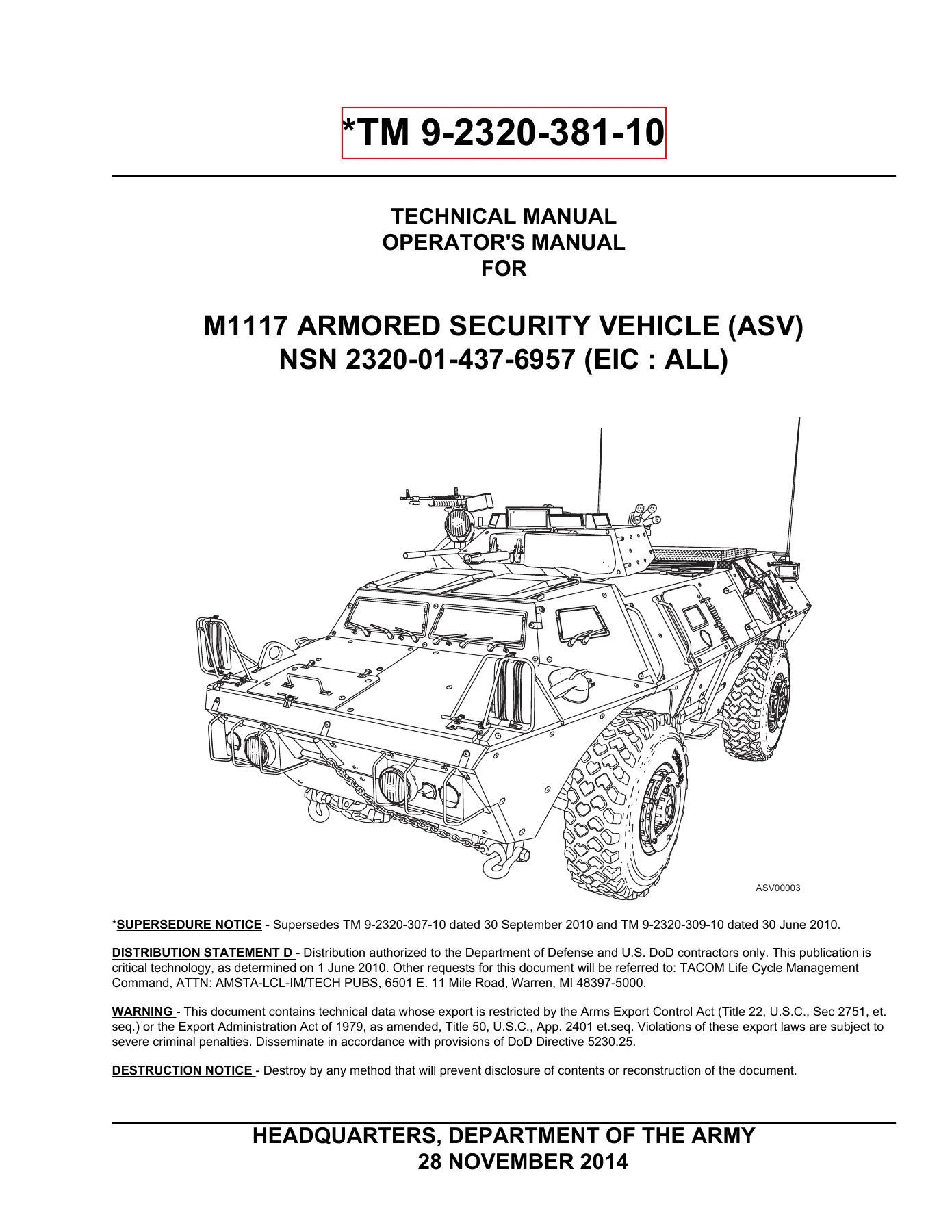
Complete operator’s manual for the M1117 Armored Security Vehicle (ASV) — TM 9-2320-381-10, dated 28 November 2014. Covers driver controls, turret and weapon operation, PMCS, troubleshooting, winching, fording, NBC, arctic starting, and full vehicle specifications.
Description
M1117 Armored Security Vehicle (ASV) Operator’s Manual — TM 9-2320-381-10
This is the full operator’s technical manual for the M1117 Armored Security Vehicle (ASV), published as TM 9-2320-381-10 and dated 28 November 2014. It supersedes TM 9-2320-307-10 (30 September 2010) and TM 9-2320-309-10 (30 June 2010). The manual is written for the crew and operator level and walks through everything from daily preventive maintenance checks to live weapon employment from the turret. If you operate, crew, or maintain an M1117 ASV, this is the reference that tells you what each switch does, what each warning light means, and what to do when something goes wrong in the field.
File Details
- Manual type: Operator’s Technical Manual (TM)
- Publication number: TM 9-2320-381-10
- Equipment covered: M1117 Armored Security Vehicle (ASV)
- NSN: 2320-01-437-6957 (EIC: ALL)
- Manufacturer: Textron Marine & Land Systems, U.S.A.
- Date of issue: 28 November 2014 (original)
- Supersedes: TM 9-2320-307-10 (30 Sept 2010) and TM 9-2320-309-10 (30 June 2010)
- Language: English
- Structure: 178 work packages across 6 chapters
- File format: PDF
Chapters Covered
- How to Use This Manual
- Chapter 1 — General Information, Equipment Description, and Theory of Operation
- General Information and List of Abbreviations/Acronyms
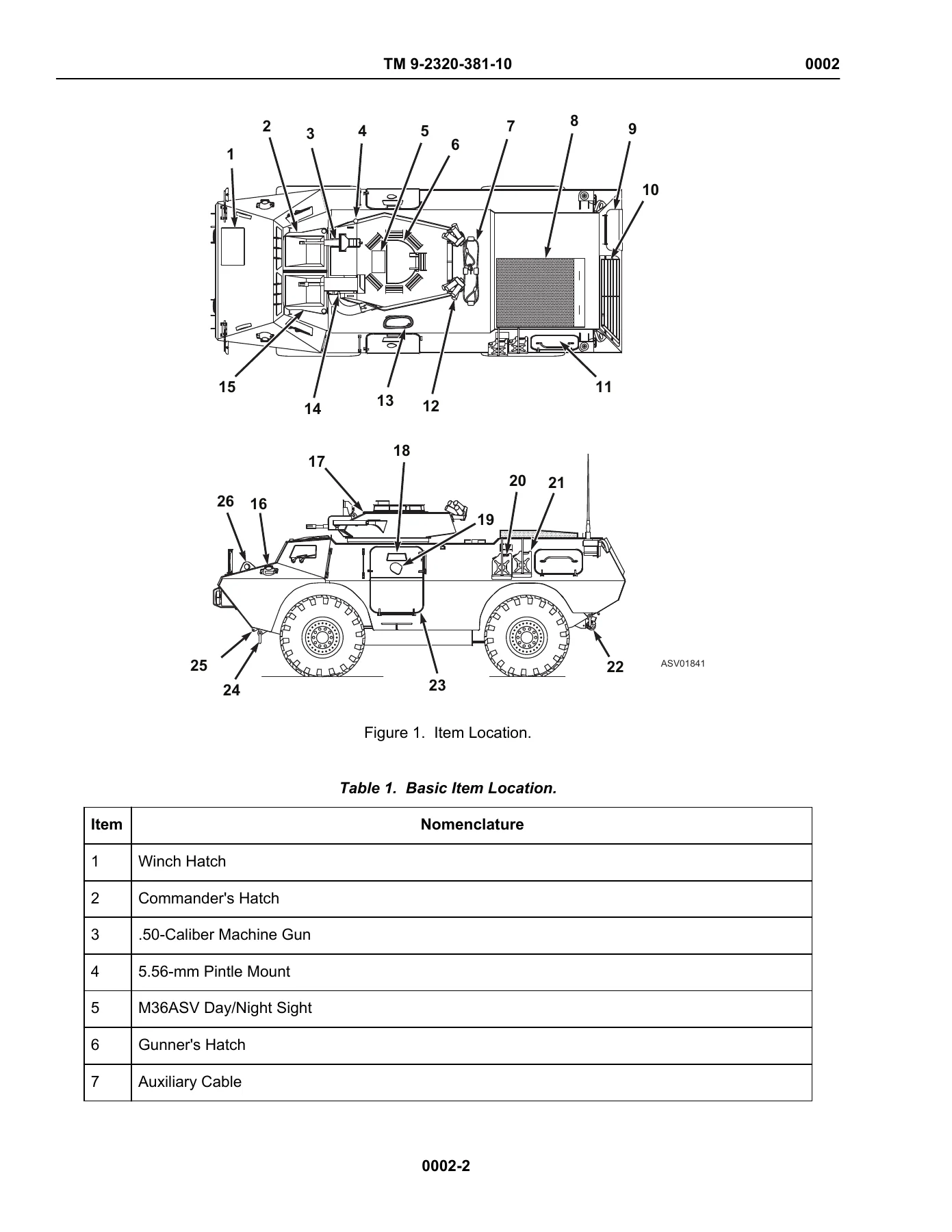
- Equipment Description and Data (item location, turret components, vehicle and turret dimensions)
- Theory of Operation (hull, power train, brakes, air system, fuel, cooling, electrical, winch, AFES, NBC, turret systems)
- Chapter 2 — Operator Instructions
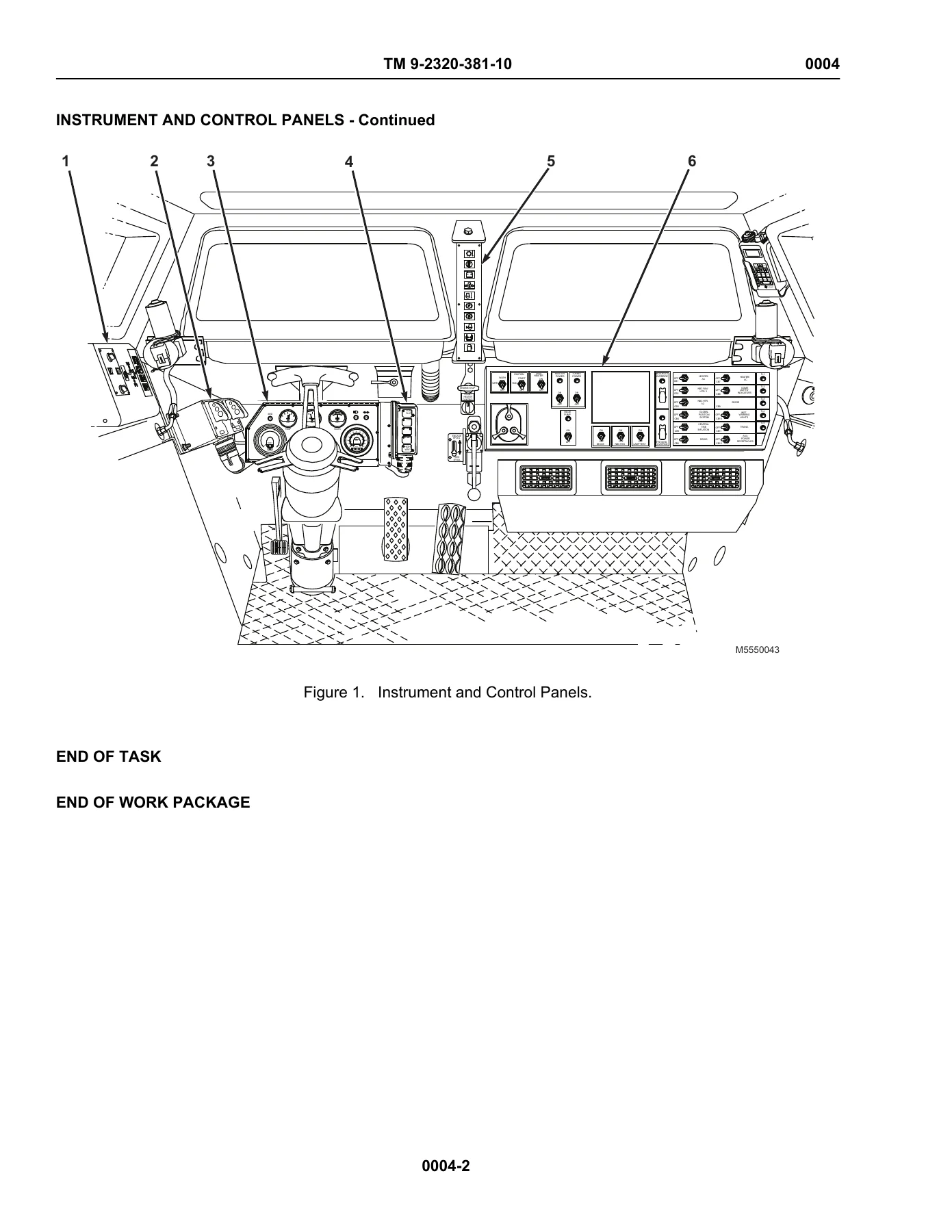
- Instrument and Control Panels
- Driver’s Control Unit — 200 Amp and 400 Amp versions
- Warning Light Panel and Instrument Panel
- Side Control Panel, Driver’s Controls, Steering Column
- Fuel System Controls, Winch Control, View Block Wipers and Reservoirs
- Central Tire Inflation System (CTIS) Control
- Transfer Case Drive Lockout Lever, Hull Power Distribution Unit (HPDU)
- Auxiliary Heater Control Panel, Master Battery Disconnect Switch
- Gunner’s Controls, Turret Control Panel, Gunner’s Control Panel
- Turret Traverse Controls and Elevation Control
- Vehicle Fueling, Seats and Seat Belts, Interior and Utility Lights
- Engine Starting and Shutdown, Driving Procedures, Shifting to Four-Wheel Drive, Manual Downshifting, Driving Tips
- Latch Handles, Hatches, Doors, Door Ports, Engine Compartment Access, Mirrors
- Towing Pintle, Towing Eyes, Lifting Eyes, Tie-Down Shackles
- CTIS Operation and Priming Fuel System
- Gunner’s Hatch, Gunner’s Sight, Turret Periscopes
- MK-19 40-MM Machine Gun Installation and Removal
- M48 .50-Cal. Machine Gun Installation and Removal
- Minor Boresighting
- M48 .50-Cal. Ammunition Loading, MK-19 40-MM Ammunition Loading, Replenishing 40-MM to Last Link
- Turn Turret Power On/Off, Gunner’s Procedure, Manual Turret Operations
- MK-19 40-MM Machine Gun Firing and M48 .50-Cal. Machine Gun Firing
- Grenade Launchers, Unloading Smoke Grenade Launchers
- Weapons Clearing
- Chapter 3 — Troubleshooting Procedures
- Symptom Index and full operator troubleshooting work packages (engine, brakes, transmission, CTIS, steering, heaters, NBC, turret controls, weapon stoppages)
- Stoppage Immediate Actions and Weapons Malfunction (misfire, hangfire, cookoff, uncontrolled automatic fire)
- Chapter 4 — Preventive Maintenance Checks and Services (PMCS)
- Introduction and column descriptions
- PMCS — Before, During, and After tables
- PMCS — Turret Systems
- Chapter 5 — Maintenance Instructions
- Lubrication Instructions (engine, transmission and transfer case, axles, hydraulic reservoir, radiator, oil can points, vehicle cleaning)
- General Cleaning Instructions
- Air Cleaner Cap and Filter Element Removal/Installation
- Hull Drain Plugs Removal/Installation
- Manual Tire Inflation
- Engine Closeout Panels Removal/Installation
- Wheel Chocks Installation/Removal
- Care, Handling, Preservation, and Packing
- Types of Ammunition
- Ammunition Stowage Locations
- Chapter 6 — Supporting Information
- References
- Components of End Item (COEI) and Basic Issue Items (BII) Lists
- Additional Authorization List (AAL)
- Expendable and Durable Items List
- Hull Operator Troubleshooting Notes
Between those six chapters, the manual documents the whole M1117 ASV operating envelope: the Cummins 6-cylinder turbocharged diesel and Allison 6-speed automatic drivetrain, the four-wheel drive transfer case with neutral lock-out, the independent coil-spring suspension, the Meritor hydraulic brake system with accumulator assist, the central tire inflation system, the 15,000 lb hydraulic winch, the M13A1 NBC system, the automatic fire extinguisher system, and the full turret weapon station with its 40-mm MK-19, M48 .50-cal. M2HB, and M257 smoke grenade launchers. It also covers the driver’s and commander’s controls and instruments for both the 200 Amp and 400 Amp driver’s control unit variants, the turret traverse and elevation controls, gunner’s sight, periscopes, boresighting, and both electrical and manual firing procedures.
What This Manual Lets You Do
The M1117 ASV is a four-wheel drive armored vehicle with a closely integrated turret weapon station, and this manual is structured around the daily realities of running it — not a general reference. The PMCS tables tell you exactly what to inspect before, during, and after every mission, with pass/fail criteria for each item so you know what makes a vehicle not mission capable. The operator troubleshooting work packages walk you through real symptoms like engine cranks but does not start, CTIS lights flashing, low oil pressure warning, transmission Do Not Shift light, turret does not power traverse, and M48 .50-cal. does not fire electrically, each with step-by-step decision logic to isolate the fault.
Weapon handling is covered end to end. You get ammunition loading for both the MK-19 40-mm and the M48 .50-cal., replenishing the last link of 40-mm inside the turret, charging procedures, minor boresighting on both day and night sights, and weapons clearing. Stoppage immediate actions and weapons malfunction procedures give you the correct response to a misfire, hangfire, cookoff, or runaway gun before someone gets hurt.
Unusual conditions are handled separately — fording up to 60 inches of water with the turret hatch open as an escape hatch, crossing vertical obstacles up to 22 inches, tire chain installation with CTIS deflation steps, arctic weather starting with the auxiliary heater and battery heaters, high altitude operation, NBC system operation, and driver’s night vision goggles. Like-vehicle towing, winching with and without a snatch block, slave receptacle starting, and hand-held and automatic fire extinguisher operation are all covered in dedicated work packages.
Beyond procedures, the manual also includes the full vehicle equipment data — performance figures, dimensions, weight, ground clearance, engine and transmission data, tire pressures with and without Frag Kit 2, fluid capacities, electrical system ratings, and turret equipment data. Ammunition stowage locations, COEI/BII lists, the AAL, and the expendable and durable items list round out the reference material so you know exactly what should be on the vehicle and what to reorder.
Why This Reference Matters
On an armored vehicle, an incorrect procedure is not just inconvenient — it can damage the drivetrain, disable the turret, or hurt the crew. This manual is the difference between guessing at a warning light and knowing which circuit breaker, solenoid, connector, or switch to check, in order. The torque and pressure values, CTIS settings, tire pressures, oil capacities, and service intervals are printed exactly as the U.S. Army TACOM Life Cycle Management Command issued them, so you are working from the same numbers the operator and maintainer were trained on.
For collectors, reenactors, vehicle restorers, and anyone supporting an M1117 ASV, having the actual operator’s manual TM 9-2320-381-10 at hand makes every daily check, fuel-up, drive, and range session safer and more efficient. For crews and instructors, the PMCS tables and troubleshooting work packages double as training material and as a check against skipping steps under pressure.
Instant PDF Delivery
You get the complete M1117 Armored Security Vehicle (ASV) operator’s manual as a PDF, delivered instantly after checkout — no shipping, no waiting, no damaged print copy to chase down. Open it on a laptop, tablet, or phone in the motor pool, print the PMCS pages for the cab, or print the weapon loading pages for the range. The layout stays readable on any screen, the tables stay intact, and you can search by work package number or by symptom to jump straight to the answer. Whether you are performing a before-mission inspection, clearing a stoppage, or studying for the next qualification, this M1117 ASV operator’s manual TM 9-2320-381-10 is the crew-level reference you want loaded and ready.
Reviews
There are no reviews yet.