★ TRUSTED BY 321,897+ PROFESSIONALS WORLDWIDE
🏢
Trusted Business
Verified & Licensed
🛡️
Virus Free Files
100% Safe Downloads
🔒
Secure Payment
SSL Protected
Instant Delivery
Available Immediately
Sale!

Philips IntelliVue MP2-MP90 MP5T X2 Patient Monitor Configuration Guide – Release G.0 (PDF)

Original price was: $39.95.Current price is: $24.95.

Official Philips configuration guide for IntelliVue MP2/MP5/MP20/30/40/50/60/70/80/90, MP5T, and X2 patient monitors. Covers Release G.0 software. Essential for biomeds and clinical engineers to customize profiles, screens, alarm limits, and network settings.

Instant PDF Download
Available immediately
💾
Save to Your Device
Download & keep forever
🛡️
Antivirus Scanned
100% virus-free
🌍
Trusted Worldwide
175,000+ customers

Description

Complete Configuration Reference for IntelliVue Patient Monitors

This is the official Philips IntelliVue Patient Monitor Configuration Guide for monitors running software release G.0.xx. It is a comprehensive reference for clinical engineers, biomedical technicians, and IT staff responsible for deploying and maintaining Philips patient monitoring systems. This guide explains how to permanently configure the monitor to meet clinical requirements across hospital departments, from general wards to intensive care, neonatal, and anesthesia environments.

File Details

  • Document Type: Official Configuration Guide
  • Brand: Philips
  • Product Series: IntelliVue Patient Monitors
  • Applicable Models: MP2, MP5, MP20, MP30, MP40, MP50, MP60, MP70, MP80, MP90, MP5T, X2
  • Software Release: G.0.xx
  • Language: English
  • Page Count: 254 pages
  • File Format: PDF
  • Document Number: 80 99 28 58 100 15 12/81 (90)

Chapters Covered

This comprehensive guide is structured to provide both a conceptual understanding of the monitor’s configuration architecture and detailed, step-by-step procedures for modifying settings:

IMAGES PREVIEW

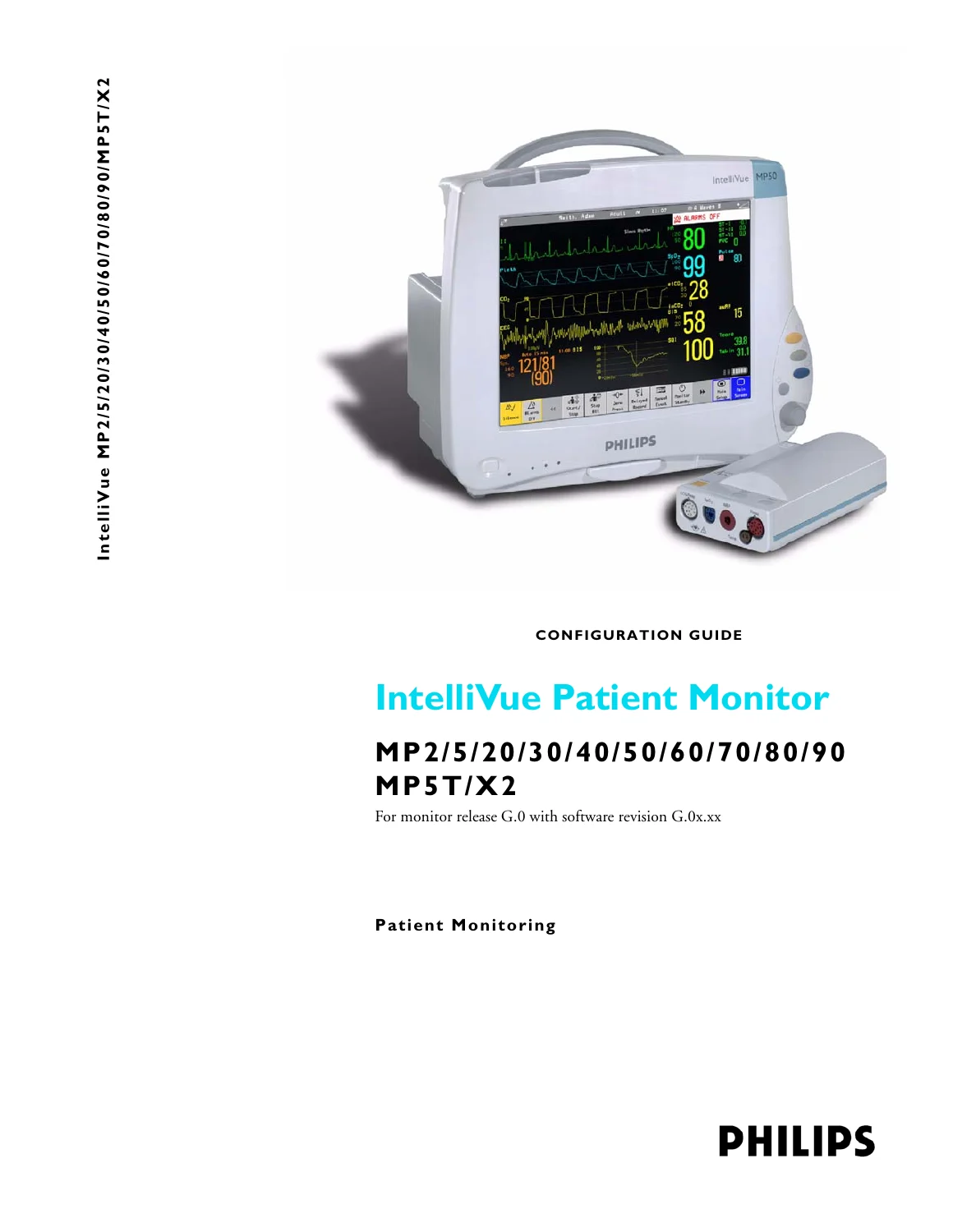
Philips IntelliVue MP2-MP90 MP5T X2 Patient Monitor Configuration Guide – Release G.0 (PDF) — PDF page 1 preview
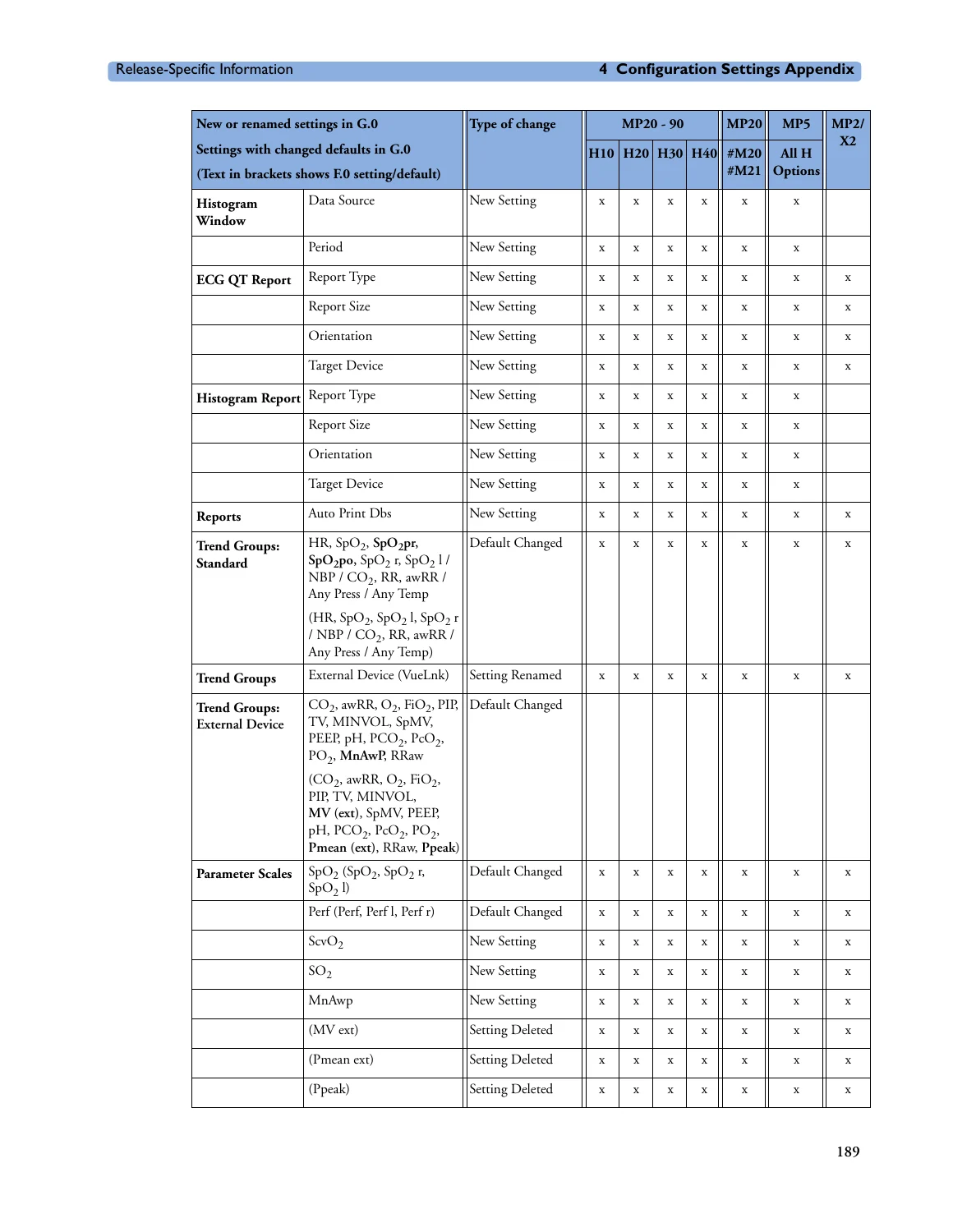
Philips IntelliVue MP2-MP90 MP5T X2 Patient Monitor Configuration Guide – Release G.0 (PDF) — PDF page 193 preview
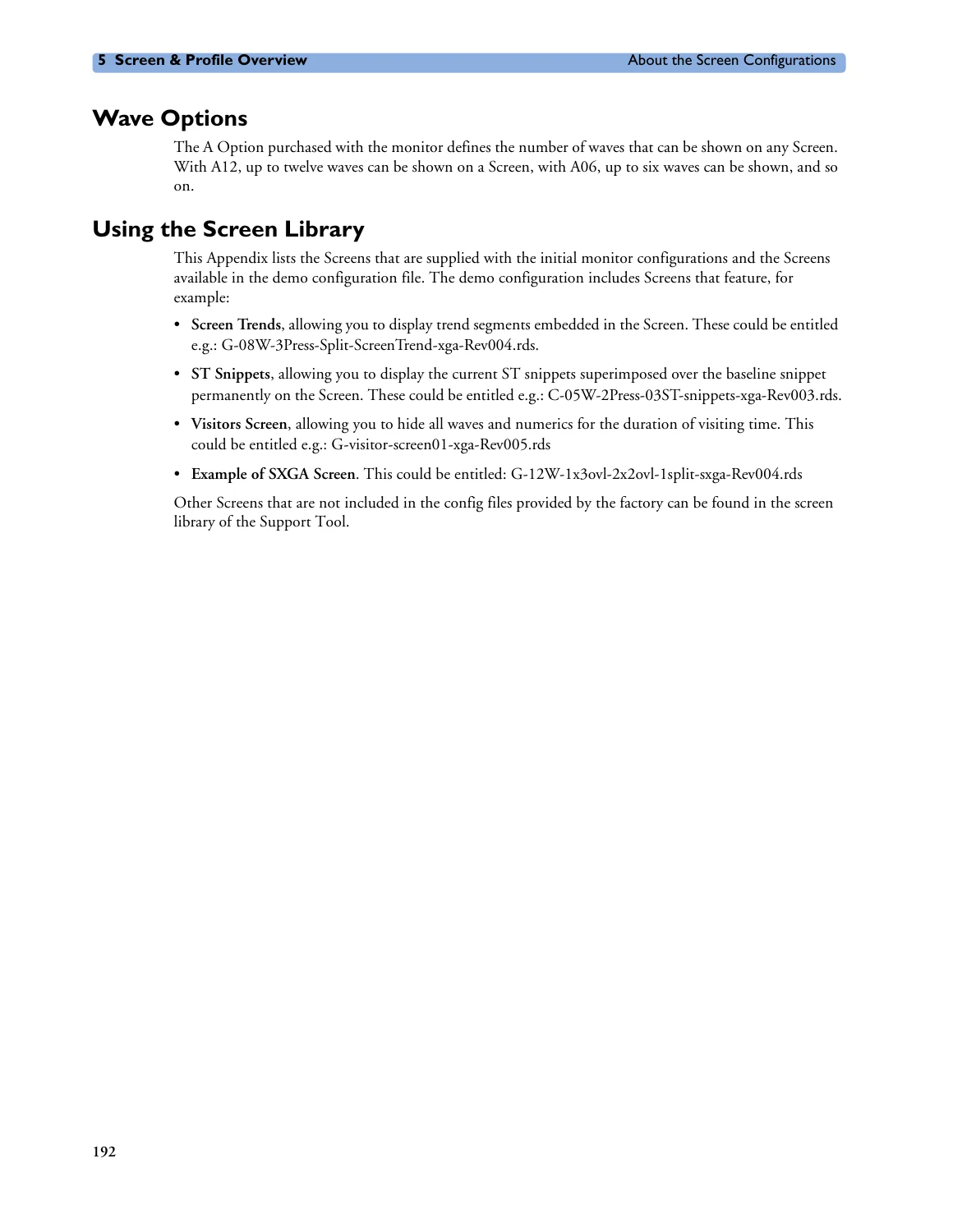
Philips IntelliVue MP2-MP90 MP5T X2 Patient Monitor Configuration Guide – Release G.0 (PDF) — PDF page 196 preview

  • Understanding Configuration: Who the guide is for, which models it covers, an introduction to Configuration Mode, and the concepts of Profiles and Settings Blocks.
  • Configuring Profiles and Settings Blocks: Detailed procedures for creating, modifying, renaming, and deleting Profiles, Measurement Settings blocks, and Monitor Settings blocks. Also covers setting the default Profile and unlocking configurations.
  • Configuring Screens: How to modify existing Screens and create new ones. Includes procedures for changing the content of wave, numeric, and trend elements, configuring SmartKeys, and customizing special Screen settings like embedded trends and other bed windows.
  • Configuration Settings Appendix: This extensive section documents the factory default settings for every configurable parameter. It includes tables and configuration implications for:
    • Profile Settings: Default profile configurations.
    • Measurement Settings: ECG, Arrhythmia, ST and QT Analysis, SpO2, NBP, Invasive Pressure, Cardiac Output, Capnography, Spirometry, EEG, BIS, Temperature, and more.
    • Monitor Settings: Alarms, Alarm Recordings, Auto Alarm Limits, Screen/Horizon Trends, Trend Groups, Event Surveillance, ProtocolWatch, Timers, and User Interface settings.
    • Global Settings: General, Ask for New Patient, Demographic Fields, Remote Display, and Timer Selection.
    • Hardware Settings: Multiple Display, Video, Interfaces, Input Devices, and Wireless LAN settings.
    • H Option-Specific Settings: Settings that are unique to the installed clinical application option (e.g., H10 General, H20 Neonatal, H30 Anesthesia).
  • Screen & Profile Overview: An appendix documenting the factory-default Screens and Profiles for each monitor model. It includes a library of screen configurations with file names and descriptions.

What This Guide Enables You To Do

The Philips IntelliVue Configuration Guide is the essential tool for tailoring these sophisticated monitors to your specific clinical workflows. With this manual, you can:

Complete PDF Bookmark Tree

Complete Bookmarks

The complete bookmarks in the “Philips IntelliVue MP2-MP90 MP5T X2 Patient Monitor Configuration Guide – Release G.0 (PDF)” are as follows:

Understanding Configurationp. 5
Who is this Guide for?p. 5
Which Monitor Models is this Guide for?p. 5
What is Configuration Mode?p. 6
Who Can Change the Monitor Configuration?p. 6
Understanding Profiles and Settingsp. 7
Profilesp. 7
Patient Categoryp. 8
Pacedp. 8
Display Screensp. 9
Measurement Settingsp. 9
Monitor Settingsp. 9
Global Settingsp. 9
Hardware Settingsp. 9
Entering and Leaving Configuration Modep. 10
About the IntelliVue Support Toolp. 10
What Can I Configure with the Support Tool?p. 11
How Can I Get a Support Tool License Key?p. 11
Configuring Profiles and Settings Blocksp. 13
Getting Startedp. 13
Using the Configuration Pop-up Keysp. 13
Modifying an Existing Profilep. 14
Changing the Combination of Settings Blocks in an Existing Profilep. 14
Modifying an Existing Settings Blockp. 15
Creating New Profilesp. 15
Deleting a Settings Block or Profilep. 17
Renaming a Settings Block or Profilep. 17
Changing the Monitor’s Default Profilep. 17
Unlocking a Settings Block or Profilep. 17
Configuring a Second / Third Main Displayp. 18
A second main display can be used withp. 18
A third main display can be used withp. 18
Loading a Screen on a Second / Third Displayp. 19
Changing Elements on a Second / Third Displayp. 19
Configuring Screensp. 21
Understanding Screen Settingsp. 21
Modifying an Existing Screenp. 22
Creating New Screensp. 22
Configuring Screens on an XDS Remote Displayp. 22
Changing the Content of Screen Elementsp. 23
Changing the Content of a Wave Elementp. 23
Changing the Content of a Numeric Elementp. 23
Changing the Content of a Screen Trend Elementp. 23
Changing the Content of a High Resolution Trend Elementp. 23
Displaying Timers on the Main Screenp. 24
Displaying a Clock on the Main Screenp. 24
Displaying a ProtocolWatch Status Indicator on the Main Screenp. 25
Changing the Size and Position of Screen Elementsp. 25
Configuring SmartKeysp. 25
Configuring a Different List of SmartKeys for Each Screenp. 25
Configuring a Global List of SmartKeys for All Screensp. 26
Configuring Special Screen Settingsp. 26
Configuring the Wave Channel Speedp. 26
Configuring Screen Trendsp. 26
Configuring an Embedded Trend Windowp. 27
Configuring an Embedded CSA Windowp. 27
Configuring an Embedded Other Bed Windowp. 28
Configuration Settings Appendixp. 29
About Configuration Settingsp. 29
Documenting Monitor Configurationsp. 29
Understanding Configuration Implicationsp. 29
Using the Configuration Tablesp. 29
How to read the configuration tablesp. 29
Understanding H and M Optionsp. 31
Profile Settingsp. 32
Measurement Settingsp. 33
Configuring ECGp. 34
ECG Configuration Implicationsp. 35
Configuring ECG/Pulse Alarmsp. 37
ECG/Pulse Alarms Configuration Implicationsp. 37
Configuring the System Pulsep. 39
System Pulse Configuration Implicationsp. 40
Configuring Arrhythmiap. 40
Arrhythmia Configuration Implicationsp. 41
Arrhythmia Alarmsp. 42
Configuring Arrhythmia Alarm Recordingsp. 42
Arrhythmia and Visible and Audible Alarm Latchingp. 42
Configuring ST Analysisp. 43
Lead-Independent Settingsp. 43
Lead I, II, III, aVR, aVL, aVF, V, V1-6, MCL Settingsp. 44
Selecting Leads for ST Analysisp. 44
Changing ST Alarm Limitsp. 44
Configuring QT Analysisp. 45
QT Analysis Configuration Implicationsp. 45
Configuring SpO2p. 46
SpO2, SpO2pr, SpO2po, SpO2 r, SpO2 l, and %SpO2T Settingsp. 46
SpO2 Configuration Implicationsp. 47
Configuring Pulse from SpO2p. 48
Pulse from SpO2 Configuration Implicationsp. 49
Configuring DSpO2 (Oxygen Saturation Difference)p. 49
DSpO2 Configuration Implicationsp. 49
Configuring NBP (Non-Invasive Blood Pressure)p. 50
NBP Configuration Implicationsp. 51
Configuring Invasive Pressurep. 51
P, ABP, ART, Ao, UAP, FAP, BAP, P1, P2, P3, P4 Settingsp. 52
CVP, RAP, LAP, UVP Settingsp. 53
PAP Settingsp. 54
ICP, IC1, IC2 Settingsp. 55
Invasive Pressure Configuration Implicationsp. 55
Configuring Pulse from Invasive Pressurep. 57
Pulse from Invasive Pressure Configuration Implicationsp. 57
Configuring CPP (Cerebral Perfusion Pressure)p. 57
CPP Configuration Implicationsp. 58
Configuring PPV (Pulse Pressure Variation)p. 58
PPV Configuration Implicationsp. 59
Configuring C.O. (Cardiac Output)p. 59
C.O. Configuration Implicationsp. 60
Configuring CCO (Continuous Cardiac Output)p. 60
CCO Configuration Implicationsp. 61
Configuring SVR (Systemic Vascular Resistance)p. 61
SVR Configuration Implicationsp. 62
Configuring SO2 (Intravascular Oxygen Saturation)p. 62
SO2, SvO2, and ScvO2 Settingsp. 62
SO2 Configuration Implicationsp. 63
Configuring Sp-vO2 (Oxygen Extraction )p. 63
Sp-vO2 Configuration Implicationsp. 63
Configuring tcGas (transcutaneous Gas)p. 64
TcGas Configuration Implicationsp. 64
Configuring CO2 (Capnometry)p. 66
CO2 Configuration Implicationsp. 66
Configuring awRR from CO2 (Airway Respiration Rate)p. 67
awRR Configuration Implicationsp. 68
Configuring Resp (Impedance Respiration)p. 68
Resp Configuration Implicationsp. 68
Configuring Spirometryp. 69
Spirometry Configuration Implicationsp. 69
Spirometry AWF (Airway Flow) Settingsp. 69
Spirometry AWP (Airway Pressure) Settingsp. 69
Spirometry AWV (Airway Volume) Settingsp. 70
Spirometry Configuration Implicationsp. 70
Spirometry Gas Compensation Settingsp. 70
Spirometry Configuration Implicationsp. 70
Configuring RRspir (Respiration from Spirometry)p. 71
RRspir Configuration Implicationsp. 71
Configuring EEGp. 71
EEG Configuration Implicationsp. 72
Configuring EEG Montagesp. 73
Renaming EEG Montagesp. 73
EEG Montages Configuration Implicationsp. 74
Configuring BIS (Bispectral Index)p. 75
BIS Configuration Implicationsp. 75
Configuring Temperaturep. 76
Temp, Trect, Tcore, Tskin, Tesoph, Tnaso, Tart, Tven, Tvesic, Ttymp, Tcereb, Tamb, T1, T2, T3, T4 Settingsp. 77
Temp Configuration Implicationsp. 77
Configuring Predictive Tempp. 78
pToral, pTaxil, pTrect Settingsp. 78
Predictive Temp Configuration Implicationsp. 78
Configuring DTemp (Temperature Difference)p. 79
DTemp Configuration Implicationsp. 79
Configuring VueLinkp. 79
VueLink Configuration Implicationsp. 80
Configuring IntelliBridgep. 80
Configuring the Gas Analyzerp. 80
General Gas Analyzer Settingsp. 80
General Gas Analyzer Configuration Implicationsp. 81
O2 Settingsp. 81
N2O (Nitrous Oxide) Settingsp. 82
AGT / AGT1 / AGT2 Settingsp. 82
AGT / AGT1 / AGT2 Configuration Implicationsp. 82
HAL (Halothan) Settingsp. 83
ISO (Isofluran) Settingsp. 83
ENF (Enfluran) Settingsp. 84
SEV (Sevofluran) Settingsp. 84
DES (Desfluran) Settingsp. 85
Configuring CO2 from Gas Analyzerp. 85
Gas Analyzer CO2 Configuration Implicationsp. 86
Configuring awRR from Gas Analyzer (Airway Respiration Rate)p. 86
awRR Configuration Implicationsp. 86
Configuring MAC (Minimum Alveolar Concentration)p. 87
MAC Configuration Implicationsp. 87
Monitor Settingsp. 88
Understanding Monitor Settingsp. 88
Configuring Alarmsp. 89
Alarm Settings Configuration Implicationsp. 90
Alarm Behavior (For Assistance Publique in France only)p. 92
Configuring Alarm Recordingsp. 92
Alarm Recording Settings Configuration Implicationsp. 93
Configuring Auto Alarm Limitsp. 93
Alarm AutoLimits Settings Configuration Implicationsp. 94
Configuring INOP Severityp. 94
INOP Severity Settings Configuration Implicationsp. 94
Configuring Screen Trend Settingsp. 95
Screen Trend Configuration Implicationsp. 95
Configuring Horizon Trend Settingsp. 96
Horizon Trend Configuration Implicationsp. 96
Configuring Global Trend Stylep. 97
Global Trend Style Configuration Implicationsp. 97
Configuring Trend Windowsp. 97
Vital Signs Windowp. 97
Graphical Trends Windowp. 98
Trend Window Settings Configuration Implicationsp. 98
Histogram Windowp. 98
Histogram Window Settings Configuration Implicationsp. 98
Configuring Vital Signs Recordingp. 99
Vital Signs Recording Configuration Implicationsp. 99
Configuring ST Mapp. 99
ST Map Settings Configuration Implicationsp. 100
Configuring the C.O. Windowp. 100
Configuring the Wedge Windowp. 101
Configuring the Loops Windowp. 101
Configuring the CSA Windowp. 102
CSA Window Configurationp. 102
CSA Window Configuration Implicationsp. 102
Configuring ECG Applicationp. 103
ECG Application Configurationp. 103
ECG Application Configuration Implicationsp. 103
Configuring Calculationsp. 104
Calculations Configuration Implicationsp. 104
Configuring Reportsp. 105
Reports Configuration Implicationsp. 108
Configuring Other Report Settingsp. 109
Other Report Settings Configuration Implicationsp. 109
Configuring Auto Reportsp. 110
Auto Reports Configuration Implicationsp. 111
Setting up an End Case Reportp. 111
Configuring ECG Reportsp. 112
ECG Reports Configurationp. 112
ECG Reports Configuration Implicationsp. 112
Configuring CSA Reportsp. 112
CSA Reports Configurationp. 112
CSA Reports Configuration Implicationsp. 113
Configuring Trend Reportsp. 113
Vital Signs Reportp. 113
Graphical Trend Reportp. 113
Trend Report Settings Configuration Implicationsp. 113
Configuring User Interface Settingsp. 114
User Interface Configuration Implicationsp. 116
User Interface – Display Settings Configuration Implicationsp. 118
Display-Related Configuration Implications for Monitors which are connected to an XDS Remote Displayp. 119
Configuring Network Settingsp. 119
Network Configuration Implicationsp. 120
Unique Monitor Settingsp. 122
Configuring Trend Groupsp. 123
Trend Groups Configuration Implicationsp. 125
Configuring Trend Prioritiesp. 126
Trend Priority Configuration Implicationsp. 126
Configuring Trend Scales / Trend Unitsp. 127
Trend Scales/Units Configuration Implicationsp. 130
Configuring Event Surveillancep. 130
Levels of Event Surveillancep. 130
Event Settings Configuration Implicationsp. 134
Configuring Event Annotationsp. 137
Configuring ProtocolWatchp. 138
ProtocolWatch Application Configuration Implicationsp. 138
SSC Sepsis Protocol Configuration Implicationsp. 138
Configuring Recordingsp. 139
Recordings Configuration Implicationsp. 141
Configuring Timersp. 143
Timer Configuration Implicationsp. 145
Configuring Timer Selection and Orderp. 146
Configuring User Interface Settings – Keysp. 147
Global SmartKeysp. 147
Global SmartKeys Configuration Implicationsp. 147
Changing the Selection and Sequence of Global SmartKeysp. 148
Function Keysp. 148
Function Key Configuration Implicationsp. 149
Configuring CSA Buffersp. 149
CSA Buffer Configuration Implicationsp. 150
Configuring the Drug Calculatorp. 150
Global Settingsp. 151
Configuring General Global Settingsp. 151
General Global Settings Configuration Implicationsp. 152
Configuring for Different Telemetry Use Modelsp. 157
1. Tele Transceiver Paired with a Networked Monitor – No Direct Connectionp. 157
2. Tele Transceiver Paired with a Networked MP2/X2 or MP5 – Direct Connectionp. 157
3. Tele Transceiver Directly Connected to an MP5T, or Non-Networked MP5, or MP2/X2p. 158
4. X2 or MP5 Declared as Tele Device and Paired with a Larger Monitor – Direct Connectionp. 159
5. Tele Transceiver Directly Connected to an X2 or MP5 which is Connected as a Companion to a Larger Host Monitorp. 160
Configuring Ask for New Patient Settingsp. 161
Ask for New Patient Configuration Implicationsp. 161
Configuration Recommendations when using an X2 or MP5 with a Telemetry Labelp. 162
Configuring Demographic Fields Settingsp. 162
Demographic Fields Configuration Implicationsp. 162
Configuring Remote Display Settingsp. 163
Remote Display Configuration Implicationsp. 163
Configuring Timer Selection and Orderp. 164
Timer Selection and Order Configuration Implicationsp. 164
Configuring Manual Data Entryp. 165
Manual Data Entry Configuration Implicationsp. 167
Configuring Country-Specific Settingsp. 168
Configuring Printersp. 175
Printer Configuration Implicationsp. 176
Printer Configuration Examplesp. 177
Configuring a Locally Connected Printerp. 177
Configuring a Centrally Connected Printerp. 178
Configuring one Locally and One Centrally Connected Printerp. 179
Configuring a Monitor to Capture Alarm Events in the Print Database during Transportp. 179
Printing a Test Reportp. 179
Hardware Settingsp. 180
Configuring Multiple Display Settingsp. 181
Multiple Display Configuration Implicationsp. 181
Configuring Video Settingsp. 182
Video Settings Configuration Implicationsp. 183
Configuring Interfaces and Input Device Settingsp. 184
Configuring SRR Channelsp. 185
SRR Channel Settings Configuration Implicationsp. 185
Configuring Wireless LAN Settingsp. 185
WLAN Configuration Implicationsp. 186
Configuring Bed Information Settingsp. 187
Bed Information Configuration Implicationsp. 187
Monitor Database Configurationp. 188
Trend Databasep. 189
Additional Configurations for the Standard Databasep. 189
Additional Configurations for the Extended Database Option (C03)p. 189
Aperiodic Trend Databasep. 189
Event Surveillance Databasep. 190
Print Databasep. 190
H Option-Specific Settingsp. 191
Release-Specific Informationp. 192
G.0 Configuration Changesp. 192
Screen & Profile Overviewp. 195
About the Screen Configurationsp. 195
Application Areasp. 195
Wave Optionsp. 196
Using the Screen Libraryp. 196
Sample Screen Image (.bmp)p. 197
MP60/MP70/MP80/MP90 Configuration Overviewp. 198
Option H10p. 198
Option H20p. 199
Option H30p. 200
Option H40p. 201
MP40/MP50 Configuration Overviewp. 202
Option H10p. 202
Option H20p. 203
Option H30p. 204
Option H40p. 205
MP20/MP30 Configuration Overviewp. 206
Option H10p. 206
Option H20p. 207
Option H30p. 208
Option H40p. 209
MP20 Junior & MP20L Configuration Overviewp. 210
Option H10p. 210
Option H20 (MP20 Junior only)p. 211
MP5 Configuration Overviewp. 212
Option H10p. 212
Option H10/B10p. 213
Option H10/B11p. 214
Option H10/B14p. 215
Option H20p. 216
MP5T Configuration Overviewp. 217
Option H10p. 217
MP2/X2 Configuration Overviewp. 218
Screen Overviewp. 219
Screen Overview -Table of Contentsp. 219
MP60/MP70/MP80/MP90 Screen Overviewp. 220
MP60-90 Option H10 Screensp. 220
MP60-90 Option H10 Screens (continued)p. 221
MP60-90 Option H20 Screensp. 222
MP60-90 Option H20 Screens (continued)p. 223
MP60-90 Option H30 Screensp. 224
MP60-90 Option H30 Screens (continued)p. 225
MP60-90 Option H40 Screensp. 226
MP60-90 Option H40 Screens (continued)p. 227
MP60-90 Demo Configuration Screensp. 228
MP40/MP50 Screen Overviewp. 229
MP40/50 Option H10 Screensp. 229
MP40/50 Option H20 Screensp. 230
MP40/50 Option H30 Screensp. 231
MP40/50 Option H40 Screensp. 232
MP40/50 Demo Configuration Screensp. 233
MP20/MP30 Screen Overviewp. 234
MP20/30 Option H10 Screensp. 234
MP20/30 Option H20 Screensp. 235
MP20/30Option H30 Screensp. 236
MP20/30 Option H40 Screensp. 237
MP20/30Demo Configuration Screensp. 238
MP20 Junior (M20) & MP20L (M21) Screen Overviewp. 239
MP20 M20/M21 Option H10 Screensp. 239
MP20 M20 Option H20 Screensp. 239
MP5 Screen Overviewp. 240
MP5 Option H10 Screensp. 240
MP5 Option H20 Screensp. 241
MP5 Option H30 Screensp. 242
MP5 Option H40 Screensp. 243
MP5 Demo Configuration Screensp. 244
MP5 Options B10/B11/B14 Screen Overviewp. 245
MP5 with Options B10/B11/B14 Screensp. 245
MP5T Screen Overviewp. 246
MP2 Screen Overviewp. 247
X2 Screen Overviewp. 248

  • Customize Monitoring Profiles: Create and assign Profiles for different patient categories (Adult, Pediatric, Neonatal) and clinical scenarios (ER, ICU, OR).
  • Define Alarm and Measurement Settings: Configure alarm limits, measurement sources, display colors, and calculation methods for parameters like ECG, SpO2, NBP, and Invasive Pressures.
  • Design and Assign Screens: Arrange waves, numerics, trends, and SmartKeys to create optimized views for different clinical tasks (e.g., Big Numerics, 12-Lead ECG, Horizon Trend).
  • Configure Network and Global Settings: Set up care groups, printer configurations, telemetry pairing, and other system-wide parameters.
  • Standardize Configurations: Use the guide alongside the IntelliVue Support Tool to clone configurations to multiple monitors, ensuring a consistent and safe patient monitoring experience across your facility.

Why Accurate Configuration Matters

Proper configuration is critical for patient safety and staff efficiency. Correctly setting patient categories, paced status, alarm limits, and measurement algorithms ensures the monitor provides accurate data and appropriate alerts. This guide provides the necessary warnings and configuration implications to help you avoid unintended behavior. The step-by-step instructions, combined with a complete settings appendix, minimize the risk of error during the setup process.

Instant Digital Delivery

This product is a digital download in PDF format. You will receive immediate access to the complete 254-page manual after purchase. It can be viewed on any device that supports PDFs, including computers, tablets, and smartphones. You can also print specific pages for reference in the clinical engineering workshop.


Reviews

There are no reviews yet.

Be the first to review “Philips IntelliVue MP2-MP90 MP5T X2 Patient Monitor Configuration Guide – Release G.0 (PDF)”

What Our Customers Say

★★★★★ Live reviews from customers
Loading customer reviews...
0
    0
    Your Cart
    Your cart is emptyReturn to Shop
    🛒
    Recently Purchased
    🕒 verified order