
Rammer 1655E Hydraulic Hammer Service Manual – PDF Workshop Guide
Original price was: $39.95.$23.95Current price is: $23.95.
Complete 152-page Rammer 1655E hydraulic hammer service manual (SM1655ESENG.519) covering operation, lubrication, maintenance, troubleshooting, full workshop disassembly and specifications. Instant PDF download.
Description
Rammer 1655E Hydraulic Hammer Service Manual (SM1655ESENG.519)
The Rammer 1655E is a hydraulically operated breaker built for concrete breaking, road and asphalt removal, hard or frozen ground work, boulder reduction and demolition of reinforced structures. This Rammer 1655E Hydraulic Hammer Service Manual is the document that keeps that machine running — a 152-page workshop reference covering everything from daily greasing routines through to a full strip-down of the impact mechanism, valve body and pressure accumulator.
Whether you are a workshop technician rebuilding a tired 1655E, a fleet planner setting realistic service intervals, or an owner who wants to understand what the dealer is actually doing, this PDF gives you the manufacturer’s own procedures, wear limits, torque figures and diagnostic flow.
File Details
- Manual type: Service Manual
- Brand: Rammer
- Model: 1655E / 1655E STD
- Document number: SM1655ESENG.519
- Language: English
- Page count: 152
- File format: PDF
Chapters Covered
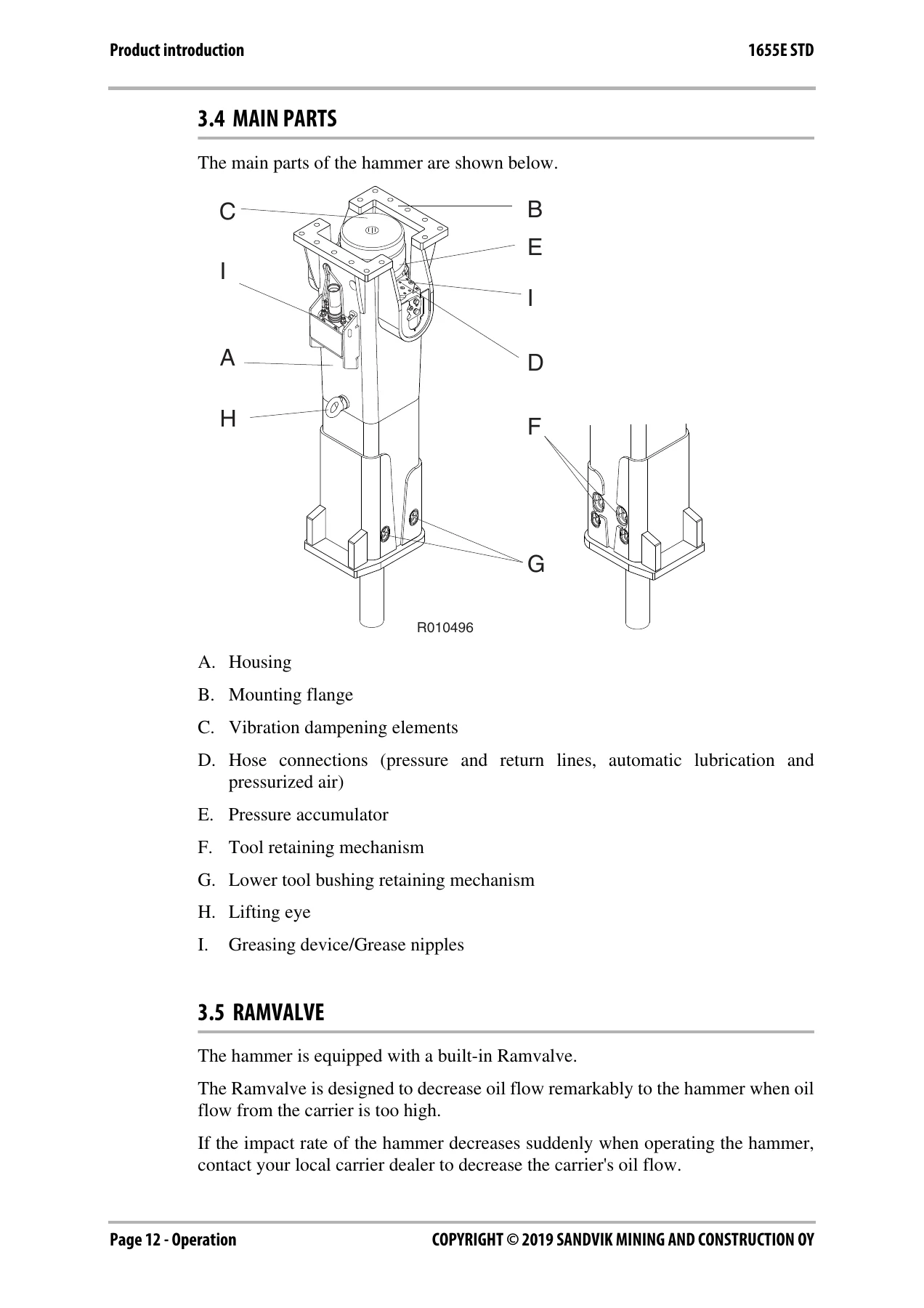
- Operation — Foreword, product numbers, model and serial number identification, product introduction, main parts, Ramvalve, greasing device, RD3 remote monitoring device, environmental protection and recycling policy
- Safety — general safety, safety instructions, safety labels and their locations
- Operation — operating instructions, daily operation, mounting and dismounting the hammer, movement, special conditions of use, storage
- Lubrication — hammer tool greasing, recommended greases, automatic greasing, adjusting the dose, manual greasing
- Carrier hydraulic oil — requirements for hydraulic oil, oil cooler, oil filter
- Maintenance — routine maintenance, inspection and maintenance by the operator, inspection and maintenance by the dealer, maintenance intervals in special applications, washing the attachment
- Changing the tool — wear limits and lubricants, removal of tool, installation of tool
- Lower tool bushing — wear limits and lubricants, removal, installation
- Troubleshooting — hammer will not start, irregular operation with and without full blow power, impact rate slows down, hammer does not stop or has run-on, oil overheats, recurrent tool failure, automatic greasing device problems
- Specifications — hammer technical specifications, main dimensions, mounting bracket specifications, RD3 technical specifications, tool specifications, CE mark and EC Declaration of Conformity
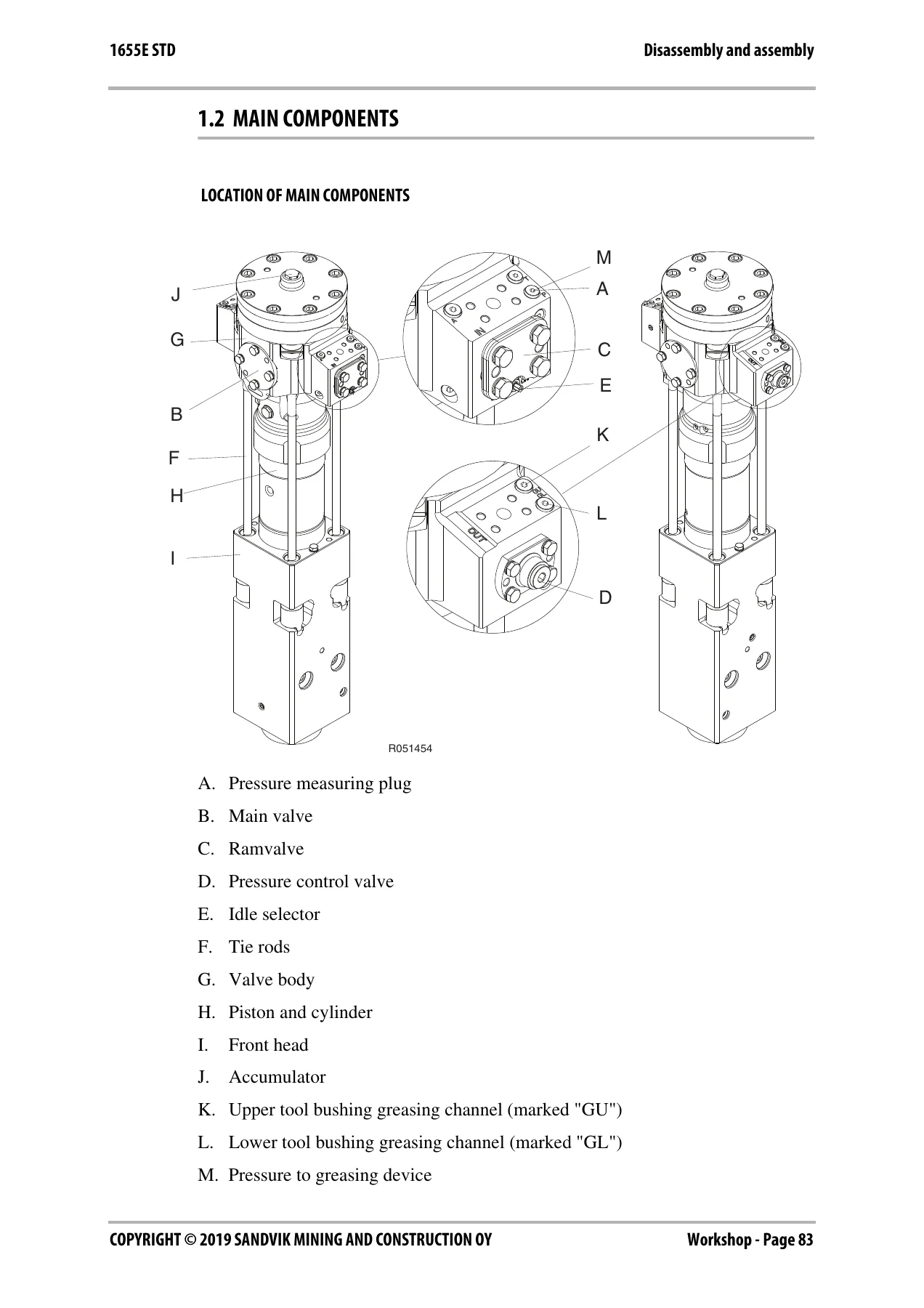
- Workshop — disassembly and assembly of main components, releasing hydraulic pressure, housing and vibration dampening, pressure accumulator, charging accumulator, main valve, Ramvalve, pressure control valve, idle selector, tie rods, body parts, front head, greasing device, RD3, underwater operation
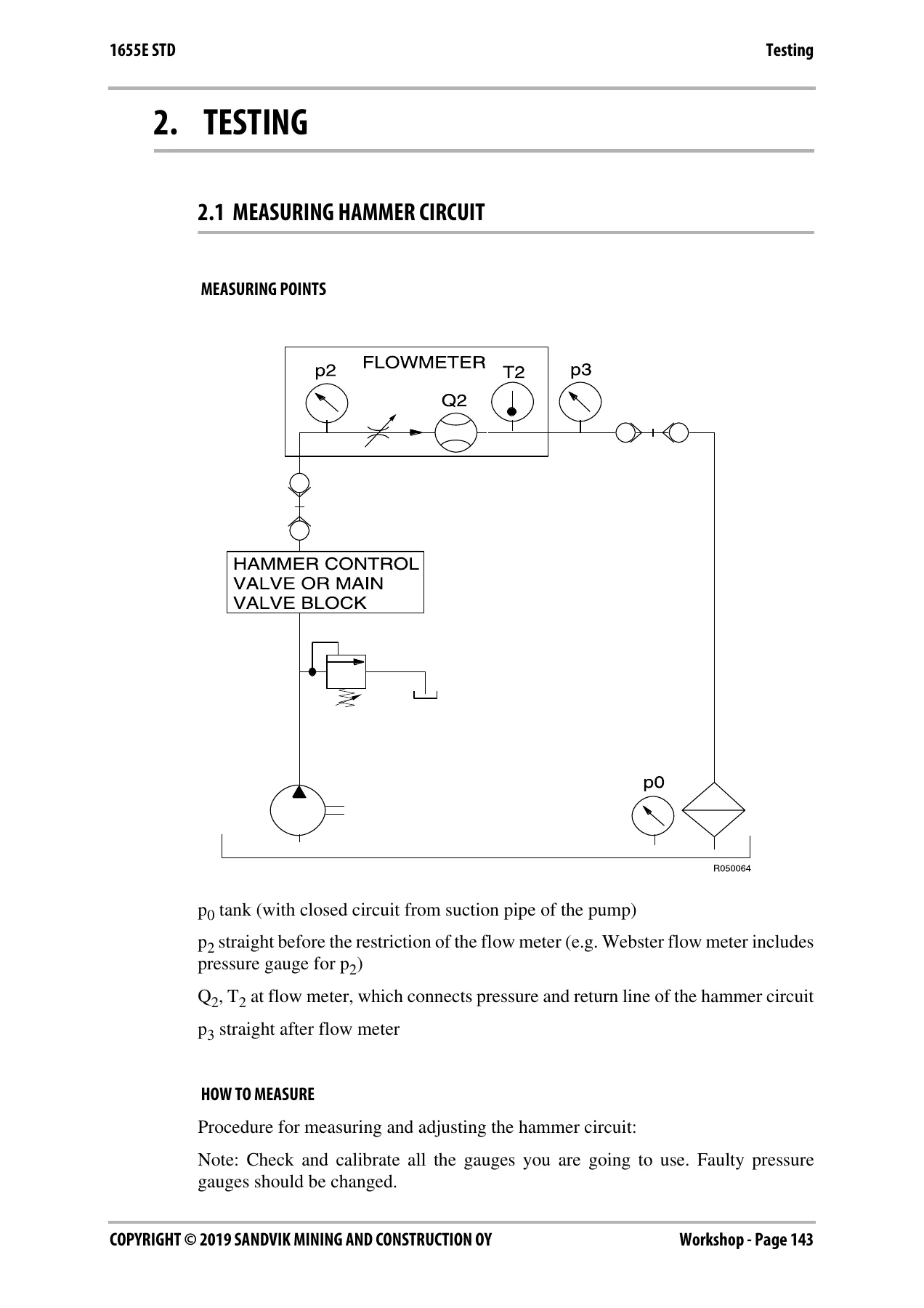
- Testing — measuring hammer circuit, measuring hammer operating pressure
- Service tools — special service tools and standard service tools
Across those chapters the manual forms a complete maintenance chain for the hammer: it starts with the operating and greasing habits that decide how long the tool and bushings survive, moves through the wear limits that tell you when a part has reached the end of its life, and finishes with the workshop procedures for pressing bushings, recharging the accumulator, re-torquing tie rods and resealing the body. The troubleshooting chapter alone is worth the price of admission — it maps symptoms such as a hammer that will not start, a blow with no power, a slowing impact rate or a run-on after the control is released back to the specific components and measurements that cause them.
What the Workshop Section Covers
The workshop half of the manual is where the real value sits. It documents the sequence for releasing trapped hydraulic pressure before opening any plug or valve cover, then takes the hammer apart in a controlled order: housing and vibration dampening elements, pressure accumulator removal and rebuild, nitrogen charging, main valve bushing and spool replacement, Ramvalve, pressure control valve shim adjustment, idle selector, tie rods and the heating procedure used to loosen and re-tighten them, body parts, piston and cylinder, front head and tool bushings, and the automatic greasing device down to individual O-rings and pistons.
Component identity matters during reassembly, and the manual calls it out — main valve parts carry an “X” mark that must all face the same side, tie rods and their nuts are matched pairs, and shim plates in the pressure control valve must not be mixed between their two locations. Torque tables accompany almost every procedure, from 1050 Nm on the mounting bracket screws down to 10 Nm on the smallest flange plugs.
Specifications and Wear Limits
The specification chapter gives the operating envelope for the 1655E: an operating pressure of 135–145 bar, an oil flow range of 90–130 l/min, a maximum return-line back pressure of 10 bar, an impact rate of 540–920 bpm and a tool diameter of 115 mm. Wear limits are listed for the tool shank, retaining pin, upper and lower tool bushings and thrust ring, so a workshop can measure a part and know immediately whether it is serviceable.
Tool data is provided for the chisel, moil point, blunt and pyramid tools — including part numbers, lengths, weights and diameters — so the right tool can be ordered for the application. The CE declaration and sound power data are reproduced as printed.
Underwater and Special Applications
Special conditions of use get their own treatment, with the most detailed being underwater operation. The manual explains that a standard 1655E must not be used under water, that the hammer needs to be specially prepared and sealed, and that a pressure switch and air supply must be fitted to keep water out. Inspection intervals shrink to every half hour of operation under water, and a complete strip-down and service is required afterwards. There is also guidance on tunneling, scaling, foundry cleaning and use with special carriers.
Why This Manual Matters
Hydraulic hammers are unforgiving of guesswork. An incorrectly charged accumulator, a mis-set pressure control valve or a tool run past its wear limit does not just cost a part — it can take out the piston, the cylinder or the valve body. This service manual gives the actual values, the actual sequences and the actual tightening torques, so the work is done once and done right.
It is equally useful as a reference when evaluating a used 1655E, since the inspection and wear-limit sections tell you exactly what to measure and what the numbers should be.
IMAGES PREVIEW
Instant PDF Delivery
Your copy of the Rammer 1655E Hydraulic Hammer Service Manual arrives as an instant PDF download after checkout — no shipping, no waiting. Read it on a laptop, tablet or phone in the workshop, or print the pages you need and take them to the machine. Keep a copy on the service laptop and you have the full workshop reference wherever the hammer goes.
Reviews
There are no reviews yet.