
Saab 900 16 Valve Turbo Service Manual 1985-1993 – Full Workshop PDF
Original price was: $34.95.$21.95Current price is: $21.95.
Complete 572-page Saab 900 16 Valve Turbo Service Manual covering 1985-1993 turbo, SPG, naturally aspirated and convertible models. Engine, turbocharger, LH fuel injection, electrical, transmission, brakes, steering, suspension and body repair procedures with specifications, torque values and illustrations.
Description
Saab 900 16 Valve Turbo Service Manual – 1985-1993
This Saab 900 16 Valve Turbo Service Manual covers the complete range of 900 models built between 1985 and 1993, including turbocharged and naturally aspirated 16-valve engines, the SPG performance variant, and the convertible body style. Every major system on the car is documented with factory procedures, exploded illustrations, torque values, and technical specifications, giving owners and professional technicians a single reference for maintenance, diagnosis, and repair work.
File Details
- Manual type: Service / Workshop Manual
- Brand: Saab
- Model: 900 (16-valve, turbo, SPG, convertible)
- Coverage years: 1985-1993
- Language: English
- Page count: 572
- File format: PDF
Chapters Covered
- 0 – Technical Data: general specifications, engine data, electrical data, transmission, brakes, steering and wheel alignment, suspension, body
- 1 – Lubrication and Maintenance: fundamentals for the do-it-yourself owner, maintenance program, oil and filter service, drive belts, ignition components, fluids, chassis and body maintenance, road test
- 2 – Engine: engine removal and installation, engine disassembly and assembly, cylinder head removal and installation, pistons and connecting rods, cylinder bores, cylinder head and valve mechanism, camshaft timing chain, crankshaft, lubrication system, fuel pump and fuel tank, fuel injection, exhaust system, exhaust emission control, radiator and cooling system, turbocharger
- 3 – Electrical System: general electrical system, battery, alternator and charging system, starter, ignition system, lighting, wipers and washers, electric controls and switches, cruise control, wiring diagrams, fuses, and relays
- 4 – Transmission: transmission general, clutch, clutch control, manual transmission controls, automatic transmission controls, automatic transmission seals and gaskets, automatic transmission
- 5 – Brakes: brake general, brake discs, brake pads, brake fluid and brake bleeding, brake master cylinder, brake lines, brake calipers, brake pedal mechanism, brake vacuum booster, parking brake
- 6 – Steering and Wheel Alignment: steering and wheel alignment general, ball joints, control arms, steering column, tie rod ends, power steering
- 7 – Suspension: suspension general, front suspension, rear suspension, wheel bearings and drive axles
- 8 – Body: body general, convertible top, hood and fenders, doors, windows, and lids, interior trim and upholstery, dashboard and consoles, heating and air conditioning, bumpers
What This Saab 900 Service Manual Gives You
The Saab 900 16 Valve Turbo Service Manual is organised into nine top-level sections that track the car system by system. Section 0 collects all the technical data in one place – engine specifications, tightening torques, capacities, fluid grades, alignment settings, suspension specifications, and body dimensions – so a single lookup answers most service questions. Section 1 sets out the Saab-recommended maintenance program, covering oil and filter service, coolant, drive belts, spark plugs, ignition timing, idle speed, oxygen sensor service, transmission fluids, brake fluid, and routine chassis and body checks, with mileage intervals and illustrated procedures for each job.
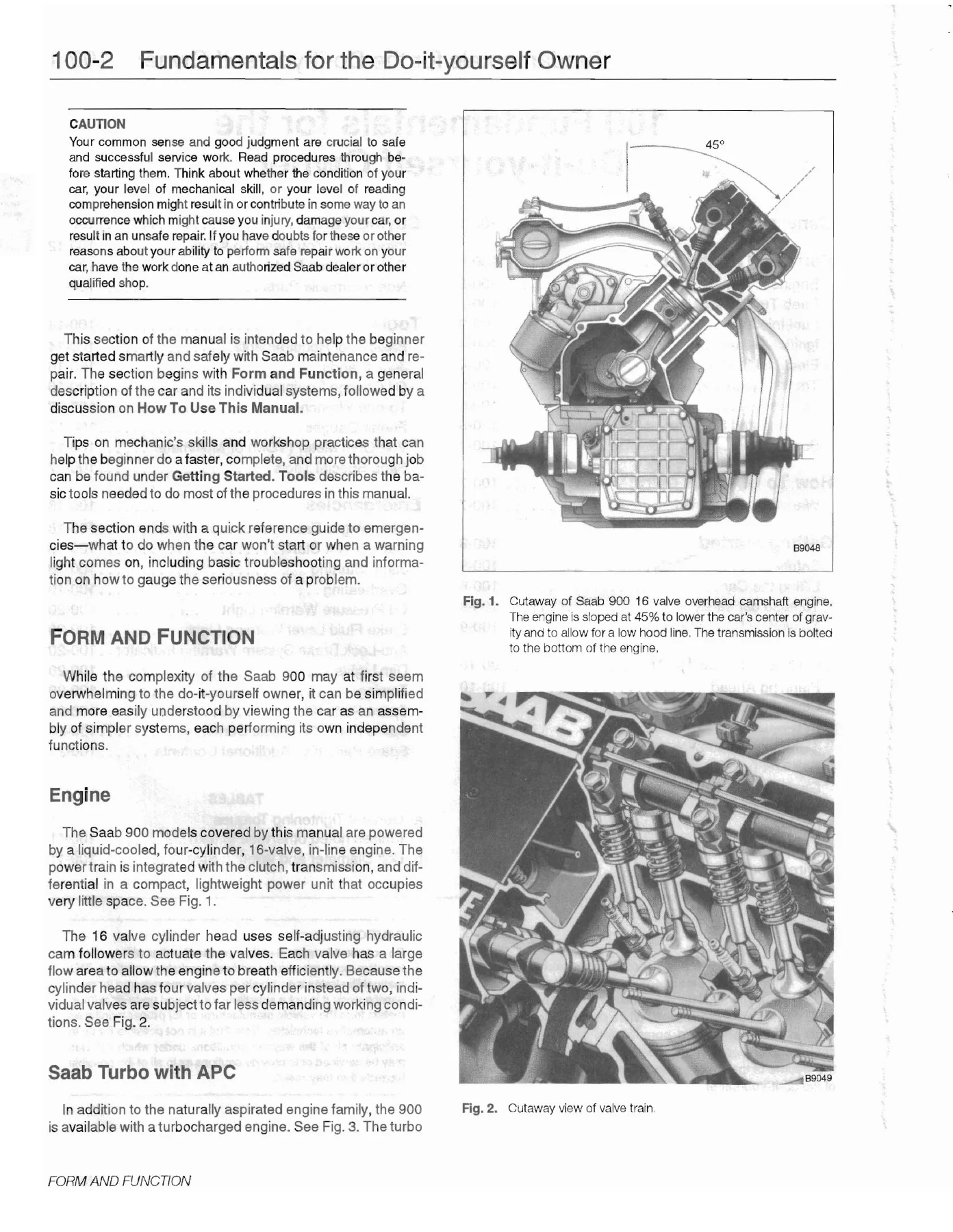
Section 2 is the engine group and is the deepest part of the manual. It covers engine removal and installation as a complete assembly with the transmission, disassembly and reassembly of the cylinder block, cylinder head removal and installation, piston and connecting rod service, cylinder bore measurement, camshaft and valve mechanism repair, camshaft timing chain diagnosis and replacement, crankshaft inspection and oil seal replacement, lubrication system service including the oil pump and pressure warning circuit, fuel pump and fuel tank service, LH fuel injection diagnosis and component testing, exhaust system repair, exhaust emission control, the radiator and cooling system, and the turbocharger with its Automatic Performance Control (APC) system.
Section 3 covers the electrical system in full. It opens with general electrical theory, safe test methods, and how to read the wiring diagrams, then moves through battery testing and charging, alternator and regulator service, starter motor repair, both Hall-effect ignition systems (basic Hall on turbo models and EZK with knock sensor on non-turbo models), lighting, wipers and washers, electric controls and switches, cruise control, and the complete set of vehicle wiring diagrams with fuse and relay locations.
Section 4 handles the transmission, starting with the clutch, clutch hydraulics, and both manual and automatic transmission controls. Automatic transmission service includes the ATF pan gasket and fluid cooler, while the clutch group covers pressure plate, release bearing, slave cylinder, and master cylinder service. Section 5 is the brake group: disc and pad service for both the 1985-1987 and 1988-and-later caliper layouts, brake fluid and bleeding including ABS-equipped cars, master cylinder and ABS unit, brake lines and hoses, pedal mechanism, vacuum booster, and parking brake adjustment for every model year.
Section 6 covers steering and wheel alignment, with ball joint testing and replacement, control arm and bushing service, steering column and wheel removal, tie rod ends, and the complete power steering system including rack removal. Section 7 handles suspension – front shock absorbers, coil springs, anti-roll bar, rear shocks and springs, spring links, rear axle, torque arm, and panhard rod – plus front and rear wheel bearings and drive axles. Section 8 rounds out the manual with body service: convertible top hydraulics and adjustment, hood, doors, windows and lids, interior trim, dashboard and consoles, heating and air conditioning, and bumpers.
Engine and Turbocharger Coverage in Detail
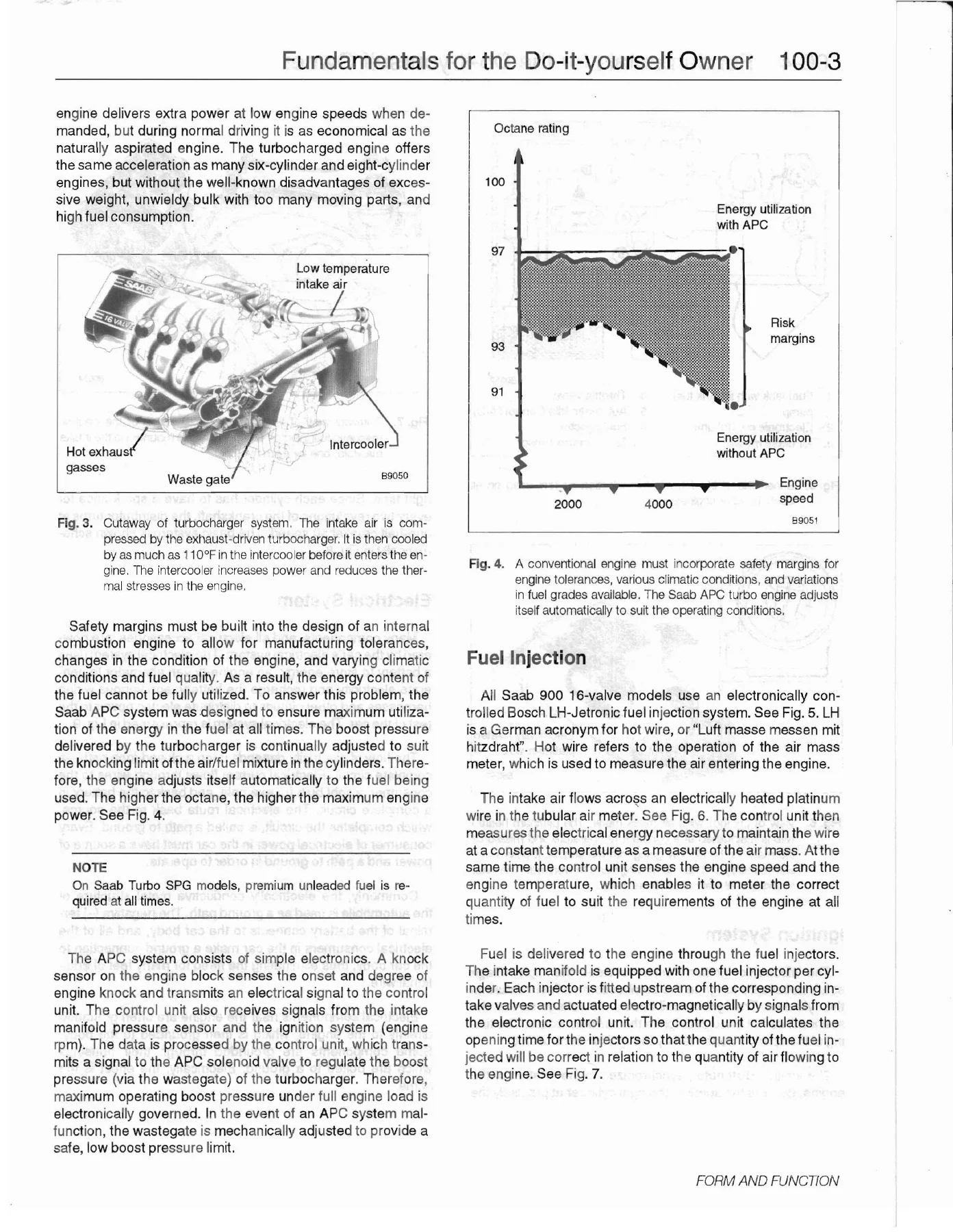
For turbocharged cars the manual devotes a dedicated repair group to the turbocharger and APC system. It explains how boost pressure is controlled, how the knock sensor and pressure sensor feed the APC control unit, how the wastegate and solenoid valve interact, and how to test each component with a pressure gauge or vacuum pump. Basic boost pressure and maximum boost pressure are both specified with adjustment procedures and tightening torques, and the bypass valve, knock sensor installation angle, and pressure sensor resistance values are all given. This is the level of detail that lets a technician diagnose an overboost or underboost complaint without replacing parts at random.
Fuel Injection and Engine Management
The LH fuel injection group covers all three variants used across the 1985-1993 range – LH 2.2, LH 2.4, and LH 2.4.2 – with their differences in air mass meter, idle control valve, and throttle position sensor clearly identified. The manual walks through on-board diagnostics for LH 2.4 and LH 2.4.2, fault code display and clearing, component test cycles, fuel pressure and residual pressure tests, coolant temperature sensor resistance tables, air mass meter burn-off testing, injector testing, oxygen sensor testing, and AIC system diagnosis. Adjustments specific to LH 2.2 (base idle, throttle switch, dashpot) are also documented.
Electrical Diagrams and Test Procedures
Section 3 and the wiring diagram group together form a complete electrical troubleshooting resource. Component, connector, and ground locations are listed for each subsystem, wiring diagrams are broken out by circuit (ABS, A/C, APC, backup lights, brake lights, central locking, cruise control, direction indicators, fuel system, headlights, heated seats, horns, ignition, interior lighting, passive seat belts, power mirrors, power windows, radiator fan, radio, SRS, ventilation fan, wipers, and more), and general test methods for voltage, voltage drop, continuity, and short circuits are explained with the correct digital multimeter settings.
Specifications, Torque Values, and Service Limits
Because the Saab 900 uses specific tightening torques and clearances throughout, the manual repeats them at the point of use and collects them in the technical data section. Engine oil drain plug torque, cylinder head bolt stages, main bearing and connecting rod cap torques, camshaft sprocket torque, wheel lug torque, brake caliper torque, ball joint and control arm torque, steering rack and column torque, suspension torque values for front and rear, and automatic transmission line pressure specifications are all included. Fluid capacities for engine oil, coolant, manual transmission oil, automatic transmission fluid, final drive oil, and power steering fluid appear with their grades.
Who This Manual Is For
This Saab 900 16 Valve Turbo Service Manual suits the owner who maintains their own car, the independent workshop that services older Saabs, and the restorer working through a full mechanical rebuild. The procedures assume basic automotive hand tools and a torque wrench, and they note where Saab special tools are required – such as the clutch spacer ring, the flywheel holding fixture, the crankshaft seal guide, the ball joint press, the wheel bearing press tools, and the spring compressor for front coil springs. Where a job genuinely needs special equipment, the manual says so rather than pretending the work can be done with a socket set.
Buy the Saab 900 16 Valve Turbo Service Manual as an Instant PDF
Everything in this listing is delivered as a single downloadable PDF – the same 572-page workshop document in one file. There is no shipping, no waiting, and no physical book to lose. Open it on a laptop, tablet, or phone in the garage, search or scroll to the system you are working on, and print only the pages you need. Whether you are chasing a fault code, measuring a crankshaft journal, setting ignition timing, bleeding the brakes, or adjusting the convertible top, this Saab 900 16 Valve Turbo Service Manual gives you the factory information to do the job correctly the first time.
IMAGES PREVIEW
Reviews
There are no reviews yet.