
Airbus A320 Aircraft Maintenance Manual – Structures, Doors, Fuselage, Wings Chapters 51-57 PDF
Original price was: $49.95.$29.95Current price is: $29.95.
8,908-page Airbus A320 Aircraft Maintenance Manual covering structural and airframe ATA Chapters 51-57: standard structural practices, doors, fuselage, nacelles/pylons, stabilizers, windows and wings. Revision No. 52, Nov 01/05, in English PDF format.
Description
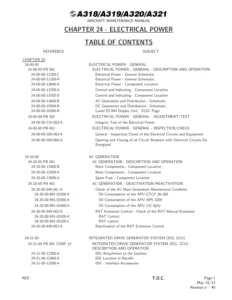
The Airbus A320 Aircraft Maintenance Manual – Structures, Doors, Fuselage, Wings Chapters 51-57 PDF is a large technical maintenance reference focused on the airframe-related ATA chapters contained in this volume. Across 8,908 PDF pages, it brings together Chapter 51 standard structural practices through Chapter 57 wing maintenance, with detailed task procedures, inspections, removals and installations, repairs, cleaning processes, component access information, safety precautions, consumables, tooling references, illustrations, and aircraft-effectivity notes. This is a structural and airframe-section A320 maintenance manual covering Chapters 51 through 57; it is not a complete all-systems A320 AMM containing every ATA chapter.
File Details
- Manual type: Aircraft Maintenance Manual
- Brand / model: Airbus A320
- Coverage: ATA Chapters 51 through 57
- Language: English
- Page count: 8,908 pages
- File format: PDF
- Revision: Revision No. 52
- Revision date: Nov 01/05
Airframe Maintenance Scope
This Airbus A320 maintenance manual volume is built around the physical aircraft structure and the systems directly associated with doors, fuselage sections, pylons, stabilizers, windows and wings. The material is organized in standard AMM task format, so procedures commonly identify the reason for the job, job set-up information, fixtures and support equipment, consumable materials, referenced information, access or aircraft configuration requirements, the maintenance procedure itself, and close-up steps. Many tasks also include warnings, cautions, circuit-breaker safety actions, hydraulic-system configuration, access-platform requirements and effectivity statements.
Chapter 51 provides the structural-practices foundation for the rest of the volume. It covers protective treatment, corrosion prevention, paint and protective coatings, sealants, minor-damage repairs, corrosion removal, paint stripping and repair, sealing repairs, fuel-tank seal repairs, composite-material preparation and repair, and contamination cleaning. The procedures include work on aluminum clad and unclad components, titanium, forged aluminum and steel components, skin dents, composite skins and monolithic structures. The chapter also contains procedures for cleaning after sewage leakage, hydraulic-fluid leakage, fish-shipment leakage, acid or alkali leakage, mercury spillage, and removal of corrosion-preventive compounds.
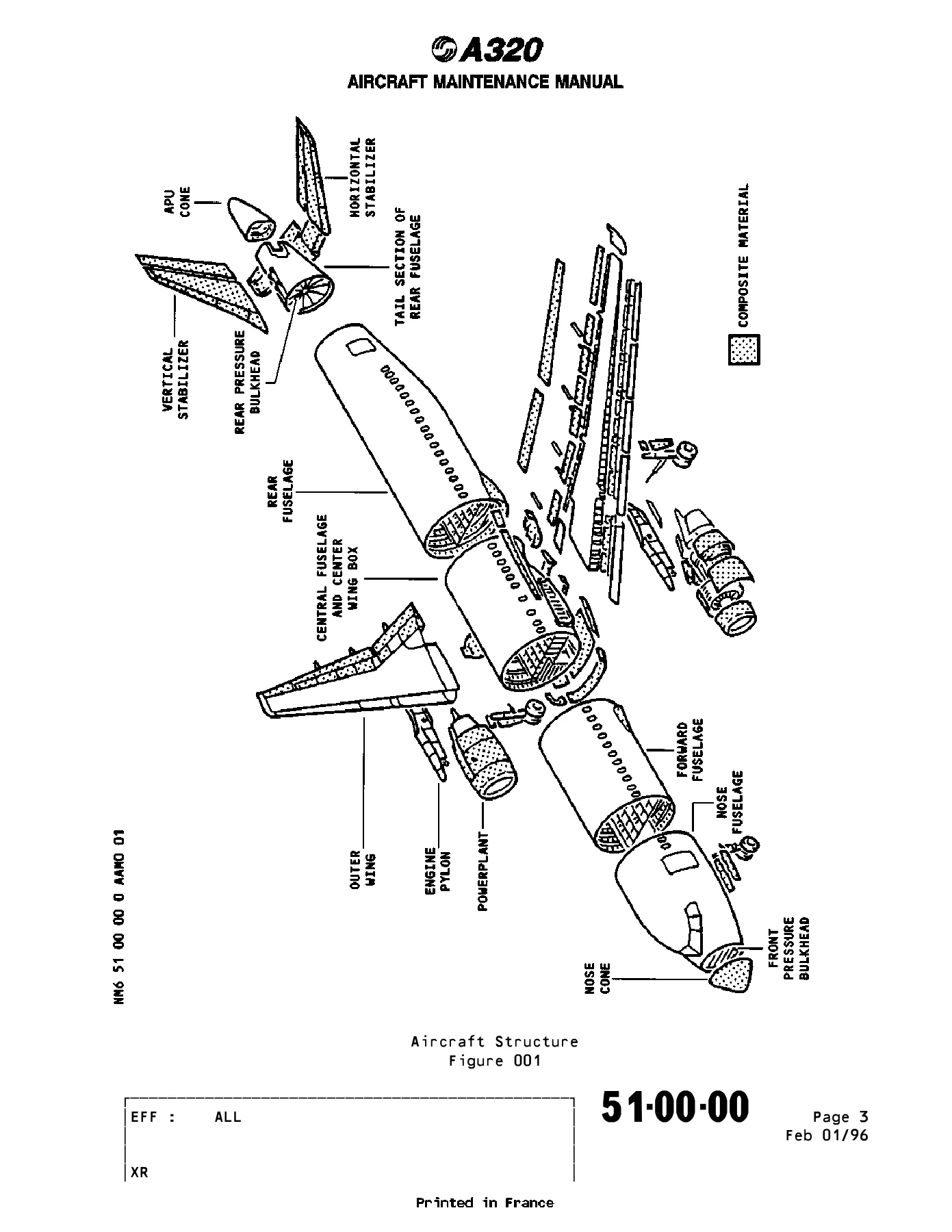
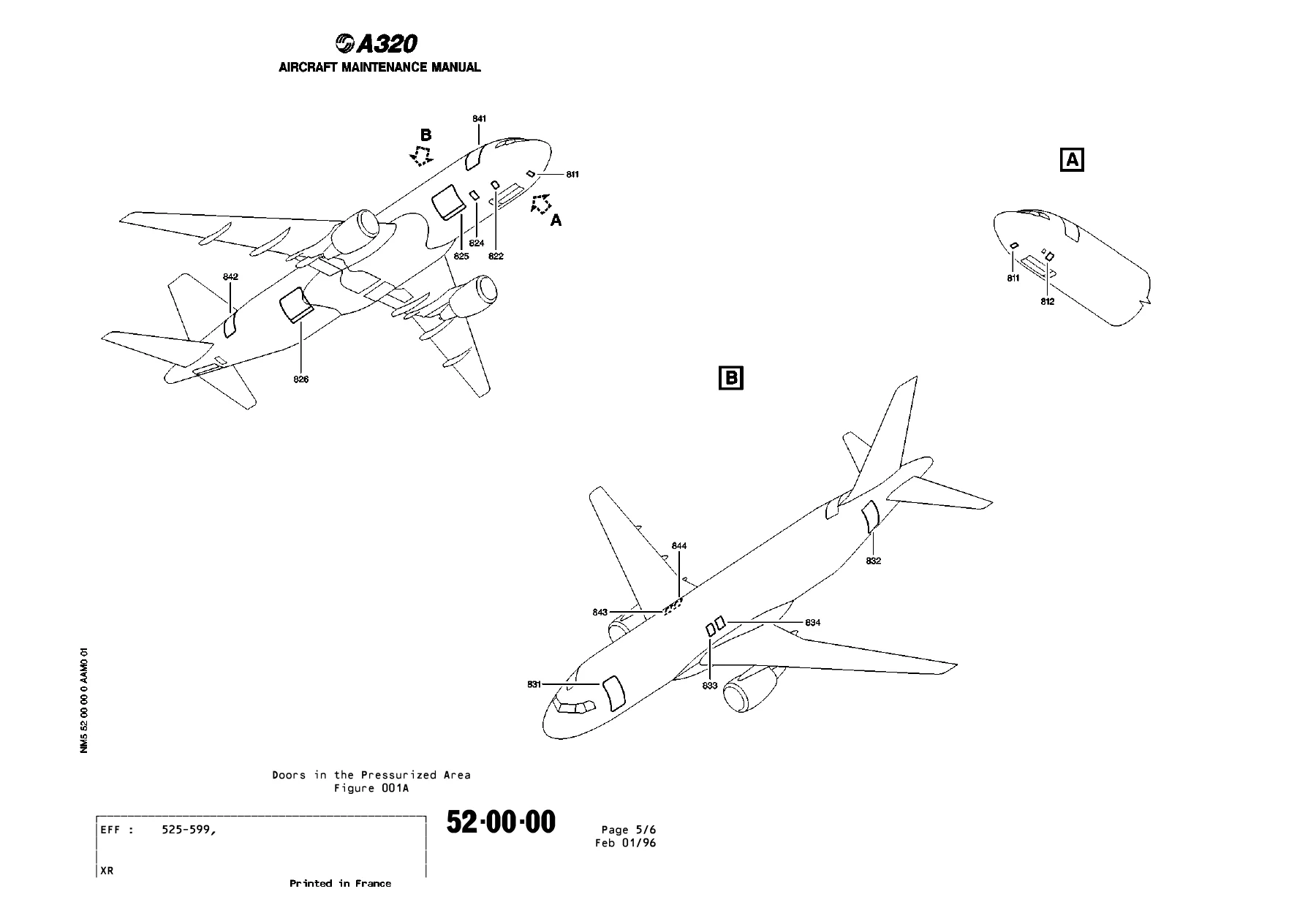
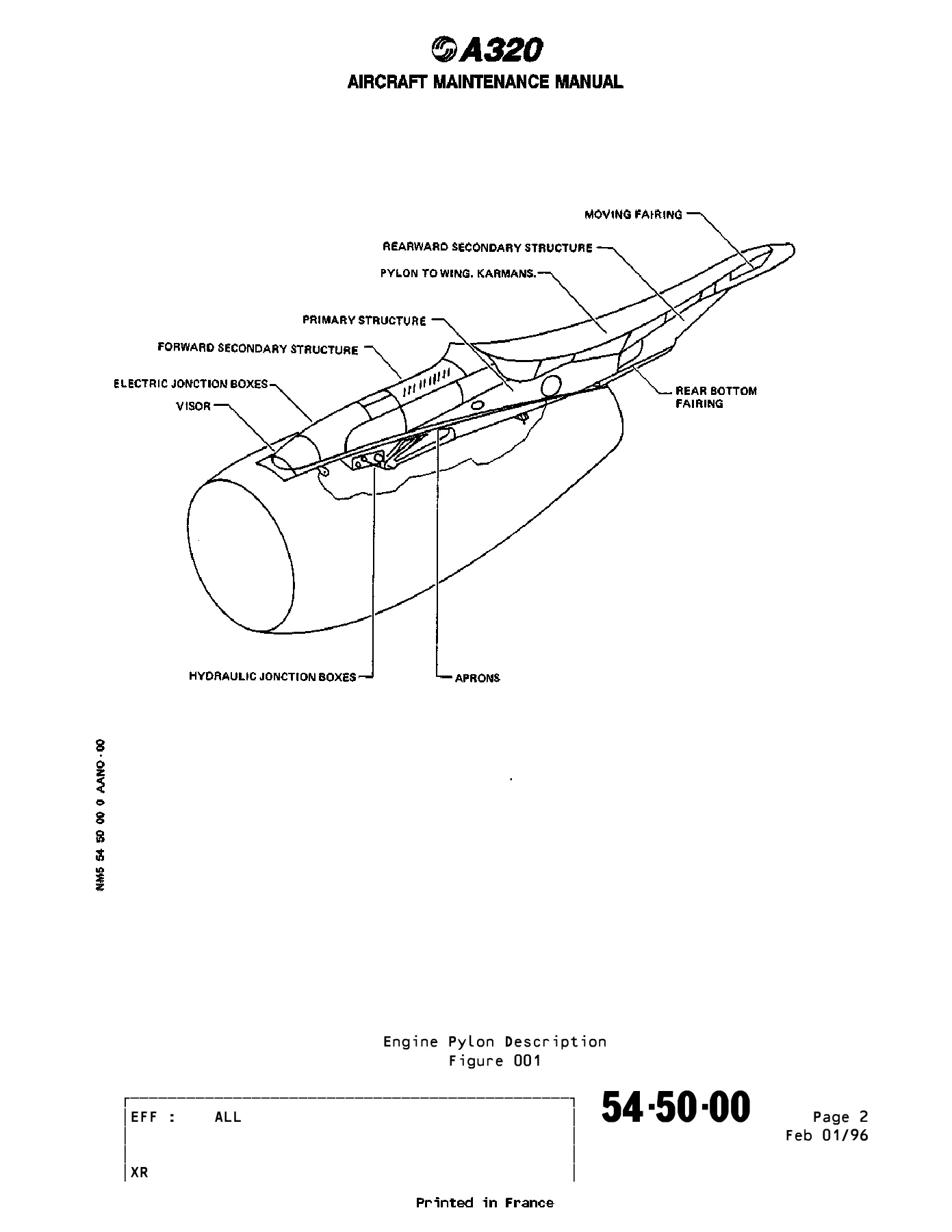
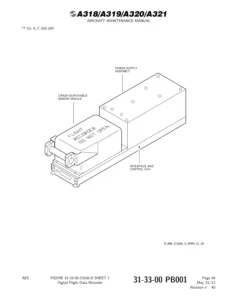
Throughout the manual, pictorial material is used to identify aircraft zones, structural areas, doors, coating areas, pylon features, stabilizer parts, repair layouts and other maintenance locations. Component-level tasks often reference dedicated figures and show the physical relationship of the part to surrounding structure, which is valuable when preparing access, confirming the correct area and following removal, inspection or installation steps.
Chapters Covered
- Chapter 51 – Standard Practices and Structures – General
- Protective treatment and corrosion prevention
- Coatings application for fuselage, wing, stabilizer, pylon and nacelle areas
- Sealing and sealant use
- Minor-damage inspection and repair
- Corroded-area repair and corrosion removal
- Paint stripping, paint-coating repair and special-coating repair
- General sealing repairs and fuel-tank sealing repairs
- Composite material preparation, water-break testing and composite skin repairs
- Cleaning after contamination and spillage
- Chapter 52 – Doors
- Passenger and crew doors
- Forward and aft passenger/crew door structure and mechanisms
- Door suspension, damping, emergency operation, seals, locking and latching
- Passenger-compartment emergency exits
- Forward, aft and bulk cargo-compartment doors
- Cargo-door lining, insulation, sealing, locking, vent doors, actuators and frame fittings
- Cargo-compartment door electrical and hydraulic systems
- Access doors, service doors and ground-service access doors
- Cockpit door fixed interior and locking-system components
- Door warning, proximity switches and emergency-slide release indication
- Main landing-gear, nose-gear and ram-air-turbine doors
- Chapter 53 – Fuselage
- Nose and forward fuselage main structure
- Cockpit, cabin, avionics and cargo-compartment floor panels
- Radome, door-entrance scuff plates and cabin fittings
- Forward, center and rear fuselage structure
- Wing-to-fuselage fairings and access panels
- Support struts, drains and overpressure-valve areas
- Dorsal fin and rear-fuselage fairings
- Tail-cone structure, APU-compartment area and stabilizer-related fairings
- Chapter 54 – Nacelles/Pylons
- Engine pylons and pylon box
- Pylon-to-wing and pylon-to-engine attach fittings
- Pylon doors, fittings and ball-joint/spigot items
- Forward, aft fixed, aft movable and lower fairings
- Pylon-to-wing center fillets
- Pylon-to-nacelle junction fittings and sealing
- Chapter 55 – Stabilizers
- Horizontal and trimmable horizontal stabilizer
- THS spar box, leading edge, trailing edge, tips and apron
- THS actuator-arm fittings, bearings and elevator hinge/support fittings
- Elevators, elevator spar box, leading edge, tips and attach fittings
- Vertical stabilizer spar box, leading edge, trailing edge, tip and attach fittings
- Rudder structure, fillet fairing, tip and attach fittings
- Chapter 56 – Windows
- Cockpit windows
- Windshield and fixed cockpit windows
- Sliding windows and sliding-window actuating mechanism
- Cabin windows
- Forward and aft passenger/crew door windows
- Chapter 57 – Wings
- Center wing and outer wing
- Main wing structure and access covers
- Fixed partitions, slat tracks and associated fittings
- Main landing-gear attachment and pylon-fairing brackets
- Wing-tip structure, wing-tip fence and navigation-light glazing
- Leading-edge structure, mountings, access panels and skins
- Trailing-edge structure, shroud box, aileron-hinge supports and access panels
- Inboard and outboard flap structure
- Flap fairings and aileron-related structural sections
Taken together, these chapters give a technician a broad airframe-maintenance reference rather than a single-component booklet. The manual can support work that begins with identifying the correct structure or access area and continues through preparation, protection of adjacent equipment, removal or opening steps, inspection, repair or replacement, reinstallation and restoration of the aircraft to its required maintenance configuration. The extensive cross-references also show when a task depends on related AMM or structural-repair information.
Repair, Inspection and Maintenance Detail
The repair content is particularly strong in Chapter 51. Examples include inspection of minor damage to aluminum cladding, repair of scratches and dents, removal of corrosion, treatment of unpainted light alloy and window frames, major and minor paint repair, sealant repair, local fuel-tank sealant repair, fuel-tank fillet repair, temporary external fuel-tank repair, and both temporary and permanent composite skin repairs. The procedures specify the materials, tools and preparation steps required, and they preserve important dimensional limits and process values where the AMM provides them.
Composite work includes preparation of damaged surfaces, water-break testing, preparation of corrosion-resistant steel doublers, temporary skin repair with high-speed tape, permanent one-ply-depth skin repair and temporary repair of monolithic structures with a corrosion-resistant steel doubler. The manual identifies GFRP, CFRP and AFRP as composite materials used in aircraft structure and distinguishes sandwich, monolithic and mixed structures.
The door, fuselage, pylon, stabilizer, window and wing chapters expand from general description into maintenance-practice, removal/installation, adjustment, inspection/check and test tasks as applicable to the component. This makes the Airbus A320 Aircraft Maintenance Manual Chapters 51-57 useful for tracing an airframe job from the assembly level down to specific mechanisms, fittings, panels, seals, hinges, supports and structural members.
For Airframe and Structural Maintenance Reference
The Airbus A320 Aircraft Maintenance Manual – Structures, Doors, Fuselage, Wings Chapters 51-57 PDF is suited to users who specifically need the A320 structural side of the AMM: standard structural practices, corrosion and coating work, doors and exits, fuselage structure, engine pylons, stabilizers, windows and wing structures. Because the document includes effectivity information, users should follow the effectivity printed with each task and figure rather than assume every procedure applies to every aircraft configuration.
Use the Correct A320 Procedures Without Waiting for a Printed Manual
With this Airbus A320 structures and airframe maintenance manual, you can work from the documented task sequence for inspections, access, removal and installation, structural repair, corrosion treatment, sealing, painting, cleaning and component maintenance across Chapters 51-57. Using the correct procedure, material reference, safety step and aircraft effectivity matters when performing airframe work and helps reduce the risk of applying the wrong process to a structure or component.
IMAGES PREVIEW
Delivery is by instant PDF download after purchase. There is no physical shipping and no waiting for a printed book. The file can be saved for use on a computer, tablet or phone and printed when a paper reference is useful at the workbench or maintenance area.
Reviews
There are no reviews yet.