★ TRUSTED BY 321,897+ PROFESSIONALS WORLDWIDE
🏢
Trusted Business
Verified & Licensed
🛡️
Virus Free Files
100% Safe Downloads
🔒
Secure Payment
SSL Protected
Instant Delivery
Available Immediately
Sale!

Cessna Citation CJ2+ Pilot Training Manual – Revision 1.1 July 2014 PDF

Original price was: $44.95.Current price is: $29.95.

Official Cessna Citation CJ2+ Pilot Training Manual. Covers aircraft systems, FADEC engines, avionics, flight procedures, and emergency operations for the CE-525A light jet. Essential for pilots, instructors, and recurrent training.

Instant PDF Download
Available immediately
💾
Save to Your Device
Download & keep forever
🛡️
Antivirus Scanned
100% virus-free
🌍
Trusted Worldwide
175,000+ customers

Description

Cessna Citation CJ2+ Pilot Training Manual – Revision 1.1 July 2014

This is the complete, full-color Cessna Citation CJ2+ Pilot Training Manual (Revision 1.1, July 2014), published by FlightSafety International. This comprehensive digital manual is the same document used in professional training courses for the Cessna Citation CJ2+ (Model CE-525A) light business jet. It provides a detailed description of major airframe, engine, and avionics systems, along with standardized procedures and performance data essential for safe and efficient operation of the aircraft.

Whether you are a pilot, flight instructor, maintenance technician, or aviation student, this training manual offers an authoritative reference for understanding the CJ2+ aircraft and its systems. It covers everything from general aircraft structures and electrical systems to advanced avionics like the Collins Pro Line 21 suite and the Williams FJ44-3A-24 FADEC-controlled engines.

File Details

  • Manual Type: Pilot Training Manual
  • Brand / Aircraft: Cessna Citation CJ2+ (CE-525A)
  • Language: English
  • Page Count: Approximately 440 pages
  • File Format: PDF
  • Document Number / Revision: Revision 1.1
  • Publication Date: July 2014
  • Publisher: FlightSafety International

Chapters Covered

The manual is organized into 21 comprehensive chapters that progressively build your knowledge of the Cessna Citation CJ2+. Below are the core sections and their primary subjects:

IMAGES PREVIEW

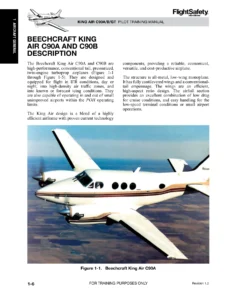
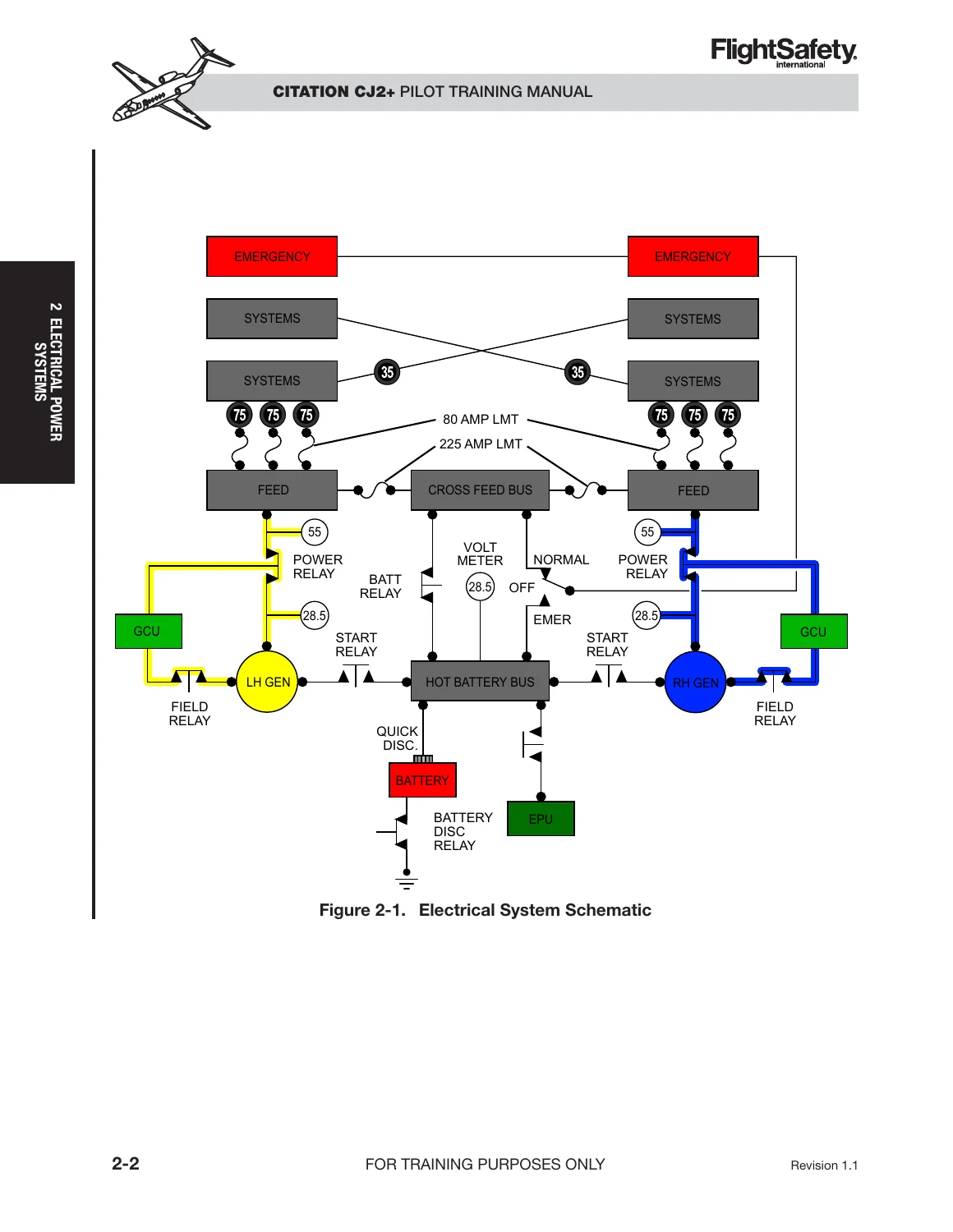
Cessna Citation CJ2+ Pilot Training Manual - Revision 1.1 July 2014 PDF — PDF page 1 preview
Cessna Citation CJ2+ Pilot Training Manual - Revision 1.1 July 2014 PDF — PDF page 12 preview
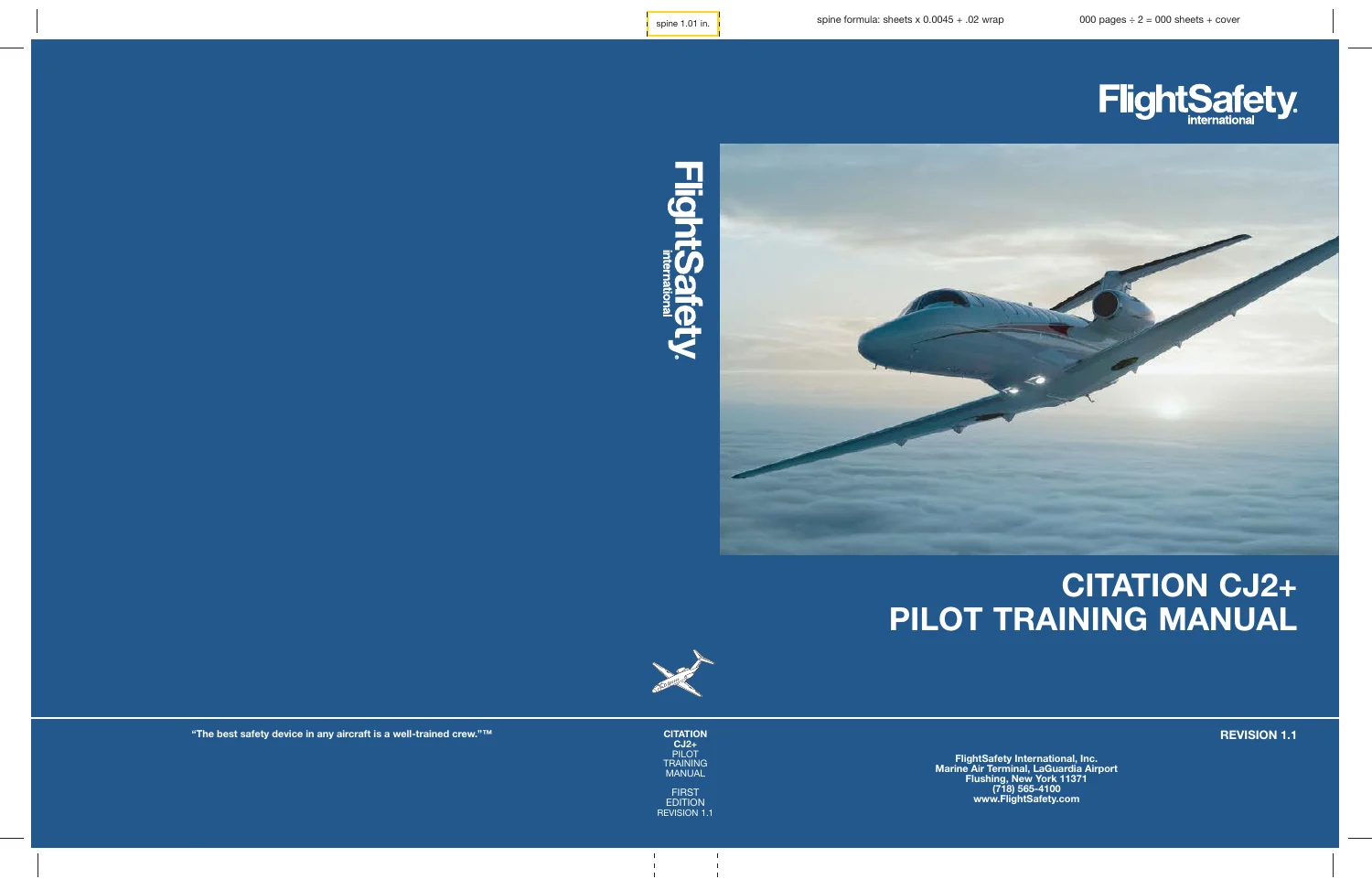
Cessna Citation CJ2+ Pilot Training Manual - Revision 1.1 July 2014 PDF — PDF page 27 preview

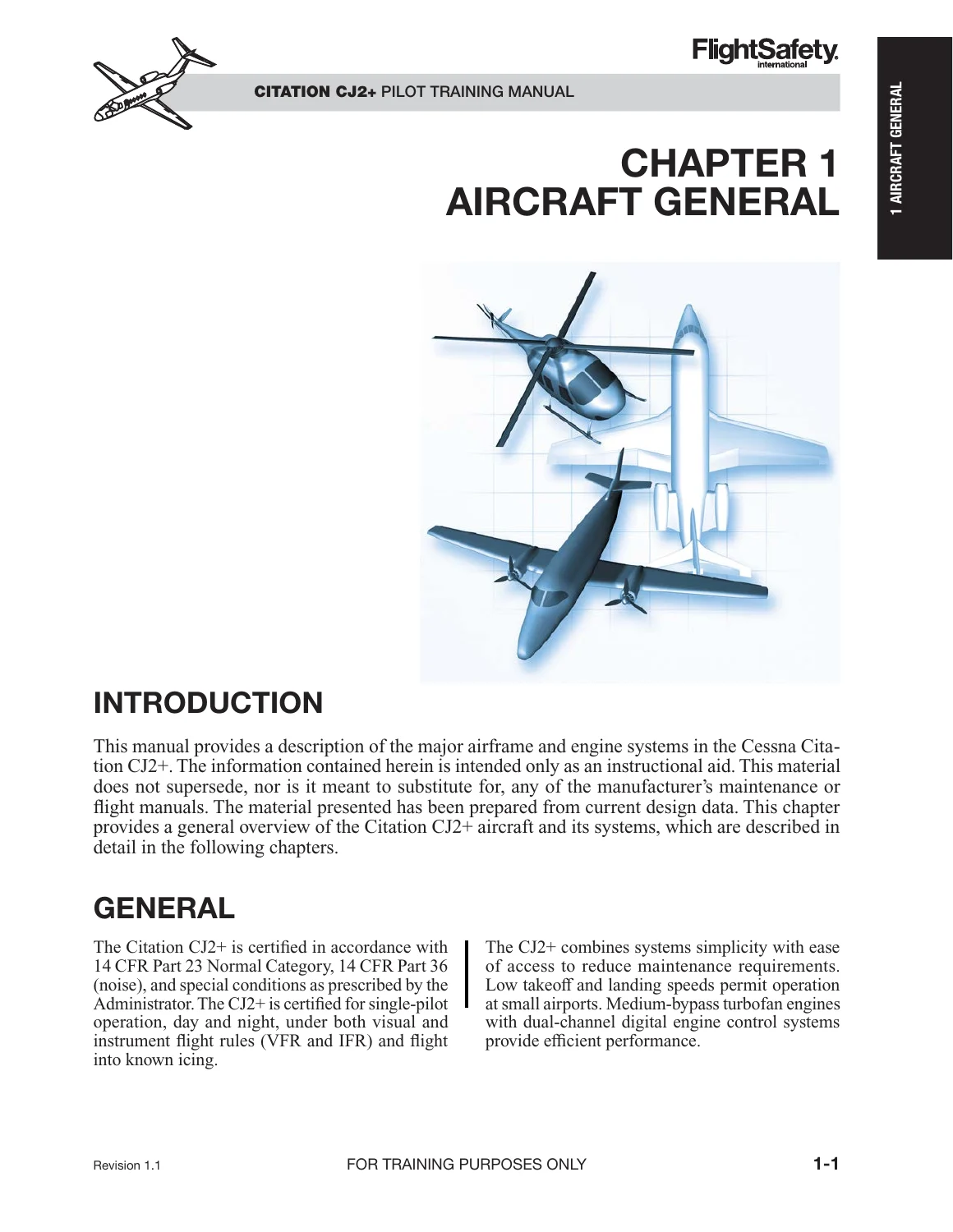
  • 1. Aircraft General: Introduction, general description, structures (nose, flight compartment, cabin, wing, empennage), systems overview (electrical, fuel, engines, ice protection, hydraulic, flight controls, environmental, avionics), publications, and limitations.
  • 2. Electrical Power: System general, components (battery, starter-generators, external power unit, distribution, system protection), controls and indications (switches, ammeters, voltmeter), and operational procedures (preflight, starting, limitations).
  • 3. Lighting: Interior lighting (cockpit, cabin, emergency, baggage), exterior lighting (navigation, anticollision, beacon, landing/recognition/taxi, wing inspection, tail floodlights, PulseLite® system), and emergency egress lighting.
  • 4. Master Warning System: General description, annunciator panel, auto-dim, MASTER WARNING and MASTER CAUTION lights, rotary test knob, intensity control, audio warning system, and annunciator tables.
  • 5. Fuel System: Fuel storage, distribution (boost pumps, ejector pumps, transfer valve), controls and indications (fuel boost switches, fuel transfer selector, quantity indication), and normal and transfer operation.
  • 6. Powerplant (Engines): General overview of the Williams FJ44-3A-24 turbofan engine, engine indicating system (EIS), instrumentation (N1, ITT, N2, oil pressure/temperature), engine systems (oil, fuel, ignition), FADEC control system, idle control, synchronization, and maintenance considerations.
  • 7. Fire Protection: Engine fire detection (sensors, lights, test) and extinguishing system (bottles, controls, operation), portable fire extinguisher.
  • 8. Pneumatics: Bleed-air distribution, service air system, pylon inlet ram air, fresh air system, components (precoolers, service air regulator), controls and indications (air source select knob, annunciators).
  • 9. Ice and Rain Protection: Ice detection system, anti-ice systems (pitot-static/AOA, windshield, engine, wing, pylon ram-air inlets), tail deice system, rain removal (windshield bleed air, rain doors, nosewheel chine).
  • 10. Air Conditioning: Temperature-controlled pressurized air, vapor cycle air conditioning, air distribution, controls and indications (air source select, temperature control, fan switches), and operation.
  • 11. Pressurization: System description, outflow valves, controls (pressure controller, manual toggle, cabin dump), automatic mode, isobaric mode, manual control, high-altitude mode (autoschedule), and emergency cabin dump.
  • 12. Hydraulic Power System: General, components (reservoir, pumps, loading valve, relief valve, firewall shutoff valves, filters, flow switches), operation, and subsystems (landing gear, speedbrakes, flaps).
  • 13. Landing Gear and Brakes: General, landing gear (main and nose gear systems, components, controls), nosewheel steering, brakes (description, antiskid system, parking brakes, emergency brakes, components, controls, operation).
  • 14. Flight Controls: Primary flight controls (elevators, ailerons, rudder), secondary flight controls (trim systems, rudder bias system, flaps, speedbrakes), controls, indications, and operation.
  • 15. Avionics: System power, digital air data computers (ADC), attitude heading reference systems (AHRS), electronic flight displays (PFD, MFD, standby instruments), flight guidance system (FGC, autopilot, mode select panel), short-range and long-range navigation (Collins FMS-3000, Garmin-500 GPS), IFIS, radar altimeter, AOA, TCAS, weather radar, radio tuning units, and audio panels.
  • 16. Oxygen System: Description, components (cylinder, masks, controls), operation (CREW ONLY, NORMAL, MANUAL DROP modes), and maintenance.
  • 17. Maneuvers and Procedures: Performance, flight operations (preflight, taxi, takeoff, climb, cruise, descent, approach and landing), airwork maneuvers (steep turns, unusual attitude recoveries), approach to stall training, and simulator training guidance.
  • 18. Weight and Balance: General, definitions, forms (airplane weighing, weight-and-balance record, loading tables, computation forms), and a sample loading problem.
  • 19. Flight Planning and Performance: Formulas and calculation methods for takeoff and landing performance using AFM charts.
  • 20. Crew Resource Management: What CRM is, situational awareness, command and leadership, communication process, and decision-making process.
  • Walkaround & Appendices: Detailed pictorial walkaround guide covering preliminary exterior and cockpit inspection, hot items/lights, and a full exterior inspection of the nose, wings, nacelles, empennage, and compartments. Includes an appendix with answers to all chapter review questions.

This is not just a simple booklet; it is a complete training system. The manual provides in-depth explanations of complex systems like the dual-channel Full-Authority Digital Engine Control (FADEC), the Collins Pro Line 21 avionics suite, and the advanced pressurization and environmental control systems. It is filled with detailed diagrams, system schematics, and tables that are essential for understanding the aircraft’s operation and for performing professional, standardized procedures.

Complete PDF Bookmark Tree

Complete Bookmarks

The complete bookmarks in the “Cessna Citation CJ2+ Pilot Training Manual – Revision 1.1 July 2014 PDF” are as follows:

CITATION CJ2+ PILOT TRAINING MANUAL – Rev. 1.1p. 1
LIST OF EFFECTIVE PAGESp. 4
TOCp. 6
AIRCRAFT GENERALp. 8
CONTENTSp. 8
ILLUSTRATIONSp. 10
TABLESp. 10
Introductionp. 12
Descriptionp. 13
Structuresp. 13
Nose Sectionp. 13
Flight Compartmentp. 16
Entrance Door and Emergency Exitp. 16
Cabinp. 17
Wingp. 17
Tailcone Compartmentp. 17
Empennagep. 19
Systemsp. 19
Electrical Systemp. 19
Fuel Systemp. 20
Enginesp. 20
Ice Protection Systemp. 20
Hydraulic Systemp. 20
Flight Controlsp. 20
Environmental Controlsp. 20
Avionicsp. 20
Publicationsp. 21
limitationsp. 21
EMERGENCY/ABNORMALp. 21
ELECTRICAL POWER SYSTEMp. 22
CONTENTSp. 22
ILLUSTRATIONSp. 24
TABLESp. 24
Introductionp. 26
Generalp. 26
Descriptionp. 28
Componentsp. 28
Batteryp. 28
Starter-Generatorsp. 30
External Power Unitp. 30
Distributionp. 31
System Protectionp. 35
Controls and Indicationsp. 36
Battery Switchp. 36
Battery Disconnect Switchp. 37
Interior Masterp. 37
Generator Switchesp. 37
Engine Start Buttonsp. 37
Ammeters (Left and Right)p. 37
Voltmeter and VOLTAGE SEL Switchp. 38
Engine Start Button Lightp. 38
Operationp. 38
Preflightp. 38
Starting (First Engine)p. 38
Starting (Second Engine, Generator Assisted)p. 39
Starting (In Flight)p. 39
Starting (Assisted by External Power Unit)p. 39
LIMITATIONSp. 39
EMERGENCY/ABNORMALp. 39
QUESTIONSp. 41
LIGHTINGp. 44
CONTENTSp. 44
ILLUSTRATIONSp. 46
Introductionp. 48
Generalp. 48
Interior Lightingp. 49
Descriptionp. 49
Cockpit Lightingp. 49
Cabin Lightingp. 50
Emergency Lightingp. 53
Baggage Compartment Lightingp. 53
Exterior Lightingp. 54
Descriptionp. 54
Navigation Lightsp. 54
Anticollision Lightsp. 54
Beacon Lightp. 54
Landing/Recognition/Taxi Lightsp. 56
Wing Inspection Lightp. 56
Tail Floodlightsp. 56
Automatic PULSELITE® Systemp. 56
Emergency Egress Lightingp. 57
LIMITATIONSp. 57
EMERGENCY/ABNORMALp. 57
QUESTIONSp. 58
MASTER WARNING SYSTEMp. 60
CONTENTSp. 60
ILLUSTRATIONSp. 62
TABLESp. 62
Introductionp. 64
Generalp. 64
Descriptionp. 65
Controls and Indicationsp. 65
Annunciator Panelp. 65
Auto-Dimp. 65
MASTER WARNING and Master Caution Lightsp. 65
Rotary TEST KNOBp. 67
Intensity Controlp. 67
Audio Warning Systemp. 67
LIMITATIONSp. 67
EMERGENCY/ABNORMALp. 67
QUESTIONSp. 70
FUEL SYSTEMp. 72
CONTENTSp. 72
ILLUSTRATIONSp. 74
TABLESp. 74
Introductionp. 76
Generalp. 76
Fuel Storagep. 77
Descriptionp. 77
Componentsp. 77
Operationp. 78
Fuel Distributionp. 79
Descriptionp. 79
Componentsp. 79
Controls and Indicationsp. 80
FUEL BOOST Switchesp. 80
FUEL TRANSFER Selectorp. 80
Quantity Indicationp. 80
Fuel Temperature Indicationp. 81
Fuel Flow Indicationp. 81
Fuel Quantity Signal Conditionerp. 81
LH or RH ENG FIRE Lightp. 81
Operationp. 82
Normal Operationp. 82
Fuel Transfer System Operationp. 82
LIMITATIONSp. 85
EMERGENCY/ABNORMALp. 85
QUESTIONSp. 87
APUp. 90
POWERPLANTp. 92
CONTENTSp. 92
ILLUSTRATIONSp. 94
Introductionp. 98
Generalp. 98
Major Sectionsp. 99
Powerplant Indicationsp. 100
Engine Indicating Systemp. 100
Instrumentationp. 102
Engine Systemsp. 104
Oil Systemp. 105
Fuel Systemp. 107
Ignition Systemp. 109
Powerplant Control and Operationp. 111
FADEC Control Systemp. 111
Idle Control Systemp. 114
Synchronizationp. 116
Maintenance Considerationsp. 117
Oil Tankp. 117
LIMITATIONSp. 117
EMERGENCY/ABNORMALp. 118
QUESTIONSp. 119
FIRE PROTECTIONp. 122
CONTENTSp. 122
ILLUSTRATIONSp. 124
TABLESp. 124
Introductionp. 126
Generalp. 126
Engine Fire Detectionp. 127
Descriptionp. 127
Componentsp. 127
Controls and Indicationsp. 127
Engine Fire Extinguishingp. 129
Descriptionp. 129
Componentsp. 129
Controls and Indicationsp. 130
Operationp. 130
Maintenance Considerationsp. 131
Portable Fire Extinguisherp. 131
LIMITATIONSp. 131
EMERGENCY/ABNORMALp. 131
QUESTIONSp. 133
PNEUMATICSp. 134
CONTENTSp. 134
ILLUSTRATIONSp. 136
TABLESp. 136
Introductionp. 138
Generalp. 138
Descriptionp. 139
Bleed-Air Distributionp. 139
Service Air Systemp. 141
Pylon Inlet Ram Airp. 141
Fresh Air Systemp. 141
Componentsp. 141
Precoolersp. 141
Service Air Regulatorp. 143
Inflatable Cabin Door Sealp. 143
Controls and Indicationsp. 144
AIR SOURCE SELECT Knobp. 144
Annunciatorsp. 144
LIMITATIONSp. 144
EMERGENCY/ABNORMALp. 144
QUESTIONSp. 146
ICE AND RAIN PROTECTIONp. 148
CONTENTSp. 148
ILLUSTRATIONSp. 150
TABLESp. 150
Introductionp. 152
Generalp. 152
Ice Detection Systemp. 154
Descriptionp. 154
Componentsp. 154
Controls and Indicationsp. 154
Anti-Ice Systemsp. 155
Descriptionp. 155
Componentsp. 155
Pitot-Static/Angle-of-Attack Anti-Ice Systemp. 156
Windshield Anti-Ice Systemsp. 156
Engine Anti-Ice Systemp. 159
Pylon Ram-Air Inletsp. 160
Wing Anti-Ice Systemp. 160
Tail Deice Systemp. 165
Descriptionp. 165
Controls and Indicationsp. 165
Operationp. 166
Rain Removalp. 167
Descriptionp. 167
Componentsp. 167
Operationp. 167
LIMITATIONSp. 168
EMERGENCY/ABNORMALp. 168
QUESTIONSp. 170
AIR CONDITIONINGp. 172
CONTENTSp. 172
ILLUSTRATIONSp. 174
TABLESp. 174
Introductionp. 176
Generalp. 176
Temperature-Controller Pressurized Airp. 177
Descriptionp. 177
Componentsp. 177
Controls and Indicationsp. 177
Operationp. 178
Vapor Cycle Air Conditioningp. 182
Descriptionp. 182
Componentsp. 183
Controls and Indicationsp. 183
Operationp. 184
Air Distributionp. 185
Descriptionp. 185
Componentsp. 185
Controls and Indicationsp. 186
Operationp. 187
LIMITATIONSp. 188
EMERGENCY/ABNORMALp. 188
QUESTIONSp. 190
PRESSURIZATIONp. 192
CONTENTSp. 192
ILLUSTRATIONSp. 194
TABLESp. 194
Introductionp. 196
Generalp. 196
Descriptionp. 197
Componentsp. 197
Outflow Valvesp. 197
Controls and Indicationsp. 197
Pressure Controllerp. 197
Manual Toggle (Cherry Picker) Valvep. 199
Maxim­um Cabin Altitude Limit Valvep. 199
Maximum Differential Pressure Limiter Valvep. 199
CABIN DUMP Switchp. 199
AIR SOURCE SELECT Knobp. 199
Pressurization Controllerp. 200
Manual Pressurization Controls (Cherry Picker)p. 200
Cabin Differential Pressure Gauge and Cabin Altimeterp. 200
Pressurization Controller Lightsp. 200
Exercise Test Buttonp. 200
Operationp. 201
Air Source Select Knobp. 201
Outflow Valvesp. 201
Outflow Valves Operating Modesp. 202
Automatic Modep. 202
Isobaric Modep. 202
Manual Controlp. 203
High Altitude Mode—Autoschedulep. 203
High Altitude Departuresp. 204
Emergency Cabin Dumpp. 205
LIMITATIONSp. 205
EMERGENCY/ABNORMALp. 205
QUESTIONSp. 207
HYDRAULIC POWER SYSTEMp. 210
CONTENTSp. 210
ILLUSTRATIONSp. 212
TABLESp. 212
Introductionp. 214
Generalp. 214
Descriptionp. 215
Componentsp. 215
Reservoirp. 215
Pumpsp. 215
System Loading Valvep. 216
System Relief Valvep. 216
Firewall Shutoff Valvesp. 216
Filtersp. 216
Flow Switchesp. 216
Operationp. 216
Hydraulic Systemp. 216
Hydraulic Subsystemsp. 218
LIMITATIONSp. 218
EMERGENCY/ABNORMALp. 218
QUESTIONSp. 219
LANDING GEAR AND BRAKESp. 220
CONTENTSp. 220
ILLUSTRATIONSp. 222
TABLESp. 222
Introductionp. 224
Generalp. 224
Landing Gearp. 225
Descriptionp. 225
Main Gear Systemp. 226
Nose Gear Systemp. 230
Componentsp. 230
Controls and Indicationsp. 233
Operationp. 234
Nosewheel Steeringp. 236
Description and Operationp. 236
Brakesp. 237
Descriptionp. 237
Antiskid Systemp. 237
Parking Brakesp. 237
Emergency Brakesp. 239
Componentsp. 239
Controls and Indicationsp. 240
Operationp. 240
LIMITATIONSp. 242
EMERGENCY/ABNORMALp. 242
QUESTIONSp. 243
FLIGHT CONTROLSp. 246
CONTENTSp. 246
ILLUSTRATIONSp. 248
TABLESp. 248
Introductionp. 250
Generalp. 250
Descriptionp. 251
Primary Flight Controlsp. 251
Descriptionp. 251
Controls and Indicationsp. 251
Operationp. 252
Secondary Flight Controlsp. 253
Trim Systemsp. 253
Rudder Bias Systemp. 255
Flapsp. 257
Speedbrakesp. 259
LIMITATIONSp. 262
EMERGENCY/ABNORMALp. 262
QUESTIONSp. 265
AVIONICSp. 268
CONTENTSp. 268
ILLUSTRATIONSp. 270
Introductionp. 272
System Powerp. 273
STBY FLT DISPLAY Switchp. 273
AVIONICS POWER Switchp. 273
Digital Air Data Computer (ADC)p. 273
Attitude Heading Reference System (AHRS)p. 274
Electronic Flight Displaysp. 275
Standby Flight Instrumentsp. 276
Primary Flight Displayp. 277
Display Control Panel (DCP)p. 279
Multifunction Display (MFD)p. 281
Flight Guidance Systemp. 282
Flight Guidance Computer (FGC)p. 282
Autopilot Systemp. 283
Course/Altitude/Heading Panelp. 285
Mode Select Panelp. 285
Short Range Navigationp. 289
Long Range Navigationp. 289
Collins FMS-3000p. 290
Garmin-500 GPSp. 310
Integrated Flight Information (IFIS)p. 310
Operationsp. 310
Radar Altimeterp. 313
Angle of Attack (AOA)p. 313
Digital Clockp. 313
Terrain Awareness and Warning Systems (TAWS)p. 314
Landmark TAWS8000p. 314
Honeywell Mark V EGPWSp. 314
Honeywell Mark VIII EGPWSp. 315
Runaway Awareness and Advisory System (RAAS)p. 315
Traffic Alert and Collision Avoidance System (TCAS)p. 316
TCAS Ip. 316
TCAS IIp. 316
Aircraft Weather Radarp. 317
Radio Tuning Units (RTU)p. 318
Audio Panelsp. 319
Microphonesp. 319
LIMITATIONSp. 320
EMERGENCY/ABNORMALp. 320
QUESTIONSp. 321
OXYGEN SYSTEMp. 324
CONTENTSp. 324
ILLUSTRATIONSp. 326
Introductionp. 328
Generalp. 328
Descriptionp. 329
Componentsp. 329
Controls and Indicationsp. 330
Operationp. 331
Maintenance Considerationsp. 332
LIMITATIONSp. 334
EMERGENCY/ABNORMALp. 334
QUESTIONSp. 335
MANEUVERS AND PROCEDURESp. 336
CONTENTSp. 336
ILLUSTRATIONSp. 338
TABLESp. 338
Introductionp. 340
Performancep. 341
Takeoff and Landing Speedsp. 341
Weightsp. 341
Flight Operationsp. 342
Preflight and Taxip. 342
Sample Takeoff Briefingp. 344
Takeoffp. 344
Airwork Maneuversp. 345
Steep Turnsp. 345
Unusual Attitude Recoveriesp. 345
Miscellaneousp. 346
LIMITATIONSp. 347
EMERGENCY/ABNORMALp. 347
APPROACH TO STALL TRAINING REQUIREMENTSp. 348
Training Scenariosp. 348
Checking / Testing Requirementsp. 348
Stall Recovery Profilesp. 349
STALL RECOVERY RATIONALEp. 352
SIMULATOR TRAINING GUIDANCEp. 353
initial training coursep. 353
Simulator Session # 1p. 353
Simulator Session # 5p. 353
Simulator Session #7p. 353
recurrent training coursep. 353
Simulator Session # 1p. 353
Simulator Session # 2p. 353
WEIGHT AND BALANCEp. 364
CONTENTSp. 364
ILLUSTRATIONSp. 366
Introductionp. 368
Weightp. 368
Balancep. 368
Basic Formulap. 369
Weight Shift Formulap. 369
Weight Addition or Removalp. 369
Definitionsp. 369
Formsp. 370
Airplane Weighing FORMp. 370
Weight-and-Balance Recordp. 370
Baggage/Cabinet Compartments Weight-and-Moment Tablep. 370
Fuel Loading Weight-and-Moment Tablesp. 371
Weight-and-Balance Computation Formp. 371
Center-of-Gravity Moment Envelope Graphp. 371
Weight And Balance Sample Loading Problemp. 371
LIMITATIONSp. 371
EMERGENCY/ABNORMALp. 371
FLIGHT PLANNING AND PERFORMANCEp. 390
Introductionp. 390
Formulasp. 391
CREW RESOURCE MANAGEMENTp. 394
Contentsp. 394
Illustrationsp. 394
WHAT IS CREW RESOURCE MANAGEMENT?p. 396
SITUATIONAL AWARENESSp. 397
Figure 21-1. Situational Awareness in the Cockpitp. 397
COMMAND AND LEADERSHIPp. 398
Figure 21-2. Command and Leadershipp. 398
COMMUNICATION PROCESSp. 399
Figure 21-3. Communication Processp. 399
Communication Techniques: Inquiry, Advocacy, and Assertionp. 400
DECISION-MAKING PROCESSp. 401
Figure 21-4. Decision Making Processp. 401
WALKAROUNDp. 402
ANSWERS TO QUESTIONSp. 440

The manual also contains critical operational and performance data, covering limitations, emergency/abnormal procedures, and walkaround inspections. It is the foundational document used by pilots to master the Cessna Citation CJ2+ and maintain proficiency. The structured content, review questions at the end of each chapter, and practical flight profiles make it an invaluable self-study tool.

What You Can Do With This Manual

With this comprehensive Cessna Citation CJ2+ Pilot Training Manual, you can:

  • Master Aircraft Systems: Gain a thorough understanding of every major system on the CJ2+, from the electrical, fuel, and hydraulic systems to the advanced Collins Pro Line 21 avionics and FADEC-controlled engines.
  • Perform Standardized Procedures: Learn and practice correct operating procedures for normal operations, including engine start, taxi, takeoff, cruise, approach, and landing.
  • Handle Emergencies: Study and review critical emergency and abnormal procedures, including engine failures, fires, electrical failures, and pressurization emergencies, to ensure you are prepared for any situation.
  • Improve Flight Planning: Understand performance calculations for takeoff and landing, using the AFM-specified methods to ensure safe operations within the aircraft’s limitations.
  • Prepare for Training & Checkrides: Use the manual as the definitive study guide for initial and recurrent training, whether at FlightSafety or other training centers. The included review questions help reinforce key knowledge.
  • Enhance CRM Skills: Learn Crew Resource Management principles tailored to the CJ2+ cockpit environment, improving communication and decision-making with your crew.

Why is having the correct manual important? Operating a sophisticated light jet like the Cessna Citation CJ2+ requires precise knowledge. Using an incorrect or outdated manual can lead to procedural errors, misunderstandings of system limitations, and compromised safety. This training manual provides the exact, up-to-date information necessary to operate the aircraft efficiently and safely.

Instant Digital Delivery: Upon completing your purchase, you will receive immediate access to download this PDF. There is no shipping cost or wait time. You can access the manual on your computer, tablet, or smartphone, and you can print any sections you need for quick reference or study. It is a permanent, portable resource that you can always have with you, ensuring you have the correct information at your fingertips.
Reviews

There are no reviews yet.

Be the first to review “Cessna Citation CJ2+ Pilot Training Manual – Revision 1.1 July 2014 PDF”

What Our Customers Say

★★★★★ Live reviews from customers
Loading customer reviews...
0
    0
    Your Cart
    Your cart is emptyReturn to Shop
    🛒
    Recently Purchased
    🕒 verified order