
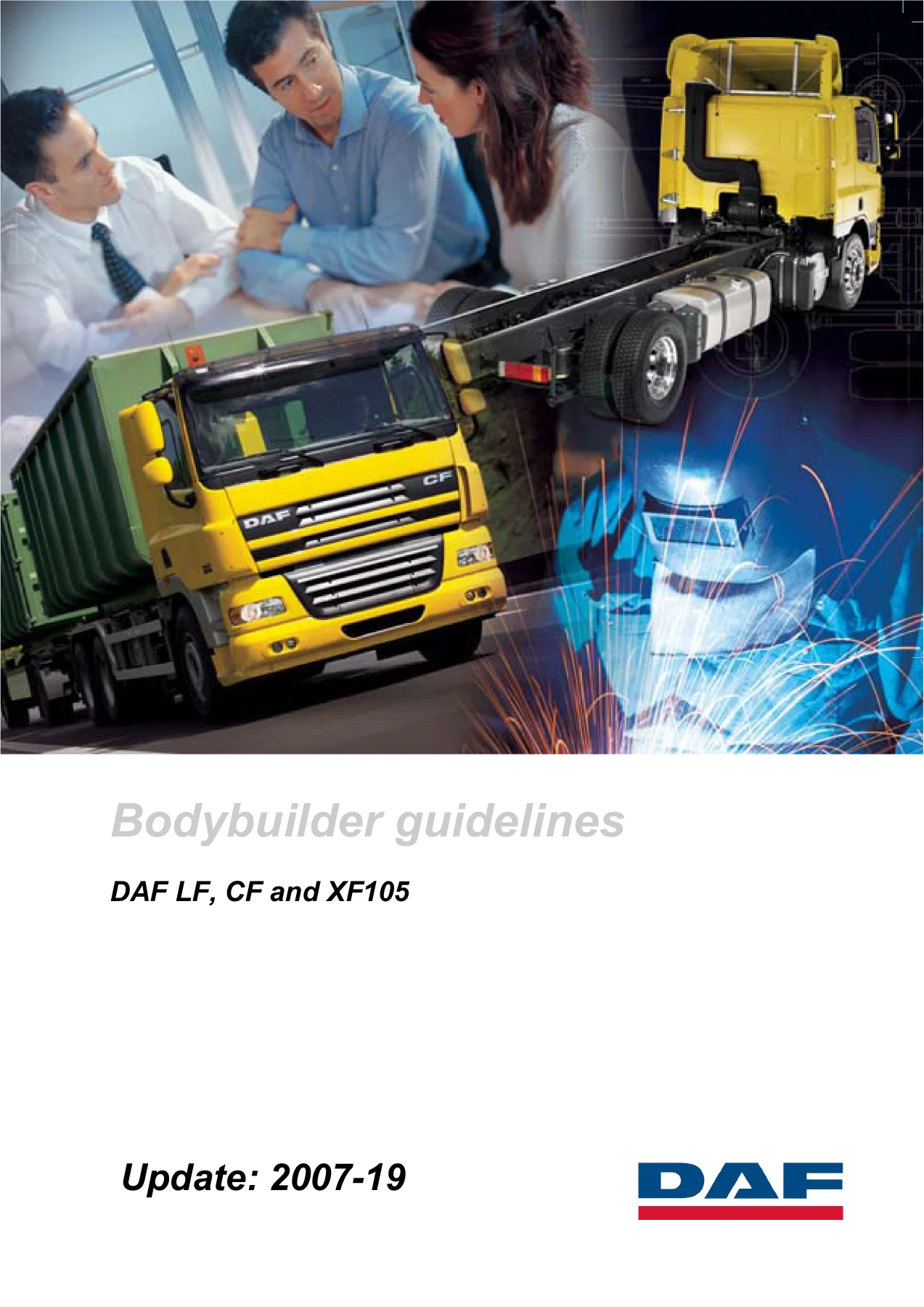
DAF LF CF XF105 Bodybuilder Guidelines 2007-19 – Chassis & Superstructure Mounting Manual PDF
Original price was: $44.95.$29.95Current price is: $29.95.
Complete DAF bodybuilder guidelines covering LF45, LF55, CF65, CF75, CF85 and XF105 chassis and superstructure integration. Includes body attachment methods, chassis modifications, PTO specifications, electrical connections and cab information for the 2007-19 update.
Description
DAF LF, CF and XF105 Bodybuilder Guidelines – 2007-19 Update
This is the complete DAF bodybuilder guidelines manual covering the LF45, LF55, CF65, CF75, CF85 and XF105 truck ranges. Published under document code 200719, this update brings together chassis information, superstructure attachment methods, energy consumer specifications and electrical system integration data in a single reference. Whether you are mounting a fixed body, tipper, tanker, refuse collector, crane or tail lift, this manual tells you how DAF expects the chassis and body to be joined.
File Details
- Manual type: Bodybuilder Guidelines
- Brand: DAF
- Covered models: LF45, LF55, CF65, CF75, CF85, XF105
- Language: English
- Page count: 314
- File format: PDF
- Document code: 200719 (Update 2007-19)
Chapters Covered
- 1. General
- 2. Chassis Information
- 3. General Information on Superstructures
- 4. Superstructures
- 5. Cab Information
- 6. Energy Consumers
- 7. Electrical System
- 8. Part Numbers
- 9. Reaction Form
General
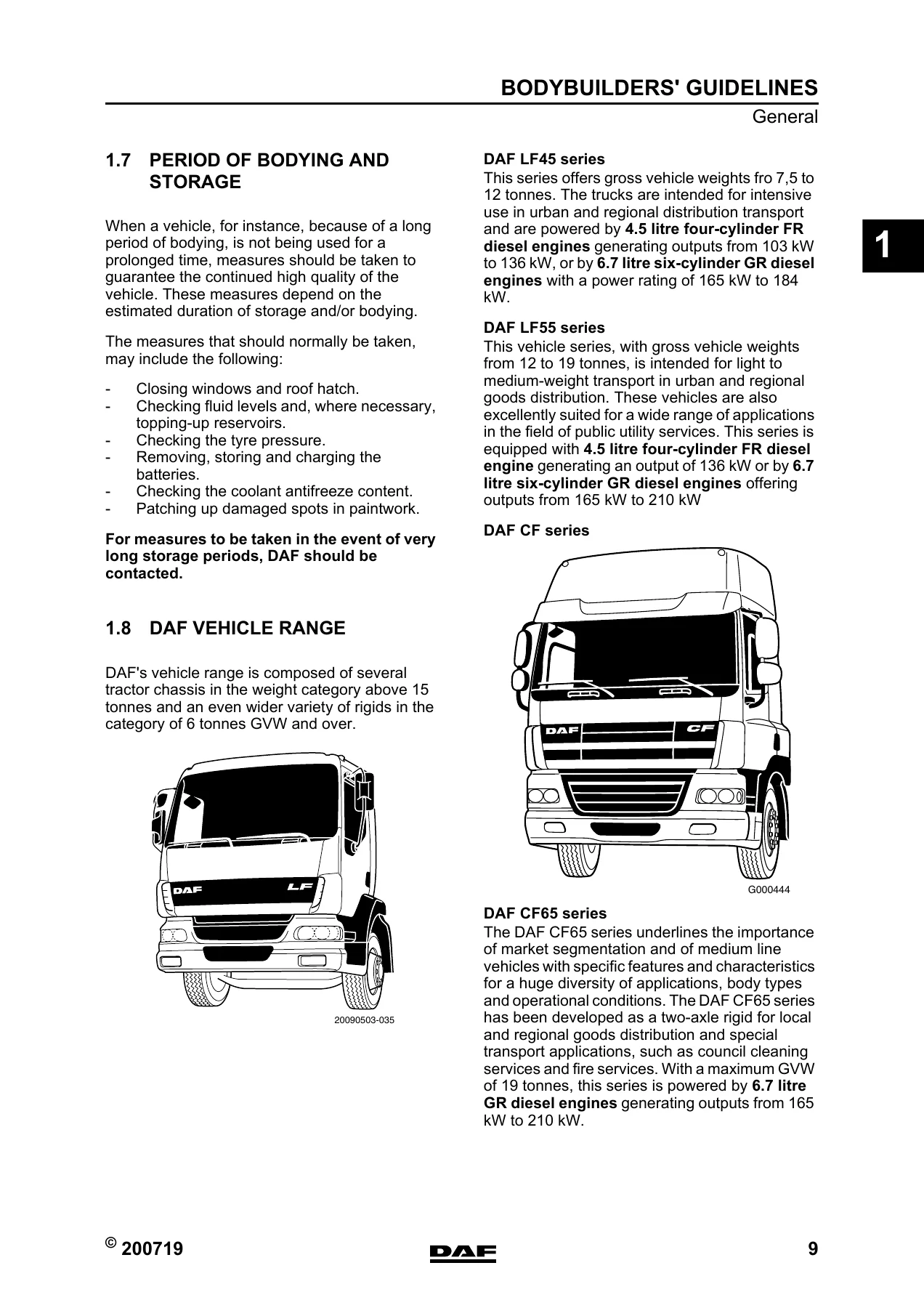
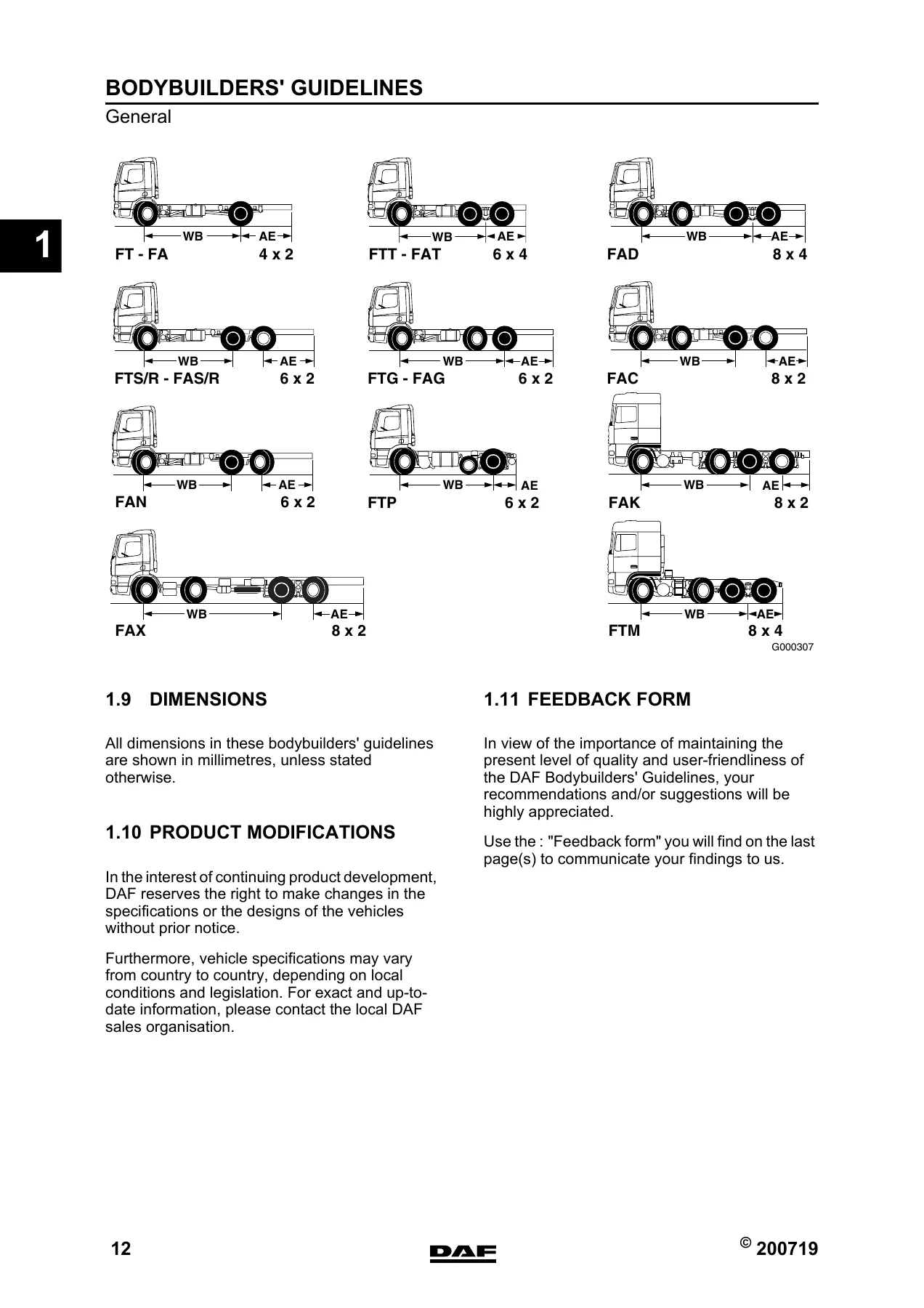
The opening chapter explains the purpose of the guidelines, DAF’s verification requirements for superstructure work, statutory obligations, weight distribution principles and the DAF vehicle range. It includes the vehicle range matrix showing which chassis types are available for each model series, plus the wheelbase and rear overhang designations used throughout the manual. You will also find the TOPEC layout drawing system explained and the address structure for DAF subsidiaries and importers.
Chassis Information
This chapter covers levelling the chassis before bodying, drilling and welding restrictions, rear overhang modification limits, wheelbase modification procedures, attachment of components to the chassis, replacing rivets with bolts, inlet and exhaust system clearance rules, fuel system connections and chassis dimensions. It includes the chassis specification tables giving side member dimensions, flitch dimensions and section material properties for tractors and rigids. Drawbar cross member data, D-value and V-value calculations, rear light brackets, wheel mounting and wheel clearance formulas are all covered here. The EC-approved rear underrun protection requirements and automatic lubrication connection guidance close out the chapter.
General Information on Superstructures
Here you get the sub-frame construction rules, the five DAF Body Attachment Methods (BAM 1 through BAM 5), and the three basic attachment techniques: tie rods, consoles and attachment plates. The chapter explains the first attachment point, the superstructure/BAM matrix showing which attachment method applies to which body type, and provides detailed BAM instructions for every chassis variant including FA LF45, FA LF55, FA CF65, FA CF and XF, FAR/FAS, FAG, FAN, FAT, FAC/FAX, FAD and FAK. Each section gives the minimum number of fasteners and their required distribution along the chassis.
Superstructures
This is the application chapter. It covers fixed bodies, high-volume bodies, bodies with tail lifts, vehicle loading cranes, recovery vehicles, hydraulic platforms, tipper bodies with front-end ram, central ram and three-way configuration, tankers with sub-frame or console attachment, concrete mixers and pumps, public utility vehicles including refuse collectors, road sweepers and gully emptiers, and fifth wheel mounting. For each application it specifies the required BAM, sub-frame dimensions, torsional stiffening requirements and the effect on weight distribution. Graphs A and B give the minimum sub-frame dimensions for cranes mounted behind the cab and at the rear overhang.
Cab Information
The cab chapter sets out the maximum permissible additional cab weights for the LF, CF and XF series, covering roof-mounted equipment, storage compartments and bunk loads. It explains the settings for coil-sprung cab suspension when extra load is added, and gives the accessory mounting positions for roof spoilers, aerials, beacons and spotlights on each cab variant. Roof spoiler height setting is covered with the setting ranges and adjustment steps for the various cab versions.
Energy Consumers
This chapter starts with a full overview of the ZF, Allison and Eaton gearboxes used across the DAF range. It then covers power take-offs in detail: front-end PTO direct and indirect, DAF engine PTO, flywheel PTO, gearbox PTO and transfer case PTO. The PTO specification section includes the torque and power calculation formulas, reduction ratio guidance, direct pump mounting limits, drive shaft angle limits, and the full first and second PTO tables for each gearbox type. Compressed air system rules, air feed for tipper preparation and the heating system connection conditions are also here.
Electrical System
The electrical chapter is the largest in the manual. It covers safety instructions, circuit diagram marking, earth connections, wire cross-section selection, assisted starting, battery charging, peak voltage protection and EMC compatibility. Data communication is covered across CAN SAE J1939, CANopen and ISO 11992/2 & 11992/3, including the FMS standard interface table. Maximum load figures, additional batteries and additional alternators are specified. Connection points and permitted loads are listed for each series, followed by detailed cab connections, chassis connections, ESC control and PTO control/protection for the LF, CF and XF series. Trailer connection points, automated and automatic gearbox integration, anti-theft protection, electrical retarders, the CAN Extension Box and Body Builders’ Module, gauges, Body Builders’ CAN J1939, taillift preparation, axle load monitoring and refuse preparation complete the chapter.
Part Numbers
The part number chapter lists mountings, flange bolts, electric connector parts, indication lamps, switches, gauges for the CVSG communication bus, adapters for the air system, and miscellaneous parts including chassis sections for extensions, fuel system couplings and PTO flanges. Fifth wheel base plate part numbers are also given.
Why This DAF Bodybuilder Guidelines Manual Matters
Mounting a body on a DAF chassis is not a matter of drilling where it looks convenient. DAF sets out specific attachment methods for each superstructure type, specific minimum fastener counts, specific drilling exclusion zones, and specific welding procedures. Get it wrong and you risk cracked chassis rails, failed body mountings, voided warranties and, in the worst case, an unsafe vehicle. This manual gives you the exact rules the DAF chassis was designed around.
For anyone building, modifying or repairing commercial vehicle bodies on the LF, CF or XF105 platform, this is the reference that keeps the work inside DAF’s requirements. The BAM tables alone save hours of guesswork, and the PTO specification tables mean you can select the right take-off and calculate the torque and power figures before you order parts.
What You Can Do With This Manual
- Determine the correct body attachment method for any common superstructure type
- Calculate rear overhang extension limits and wheelbase modification constraints
- Select the correct PTO for a given gearbox and calculate drive torque and pump delivery
- Identify the right connection points for electrical consumers in the cab and on the chassis
- Check maximum permissible additional cab weights before mounting equipment
- Look up drawbar cross member D-values, V-values and maximum AK dimensions
- Find the correct flange bolt property classes and tightening torques
- Set roof spoiler height for optimum aerodynamics with a high or wide body
- Understand the ESC and PTO control logic for each series including cut-in and cut-out conditions
- Access the part numbers for mountings, connectors, switches and gauges
IMAGES PREVIEW
Instant PDF Delivery
The DAF LF, CF and XF105 Bodybuilder Guidelines is delivered as an instant PDF download. No waiting for shipping, no physical book to lose. Open it on a workshop laptop, tablet or phone, search across all 314 pages, zoom into the diagrams and tables, and print the pages you need for the job. Keep it on file as a permanent reference for every body you build or repair on these DAF chassis.
Reviews
There are no reviews yet.