
John Deere Electronic and Electrical Systems Service Manual – FOS2010NC Fundamentals of Service
Original price was: $39.95.$24.95Current price is: $24.95.
John Deere Fundamentals of Service (FOS) guide to electronic and electrical systems in off-road vehicles, trucks, and buses – FOS2010NC, 2017 edition. Covers safety, electricity fundamentals, components, batteries, charging, starting, ignition, sensors, controllers, CAN bus, and hybrid systems.
Description
John Deere Electronic and Electrical Systems Service Manual – FOS2010NC
The John Deere Electronic and Electrical Systems manual is part of the Fundamentals of Service (FOS) series published by Deere & Company. It is a service, testing, and maintenance guide for electronic and electrical systems in off-road vehicles, trucks, and buses, and it is written so that an experienced mechanic, a shop trainee, a vocational student, or a lay reader can all work from the same text. If you troubleshoot electrical faults on agricultural, construction, or heavy-duty equipment, this manual gives you the theory behind the circuit, the component-level detail, and the diagnostic method in one place.
File Details
- Manual type: Fundamentals of Service (FOS) service, testing, and maintenance guide
- Publisher: Deere & Company, John Deere Publishing
- Document number: FOS2010NC
- Edition / date: 2017
- ISBN: 0-86691-409-9
- Language: English
- Format: PDF
- Coverage: Electronic and electrical systems in off-road vehicles, trucks, and buses
Chapters Covered
- Electrical Safety – electrical system safety, high-voltage safety for hybrid systems, shop practices and work habits, noise protection and sound level
- Electricity – How It Works – SI base units and prefixes, electron theory, direct current, current, voltage and resistance, Ohm’s Law, basic circuits, series/parallel/series-parallel circuits, power in DC circuits, magnetism, electromagnetism, electromagnetic induction, wiring schematics and diagrams, component identification letters, wire number and color codes
- Electrical Components – wiring, wiring harnesses, circuit protection, switches, resistors, capacitors, semiconductors, diodes, transistors, transformers, inverter/converter
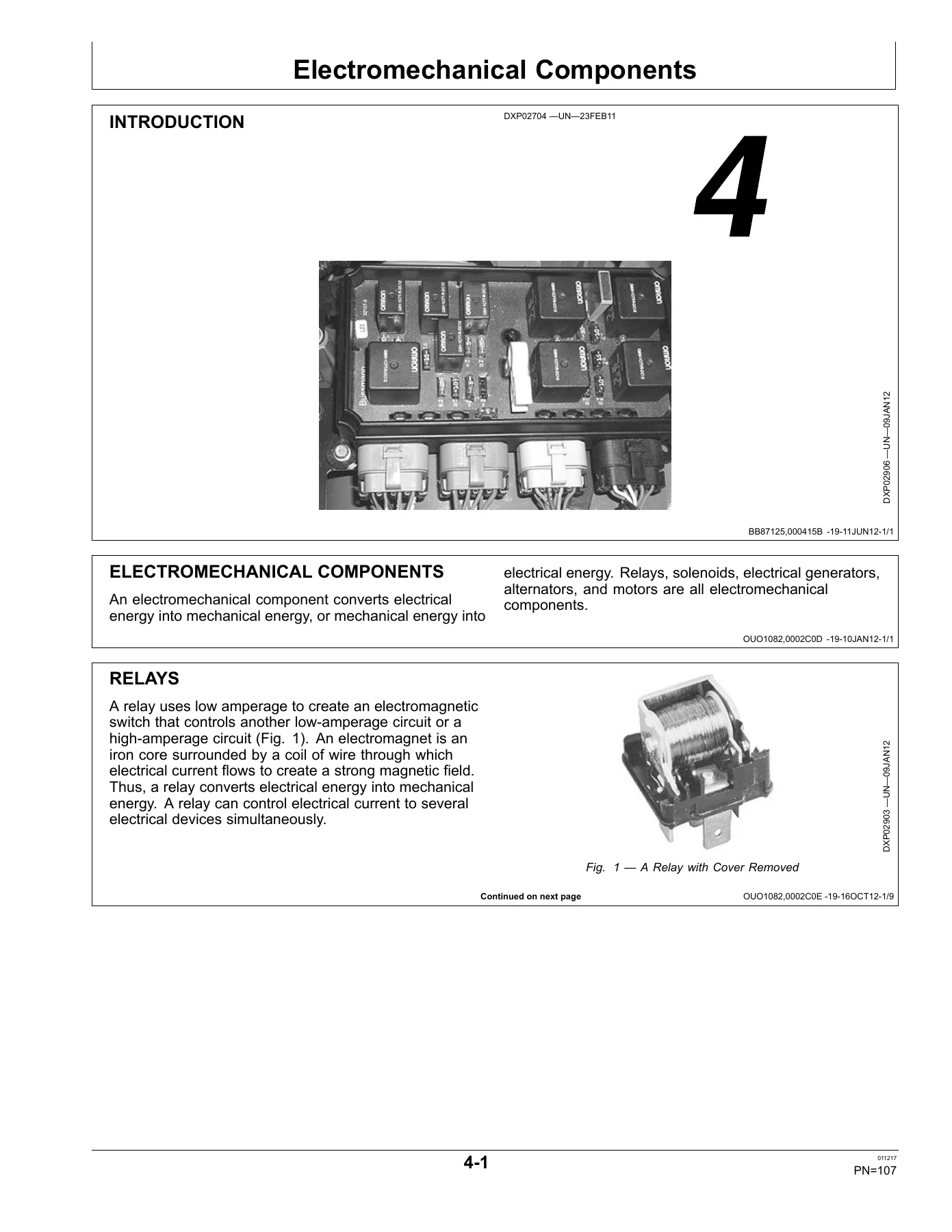
- Electromechanical Components – relays, solenoids, generators, alternators, motors, motor/generators, regenerative brakes
- Storage Batteries – battery construction and operation, charging circuit relationship, battery types, electrolyte level, maintenance-free batteries, charging, balancing batteries, capacity ratings, removal and installation, load testing, high-voltage battery banks, disposal
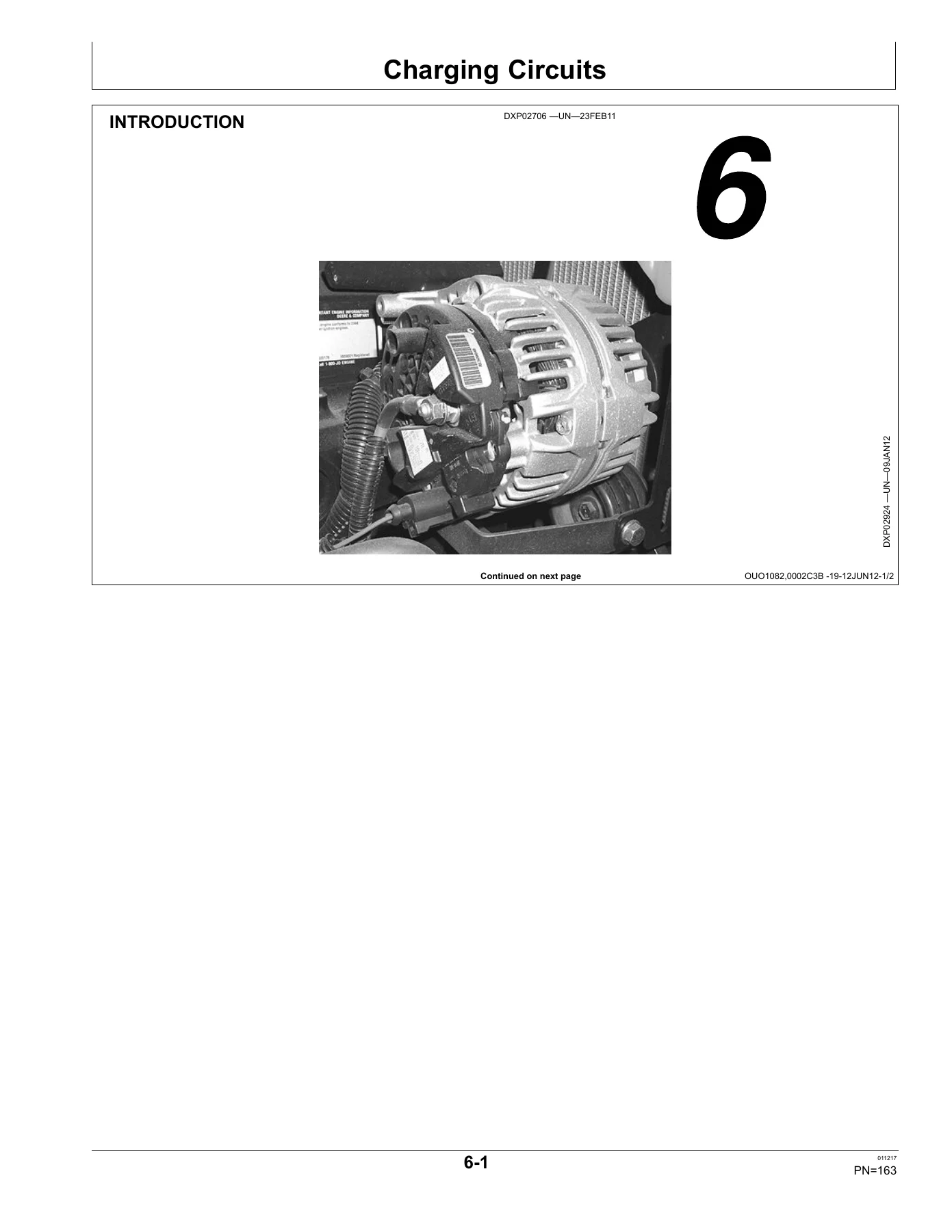
- Charging Circuits – charging circuit operation, generators, generator regulators, alternators, alternator regulators, diagnosis and testing
- Starting Circuits – how the starting circuit and starting motor work, types of starting motors, starting motor circuits, armatures, switches, drives, gear reduction drive, testing and servicing
- Ignition Circuits – ignition coil, condenser, distributor, spark plugs, ignition wiring, testing and diagnosis
- Electronic Ignition and Fuel Injection Systems – electronic ignition types and operation, troubleshooting, self-integrated electronic ignition, distributorless ignition, electronic diesel fuel injection, electronic governor tester
- Lighting and Accessory Circuits – lighting circuits and harness, electromagnetic clutches, gauges, meters, horns and buzzers, electric motors, cigarette lighters, convenience outlets, flame rods, glow plugs, satellite-based positioning systems
- Connectors – current flow in connectors, common connector types, stripping and crimping
- General Maintenance – storage batteries, DC and AC charging circuits, starting circuits, ignition circuits
- Diagnosis and Testing of Systems – seven basic steps, testing the system, troubleshooting charts
- Introduction to Mathematics for Controllers – DC voltage divider networks, DC pulses, resistor and capacitor (RC) circuits and filters, decibels, sine waves, AC current/voltage/reactance, numbering systems, Boolean algebra
- Electronic Components – integrated circuits, analog and digital ICs, sequential logic, arithmetic and data handling circuits, communications interface chips, printed circuit boards, display devices
- Sensors – strain gauges, pressure, temperature, proximity, airflow, level, and speed sensors
- Controllers and Monitors – computer chip theory, ports, controller system theory, serial/parallel control buses, CAN bus, tractor CAN bus applications, control unit addresses, network voltage checks, monitor system applications, combines, planters, round balers, forage harvesters, tractors, motor graders, scrapers
- Hybrid Systems – ground drive systems, regenerative braking, battery bank
- Definitions of Terms
- Answers to Test Yourself Questions
Taken as a whole, this manual builds a technician from the ground up. It starts with the physics of electron flow and Ohm’s Law, moves into the components that make up a circuit, and then applies that foundation to the complete systems found on working machines – charging, starting, ignition, lighting, sensor, controller, and hybrid drive. Because each chapter ends with a Test Yourself section and the answers are printed at the back, the book doubles as a structured training course and as a bench reference you can pick up mid-job.
Diagnostics and Troubleshooting Content
Fault-finding is woven through the manual rather than saved for a single chapter. Chapter 13 sets out seven basic steps for system diagnosis and provides troubleshooting charts, while individual chapters carry their own test sequences: generator output and regulator tests, alternator bench testing, diode and stator testing with an ohmmeter or test lamp, starting motor no-load tests, solenoid pull-in and return tests, coil and condenser checks, and distributor advance checks. Wiring test charts explain how to identify open, grounded, and shorted circuits with an ohmmeter or voltmeter, and the controller chapter covers CAN network voltage checks. For anyone chasing an intermittent electrical fault on a truck, bus, or piece of off-road equipment, this structured approach is the practical core of the manual.
Electrical Safety and High-Voltage Coverage
Chapter 1 deals directly with the hazards that make electrical work different from mechanical work – fires, short-circuit and bypass start hazards, battery explosions, acid burns, and electric shock – and includes a dedicated high-voltage safety section for hybrid systems covering insulated glove ratings, high-voltage disconnect procedure, the ten-minute rule, and battery bank handling. The hybrid chapter later expands on ground drive systems, regenerative braking, and high-voltage battery banks. That safety and hybrid material is current for the 2017 edition and reflects the direction modern off-road and transport equipment has taken.
Who This Manual Suits
Because the FOS series is written as a teaching text, this is not a model-specific shop manual for one tractor or one truck. It is a systems-level guide that applies across the electronic and electrical systems used on a wide range of off-road vehicles, trucks, and buses. That makes it a strong fit for vocational and technical training programs, for apprentices building a foundation, for experienced technicians moving from mechanical to electrical work, and for anyone who needs the theory, the component detail, and the diagnostic procedure in a single bound reference. Where a machine-specific specification or wiring diagram is needed, the manual’s conventions for schematics, component identification letters, and wire number and color codes give you the framework to read the manufacturer’s own diagrams correctly.
What You Can Do With It
With this John Deere Electronic and Electrical Systems service manual on hand, you can trace and test charging, starting, ignition, lighting, and accessory circuits; bench-test generators, alternators, regulators, solenoids, relays, and starting motors against specified procedures; diagnose open, grounded, and shorted wiring; read and interpret system functional schematics, subsystem schematics, wire harness drawings, and component location drawings; understand semiconductor devices, sensors, controllers, and CAN bus networks; and work safely around conventional and high-voltage hybrid systems. The math and RC circuit chapters give you the background needed to follow controller-level behaviour, not just swap parts.
IMAGES PREVIEW
Getting the procedure and the specification right the first time is what separates a repair from a repeat failure, and this manual is built around that idea. It is delivered as an instant PDF download, so there is no shipping and no waiting – the file opens on any device you already use in the shop, and every page can be printed for the bench or kept on a tablet beside the machine. Grab your copy of the FOS2010NC John Deere Electronic and Electrical Systems manual and put the full Fundamentals of Service electrical curriculum to work in your bay.
Reviews
There are no reviews yet.